
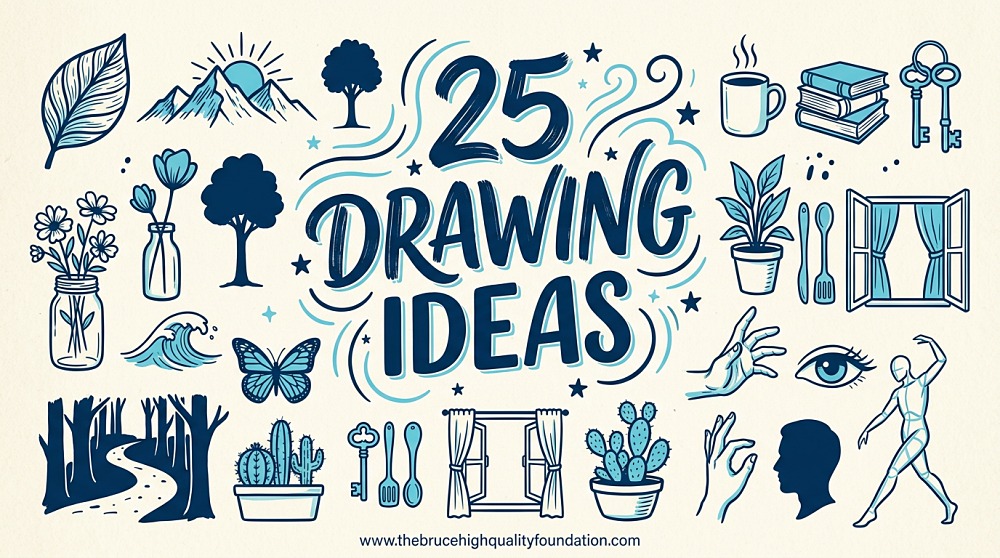
Staring at a blank page is one of the most frustrating experiences for any artist. Whether you are a seasoned illustrator or someone who just picked up a pencil, creative block can strike when you least expect it. I have been there countless times, and that is exactly why I compiled this comprehensive list of drawing ideas that will get your hand moving and your imagination flowing.
In this guide, I share over 25 creative drawing ideas ranging from quick 5-minute sketches to detailed hour-long projects. Each suggestion includes skill level recommendations and time estimates so you can match the perfect prompt to your available time and experience. These drawing ideas are designed to break through art block, build your skills, and most importantly, make drawing feel fun again.
Let us dive into these drawing prompts that will spark your creativity instantly. Whether you want to fill your sketchbook, practice specific techniques, or simply unwind after a long day, you will find inspiration here.
Table of Contents
How to Overcome Creative Block and Spark Your Creativity
Before we explore the drawing ideas, let us address the elephant in the room. Creative block happens to everyone, from beginners to professional artists. The question “what are things that spark creativity” comes up constantly in art communities, and I have discovered some reliable methods that work every time.
Changing your environment is one of the fastest ways to reset your creative energy. Take a walk outside, visit a coffee shop, or simply move to a different room. New visual stimuli trigger fresh neural connections that can break through mental stagnation. I keep a running list on my phone of interesting textures, shadows, and compositions I spot throughout the day.
Setting artificial constraints also works surprisingly well. Limit yourself to a single pencil, draw with your non-dominant hand, or give yourself only five minutes. These restrictions paradoxically free up creative energy by removing the pressure of infinite possibilities. Another powerful technique is copying work you admire, not to pass it off as your own, but to understand the decisions another artist made.
Nature Drawing Ideas (2026)
Nature provides an endless supply of inspiration with its organic shapes, intricate patterns, and shifting light. These nature drawing ideas range from simple studies to complex compositions.
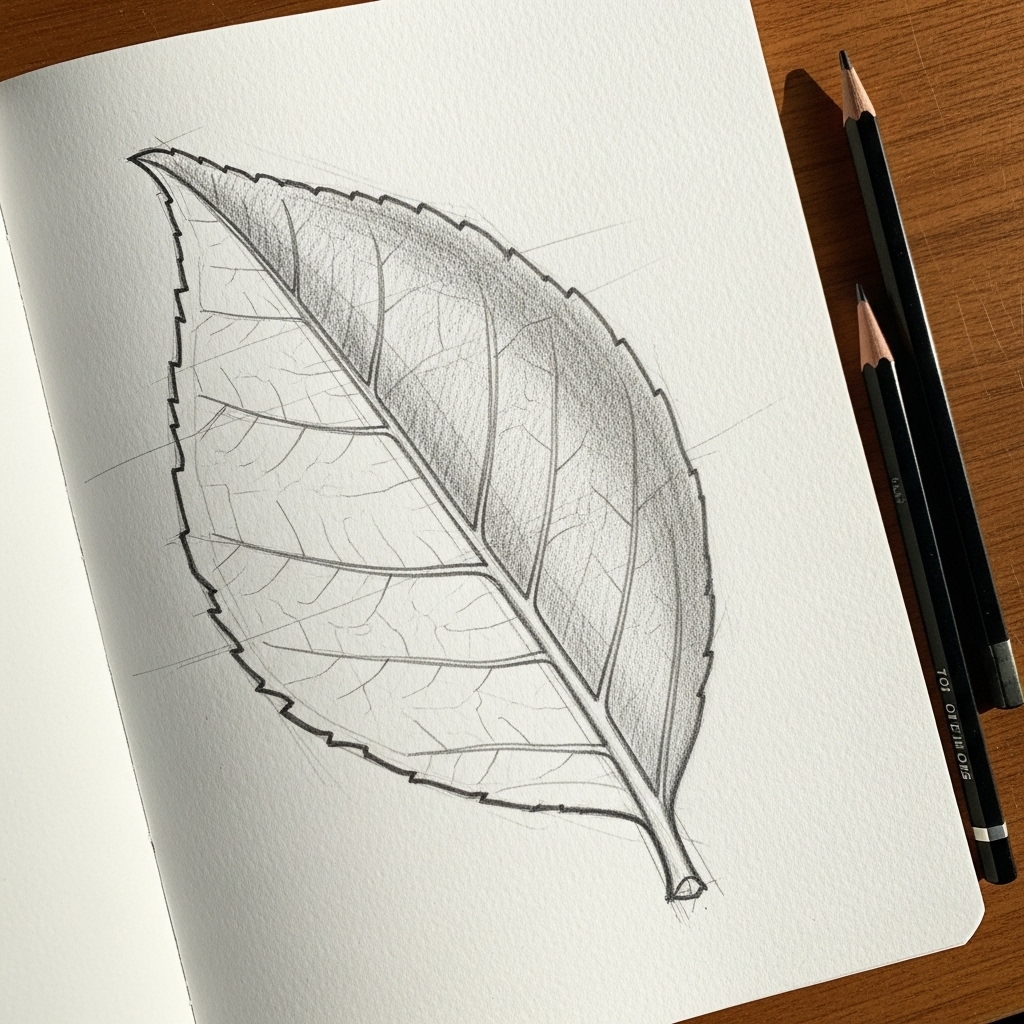
1. A Single Leaf with Vein Details
Skill Level: Beginner | Time: 15-30 minutes
Find a leaf with interesting contours and place it on your desk. Focus on capturing the main shape first, then gradually add the vein patterns. This exercise teaches you to observe subtle curves and tonal variations. I recommend starting with a light pencil sketch using an HB pencil, then switching to a 2B for the darker veins and shadows.
The real challenge here is not copying every vein exactly, but capturing the essence of how the leaf feels. Notice how the central vein creates a subtle ridge that catches light differently than the flatter surfaces. Pay attention to where the leaf curls away from the light source, creating soft shadows underneath.
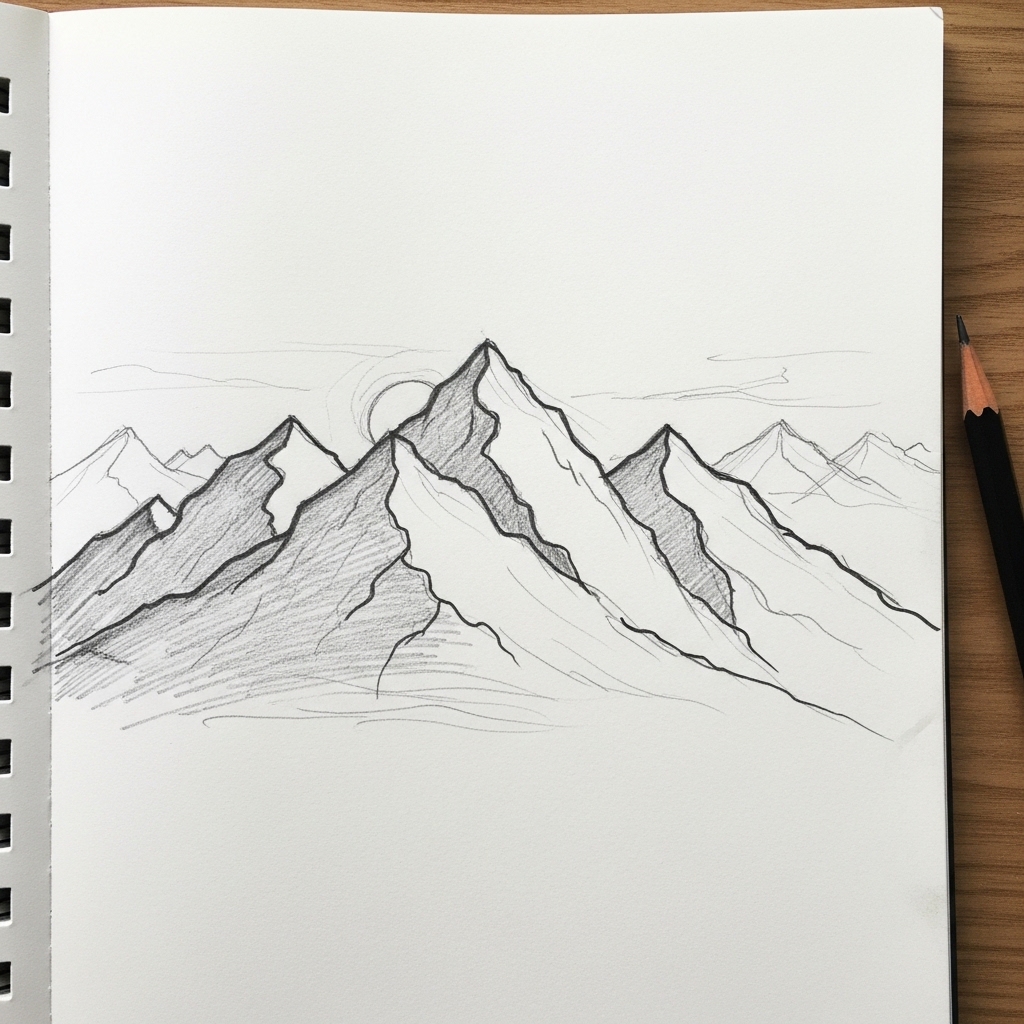
2. Mountain Range at Sunset
Skill Level: Intermediate | Time: 45-60 minutes
This classic landscape subject lets you practice atmospheric perspective and color gradation, even in black and white. Start with the farthest mountains, making them lighter and less detailed. As you move forward in the composition, add more contrast and texture to closer peaks.
The sunset element gives you permission to play with dramatic lighting. Position your light source low on the horizon and think about which mountain faces catch that warm glow versus which fall into cool shadow. I often use a blending stump to create the soft gradient of a fading sky, keeping the hard edges only for the most distant silhouettes.
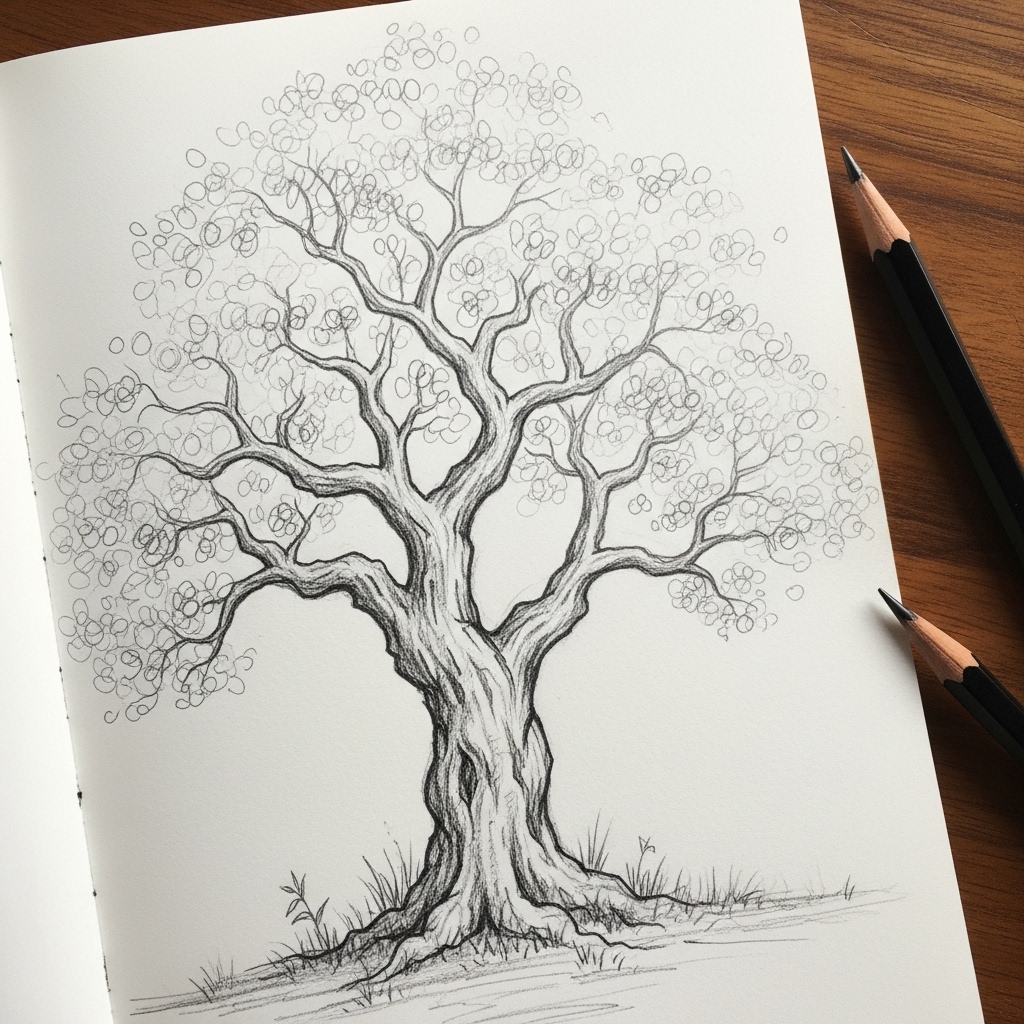
3. Tree Silhouette Against Sky
Skill Level: Beginner | Time: 20-30 minutes
Silhouettes remove the pressure of rendering complex three-dimensional forms while still creating striking images. Choose a tree with an interesting branch structure, perhaps one that has lost its leaves for the winter. The key to a compelling silhouette is variety in the branch thickness and spacing.
Fill in the tree shape with your darkest pencil or ink, then create a textured sky behind it. You can suggest clouds, a gradient sunset, or even stars using white gel pen highlights. The contrast between solid black and atmospheric sky creates instant visual drama with minimal technical complexity.
4. Flowers in a Mason Jar
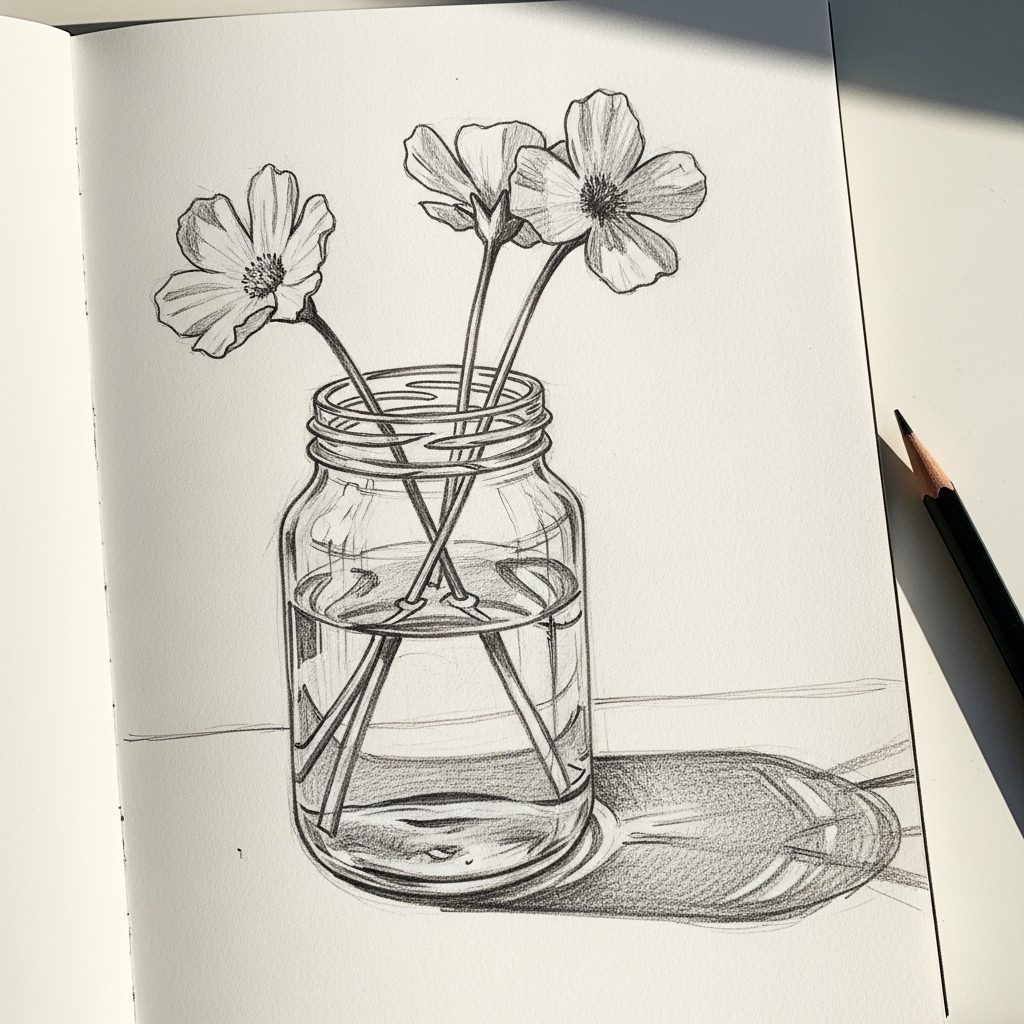
Skill Level: Intermediate | Time: 45-60 minutes
This still life combines organic flower shapes with the geometric transparency of glass. Place a simple bouquet in a clear jar and observe how the stems appear distorted through the water and glass. The circular opening of the jar creates an interesting framing device for the flower arrangement.
Focus on ellipses when drawing the jar opening and water line. These circles in perspective are challenging but essential skills. For the flowers themselves, simplify complex petals into basic geometric shapes first, then add detail. I find that wildflowers work better than perfect roses here because their irregularity feels more natural and forgiving.
5. Ocean Waves Crashing on Rocks
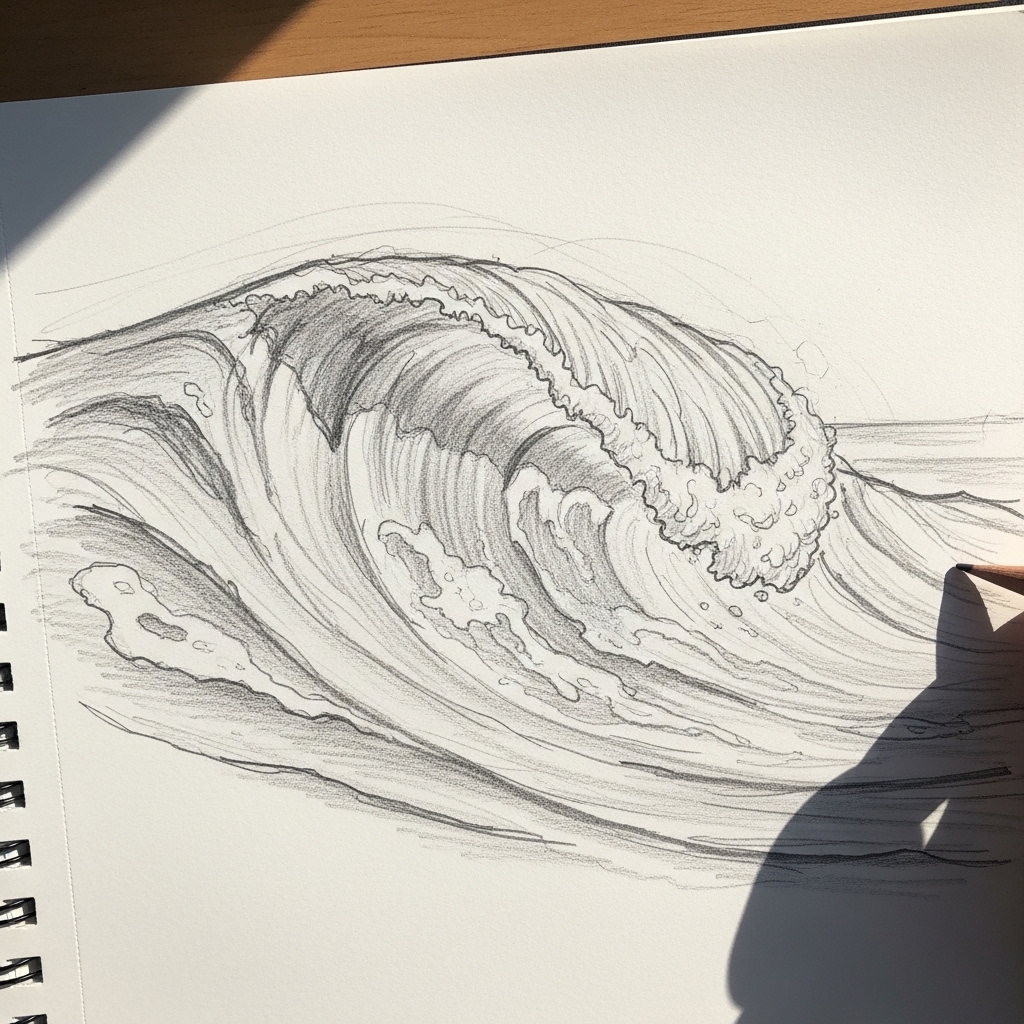
Skill Level: Advanced | Time: 60-90 minutes
Water in motion is one of the most challenging subjects to draw convincingly. The key is understanding that water is both transparent and reflective, showing what is beneath the surface while also mirroring the sky above. Study reference photos or videos to understand how waves break and foam forms.
Use erasers as drawing tools for the white foam highlights against darker water. A kneaded eraser can lift graphite to create the spray and mist effects. Work from back to front, establishing the darkest water tones first, then adding the white foam details last. Patience is essential here as this subject rewards careful observation over quick execution.
6. Butterfly with Patterned Wings
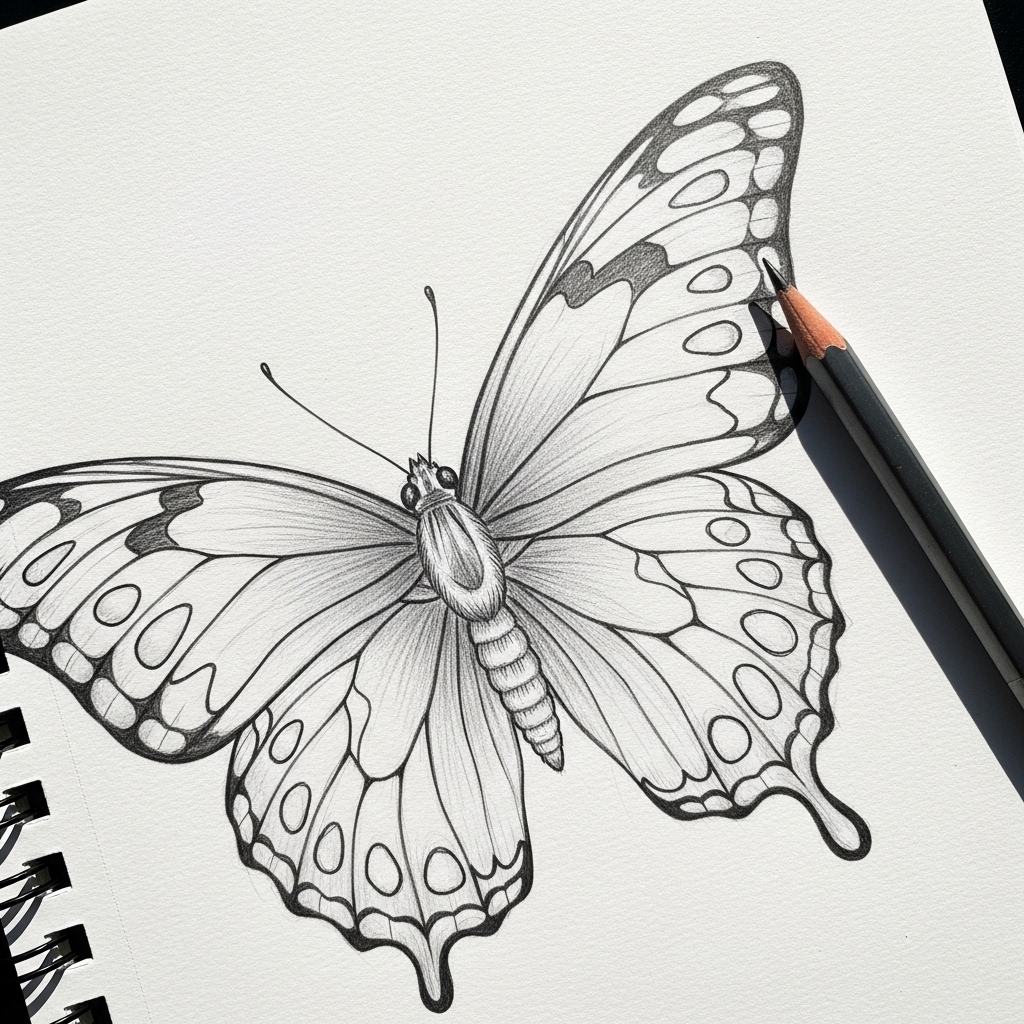
Skill Level: Beginner to Intermediate | Time: 30-45 minutes
Butterflies offer the perfect combination of simple overall shape and intricate internal detail. Start with the basic wing outline, ensuring symmetry by checking measurements from the center body. Once the structure is established, fill in the wing patterns using reference photos of real species or inventing your own designs.
The body of the butterfly requires careful attention to its segmented structure and fuzzy texture. Use short, directional strokes to suggest the hair-like scales. This subject works beautifully in color but translates well to graphite if you focus on creating contrast between dark body segments and lighter wing areas.
7. Forest Path Perspective Study
Skill Level: Intermediate | Time: 45-60 minutes
One-point perspective is easiest to understand with a clear subject, and a forest path provides exactly that. The path recedes toward a single vanishing point on the horizon, with trees getting smaller as they approach that point. This exercise trains your eye to judge relative size and placement accurately.
Start by lightly drawing your horizon line and vanishing point. Sketch the path edges as they converge toward that point. Place your trees with their bases touching these path edges, ensuring each tree height aligns with its position in space. The closer trees should be larger and more detailed, while distant trees become simple vertical lines.
8. Cactus Garden Arrangement
Skill Level: Beginner | Time: 20-30 minutes
Cacti and succulents offer forgiving subjects with their geometric shapes and interesting textures. You do not need to worry about perfect symmetry since real plants have organic irregularities. Cluster several different varieties together in a composition that fills your page.
Focus on the spines and surface textures that make each species unique. Some cacti have long, dramatic spines while others show subtle ridge patterns. The pots themselves add another element of variety with different materials and shapes. This subject works well for practicing hatching and cross-hatching techniques to create varied tones.
Everyday Objects Drawing Ideas (2026)
The ordinary objects around us make excellent drawing subjects because they are accessible, familiar, and full of unexpected complexity. These everyday items help train your observation skills.
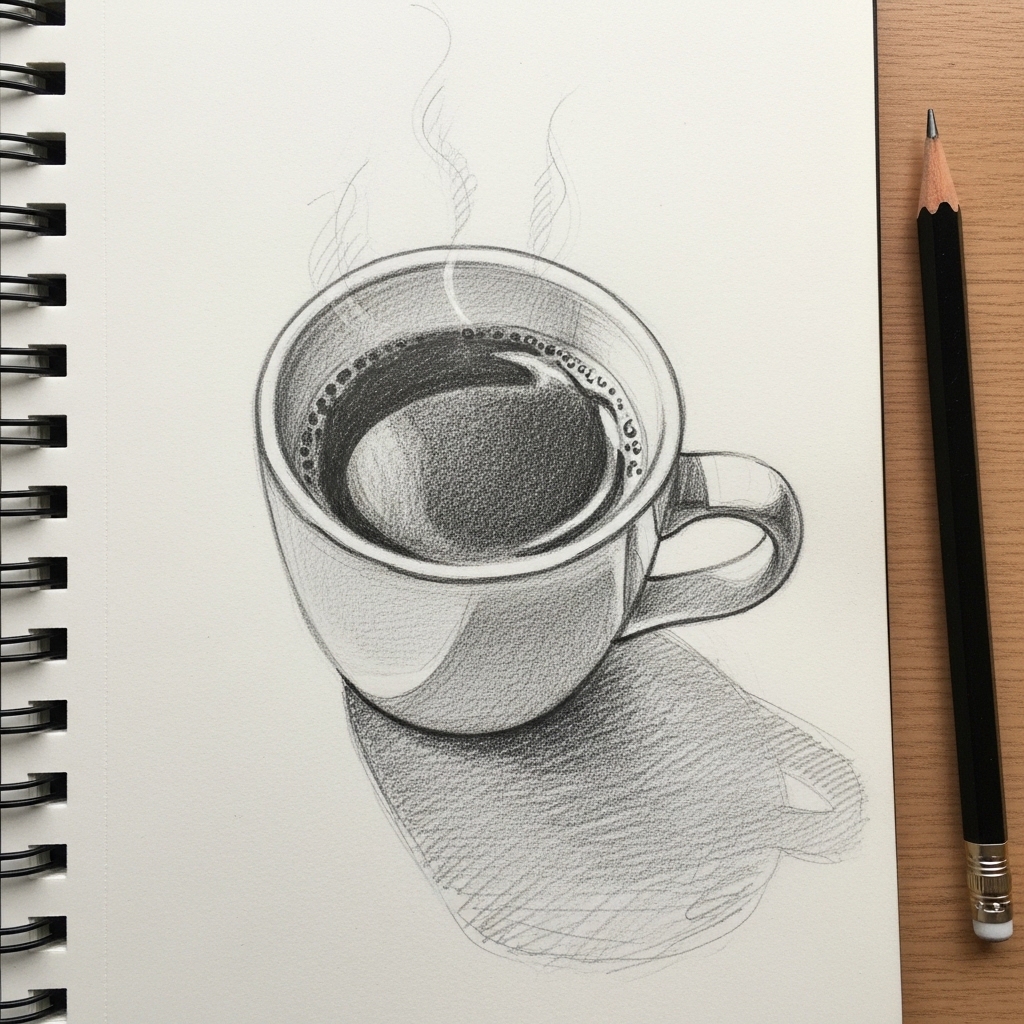
9. Your Morning Coffee Cup
Skill Level: Beginner | Time: 15-20 minutes
Draw the cup you actually used this morning, complete with any coffee stains or chips that make it uniquely yours. The cylindrical form teaches you to draw ellipses in perspective, while the handle presents an interesting negative space challenge. Notice how the rim appears as a different ellipse than the base due to perspective.
Add steam rising from hot coffee using soft, wispy lines and gentle erasing. The liquid surface inside creates another ellipse and possibly a reflection. If your cup has a pattern or logo, try to capture how that pattern curves around the cylindrical form. This simple subject contains more complexity than most people initially notice.
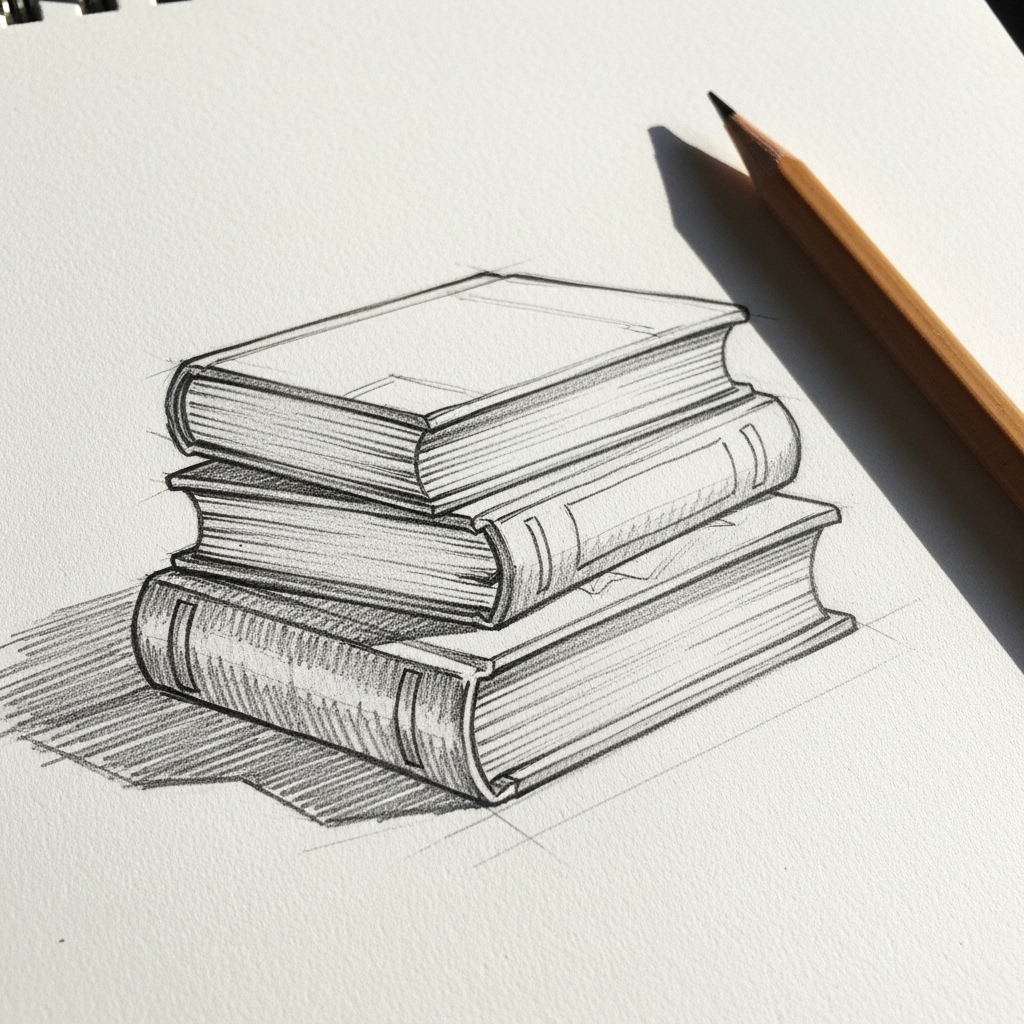
10. Stack of Books with Shadows
Skill Level: Beginner | Time: 20-30 minutes
Gather three to five books and stack them with some straight and some askew. This arrangement creates interesting overlapping shapes and cast shadows. The hard edges of books make them perfect for practicing straight lines and right angles, while the varying sizes create natural composition interest.
Pay special attention to the shadows each book casts on the one below it. These soft, directional shapes ground the objects in space and show your light source position. The spines offer opportunities to suggest titles with minimal detail, while the page edges create textured horizontal lines. I enjoy including a pair of glasses resting on top to add a human element.
11. Vintage Key Collection
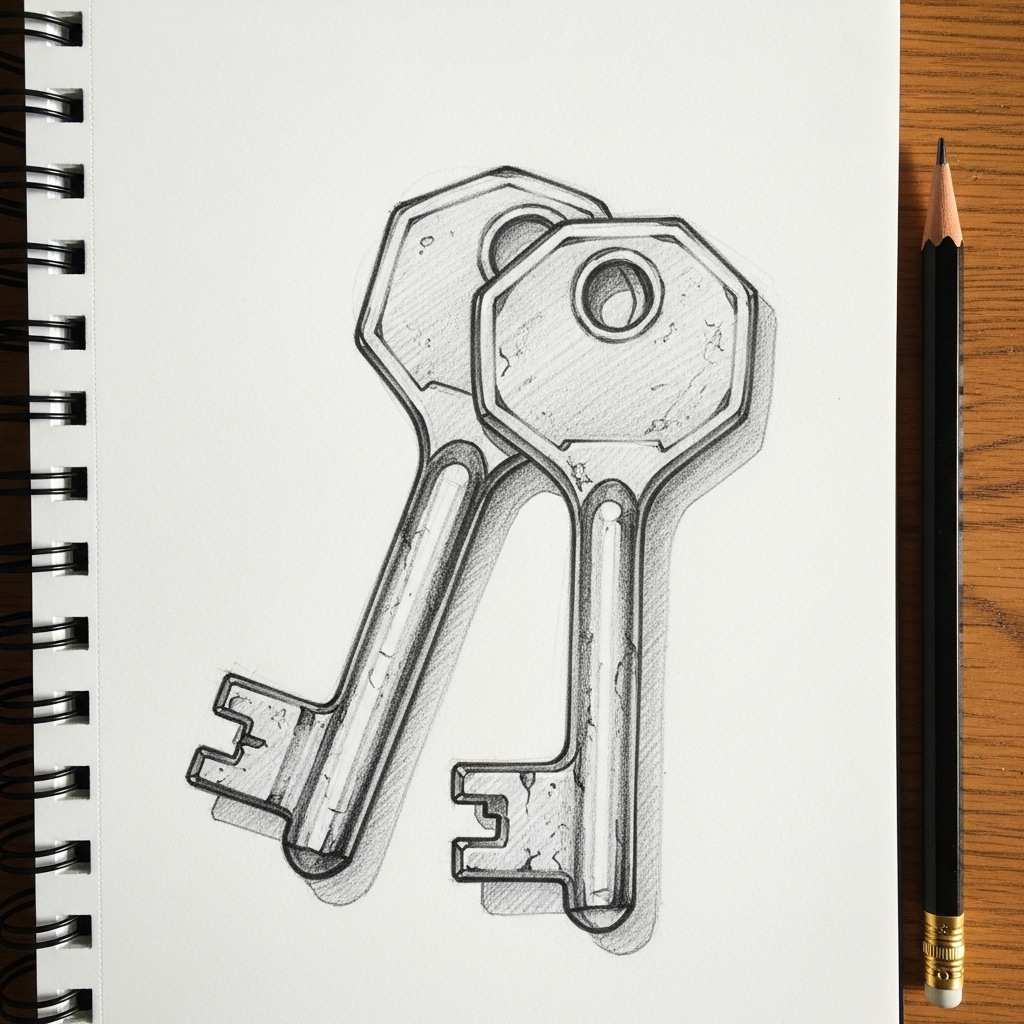
Skill Level: Intermediate | Time: 30-45 minutes
Old keys have intricate shapes, varied textures, and an inherent mystery that makes them compelling subjects. Arrange several different keys on a dark surface to create contrast with their metallic surfaces. The variety in key head shapes and bit patterns gives you plenty to study.
Capture the worn surfaces and rust spots that tell the story of each key’s history. The metallic sheen requires careful observation of highlights and reflected light. Use a range of pencil grades from hard HB for light areas to soft 6B for the deepest shadows in the keyhole cuts. The interlocking negative spaces between keys create interesting abstract shapes worth noticing.
12. Houseplant from Below View
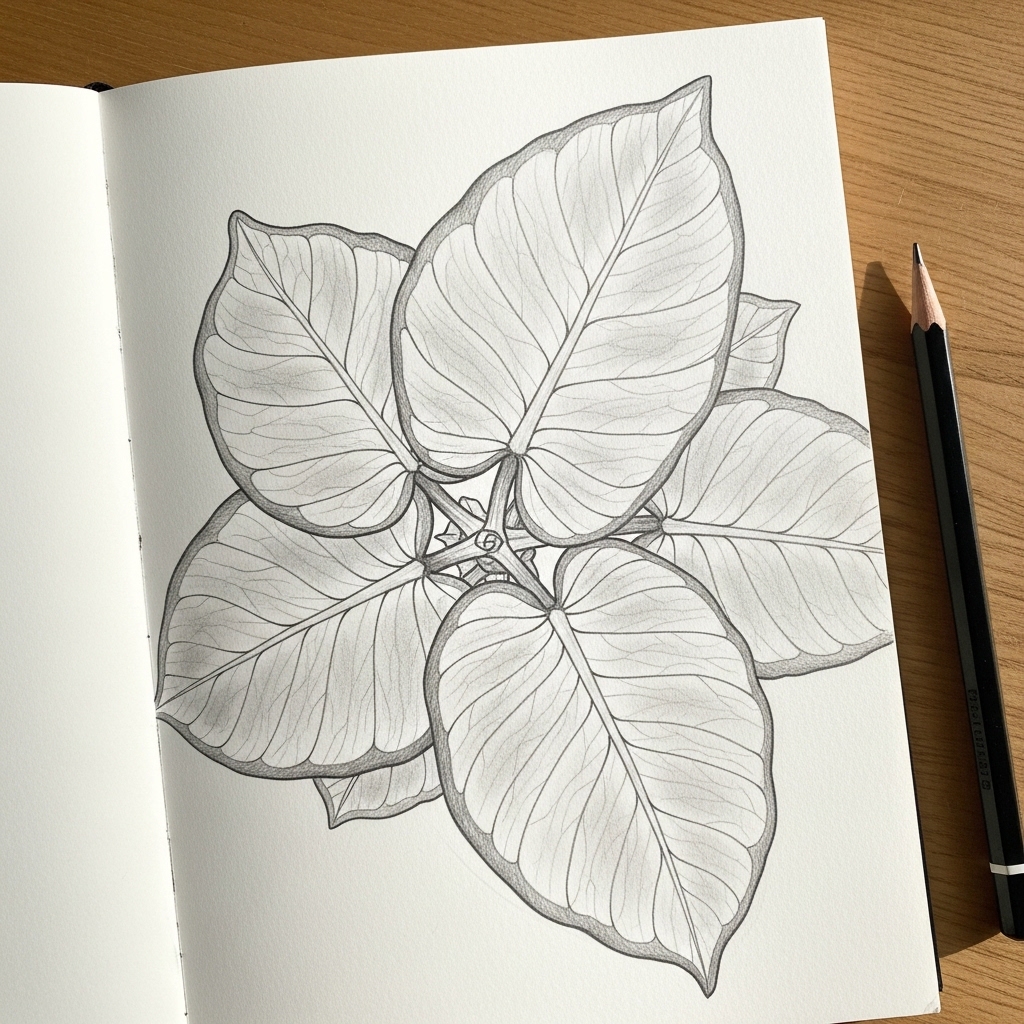
Skill Level: Intermediate | Time: 30-45 minutes
Change your perspective by sitting on the floor and looking up at a hanging or tall plant. This unusual viewpoint transforms a familiar subject into something fresh and challenging. You will see the underside of leaves, the structure of stems, and how light filters through translucent foliage.
The overlapping layers of leaves create complex positive and negative spaces. Start with the largest forms and work your way to smaller details. Notice how backlit leaves glow with transmitted light, appearing lighter than their actual surface color. The pot or hanging mechanism becomes an interesting geometric element at the top of your composition.
13. Kitchen Utensils Arrangement
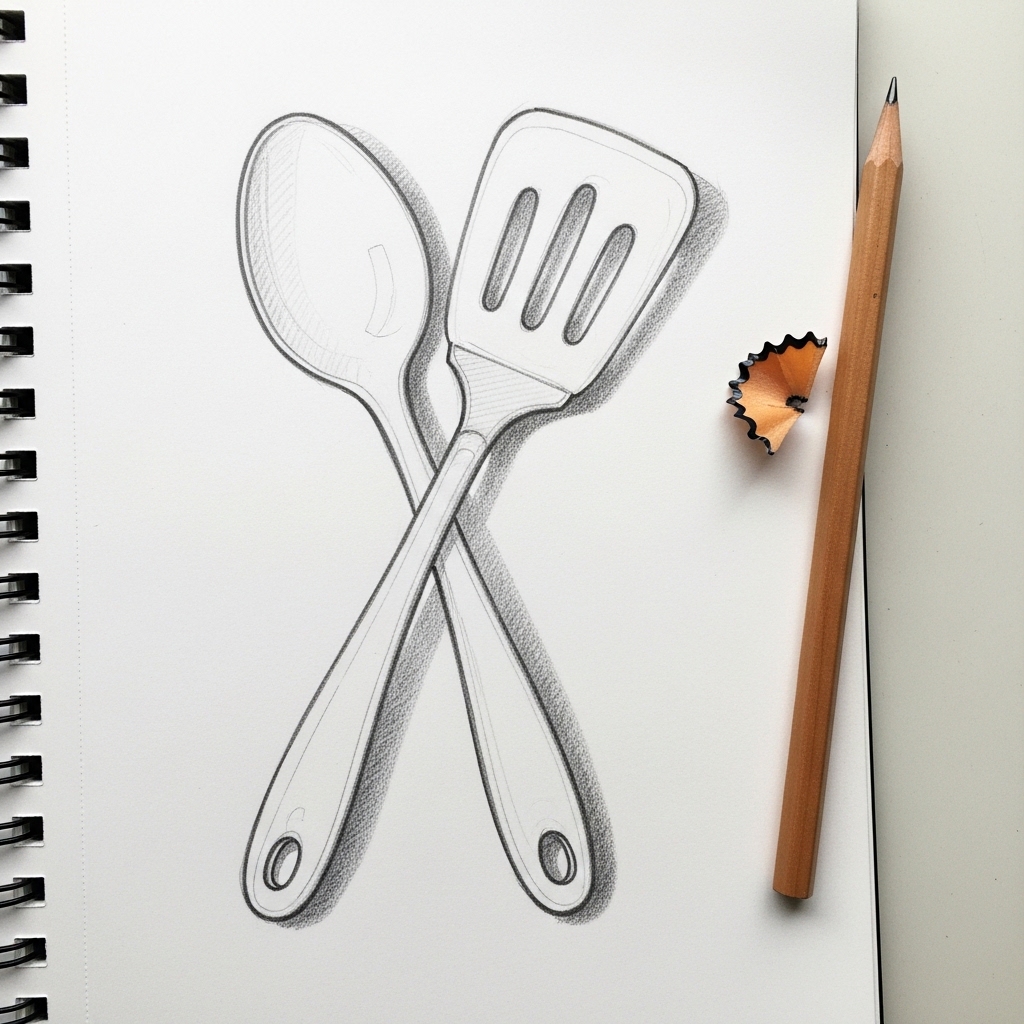
Skill Level: Beginner | Time: 20-30 minutes
Gather an assortment of wooden spoons, whisks, spatulas, and other kitchen tools. The variety of materials from smooth metal to porous wood gives you textural practice. Arrange them in a container or overlapping on a surface to create depth.
Each utensil has a functional design that influences its shape. Notice the curves designed for stirring, the holes for draining, the flat edges for scraping. These purposeful forms are satisfying to capture accurately. The worn areas on wooden handles tell stories of meals prepared and years of use.
14. Open Window with Curtains
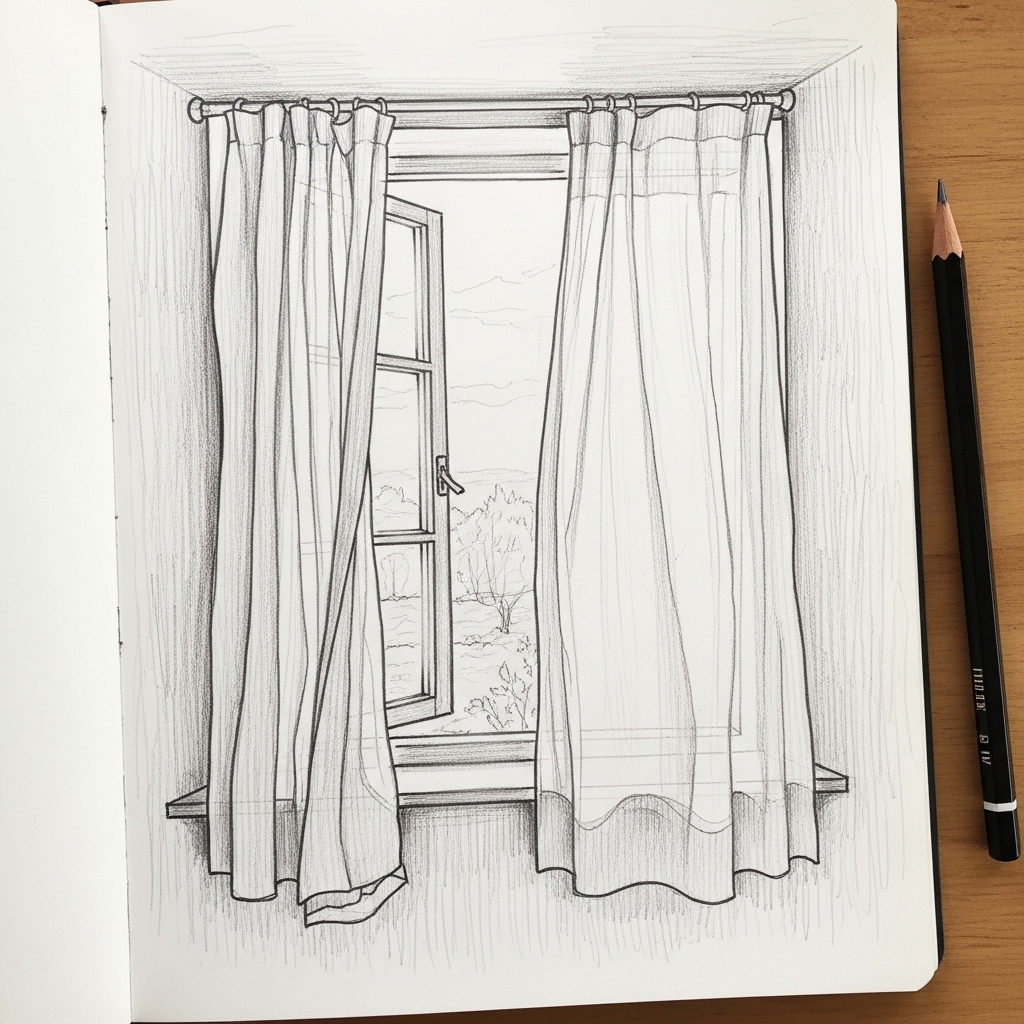
Skill Level: Intermediate | Time: 30-45 minutes
An open window offers a natural frame for whatever view lies beyond, while the curtains add flowing organic shapes that contrast with the rigid architecture. Capture the way fabric drapes and folds, paying attention to how gravity and tension create rhythmic patterns in the material.
The view through the window can be detailed or merely suggested depending on your desired focal point. Some artists draw the window interior precisely while leaving the outside as soft, atmospheric tones. Others reverse this approach. The light streaming through creates interesting illumination patterns on the floor or nearby walls.
Portrait and Figure Drawing Ideas
Drawing people presents unique challenges but offers unmatched rewards. These portrait and figure ideas focus on specific elements that build your skills progressively.
15. Hands in Different Positions
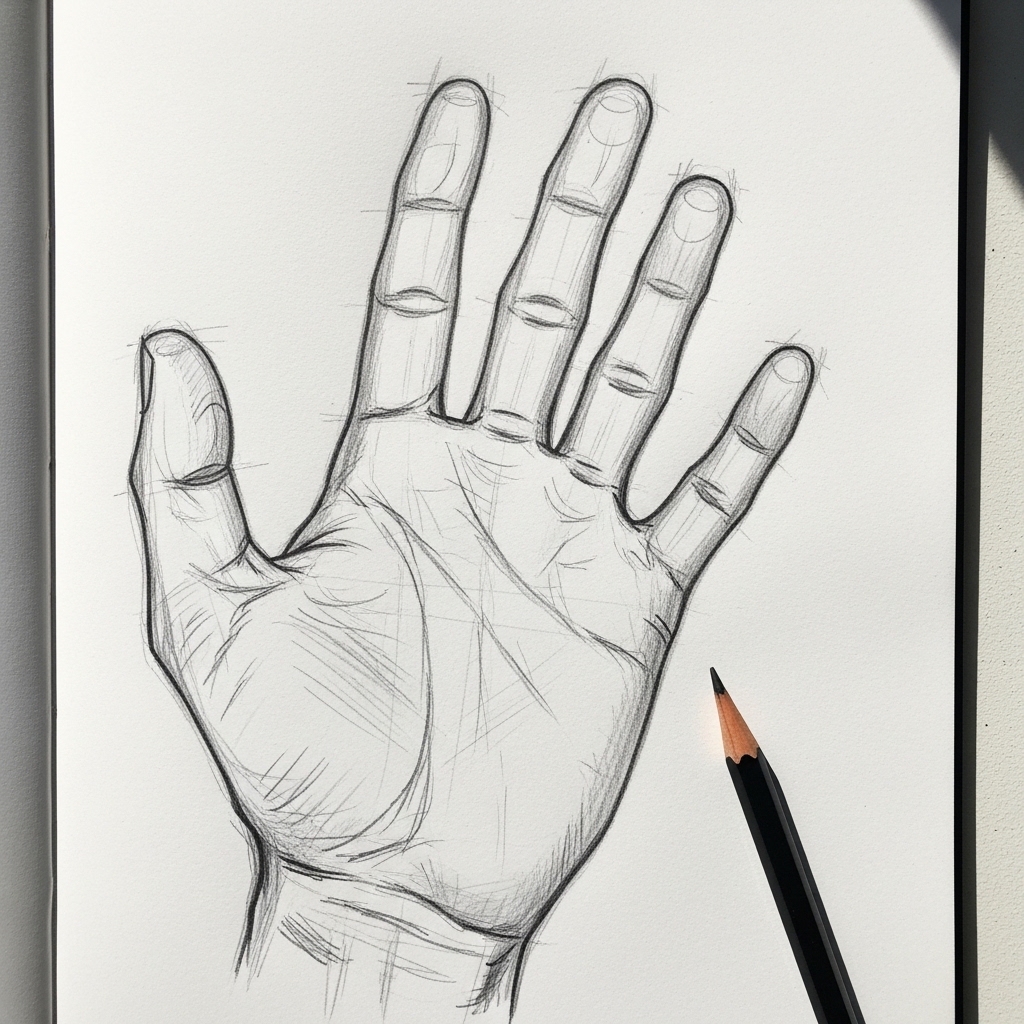
Skill Level: Intermediate to Advanced | Time: 30-60 minutes per hand
Hands are notoriously difficult but essential to master. Draw your own hand in various positions, holding objects, resting on surfaces, or making gestures. Start with the basic block forms of palm and fingers, then add the subtle anatomical details that make hands look real.
Pay attention to the wrinkles at knuckles, the curves of fingernails, and the unique proportions of each finger. The palm has distinct creases that reveal how the hand moves and flexes. Using a mirror lets you draw both left and right hands from life. This is the kind of practice that yields dramatic improvement over time.
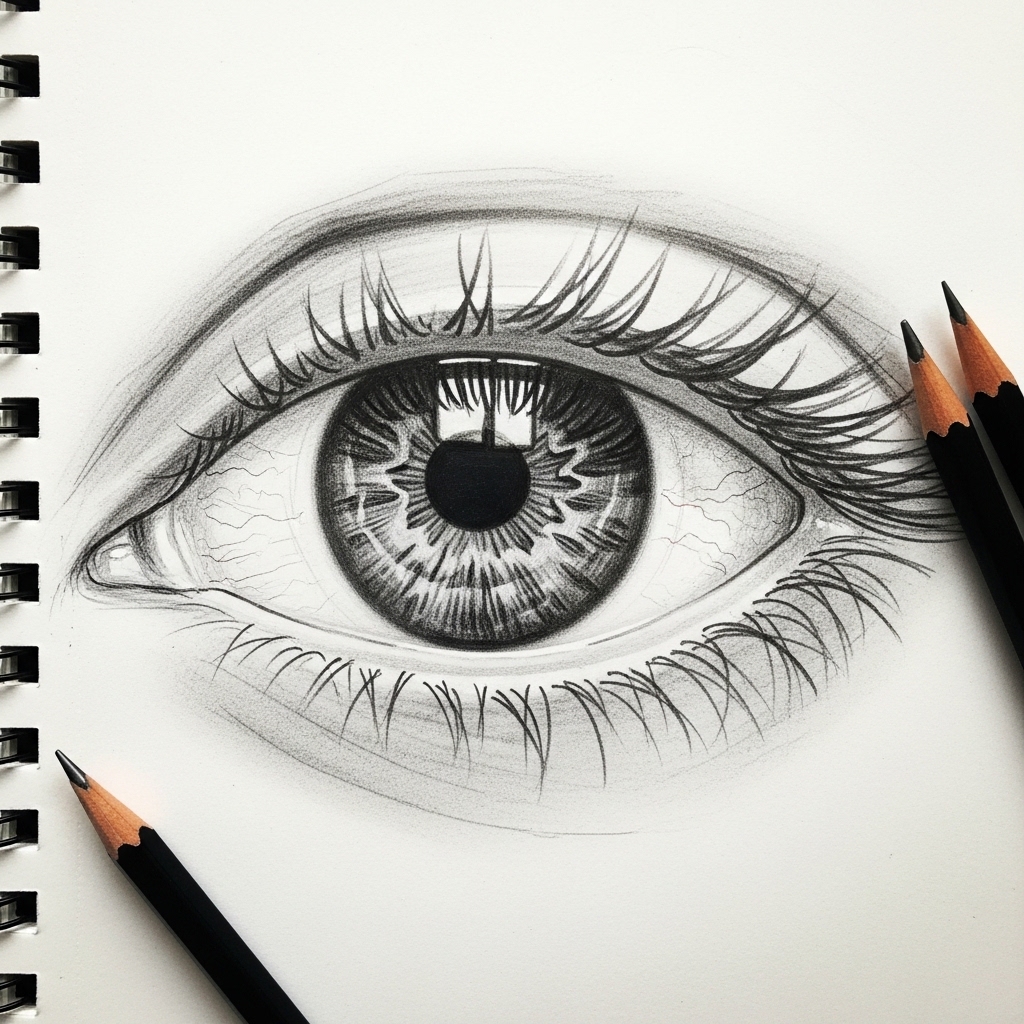
16. Single Eye with Emotional Expression
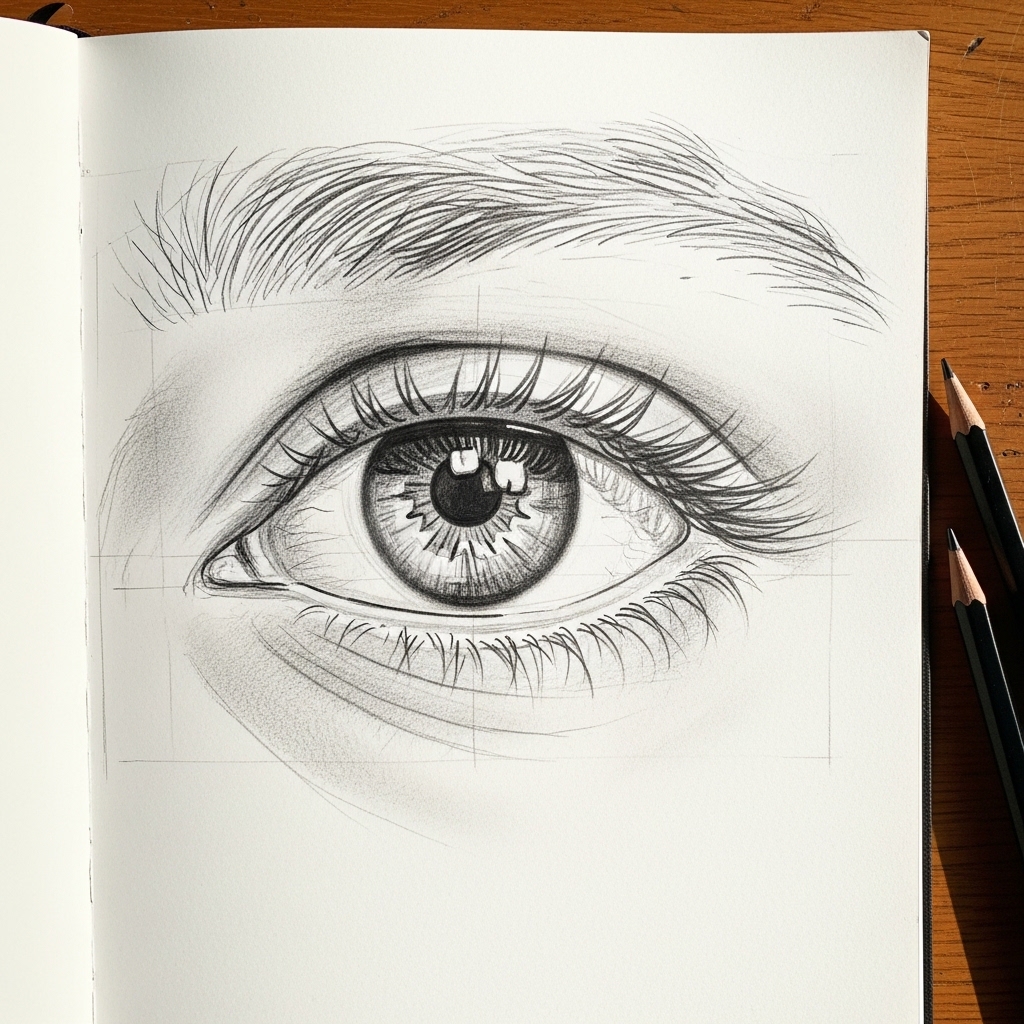
Skill Level: Beginner to Intermediate | Time: 20-30 minutes
The eye is the most expressive feature of the face and makes a compelling standalone subject. Focus on capturing the iris patterns, the reflective highlights, and the subtle skin folds around the eye. The emotion comes largely from the eyebrow position and the tension in the surrounding muscles.
Start with the almond shape, add the circular iris, and place the pupil slightly covered by the upper lid for a natural look. The highlight reflection suggests the environment and brings life to the drawing. Eyelashes should be drawn as individual strokes radiating outward, not as solid lines. Practice different expressions by changing the eyelid shapes and brow positions.
17. Profile Silhouette
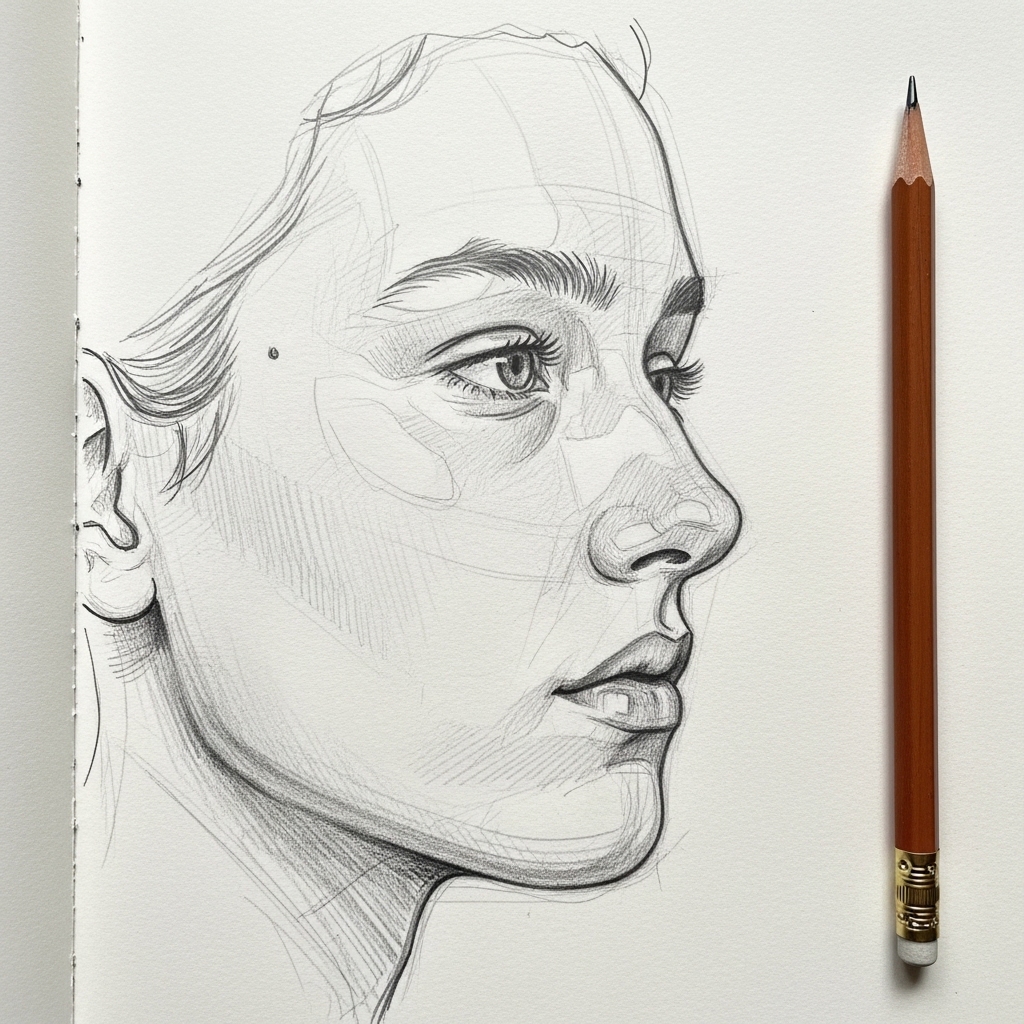
Skill Level: Beginner | Time: 15-20 minutes
Profiles remove the complexity of facial features while teaching you to recognize the elegant line that defines a human head. The curve from forehead to nose to chin creates a distinctive contour that varies dramatically between individuals. This exercise builds your ability to capture likeness with minimal information.
Fill in the silhouette with solid black or dark tone, then consider adding subtle internal details with lighter values. The hair shape is crucial for conveying gender and personality. You can create a series of these showing different ages, ethnicities, or time periods. The negative space around the profile is as important as the filled shape itself.
18. Gesture Drawing of Movement
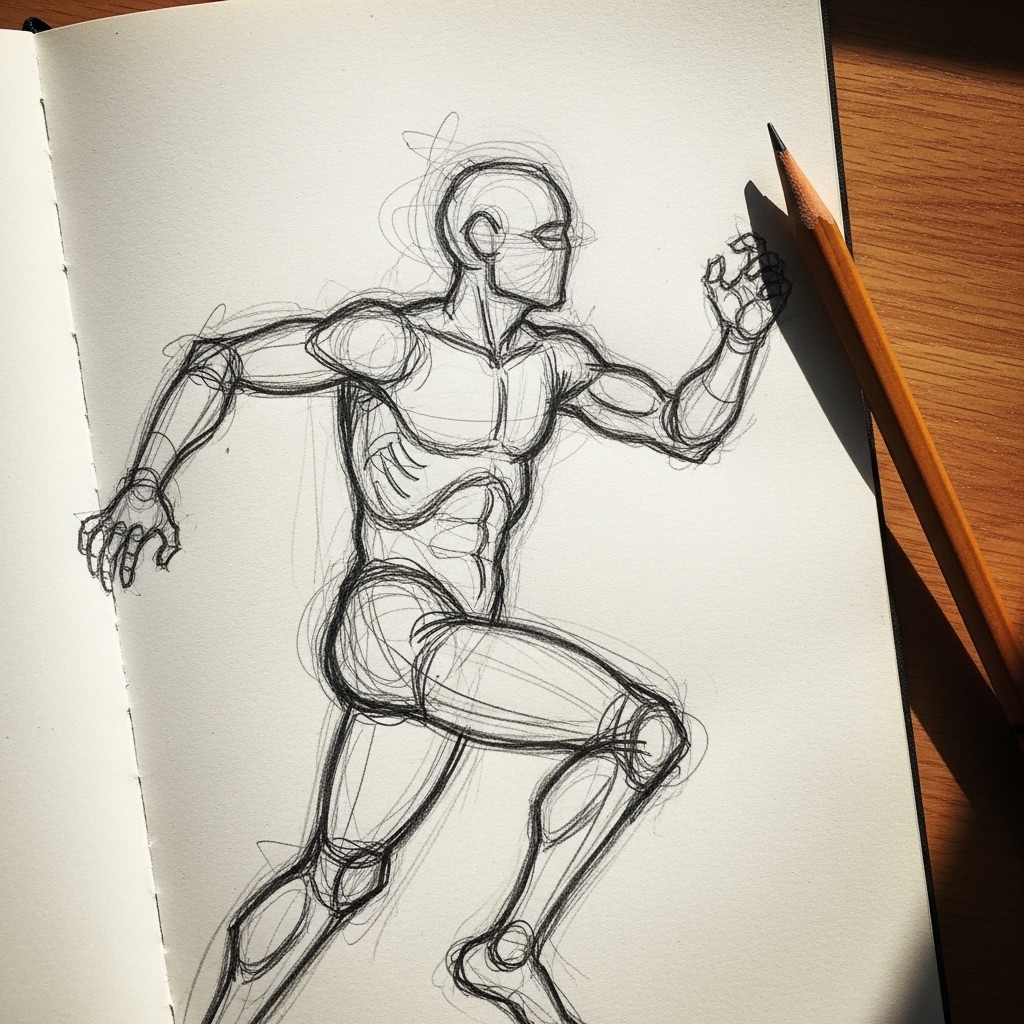
Skill Level: Intermediate | Time: 2-5 minutes per pose
Gesture drawing captures the energy and action of a pose rather than its precise anatomical details. Use quick, flowing lines to suggest the movement direction and weight distribution. This practice builds your ability to see the essential action in any pose before getting lost in details.
Find reference photos of dancers, athletes, or animals in motion. Use your whole arm to make broad strokes, working from your shoulder rather than your wrist. Do not worry about proportion accuracy at first. Focus on the rhythm of the pose and the line of action running through the figure. These quick sketches accumulate into an invaluable understanding of human movement.
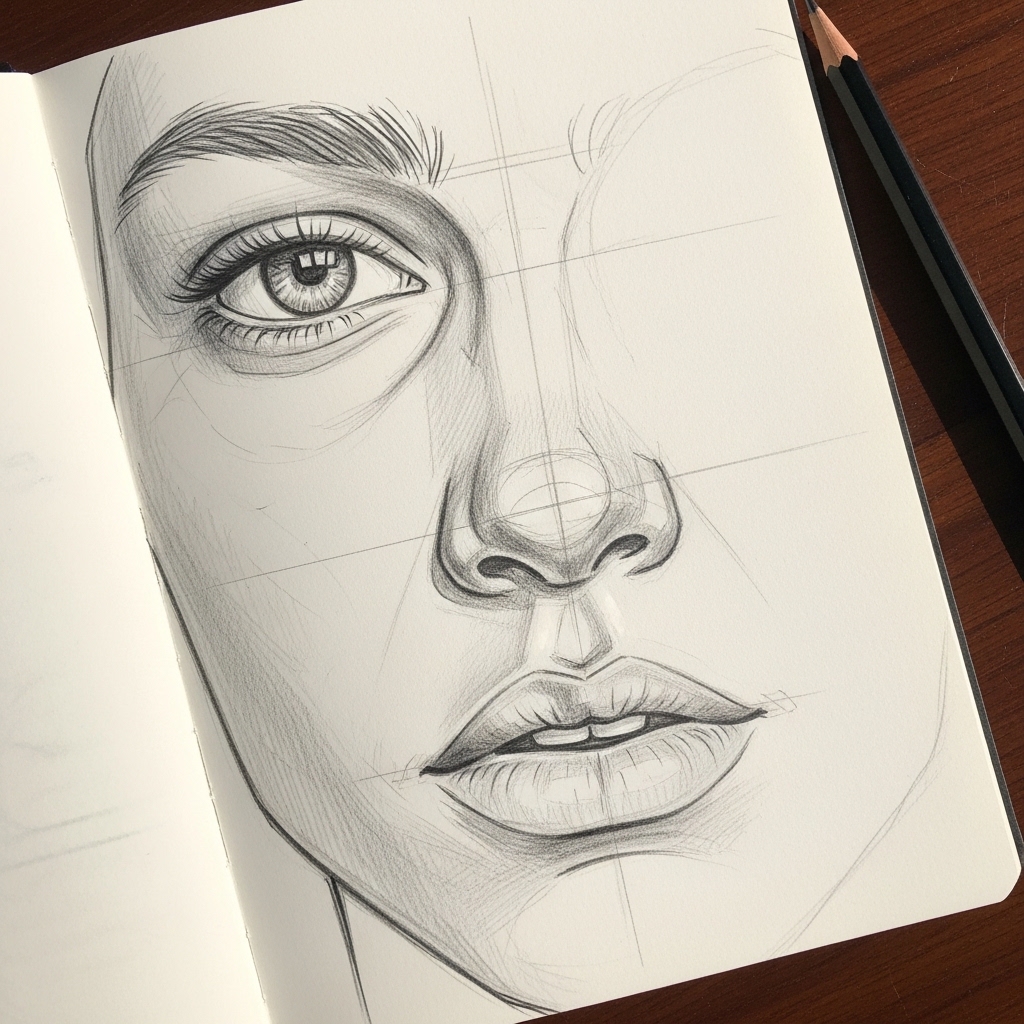
19. Portrait with Dramatic Lighting
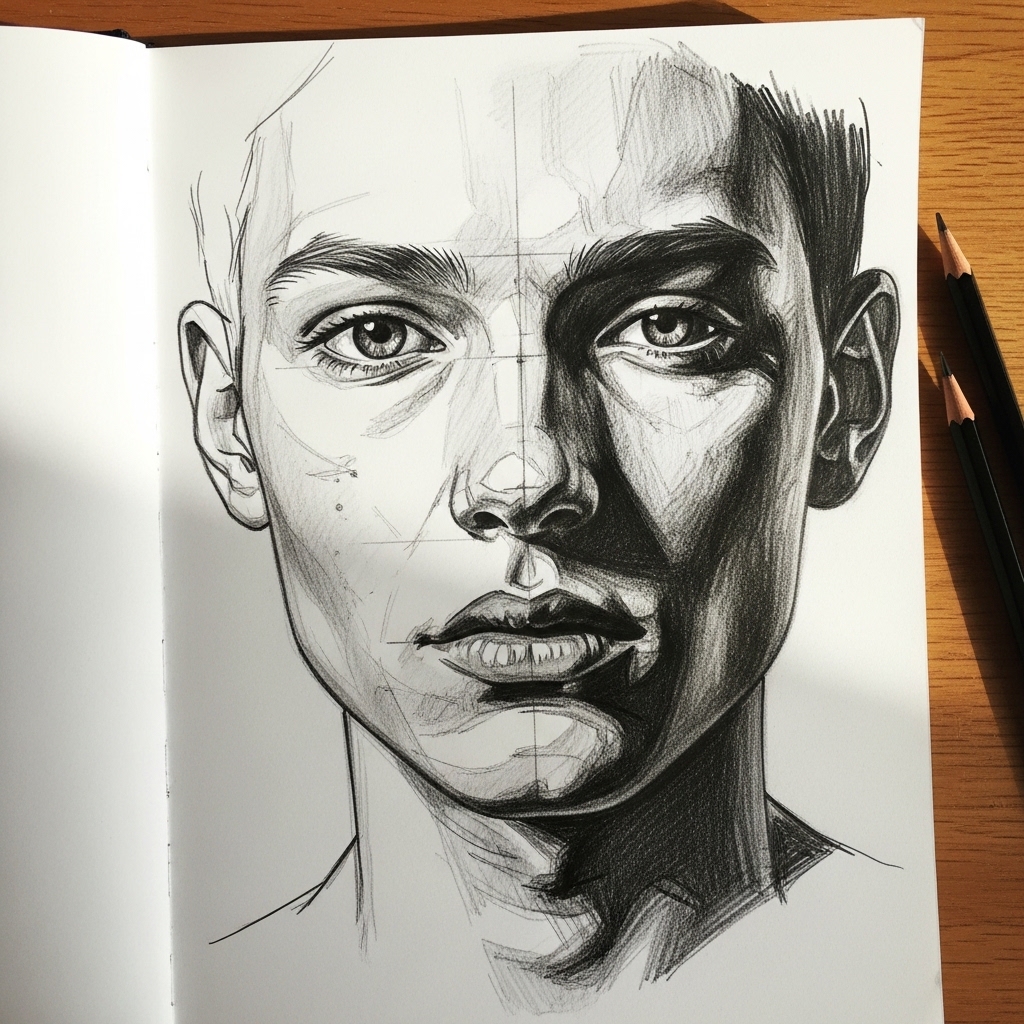
Skill Level: Advanced | Time: 60-90 minutes
Chiaroscuro, the dramatic use of light and shadow, creates portraits with immediate visual impact. Position a lamp to one side of your subject, creating strong contrasts between illuminated and shadowed areas. This lighting reveals the three-dimensional structure of the face in ways that flat lighting cannot.
Start by mapping out the big shadow shapes, ignoring details initially. The illuminated areas will contain your fine detail work, while the shadows remain relatively simple. This approach creates depth and volume automatically. Famous artists like Rembrandt used this technique masterfully. Study their work to understand how selective detail guides the viewer’s eye through the composition.
Conceptual and Abstract Drawing Ideas (2026)
Sometimes the best drawing ideas come from imagination rather than observation. These conceptual prompts let you explore ideas, emotions, and abstract concepts through visual means.
20. Dreams in a Bottle
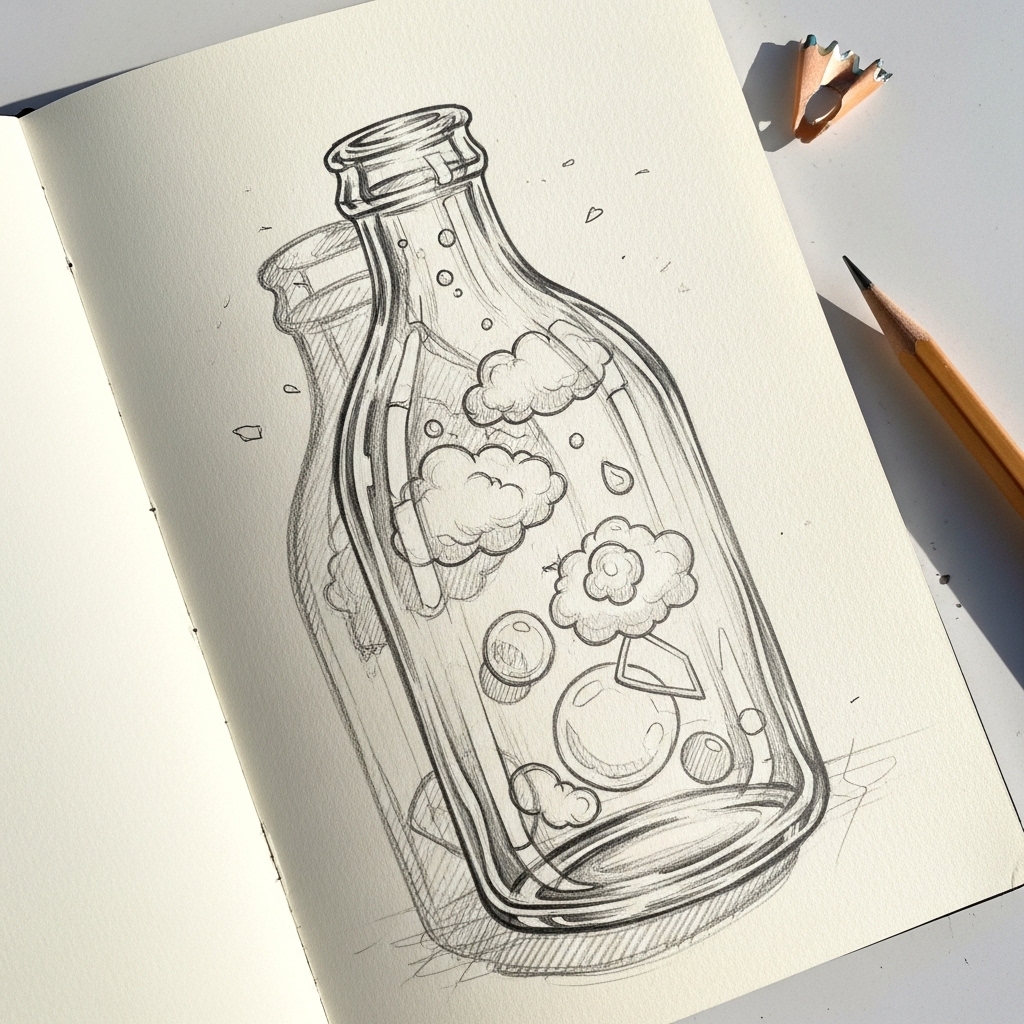
Skill Level: Beginner to Intermediate | Time: 30-45 minutes
Draw a glass bottle or jar containing an impossible scene: clouds, miniature landscapes, floating objects, or symbolic items. This whimsical concept combines realistic rendering of the glass container with imaginative contents that tell a story about hopes, memories, or fears.
The glass requires careful attention to reflections and refractions. What happens to the scene inside where the glass curves? How do highlights run along the edges? The contents can be as realistic or fantastical as you wish. I have seen beautiful versions containing shipwrecks, galaxies, forests, and abstract emotions rendered as colors and shapes.
21. Galaxy Swirl with Stars
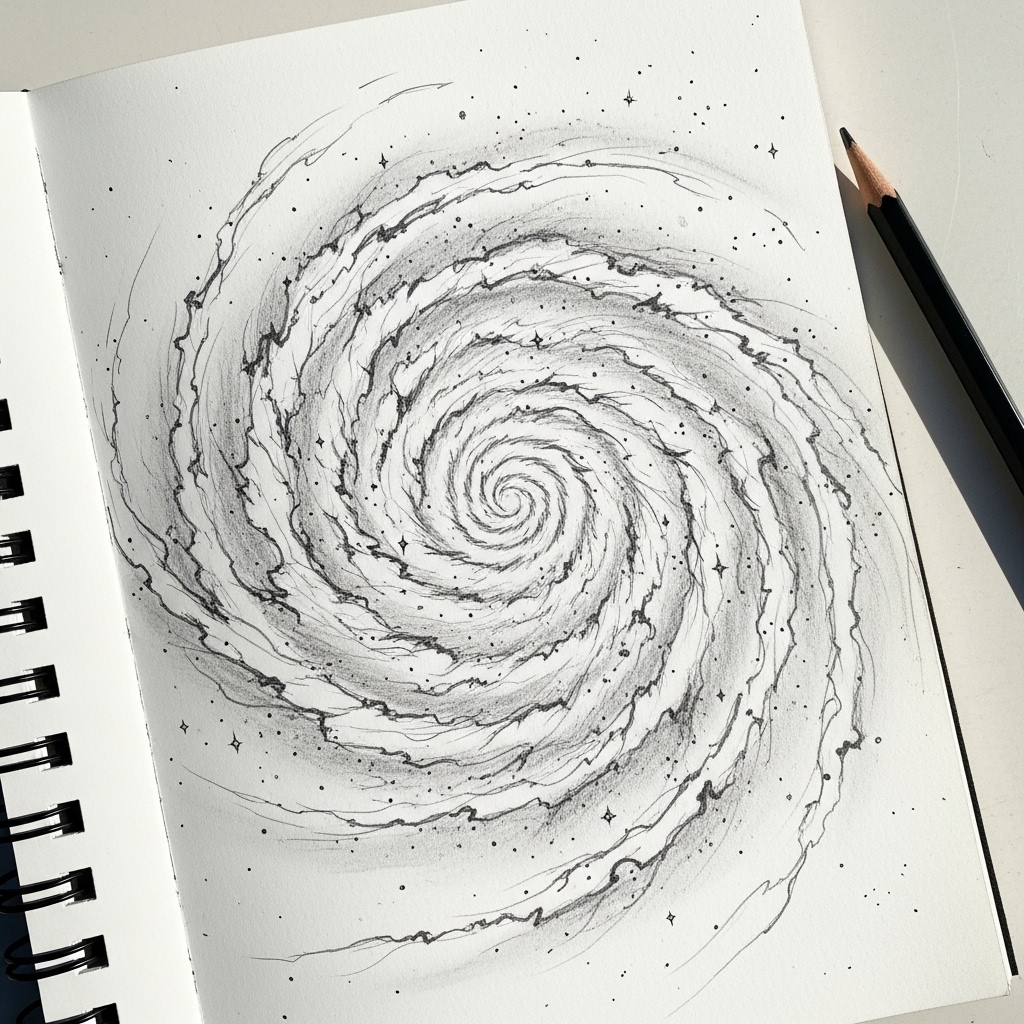
Skill Level: Beginner | Time: 20-30 minutes
Create a cosmic scene with swirling nebula clouds and scattered stars. This subject is forgiving because space does not have a single correct appearance. Start with a spiral composition and build up layers of tone using soft pencils or charcoal. White gel pen or gouache adds the bright stars and highlights.
Think about color even when working in grayscale. Where would the warm tones be versus the cool areas? The spiral structure creates natural movement and energy. Add larger stars by drawing bright centers with diffused halos. This drawing idea works particularly well for practicing blending techniques and understanding value contrast.
22. Geometric Pattern Mandala
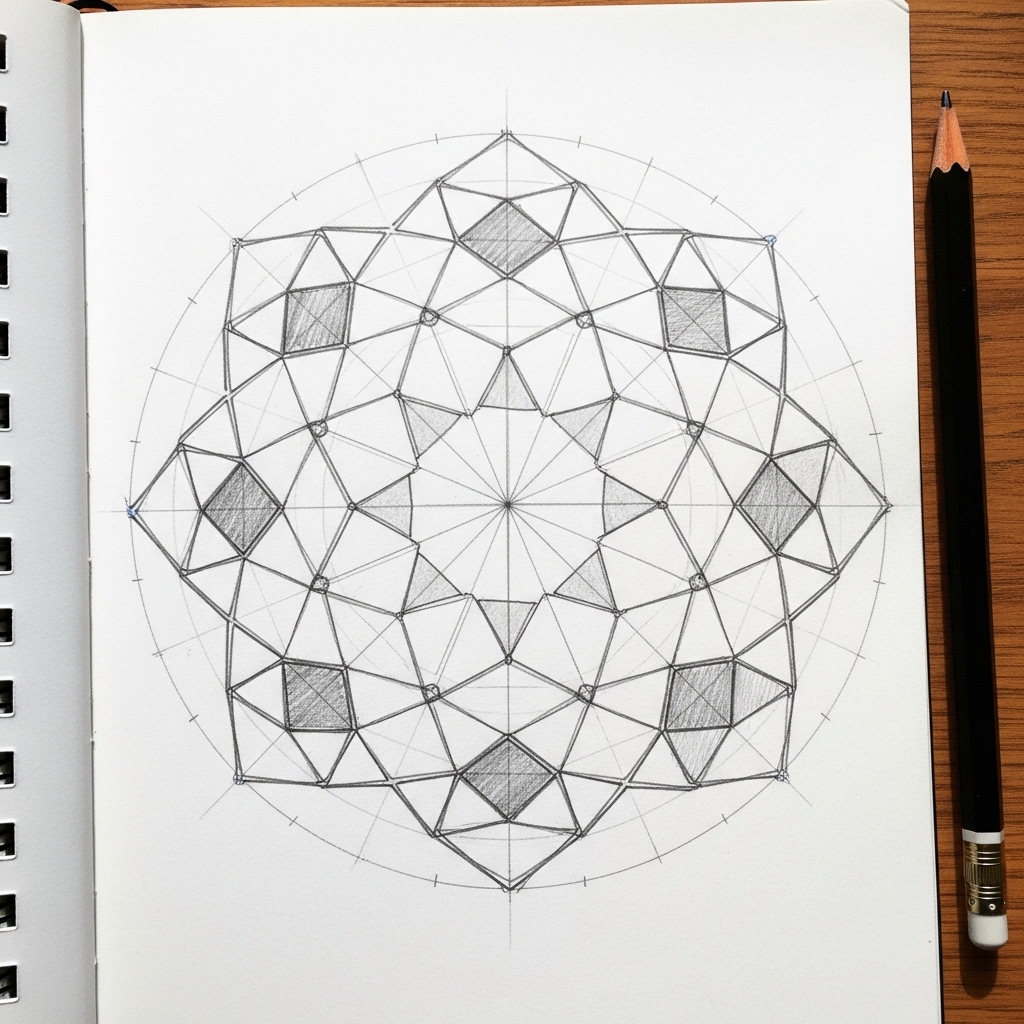
Skill Level: Beginner to Intermediate | Time: 45-60 minutes
Mandalas combine mathematical precision with creative decoration. Start with a circle and divide it into equal sections like slices of pie. Within each section, draw repeating geometric shapes that mirror across the center. This practice develops your hand control and understanding of symmetry.
Use a compass and ruler for the initial structure, then freehand the decorative details within each section. The repetitive nature becomes meditative, making this an excellent drawing idea for stress relief. You can fill sections with patterns, organic shapes, or symbolic imagery. Working outward from the center creates natural rhythm and balance.
23. Zentangle Inspired Design
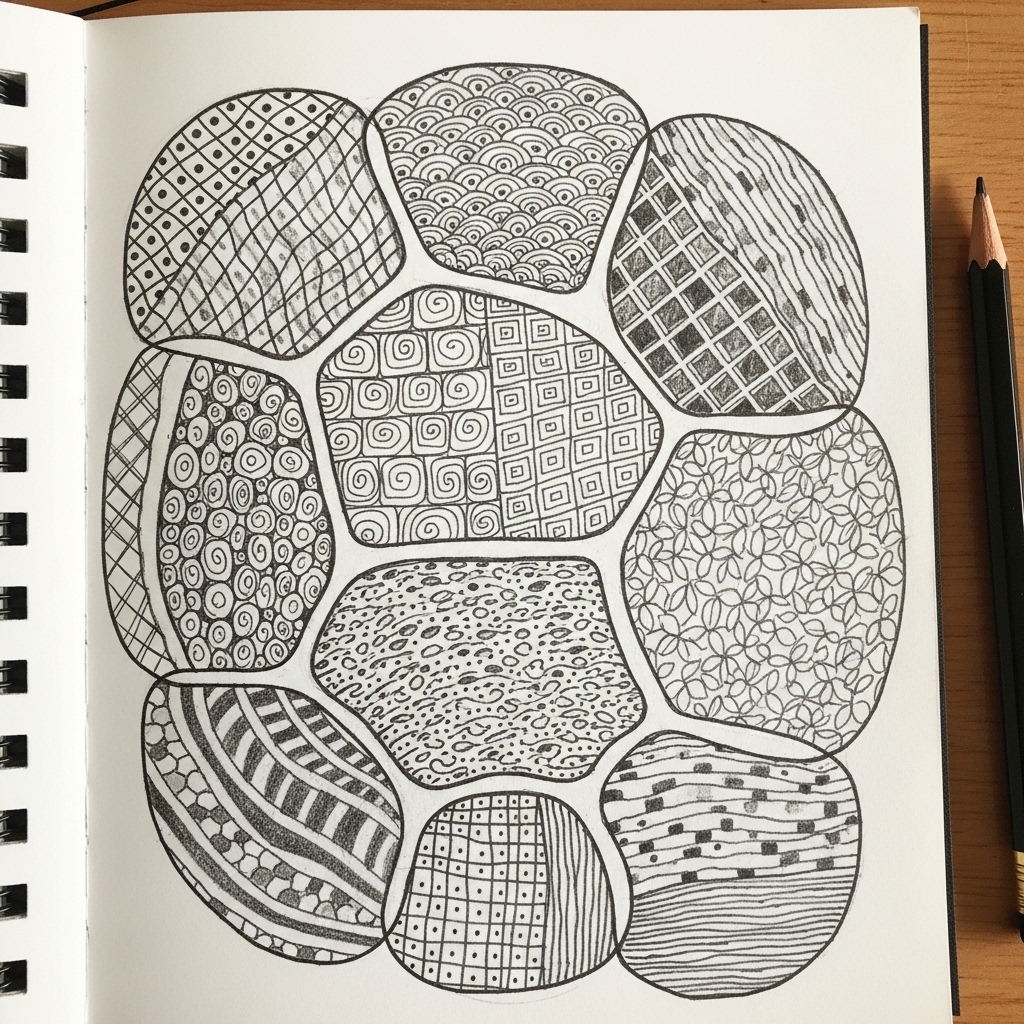
Skill Level: Beginner | Time: 30-60 minutes
Zentangle is a method of creating beautiful images from repetitive patterns. Draw a simple shape like a string across your page, creating organic sections. Fill each section with a different pattern: lines, dots, waves, grids, or any repetitive mark that fills the space.
The beauty comes from the combination of many simple elements. No single pattern needs to be complex. The overall composition emerges from the relationships between sections. Use consistent line weight throughout for cohesion, or vary it for emphasis. This technique requires no special subject matter knowledge and produces satisfying results even for absolute beginners.
24. Abstract Emotion Lines
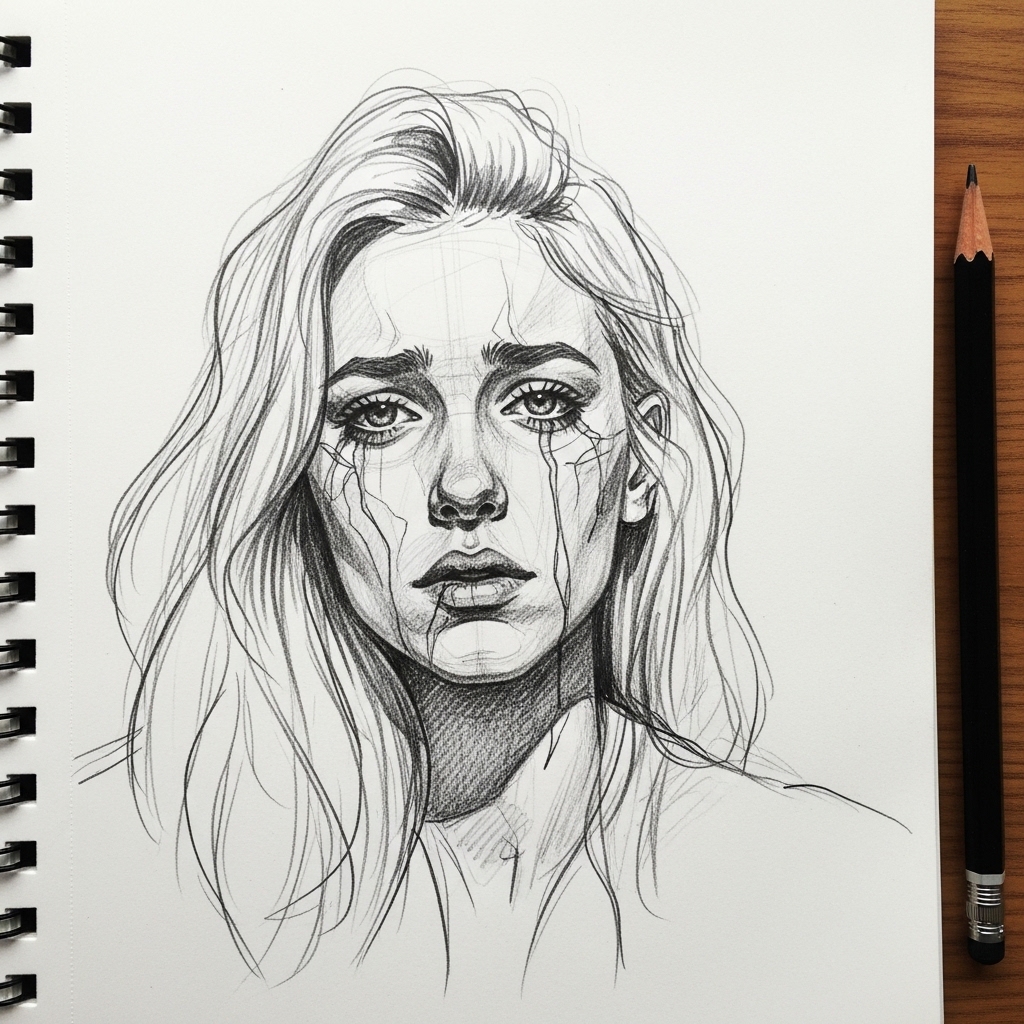
Skill Level: Beginner | Time: 15-30 minutes
Choose an emotion like joy, anger, sorrow, or excitement and express it purely through lines, shapes, and tones without recognizable objects. Sharp, jagged lines might express anger while flowing curves suggest calm. Heavy dark areas can feel oppressive while light spaces feel open.
This exercise builds your visual vocabulary for expression. Play music that evokes the emotion while you draw. Do not think about making it look good, focus on making it feel true. The results often surprise you with their authenticity. This approach connects to art therapy practices that use creativity for emotional processing.
25. Split Reality Composition
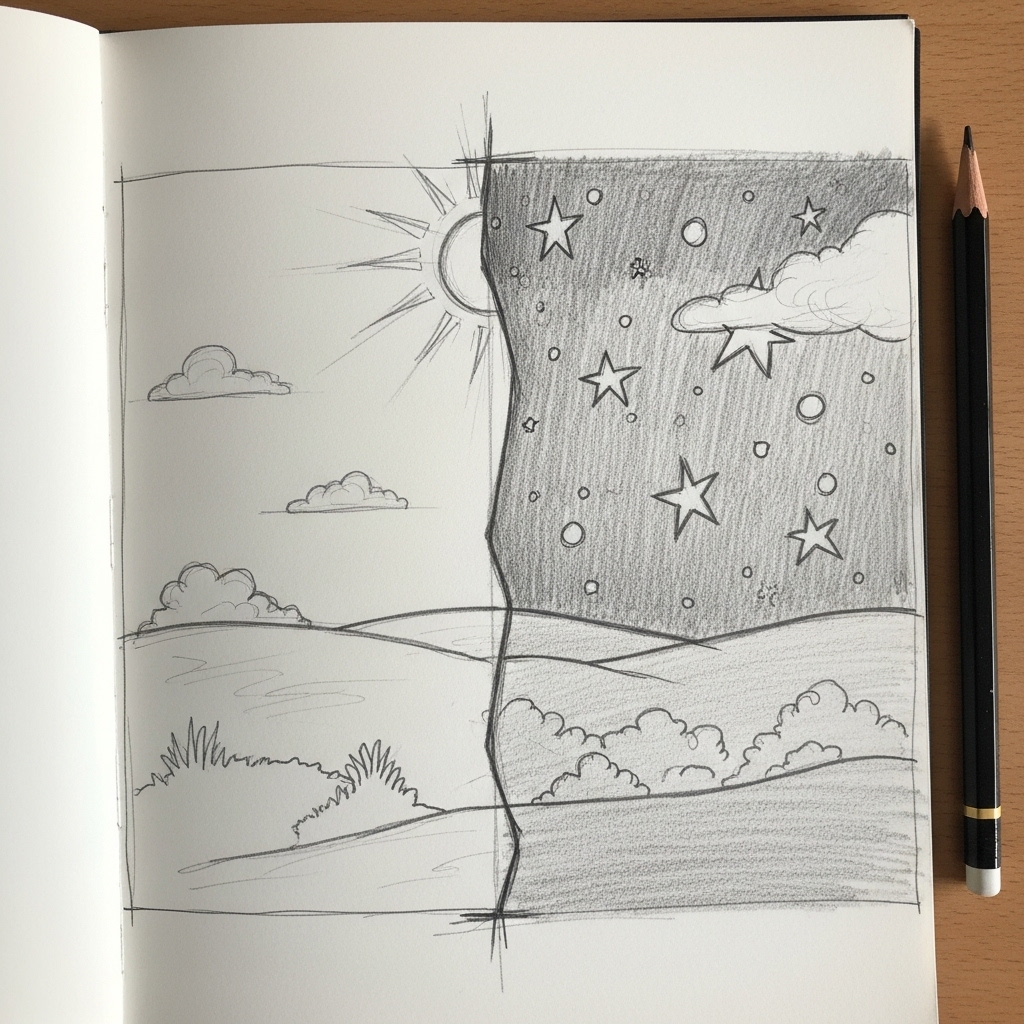
Skill Level: Intermediate | Time: 45-60 minutes
Divide your page into contrasting halves: day and night, reality and imagination, organic and geometric, chaotic and ordered. Develop each side fully while finding ways to connect them across the dividing line. This structure creates natural visual tension and interest.
The dividing line itself becomes an important design element. Will it be a hard edge, a gradual transition, or an irregular boundary? Objects might cross between worlds, changing as they pass through. This concept allows you to practice different styles and subjects within a single cohesive composition. The contrast tells a story without needing explicit narrative elements.
2026 Art Trends to Incorporate Into Your Drawings
The art world constantly evolves, and 2026 brings several exciting trends worth incorporating into your sketchbook practice. Staying aware of these movements keeps your work fresh and connected to contemporary visual culture.
AI Synergy represents one of the most significant shifts in how artists approach creation. Rather than viewing artificial intelligence as competition, many artists now use AI tools for initial inspiration, then develop the concepts with traditional hand skills. You might generate unusual compositions or impossible subjects using AI, then render them with pencils to combine technological possibility with human touch.
Naive Design celebrates imperfection and childlike expression. This trend rejects polished digital perfection in favor of visible hand marks, uneven lines, and unrefined shapes. Your sketchbook is the perfect place to embrace this approach. Let go of the need for realistic accuracy and instead focus on expressive, immediate mark-making that captures feeling over precision.
Mixed Media Integration continues growing as artists combine traditional drawing with collage, photography, digital elements, and unconventional materials. Try incorporating found paper, fabric scraps, or printed textures into your pencil drawings. The contrast between drawn marks and physical materials creates depth and surprise.
Sustainability Themes appear increasingly in contemporary art as environmental concerns shape cultural conversations. Consider drawing subjects that highlight nature’s beauty, environmental challenges, or sustainable living. Using recycled paper or eco-friendly supplies connects your practice to your message.
Authentic Expressive Styles mark a departure from social media perfection. Artists are sharing rough sketches, failed attempts, and honest processes alongside finished work. This transparency makes art more accessible and encourages genuine connection between creators and viewers.
Essential Drawing Principles Every Artist Should Know
Understanding fundamental principles transforms random sketching into intentional artistic development. These concepts provide the framework for everything you draw.
What Is the 70/30 Rule in Drawing?
The 70/30 rule suggests spending 70 percent of your time looking at your subject and only 30 percent looking at your paper. Most beginners reverse this ratio, staring at their drawing while occasionally glancing at the reference. This habit produces distorted proportions because you are drawing from memory rather than observation.
Train yourself to keep your eyes moving constantly between subject and paper. The more you observe the actual shapes, relationships, and values in front of you, the more accurate your drawing becomes. This rule applies equally when drawing from life, photographs, or imagination. Constant reference to your mental image or external subject grounds your work in reality.
What Are the 7 Laws of Drawing?
These fundamental principles govern how we perceive and represent three-dimensional reality on a flat surface. Understanding them helps you create drawings that feel natural and convincing.
Proportion refers to the relative size relationships between elements. The head fits into the body a specific number of times, eyes are spaced a certain distance apart, and these relationships must be accurate for likeness.
Perspective creates the illusion of depth through converging lines, diminishing size, and atmospheric effects. Objects appear smaller as they recede into distance, parallel lines meet at vanishing points, and distant elements become less detailed and lighter in value.
Form describes the three-dimensional structure of objects. Even on flat paper, shading and line quality can suggest roundness, angularity, and volume. Understanding basic geometric forms helps you construct complex subjects from simple building blocks.
Structure is the underlying framework that holds forms together. Anatomical knowledge for figures, architectural logic for buildings, or growth patterns for plants all provide the skeleton upon which surface details hang.
Value encompasses the full range from white to black that describes light, shadow, and form. Accurate value relationships create volume and depth, while value patterns establish composition and mood.
Edge Quality distinguishes between hard, soft, and lost edges. Not all outlines are equal; some are sharp and defined while others blur into adjacent areas. Varied edge quality creates visual interest and spatial depth.
Unity brings all elements together into a coherent whole. Through consistent light source, harmonious composition, and intentional focus, individual parts combine into a complete statement.
Frequently Asked Questions About Drawing Ideas
What should I draw in a sketchbook?
Your sketchbook is a judgment-free zone for exploration. Fill it with daily observations, gesture drawings, copies of masterworks, invented creatures, experiments with new materials, written notes about ideas, color swatches, and anything that catches your interest. The best sketchbooks show a variety of subjects and styles rather than polished finished pieces. Think of it as visual thinking rather than performance.
What are the top 10 easiest things to draw?
The easiest drawing subjects include: 1) Simple geometric shapes combined into compositions, 2) Basic fruit like apples and bananas, 3) Coffee mugs and simple cups, 4) Clouds and basic skyscapes, 5) Houseplants with simple leaves, 6) Cartoon faces with exaggerated features, 7) Basic animals like cats or fish from simple shapes, 8) Stars and moon shapes, 9) Simple trees and bushes, 10) Basic buildings with rectangular forms. Start with subjects that have clear geometric foundations.
What to draw when bored?
When boredom strikes, try these quick drawing ideas: Fill a page with continuous contour lines without lifting your pen, create a grid of tiny thumbnail sketches, draw the objects within arm’s reach, sketch imaginary creatures combining real animal features, copy interesting images from books or magazines, draw your non-dominant hand, create patterns using only circles or only straight lines, or sketch dream houses and fantasy vehicles. Set a timer for five minutes and fill as much of the page as possible.
How do I start drawing if I’m a complete beginner?
Begin with basic materials: an HB pencil, eraser, and any paper. Start by drawing simple geometric shapes and copying flat images rather than three-dimensional objects. Focus on observation rather than imagination at first. Draw for short sessions daily rather than occasional long sessions. Study one subject repeatedly to see improvement. Follow step-by-step tutorials to learn how artists break down complex subjects. Most importantly, embrace mistakes as part of learning rather than evidence of failure.
What are things that spark creativity?
Creativity sparks come from changing your environment, setting artificial constraints, looking at other artists’ work, taking walks in nature, trying new materials, working at different times of day, collaborating with others, switching between digital and traditional media, exploring different subjects outside your comfort zone, and maintaining a regular practice schedule even when inspiration feels absent. Physical movement often triggers mental shifts that unblock creative flow.
Start Your Creative Journey Today
These 25 drawing ideas represent just the beginning of what is possible when you commit to regular creative practice. Each prompt offers a doorway into observation, imagination, and skill development. The key is not to wait for inspiration to strike, but to start drawing and let the inspiration find you in the process.
I encourage you to pick one idea from this list right now and spend fifteen minutes with pencil and paper. Do not worry about creating a masterpiece. Focus on the experience of looking closely, making marks, and seeing what emerges. Tomorrow, choose a different idea. Within a month of daily practice, you will see improvement that surprises you.
The blank page is not your enemy. It is an invitation to explore, experiment, and express. These drawing ideas in 2026 are your starting points, but where they lead depends entirely on your curiosity and commitment. Keep your sketchbook close, your pencil sharp, and your mind open. Your next great drawing is waiting to be discovered.