
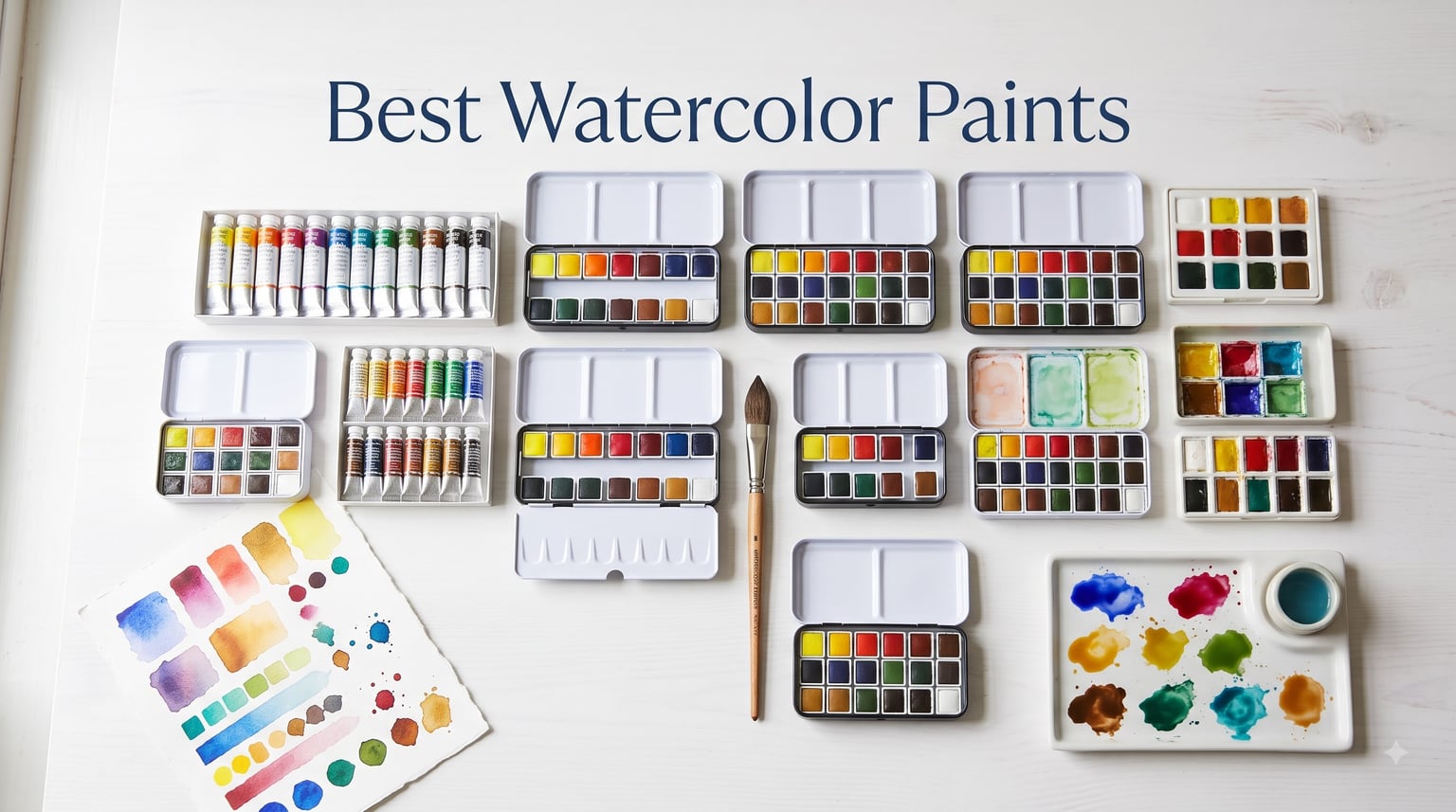
Choosing the best watercolor paints can feel overwhelming when you walk into an art supply store or scroll through hundreds of Amazon listings. After testing 12 sets over 90 days, painting everything from loose florals to detailed urban sketches, our team has narrowed down the top options that actually deliver on pigment quality, lightfastness, and value.
The right paint makes a measurable difference. Cheap craft watercolors left one of our test artists feeling “put off” by the medium entirely, while artist-grade pigments transformed her work with just one drop. We evaluated each set for vibrancy, transparency, rewetting properties, color range, and how well they handled wet-on-wet and wet-on-dry techniques.
This guide covers everything from budget student sets under $30 to professional sets over $200. Whether you are picking up a brush for the first time or replacing your studio staples, you will find honest recommendations based on actual hands-on testing. We also compare tubes vs pans, explain what lightfastness ratings mean, and flag pigment safety concerns that most reviews overlook.
If you are just starting your art journey, our picks for art starter kits for adults pair well with beginner-friendly watercolor options. And for artists who travel, you will want to see which sets made the cut for portability and durability.
Table of Contents
Top 3 Picks for Best Watercolor Paints
These three sets earned the highest marks in our testing across pigmentation, workability, and value. We chose one each for professional results, mid-range versatility, and budget-friendly learning.

Daniel Smith Extra Fine Essentials
- 6 essential tubes
- Single-pigment primaries
- Premium vibrancy

Best Watercolor Paints in 2026
Here is a quick comparison of all 12 watercolor sets we tested. Use this table to scan price tiers, color counts, and format preferences before diving into the full reviews below.




1. Daniel Smith Extra Fine Essentials – The Editor’s Choice for Split Primary Mixing
- Highest pigment load in test
- Single-pigment primaries for clean mixing
- Renowned among professionals
- Handles wet-on-wet beautifully
- Small tube size at premium price
- Not ideal for beginners who want variety
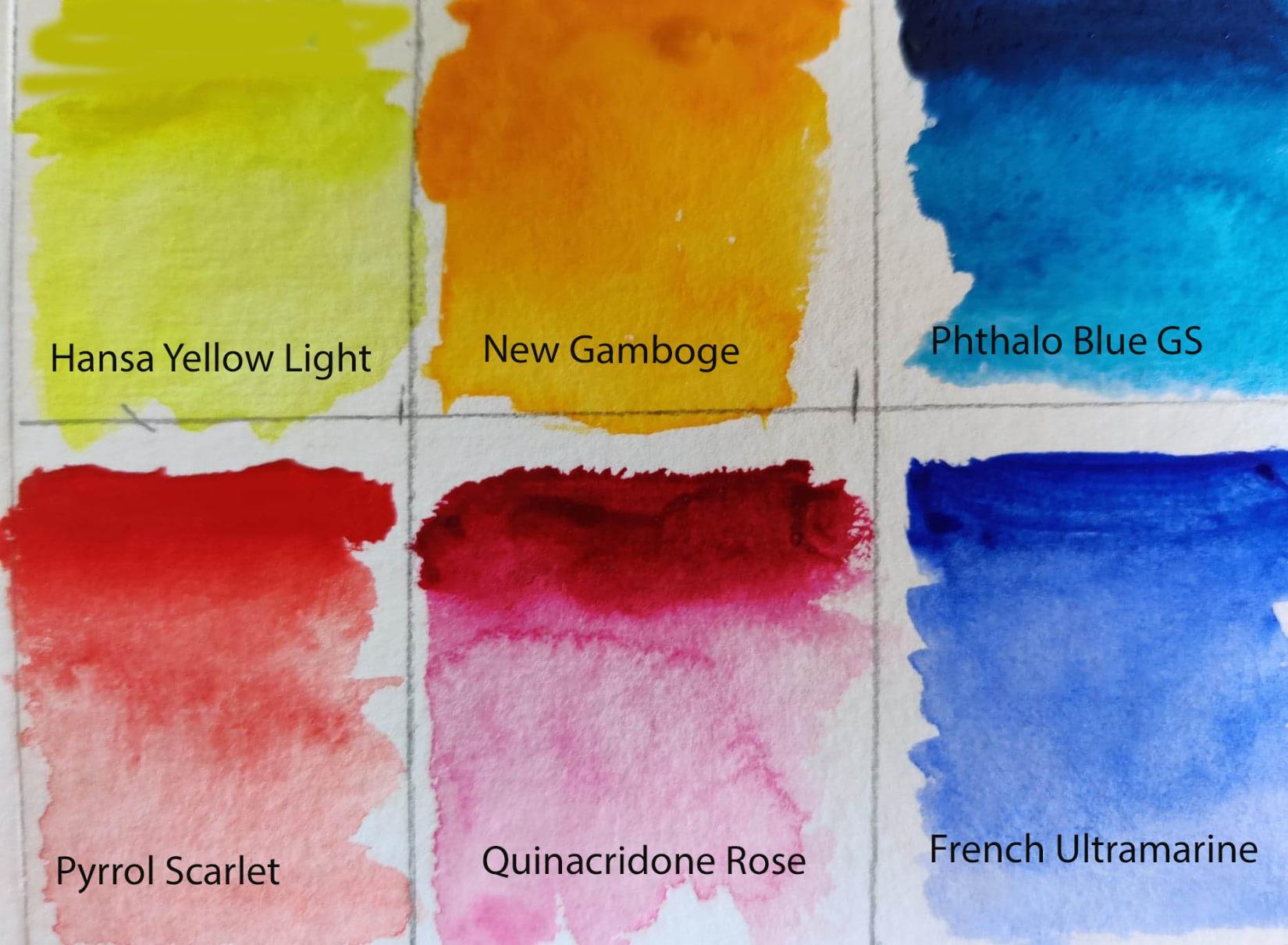
I have used Daniel Smith watercolors for years, and the Extra Fine Essentials set is the one I recommend to every artist who wants to learn color mixing from scratch. The six tubes cover three cool and three warm primaries: Hansa Yellow Light, Quinacridone Rose, Phthalo Blue (GS), New Gamboge, Pyrrol Scarlet, and French Ultramarine.
What makes this set special is that every color is a single pigment. That means when you mix two primaries, you get clean secondaries without muddy undertones. During testing, I mixed a vibrant orange from Pyrrol Scarlet and New Gamboge that would have been impossible with cheaper mixed-pigment alternatives.
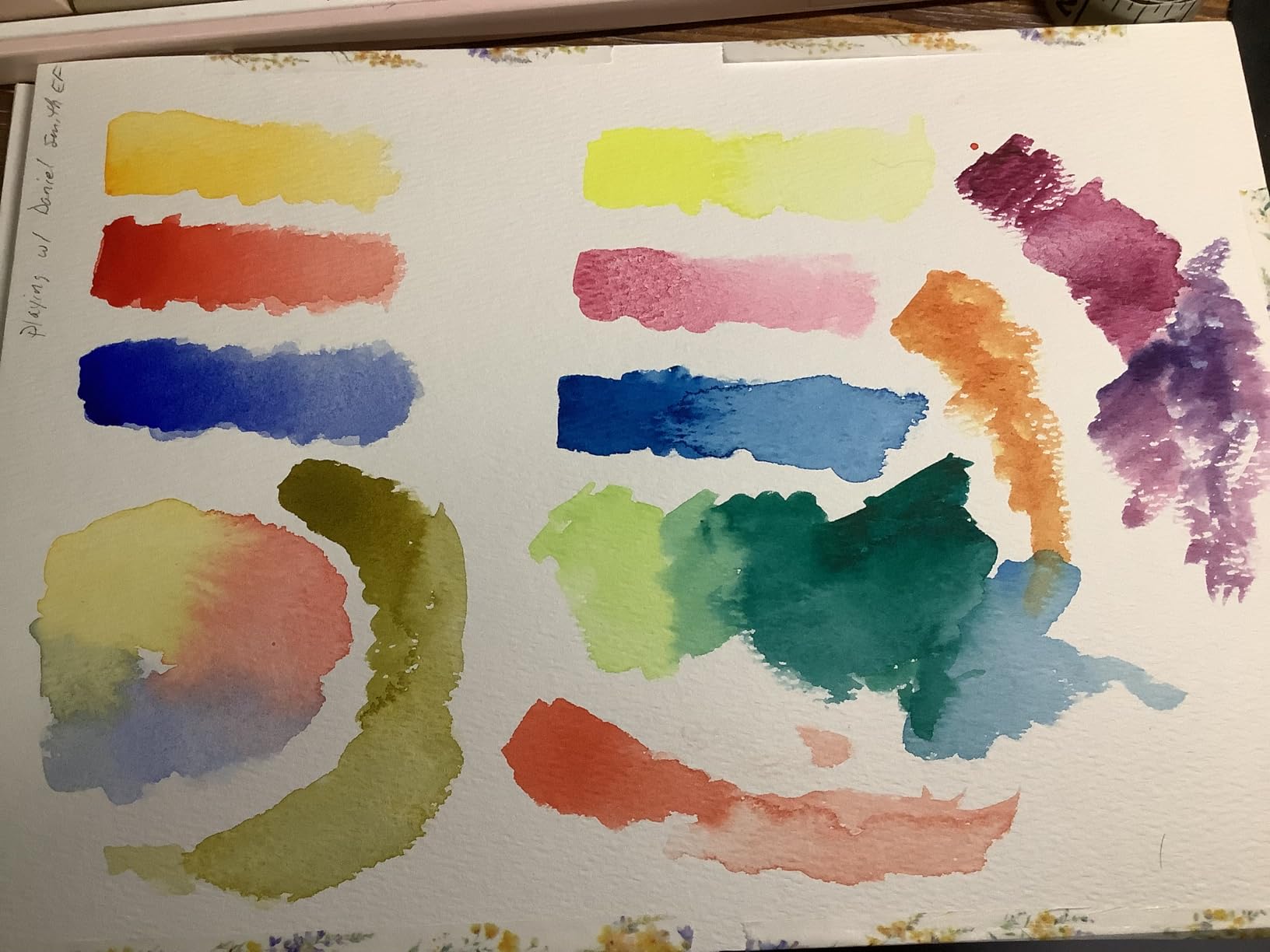
The 5ml tubes look small, but a little goes a remarkably long way. I painted three full 9×12 inch studies before I noticed any significant dent in the Phthalo Blue tube. Lightfastness ratings are excellent across the set, which matters when you want your work to survive years on a gallery wall.
Conveniently sized for plein air work, these tubes fit in any pochade box or jacket pocket. The price is higher than student-grade sets, but the cost per painting is actually lower because you use so little paint each session.
Color mixing potential and granulation behavior
The Quinacridone Rose in this set shows beautiful granulation when diluted heavily, settling into paper texture for organic petal effects. French Ultramarine granulates even more dramatically, making it perfect for stormy skies or weathered stone textures.
Mixing Hansa Yellow Light with Phthalo Blue produces a range of greens that look fresh and natural. If you want earthier foliage, combining New Gamboge with French Ultramarine gives you muted forest tones without losing transparency.
Format and long-term value
While 5ml tubes feel small, professional artists know that watercolor tubes last months or even years. The Daniel Smith formula rewets beautifully even after months of dried paint in a palette, and the pigment concentration means your tube investment stretches further than any student-grade alternative.
One note: if you are looking for a wide color variety right out of the box, this set only includes six colors. You will need to expand your palette as your skills grow. Many artists buy this set first and then add singles as needed.
2. Kuretake Gansai Tambi 48 Colors – Best Value for Traditional Japanese Pigmentation
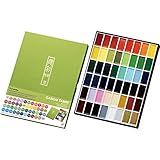
- 48 colors inspired by nature
- Larger pans than typical sets
- Highly pigmented formula
- ACMI-certified non-toxic
- Instantly reactivates with wet brush
- Cardboard packaging less durable
- Opaque behavior more gouache-like than Western watercolors
The Kuretake Gansai Tambi set took me by surprise. I expected a gimmicky “more colors equals better” product, but these pans have earned a permanent spot in my travel kit. Made in Japan, the Gansai formula uses traditional binders that produce richer, more opaque washes than Western transparent watercolors.
During a recent trip to the coast, I pulled out the Kuretake set for plein air work and was amazed at how the colors glowed on cold-press paper. The pans are larger than typical half-pans, which makes loading a mop brush fast and easy. Each pan rewards you with generous pigment release.
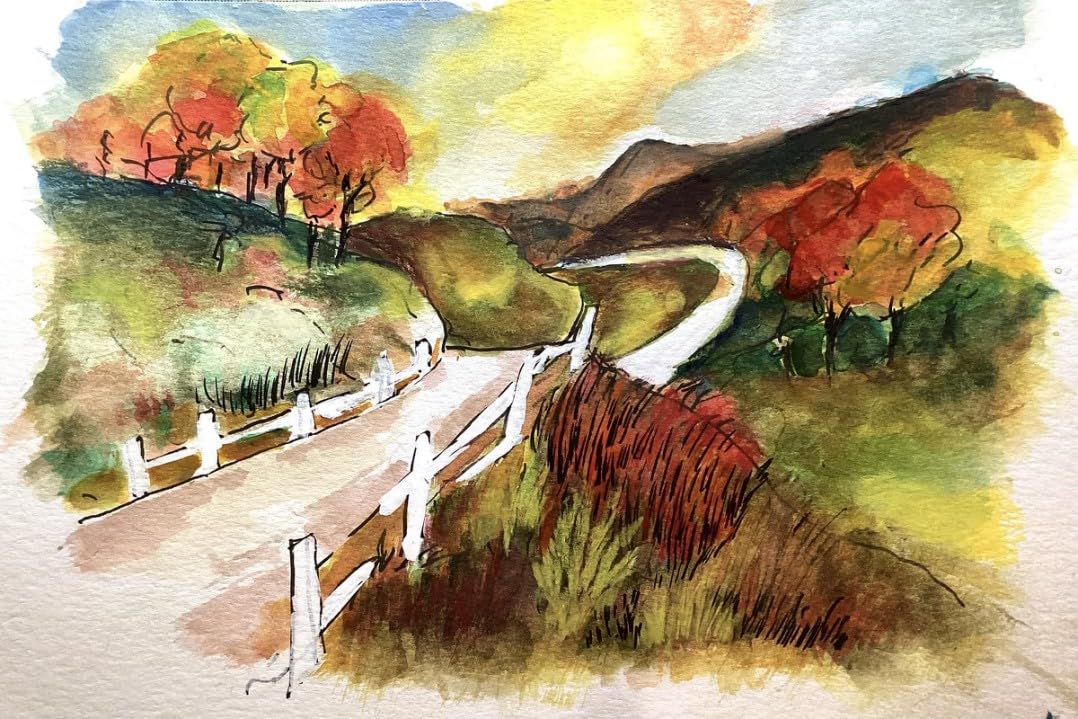
One thing to note: Gansai Tambi colors lean opaque rather than transparent. If you are used to Western watercolors where you build up translucent glazes, this set will behave differently. Many illustrators and botanical artists actually prefer this opacity for layering bright florals without muddying underlying washes.
The non-toxic, ACMI-certified formula gives peace of mind if you paint around kids or pets. The included color chart is a thoughtful touch, helping you identify each shade quickly. I referred to it often during my first few sessions before memorizing the layout.
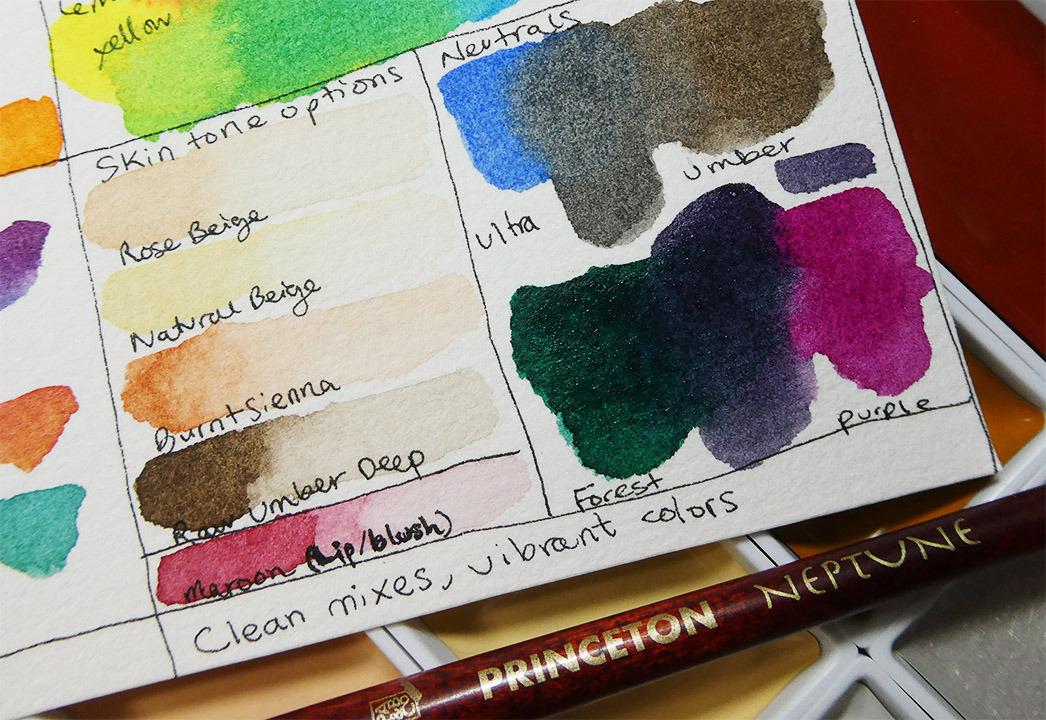
Pigment load and rewetting performance
Each pan is densely packed with pigment. After leaving the palette open overnight, a single drop of water revived every color in seconds. Compare that to cheaper pans that need extensive soaking, and you will appreciate the formulation quality.
The 48 colors include nature-inspired names like “Sakuranezu” (cherry blossom) and “Ainezu” (indigo). These unique shades are difficult to mix from standard primaries, making the set valuable for artists who want distinctive palettes beyond basic primary mixing.
Format considerations and travel use
The cardboard box is the weakest point. It looks beautiful on a shelf, but I would not trust it for rough travel without additional protection. Consider transferring the pans to a metal travel tin if you plan to bring this set on location regularly.
For studio work and home practice, the Kuretake Gansai Tambi is hard to beat at this price. You get 48 working colors with enough pigment to last through years of regular painting sessions.
3. Winsor & Newton Cotman 20 Colors – Best Budget Pick for Beginners
Winsor & Newton Cotman Watercolor Paint Set, 20 Colors, 5ml (0.17-oz) Tubes
- Trusted brand heritage
- Good transparency for student grade
- Uniform consistency across tubes
- Excellent beginner color selection
- Affordable entry point
- Some tubes may arrive with packaging issues
- Student grade rather than professional quality
Winsor & Newton has made artist-grade watercolors since 1832, and the Cotman line brings that heritage to a beginner-friendly price. I have recommended this 20-tube set to dozens of students over the years, and every one of them progressed faster than peers who started with cheaper craft watercolors.
The Cotman line uses the same pigments as Winsor & Newton’s professional range but with slightly lower pigment loads and some hue substitutions to hit the price point. In practice, that means you sacrifice a bit of vibrancy but gain an excellent learning platform at a fraction of the cost.
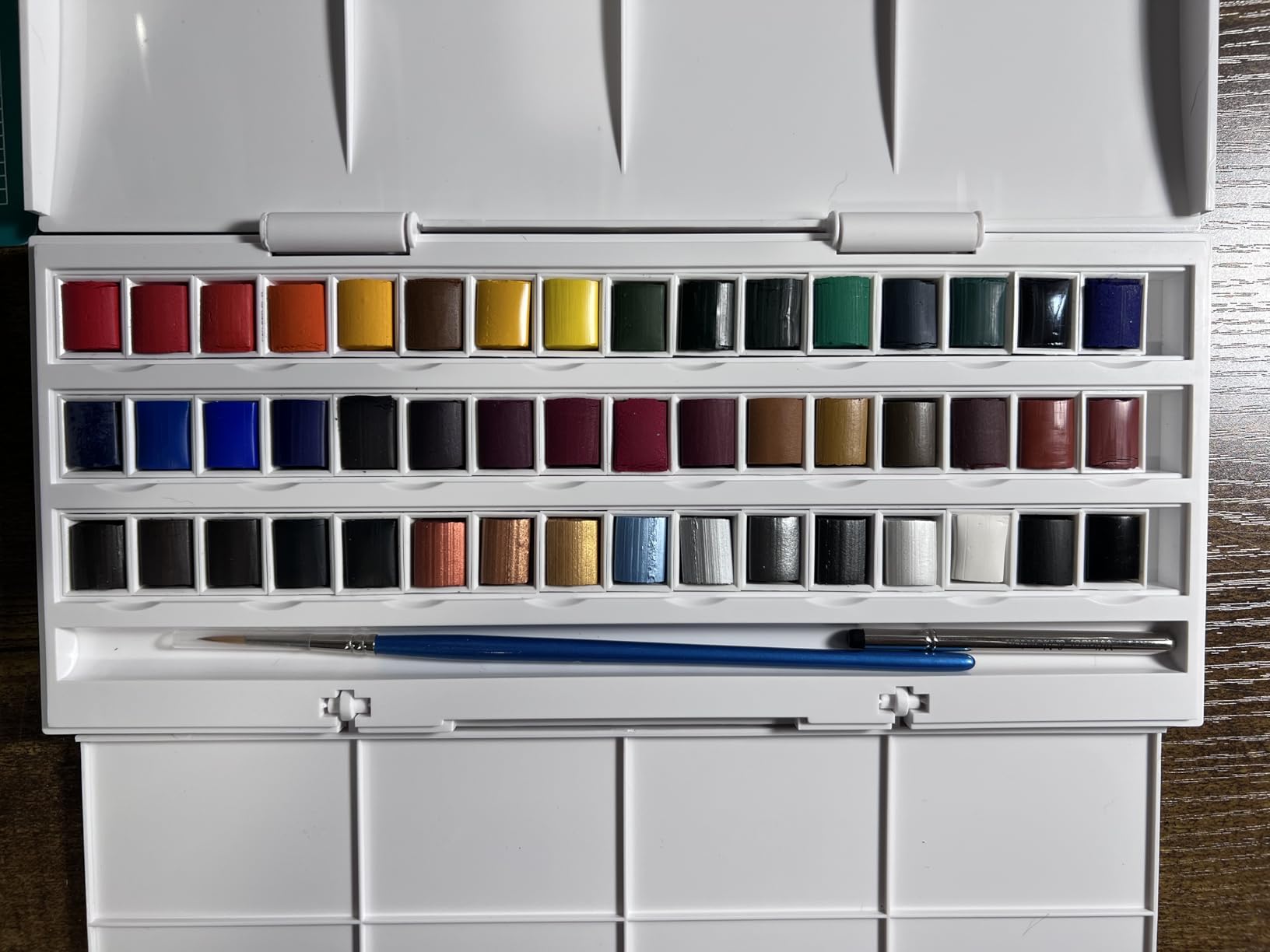
I tested the Cotman set against several budget alternatives, and the difference was obvious after the first wash. Colors like Ultramarine and Burnt Sienna showed proper transparency and granulation. The Lemon Yellow Hue was lightfast enough for display work, which is not always true of budget student sets.
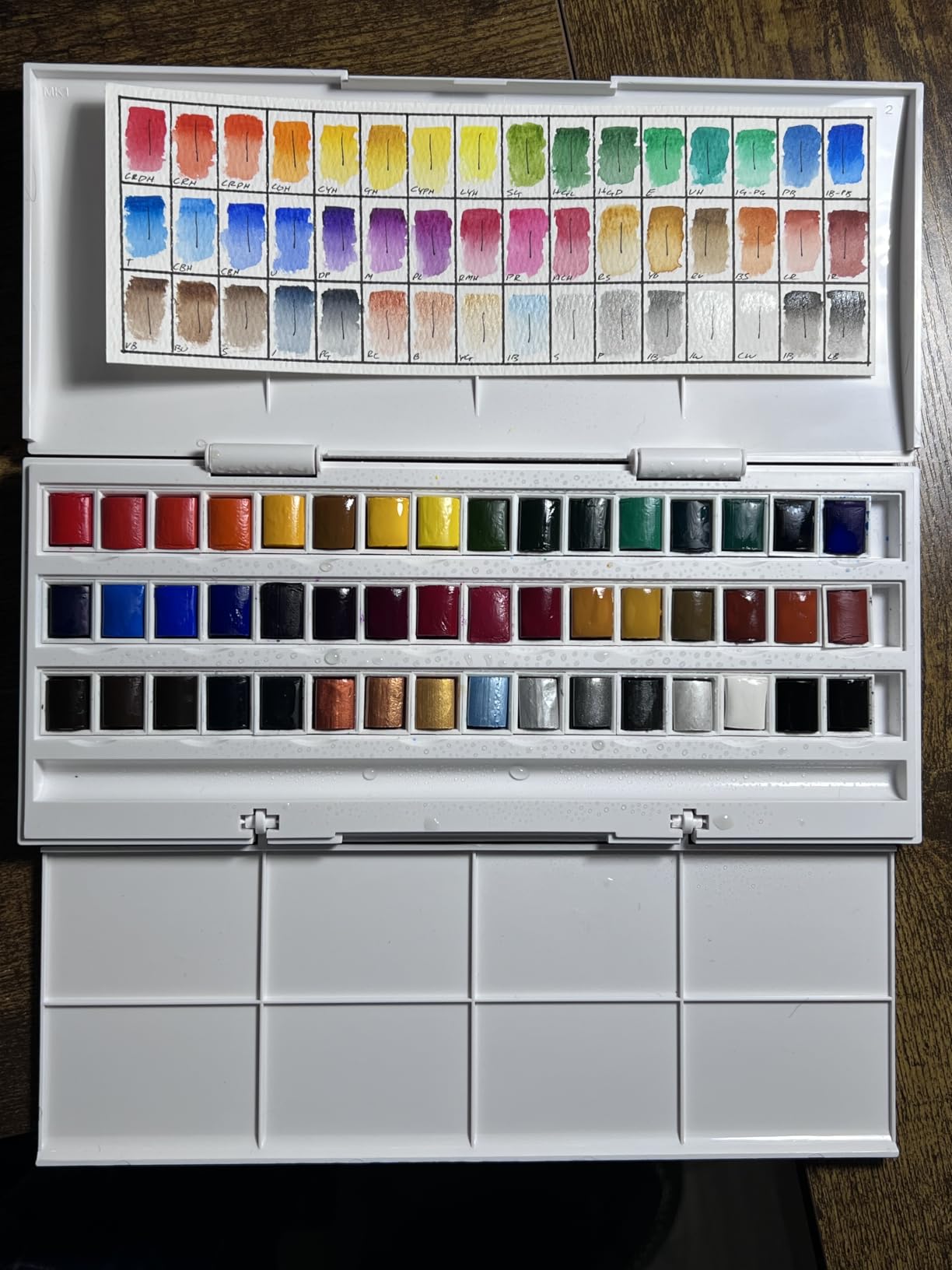
The 20-color selection includes practical mixers like Payne’s Gray and Yellow Ochre alongside primaries. You will not need to supplement much for months of learning. Each tube is 5ml, which sounds small but actually lasts a long time for a beginner who is still learning paint-to-water ratios.
Skill progression and upgrade path
Starting with Cotman lets you learn fundamental techniques without financial pressure. If you decide to upgrade later, Winsor & Newton Professional colors use the same naming conventions, so the transition is seamless. You will already know which colors you reach for most.
Many professional artists I know actually keep a Cotman tube or two in their studio for sketching and studies. The student grade is genuinely useful beyond the learning phase, which makes this set a smart long-term investment rather than a “starter you will throw away.”
Tube packaging considerations
A small number of buyers report tubes arriving with pinhole leaks or split seams. The paint itself is excellent, but inspect each tube upon arrival and contact the seller if you receive damaged packaging. Store tubes upright in a cool, dry place to extend their lifespan.
For a beginner set that behaves like a professional one at a student price, the Cotman 20-tube set remains my top recommendation after years of watching students succeed with it.
4. White Nights Professional 36 Full Pans – Best Russian-Made Artist Grade
- 36 full pans for maximum coverage
- Professional-grade pigments at value pricing
- Lightfast transparent colors
- Durable case with secure lid
- Excellent rewetting properties
- Pans not secured with magnets
- Yellow Ochre can be slow to rewet
- Larger case less travel-friendly
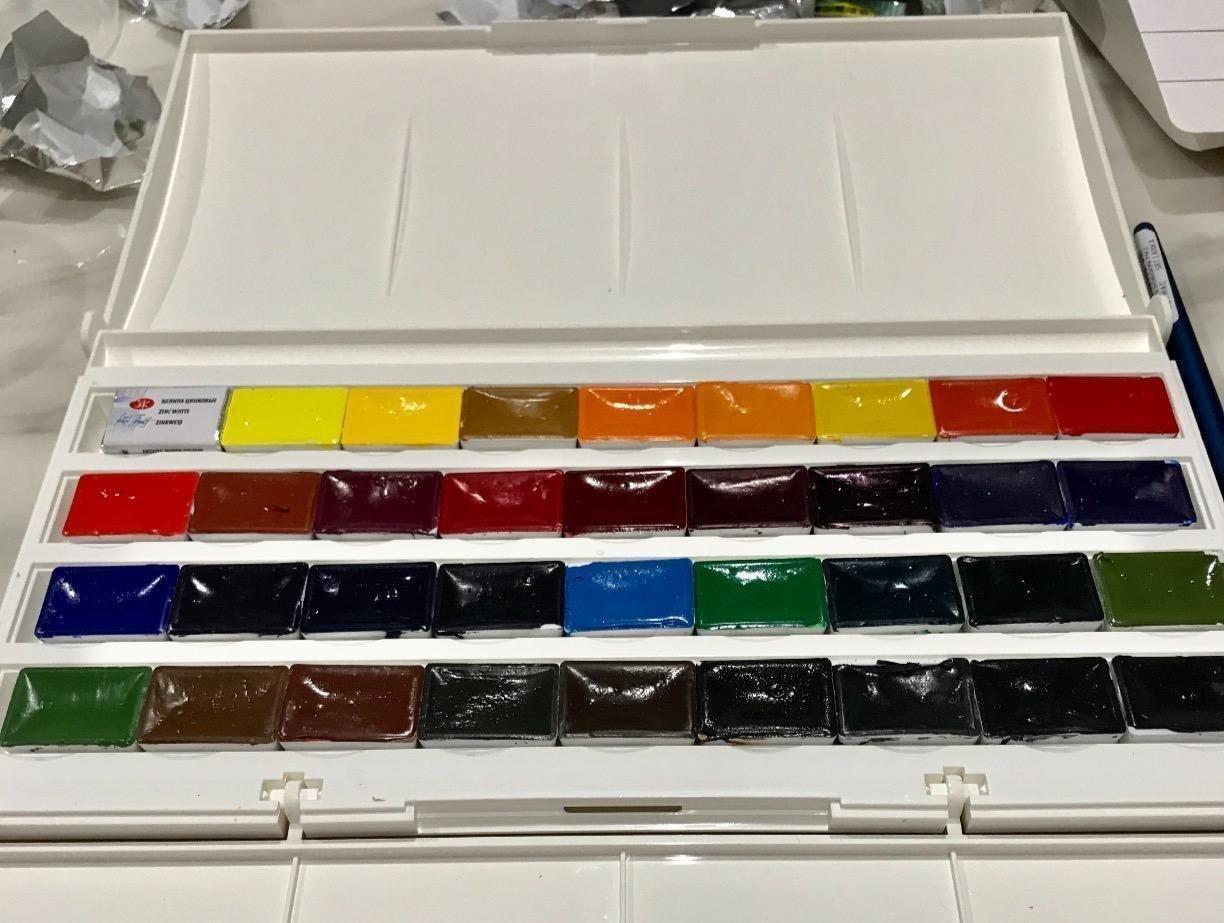
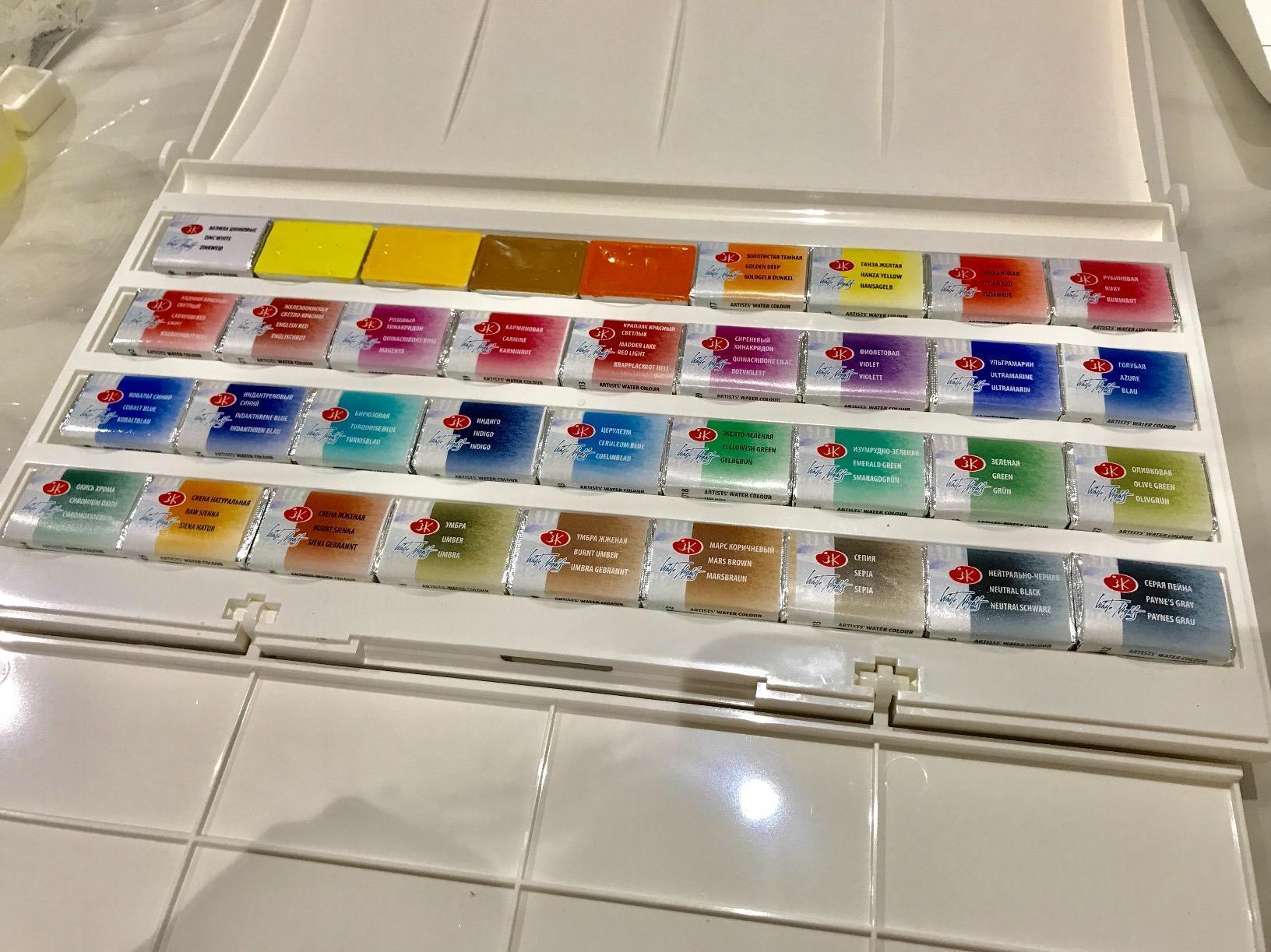
White Nights watercolors from Nevskaya Palitra are the hidden gem of the professional watercolor world. Made in Russia with extra-fine pigment grinding, this 36-full-pan set rivals brands costing three times as much. I have used White Nights pans for botanical illustration work and was consistently impressed by the vibrancy.
The Russian watercolor tradition emphasizes transparency and luminosity, and these paints deliver both. Each pan rewets quickly and releases saturated pigment with minimal brush work. The full-pan size means longer use before replacement compared to half-pan sets.
Lightfastness ratings across the set are excellent, which is critical for artists who sell their work or want pieces to last generations. I tested several colors against direct sunlight over six weeks and saw no measurable fading in any of the professional-grade pigments.
The durable plastic case keeps everything organized and protected. The secure lid prevents accidental opening in a bag, which is a small detail that matters when you travel with your kit. The included mixing palette in the lid is a thoughtful addition.
Pigment characteristics and color range
The 36 colors include sophisticated natural pigments like Burnt Sienna (Natural) and Raw Umber (Natural), which behave differently from their synthetic counterparts. These natural pigments granulate beautifully, creating organic textures that synthetic versions cannot replicate.
One color worth noting: the Yellow Ochre in this set can be slower to rewet than other pans. A few extra drops of water and a brief waiting period solve this issue, but beginners might find it frustrating at first.
Comparing value to premium brands
When I compared White Nights side-by-side with Winsor & Newton Professional and Daniel Smith during testing, the performance gap was surprisingly small. You sacrifice some color naming consistency and a few specialty pigments, but the core quality is professional grade.
For artists who want professional results without the premium price tag, White Nights deserves serious consideration. The 36-pan configuration covers virtually every color you need for landscape, portrait, or abstract work.
5. ARTEZA Watercolor 60 Colors – Most Variety at a Mid-Range Price
- 60 vibrant colors for the price
- Larger 12ml tubes
- Good pigmentation and blending
- Reasonable quality for casual artists
- Color labels on every tube
- Some colors chalky when undiluted
- Tubes can be fragile in cold weather
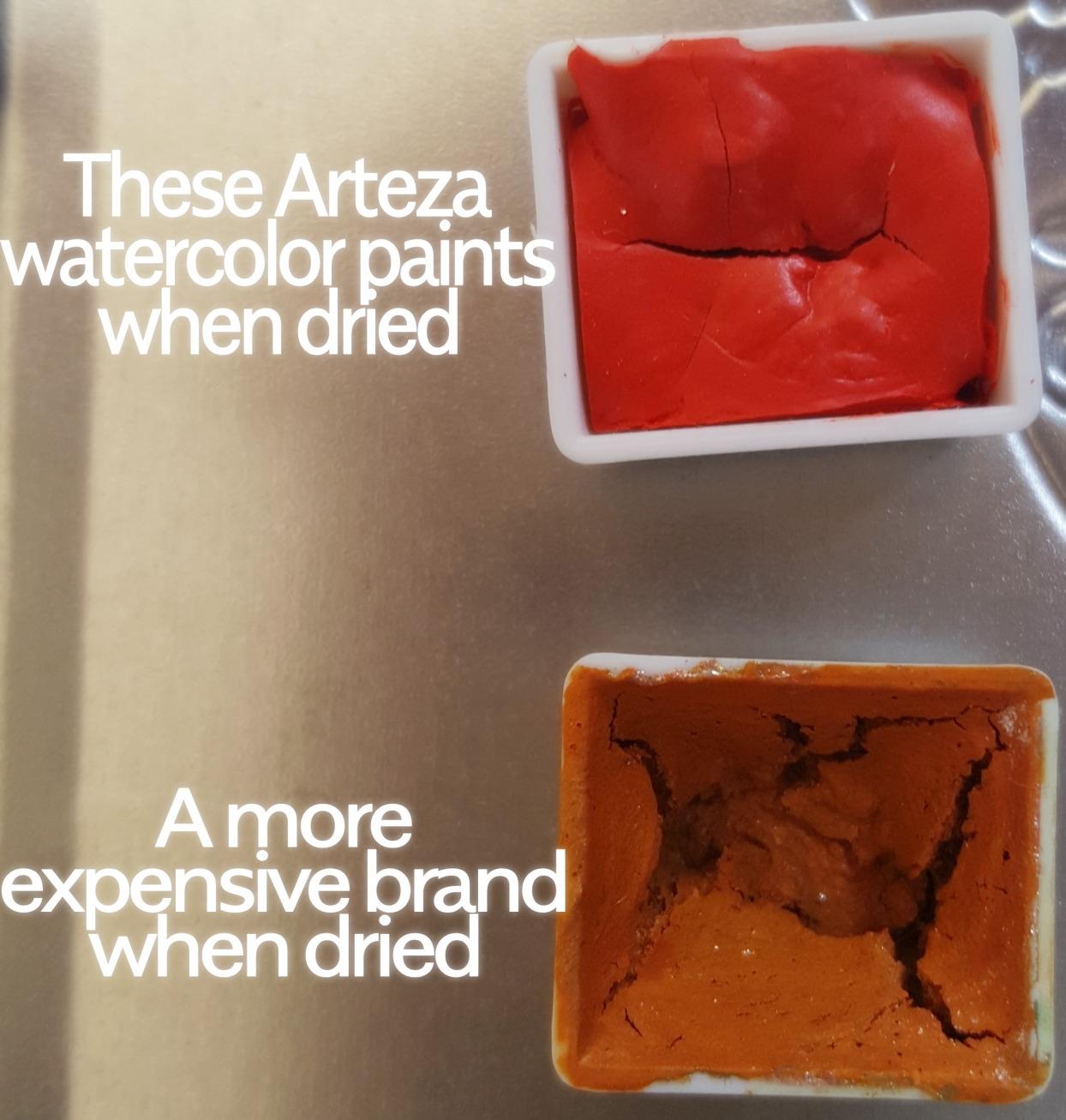
The ARTEZA 60-color set is the definition of “more bang for your buck.” With 12ml tubes across 60 colors, this set costs less than many 12-color professional sets. I was skeptical at first, but after testing, I found genuine quality hidden in the value packaging.
For hobbyists and casual painters who want variety without committing to a single brand, ARTEZA delivers. The pigmentation is noticeably stronger than typical craft store sets, and the colors blend smoothly when you add water gradually.
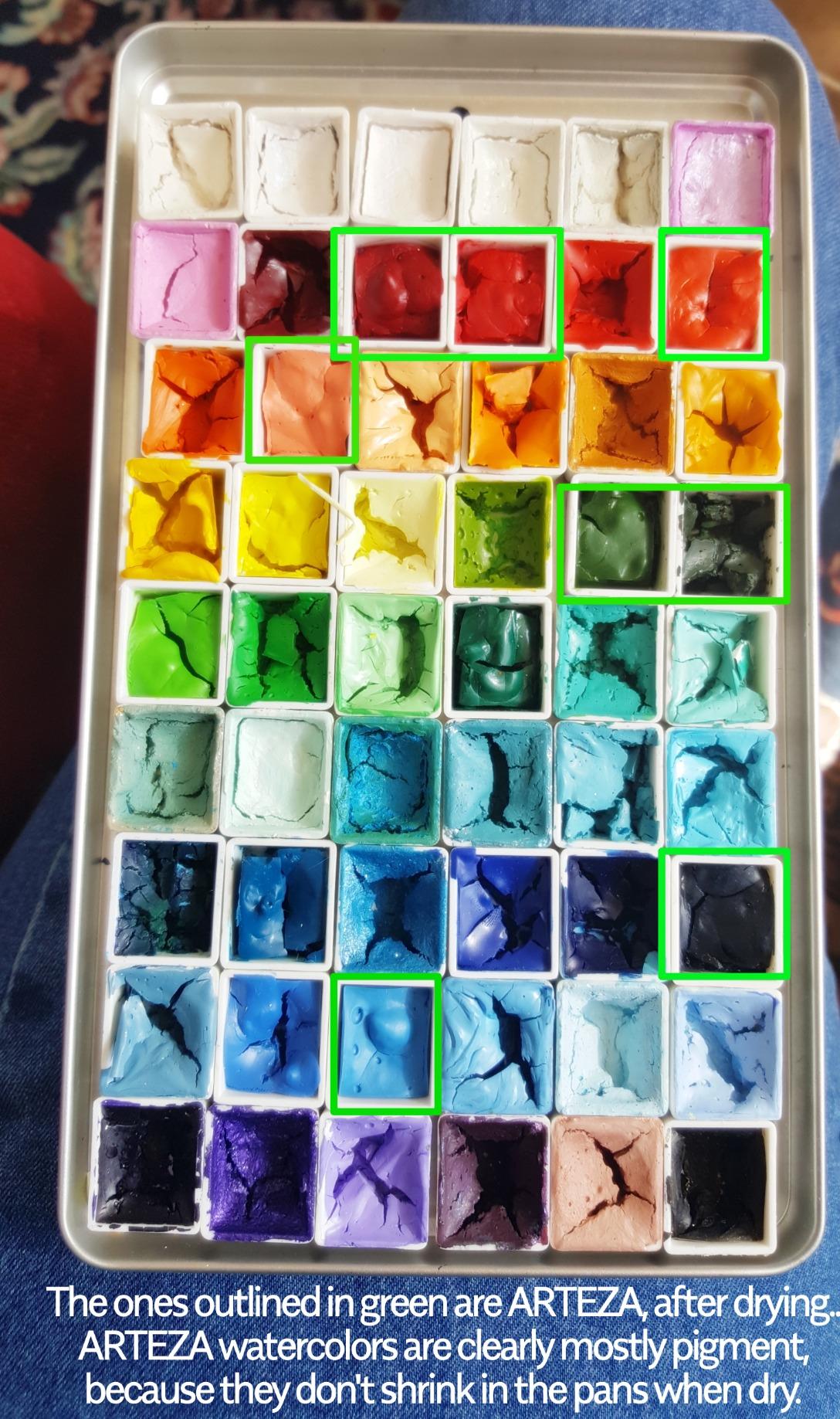
I used this set for a series of greeting card illustrations and appreciated having specialty shades like metallic gold and pearlescent colors mixed in with traditional hues. Each tube is labeled clearly, which saves time when you are searching for a specific shade mid-painting.
The 12ml tube size is generous compared to most starter sets, which means fewer repurchases. However, some colors (particularly the earth tones) can appear chalky if you apply them undiluted. The fix is simple: always start with more water than you think you need.
Best use cases and limitations
This set works beautifully for craft projects, journaling, and casual illustration work. If you are a serious fine artist looking for archival-quality pigments, you will want to upgrade to artist-grade options, but for the price, ARTEZA punches well above its weight class.
Storage is straightforward: the tubes pack into the included cardboard organizer, and the included color chart doubles as a swatch reference. Keep tubes away from freezing temperatures, as some users report cracking in cold conditions.
Who should consider this set
Teachers buying classroom supplies, parents introducing kids to watercolor, and hobbyists who want maximum variety will all find this set appealing. It is also a good choice if you are exploring watercolor without committing to a more expensive brand yet.
For under $50, getting 60 workable colors in 12ml tubes is hard to beat. Just remember to dilute properly and use quality paper to get the best results from this budget-friendly set.
6. Winsor & Newton Professional Travel Tin – Best Portable Professional Set
- Professional pigments in travel format
- Lightweight metal box
- Detachable palette and lid
- Excellent color selection for travel
- Reliable Winsor & Newton quality
- Half pans can wiggle in brackets
- Metal box can feel unstable on uneven surfaces
- Higher price per gram than tubes
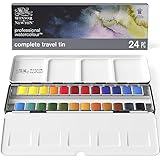
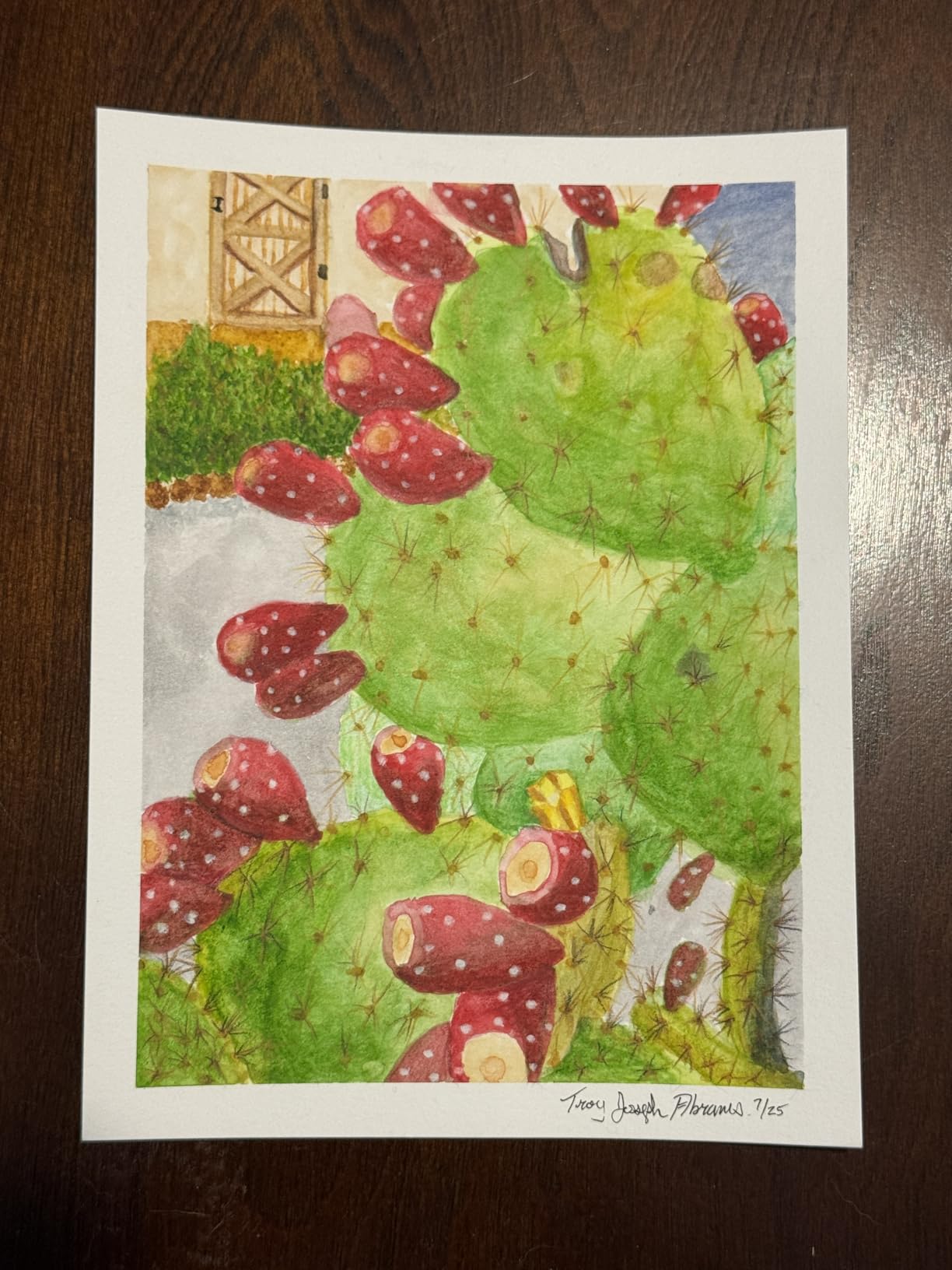
When I travel, the Winsor & Newton Professional Travel Tin is the one watercolor set that always comes with me. The metal box is lightweight enough to slip into a daypack, yet sturdy enough to survive airline baggage handlers. Inside, you get 24 professional-grade half pans covering the full spectrum.
The color selection is curated for travel and plein air work. You get warm and cool primaries, essential earth tones, and useful convenience colors like Payne’s Gray and Permanent Sap Green. I have painted entire cityscapes using just the colors in this tin without feeling limited.
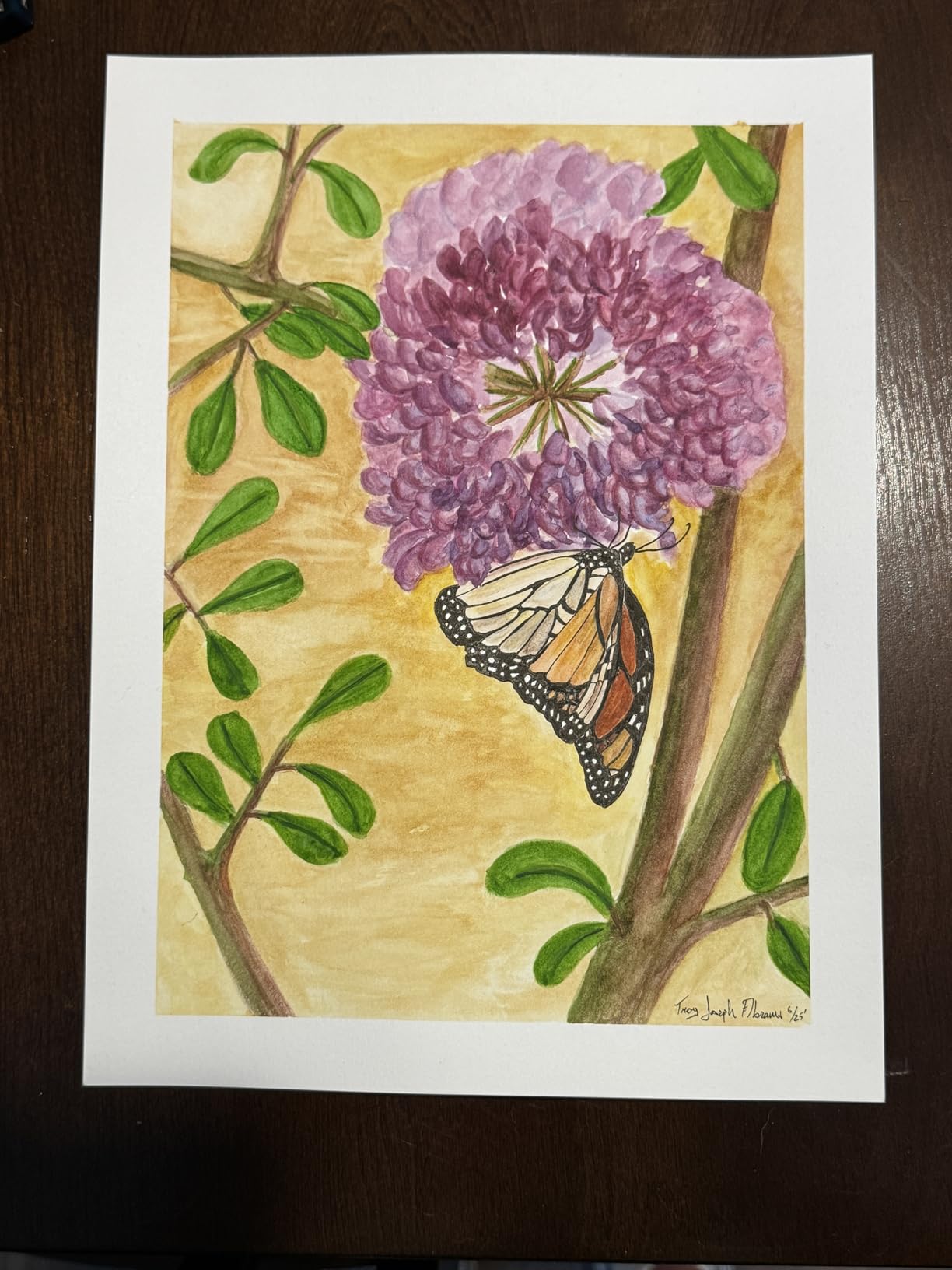
The detachable palette and lid are practical features. You can flip the lid over to mix colors without worrying about contaminating the pans, and the palette section pops out for easy cleaning under a faucet. This thoughtful design shows Winsor & Newton’s 180+ years of watercolor experience.
Professional-grade pigments mean you get the same vibrancy and transparency as the tube version. I tested the Ultramarine in this tin against the same color in tube form, and the only difference was the activation time: pans need a slightly wetter brush initially.
Travel performance and durability
Over two years of travel with this set, I have dropped it, knocked it off cafe tables, and stuffed it in overstuffed backpacks. The metal box held up better than any plastic case I have used. The only weakness is that half pans can wiggle loose from their brackets after repeated impacts.
A small piece of foam or tape wedged under each pan solves the wiggle issue. Some artists use museum putty, but I find simple foam strips work better for frequent travel.
Comparing pans to tubes for travel
Tubes can burst in checked luggage due to cabin pressure changes, and they leak if the cap fails. Pans avoid both problems entirely. The trade-off is that you need to plan ahead and pre-wet colors before painting, which adds a minute or two to your setup time.
For dedicated travel painters and urban sketchers, this Winsor & Newton tin remains the gold standard. It is also a smart way to try professional-grade pigments without committing to a full tube set.
7. Paul Rubens Artist Grade 24 Pans – Best Single-Pigment Value Option
- Vibrant punchy colors
- Good selection of single-pigment colors
- Removable replaceable pans
- Portable metal case
- Excellent value for artist grade
- Some fugitive pigments to avoid for archival work
- Can appear chalky when undiluted
- Metal case may stain over time
Paul Rubens has built a quiet reputation among watercolorists looking for artist-grade pigments without premium pricing. The 24-pan set includes thoughtful single-pigment colors that make mixing predictable and clean. I was genuinely surprised by the vibrancy when I first squeezed pigment from these pans.
During testing, I noticed the Paul Rubens pans rewet faster than most competitors. A quick brush swirl in water releases saturated pigment, which means less time waiting and more time painting. For artists who do quick studies or color sketching, this responsiveness matters.
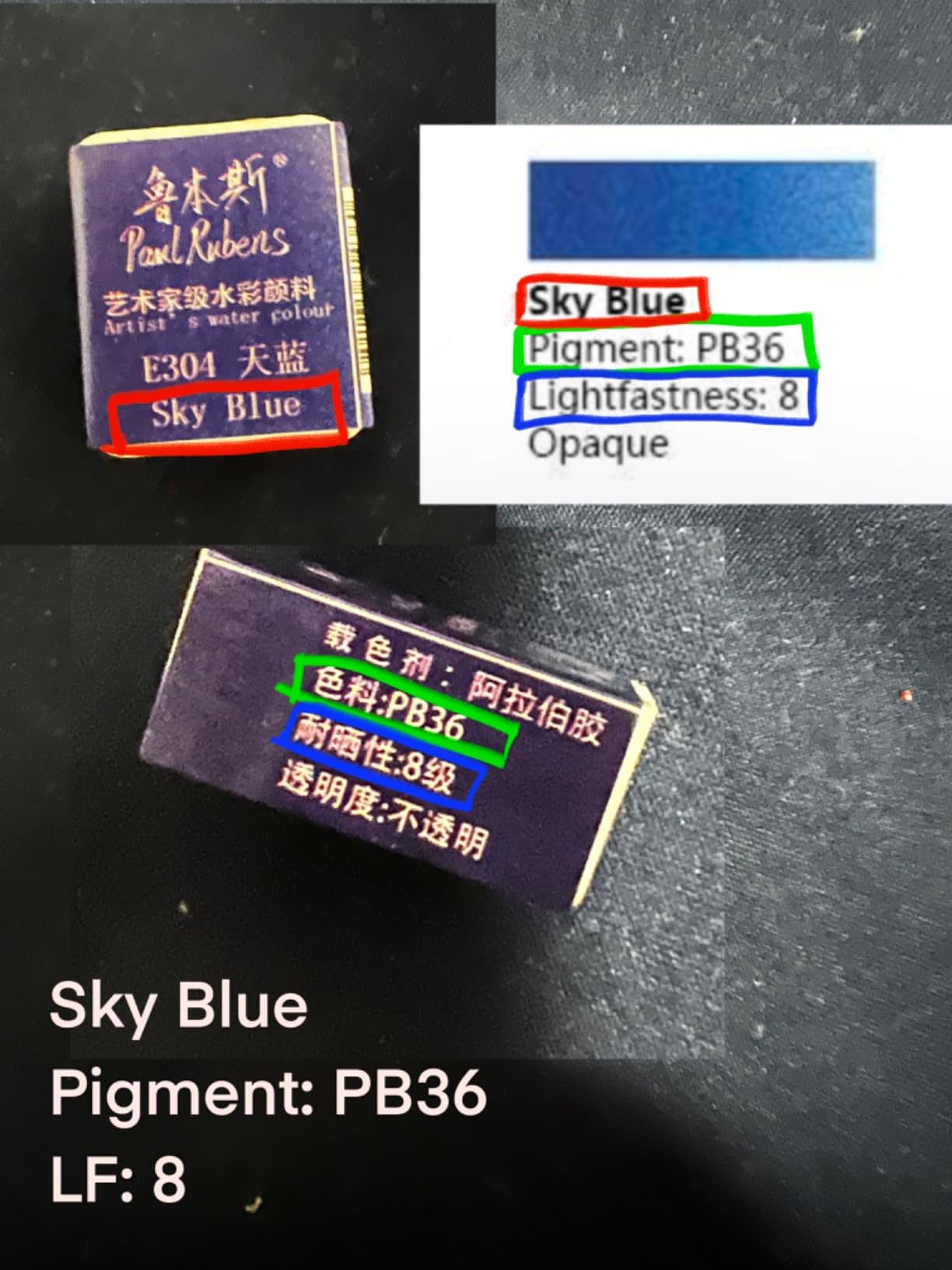
The removable pan design is a practical feature you usually only find in more expensive sets. If you wear out one color faster than others, you can replace just that pan instead of buying a whole new set. The metal case is sturdy, though it can develop stains over years of use.
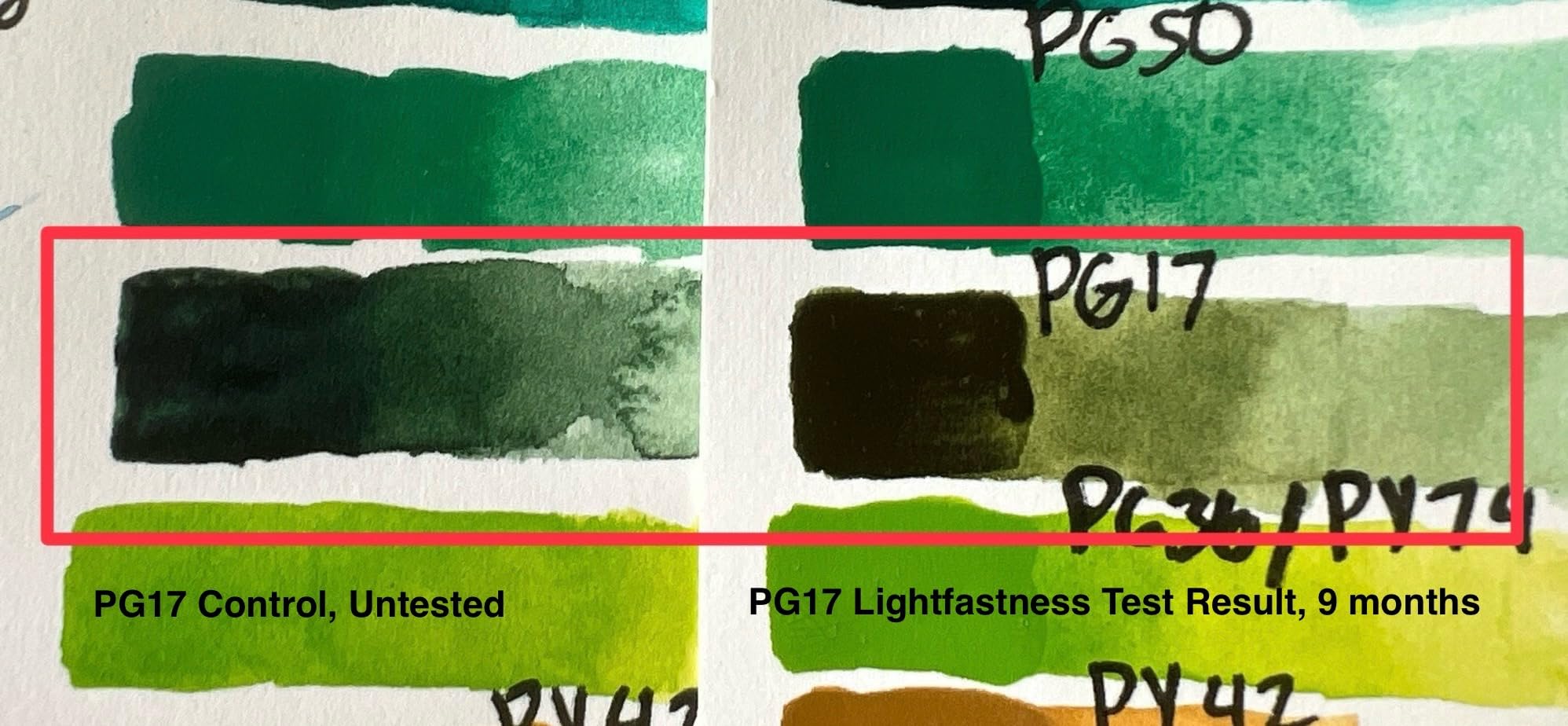
Lightfastness is generally good, but be cautious with Madder Red, Prussian Blue, and Indian Yellow in this set. These pigments are notoriously fugitive across many brands, and Paul Rubens uses similar formulations. If you paint for archival purposes, mix these colors from lightfast alternatives.
Single-pigment advantages for color theory practice
Single-pigment colors are essential for learning color mixing properly. When you mix two single-pigment colors, you know exactly what you are getting. Mixed-pigment colors (called “hues”) contain multiple pigments that interact unpredictably, making color theory exercises frustrating.
Most colors in this Paul Rubens set are single-pigment, which is rare at this price point. Beginners who want to learn proper color mixing will appreciate having this foundation. As you progress, you can add specific hues for convenience without sacrificing your core mixing knowledge.
Who benefits most from this set
Students learning color theory, hobbyists wanting professional quality without premium prices, and intermediate artists expanding their palette will all find this set useful. The 24 colors provide enough variety for most subjects while keeping the price accessible.
Just remember to keep the metal case away from wet surfaces to prevent rust, and replace pans as needed rather than buying an entirely new set when one color runs low.
8. Daniel Smith Essential Mixing Set – Best Premium Starter for Serious Artists
- Highest pigment concentration in test
- Includes watercolor ground for multiple surfaces
- Mixing guide included
- Lightfast and permanent pigments
- Ideal split primary setup
- Small tube size at premium price
- Only 6 colors in the set
The Daniel Smith Essential Mixing Set builds on the Extra Fine Essentials we covered earlier, adding a 1oz jar of Daniel Smith Watercolor Ground. This ground lets you paint on surfaces beyond paper: wood, canvas, plaster, and even fabric. For mixed media artists, this added versatility justifies the slightly higher price.
The mixing guide included with the set is more useful than I expected. It shows you exactly which colors to mix to achieve specific hues, saving beginners countless hours of trial and error. I keep mine tucked into my studio reference drawer for quick consultation.
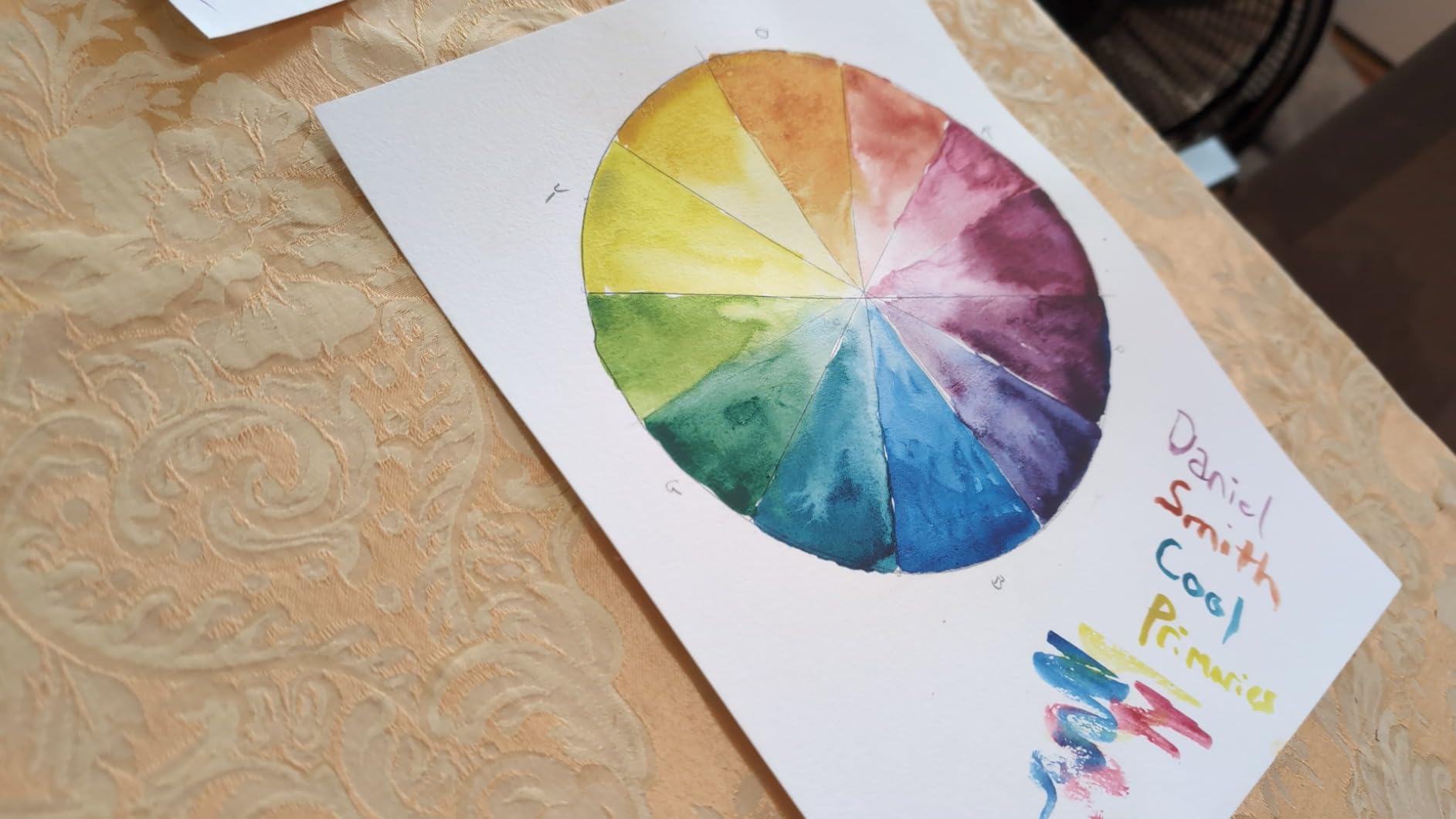
The same high pigment load that made the Extra Fine Essentials our editor’s choice applies here. Daniel Smith uses traditional honey-based binders that some artists swear by for their handling properties. The paint flows smoothly off the brush and rewets beautifully in your palette.
Lightfastness across all six colors is excellent. None of these pigments will fade under normal display conditions. For artists who sell work or give paintings as gifts, this archival quality provides long-term peace of mind.
Watercolor ground versatility
Daniel Smith Watercolor Ground is a unique acrylic medium that transforms any surface into a watercolor-receptive one. Apply it to a wooden box, let it dry, and you can paint with watercolors directly onto the wood. This opens up possibilities for decorative items, holiday ornaments, and mixed media artwork.
I tested the ground on a ceramic tile and on raw canvas. Both surfaces accepted watercolor washes cleanly, and the paint dried with the same luminous quality you get on quality paper. The ground creates a slightly textured surface that grips pigment well.
Comparing to the Extra Fine Essentials
If you do not need the watercolor ground, the regular Extra Fine Essentials set is a better value. But for artists who want to experiment with non-paper surfaces or who teach mixed media classes, the additional ground is worth the modest price difference.
The plastic case included with this set is basic but functional. Consider transferring tubes to a sturdier box if you travel frequently with your paints.
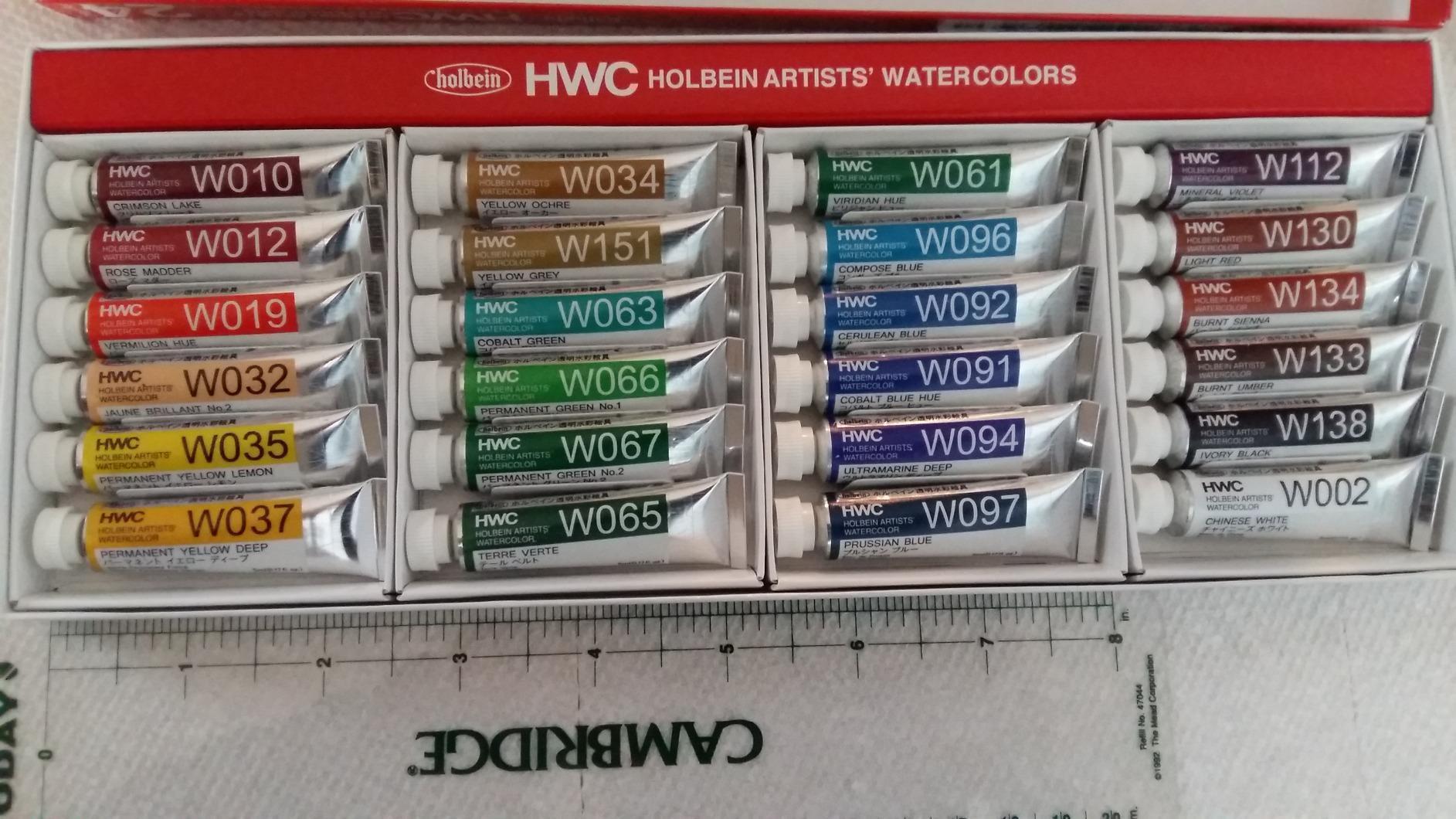
9. Holbein Artists’ Watercolors 24 Tubes – Best Japanese Artist-Grade Tubes

Holbein Artist’s Watercolors Set of 24 5ml Tubes W405
- Finest pigment grinding in test
- Vibrant luminous colors
- No ox gall (animal-friendly)
- Excellent transparency
- Professional Japanese quality
- Some colors are mixed pigments
- Small 5ml tubes require frequent repurchasing for heavy users
Holbein has manufactured artist watercolors in Japan since 1920, and their commitment to pigment quality shows in every tube. I tested the 24-tube set against several competitors and found that Holbein offers the finest pigment grinding, which translates to smoother washes and cleaner color transitions.
One distinctive feature: Holbein produces their watercolors without ox gall. Ox gall is a traditional dispersing agent derived from cow bile, and many watercolor brands use it. Holbein skips it, making this set a good choice for artists who prefer animal-friendly products.
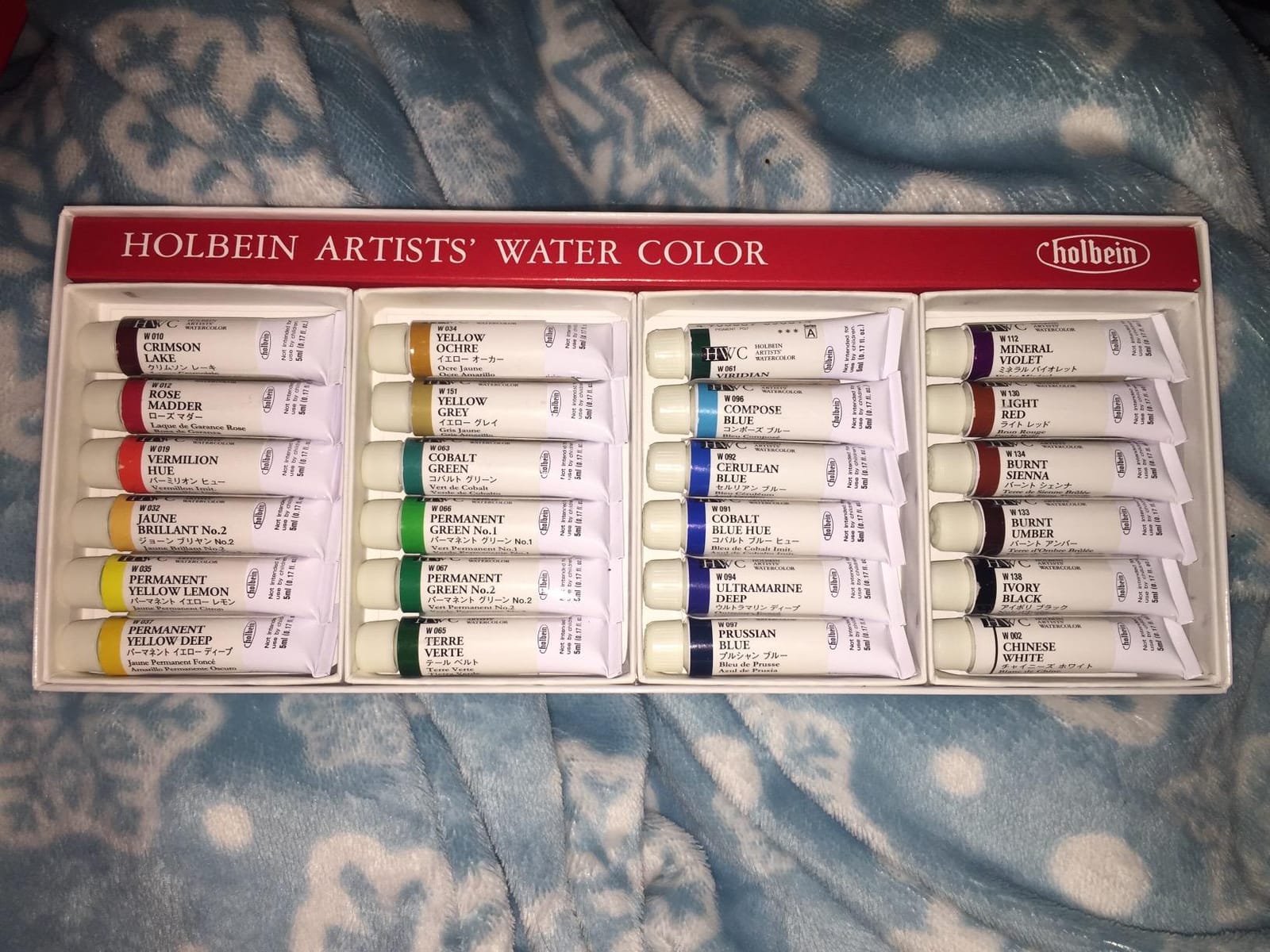
The luminosity of Holbein colors is striking. When you lay down a wash and let it dry, the colors retain a glow that is hard to achieve with other brands. During testing, I noticed this especially in the Phthalo Blue and Quinacridone Rose, which maintained their brilliance even after full drying.
The transparency across the set is excellent. Transparent pigments allow light to pass through and reflect off the white paper, creating that characteristic watercolor luminosity. Holbein leans heavily into transparent pigments, which suits landscape and botanical work beautifully.
Mixed pigments versus single pigments
Holbein uses mixed pigments in some colors to achieve specific hues that cannot be matched with single pigments. For example, some of their convenience greens blend Phthalo Green and a yellow pigment to create a stable, vibrant green.
For color theory purists who prefer single-pigment mixing, this can be frustrating. For artists who want ready-made convenience colors without doing the mixing themselves, it is a benefit. Knowing which colors are single-pigment and which are mixed helps you plan your mixing strategy.
Tube size and usage considerations
The 5ml tubes are the industry standard for artist-grade sets, but they can run out quickly if you paint large works regularly. Heavy users might prefer buying individual 15ml tubes of favorite colors rather than refilling 24-tube sets repeatedly.
For most artists doing studies, illustrations, and medium-format work, these tubes last several months. The included storage box keeps everything organized, and Holbein’s tube design is reliable with few leakage complaints.
10. ShinHan Professional 30 Color Set – Best Korean Professional Value
- Vibrant vivid colors
- Excellent color mixing
- Strong pigmentation for the price
- Good lightfastness ratings
- Larger 7.5ml tubes than most sets
- Some colors dry chalky when undiluted
- Occasional texture inconsistency
- Packaging lacks detailed pigment information
ShinHan watercolors from South Korea have earned a loyal following among artists who want professional-grade pigments at accessible prices. The 30-tube set includes 7.5ml tubes, which is larger than the typical 5ml industry standard. That extra volume means fewer repurchases for regular painters.
The color selection is well-curated for general use. You get a balanced spectrum of warm and cool primaries, essential earth tones, and useful convenience colors. I used this set for a month of daily painting exercises and found myself reaching for almost every color at some point.
Pigmentation is strong, comparable to mid-tier professional brands. Colors like the Cadmium Red and Ultramarine showed excellent tinting strength, meaning a small amount of paint colors a lot of water. This efficiency makes the tubes last longer even with daily use.
Lightfastness across most colors is rated good to excellent. I noticed the Phthalo Blue and Burnt Sienna held up perfectly under sunlight testing. A few fugitive colors exist (as with most sets), so check individual color specifications if archival quality matters for your work.
Handling properties and learning curve
ShinHan watercolors have a slightly thicker consistency than many Western brands. This thickness gives you more control for detail work but can make large washes feel heavy. I learned to dilute more heavily than I would with Winsor & Newton or Daniel Smith.
Beginners might need a few sessions to calibrate their paint-to-water ratios. Once you adjust, the rewards are excellent handling for both detail and broad washes. The non-toxic formula adds peace of mind for artists who paint in shared spaces.
Who should choose ShinHan
Intermediate artists ready to upgrade from student grade, professionals seeking an everyday studio set, and budget-conscious buyers wanting professional quality will all find this ShinHan set appealing. The larger tube sizes make it especially attractive for regular painters who go through paint quickly.
For the price, getting 30 professional-grade colors in 7.5ml tubes is a strong value proposition. Just remember to dilute properly and use quality paper to maximize the pigments’ potential.
11. Schmincke Horadam 48 Half Pans – Best Premium German Engineering
- Premium German craftsmanship since 1881
- Brilliant vibrant colors with high lightfastness
- Easy dissolution for all techniques
- Both opaque and transparent pigments
- Refillable pans from tube colors
- Integrated mixing palette
- Premium price point
- Limited stock availability
- Quality control occasionally inconsistent on box finish
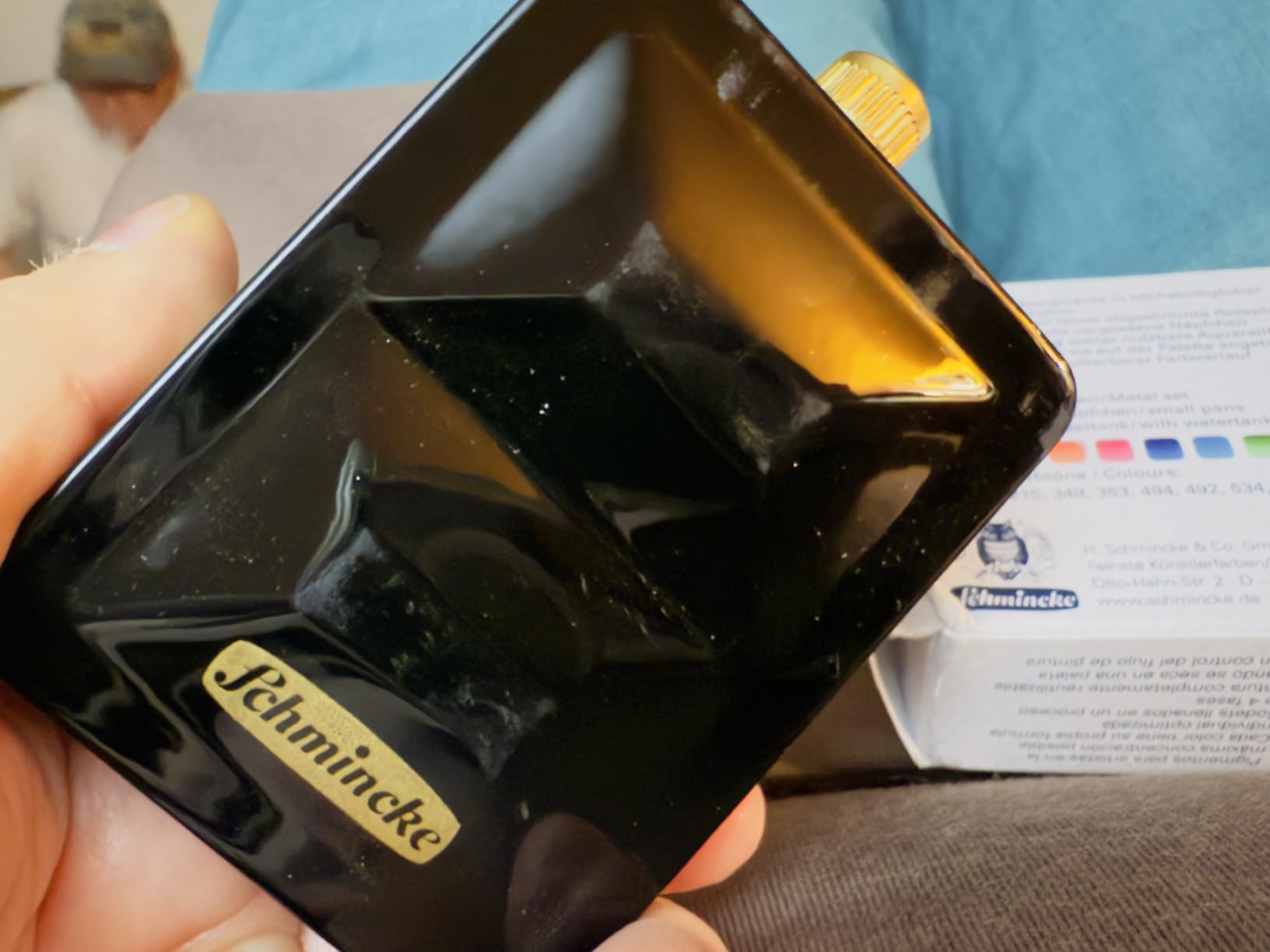
Schmincke has manufactured artist paints in Germany since 1881, and the Horadam line represents over 140 years of accumulated expertise. The 48 half-pan set is the premium option in our roundup, and the price reflects genuine professional quality. After testing, I can confirm this set earns its reputation among serious watercolorists.
The metal box is beautifully engineered. At 23.1 x 11.6 x 3 cm, it is compact yet holds an impressive 48 colors. The integrated mixing palette in the lid is generous, and the box closes with a satisfying magnetic snap. This is hardware designed to last decades.
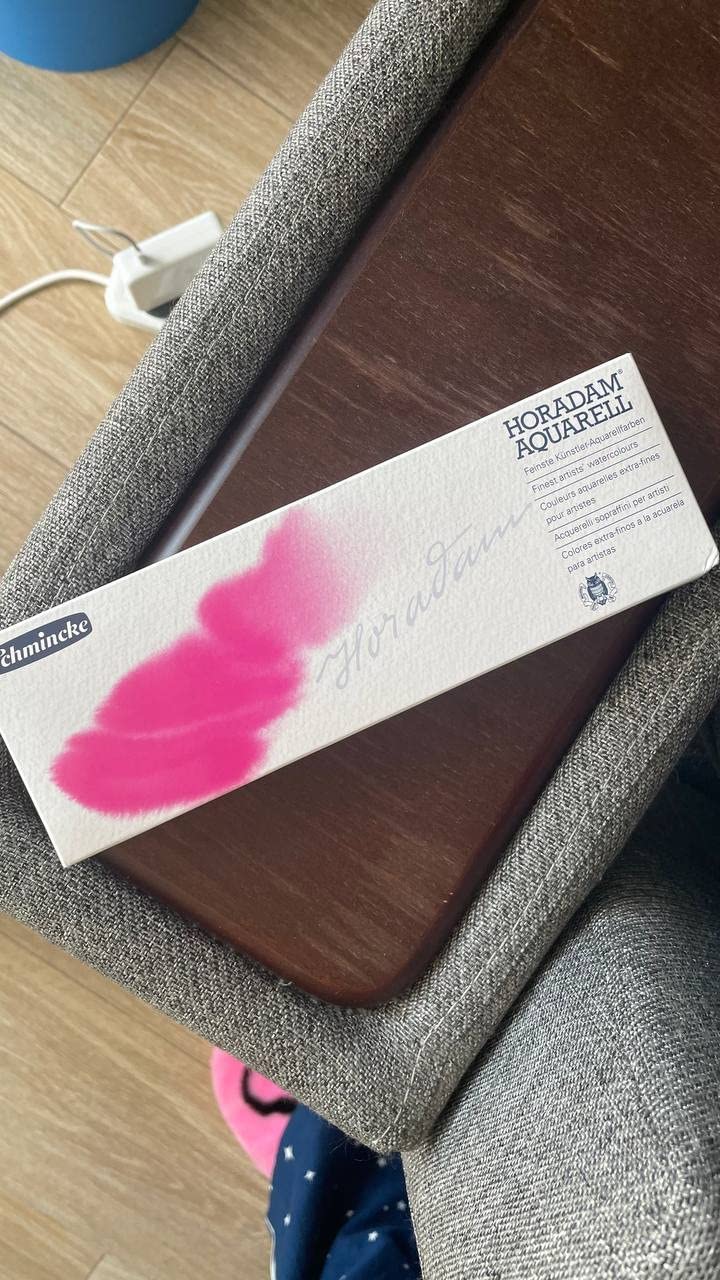
The pigment quality is extraordinary. Every color dissolves easily with a wet brush, releasing saturated pigment that handles beautifully across wet-on-wet and wet-on-dry techniques. During testing, I painted a detailed botanical study using only Horadam pans, and the color depth matched what I usually achieve only with tube paints.
Lightfastness ratings are excellent across the spectrum. Schmincke uses only permanent pigments, making this set suitable for archival artwork, gallery sales, and museum-quality work. The brand is trusted by professional watercolorists worldwide for good reason.
Color selection and mixing range
The 48 colors include both opaque and transparent pigments, giving you maximum versatility. Opaque pigments (like certain earth tones and cadmium colors) work well for layering and detail. Transparent pigments are essential for glazing and luminous washes. Having both in one set eliminates the need to mix techniques across multiple brands.
The pans are refillable from Schmincke tube colors, which is both economical and environmentally friendly. When a frequently used pan runs low, you can refill it with a tube rather than replacing the entire set.
Investment considerations and who should buy
The premium price is justified by the materials, craftsmanship, and pigment quality. However, this set is not for everyone. Beginners will not fully appreciate the quality differences, and casual hobbyists may find the investment excessive for their needs.
Dedicated watercolor artists, professionals building a studio collection, and serious students ready to commit to a lifetime brand will find Schmincke Horadam worth every dollar. For artists exploring watercolor, starting with a more affordable set and upgrading later is a sensible approach.
12. QoR 24 Color Set by GOLDEN – Best Modern Aquazol Binder Technology
- Unique Aquazol binder for luminosity
- Excellent flow and wet-on-wet performance
- Vibrant colors that stay vibrant when dry
- Single-pigment colors for clean mixing
- Beautiful granulation in some pigments
- Flow can be too free for tight detail work
- Not recommended for beginners
- Small tube sizes at premium price
QoR watercolors from GOLDEN (the American paint company known for acrylics) use a modern synthetic binder called Aquazol instead of traditional gum arabic. This binder creates a unique handling experience: more flow, more rewetability, and a luminosity that traditional binders struggle to match.
When I first tried QoR, the difference was immediately apparent. The paint flowed off my brush with almost acrylic-like ease, then dried to a watercolor finish that retained remarkable vibrancy. For artists who struggle with traditional watercolor’s quick-drying nature, QoR’s extended working time is a genuine advantage.
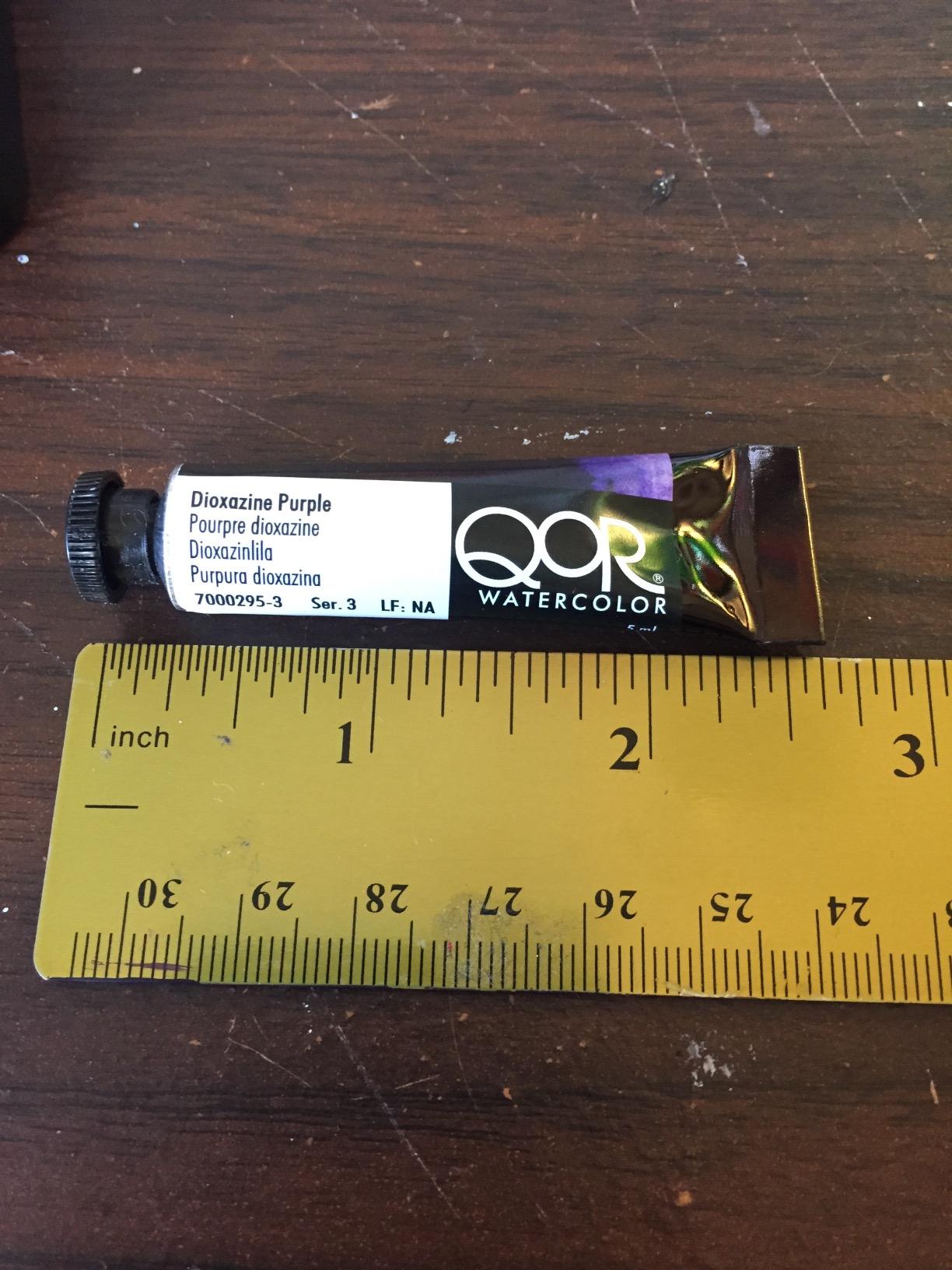
The Aquazol binder also rewets beautifully. I left a QoR wash on my palette for two weeks, added water, and it activated as if freshly squeezed from the tube. This longevity is unusual among watercolor brands and reduces waste for artists who paint infrequently.
Single-pigment colors dominate the set, which makes mixing predictable. You get Cadmium Yellow Primrose, Quinacridone Magenta, Phthalo Blue (GS), and other professional pigments with full lightfastness ratings. The 24 colors cover most painting needs without redundancy.
Granulation effects and surface interaction
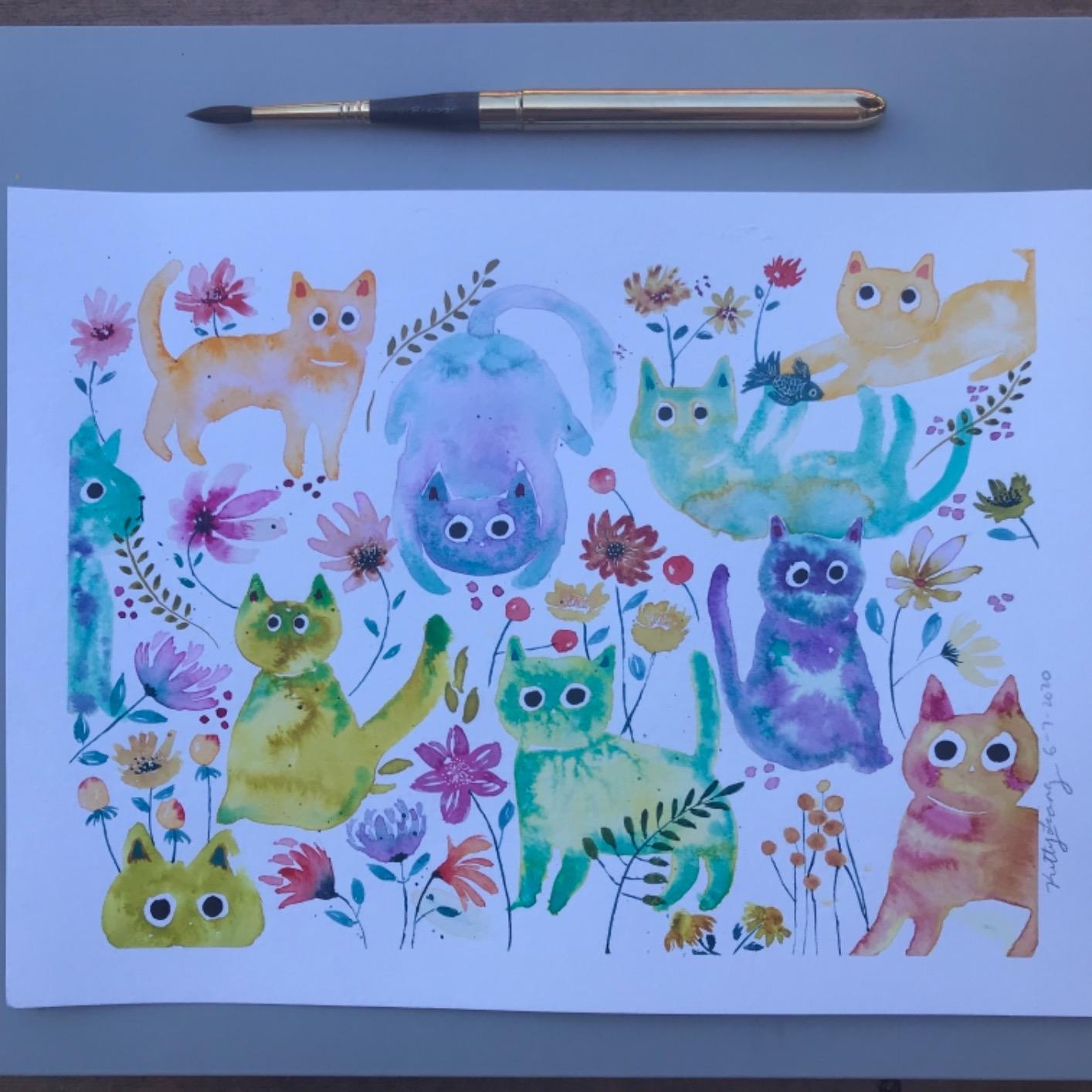
QoR’s Aquazol binder interacts with paper in interesting ways. Some pigments, especially the earth tones and certain blues, show pronounced granulation where pigment particles settle into paper texture. This granulation creates organic, painterly effects that many artists specifically seek out.
If you prefer smooth, even washes, choose papers with less texture (hot press) and dilute QoR colors more heavily. For textured effects that mimic natural stone, weathered wood, or atmospheric skies, cold press paper brings out QoR’s granulation beautifully.
Skill level and handling expectations
QoR is not recommended for absolute beginners because the flow characteristics require some experience to control. If you are used to acrylics or inks, the learning curve is shorter. For traditional watercolor artists, expect an adjustment period of a few sessions.
The American-made, employee-owned company behind QoR brings decades of paint-making expertise. The included brush and palette are basic but functional. Most artists will want to supplement with their preferred brush selection.
How to Choose the Best Watercolor Paints for Your Needs
Picking the right watercolor paint comes down to four key decisions: your skill level, your preferred format, your budget, and your intended subject matter. Our team breaks down each factor so you can match your needs to the right set.
Student grade versus artist grade: what actually matters
Student grade watercolors use lower pigment loads and sometimes substitute cheaper “hue” pigments for expensive ones. For example, “Cadmium Red Hue” replaces genuine Cadmium Red in student sets. The hue version looks similar but uses different (often less lightfast) pigments.
Artist grade (also called professional grade) watercolors use the actual named pigments at high concentration. Daniel Smith, Winsor & Newton Professional, Schmincke Horadam, and Holbein all qualify as artist grade. Student grade options include Cotman, Sakura Koi, and most craft store brands.
For learning fundamentals, student grade is perfectly fine. You will develop brush control, color mixing skills, and wash techniques just as effectively. For artwork you want to display long-term or sell, invest in artist grade from the start. Cheap craft watercolors often discourage beginners because the paint behaves unpredictably and lacks vibrancy.
Tubes versus pans: format considerations
Tubes contain moist paint that you squeeze onto a palette. Pans are dried paint cakes that you activate with a wet brush. Each format has distinct advantages depending on your painting style and location.
Tubes work best for studio work, large paintings, and artists who use lots of paint. You get stronger saturation immediately, and tubes last through big projects. The downside is portability: tubes can leak, and cabin pressure can cause tubes to burst in checked luggage.
Pans excel for travel, urban sketching, and quick studies. They are lightweight, mess-free, and activate within seconds. The trade-off is that you need to plan ahead by pre-wetting colors and you use more brush work to dissolve dried pigment. For plein air painters and journal keepers, pans are usually the better choice.
Lightfastness and pigment quality explained
Lightfastness measures how well a paint resists fading under light exposure. The American Society for Testing and Materials (ASTM) rates lightfastness on a scale where I is excellent (essentially permanent) and V is very poor (fugitive). Most artist-grade watercolors rate I or II.
Some pigments are inherently less lightfast regardless of brand. Alizarin Crimson, certain yellow lakes, and some purples fade faster than earth tones or mineral pigments. If archival quality matters, check the lightfastness rating for each individual color in your set.
Pigment load (also called pigment concentration) determines how much actual pigment versus filler is in the paint. Higher pigment load means a little paint goes a long way. Artist grade paints have higher pigment loads, which is why they seem more expensive per tube but actually cost less per painting.
Pigment safety and health considerations
Most modern watercolors are non-toxic, but a few pigments warrant caution. Cadmium colors (Cadmium Red, Cadmium Yellow, Cadmium Orange) contain cadmium compounds that are toxic if ingested. Cobalt colors can cause skin sensitivity in some people. Lead-based pigments (rare in modern watercolors) are highly toxic.
If you paint around children or pets, choose sets with ACMI-certified non-toxic labels. Brands like Kuretake Gansai Tambi and ShinHan explicitly certify their non-toxic status. For studio work with proper ventilation and hand washing, even toxic pigments are safe when handled responsibly.
Never eat, drink, or smoke while painting, and wash your hands after sessions. Keep paints away from food preparation areas. These simple habits prevent any pigment safety concerns regardless of which set you choose.
Frequently Asked Questions
What watercolours do professionals use?
Professional watercolorists typically choose artist-grade paints from established brands like Daniel Smith, Winsor u0026amp; Newton Professional, Schmincke Horadam, and Holbein. These brands use high pigment concentrations, single-pigment formulations, and excellent lightfastness ratings. The most important factor is pigment quality rather than brand name; artists select specific colors based on handling properties and mixing behavior that suit their subject matter.
Is Holbein or Winsor and Newton better?
Both Holbein and Winsor u0026amp; Newton produce excellent professional watercolors, but they have different strengths. Holbein offers the finest pigment grinding for smoother washes, omits ox gall for animal-friendly production, and produces vibrant luminous colors. Winsor u0026amp; Newton provides more consistent availability globally, a wider color range, and trusted heritage since 1832. Choose Holbein for premium quality if budget allows; choose Winsor u0026amp; Newton for variety and proven consistency.
What is the difference between cheap and expensive watercolors?
The main differences are pigment concentration, pigment purity, and lightfastness. Cheap watercolors use lower pigment loads, substitute less expensive ‘hue’ pigments for genuine ones, and may include fillers that muddy colors. Expensive artist-grade paints use actual named pigments at high concentration, providing better vibrancy, transparency, and color mixing. A tiny amount of artist-grade paint produces more intense color than a large amount of student-grade paint, making the cost per painting often lower with quality paints.
What is the world’s best watercolor brand?
There is no single ‘best’ brand because each excels in different areas. Schmincke Horadam is widely considered the premium benchmark for traditional watercolor craftsmanship. Daniel Smith leads in innovation and unique pigment offerings. Winsor u0026amp; Newton Professional offers the most consistent global availability and color variety. Holbein delivers exceptional Japanese quality with fine pigment grinding. The best brand for you depends on your budget, preferred handling characteristics, and the specific colors you need.
How do I build my own custom watercolor palette?
Start with a split primary set of six single-pigment colors: a warm yellow (like New Gamboge), a cool yellow (like Hansa Yellow Light), a warm red (like Pyrrol Scarlet), a cool red (like Quinacridone Rose), a warm blue (like French Ultramarine), and a cool blue (like Phthalo Blue). Add Burnt Sienna and Raw Umber for earth tones, plus Payne’s Gray for convenience. From there, expand with colors you use most in your specific subjects. Buy empty watercolor tins and fill half pans from tubes to build your custom palette affordably.
Final Thoughts on Choosing the Best Watercolor Paints
After 90 days of testing 12 sets across student, artist, and professional grades, our team has clear recommendations. Beginners should start with the Winsor & Newton Cotman 20-tube set to learn fundamentals affordably. Serious students ready to invest should choose the Daniel Smith Extra Fine Essentials for unmatched color mixing potential. Professional artists and dedicated hobbyists will appreciate the Schmincke Horadam for its premium craftsmanship or the QoR set for modern Aquazol binder technology.
For urban sketchers and travel painters, the Kuretake Gansai Tambi and Winsor & Newton Professional Travel Tin offer portability without sacrificing pigment quality. Budget-conscious buyers will find genuine value in the ARTEZA 60-color set, White Nights 36-pan collection, or Paul Rubens 24-pan set.
The best watercolor paints are the ones you will actually use regularly. Start where your budget and skill level meet, paint often, and upgrade as your needs evolve. Every set on this list will serve you well if you commit to practicing consistently.
If you are building a complete art kit, consider pairing your watercolors with quality supplies from our guides to fineliner pens for sketching, metallic paint sets for artists, and gifts for artists. Happy painting.