
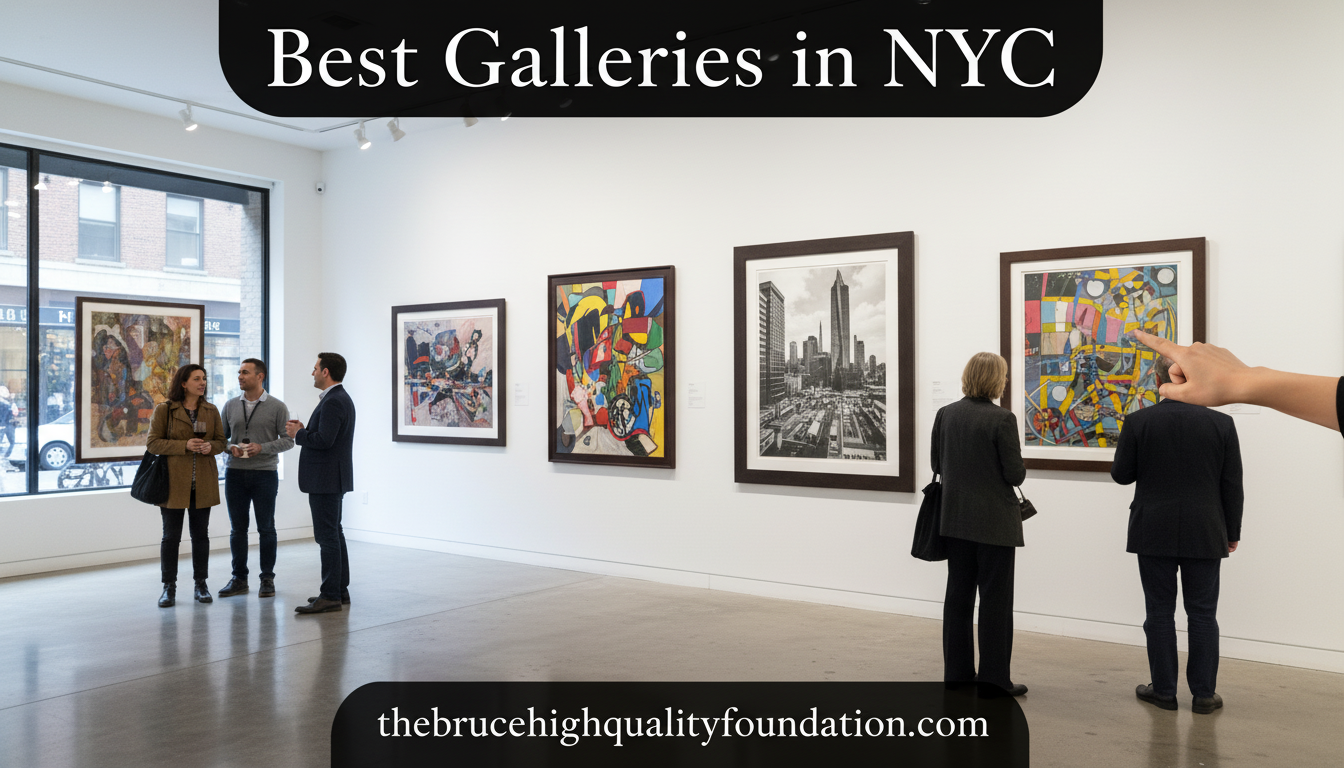
New York City is the undisputed capital of the contemporary art world. With over 1,000 galleries spread across Manhattan, Brooklyn, and Queens, the city offers an unparalleled density of artistic experiences that draw millions of visitors each year. Whether you are a first-time visitor seeking the best galleries in NYC or a seasoned collector hunting for emerging talent, 2026 promises an extraordinary lineup of exhibitions, openings, and cultural events.
The sheer volume of options can feel overwhelming. Our team spent three months exploring every major gallery district, from the hallowed halls of Museum Mile to the gritty warehouses of Bushwick. We talked to curators, gallery owners, and local artists to bring you this comprehensive guide. What we discovered is that the best galleries in NYC are not just about famous names like MoMA or Gagosian. They are also the hidden gems in Chinatown, the experimental spaces in Red Hook, and the artist-run studios in Gowanus.
This guide covers everything you need to know for your 2026 art adventure. We will walk you through the major museums, the commercial powerhouses of Chelsea, the emerging artist havens in Brooklyn, and practical tips for planning your visits. Let us dive into the vibrant world of New York art.
Table of Contents
Top 3 Must-Visit NYC Galleries for 2026
If you only have time for three stops, make them count. These institutions represent the pinnacle of what the NYC art scene offers.
- Museum of Modern Art (MoMA) stands as the most prestigious art gallery in New York. Located in Midtown Manhattan, MoMA houses the world’s finest collection of modern and contemporary art. In 2026, the museum continues to set the standard with groundbreaking exhibitions and its incomparable permanent collection featuring Van Gogh, Picasso, and Warhol.
- The Metropolitan Museum of Art (The Met) is not just a gallery. It is a cultural universe spanning 5,000 years of human creativity. From ancient Egyptian artifacts to contemporary photography, The Met offers something for every art lover. The museum’s 2026 exhibition calendar always includes must-see shows that draw visitors from around the globe.
- The Chelsea Gallery District is not a single venue but a concentration of over 200 commercial galleries between 10th and 11th Avenues. This is where the contemporary art market lives and breathes. Walking these streets on a Thursday evening, when most galleries host opening receptions, is an essential NYC experience.
Manhattan’s Major Museum Galleries
Manhattan hosts the world’s most famous museums, forming the backbone of any serious NYC art itinerary. These institutions define the city’s cultural landscape.
1. Museum of Modern Art (MoMA)
MoMA sits at the pinnacle of the art world. Located at 11 West 53rd Street, this institution has shaped how we understand modern art since 1929. The museum’s collection includes nearly 200,000 works spanning painting, sculpture, photography, film, and performance art.
In 2026, MoMA continues its tradition of ambitious programming. The museum’s sixth-floor galleries rotate through thematic exhibitions that recontextualize familiar works alongside new acquisitions. Starry Night by Vincent van Gogh remains the most photographed piece in the collection, but do not miss the contemporary galleries on the second floor where emerging voices share space with established masters.
Admission is $25 for adults, but the museum offers free admission on the first Friday of each month from 4:00 PM to 8:00 PM. Arrive early on free days as lines can stretch around the block. The museum is fully wheelchair accessible with ramps at the 53rd Street and 54th Street entrances.
Pro tip from our gallery visits: Thursday evenings are quieter than weekends, and the Abby Aldrich Rockefeller Sculpture Garden provides a peaceful retreat from the bustling galleries. The garden is only open in warmer months, making spring and summer ideal times to visit.
2. The Metropolitan Museum of Art (The Met)
The Met occupies a mythical status in the art world. Located on the eastern edge of Central Park along Museum Mile, this behemoth institution houses over two million works across 17 curatorial departments. You could visit daily for a year and still discover new treasures.
The museum’s 2026 programming focuses on several major exhibitions that art lovers cannot miss. The European Paintings galleries underwent a complete reinstallation in recent years, presenting masterpieces by Rembrandt, Vermeer, and Monet in fresh contexts. The newly renovated British Galleries showcase the museum’s exceptional holdings of decorative arts and sculpture.
Suggested admission for adults is $30, though the amount is technically optional for New York State residents. The museum operates three locations: the main building on Fifth Avenue, The Met Cloisters in Upper Manhattan dedicated to medieval art, and The Met Breuer (formerly the Whitney’s building) which hosts contemporary exhibitions.
Our team recommends starting with the Temple of Dendur in the Sackler Wing, then working your way through the American Wing before tackling the European masters. The rooftop garden offers stunning Central Park views and seasonal installations that make perfect photo opportunities.
3. Whitney Museum of American Art
The Whitney stands apart as the only major museum dedicated exclusively to American art. Its meatpacking District location, opened in 2015, features a revolutionary building designed by Renzo Piano with 50,000 square feet of gallery space spread across eight floors.
The museum’s signature event is the Whitney Biennial, held in 2026 as part of the exhibition cycle. This controversial and influential survey showcases the current state of American contemporary art, often launching the careers of unknown artists while sparking debates about the direction of the culture. The 2026 Biennial promises to be particularly significant as it reflects art made during and after recent global upheavals.
Admission is $25 for adults, with pay-what-you-wish hours on Fridays from 7:00 PM to 10:00 PM. The museum’s outdoor galleries and terraces provide unique spaces for sculpture and installation art rarely found in traditional institutions. The Hudson River views from the upper floors alone justify the admission price.
The Whitney’s focus on living artists means you will encounter works that challenge, provoke, and surprise. Unlike museums focused on historical art, the Whitney feels immediate and urgent, with exhibitions that speak directly to contemporary concerns.
4. Solomon R. Guggenheim Museum
Frank Lloyd Wright’s spiral masterpiece is as much a work of art as the paintings it houses. The Guggenheim’s iconic architecture creates a unique viewing experience, with visitors riding elevators to the top then strolling down the continuous ramp past masterworks.
The museum’s permanent collection emphasizes modern art, with particularly strong holdings in Kandinsky, Picasso, and the Italian Futurists. The 2026 exhibition schedule includes major retrospectives and thematic shows that utilize the building’s unusual spaces in creative ways.
Admission is $25 for adults, with select pay-what-you-wish Saturdays from 4:00 PM to 6:00 PM. The museum offers excellent accessibility with ramps throughout the spiral and elevator access to all levels. The rotunda’s oculus floods the central atrium with natural light, creating an almost spiritual atmosphere for viewing art.
We recommend visiting early on weekday mornings when the crowds are thinner and the spiral feels more intimate. The museum’s small size compared to The Met or MoMA makes it manageable for a two-hour visit, perfect for combining with nearby Central Park strolls.
The Chelsea Gallery District: NYC’s Contemporary Art Hub
Chelsea represents the commercial heart of the contemporary art world. Between 10th and 11th Avenues, from 19th Street to 28th Street, over 200 galleries operate in converted warehouses and industrial spaces. This is where dealers sell million-dollar paintings, where collectors discover the next Basquiat, and where the art market’s pulse beats strongest.
The “big four” galleries anchor the district: Gagosian, David Zwirner, Pace, and Hauser & Wirth. These global powerhouses occupy massive spaces and represent art world royalty. Gagosian’s three Chelsea locations host simultaneous exhibitions by blue-chip artists. David Zwirner’s 20th Street building features a stunning expansion by Annabelle Selldorf with skylit galleries. Pace Gallery’s multi-story complex includes a dedicated space for digital art. Hauser & Wirth occupies a former factory on 18th Street with indoor and outdoor exhibition spaces.
But Chelsea’s magic lies beyond the megagalleries. Smaller spaces like 303 Gallery, Gladstone Gallery, and Luhring Augustine consistently mount ambitious shows by mid-career and emerging artists. The district rewards wandering, with unexpected discoveries around every corner.
Gallery hours typically run Tuesday through Saturday, 10:00 AM to 6:00 PM. Thursday evenings bring opening receptions where you can sip cheap wine while mingling with artists, curators, and collectors. These events are free and open to the public, offering the most authentic Chelsea experience.
Our recommended Chelsea gallery hop route: Start at 28th Street and 10th Avenue, working your way south. Begin with the High Line entrance views, then duck into the galleries between 10th and 11th Avenues. Stop for coffee at the High Line Hotel, then continue south to the West 20s where the densest concentration of spaces lies. Finish at Gagosian or David Zwirner for the blockbuster exhibitions, then grab dinner at Cookshop or Del Posto nearby.
The overwhelming number of choices intimidates many visitors. Focus on one or two blocks rather than trying to see everything. Gallery websites list current exhibitions, so you can preview shows that match your interests. Most Chelsea galleries are free and require no appointments, making spontaneous exploration easy.
Upper East Side Galleries and Museums
Museum Mile stretches along Fifth Avenue from 82nd to 110th Street, housing some of the world’s most prestigious cultural institutions. This is old money New York, where galleries occupy limestone mansions and gilded-age buildings.
The Frick Collection, currently housed in a temporary location while its historic mansion undergoes renovation, maintains its reputation for exceptional Old Master paintings and decorative arts. The museum’s 2026 programming includes intimate concerts in its Garden Court and focused exhibitions drawn from its remarkable holdings.
Neue Galerie New York, located in a 1914 mansion at 86th Street and Fifth Avenue, focuses on early twentieth-century German and Austrian art. The museum’s star attraction is Gustav Klimt’s Portrait of Adele Bloch-Bauer I, a golden masterpiece that alone justifies the $22 admission. The attached Cafe Sabarsky offers authentic Viennese coffee and pastries in a stunning period setting.
The Cooper Hewitt Smithsonian Design Museum, housed in Andrew Carnegie’s former mansion, celebrates design in all its forms. Unlike the fine art focus of neighboring museums, Cooper Hewitt explores graphic design, fashion, architecture, and product design. The museum’s interactive exhibits, including an immersive drawing lab, make it particularly engaging for visitors who want hands-on experiences.
The Museum of the City of New York, at the northern end of Museum Mile, explores the history and culture of the five boroughs. Their rotating exhibitions often feature photography and visual art documenting NYC’s evolution. The permanent collection includes an exceptional archive of paintings, prints, and photographs showing how the city looked centuries ago.
Gallery hours vary by institution, but most open around 10:00 AM and close between 5:00 PM and 6:00 PM. The Frick and Neue Galerie are closed on Mondays. The neighborhood’s density makes museum-hopping efficient, with most venues within a 15-minute walk of each other.
Downtown Galleries: Lower East Side, SoHo, and TriBeCa
Downtown Manhattan offers a completely different gallery experience from Chelsea or the Upper East Side. Here, galleries occupy former tenements, industrial lofts, and storefront spaces, creating an edgier, more experimental atmosphere.
TriBeCa has emerged as the city’s hottest gallery neighborhood. Following the migration of major dealers from Chelsea, spaces like Bortolami, Kaufmann Repetto, and James Cohan now occupy grand cast-iron buildings on Broadway and Walker Street. The neighborhood’s wide sidewalks and excellent restaurants make it ideal for gallery hopping.
Our forum research revealed a perfect TriBeCa route: Start at galleries on Broadway and Walker Street, then take Canal Street east toward the Lower East Side. This walk connects two distinct gallery neighborhoods while cutting through Chinatown, where smaller project spaces hide above restaurants and shops.
The Lower East Side retains its reputation as an incubator for emerging artists. Galleries like Rachel Uffner, Canada, and Sargent’s Daughters occupy modest storefronts with raw spaces that suit experimental work. The neighborhood’s energy feels younger and more adventurous than Chelsea, with opening receptions that spill onto sidewalks and attract the city’s creative underground.
SoHo, once the center of the NYC art world in the 1970s, now hosts fewer galleries as luxury retail has taken over. But spaces like Team Gallery and Swiss Institute maintain outposts in the neighborhood, offering excellent programming in architecturally significant spaces.
Most downtown galleries are free and open Tuesday through Sunday, typically from 11:00 AM to 6:00 PM. The Lower East Side Gallery Association organizes special events like the First Friday gallery walk, when spaces stay open late and offer coordinated programming. These events attract serious collectors and curious tourists in equal measure.
The downtown galleries excel at showcasing artists early in their careers. If you want to discover tomorrow’s art stars before they blow up, spend an afternoon wandering Orchard Street and the surrounding blocks. Prices here are more accessible than Chelsea, and the work feels more urgent and experimental.
Brooklyn Art Spaces and Galleries
Brooklyn has transformed from Manhattan’s cheaper neighbor into a legitimate art world powerhouse. The borough’s galleries, museums, and artist studios offer experiences distinct from anything across the East River.
The Brooklyn Museum ranks among the city’s most underrated institutions. With 1.5 million works, it is the third-largest museum in New York. The collection spans ancient Egyptian artifacts to contemporary feminist art, with particularly strong holdings in American painting and decorative arts. The museum’s 2026 programming includes major exhibitions that rival anything in Manhattan.
But Brooklyn’s true art magic happens in its neighborhoods. Gowanus, Bushwick, Red Hook, and DUMBO host vibrant artist communities with open studio programs that offer the best art buying opportunities in the city. According to forum insights from local artists and collectors, these open studios provide better selection and prices than any affordable art fair.
Gowanus has emerged as the borough’s creative heart. The Gowanus Open Studios, held annually in October, lets visitors explore hundreds of artist workspaces. You can buy directly from creators, often at prices far below gallery retail. The neighborhood’s industrial buildings house project spaces like Gowanus Loft and The Yard, which host exhibitions and events.
Bushwick boasts the highest concentration of working artists in the United States. The Bushwick Collective brings street art to building facades, while galleries like Luhring Augustine Bushwick (a satellite of the Chelsea mainstay) present serious contemporary programming. The neighborhood’s DIY spaces host everything from punk shows to experimental film screenings.
Red Hook remains isolated and atmospheric, accessible primarily by bus or bike. This isolation has preserved its industrial character, with galleries like Pioneer Works occupying massive warehouses. Pioneer Works combines exhibition space with artist studios, music venues, and a garden, creating a cultural campus unlike anything in Manhattan.
DUMBO (Down Under the Manhattan Bridge Overpass) mixes tech offices with galleries and public art. The neighborhood’s cobblestone streets and waterfront views provide a picturesque setting for gallery hopping. Smack Mellon and A.I.R. Gallery focus on emerging and women artists, offering programming you will not find in more commercial spaces.
Most Brooklyn galleries are free, though some artist studios charge small admission fees during open studio weekends. The borough’s sprawling geography means you should focus on one neighborhood per visit rather than trying to cover everything.
Free Art Galleries in NYC: Art on a Budget
New York’s art scene has a reputation for exclusivity and high prices. But some of the best galleries in NYC charge nothing for admission. Smart visitors can fill entire days with world-class art without spending a dollar on entry fees.
Commercial galleries, which make up the majority of NYC’s art spaces, are almost always free. Chelsea’s 200+ galleries, the Lower East Side’s emerging spaces, and TriBeCa’s megagalleries all welcome visitors at no charge. This model works because the galleries make money selling art, not tickets.
Major museums offer free or pay-what-you-wish hours. The Metropolitan Museum has suggested admission, meaning New York State residents can pay any amount. MoMA offers free admission on first Fridays from 4:00 PM to 8:00 PM. The Whitney offers pay-what-you-wish Fridays from 7:00 PM to 10:00 PM.
Several museums are always free. The Bronx Museum of the Arts charges no admission. The Queens Museum requests a voluntary contribution but does not require payment. The American Folk Art Museum on Lincoln Square is free every day, with a remarkable collection of outsider art and traditional crafts.
Smaller institutions with free admission include The Morgan Library & Museum’s free Friday evenings, The Frick Collection’s pay-what-you-wish hours on certain days, and the many university galleries at Columbia, NYU, and Fordham that never charge entry fees.
The NYC Culture Pass program, available through public libraries, offers free admission to dozens of museums and galleries for cardholders. If you are visiting from out of town, check if your library participates in reciprocal programs, or sign up for a temporary New York Public Library card.
Our budget recommendation: Spend mornings in Chelsea galleries (free), afternoons at the American Folk Art Museum (free), and evenings at museum pay-what-you-wish hours. You can experience world-class art for less than the cost of a subway ride.
Major Art Exhibitions in 2026 You Cannot Miss
The 2026 exhibition calendar in New York is exceptional, with major shows at every major institution. Planning your visits around these exhibitions ensures you see art that will be discussed for years.
At MoMA, 2026 brings significant retrospectives and thematic exhibitions. The museum’s programming often surveys movements like Abstract Expressionism or Pop Art with loans from private collections rarely seen in public. Check MoMA’s website for current 2026 highlights, as the exhibition schedule rotates quarterly.
The Metropolitan Museum’s 2026 season includes major loan exhibitions in its various departments. The Costume Institute’s annual blockbuster exhibition at The Met typically opens in May, drawing fashion lovers and art historians alike. Previous exhibitions have explored themes like Camp, Heavenly Bodies, and American fashion with spectacular displays that transform the museum.
The Whitney Biennial, held in 2026, represents the most important survey of contemporary American art. Curators select artists working across all media, creating a snapshot of the nation’s creative concerns. The Biennial always generates controversy and conversation, with some artists achieving career breakthroughs while others spark debate. This is essential viewing for anyone interested in where American art is heading.
Gagosian, David Zwirner, and Pace typically schedule their biggest exhibitions for spring and fall, timed to art fair seasons. These shows often require no advance tickets and offer the chance to see museum-quality installations in gallery settings. The commercial galleries also tend to host more experimental work in 2026 as they compete for attention in a crowded market.
Smaller institutions punch above their weight with focused exhibitions. The Drawing Center in SoHo presents museum-quality shows dedicated to works on paper. The New Museum on the Bowery surveys contemporary art with a focus on emerging international artists. These venues often mount exhibitions that later travel to major museums worldwide.
To stay current on 2026 exhibitions, subscribe to email newsletters from your favorite institutions. Gallery websites maintain exhibition calendars, and sites like Artforum and Hyperallergic publish weekly roundups of openings. Social media accounts for specific galleries often post stories and behind-the-scenes content that enhances your visit.
How to Plan Your NYC Gallery Visit in 2026?
Best Times to Visit Galleries
Timing your gallery visits transforms the experience. Most galleries open by 10:00 AM or 11:00 AM and close between 5:00 PM and 6:00 PM, Tuesday through Saturday. Mondays are typically quiet, with many spaces closed entirely.
Weekday mornings offer the most peaceful viewing experiences. You will have galleries nearly to yourself, allowing intimate encounters with art that crowded weekend afternoons cannot match. Chelsea on a Tuesday morning feels like a private tour of the contemporary art world.
Thursday evenings bring the art world’s social scene to life. Opening receptions typically run from 6:00 PM to 8:00 PM, with free wine and the chance to mingle with artists and collectors. These events are open to everyone, not just VIPs, and provide the most authentic gallery experience.
Saturday afternoons are busiest, especially in Chelsea where the combination of gallery visitors and High Line tourists creates crowds. If you must visit on weekends, arrive when doors open or in the final hour before closing when spaces empty out.
Seasonal considerations matter. Summer brings quieter galleries as the art world decamps to the Hamptons or Europe. This creates opportunities for unhurried viewing. Winter holiday periods see reduced hours at some smaller spaces. Spring and fall are peak seasons with the most ambitious programming.
Gallery Hop Routes
Efficient route planning lets you see more art with less walking. These proven paths come from local gallery-goers and our own extensive exploration.
- The Chelsea Circuit: Start at 28th Street and 10th Avenue, heading south through the galleries between 10th and 11th Avenues. Key stops include Gagosian, David Zwirner, Pace, and Hauser & Wirth. The walk from 28th to 18th Street covers the densest concentration of galleries in the world. Allow three hours for a thorough visit.
- TriBeCa to LES: Begin at Broadway and Walker Street in TriBeCa, exploring the galleries in converted industrial spaces. Head east on Canal Street, stopping at spaces in Chinatown along the way. Continue to the Lower East Side, where Orchard Street and surrounding blocks host emerging galleries. This route combines established and experimental spaces in a single afternoon.
- Museum Mile: Start at The Met on 82nd Street and work your way north to the Guggenheim at 88th Street. Continue to the Cooper Hewitt at 91st Street and the Museum of the City of New York at 103rd Street. This walk covers four major museums in under two miles, with Central Park views throughout.
- Brooklyn Intensive: Focus on one Brooklyn neighborhood per day. For Gowanus, start at the Carroll Street Bridge and explore the galleries along 9th Street. For Bushwick, concentrate on the blocks around Morgan Avenue. Red Hook requires more commitment but rewards with spaces like Pioneer Works.
Accessibility Information
New York’s older buildings present challenges for visitors with mobility limitations. However, major institutions have invested heavily in accessibility, and many smaller galleries are adapting their spaces.
MoMA, The Met, the Whitney, and the Guggenheim all offer full wheelchair accessibility with ramps, elevators, and accessible restrooms. These museums provide wheelchairs for loan and allow service animals throughout their buildings. Audio descriptions and tactile experiences are increasingly available for visitors with visual impairments.
Chelsea galleries occupy converted warehouse buildings with mixed accessibility. The megagalleries like Gagosian and David Zwirner have invested in elevators and ramps, but smaller spaces may require navigating stairs. Gallery websites typically list accessibility information, and calling ahead ensures smooth visits.
The Lower East Side and TriBeCa present the greatest challenges. Many galleries occupy walk-up tenement buildings with stairs at the entrance. However, an increasing number of spaces are relocating to ground-floor locations or buildings with elevators as they recognize the importance of accessibility.
For visitors with autism or sensory sensitivities, several museums offer early morning or low-sensory hours with reduced crowds and noise. The Intrepid Museum and some children’s museums pioneered these programs, and art institutions are following suit. Check museum websites for scheduled accessibility mornings.
Tips for First-Time Visitors
Gallery etiquette differs from museum behavior. Understanding these unwritten rules helps you blend in with the art world crowd.
Photography policies vary by gallery. Most commercial galleries allow non-flash photography for personal use, but some exhibitions prohibit all photos. Museum policies are stricter, with many banning photography of specific works or entire exhibitions. Look for signage or ask staff if unsure.
Opening receptions are casual but have their own social codes. The wine is typically cheap, so accept a plastic cup without expectations. You do not need to know about art to attend, and striking up conversations with strangers is normal. Gallery staff are usually happy to discuss the work if they are not overwhelmed with hosting duties.
Dress codes do not exist for galleries. You will see everything from business suits to ripped jeans. Wear comfortable shoes for walking, as gallery days involve miles of pavement pounding. Chelsea’s cobblestone streets and the Lower East Side’s uneven sidewalks require sturdy footwear.
Art sales happen discreetly. If you are interested in purchasing, ask the front desk about availability and pricing. Most galleries are happy to discuss sales with serious collectors at any budget level. You do not need to look wealthy to inquire about prices.
Trust your reactions. You do not need an art history degree to visit galleries. If you love something, spend time with it. If you hate something, move on. The best gallery experiences involve personal discovery rather than dutiful appreciation of famous names.
Hidden Gem Galleries: Lesser-Known NYC Art Spaces
Beyond the famous institutions lie galleries that even many locals miss. These hidden gems offer experiences that feel like discoveries.
The Cloisters, part of The Met but located in Fort Tryon Park at the northern tip of Manhattan, transports visitors to medieval Europe. The building incorporates actual French monastic cloisters into its architecture, surrounding a garden planted according to medieval herbals. The collection of medieval tapestries, including the famous Unicorn Tapestries, rivals anything in Europe.
The Rubin Museum of Art, located in Chelsea, focuses on Himalayan art and culture. This small museum offers a meditative escape from the city’s intensity, with galleries spiraling around a central stairway. The museum’s 2026 programming includes mindfulness sessions and film screenings that complement the art.
The Noguchi Museum in Long Island City, Queens, occupies a former photo studio and garden designed by the sculptor Isamu Noguchi. The permanent collection displays his work in the context he designed for it, with indoor galleries flowing into an outdoor sculpture garden. This is one of the most peaceful art experiences in the city.
On the Lower East Side, small project spaces like 47 Canal, Essex Street, and Off Vendome mount experimental exhibitions that challenge conventional gallery presentation. These spaces often show video art, installations, and conceptual work that requires more engagement than traditional paintings.
In Harlem, The Studio Museum focuses on artists of African descent. While their main building undergoes renovation, they maintain programming at various locations throughout the neighborhood. Their artist-in-residence program has launched major careers, and their exhibitions consistently present vital contemporary work.
The Hispanic Society of America, located in Washington Heights, houses the most important collection of Spanish art outside Spain. The museum is free and rarely crowded, allowing intimate viewing of Goya paintings and medieval manuscripts. The surrounding neighborhood offers excellent Dominican food for post-gallery meals.
Where to Buy Affordable Art in NYC
Collecting art does not require hedge fund wealth. Several avenues exist for buying original work at accessible prices.
Open studios remain the best value. When artists open their workspaces to the public, they typically sell directly without gallery commissions. This means prices 30-50% below retail. The Gowanus Open Studios in October, Bushwick Open Studios, and various DUMBO and Red Hook studio events provide opportunities to meet artists and buy their work.
Affordable art fairs like the Affordable Art Fair, Spring/Break Art Show, and various Armory Week satellite fairs offer works priced from hundreds to a few thousand dollars. These events bring together galleries and artists specifically targeting new collectors. The atmosphere is more welcoming than high-end fairs, with staff happy to educate first-time buyers.
University galleries sell work by MFA students at low prices. Columbia University, NYU, Hunter College, and Parsons School of Design host thesis exhibitions where you can buy pieces by tomorrow’s art stars at today’s student prices. These sales directly support emerging artists and let you follow careers from the beginning.
Online platforms like Artsy and Saatchi Art represent a new generation of galleries and artists selling at transparent prices. While not physical NYC galleries, these platforms connect you with local artists and provide tools for discovering work that matches your taste and budget.
Print shops and multiples offer entry points to collecting established artists. Places like the Lower East Side Print Shop produce limited edition prints by well-known names at fractions of painting prices. Uprise Art in TriBeCa focuses on affordable contemporary work with clear pricing and payment plans.
Our collector advice: Start with what you love rather than what might appreciate. Buy pieces that resonate emotionally, and build relationships with galleries that represent artists at your price point. Serious collectors start with modest purchases and grow their involvement over time.
Frequently Asked Questions
What is the most prestigious art gallery in New York?
The Museum of Modern Art (MoMA) is widely considered the most prestigious art gallery in New York. Located in Midtown Manhattan, MoMA holds the world’s foremost collection of modern and contemporary art, including masterpieces by Van Gogh, Picasso, Warhol, and Rothko. Its influence on art history and its role in shaping contemporary culture make it the premier destination for art lovers visiting NYC.
What is the must see art exhibition in 2026?
The Whitney Biennial stands as the must-see exhibition in 2026, occurring every two years as a comprehensive survey of American contemporary art. Additionally, major retrospectives at MoMA and The Met feature prominently on the 2026 calendar. The spring and fall seasons typically bring the most ambitious programming, with exhibition schedules rotating quarterly at major institutions.
What are the big three must see art museums in New York City?
The big three must-see art museums in NYC are the Museum of Modern Art (MoMA), The Metropolitan Museum of Art (The Met), and the Whitney Museum of American Art. MoMA offers the finest modern art collection globally. The Met spans 5,000 years of human creativity across all cultures. The Whitney focuses exclusively on American art, including its influential Biennial exhibition.
Where can I buy unique affordable artwork in NYC?
The best places to buy affordable art in NYC include open studio events in Gowanus, Bushwick, Red Hook, and DUMBO where artists sell directly. University MFA thesis exhibitions offer student work at low prices. Affordable art fairs like Spring/Break provide accessible entry points. Print shops like Lower East Side Print Shop sell limited editions by established artists at reduced prices.
What is the 70/30 rule in art?
The 70/30 rule in art collecting suggests spending 70% of your budget on established artists with proven track records and 30% on emerging artists with growth potential. This strategy balances stability with upside, protecting your investment while allowing discovery of tomorrow’s stars. Many collectors apply this principle when building their collections at various price points.
Where are the Chelsea galleries located?
The Chelsea Gallery District occupies the area between 10th and 11th Avenues, from approximately 18th Street to 28th Street in Manhattan. Over 200 commercial galleries operate in this zone, including major spaces like Gagosian, David Zwirner, Pace, and Hauser & Wirth. The district is easily accessible by subway via the C or E trains to 23rd Street, followed by a short walk west.
Conclusion: Your 2026 NYC Gallery Adventure
New York City’s galleries offer something no other city can match. The density of world-class institutions, the energy of the Chelsea district, the experimental spirit of Brooklyn, and the history of Museum Mile combine into an art ecosystem that rewards exploration.
The best galleries in NYC are not just the famous names. They are also the quiet project space in Chinatown, the warehouse in Bushwick, and the artist studio in Gowanus where you discover work that speaks directly to you. Our months of exploration confirmed what locals have always known: the art scene here rewards curiosity and persistence.
Start with MoMA and The Met if you are new to the city. Branch into Chelsea for contemporary art. Explore Brooklyn for emerging voices. And always leave room for the unexpected gallery you stumble upon while walking between planned stops. That is how the best discoveries happen.
2026 promises an exceptional year for NYC art. Major exhibitions, new gallery openings, and the ever-present energy of the creative community await. Whether you spend a single afternoon or an entire week, the galleries of New York will leave you changed. Plan your visit, lace up your walking shoes, and prepare to see some of the best art in the world.