
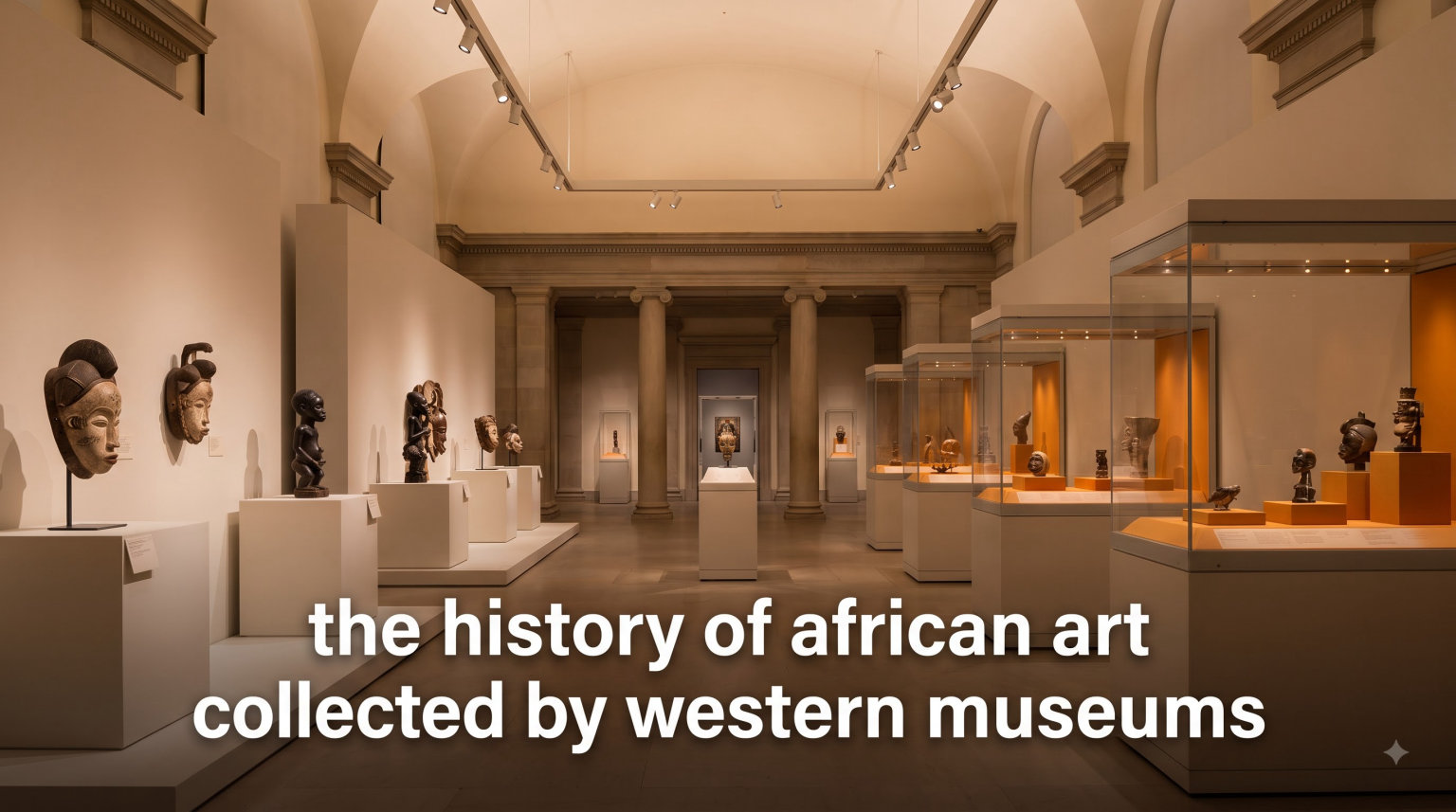
From Colonial Trophy to Cultural Heritage: Understanding a Complex Legacy
The story of African art in Western museums is a tale of conquest, collection, controversy, and ultimately, reckoning. It is a history that cannot be separated from the broader narrative of colonialism and its lasting impact on global cultural heritage. Today, an estimated 90 percent of Sub-Saharan Africa’s cultural heritage resides outside the continent, much of it in the collections of European and American museums. Understanding how this came to pass is essential for grappling with contemporary debates about repatriation, cultural patrimony, and who controls the legacy of African civilizations.
Table of Contents
19th Century: Curiosity Cabinets and Early Collecting
The collection of African objects by Europeans is not solely a product of the colonial era, though colonial expansion dramatically accelerated it. As early as the 15th century, Portuguese explorers encountered African kingdoms and returned home with objects that piqued European curiosity. These items ranged from carved ivory and wooden sculptures to ceremonial objects and everyday utensils, though European observers often failed to grasp their cultural and spiritual significance.
During the 18th and early 19th centuries, African objects began appearing in the private curiosity cabinets of European aristocrats and scholars. These collections, precursors to modern museums, typically housed exotic objects alongside natural specimens, scientific instruments, and antiquities. The categorization of African objects as “curiosities” rather than art reflected a worldview that placed European civilization at the center of cultural achievement.
“By the nineteenth century, many of these curiosity cabinet collections were donated first to natural history museums, where African objects were classified as ethnographic specimens rather than artistic achievements.”
Missionary activity and exploratory expeditions also contributed significantly to early collections. Missionaries, who often lived among African communities for decades, accumulated extensive knowledge of local customs and material culture. They sent objects back to Europe as evidence of their work and as educational materials for congregations. Explorers and traders added further acquisitions, though often without systematic documentation of provenance or cultural context.
The Colonial Period: The Scramble for Africa (1890-1918)
The Scramble for Africa that began in the 1880s transformed the collection of African art from a scattered, opportunistic endeavor into a systematic enterprise driven by colonial conquest. The Berlin Conference of 1885, which partitioned Africa among European powers without regard for existing political boundaries or cultural territories, provided the political framework for this transformation.
Perhaps no single event illustrates the nature of colonial collecting more dramatically than the Benin Expedition of 1897. British forces, seeking to punish the Kingdom of Benin for a trade dispute, sacked the royal palace and removed thousands of objects, including the celebrated Benin Bronzes: intricate cast brass plaques, sculptures, and ceremonial items that represented one of Africa’s most sophisticated artistic traditions. The British Museum alone received around 900 objects from this expedition; other institutions in Europe and America received additional shares. The Igbo-Ukwu bronzes, discovered in 1939 and dating to the 9th century, provided further evidence of the depth and complexity of African metallurgical traditions that pre-dated European contact by centuries.
Key Historical Events
Colonial administrators, soldiers, and missionaries competed to acquire African objects, which were displayed as “trophies” of empire in world fairs and colonial exhibitions. The Trocadéro Museum in Paris, founded in 1878 and later predecessor to the Quai Branly Museum, was specifically designed to house these ethnographic collections. The Great Exhibition in London (1851) and subsequent colonial exhibitions in Paris, Brussels, and other European capitals showcased African art as evidence of the “primitive” cultures that European powers claimed to be civilizing.
Key European Collections
The major European museums that acquired African art during the colonial period remain the primary repositories of these collections today. Each institution’s holdings tell a slightly different story about the nature and scale of colonial collecting.
London, UK
Paris, France
Paris, France
Tervuren, Belgium
Berlin, Germany
Vienna, Austria
The British Museum in London holds one of the world’s most significant collections of African art, including hundreds of Benin Bronzes. The museum’s founding legislation prevents the permanent disposal of objects from its collection, making repatriation legally complex. The Quai Branly Museum, opened in 2006 under French President Jacques Chirac, consolidated France’s colonial-era African holdings into a single institution dedicated to non-Western arts. The museum’s creation acknowledged the problematic origins of these collections while continuing to display them.
The Royal Museum of Central Africa in Tervuren, Belgium, presents a particularly stark example of colonial-era collecting. Founded in 1897 to showcase the results of King Leopold II’s rule in the Congo Free State, the museum’s exhibitions long emphasized ethnographic documentation over artistic appreciation. Recent renovations have attempted to confront this legacy while maintaining the institution’s educational mission.
American Museums and African Art
American institutions entered the field of African art collecting somewhat later than their European counterparts, but they quickly developed significant collections. The Metropolitan Museum of Art in New York established its African art department in the mid-20th century, building on earlier collections that had been classified under decorative arts or primitive art categories.
The Smithsonian National Museum of African Art in Washington, D.C., founded in 1964, has distinguished itself through its commitment to presenting African art on its own terms, emphasizing the diversity and sophistication of African artistic traditions. The museum has also been at the forefront of ethical collecting practices and collaborative relationships with African institutions.
The Armory Show of 1913 marked a turning point in American appreciation of African art. This landmark exhibition, which introduced European avant-garde movements to American audiences, also featured African art objects alongside works by artists like Picasso and Matisse. For many Americans, this was their first opportunity to encounter African sculptures and masks as artistic rather than ethnographic objects.
African Art’s Influence on Western Modernism
Perhaps the most ironic chapter in the history of African art in Western collections is the story of how these objects transformed European and American art. European modernist artists, seeking to break with the traditions of academic painting, found in African art a source of formal innovation and conceptual freshness.
Picasso’s Les Demoiselles d’Avignon (1907) is conventionally regarded as the painting that launched Cubism. Its shattered planes and angular forms owed a significant debt to African masks and sculptures that Picasso had studied at the Trocadéro Museum. The painting’s confrontational nudes rejected European conventions of beauty in favor of something more primal, more authentic, as Picasso understood it through the lens of African art.
“The brilliant histories of art belong to everyone, no matter their background. Yet for too long, the story of African art’s influence on Western modernism has been told without adequate acknowledgment of how that art was obtained.”
The Primitivism movement more broadly saw Western artists appropriating forms from African, Oceanic, and Native American art. Matisse, Derain, Brancusi, and many others incorporated African motifs and techniques into their work. The German Expressionists drew inspiration from these sources as well. Yet this artistic appreciation existed alongside and was indeed nourished by the same colonial structures that enabled the acquisition of African art objects through conquest and domination.
This tension defines one of the central paradoxes of the Western reception of African art: the very forces that enabled the removal of these objects from Africa also made their artistic influence possible. The avant-garde artists who celebrated African art typically had little to say about the political circumstances of its acquisition.
Repatriation Debates and Contemporary Issues
The question of whether African artifacts should be returned to their countries of origin has moved from academic discourse to the center of museum policy debates in recent years. The repatriation movement has gained momentum as African nations have become more assertive in claiming their cultural heritage and as the historical circumstances of colonial-era acquisitions have received greater public attention.
Key Terms: Understanding the Debate
Repatriation: The return of cultural objects to their country of origin, often referring to objects taken during the colonial period.
Restitution: The compensation or restoration of property to its rightful owner, sometimes used interchangeably with repatriation in cultural contexts.
Patrimony: Cultural heritage considered as the inheritance of a particular nation or people, emphasizing the deep connection between objects and their places of origin.
Heritage: Broader category encompassing both tangible and intangible cultural traditions passed down through generations.
The Benin Bronzes have become the focal point of repatriation debates. Nigeria has demanded the return of thousands of objects taken during the 1897 expedition, and several museums in Germany, the United Kingdom, and other countries have begun the process of returning individual pieces. In 2022, France returned 26 objects to Benin, marking a significant symbolic victory for the repatriation movement. A French government commission, the Savoy report, recommended the broader return of African heritage held in French collections.
Critics of repatriation argue that Western museums provide better preservation, wider accessibility, and more scholarly resources than might be available in countries of origin. They point to the risk that returned objects might be damaged by conflict, poorly stored, or inaccessible to international audiences. Some argue that the universal museum concept, which posits that great collections serve humanity as a whole, justifies maintaining global collections.
Proponents of repatriation respond that these arguments obscure the original crime of forcible taking and perpetuate colonial power structures. They argue that African nations have the right to possess and exhibit their own cultural heritage, and that Western arguments about preservation often underestimate the capacity of African institutions. The distinction between patrimony (what belongs to a people by right of origin) and mere possession carries significant moral and legal weight in this debate.
Conclusion: The Future of African Art in Western Museums
The history of African art collected by Western museums is not simply a matter of past injustices; it continues to shape contemporary relationships between African nations and Western cultural institutions. As of today, the conversation has evolved beyond the binary choice between keeping everything and returning everything. More nuanced approaches are emerging that acknowledge the complexity of the situation.
Several Western museums have begun to establish long-term loan programs and collaborative relationships with African institutions. The British Museum has entered into partnership agreements with Nigerian institutions regarding the Benin Bronzes, though questions about permanent return remain unresolved. Some museums have established joint exhibition programs that share the narrative of how objects came to be in Western collections.
The younger generation in Africa, as noted by scholars like academic and writer Chika Okeke, represents a critical voice in these debates. For African youth, the presence of their cultural heritage in Western museums is not merely an abstract historical fact but a living concern connected to questions of identity, national pride, and economic development. Creative economies built around cultural tourism depend significantly on access to heritage objects.
Moving forward, the path likely involves a combination of repatriation where feasible, long-term partnerships that respect African agency and ownership, and a more honest reckoning with the colonial origins of existing collections. The story of African art in Western museums may ultimately become not just a history of acquisition but a model for how former colonial powers and colonized peoples can navigate shared cultural heritage in a spirit of dialogue rather than domination.
Frequently Asked Questions
Why should artifacts in museums not be repatriated?
Museums argue that artifacts are preserved for global audiences, protected from conflict, and accessible for educational research. However, critics note this ignores the original theft and denies source nations their cultural patrimony. The preservation argument often underestimates the capacity of African institutions, while the global access argument fails to address why access should require permanent separation from origin.
Should African artifacts be returned to Africa?
The question of repatriation involves complex considerations including cultural heritage rights, preservation capacity, and historical justice. Increasingly, international consensus favors return, with France returning 26 objects to Benin in 2022 and Germany initiating returns of Benin Bronzes. The argument for return centers on the principle that cultural patrimony belongs to the people who created it and whose ancestors preserved it.
Why does the British Museum refuse to give back the stolen artifacts?
The British Museum cites its founding legislation preventing permanent disposal of collections, concerns about setting precedents, and the argument that collections serve international audiences. Critics view these as post-colonial rationalizations that perpetuate the outcomes of colonial conquest. Legal barriers can be addressed through legislation, and the “universal museum” argument has been challenged as paternalistic.
What museum has the most stolen artifacts?
Several major Western museums hold significant quantities of African heritage. The British Museum, Louvre, and German state museums collectively hold tens of thousands of African objects acquired during the colonial period. Determining the single “largest” collection is complicated by different counting methods and the distributed nature of collections across multiple institutions.