
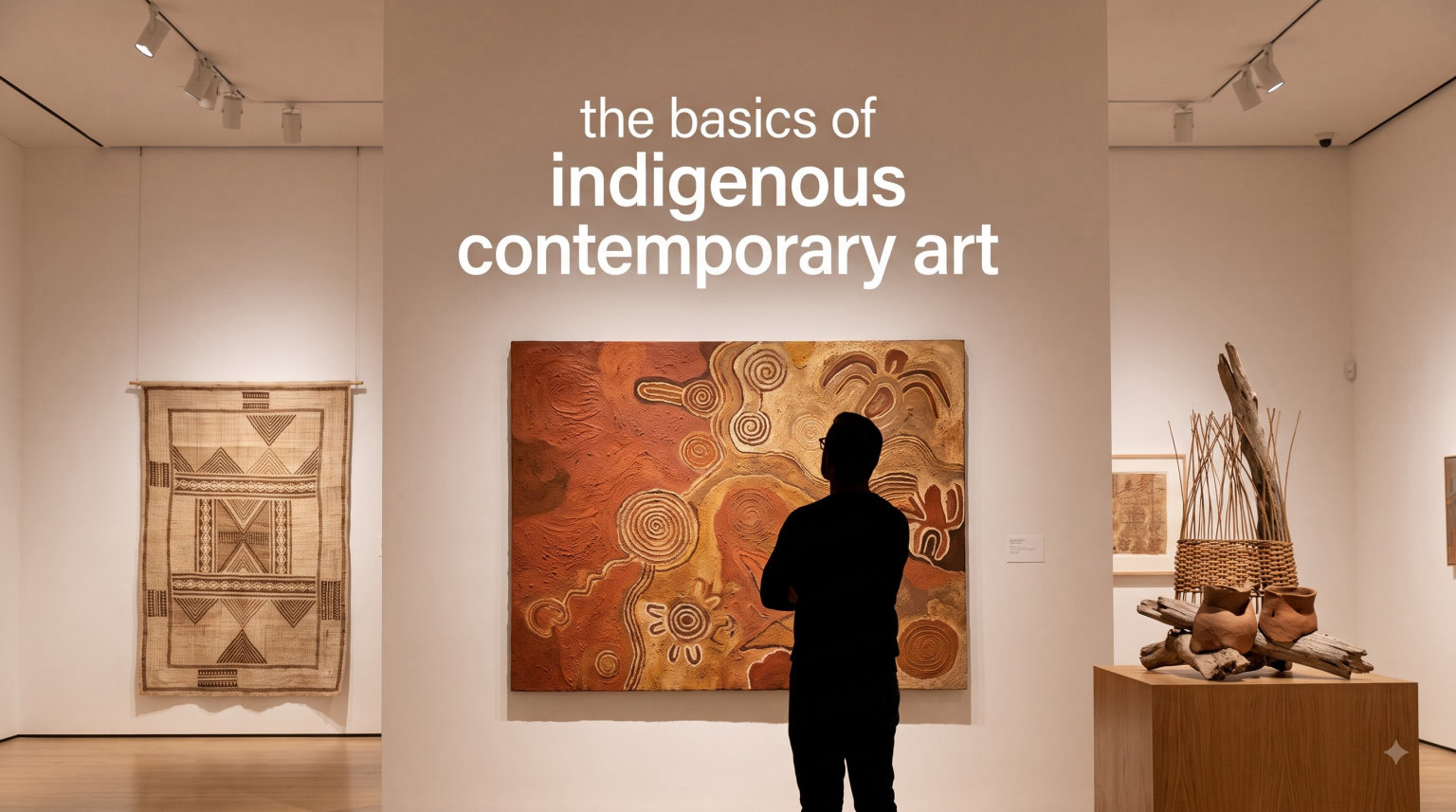
Indigenous contemporary art represents one of the most dynamic and culturally significant movements in the modern art world. It bridges ancient traditions with contemporary expression, giving voice to communities whose stories have often been marginalized. Our team has spent months researching how indigenous artists worldwide maintain their heritage while pushing creative boundaries. In this guide, I’ll walk you through everything you need to understand this remarkable artistic tradition.
Table of Contents
What Is Indigenous Contemporary Art?
Indigenous contemporary art is artwork created by artists belonging to Indigenous communities that is grounded in tradition, cosmovision, and ancestral knowledge while engaging with modern materials, themes, and artistic practices. Unlike purely traditional art, it actively participates in broader art market dialogues while remaining rooted in specific cultural contexts.
The key distinction lies in how artists draw from their cultural heritage while exploring contemporary themes. An Indigenous contemporary artist might use acrylics on canvas alongside traditional natural pigments, or combine ancestral storytelling methods with modern visual techniques. This fusion creates work that honors the past while speaking to present-day issues.
If you’re new to this art form, our guide to contemporary art provides helpful context for understanding the broader movement in which Indigenous artists play a crucial role.
Historical Origins and Background
Indigenous art traditions predate colonial contact by thousands of years, with archaeological evidence showing sophisticated artistic practices in Australian Aboriginal cultures, Native American societies, and Amazonian communities. Rock paintings, petroglyphs, textile weaving, and ceramic traditions all represent centuries of accumulated knowledge and spiritual expression.
Colonial impact dramatically disrupted these traditions. Missionaries often suppressed ceremonial art, governments banned traditional practices, and forced assimilation policies disconnected younger generations from their cultural heritage. Many Indigenous art forms were driven underground or nearly lost entirely.
The contemporary Indigenous art movement emerged largely in the mid-20th century as communities began reclaiming their cultural identities. In Australia, the Papunya movement of the 1970s marked a pivotal moment when desert artists began painting traditional stories on canvas. Similar renaissances occurred across North America and South America, where artists started revitalizing nearly lost techniques while embracing new formats.
Traditional vs Contemporary Styles
Understanding the difference between traditional and contemporary Indigenous art helps clarify what makes this movement unique. Traditional Indigenous art served specific ceremonial, spiritual, or functional purposes within communities. The symbols, patterns, and techniques used often carried sacred meanings accessible only to initiated members.
Contemporary Indigenous art maintains cultural connections while adapting to modern contexts. Artists might reinterpret traditional patterns for new audiences, use materials their ancestors never had access to, or address current issues like climate change and territorial rights through an Indigenous lens.
The coexistence of traditional and contemporary styles varies by community and artist. Some practitioners focus entirely on revitalizing endangered traditional forms. Others create primarily contemporary work with subtle traditional influences. Most Indigenous artists navigate both worlds, choosing approaches that serve their specific cultural and artistic goals.
Materials and Techniques
Indigenous artists employ a remarkable range of materials, from ancient natural sources to modern synthetic options. In Amazonian communities, artists traditionally used Llanchama bark cloth as a canvas, preparing it through careful soaking and pounding processes. Natural pigments came from sources like huito fruit for black, annatto seeds for orange-red, and various plant materials for greens and yellows.
Australian Aboriginal artists have long used ochre, a natural earth pigment found in various colors across the continent. Traditional application involved using fingers, sticks, and bark brushes. Modern Aboriginal artists might still use natural ochre but often incorporate acrylic paints for their durability and color range.
Across Indigenous cultures, textile techniques like weaving remain vital. Pueblo artists in the American Southwest maintain sophisticated weaving traditions, creating elaborate garments and ceremonial items. These techniques pass down through generations, with each community maintaining distinctive patterns and methods unique to their cultural identity.
For those interested in creating Indigenous-inspired art, traditional materials typically include natural pigments, handmade brushes, and surfaces like bark cloth or animal hides. However, understanding the cultural significance behind these choices matters more than the materials themselves. Authentic engagement with Indigenous art traditions requires respecting the cultural protocols governing what can be depicted and shared.
Cultural and Spiritual Significance
For Indigenous communities, art serves purposes far beyond aesthetic appreciation. Every symbol, pattern, and image carries layers of meaning related to ancestral knowledge, spiritual beliefs, and collective memory. When an artist depicts a particular animal, geometric pattern, or landscape, they often reference stories, laws, and teachings that connect their community to the creation era.
Cosmovision—the way a culture understands the universe and humanity’s place within it—shapes virtually every aspect of Indigenous art. Amazonian Shipibo-Conibo artists, for example, create intricate kené patterns that represent the visual expression of icaras, the sacred songs sung during plant medicine ceremonies. The patterns aren’t decorative; they’re considered living manifestations of spiritual knowledge.
Identity expression represents another crucial function. In a world where Indigenous peoples have faced centuries of colonization, displacement, and cultural erasure, contemporary art provides a powerful means of affirming who they are. Creating and sharing traditional knowledge through art helps communities preserve their heritage while educating broader publics about their history and contemporary experiences.
Understanding cultural appropriation in art becomes especially important when discussing Indigenous art. Authentic engagement requires understanding the difference between appreciation that honors traditions and appropriation that exploits sacred cultural elements for commercial gain.
Art as Cultural Resistance
Indigenous contemporary art frequently operates as a form of political and cultural resistance. The concept of survivance, developed by Indigenous studies scholar Gerald Vizenor, describes how Indigenous peoples actively persist through cultural maintenance, creative expression, and direct challenge to colonial narratives.
Artists use their work to assert self-representation rather than allowing others to define their communities. Instead of waiting for mainstream institutions to tell their stories, Indigenous artists create platforms for their own voices. This approach challenges stereotypes, educates public audiences, and builds cultural pride among younger generations.
Territory defense connects closely with artistic expression for many Indigenous communities. Art depicting ancestral lands, sacred sites, and traditional territories helps communicate the deep connections Indigenous peoples maintain with their environments. In an era of climate change and extractive industries, this artistic advocacy gains increasing importance.
The guerrilla art movement shares some similarities with Indigenous art as resistance, though the contexts differ significantly. Both challenge dominant narratives and use creative expression as a tool for social commentary, but Indigenous art specifically addresses centuries of colonial oppression and cultural suppression.
Notable Artists and Their Contributions
Several Indigenous artists have achieved international recognition while maintaining deep cultural commitments. Emily Kame Kngwarreye, an Australian Aboriginal artist from Utopia, began painting in her seventies and became one of the most celebrated Aboriginal artists before her death in 1996. Her work, often featuring sweeping curves and dots in desert colors, drew from Dreamtime stories while embracing abstract contemporary forms.
Among Native American artists, those working in Pueblo communities have gained significant attention. Artists like Hollis A. Dolos (Hopi) and Ramona Sakiestewa (Hopi/ Pueblo) have exhibited internationally while maintaining cultural protocols around their work. Their pieces often address themes of homeland, water rights, and environmental stewardship.
Amazonian artists from the Shipibo-Conibo communities have brought attention to the sophisticated visual traditions of the Peruvian Amazon. Artists like Olinda Silva and Agueda Gancino create elaborate conopa paintings that translate sacred songs into visual form. Their work has been featured in major exhibitions addressing the intersections of traditional knowledge and contemporary art.
First Nations artists from Canada have contributed significantly to the contemporary Indigenous art movement. Norval Morrisseau, an Ojibwe artist, pioneered the Woodland School, creating vivid paintings depicting Ojibwe cosmology and spiritual teachings. His work established a visual language that subsequent generations of Indigenous artists have expanded upon.
Regional Variations
Indigenous contemporary art takes distinct forms across different cultural regions. Australian Aboriginal art encompasses tremendous diversity, from the dot painting traditions of the Central Desert to the cross-hatching of Arnhem Land and the body painting practices of northern communities. Each region maintains unique visual languages while participating in the broader contemporary Indigenous art movement.
Native American art varies enormously across the hundreds of distinct nations within the United States. Pueblo peoples of the Southwest maintain sophisticated pottery and weaving traditions alongside contemporary painting and sculpture. Northwest Coast nations like the Haida and Tlingit continue carving and textile traditions. Plains nations honor hide painting and beadwork traditions while creating new forms of expression.
Amazonian Indigenous art, particularly from the Shipibo-Conibo, Kuntanawa, and Kayapo communities, draws heavily from plant medicine traditions and shamanic practices. These artists often work with ayahuasca-derived visions, creating complex geometric patterns that encode spiritual knowledge. Their work addresses contemporary threats like deforestation and cultural extinction.
First Nations art in Canada represents another major regional tradition. The Indigenous peoples of the Pacific Northwest maintain carving traditions that have adapted to contemporary contexts, while artists from the Eastern Woodlands and Prairies bring distinct regional perspectives to contemporary expression.
Supporting Indigenous Artists Ethically
For those interested in collecting or supporting Indigenous contemporary art, understanding authenticity and ethical engagement matters enormously. Authentic Indigenous art comes directly from community members working within their cultural traditions. Purchasing from community-owned art centers, directly from artists, or from reputable galleries with transparent provenance helps ensure your support reaches the intended communities.
Many Indigenous art centers, particularly in Australia and Canada, are community-owned enterprises that provide economic opportunities while maintaining cultural protocols. Purchasing from these centers ensures artists receive fair compensation while supporting community governance of cultural knowledge.
Understanding cultural protocols helps collectors avoid inadvertently supporting exploitation. Some Indigenous artworks depict restricted knowledge that shouldn’t be commercially available. Respectable dealers and galleries understand these boundaries and can explain the cultural context of pieces they sell.
Visiting Indigenous Art Exhibitions
Museums and galleries increasingly feature Indigenous contemporary art, though exhibition quality and cultural sensitivity vary widely. Major institutions like the National Gallery of Art in Washington, the Museum of Modern Art in New York, and the National Gallery of Australia have dedicated spaces and rotating exhibitions focusing on Indigenous art.
Community museums and cultural centers often provide more authentic contexts for understanding Indigenous art. The IAIA Museum of Contemporary Native Arts in Santa Fe, the Bill Reid Gallery in Vancouver, and the Kelton Foundation’s exhibitions showcase Indigenous-curated shows that center community perspectives.
Understanding museum exhibition processes helps visitors evaluate how Indigenous art is presented. The best exhibitions involve Indigenous curatorial input, provide cultural context, and respect protocols around sensitive materials.
FAQs
What is the difference between indigenous art and contemporary art?
Indigenous art refers specifically to artwork created by artists belonging to Indigenous communities, grounded in cultural traditions, cosmovision, and ancestral knowledge. Contemporary art is a broader category referring to art made in the present time. Indigenous contemporary art bridges both, with artists using contemporary materials and themes while maintaining deep connections to their cultural heritage.
Who is the most famous indigenous artist?
Several Indigenous artists have achieved international recognition, including Emily Kame Kngwarreye from Australia, Norval Morrisseau from Canada, and various Shipibo-Conibo artists from the Amazon. However, fame varies by region, and many highly respected Indigenous artists are better known within their own communities than internationally.
Is indigenous art a good investment?
Indigenous contemporary art has shown strong value appreciation, particularly Australian Aboriginal art from established art centers and works by artists with museum collections. However, collectors should prioritize authentic engagement with cultural significance over purely investment considerations. Purchasing directly from community sources or reputable galleries ensures ethical acquisition.
How can I learn more about indigenous contemporary art?
Visit museums with Indigenous art collections, attend community cultural centers, explore exhibitions at Indigenous-controlled galleries, and engage with published catalogues raisonnees. Building authentic understanding requires ongoing learning and listening to Indigenous voices rather than relying solely on external sources.
Conclusion
Indigenous contemporary art offers a window into some of the world’s oldest artistic traditions while demonstrating how culture adapts and thrives amid change. Understanding this art form requires appreciating both its aesthetic qualities and its deeper cultural significance.
Whether you’re a collector seeking authentic pieces, a museum visitor wanting to deepen your appreciation, or simply someone curious about world art traditions, the fundamentals covered here provide a foundation for further exploration. The key lies in approaching Indigenous art with respect, curiosity, and willingness to learn from the communities whose creative voices deserve recognition.