
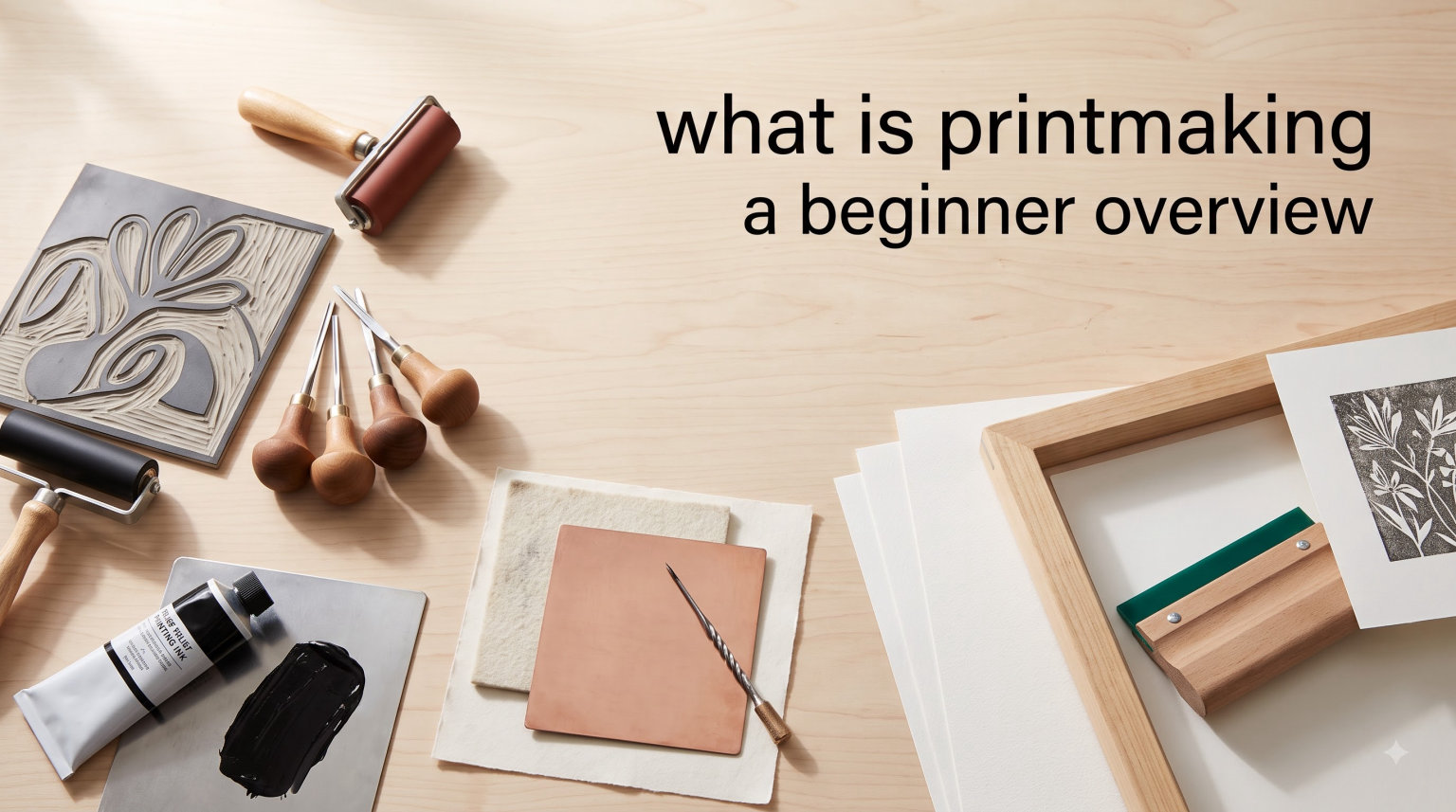
Printmaking sits at the crossroads of art and craft, offering creators a way to produce multiple versions of a single original image. This guide breaks down what printmaking is, how the main techniques work, and what beginners should know before starting their first project.
Table of Contents
What is Printmaking?
Printmaking is an artistic process based on the principle of transferring images from a matrix onto another surface, most often paper or fabric. A matrix is the surface where the artist creates the image – this could be a carved wood block, an etched metal plate, a stenciled screen, or even a stone slab. The matrix holds the image in either raised areas or recessed grooves, and ink applied to these areas transfers to paper when pressed together.
The magic of printmaking lies in its ability to create multiples. Unlike a painting that exists only once, a print allows artists to produce an entire edition of identical images. Each print in an edition is numbered and signed, creating what collectors call a limited edition. This approach makes art more accessible while maintaining the handcrafted quality that makes each print valuable.
The process produces unique results even when creating multiple copies. Variables like ink coverage, paper absorption, and pressure during printing mean every print in an edition has subtle differences. These variations are considered part of the work’s character and add to its appeal among collectors and artists alike.
The 4 Main Printmaking Techniques
The printmaking world divides into four primary categories based on how the image interacts with the matrix and printing surface.
Relief printing involves carving into a surface so the raised areas hold ink while the recessed areas remain blank. The inked raised surface then presses onto paper, transferring the image. Woodcut and linocut represent the most common forms of relief printing.
Intaglio printing works in the opposite manner. Here the image is carved or etched into the matrix surface, creating recessed lines that hold ink. Paper presses against the inked plate, and the moisture and pressure pull ink from the grooves. Etching, drypoint, and aquatint fall into this category.
Screen printing uses a stencil stretched across a mesh screen. Ink passes through the open areas of the stencil while the blocked areas stay clean. This technique appears in both fine art studios and commercial applications like t-shirt printing.
Lithography relies on the chemical repulsion between grease and water. Artists draw on stone or metal plates with greasy materials, then treat the surface so only the drawn areas accept ink while the surrounding areas remain ink-free due to moisture.
Relief Printing: Woodcut and Linocut
Relief printing represents the oldest and most accessible form of printmaking for beginners. The process begins with a block of material – traditionally wood, though modern artists often use linoleum or rubber blocks like Pink Easycarve. Artists carve their image into the surface using specialized gouges, removing areas they want to appear white in the final print while leaving the raised areas to receive ink.
The inking process requires rolling a thin layer of printing ink across the block’s surface. Only the raised carved areas hold ink, creating a mirror image of the final print. Artists then position paper over the block and apply pressure through a printing press or by hand burnishing with a spoon-shaped tool called a baren.
Linocut has become particularly popular among beginners for several practical reasons. The material costs less than quality wood blocks, it cuts more easily without resistance, and it produces satisfying results without years of practice. Speedball carving tools offer an affordable entry point for those just starting out, as many artists in online communities recommend them as reliable first tools.
The results carry a distinctive bold quality with strong contrasts between inked and non-inked areas. Artists who want softer, more detailed results often prefer woodcut because the natural grain of wood adds organic texture that linoleum cannot replicate.
Intaglio Printing: Etching and Drypoint
Intaglio printing produces images with remarkable detail and tonal range, but it requires more equipment and safety considerations than relief methods. The process begins with a metal plate – copper or zinc most commonly – which an artist treats with acid-resistant coatings before drawing or scratching the design directly into the coating.
In traditional etching, the artist applies a waxy ground to the plate and then uses an etching needle to scratch through the ground wherever they want lines to appear. The plate then goes into an acid bath, and the acid bites into the exposed metal, creating grooves that will hold ink. The artist removes the ground after biting the plate, leaving the design in sunken lines.
Drypoint differs by scratching directly into the metal without acid. The scratched burin creates a burr along the edges of the lines, which holds more ink and produces a characteristically soft, velvety line quality. However, the burr wears down quickly during printing, limiting how many quality prints an artist can pull from a single plate.
Aquatint and mezzotint add tonal depth to intaglio work. Aquatint uses resin particles to create tonal areas through acid biting, while mezzotint involves texturing the entire plate with a rocking tool to hold ink in a specific pattern. These techniques allow artists to achieve painterly effects within printmaking.
Screen Printing (Serigraphy)
Screen printing gained widespread recognition through its use in commercial graphics and has become a major fine art technique thanks to artists like Andy Warhol. The process uses a screen made of fine mesh stretched over a frame, with areas blocked by a stencil to create the image. Ink placed on top of the screen passes through open areas when pulled across with a squeegee.
The stencil creation offers multiple approaches. Artists can hand-cut stencil materials, paint directly onto the screen with blocking compounds, or use photographic processes to create incredibly detailed images. Photographic screen printing allows artists to reproduce photographic imagery with precision that manual techniques cannot match.
Screen printing works on many surfaces beyond paper, including fabric, wood, metal, and plastic. This flexibility explains its popularity in both fine art and commercial applications. Fine artists value the bold flat colors and clean edges possible with screen printing, while commercial printers rely on it for durable prints on merchandise.
The process requires less specialized equipment than intaglio but demands attention to proper ink mixing and screen preparation. Artists can build up layers of color by using separate screens for each color, creating complex multi-colored images through careful registration of each layer.
Lithography: Drawing on Stone
Lithography offers artists the unique ability to print images that closely resemble drawings, making it valuable for artists trained in illustration. The process relies on the simple principle that grease and water repel each other. Artists draw directly on stone or aluminum plates using materials like crayons, pencils, and liquid inks that contain grease.
After drawing, the printer treats the stone with a chemical mixture that makes non-image areas water-receptive while protecting the drawn areas. When the stone is moistened, water only adheres to the non-drawn areas. Ink applied next only sticks to the drawn greasy areas, leaving the wet background clean.
The printing itself uses a specialized press with heavy pressure to transfer the inked image to paper. The process requires significant skill and experience to master, and the stones are heavy and expensive to work with. This has made lithography less accessible for beginners compared to relief methods, though many art schools maintain lithography facilities for more advanced students.
Artists appreciate lithography for its ability to capture subtle gradations and fine lines that other techniques cannot reproduce easily. The hand-drawn quality appeals to illustrators and artists who want to translate their drawing practice directly into print form without carving or etching.
Getting Started: Tips for Beginners
Online communities like r/printmaking reveal consistent patterns in what beginners wish they knew before starting. The overwhelming variety of techniques and materials ranks as the top concern, with newcomers uncertain where to begin their journey.
Starting with linocut offers the most practical path forward for most beginners. The materials cost less than other approaches, the tools require less specialized equipment, and successful results come quickly with practice. Many experienced printmakers recommend carving rubber blocks like Pink Easycarve as a first project, allowing new artists to build confidence before investing in traditional wood or metal.
Taking a half-day taster class at a local studio often provides better foundational knowledge than self-teaching through books or videos alone. The ability to ask questions, receive immediate feedback, and watch demonstrations accelerates learning significantly. Studios typically provide all materials and equipment, reducing initial investment requirements.
Practice and starting simple emerge as the most repeated advice across beginner communities. Attempting complex multi-color projects before mastering basic technique leads to frustration and wasted materials. Instead, focus on creating a simple single-color print first, learning how your tools behave and how ink responds to different pressures before moving to more ambitious projects.
If you want to explore printmaking techniques used by influential artists, our comprehensive guide to 100 Most Influential Contemporary Artists profiles many creators who incorporate printmaking into their practice.
Frequently Asked Questions
What is printmaking in simple terms?
Printmaking is an artistic process of creating prints by transferring images from a matrix (such as a carved block, etched plate, or stenciled screen) onto another surface, typically paper or fabric. The matrix holds the image in either raised or recessed areas, and ink applied to these areas transfers to paper when pressed together.
What are the 4 basic printmaking techniques?
The four main printmaking techniques are relief printing (woodcut and linocut), intaglio printing (etching and drypoint), screen printing (serigraphy), and lithography. Relief printing carves into surfaces so raised areas hold ink. Intaglio creates recessed lines in metal plates that hold ink. Screen printing uses stencils on mesh. Lithography relies on chemical repulsion between grease and water.
What is the introduction to printmaking?
Printmaking introduces artists to the concept of creating multiples – producing multiple identical copies of an original artwork. It involves working with matrices like wood blocks, metal plates, screens, or stones to create images that can be transferred repeatedly. This process makes art more accessible while preserving handcrafted quality in each print.
Conclusion
Printmaking offers a rewarding path for anyone interested in expanding their artistic practice. The four main techniques – relief, intaglio, screen printing, and lithography – each provide distinct possibilities for creating multiples of original artwork. Whether you carve into linoleum blocks at home or work with stone in a professional studio, the fundamental principle remains the same: transferring images from a matrix to create handcrafted prints that carry lasting value.
Starting simple with linocut or woodcut lets beginners build confidence before exploring more complex techniques. Focus on learning how your tools interact with your chosen material, how ink behaves under different pressures, and how paper responds to the printing process. These foundational skills transfer across all printmaking methods and form the basis for developing your personal approach.
For more inspiration and to return to our art learning hub, visit Bruce High Quality Foundation.com.