
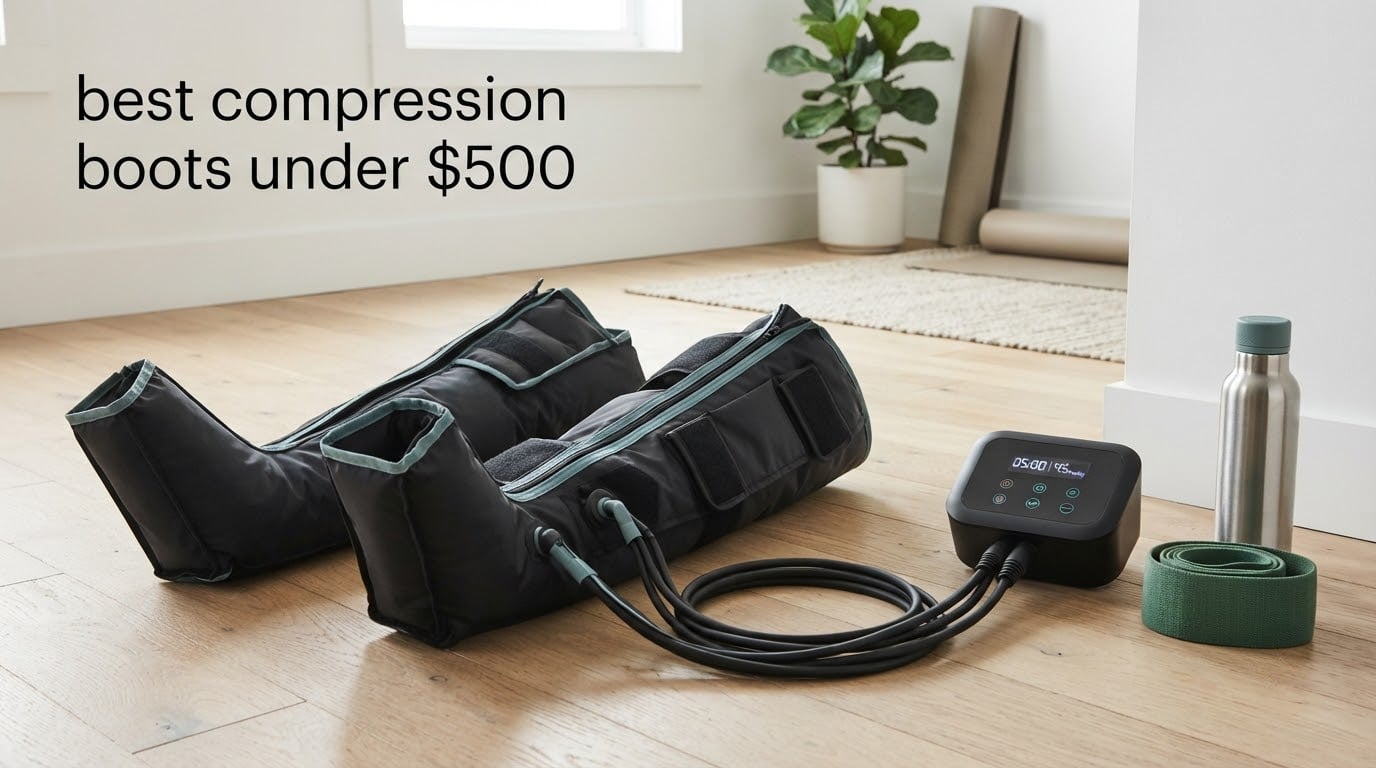
Compression boots inflate sleeves that wrap your legs, pump air from the ankle upward in overlapping chambers and push blood and fluid back toward your heart. The whole category used to be priced for pro teams, then the market filled with consumer models that do the same mechanical work for a fraction of the money, and now the best compression boots under 500 dollars are a genuinely good buy rather than a compromise.
That is the honest framing of this roundup. Every boot below sits under the 500 dollar ceiling, publishes a real pressure number in mmHg, and inflates chambers in sequence. What you give up at this price is wireless polish, app quality and build refinement, not the compression mechanism itself. If you want the wider picture of the category first, our compression boot recovery guide covers the technology in more detail.
We spent the last several weeks reading specification sheets, warranty terms and thousands of user reviews across twelve models to build this list. Everything is spec-based research plus reported user experience rather than a laboratory test bench, and we say so wherever it matters. We also answer the question that keeps coming up on recovery forums, which is whether a medical-grade pressotherapy machine costing several thousand dollars does anything a well-built budget boot cannot.
Table of Contents
What Are the Best Compression Boots Under 500 Dollars?
The best compression boots under 500 dollars are the QUINEAR QN-071A for the deepest user-verified specification, the SANFELIA FE-7204B for the widest pressure range and the highest average rating, and the Air Relax AR-2 for anyone who wants an FDA-cleared system. All three deliver sequential inflation across four or more chambers at real published pressures, and all three cost less than half of the wireless models sitting above the ceiling.
If you want a wider read on the category before you commit, our compression socks roundup covers the lower-intensity option that works better for travel, and this list covers the full-leg systems for training and standing shifts.
How We Picked and What We Checked?
Anyone can list twelve boots. The work is in deciding which ones deserve a spot, so here are the criteria we applied before we read a single review.
A hard ceiling. Eleven of the twelve models sit under 500 dollars, and the one that does not is labelled in its own section rather than quietly included.
Published pressure in mmHg. A listing that says maximum pressure without a unit tells you nothing. Every pick here publishes a number.
Real chamber count. Four chambers is the practical minimum. Fewer than that risks a tourniquet effect, where the pressure at one band is never released before the next band inflates.
Overlap and gradient. Chambers that overlap each other move fluid smoothly. Gaps between chambers create pressure edges.
An identifiable brand with published warranty terms. Marketplace listings with no support contact and no parts supply are excluded on principle.
Verifiable bundle contents. We check that a listing includes both sleeves plus the controller, because some cheaper listings quietly price the controller alone.
Real user volume. A high score on twenty reviews is an anecdote. We weight review counts heavily when ranking near-identical products.
Two further honesty notes. First, we did not test these devices ourselves, so where we describe feel, noise or durability we are reporting what buyers describe, not our own measurement. Second, one model in this list is listed above the ceiling, and we flag it plainly in its own section rather than quietly including it.
Top 3 Picks for Compression Boots Under 500 Dollars (October 2026)

QUINEAR QN-071A Recovery System
- 4 air chambers
- 8 intensities 50-120 mmHg
- 3 modes
- 24-month warranty


Air Relax AR-2 Professional
- FDA and CE MDD cleared
- 3 therapy modes
- 4 chambers
- medical-grade pump
All 12 Compression Boots Compared Side by Side
| Product | Specifications | Action |
|---|---|---|
| QUINEAR QN-071A Leg Recovery System |
|
Check Latest Price |
 FIT KING FT-082A Full Leg Boots FIT KING FT-082A Full Leg Boots |
|
Check Latest Price |
| SANFELIA FE-7204B Full Leg Massager |
|
Check Latest Price |
| Air Relax AR-2 Professional System |
|
Check Latest Price |
 QUINEAR QN-070A 3-Channel System QUINEAR QN-070A 3-Channel System |
|
Check Latest Price |
 FIT KING FT-091A-L Cordless Boots FIT KING FT-091A-L Cordless Boots |
|
Check Latest Price |
 Hyperice Normatec Go Wireless Hyperice Normatec Go Wireless |
|
Check Latest Price |
 QUINEAR QN-090A Cordless System QUINEAR QN-090A Cordless System |
|
Check Latest Price |
 Compex Ayre Wireless Rapid Recovery Compex Ayre Wireless Rapid Recovery |
|
Check Latest Price |
 SHINE WELL SW-106A Recovery System SHINE WELL SW-106A Recovery System |
|
Check Latest Price |
 FIT KING FT-115A Pro Cordless FIT KING FT-115A Pro Cordless |
|
Check Latest Price |
 CINCOM CM-112A-M Cordless System CINCOM CM-112A-M Cordless System |
|
Check Latest Price |
1. QUINEAR QN-071A Leg Recovery System – Most User-Verified Pick
- Genuinely sequential inflation across foot
- calf and thigh
- Strong pressure users compare favorably to premium devices
- Quiet and light at 6.61 pounds with a carry bag
- 24-month warranty with responsive replacement support
- No heat function
- Fewer program options than premium brands
- Some owners report weakening pressure after extended use
- Wired design means you cannot walk while wearing them
This is the model I keep coming back to, and the reason is volume rather than flash. It has the deepest review base of anything in this roundup, and across that review base the same thing keeps being described: pressure that feels therapeutic, a pump you can barely hear, and a system that still works a year later.
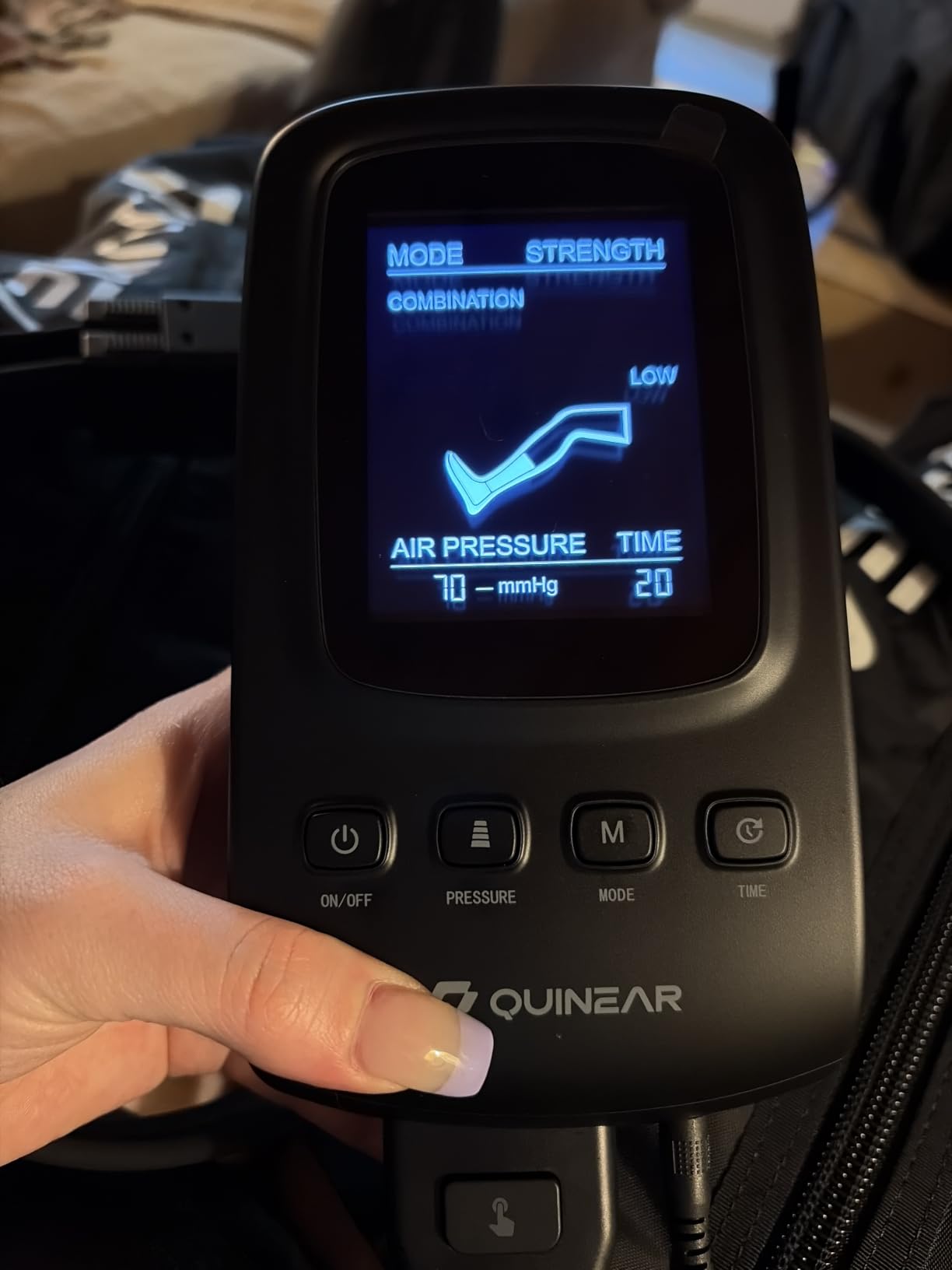
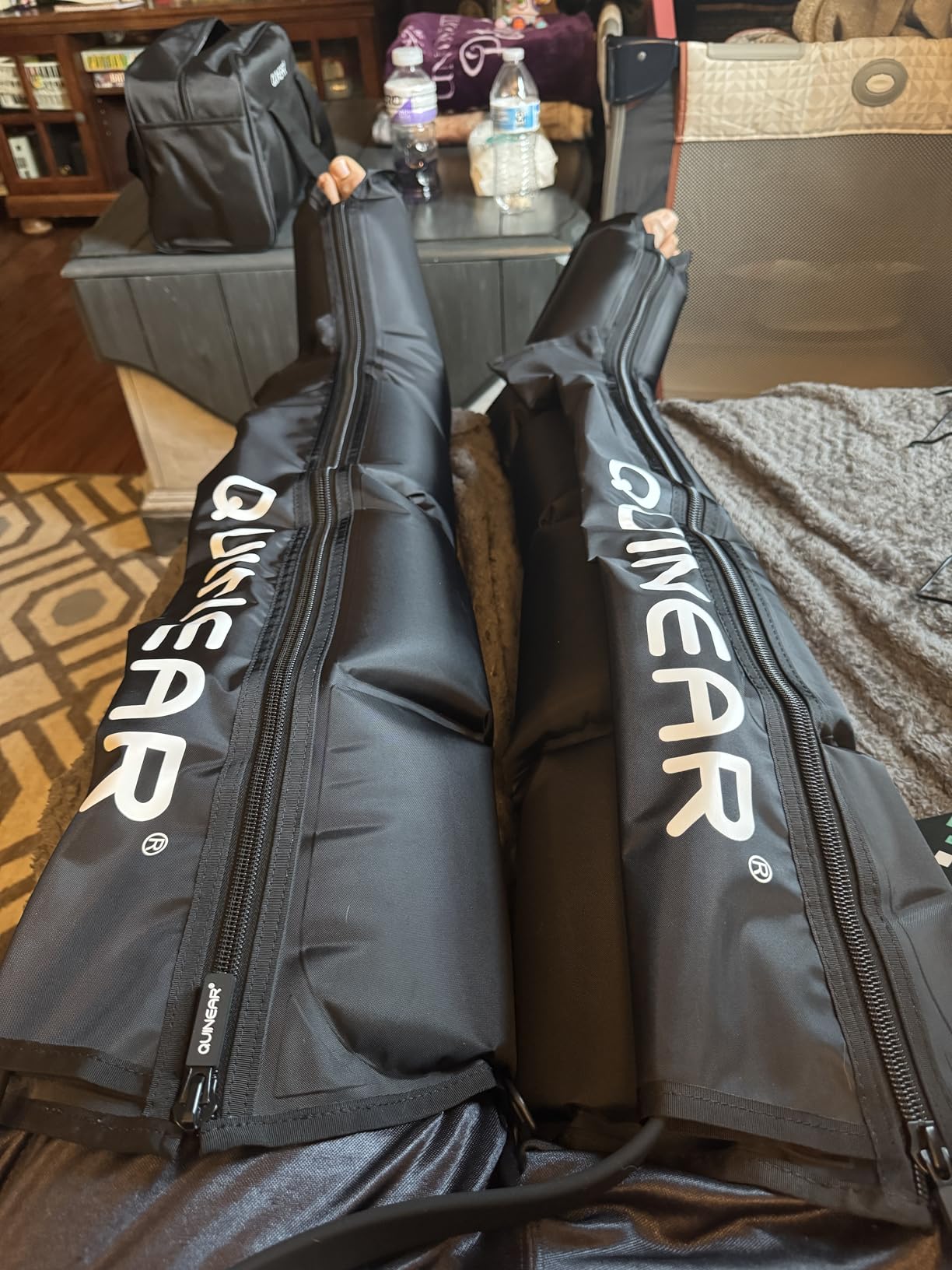
The specification is the important part. Four air chambers cover foot, lower calf, upper calf and thigh, so the gradient runs the full leg. Eight intensities span 50 to 120 mmHg, and the built-in pressure sensor adjusts inflation volume to your leg size, which matters more than it sounds when two people of very different builds use the same sleeve.
Three modes cover sequence, circulation and a combination pattern, with 20, 25 and 30 minute timers. That is enough control for post-run recovery, for a heavy-leg evening after a shift, and for the swelling management that buyers managing lymphedema and post-surgical fluid retention describe. The absence of heat is the most commonly noted gap, and at 50 to 120 mmHg you are not getting sports-therapy-grade pressure either.
What you get for the money?
Buyers consistently place it against Hyperice-class devices on price and report being satisfied. The sizing friction point is measurement: measure your thigh circumference and pick the size from that, not from your height. Customer service has sent replacements when a pump failed, which is the main reason the long-term picture looks better here than on cheaper unbranded kits.
Where it falls short?
It is a wired design, so you are sitting still for the session. Program count is thinner than what a premium app offers, and a minority of owners report pressure weakening after a year or two of use. If you need to walk around during compression, this is the wrong architecture.
2. FIT KING FT-082A Full Leg Boots – Best for Heavy Legs and Standing Shifts
FIT KING Air Compression Recovery System, Full Leg Massager Boots (Medium)
- Buyers report real relief from swelling and heavy-feeling legs
- Fast inflation and quiet operation
- Simple digital controller with clear pressure control
- Storage bag and a responsive 2-year warranty
- Zipper design keeps sleeves inflated
- so mid-session changes are awkward
- Occasional compressor or air connection failures after 1-2 years
- Fit depends heavily on thigh and inseam measurement
- Large size runs long for users under 6 feet
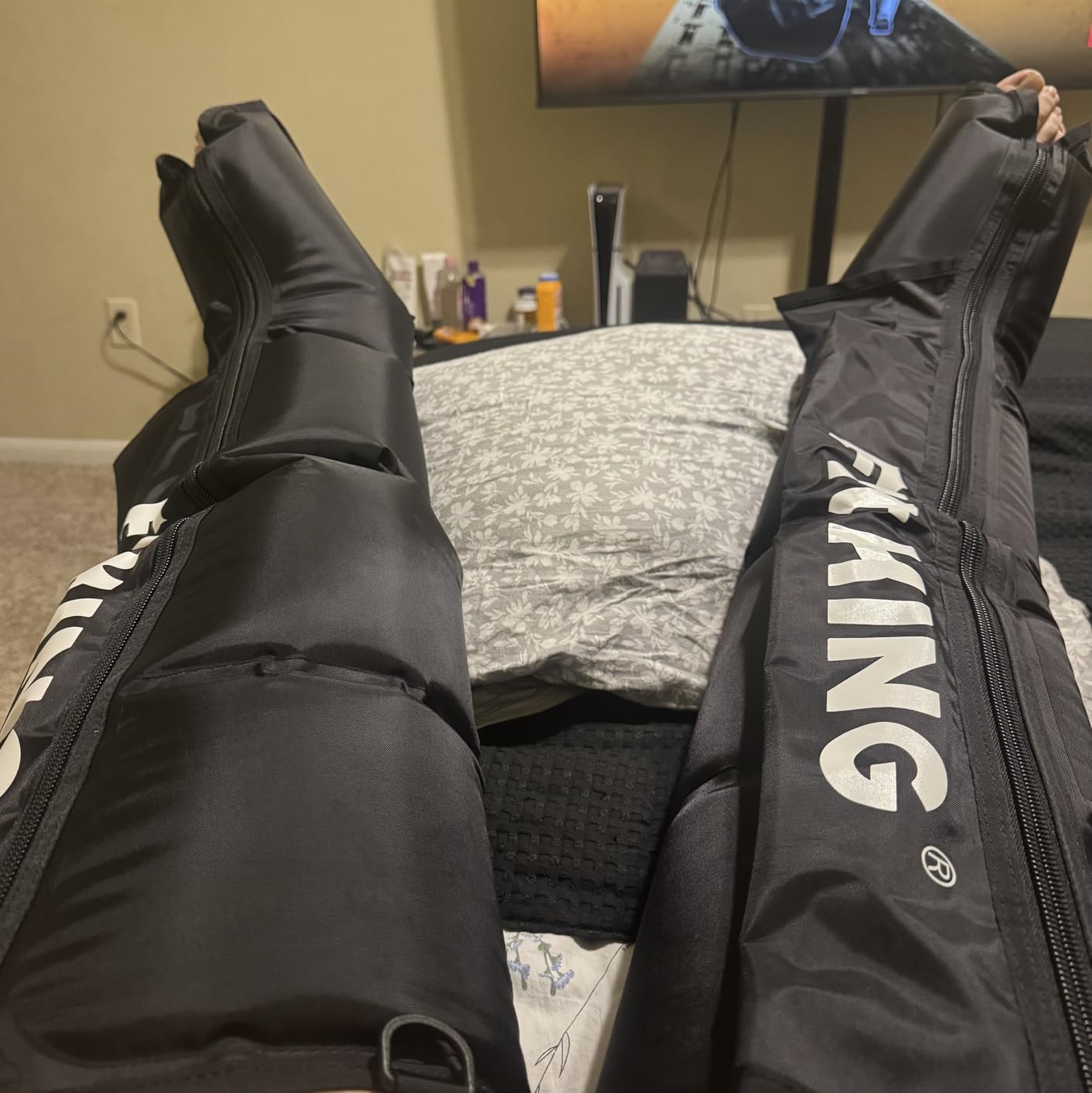
If your problem is legs that feel heavy by 5pm after standing all day, this is the one I would point at first. Buyers mention athletic recovery, long shifts on their feet, post-surgical swelling and lymphedema management in roughly equal measure, and the pattern across reviews is visible swelling reduction within days.
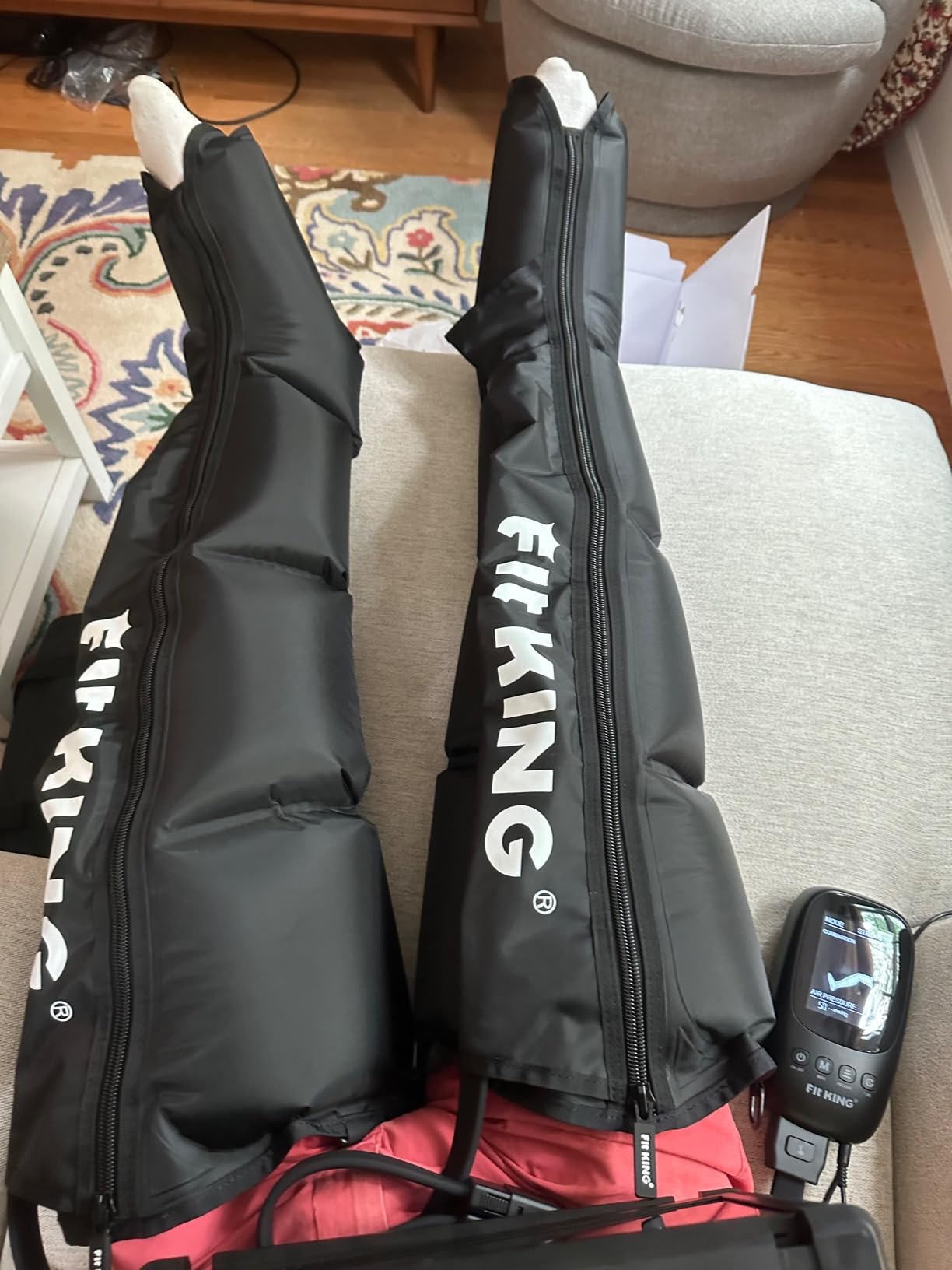
Four independent airbag channels cover feet, calves, knees and thighs, with three modes, eight pressure intensities and three time options. A sensor control system adjusts inflation volume to leg size, and the large-capacity pump is reported as fast and quiet. At 6.83 pounds the whole thing moves between rooms without effort.
Several reviewers describe the performance as comparable to spa-grade equipment that costs multiples of this. The warranty is two years, and the company has been reported as responsive when a model needed replacing.
Who it suits and what to measure?
Measure your thigh and inseam before you order. Fit complaints on this model trace back to sizing far more than to the hardware, and the large size runs long for anyone under six feet. The zip-on sleeve design is the other recurring theme: it holds air well, which means you cannot adjust pressure or let a chamber down without removing your leg.
Where it falls short?
Compressor and air-connection failures show up in a minority of reviews at the one-to-two year mark. Warranty support resolved those with replacements, which is the difference between a two-year problem and a permanent one. If you want heat or a portable battery, neither is here.
3. SANFELIA FE-7204B Full Leg Massager – Widest Pressure Range
- Highest average rating in the roundup at 4.8 across 572 reviews
- Six modes and a wide intensity range for personalised sessions
- Remote operation with a settings memory function
- Portable with an included storage bag and FSA eligible
- Longest timer option is 25 minutes
- Shorter coverage that stops below the upper thigh
- One buyer reported the white remote missing from the box
This has the highest average rating of any product here, and unlike some high scores in this category it comes with a review count large enough to mean something. Owners describe fast setup, easy operation and noticeable relief from tired, heavy legs, with very little reported failure.
The headline specification is the pressure range. Eight intensity levels run from 60 to 200 mmHg, which is wider than anything else in this list, and six modes (auto, cycle, recovery, pinch, press, relax) give you more ways to shape a session than most wired controllers at this price. The memory function remembering your settings is a small touch that reviewers single out repeatedly.
Sizing is published rather than vague: it fits up to a 27 inch thigh, 20 inch calf and 15 inch foot, which is a larger published thigh figure than any other model here. It is listed as FSA eligible, which is a genuine lever if you have a flexible spending account.
Best feature and the trade
The 200 mmHg ceiling matters for one specific group. Buyers recovering from demanding lower-body work report it delivers pressure that the lower-range boots do not reach. The trade is session length: timers stop at 25 minutes, so this is a shorter-session machine than the models that run to 60 minutes further down this list.
What to watch?
Coverage stops below the upper thigh, and one reviewer reported the white remote missing from the package. It is a wired system, so it lives next to a socket rather than in a suitcase. Check the box contents on arrival before you assume something is faulty.
4. Air Relax AR-2 Professional System – Best FDA-Cleared Pick
- FDA-cleared credentials that clinics and therapists recognise
- 4.7 rating across 438 reviews with a strong five-star share
- Long track record on the market since 2015
- Multiple therapy modes for circulation and lymph drainage
- Sits at the top of the price band
- so no budget headroom is left
- Large wired pump takes up real floor space
- 1-year warranty is shorter than most rivals here
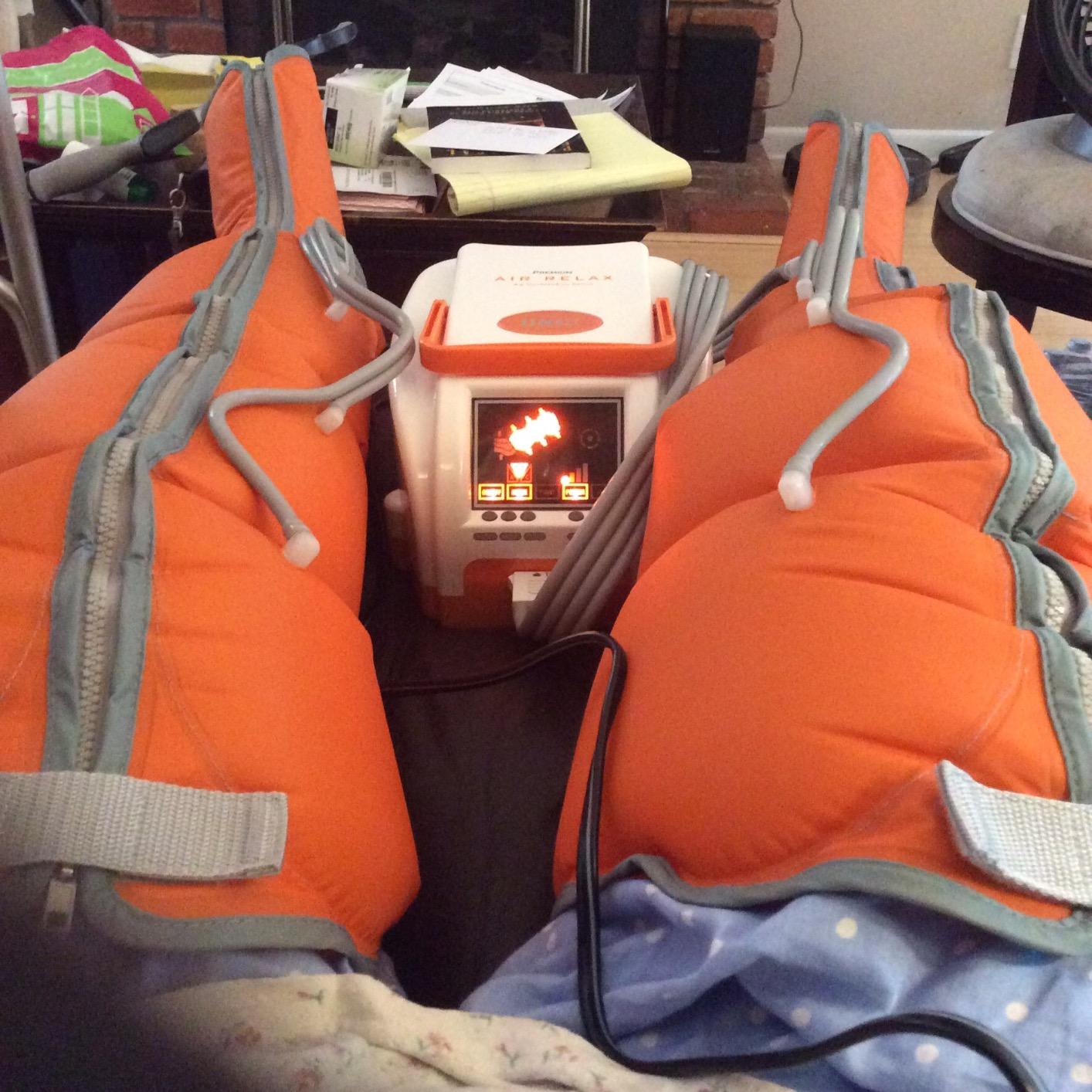
This is the only model in the roundup with genuine medical-device credentials, and if a clinician told you to look at pressotherapy equipment, this is the one they would recognise. It is FDA cleared in the United States and CE marked under the European Medical Devices Directive.
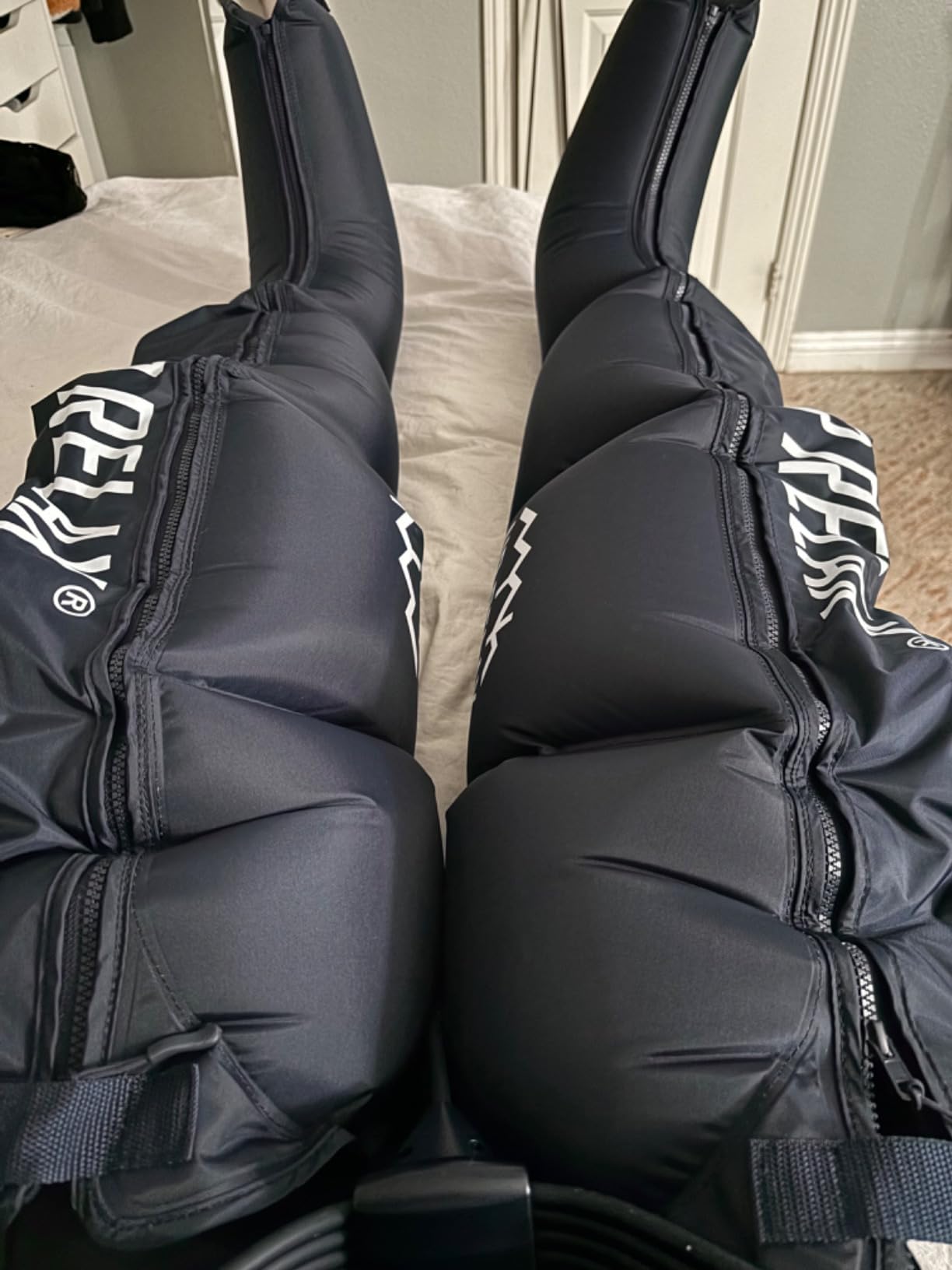
Buyers consistently describe it as an at-home version of the equipment they have seen in physical therapy rooms. That comparison is really about the pump, which is described as medical-grade and delivering substantially more power than comparable systems. Four compression chambers and three therapy modes cover peristaltic, cyclical uniform and continuous patterns, a waveform mix that few consumer controllers in this tier offer.
It has been on the market since 2015, which is worth factoring in. Long availability usually means replacement parts and sleeves still exist years after purchase, and the garments are described as non-toxic, lead-free and biocompatible.
Why the medical label matters here?
This is the model that answers the question raised repeatedly on health forums about whether thousands of dollars of medical pressotherapy buys anything different. The honest answer is that clearance, build quality and the strength of the pump are real differences, but the underlying mechanism of sequential inflation is the same one running in every cheaper boot on this list. Buyers managing lymphedema and chronic swelling report it performs.
The compromises
It sits at the top of our price band, so the budget is fully committed. At eight pounds with a separate wired pump, it occupies noticeably more space than a cordless or hose-free design. The warranty is one year, which is the shortest here and the one place this model clearly trails.
5. QUINEAR QN-070A 3-Channel System – Best Budget Entry
- Quiet operation with accurate
- easy sizing
- Strong uniform pressure praised by runners and athletes
- Cuts down swelling
- Useful during pregnancy per owner reports
- Entry-level cost with FSA/HSA eligibility
- Covers foot and calf only
- stopping at the knee
- Wired
- so you cannot walk while using it
- High pressure can feel overwhelming
- especially standing
If the full 500 dollar budget is more than you want to spend, this does the core job at a fraction of the outlay. Marathon runners, soccer families and people managing neuropathy or oedema describe it as effective at moving soreness and swelling out of the lower legs.
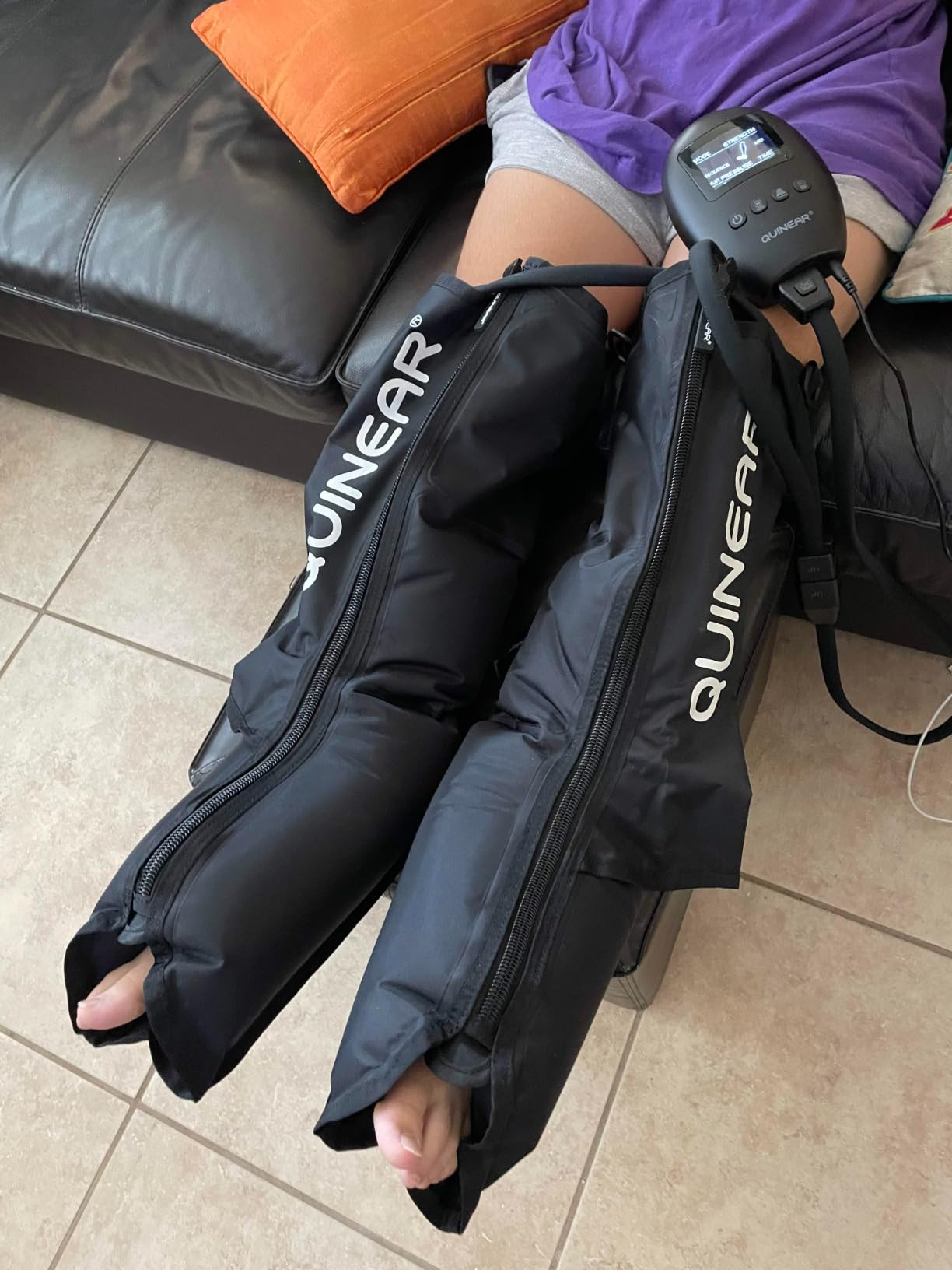
It runs three channels across two zones, foot and calf, with three pressure levels at 60, 90 and 140 mmHg, ten programs spread across three modes, and an LED handheld controller. The zipper sleeve is made from TBP fabric, which is easy to wipe clean. It is FSA and HSA eligible.
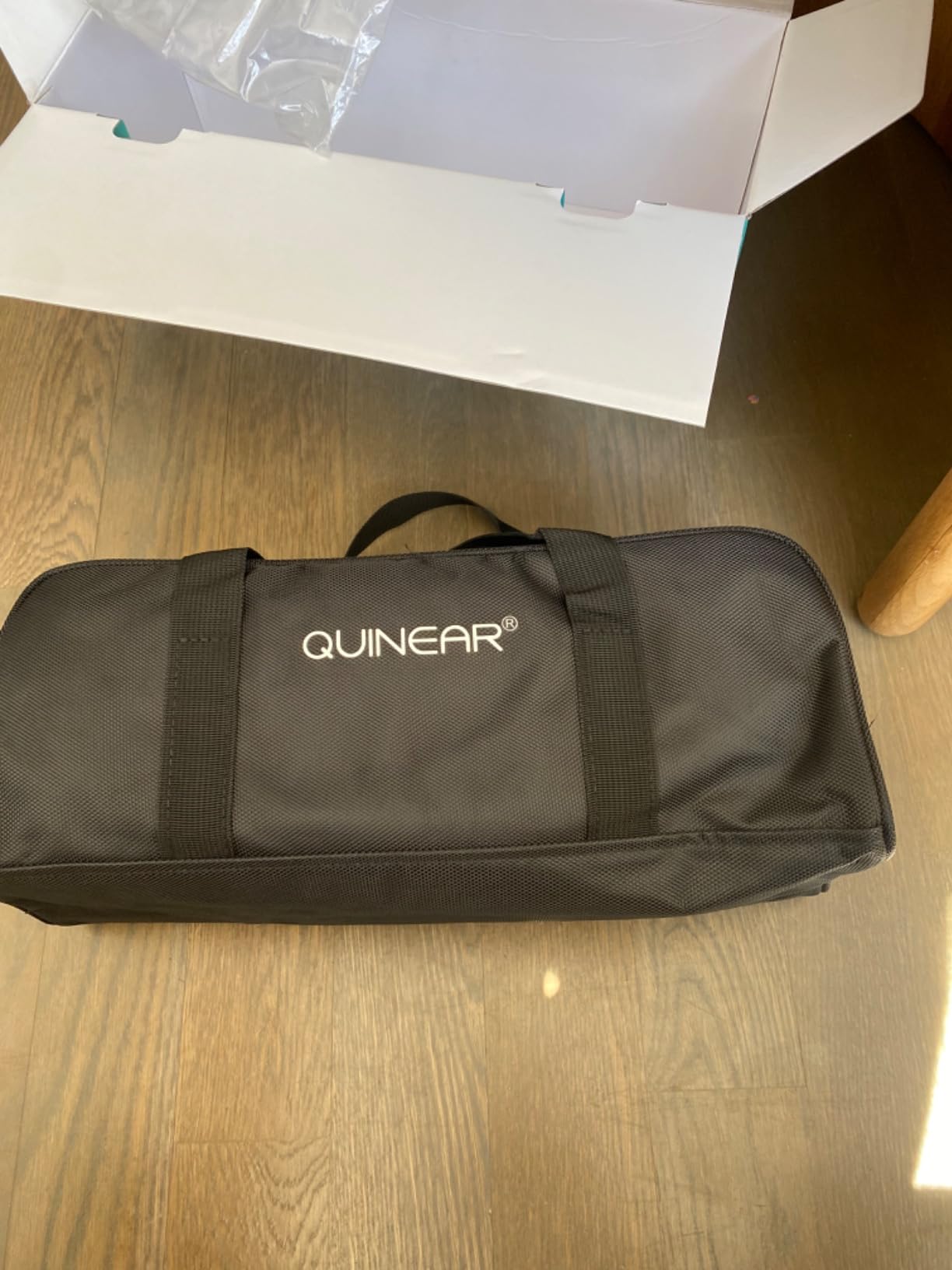
At 4.74 pounds this is among the lightest products in the roundup, and buyers call it quiet and simple to set up. The two-step zone layout means it is not really a full-leg boot, and the most frequent limitation in reviews is exactly that coverage.
Where it fits the buyer?
Two-zone compression suits a runner who wants calves and feet worked after a long run, and it suits travel or a small apartment where a full-leg system is impractical. The one-size-fits-most approach and quiet pump make it a device people actually reach for rather than one that sits in a cupboard.
Limitations to accept
Coverage stops at the knee, so quads and glutes get nothing. It is plugged in, so you sit still. One caution worth repeating from reviews: at the 140 mmHg setting, legs can start to feel numb, so this is not a standing-use device even though it looks like it could be.
6. FIT KING FT-091A-L Cordless Boots – Best Cordless Full-Leg Pick
FIT KING Air Compression Leg Massager Recovery System Cordless L
- Cordless battery gives 3-4 hours of use per charge
- Reported reductions in post-surgery and lymphedema swelling
- Silent pump suits relaxing or overnight use
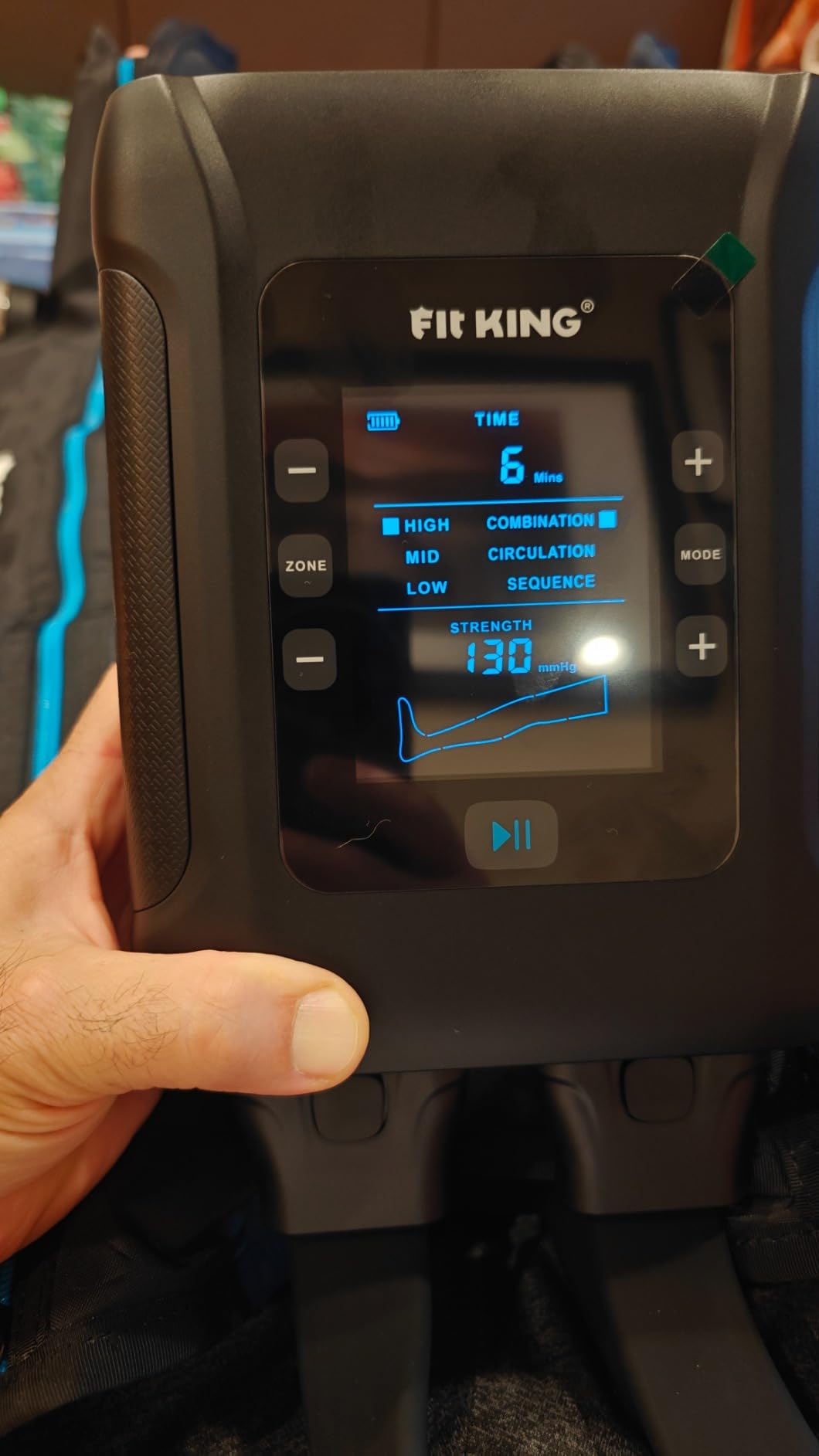
- 12 pressure levels and 10 time intervals with 4-zone targeting
- Size-sensitive fit
- and some buyers had to exchange for a larger size
- Bulky to store and carry
- High pressure can feel uncomfortable for some leg shapes
Battery power changes where recovery happens. This model runs three to four hours per charge, which means you can use it in a hotel room, on a floor in a gym or in bed rather than next to a wall outlet, and the pump is quiet enough to sleep through.
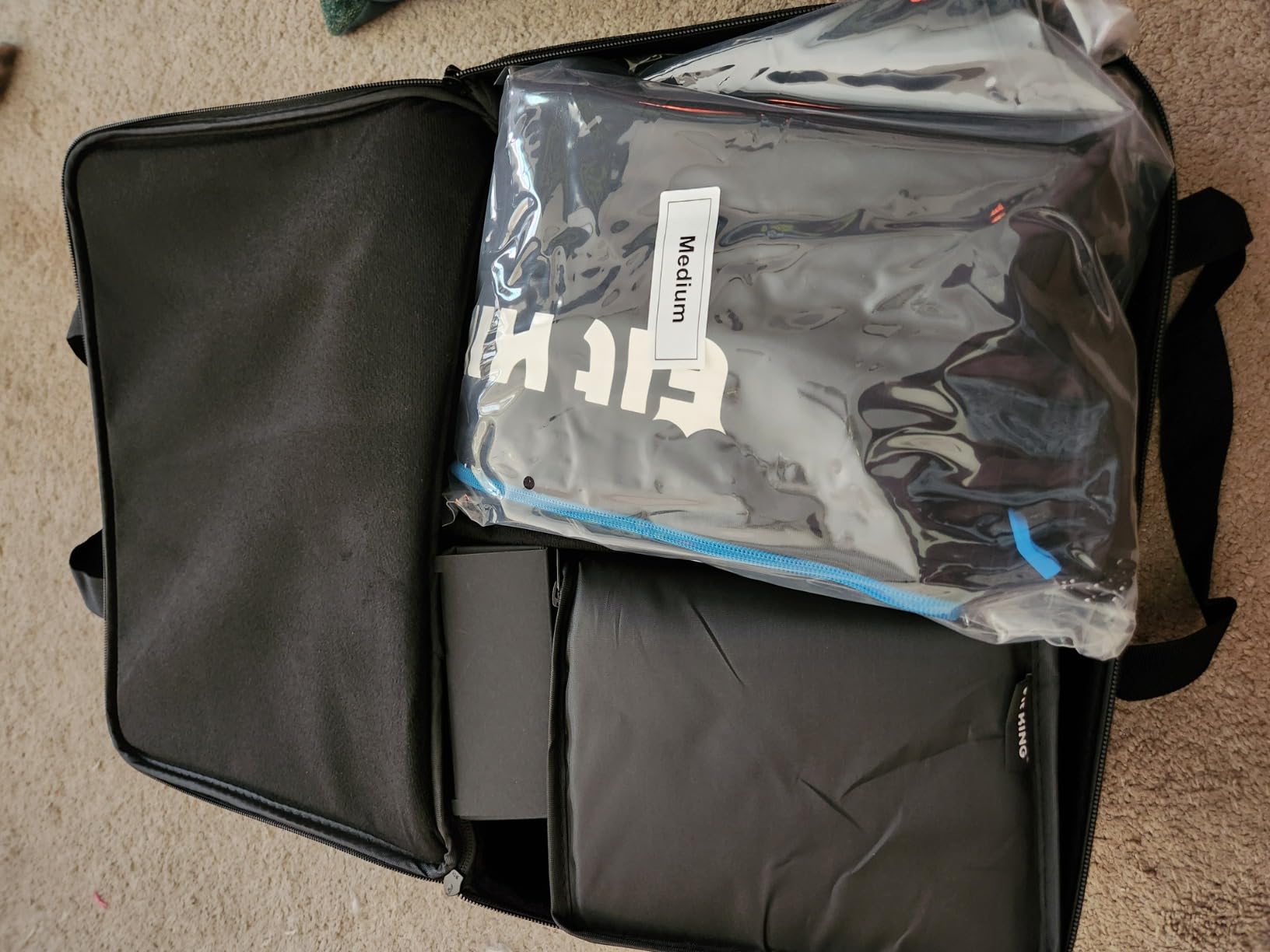
Four large air chambers inflate 40 percent faster than the previous generation, with twelve pressure settings from 40 to 150 mmHg, ten time intervals from 15 to 60 minutes, three therapy modes and four-zone control covering foot, lower calf, upper calf and thigh. The 40 mmHg floor and 150 mmHg ceiling give it a wider working span than most models here.
Buyers describe medical-adjacent use in detail: post-ACL surgery, peripheral oedema and lymphedema, with visible reductions in swelling reported within days. A two-year warranty and fast exchanges are cited positively.
Best for nightly routines
If your plan is a session every evening, cordless power is the feature that makes that habit stick. Being able to put it on while reading, or wear it through a long evening without dragging hoses across a room, is the practical upgrade over every wired model below it in this list.
What to watch?
Sizing is the most common problem and several buyers resolved it through customer service exchanges, so measure carefully. At 9.81 pounds it is bulky to move and store. And while 150 mmHg is plenty, some leg shapes find the top of the range uncomfortable.
7. Hyperice Normatec Go – Best for Travel
- Genuinely wearable
- users walk and fly with them
- Lightweight at 1.2 pounds and TSA approved
- Bluetooth app control with HyperSync pairing
- Noticeable calf relief after flights and long shifts
- Calf-only design with no thigh or foot coverage
- Runtime of roughly 2 hours is short for full-leg use
- Occasional charging or power-on failures
- Where the two sleeves meet can pinch if not aligned
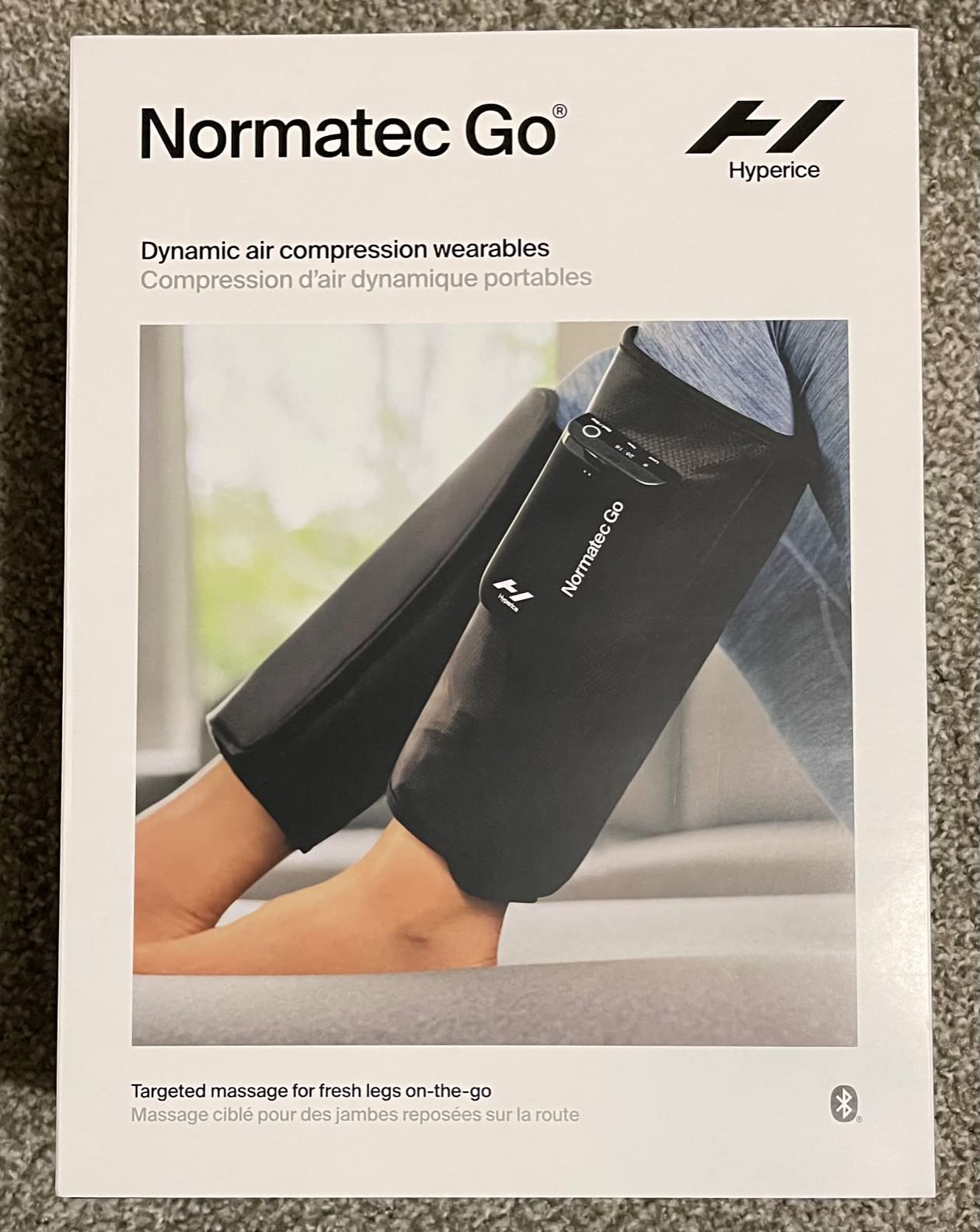
This is the most wearable design in the roundup, and it is not really a boot. It is a pair of calf sleeves with pumps built in, no hoses, no controller and no wall socket, and that changes what you can do with it entirely.
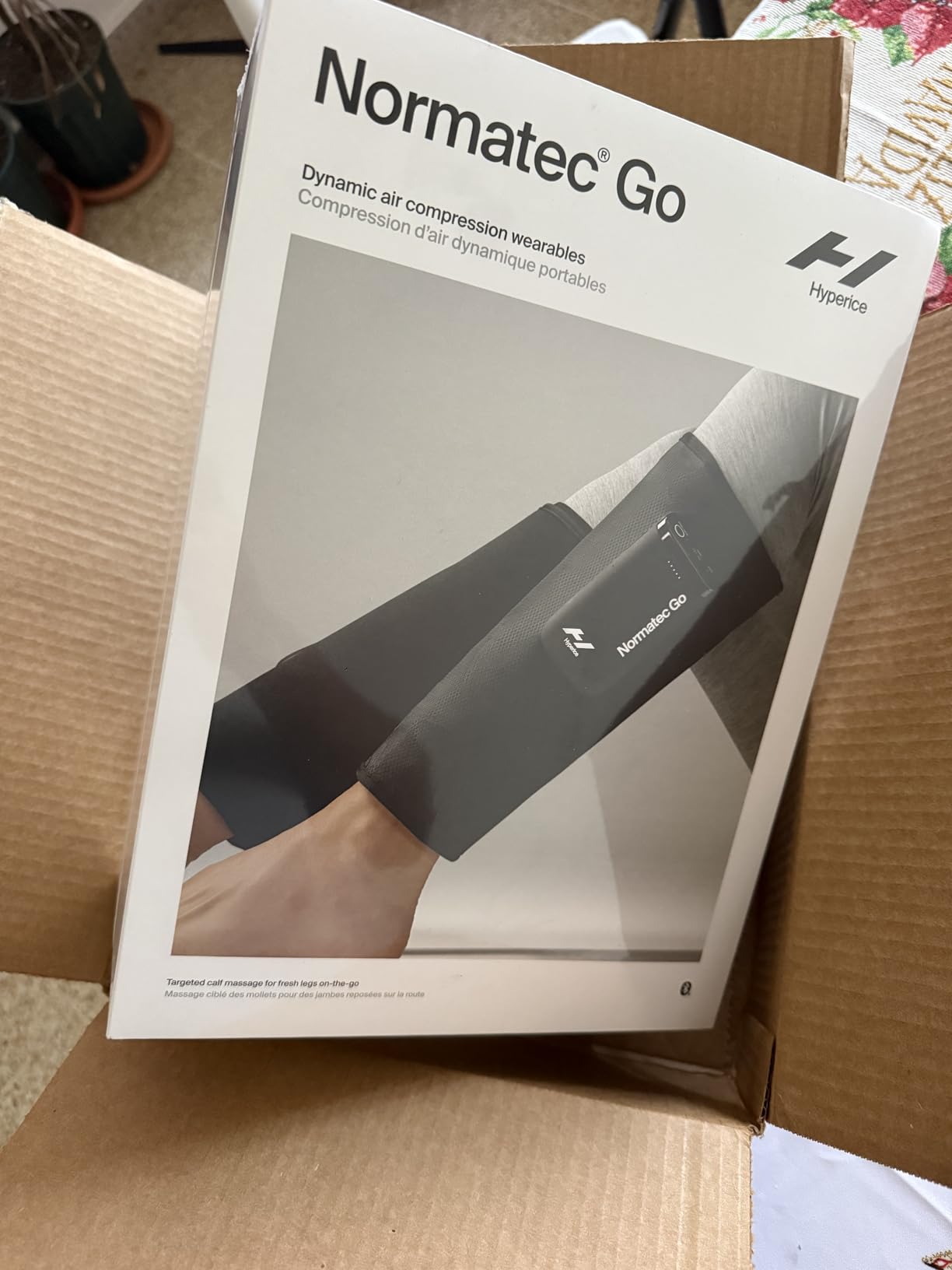
Three zones of overlapping, gapless 360-degree compression run through seven levels of customisation, controlled over Bluetooth through the Hyperice app. HyperSync pairs the two sleeves so they inflate together. At 1.2 pounds and TSA approved, it goes in a carry-on. Run time is up to two hours cumulative, with about four hours to fully charge.
Reviewers treat it as a travel and on-the-go complement to a full-leg system rather than a replacement. Post-flight recovery and long-shift calf tension come up repeatedly, and users with large calves report it still fits within the published 22 inch calf size.
Where a wearable design wins?
Walking through an airport with compression running is the thing this sleeve does that a full-leg boot cannot. If your recovery window is thirty minutes in transit rather than thirty minutes at home, portability beats chamber count. The app and firmware updates are a real quality difference against generic controllers, and it costs a fraction of the wireless full-leg models above the ceiling.
Where it cannot compete?
Calf only, with no thigh or foot coverage. Two hours of runtime is short compared with the three-to-four-hour cordless full-leg models. A small number of units failed to power on or charge, and if the two sleeves are not aligned at the join they can pinch.
8. QUINEAR QN-090A Cordless System – Best Value Cordless Full-Leg
- Cordless full-leg coverage including the knees
- Quieter pump that some buyers use to fall asleep with
- Reported reductions in lymphedema and post-workout swelling
- Support team quick to resolve sizing and warranty issues
- Some zipper failures after about a year of use
- Battery pack and cords are bulky and awkward to handle
- Bulky appearance
- and a minority report uneven compression between the two sleeves
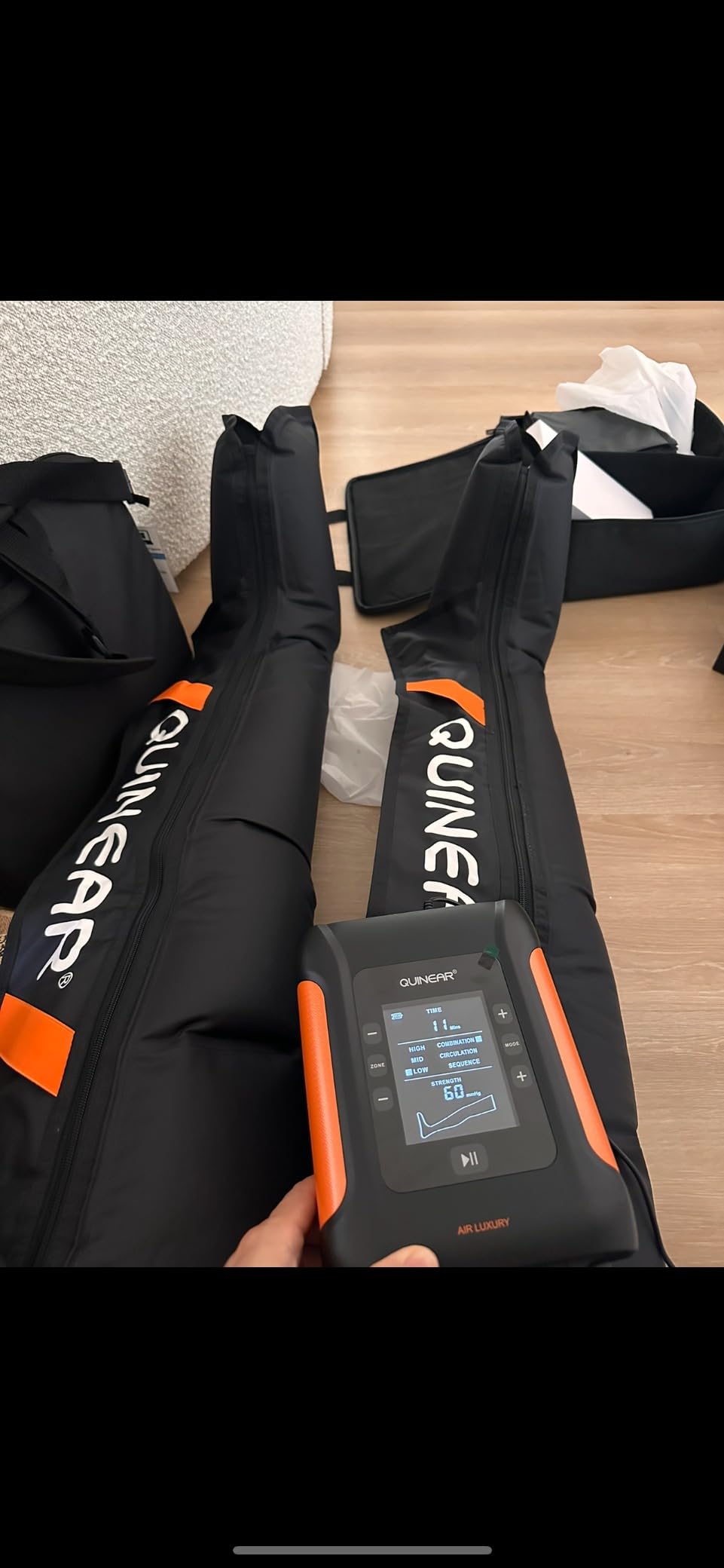
Compared with the wired QUINEAR at number one, this is the same idea with the cable removed and a longer timer. Buyers frame cordless full-leg coverage as the main upgrade over plug-in models, using it for evening relaxation, gym recovery and lymphedema management with reported improvement within days.
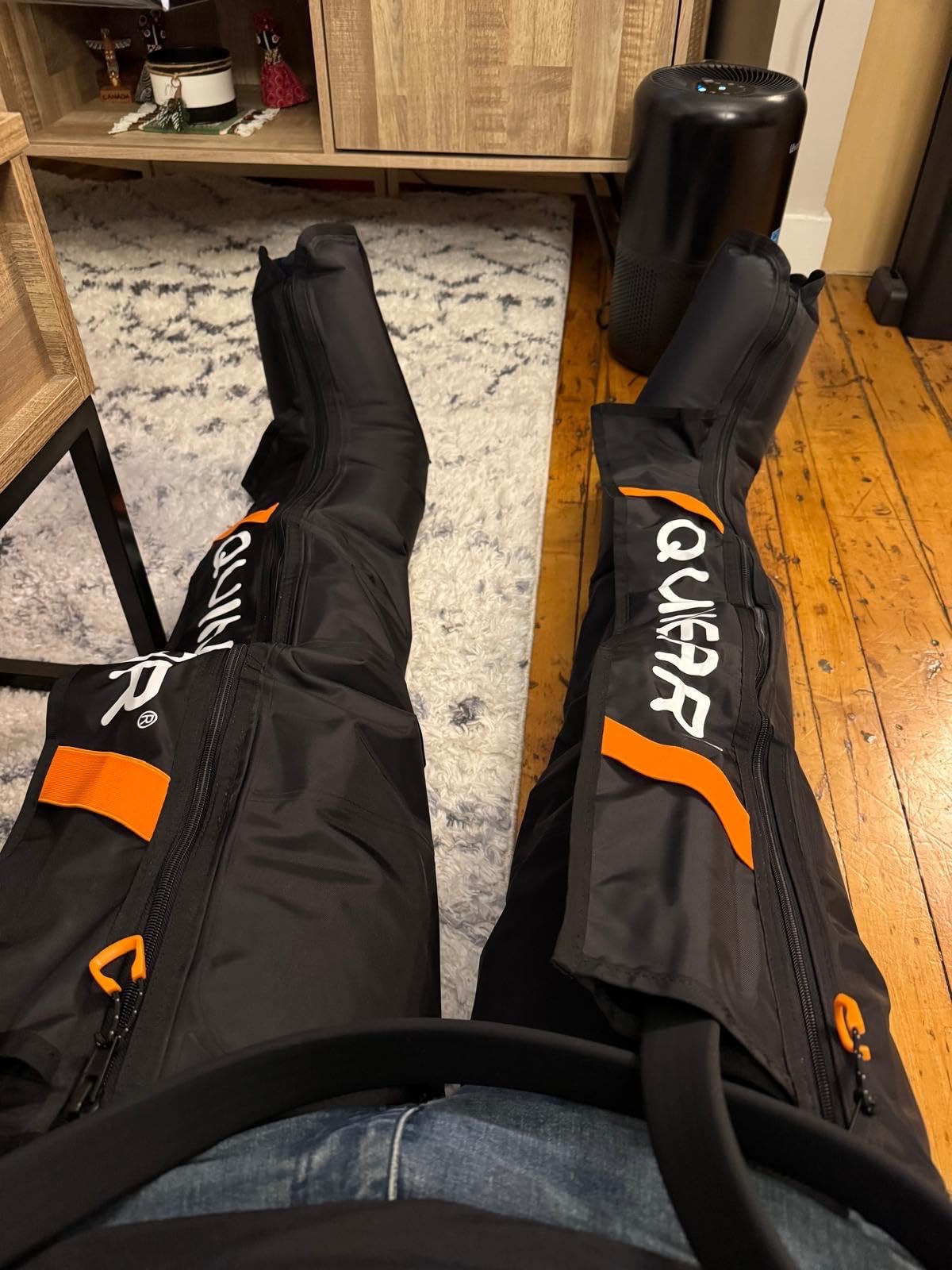
Four air chambers cover the leg including the knees, driven by a cordless 2500mAh controller that gives two to four hours per charge. Twelve intensities run from 40 to 150 mmHg across three modes, with a timer adjustable from 15 to 60 minutes in five-minute steps. Four-zone targeting covers foot, lower calf, upper calf and thigh, and a travel bag is included.
The 24-month warranty is longer than most in this roundup, and the support team drew consistent praise, including a free replacement offer.
The practical read
This is the sweet spot for someone who wants the convenience of cordless, full-leg coverage and a long session length, without paying for the five-zone hardware. The timer going to 60 minutes is the detail that separates it from cheaper cordless kits.
What to watch?
Zipper failure after roughly a year is the most cited durability problem, and the battery pack is awkward to handle, particularly for anyone with limited dexterity. One detailed review reports the two sleeves did not compress equally, which is worth checking on your first session. Its 4.3 rating reflects that, and it is the lowest-scoring cordless full-leg option here.
9. Compex Ayre Wireless Rapid Recovery Boots – Best for Back-to-Back Sessions
Compex Ayre Wireless Rapid Recovery Compression Boots – High Tech Compression Massage – S/M
- Integrated pumps remove the hose and pump setup entirely
- Open-knee design improves seating and widens sizing
- Cordless
- so sessions work away from an outlet
- Build quality and an athletic trainer recommendation
- Battery runtime is closer to an hour in practice
- Chambers do not always inflate in sync and may miss the front of the shins
- Controller has a learning curve
- Runs long for users over 6 feet
- Weakest one-star share in the roundup
Compex is a name that shows up in serious sports settings, and this is the model that brings the brand under the ceiling. A certified athletic trainer reviewer recommends it, and the open-knee geometry is the quiet advantage most people miss until they try to sit down in it.
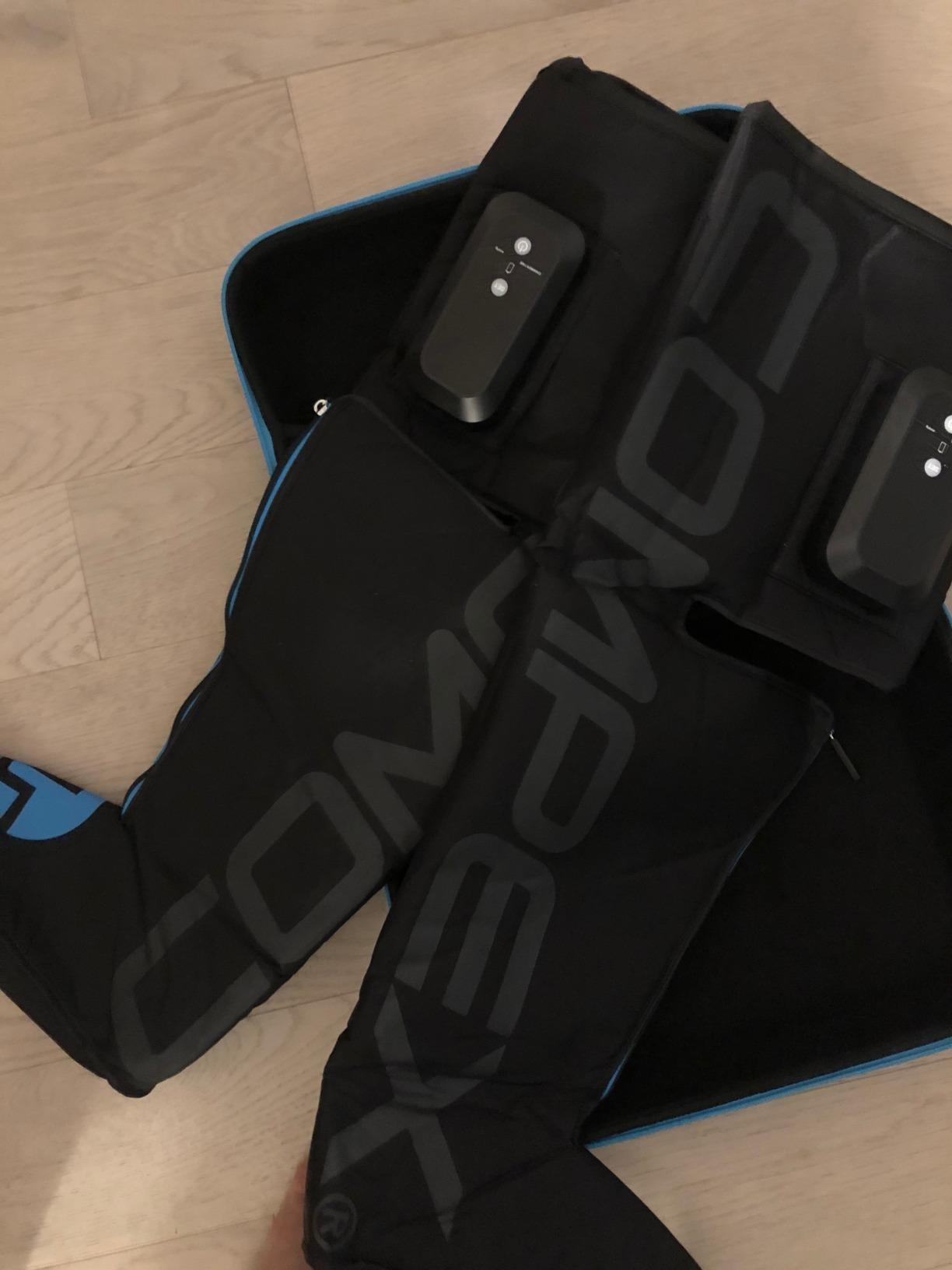
Pressure goes up to 120 mmHg from four chambers that can be inflated separately or together, and the pumps are built into the boots themselves, so there is no separate pump to plug in. The lithium-ion battery is quoted at up to three hours of compression therapy. Linings are washable, which matters for shared equipment in a team setting.
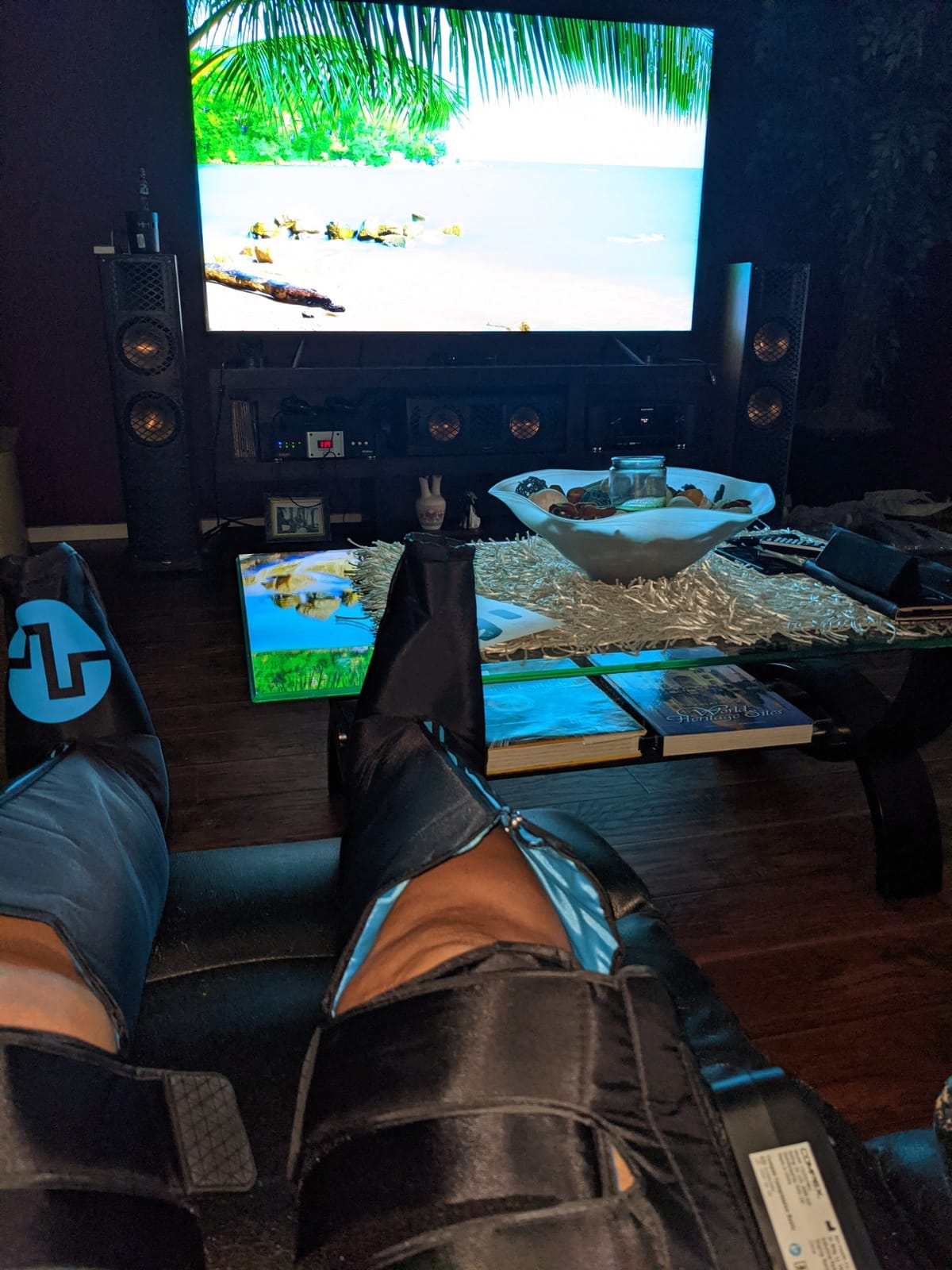
It is one of the few products here where a physical design choice beats a specification number. The open knee makes sitting, driving and getting in and out far easier than a closed full-leg sleeve.
Best for repeat use
For an athlete doing two sessions a day, or a coach travelling with a mixed group, a boot that is easy to get into and out of and needs no hose management is genuinely valuable. The washable linings and separate chamber control make it practical for shared kit in a way most consumer boots are not.
What to watch?
The lithium-polymer battery is reported by some owners to last roughly four months to a year, and in practice you may get closer to an hour of treatment per charge rather than three. Chambers do not always inflate in sync, and some users report incomplete coverage over the front of the shin. The controller needs a few sessions to make sense, and the boots run long on anyone over six feet.
10. SHINE WELL SW-106A Recovery System – Best for Lifting and Gym Work
- Wide 11-level pressure range with 4 separately targeted zones
- Clear touch controller and a simple two-hose setup
- 10-minute option suits a quick post-session flush
- Full thigh coverage and a 24-month warranty
- Lowest average rating in the selection at 4.0
- Hard 30-minute cap on session length
- Weaker star distribution
- with a noticeable share of 2 and 3-star reviews
- Wired design limits portability
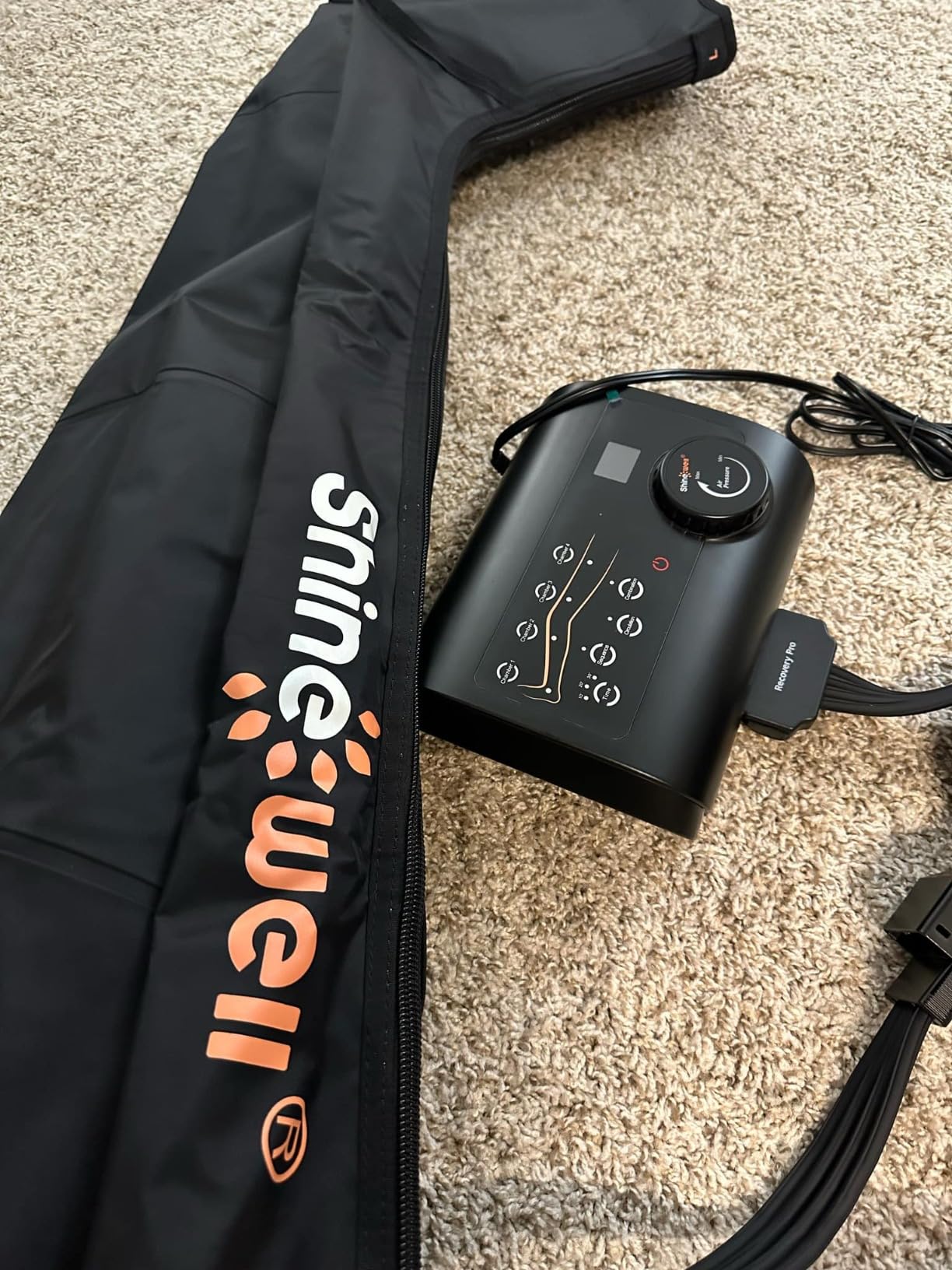
If your recovery window between gym sessions is short, the ten-minute timer is the feature that matters here. Most boots on this list top out at 25 or 30 minutes; this one gives you a genuinely short option, and the touch controller with a clear display is easy to set while you are still cooling down.
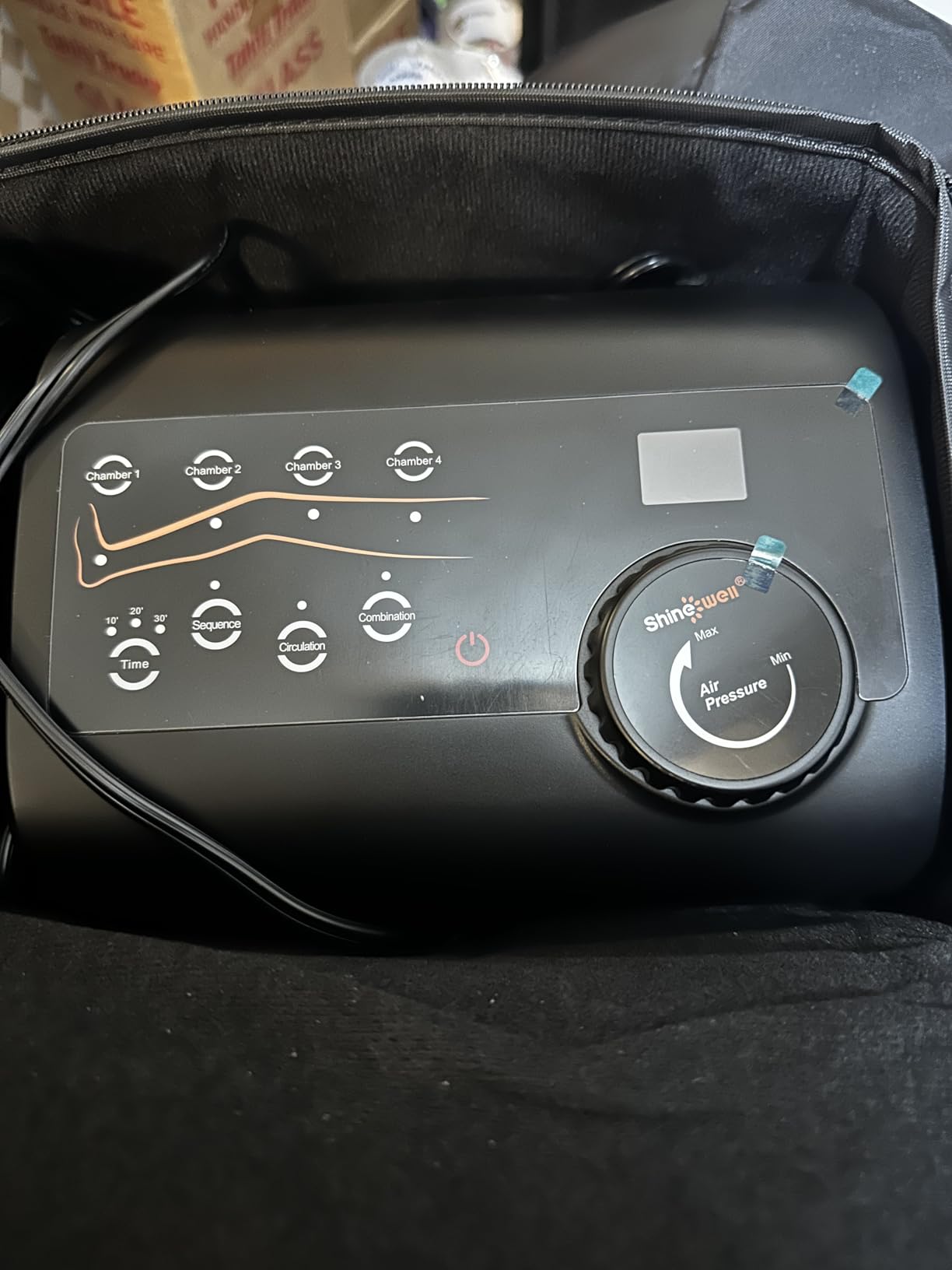
Eleven pressure levels run from 50 to 150 mmHg across four independently inflatable chambers covering foot, calf, lower thigh and upper thigh, with three massage modes and 10, 20 or 30 minute timing options. Two separate air hoses run to the controller, which is straightforward rather than clever. The warranty is 24 months.
What buyers like is the zone targeting and the pressure granularity for post-lifting quads and hamstrings. Full thigh coverage is stated clearly, which is not true of every leg-only system.
Where it fits?
A short, high-pressure flush after lower-body lifting is a real use case and most full-leg systems cannot serve it because their minimum timer is 20 minutes. The 150 mmHg ceiling reaches quadriceps and hamstrings properly, and the 11-step pressure control lets you back off on a sore day.
Why it sits low in the ranking?
It has a modest review base and the lowest average rating here at 4.0, with a meaningful share of two- and three-star reviews reflecting mixed satisfaction at the middle pressure settings. Thirty minutes is the hard ceiling on session length, well short of the 60-minute capable models, and it is wired, so it lives beside a socket. Nothing is broken here, the evidence base is just thinner.
11. FIT KING FT-115A Pro Cordless – Best for Lipoedema and Chronic Swelling
FIT KING Pro Leg Massager Athlete Compression Recovery Boots Cordless M
- Five-zone control gives the most granular targeting in the roundup
- Users managing lipoedema and chronic leg pain report strong results
- Usable while charging and the battery spans several sessions
- Touch display
- smooth zippers and reinforced stitching
- Quick size exchanges from customer service
- Listed above our 500 dollar ceiling
- so it does not qualify for this roundup
- Bulky at nearly 10 pounds
- One reported charging failure and replacement
- A therapist reviewer questioned the gaps between the five chambers
Full disclosure first: this model is listed above our 500 dollar ceiling, so strictly speaking it does not qualify for this roundup. We are including it because it is the most relevant hardware we found for one specific buyer, and we would rather label that honestly than quietly bend a rule.
The specification is the most advanced in the roundup. Five large air chambers inflate 45 percent faster, with five-zone precision control spanning foot, lower calf, upper calf, thigh and upper thigh. Eleven pressure levels run from 50 to 150 mmHg, with ten time settings from 15 to 60 minutes and three modes, all on a 2500mAh cordless battery giving three to four hours per charge.
Detailed long-term reviews from users managing lipoedema and recovering from knee replacement describe real results from the pressure range, and the ability to keep using it while it charges is genuinely useful for daily routines.
Why the five zones matter for chronic swelling?
Separating upper thigh from thigh is the difference between working the whole leg and stopping short of the hip, and for anyone managing a chronic condition the ability to isolate zones is worth more than extra modes. The reinforced stitching and smooth zippers are also the fix for the zipper failures that show up on the other FIT KING models in this list.
The honest caveats
It breaks our ceiling, at 9.92 pounds it is one of the three heaviest products here, and one owner reported a charging failure that needed a replacement. A sports massage therapist reviewer raised the fairest technical objection in the whole roundup: the gaps between the five chambers may reduce the continuity of a lymphatic flush. The chamber count is high, but overlap is what determines smoothness.
12. CINCOM CM-112A-M Cordless System – Best Overlapping Chamber Design
- Overlapping chamber layers with 75% faster inflation
- Strong effective pressure with a quality-feeling motor and durable zippers
- Padded cases for the control unit and both sleeves
- Sleeves detect leg shape and work singly or paired
- Full foot-to-thigh coverage with 5-zone programming
- Thinnest review base in the roundup at 33
- One reported zipper seam splitting near the knee
- Heaviest product here at 10.64 pounds
- and the case handle is unpadded
- Thigh section can be uncomfortable for some leg shapes
Architecture is the story here. This is one of only two systems in the roundup that describes its chambers as layered and overlapping, with inflation 75 percent faster than standard, and overlap is the variable that decides whether fluid moves smoothly or gets squeezed through pressure gaps.
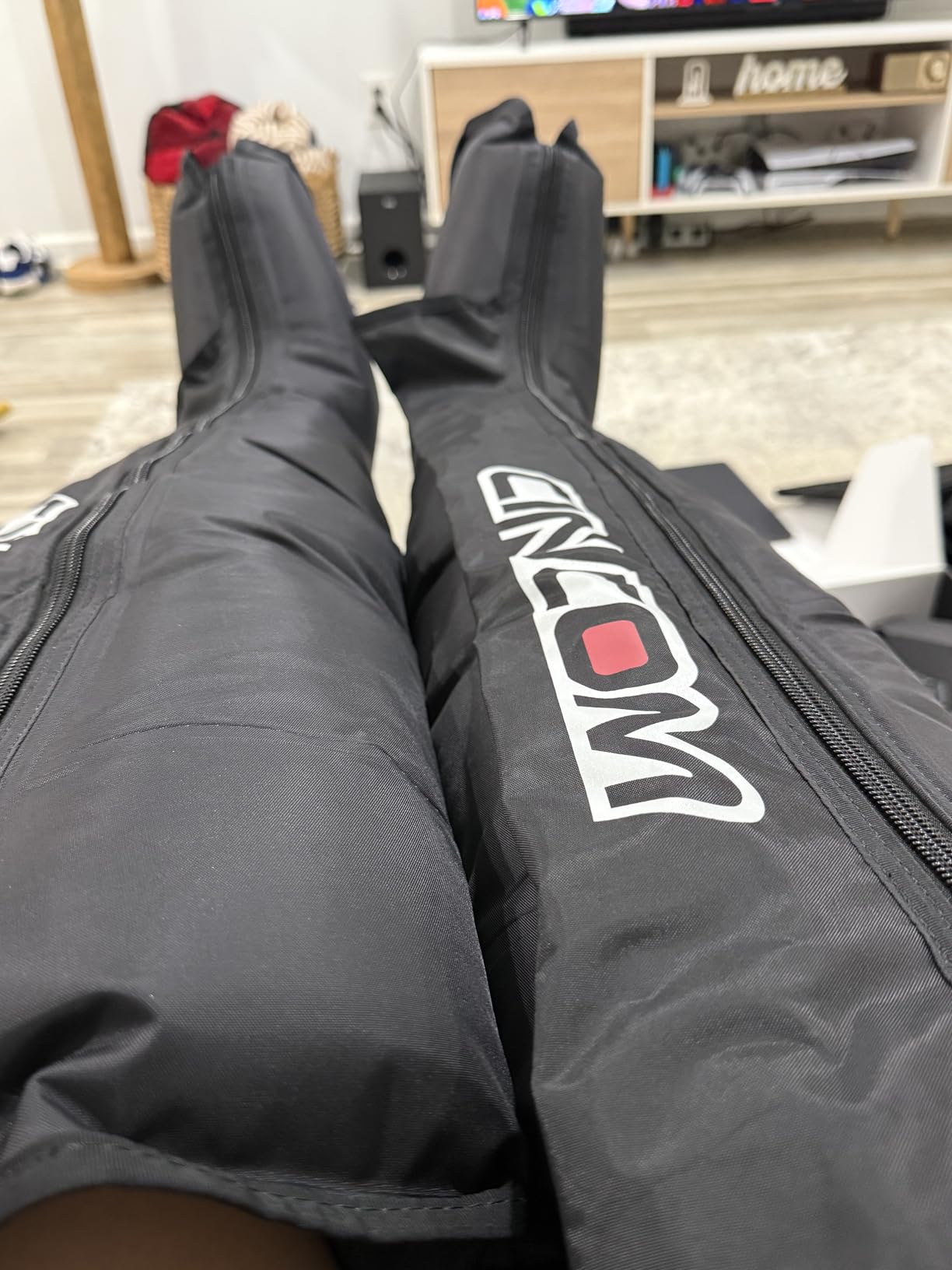
Five independently controlled zones cover foot and ankle, lower calf, upper calf, knee and thigh, with eleven adjustable pressure levels, ten timer settings and three modes on a full-touch LCD panel. The cordless battery is described as covering a week of training recovery per charge, and the system can be used while charging. Travel bags and detailed instructions are included, with padded cases for the controller and both sleeves.
Reviewers benchmark it explicitly against Normatec on price and build quality, and describe the sleeves as detecting leg shape to set the compression properly and working singly or paired, which is unusual flexibility.
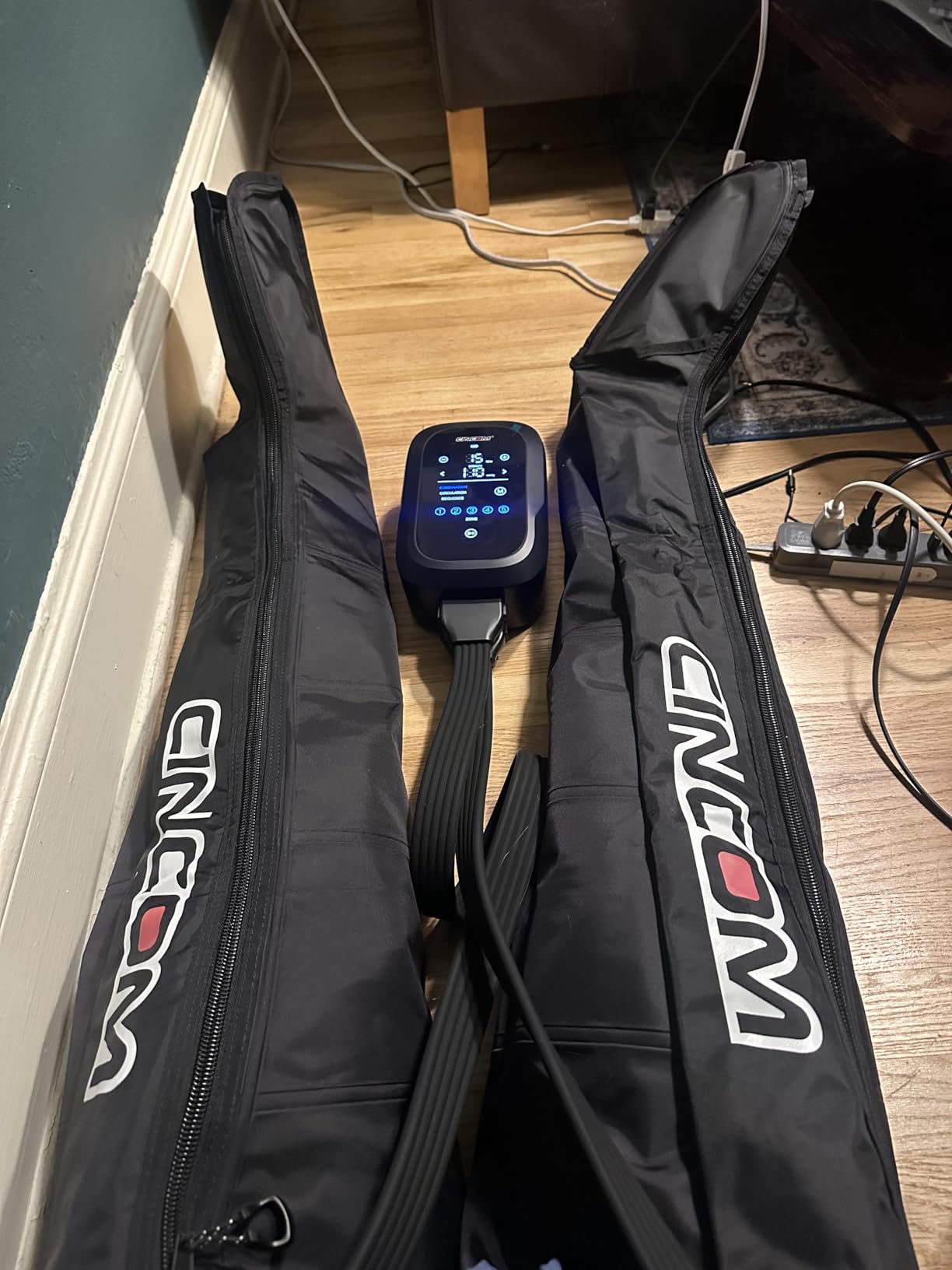
Why overlap is the spec to care about?
Five zones sounds like a lot, but if the chambers are separated by gaps you get five bands of pressure rather than a wave. Layering and overlapping them is what produces a continuous gradient, and the massage therapist critique aimed at the five-chamber model at number 11 is the critique this design answers. The single or paired sleeve option is also practical when you only have time for one leg.
What to watch?
Thirty-three reviews is the thinnest evidence base in this roundup, and one owner reported a zipper seam splitting near the knee after roughly five sessions, which is a durability signal worth watching early. At 10.64 pounds it is the heaviest product here and the case handle is unpadded. Minimum session time is 15 minutes, and the thigh section can be uncomfortable for some leg shapes.
What a 500 Dollar Ceiling Cannot Buy?
Being straight about the limits is more useful than overselling the tier, so here is what you genuinely do not get under 500 dollars.
You do not get per-zone pressure ramping of the kind the expensive models use, where each zone can hold, ramp and release independently to clear a specific area. You do not get full lower-body pant coverage that wraps hips and glutes, which is where a meaningful jump in price happens. You do not get polished apps, and most products in this roundup have no app at all. And you do not get deep accessory ecosystems, spare pumps and readily available replacement parts across years of ownership.
The models shoppers see in the same shopping carousel but which sit above our line are the Hyperice Normatec 3 leg system, the Normatec Elite, the Therabody JetBoots Prime, the Echelon compression boots and the Pulsio recovery boots. We are not naming figures here because pricing moves, but all of them sit above 500 dollars. What you give up by stopping short of them is wireless convenience, app control, build refinement and full-leg-to-hip coverage. What you do not give up is sequential compression at therapeutic pressure.
There is one honest exception. If a clinician has recommended a medical-grade pressotherapy system to you, buy the medical-grade system. The Air Relax AR-2 at number four is the closest thing to that category available under the ceiling, and the forum consensus is broadly that a well-built budget boot satisfies most people who were quoted a clinical alternative.
Buying Guide: The Six Specs That Actually Matter
1. Chamber count and whether they overlap
Four chambers is the practical minimum for a leg system. Six to eight gives you a smoother progressive wave and reduces the tourniquet effect, where pressure at one band is not released before the next inflates and creates an unwanted constriction. If a listing says eight chambers and nothing about overlap, ask, because eight separated chambers are not the same as eight overlapping ones.
2. Maximum pressure in mmHg
Look for a published number with a unit. Somewhere between 60 and 80 mmHg is the working range for a standard session. Products reaching 150 to 200 mmHg give you headroom for heavy legs and demanding work, but they are not better for everyday recovery, and the highest setting on a weak pump is not the same as a sustained 150 mmHg from a strong one.
3. Wired versus cordless
Wired systems have a larger pump, hold more pressure and never need charging. Cordless systems are quieter, portable and fit hotel rooms, but battery life is the constraint: published figures range from about two hours upward, and real-world runtime in reviews is often shorter than the quoted maximum. Pick wired if recovery happens in one room. Pick cordless if it happens anywhere else.
4. Zone control
Four zones covering foot, lower calf, upper calf and thigh is the sensible default. Five zones adding an upper thigh section help if you have a knee replacement, lipoedema or other chronic swelling. One or two zones means a calf sleeve or a foot-and-calf system, which is fine for running but will not work a quad.
5. Sleeve, sizing and fit
This is where most returns happen. Measure your thigh circumference and your inseam, then order from the published measurements rather than from your height. The sleeve must reach your toes, and if it stops at the ankle the lowest chamber is doing nothing. Take socks off and avoid tight shorts under the sleeve, since a fabric crease concentrates pressure into a line.
6. Warranty, parts and bundle contents
Two years is now common in this tier and one year is the weak point. Longer warranties in this roundup correlate with brands that have been selling for years and can still supply replacement sleeves and pumps. Confirm the box contains both sleeves plus the controller, because some cheaper listings price the controller alone and users discover the missing sleeve after delivery.
A checklist for marketplace listings
If a boot has no identifiable brand, no published warranty and a pressure claim with no unit, treat the specification as unverified. Look for a business address and a support route, a written mmHg range, a chamber diagram, and a warranty that names the company rather than saying returns accepted. Reviews that mention the actual bundle contents are worth more than reviews that only praise pressure. This is the practical answer to the question health forum members ask about budget boots: the difference between a good budget boot and a bad one is verifiability, not the price tag.
How to Use Compression Boots Properly?
Sessions run 20 to 30 minutes at 60 to 80 mmHg, and the timing matters more than the settings. Start within 30 to 60 minutes of finishing a hard session, when the effect on perceived soreness is largest.
Sit with the sleeve reaching your toes, legs roughly hip-width apart, and let the chambers do their sequential work from the foot upward. Do not stand up mid-session on a high setting. The maximum-140 mmHg budget models produce genuine numbness if you do, and reviews flag this specifically.
First-timers should start at the lowest setting for ten minutes. Several owners describe the adaptation period as overwhelming, which is a real adaptation issue rather than a design fault.
For long-term ownership, inflate the air lines occasionally so they do not crease internally, keep zippers clear of grit, and clean the sleeves according to the manufacturer’s guidance. Zipper failure is the single most common durability complaint in this category, and most of those reports trace back to forcing a zipper with the sleeve fully inflated.
One more ownership note nobody in the editorial set mentions: cordless systems need a charging routine. The Compex and the Normatec Go both draw complaints about battery lifespan, and lithium cells that sit empty for months lose capacity. Charge monthly even in an off-season.
Safety and Contraindications
Intermittent pneumatic compression is generally safe for healthy adults when used within the recommended pressure and time ranges. The main caution people ask about is whether you can overdo it, and the answer is yes in one specific way: sustained high pressure for too long, particularly standing, can cause numbness and, in susceptible people, pressure injury. Stay seated, stay within the timer, and step down the pressure if a limb goes numb.
Do not use compression boots, or speak to a clinician first, if you have a history of deep vein thrombosis or blood clots, peripheral artery disease, diabetic neuropathy with reduced sensation, an acute infection, open wounds or ulcers, or are pregnant. Pregnancy is worth being specific about: some owners in reviews use these devices during pregnancy, and some healthcare systems advise against it, so the correct move is to ask your own provider rather than follow a stranger’s review.
The evidence base is worth understanding before you buy. Reviews of the clinical literature note that the perceived-recovery benefit from pneumatic compression is consistent, while objective performance benefit is weak. In plain terms, you will reliably feel less heavy and less sore, and you should not expect measurable gains in speed or power. The lactic acid story is not the mechanism. That is not a reason to skip a boot, but it is a reason to buy one for how it feels and how much a massage would otherwise cost you.
Frequently Asked Questions
Who makes the best compression boots?
Under 500 dollars, the QUINEAR QN-071A has the deepest user verification at 1868 reviews and a 24-month warranty. SANFELIA has the highest average rating at 4.8 with the widest pressure range, and Air Relax AR-2 is the pick if you want an FDA-cleared system. Above the ceiling, the recognised names are Hyperice Normatec and Therabody JetBoots.
Are compression boots worth the money?
They are worth it if you train or stand frequently and would otherwise pay for regular massage. The mechanism is identical across price tiers, so a sub-500 dollar boot delivers the same sequential compression as a device costing several times more. The literature shows consistent perceived-recovery benefit and weaker objective performance benefit, so buy for how it feels and for avoided massage cost.
What are the downsides of using compression boots?
The common ones are size and fit friction, needing to sit still for wired models, zipper wear over time, pump or connection failures after a year or two, and battery degradation on cordless units. High pressure can cause temporary numbness, especially if you stand up mid-session, and there is no heat function on most models in this price range.
Can you overdo compression boots?
Yes, in the sense that too much pressure for too long can numb the limb and, in susceptible people, cause pressure injury. Stay seated, keep sessions to 20-30 minutes, work within the 60-80 mmHg range for everyday use, and step down the pressure if a leg goes numb.
What are the best compression boots on the market?
Without a price cap, the answer is usually the Hyperice Normatec 3 leg system or the Therabody JetBoots Prime, both of which sit well above 500 dollars. What you gain above the cap is wireless operation, app control, build refinement and fuller leg coverage, not a different compression mechanism.
Is Normatec or Therabody better?
Normatec, made by Hyperice, is the better-supported ecosystem with a stronger app and more established service, and the Normatec Go is the most portable option under 500 dollars. Therabody builds its reputation on heat and recovery tech beyond the boots. Both product families sit above the ceiling for this roundup, so if you are shopping under 500 dollars, the cordless FIT KING and QUINEAR models cover similar ground for less.
Are compression boots safe to use every day?
For most healthy adults, daily 20-30 minute sessions are generally considered safe. Check with a clinician first if you have a history of blood clots, peripheral artery disease, diabetic neuropathy, an acute infection, open wounds, or are pregnant. Cordless models also need a monthly charge during off-seasons to keep their cells healthy.
The Bottom Line
The best compression boots under 500 dollars are the QUINEAR QN-071A if you want the most proven option with the deepest review history and a two-year warranty, the SANFELIA FE-7204B if you want the widest pressure range and the highest average rating, and the Air Relax AR-2 if you need medical-device clearance. Those three cover the athlete, the buyer with heavy legs and the clinical buyer, and all three cost less than half of the wireless models above the ceiling.
Pick cordless if recovery happens outside one room, and pick a wired pump if it does not. Measure your thigh before you order, use the pressure settings more conservatively than the maximums on your first few sessions, and check that both sleeves and the controller are in the box when it arrives. If you are still comparing recovery tools rather than boots, our hand massager roundup covers the lower-cost options that work on hands, feet and shoulders for a fraction of the outlay.
Our research for this roundup was spec-based, drawn from published manufacturer specifications, warranty terms and user reviews rather than hands-on laboratory testing. We say that plainly because it is the standard we would want from anyone else buying a recovery device.