
The short answer: the YIHUA 926 III is the best soldering station for lead-free solder overall, because it is the only unit in this roundup that pairs a genuine 60W element, PID control, a 90-480°C range and more than 7,000 logged owner reviews pointing the same direction. If you want the smoothest temperature regulation money can buy, take the Weller WE1010NA instead. If you solder board-level repair all day, the Hakko FX888DX earns its place on feel and build rather than on paper specs.
Lead-free solder changes the buying decision in a way that most roundups miss. A 63/37 leaded alloy flows happily at an iron temperature around 320°C. The common lead-free alloys sit roughly 30°C higher, so the same joint now demands an iron set to 350-380°C, and it drains the iron faster while it does it. An iron that merely has a temperature knob on it is not enough. What you need is enough wattage, a control loop that reacts quickly, and a sensor that is genuinely close to the tip. This roundup is ranked on exactly that, and the full table below puts all 12 head to head.
A lead-free capable soldering station, defined plainly, is a temperature-controlled system: a base unit, a heating element, and a sensor in or near the tip that feeds back to the control loop so the tip holds a steady temperature under load. The sensor is the part people underrate. A cheap station often measures the heater a few centimetres away from the tip, which looks fine on the display and feels wrong on the bench, because the real tip sags every time you pull heat into a joint. Lead-free exposes that sag immediately. If you are still choosing accessories, our picks for the best soldering stations for electronics and the best helping hands for soldering are worth reading alongside this list.
Everything below was updated for October 2026. We ranked on lead-free capability first, then on temperature regulation, thermal recovery, tip and iron serviceability, ESD safety, and the accessories that actually get used at a bench.
Table of Contents
Top 3 Best Soldering Stations For Lead-free Solder (October 2026)

YIHUA 926 III 60W Station
- 60W PID element
- 90-480C range
- Sleep timer
- 6 tips and lead-free solder included
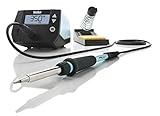

These three cover the three ways most people actually buy a station. The YIHUA 926 III takes the overall slot because its 60W PID element and 90-480°C range are backed by the largest review base in the group. The Weller WE1010NA wins on temperature regulation, holding within roughly 2°C of setpoint and locking it there. The YIHUA 939D+ takes the value slot by pairing serious thermal headroom with a small footprint and a contact-safe transformer output.
All 12 Stations Compared in 2026
| Product | Specifications | Action |
|---|---|---|
| YIHUA 926 III 60W Station |
|
Check Latest Price |
| Weller WE1010NA 70W Station |
|
Check Latest Price |
| YIHUA 939D+ 120W Station |
|
Check Latest Price |
 TOAUTO DS90 90W Station TOAUTO DS90 90W Station |
|
Check Latest Price |
 YIHUA 8786D I Combo Station YIHUA 8786D I Combo Station |
|
Check Latest Price |
 WEP 927-IV 110W Station WEP 927-IV 110W Station |
|
Check Latest Price |
 X-Tronic 3020-XTS 75W Station X-Tronic 3020-XTS 75W Station |
|
Check Latest Price |
 WEP 882D 2-in-1 Station WEP 882D 2-in-1 Station |
|
Check Latest Price |
 X-Tronic 3060-PRO Station X-Tronic 3060-PRO Station |
|
Check Latest Price |
 Hakko FX888DX 65W Station Hakko FX888DX 65W Station |
|
Check Latest Price |
 FNIRSI DWS-200 200W Station FNIRSI DWS-200 200W Station |
|
Check Latest Price |
 Weller WLSKD7012A 70W Weller WLSKD7012A 70W |
|
Check Latest Price |
How we chose: every station had to be temperature controlled with a digital or LED readout and a documented temperature range, and all 12 clear 350°C so lead-free is genuinely reachable. From there we weighted thermal recovery and stated temperature stability, then serviceability, because a station you cannot repair or re-tip becomes expensive over years of lead-free work.
1. YIHUA 926 III 60W Station – Best Overall for Lead-Free Solder
- Heats in under 30 seconds
- Holds temperature across joints
- Six extra tips plus a lead-free solder roll
- Compact station and stand in one body
- Handles XT90 connectors on 12AWG wire
- Helping hands clips loosen over time
- Tip clamp screw strips with use
- Display can read above the real tip temperature
This is the station we keep reaching for. The 926 III puts a 60W element under a PID loop across a 90-480°C range, and that combination is the whole argument. Lead-free does not care about your brand badge; it cares whether the iron can put heat into a joint faster than the joint steals it. At 60W with a wide range, this one keeps moving after the tip touches down, which is exactly the behaviour you want on a ground plane or a battery pack tab.
Owners report the recovery is the standout. The station reaches working heat in under half a minute, and the temperature holds across a run of joints rather than sagging by the fourth or fifth. That behaviour is what stops the classic lead-free failure, where the flux burns off before the alloy flows and you are left with a dull, matte joint that barely conducts.
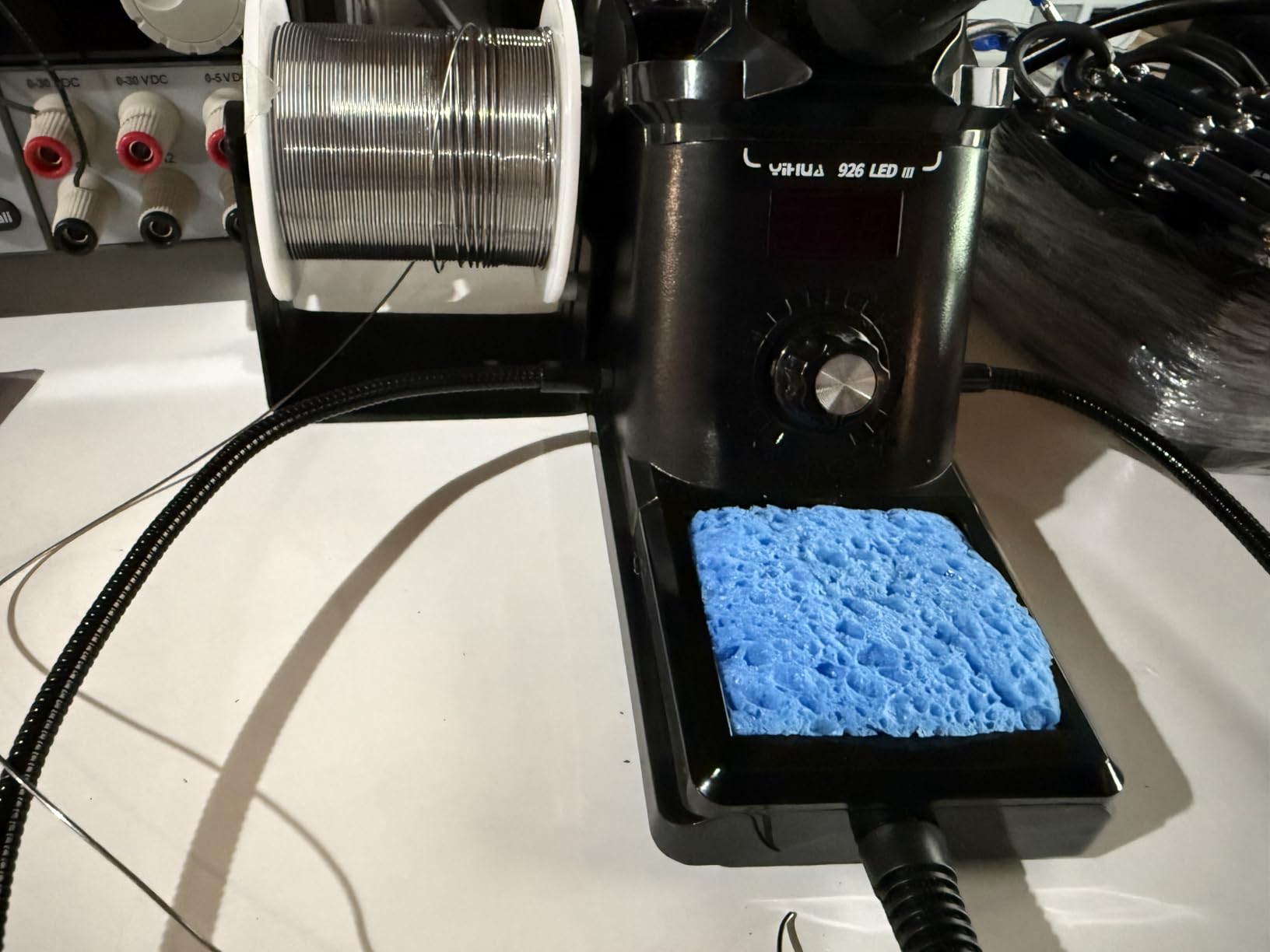
The accessory bundle is unusually honest for a station at this level. You get six assorted tips, a 35g roll of lead-free solder at 0.8mm, a desoldering pump, ESD-safe tweezers, a sponge, a mini wrench and two helping hands. That is enough to complete a repair on day one without a second order, and the 0.8mm flux-core lead-free roll is a sensible starting diameter for hand work.
Sleep mode is user-settable at 0, 5, 10 or 30 minutes, which matters more here than on a leaded bench. Higher tip temperatures oxidise faster, and lead-free already costs you more in tip wear. A station that drops to standby on its own is the cheapest tip-life extension available. There is also calibration support in the menu, so if your display reads a couple of degrees off you can correct it rather than living with the error.
What to check before you commit?
Buy a 3C or 3D chisel tip to go with it, not the fine point that ships in the kit. Lead-free wants mass in the tip, because the extra working temperature pulls heat out of the joint faster than a slender tip can resupply it. A chisel gives you a bigger contact area and a much shorter dwell time on the pad.
Also plan for tip replacements. Owners report the tip-retaining screw has few threads and strips over time, and the helping-hand clips loosen with use. Neither is a dealbreaker, but both are consumable-grade plastic parts, so treat them as replaceable rather than precious.
Where it falls short?
The display does not always match the real tip temperature, and long owners report slight drift after more than six consecutive joints. The station compensates in the loop, but the number on screen is a setpoint, not a tip probe reading. If you need certainty, verify with a tip thermometer rather than trusting the display alone.
It is also a 110V unit with a US-standard plug, so it is not directly usable on 230V mains. That is the single most common complaint from buyers outside North America, and it applies to most of the budget tier in this roundup.
2. Weller WE1010NA 70W Station – Best Temperature Regulation for Lead-Free
- Stronger than the two models it replaces
- Regulation within plus or minus 4F
- Password lockout preserves your setpoint
- Standby and auto setback protect idle tips
- ESD safe station and iron
- Listed 400F ceiling understates real reach
- Heavy 5.5 pound base takes bench space
- Menu navigation takes some learning
The WE1010NA carries the largest review base among the professionally built stations here, at 4.7 across 4670 reviews, and it is the one we hand to people who do lead-free work as a paid job. Weller rates temperature stability at plus or minus 4°F, which is roughly 2°C, and in practice that is the number you feel: the tip does not wander while you are repositioning a board or waiting for a colleague to hand you a part. The Hakko FX888DX scores 4.8, but on a much smaller base of 367 reviews, which is why it takes the durability slot further down rather than the top spot.
The 70W element is the reason it copes. Weller describes the unit as substantially more powerful than the two models it replaced, and the difference shows up in exactly the situation lead-free creates, namely a large pad that pulls heat out of the tip faster than a small element can replace it. The recovery is immediate, so you are not left holding a cold joint while the loop catches up.
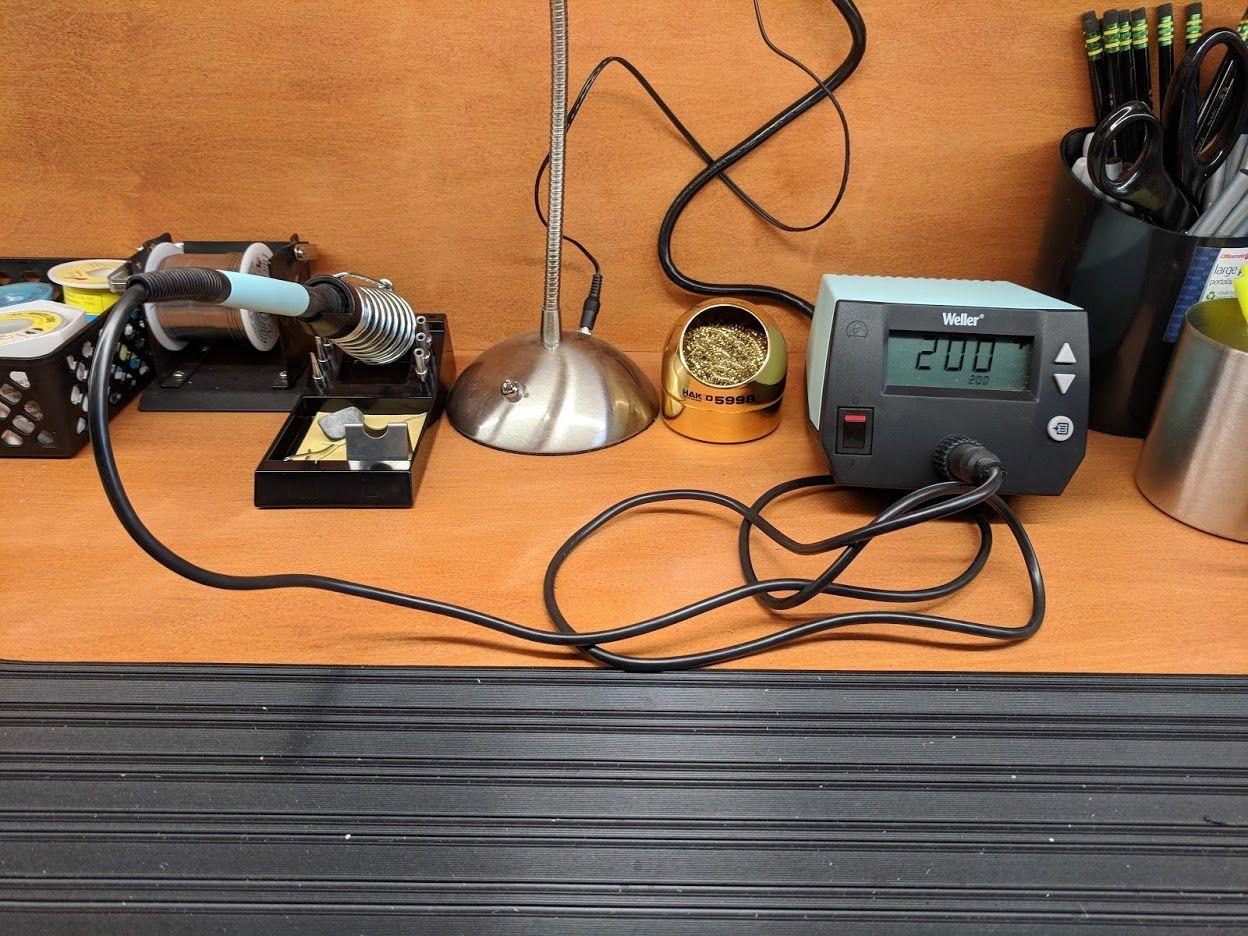
Setpoint lock is the feature regular bench users mention first. Once you find the temperature that suits your alloy, your tip and your joint sizes, password protection stops a stray button press from resetting it. On a shared bench that is the difference between a repeatable process and a daily argument.
The box is complete for soldering work: WE1010NA station, a WEP70 iron and retainer, a PH70 safety rest with sponge, and a 0.062 inch screwdriver tip. The iron itself is a replaceable assembly rather than a sealed cable, which is the right design for a tool expected to last years.
What to check before you commit?
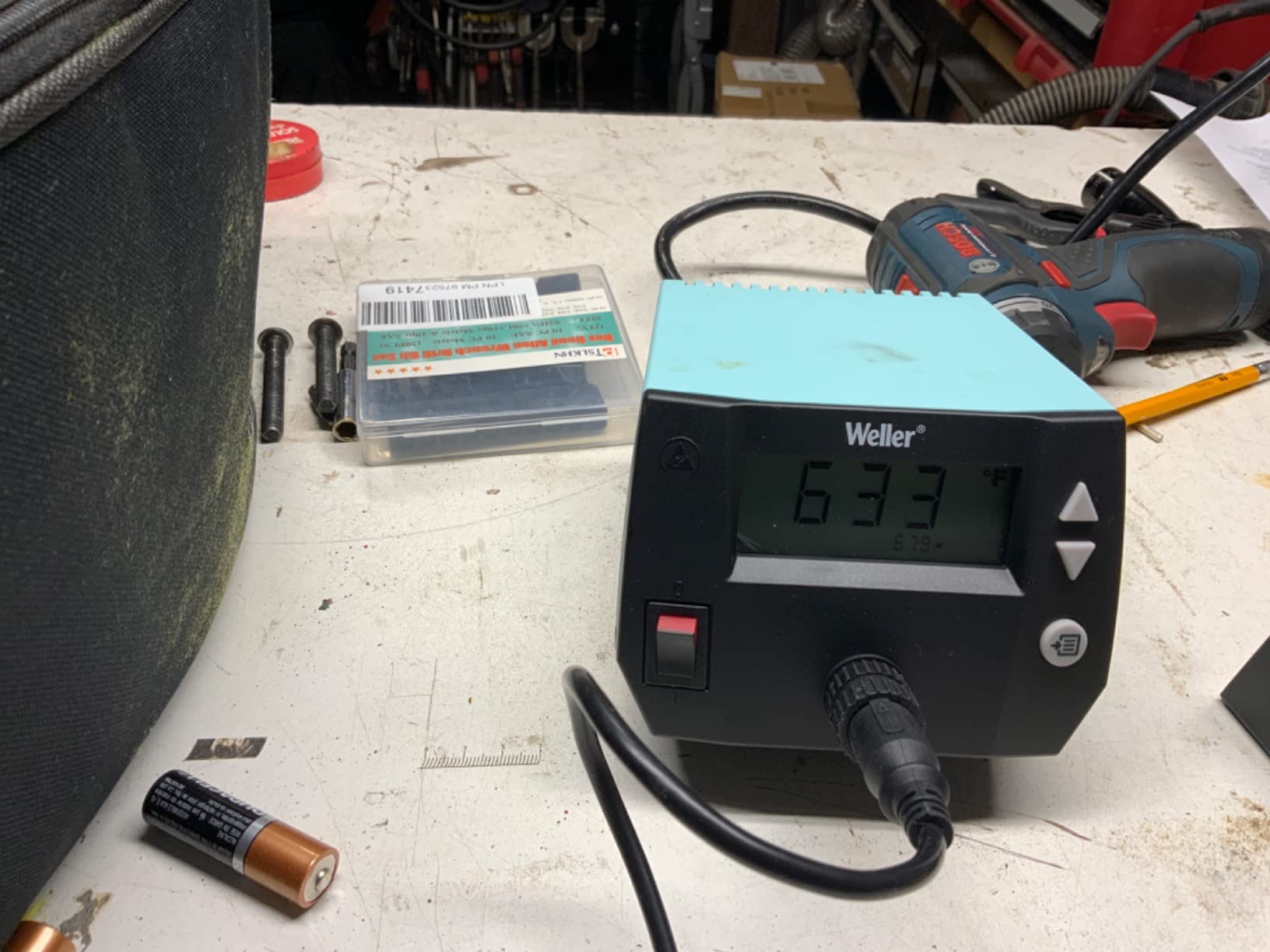
Measure your bench depth. At 5.5 pounds and 12.5 by 6 by 9 inches, this is the biggest single-head station here, and it does not tuck under a shelf the way the slimmer kits do. If you share a desk, plan the footprint before the box arrives.
Learn the menu once. Navigation is button-driven rather than a single knob like the Hakko, and owners who expected a dial report a short adjustment period. Budget ten minutes with it before your first real job.
Where it falls short?
The published upper temperature rating of 400°F reads as a limit for lead-free work, and it is the most common hesitation among buyers. In practice the unit is used well above that figure for lead-free, and Weller’s own stability claim implies a working range far higher, so treat the listing figure as a packaging specification rather than a real ceiling.
It is a 120V station. If your bench runs on other mains, the transformer and the iron are both committed to this platform, which is worth weighing before you commit to the brand.
3. YIHUA 939D+ 120W Station – Best Value for Lead-Free Work
- Very fast heat-up and strong recovery
- Handles wire up to 10GA
- Thick walled factory tips with good plating
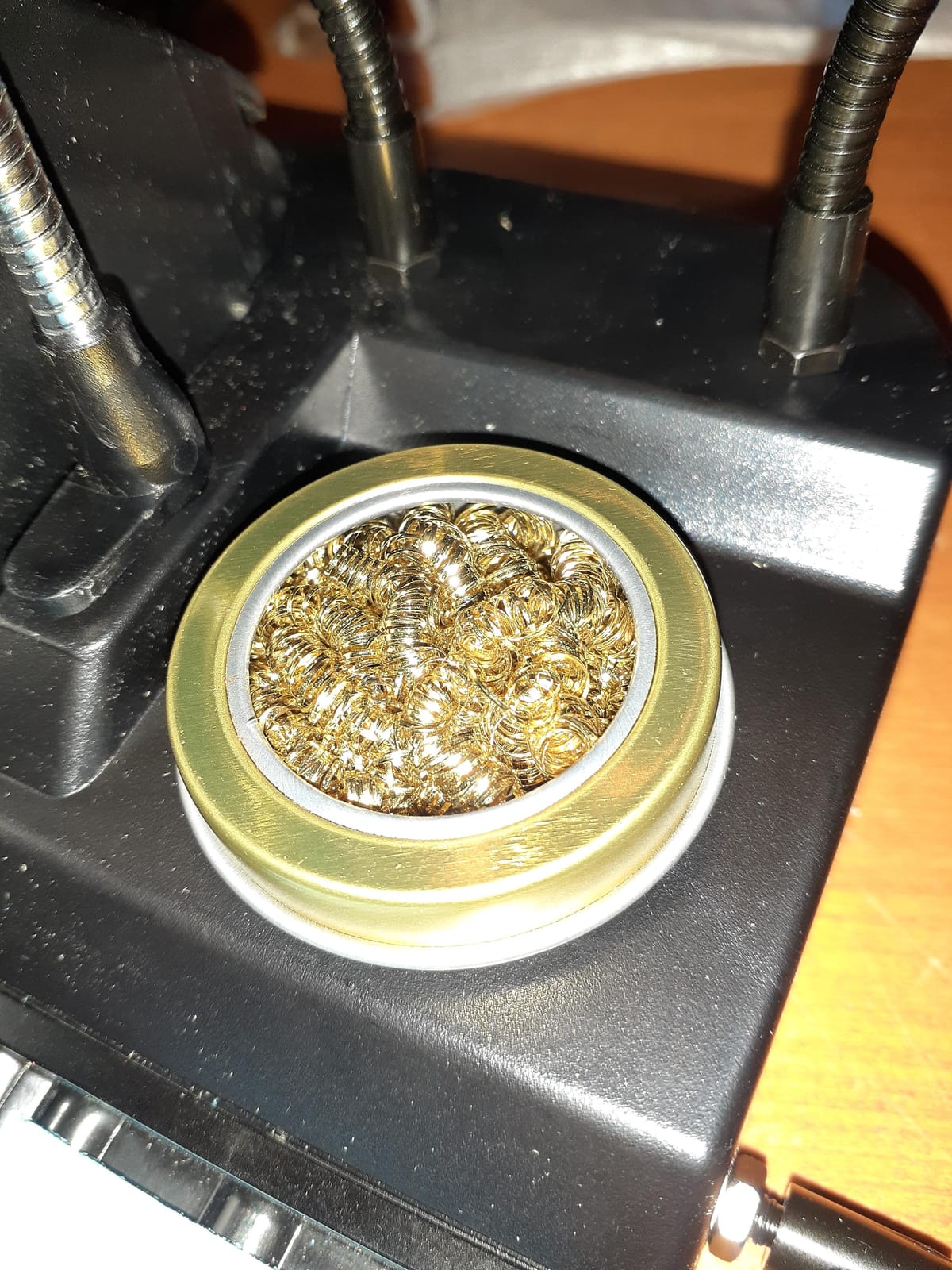
- Real brass mesh tip cleaner
- Compact 5.4 by 4.4 by 3.6 inch footprint
- Station fuse is internal and needs soldering to replace
- Base has no grippy rubber feet
- Iron cord is short and the holder is unstable
The 939D+ is the pick if you want the thermal headroom of a bigger station without moving up a tier. The spec sheet lists 120W, a 200-480°C range and temperature control that compensates in 20 milliseconds. That headroom is what lead-free eats, and having it means you are not fighting the iron on a thick conductor or a large ground pad.
Owners consistently praise build and tip quality for the money. The factory tips have thick walls and decent plating, which matters because a thin-walled tip is the first thing to burn out at 370°C. Several reviewers also note it will handle wire up to 10GA, and that the tips survive being pushed hard.
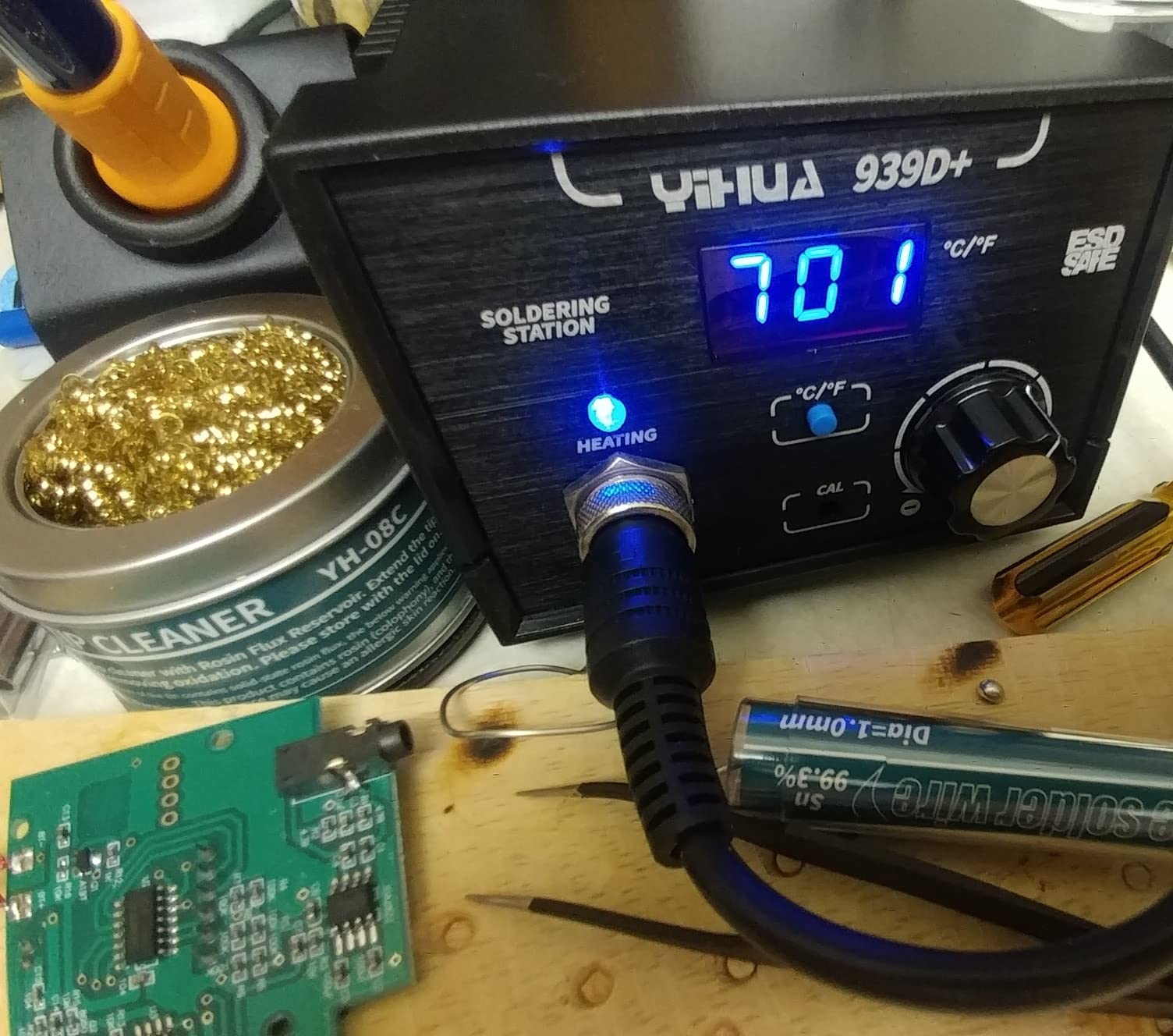
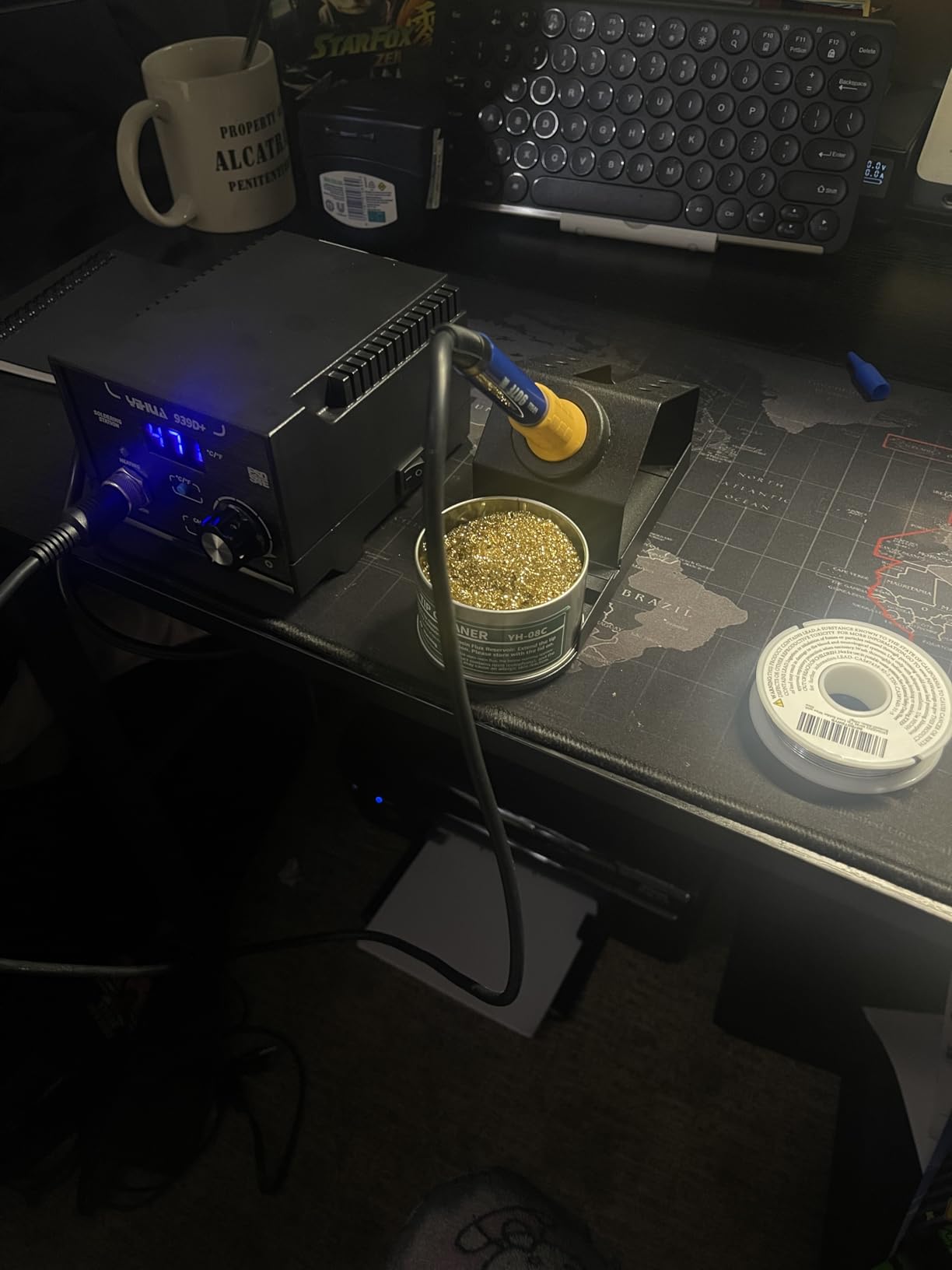
Two details make it a genuinely good bench machine. The built-in transformer outputs a contact-safe voltage to the iron, and the tip cleaner is real brass mesh rather than plated steel, which is the sort of thing manufacturers usually substitute without saying so. Tip cleaning is not cosmetic at lead-free temperatures, because oxides form faster and a proper brass shaper keeps the working face flat.
The footprint is small at 5.4 by 4.4 by 3.6 inches, so it fits a hobby desk without dominating it. There is automatic handle-status detection, calibration support and a one-button Celsius/Fahrenheit toggle, which is more control surface than many stations in this list provide.
What to check before you commit?
Replace the iron holder early. It is the most common complaint and the cheapest fix, and a wobbling holder is a genuine hazard at these temperatures. A weighted or two-part holder solves it permanently.
Buy a spare tip set in a bevel or chisel shape rather than relying on the supplied point. That is the tip that handles lead-free work without extending dwell time, which is the number one cause of lifted pads on lead-free boards.
Where it falls short?
The station fuse is internal and replacing it means soldering iron in hand, which is not where you want to be on a failure. Budget for that eventuality or accept the risk on a budget bench.
The base has no grippy rubber feet and slides on hard surfaces, and the iron cord is shorter than most owners would like. None of these affect lead-free capability, but together they cost you bench time every session.
4. TOAUTO DS90 90W Station – Best for New Lead-Free Solderers
- Reaches working temperature in about five seconds
- Shows Fahrenheit and Celsius at the same time
- Holds steady through long sessions
- Lock mode suits large components
- Thirteen piece kit with five extra tips
- Side solder wire holder is barely adequate
- Lightweight plastics feel less durable
- Included brass wool is brass-coated steel
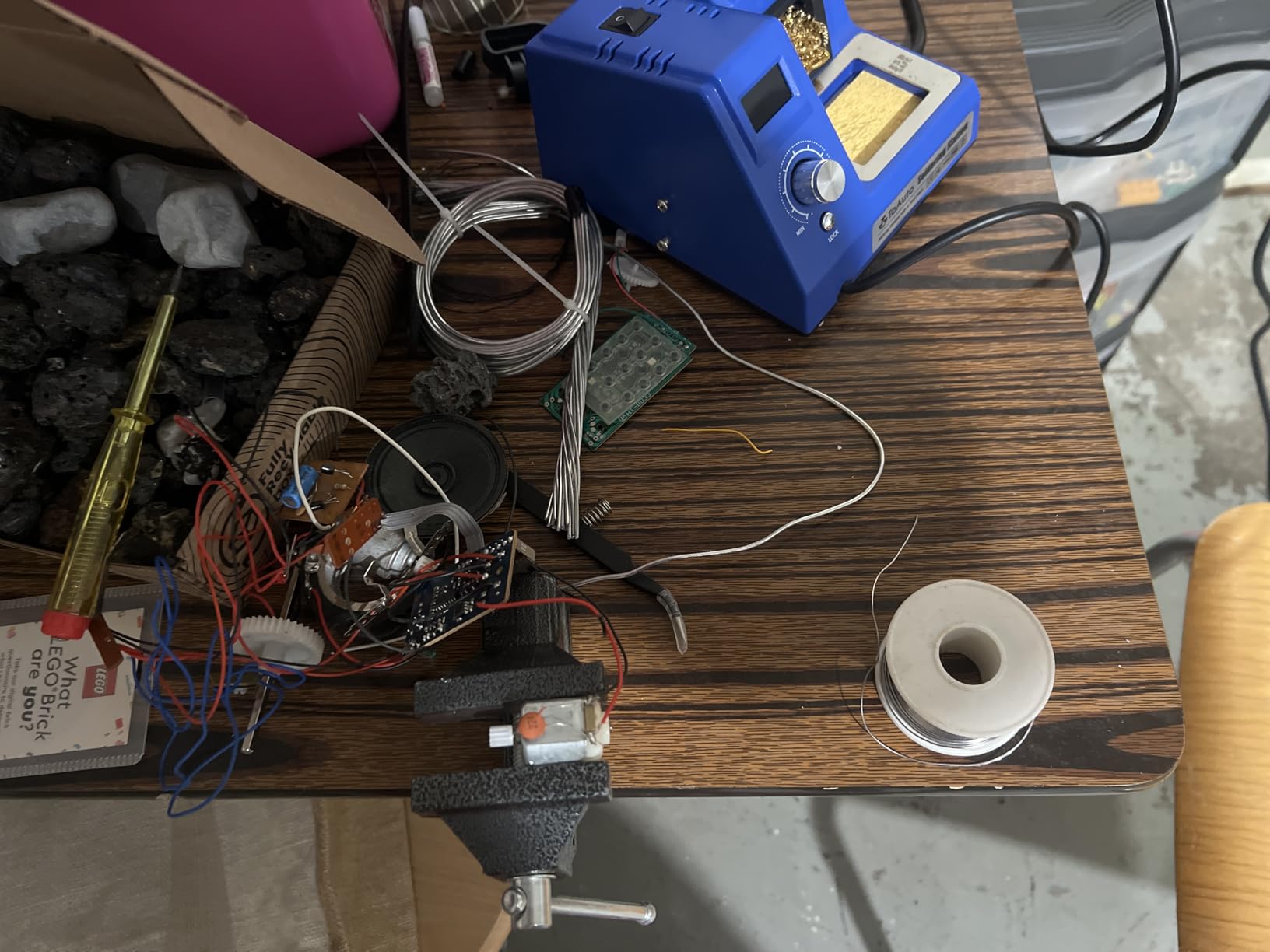
The DS90 is the station to hand someone learning lead-free for the first time. It reaches 590°F in about five seconds on a 90W ceramic heating core, covers 150-450°C, and holds steady through long surface-mount sessions. Nothing about it punishes a beginner who has not yet learned how long lead-free takes to wet out.
The dual-row LED display is the feature we would point a new user at first. It shows Fahrenheit and Celsius simultaneously, so you are not toggling a setting to check a number. When you are still learning what 370°C looks like on a joint, having both scales visible removes a whole class of avoidable mistakes.
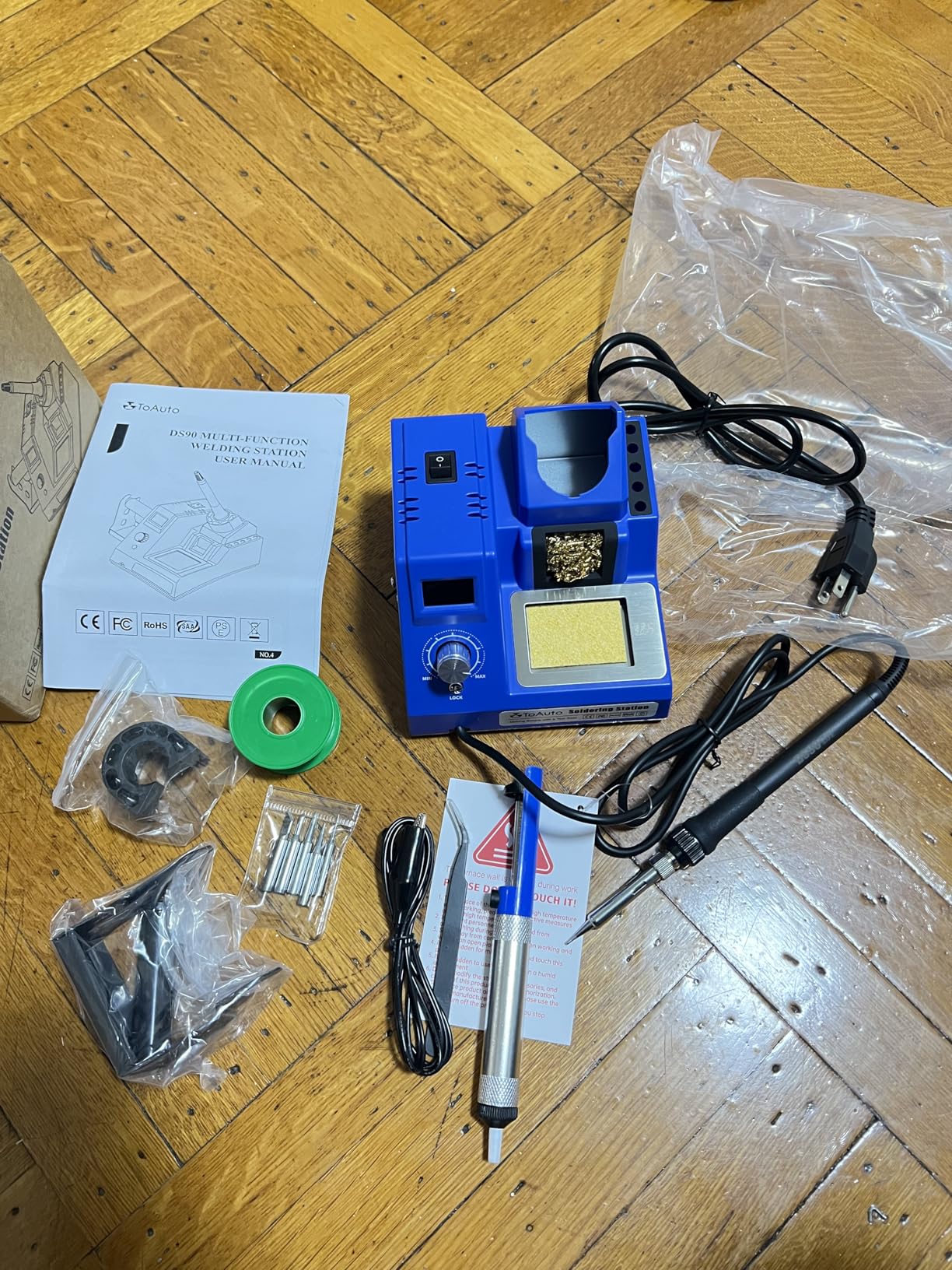
PID control with a temperature lock mode means the setpoint will not wander mid-task. Lock is genuinely useful for large components and thick connectors, which is where a beginner is most likely to see a joint fail. The kit also includes five extra tips, a solder sucker, ESD tweezers, a brass cleaner, a sponge and 30g of lead-free solder.
It is ESD, CE, FCC and RoHS certified, and it includes a grounding wire and remove-static sheet, which is the correct setup for working on live boards without risking damage to sensitive components.
What to check before you commit?
Buy real brass wool separately. The included cleaner is brass-coated steel, which works but dulls faster and is not what the label says. Brass wool costs almost nothing and keeps tip shaping honest, and if you do a lot of the kind of work our jewelry soldering kit guides cover, it pays for itself quickly.
Plan your iron holder. The all-in-one holder is sturdy and reduces tip-drop risk, but the side solder-wire holder is barely adequate, so keep a separate spool stand if you work with wire constantly.
Where it falls short?
The plastics and casing feel light, and the cord is short and stiff. On a 90W element a short stiff cord is workable, but it will pull the station toward you as you reach across the bench, which is exactly when a tip is at working temperature.
The readout reflects the heater rather than the tip right after power-on, so give it a minute before you trust it. That is a minor caveat, not a dealbreaker, and it applies to most stations in this price band.
5. YIHUA 8786D I – Best for SMD Rework on Lead-Free Boards
- Soldering iron and hot air rework in one body
- Dual displays with independent power switches
- Very tight 1.8F temperature stability
- Ten tips and four hot air nozzles included
- Airflow fail-safe cuts power if airflow stops
- Shares bench space and power between both tools
- Nozzle and air changes add setup time
This is the one to buy if your lead-free work includes removing and replacing surface-mount parts. A 2-in-1 body handles both a temperature-controlled iron and a hot air rework gun, with a 200-896°F range and PID program with fast temperature compensation. The stated temperature stability of 1.8°F is the tightest figure in this group on paper.
Independent power switches and dual displays are what make it usable rather than merely clever. When you move from a hot air removal job back to hand soldering, you are not reconfiguring one shared control. For rework work that alternates constantly, that is the difference between a smooth session and a frustrating one.
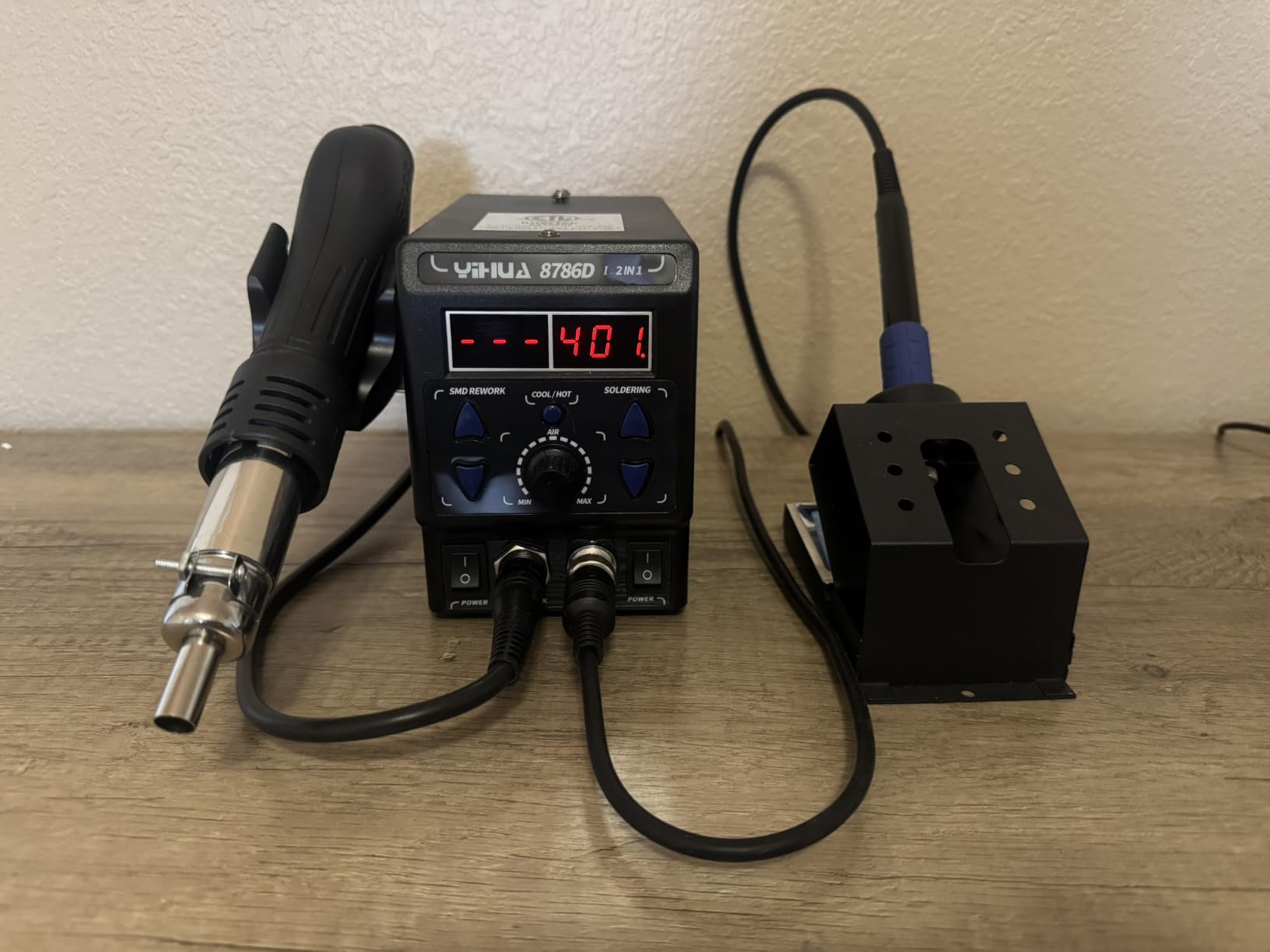
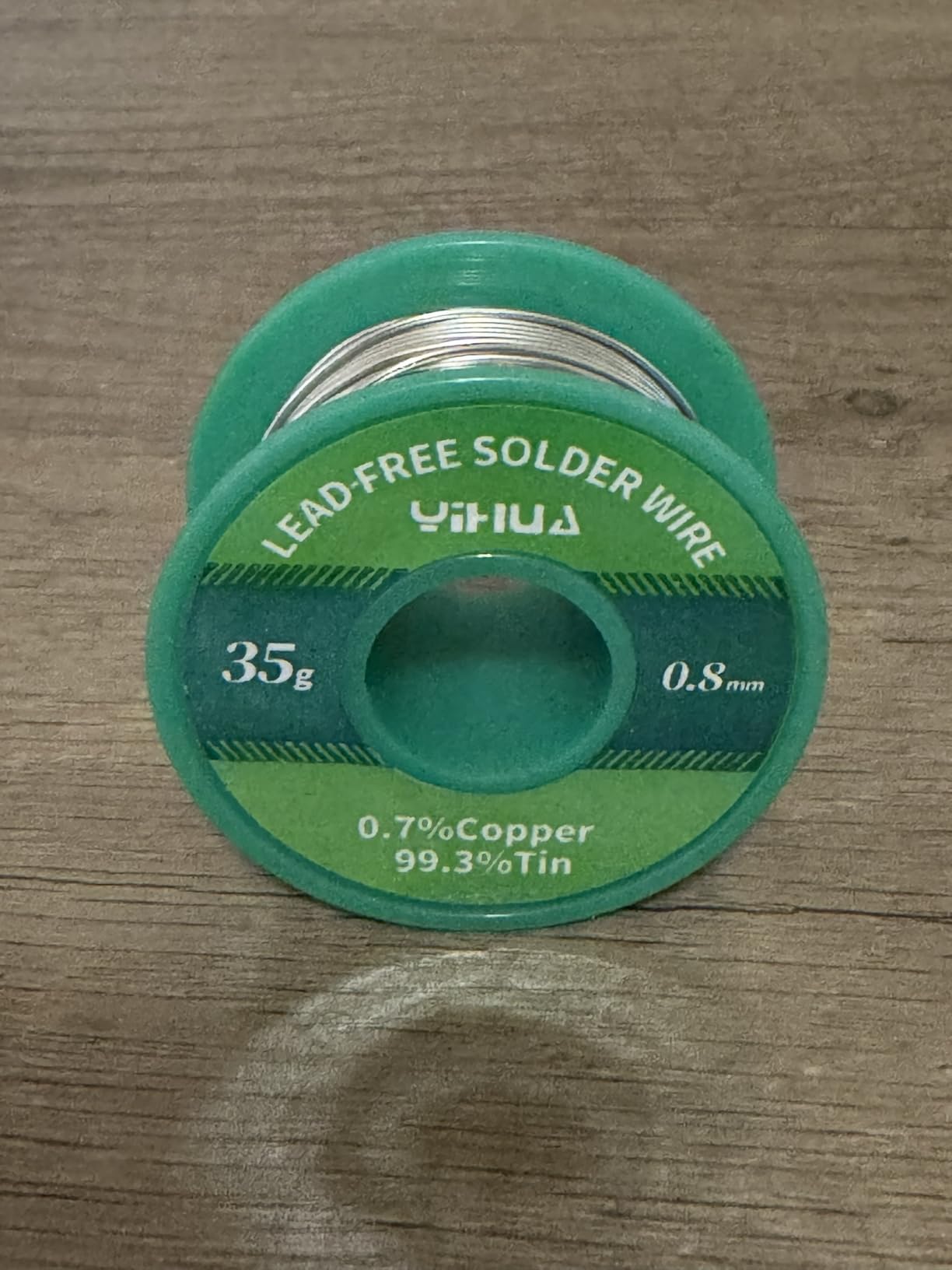
The included parts list is generous for a combined station: ten soldering tips, four hot air nozzles, an IC extractor, a desoldering pump and a 35g roll of 0.8mm lead-free solder. You have the right consumables to start a board-level repair immediately.
The fail-safe protection is the detail we would not want to be without. If airflow stops, the unit alarms and cuts heating power, which protects the element from a scenario that would otherwise cook it. On a unit carrying 740W, that matters.
What to check before you commit?
Budget a second tip set for the iron side. Lead-free at working temperature consumes tips faster than leaded, and this is a station you will be running hot for both functions. Having a spare chisel and a spare fine point removes the stop-start rhythm that defines a bad soldering afternoon.
Check that the nozzle set covers your work. Four nozzles handle common package sizes; if you do fine-pitch rework, verify the smallest bore actually fits before you commit to this over a dedicated single-head station.
Where it falls short?
Two tools in one box means shared bench space and shared power budget. The hot air side is powerful enough that it dominates the outlet, and if you are on a shared circuit the soldering head can feel the difference.
Reprocessing and nozzle changes add real setup time on one-off jobs. If you mostly do through-hole assembly and almost no rework, you are paying for a function you will not use.
6. WEP 927-IV – Best When Your Bench Is Already Full
- 110W element heats fast and recovers well
- Shows set and actual temperature together
- Three preset temperature channels
- Sleep timer adjustable to 99 minutes
- Packs magnifier and helping hands into the base
- Long accessory list packed into one dense unit
- Tied to WEP 1400 series replacement tips
- Only 1.89 inches tall under the magnifier arm
The 927-IV is the space-saving answer. A 110W element covers 194-896°F, and the entire accessory layout, including the LED magnifier, helping hands, tip storage slots and a solder wire dispenser, folds into a 3.94 by 5.91 by 1.89 inch body. If your bench is already crowded with instruments, that consolidation is the feature you are buying.
For lead-free specifically, the dual numerical display is the reason it earns a place. It shows the set temperature and the actual temperature at the same time, so you can watch the loop catch up after a heavy joint instead of guessing. That is the most useful thing on this station for lead-free work, and reviewers single it out for the same reason.
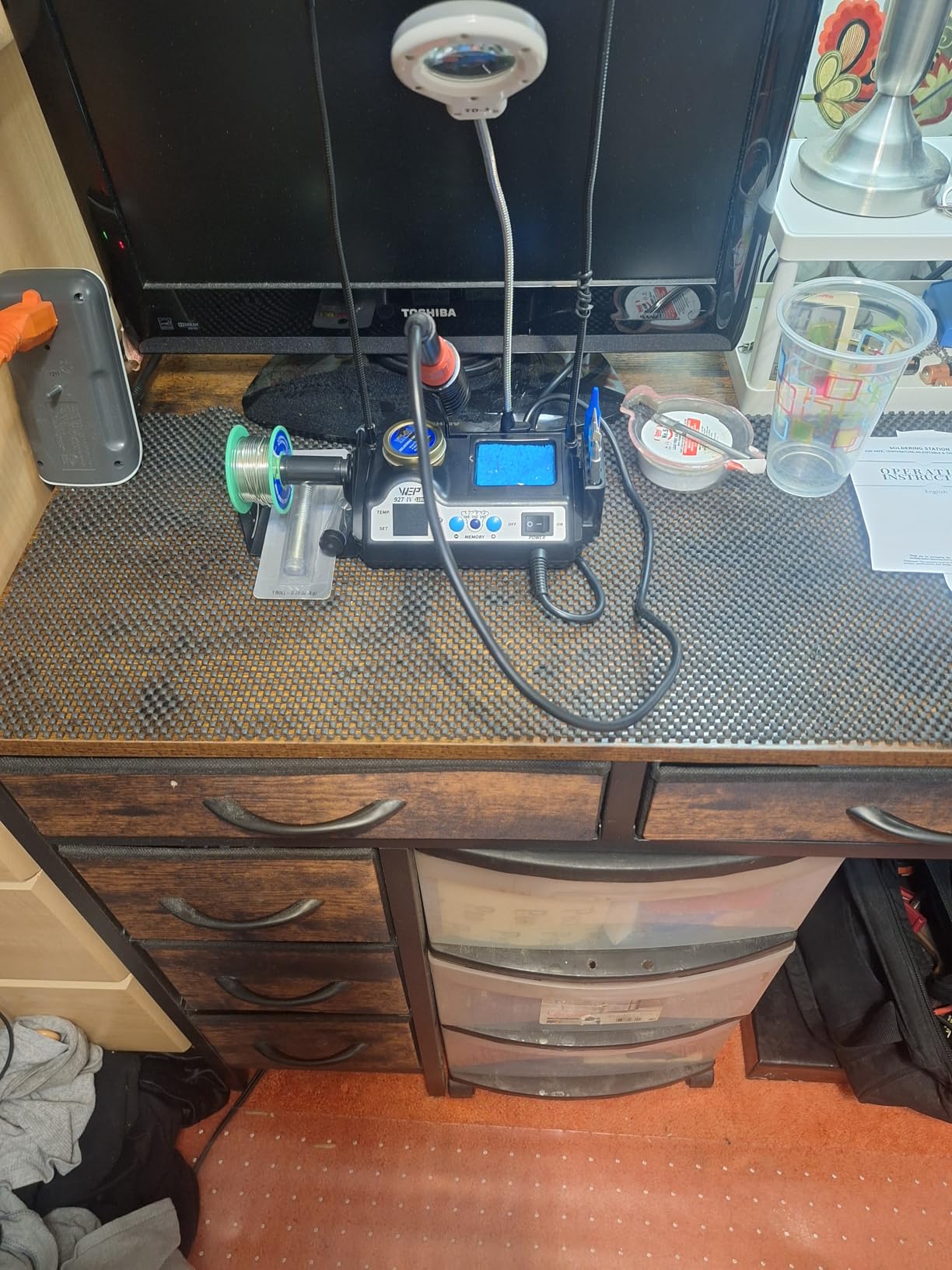
Three preset channels let you store a temperature per alloy or task, which is how you avoid the daily setpoint ritual. The sleep timer is adjustable from 0 to 99 minutes, giving you more range than most stations offer, and it extends tip life at the temperatures lead-free demands.
The bundle includes five extra tips, a brass wool cleaner with rosin flux, a sponge, tweezers and a desoldering pump. Tip replacement uses the WEP 1400 series, so check that the tips you want are easy to find before you commit.
What to check before you commit?
Measure clearance under the magnifier arm. At 1.89 inches tall, the integrated light sits low, and that is fine for flat work but awkward if you routinely work on tall assemblies or under a board.
Verify tip availability. This station uses WEP 1400 series tips. It is a well-supported system, but it is a single-source ecosystem, and that is worth knowing before you commit your bench to it.
Where it falls short?
The long accessory list is integrated into one dense shell, which means more small plastic parts to lose and more ways for the unit to feel cluttered in use. Several owners treat the magnifier as a gimmick rather than a tool.
Multi-function consolidation always has a cost, and here it is flexibility. You cannot reconfigure the layout, and the wire dispenser is a fixed part of the body rather than something you can move to suit your reach.
7. X-Tronic 3020-XTS – Best for Heavy Connectors and Thick Conductors
- Heats from 200C to 480C in under 30 seconds
- Very pliable 40 inch cord with no memory
- Light iron with a short tip for control
- Handles large terminals and 12GA wire
- Replaceable heating element with 3 year warranty
- Temperature knob is twitchy with low resolution
- Base slides across the bench
- Iron is hard-wired so it cannot be swapped alone
Owners of the 3020-XTS frequently describe it as outperforming pricier Weller units for lead-free work, and the reason is heat-up and recovery. It goes from 200°C to 480°C in under 30 seconds, and the 75W element keeps pace on large terminals and up to 12GA wire. Heavy conductor work is where lead-free pain concentrates, and this station is built for it.
The iron is light with a short tip, which is a genuine advantage on big connectors. When you are holding a battery pack tab or a ring terminal, a short, light iron lets you keep the tip square to the joint rather than levering against it.
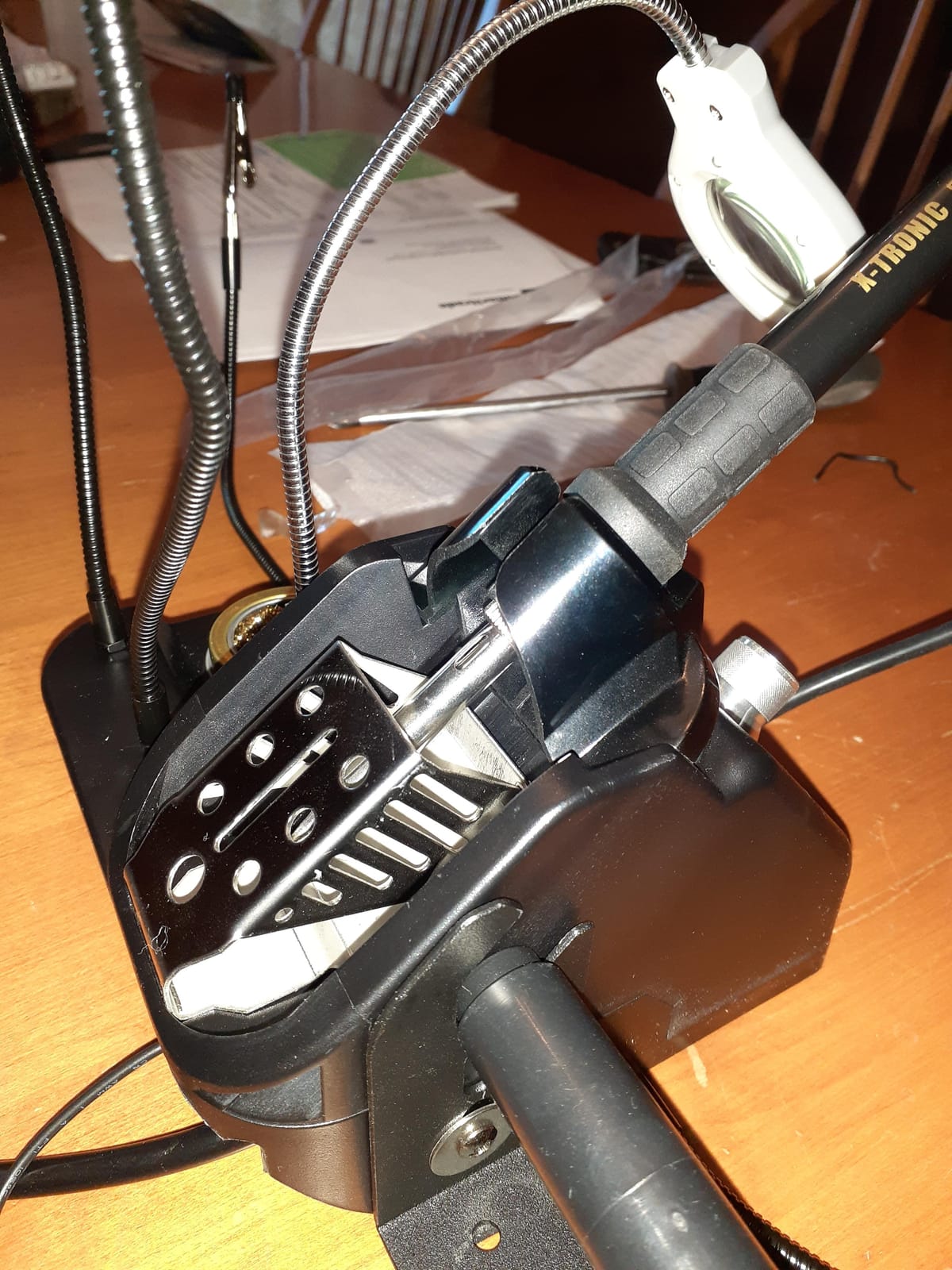
The 40-inch cord is pliable with virtually no memory, and long-time owners describe eight-year service lives. The replaceable heating element is the key longevity feature, and X-Tronic supports it from the US with a 3-year warranty.
Temperature stability is rated at 2°C, and the kit includes two helping hands, a silicone tool mat, five extra tips, a side-mount solder holder, 50g of lead-free solder, a spring iron holder and a brass sponge with cleaning flux. For lead-free that last item matters, because tinning and cleaning become daily work rather than occasional work.
What to check before you commit?
Order a spare heating element and a spare tip before you need them. Both pin and element connections can loosen with thermal cycling, and having spares on hand turns a dead afternoon into a two-minute swap. This is a station worth servicing, not replacing.
Consider putting a mat under the base. It is light enough to slide across the bench when you pull on a thick conductor, and the silicone tool mat in the kit is the natural fix.
Where it falls short?
The temperature knob is the most repeated complaint. It is overly sensitive with little friction or resolution, so expect to make fine adjustments in small increments. If you need precise setpoints, the X-Tronic 3060-PRO is the better version of the same idea.
The iron is wired directly into the base, so a failed cable means the whole unit rather than a swappable iron. Owners also note the handle can get hot at the grip above 700°F, which is an argument for working at proper lead-free temperature rather than over-driving it.
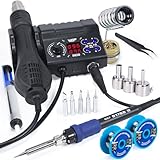
8. WEP 882D – Best Combined Iron and Hot Air Station
- Iron and hot air gun in a compact body
- Separate displays and switches per function
- PID control on both the iron and the gun
- Hot air range of 212F to 896F with air volume control
- Two spools of solder wire included
- Gun needs air volume and nozzle changes per task
- 750W combined draw is heavy for a small bench supply
- 110-127V US wiring only
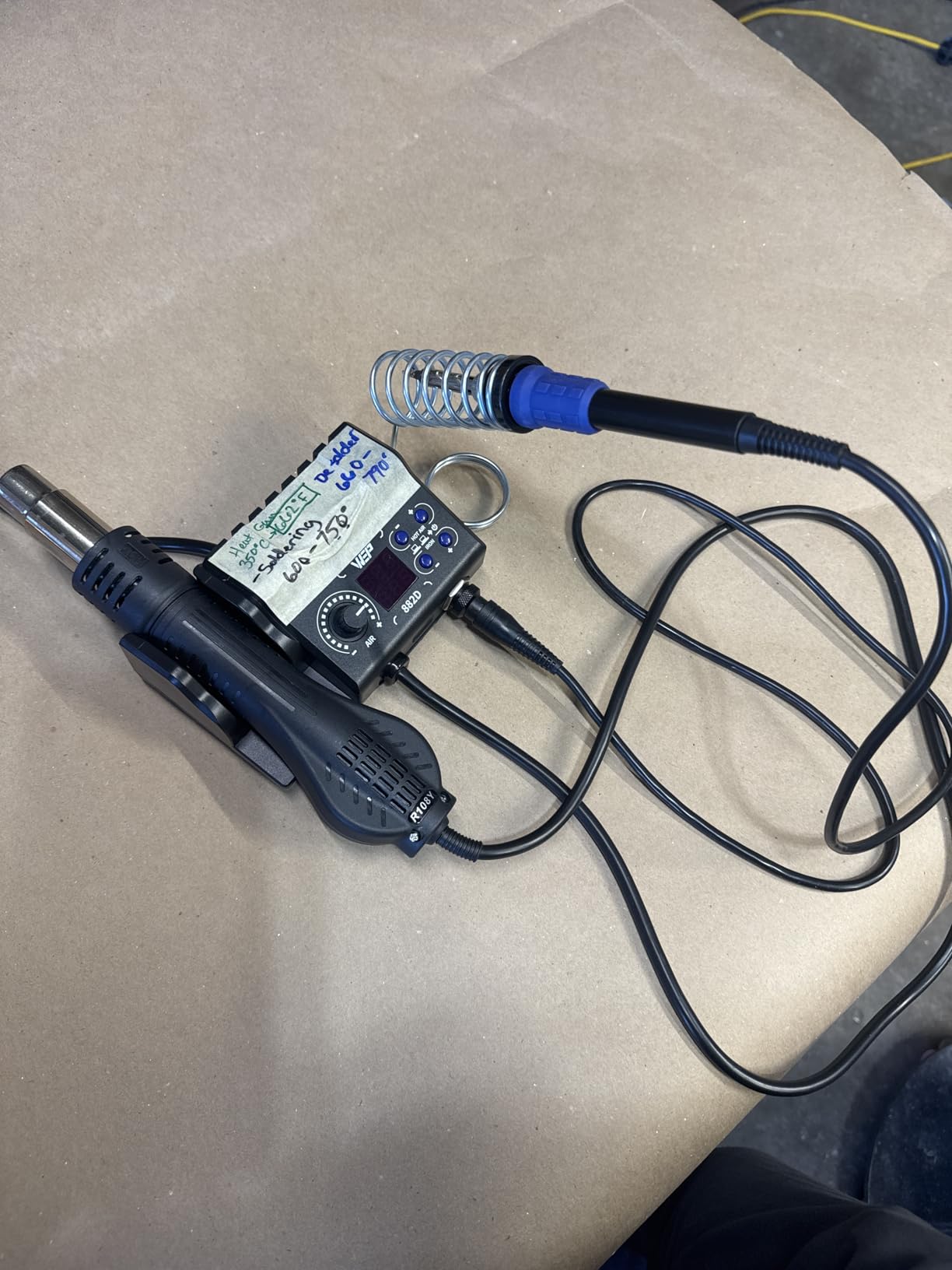
The 882D splits the difference between a soldering station and a rework station more cleanly than most two-in-one boxes. Both heads run under a PID program, the iron covers 392-896°F, and the hot air side covers 212-896°F with variable air volume. Separate LED displays, power switches and temperature controls for each function mean neither job compromises the other.
That independent control is what board-repair hobbyists like most. On a shared-control two-in-one, setting up for hot air changes your soldering temperature. Here it does not, which is exactly the kind of small design decision that saves you a joint on a mixed rework day.
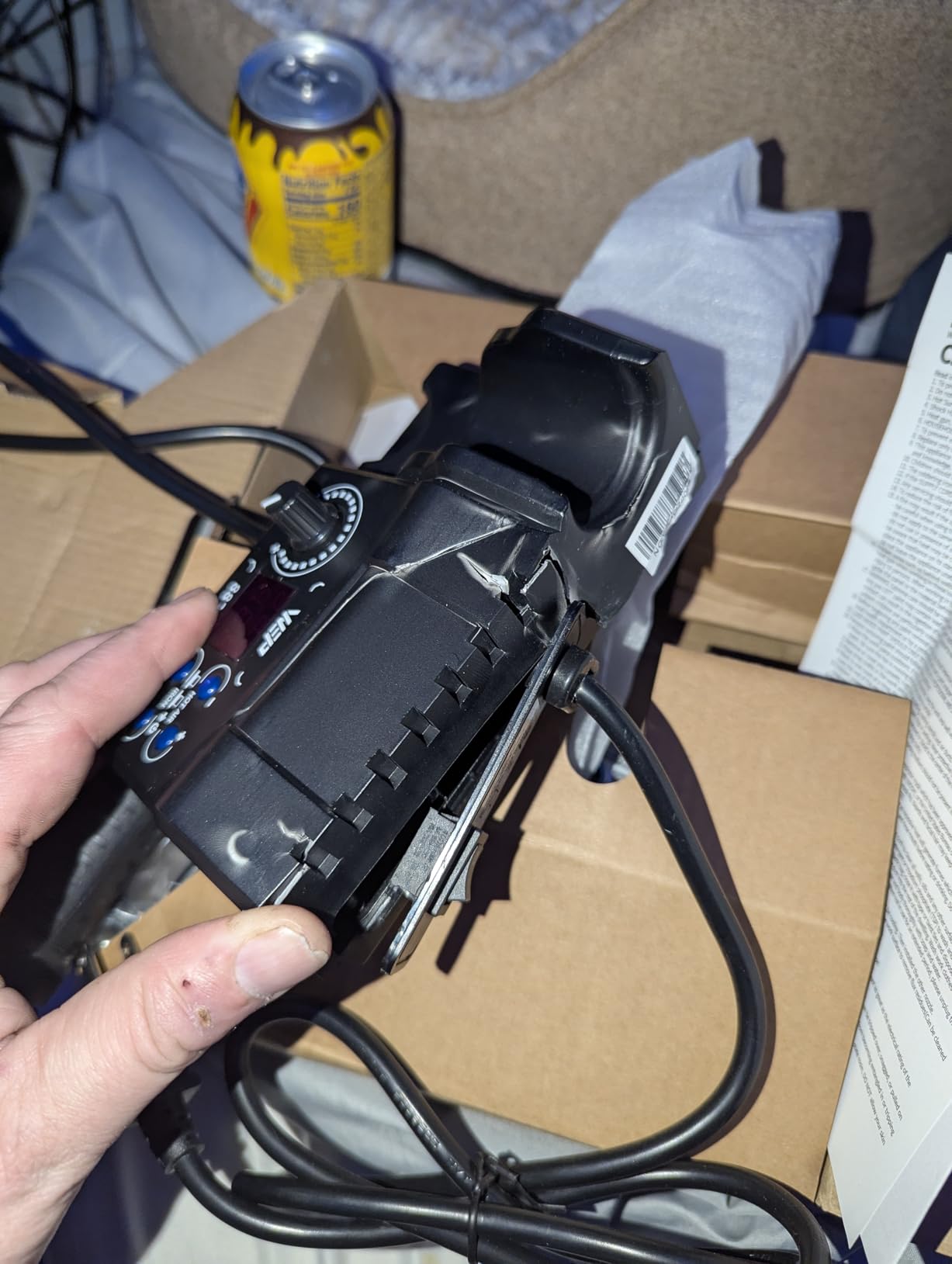
It also comes with two spools of solder wire, so the station is genuinely usable out of the box, along with five tips covering I, B, K, 3.2D and 3C shapes, three hot air nozzles, brass wool, tweezers and a desoldering pump. That tip spread is enough to cover most component work without a second order.
Sleep mode, hot air standby, Celsius/Fahrenheit conversion, auto shutdown and calibration are all present, which is more housekeeping than most combined stations in this range provide.
What to check before you commit?
Check your circuit. With a 750W combined draw, this is the highest powered single box in the roundup. On a shared or lightly rated circuit it can trip when the hot air gun runs alongside anything else.
Confirm your mains. It is designed around 110-127V US wiring, so overseas use needs a transformer and attention to the plug format.
Where it falls short?
Switching between the two functions still costs setup time. Air volume and nozzle changes are needed per task, so a session of one-off soldering jobs pays the switching cost without getting the benefit.
Dual-function stations always compromise somewhere, and here it is bench real estate. The two heads, their controls and the nozzle storage all compete for the same area, which is a real cost in a crowded workshop.
9. X-Tronic 3060-PRO – Best When You Repeat the Same Jobs
- Dual panels show set and live temperature
- Three preset memory functions
- Digital temperature calibration
- Adjustable sleep timer from 0 to 30 minutes
- Mini magnifier lamp and four helping hands
- 110V 60Hz only with no 220V version
- Large accessory count makes setup bigger
- Heavier footprint than a single head station
The 3060-PRO is built around repetition. A 75W station drives a 60W iron with 15W reserved for mini motherboard work, covering 194-896°F, and the dual control panels show set and live temperature at the same time. For lead-free, seeing the live value while the loop recovers is exactly the feedback you want.
Three preset memory functions let you store a temperature per alloy or per joint type, and digital calibration lets you correct the reading once and keep it. Combined, that means a repeatable setup instead of a daily ritual. The adjustable sleep timer at 0, 5, 10 and 30 minutes extends tip life at the higher temperatures lead-free requires.
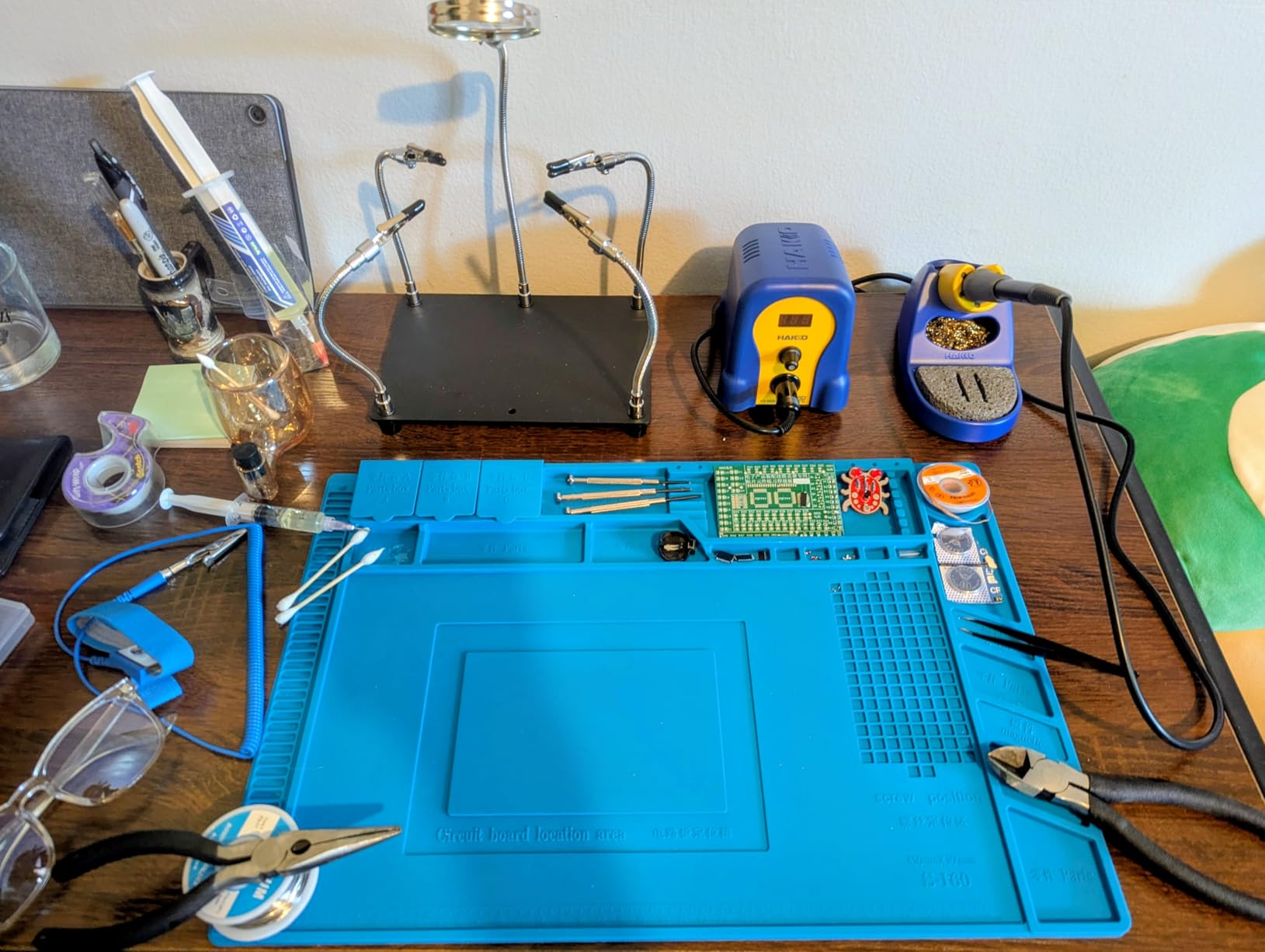
Static temperature stability is rated at plus or minus 3.6°F, which is 2.0°C, and the package is a 16-piece kit: five extra tips, a mini magnifying lamp, four helping hands, a solder sucker, tweezers, 50g of solder, a brass sponge with flux, a wet sponge and an anti-static grounding wire.
Reviewers note the feature set reads as advanced yet stays easy to program, which is unusual. Menus are straightforward enough for a beginner while still exposing the controls an experienced user wants, and it carries a 3-year warranty with a 57-inch silicone iron cord.
What to check before you commit?
Check the footprint and the mains before you order. This is a 110V 60Hz unit with no 220V version, and it is a larger kit on the bench than a simple single-head station. Both are known quantities, but they are worth confirming.
Use the presets. If you solder the same two or three joint types repeatedly, spending ten minutes setting them up properly pays back within a week of lead-free work, where dwell time is longer on every joint.
Where it falls short?
The accessory count is large, and sixteen pieces means more to unpack, more to store and more small parts to lose. It is a fair trade for what you get, but it is not a minimalist kit.
With two panels, presets and calibration, there is more to learn than a single-knob station demands. Owners who wanted simplicity report the menus take a little longer than expected to internalise.
10. Hakko FX888DX – Best Built Station for Lead-Free
Hakko FX888DX-010 – Digital Soldering Station with Rotary Encoder
- Highest average rating in our roundup at 4.8
- Solders within about 20 seconds
- Very stable temperature control
- Clicky rotary dial is precise and easy to learn
- Iron holder opens for easy tip cleaning
- Heavy build with strong rubber feet
- No hot-swappable tips
- No idle or rest mode for the iron
- 110V AC design only
The FX888DX is the station here that feels most solidly built, and it carries a 4.8 average rating across 367 reviews. The rotary encoder replaced the button-driven interface of the earlier FX-888D, and reviewers describe the single clicky dial as precise and immediately learnable. You set a temperature the way you would set a volume knob.
On lead-free performance, 65W of heating power across a 120°F-480°C range is more than enough reach, and the heat-up is fast enough to solder within about 20 seconds. Temperature control is described as excellent and stable, which is the property that decides joint quality at these working temperatures.
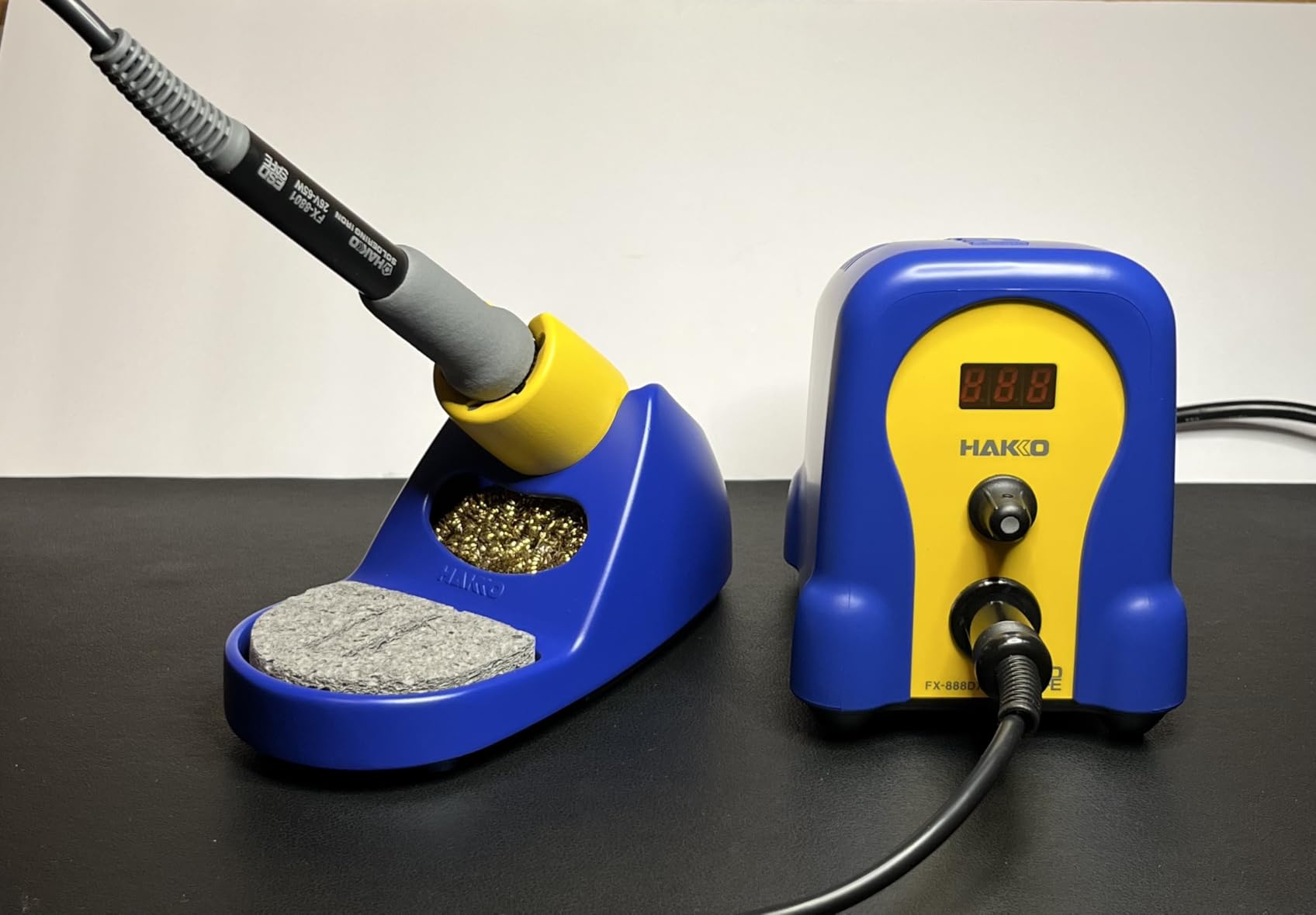
Two build details stand out. The iron holder opens for cleaning, which matters when you are shaping and re-tinning tips daily at lead-free temperatures. And the unit is heavy with strong rubber feet, so it stays where you put it while you work, unlike several lighter kits in this roundup.
It comes with the iron, holder, sponge, tip cleaner, a manual and a T18-D16 1.6mm chisel tip, which is the correct starting shape for lead-free. Made in Japan, with a compatible tip guide and setup mode documentation included.
What to check before you commit?
Confirm the mains. This is a 110V AC design and is not directly usable on 230V, which is the most common hesitation from buyers outside North America. Some overseas reviewers also report receiving mismatched iron and holder colourways.
Buy a second T18 tip in a broader chisel or a knife point. With no hot-swappable tips, a damaged tip means a wait, and at lead-free temperatures tip wear is a routine event rather than an exception.
Where it falls short?
There is no idle or rest mode for the iron, and that is a real gap for a premium station. Without standby, tip oxidation continues while you are away from the bench, which is costly on a tip that is otherwise built to last.
The listed dimensions on some listings are inflated relative to the actual unit, so measure the space you have rather than trusting the published figure. It is also one of the more expensive stations in this roundup, which is the price of the build quality.
11. FNIRSI DWS-200 – Best for Travel and Non-North American Mains
FNIRSI DWS-200 200W High Power Soldering Station Kit,2 Helping Hands
- 200W element melts solder in seconds
- Built in copper transformer takes 100-240V
- 2.8 inch TFT screen with curve and combined modes
- Three preset temperatures
- Two handles cover fine SMD and heavy work
- Newest design with the smallest review base in the group
- 842F ceiling is below the 896F of cheaper stations
- Dual handles add bulk for single task work
The DWS-200 solves a problem most of this list cannot: mains voltage. The built-in pure copper transformer accepts 100-240V input, which makes it the only station here that travels without a step-down transformer. If you repair equipment away from a bench, or you are outside North America, that single feature changes the calculation completely.
On raw capability it carries a 200W single-head element, more than any other soldering-only station here, and owners report solder melting within a couple of seconds. The temperature range is 212-842°F, which is lower than the 896°F ceiling of several cheaper stations, but it is more than enough to work lead-free alloys at their proper setting.
The 2.8-inch TFT screen gives you the most information at a glance in the roundup, with three modes including a temperature curve view. Watching the curve climb and settle is genuinely useful for judging recovery, and three preset temperatures cover common alloy and joint combinations.
Dual handles are included, an F210 precision iron and an F245 high-power iron, with nine tips between them and a set of helping hands with 360-degree adjustable alligator clips. Sleep mode triggers when the iron goes back in the stand, which protects tips between tasks.
What to check before you commit?
Check the review base. At 259 reviews it is the newest and least proven unit in this roundup, so the long-term durability picture is thinner than for the Hakko, Weller or X-Tronic models. That is a fair trade for the voltage flexibility, but you should know you are making it.
Decide whether you need two irons. If you mostly do fine SMD, the precision handle covers it and the second handle is bulk you will move around rather than use.
Where it falls short?
It sits at the expensive end of this roundup, and that cost sits oddly against a temperature ceiling lower than several cheaper alternatives. You are paying for power, screen and voltage flexibility, not for maximum reach.
The dual-handle design adds bulk that is unhelpful during single-task soldering, and the smallest review base in the roundup means fewer long-term failure reports to guide you.
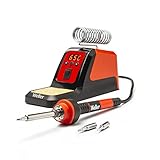
12. Weller WLSKD7012A – Best for Tight, Confined Joints
- Heats in about 15 seconds
- Holds an even temperature once hot
- Temperature offset calibration in the setup menu
- Slim heater reaches into tight spots
- Backed by a 7 year warranty
- Light base slides around unless weighted
- Tips oxidize and strip their threads
- Replacement tips are hard to find at mainstream sellers
- Some owners question the readout accuracy
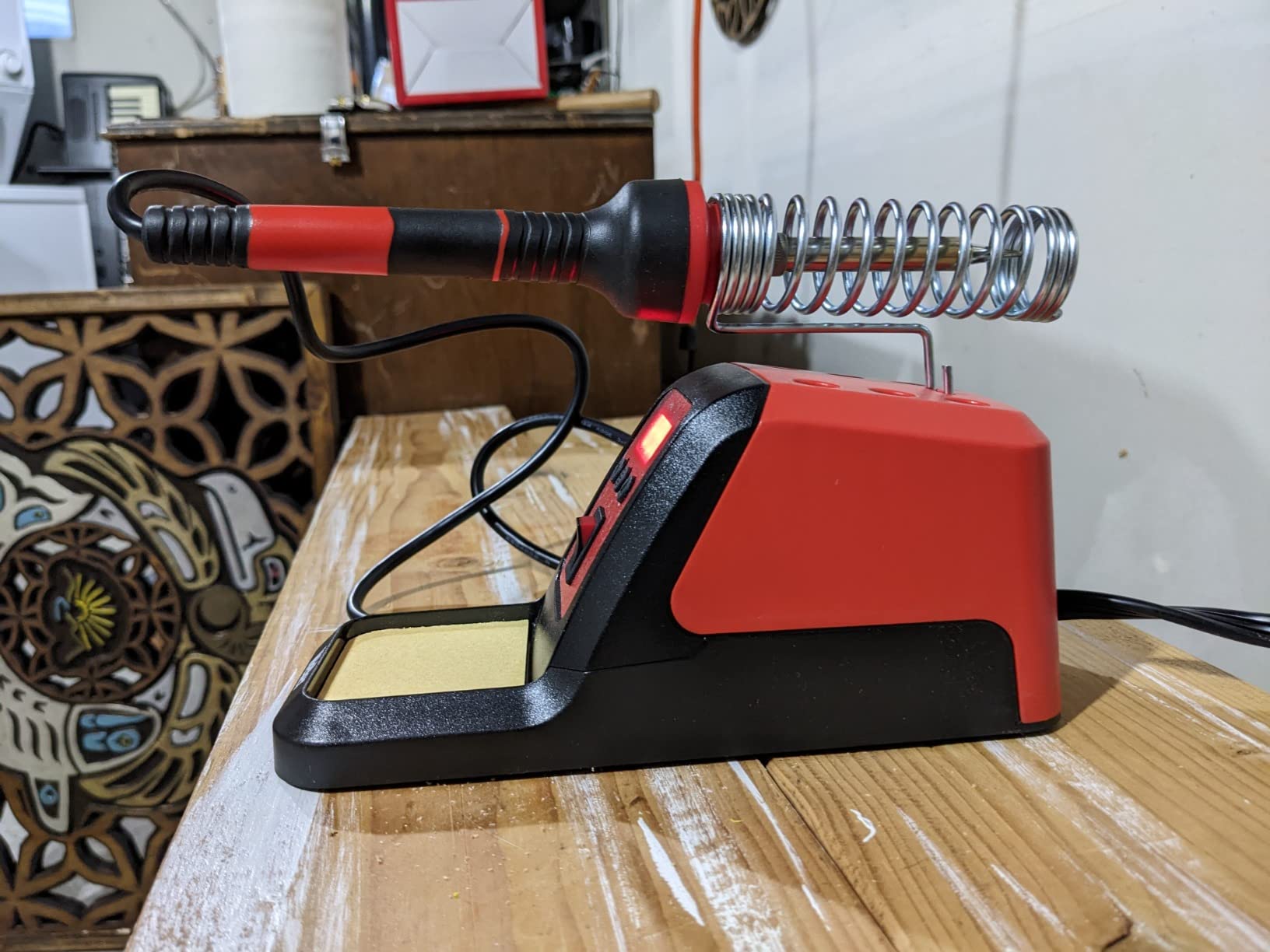
This Weller is the lowest-rated station we included at 4.2, and it earns its place for one specific reason: access. The slim heating element profile reaches into tight spots that a fatter iron cannot, and that matters on densely packed boards where a large tip diameter simply will not fit next to neighbouring components.
The 70W element heats from 212°F to 650°F in about 15 seconds, and owners report even temperature holding once hot. It covers 200-896°F, includes temperature offset calibration in the setup menu, and ships with three replacement tips plus helping hands. The 7-year manufacturer warranty is the longest in this roundup.
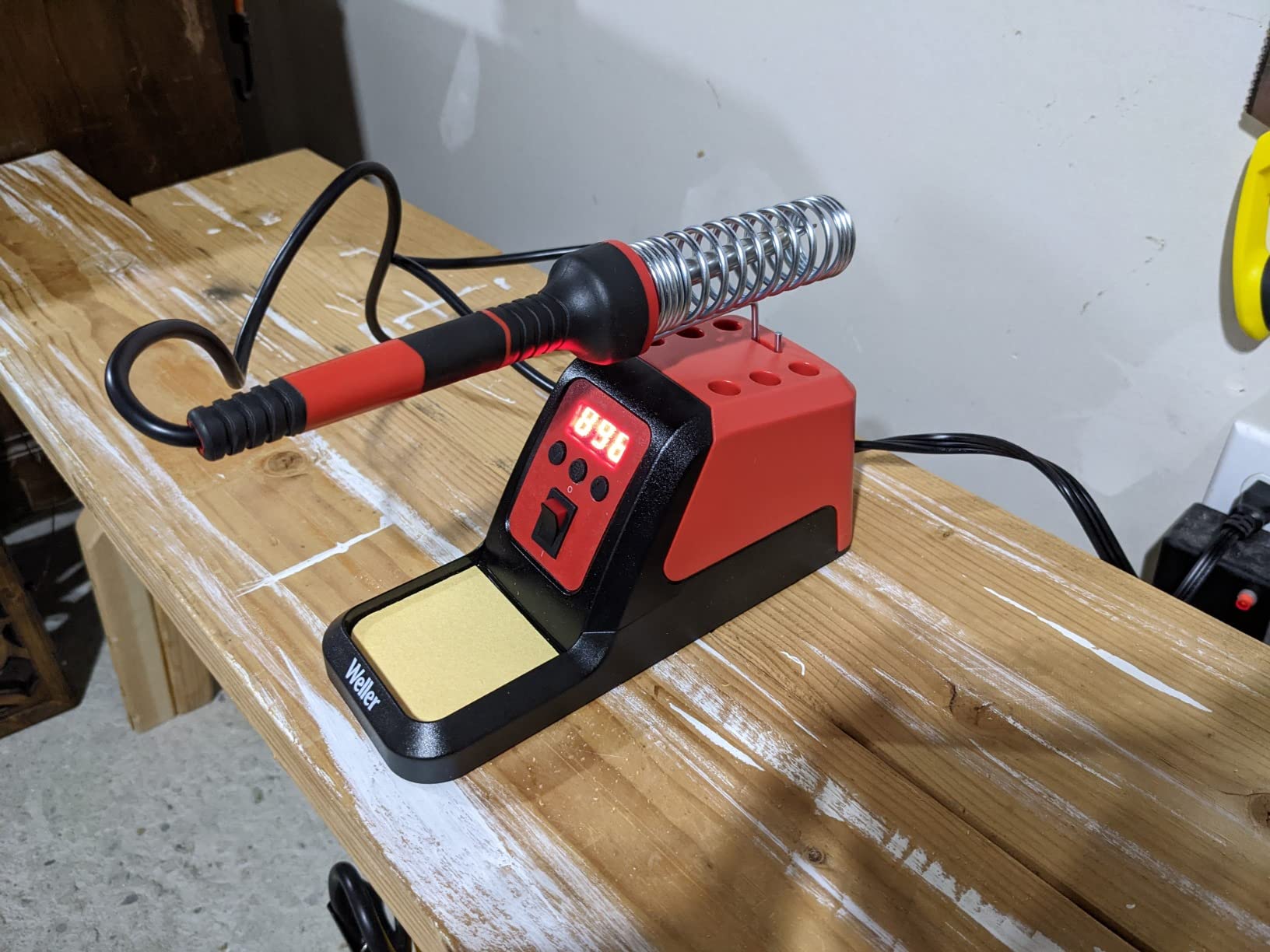
The ergonomic moulded pencil grip is genuinely comfortable for extended work, and quick tip change plus an integrated safety rest make it a practical bench tool rather than a display piece. Standby mode and a selectable Celsius/Fahrenheit display cover the routine housekeeping.
It is also a 120V unit with a US plug, which is a consideration if you are outside North America, and a few buyers report units arriving non-functional, so testing it early is worthwhile.
What to check before you commit?
Find your tips first. Replacement tips for this platform are harder to source at mainstream retailers than the Weller or Hakko equivalents, and tip wear is a routine cost at lead-free temperatures. Confirm availability before you commit, not after your first tip oxidises.
Weight the base or put it on a rubber mat. Owners report it slides across the bench and that the stiff cord drags it, which is a poor combination when you are reaching into a cramped board.
Where it falls short?
Tips oxidise quickly and their threads strip on removal, which is the most damaging combination on this list for long-term ownership. Budget for a tip extractor and replacement tips rather than expecting the supplied set to last.
The iron holder sits at an awkward angle and can stick, and some owners question the digital readout accuracy. It is the right tool for access problems and the wrong tool as an all-round lead-free station.
What Actually Matters When You Solder Lead-Free?
Thermal recovery matters more than the temperature-control label. A station can advertise temperature control and still fail on lead-free, because the sensor is often in the heater a few centimetres behind the tip. When you pull a large joint, the tip temperature sags and the display does not show it. Practitioner forums describe exactly this as the number one reason budget stations disappoint on lead-free, and it is why wattage appears so heavily in this ranking.
Tip temperature stability is the second number to read. Figures like plus or minus 2°C are the difference between a joint that flows on the first pass and one you reheat three times. A stable tip also shortens dwell time, which is the main defence against lifting a pad on a lead-free board.
Tip shape and coating decide how long the tool lasts. Lead-free works roughly 30°C hotter than leaded, and hotter tips oxidise faster, so tip replacement becomes a running cost rather than an occasional one. Plated steel tips are the first to go, and thick-walled tips in a chisel or knife shape outlast slender points because they resupply heat to the joint faster. Look for solid brass cleaning tools as well; several kits in this roundup ship brass-coated steel mislabelled as brass.
The temperature to set is 350-380°C for common lead-free alloys. The 217°C figure you will see quoted is the melting point of alloys such as Sn99Ag0.3Cu0.7, not your dial setting. A useful rule is to set the iron around 40-50°C above the alloy’s liquidus and adjust for tip mass, joint size and your own technique. Raising it further does not help, because at some point you are simply cooking the flux before the solder can wet the pad.
Flux and solder pairing is where most lead-free joints are won or lost. A no-clean flux-core wire in the 0.5-1mm range handles most through-hole and small SMD work. Halide-free or rosin flux suits work that must stay clean, and gel flux is worth keeping for rework and for joints where you are re-tinning. If you are choosing consumables, our beginner soldering kit guide and the stained glass soldering iron picks cover the material differences.
Hakko versus Weller comes down to interface and ecosystem. The Hakko FX888DX has the best build and the simplest one-knob control, but no rest mode and a 110V design. The Weller WE1010NA has the better rated temperature regulation, setpoint lock, standby and auto setback, at the cost of a heavier base and a menu to learn. For lead-free on a bench you use every day, either is a defensible answer.
Two things we would skip: a station with no sleep or standby function, because it burns tips and scorches benches while you are away, and one locked to a single-source proprietary tip system with poor availability. Both are quiet costs that show up months later. A replaceable iron, a replaceable heating element and a calibration function are worth paying a modest premium for.
Companion tools matter more here than with leaded work. A desoldering pump, brass wool for tip shaping, a sponge, tip tinning, a fume extractor and a grounding wire cover the most common failure modes. Several stations here bundle all of it, which is part of why a mid-range kit can outperform a bare premium unit on a first project.
Frequently Asked Questions
Which soldering station is considered the best overall?
The YIHUA 926 III is our best overall pick for lead-free solder. Its 60W PID element, 90-480C range, adjustable sleep timer and 7234 owner reviews make it the most proven station in the group. Choose the Weller WE1010NA instead if temperature regulation is your priority, or the Hakko FX888DX for build quality and the simplest one-knob control.
Which soldering station is better, the Hakko FX-888D or the Weller WE1010?
The Weller WE1010NA regulates temperature more tightly, rated at plus or minus 4F, and adds setpoint lock, standby and auto setback. The Hakko FX888DX offers a cleaner rotary-encoder interface, better build quality and a 4.8 average rating, but it has no rest mode. For lead-free on a shared bench we prefer the Weller; for a single-user permanent bench we prefer the Hakko.
Is Hakko or Weller better for lead-free soldering?
Both handle lead-free well, and the difference is design rather than capability. Weller favours process control with setpoint locking and setback, while Hakko favours feel and durability with a heavy, stable body and one-knob adjustment. Long-running community favourites tend to stay with one brand for years, so switching brands mid-collection rarely pays off.
Do I need special flux for lead-free solder?
You do not need special flux, but you do need plenty of it. Lead-free alloys wet more slowly and oxidise faster, so a no-clean flux-core wire in the 0.5-1mm range is the sensible default. Halide-free or rosin flux suits work that must stay clean, and gel flux is worth keeping for rework and re-tinning. Under-fluxing is the most common cause of dull, non-conductive lead-free joints.
What temperature do I set my iron to for lead-free solder?
Set the iron between 350 and 380C for most lead-free work. The 217C figure commonly quoted is the melting point of alloys such as Sn99Ag0.3Cu0.7, not your dial setting. If the solder melts and does not flow, add flux and hold slightly longer before raising the temperature, because burnt-out flux is the usual culprit rather than insufficient heat.
Can a cheap soldering iron handle lead-free solder?
It can, but not well. Lead-free demands around 30C more working temperature and pulls heat out of a joint faster, so a low-wattage unregulated iron struggles to recover and burns flux before the alloy flows. A temperature-controlled station with at least 60W and a wide range makes a measurable difference in joint quality.
Do lead-free soldering tips wear faster?
Yes. Higher working temperatures oxidise tips faster, so tip replacement becomes a routine cost rather than an occasional one. Thick-walled chisel and knife tips in a plating that suits your alloy outlast slender points, and cleaning with solid brass wool keeps the working face flat. Keep a spare set on hand, especially for stations without hot-swappable tips.
What is the best non-leaded solder for hobby work?
Sn99Ag0.3Cu0.7 is the most widely available lead-free alloy and works well for general electronics. Sn100 is harder to work with and better suited to higher-temperature applications. For hand soldering, choose a 0.5-1mm flux-core wire, and pair it with a no-clean or halide-free flux so the joint wets quickly and the residue stays manageable.
The Verdict on 2026 Lead-Free Stations
Buy the YIHUA 926 III if you want the best soldering station for lead-free solder without overthinking it. It is the only unit here where a 60W PID element, a 90-480°C range, a real sleep timer and a genuinely useful accessory bundle are all backed by more than 7,000 owner reviews. It recovers fast, it holds its setpoint, and it comes with lead-free solder and six tips so you can start immediately.
Buy the Weller WE1010NA instead if joint quality is your job and you cannot afford a cold joint. It carries the largest review base among the professionally built stations here, at 4.7 across 4670 reviews, and it has the tightest stated regulation, plus setpoint lock and auto setback for a repeatable process. Buy the Hakko FX888DX if you want a station that feels solid in the hand and will live with the absence of a rest mode.
For rework, the YIHUA 8786D I and WEP 882D both add hot air to the box, and the FNIRSI DWS-200 is the answer if your bench is not on 110V. Whatever you choose, set it to 350-380°C, use plenty of flux, keep a brass shaper and spare tips on the bench, and give the job a little more dwell time than leaded work ever asked of you.