
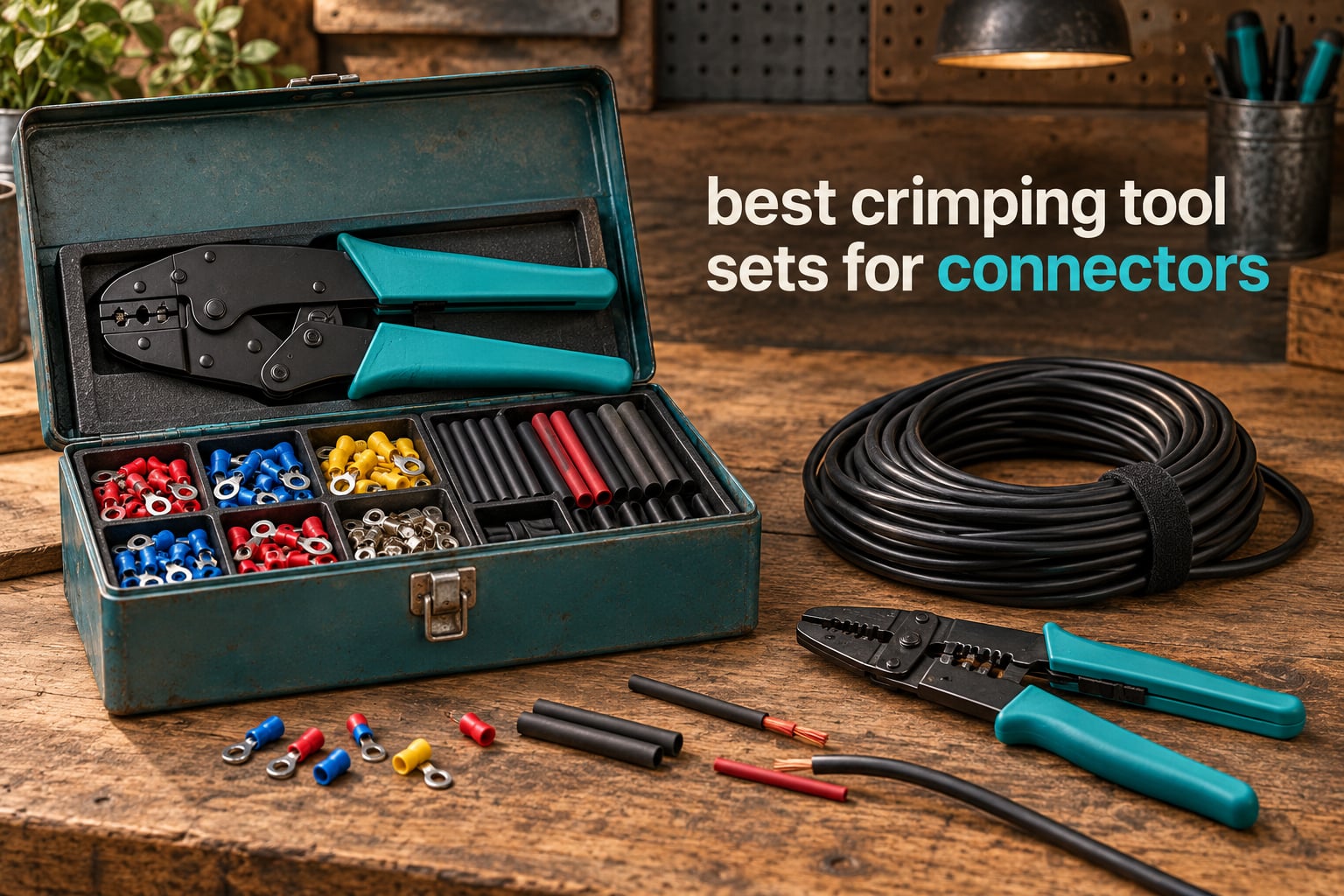
There is no universal best crimping tool. The right one is decided by the connector families you actually own, the wire gauge you strip, and how many joints you plan to make this month. A tool that handles 22 AWG heat shrink beautifully can split a JST-XH housing without trying, and a kit with 580 connectors in it still ships with a crimper that produces loose crimps on fine wire.
That is why we built this guide around connector families first and brands second. We spent weeks working through 12 crimping tool sets for connectors covering heat shrink terminals, insulated and non-insulated terminals, ferrule and cord-end sleeves, open barrel, solar MC4, automotive waterproof plugs, and small electronics housings like JST, DuPont and Molex. Every pick below was judged on the same three things: whether the ratchet holds a full cycle, whether the die cavities match real connector families, and whether reviewers report joints that survive a hard pull.
The short version: if you do general electrical repair, start with a ratcheting kit that ships a real assortment of connectors. If you build wiring harnesses for electronics, match the die to the housing series instead of the other way around. And if you work in a boat, a vehicle or a PV array, buy the kit built for that environment rather than a general-purpose set.
If you are still building out a workshop, our guides to other tool families are worth a look alongside this one, including our picks for the best metalsmithing tool sets and the best leather stamping tool sets.
Table of Contents
Top 3 Crimping Tool Sets For Connectors (October 2026)
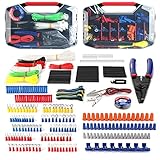
WORKPRO 582-Piece Heat Shrink Kit
- 582 terminals and connectors
- 3-in-1 stripper cutter and crimper
- UL-certified parts
- Covers AWG 22-10

iCrimp IWS-30J Five-Jaw Ratchet Set
- Full-cycle ratchet frame
- Five interchangeable jaws
- AWG 20-10 stripper included
- Alloy steel jaws

haisstronica HS-8327 Stripper and Crimper
- Crimps AWG 26-10
- Color-coded jaw cavities
- Adjustable ratchet pressure
- Quick-release lever
Two of the top three are general-purpose kits that cover the widest range of terminal types, and the third is a dedicated stripper and crimper that earned the highest five-star share in our review read. The Astro Pneumatic 9477 just missed the top three on review volume, but it is the most professional-grade frame here and is worth a look if you install cable for a living.
All 12 Crimping Tool Sets for Connectors Compared in 2026
| Product | Specifications | Action |
|---|---|---|
| WORKPRO 582-Piece Heat Shrink Kit |
|
Check Latest Price |
| iCrimp IWS-30J Five-Jaw Ratchet Set |
|
Check Latest Price |
| haisstronica HS-8327 Stripper and Crimper |
|
Check Latest Price |
 Astro Pneumatic 9477 Seven-Piece Set Astro Pneumatic 9477 Seven-Piece Set |
|
Check Latest Price |
 haisstronica HS-1586 Six-Die Set haisstronica HS-1586 Six-Die Set |
|
Check Latest Price |
 SOMELINE JST-XH and Dupont Set SOMELINE JST-XH and Dupont Set |
|
Check Latest Price |
 KF CPTEC Nine-Piece Quick-Change Set KF CPTEC Nine-Piece Quick-Change Set |
|
Check Latest Price |
 haisstronica 280-Piece Heat Shrink Kit haisstronica 280-Piece Heat Shrink Kit |
|
Check Latest Price |
 SOMELINE Waterproof Automotive Kit SOMELINE Waterproof Automotive Kit |
|
Check Latest Price |
 Klein Tools 3000CRKIT Ratchet Set Klein Tools 3000CRKIT Ratchet Set |
|
Check Latest Price |
 BougeRV Solar Connector Kit BougeRV Solar Connector Kit |
|
Check Latest Price |
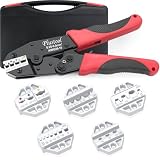 Plustool Six-Die Ratcheting Set Plustool Six-Die Ratcheting Set |
|
Check Latest Price |
1. WORKPRO 582-Piece Heat Shrink Connector Kit – Best Overall Connector Assortment
- Huge assortment of terminals
- connectors and shrink tubes in one case
- Includes a 3-in-1 wire stripper and cutter
- UL-certified terminals and shrink tubes
- Reported solid connections on vehicle and equipment repair
- Storage box and latches reported flimsy
- Bundled wire strippers are mediocre
- Generic assortment with many low-value small parts
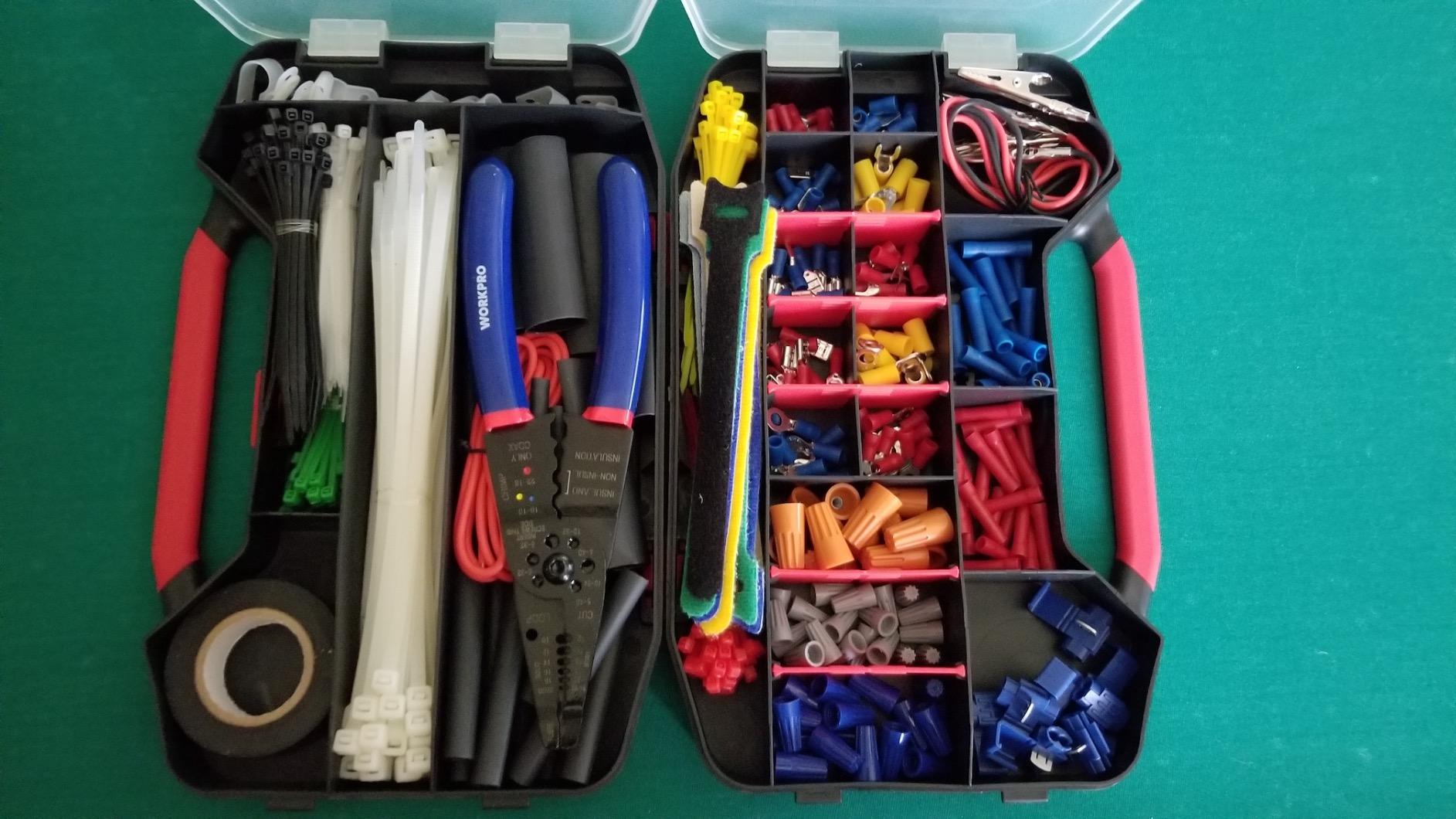
This is the kit I keep within arm’s reach on the bench because it solves the boring problem first. You always need ring terminals, spade terminals, butt splices, quick-connects and heat shrink, and running to the supply house for a single 22 AWG ring terminal is not a good use of an afternoon.
The tool itself is a 3-in-1 stripper, cutter and crimper sized for AWG 22-10, and the terminals in the case are certified by UL. In practice the connectors crimp cleanly on 16 AWG and 18 AWG wire, which is where most of the repair work in a house or a vehicle happens.
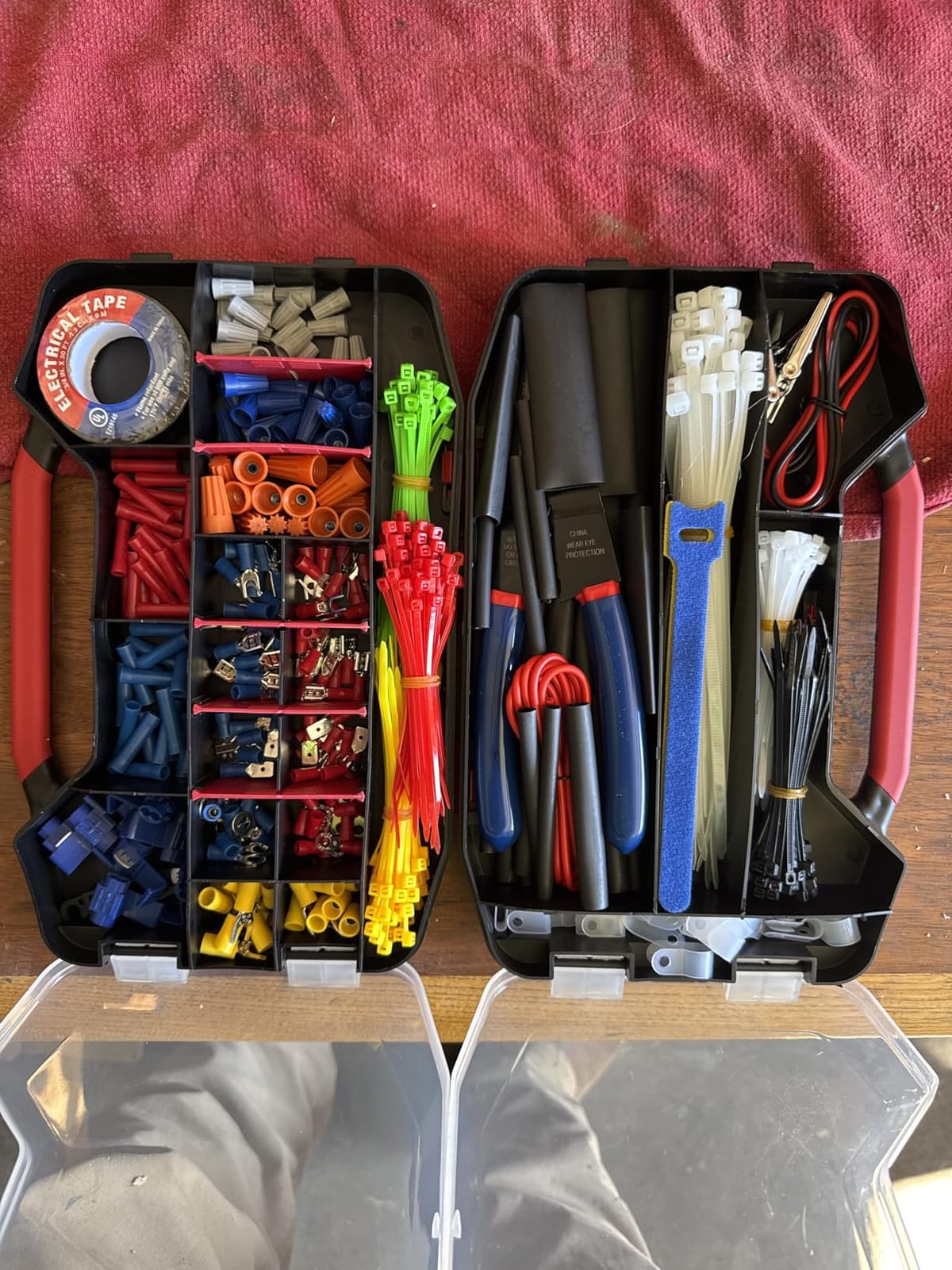
Where I would not rely on it is fine wire. Buyers running 24 AWG signal cable report inconsistent results, and the bundled stripper is the weak link in the box. It is a common complaint across reviews, and it is a fair one.
The case is the other recurring gripe. The latches pop open when the box is moved, and reviewers describe the box itself as flimsy. My workaround was to decant the terminal compartments into a small parts organizer and keep the original case for the tool.
Who this kit suits?
It suits anyone doing general electrical repair, vehicle maintenance, or appliance work who wants connectors on hand rather than on order. The assortment covers ring, spade, butt and quick-connect terminals across a wide range of gauges, which covers most household and hobby vehicle wiring without a second purchase.
Who should skip it?
Skip it if fine gauge is your normal work, because the crimper is not designed around 24 AWG and smaller conductors. Anyone building electronics harnesses with JST, DuPont or Micro-Fit housings should also look elsewhere, since the die here is a general terminal die and not a precision small-connector die.
2. iCrimp IWS-30J Five-Jaw Ratchet Crimper Set – Best Value Ratcheting Frame
- Full-cycle ratchet gives repeatable crimps
- Five jaws cover insulated
- non-insulated
- tabs and receptacles
- Adjustable compound action delivers real force
- Heavier and bulkier than compact crimpers
- Jaw changes need a screwdriver
- Limited critical feedback in reviews
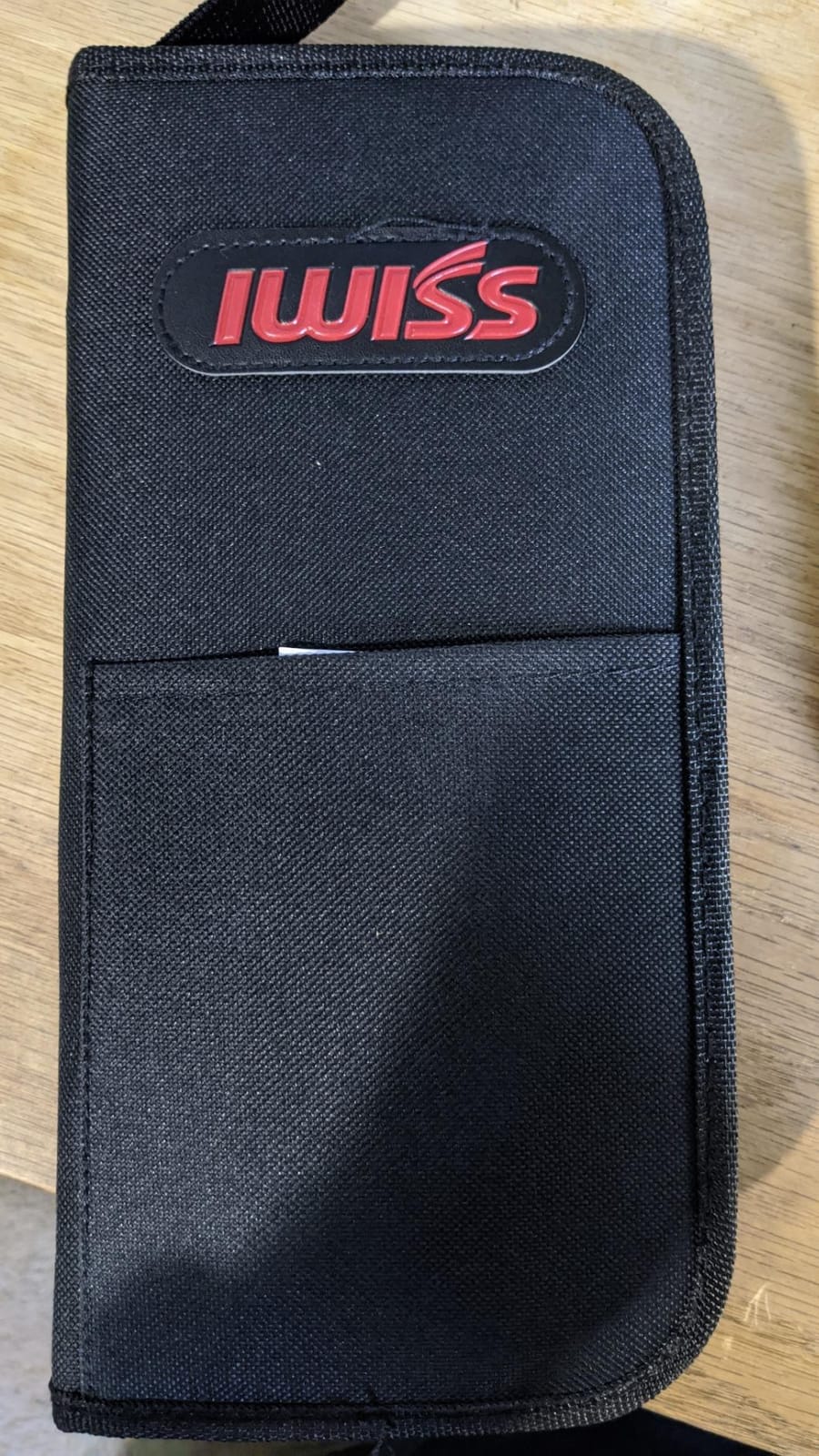
The ratcheting mechanism locks the die in compression the moment you start the wire in and only releases after the full cycle finishes. That single design decision is what separates a crimper that works from one that works sometimes, and it is the reason professionals say a move to ratcheting tools changed their results.
Five interchangeable jaws cover insulated and non-insulated terminals, tabs and receptacles, which is broad enough to cover most panel and control work. The frame uses cast alloy steel jaws treated for rust resistance, and the spring-loaded stripper in the box has a machined AWG 20-10 hole rather than a generic notch.
Force is delivered through a compound action handle, so each squeeze multiplies rather than splits your effort. On 14 AWG and heavier wire that difference shows immediately, and it is why this frame turned up repeatedly in forum recommendations for electricians doing 22 to 12 AWG work.
The tradeoff is bulk. At 2.2 pounds the tool is heavier than a compact ratcheting crimper, and swapping jaws needs a screwdriver, which slows you down if you move between connector families constantly. The cross screwdriver included in the set covers that, but it is still an extra step.
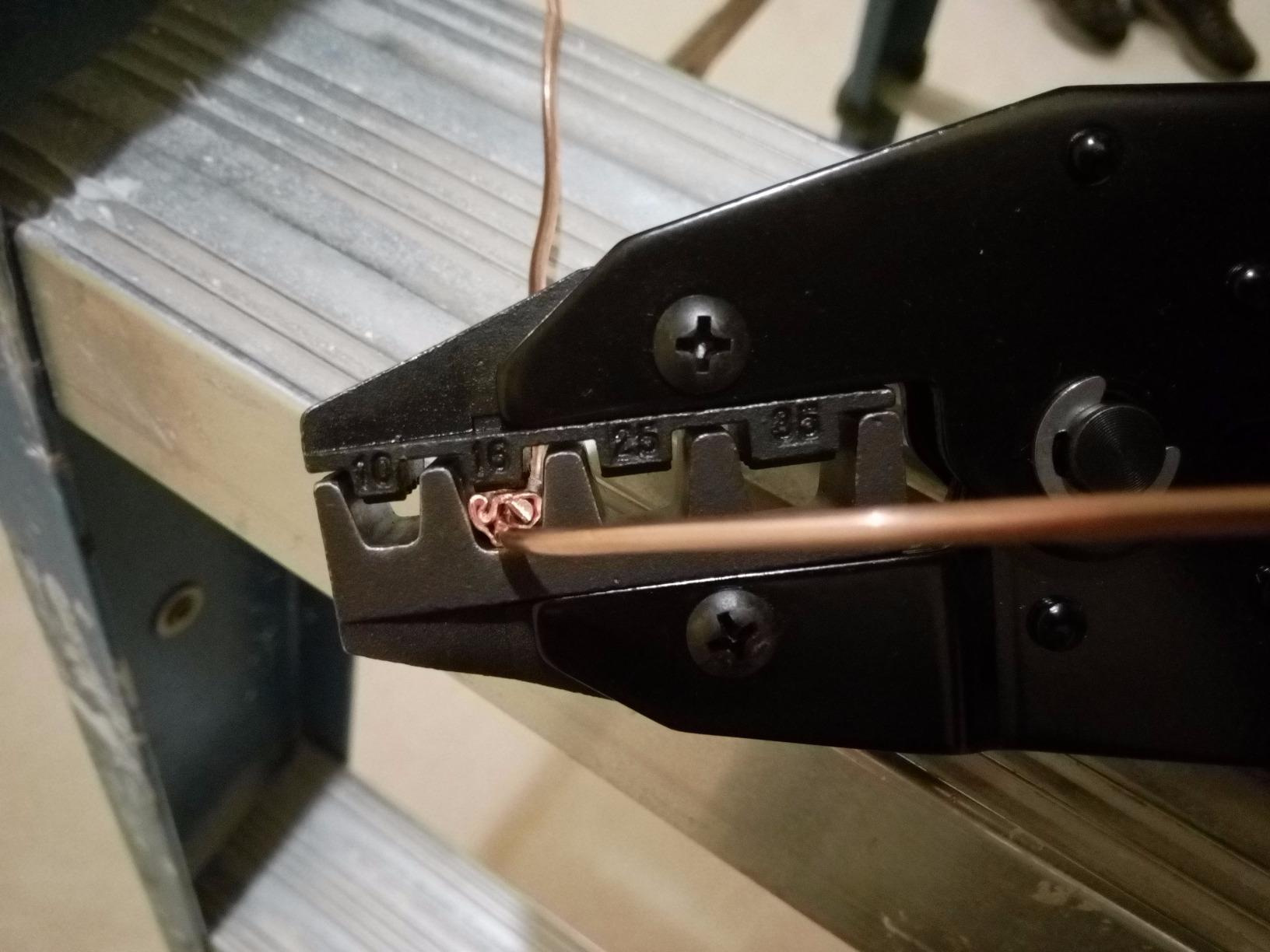
What this set is best at?
It is a strong pick for control panel and terminal block wiring where you alternate between ferrule and insulated terminals all day. The ratchet plus compound action combination holds consistent pull strength across that mixed workload, and the wide gauge ceiling of AWG 2 leaves room for heavier work later.
Where it falls short?
It is not the tool for a bench full of tiny JST or DuPont housings, because the jaw set is built around general terminals rather than precision small contacts. Reviewers also point out that this is a deliberately plain design with limited owner feedback on standout flaws, which is worth knowing before you commit.
3. haisstronica HS-8327 Wire Stripper and Crimper – Best on Small Gauge Heat Shrink
- Crimps 20 and 22 AWG insulated splices reliably where cheaper tools fail
- Color-coded jaw cavities for quick die identification
- Built-in ratchet with adjustable pressure and quick release
- Non-slip handles reduce fatigue on long sessions
- Stripper length stop is not very precise
- Replacement crimper heads not sold separately
- Stripper range is narrower than crimper range
At 4.7 stars across 1,739 ratings with 83 percent of reviews at five stars, this is the most consistently rated tool in the group. The reviewers who compared it against four or more crimper brands say none of the others produced a comparable, mechanically secure crimp on the same terminals.
The crimper handles AWG 26-10, which is unusual for a tool in this class and is the reason it works on 20 and 22 AWG insulated butt splices. Those small heat shrink terminals are exactly where cheap all-in-one crimpers leave a joint that looks fine and fails under vibration.
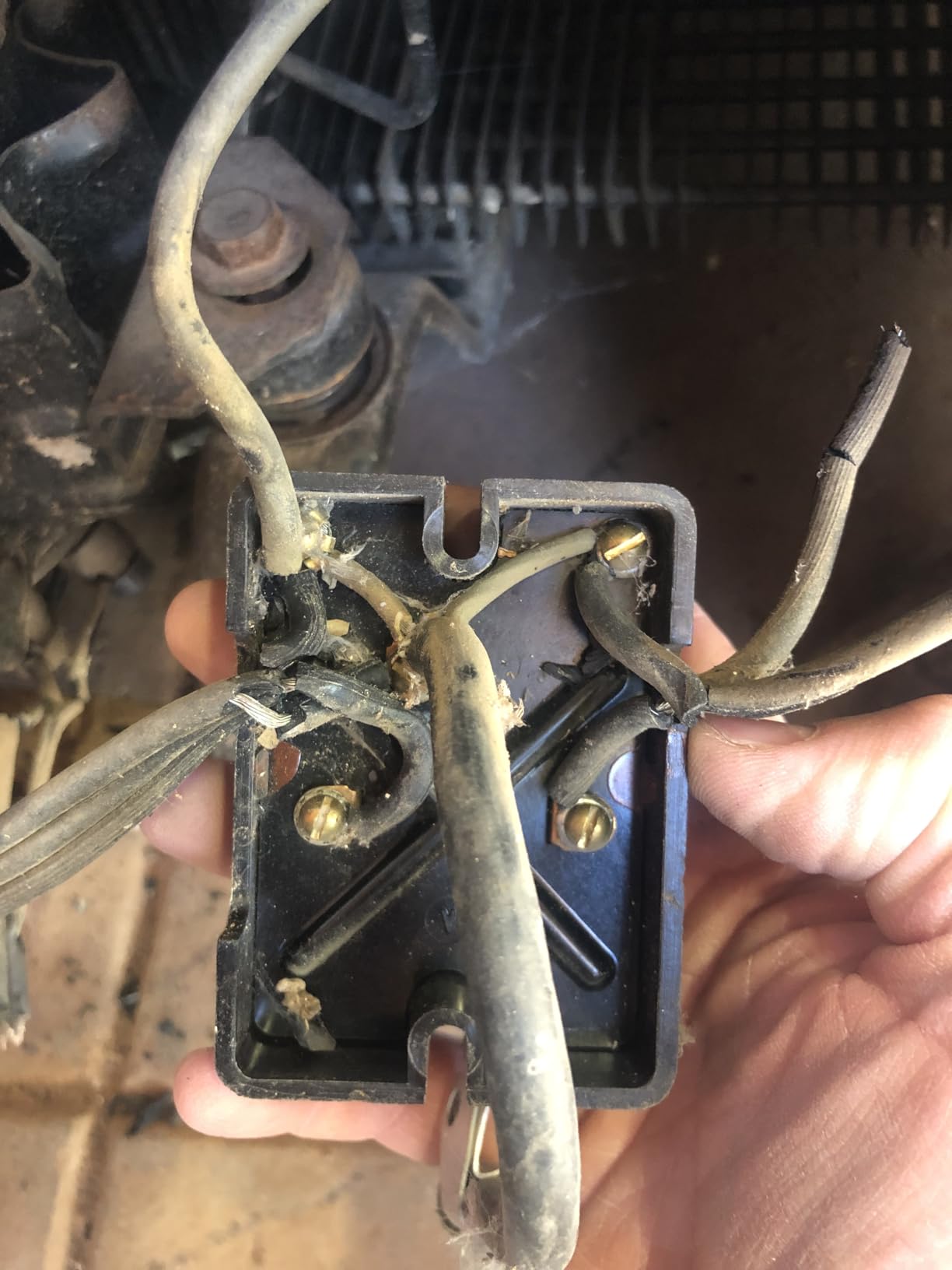
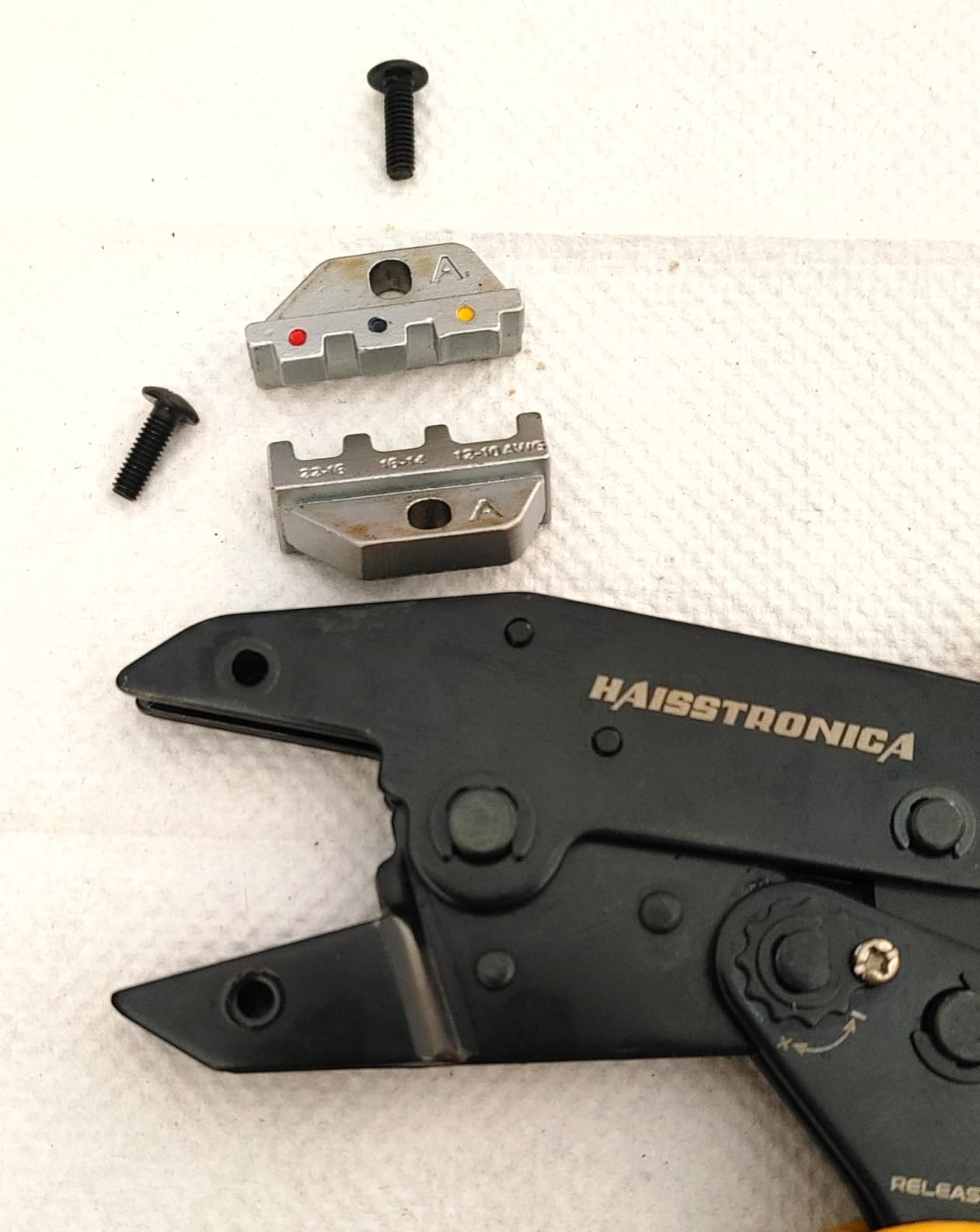
Jaw cavities are color-coded by gauge, so you pick the right die by sight rather than by reading a chart. The ratchet pressure is adjustable and the jaws release with a quick release lever, which matters when you are interrupted mid-crimp and the tool is otherwise locked closed.
Two practical limits are worth planning around. The stripper’s length stop is not precise, so measure stripped length with a ruler if your harness spec is tight, and the crimper head cannot be purchased separately, so a damaged head means replacing the tool.
Why it earns its place?
Fine gauge heat shrink is where most home and automotive DIY work converges: 20 and 22 AWG signal wire, alarm and sensor leads, stereo and lighting runs. A tool that crimps those securely is more useful day to day than a heavier-duty tool that only handles cable you rarely touch.
What you give up?
There is no die set to change here, so this is a single-purpose tool rather than a system. If your work also needs open barrel, ferrule or solar dies, treat this as a companion to a kit rather than a replacement for one.
4. Astro Pneumatic 9477 Seven-Piece Ratchet Crimping Tool Set – Best Professional-Grade Frame
Astro Pneumatic Tool 9477 7-Piece Professional Quick Interchangeable Ratchet Crimping Tool Set
- Quick-interchange jaws cover open barrel
- cord-ends
- D-Sub and V3.5 terminals
- Deep well-defined crimp cavities for professional work
- Operable equally well by either hand
- Highest price point among these kits
- Die changes need a screwdriver
- Minimal die labelling so the reference card is needed
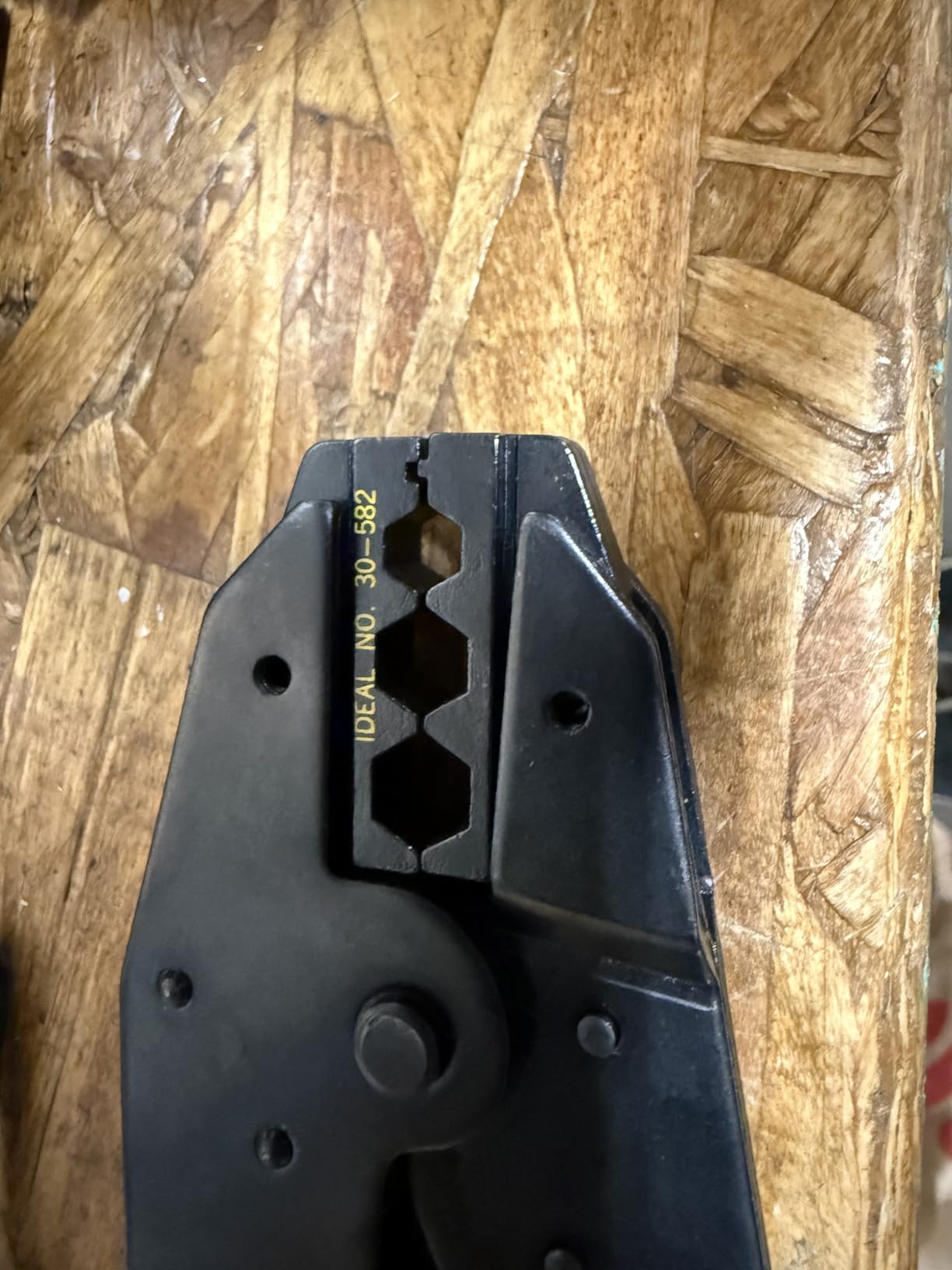
The 9477 is the closest thing to a production tool in this roundup. Each jaw is a dedicated profile rather than a general die: the C jaw handles open barrel terminals from AWG 20-18 through 12-10 in DIN 0.5-1.0, 1.5-2.5 and 4-6 mm squared, and the D and F jaws split insulated cord-end terminals by size band.
The H jaw covers open barrel plus D-Sub and V3.5 contacts, which is a combination you rarely find in a single kit. For installers moving between control cabinets, panel wiring and equipment harnesses, that breadth is the reason to buy this frame.
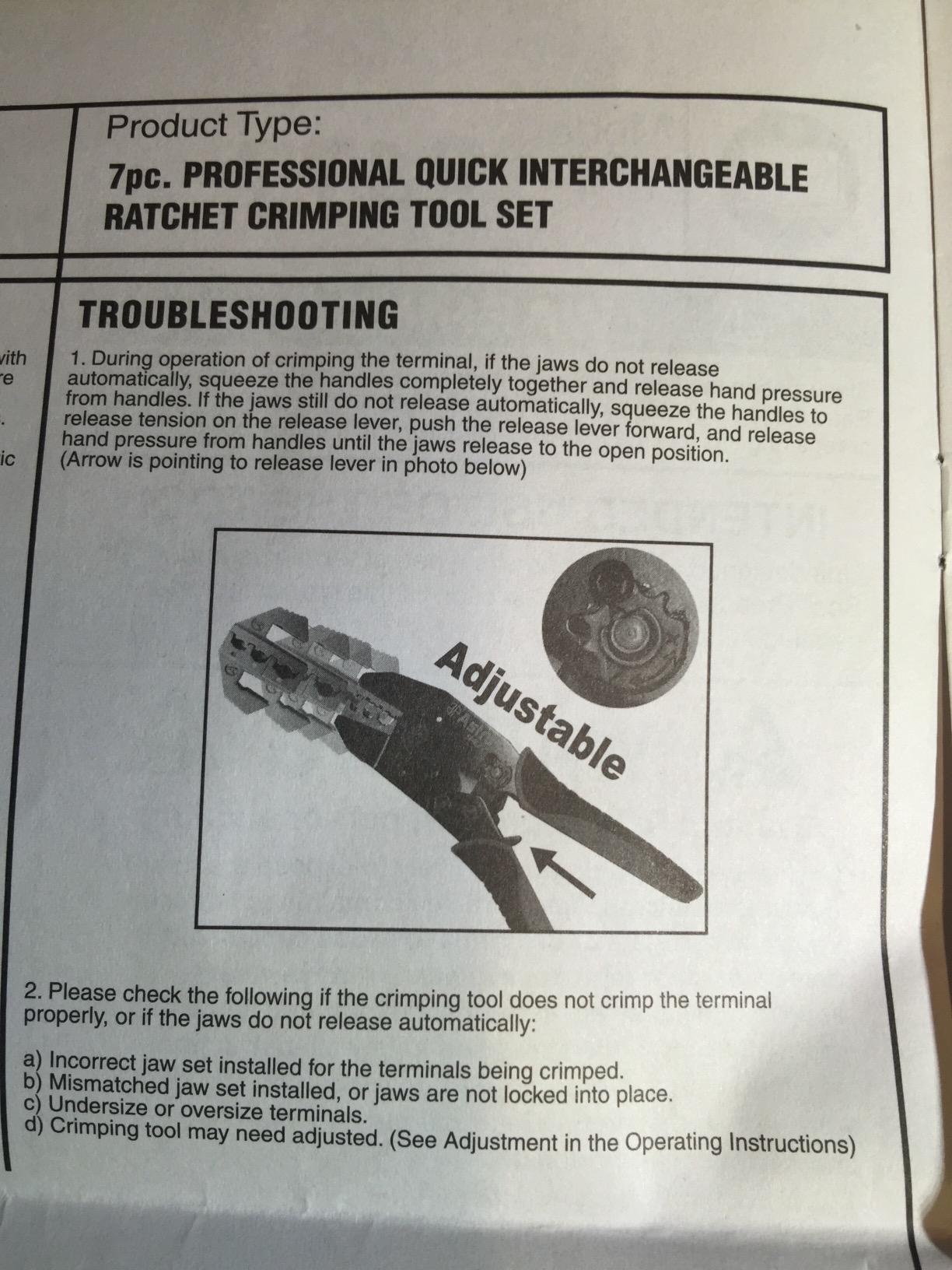
The steel frame with contoured rubber grips holds up under force, and at 1.3 pounds it is lighter than several multi-die kits in this list. It can be operated equally well by either hand, which reviewers with limited grip strength specifically appreciate on the long crimps.
You pay for the jaw engineering, and the price reflects that. Die changes use a screwdriver rather than a tool-free release, and the die and cavity labelling is minimal, so the reference card stays in your pocket until you have the pattern memorized.
When it makes sense?
It makes sense for professional installation and repair work where the terminal catalog is wide and the cost of a failed joint is high. Both metric and imperial ranges are printed on the jaws, which helps if you work from European equipment documentation.
When it does not?
It does not make sense for a single project or for fine gauge electronics work. The frame has no small-connector die in the standard set, and if you crimp once a month the jaw investment never gets used enough to pay back.
5. haisstronica HS-1586 Six-Die Crimping Tool Set – Best Die Coverage Per Dollar
haisstronica 6PCS Crimping Tool Set, Interchangeable Terminal Dies
- Wide dies produce even full-width crimps on the first squeeze
- Ratchet auto-releases at full pressure with a bar latch as backup
- Letter-labeled dies and matching case slots
- Reference card maps each die to connector types and sizes
- Case latches are weak molded snaps that break
- Die change needs a Phillips screwdriver with very tight screws
- Replacement dies are not sold separately
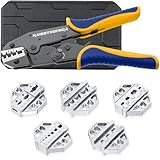
Six dies in a compact frame is the best coverage-to-size ratio here. The set covers heat shrink, insulated, nylon, non-insulated, insulated cable-end sleeves, open barrel and solar connectors, which is effectively every terminal family a general electrician or a PV installer meets in a year.
The jaws are 40CR precision-forged rather than stamped, and users upgrading from thin cheap crimpers describe the difference in crimp width and consistency as dramatic. A ratchet with a bar release latch is included, so the tool backs off safely if you abort a crimp.
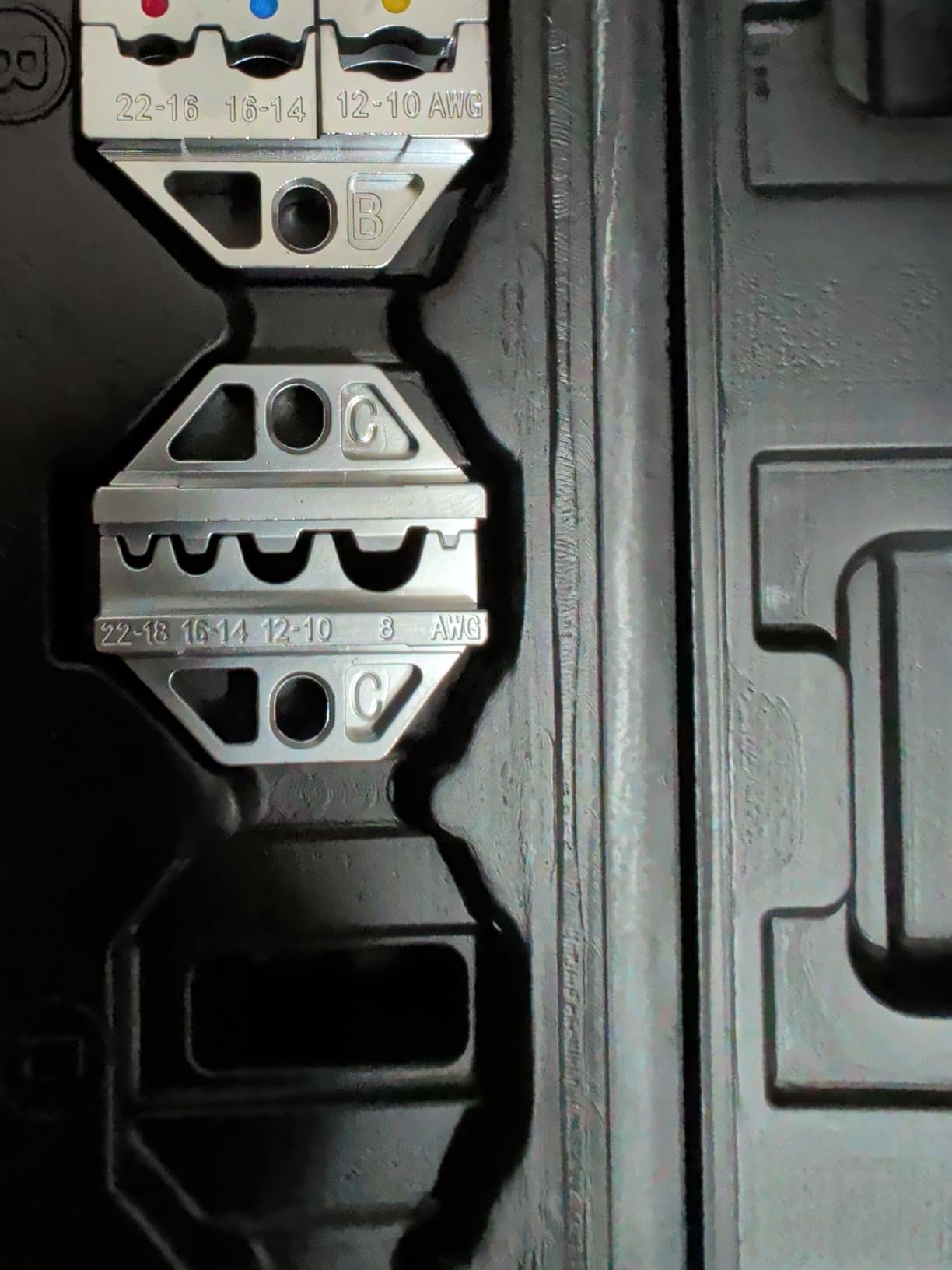
The labeling system is genuinely well thought through. Dies are marked A, B, C and so on, the case slots carry the same letters, and a printed reference card maps each letter to connector types and wire sizes, which removes the most common cause of failed crimps.
Two complaints come up repeatedly. The molded case latches wear and break with no replacement available, and the die-retaining screws are extremely tight, with one reviewer reporting a stripped screwdriver head on them.
Where it earns its keep?
It suits installers who alternate between terminal types on the same job, especially solar and marine work where a nylon terminal and a solar connector might appear in the same conduit run. The solar die is the one that separates this set from cheaper six-piece kits.
What to watch?
Watch the screw torque when changing dies and expect to replace the case rather than repair it. If you work in salt air constantly, treat the storage case as disposable and keep the dies themselves protected.
6. SOMELINE JST-XH and Dupont Connector Set – Best for Electronics Housings
SOMELINE Crimp Tool Connector Kit, JST-XH 2.5mm and Dupont 2.54mm Connector Set, 21 Types of Connectors, 30-20 AWG Ratcheting Crimper for JST Series,KF2510,Molex,AMP EI Series
- Crimps cleanly at 16 AWG and on fine wire for custom harnesses
- High-precision jaws cover JST
- DuPont
- KF2510
- Molex
- Micro-Fit
- AMP EI and D-Sub
- Nickel-plated pins and insulated housings resist oxidation
- Pin removal tool is small and fragile
- Crimp force must be turned down for 22 and 24 AWG jumpers
- Housings fail to latch if the terminal sits flush with the teeth
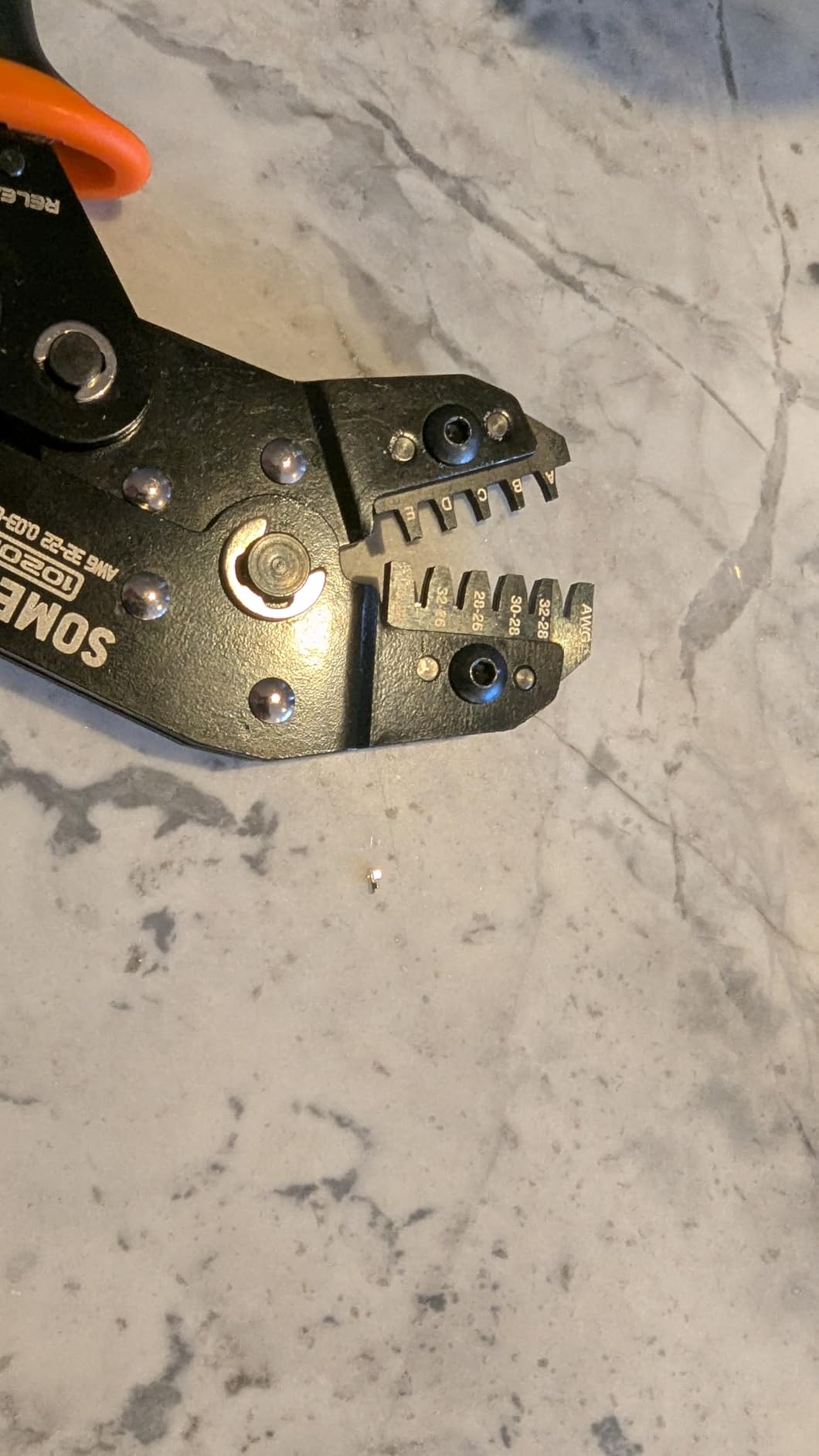
Almost every forum thread about crimping difficulty eventually turns into a question about small housings, and this is the set built for them. A single high-precision die covers JST PH 2.0 mm, XH, SYP and SM at 2.5 mm, VH at 3.96 mm, DuPont and KF2510 at 2.54 mm, Molex KK254, Micro-Fit 3.0 mm, AMP and TE EI series and D-Sub, across a 30-20 AWG range.
Twenty-one connector types are included, so you can build a full harness on the first trip without ordering housings and pins separately. The contacts are nickel-plated with insulating bodies, which matters for long-term conductivity on low-voltage signal runs.
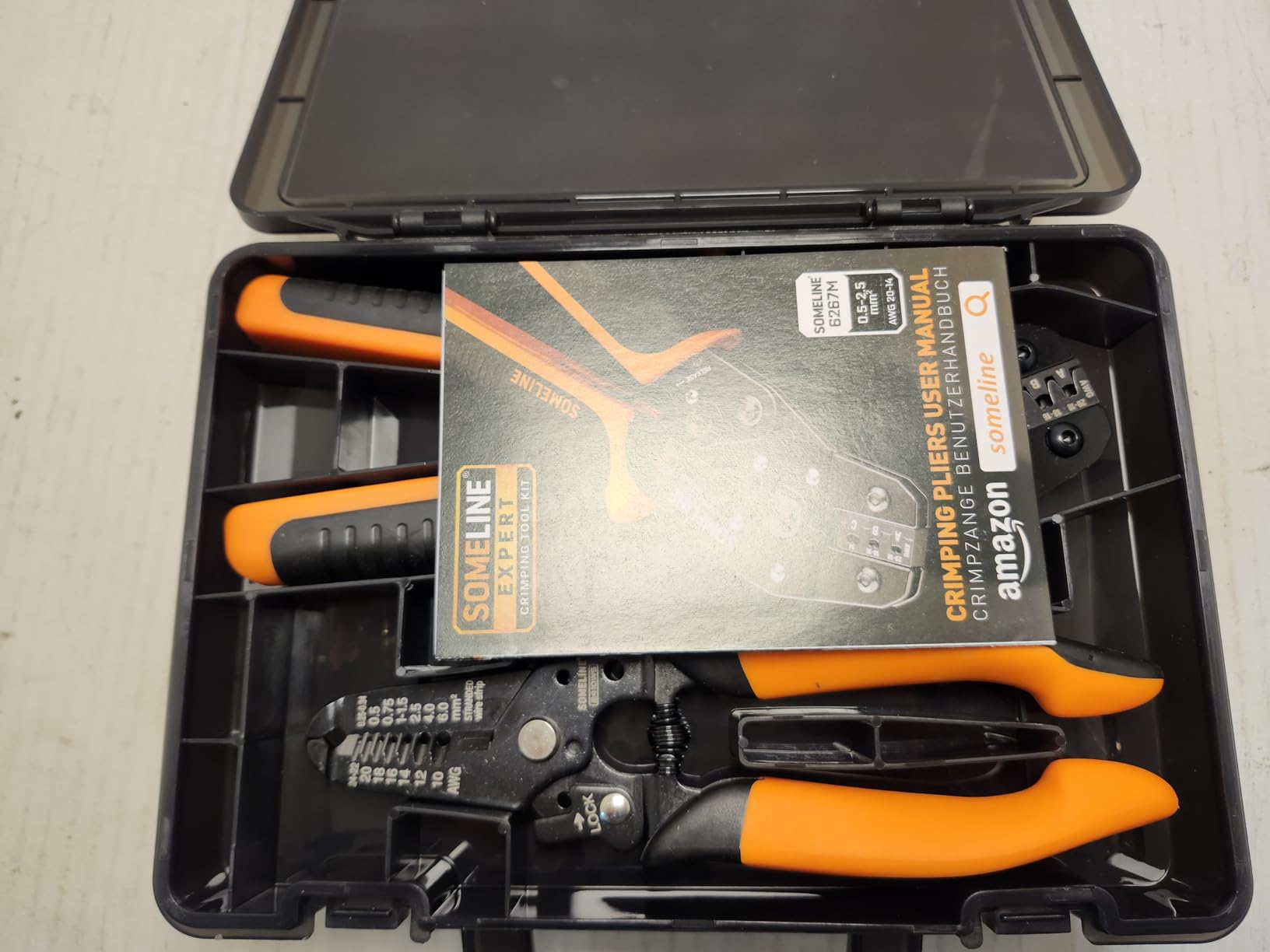
Techniques matter more here than with big terminals, and reviewers are candid about the learning curve. Terminals must seat correctly in the housing before they clip, and for 22 and 24 AWG breadboard jumpers you have to turn the crimp force adjustment down to its lowest setting.
The tool feels solid with a smooth ratchet, and the double-layer case keeps the tiny components separated and gives you room to add your own heat shrink. The included pin removal tool is the weak point, described as too small and prone to breaking.
Why electronics builders pick it?
It covers the connector families that show up in 3D printer harnesses, PC accessory wiring and robotics projects, which are the exact families generic terminal dies handle badly. Having the housings and pins in the same box as the tool removes the most common failure of a small-connector build.
What to be careful about?
Be careful with crimp force on very fine wire, and keep spare housings on hand because the assortment size per type runs out fast. If you work with servo connectors or a specific proprietary series, confirm the die list before committing.
7. KF CPTEC Nine-Piece Quick-Change Die Set – Best Tool-Free Die Swaps
KF CPTEC 9-Piece Wire Crimping Tool Set, 7 Quick-Change Dies & Stripper
- Tool-free die swap with release pins avoids lost screws
- Seven profiles cover heat shrink
- insulated
- ferrule
- open barrel and solar
- Wide dies make even factory-like crimps in one squeeze
- Hard to close on 8 AWG without above-average hand strength
- Jaws can stay shut if full release pressure is not reached
- Case cut-outs are too small for the larger dies
If you change connector families many times in a day, the tool-free die change is the feature that saves real minutes. Release pins pull the die out without a screwdriver, which means no dropped screws into a panel and no stripped heads on a job site.
Seven die profiles cover heat shrink, insulated, non-insulated, ferrule, open barrel, solar and wire-end sleeves, and the dies are 65CR hardened steel with clearly marked AWG cavities. Electricians who own several crimpers describe the die strength as unlikely to crack.
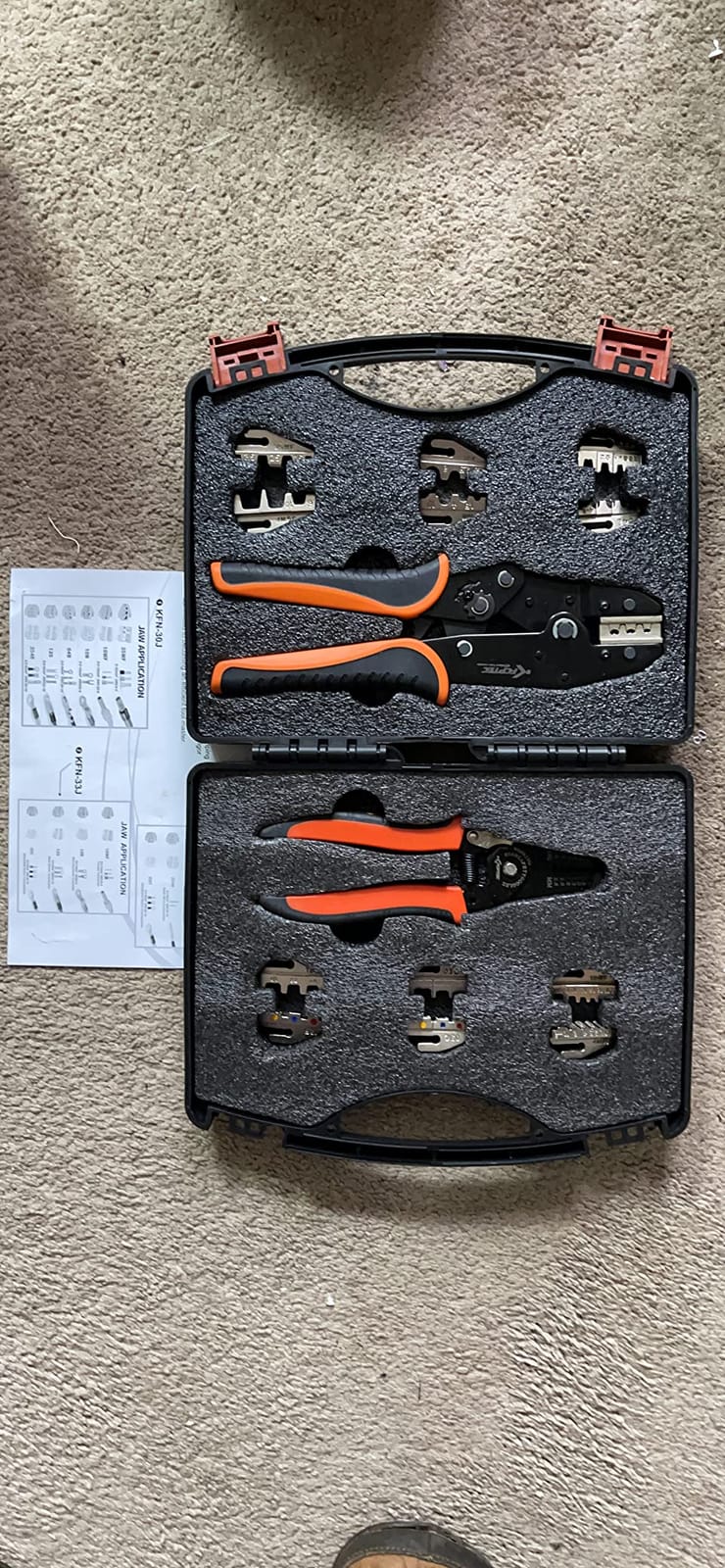
The wide die width is what produces even crimps in a single squeeze rather than a corrective second squeeze. At 350 grams the whole set is light, and the fitted case keeps the dies indexed so you are not hunting for the right profile.
There is one real weakness. On 8 AWG ring terminals the tool is hard to close without above-average hand strength, because the ratchet holds position rather than multiplying force, and there are no extending handles for leverage.
When it works best?
It works best for a technician moving between 22 AWG signal wire and lighter power conductors across a mixed job, where die change speed matters more than heavy-gauge force. The included stripper is sharp enough to stand in for a dedicated tool on routine work.
What to plan around?
Plan around heavy conductors by using a hydraulic or high-leverage tool for 8 AWG and larger. There is also no coaxial die in the set, so coax work needs a separate tool, and the case cut-outs need a modification to stop larger dies spilling out.
8. haisstronica 280-Piece Ratchet Heat Shrink Kit – Best for Marine and Boat Wiring
haisstronica 280PCS Ratchet Crimper Kit, Heat Shrink Terminals, Stripper
- 3:1 adhesive-lined heat shrink forms a waterproof seal
- Wire stripper length stop gives consistent cut lengths
- Color-coded red
- blue and yellow jaw markings
- Thickened ratchet with adjustable crimp height
- Wire stripper is touchy compared with automatic strippers
- Crimper is bulky in confined spaces
- Crimp height dial needs adjusting for thinner gauges
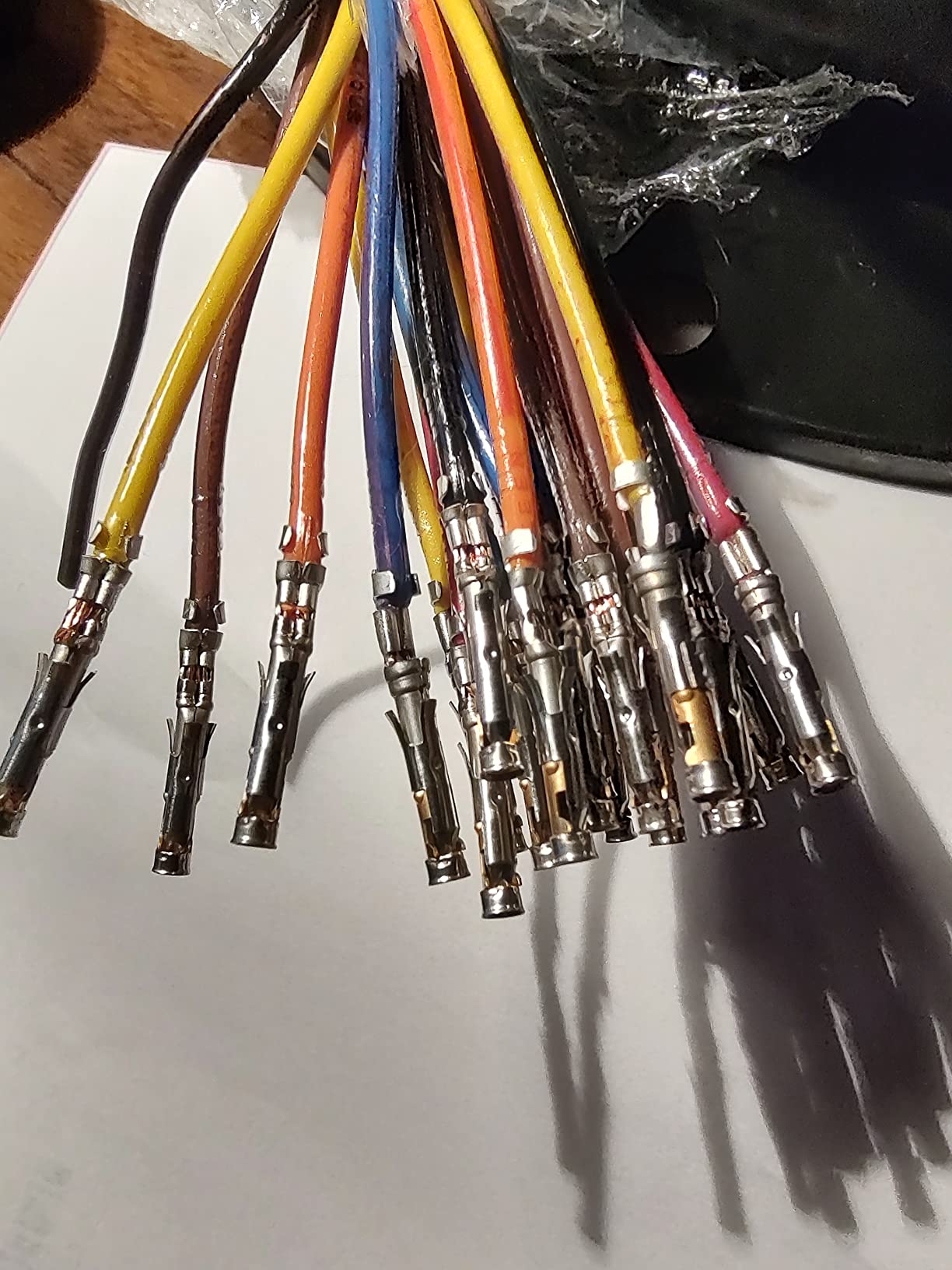
Adhesive-lined heat shrink is the reason this kit keeps showing up in marine threads. The connectors carry a 3:1 adhesive lining that shrinks into the joint and forms a waterproof, wear-resistant environmental seal, and one reviewer reports not a single pulled-apart connection across a full boat rewire.
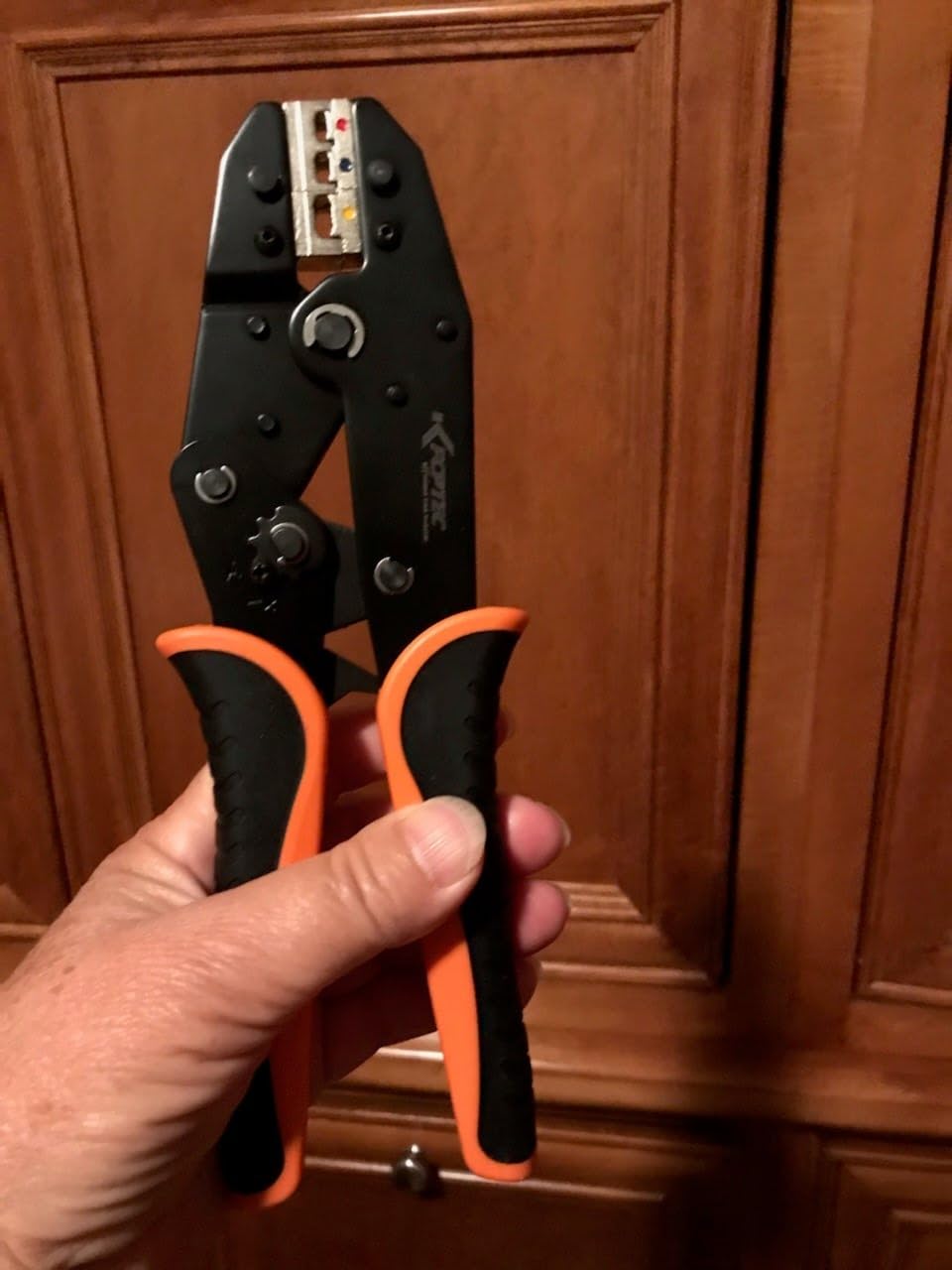
Color-coded red, blue and yellow jaw markings make gauge selection fast, and the thickened ratchet auto-adjusts with a star-wheel crimp height setting. That adjustment is the tool’s most useful control when you move between 10 AWG power and 20 AWG signal runs.
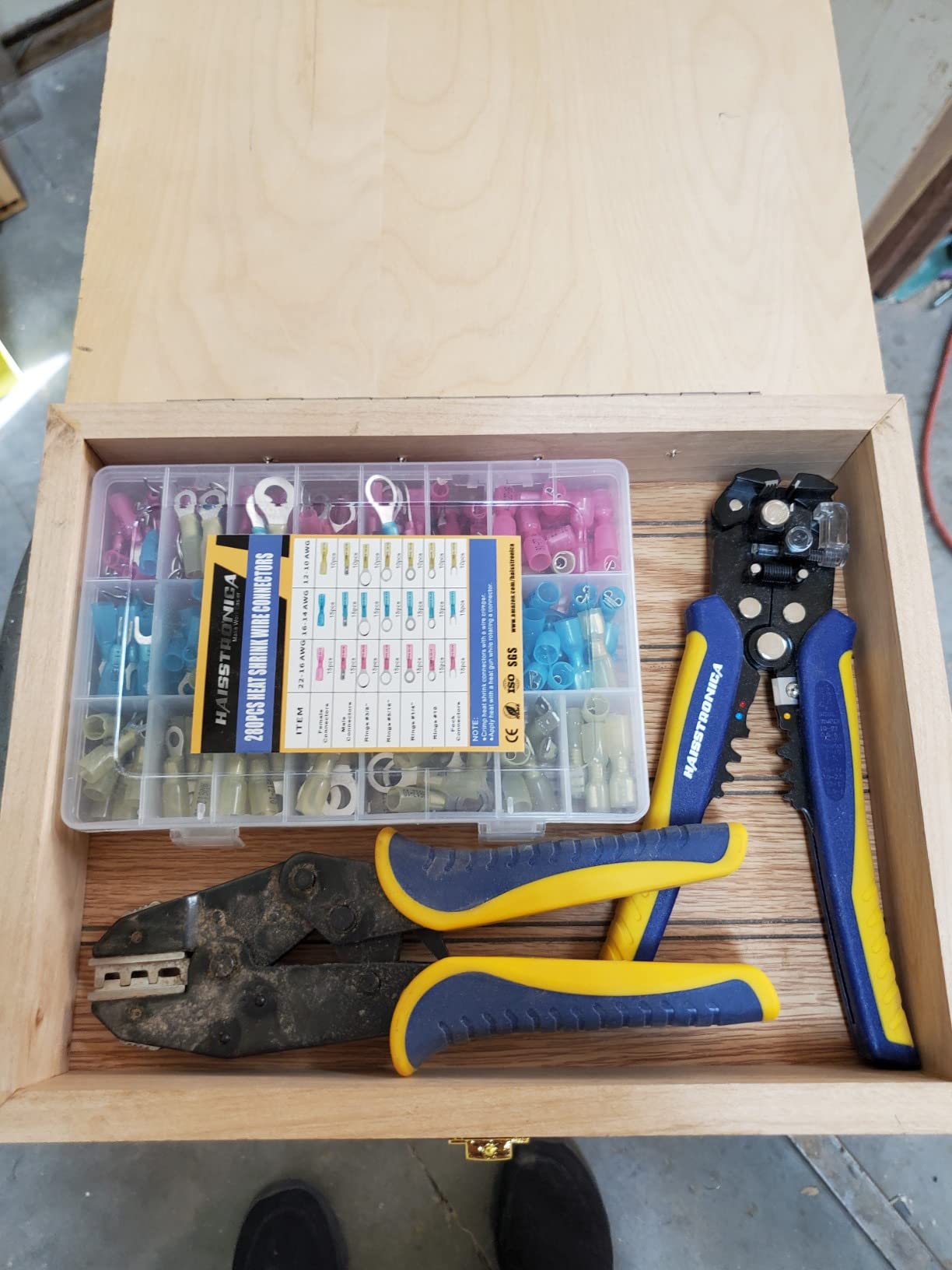
The wire stripper includes a length stop, which sounds minor until you are building a harness where every conductor is cut to the same length. That feature alone changes the speed of repetitive assembly work.
Buyer feedback also notes this crimper replaced a more expensive branded tool that kept producing failures. The limit is the stripper, which is described as touchy and less precise than a dedicated automatic stripper, and the crimper body, which is bulky inside a cramped panel.
Best environment for it
It is built for damp, exposed environments: boat interiors, outdoor junction boxes, vehicle chassis runs and off-grid equipment. If your joints will see water, the adhesive lining does work that ordinary heat shrink cannot, and the salt-spray argument is what marine electricians raise first.
What you need alongside it?
Budget for a heat gun, since shrinking is a separate step from crimping and the gun is not part of the kit. You will also want a better stripper for production work and a way to dial crimp height correctly for each gauge before you start.
9. SOMELINE Waterproof Automotive Connector Kit – Best for Sealed Vehicle Wiring
SOMELINE Waterproof Automotive Connector Crimping Tool Kit, 1/2/3/4/5/6 Pin
- Crimper makes solid crimps that resist pulling apart
- Plugs lock tightly and seals keep water out
- Covers 1-6 pin housings in one organized case
- Instructions show correct terminal crimping technique
- Lowest average rating in this group at 4.4 stars
- Connector plugs described as on the cheaper side
- Pin removal levers are thin and break easily
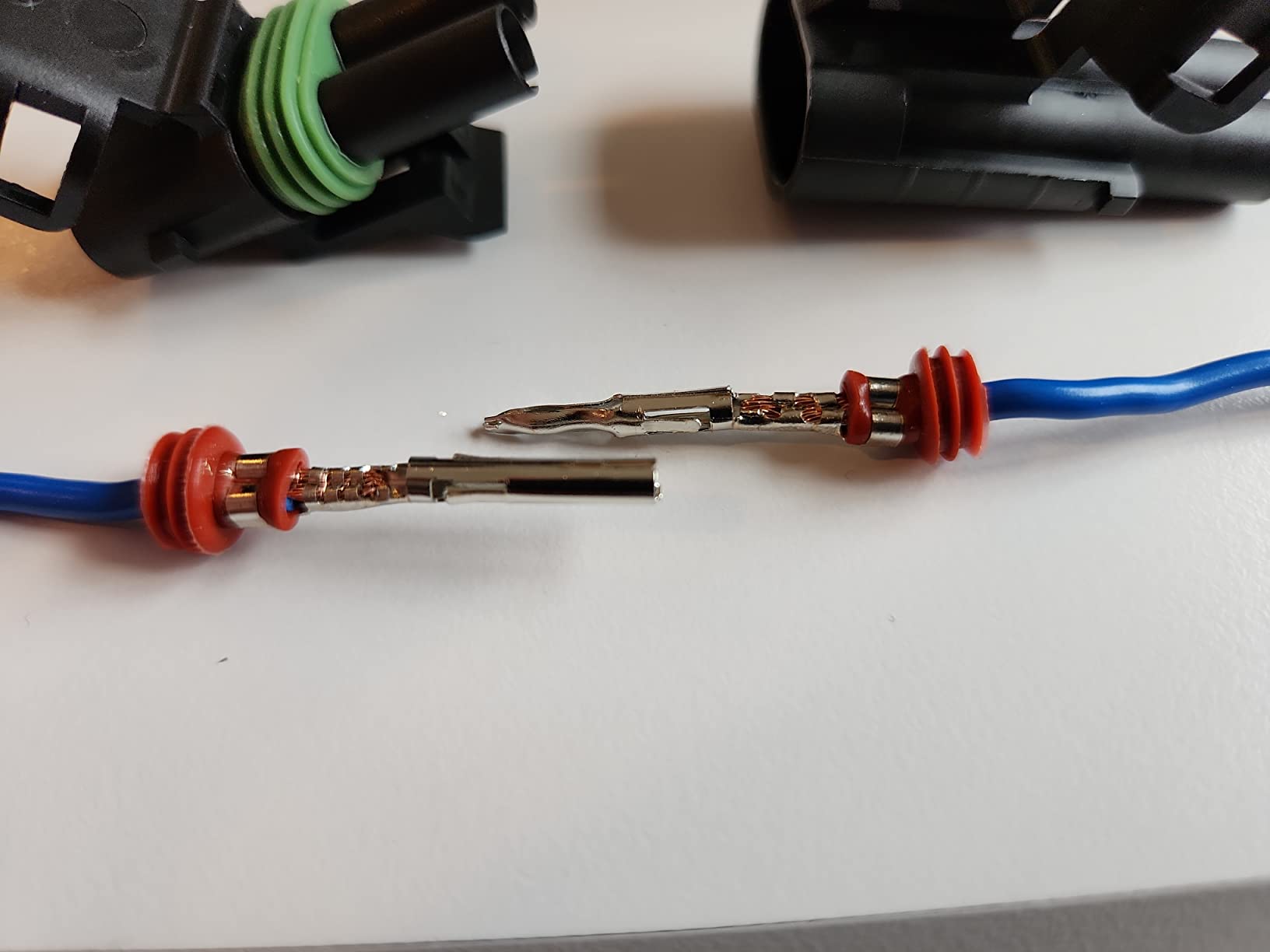
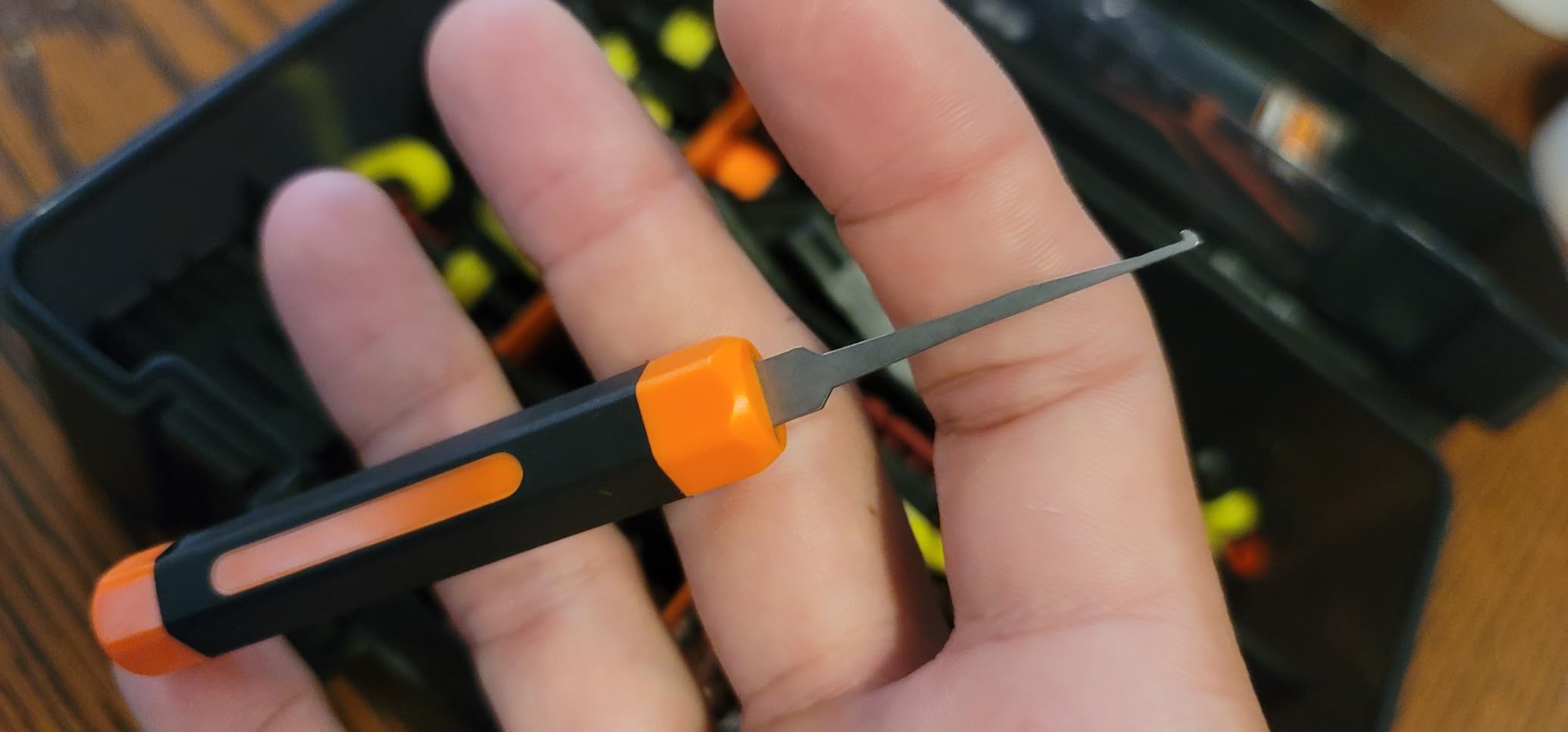
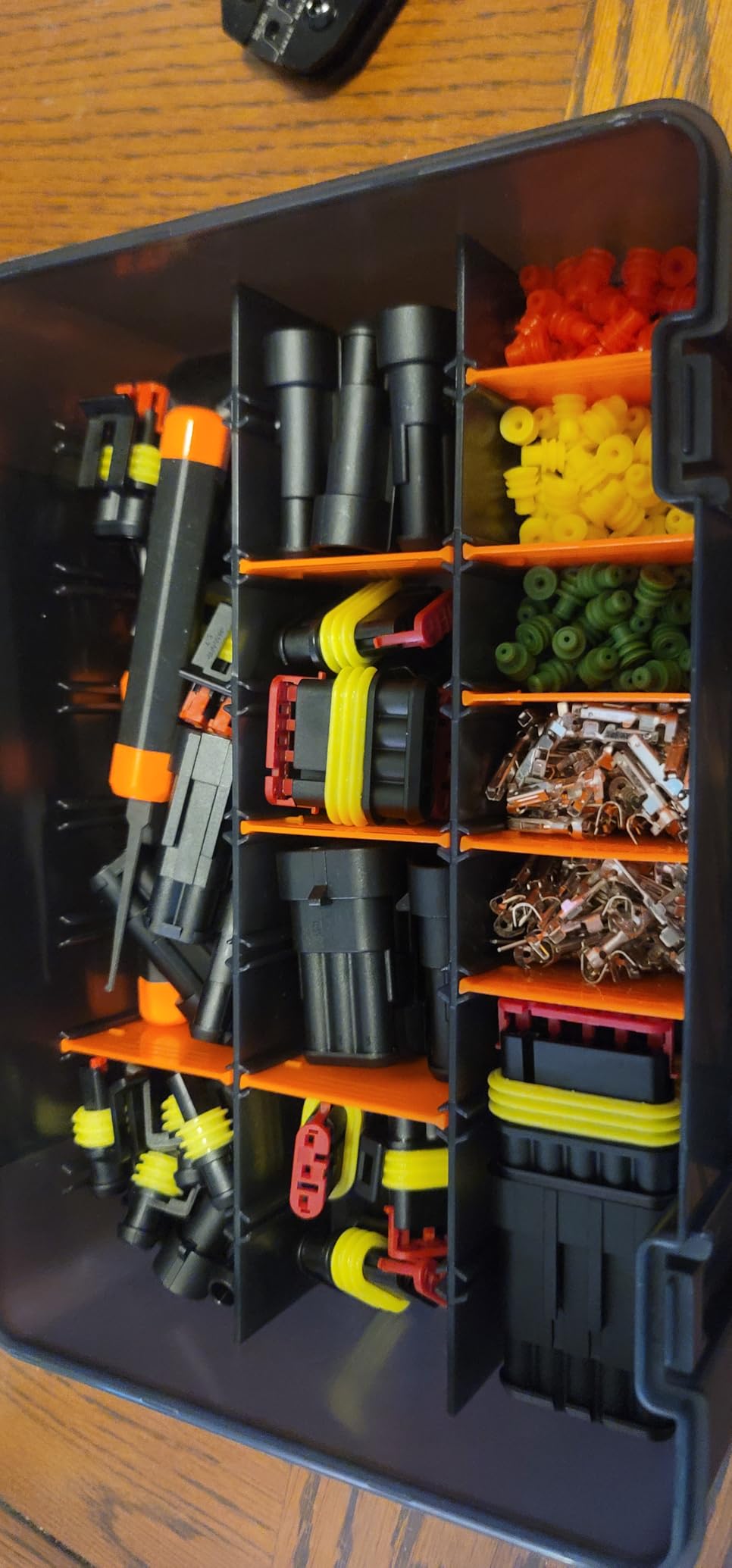
This is a purpose-built sealed connector system rather than a general crimper, and the difference shows in the specifications. The housings are 1.5 mm series sealed wire-to-wire connectors compatible with AMP SUPERSEAL 1.5 series, rated IP67, 24 V, 14 A, and rated from minus 40 to 125 degrees Celsius.
Terminals are tin-plated copper in a PA GF housing with silicone seals, and the kit includes three seal sizes matched to conductor diameter plus cavity blind plugs. Users rewiring trucks, classic cars and motorcycles report smooth crimper action and plugs that lock tightly.
At 4.4 stars this is the lowest-rated set we list, and the 4 percent one-star share is the highest in the group. Reading the reviews, the crimper itself is rarely the complaint; the housing plastics and accessories carry the criticism.
The pin removal levers are described as thin and prone to breaking, and extra connector shells have to be purchased separately when you run short. Treat this as a kit for the specific 1.5 mm series rather than a general-purpose addition to your bench.
Where it belongs?
It belongs on a vehicle where a joint will see road spray, dust and vibration: cooling fans, lighting, sensors, aftermarket modules and trailer connections. The IP67 rating and the -40 to 125 degree range are the numbers that matter when a connection lives under a fender.
What to watch?
Watch the accessory quality and order spare housings in a larger quantity than you think you need. If your work is not specifically 1.5 mm sealed connectors, spend the effort on a general kit with better-reviewed consumables instead.
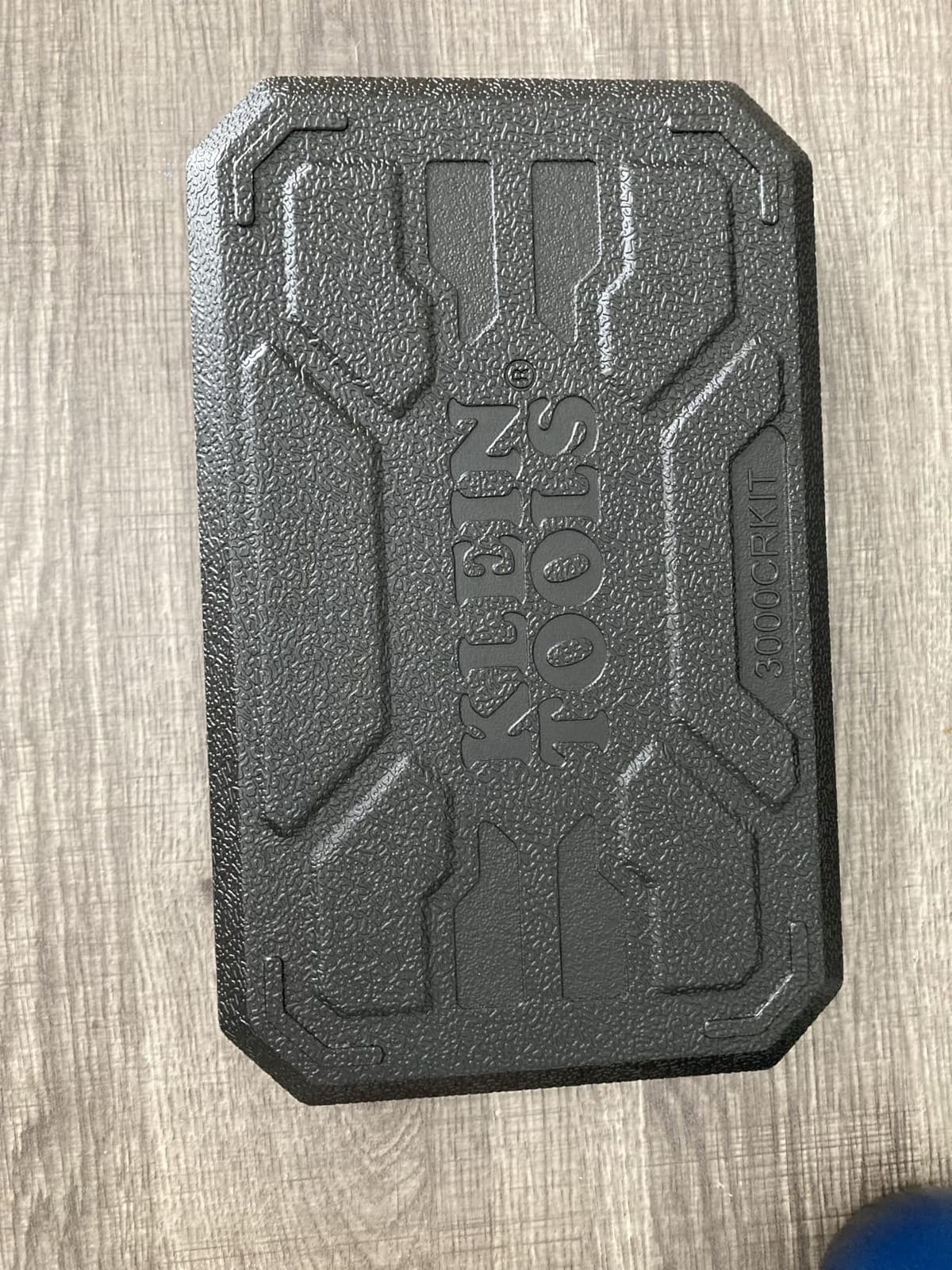
10. Klein Tools 3000CRKIT Ratchet Crimping Set – Best for Electricians
Klein Tools 3000CRKIT Ratchet Crimping Tool Set, 4 Interchangeable Dies for Heat Shrink, Non-Insulated, and Ferrule Connectors, Yellow
- Clean crimps that resist pull tests on insulated and heat shrink terminals
- Full-cycle ratchet with fine adjustment dial
- Die change needs only loosening a captive screw
- Four dies replace three separate crimpers
- Poor documentation of which die suits which connector
- Die model numbers printed very small and not color-coded
- Could use more leverage on heavy crimps
With 86 percent of ratings at five stars, this is the highest five-star share in the entire roundup. Owners who already own several crimpers rate it noticeably higher on build quality and crimp consistency, and pull tests confirm secure joints at both 22 AWG and heavy 10 AWG.
The mechanism is a full-cycle ratchet with a compound action handle and a fine adjustment dial. Users note that one click lower on the dial visibly changes pull strength, which gives you real calibration control rather than a fixed, unknown crimp force.
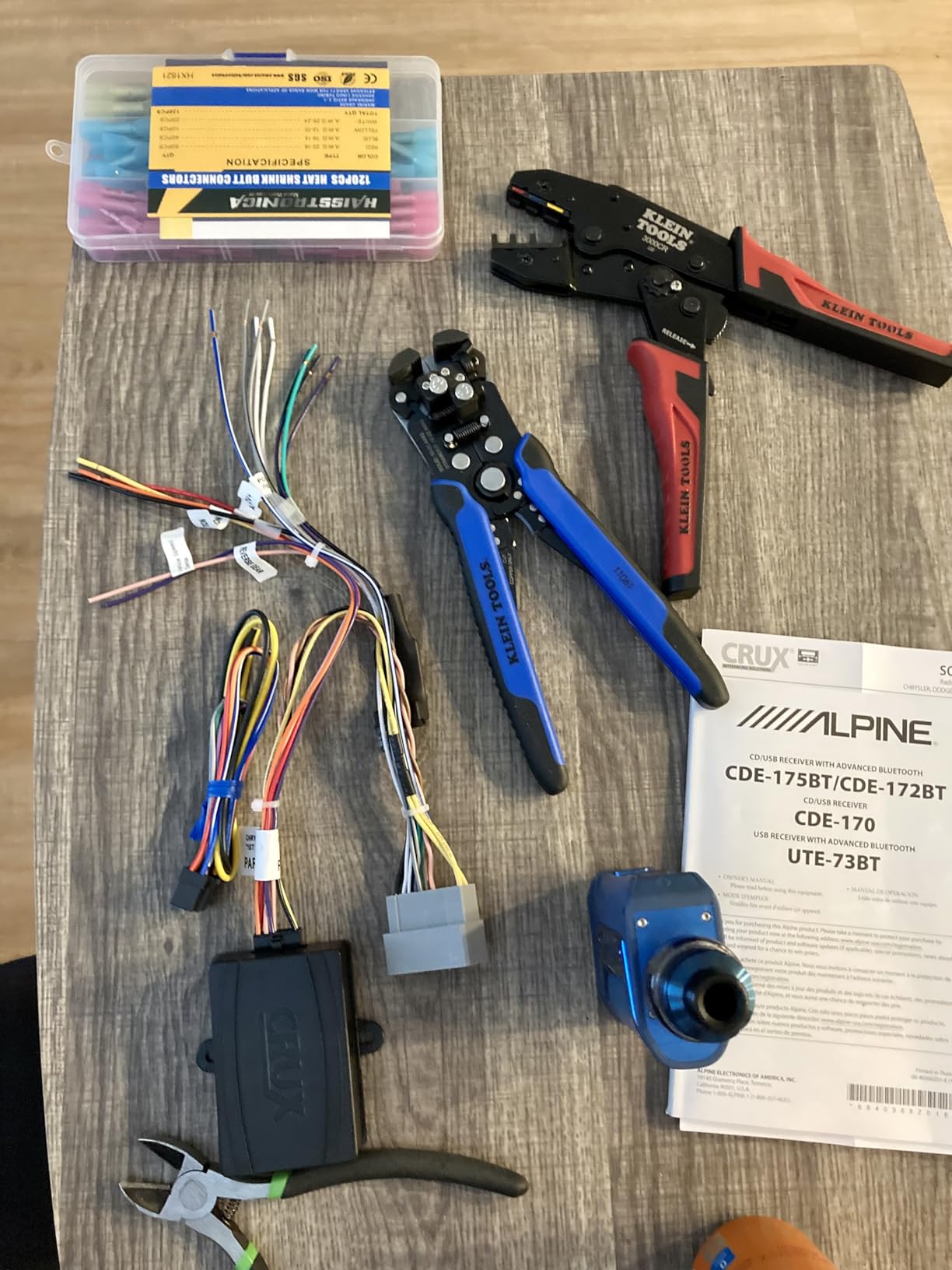
Die changes only require loosening a captive Phillips screw rather than removing it entirely, so the screw cannot be lost. The dies are precisely machined and cover heat shrink, insulated and uninsulated terminals across 10-22 AWG, which means one frame can replace three separate wire and ferrule crimpers.
The honest weakness is documentation. Buyers report no clear guide to which die suits which connector, model numbers printed in very small type, and dies that are not color-coded, so a printed reference card is worth making the moment you open the case.
Why tradespeople like it?
Electricians and installers who work on RV rewiring, car audio and substation wiring rate the durable feel and the uniform crimp across mixed terminal types. The stainless steel frame and dual layer molded grips hold up to daily use on site.
Where to push its limits?
It asks a bit more hand force than a compound-action heavy-duty tool on the largest crimps, and ferrules can deform depending on which direction the busbar clamping pressure is applied. Keep it in the 10-22 AWG range where it is strongest.
11. BougeRV Solar Connector Crimper Kit – Best for Solar MC4 Work
BougeRV Solar Crimper Tool Kit – Crimper, 12 Pairs Connectors, 2 Spanners
- Complete kit with crimper
- connectors
- spanners and case in one box
- High-carbon steel body with high-precision jaw
- IP67 connectors with a waterproof ring design
- Spanners make connecting and disconnecting quick
- Scope limited to 14-10 AWG solar wire
- Single fixed jaw rather than an interchangeable die set
- Only 12 connector pairs are included
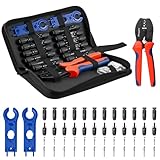
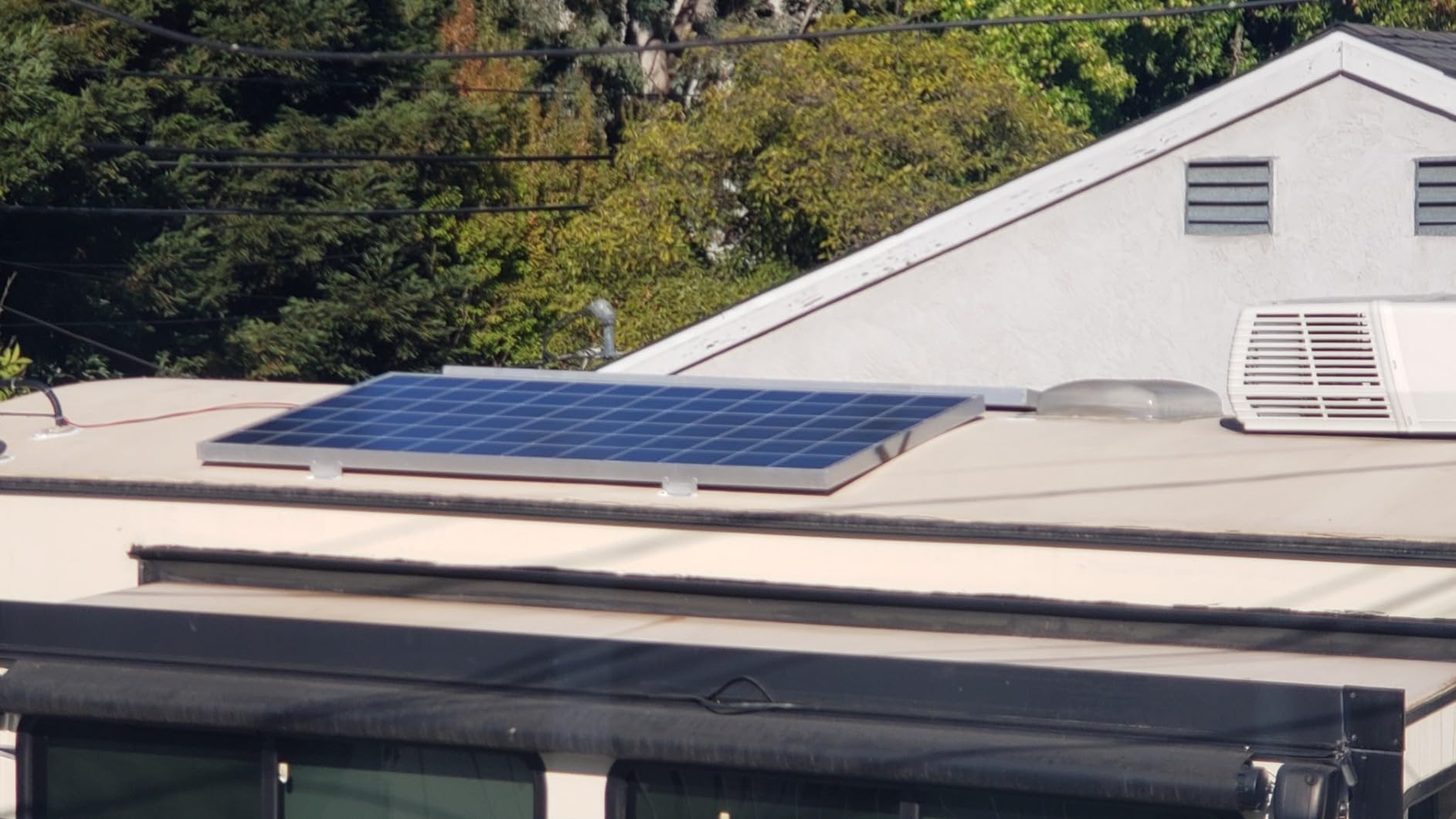
With 2,622 ratings, this is one of the most reviewed tools here, and the reason is simple: it is a complete job kit. You get the crimper, 12 pairs of PV connectors, two spanners and a carrying case, so a custom extension cable is a single afternoon of work.
The crimper handles 14-10 AWG PV wire, and the connectors suit 2.5, 4 and 6 mm squared PV cable. They are made from PPO with a waterproof ring design and an IP67 rating, which is the number that matters for a roof or an exposed run.
The spanners are the detail that gets praised most, because MC4 connectors are impossible to disconnect by hand once they are latched. Having the correct tool included removes the frustration of levering them apart with pliers and damaging the housing.
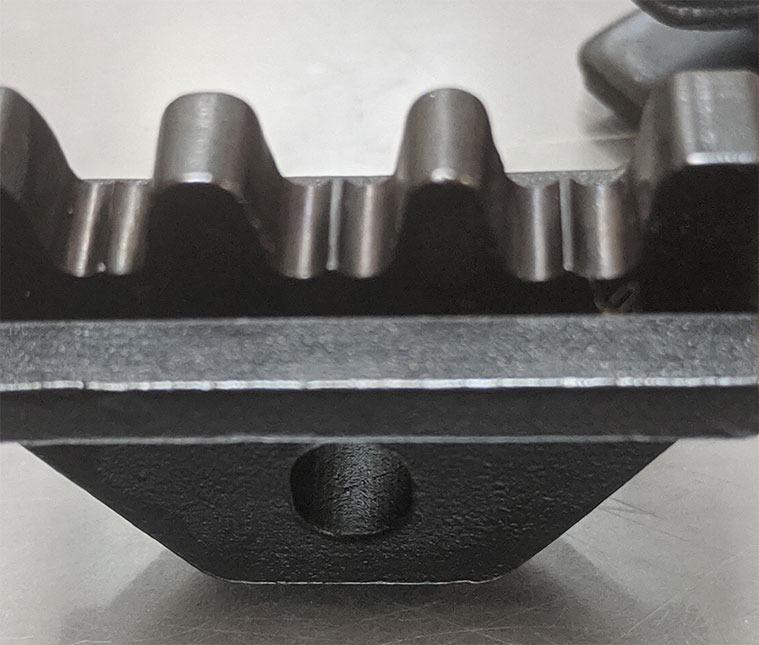
Be clear about the limits. This is a single fixed jaw, not an interchangeable die set, and its scope is 14-10 AWG solar wire, so it will not crimp general terminals or 22 AWG signal conductors.
Best use case
It suits RV, boat and off-grid extension cable builds and repairs, which is exactly where PV installers report using it. If you are assembling a portable array for a vehicle or a weekend cabin, this is the whole toolchain in one box.
When to buy something else?
Buy something else if you are running a large array where 12 connector pairs will disappear in an afternoon, or if you also need to crimp general-purpose terminals. In that case a multi-die kit with a solar die covers the same job with a wider scope.
12. Plustool Six-Die Ratcheting Crimper Set – Best Budget Multi-Die Set
- 40CR forged jaws tighten securely with no jaw drop
- Firm crimp in one squeeze without damaging the connector
- Full-cycle ratchet auto-releases at the required force
- Quick release lever opens the jaws at any position
- Smallest review base at 208 ratings
- Die changes require a screwdriver
- Less established ownership history than the other kits
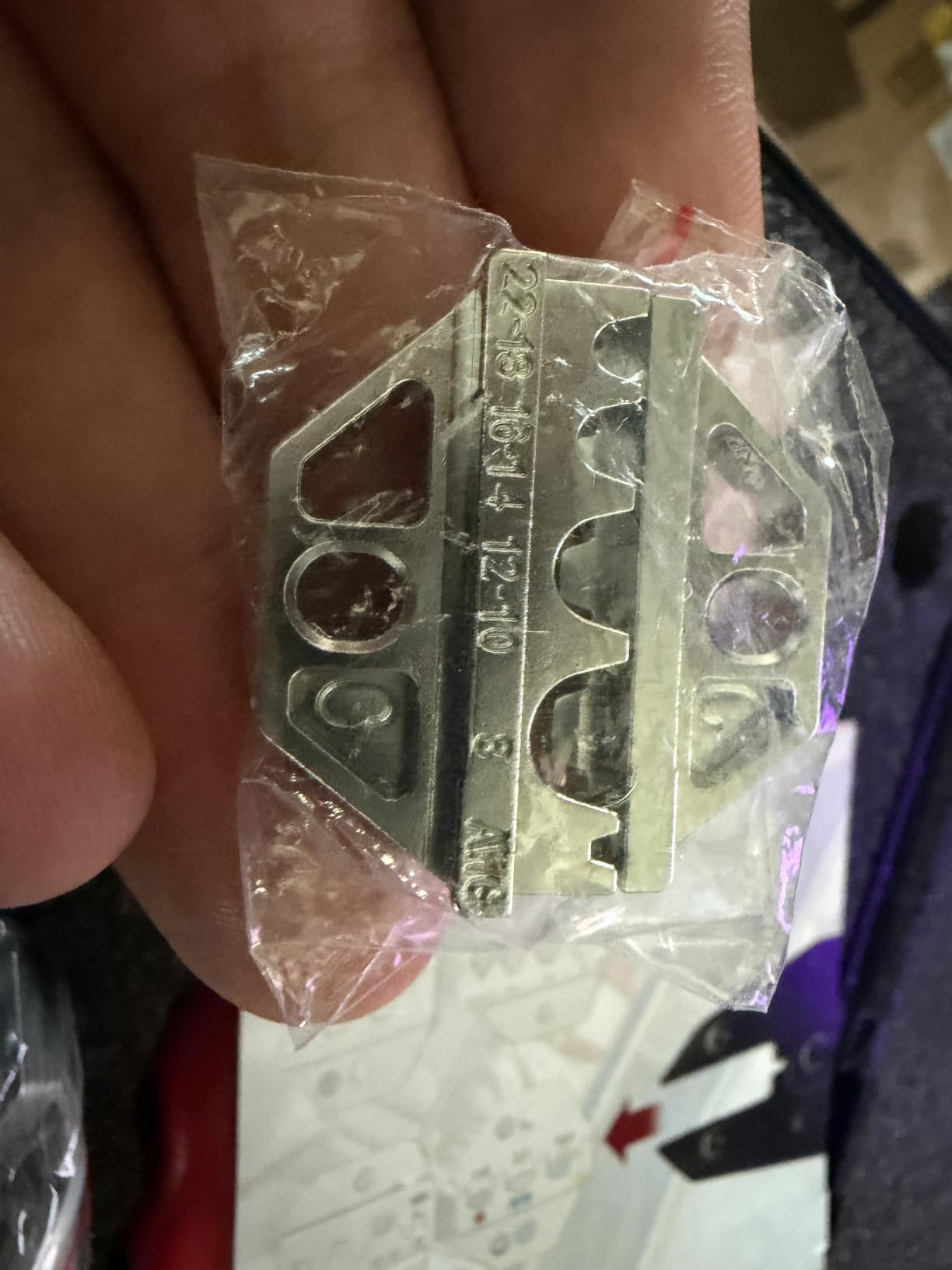
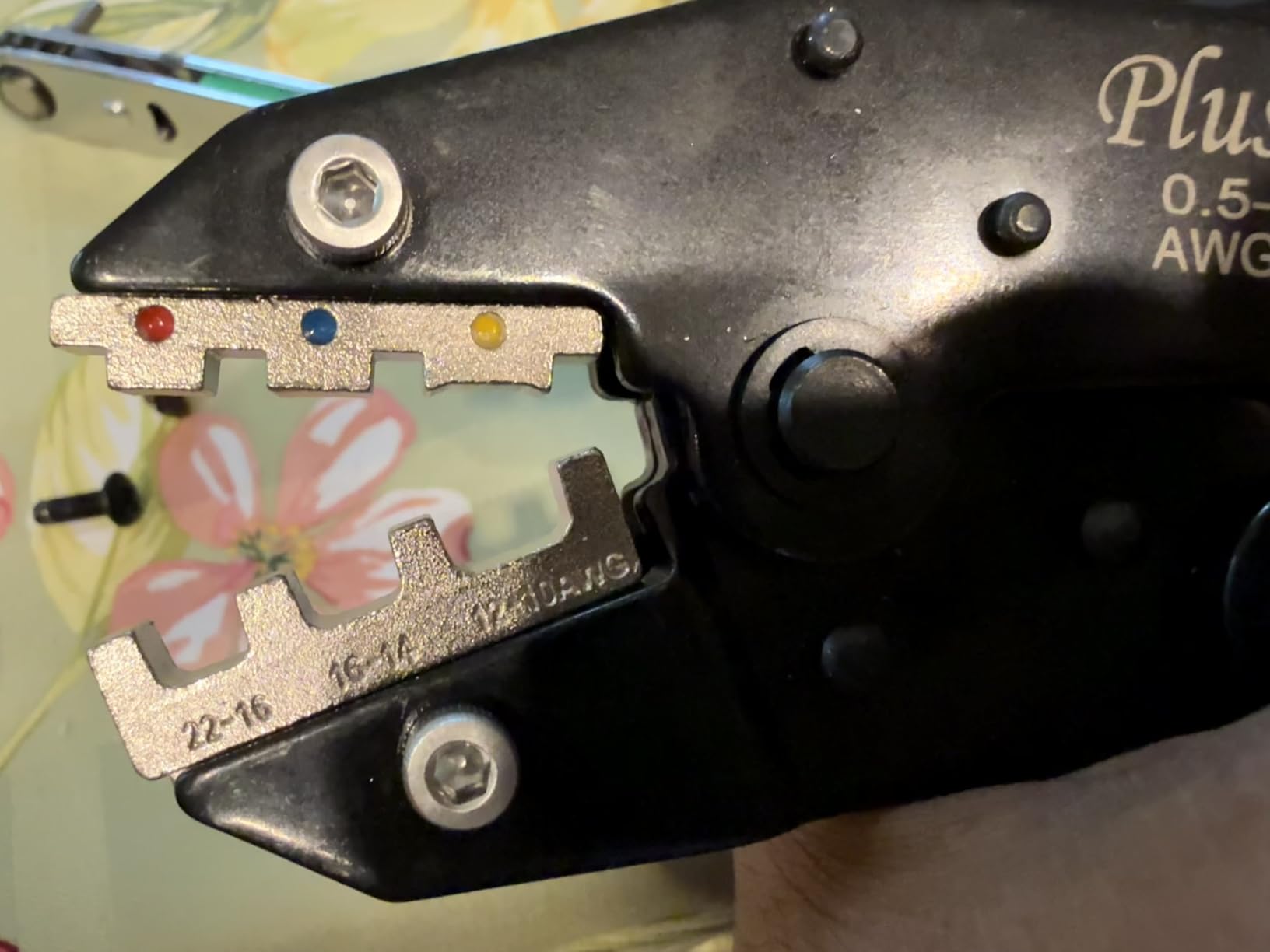
The die coverage here mirrors the bigger multi-die kits: heat shrink, insulated and nylon terminals, non-insulated terminals, insulated cable-end sleeves, open barrel and solar connectors. Six chrome-plated, AWG-marked dies in one compact frame cover most of what a homeowner or hobbyist will ever need.
The 40CR precision-forged jaws are hand-replacement types designed not to drop under load, and the ratchet auto-opens once the required crimping force is reached. A quick release lever works at any position, and the compression star wheel lets you tune crimp height per project.
Cushioned non-slip handles are advertised for maximum leverage and reduced hand fatigue, and that is where the value of this set sits. Six die families, forged jaws and a calibrated ratchet in a compact frame is a lot of capability for an entry-level spend.
At 208 ratings this is the least-reviewed listing in the group, so you have less long-term history to lean on. Die changes also need a screwdriver rather than a tool-free release, which is the one design compromise worth weighing.
Who it is for?
It is for a new hobbyist or a homeowner who has just discovered that their cheap non-ratcheting crimper was the reason for the intermittent failure they have been chasing. A calibrated ratchet is the single biggest upgrade available in this category.
What it does not cover?
It does not cover ferrule terminals for control panel work, and its review history is too short to compare long-term die wear against established kits. If your work is professional and daily, spend up for a frame with better-documented dies.
How to Choose a Crimping Tool Set for Your Connectors?
Start with the connector family, not the brand. List the terminals you actually own, then buy the die that matches them. A general crimper that handles ring, spade and butt terminals will split a JST-XH housing or a Micro-Fit contact if you force it, and the damage is invisible until the connection fails.
Next, check the wire gauge range against your thinnest and heaviest conductor. Most of the kits here cover 22-10 AWG, and the standout exceptions crimp down to 26-10 or reach up to AWG 2. Work outside the printed range and you are guessing.
Confirm whether the mechanism is a full-cycle ratchet. A ratchet holds the terminal while you insert the wire and only releases after the cycle completes, which is the difference between consistent joints and ones that depend on how firmly you squeezed.
Look for adjustable force, whether that is a pressure dial, a star wheel or a compound action setting. Different connectors need different crimp heights, and a fixed-force tool either crushes fine wire or under-crimps heavy cable.
Check the die change method. Tool-free release pins and captive screws are both fast, while a loose screw that must be fully removed is a step you will pay for every time you change families.
Finally, decide between a kit and a single tool. A kit with a terminal assortment saves constant supply runs and works well for repair. A single dedicated tool wins when you build the same harness all day and need the narrowest, most accurate die for one family.
If you want to round out a workshop while you decide, our guide to the best marquetry tool sets covers precision hand-tool kits of a different kind, and the best fireplace tool sets is a useful comparison of simple, well-finished sets.
Connector Families and the Tool Each One Needs
Heat shrink butt connectors and ring terminals need a die with a matching barrel cavity for the terminal and the gauge. Insulated and non-insulated terminals use a broader, flatter cavity profile, and nylon terminals for panel work are usually a separate die again.
Ferrule and cord-end sleeves are the control panel and machine wiring standard. These are usually crimped to a square or quadrilateral profile, though the IEC 60228 and DIN 46228 standard sizes are defined in metric lengths, so match the ferrule diameter to the cavity rather than to the wire alone.
Open barrel terminals, including D-Sub and V3.5 contacts, need small precision dies and light hand force. Solar MC4 connectors have their own die and are usually supplied with the solar kits. Automotive waterproof plugs need a crimper matched to the specific series, such as 1.5 mm sealed connectors.
Small electronics housings such as JST, DuPont, KF2510, Molex and Micro-Fit need a purpose-built multi-cavity die and a crimp force set low for 22 and 24 AWG. Coaxial connectors are a separate craft, and many kits including the KF CPTEC here have no coax die at all.
One useful note from the forum side of this topic: the shift from a non-ratcheting tool to a ratcheting one is regularly described as the moment connections stopped being inconsistent. That single feature is worth more than any assortment count.
How to Crimp a Terminal in Six Steps?
First, strip the conductor to the exact length the terminal barrel requires, usually a little short of the barrel end. Cut and strip cleanly, because a nick in the strand weakens the joint even when the crimp looks correct.
Second, insert the stripped wire so the bare conductor fills the barrel and no insulation enters the crimp zone. Insulation under the metal causes a high-resistance joint because the barrel cannot compress around it.
Third, seat the terminal in the correct die cavity with the wire on the marked side. Most tools mark the wire side and the barrel side, and inserting the terminal backwards produces a joint that looks fine from the outside.
Fourth, close the handles slowly until the ratchet engages, then let the tool complete the cycle. Do not try to save time by squeezing faster; the ratchet is designed to apply force progressively so the conductor deforms evenly.
Fifth, release and inspect the terminal before you install it. You should see conductor visible at the end of the barrel, no insulation inside the metal, and no cracks in the terminal body.
Sixth, pull test the joint by gripping the terminal body and tugging the wire firmly. A proper crimp resists a hard, deliberate pull and should not slide or come apart. If it moves, the crimp is not finished, whether it looks acceptable or not.
How to Verify a Good Crimp?
Visual inspection comes first. Look for conductor at the barrel end, an even impression across the barrel, no exposed strands trapped outside the terminal, and no insulation caught in the crimp. An uneven or partial indent usually means the wrong die or wrong gauge.
Second, check the conductor gauge is inside the printed range for that cavity. Crimping 20 AWG in a 12 AWG cavity produces a joint that looks strong and fails, which is why range markings matter more than marketing language.
Third, run a pull test by hand on every joint while the harness is still on the bench, where a failure costs nothing. For production work, UL 486A describes the pull test force expectations for a given wire size and terminal, and matching them is how a crimped joint is qualified rather than guessed.
Fourth, if you crimp in volume, use a go and no-go gauge. You slide the finished terminal into the correct go gauge; if it seats fully the crimp is within spec, and if it will not seat the crimp is undersized and the die or force setting needs adjusting.
Fifth, add a continuity check with a multimeter for any joint carrying power. A low resistance reading confirms a solid conductor path, and a resistance that changes when the joint is flexed reveals a crimp that is not gas-tight.
Finally, protect the finished joint. Adhesive-lined heat shrink, as on the 280-piece kit here, seals the connection against water and adds strain relief, and it is the standard finish for marine and exposed vehicle work.
Crimp vs Solder: When to Use Which?
Crimping produces a gas-tight, mechanically strong connection with no heat applied to the conductor, and it is faster on repeated work. Automotive, marine, industrial and control panel wiring is specified for crimped terminations for exactly that reason.
Solder is the right choice for very fine signal work, unusual geometries, and repairs where a terminal will not fit. It does not tolerate flexing nearly as well, and heat can damage insulation and stress fragile conductors on fine wire.
On center pins of coaxial connectors, soldering is generally still the correct method, since the center contact is a solder-cup type. The outer shield can be crimped, and our note on the KF CPTEC set applies here: several kits have no coax die, so plan a separate tool for that work.
The practical rule is simple. If the joint will see vibration, heat cycles, moisture or a pull test, crimp it. If the joint is static, tiny, or impossible to crimp cleanly, solder it.
Frequently Asked Questions
What is the best-rated crimping tool?
The highest-rated tool in our roundup is the haisstronica HS-8327, which holds 4.7 stars across 1,739 ratings with 83 percent of reviewers at five stars. It crimps AWG 26-10, so it handles small-gauge heat shrink connectors reliably where cheaper all-in-one crimpers fail. The WORKPRO 582-piece kit matches its 4.7 rating with a far larger review base of 3,697 ratings, and covers the widest terminal assortment.
What is the best brand for a crimping tool?
For professional electrical work, Klein Tools is the most consistently rated name, and the 3000CRKIT carries 4.7 stars with 86 percent five-star ratings. For multi-die value and die coverage, haisstronica and KF CPTEC lead their categories. For a broad general-purpose frame with a long-established reputation, iCrimp is widely recommended by electricians. The right brand still depends on the connector family you need to crimp.
What are the best crimping connectors?
The best connector choice depends on the environment. Adhesive-lined heat shrink with a 3:1 shrink ratio is the strongest option for boat and exposed vehicle wiring because it forms a waterproof seal. Marine-grade tinned copper resists saltwater corrosion better than bare copper. IP67 PPO solar connectors suit PV cable work, and sealed 1.5 mm series automotive housings rated IP67 are the right pick under a fender. UL-certified terminals are worth seeking out for general repair work.
What is the best crimper on the market?
There is no single best crimper, because the tool must match your connector family and wire gauge. For professional installation work with open barrel, cord-end, D-Sub and V3.5 terminals, the Astro Pneumatic 9477 is the most complete frame we tested. For general electrical repair, the WORKPRO 582-piece kit or the iCrimp five-jaw set covers the widest range of everyday terminals. For small electronics housings, the SOMELINE JST-XH and Dupont set is the right die.
Do I need a ratcheting crimping tool?
Yes, if you make more than a few joints. A ratcheting tool holds the terminal while you insert the wire and only releases after the full crimp cycle completes, which removes the guesswork from how firmly you squeeze. Forum experience consistently describes the move from a non-ratcheting tool to a ratcheting one as the point where connections stopped being inconsistent.
Why does my crimp keep failing?
The most common causes are the wrong die cavity for the terminal, wire outside the printed gauge range, and insulation caught inside the crimp barrel. A non-ratcheting tool that relies on hand pressure is the other big reason. Check that the conductor is fully inserted, that you are using the marked wire side, and that the joint survives a firm pull test before installing it.
Final Verdict
The best crimping tool sets for connectors in 2026 are decided by connector family first. For general electrical repair buy the WORKPRO 582-piece kit, for small-gauge heat shrink buy the haisstronica HS-8327, and for professional terminal work buy the Astro Pneumatic 9477. Match the die to the terminals you own, keep the crimper within its printed gauge range, and pull test every joint before you close the panel.
Our overall pick, the WORKPRO 582-piece heat shrink kit, pairs a 4.7 rating across 3,697 ratings with the widest connector assortment in the group. The haisstronica HS-8327 is the one to add if fine wire is your regular work, and the Klein 3000CRKIT is the pick for electricians who want one frame to replace three separate crimpers.