
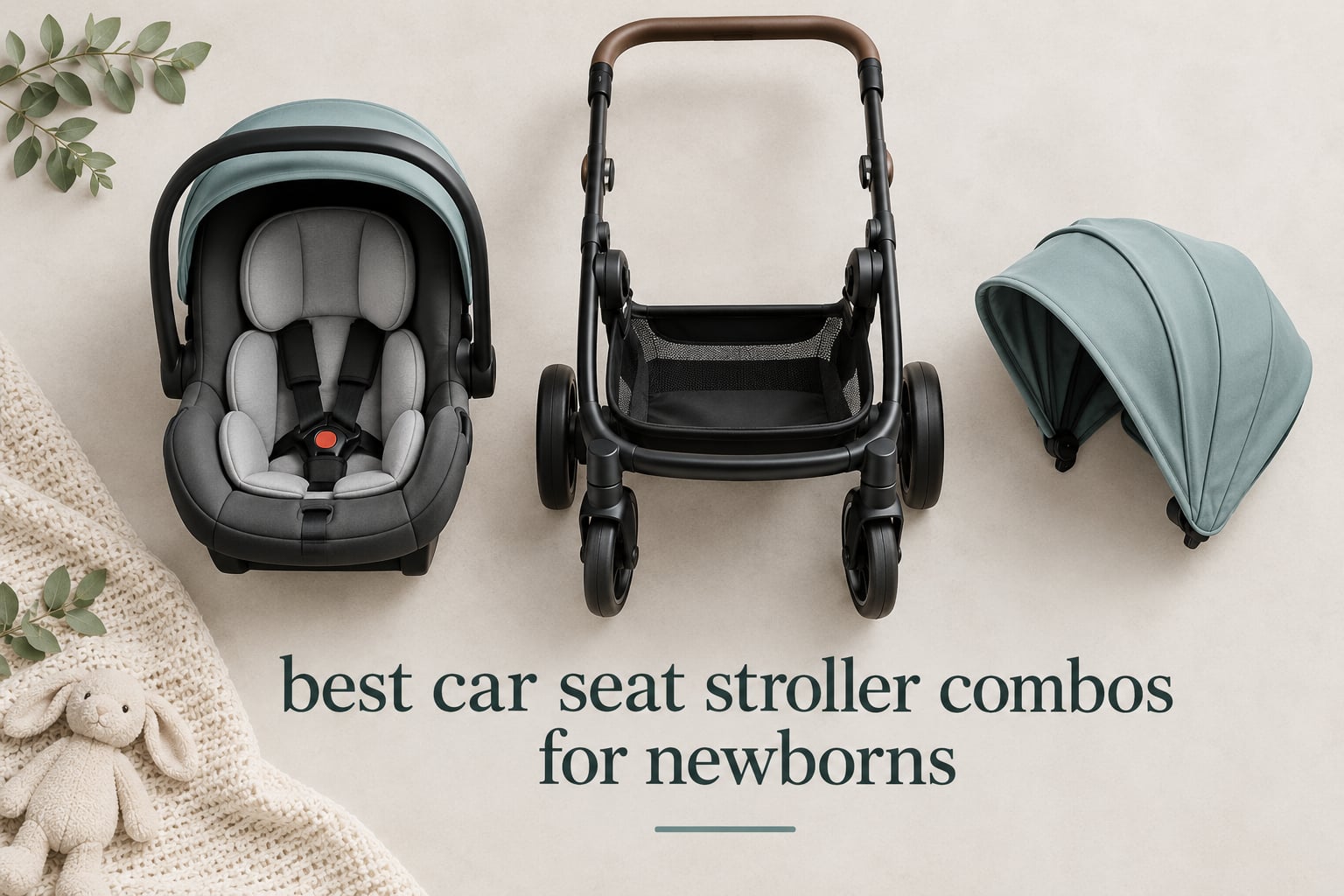
A car seat stroller combo, also called a travel system, is a bundle that pairs a rear-facing infant car seat with a stroller frame the seat clicks into, so a newborn moves from car to stroller without being unbuckled and rebuckled. Our best overall pick for newborns is the Doona Car Seat and Stroller, which converts from car seat to stroller with one click and is approved for aircraft use.
That matters more for a newborn than any other feature on this list. A standard stroller seat is not built for a brand-new baby. Sitting upright in a stroller seat generally only works once a child can sit unassisted, around six months. Until then the infant car seat carrier itself is the stroller seat, and a combo is simply the cheapest, least fussy way to get one.
We picked these ten bundles by newborn suitability rather than by price tier. Each one was scored on whether the infant seat accepts a 4 lb minimum, whether there is a pramette, bassinet or flat-recline mode for the stroller part, how long rear-facing use lasts, and how heavy the whole thing is when you are lifting it one-handed after a C-section. We also looked at height and weight limits, wheel type, fold behaviour, and what else you would have to buy to make the system usable.
Overwhelm is the normal reaction to this purchase. A thread on r/BabyBumps titled about being overwhelmed with stroller and car seat combo options pulled more than 60 comments, which tells us the problem is not a shortage of options but too many of them. We read the review data across all ten products, checked manufacturer specifications against what buyers report back, and ranked them by how much of the newborn phase each bundle actually covers before you need a second piece of gear.
If you have not started yet, our guide to travel systems for newborns covers the naming traps that trip up first-time buyers.
Table of Contents
Top 3 Car Seat Stroller Combos For Newborns (October 2026)

Doona Car Seat and Stroller
- One-click car seat to stroller conversion
- FAA and TUV approved for aircraft
- 4-30 lbs rear-facing only
- 17.2 lb seat and stroller

Safety 1st Smooth Ride
- OnBoard FLX infant seat 4-30 lbs
- Extra-large canopy with visor
- 50 lb stroller weight limit
- Large basket and parent trays

Graco Modes Pramette
- Carrier plus true pramette flat recline
- SnugRide LX infant seat 4-30 lbs
- Reversible stroller seat
- One-hand fold
Quick Picks: All 10 Combos in 2026
| Product | Specifications | Action |
|---|---|---|
| Doona Car Seat and Stroller |
|
Check Latest Price |
| Safety 1st Smooth Ride Travel System |
|
Check Latest Price |
| Graco Modes Pramette Travel System |
|
Check Latest Price |
 Chicco Bravo 3-in-1 Travel System Chicco Bravo 3-in-1 Travel System |
|
Check Latest Price |
 Baby Trend EZ Ride Travel System Baby Trend EZ Ride Travel System |
|
Check Latest Price |
 Graco Modes Element Travel System Graco Modes Element Travel System |
|
Check Latest Price |
 Baby Trend Passport Switch 6-in-1 Baby Trend Passport Switch 6-in-1 |
|
Check Latest Price |
 Baby Trend Passport Cargo Travel System Baby Trend Passport Cargo Travel System |
|
Check Latest Price |
 Chicco Viaro Travel System Chicco Viaro Travel System |
|
Check Latest Price |
 Chicco Corso LE System Chicco Corso LE System |
|
Check Latest Price |
Are Car Seat and Stroller Combos Worth It?
Yes for most first-time parents, mainly because a newborn can ride the stroller from day one in the car seat carrier, and because the bundle usually costs less than buying the two pieces separately. The catch is that the value disappears if you will not still want the stroller after the infant seat is outgrown.
Older forum consensus leaned against travel systems. On WhatToExpect and The Bump, the recurring line was that friends who bought travel systems complained about bulky, heavy strollers. That criticism is fair about the weight of the frames in this list, and less fair about the car seats, which are the same seats you would buy anyway.
The math shifts for three groups. If you plan to fly or use rideshares constantly, prioritise how the system travels rather than how many modes it has. If you have two vehicles, you are buying a second base or a second system, not one bundle. And if you are near the end of your second or third trimester, weigh how much of the frame you will use before your child outgrows the infant seat.
1. Doona Car Seat and Stroller: All-in-One for Travel-Heavy Families
- One-click conversion with no adapter
- Tested and certified as a rear-facing car seat
- stroller and carrier
- FAA and TUV aircraft approved
- 3-layer side impact protection
- Infant insert supports a small newborn
- Rear-facing only and capped at 30 lbs
- 17.2 lb seat and stroller is heavy to carry one-handed
- Expensive compared with bundled frames
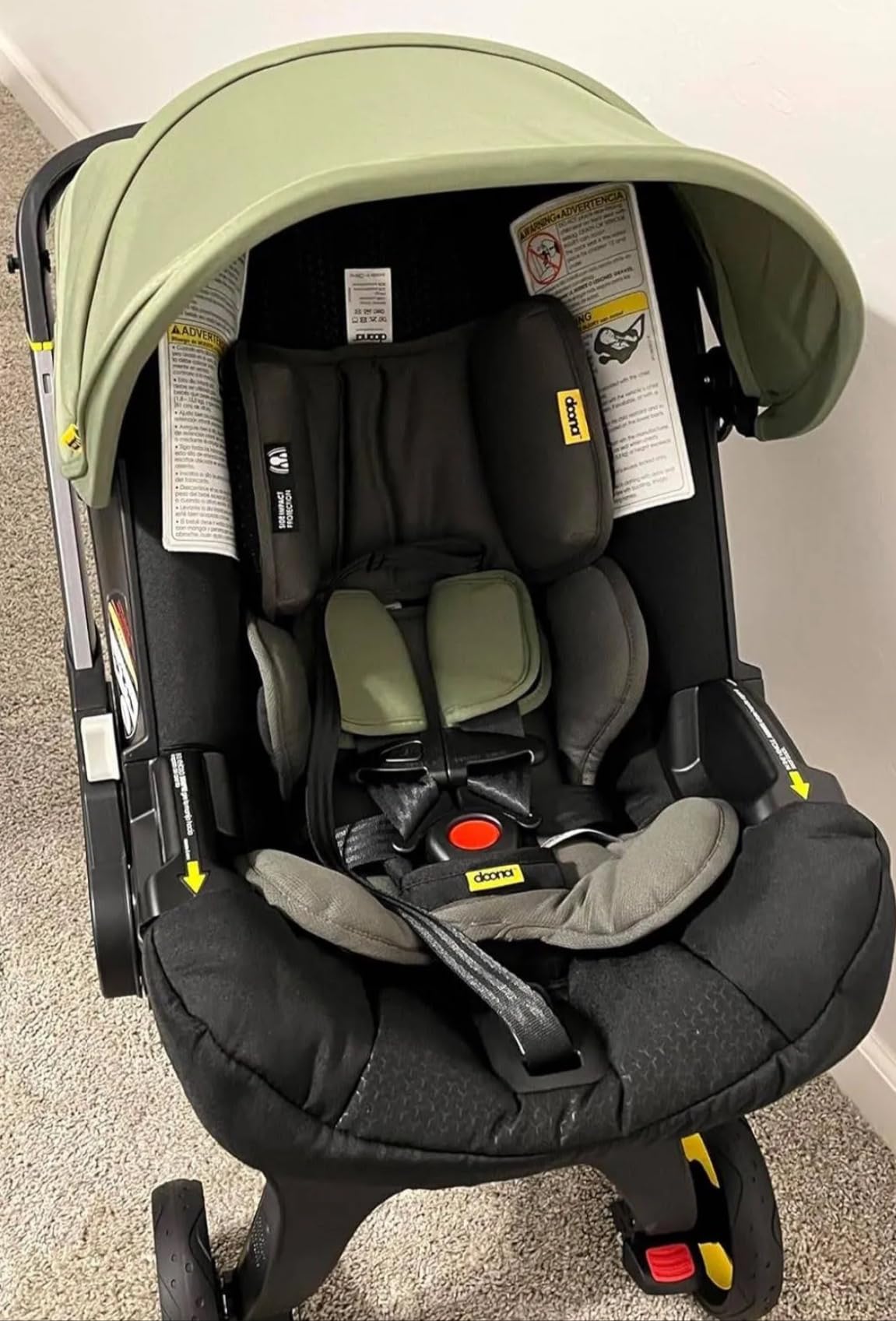
The Doona is the only product here where the car seat and the stroller are physically the same object. The wheels fold into the base of the seat, the handlebar extends, and you are walking. There is no adapter, no second component to lose, and nothing to line up in the dark.
Newborn readiness is the strongest case in the roundup. The seat is rated from 4 lbs, and the included infant insert and head support are shaped to raise a small baby’s upper and lower back so the neck and spine stay aligned. Three layers of side impact protection, an anti-rebound bar and a five-point harness do the work of keeping a tiny passenger secure.
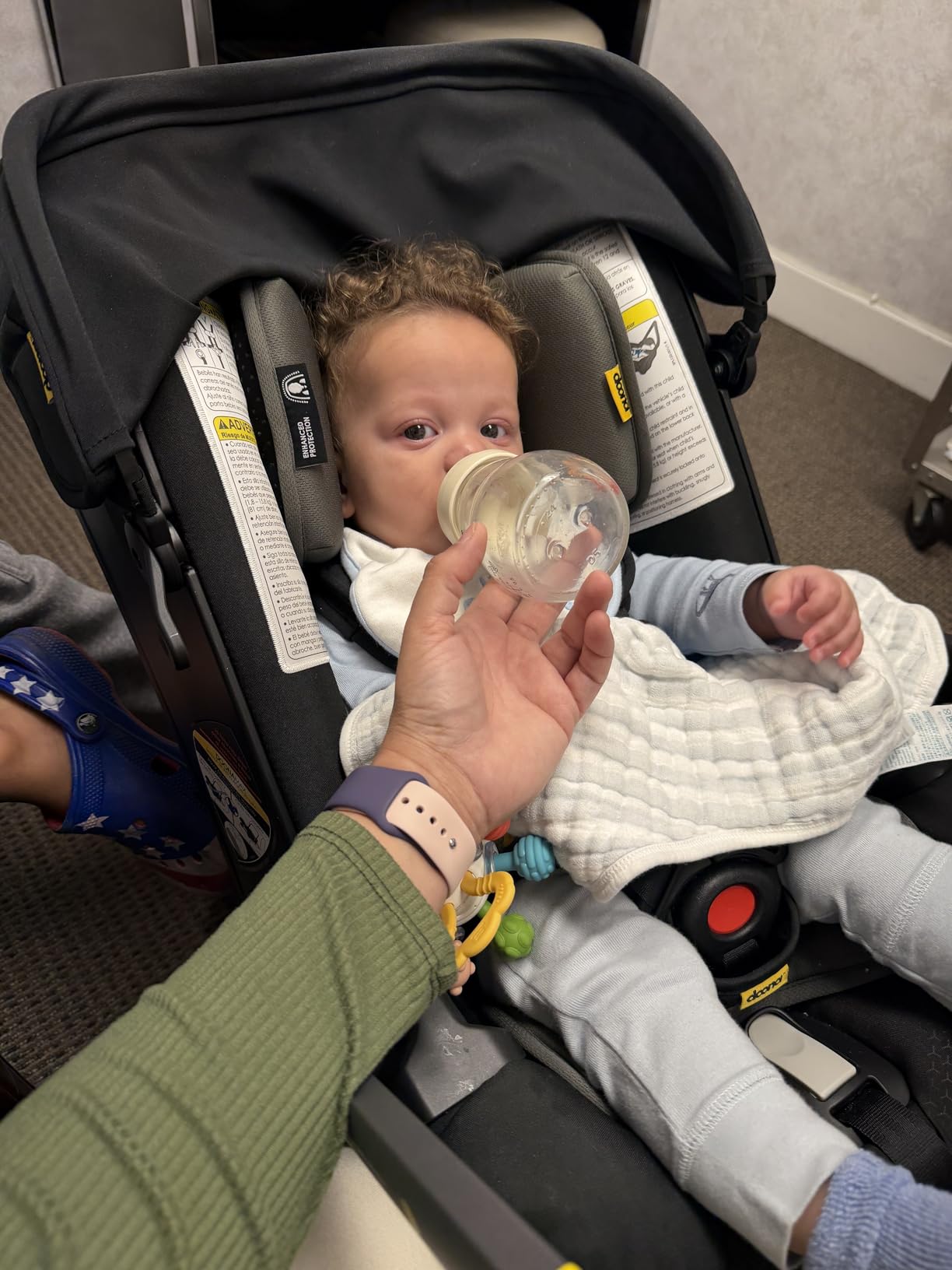
Buyers consistently single out the conversion. Over 15,000 reviews average 4.8, with reviewers describing the switch from car to pavement as a single button press that does not wake the baby. It is also the only bundle here cleared for aircraft use by the FAA and certified by TUV, which matters enormously if you fly during the newborn months.
The folded footprint is the practical headline number. At 17.4 by 26 by 22.4 inches it fits in most overhead bins and most small trunks, and reviewers praise the compact folded dimensions for apartment storage.
How long the Doona works for a newborn?
The newborn phase is the Doona’s best stretch, from 4 lbs to roughly the mid-20s in pounds. Because the seat is rear-facing only, the useful window ends at the 30 lb cap regardless of height.
After that you are shopping again. There is no toddler seat, no bassinet and no reversible frame, so this is a car-seat-and-stroller solution rather than a growth system.
Who should skip the Doona?
Skip it if your baby will be a toddler before you travel much, or if you carry your baby one-handed regularly. At 17.2 lbs with the wheels attached it is a heavy one-piece carry, and parents recovering from a C-section single it out as demanding.
It is also the wrong pick for rough ground. The Doona was designed for travel and pavements, not gravel, grass or park paths.
2. Safety 1st Smooth Ride: Best Value Bundle for Newborns
- OnBoard FLX seat accepts 4 to 30 lbs rear-facing
- Large basket plus parent and child trays
- Head and body inserts for newborn support
- Extra-large canopy with visor
- Assembles in under 30 minutes
- Stroller seat does not recline fully flat
- Cup holder must stay in place to secure the car seat
- Seat can sit awkwardly in smaller SUVs
This is the bundle to buy when the budget is the loudest constraint and you need a real infant seat in the box on day one. It pairs the OnBoard FLX infant car seat, rear-facing from 4 to 30 lbs, with a stroller frame the seat clicks into.
For a newborn, everything that matters is present. The car seat ships with head and body inserts, and the five-point harness has four height positions so you can dial the fit in as the baby grows. Extra-large basket, parent tray and child tray mean you can carry the gear a newborn day actually requires.
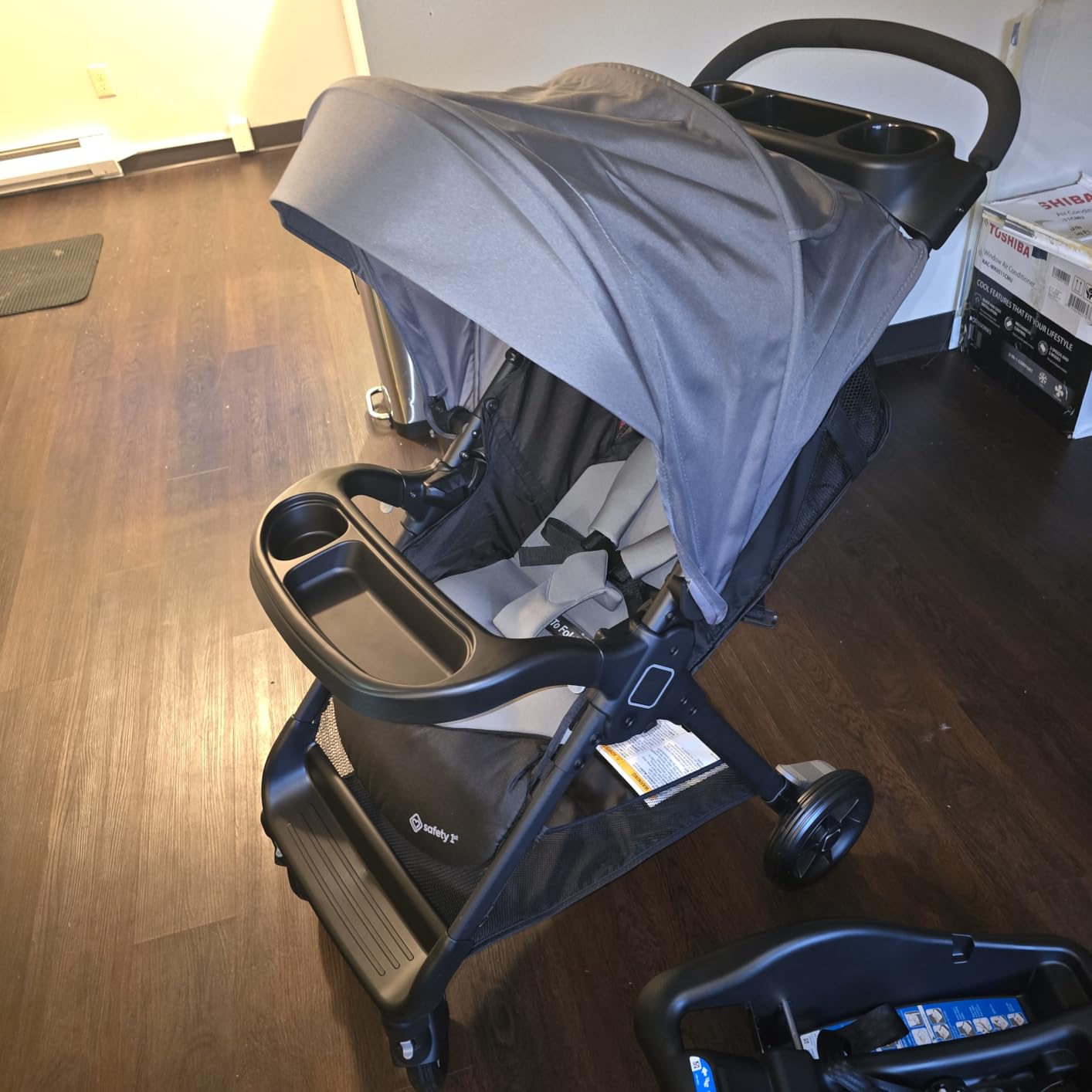
Riders like the wheel setup, which reviewers describe as agile around corners and smooth on mixed surfaces. It is also one of the few bundles here reported as compliant with Disney Park size requirements, which tells you something about how narrow it measures.
The extra-large canopy with a flip-out visor and a peek-a-boo window is the feature parents mention most after price. Over 8,500 reviews average 4.6, and the machine-washable car seat padding is a small thing that matters a great deal in the first year.
How newborn readiness actually works?
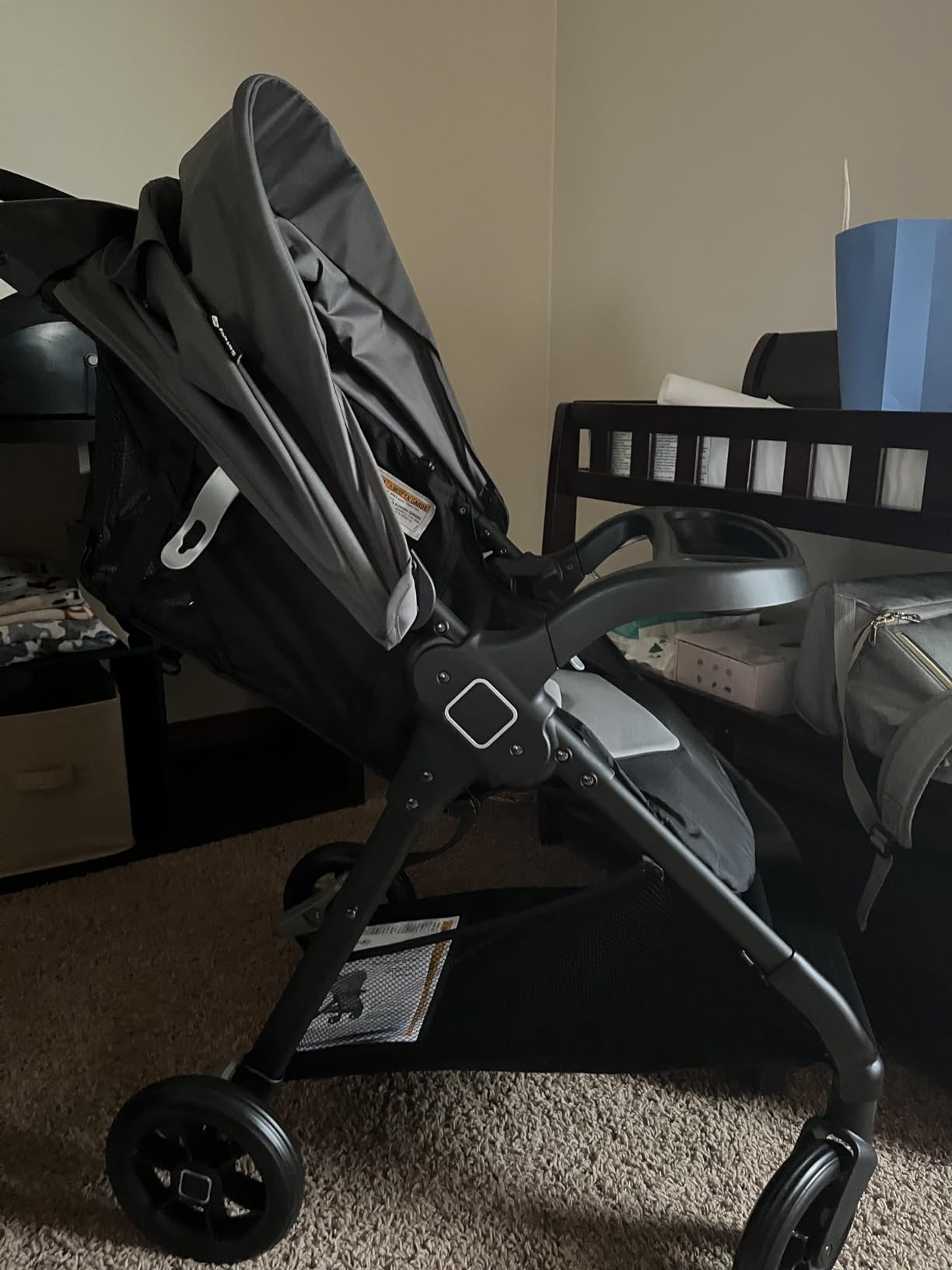
From birth your baby uses the OnBoard FLX carrier on the frame. The stroller seat is there for later, and reviewers are candid that it does not lay fully flat, which is fine for a baby past the earliest months and not what you want on day one.
The car seat range starts at 4 lbs, so a premature or low-birth-weight baby is covered from the first outing as long as you meet the height limit too.
Who should skip the Smooth Ride?
Skip it if your baby will be small for longer than most, because the carrier is the only newborn position and you will use it a lot. Reviewers also flag that the cup holder has to remain attached for the car seat to secure properly, which is a sharp edge in a dark car park.
Measure your back seat before you order. Owners with smaller SUVs report that the carrier does not sit squarely in every frame.
3. Graco Modes Pramette: Three Ways to Carry a Newborn
Graco Modes Pramette 3-in-1 Travel System (Stroller & Car Seat), Lilac Mod
- True pramette mode gives a flat recline for infants
- Carrier plus pramette plus toddler seat in one frame
- SnugRide LX rear-facing 4-30 lbs up to 32 inches
- Reversible seat faces parent or the world
- One-hand fold for storage
- Larger folded footprint than several rivals
- Heavier than lighter frames
- Carrier is a heavy one-handed carry
The Modes Pramette gives a newborn more ways to be carried than any other frame here. It runs in three configurations: the infant car seat carrier, an infant pramette that lays the toddler seat flat, and the toddler stroller seat. Two of those three work for a newborn.
The pramette conversion is the part that matters. Rather than forcing a newborn into a semi-reclined stroller seat, you flatten the seat into a pram, which is the arrangement most newborns actually sleep best in. Combined with the SnugRide LX infant seat, rated rear-facing from 4 to 30 lbs and up to 32 inches tall, the frame covers both halves of the question.
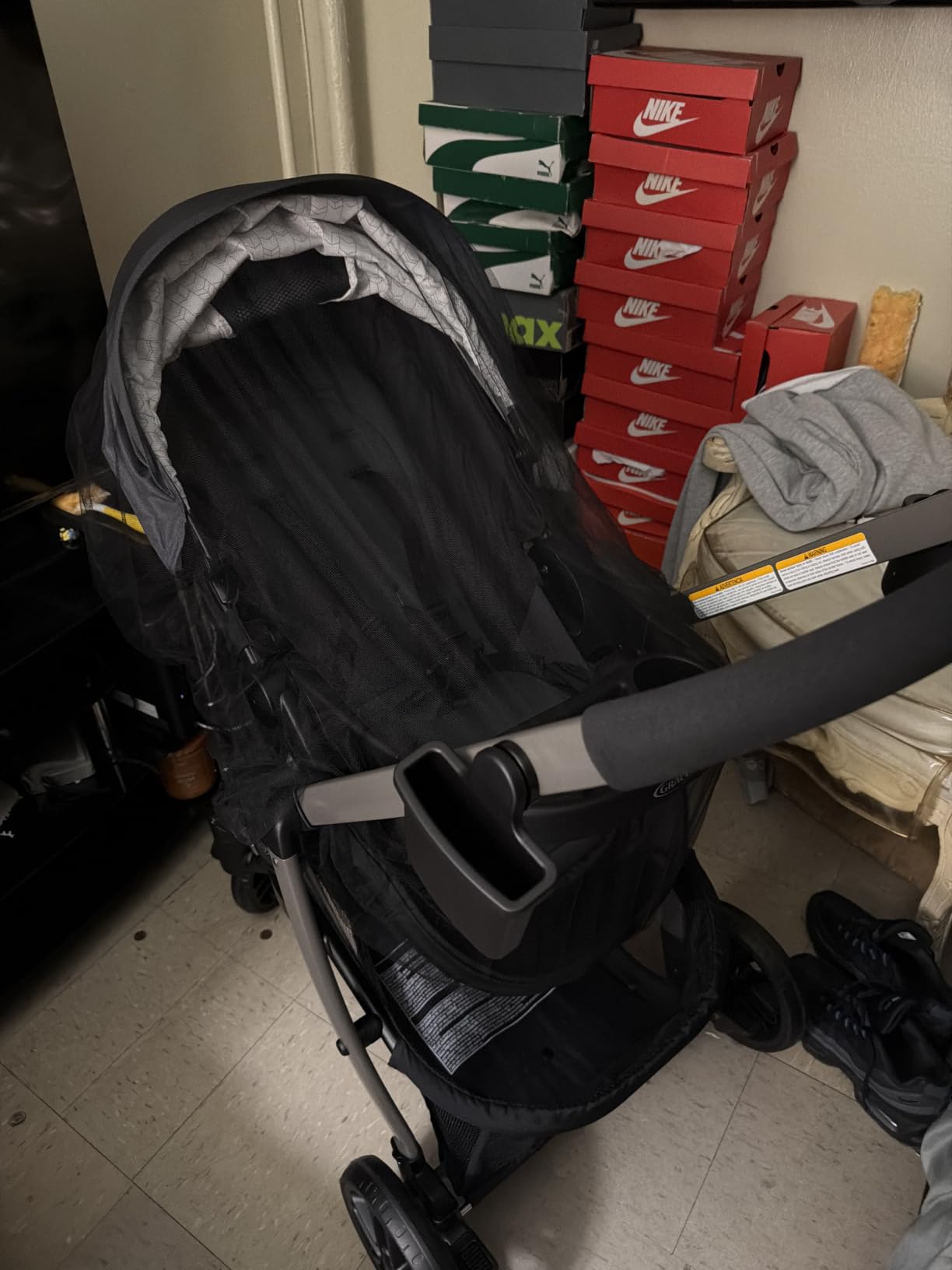
Reviewers treat this as the value pick among three-in-one systems because the frame does not stop working when the infant seat is retired. The reversible seat flips between parent-facing and forward-facing, and the one-hand fold means the whole thing collapses without a second pair of hands.
Extra-large basket, parent and child trays with cup holders, and multiple recline positions round out the package. Over 7,100 reviews average 4.6, with the recurring small complaint being cup holder stability rather than anything structural.
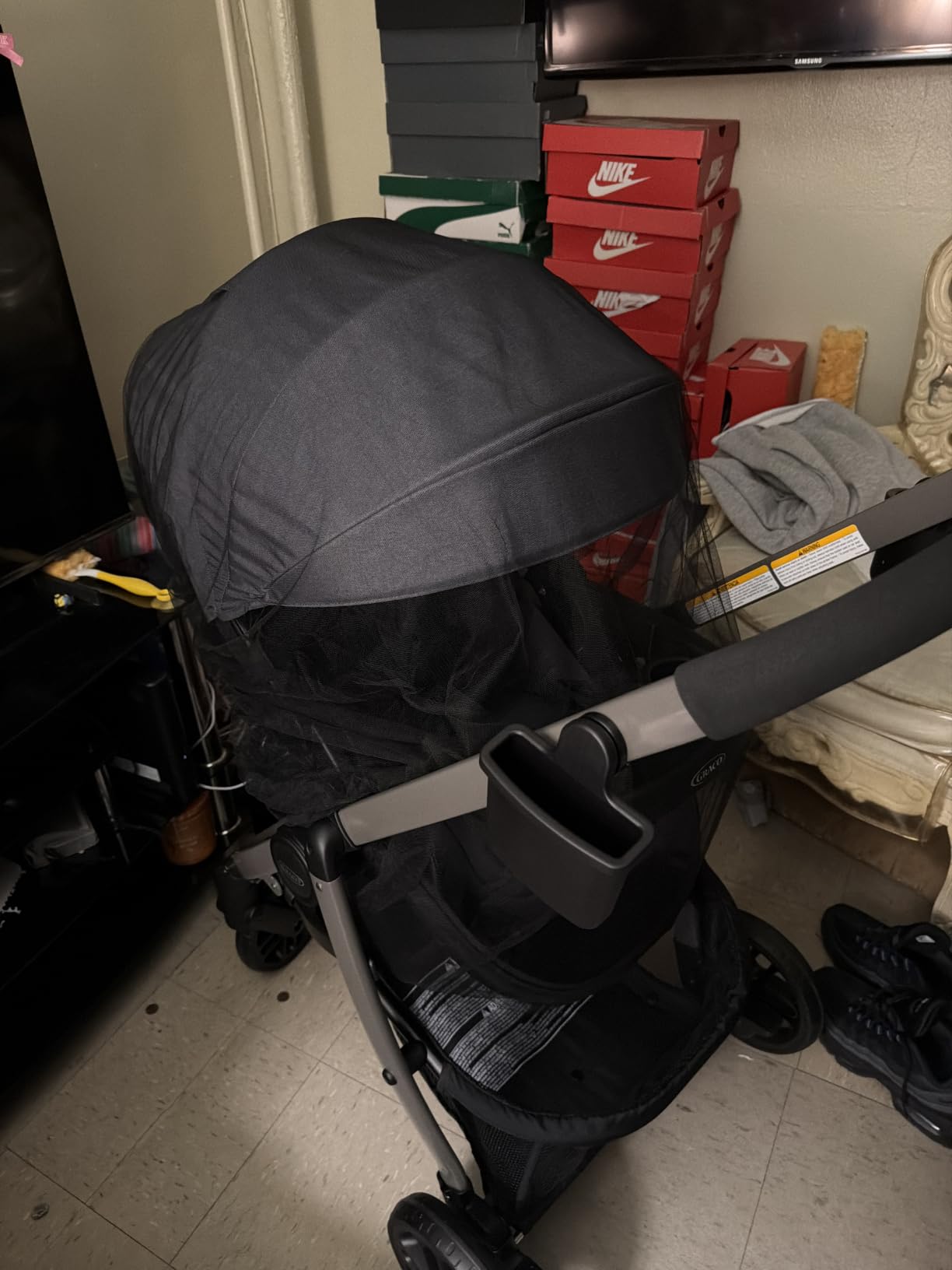
How long the newborn modes last?
The pramette covers the stretch where a newborn cannot sit up at all, and the carrier covers naps on the move. Both fade around the same point: when your baby starts pushing up and pulling to sit, the flat position stops being necessary.
After that the toddler seat reverses to face you, which is how most owners get another year or more out of the same frame.
Who should skip the Modes Pramette?
Skip it if trunk space is tight. Reviewers repeatedly mention a larger folded size than competing frames, and the SnugRide LX is a heavy carrier to lift into a car one-handed.
It is also a three-in-one rather than a six-in-one. Parents who want a true bassinet with a padded flat bed should look at the Baby Trend Passport Switch further down.
4. Chicco Bravo 3-in-1: Easiest Install With the KeyFit 30
Chicco Bravo 3-in-1 Travel System w/KeyFit 30 Infant Car Seat & Base
- SuperCinch force-multiplying LATCH tightener
- Rear-facing seat with removable newborn inserts
- All-wheel suspension and treaded tires
- One-hand fold that stands on its own
- Click-in attachment with no adapter
- Heavier than lighter three-wheel frames
- Canopy and basket add bulk to the fold
- No flat newborn mode in the stroller
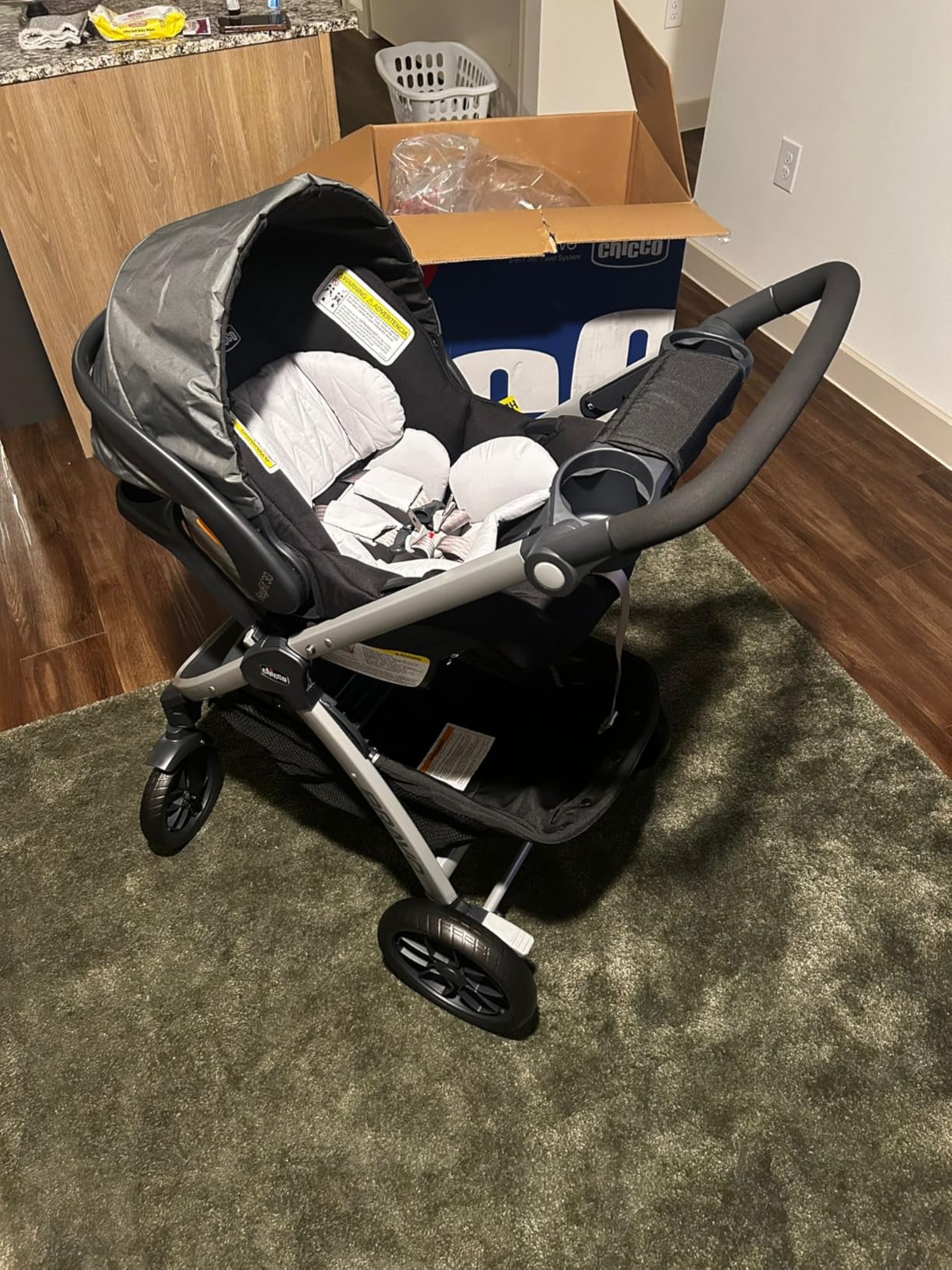
The Bravo is the one to buy if installation accuracy worries you more than weight. The included KeyFit 30 infant car seat uses the SuperCinch force-multiplying LATCH tightener, which tightens the belt across both sides at once, and it carries EPS energy-absorbing foam plus removable head and body support sized for a newborn.
The stroller side is more grown-up than the seat side. All-wheel suspension with large treaded tires handles uneven terrain, and the one-hand smart fold leaves the stroller standing independently without the push handle touching the ground, which parents with small apartments appreciate more than expected.

The car seat attaches through the child tray as a secure click-in with no adapter, so there is no strap to forget. The UPF 50+ canopy has a peek-a-boo mesh window, the seat reclines through multiple positions, and the basket is genuinely large.
Ratings sit at 4.8 across nearly 2,900 reviews with roughly 89 percent five-star, and reviewers most often single out installation ease and the ride quality over uneven ground.
Is the Bravo newborn-ready?
Yes, through the carrier. The KeyFit 30 is a rear-facing infant seat and the removable newborn inserts are included in the box, so nothing extra is required for a small baby.
There is no pramette or bassinet on this frame. Newborns use the car seat on the stroller; the stroller seat comes into play later, when your baby can sit more independently.
Who should skip the Bravo?
Skip it if you want a true flat newborn mode in the stroller, or if lifting weight is the deciding factor. This is a heavier build than the three-wheel frames here, and it sits in the upper half of the cost range.
It is a strong choice for suburban paths and long walking days, which is exactly what reviewers buy it for.
5. Baby Trend EZ Ride: Budget Pick With Both Trays Fitted
- Car seat
- stroller and both trays in one bundle
- 3-wheel frame turns tightly in crowds
- Covered parent tray with two cup holders and storage
- Swing-away child tray
- Height-adjustable handle and compact fold
- 3-wheel frame is less stable on rough ground
- Fewer customer reviews than the top picks
- Basic basket and no suspension
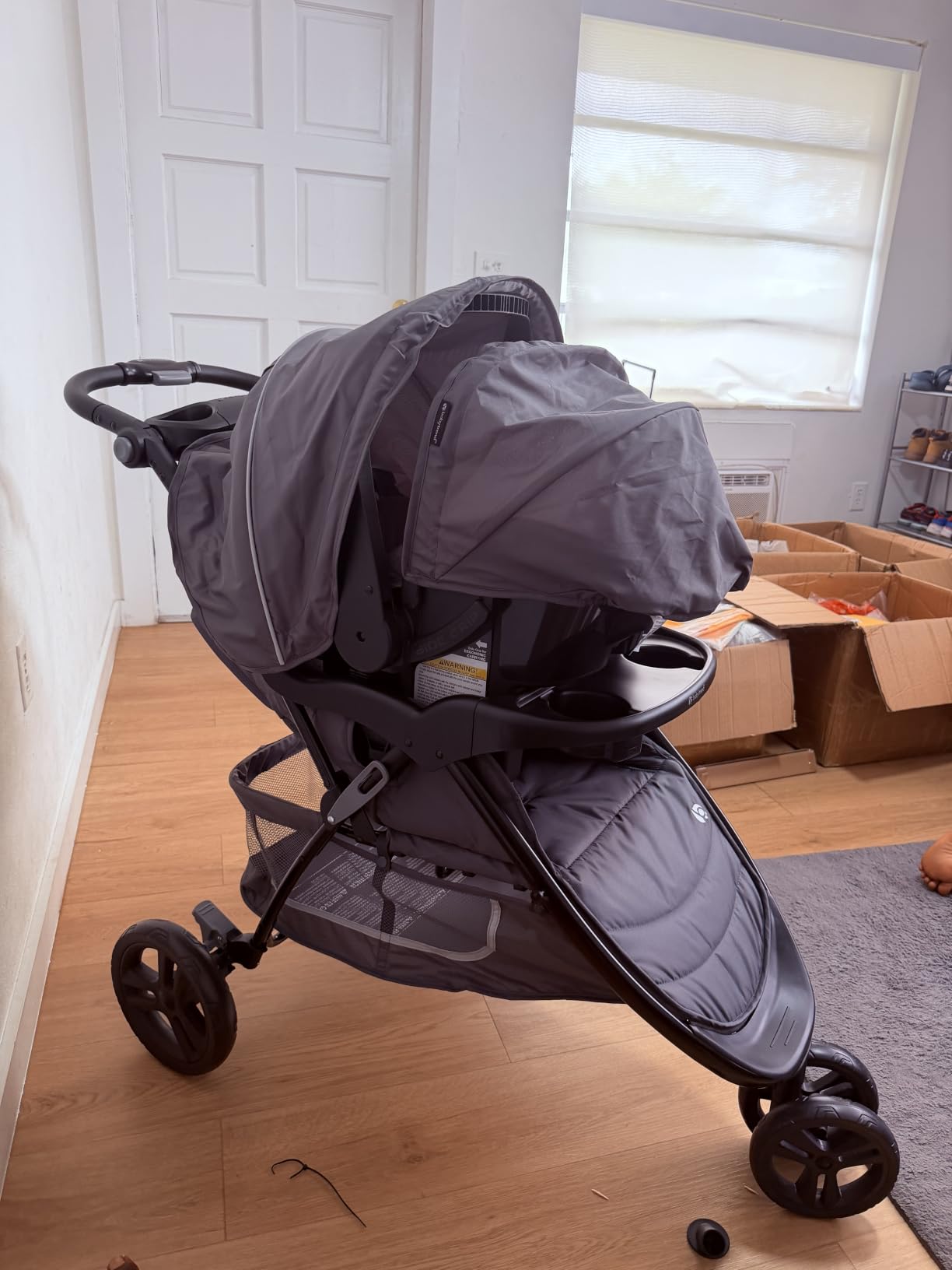
The EZ Ride answers one question directly: how cheaply can you get a real car seat and stroller combo in the house before a baby arrives. The EZ-Lift infant seat has a five-point harness, deep side wings and EPS foam for impact protection, and it clicks onto a three-wheel frame.
The three-wheel layout is the reason it turns so easily. In a supermarket aisle, a narrow shop or a crowded station, a three-wheel frame rotates in a way four-wheel frames cannot. Reviewers also like the height-adjustable handle, which gets the stroller to a comfortable push height for taller parents.
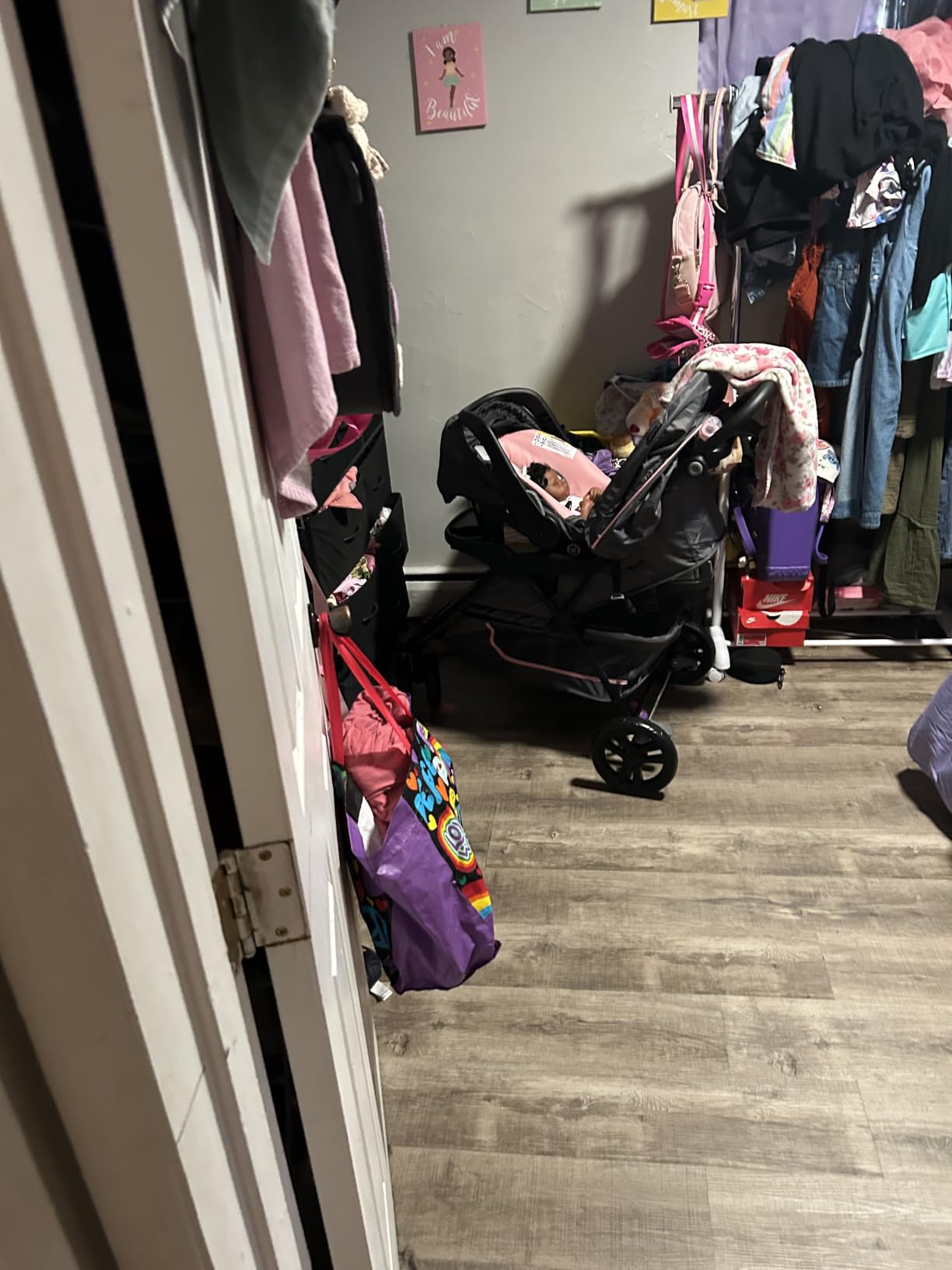
Both trays are fitted. The parent tray is covered and carries two cup holders plus centre storage, and the child tray swings away and also carries two cup holders, which is unusual at this end of the market.
Reviews average 4.6 across roughly 1,500 ratings, with the bulk of five-star feedback about value and manoeuvrability rather than refinement.
Newborn use on the EZ Ride
Newborns ride in the EZ-Lift carrier, which is the standard arrangement for this style of frame. The stroller seat has multiple recline positions and a padded surface, but a brand-new baby belongs in the carrier. Expect to move to the stroller seat around the six-month mark, once sitting unassisted is realistic.
Who should skip the EZ Ride?
Skip it if you walk on grass, gravel or uneven park paths regularly. Reviewers point out that three wheels mean less stability on rough ground than the suspension-equipped frames in this roundup, and that is a real limitation rather than a preference.
Its roughly 1,500 ratings are a thinner evidence base than the top picks here, so plan to check the frame and wheel locks yourself once it arrives.
6. Graco Modes Element: Compact 3-in-1 With a Light Infant Seat
Graco Modes Element 3-in-1 Travel System (Stroller & Car Seat), Canter
- Lite LX infant seat is lighter than the standard Graco seat
- Reversible stroller seat faces parent or world
- Three modes from carrier to toddler
- Fits in small car trunks
- Removable child tray for climbing in
- Newborn headrest insert is thin and often bought separately
- Folded package takes significant trunk space
- Only three color variants
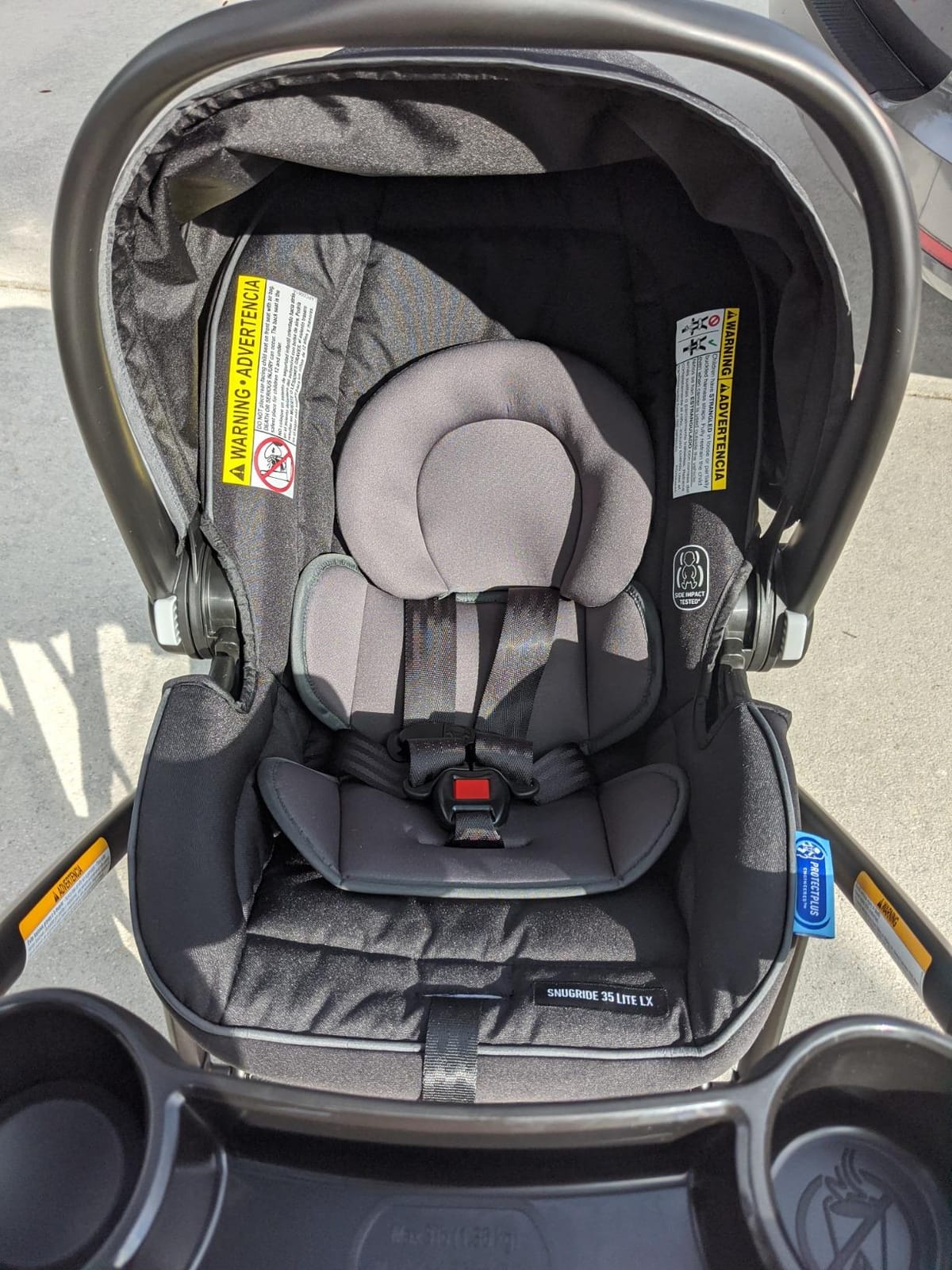
The Graco Modes Element uses the lighter end of Graco’s infant seat range. It ships with the SnugRide Lite LX, a lighter version of the LX, paired with a reversible stroller seat with parent and child trays.
Newborn use runs through the carrier, rated rear-facing 4 to 30 lbs up to 32 inches, then moves into the reversible infant stroller seat. That second mode matters more here than in most bundles because the Lite LX is the car seat you would be lifting several times a day.
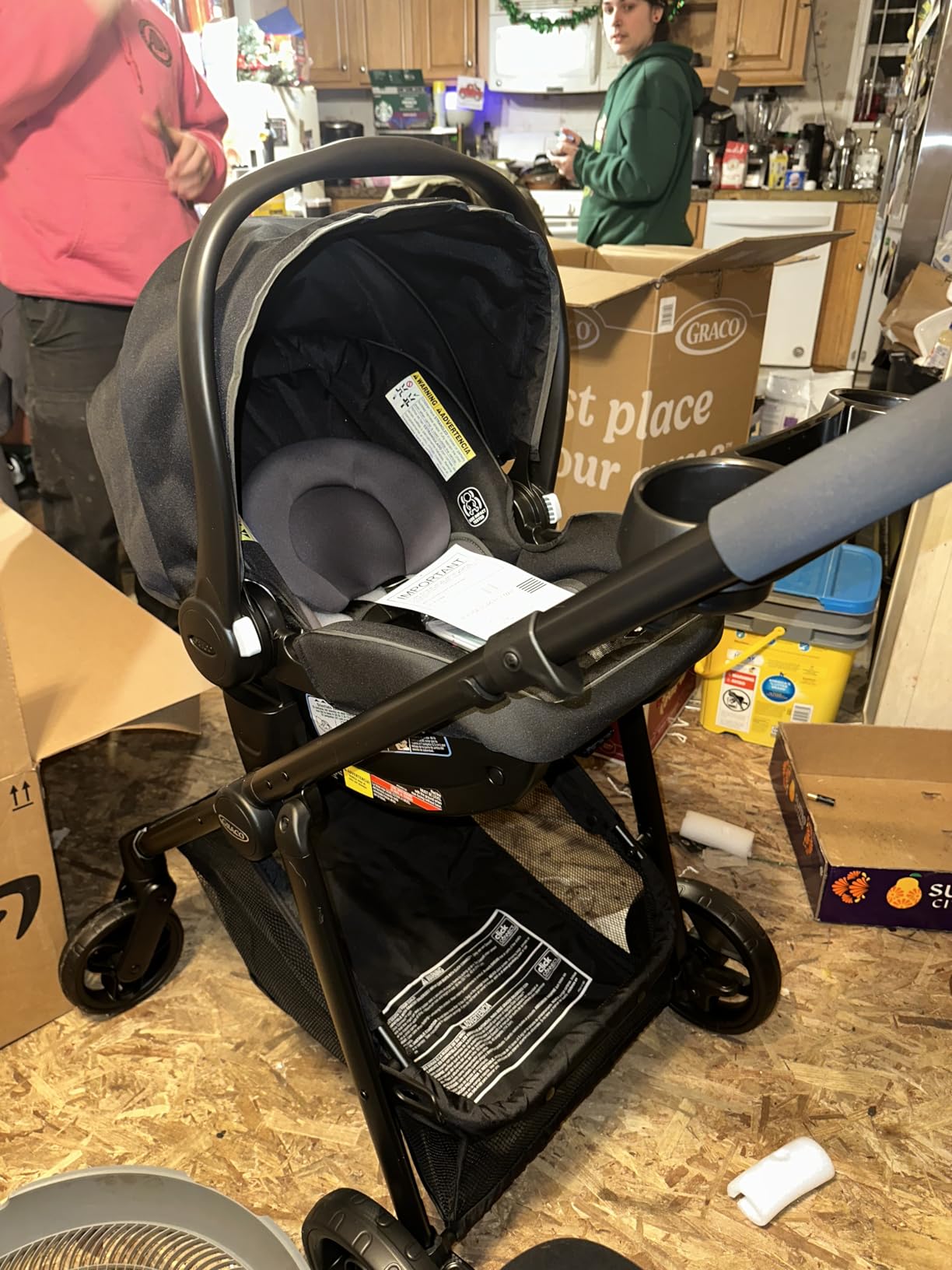
The most common owner note is about the headrest insert. A number of parents bought an additional newborn insert because the supplied one is not supportive enough for a very small baby, which is a real, if easily solved, cost and hassle at the exact moment you least want one.
Ratings average 4.7 across around 1,350 reviews. Buyers praise the smooth quiet ride, the large basket underneath, and the fact that the whole package fits in a small car trunk.
How newborn-ready the Element is?
Car seat fit is solid at 4 to 30 lbs, but the comfort story for a tiny baby depends on which insert you use. Budget for a separate newborn insert rather than discovering the issue at two in the morning.
The frame itself is unremarkable for newborn use, which is exactly what you want from a component whose job is to be an adapter.
Who should skip the Element?
Skip it if you are recovering from surgery and lifting weight is the immediate constraint. Owners specifically flag that the frame can be heavy in the first weeks, even though the infant seat itself is light.
Buyers who want a flat newborn mode rather than a carrier should look at the Graco Modes Pramette instead, which adds a true pram configuration.
7. Baby Trend Passport Switch: Bassinet Mode at a Budget Price
Baby Trend Passport® Switch 6-in-1 Modular Stroller Travel System with EZ-Lift™ Plus Infant Car Seat, Dash Black
- True bassinet mode at this price point
- Parent-facing and forward-facing bassinet
- Six modes from carrier to toddler seat
- Car seat handle turns into an anti-rebound bar
- Phone holder centred on the handlebar
- Bassinet mattress is thinner than dedicated bassinets
- Lowest average rating in this roundup
- Only three color variants
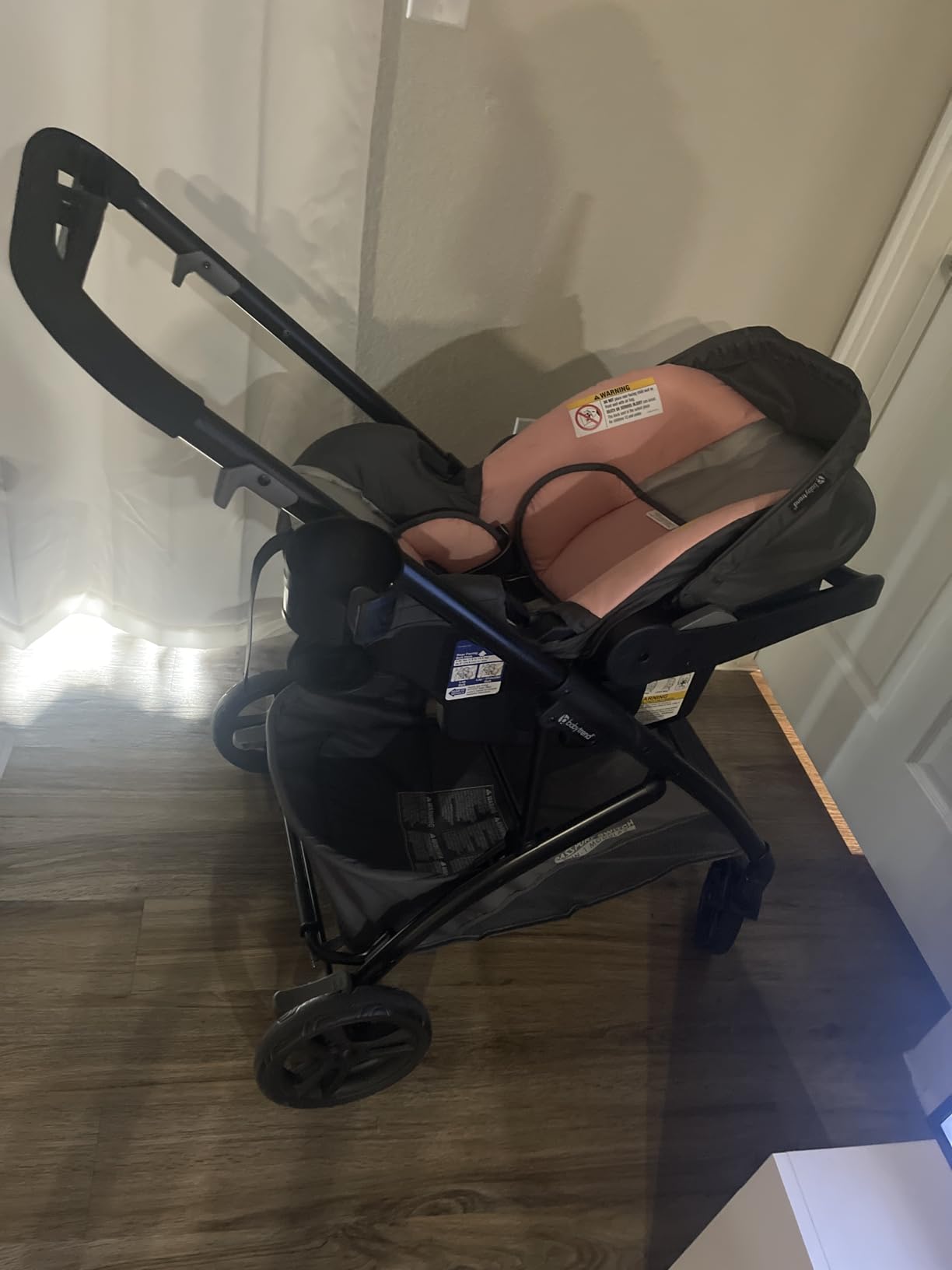
The Passport Switch is the only bundle on this list that includes a bassinet mode. It runs six configurations: the infant car seat facing parent or forward, a bassinet facing parent or forward, and the toddler seat facing either way.
For newborn purposes that changes the calculation. A bassinet is the closest thing to a flat, enclosed lie-flat bed most parents will ever use, and having it means the carrier is not the only newborn option from day one. The included EZ-Lift PLUS infant seat comes with its own base.
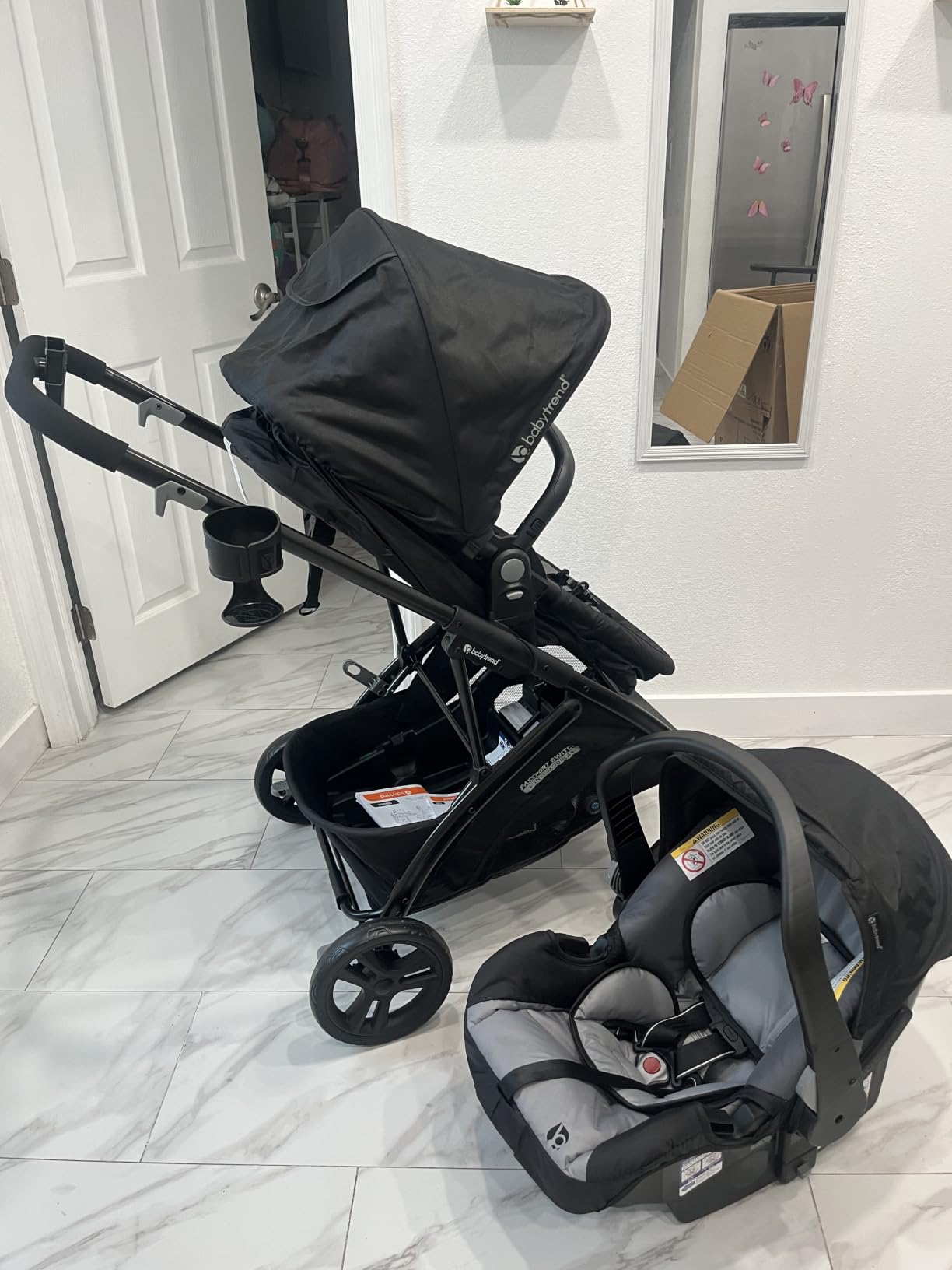
Two details show real design thinking. The car seat handlebar converts into an anti-rebound bar in the forward position, which limits rotation in a rear collision, and a centre phone holder on the parent handlebar stops you dropping your phone while steering.
The flex-grip side cup holder takes large bottles, and the extra-large basket opens from the front and rear. Ratings average 4.5 across roughly 1,150 reviews, the lowest here, with the largest share of one-star feedback of any bundle on the list.
How long bassinet mode is usable?
Bassinet mode ends at the first real attempt to sit up. Until then the flat surface keeps a newborn’s spine supported in a way no car seat or reclined stroller seat does.
That makes this bundle one of the few here that stays useful after the infant seat is retired but before the toddler seat fits, which narrows the gap between two purchases.
Who should skip the Passport Switch?
Skip it if you want a plush bassinet. Reviewers note the mattress is thinner and less padded than dedicated bassinets, so a preemie or a baby who is very small may be better served by the carrier.
The lower rating and higher one-star share also make this the pick to inspect carefully on arrival rather than the one to buy sight unseen.
8. Baby Trend Passport Cargo: A 7.5 lb Car Seat With a Full-Size Frame
Baby Trend Passport® Cargo Stroller Travel System with EZ-Lift™ Plus Infant Car Seat, Pink Bamboo
- Infant car seat weighs only 7.5 lbs
- Base has a recline flip foot and bubble level
- UPF 50+ canopy with plush Comfort Cabin
- Spacious basket with front and rear access
- Side Grip built into the car seat
- Fixed wheel layout with no suspension for rough ground
- Fewer long-term reviews than the top picks
- No dedicated newborn bassinet mode
Carrying weight is the quiet emergency in the first year of a baby’s life, and this bundle takes it seriously. The EZ-Lift 35 PLUS infant car seat weighs 7.5 lbs, and it has a built-in Side Grip for one-handed carrying. That matters most in the first weeks, when everything happens at least four times a day.
The stroller backs that up with a one-hand centre fold, a UPF 50+ sun protection canopy over a plush Comfort Cabin, and a basket you can reach from the front and the back. The parent tray carries two cup holders and a centre compartment.
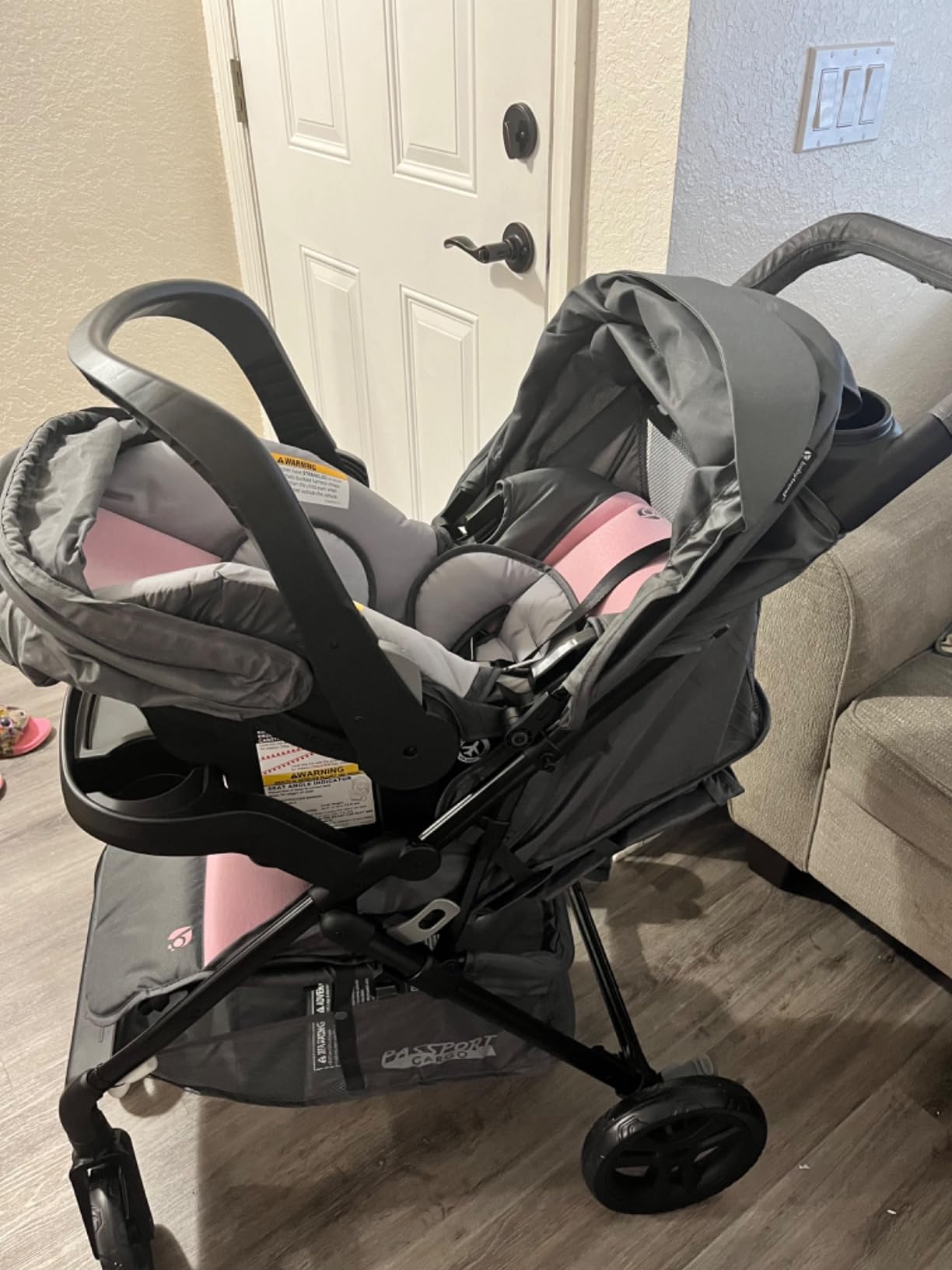
The base is worth a mention because it is where most installs go wrong. This one has a recline flip foot and a bubble level indicator, so you can confirm the recline angle without guessing in a car park.
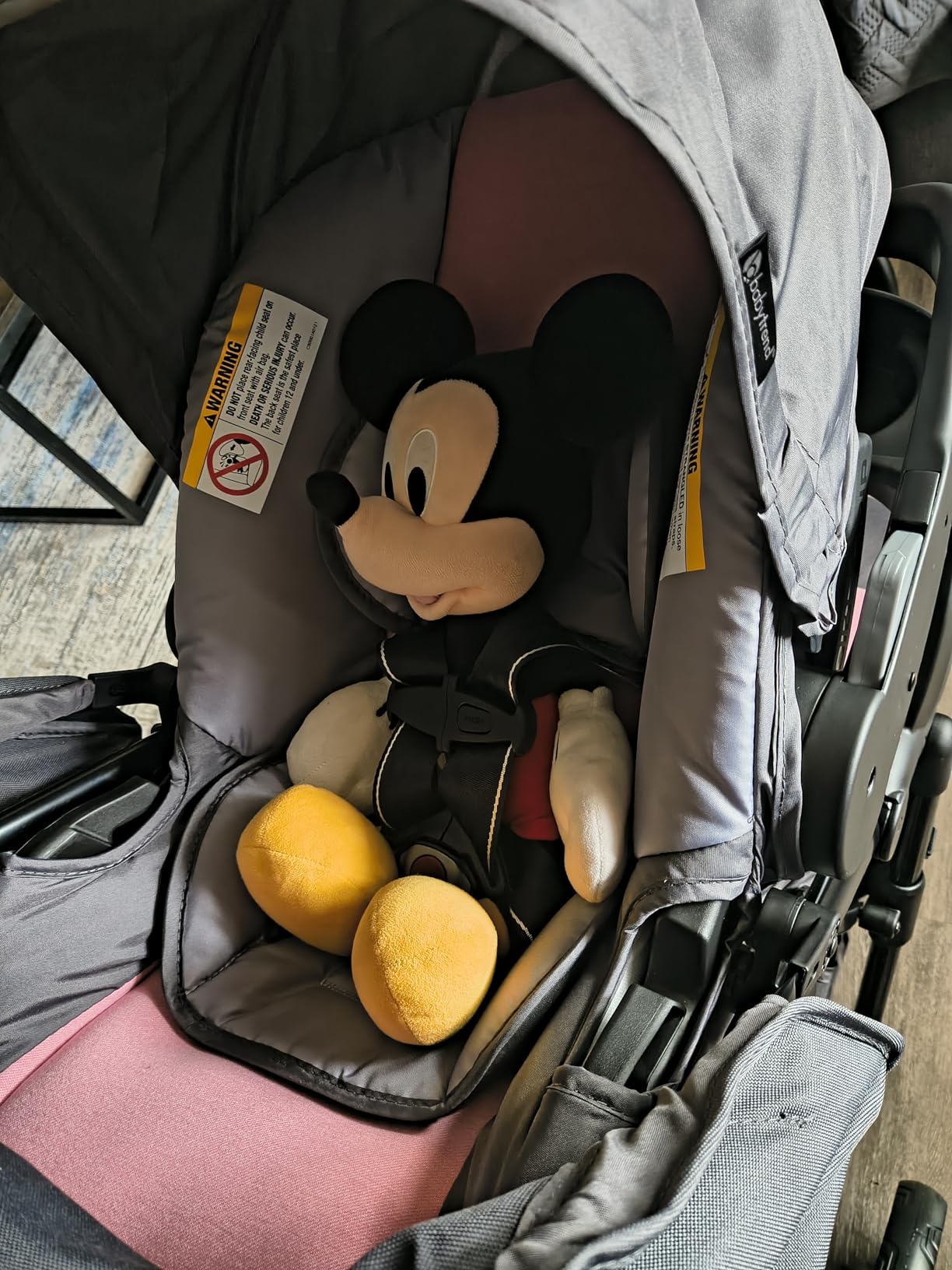
Across roughly 1,030 reviews the rating sits at 4.7, and buyers repeatedly mention premium touches that usually cost more.
Newborn suitability and limits
The carrier is the newborn position on this bundle, and at 7.5 lbs it is the easiest one here to lift repeatedly. What the frame does not offer is a flat newborn mode, so a very small baby rides in the carrier rather than in a bassinet. That is workable for most newborns, and a different proposition if you specifically want a lie-flat bed.
Who should skip the Passport Cargo?
Skip it if your baby is born small and you expect to spend months in the stroller, because you will outgrow the carrier before you are ready for the toddler seat.
Parents who walk rough terrain frequently should note that the wheel layout is fixed, with no suspension to soften bumps.
9. Chicco Viaro: Compact Frame for City and Transit
Chicco Viaro Travel System, Viaro Quick-Fold Stroller with KeyFit 30 Infant Car Seat and Base, Black/Black
- Aluminum frame keeps the stroller light to lift
- KeyFit 30 with SuperCinch LATCH tightener
- Free-standing one-hand fold via pull strap
- Click-in car seat attachment with no adapter
- Multi-position reclining seat
- 3-wheel frame is less stable on rough ground
- Only two color variants
- Carrier is the only newborn position
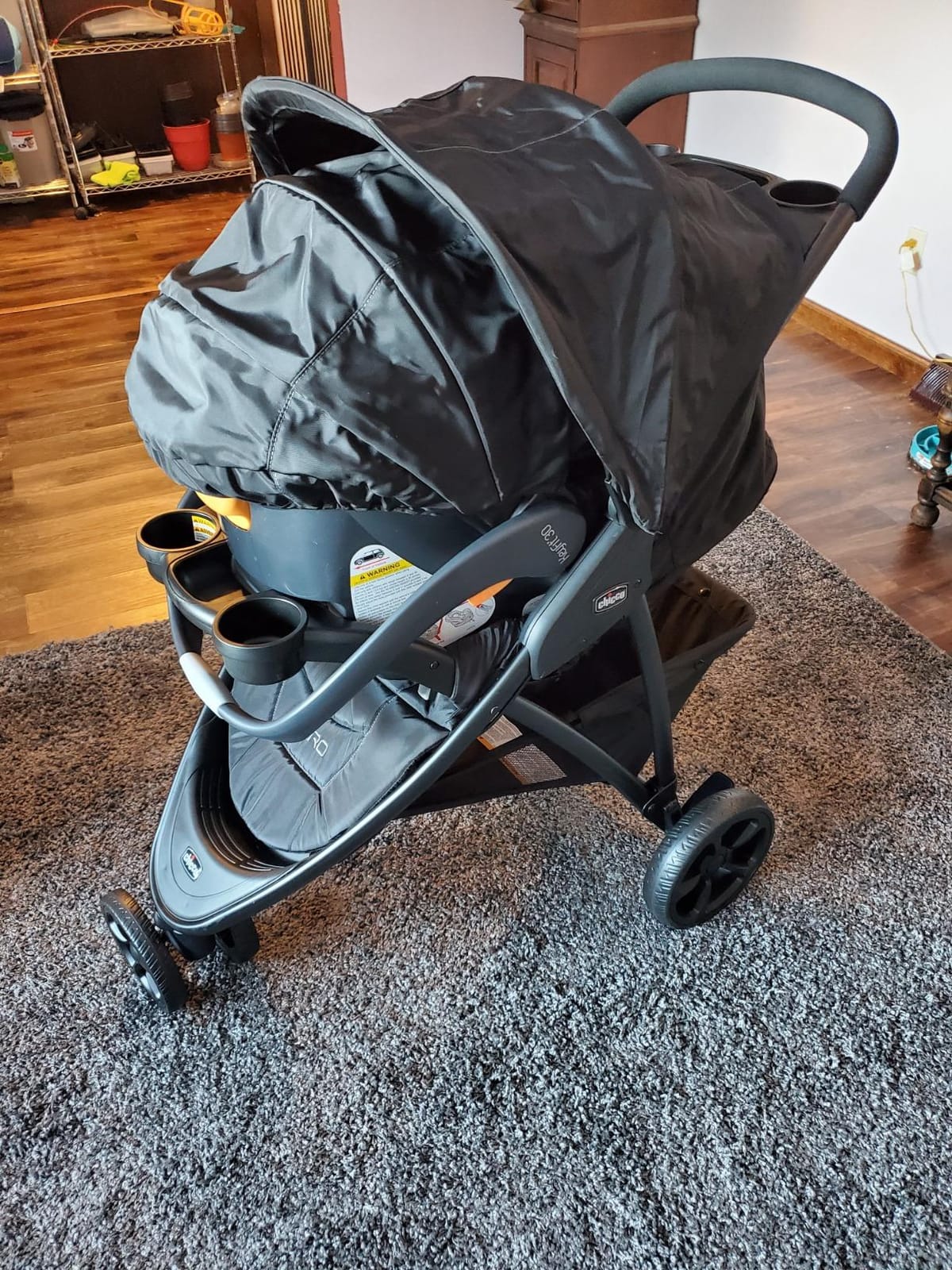
The Viaro is built around one idea: be light. A sleek three-wheel design on an aluminium frame with treaded tires makes this an easy frame to lift into a taxi, onto a train platform or up a set of stairs, which is why it earns a place on a city list.
A pull strap and button tucked under the seat activate the fold, so you can collapse it without a free hand for the handle.
The car seat is the KeyFit 30 with the SuperCinch force-multiplying LATCH tightener, and it attaches to the frame by click-in with no adapter involved. For a newborn the removable head and body support included with the seat do the necessary work.
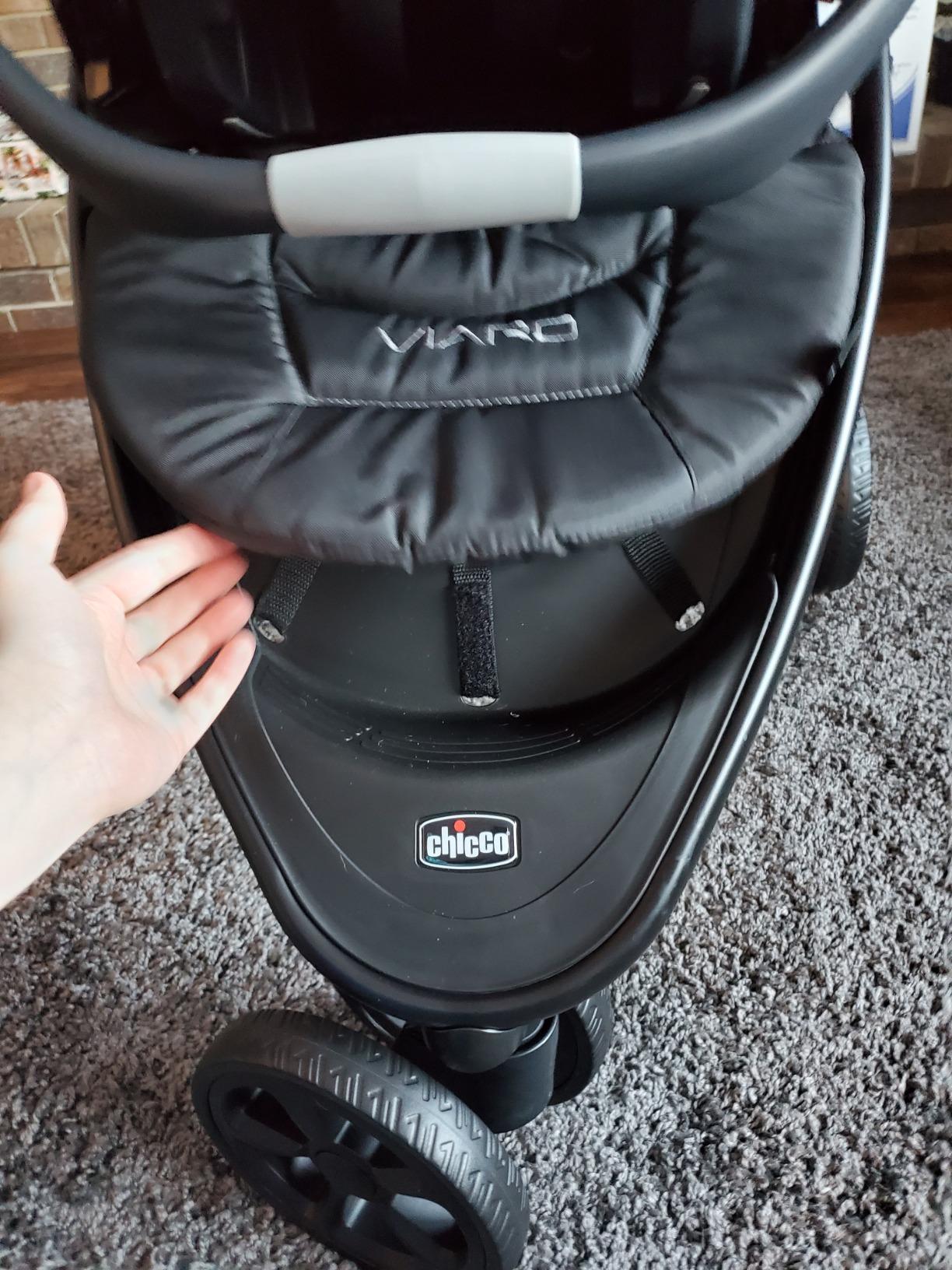
The folded package stands up on its own instead of collapsing against a wall, which matters if your storage space is a hallway. The padded push handle, parent and child trays, large basket and multi-position recline round out a package aimed at everyday urban use.
Ratings are 4.8 across roughly 880 reviews, with about 90 percent five-star feedback from owners who mention installation ease and the free-standing fold most often.
Newborn use and the stroller seat
Newborns ride in the KeyFit 30 carrier. The multi-position recline on the stroller seat helps once your baby is bigger, but it is not a flat newborn position and should not be treated as one.
For a city newborn the arrangement works because walking distance is short and lifting weight is constant.
Who should skip the Viaro?
Skip it if you are a runner or you plan regular long walks on uneven paths. Three wheels and no suspension is a deliberate trade for lightness, and buyers on rough ground report it.
Only two color variants offered, which matters more than it sounds if you are buying before a birth date and want a specific finish.
10. Chicco Corso LE: An Extended Rear-Facing Infant Seat
Chicco Corso LE System w/KeyFit Max ClearTex Infant Car Seat & Base
- Extended-use rear-facing seat adds headroom and legroom
- Easy-Extend headrest with no-rethread harness
- SuperCinch tightener with bubble level indicators
- Four parent-facing and forward-facing modes
- Foam-filled treaded tires and zip-extend canopy
- Newer model with less long-term owner data
- Four modes add complexity for a single-child setup
- Only three color variants
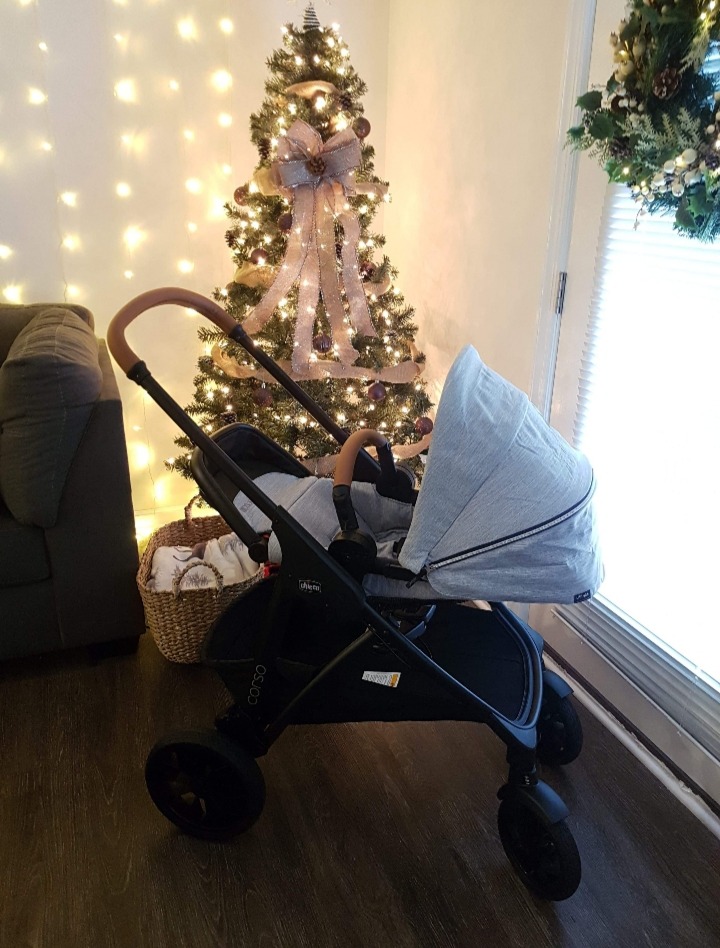
The Corso LE solves the problem every other infant seat eventually creates: the child outgrows the seat while there is still plenty of time left to ride rear-facing. Its KeyFit Max ClearTex infant car seat is rated 4 to 30 lbs but with an Easy-Extend Headrest System and a no-rethread harness that add height, legroom and stability in the rear-facing position, so a taller toddler can stay rear-facing longer.
Installation is unusually well supported here. The SuperCinch force-multiplying tightener works alongside bubble level indicators and one-hand leveling, and the newborn head and body support are included. The ClearTex fabrics are made without added flame retardants.
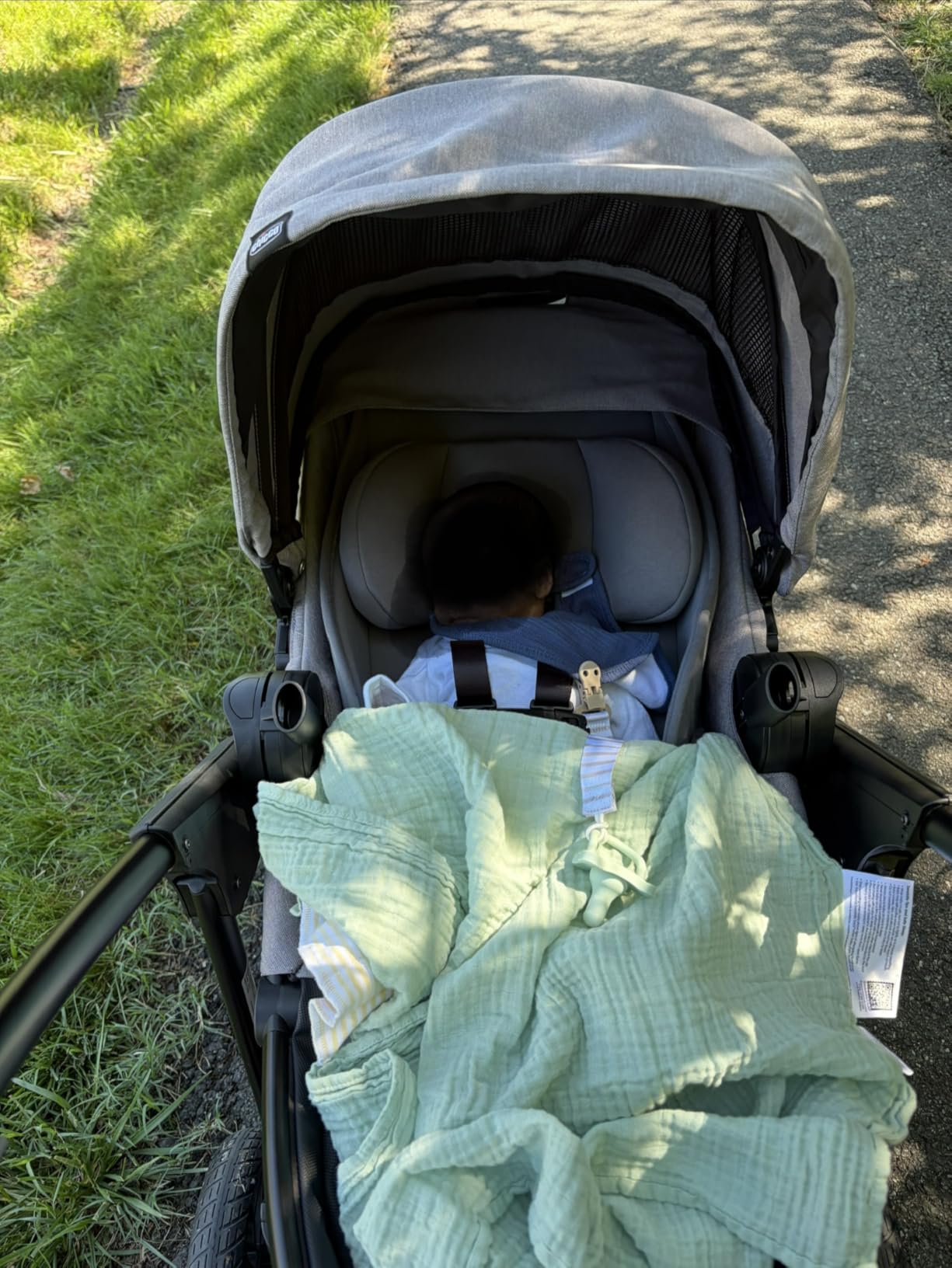
The stroller carries a car seat adapter in the box, which is unusual and removes the most common failure point in travel systems. Four parent-facing and forward-facing strolling modes, a one-hand free-standing fold with a fold lock, height-adjustable handle, foam-filled treaded tires and a zip-extend canopy make it a genuine modular system rather than a bolt-on.
Across roughly 590 reviews the rating is 4.8 with about 91 percent five-star, though the sample is the smallest here simply because the model is new.
Why extended rear-facing matters for you?
Rear-facing to the limit of the seat is the current safety guidance, and shorter seats force families to turn forward earlier than they would choose. More usable rear-facing height means one fewer seat swap during the toddler years.
That long runway is exactly what makes this the pick for parents who want to buy once and stop thinking about car seats.
Who should skip the Corso LE?
Skip it if you only need one child and one stroller. Four strolling modes, an adjustable headrest and premium ClearTex fabrics are real money spent on headroom you may never use, and the fabric claim is a preference rather than a safety requirement.
Because it is a newer model, there is less long-term owner feedback available. That is a reason to order early and register the warranty, not a reason to avoid it.
How We Picked These Combos?
Every product below ships with a rear-facing infant car seat rated from 4 lbs, so we did not score on whether it is newborn-safe in the basic sense. We scored on what happens after that question is answered.
First, newborn options beyond the carrier. A bundle that adds a pramette or a bassinet gives you a second way to carry a small baby, and we ranked those higher than carrier-only frames at similar capability.
Second, height and weight limits on the infant seat, because a 30 lb cap reached early means an early second purchase. Third, mass. We noted the stated weight of the car seat and frame where the manufacturer publishes it, because a carrier lifted several times a day is a real load in the first weeks.
Fourth, wheel type and suspension, since parents on r/Buyingforbaby repeatedly cite grass, gravel and neighbourhood walks as the deciding factor between frames.
Fifth, install accuracy. Whether the bundle includes a base, and whether the car seat has a force-multiplying tightener or a bubble level, tells you how often you will be guessing in a car park.
We compiled these from manufacturer specifications and from what buyers report in their reviews, and we flag where the two disagree. Where a reviewer consistently raises the same drawback, we say so rather than listing only strengths.
What Is a Travel System, Really?
A true travel system bundles a stroller frame, a compatible rear-facing infant car seat and, usually, a base, so the same seat moves from car to pavement with no extra hardware. Some brands advertise a travel system that means only the stroller accepts a car seat you bought separately. That naming trap is the single most common source of disappointment in this category, and it is worth checking the box contents before you buy anything.
Four newborn arrangements exist across the products here, and they are not equal.
The first is the carrier doubling as the stroller seat. It is the most common arrangement here, and it works because a rear-facing infant seat is already shaped the way a newborn’s spine expects.
The second is a pramette, where the stroller seat folds flat and reclines fully for an infant. The Graco Modes Pramette is the clearest example here.
The third is a bassinet, a separate flat bed that clips onto the frame in parent-facing or forward-facing positions. The Baby Trend Passport Switch is the only bundle here that includes one.
The fourth is an all-in-one, where the wheels are part of the car seat. The Doona sits alone in that category.
Flying With a Newborn and a Travel System
Only one bundle here is approved for aircraft use. The Doona carries TUV and FAA approval and folds to 17.4 by 26 by 22.4 inches, which is the reason it is the pick for a family that flies during the newborn months. Every other frame on this list is a gate-check item.
Gate checking means your frame and car seat go down the jet bridge or into the hold and come back at the gate, which adds time at both ends. Bring a padded travel bag for the car seat regardless of which system you fly with.
The three-wheel frames here, the Chicco Viaro and the Baby Trend EZ Ride, are the ones most likely to feel manageable in an airport because of how narrow they are. The suspension-equipped frames, the Chicco Corso LE and the Baby Trend Passport Cargo, are heavier to wrestle through a terminal.
If you fly often, weight is the number that decides it, and the car seat is usually the heaviest single object you will lift in a day of transit.
Newborn Safety: What to Verify Before the First Outing?
A newborn can ride in a stroller from birth, but only in the rear-facing infant car seat attached to the frame, or in a flat-reclined pramette or bassinet mode. Never in an upright stroller seat. Meet both the height limit and the weight limit on every seat, and if your baby was born early, confirm the seat’s minimum weight before you buy. Every infant seat in this roundup is rated from 4 lbs, which covers most premature and low-birth-weight babies.
Install the car seat rear-facing, tighten until the strap at the shoulder is level and you cannot pinch a single layer of fabric, and check the recline indicator for your specific seat. Where a base is included, install the base first and let it do the work rather than fighting the belt every time.
Never skip the car seat adapter straps or the connector clip when a frame offers them. Parents do it to save a few seconds and it removes a restraint from the equation. Read the frame manual and use every strap it provides.
Be careful with double-action brakes, which require both pedals or both of your feet to engage. They are a sensible design and a genuine trip risk for a distracted parent in a car park.
Do not jog with a baby who lacks head and neck control, even with the infant carrier attached and even on a jogging-capable frame. The movement is too much for an infant whose neck is not yet strong.
For days when you would rather not unfold anything, our newborn baby carrier guide covers the alternatives.
Travel System vs Separate Car Seat and Stroller
Buying a travel system costs less up front and removes the adapter question entirely. Buying separately lets you choose the best infant car seat and the best stroller independently, which matters when you already know your stroller needs are unusual, such as jogging, rough terrain or a double configuration for twins.
The decision usually turns on how long you expect the frame to last. A modular frame that folds flat or accepts a bassinet keeps working after the infant seat is retired. An all-in-one or a basic carrier-and-seat frame usually does not, which is why the historical forum complaint about travel systems was not really about the car seat. It was about replacing the stroller at fourteen months.
Two-car households get the short version: buy one travel system plus a second base for the second vehicle. Buying a second full system duplicates the stroller frame you already own and costs more than a base.
If you are shopping for twins, a single-to-double frame is the only kind of bundle that scales to two children from the start. None of the ten here is a double stroller, so twins families should expect a separate purchase beyond the newborn months.
Our recommendation by buyer type: buy the bundle if this is your first stroller and you have no strong opinion. Buy separately if you already know you want a jogging or all-terrain frame. Buy one bundle and a second base if you have two cars.
What Else You’ll Need to Buy With the Combo?
Start with the base. The Chicco Bravo, the Chicco Viaro, the Baby Trend Passport Switch and the Chicco Corso LE all ship with a base in the box, and most of the others pair with one. If your bundle does not include one, budget for it, because installing with a seat belt every single time is a routine you will regret at 2 a.m.
Next, a second base for a second vehicle rather than a second travel system. Bases are the cheapest way to solve two-car households.
Then the small extras that every parent forgets: a rain cover or sun shade for the stroller, a cup holder if your frame did not include one, and a travel bag if you fly. The car seat travel bag matters more than it sounds, because gate checking without one risks damage to fabric and shell.
If you buy before the due date, register the warranty as soon as the seat arrives, since registration windows start at purchase rather than at first use. Keep the receipt. Car seats have finite useful lives, and manufacturers publish guidance on replacing a seat after a crash or after a set number of years.
On second-hand systems, be cautious. Frames wear mechanically and fabric degrades, but the bigger issue is crash history. If a car seat has been in a vehicle involved in a crash, its structure may be compromised in ways you cannot see, and the expiry date alone will not reveal it.
Expect to buy a cup holder, a rain cover and eventually a second stroller. That last item is the one worth thinking about early, because it is the reason the all-in-one and frame-only approach often ends up costing more overall than the higher-tier modular bundle.
Frequently Asked Questions
Are car seat and stroller combos worth it?
Yes for most first-time parents, because a newborn can ride the stroller from day one in the car seat carrier and the bundle usually costs less than the two pieces bought separately. The exception is if you will not still want the stroller after the infant seat is outgrown, in which case a modular frame is worth the extra.
What is the best baby car seat and pram combo?
The Doona Car Seat and Stroller is the strongest default for newborns. It is rated from 4 to 30 lbs rear-facing, converts from car seat to stroller with one click, includes an infant insert for small babies, and is approved for aircraft use.
What type of stroller is best for a newborn?
An upright stroller seat is only usable from roughly six months, once a baby can sit unassisted. For a newborn you need one of four arrangements: the rear-facing infant car seat attached to the frame, a pramette that folds the stroller seat flat, a bassinet that clips onto the frame, or an all-in-one seat with built-in wheels.
Can I put my 2 week old in a stroller?
Yes, in a rear-facing infant car seat attached to the stroller frame, or in a flat-reclined pramette or bassinet mode. Never in an upright stroller seat. Always meet both the height and weight limits on the seat, and never jog with a baby who lacks head and neck control.
Should I buy a travel system or a separate car seat and stroller?
Buy the bundle if this is your first stroller and you have no strong preference, since it costs less and removes the adapter question. Buy separately if you know you need jogging, all-terrain or a double configuration. If you have two vehicles, buy one system plus a second base rather than two systems.
When should I change from the travel system to the stroller seat?
Move to the stroller seat when your baby can sit unassisted, usually around six months, and when you have reached the rear-facing height or weight limit of the infant seat, often shortly after the second birthday. Stop using a bassinet or pramette at the first attempt to sit up.
What is the safest car seat stroller combo for a newborn?
All ten bundles here ship with rear-facing-only infant seats rated from 4 lbs, and safety comes from correct installation rather than the bundle itself. Use the seat belt or rigid LATCH as instructed, tighten until no fabric can be pinched, meet both height and weight limits, and never skip the frame’s adapter straps or connector clip.
The Best Car Seat Stroller Combo for Newborns in 2026
If you want one decision made for you, take the Doona. It is the only bundle here where the car seat and the stroller are the same object, it is rated from 4 lbs, and it is cleared for aircraft use, which makes it the least compromised choice for a newborn who will be moved around a lot.
If you want one purchase that keeps working after the infant seat is retired, the Graco Modes Pramette is the pick. Its pramette mode gives a newborn a genuine flat recline, and the reversible stroller seat takes over when the carrier is outgrown.
If budget is the deciding factor, the Baby Trend Passport Switch is unusual among the cheapest bundles because it includes a bassinet, and the Safety 1st Smooth Ride is a solid all-round bundle with a 4 to 30 lb infant seat and a generous basket.
Whichever you choose, buy for the newborn phase rather than the toddler phase. Match the seat’s minimum weight to your baby, decide whether you want a pramette or bassinet, and check whether the frame will still be worth owning in two years. Our travel system guide for newborns goes deeper on the naming traps, and our newborn wrap comparison is worth a look for the days you would rather not unfold anything at all.