
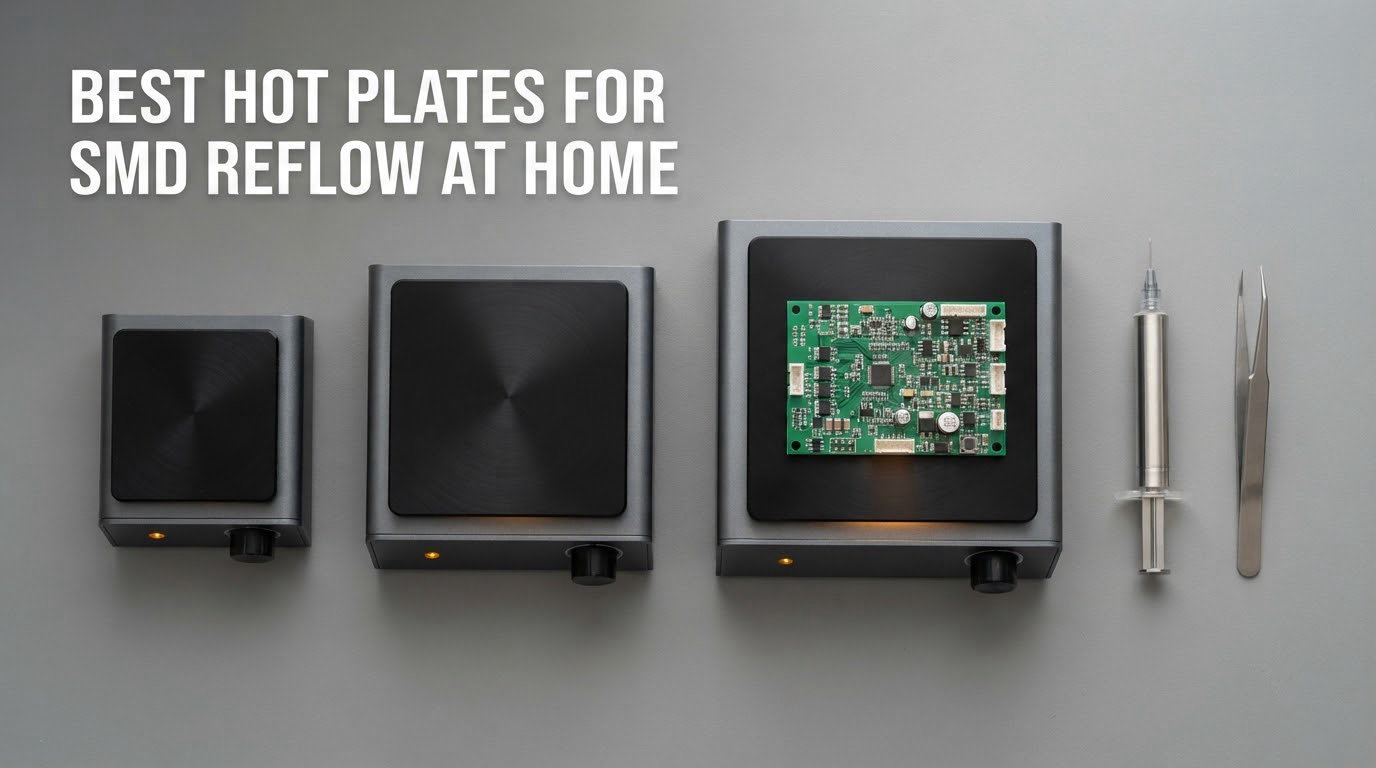
If you have ever dragged a desoldering braid across a QFN pad on the kitchen table and hoped for the best, a dedicated reflow hot plate changes the job completely. The best hot plates for SMD reflow at home heat an entire board from underneath, so every pad reaches melting point at roughly the same moment instead of one at a time under an iron tip.
That uniformity is the whole point. Hand soldering a 0402 resistor takes steady hands and a fine tip; reflow on a plate takes patience and a paste stencil. The solder melts, surface tension pulls each part square onto its pads, and the board cools into a joint you did not have to touch. For a maker assembling prototypes, sensor boards or small batches, this is the cheapest credible step up from an iron.
We spent weeks with ten plates on the bench, from a palm-sized USB-C unit to 850W and 1080W bench models with 200x200mm surfaces. This guide covers what each one is genuinely good for, where the plate size versus board size rule bites, and how to run a profile you can repeat. We also looked at buying guide details like PID loops, thermal mass, and the safety gear that matters in a home workshop.
Table of Contents
Top 3 Picks: Best Hot Plates for SMD Reflow at Home (October 2026)
If you want the short version, these three cover almost every home workshop. The first is the plate we would put on the bench first, the second is the only one here that programs a real reflow profile, and the third is the lowest-cost way to start.

Soiiw 850W 200x200mm Plate
- 200x200mm aluminum plate
- 850W multi-tube element
- 30-400C microcomputer control

WEP 946D IV 100x50mm
- PID program and cycle control
- 100x50mm aluminum plate
- 50-400C range
- ESD tweezers included

Kosmeiner 100x100mm Plate
- 100x100mm heating area
- multi-point heating
- sensor feedback control
- 30-400C range
Every Hot Plate in This Roundup at a Glance
| Product | Specifications | Action |
|---|---|---|
| Soiiw 850W 200x200mm Hot Plate |
|
Check Latest Price |
 Soiiw 350W 100x100mm Hot Plate Soiiw 350W 100x100mm Hot Plate |
|
Check Latest Price |
 KeenWise 1080W 200x200mm Hot Plate KeenWise 1080W 200x200mm Hot Plate |
|
Check Latest Price |
 Vevitts 850W 200x200mm Hot Plate Vevitts 850W 200x200mm Hot Plate |
|
Check Latest Price |
| WEP 946D IV 100x50mm Plate |
|
Check Latest Price |
 QWORK 360W 100x100mm Hot Plate QWORK 360W 100x100mm Hot Plate |
|
Check Latest Price |
| Kosmeiner 100x100mm Heating Plate |
|
Check Latest Price |
 SEQURE T55 Mini Hot Plate SEQURE T55 Mini Hot Plate |
|
Check Latest Price |
 KeenWise 360W 100x100mm Hot Plate KeenWise 360W 100x100mm Hot Plate |
|
Check Latest Price |
 DIDOZON 850W 7.9in Plate DIDOZON 850W 7.9in Plate |
|
Check Latest Price |
1. Soiiw 850W 200x200mm Plate – the One We Would Buy First
850W Soldering Hot Plate 200x200mm LED Electric Preheat Rework Station
- 200x200mm plate covers full-size PCBs and multi-joint reflow
- Microcomputer CPU control holds set-point steadily
- 850W multi-tube element transfers heat fast
- Multi-angle cooling holes extend element life
- No stored reflow profiles so the soak phase is manual
- Heavier at 7.08 lbs than 100x100mm bench models
This is the plate we kept reaching for. A 200x200mm aluminum surface is the smallest sensible square for an Arduino-class board with a shield on top, and the 850W multi-tube element pulls the plate back to set-point fast after a board lands on it. That recovery is what makes back-to-back reflows possible without a long wait between them.
The review record backs the enthusiasm: 301 ratings averaging 4.4, with 69 percent of owners handing out five stars. Buyers single out accurate CPU-controlled temperature and the generous plate area for SMD rework.
The multi-angle cooling hole design is a quiet win. Fanless cases run hot, and a plate that can shed heat keeps its element alive over years of daily use. There is no fan noise to cover your own concentration.
The catch is honest and simple: no profile programming. You set a temperature, you watch the board, and you decide when to pull it. That is fine for someone learning the process by eye, and it is a real limitation if you want the same cycle every time without watching.
Who this plate suits
Anyone assembling full-size boards rather than tiny breakouts. The surface handles a PCB with mounting holes and a connector, and the 850W element means a second board can go down almost immediately after the first comes off.
It also works as a general bench tool beyond reflow. Phone screen separation, LED display work, aluminium substrate sealing and constant-temperature sample testing all appear in the feature set, and owners use it that way.
Where it falls short
At 7.08 lbs and 10.24 x 9.84 x 7.48 inches, it is the heaviest unit in this roundup. A cramped desk is a real constraint, and the bare hot surface gives no warning before contact.
Because there are no stored profiles, the 60 to 90 second soak still depends on your judgement. Buy it for plate size and power, not for automation.
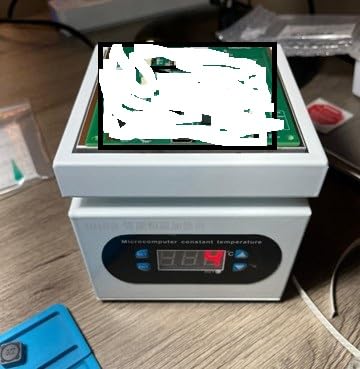
2. Soiiw 350W 100x100mm Plate – Small Board Workhorse
350W Soldering Hot Plate,100×100mm LED Microcomputer Preheat Rework Heater
- Affordable entry point that melts paste and self-centers parts
- Holds set-point steadily for long stretches
- Compact and useful for BGA and Raspberry Pi work
- Bare plate with no profile support
- Non-detachable plate is awkward to clean or shield
- Thin or missing documentation
This is the plate most first builds actually need. A 100x100mm aluminum surface handles sensor breakouts, phone logic boards, Raspberry Pi accessories and small carriers without any improvisation, and it heats from 30C to 400C on a 350W element.
Owners rate it 4.6 across 89 ratings, with 83 percent at five stars. The common description is a simple, accurate plate that heats quickly and holds temperature while you work, which is precisely what a first reflow cycle needs.
One piece of practical advice from the reviews: even though the plate is 100x100mm, it holds enough heat to preheat a larger board once the corners are trimmed to fit. That thermal reserve is more generous than the wattage figure suggests.
The LCD read-out and CPU-controlled constant-temperature platform are doing the quiet work here. There is nothing flashy about it, and that is the appeal.
Who this plate suits
A maker working on boards under 100mm in each direction. If your work is 0402 passives, a SOIC-8 sensor or a small BGA on a scrap board, this covers it at a modest outlay.
It is also a good second plate for a busy bench, since the small footprint leaves room for an iron and scope beside it.
Where it falls short
There is no reflow profile support, so the soak ramp is entirely on you. The plate is also fixed in place, which makes cleaning flux residue or adding a foil shield awkward.
A few buyers report the power cable failing early, and the box includes no manual or QR code for setup. Budget for a short learning session with no documentation to lean on.
3. KeenWise 1080W 200x200mm Plate – Strongest Thermal Recovery
- Highest wattage here for fast heat-up and strong thermal mass
- Aviation aluminum plate distributes heat evenly
- Edge protection and fuse tube add safety
- Stainless steel tweezers included
- Lowest average rating in this group at 4.0
- No programmable reflow profiles
- Heaviest specification sheet price of the 200x200mm options
Power is the headline here. At 1080W on an aviation aluminum plate measuring 8.58 inches square, this unit puts more energy into the surface than anything else we tested, and it holds shape at high temperatures.
That extra headroom shows up when a heavy board with a ground plane lands on the plate. The temperature dip is smaller and the recovery is quicker, which is exactly the behaviour you want when cycling boards.
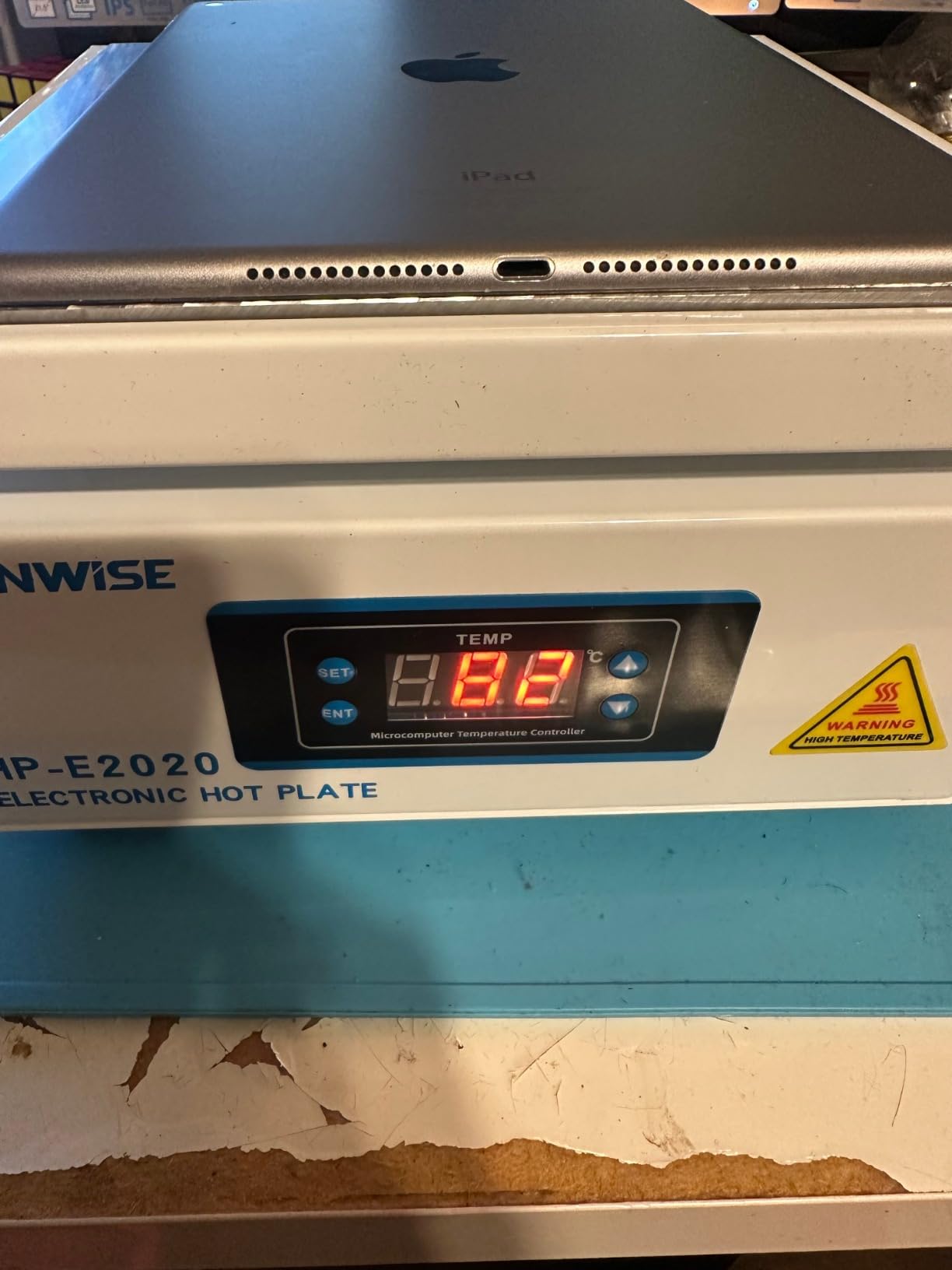
The hardware is the most safety-conscious in the roundup: edge protection around the hot surface, a fanless case with adjustable side vents for convection cooling, and an included fuse tube. Stainless steel tweezers come in the box too, which is genuinely useful when a board is at 200C.
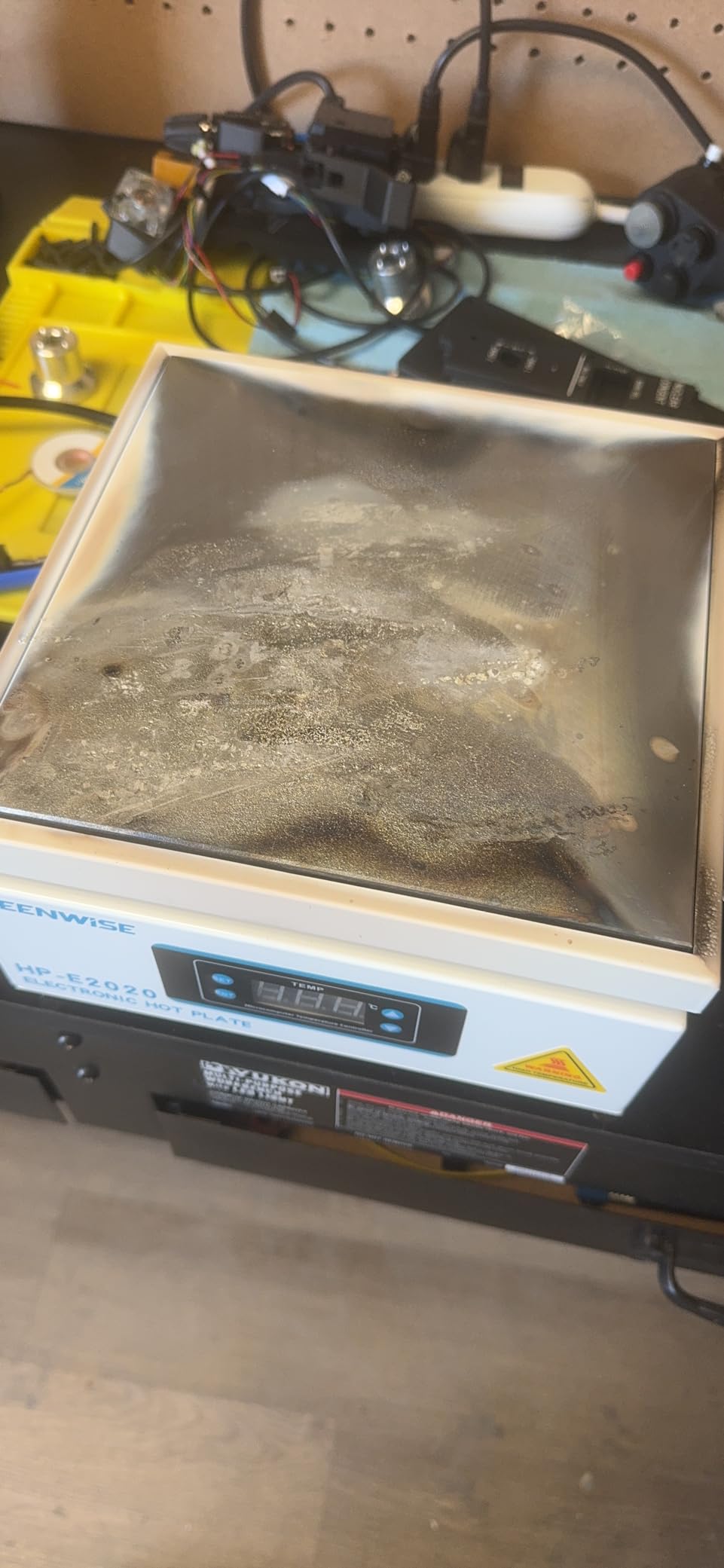
What held it back was consistency. At a 4.0 average with 16 percent one-star ratings, a noticeable share of owners report build or control quality below what the specification sheet implies.
Who this plate suits
Anyone running short batches where throughput matters more than pennies. The recovery speed means you are not standing around waiting for the plate to climb back to set-point between boards.
It is also the safest of the large plates to have near a busy bench, thanks to the edge guards and fuse tube.
Where it falls short
The lowest average rating in the roundup, with a real minority of negative reviews. Expect that some units will not feel as refined as the specification list suggests.
There are no programmable profiles, and the fanless case with adjustable vents means more moving parts of the design to age. It is a workhorse, not a precision instrument.
4. Vevitts 850W 200x200mm Plate – Quiet, Insulated Bench Option
Vevitts 110V 850W LED Digital Electric Hot Plate, 30-400°C Soldering Preheating Station for PCB SMD LED Rework Lab
- Full-wrap insulation cuts accidental burn risk
- Stated stability of plus or minus 1.5C aids repeatability
- 200x200mm aluminum alloy plate with even transfer
- Fanless three-side cooling runs silently
- Set-point control only with no stored profiles
- Limited documentation compared with OLED units
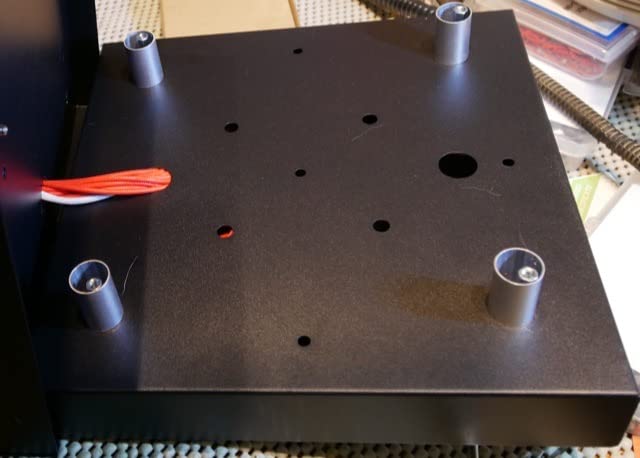
This plate shares the 946C+ platform with our top pick but wraps the body in heat insulation. That changes the working environment more than it changes the results: the casing stays cooler to the touch, which matters on a bench where a bare 400C metal surface sits next to your forearm.
It also publishes a stability figure of plus or minus 1.5C, which is a more useful number than most plates in this class offer. Repeatability is the whole game in reflow, and a stated tolerance gives you a baseline for judging calibration later.
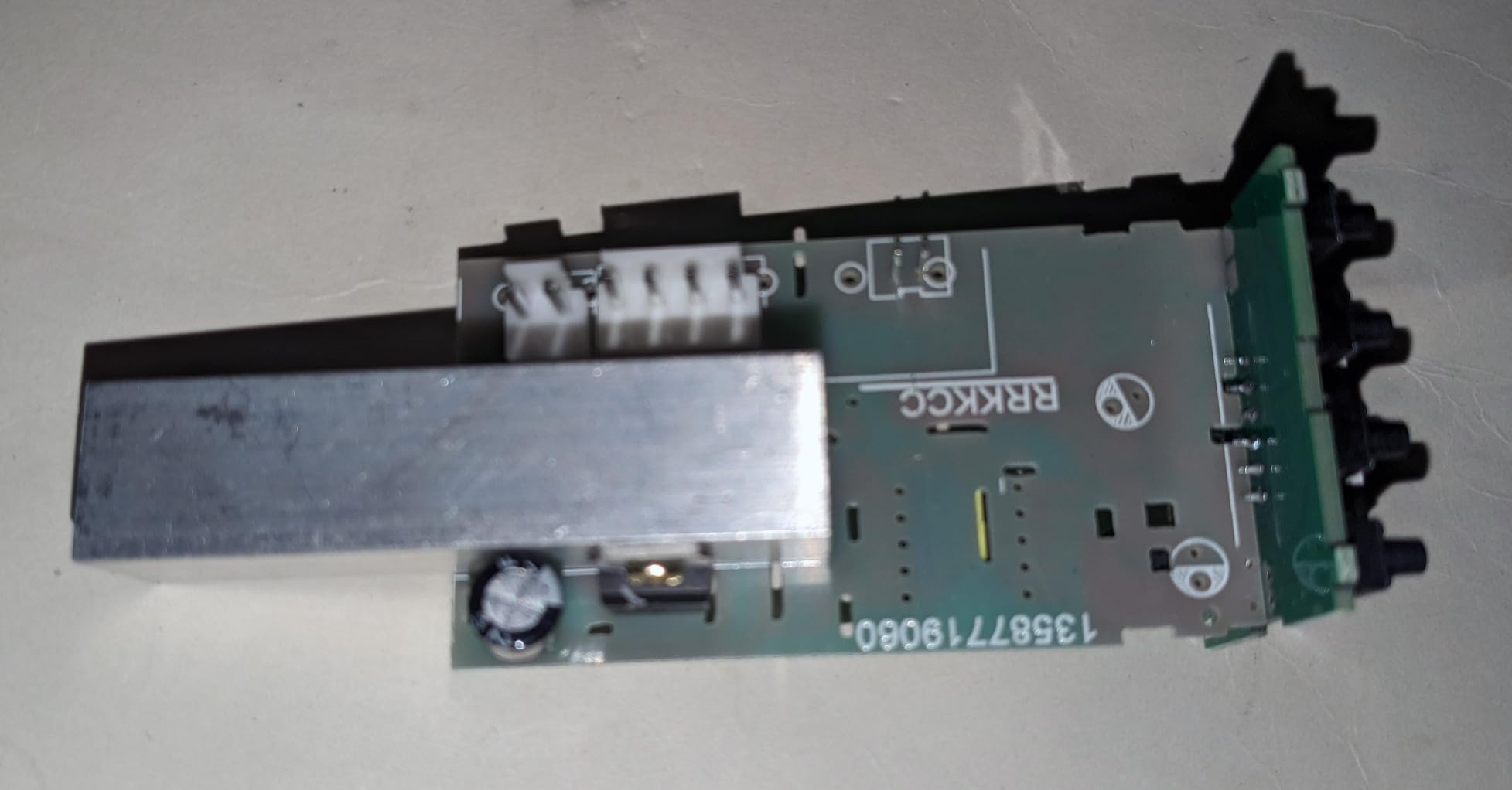
The fanless three-side cooling design means the unit works in silence. If you reflow at night, or sit near it in a shared workshop, that is a real difference in daily use.
Reviews average 4.4 from 49 ratings with 71 percent at five stars, centred on even heating, quiet running and the comfortable safety margin from the insulated wrap.
Who this plate suits
Home workspaces with a shared bench, a small bedroom workshop, or anywhere an unguarded 400C plate would be a worry. The insulation is a genuine comfort gain.
It also suits anyone who wants a stated temperature tolerance to calibrate against.
Where it falls short
Manual set-point only, so no saved profiles. The menu depth and documentation are thinner than what you get from an OLED-controlled unit, so expect to learn the interface yourself.
It is the same size and weight class as the other 200x200mm plates here, so it solves nothing about a cramped desk.
5. WEP 946D IV 100x50mm – the Only Unit With Real Profile Control
- PID program and cycle control with millisecond timing
- Compact area suits BGA and phone board spot heating
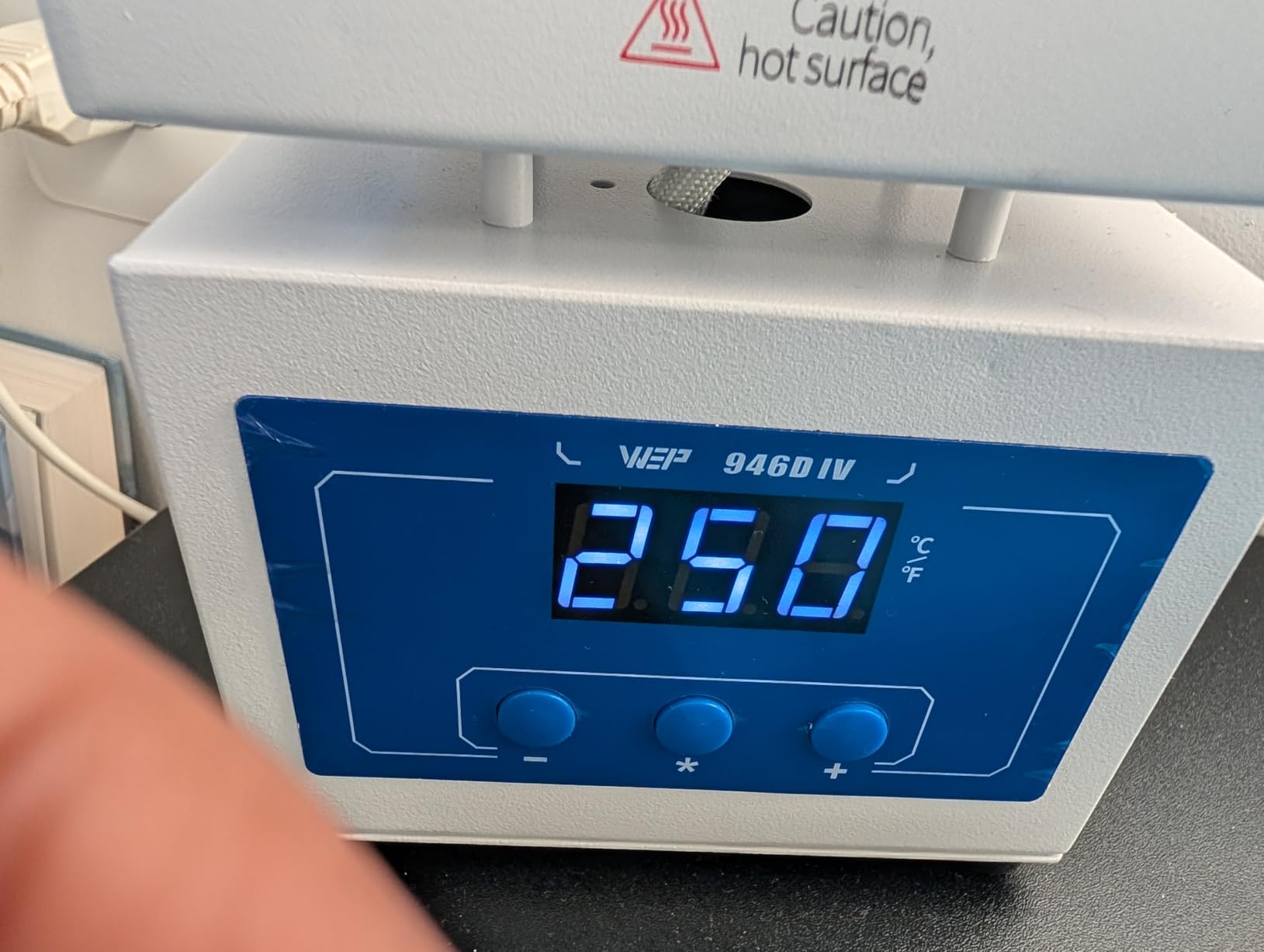
- Celsius to Fahrenheit conversion with digital read-out
- Metallic plate guards
- Both straight and curved ESD tweezers included
- Small heating area suits single-chip work rather than whole-board reflow
- Rated for 110-127V only
Everything else in this roundup is a set-point controller that you watch. This one programs a cycle: heat to a target, dwell, then step. That is a different class of tool, and it is why we picked it as the premium option despite the small plate.
The build quality is reflected in the ratings. At 4.6 across 42 ratings, 64 percent are five stars and 36 percent four stars, with no negative ratings at all, which is the cleanest distribution in the group. WEP backs it with one year of US technical support.
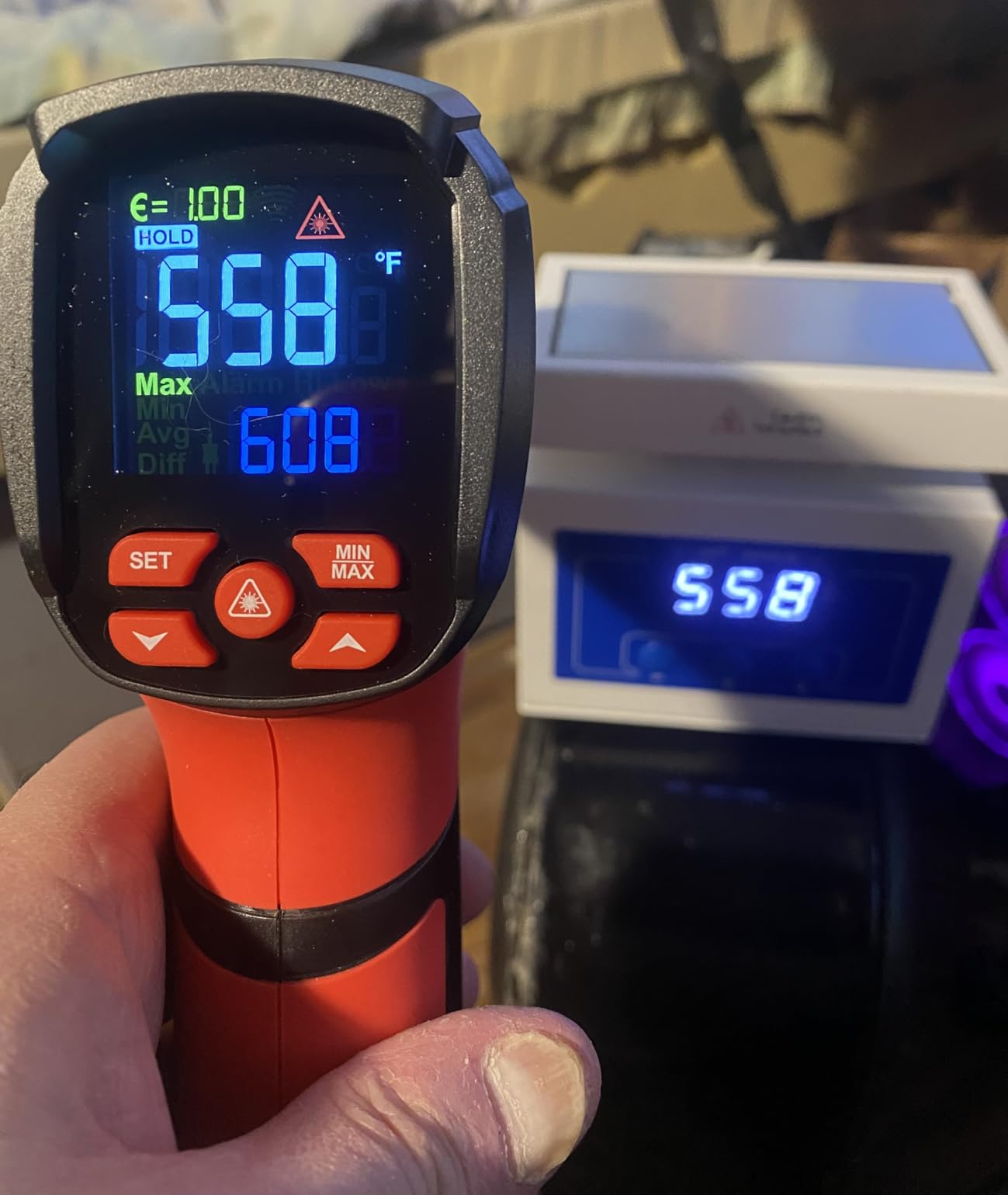
The 100x50mm aluminum plate is framed by metallic guards that reduce the chance of touching the hot surface. It combines well with a hot air rework station, letting you pull a BGA from the top with hot air while the plate heats from below.
Celsius to Fahrenheit conversion and a clear digital read-out give you a live reference while the cycle runs, which removes the guesswork from timing.
Who this plate suits
Anyone doing targeted rework rather than whole-board reflow. Removing a failed BGA, reballing a phone board or desoldering a dense connector on a large PCB all fit a 100x50mm window.
It also suits anyone tired of guessing. Programmed cycles remove the human timing variable entirely, which is how you get the same result on the tenth board as on the first.
Where it falls short
The heating area is small by design, so it cannot reflow an entire PCB in one pass. You work in sections or use it purely for rework.
It is rated for 110-127V supplies only, which makes it unusable on a 220V circuit without a step-down transformer. Check your supply before buying.
6. QWORK 360W 100x100mm Plate – Compact and Well Protected
QWORK Soldering Hot Plate, 110V 360W Soldering Station with Digital Display –Electric Preheat Rework Heater Lab for Precision Heating (30°C to 400°C)
- Aviation aluminum plate with high thermal conductivity
- Edge protection
- fanless design and adjustable vents
- Fuse tube for electrical protection
- Compact plate keeps the bench footprint small
- Set-point control with no multi-step profiles
- Small review base means thin long-term durability evidence
The 100x100mm plate here matches the size of the Soiiw small unit but adds the same safety package as the big KeenWise: edge protection, a fanless case with adjustable side air vents, and an included fuse tube.
Ratings are 4.7 across 29 reviews, with 89 percent at five stars and no one-star ratings at all. Owners praise precision and the safety design, and note the plate heats rapidly and evenly.
The honest caveat is the sample size. Twenty-nine reviews is a thin record for judging how the heating element performs after two or three years of daily use, and no long-term durability data exists yet.
Who this plate suits
A small desk. The 100x100mm footprint leaves room for tools, and the vented fanless case keeps the surrounding area usable while it runs.
It is a sensible choice if safety hardware on the box matters to you more than profile programmability.
Where it falls short
Set-point control only, so the multi-step soak and reflow sequence is manual. For a board with a thermal pad and fine-pitch parts, that manual timing is the weak point.
The thin review record means you are buying on current sentiment rather than a long track record. That is a normal trade-off at this tier.
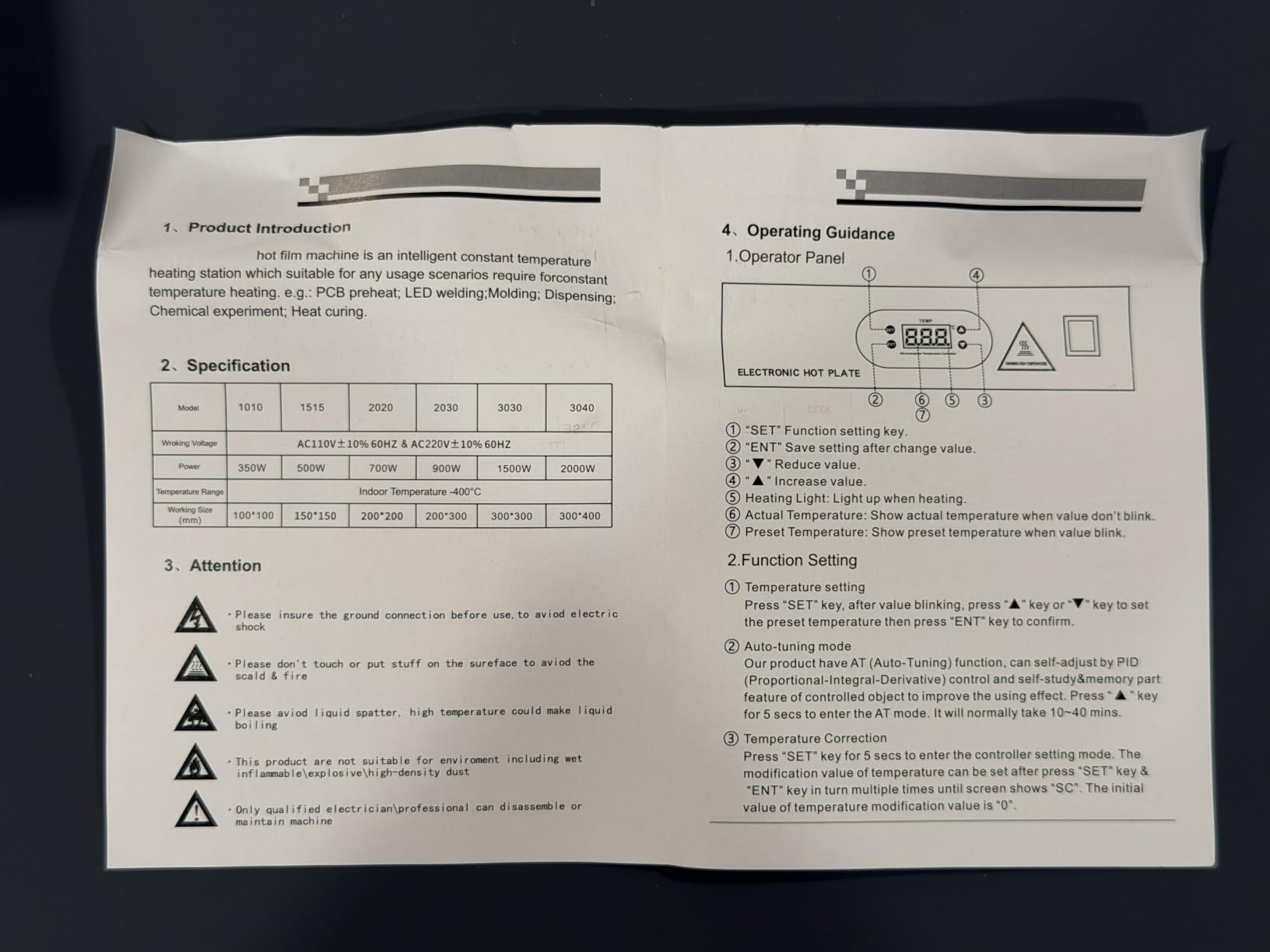
7. Kosmeiner 100x100mm Plate – Budget Starting Point
- Multi-point heating raises several joints at once
- Temperature sensor with real-time feedback cuts hot spots
- Compact footprint
- Heat-resistant edge design keeps hands off the surface
- Slow ramp toward the upper end of the range
- Surface coating smokes on first heat-up and must be burned off
- No stored reflow profiles
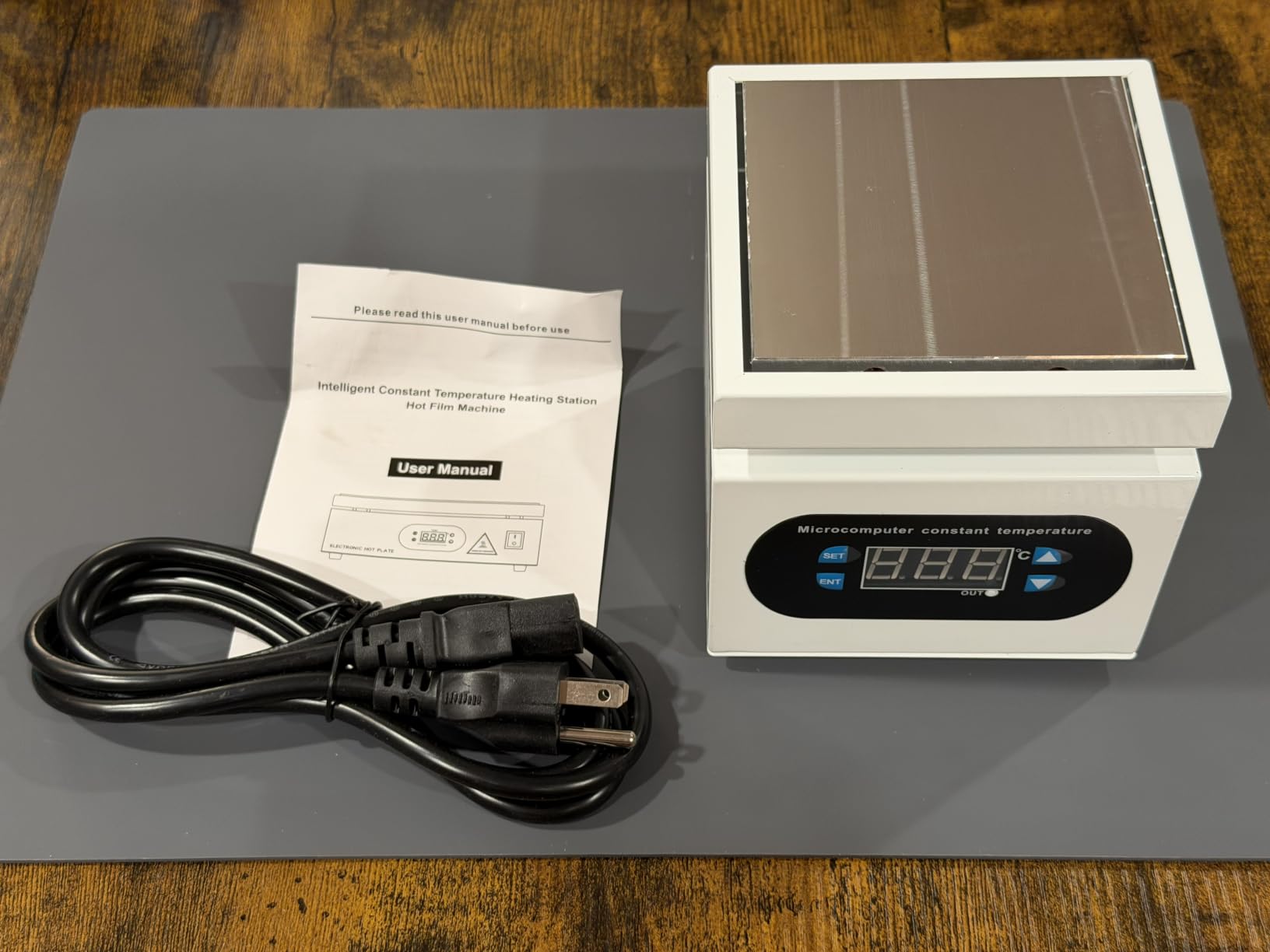
Multi-point heating is the idea that matters here. Instead of assuming one hot spot, the plate raises several solder joints and components at the same time, which cuts the time a rework job takes when you are dealing with a scattered set of pads.
Owners rate it 4.8 from 26 reviews with 87 percent at five stars, and the feedback often notes the unit feels larger and more solid than expected at 1 kg. It is available in 100x100mm and 200x200mm variants.
One tip from the reviews deserves repeating: burn off the protective surface coating outdoors before first use, or run it in a ventilated space until the smell stops. That first heat-up smokes, and the smell is sharp enough that you want a window open.
Available in a 200x200mm version as well, which is worth noting if your boards outgrow the 100mm square in a year or two.
Who this plate suits
A first reflow cycle on small boards, or scattered rework jobs where multi-point heating saves time. The 100x100mm version suits sensor and breakout-sized work.
The heat-resistant edge design is a genuine plus in a home workspace where the plate sits near the edge of a desk.
Where it falls short
The ramp toward the top of the 30-400C range is slow. Plan your heat-up time accordingly, and do not assume a quick preheat.
There are no stored profiles, and the coating burn-off step is mandatory before the plate touches a PCB.
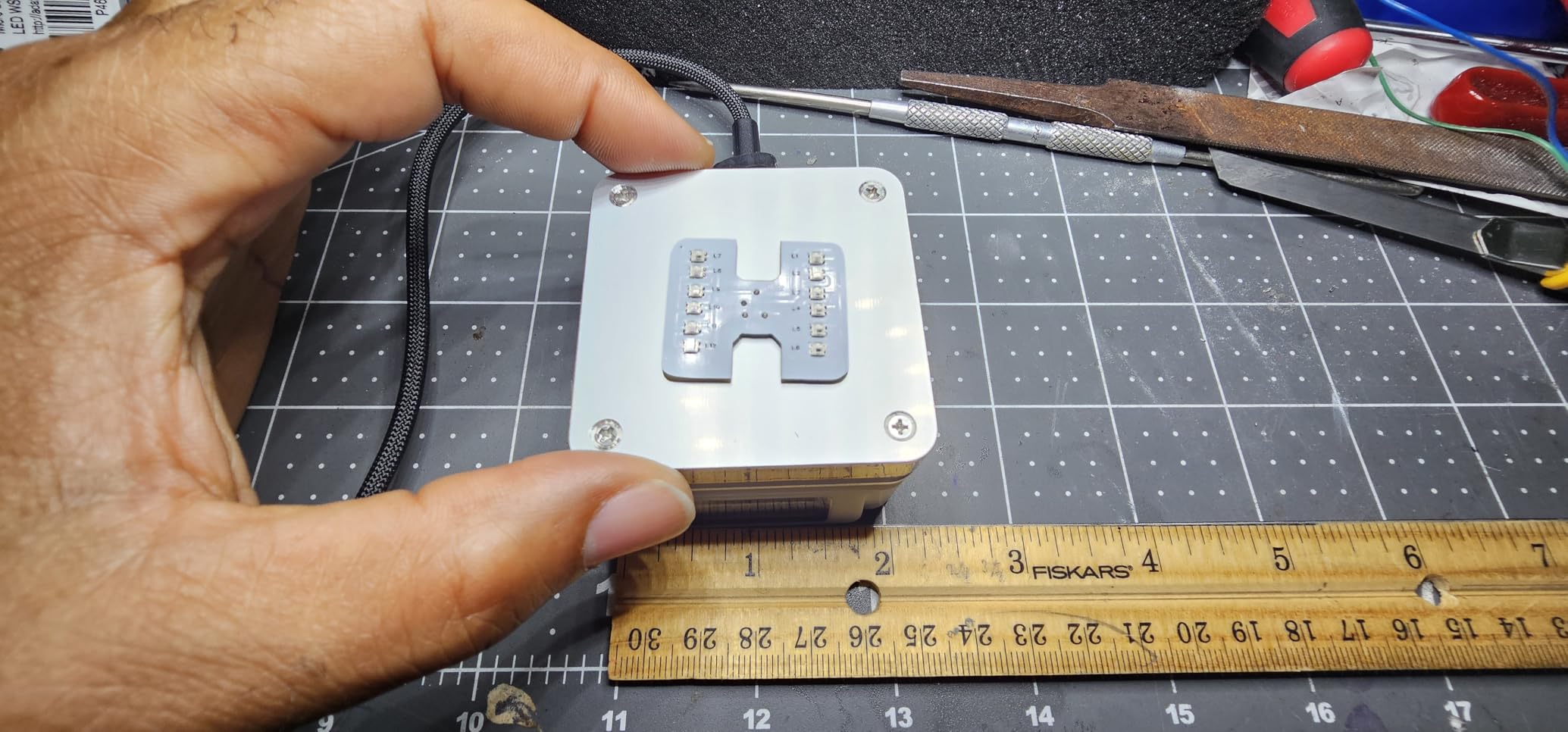
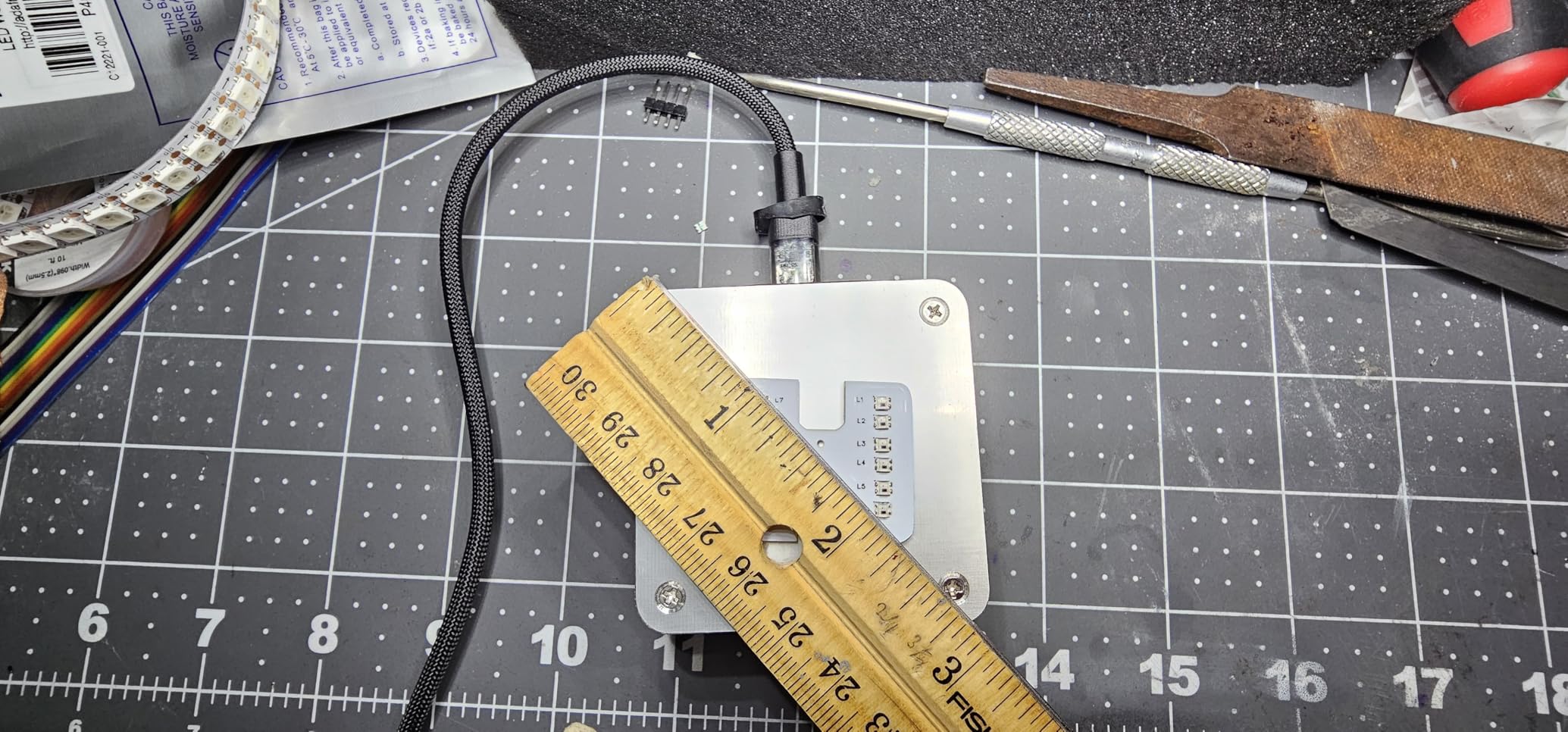
8. SEQURE T55 55x55mm Mini Plate – Portable Spot Heating
SEQURE T55 Mini Soldering Hot Plate 25V 95W Preheating Station
- Publishes an 87 second ramp from 30C to 280C
- OLED display with presets
- timed heating
- auto-sleep and temperature compensation
- Firmware upgradeable with multiple display languages
- Non-slip silicone base and rear buttons for one-handed control
- 55x55mm plate only spot-heats parts of a larger board
- Menu auto-returns after about five seconds
- One owner measured the reading roughly 60C high
This is the odd one out, and the oddness is the point. The T55 runs from a USB-C PD supply, weighs 0.32 kg, and fits in a tool bag. If you repair boards away from a bench, no other plate here goes with you.
It publishes real numbers: 87 seconds from 30C to 280C on a 65W supply at 25.2V, and stability of plus or minus 1 percent up to 280C. The OLED menu offers presets, timed heating, automatic sleep and temperature compensation.
Ratings split at 4.0 from 23 reviews, with 58 percent five stars and 16 percent one star. Enthusiasts like the presets and the ramp. Detractors cite the five-second menu timeout, which makes programming a preset genuinely fiddly.
The temperature ceiling of 280C is the other practical limit worth knowing, since it sits below the peak most lead-free profiles ask for.
Who this plate suits
Field repair and on-site work where mains power is unavailable. The 55x55mm aluminum surface is even enough to limit PCB warping and cold joints on a small area.
It is also a good bench companion for touch-ups: raising one connector or one cluster of pads without waiting on a large plate.
Where it falls short
A 55x55mm surface cannot reflow an entire PCB. Whole-board work is out of scope here, and the unit is a spot heater by design.
The most important caution in this roundup: one owner measured the indicated temperature roughly 60C high against a thermocouple. Verify it with a probe before you trust a profile. There has also been at least one report of sparking at the heating element, so treat the unit as a bench tool rather than something to leave heating unattended.
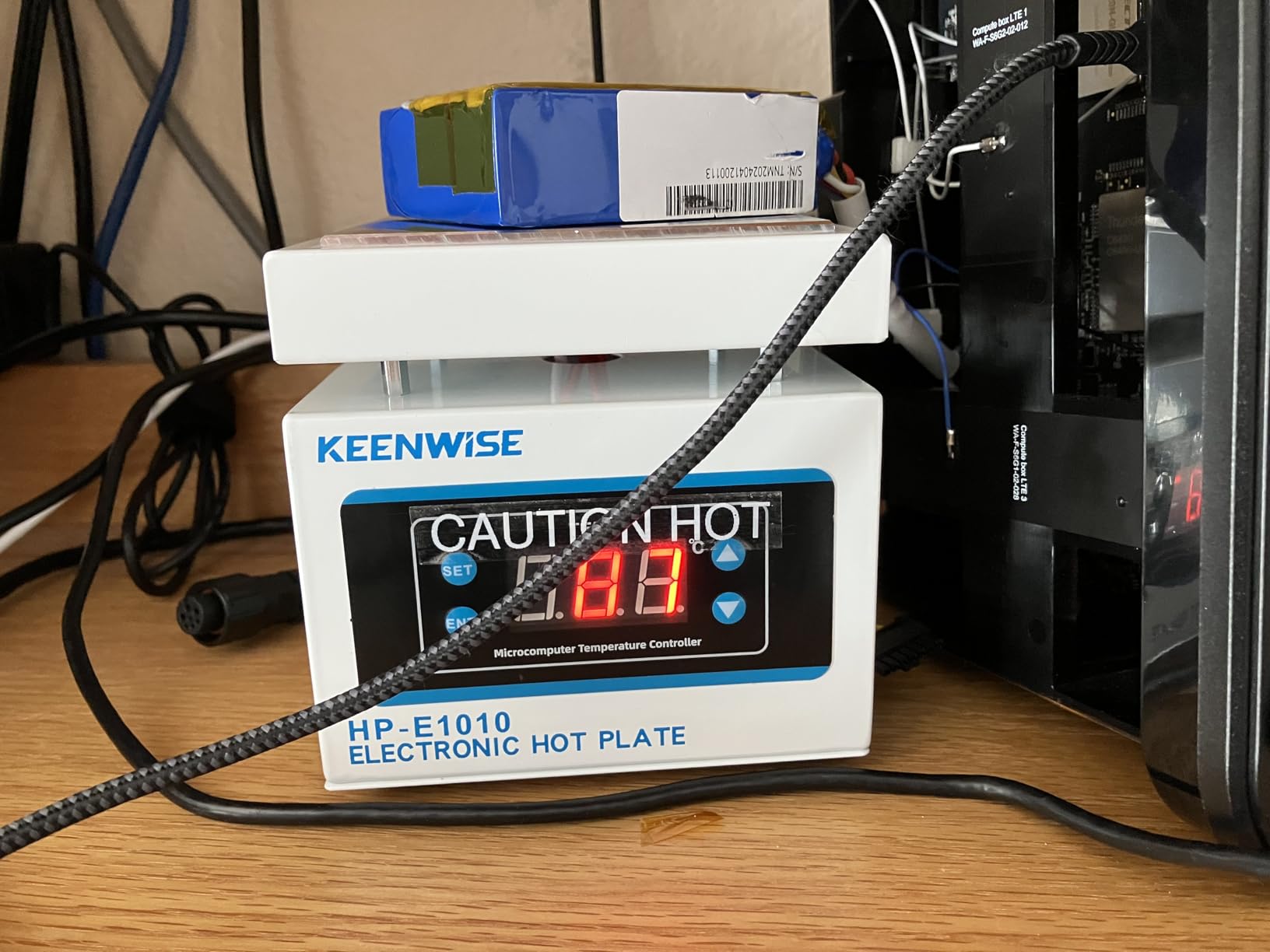
9. KeenWise 360W 100x100mm Plate – Tweezers in the Box
- Same CPU control platform as the 1080W KeenWise on a smaller plate
- Aviation aluminum plate for even heating
- Edge protection
- fanless case
- vents and fuse tube
- Tweezers and power cord included
- 100x100mm area limits it to smaller PCBs
- No programmable reflow profiles
- Only 17 reviews with 14 percent one-star ratings
This is the compact member of the KeenWise family, and it inherits the control platform and safety hardware from the 1080W version without the bulk. Stainless steel tweezers and a power cord come in the box, which is a small convenience that matters when a board comes off the plate at 200C.
Ratings average 4.3 from 17 reviews with 77 percent at five stars. The plate itself is praised for even, controlled heat, though a minority of one-star reviews suggest occasional quality inconsistency.
Seventeen reviews is a small sample, and 14 percent one-star ratings is worth knowing about. Treat the specification sheet as the ceiling rather than the average.
At 2.3 pounds and a 4.65 inch square footprint it is one of the lighter units here, so a small bench is realistic.
Who this plate suits
First-time builders who want the safety hardware and included tweezers without committing to a large plate. The 4.65 inch square footprint is easy to accommodate.
It works well for boards that comfortably fit within 100x100mm, which covers a lot of sensor and breakout work.
Where it falls short
The 100x100mm area is the hard limit. Anything larger has to be trimmed or worked in sections.
No programmable profiles, and the thin review record means you will be the early adopter for reliability purposes.
10. DIDOZON 850W 7.9in Plate – Big Surface, Slow Ramp
850W Soldering Hot Plate, 110V, LED Microcomputer, Electric Preheat, Soldering Station Welding Hot Plate Rework Heater, 7.9 x 7.9 in Plate
- 850W element on a large plate suits phone and tablet boards
- LED microcomputer controller with accurate set and hold
- Reported as a genuine time saver when preheating beside an iron or hot air gun
- Owners consistently rate physical quality as very good
- Slow to heat and slow to cool with one owner measuring 20-60 minutes
- Smokes on first heat-up until the coating burns off
- No reflow profile programming
- Only 11 reviews
Roughly 200x200mm of aluminum driven by an 850W element, with an LED microcomputer controller covering 30-400C. The surface area is the reason to consider it: it takes phone and tablet logic boards with room to spare, and it works alongside a soldering iron or hot air gun as a preheat station.
Ratings are 4.8 from 11 reviews with 83 percent at five stars and 17 percent at four, and no negatives. Owners rate the physical construction highly and report steady temperature holding.
The complaint to plan around is thermal speed. One owner measured 20 to 60 minutes for heat-up and cool-down, which is slow enough that you should schedule it rather than wait on it. It also smokes on first heat-up until the coating burns off.
Who this plate suits
Anyone working on phone and tablet boards who needs a large surface and values build quality over ramp speed. If you preheat once and then do a run of joints, the slow ramp matters much less.
The wide 30-400C range also covers screen separation work alongside reflow.
Where it falls short
Slow heating and slow cooling are the defining limitation. Budget time on both ends of every session.
There are no stored profiles, and eleven reviews is a very thin record. Expect to be early to any long-term reliability question.
How to Do SMD Reflow on a Hot Plate in Five Steps
The technique is simple enough that you can learn it in one afternoon. The variables are plate size, temperature and time, and the paste does most of the work. Before the first pass, it helps to have the right paste handling sorted out, which we covered in our guide to solder paste dispensers for SMD work.
1. Print the paste. Apply solder paste through an SMT stencil with a squeegee at roughly a 45 degree angle. A 100 micron stencil suits 0.5mm pitch and finer, and 150 micron handles 0.8mm pitch parts. Too thick a stencil deposits too much paste and causes bridging, too thin starves the pads.
2. Place the components. Set every part on its pads before heating. Anything you leave off must be positioned later, and dragging a part across paste after the board cools makes a mess of the next attempt.
3. Soak. Bring the plate to roughly 150-180C and hold for 60 to 90 seconds. This is the phase people rush, and it is where flux activates and heat reaches the top of the board through the package. Skip it and you get insufficient solder and non-wetting.
4. Reflow. Raise to the peak. For Sn63/Pb37 that is around 180-190C at the plate. For SAC305 lead-free, expect to work in the 215-245C range at the plate. Watch the paste rather than the display, and pull the board as soon as the solder collapses and the parts slide into place.
5. Cool undisturbed. Set the board on a heat-resistant surface and do not touch it. Movement while solder is solidifying causes parts to skate, and premature handling causes tombstoning. Allow the board to reach room temperature on its own.
One detail worth repeating: if the board is larger than the plate, the corners will not reach liquidus. That is the single most common cause of partial reflow, and it is why plate size deserves more attention than wattage.
Can a Hot Plate Replace a Reflow Oven?
Yes, for single-sided boards and small batches assembled by hand, a hot plate can replace a reflow oven. It heats the whole board from below and costs a fraction of an oven. It cannot match an oven for repeatability, double-sided assemblies or fine-pitch work at volume.
The practical difference is control. An oven runs a programmed profile, logs the cycle, and repeats it identically every time. A hot plate holds a temperature you set, and you decide when to pull the board by watching it.
That means you are the profile controller. It is workable, and plenty of people have assembled hundreds of boards this way, but the outcome depends on your attention rather than on the machine.
There is one more honest consideration. Oven sellers will tell you plates are worse. Industry guidance puts hot plate defect rates around 5 to 15 percent against 1 to 5 percent for a convection oven, and plate temperature variation at roughly plus or minus 20C against plus or minus 1C for an oven. In practice, most of that gap closes once you match the plate to the board and watch the cycle properly.
Where a plate genuinely cannot compete: double-sided boards where the underside needs reflowing too, dense fine-pitch packages, and any job where you need the same result on board one and board fifty without checking each cycle.
Common Defects and How a Hot Plate Causes Them
Most hot plate defects trace back to heat that arrived unevenly or too fast. Knowing which defect you are looking at tells you which variable to change.
Tombstoning happens when one end of a chip melts before the other and surface tension flips the part upright. It is nearly always a heat uniformity problem: a plate smaller than the board, a board sitting near the edge, or a soak that was too short.
Solder bridging is excess solder joining two pads. With a plate it is usually paste volume rather than heat, which means the stencil was too thick for the pitch, or the squeegee angle dragged too much material across the aperture.
Insufficient solder and non-wetting both point the same direction: the joint did not fully reach liquidus, or flux burned off before the solder could flow. A rushed soak or a plate that cannot hold temperature produces both.
Part movement is a different failure. A part that slides or pops off mid-cycle is responding to an uneven ramp, usually because the board is cooling at a different rate from the plate. Let the board cool without touching it.
Readers on the SparkFun forums value hot plates here for a specific reason: you can see the solder begin to reflow and react in real time. That visibility is an advantage over an IR oven, where the same information arrives only after the cycle ends.
Lead-Free vs Sn63/Pb37 Temperature Targets
Your solder alloy sets your target temperatures, and the gap between the two common choices is roughly 30C at the peak. Getting this wrong is a frequent cause of failed joints on a plate that is otherwise fine.
Sn63/Pb37. This leaded alloy melts at 183C. Many hobbyists use a lower-melting bismuth alloy near 138C when they want an easy cycle. Soak around 120-150C for 60 to 90 seconds, then peak near 180-190C at the plate.
SAC305. This lead-free alloy is used in about 95 percent of electronics solder today, and it melts near 217C. Soak around 180-200C to let the board equalise, then peak between 215 and 245C at the plate. Add roughly 10C for lead-free because the alloy needs more thermal headroom.
The reason the plate reads higher than a profile chart: the chart measures the component. The plate sits under the board and typically runs about 10 to 20C hotter than the parts above it. Measure at the board, not at the display.
Calibrating Your Hot Plate with a Thermocouple
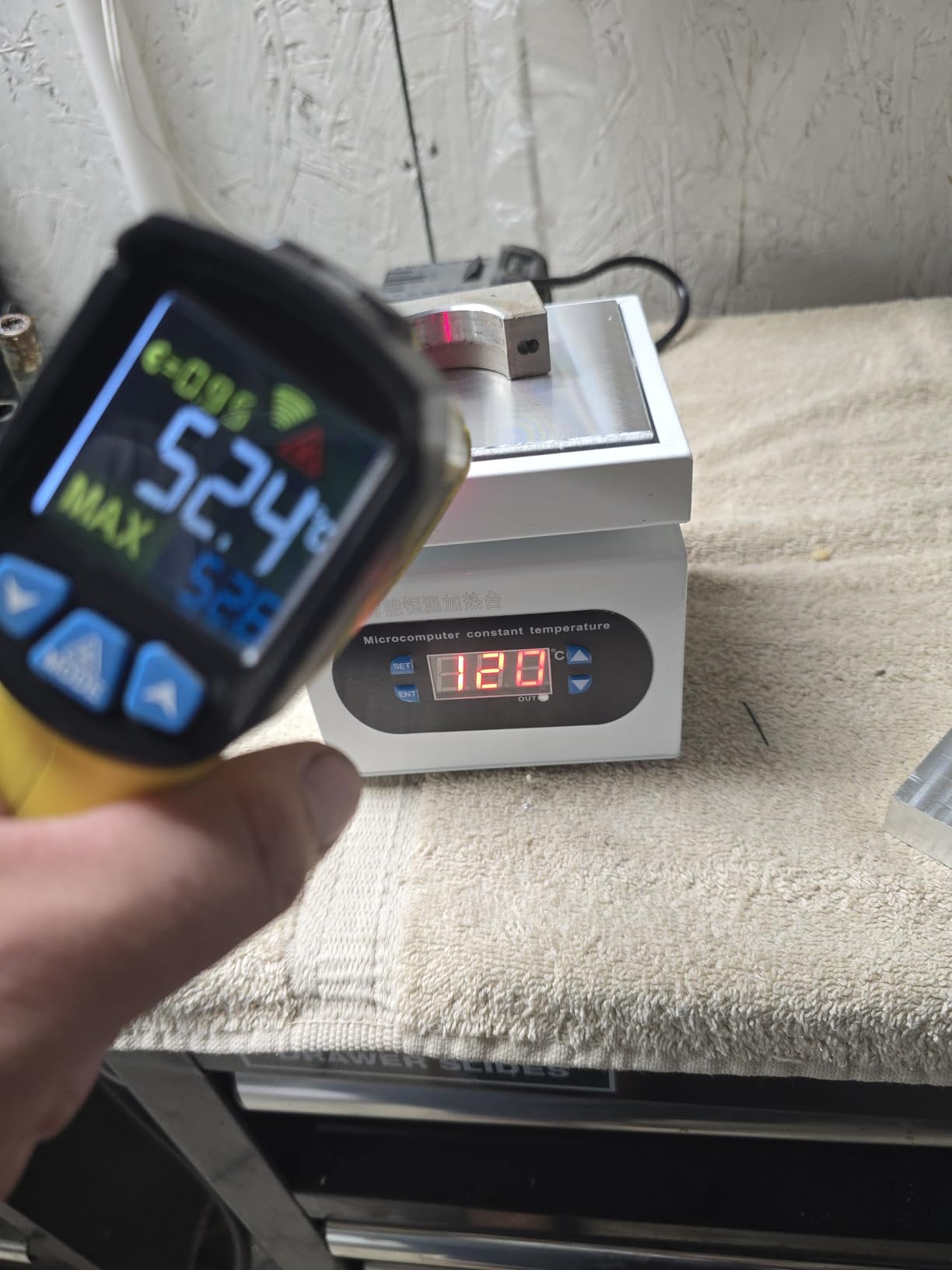
A plate display is not a measurement. It reads the controller, not the surface, and on budget units the difference can be large enough to ruin a profile. One owner of the SEQURE T55 measured a reading roughly 60C high. That is not a rounding error, it is a different process.
1. Attach a thermocouple to the centre of the plate with high-temperature tape or a spot of thermal compound. Centre matters, because corners and edges are where the temperature diverges most.
2. Set a target and let the plate settle. Choose something near your working peak, wait until the reading stops moving, and compare it to the display. Repeat at a low target near 100C, because controllers often drift differently at each end of the range.
3. Record the offset and correct your workflow. If the display reads 20C high at both points, subtract 20C from your set-point. Write it on the bench, because this is a per-unit number and a new plate will have a different offset.
Calibrate once when the plate arrives, and again if you notice the display and your observations disagreeing. Elements drift with age, and a plate that was accurate a year ago may not be now.
Buying Guide: The Specs That Actually Matter for Reflow
Plate size versus board size. This matters more than everything else combined. A plate must be larger than the board in both dimensions, with margin on each side. When a corner hangs over the edge it never reaches liquidus, and that corner’s joints come out cold. For a standard Arduino-form-factor board you want at least 150x150mm, and 200x200mm gives you room for a shield.
Thermal mass, not just wattage. A high wattage number means fast recovery, but the plate material decides how steady the surface is. Aluminum and aviation aluminum are the norm here and they behave well. A thin plate that drops 40C the moment a board lands on it cannot hold a soak.
Control type. Set-point control means you watch. PID program control means the plate runs the cycle for you. Of the ten plates here, only the WEP 946D IV offers true profile programming. Everyone else needs a person watching the board.
Temperature range. A 30-400C range covers both alloys with headroom. The compact mini plates often top out lower, which matters if you intend to use lead-free paste.
Voltage. Nearly all of these are 110V units, and several are 110-127V only. If you are on a 220V supply, check before you buy. The exception in this roundup is the SEQURE T55, which runs from USB-C power delivery.
Safety hardware. Edge protection around the plate, an included fuse tube and adjustable case vents are all meaningful in a home workspace, where the plate sits next to everything else on the desk. We covered similar desk-safe heating gear in our encaustic hot plate roundup, and the same thinking applies here.
Ventilation. Flux fumes are the reason to have extraction. Reflow drives off flux activator at temperature, and a closed room concentrates it. A small fume extractor near the bench is the single best safety purchase to pair with any plate.
On forums, the recurring DIY alternative is a PTC ceramic heater driven by an Arduino with a thermocouple, which costs a fraction of a commercial unit and gives you a programmable profile. Several builders report it works well. It is a weekend project rather than a purchase, so factor that time in.
Frequently Asked Questions
Can a reflow hot plate replace a reflow oven for SMT soldering?
Yes, for single-sided boards and small batches assembled by hand, a hot plate can replace a reflow oven. It heats the whole board from below at a fraction of the cost. It cannot match an oven for repeatability, double-sided assemblies or fine-pitch work at volume.
How do you prevent tombstoning with a hot plate?
Use a plate larger than the board in both dimensions, keep the board centred and away from the plate edges, hold a 60 to 90 second soak around 150-180C before the peak, and leave the board undisturbed while it cools.
What temperature do you need for lead-free reflow on a hot plate?
For SAC305 lead-free paste, work at a 215-245C plate peak after a soak around 180-200C. For Sn63/Pb37, soak near 120-150C and peak at 180-190C. The plate typically runs 10 to 20C hotter than the components above it.
What types of defects are most common with hot plates?
The most common are tombstoning from uneven heating, solder bridging from too much paste, and insufficient solder or non-wetting when the joint never reaches liquidus. Part movement during cooling is also frequent and is caused by touching the board too early.
How often should you calibrate a soldering hot plate?
Calibrate once when the plate arrives, then recheck whenever the display and your observation of the solder disagree. Repeat it yearly if you use the plate heavily, since heating elements drift with age.
Conclusion
The best hot plates for SMD reflow at home come down to plate size matched to your boards and a temperature you verify rather than trust. For full-size boards, the Soiiw 850W 200x200mm plate is the one we would put on the bench first. For programmed cycles and targeted rework, the WEP 946D IV is in a class of its own. For small boards and a low starting outlay, the Kosmeiner 100x100mm plate does the job.
Start with a board whose footprint sits well inside the plate, calibrate with a thermocouple before your first real assembly, and add fume extraction before you heat any flux. Those three habits prevent most of what goes wrong.