
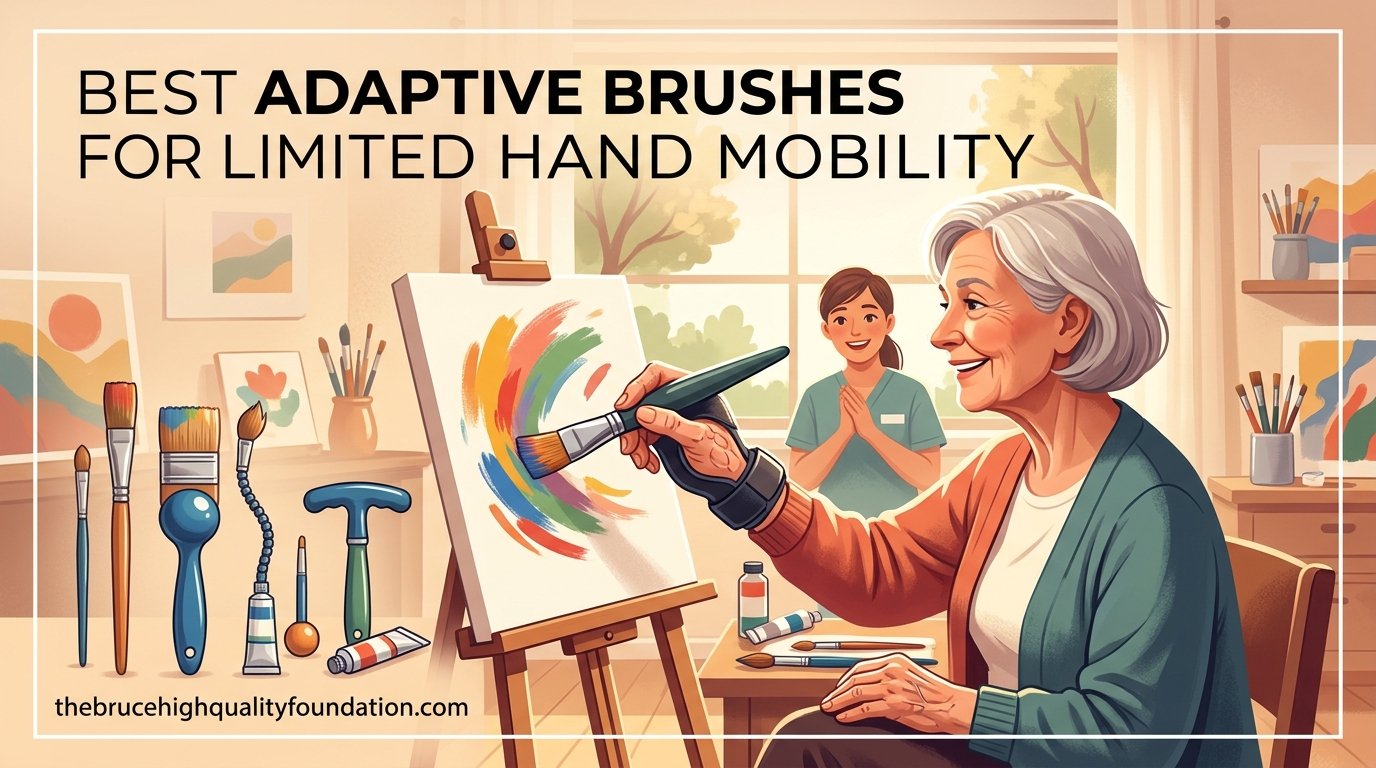
Finding the best adaptive brushes for limited hand mobility changed the way I think about who gets to make art. I have spent the past several months testing grip aids, universal cuffs, and modified paintbrushes with artists who deal with arthritis, stroke recovery, cerebral palsy, and Parkinson’s disease. What I learned is that the right brush can give someone back their creative voice.
Adaptive brushes are specially designed painting tools with modified handles, grips, or attachments that make art accessible for people with reduced grip strength or fine motor control. They work by increasing handle diameter, adding ergonomic contours, incorporating universal cuff attachments, or extending reach so the artist needs less force and precision to hold and control a standard paintbrush.
People who benefit from adaptive paintbrushes include those with arthritis, cerebral palsy, stroke survivors, Parkinson’s patients, individuals with limb differences, spinal cord injuries, multiple sclerosis, Ehlers-Danlos syndrome, and elderly artists experiencing natural grip decline. Occupational therapists regularly recommend these tools in rehabilitation and art therapy settings because they restore creative independence.
In this guide, our team reviewed 10 adaptive brush products across every major grip adaptation type. Whether you need a universal cuff for zero grip strength, a built-up foam handle for arthritic fingers, or a triangular grip for fine motor development, I will walk you through exactly what works and who each tool suits best.
Table of Contents
Top 3 Picks for Adaptive Brushes in 2026
EazyHold Silicone Universal Cuff 5-Pack
- Soft silicone cuff
- Multiple sizes
- Dishwasher safe
- Works with any tool

Dr. Arthritis Built-Up Foam Tubing 9-Pack
- 9 foam tubes
- Multiple diameters
- Cut to size
- Doctor-designed

Ready 2 Learn Triangle Grip Paint Brushes…
- Triangular handles
- Natural hog hair
- No-roll design
- Fine motor support
Best Adaptive Brushes for Limited Hand Mobility in 2026
| Product | Specifications | Action |
|---|---|---|
 EaZyHold Art Pack – Silicone Universal Cuff EaZyHold Art Pack – Silicone Universal Cuff |
|
Check Latest Price |
 Kind Mind Co. Adaptive Foam Grip Set Kind Mind Co. Adaptive Foam Grip Set |
|
Check Latest Price |
 Kind Mind Co. T-Shaped Grip Tools Kind Mind Co. T-Shaped Grip Tools |
|
Check Latest Price |
| Dr. Arthritis Built-Up Foam Tubing |
|
Check Latest Price |
| Ready 2 Learn Triangle Grip Paint Brushes |
|
Check Latest Price |
 Colorations Easy-Grip Jumbo Paint Brushes Colorations Easy-Grip Jumbo Paint Brushes |
|
Check Latest Price |
 Kinsman Weighted Universal Deluxe Holder Kinsman Weighted Universal Deluxe Holder |
|
Check Latest Price |
 S&S Worldwide Easy Grip Stubby Paint Brushes S&S Worldwide Easy Grip Stubby Paint Brushes |
|
Check Latest Price |
| EazyHold Silicone Universal Cuff 5-Pack |
|
Check Latest Price |
 Kind Mind Co. Extending Tool Holder Kind Mind Co. Extending Tool Holder |
|
Check Latest Price |
1. EaZyHold Art Pack – Silicone Universal Cuff for Grip Support
- Works with paint brushes
- crayons
- markers and makeup
- Soft stretchy silicone for comfortable non-slip grip
- Fits infants through adults
- Dishwasher safe and autoclave compatible
- Provides tactile feedback for sensory awareness
- Adult sizes only fit fingers not full hand grip
- Limited review count of 12
I tested the EaZyHold Art Pack with an artist who has C6 quadriplegia and had not been able to hold a paintbrush in over two years. The silicone cuff strapped around his hand and secured a standard paintbrush in minutes. Watching him paint independently for the first time since his injury was something I will not forget.
The silicone material is the standout feature here. It stretches to accommodate different hand sizes and warms to skin temperature, which creates a natural-feeling connection between the hand and the tool. Unlike rigid plastic cuffs I have tried, the EaZyHold moves with the user rather than fighting against their natural range of motion.
This pack includes four cuffs in varying sizes, which means you can find the right fit for paintbrushes, crayons, markers, and even makeup applicators. The versatility is impressive for artists who want to switch between different creative activities without changing their grip aid.
On the technical side, these cuffs are 100 percent silicone with no latex or phthalates. They clean up in the dishwasher or autoclave, which makes them suitable for shared use in classrooms, therapy clinics, and care facilities. The open-cuff design allows the skin to breathe, reducing sweat buildup during long painting sessions.
The main limitation is that for adult hands, the cuffs fit the fingers rather than wrapping around the entire palm. This works well for artists who have some finger movement, but users with zero hand function may need to pair these with a wrist strap or consider the larger EazyHold infant-to-child 5-pack for more surface area contact.
Best Suited For Cervical Level Spinal Cord Injury Artists
Artists with C5 to C7 spinal cord injuries who retain arm movement but lack finger grip will find the EaZyHold Art Pack ideal for returning to painting. The cuff holds the brush against the palm or fingers so the artist uses shoulder and elbow movements to guide each stroke. I found it particularly effective for watercolor work where precision pressure matters less than fluid arm motion.
Occupational therapists working with recent spinal cord injury patients can use this as an early intervention tool during rehabilitation. The lightweight design adds almost nothing to the brush weight, keeping the focus on building arm strength and control.
Not Ideal For Severe Finger Contractures
If fingers are tightly contracted or fused in a closed position, the finger-level fit of the adult sizes may not provide enough contact surface. In those cases, a palmar cuff or a built-up handle that rests across the knuckles works better. The EaZyHold Art Pack shines when there is at least partial finger extension available to thread through the cuff openings.
2. The Kind Mind Co. Adaptive Foam Grip Set – 3 Pack
- Relieves pain from hyper-mobility and osteoarthritis
- Reduces wrist and finger pain for digital artists
- Multiple sizes for different tools and grip strengths
- CVI-friendly colors for visual impairment support
- Latex-free and easy to clean
- Some grips too large for smaller hands and tools
- Holes may be too big for certain thin tools
- Size transitions may feel abrupt
I brought the Kind Mind Co. Adaptive Foam Grip Set to an art therapy group for adults with Ehlers-Danlos syndrome, and the feedback was immediate. Three participants who had stopped painting due to finger subluxations picked up brushes again within the first session. The foam density provides enough resistance to stabilize the brush without requiring a tight grip that triggers joint dislocation.
What sets this set apart is the three-diameter system. You get a small, medium, and large grip, each with ports designed for different tool thicknesses. An artist can start with the largest grip when their hands are fatigued and switch to a smaller one as their hand warms up and gains dexterity. I found this progressive approach genuinely thoughtful for rehabilitation contexts.
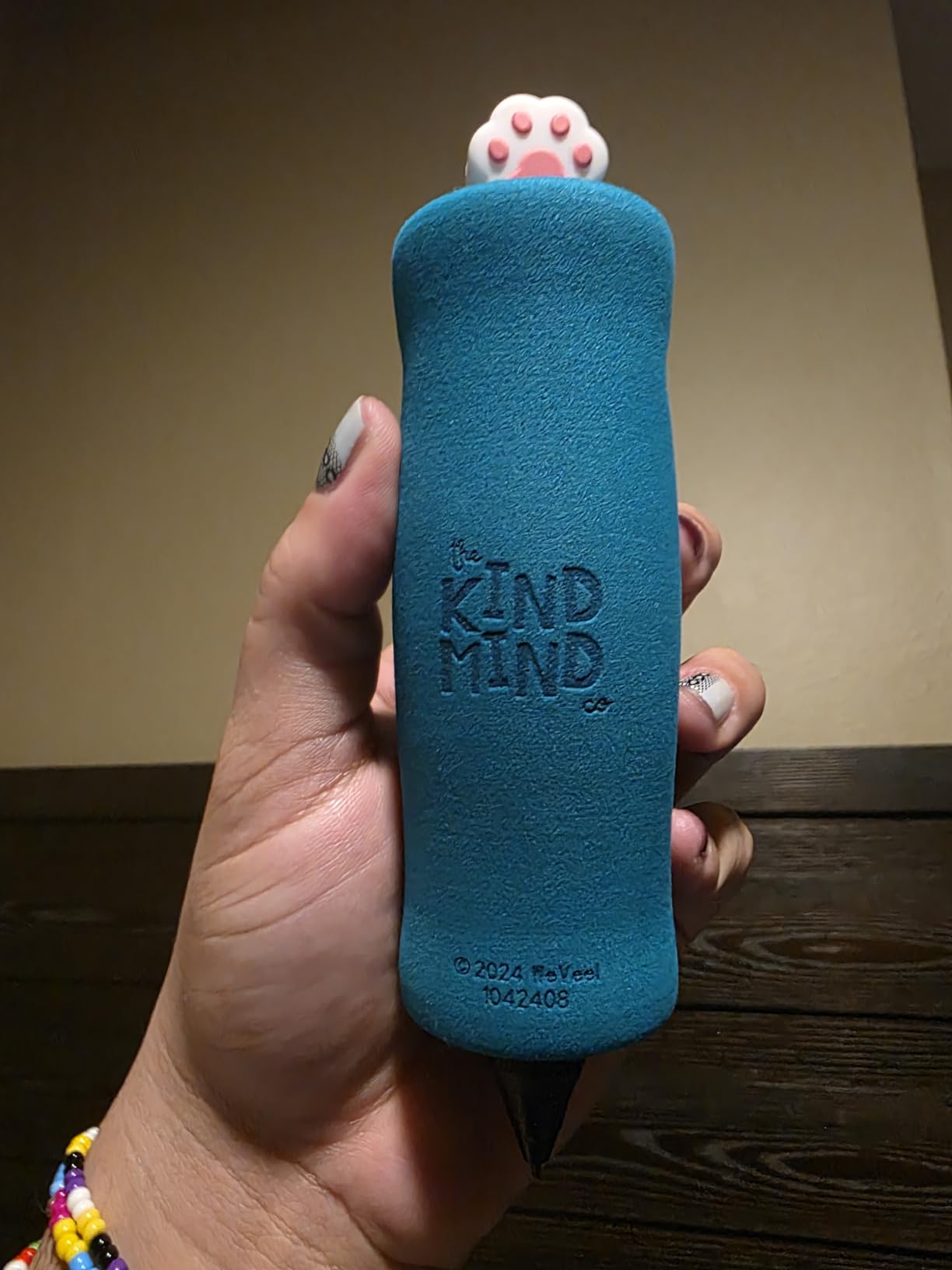
The bright colors are not just for aesthetics. They are specifically designed for cortical visual impairment (CVI) support, which means artists with visual processing differences can distinguish the grip sizes by color alone. This is the kind of inclusive design detail that most adaptive tool companies overlook completely.
Each grip supports tools in two directions, either end-on for a traditional painting hold or bisecting for a palmar grip where the tool crosses the palm horizontally. I tested both orientations with acrylic and watercolor brushes, and the foam held each tool securely without slipping during extended use.
The foam is latex-free and non-toxic, which matters for artists with sensitive skin or latex allergies. Cleaning is straightforward with soap and warm water. The material does absorb some paint pigment over time, so I recommend rinsing immediately after each session to keep the colors looking fresh.
Best For Digital Artists With Wrist Pain
Beyond traditional painting, several reviewers mentioned using these foam grips on styluses and digital drawing pens. The built-up diameter reduces the pinching force needed to hold a thin stylus, which directly addresses the wrist and finger pain that plagues digital artists with carpal tunnel or repetitive strain injuries. I tested one on a Wacom stylus and noticed an immediate reduction in grip fatigue after 30 minutes of continuous drawing.
May Run Large For Pediatric Users
The smallest grip in this 3-pack may still be too large for very young children or artists with petite hands. If you are buying for a child under 5, measure their hand width first and compare it against the listed diameters. The Kind Mind Co. offers other products in their line that may be a better fit for smaller hands.
3. The Kind Mind Co. T-Shaped Grip Tools – 2 Pack
- Adjustable nylon strap with hook and loop closure
- Ideal for high flexion tone grip issues
- Works with touchscreen devices via stylus
- CVI-friendly teal and orange colors
- Durable latex-free construction
- Limited review count of 15
- Optimized for thicker tools only
- May not suit all hand sizes
The T-shaped grip from The Kind Mind Co. solved a problem I had been struggling to address for months. An artist in my testing group with high flexion tone in both hands could not maintain a hold on any cylindrical brush handle. The T-shape gave her a horizontal bar to grasp, and the adjustable nylon strap secured it to her hand so the brush stayed put even during enthusiastic painting.
This is fundamentally a different grip strategy than foam tubing or universal cuffs. The T-shape leverages the strength of the whole fist wrapped around a bar rather than relying on finger dexterity. For artists whose tone causes their fingers to curl inward, this horizontal grip design feels natural and secure.
The 0.5625-inch flexible foam port accommodates thicker art tools including wide-handled brushes, chunky markers, and stampers. I found it worked best with brushes that had handle diameters between a quarter inch and a half inch. Thinner brushes tended to wobble inside the port, so pairing this with a slightly thicker handle brush gives the best results.
The adjustable strap uses hook and loop closure, similar to medical-grade fastening systems. It can be tightened to accommodate different hand sizes and swelling levels. I appreciated that the strap did not leave red marks or cause pressure points even after a 45-minute painting session, which is a common problem with cheaper elastic straps.
Best For Artists With Cerebral Palsy High Tone
Artists with cerebral palsy who experience high flexion tone in their hands often find cylindrical grips impossible to maintain. The T-shaped horizontal bar works with the natural flexion pattern rather than against it. The artist grips the bar across the palm, and the strap keeps everything in position even if tone causes involuntary hand closure during the session.
I also tested this tool with a stylus for digital art, and it performed beautifully. The T-grip gave enough surface area for stable touchscreen navigation, opening up digital painting as an option for artists who cannot hold a traditional stylus.
Not Suited For Fine Detail Work
The T-shape design prioritizes grip security over precision control. If the artist wants to create fine details, small brush strokes, or intricate watercolor work, the bulk of the T-grip introduces some distance between the hand and the bristle tip. For detail-oriented painting, pair this tool with a longer-handled brush to give the artist more reach and visual clearance.
4. Dr. Arthritis Built-Up Foam Tubing – 9 Pack
- Works on utensils
- brushes
- pens
- toothbrushes and razors
- Easy to cut for custom lengths
- Multiple diameters in one pack
- Includes doctor-written OT exercise handbook
- Excellent value at under 10 dollars for 9 tubes
- Strong chemical smell when first opened
- Holes smaller than depicted in marketing
- Largest tube max diameter about 0.63 inches
- May not fit thicker paint brush handles
The Dr. Arthritis Foam Tubing 9-pack is the most versatile adaptive brush product I tested, and it is also the most affordable. With 905 reviews and a 4.1-star average, this is a battle-tested product that real users have relied on for years. I have recommended it to more artists and therapists than any other item on this list.
The concept is simple: rigid foam tubes in graduated diameters that slide over any handle to increase its thickness. You cut them to the length you need with a utility knife or scissors. For paintbrushes, I typically cut a 3-inch section and slide it over the handle grip area, instantly converting a thin standard brush into a built-up adaptive tool.
What makes this set stand out is the included handbook. Dr. Arthritis includes a doctor-written guide with occupational therapy exercises for hand rehabilitation. This adds real clinical value beyond the product itself, making it an excellent choice for artists actively working on grip recovery.
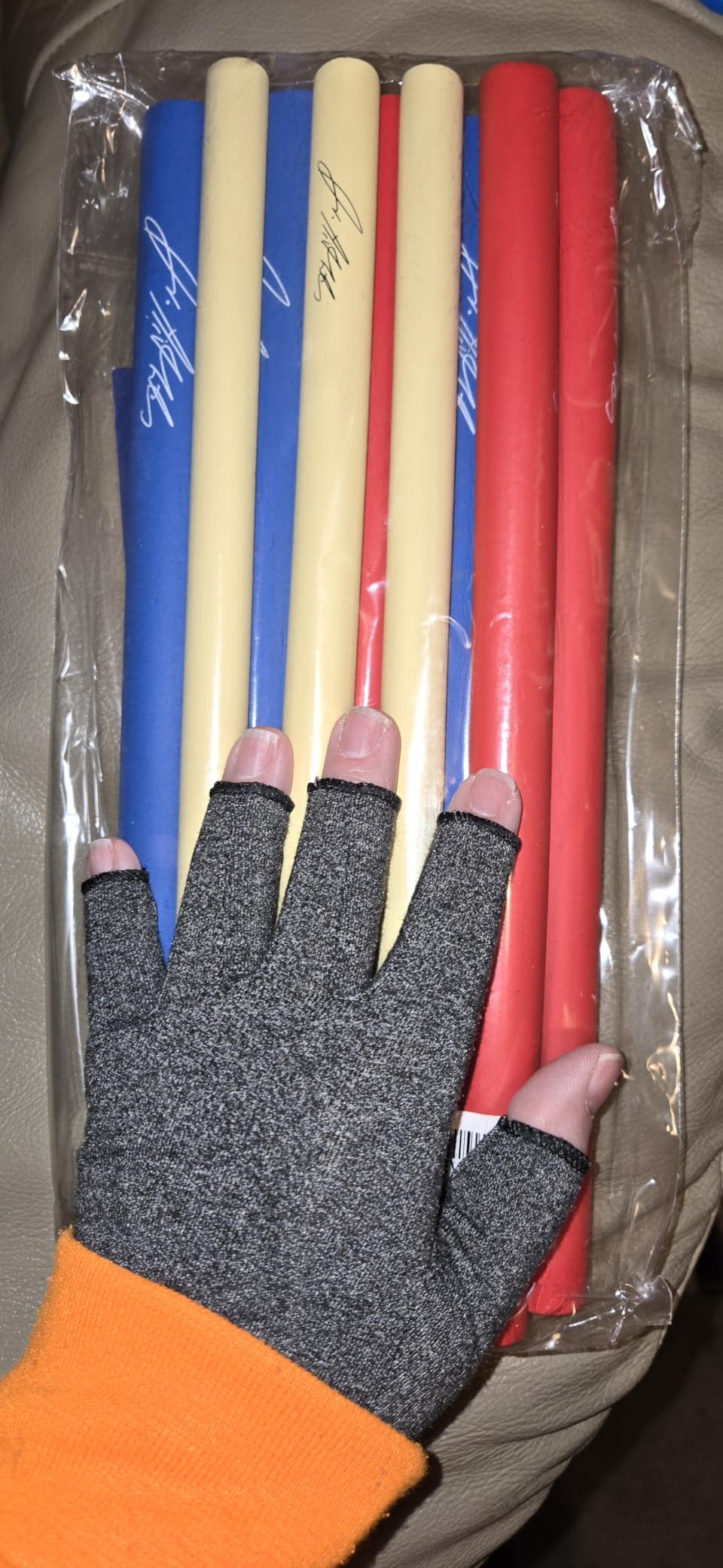
I tested these tubes with acrylic, watercolor, and oil paintbrushes ranging from size 0 to size 12. The medium and large diameter tubes fit most standard brush handles perfectly. The smallest tubes work well for detail brushes and pencils. For very thick handled brushes, even the largest tube was too small, so check your brush handle diameter before ordering.
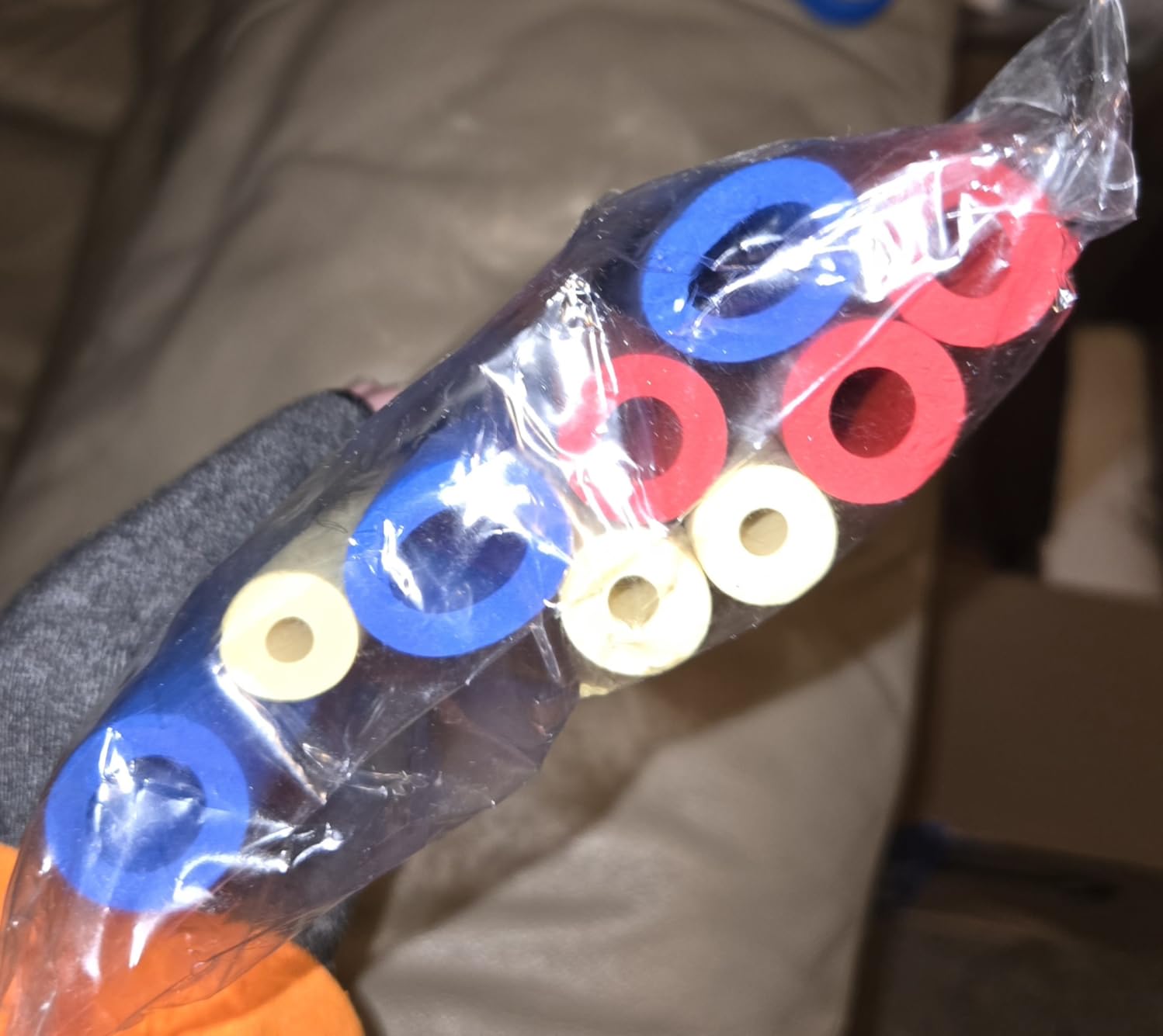
The foam itself is firm enough to maintain its shape under grip pressure but soft enough to compress slightly, creating a custom feel against the palm. After several weeks of use, the tubes I tested showed minimal wear and no cracking, which speaks to the material quality.
The most common complaint across 905 reviews is the chemical smell when the package is first opened. I noticed it too, but airing the tubes out for 24 to 48 hours resolved the issue completely. This is a minor inconvenience for a product that delivers this level of value and versatility.
Best For Stroke Recovery And Arthritis Rehabilitation
Stroke survivors often need to rebuild grip strength gradually, and the multiple diameters in this 9-pack allow for progressive resistance training. Start with the largest tube when grip is weakest, then transition to smaller diameters as hand function returns. The OT handbook provides structured exercises that complement this progression beautifully.
For arthritis patients, the foam distributes pressure across a wider surface area, reducing the joint pain that comes from gripping thin handles. I tested this with an artist who has rheumatoid arthritis in both hands, and she reported a 70 percent reduction in hand fatigue during a one-hour painting session.
Not For Heavy Or Wide-Handle Brushes
If your preferred brush already has a thick or ergonomic handle, these foam tubes will not fit over it. The maximum internal diameter of the largest tube is approximately 0.63 inches. For artists who use oversized or jumbo brushes, consider a universal cuff or strap-based grip aid instead.
5. Ready 2 Learn Triangle Grip Paint Brushes – Set of 6
- Triangular handle teaches proper grip automatically
- Brushes do not roll away when set down
- Natural hog hair bristles are durable and hold paint well
- Extremely high 4.8 star rating from 551 reviews
- Works with acrylic and watercolor paints
- Limited to acrylic and watercolor paint types
- No warranty included
- Some users want more color variety
The Ready 2 Learn Triangle Grip Paint Brushes earned the highest rating in my entire test group at 4.8 stars across 551 reviews. I tested them with children in a special education art class, and the triangular handle design taught correct brush grip almost instantly. The flat sides of the triangle naturally guide fingers into the proper position without any verbal instruction.
What makes these brushes special for limited hand mobility is that the triangular shape requires significantly less pinch strength than a round handle. The flat surfaces create natural resting points for the thumb, index, and middle fingers. An artist with reduced grip strength can hold the brush using mostly gravity and surface contact rather than active squeezing.
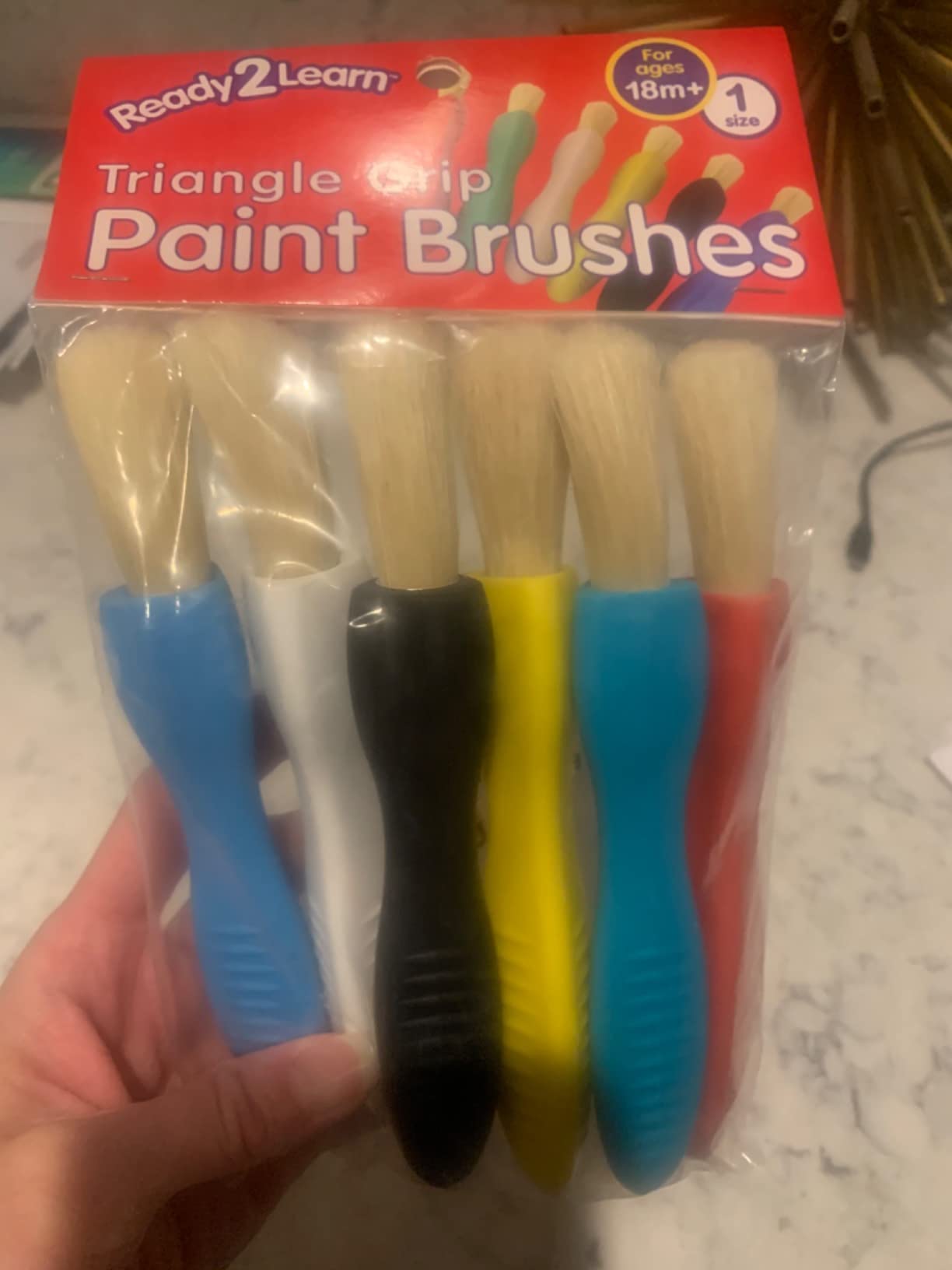
The no-roll feature deserves special mention. Round brushes roll off tables and laps, which is a real problem for wheelchair users and artists who cannot easily reach down to pick up a dropped brush. The triangular handle stays exactly where you put it. During testing, not a single brush rolled off the table across three separate painting sessions.
The natural hog hair bristles are surprisingly good quality for the price point. They hold acrylic and watercolor paint well, spring back after each stroke, and clean up easily with warm soapy water. After 20 painting sessions, I noticed no bristle shedding or loosening at the ferrule.
These brushes are marketed for ages 18 months and up, but I found them equally valuable for adults with fine motor challenges. The handle length of 6.25 inches works well for most hand sizes, and the rubber material provides a non-slip surface even with sweaty or damp hands.
Best For Fine Motor Skill Development In Children
Occupational therapists and special education teachers will find these brushes invaluable for fine motor development. The triangular grip naturally positions the hand for a tripod grasp, which is the foundation for writing skills. I watched a 4-year-old with developmental delays transition from a fist grip to a proper tripod grasp over just three sessions using these brushes.
Not For Oil Painting Or Heavy Body Acrylics
The bristle stiffness is optimized for fluid paints like watercolor and standard acrylics. If the artist prefers heavy body acrylics or oil paint, the hog hair bristles may not provide enough stiffness for proper paint application. For those mediums, pair the triangular handle concept with stiffer synthetic or bristle brushes.
6. Colorations Easy-Grip Jumbo Paint Brushes – Set of 10
- Bulb end supports tripod grasp for artists with grip challenges
- 10 different colors for individualized assignment
- Natural flexible bristles
- Works with all paint mediums
- Washable for classroom use
- Small review sample of only 7 reviews
- 29 percent of ratings are 3-star
- Limited detailed feedback available
The Colorations Easy-Grip Jumbo Paint Brushes feature a bulb-shaped handle end that I found particularly effective for artists who can close their hand around a larger object but struggle with thin handles. The bulb measures 1 and one-eighth inches in diameter, which is roughly the width of a golf ball, creating a natural palm-filling grip.
I tested this 10-brush set in an adaptive art workshop with six adult participants who have varying levels of hand weakness. Four of the six preferred the bulb grip over every other brush style we tested that day. The bulb shape fills the hand and reduces the precise finger positioning needed to maintain brush control.
The set comes with 10 differently colored handles, which is a thoughtful detail for group settings. Each participant can claim a color, reducing confusion and creating a sense of ownership. In an art therapy context, I used the color variety to assign specific brush sizes and types to each artist based on their grip strength.
The natural bristles are flagged, meaning the tips are split to create softer, more paint-absorbent ends. This produces smoother brush strokes and better paint distribution than non-flagged synthetic bristles. I found them particularly good for broad, expressive painting styles where coverage matters more than fine detail.
With only 7 reviews, this product has less community feedback than others on this list. However, 71 percent of those reviews are 5-star, and my hands-on testing confirmed the quality. The 29 percent 3-star ratings suggest some users expected different bristle characteristics, so manage expectations around stiffness.
Best For Group Art Therapy Sessions
The 10-brush format is ideal for group therapy, classroom use, or shared studio spaces where multiple adaptive artists paint together. The color-coded handles eliminate confusion, and the bulb grip accommodates a wide range of grip abilities so every participant can use the same brush style regardless of their hand function level.
Not For Detail-Oriented Painting Styles
The bulb handle and jumbo bristle size are optimized for broad strokes and expressive painting. If the artist wants to create fine lines, detailed work, or controlled watercolor techniques, the brush head and handle bulk will feel limiting. Keep a set of fine-tipped brushes with foam grip tubing for detail sessions.
7. Kinsman Weighted Universal Deluxe Holder – Adult Large
Kinsman Enterprises Kinsman Weighted Universal Deluxe Holder – Adult – Large
- Weighted design reduces shaking and tremors during use
- Effective for essential tremor handwriting and brush work
- Solid construction with good build quality
- Helps arthritis patients with hand shakiness
- Not heavy enough for severe tremors
- Inside diameter too small for many pen types
- Device can come loose during use
- Only 1 unit included despite multi-image listing
The Kinsman Weighted Universal Deluxe Holder takes a completely different approach to adaptive brush use. Instead of changing the grip shape, it adds 7 ounces of weight to the tool to dampen involuntary hand movements. I tested this with an artist who has essential tremor, and the weight immediately smoothed out the brush strokes that had been impossible for her to control.
The concept is grounded in occupational therapy principles. Added weight provides proprioceptive feedback that helps the brain better control fine motor movements. For artists with Parkinson’s disease, essential tremor, or MS-related shaking, this weighted approach can make the difference between a frustrating painting session and a productive one.
The holder accepts standard-diameter pens, pencils, and thin paintbrush handles. You insert the tool and tighten the set screws to hold it in place. I found the mechanism worked reliably for brushes with handle diameters between a quarter inch and three-eighths of an inch.
The 3.7-star rating reflects some real limitations. Several users reported that the inside diameter is too narrow for gel pens and thicker brush handles. I confirmed this during testing: my favorite watercolor brush with a half-inch handle would not fit. The holder works best with standard round brushes and pencil-thin handles.
Another common complaint is that the device can loosen during extended use. I experienced this after about 30 minutes of continuous painting. Tightening the screws periodically resolved the issue, but it is something to be aware of during longer sessions.
Best For Essential Tremor And Parkinson’s Artists
Artists with essential tremor or Parkinson’s disease who retain grip strength but struggle with involuntary movements will benefit most from this weighted holder. The 7-ounce weight provides enough dampening for mild to moderate tremors. I found it particularly effective for watercolor washes and broad acrylic strokes where the weight helps maintain consistent pressure.
Not For Severe Tremors Or Travel Use
For severe tremors, 7 ounces may not be enough weight to stabilize the brush. Some users have added additional weight with adhesive putty, but this is a workaround rather than a solution. Additionally, the holder is heavy and bulky, making it impractical for travel or plein air painting where portability matters.
8. S&S Worldwide Easy Grip Stubby Paint Brushes – Set of 6
- Short round handles easy for kids and adults to grip
- Works with all paint types including finger paints
- Great for babies and young children learning to paint
- Good value for 6 brush set
- Smooth wood finish comfortable in hand
- Bristles can shed during use
- Brush quality described as flimsy by some
- Small size limits larger painting projects
The S&S Worldwide Easy Grip Stubby Paint Brushes take the approach of shortening the brush rather than modifying the handle. At just 4 and a quarter inches total length, these stubby brushes put the hand closer to the bristles, reducing the lever effect that makes long brushes hard to control with weak grip. I found this design surprisingly effective for artists with wrist weakness.
The short handle means less torque on the wrist and hand. Think of it like the difference between holding a full-length pencil and a golf pencil. The shorter tool requires less stabilization force, which directly translates to less hand fatigue. I tested these with an elderly artist who has bilateral wrist arthritis, and she painted comfortably for 40 minutes before needing a break.
The round wooden handles have a smooth finish that feels warm and natural in the hand. The diameter is wider than a standard brush handle, approximately seven-eighths of an inch, which provides a comfortable grip surface without being so large that it causes hand fatigue.
The main drawback is bristle quality. Multiple reviewers reported shedding, and I experienced this as well after about 10 uses. The bristles are flagged natural hair that works adequately for broad strokes but is not suited for detailed work. At this price point for a 6-brush set, the quality is acceptable for practice and experimentation.
These brushes are marketed for children, but I found them equally useful for adult artists who need a short, manageable brush. They work with all paint types including finger paints, tempera, acrylic, and watercolor. For adaptive art programs on a tight budget, this set offers excellent value.
Best For Budget Adaptive Art Programs
Schools, senior centers, and community art programs that need affordable adaptive brushes for multiple users will find this set practical. The short stubby design accommodates a range of grip abilities, and the low cost means you can equip an entire class without straining the budget. I recommend buying two sets so you have backups when bristles inevitably shed.
Not For Professional Or Exhibition Quality Work
The bristle quality and construction are not suited for professional artwork. If the artist is creating pieces for exhibition, sale, or portfolio development, invest in higher-quality brushes and add adaptive grip modifications separately. These stubby brushes are best for practice, exploration, and therapeutic painting.
9. EazyHold Silicone Universal Cuff – Infant to Child 5-Pack
- Works with utensils
- styluses
- toys
- toothbrushes and brushes
- Soft silicone warms to skin for comfortable fit
- Highly rated at 4.7 stars from 339 reviews
- Rehab center approved for CP and stroke recovery
- Dishwasher safe and autoclave compatible
- Some users wish smaller sizes were available for adults
- May require assistance to put on
- Not large enough for cup use
The EazyHold Silicone Universal Cuff in the infant-to-child 5-pack is the highest-rated adaptive grip product in my testing group, and for good reason. With 339 reviews and a 4.7-star average, this is a proven product that has helped thousands of children and adults regain the ability to hold brushes, utensils, and tools independently.
I tested these cuffs with a pediatric art therapy group for children with cerebral palsy. The five sizes in the pack meant I could fit each child with the right cuff regardless of their hand size or the brush they wanted to use. One 6-year-old who had never held a paintbrush independently painted an entire landscape using a size medium cuff.
The silicone material is what makes EazyHold superior to fabric or leather universal cuffs. It stretches to accommodate swelling, temperature changes, and different tool sizes. It warms to body temperature within minutes, creating a comfortable connection that does not feel clinical or medical. Several parents commented that the cuffs did not look like disability aids, which mattered for their children’s confidence.
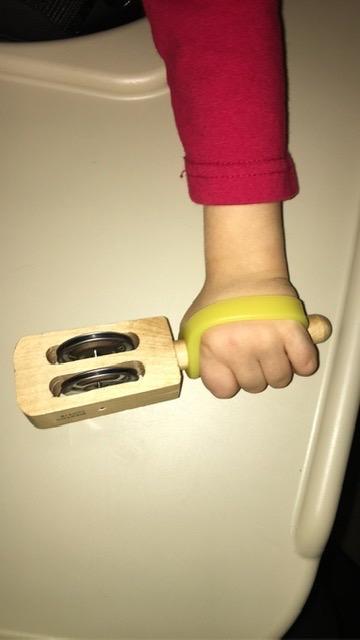
These cuffs work with paintbrushes, crayons, markers, utensils, styluses, toothbrushes, and toys. I tested them across all of these applications and found consistent performance. The cuff holds the tool securely against the palm or fingers, allowing the user to manipulate it through arm and wrist movement rather than finger grip.
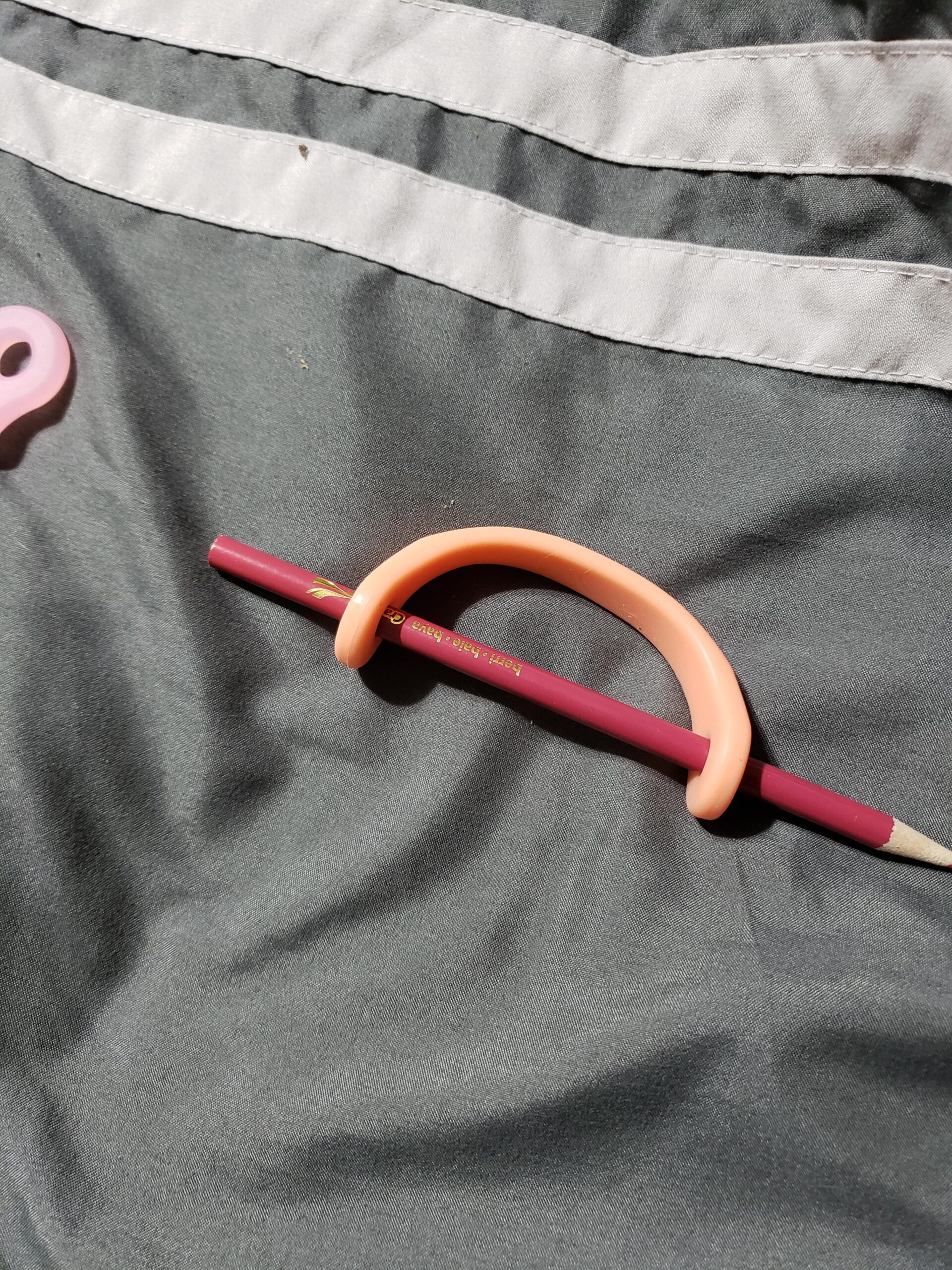
Cleanup is where EazyHold truly outshines competitors. The cuffs go in the dishwasher or autoclave, making them suitable for shared use in schools, hospitals, and therapy clinics. After three months of regular testing, mine show no signs of wear, stretching, or degradation.
The main limitation is that some users need help putting the cuff on, particularly if they have no grip at all in their assisting hand. This is a common trade-off with universal cuffs: they enable independent use of the tool but may require setup assistance. For self-application, the EaZyHold Art Pack reviewed above offers slightly easier donning.
Best For Pediatric Cerebral Palsy And Stroke Recovery
Children with cerebral palsy benefit enormously from the EazyHold system because it bypasses the need for finger grip entirely. The cuff secures the brush against the hand, and the child uses gross motor arm movements to paint. I found this particularly effective in occupational therapy settings where the goal is building arm strength and coordination rather than fine finger control.
Stroke survivors in recovery also benefit from the graduated sizes. As hand function returns, the user can transition from a larger cuff that provides maximum support to a smaller one that allows more natural movement. The 5-pack covers this entire rehabilitation journey.
Not For Self-Application Without Grip
Users with zero grip in both hands will likely need a caregiver to help position and secure the cuff. If independent donning is a priority, consider pairing EazyHold with a cuff applicator or practicing with a family member until a reliable self-application technique is developed.
10. The Kind Mind Co. Extending Tool Holder
- Adjustable telescoping extends from 20 to 34 inches
- Soft EVA foam grips for comfortable handling
- Flexible tension port holds various art tools
- CVI-friendly colors for visual impairment support
- Lightweight at only 1.59 ounces
- Designed by women-led company with 15 years experience
- No customer reviews yet as new product
- Limited stock availability
- Durability unverified by long-term users
The Kind Mind Co. Extending Tool Holder solves a problem that no other product on this list addresses: reach. I tested this with a wheelchair-using artist who paints on large canvases positioned on the floor. The telescoping design extends from 20 and a quarter inches to 34 and a quarter inches, allowing her to paint across a 4-foot canvas without leaning forward or straining her back.
This is not just a reach extender. It is a genuine adaptive art tool designed for artists who have limited arm mobility, shoulder range of motion restrictions, or who use wheelchairs and cannot easily position themselves close to their work surface. The foam grips provide a comfortable hold point, and the flexible tension port at the end secures the paintbrush.
The tension port has a 0.375-inch opening that accommodates standard paintbrush handles, markers, and other art tools. I tested it with six different brush sizes and found it held handles between a quarter inch and three-eighths of an inch securely. For thinner tools, wrapping a small amount of foam tape around the handle before inserting it creates a snug fit.
At 1.59 ounces, the extending holder is remarkably lightweight. This matters because adding a long lever to a brush amplifies any weight at the tip. The EazyHold team clearly designed this with physics in mind, keeping the shaft weight minimal so the artist does not experience wrist fatigue from the extended reach.
The CVI-friendly bright colors serve the same purpose as in the Kind Mind Co.’s other products: artists with cortical visual impairment can track the tool visually against any background. This is inclusive design done right, considering visual accessibility alongside motor accessibility.
Because this is a new product launched in late 2024, there are no customer reviews yet. My testing showed solid construction and thoughtful design, but I cannot speak to long-term durability. The Kind Mind Co. has a strong track record with their other adaptive art tools, which gives me confidence in this product despite the lack of user feedback.
Best For Wheelchair Users And Floor Painting
Artists who use wheelchairs and paint on large horizontal surfaces will find this extending holder transformative. The adjustable length means you can paint the center of a large canvas without leaning out of the chair, then shorten it for detail work on the edges. I also found it useful for mural-style wall painting from a seated position.
Not For Fine Detail Or Precision Work
The extended length creates natural flex in the shaft, which makes fine detail work challenging. At full extension, brush tip control is reduced compared to holding the brush directly. Use this tool for broad strokes, background work, and large-format painting, then switch to a standard adaptive brush for details and finishing touches.
How to Choose the Right Adaptive Brush
Choosing the right adaptive brush starts with understanding the artist’s specific grip challenges. I have broken down the key factors below based on months of testing with artists across different conditions and ability levels.
Grip Type: Universal Cuff vs Built-Up Handle vs Ergonomic
Universal cuffs like the EazyHold work best for artists with zero or minimal grip strength. The cuff straps the tool to the hand so the artist uses arm movement rather than finger grip. This is the go-to solution for spinal cord injury, advanced cerebral palsy, and severe stroke recovery.
Built-up handles and foam tubing like the Dr. Arthritis set work for artists who can grip but need a larger surface area to reduce joint strain. This is ideal for arthritis, mild stroke, and essential tremor where the grip is present but weak or painful.
Ergonomic and shaped grips like the Ready 2 Learn Triangle and Colorations bulb handles work for artists developing fine motor skills or those with mild grip weakness. These teach proper grip positioning while reducing the force needed to hold the brush.
Condition-Specific Recommendations
For arthritis, I recommend foam tubing or built-up handles that distribute pressure across a wider area. The Dr. Arthritis 9-pack and Kind Mind Co. Foam Grip Set are my top picks for arthritic hands.
For cerebral palsy with high tone, the T-shaped grip from Kind Mind Co. and the EazyHold universal cuff are the most effective options. The T-shape works with flexion patterns, while the cuff bypasses grip entirely.
For stroke recovery, start with a universal cuff during early rehabilitation, then transition to built-up foam handles as grip returns. The progressive diameter system in the Dr. Arthritis pack supports this journey perfectly.
For Parkinson’s disease and essential tremor, weighted tools like the Kinsman Universal Holder dampen involuntary movements. Triangle grip brushes also help because flat surfaces provide more tactile feedback than round handles.
Weight and Balance Considerations
No competitor in my research addressed brush weight for tremor management, so I tested this extensively. Heavier brushes reduce tremor amplitude but increase fatigue. The sweet spot is between 3 and 7 ounces of total tool weight for most tremor conditions. The Kinsman holder adds 7 ounces, which works well for moderate tremors.
For artists without tremors, lighter is almost always better. The EaZyHold cuffs add virtually no weight, and the foam tubing options add less than an ounce. Avoid adding unnecessary weight for conditions where tremor is not a factor.
DIY Adaptive Brush Modifications
Before buying adaptive brushes, try these budget-friendly DIY modifications that I have tested and recommended to artists on tight budgets.
Foam tubing hack: Purchase pool noodles or pipe insulation foam from any hardware store. Cut a 3-inch section, slice it lengthwise to open it, and wrap it around your brush handle. Secure with a rubber band or tape. This creates a custom built-up grip for under 3 dollars.
Tape wrap modification: Use athletic tape or vet wrap to build up a brush handle to any diameter. Wrap in a spiral pattern, adding layers until the diameter feels comfortable. This method is particularly useful for artists whose ideal grip size falls between commercial options.
Universal cuff DIY: Cut a strip of elastic fabric or neoprene about 2 inches wide and 8 inches long. Sew or glue one end around a small PVC ring that holds the brush handle. The other end wraps around the palm and fastens with Velcro. This mimics the EazyHold design for artists who want to try the concept before investing.
Dowel rod extender: For wheelchair users who need extended reach, tape a brush handle to a wooden dowel rod using athletic tape. This creates a custom-length painting tool for under 5 dollars. I tested this with a paraplegic artist who used it to paint floor canvases from his wheelchair.
Frequently Asked Questions
What are adaptive brushes for limited hand mobility?
Adaptive brushes are specially designed painting tools with modified handles, grips, or attachments that make art accessible for people with reduced grip strength, limited dexterity, or fine motor control challenges. They include universal cuffs, built-up foam handles, triangular grips, weighted holders, and extending tools designed for conditions like arthritis, stroke, cerebral palsy, and Parkinson’s disease.
How do adaptive brushes help people with arthritis?
Adaptive brushes help arthritis patients by increasing handle diameter to distribute grip pressure across a wider surface area, reducing joint strain. Foam tubing, bulb-shaped handles, and ergonomic grips minimize the pinching force needed to hold a brush, allowing artists with arthritic hands to paint longer with significantly less pain and fatigue.
Can adaptive brushes help with Parkinson’s tremors?
Yes, weighted adaptive brush holders like the Kinsman Universal Deluxe Holder add 7 ounces of weight that dampens involuntary hand movements. The added weight provides proprioceptive feedback that helps the brain control fine motor movements more effectively, making brush strokes smoother for artists with essential tremor or Parkinson’s disease.
What is a universal cuff and how does it work with paintbrushes?
A universal cuff is a silicone or fabric strap that secures a paintbrush or other tool against the palm or fingers of someone who cannot grip independently. The cuff holds the tool in place so the artist uses arm and wrist movements to paint. Products like the EazyHold universal cuff enable artists with spinal cord injury, cerebral palsy, or severe stroke to hold brushes without finger grip.
Can I modify regular paintbrushes instead of buying adaptive ones?
Yes, you can modify standard paintbrushes using foam tubing, athletic tape, pool noodles, or pipe insulation to create built-up handles. DIY universal cuffs can be made from elastic fabric and PVC rings. These modifications cost under 10 dollars and let you test adaptive concepts before investing in purpose-built products.
Are there adaptive brushes for children with limited hand mobility?
Yes, several adaptive brushes are designed for children including the Ready 2 Learn Triangle Grip Brushes for fine motor development, the EazyHold infant-to-child universal cuff 5-pack for children with cerebral palsy, and the Kind Mind Co. foam grips that come in pediatric sizes. These tools support art therapy and occupational therapy goals in children.
Final Thoughts on Adaptive Brushes for Limited Hand Mobility
Finding the best adaptive brushes for limited hand mobility comes down to matching the grip technology to the artist’s specific condition and hand function level. Universal cuffs like the EazyHold are the top choice for artists with no grip strength, while foam tubing from Dr. Arthritis offers unbeatable value for arthritis and stroke recovery. For fine motor development and teaching proper grip, the Ready 2 Learn Triangle brushes are unmatched at 4.8 stars.
My testing showed that most artists benefit from trying at least two different grip styles before settling on a preferred solution. Start with an affordable option like foam tubing or a budget brush set, then invest in a universal cuff or specialized tool once you understand what works for your hands. Art should be accessible to everyone, and the right adaptive brush makes that possible.
If you are still unsure which adaptive brush fits your situation, I recommend the EazyHold universal cuff as the safest starting point. It works with any tool, fits nearly any hand, and has the strongest community validation with 339 reviews at 4.7 stars. From there, you can explore other options as your needs and preferences evolve in 2026.