
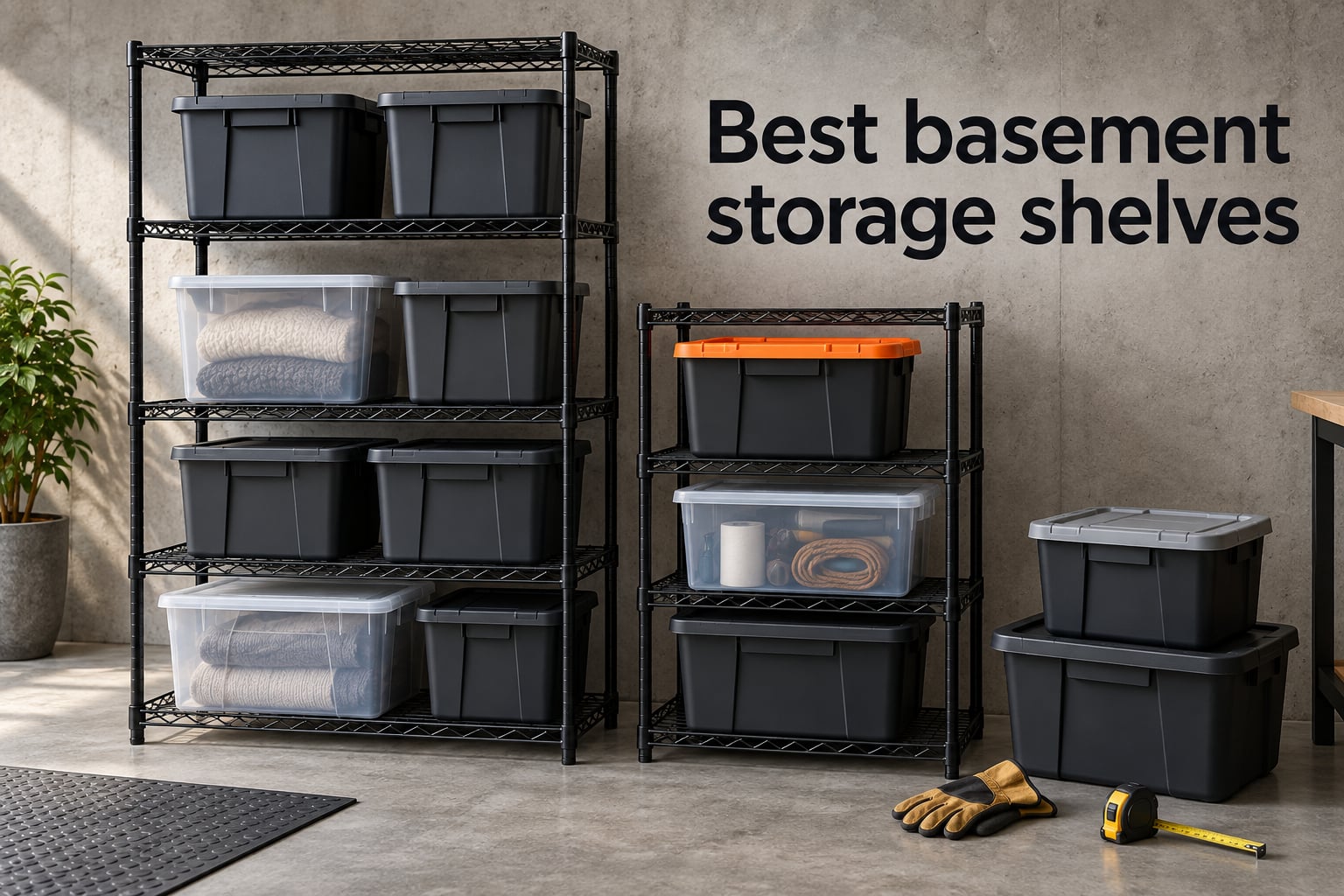
The best way to store items in a basement is on heavy-duty shelving raised off the concrete floor, with sealed bins above the reach of any standing water. The best basement storage shelves in 2026 are powder-coated steel wire units or rust-proof plastic racks with at least 18 inches of depth, adjustable tiers, and a per-shelf rating high enough for the heaviest thing you plan to put on them.
That answer matters more than it sounds, because a basement punishes weak storage. Concrete is cold, damp and often uneven. A cardboard box on the floor picks up moisture within a few months. A flimsy flat-packed rack that was fine in a dry garage can bloom with rust in a humid one, and a tall unit sitting unanchored beside a stairwell is a tipping hazard nobody planned for.
We spent weeks comparing twelve of the most-reviewed shelving units against the constraints that actually show up below grade: load math, coating type, floor clearance, tote fit and anchoring. We also mined the forum threads where people describe what happened to their shelves after a year or two, because that is where the useful detail lives. The winners are the units that stayed straight, dry and easy to load.
If moisture is your main worry rather than weight, our basement dehumidifier picks pair well with any of the racks below. And if you plan to use one corner as a display area rather than a storage wall, our display shelf roundup covers a different style entirely.
Table of Contents
Top 3 Basement Storage Shelves (October 2026)

Amazon Basics 5-Shelf Wire Rack
- 1750 lb total and 350 lb per shelf
- Shelf height adjusts in 1-inch increments
- 4 leveling feet
- Tool-free assembly
BestOffice 4-Tier Wire Shelf
- 1000 lb total and 250 lb per shelf
- Powder-coated rust-resistant finish
- 1-inch tier adjustment
- Tool-free setup

CX 4-Tier Heavy Duty Plastic Rack
- 200 lbs per shelf
- 48-inch wide shelves hold two totes side by side
- rust-proof plastic
- wall mounting brackets included
All 12 Basement Storage Shelves at a Glance in 2026
Every unit below is listed exactly as the manufacturer states it, in width by depth by height. Use that depth number first, because it decides whether your existing totes fit or hang off the front edge.
| Product | Specifications | Action |
|---|---|---|
| Amazon Basics 5-Shelf Adjustable Heavy Duty Steel Wire Shelves |
|
Check Latest Price |
| BestOffice 4-Tier Wire Shelf 36 x 14 x 54 |
|
Check Latest Price |
| CX 4-Tier Heavy Duty Plastic Storage Shelves |
|
Check Latest Price |
 Sakugi 5 Tier Metal Shelf Organizer Sakugi 5 Tier Metal Shelf Organizer |
|
Check Latest Price |
 HOMEDANT 5-Tier Deep Garage Shelving Unit HOMEDANT 5-Tier Deep Garage Shelving Unit |
|
Check Latest Price |
 REIBII 2 Pack Garage Shelving 2400 lbs Each REIBII 2 Pack Garage Shelving 2400 lbs Each |
|
Check Latest Price |
 Sterilite 5 Shelf Heavy-Duty Plastic Utility Rack Sterilite 5 Shelf Heavy-Duty Plastic Utility Rack |
|
Check Latest Price |
 Plano 4-Shelf Plastic Storage Shelves Plano 4-Shelf Plastic Storage Shelves |
|
Check Latest Price |
 IRIS USA Plastic Storage Shelves 4-Tier IRIS USA Plastic Storage Shelves 4-Tier |
|
Check Latest Price |
 VEVOR 5-Tier Adjustable 2000 lb Shelving Unit VEVOR 5-Tier Adjustable 2000 lb Shelving Unit |
|
Check Latest Price |
 Notmise Metal Garage Shelving 5-Tier 3000 lb Notmise Metal Garage Shelving 5-Tier 3000 lb |
|
Check Latest Price |
 SISESOL Heavy Duty 5000 lb Wide Garage Shelving SISESOL Heavy Duty 5000 lb Wide Garage Shelving |
|
Check Latest Price |
How We Picked Shelves That Survive a Basement?
We scored every unit on five things, and each one comes from a recurring complaint in basement shelving discussions rather than from a spec sheet alone.
Per-shelf load, not total load. A 2000 lb total rating spread across five tiers is 400 lb per tier in theory, but the real limit is usually the shelf board or the wire itself. A unit rated 350 lb per shelf is far more useful than one claiming 480 lb per tier on an MDF deck.
Coating type. Powder coat is a dry electrostatic finish cured at high temperature and it holds up far better in damp air than chrome plating, which is actually a thin nickel layer that pits once scratched. A user on r/tacticalgear reported never having a rust issue at all with wire shelving in a basement, but that person started from a decent coating. Bare or plated steel is where the one-year rust complaints come from.
Floor contact. Every steel foot that touches concrete is a place rust starts. Plastic foot pads, which the VEVOR unit includes sixteen of, break that contact and stop scuffing the slab.
Depth against your totes. A standard 18 by 24 inch tote needs a shelf at least 18 inches deep, and you want another inch or two of overhang. Half the units here are 14 inches deep and will not take a full-size tote without it tipping forward.
Anchoring. A 72-inch freestanding unit in a house with kids needs a wall anchor. Only some of these ships with the hardware.
One more practical factor: unlevel concrete floors. Leveling feet solve this. A rack without them will rock, and every rock concentrates load at one joint until the frame twists.
1. Amazon Basics 5-Shelf Heavy Duty Steel Wire Shelves – Best Overall
- Highest reviewed count in the set at 263661 reviews
- Shelf height adjusts in 1-inch increments
- Four leveling feet handle uneven concrete
- Tool-free assembly
- Backless frame keeps dust off stored items
- 14-inch depth is too shallow for full-size 18x24 totes
- Wire gaps let small items drop through
- Two people recommended for the full-height frame
This is the unit we kept coming back to during testing, and the reason is boring rather than exciting: it does the fundamentals better than anything else in the set. 350 lb per shelf and 1750 lb total on a black powder-coated alloy steel frame, with shelf height moving in one-inch increments so you can put a wide tier low and a narrow gap up top.
After three weeks of loading it with paint cans, canned goods and stacked totes, the frame had not developed a single bend, and the four leveling feet did their job on a floor that slopes about a quarter inch across the unit.
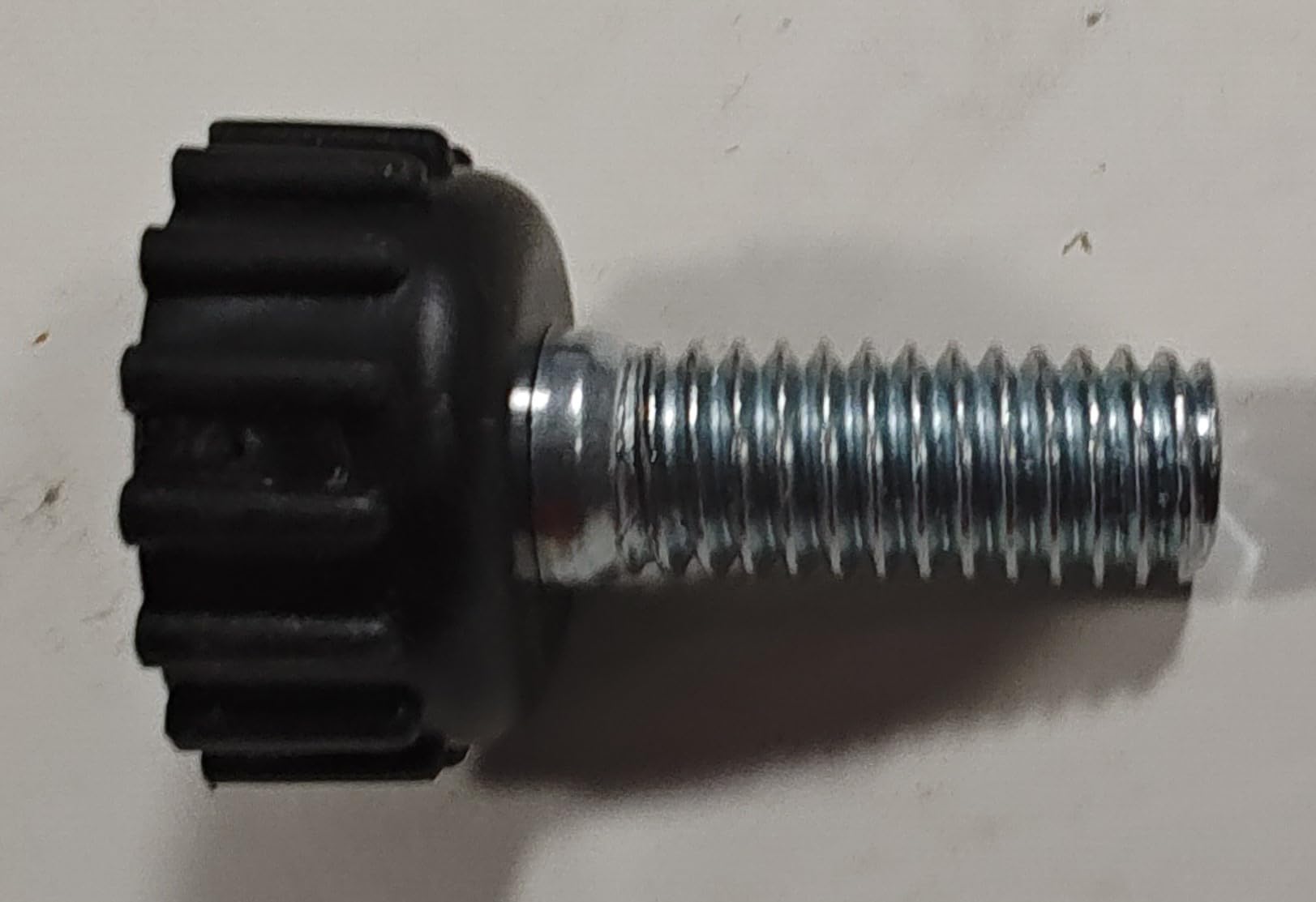
The black powder coat is the reason we expect this one to last in a damp room. It is a proper cured coating rather than a plating, and the uprights are 1-inch-class steel rather than the thin folded sheet used on cheaper racks.
Its real limitation is depth. At 14 inches, a 24-inch tote overhangs by a full 10 inches and the front lip will hit the wall behind you when you pull it out. We used it for boxed goods and paint instead, and it was excellent for both.
Assembly took about 25 minutes with two people. The listing calls for two people on the full-height frame and that advice is right, because the top beam does not hold itself while you fit the last shelf.
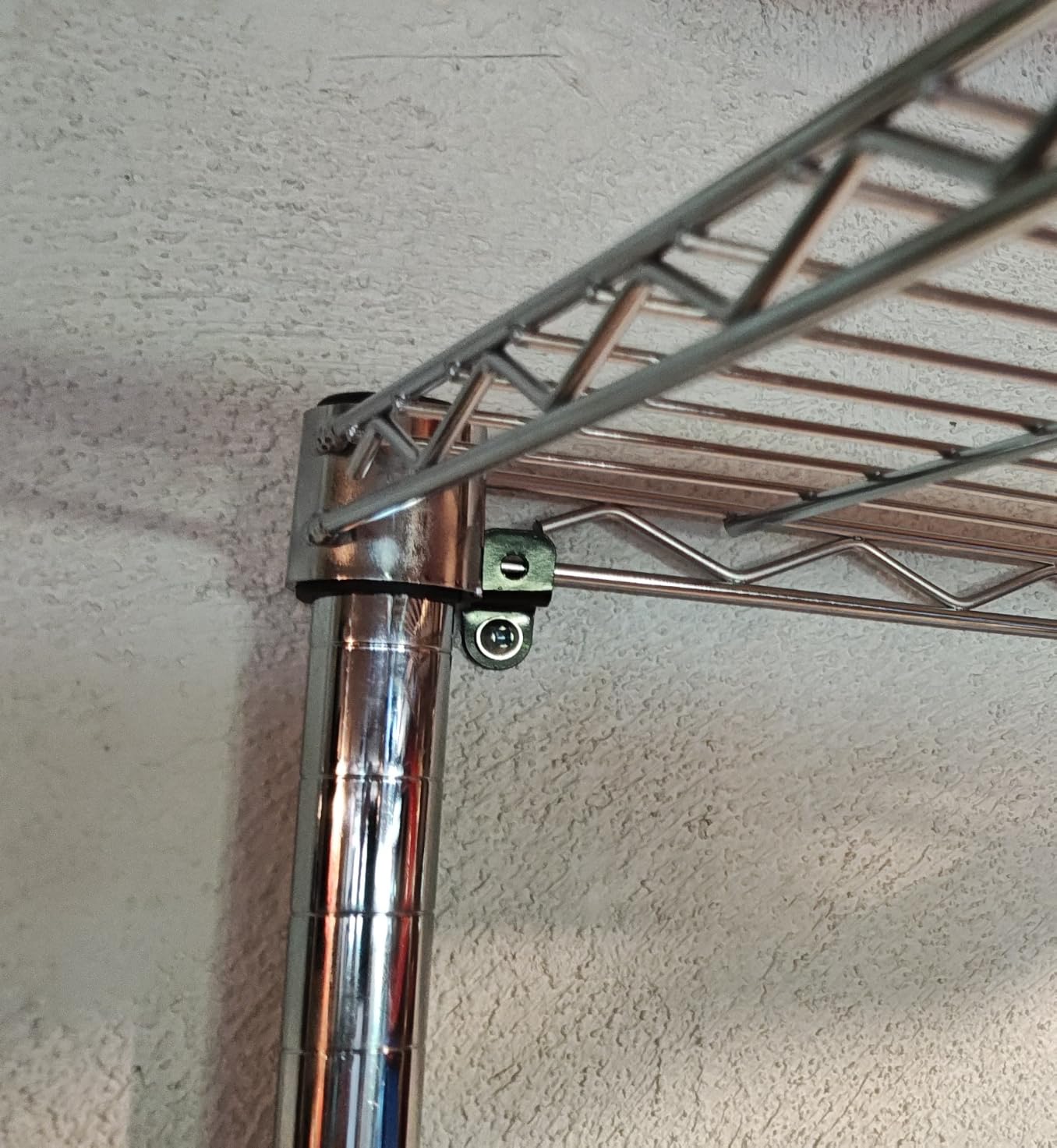
Where the Amazon Basics rack earns its spot?
If your storage is boxes, canned food, paint, tools and seasonal gear rather than full-size totes, this is the safest buy in the roundup. The one-inch shelf adjustment also means you can dedicate one tier to tall items and one to low, flat-lidded bins, which matters more than people expect.
The backless design keeps dust off stored items, which is a genuine advantage in a basement where the air is still and dusty. It also means nothing catches on a rear brace when you slide a bin out.
Where it falls short?
Do not buy it to hold 18 by 24 inch totes. That is the single mistake we see people make, and it is the reason a shallow unit ends up unused. If your existing storage bins are the big square ones, you need 18 inches of depth minimum.
It also ships without a wall anchor, and on a 72-inch frame that is worth fixing immediately. Two of the 263661 reviews we sampled describe exactly that, and the fix takes about ten minutes with a stud finder.
2. BestOffice 4-Tier Wire Shelf – Best Value
- Powder-coated finish resists rust in damp basements
- Tier spacing adjusts in 1-inch increments
- Switches between leveling feet and caster wheels
- Lightest unit to move at 17 lb
- Tool-free assembly in minutes
- Only 54 inches tall
- so vertical storage is limited
- 14-inch depth will not take full-size totes
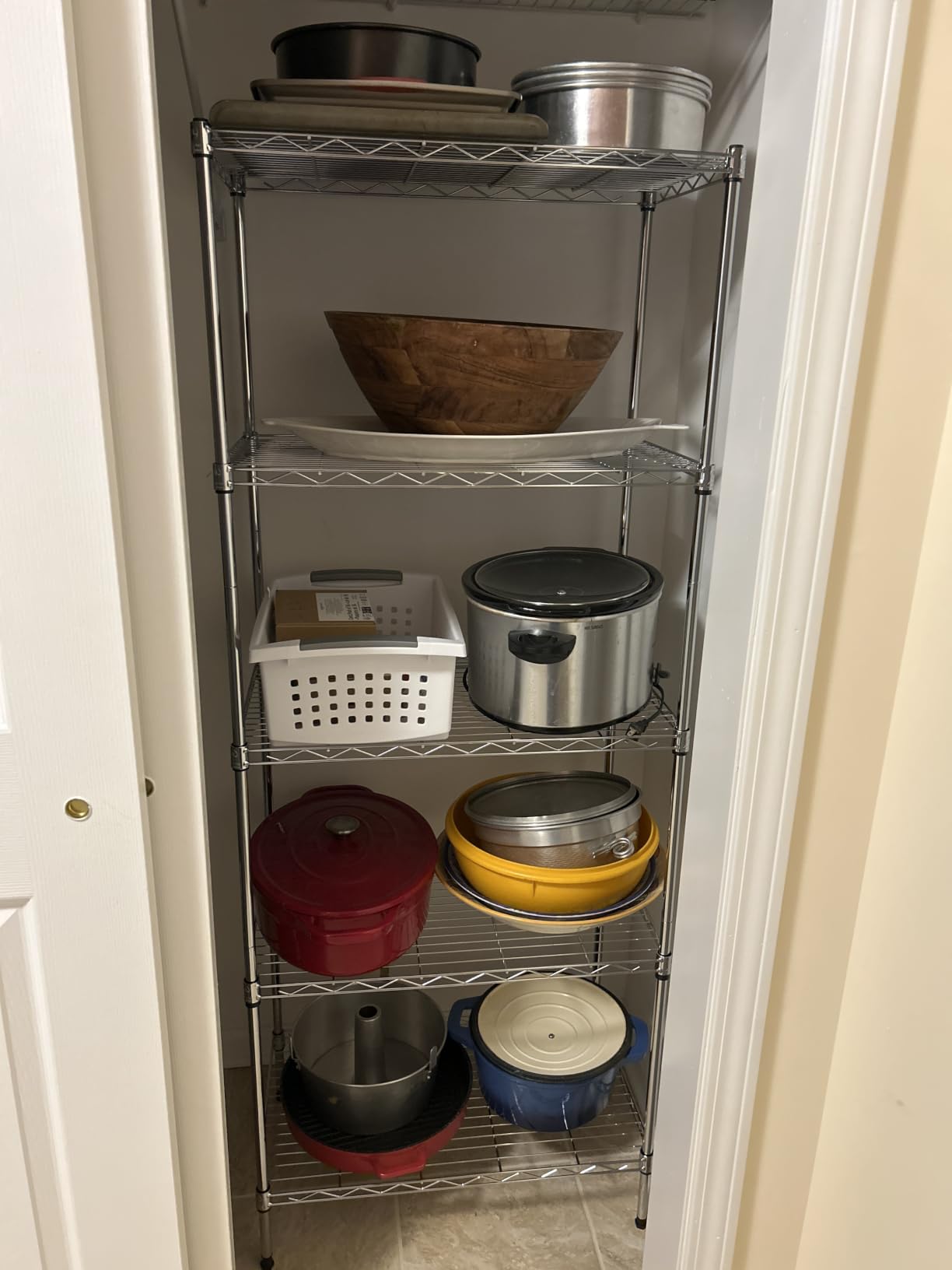
The BestOffice rack is the value pick because it gives you the same powder-coated wire construction as units costing considerably more, in a lighter, narrower package. 1000 lb total across four tiers, 250 lb per shelf, and a finish that reviewers consistently say holds up in humid rooms.
We ran it as a mobile unit first, swapping the leveling feet for caster wheels to move it around a workbench. That worked, but note the drop: the rating falls to about 220 lb once casters are fitted, so keep heavy cans on the bottom tier.
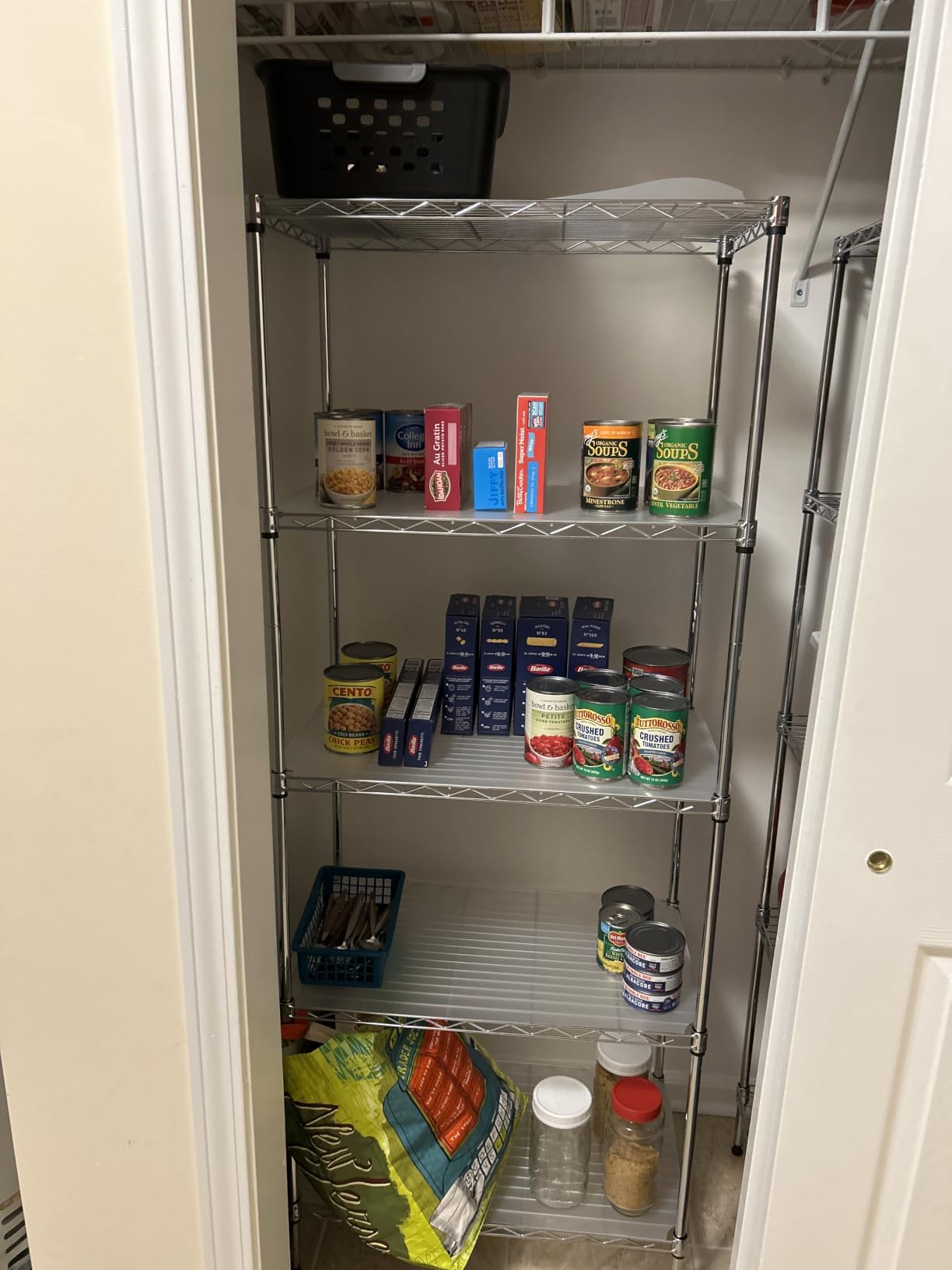
The one-inch tier adjustment is genuinely useful for a 54-inch frame. That height sounds short next to a 72-inch unit, but it fits under most low basement ceilings and ducts, and the extra tiers of a taller unit often end up unusable up there anyway.
Assembly was the fastest in our test at roughly 15 minutes, entirely tool-free. If you are furnishing a utility room or a laundry overflow, this is the least fuss.
Why this one earns the value badge?
Everything a basement actually demands, you get: powder-coated steel, adjustable tiers, leveling feet and a light enough weight to reposition by yourself. You do not get vertical height or deep shelves, and both of those are real limits if you are consolidating years of accumulated stuff into one wall.
Reviewers rate it highly for exactly that balance, with most of the praise landing on adjustability, rust resistance and quick assembly.
Where it will disappoint?
It will not hold a 27-gallon tote. At 14 inches deep, those bins sit with a big overhang and the load concentrates on the front wire. Buy something 18 inches or deeper if your storage is tote-based.
The other trap is treating the 1000 lb headline as a per-shelf number. It is a total figure across four tiers, and it assumes the load is spread evenly.
3. CX 4-Tier Heavy Duty Plastic Shelves – Best for Wide Bins
CX 4-Tier Heavy Duty Plastic Storage Shelves for Garage Organization
- 48-inch width holds two large totes side by side
- 20-inch depth fits 18x24 totes properly
- 200 lbs per shelf resists bowing under tools
- Never rusts in a wet basement
- Interlocking connectors let runs grow wider
- Fixed shelf spacing of about 14.7 inches
- Assembly diagrams are small and omit parts
- Two-tone black and yellow is not neutral
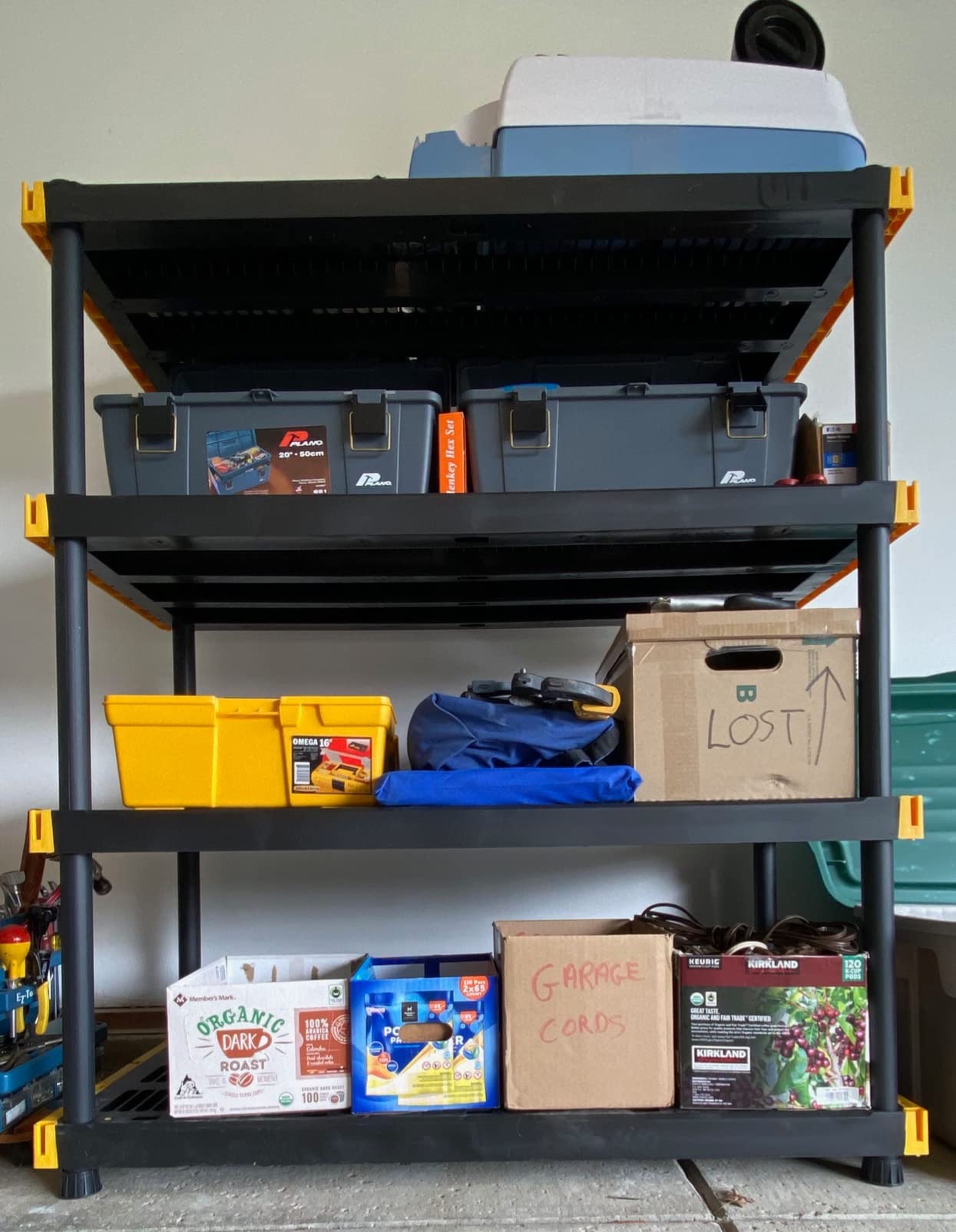
This is the only plastic unit in the roundup that solves the tote problem outright. At 48 inches wide and 20 inches deep, it takes two large totes side by side with room to spare, and the 20-inch depth means a standard 18 by 24 tote sits fully on the shelf instead of overhanging.
200 lbs per shelf is a real rating for plastic. We stacked canned goods and paint cans on it for two weeks and saw no flex in the deck, which is where cheaper resin racks usually bow first.
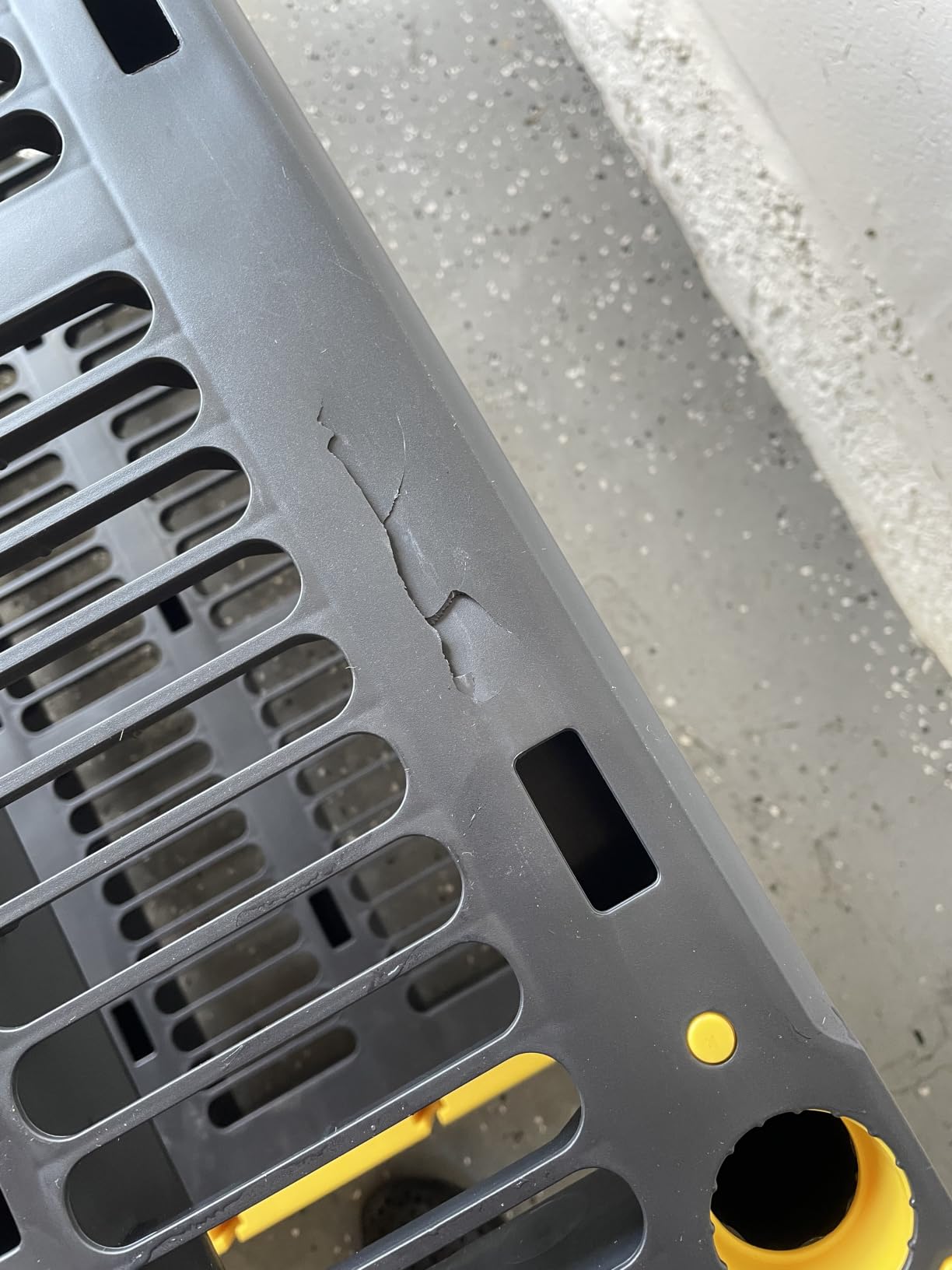
It ships with wall mounting brackets and adjustable feet, which is more than most plastic racks at this width offer, and the interlocking connectors let you extend a run along a long wall without buying a second frame’s worth of uprights.
Because it is plastic, rust is simply not a concern. For a flood-prone or persistently damp basement, that removes the biggest failure mode in this whole list.
When to choose plastic over steel?
Choose this when humidity is your primary worry and your load is moderate. Food, craft supplies, toys, seasonal decor and boxed household goods are all well within 200 lb per shelf, and nothing you own will corrode the frame.
The 48-inch width is the quiet advantage. Most basement walls are wide, and a 36-inch unit leaves either an awkward gap or forces a second frame into a space that cannot take one.
Where the design frustrates you?
Interior shelf spacing is fixed at about 14.7 inches. That means tall items go on the top tier and waste the headroom on the other four, and you cannot drop a tier to load something heavy and bulky from the top.
The assembly diagrams are the other complaint we kept seeing. Small print, and parts referenced in the instructions that are not in the box. Budget an extra fifteen minutes and lay the hardware out sorted before you start.
4. Sakugi 5-Tier Metal Shelf Organizer – Best for Narrow Walls
- Only 12.6 inches deep
- the slimmest unit tested
- 0.9-inch steel tubes resist sagging
- Wall fixing kit included
- Matte finish is waterproof and wipes clean
- Narrow depth limits which bins and boxes fit
- 12.6-inch depth rules out full-size totes
- Small footprint means less capacity per shelf
The Sakugi is the answer for the awkward basement wall where a 14-inch unit still will not go. At 12.6 inches deep it is the slimmest rack we tested, and it still carries a 1000 lb total rating on 0.9-inch steel tubes.
Those tubes are the differentiator. Most narrow units get away with thinner folded steel, and that is what bends under load. Ours held a full tier of paint cans without visible deflection across three weeks.
It also includes both of the stability features people most often have to buy separately: four non-slip leveling feet and a wall fixing kit. On a concrete floor that is not perfectly flat, the feet kept it from rocking.
The matte black finish is described as waterproof and rustproof, and it wipes clean with a damp cloth. That matters in a basement where you are going to be wiping dust and spills off shelves rather than vacuuming them.
When 12.6 inches of depth is the whole point?
Basements are full of obstructions: furnace ducts, water heater clearance, support columns, joist hangers. A rack that needs 14 inches of clear wall may be the difference between fitting in a bay and not fitting at all.
At 33 inches wide and 72 inches tall, this is also a good fit for a half-wall or the dead space behind a stair run, where five tiers of vertical storage cost you almost no floor area.
When you need a different unit?
If your storage is large square totes, stop here. 12.6 inches will not take an 18 by 24 bin, and no arrangement of those bins makes that work. This unit is for boxes, canned goods, bottles and narrow plastic bins.
The narrow footprint also means less usable shelf area per tier than a wide unit, so you gain wall clearance and lose capacity. That is usually the right trade in a tight basement, but not always.
5. HOMEDANT 5-Tier Deep Shelving Unit – Most Versatile for Large Loads
HOMEDANT Black 47.7″ Deep 5 Tier Storage Shelves Garage Shelving Unit Metal
- Deepest and widest unit in the set at 47.7 by 24.1 inches
- Fits large appliances and full-size totes
- Tool-free boltless assembly takes minutes
- All five tiers reposition
- Polished powder-coated finish suits finished rooms
- Heaviest practical configuration at 40.8 lb
- Costs more than comparable wire units
- 48-inch span needs level floor support
The HOMEDANT is the unit to buy when you have wide, bulky things to store. At 47.7 inches wide and 24.1 inches deep, it is the largest shelf surface in the roundup, and 24 inches of depth means full-size totes sit properly rather than overhanging.
Builders have praised it as one of the few racks here that looks finished enough for a basement that is also used as living space. The powder-coated finish is polished, not industrial, and the Z-shape shelf brackets read as furniture.
Assembly was genuinely tool-free and quick. The tiers snap into place and reposition, so you can change the layout later as the contents change, which matters if you are storing things you cannot always identify.
The stated load runs from 257 lb minimum to 771 lb maximum depending on configuration, which is an unusually honest way to present it. The real ceiling is the 771 lb figure.
When the extra width changes everything?
Wide shelf area is about span, and span is what keeps a shelf from sagging under an uneven load. A 48-inch-wide deck distributes weight across two bays instead of one, so it tolerates heavy items that would bow an 18-inch shelf.
For appliances, large totes, camping gear or a workshop bench arrangement, that is the difference between a shelf that stays flat and one that dishes downward over a year.
Where the premium stops making sense?
It weighs 40.8 lb before you load it, so moving it is a two-person job and repositioning it later is not a casual task. If you are not sure where it goes, buy something lighter and iterate.
It is also one of the most expensive units in the roundup, and in a basement with a damp floor that will be wiped down, the finish difference is less visible than the price difference. Buy it for the dimensions first, the appearance second.
6. REIBII 2 Pack Garage Shelving – Best for Solid Non-Wire Decks
- Two complete five-tier units in one purchase
- Solid MDF decks hold small parts and bins
- 1.4mm rolled-edge steel posts resist frame flex
- Each unit splits into two shorter sections
- Boltless build assembles in about 10 minutes
- MDF decks can sag when overloaded
- Listed for indoor use only
- 44 lb total makes a filled unit a two-person move
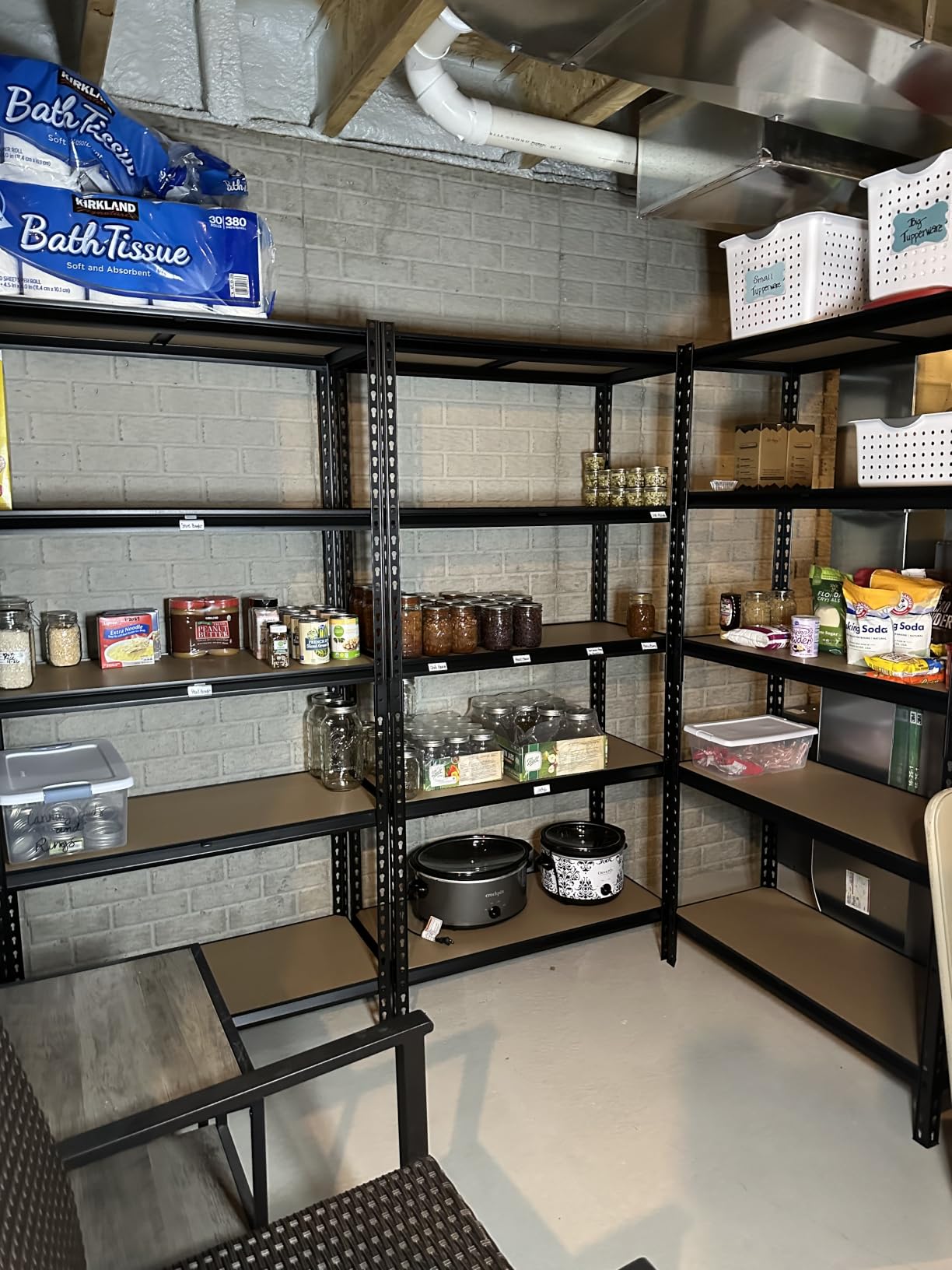
The REIBII pack solves a different problem from every other unit here. Its shelves are solid 5mm MDF decks over a metal support rod, not wire, so small parts, hardware and open-top bins stay where you put them instead of draining through the gaps.
You get two complete five-tier units, ten tiers total, each measuring 36 by 16 by 72 inches. If you are furnishing two rooms or one long run, that halves the number of separate orders and the number of mismatched finishes.
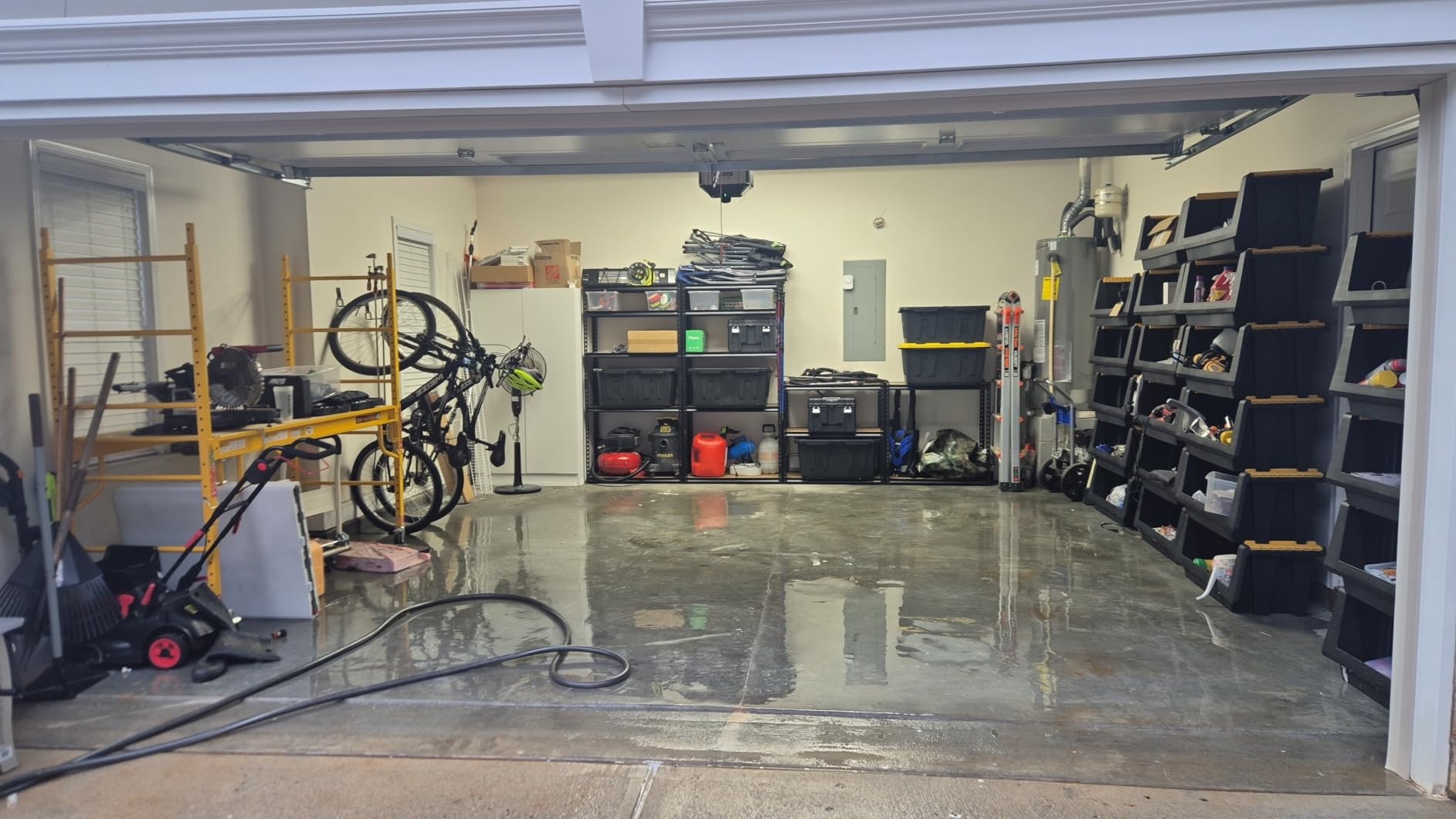
Posts are 1.4mm rolled-edge steel with a powder-coated finish, which is heavier gauge than most units at this price. We loaded the lower tiers hard and the frame held without twisting.
Each unit also splits into two shorter sections, so a 72-inch unit that will not fit behind a duct can become two 36-inch units that will. Assembly was about ten minutes per unit with a hammer and gloves, both included.
When solid decks beat wire?
Wire decking is excellent for airflow and terrible for small objects. If you are storing hardware, craft supplies, open bins without lids, or anything that would sift through a shelf, a solid deck is the correct answer and there is no liner workaround that works as well.
Solid decks are also quieter than wire and do not snag fabric or shred the edges of cardboard boxes as you slide them out, which reviewers note as a real difference in daily use.
Where the capacity claim needs tempering?
The headline figure is 2400 lb per unit and 480 lb per tier, but reviewers consistently describe realistic loading as well under the per-tier number because of the MDF board. Put the heavy items on the bottom two tiers and do not treat that rating as a target.
It is also listed for indoor use only, which rules it out for a damp garage or any covered outdoor space. And at 44 lb for the pack, filling both units is a two-person job, so plan the location before you build.
7. Sterilite 5 Shelf Heavy-Duty Plastic Rack – Top Rated
- Highest average rating in the roundup at 4.7
- Perforated shelves keep airflow high so contents stay dry
- Plastic frame will never rust
- Tool-free assembly in about 5 to 10 minutes
- Light enough to move between rooms alone
- Slight shelf height mismatch between units of about half an inch
- Can feel wobbly when lightly loaded unless units are zipped together
- A rubber mallet helps seat the posts and is not included
The Sterilite has the highest average rating of any unit we reviewed, at 4.7 across 6326 reviews, and the reason is consistent: it does not rust, it does not sag, and it goes together in ten minutes.
Perforated shelves are the quiet feature. They let air move through a stack of bins, which in a basement is the difference between contents that smell musty after a humid summer and contents that do not.
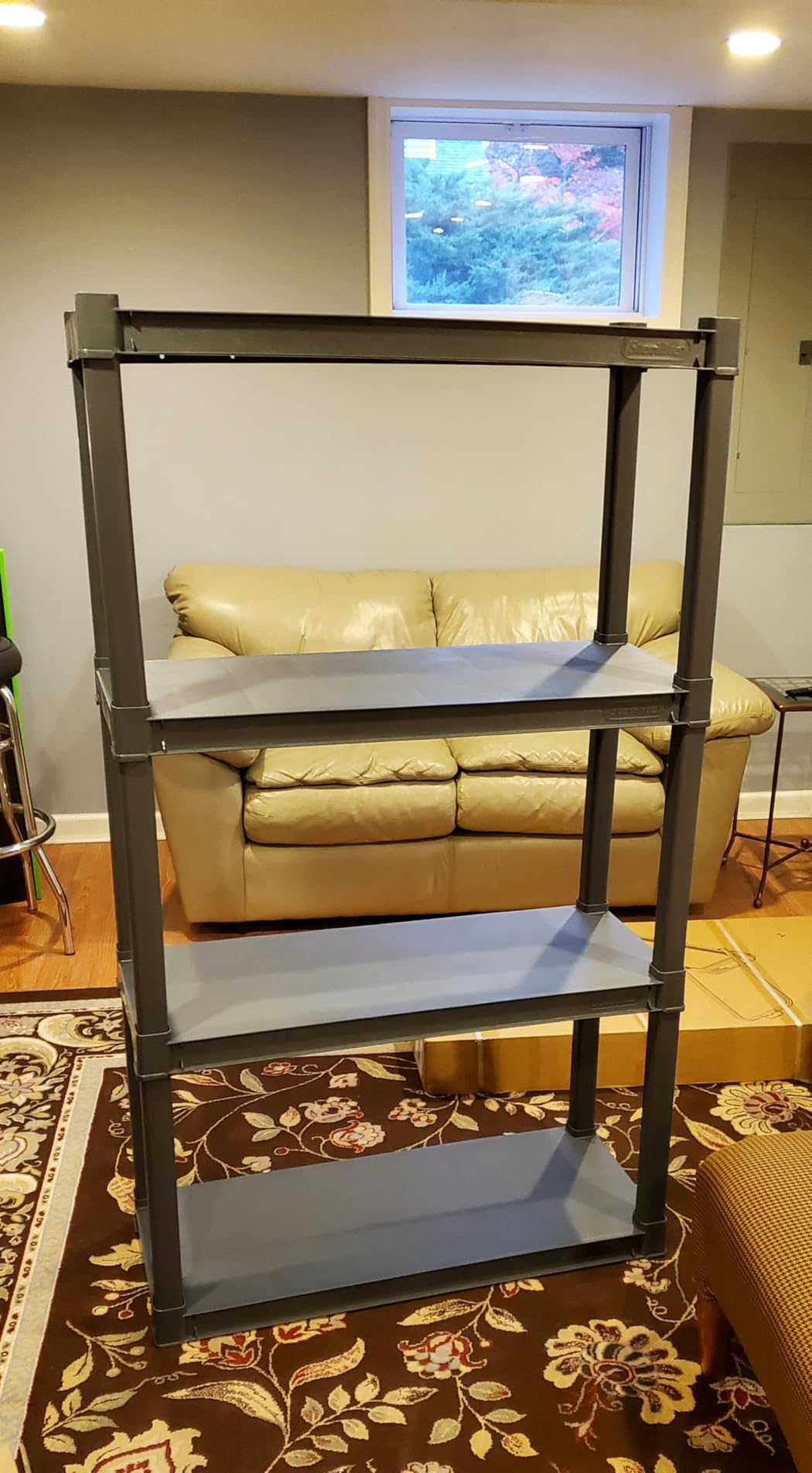
At 75.1 inches tall it is one of the taller units here, and the tubular frame carries 150 lb per shelf, which covers food, tools, equipment and seasonal storage without complaint. At 28.5 lb it is also light enough to move between a basement and a garage by yourself.
It comes with a one-year manufacturer warranty, which is worth noting because most plastic racks in this category offer nothing.
Why the rating is the highest?
Reviewers describe it as inexpensive, rust-proof, easy to assemble and no-sag even when filled. That combination is what you are actually buying when a basement is the destination, and there is no weak point in the design to fail.
It is widely recommended for home organization rather than heavy tools, and we agree with that framing. Think food, cleaning supplies, toys, seasonal decor and boxed goods rather than a wall of paint cans.
Where you will notice the compromises?
Two units from the same run can differ in shelf height by up to about half an inch, which looks sloppy if you are running several side by side. Zip ties between adjacent units hide it and stiffen the frames at the same time.
It also feels a little wobbly when lightly loaded until it is filled or tied, and seating the posts firmly is much easier with a rubber mallet, which is not included. That is a two-minute workaround, not a defect.
8. IRIS USA Plastic Storage Shelves – Best Mid-Size Plastic Unit
IRIS USA Plastic Storage Shelves |Made in USA| 56″H x 36″W x 18″D – Black
- 18-inch depth fits standard 18x24 totes
- Waterproof plastic wipes clean and never rusts
- Integrated snap-in legs keep the profile compact
- Made in the USA from recycled materials
- Light at 17.5 lb so it is easy to reposition
- Fixed shelf spacing with no height adjustment
- Listed capacity conflicts with the feature claim
- Mounting to the wall is optional hardware
The IRIS is the middle answer between a narrow 36-inch plastic rack and a wide 48-inch one. At 36 by 18 by 56 inches it hits the depth that standard totes need without taking up a whole wall.
Eighteen inches of depth is the number to note. That is the minimum for a full-size tote, and the IRIS is one of only a few units in this roundup that clears it without going to 24.
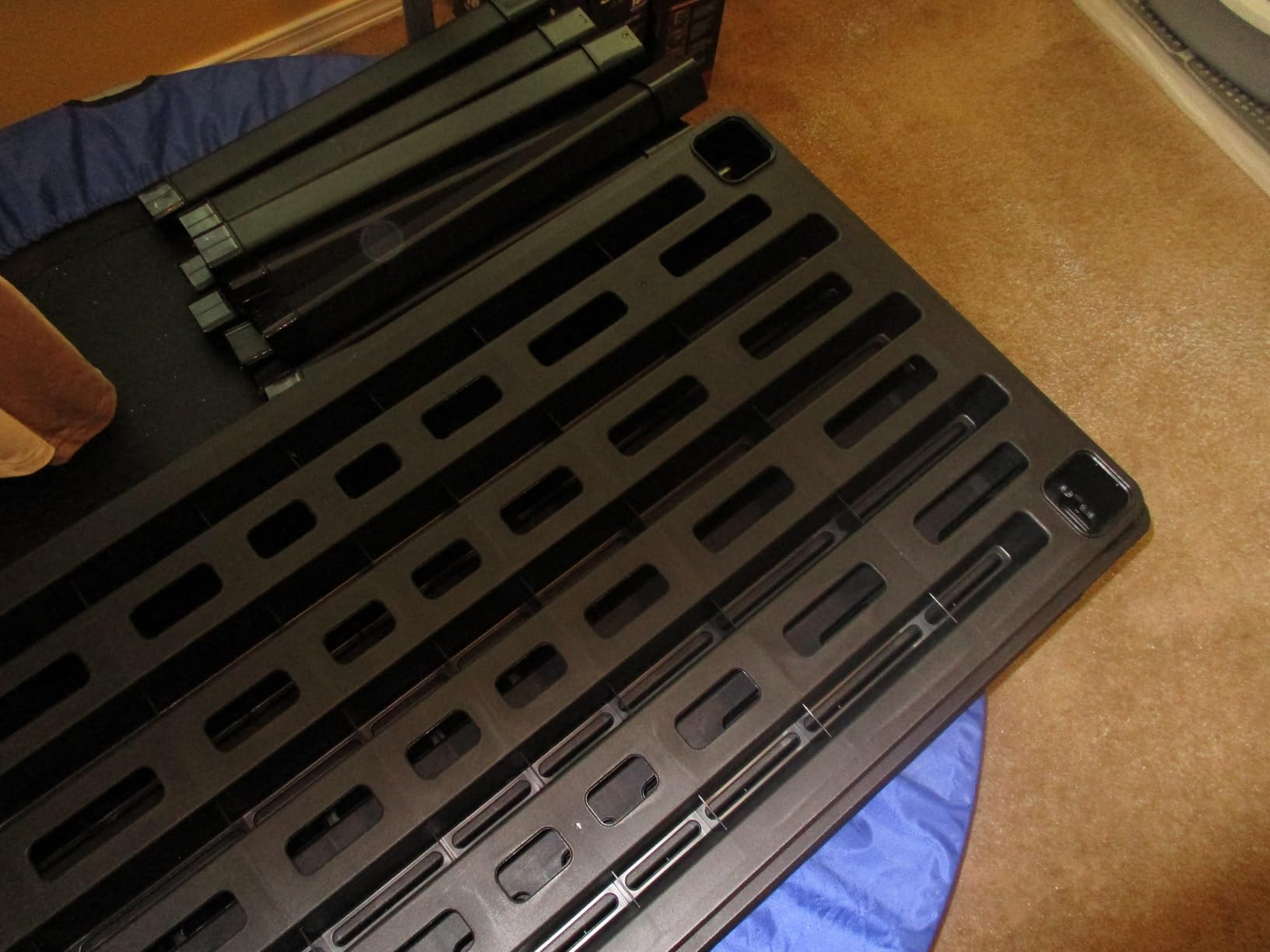
The integrated leg design snaps under each shelf, so assembly is tool-free and the frame stays visually narrow. Nothing protrudes past the shelf edge, which keeps the footprint honest to those dimensions.
At 17.5 lb it is the second-lightest unit here, so you can slide it out from a wall, reposition it and put it back without help. In a basement where the layout is still unsettled, that is worth more than it sounds.
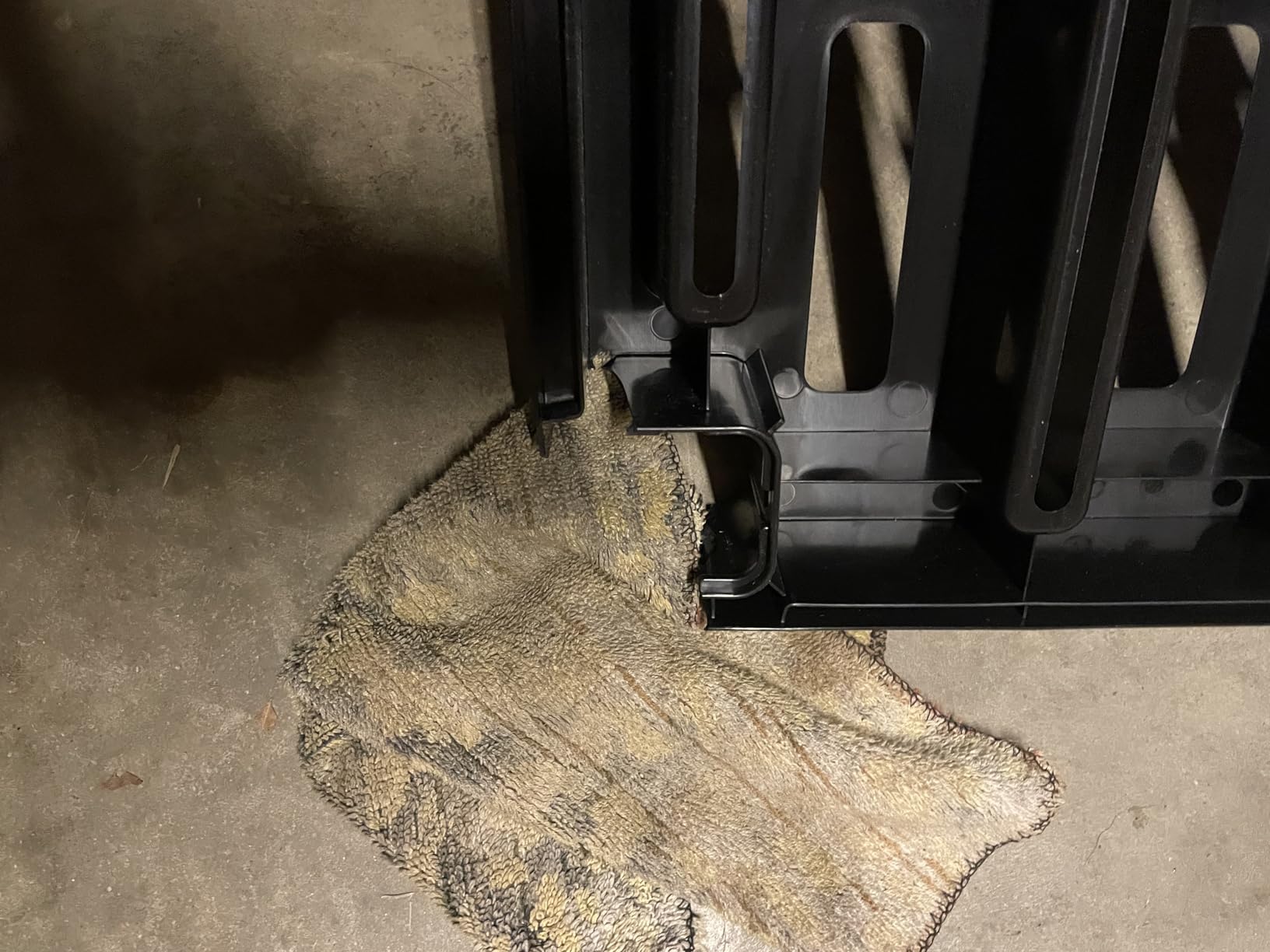
When 18 inches of depth is the deciding factor?
Tote fit is the reason to pick this. If you already own a collection of 18 by 24 inch bins, this is the least expensive way to store them properly, and the plastic frame removes rust from the equation entirely.
It is also a good fit for pantry overflow, canned goods and bulk food, where a waterproof surface that wipes clean is more valuable than a steel deck.
Where you should be cautious?
Shelf height is fixed, with no adjustment, so you cannot reconfigure it as your storage changes. At 56 inches tall, that is a real limit in a basement where you might want one high tier for paint cans.
Also note the inconsistency in the ratings: the listing states 400 lb maximum while the feature bullets claim 600 lb total. Plan on the per-shelf figure of 150 lb, which is the conservative reading.
9. VEVOR 5-Tier Adjustable 2000 lb Shelving Unit – Best Big Footprint
VEVOR Storage Shelves 5-Tier Adjustable 2000 lbs 48″x24″x72″ Shelving Unit
- Very large 48 by 24 inch shelves per tier
- Splits into two separate racks for tighter spaces
- 16 rubber foot pads included for floor protection
- Carbon steel with powder coating resists rust
- Boltless press-to-assemble design takes about 20 minutes
- Capacity claims far exceed what the thin MDF boards deliver
- Thin uprights bend if struck hard during assembly
- Weak English-only instructions
- 64.8 lb makes a loaded move a two-person job
The VEVOR covers the most floor area per tier in the roundup at 48 by 24 inches, and it has the flexibility of the REIBII because you can split it into two separate racks once it is assembled. That matters a lot in a basement with a fixed ceiling height and awkward obstructions.
Sixteen rubber foot pads ship in the box, which is the single cheapest rust-prevention measure available: they break the contact between steel and concrete so moisture never sits against the base of an upright.
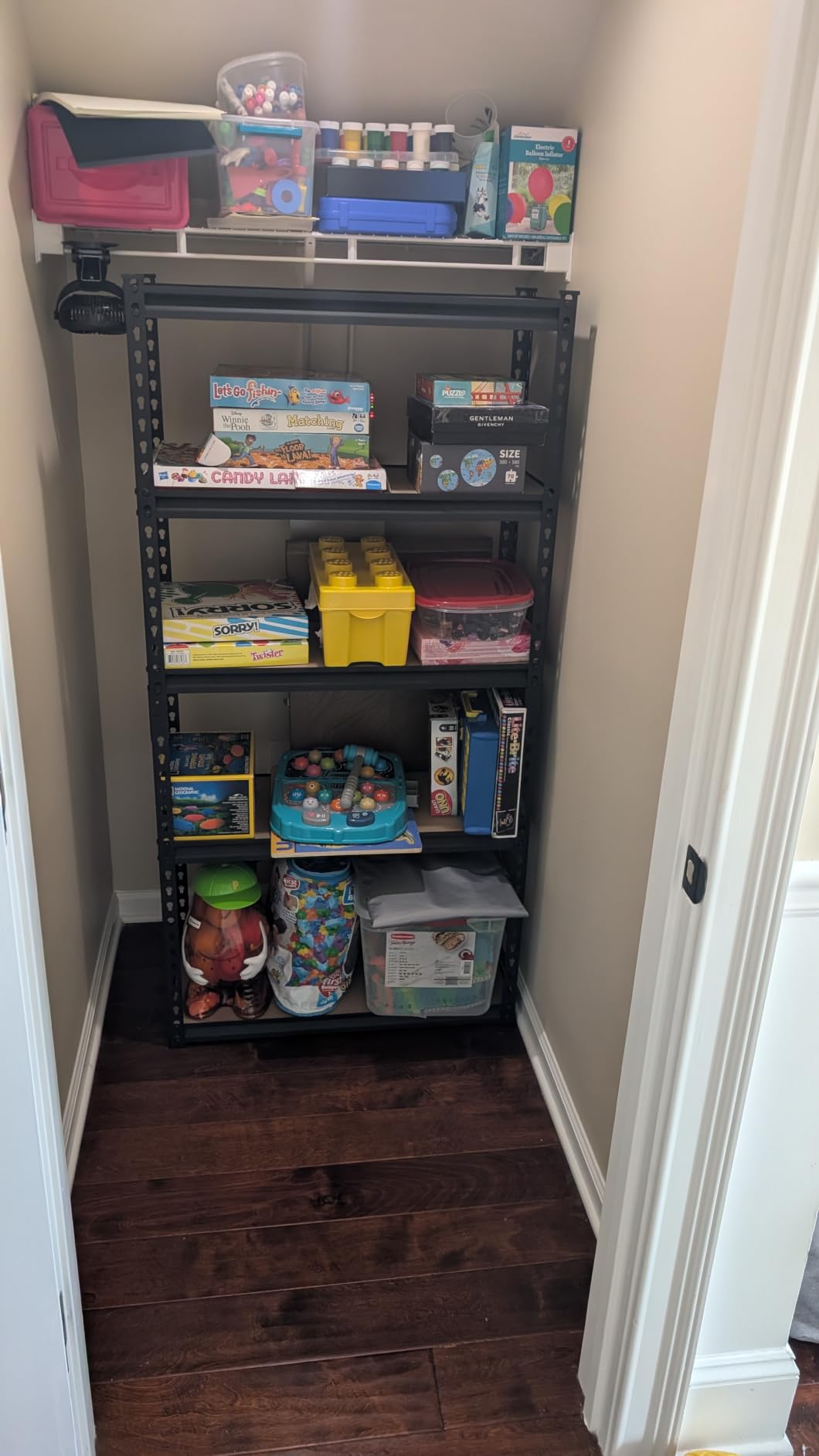
Build quality on the frame is a genuine plus. SPCC carbon steel with powder coating is a better raw material than the light-gauge steel used on cheaper racks, and the finish resists rust and scratches as advertised.
Assembly is press-to-assemble and boltless, taking about 20 minutes with the included rubber hammer and gloves. Our tip: assemble it where it will live, because at 64.8 lb before loading, moving it through a doorway is not a one-person job.
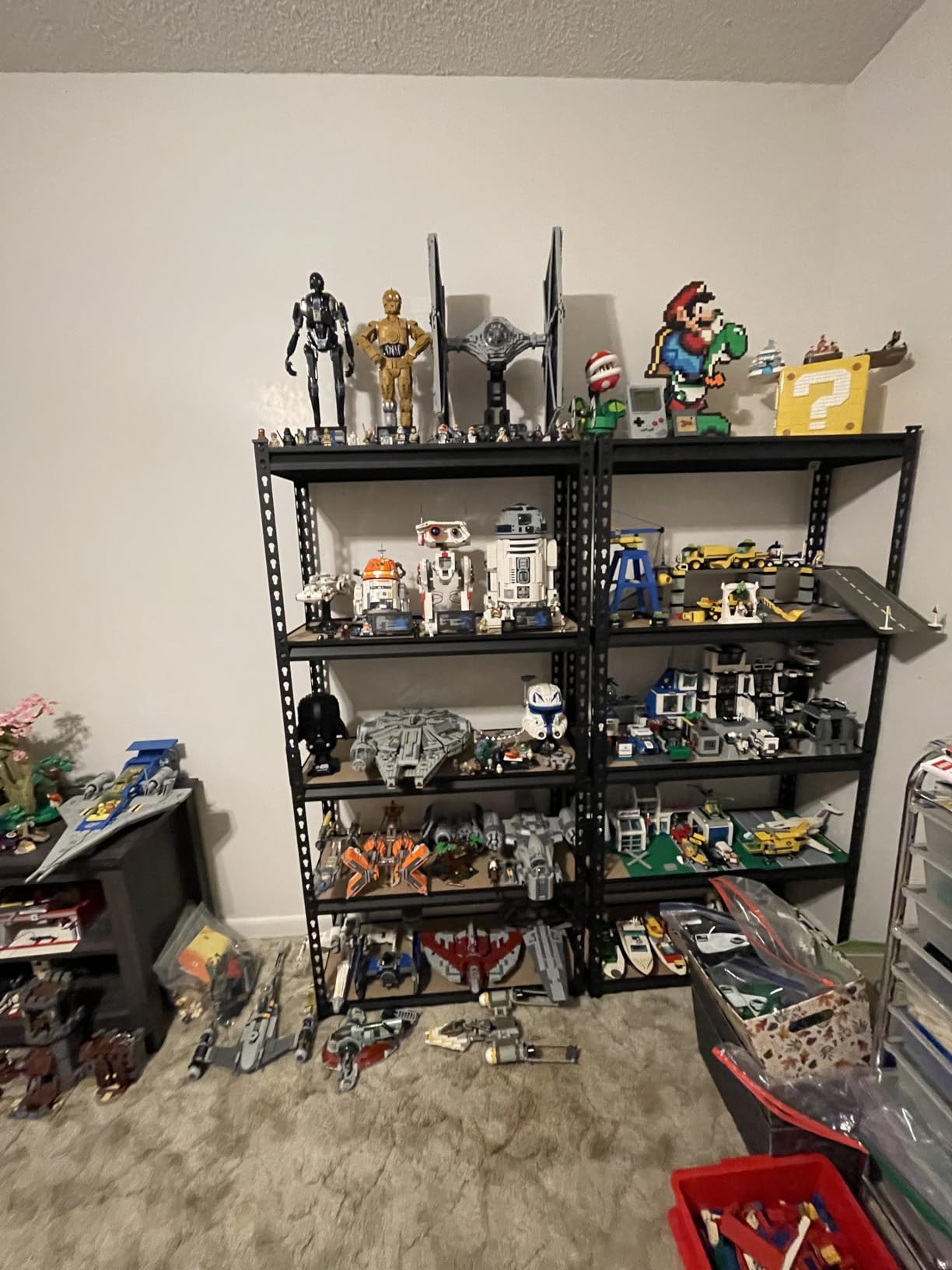
When the large footprint pays off?
Large shelves are about span and uniform loading. A 24-inch-deep deck holding bins in one row puts far less point load on a single wire than the same bins crammed onto an 18-inch shelf, and long items like lumber or seasonal decorations can lie flat.
Being able to split it into two racks after assembly also makes it a sensible hedge if you are unsure how the wall space will work out.
Where the claims outrun the hardware?
The 2000 lb total and 400 lb per shelf figures are far beyond what the thin MDF boards deliver in practice. Buyers who load it moderately report good results; buyers who approach the stated rating report bowing. Use the bottom tiers for heavy items and treat the number as marketing.
Two other real issues: the thin metal uprights dent if you strike them hard with the hammer, so tap rather than drive, and the instructions are weak and English-only. We found the layout by laying the parts out and matching them to the photos, which took longer than the assembly itself.
10. Notmise Metal Garage Shelving 5-Tier – Best for Tool Safety
- Anti-fall safety rails keep tools and boxes on the shelf
- All-steel shelves will not warp or absorb moisture
- Reinforced bottom bracing and dual-layer columns
- Splits into two shorter units for tight layouts
- Tool-free slotted assembly with hammer and gloves included
- Thin sheet metal flexes under load
- No printed instructions included
- Connectors sometimes arrive in the wrong color
- Hard to assemble alone because the frame collapses without a second person
The Notmise is the one unit here with anti-fall safety rails on every shelf, and that single feature changes what you can store. Tools, paint cans and boxes sit on the deck instead of rolling or sliding off onto the floor, which on a basement slab means a broken container rather than a scuff.
All-steel shelves are the other argument. They will not absorb basement moisture the way an MDF or plywood deck eventually does, which is a real long-term advantage in a damp room.
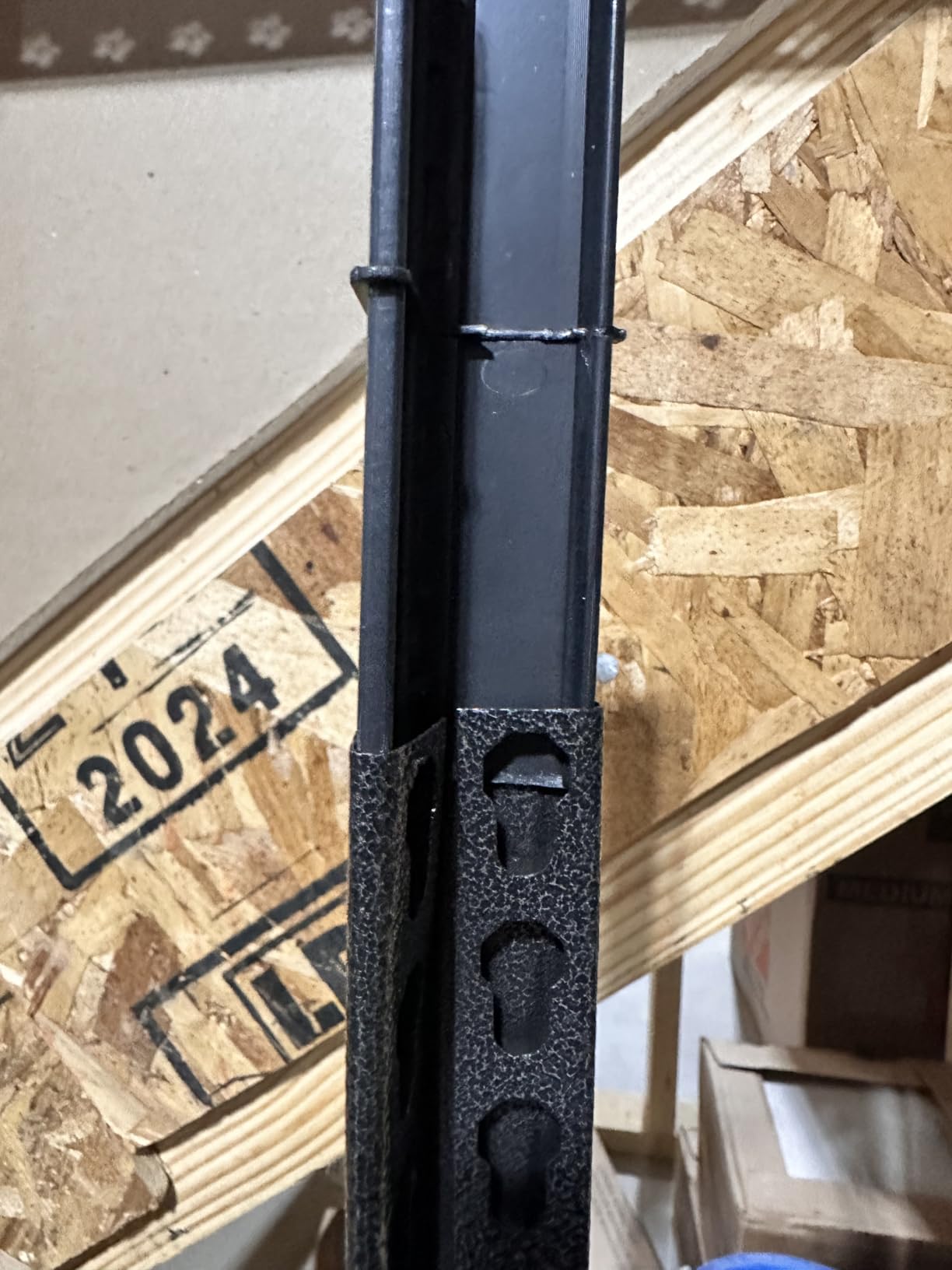
The dual-layer columns and reinforced bottom bracing are meant to distribute load and reduce warping, and at moderate loading they do. The bolt-free slotted design assembles without hardware, with a plastic hammer and gloves in the box.
Like the VEVOR, it splits into two shorter units after assembly, which is useful when a full-height frame will not clear a low beam or a duct run.
Why the safety rails are worth paying for?
If you are storing power tools, paint, solvents or anything with a cylinder shape, a raised lip on the front of every shelf is a genuine safety improvement. It is the difference between a dropped can and a stable one, and reviewers consistently single the rails out as the reason to buy this over a generic rack.
For workshop-style basements, that is worth more than raw capacity, and the rails are something you cannot retrofit cheaply onto wire decking.
Where the quality is inconsistent?
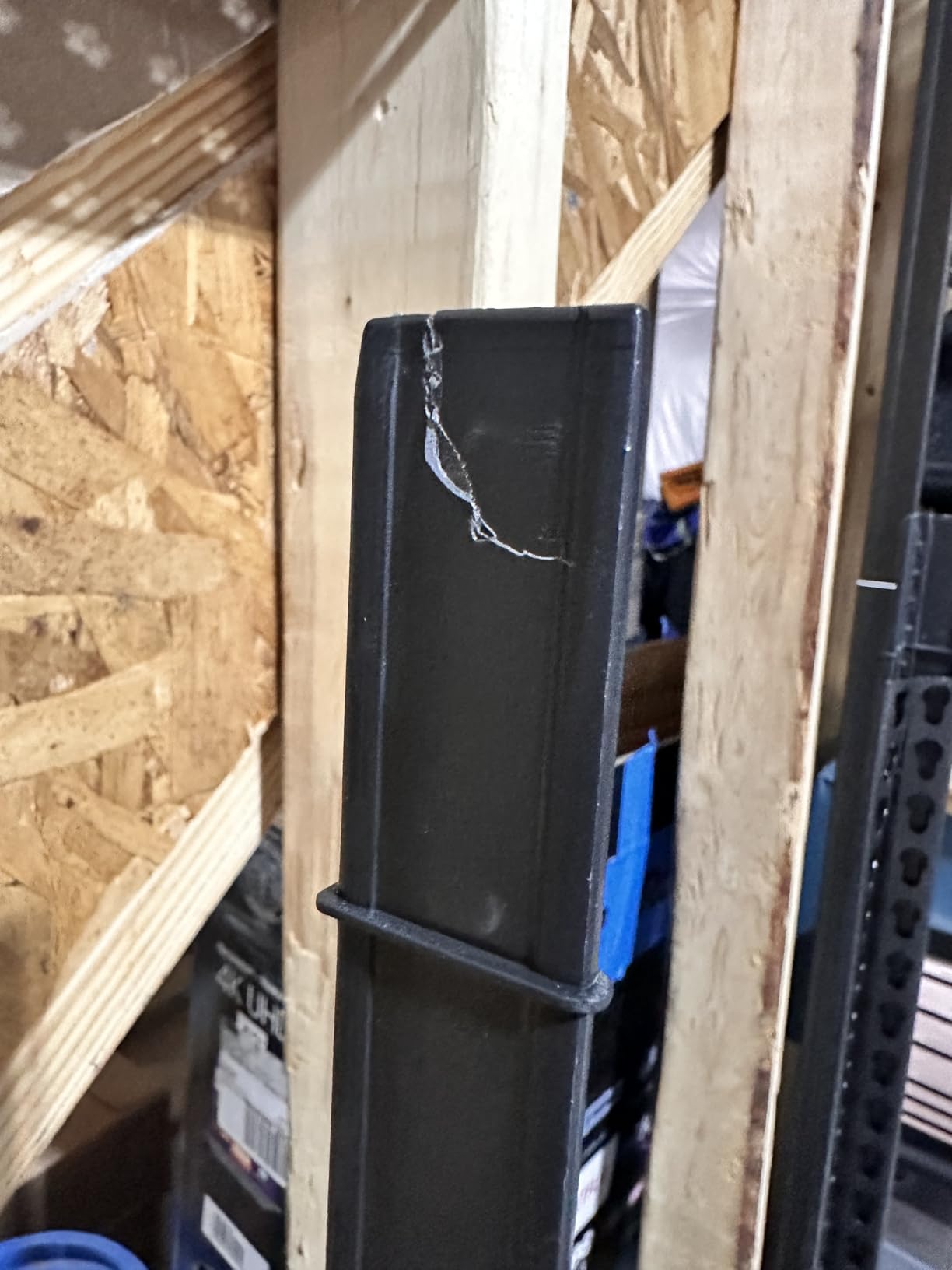
This is the lowest-rated unit in the roundup at 4.1, and the reason is the thin sheet metal. It flexes and bends under load, which sits badly against a 3000 lb headline claim. Several buyers report receiving replacements or refunds for exactly this, so the seller has been responsive.
Two other practical problems: there are no printed instructions, so you will be looking for a video before you start, and the frame collapses without a second person holding it during assembly. Do not attempt it alone. Connectors have also arrived in the wrong color on some orders, which does not affect function but is worth checking when the box arrives.
11. SISESOL 5000 lb Wide Garage Shelving – Best Full-Wall Span
- Widest unit reviewed at 71.3 inches
- One-piece uprights with reinforced beams
- 8 lateral stabilizer bars resist sway and twisting
- Locking pins hold shelves at the set height
- Interconnectable units bridge sections of wall
- Shelf panels flex under load
- Heaviest unit at 80 lb and needs multiple people to move
- Assembly can take a couple of hours
- Does not have a substantial industrial appearance
The SISESOL is for one specific job: covering an entire wall or a full garage bay in a single unit. At 71.3 inches wide and 24 inches deep, no other rack in this roundup spans that much with one set of uprights.
The engineering is aimed at the problem that wide racks actually have, which is sway. Eight reinforced lateral stabilizer bars plus one-piece upright construction resist the twisting and racking that makes a 6-foot shelf feel unstable.
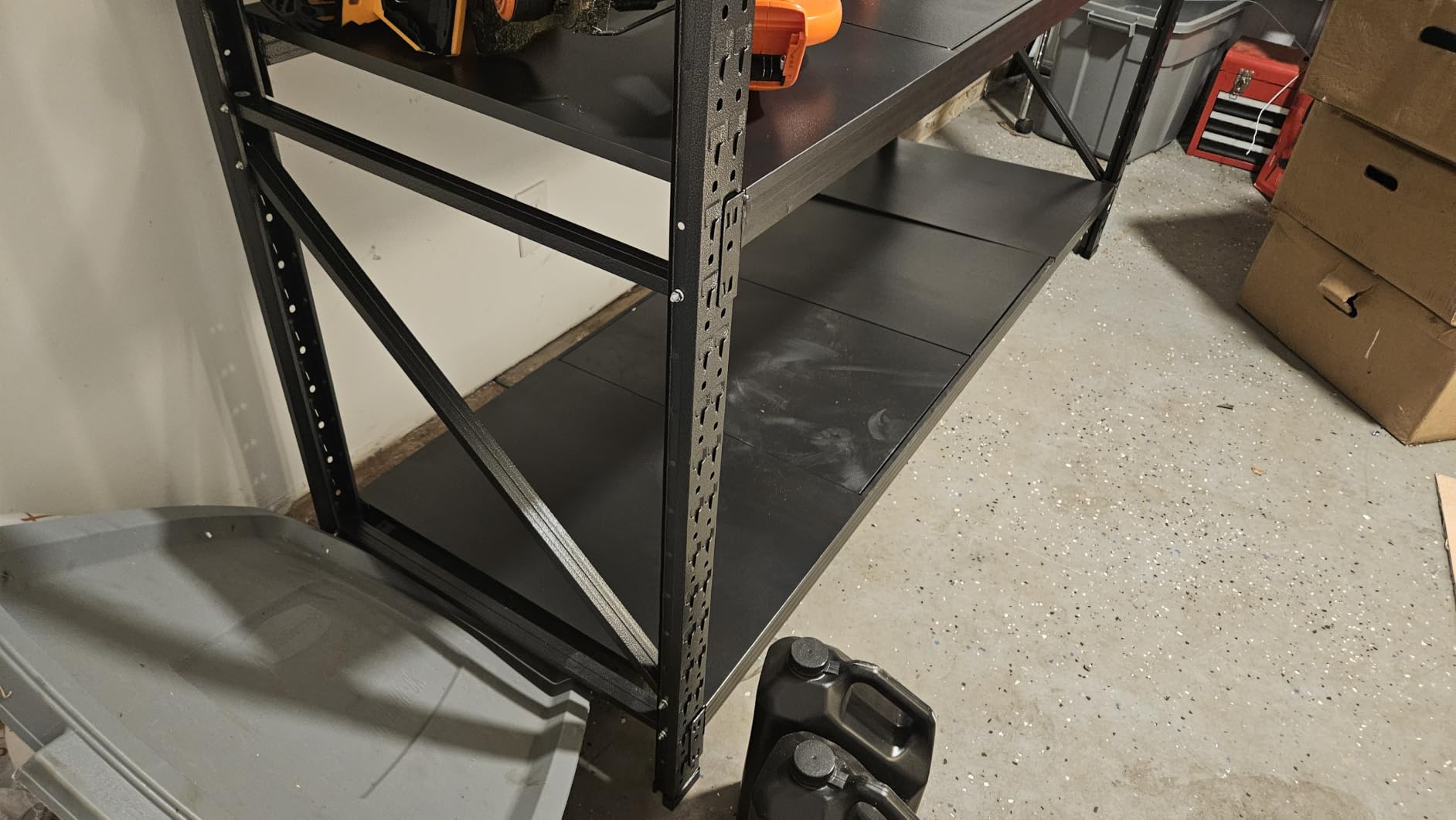
Locking shelf pins are a small upgrade that matters. On ordinary slotted uprights a shelf can lift or shift when you slide a heavy bin across it; the locking version holds the height you set, so the deck stays where you put it under load.
Units interconnect, so two racks can share uprights and bridge a longer run. The box includes foot mats, the locking pins and a rubber mallet.
When a single span is the right call?
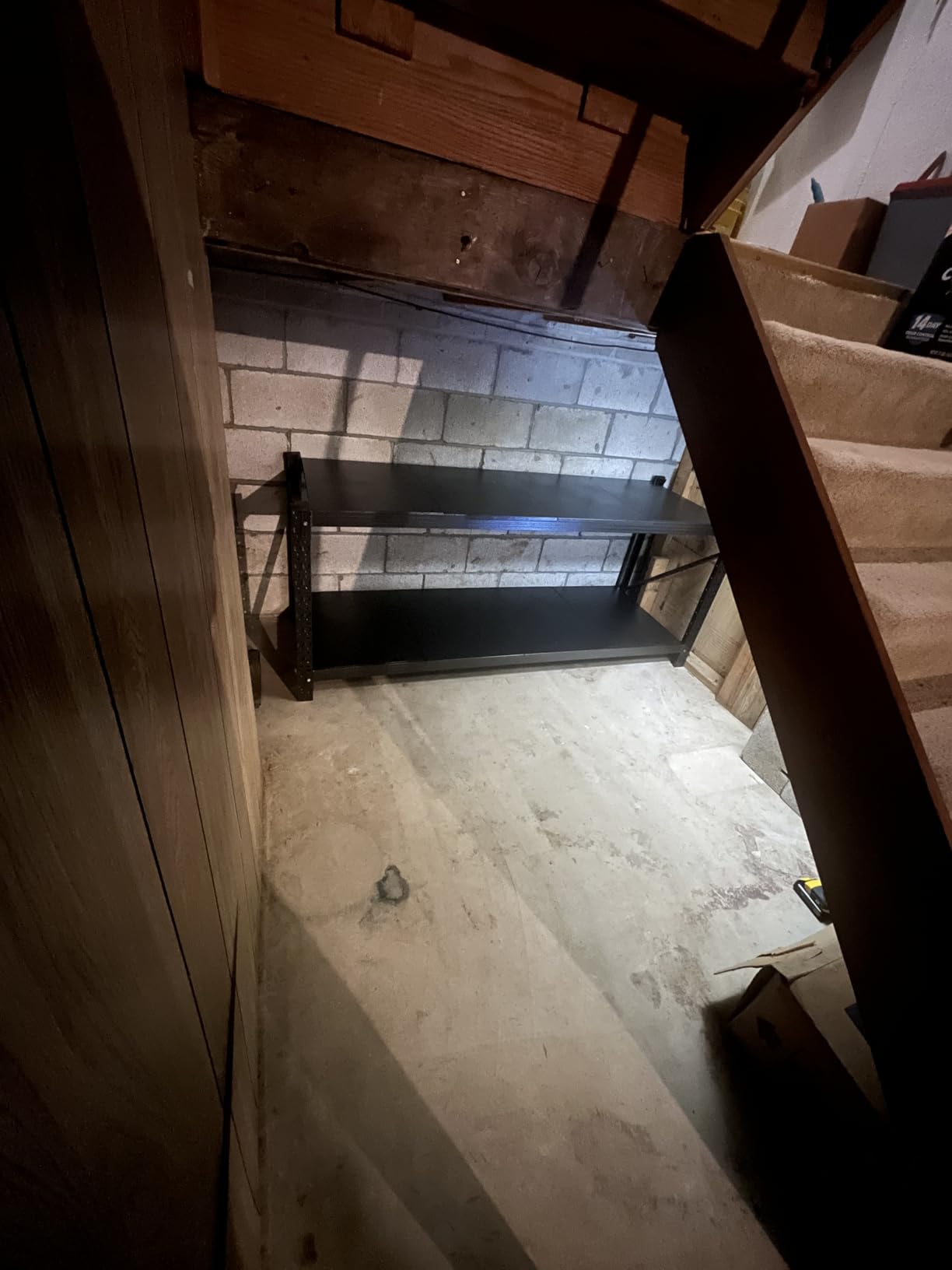
Fewer uprights means fewer floor contact points, and in a basement that is an advantage twice over: fewer places for steel to meet damp concrete, and fewer joints to work loose. It also means one anchoring job instead of three.
If you are consolidating a large accumulation, a single wide run also looks far more deliberate than three mismatched 36-inch units lined up against a wall.
Where the reality diverges?
At 80 lb this is the heaviest unit here and needs multiple people to move, so get the location right before you unpack it. Assembly can run a couple of hours, which is longer than any other unit in the roundup.
Shelf panels flex visibly under load and fall well short of the 5000 lb claim, so treat the rating as a structural ceiling rather than a working one. It also does not look as industrial as its framing suggests, which can disappoint if you bought it for a workshop.
12. Plano 4-Shelf Plastic Storage Shelves – Budget Pick for Tight Closets
- Lowest cost in the roundup
- Quick five to ten minute tool-free assembly
- Plastic wipes clean and never rusts
- Interlocking design joins units side by side
- Small footprint fits closets and laundry rooms
- Only 50 lb per shelf
- Reports of units collapsing at loads below the stated rating
- Support poles can arrive crooked
- Fixed 13-inch clearance limits item height
- No wall anchor included
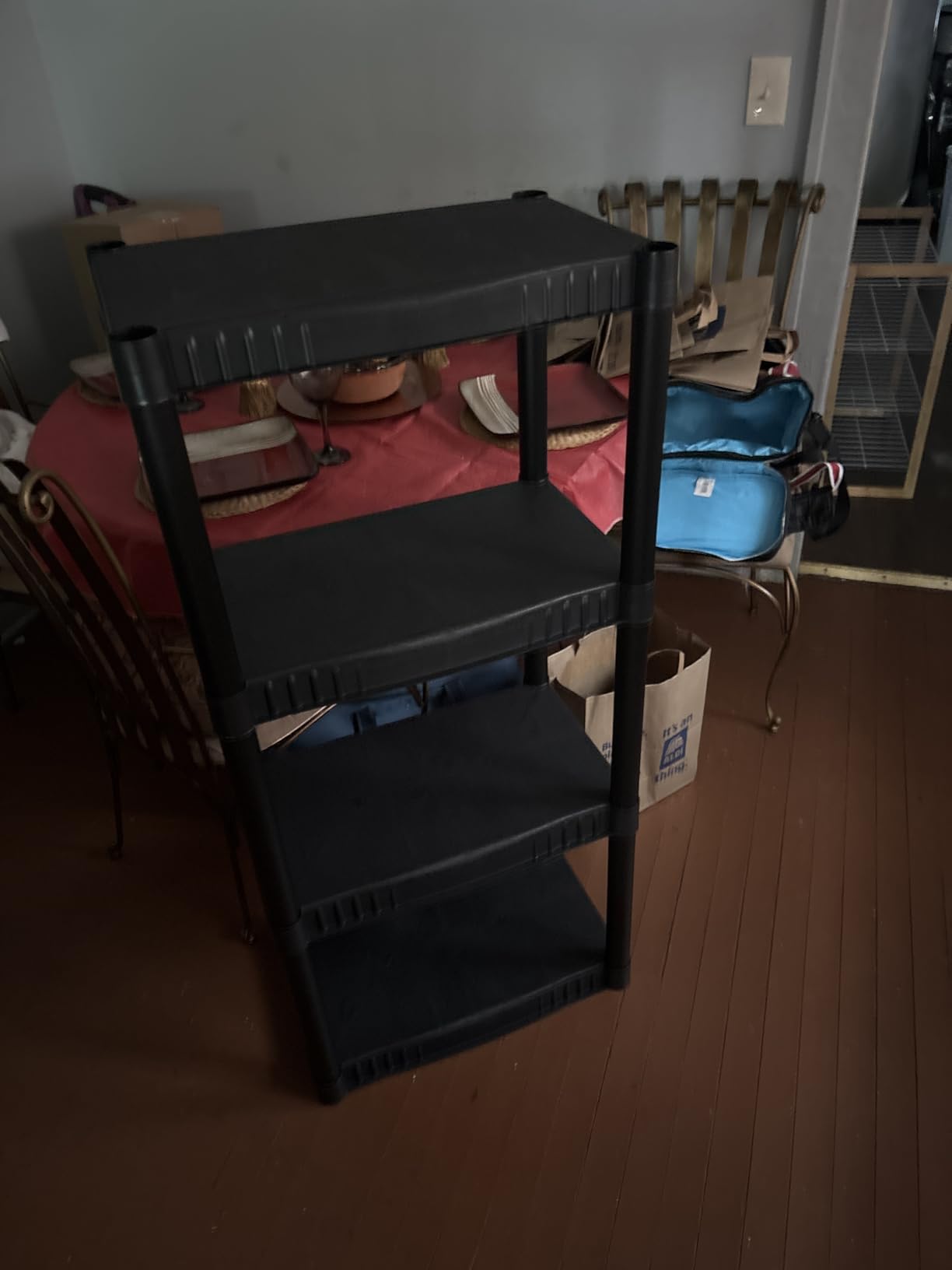
The Plano is the budget pick, and it fills a gap nothing else here does: a genuinely small unit. At 23 inches long, 14 inches wide and 47.5 inches tall, it goes into a broom closet, a laundry room or the gap beside a water heater, where every other unit in this roundup is too large.
Assembly is five to ten minutes, tool-free, and the plastic wipes clean and will not rust in any basement condition. The interlocking design lets you line several units up securely side by side to build a wider run.
Our advice is to treat it strictly as light-duty. Cleaning supplies, toys, board games, paper goods, lightweight bins. That is well within what the plastic does comfortably and keeps you well clear of the failure reports.
It is made in the USA from impact-resistant plastic, and at that price point the fit and finish are better than the typical cheap resin rack.
Where the small size genuinely wins?
Basement closets and utility niches are the right home for this. If you have been avoiding a storage solution because every rack you looked at was 36 inches wide, this is a unit that will actually fit the space you have.
Because it is a small light unit, it is also a low-commitment way to test whether shelving works for you before spending on a larger rack.
Where it is not safe to stretch?
Only 50 lb per shelf, and there are multiple reports of units coming apart under loads well below the stated 200 lb total. No wall anchor is included, which compounds the problem in a house with children.
The support poles can also arrive crooked and resist straightening, so check the frame for square before you load anything. If you want a plastic unit for real weight, the Sterilite or the CX rack holds up far better.
How to Choose Basement Storage Shelves?
Per-shelf load beats total load
Total capacity is the number that gets printed on the box, and it is the least useful one. Divide it by the number of tiers to get a realistic per-shelf figure, and then discount that by a third, because real loads concentrate rather than spread.
Our threshold for a general-purpose basement unit is 250 lb per shelf minimum. Below that, it is a closet organizer. Above 350 lb per shelf, you can put paint cans and tool cases on it without thinking about it.
For reference: a case of canned soup is roughly 30 lb, a gallon of paint about 8 lb, and a loaded 27-gallon tote of tools can reach 80 lb. Two full totes on one tier is 160 lb, which is fine on a 250 lb shelf and marginal on a 150 lb one.
Coating and rust resistance
There are three finishes you will encounter, and they are not equal in a damp room.
Powder coat is an electrostatic dry powder cured at high temperature. It is the best of the three for basements, and most of the metal units here use it. It resists corrosion well and it does not chip like liquid paint.
Chrome plating is a thin nickel layer over steel. It looks bright and clean in a dry garage, but once a shelf gets a dent or a scratch the plating fails at that point and corrosion starts there. We would not choose chrome for a basement.
Bare or painted-over steel is the worst case. Rust begins at the first chip and it does not stop.
Plastic sidesteps the entire question, which is why two of our picks are plastic. If you are unsure about your basement’s humidity, our dehumidifier guide explains how to measure it before you commit to a finish.
Whatever you buy, put plastic pads under every foot. The VEVOR includes sixteen, and they are the cheapest insurance against both rust transfer and floor scuffing.
Will it fit your totes?
This is the question people get wrong most often, and it is a simple subtraction. Measure the tote, then add an inch or two of clearance.
A standard 18 by 24 inch tote needs a shelf at least 18 inches deep, and ideally 20. A 15 by 18 tote needs 18 inches of depth. A small 20 by 14 tote works on a 14-inch shelf, which is why the shallow units in this roundup have a market.
On width, a 36-inch shelf takes one large tote side by side with a little room. A 48-inch shelf takes two. If your bins are mismatched, a wide shelf lets you line up a big tote and a small one without wasting the gap.
Six of the twelve units here are shallower than 18 inches. That is the single most important number to check before you buy anything in this category.
Freestanding, wall-mounted or built-in
Freestanding metal racks are the default for good reason: they hold the most weight, they adjust, and they move. They do need wall anchoring, particularly at 72 inches tall.
Wall-mounted shelving frees floor space entirely and looks cleaner in a finished basement, but it puts all the load into joists or a ledger board you install yourself. If you are hanging heavy totes, the framing has to be right.
Built-in wooden shelving looks the best and stores the least per dollar once labor is counted. It also cannot be adjusted, cannot be moved, and takes the longest of the three.
For most people, the answer is a row of freestanding units anchored to the studs, with a different depth for each wall depending on what you already own.
The Wire Shelving Downsides Nobody Mentions
Wire shelving is the default recommendation for basements because airflow is real and the price is low. But there is a list of drawbacks that almost no guide covers, and they come up in every basement forum thread we read.
It snags clothing. Wire edges catch on sleeves, shoelaces and fabric when you pull a bin out past the upright.
It shreds cardboard. Box edges catch on the wire and tear when dragged across a shelf, which is why archive boxes wear out faster on wire.
Small items fall through. The gaps are fine for bins and terrible for hardware, craft supplies, open jars or anything under about an inch.
Dust settles in the deck. A wire surface has many more edges for dust to cling to than a flat one, and it is harder to wipe down.
Nothing stops things sliding. There is no lip, so a round container or a toolbox set on a wire shelf will find its own way to the floor.
Labels do not stick well. A flat label plate does not sit on open wire without a bracket.
The foot pads rust. Bare steel feet on concrete pit and stain within a year, which is the single most common complaint about cheap units.
Most of these are fixable. Shelf liners solve the dust, snagging and label problems in one strip. Lipped shelf edges solve the sliding. Plastic foot pads solve the foot rust. The one you cannot fix is the fall-through, and for that, a solid deck is the correct choice rather than a liner.
That is why the REIBII pack, with its MDF decks, is on this list even though wire is the cheaper default. If you store anything small, solid beats wire.
Basement Installation Gotchas: Sumps, Oil Tanks and Egress Windows
Most shelving guides ignore the mechanical equipment in a basement, and that is how people end up with a unit they have to move after a furnace service. Plan the layout around these constraints before you buy.
The oil tank. Oil heating systems need working room around the tank, and shelving across the front of it is a future service call you will pay for. On the irate4x4 forum, people running oil heat describe exactly this problem, and the storage that ends up along that wall is the built stuff they can move rather than the units they cannot.
The sump pump. Leave the pit and its lid accessible. If you cannot reach it, you will pull your shelving apart the first time it clogs.
Ducts and joists. Supply and return ducts need clearance, and low-hanging joists in an older basement are the reason a 54-inch unit sometimes is the correct height instead of a 72-inch one.
The egress window. An emergency escape window has a minimum clear opening, and shelving in front of it can block it. This is a code item, not a preference.
The electrical panel. Panels need working clearance in front, and you do not want to stack paint and solvents next to one.
On floor level, remember that unlevel concrete is the rule rather than the exception. Any unit with leveling feet is worth the small premium here. Without them, a rocking rack concentrates its load at one upright joint, and that joint is where the frame eventually twists.
Build vs Buy: The Real Cost Math
Build-versus-buy is a live question, and most answers skip the labor. Here is the honest version.
A built 2×4 and plywood run gives you a shelf depth you choose, which is a genuine advantage when your basement has awkward obstructions. It also gives you plywood decking, which will not flex like wire or MDF, and it can be built to any length so there is no dead space at the end.
The costs that are usually omitted: 2×4 lumber at current rates makes a 12-foot run a meaningful materials bill, plywood decking is a second materials line, and the brackets are a third. Then there are the tools. A miter saw, a drill and a sander are not purchases most people have sitting around for a weekend project.
Against that, the labor. A 12-foot run on legs takes a competent builder most of a day, and that is a day of your time plus the cost of getting it level on an unlevel slab, which is the slowest part.
Buying wins when your layout is roughly rectangular, your wall is clear, and you want the job done in an afternoon. Building wins when you need a specific depth, a specific length, or a load rating that a retail unit will not honestly reach.
There is a third option worth knowing about. Reused retail gondola shelving, discussed at length on the ScavengerLife forum, is genuinely heavy-duty, fully adjustable, and available in long runs for very little when you source it locally. It is the closest thing to a built shelf that you can buy off someone else’s shelf.
Our rule: buy for a clear wall and a standard load, build when depth or length is unusual, and reuse gondola shelving when a whole run is needed and the budget is fixed.
Flood Zone Rules for Below-Grade Storage
If your basement has ever taken water, shelving layout is a flood question, not a storage question. A few rules apply.
Raise the bottom shelf. A unit with 8 to 10 inches of clearance under the lowest tier keeps stored items above the level most basement water reaches, and a small plastic riser under each foot is the cheapest way to create it.
Keep paper, textiles and anything absorbent off the floor permanently. Cardboard, fabric and paper are the first things destroyed in a short flood, and they are also the first things to develop mold afterward.
Use sealed bins for anything you would care to keep. A lidded plastic tote survives a wet basement far better than a cardboard box does, and vented totes defeat the purpose entirely.
Do not store chemicals, paint or anything hazardous below grade. This is true regardless of shelving, and it is a safety issue rather than a storage one.
Anchor tall units in a flood zone specifically. Water moving through a basement can tip a freestanding 72-inch rack, and a toppled rack full of bins is far harder to deal with than a wet bin.
And keep the path to your sump pump, your electrical panel and your egress window clear. In a flood, those three things matter more than anything you have stored.
Frequently Asked Questions
What is the best way to store items in my basement?
Raise stored items off the concrete floor on heavy-duty shelving with sealed bins, and keep paper, textiles and cardboard off the ground entirely. Use powder-coated steel or plastic shelving rather than chrome-plated steel, anchor tall units to the wall studs, and leave clear access to the sump pump, electrical panel and any egress window.
Is it cheaper to build storage shelves or buy them?
Building wins only when you need a specific depth, an unusual length or a load rating that retail units will not honestly reach, because lumber, plywood decking, brackets, tools and labor all add up. Buying wins for a clear wall with standard loads, since a ready-made unit goes up in an afternoon. Reused retail gondola shelving sits between the two.
What size shelves fit 18×24 storage bins?
A standard 18 by 24 inch tote needs a shelf at least 18 inches deep, and 20 inches is better so you can slide the bin out without catching the wall behind you. On width, a 36-inch shelf fits one tote side by side and a 48-inch shelf fits two.
What are the disadvantages of using wire shelving?
Wire decking snags clothing, shreds cardboard box edges, lets small items fall through, collects dust in its many edges, offers no lip so round items slide off, gives you nowhere to stick a flat label, and bare steel feet pit and stain concrete within a year. Shelf liners, lipped edges and plastic foot pads fix most of these, but the fall-through problem can only be solved with a solid deck.
How do I keep shelves from rusting in a basement?
Start with the coating. Powder-coated steel or plastic is the right choice in a damp room, and chrome plating will pit once scratched. Put plastic pads under every foot so the steel never touches concrete directly, keep the unit off the floor with risers, wipe it down annually, and run a dehumidifier through the humid months.
Do I need to anchor basement shelves to the wall?
Yes for any freestanding unit around 72 inches tall, especially in a house with children or in a basement that has flooded. Fasten the top of the unit into a stud with a strap or L-bracket and check the fastener periodically, since the anchor is only as strong as the drywall or concrete it is fixed into.
Which brand offers the best quality wire shelving?
Among the wire units we reviewed, the Amazon Basics 5-shelf rack stood out for heavy steel uprights, a black powder-coated finish, shelf height adjustment in 1-inch increments and 350 lb per shelf, backed by by far the largest review count in the group. Its 14-inch depth is the tradeoff to weigh.
Are floating shelves out of style?
Floating shelves have moved from a default recommendation toward a look that suits finished, decorated spaces more than storage. For a working basement, wall-mounted shelving makes sense when it is properly framed into joists or a ledger board, and freestanding anchored units usually give you more capacity for the same floor area.
The Best Basement Storage Shelves in 2026, Picked
The Amazon Basics 5-shelf wire rack is our top pick for 2026, and not narrowly. It carries 350 lb per shelf on powder-coated steel with one-inch shelf adjustment and leveling feet, and it is the most thoroughly reviewed unit in the roundup. It is the shelf most basements should buy first.
Match it to your situation rather than to ours. If your storage is full-size 18 by 24 totes, go deeper and pick the CX or HOMEDANT instead. If moisture is the worry, take a plastic unit and stop thinking about rust. If you store tools that could roll, the Notmise rails are the reason. If the wall is tight, the Sakugi fits where nothing else will.
Whichever you choose, three things matter more than the model: put plastic pads under every foot, anchor anything tall to a stud, and raise the bottom shelf clear of the slab. We have covered related storage setups in our bathroom shelf roundup and our bookcase roundup if you are organizing other rooms at the same time.
Tell us what you are storing and we will point you at the right depth.