
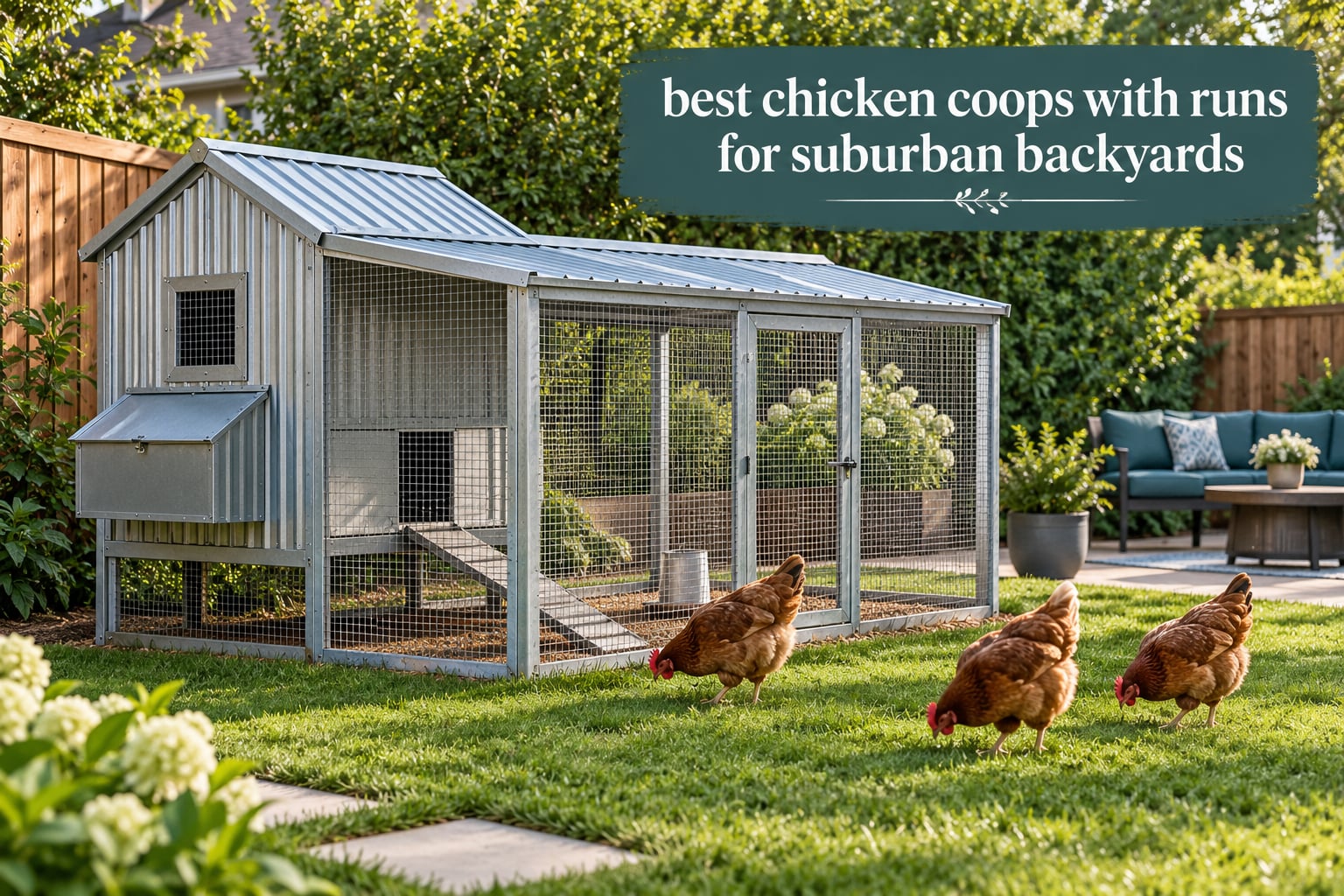
Most chicken coops with runs are sold with a flock capacity number on the box, and most of those numbers are wrong. A coop advertised for six birds often holds 12 square feet of floor space, which works out to two birds if you apply the rule keepers actually use: 4 square feet per standard hen inside, 8 to 10 square feet of run per hen outside.
We spent 2026‘s season comparing ten coop-and-run packages sold for suburban lots, measuring every frame, counting every nest box and reading the review long enough to separate what the listing claims from what owners report after a winter. The result is a shortlist that treats the run as its own decision, because a beautiful coop with a flimsy run is a locked door with an unlocked gate beside it.
Below you will find the direct sizing answer first, then the top three picks, a full comparison of all ten, and an individual breakdown of each unit covering run quality, cleaning access, assembly reality and the predator gaps you will still have to close. We also include the 30-second capacity check that lets you verify any listing before you buy.
If your yard is tight, we have covered coops built for small flocks and runs sized for backyards separately, and if you already know you want to move the flock around the lawn, start with our mobile chicken coop picks.
Table of Contents
Top 3 Picks: Best Chicken Coops With Runs (October 2026)
The three below are the strongest all-round combinations of frame quality, run coverage and owner satisfaction in the 2026 shortlist.

CHIKENCOOP 9.8 x 6.5 ft Metal Coop and Run
- 6.5 ft walk-in height
- Reinforced braced frame
- Eucalyptus roosting perch
- Waterproof UV cover

HITTITE 19.19 x 9.84 ft Walk-In Metal Run
- 0.8 mm galvanized pipe
- Lockable latch door
- Spire roof runoff
- Walk-in height

Betterhood 19 x 9 ft Metal Chicken Run
- Triangular frame supports
- 240D Oxford cloth canopy
- Coated mesh
- Push-button assembly
Quick Overview: All 10 Coops With Runs Compared in 2026
Every unit below ships as a run or coop-and-run package. Two of them are run-only enclosures that need a separate sleeping box, and we flag that in each review.
| Product | Specifications | Action |
|---|---|---|
| CHIKENCOOP 9.8 x 6.5 x 6.5 ft Metal Coop and Run |
|
Check Latest Price |
| Betterhood 19 x 9 x 6.5 ft Metal Chicken Run |
|
Check Latest Price |
 VEVOR 13.1 x 9.8 x 6.6 ft Metal Coop With Run VEVOR 13.1 x 9.8 x 6.6 ft Metal Coop With Run |
|
Check Latest Price |
 Petsfit Compact Coop With Run for 4-6 Chickens Petsfit Compact Coop With Run for 4-6 Chickens |
|
Check Latest Price |
| HITTITE 19.19 x 9.84 x 6.56 ft Walk-In Metal Coop and Run |
|
Check Latest Price |
 NUGRIART Compact Metal Walk-In Coop and Run NUGRIART Compact Metal Walk-In Coop and Run |
|
Check Latest Price |
 Belinova Metal Coop With Welded Hardware Cloth Belinova Metal Coop With Welded Hardware Cloth |
|
Check Latest Price |
 Aivituvin AIR31 Wooden Coop and Run With Ramp Aivituvin AIR31 Wooden Coop and Run With Ramp |
|
Check Latest Price |
 Quictent Large Metal Run for 30+ Poultry Quictent Large Metal Run for 30+ Poultry |
|
Check Latest Price |
 PawHut 26.2 ft Walk-In Metal Chicken Run PawHut 26.2 ft Walk-In Metal Chicken Run |
|
Check Latest Price |
How Big Should a Suburban Chicken Coop With a Run Be?
Give every standard hen 4 square feet of enclosed indoor floor space and 8 to 10 square feet of run space. That is the sizing baseline keepers on BackYard Chickens threads return to again and again, and it is the number most listing pages quietly ignore.
Here is the run-space math by flock size. Multiply the run floor area by the number of birds, and stay under the upper limit.
2 hens: 20 sq ft enclosed, 20 to 25 sq ft of run. A 5 x 5 ft run covers it.
4 hens: 20 sq ft enclosed, 32 to 40 sq ft of run. A 5 x 7 ft run covers it.
6 hens: 24 sq ft enclosed, 48 to 60 sq ft of run. A 7 x 8 ft run covers it.
8 hens: 32 sq ft enclosed, 64 to 80 sq ft of run. An 8 x 9 ft run covers it.
10 hens: 40 sq ft enclosed, 80 to 100 sq ft of run. A 9 x 11 ft run covers it.
Roosting bars want 8 to 10 inches of length per bird, and nesting boxes want one per three to four hens. A run only handles the daytime hours, so the enclosed sleeping area still has to hold the whole flock overnight with the door shut.
Before you trust any capacity claim, do the 30-second check: measure the enclosed floor inside the unit, multiply length by width, and divide by 4. That number is the real capacity. Applied to the Petsfit unit reviewed below, a 6.07 square foot nesting area divides out to one and a half birds, not the four to six on the listing. That single calculation prevents most disappointing first purchases.
Runs follow the same logic with a different divisor. Divide run floor area by 8 for a comfortable flock or by 10 for a tight but workable one. A 26 ft run will hold far more birds than its label suggests, which is why the very largest enclosures in this roundup are hard to justify in a suburban yard.
1. CHIKENCOOP 9.8 x 6.5 x 6.5 ft Metal Coop and Run Review
CHIKENCOOP 9.8 x 6.5 x 6.5 ft Metal Chicken Coop, Chicken Run with Cover
- 6.5 ft walk-in height makes cleaning and feeding straightforward
- Reinforced frame with corner braces and rear support pole resists wobble
- Includes a 47 x 40 in natural eucalyptus roosting perch
- Waterproof UV-resistant peaked cover sheds rain and snow
- Labeled parts and clear instructions
- Metal frame must be fully disassembled to reposition
- Supplied galvanized mesh is thin and needs hardware cloth
- Basic ground stakes and zip ties are often replaced by owners
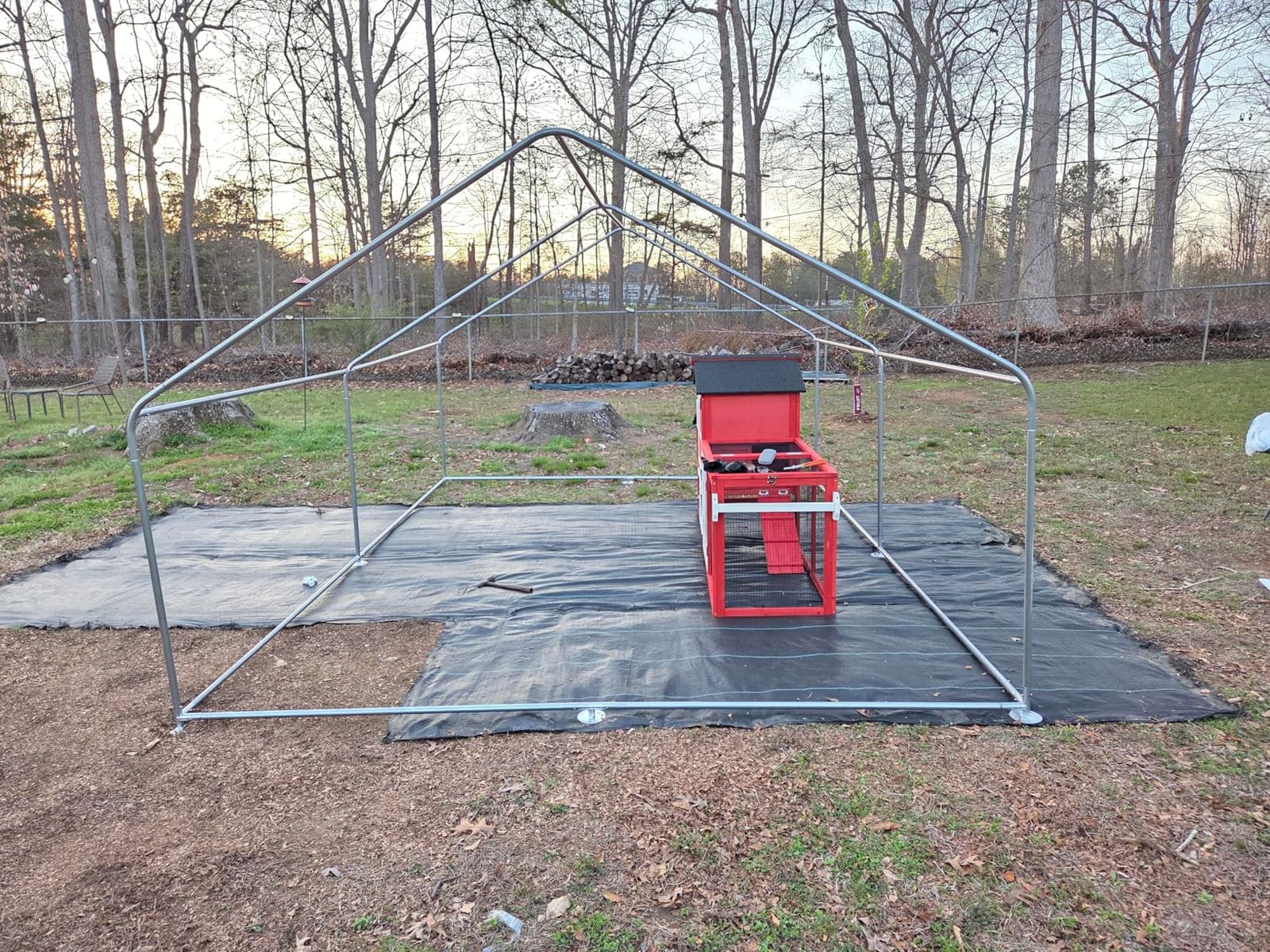
The CHIKENCOOP is the unit we kept coming back to because it is the rare budget metal run that is genuinely comfortable to work inside. The walk-in height of 6.5 ft means you stand up to refill a feeder, pull the roosting perch out and sweep the floor without crouching, and that is the single biggest quality-of-life difference in this category.
Reviewers consistently single out the frame. Bottom corner braces tie the horizontal and vertical poles together, and an added rear support pole stiffens the roof-to-base connection, which is the joint that normally racks out of square after a season of wind. At 59 pounds it is also one of the lighter frames here, so repositioning it on flat ground is a two-person job rather than a small-engine job.
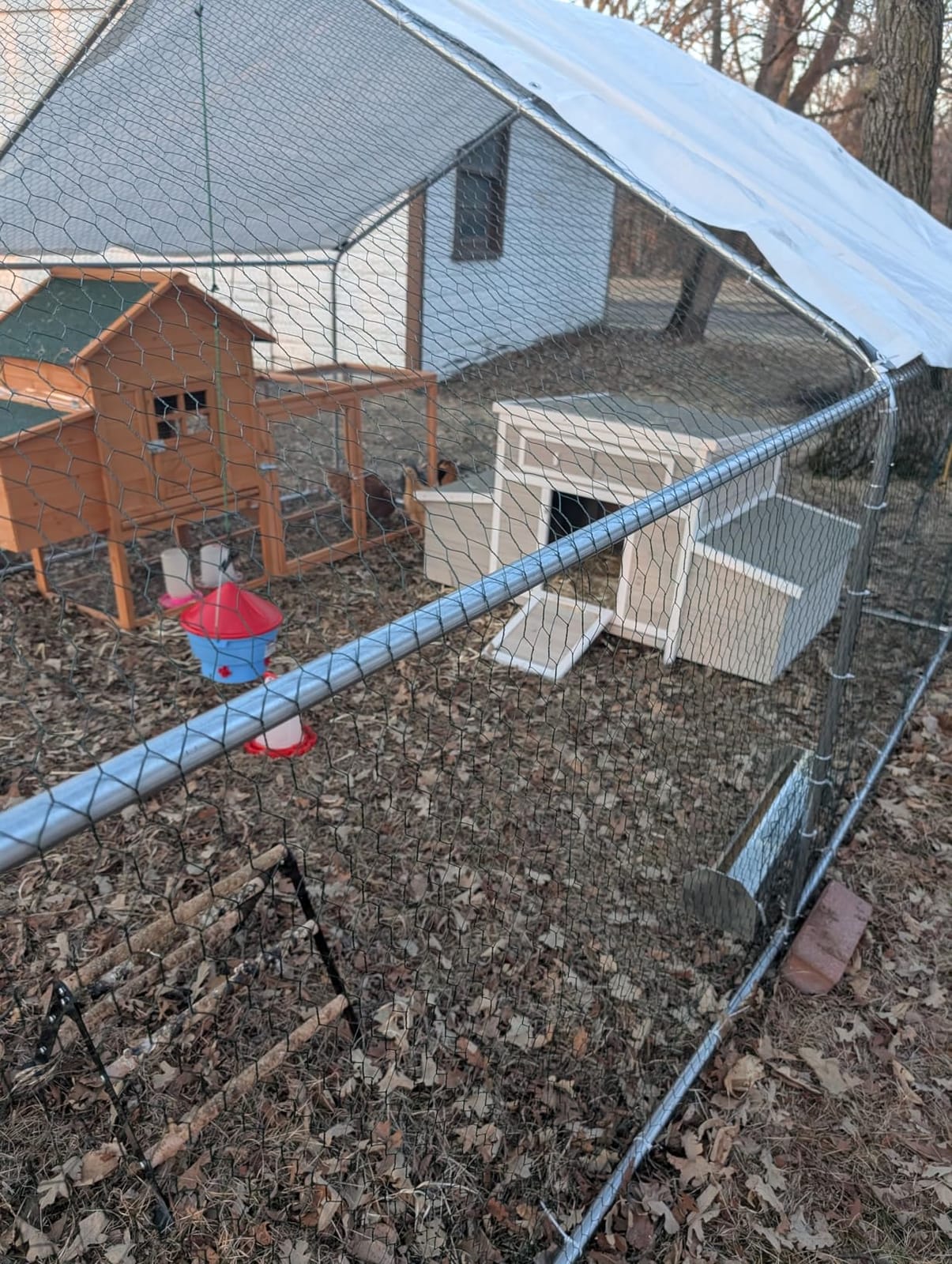
The included 47 x 40 in eucalyptus roosting perch is a small detail that costs almost nothing and matters more than it sounds. Hens perch on rounded natural wood instead of flat or wire roosts, and the spacing of two indoor bars is enough for four to six standard birds at 8 to 10 in per bird.
Detached, the peaked cover is waterproof and UV-resistant, so it handles shade in July and snow loading in winter without the cracking you get with asphalt-felt roofing on cheap wood coops. Assembly is listed at roughly 2 hours with labeled components, and the roof frame is where a second pair of hands is genuinely useful.
What we liked most
Owners report that the interior volume is what changes daily life. A deep run means more bedding can be used, bedding stays drier under the peaked cover, and the flock spreads out instead of crowding the corners where damp ground breeds foot problems.
For a suburban yard this also solves the height problem neatly. At 6.5 ft it sits below most fence sight lines while still letting an adult walk in, which is a rare balance to find.
What you will still have to fix
The supplied galvanized wire mesh is not predator-proof on its own, and this is the honest limitation of every coated-wire run in the roundup. Line the walls and the base with half-inch hardware cloth and add an apron, and you have a genuinely secure run.
The basic stakes and zip ties included are the weakest part of the package. Most owners replace them within the first month, so budget a box of proper ground anchors and heavy-gauge fasteners into your plan from the start.
2. Betterhood 19 x 9 x 6.5 ft Metal Chicken Run Review
- Galvanized steel frame with triangular supports holds up in hard winters
- Push-button rod connections mean very little screwing
- Coated wire is easier to cut and work than raw chicken wire
- Very generous floor area
- Canopy keeps birds dry and shaded
- Supplied chicken wire is thinner than feed-store wire and not predator-proof
- Netting pulls loose and needs re-tying with stronger fasteners
- Single cheap door latch needs a bungee or brace
- Frame shows surface rust where it meets the ground
- Instruction diagrams are inaccurate
The Betterhood is the long, cheap, walk-in run that gets recommended most often to suburban keepers who want maximum floor area per pound of frame. At 19 ft by 9 ft it is one of the largest enclosures in the roundup, and the 9 ft width means you can drop a small wooden coop inside it and still have walking room around it.
Where it beats cheaper rivals is the joint system. Push-button pole connections mean most owners finish in four to five hours solo, which is unusual for a frame this size, and the stainless steel with galvanizing treatment has held up through more than one hard winter in owner reports.
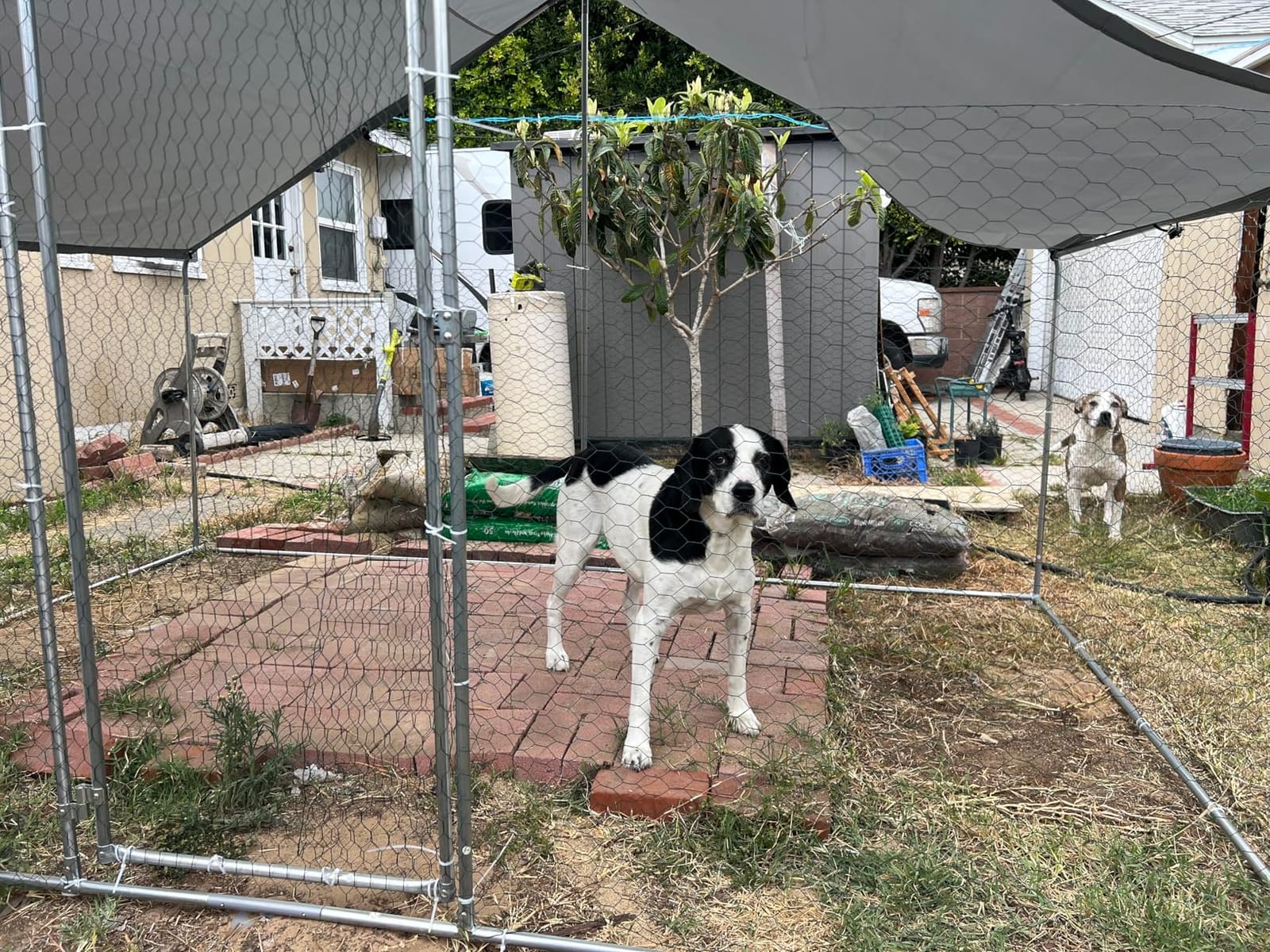
The coated hexagonal wire is the upgrade over raw chicken wire in that same vein. It cuts cleanly, resists abrasion where birds rub against the wall, and its small gaps block weasels and small predators while keeping airflow high under the 240D Oxford cloth canopy.
Owners also report running two of these units together to create a larger enclosure, which is the cheapest way to scale up a flock if you have the yard space and can find level ground.
Where it earns its place
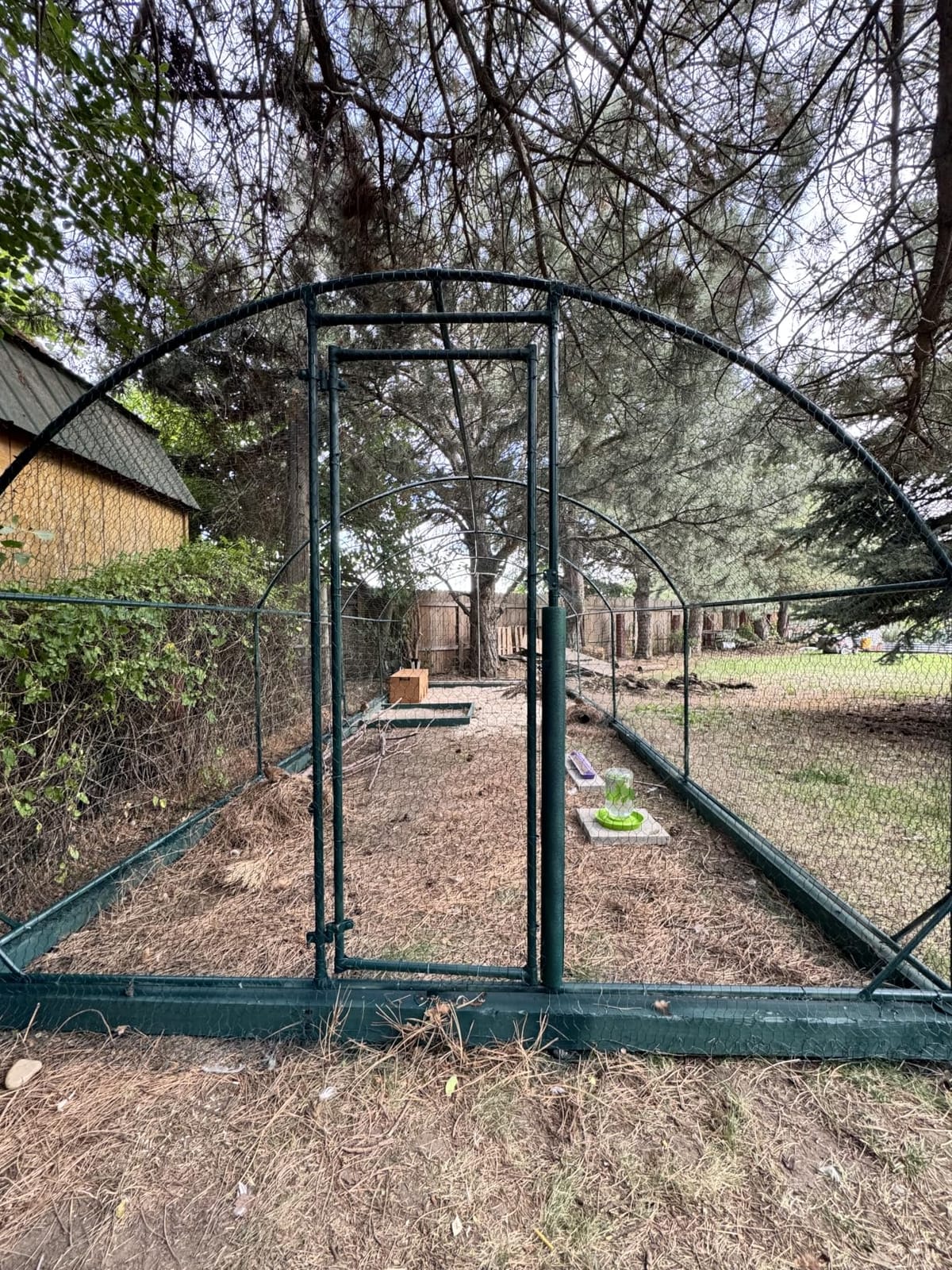
At 171 square feet of run floor, this is one of the few units here that comfortably covers a flock of eight to ten hens at 8 square feet per bird. Few suburban lots can absorb that footprint without it becoming the dominant object in the garden, so measure before you commit.
For keepers who want one run to work for a growing flock, the length is the selling point. For anyone buying at the top of the market range, we cover large backyard farm coops where capacity is the priority instead.
What we would change
The door latch is the weak point. One cheap latch on a door this large can be pushed open from the bottom, so add a bungee cord or a brace before the first week ends.
The illustrated instructions and diagrams are the other real complaint. Sections go together in the wrong orientation if you follow the drawings literally, and the netting pulls loose at corners over time. Read the parts list, build a section at a time, and use proper fasteners rather than the small ties supplied.
3. VEVOR 13.1 x 9.8 x 6.6 ft Metal Coop With Run Review
- Best-selling listing in its category with a large base of reviews
- Dome roof sheds rain
- debris and light snow without accumulating
- PE-coated tarp resists sun
- water and tearing
- Four-sided ventilation keeps birds comfortable in warm weather
- Range of sizes lets runs be extended or joined
- Hexagonal mesh is decorative rather than predator-proof
- Frame shows surface rust after extended outdoor exposure
- Two people needed for assembly and extension
- Some reviewers report missing or damaged parts
The VEVOR is the wide, square-footage option in the middle of the range, and it is the one we would pick if your plan is to house a full-size wooden coop inside a walk-in run. At 13.1 by 9.8 ft there is enough interior footprint to place a coop, leave a service aisle and still offer real scratch space.
The frame is built from 1 inch thick galvanized steel pipes with precise welding, which is heavier than most of the coated runs in this roundup and explains the 73.63 lb shipping weight. That weight is a benefit on the ground and a pain during assembly.
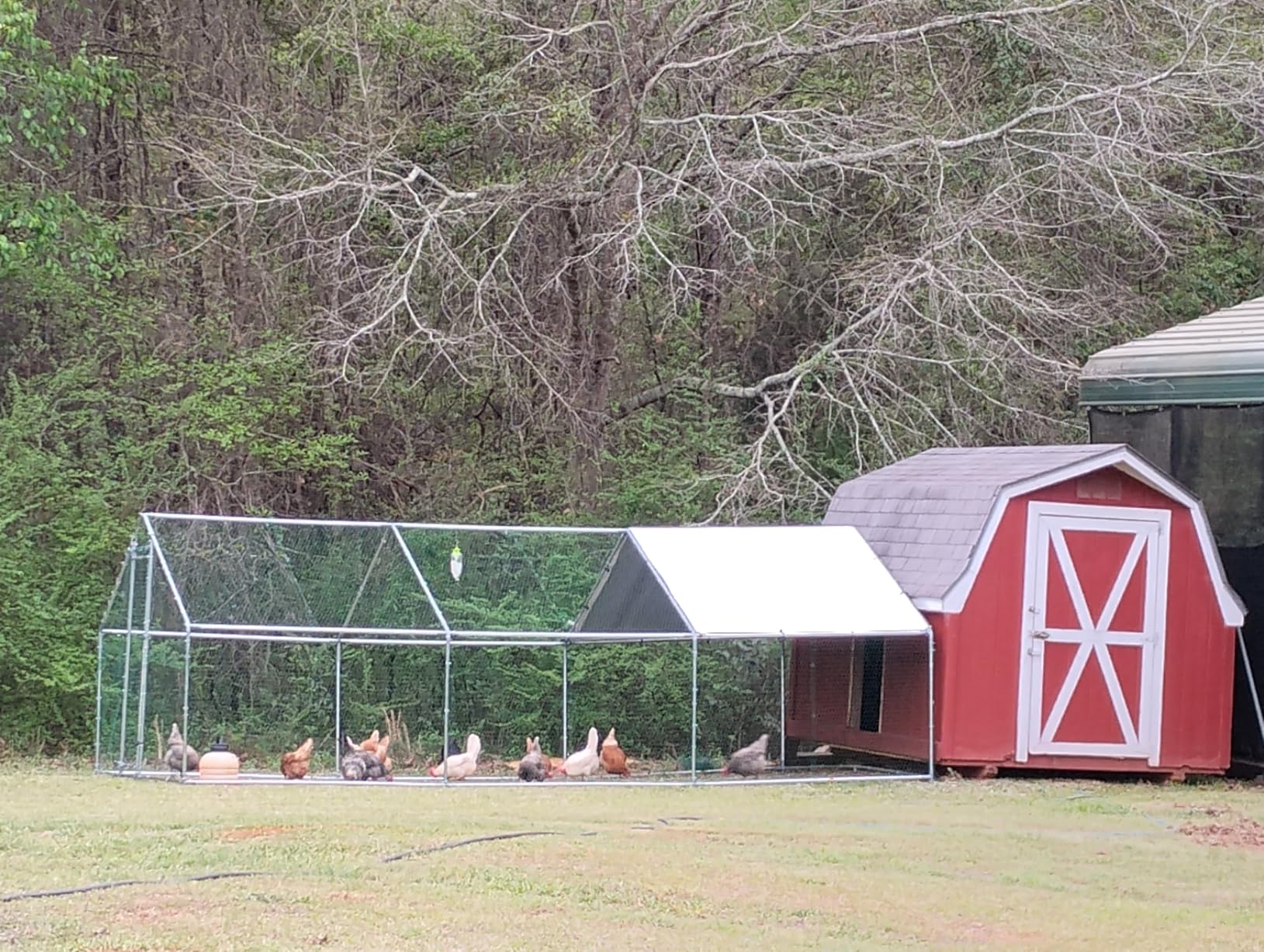
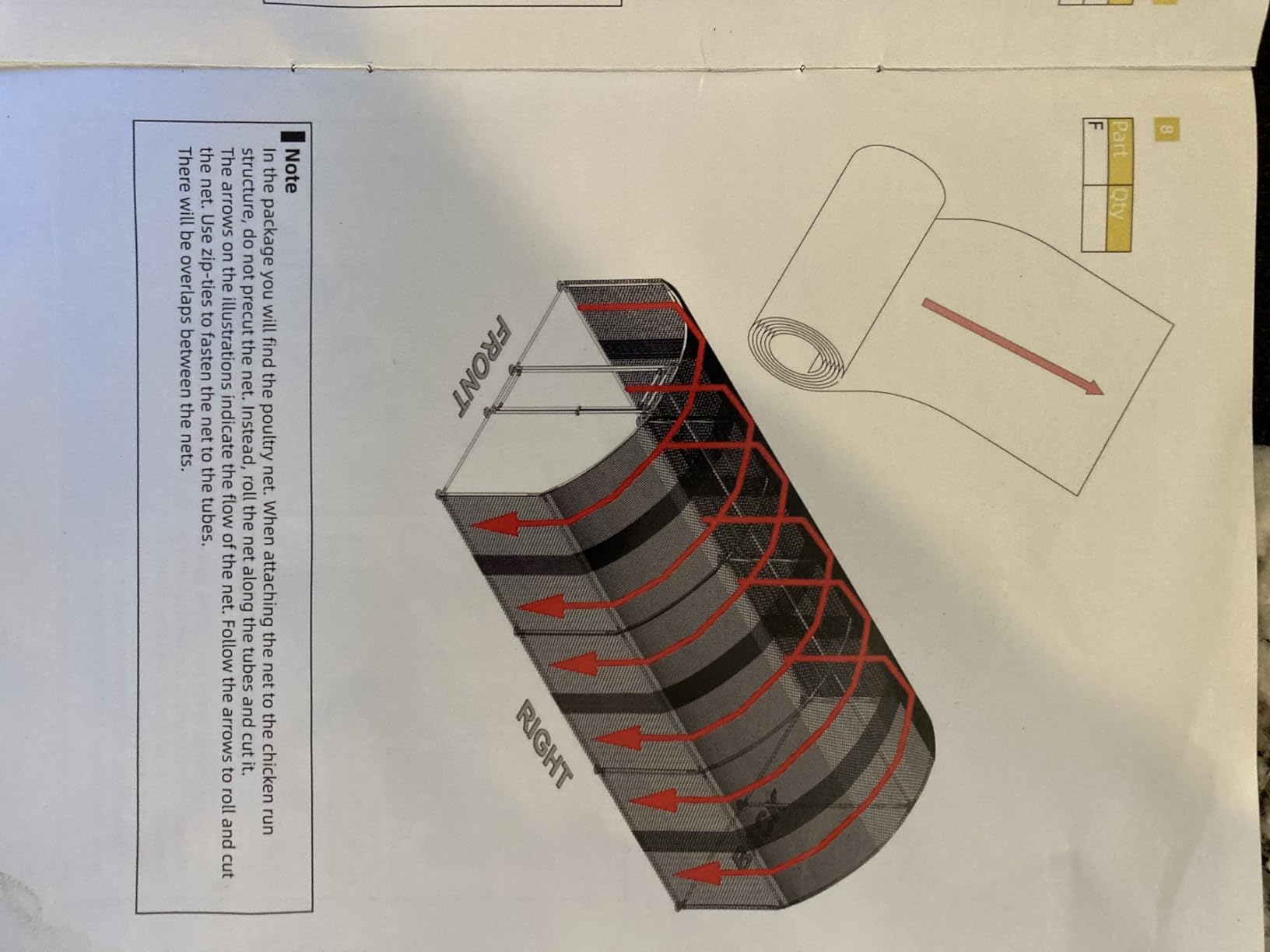
The dome roof is the feature owners mention first. Its curved PE-coated tarp lets water, debris and light snow slide off instead of pooling, and the coated surface resists sun damage over multiple seasons in a way that flat tarp roofs do not.
Four-sided ventilation keeps the interior workable in summer heat, which matters more than most listings admit. A metal run in July is a greenhouse unless air moves through it from more than one direction.
Who should buy it
Dividing 128 square feet of run floor by 8 gives a comfortable 16 birds, so this comfortably covers the 6 to 8 hen suburban flock that most people actually start with. It also converts to duck housing, a rabbit run or a quail pen without modification.
Because the VEVOR family comes in several sizes with matching connection points, owners report joining runs together. That makes it a sensible base unit if you expect your flock to grow past eight birds.
What to watch
The manufacturer itself recommends adding a galvanized wire fence, wood or stones at the base for raccoon protection, and that is not boilerplate. The included hexagonal mesh will not stop a determined raccoon, so treat hardware cloth as part of the build rather than an upgrade.
Plan for two people from the first screw. Expect surface rust on the frame after a season or two of exposure, keep an anti-rust touch-up in the shed, and check the parts box against the manual on arrival because missing pieces are reported.
4. Petsfit Compact Wood Coop With Run for 4-6 Chickens Review
Petsfit Outdoor Chicken Coop with Run for 4-6 Chickens, 3 Nesting Boxes
- Compact footprint that suits a suburban yard where a walk-in run will not fit
- Solid fir wood frame with 6 heavy-duty ground anchors
- Three doors plus a removable washable floor panel
- Corrugated PVC roof will not crack or warp
- Three nesting sections plus a chicken swing
- Interior suits 4 to 6 small or bantam hens only
- Not walk-in so you crouch to reach nests and roosts
- Run area of roughly 12.56 sq ft is modest for more than a handful of birds
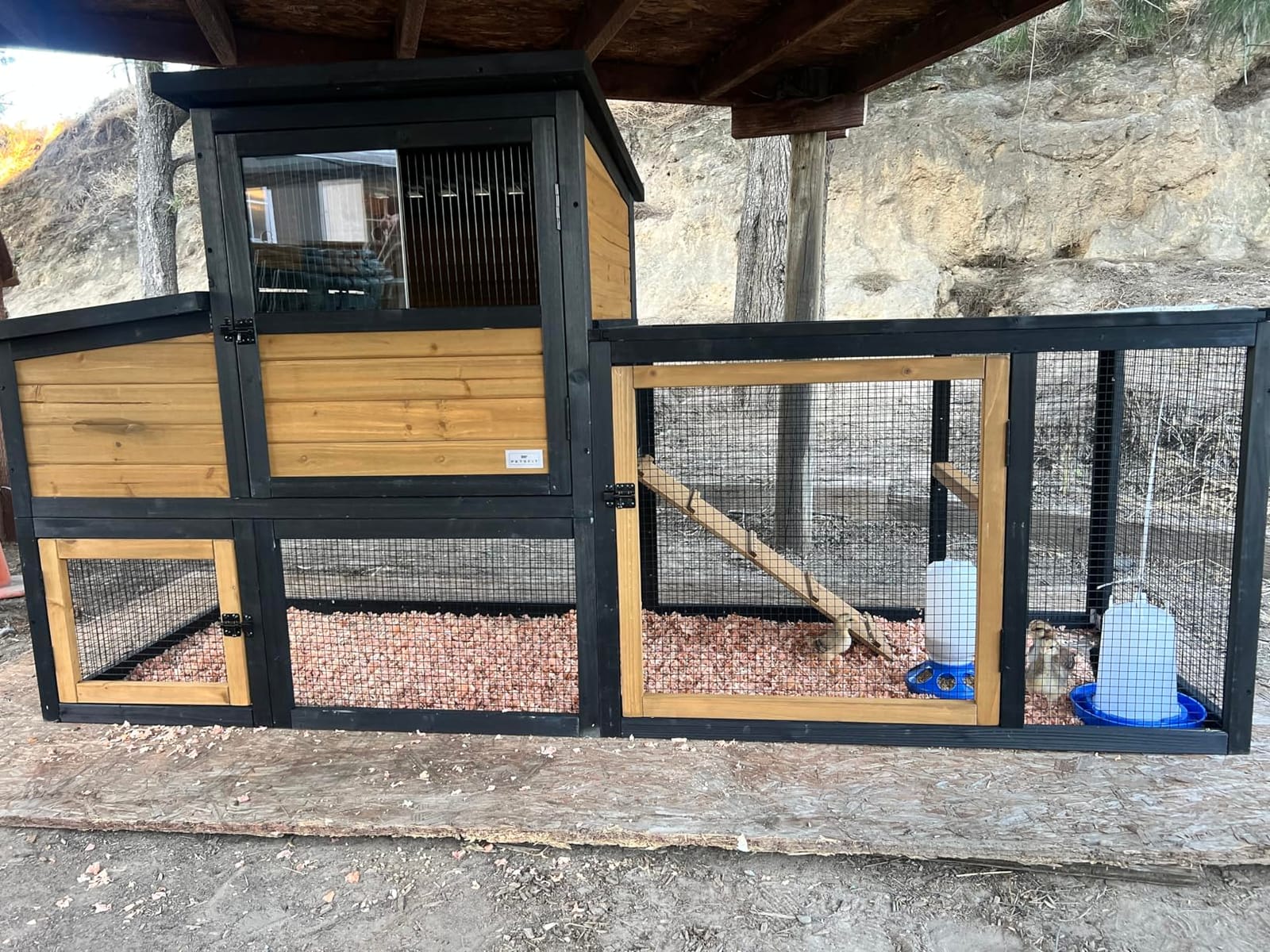
The Petsfit is the answer for a lot of suburban keepers who look at every large metal run in this roundup and quietly calculate that none of them fit between the shed and the fence. At 71 by 42 by 45 inches it is the smallest footprint here, and it is a proper wooden coop-and-run rather than a run that needs a separate box.
What makes it interesting is the hardware list. Six heavy-duty ground anchors resist foxes, raccoons and weasels digging under or lifting the frame, which addresses the most common failure in small coops, and the three-door layout with a lower clean-out door and an independent side run mesh door means you rarely have to reach awkwardly into a dirty corner.
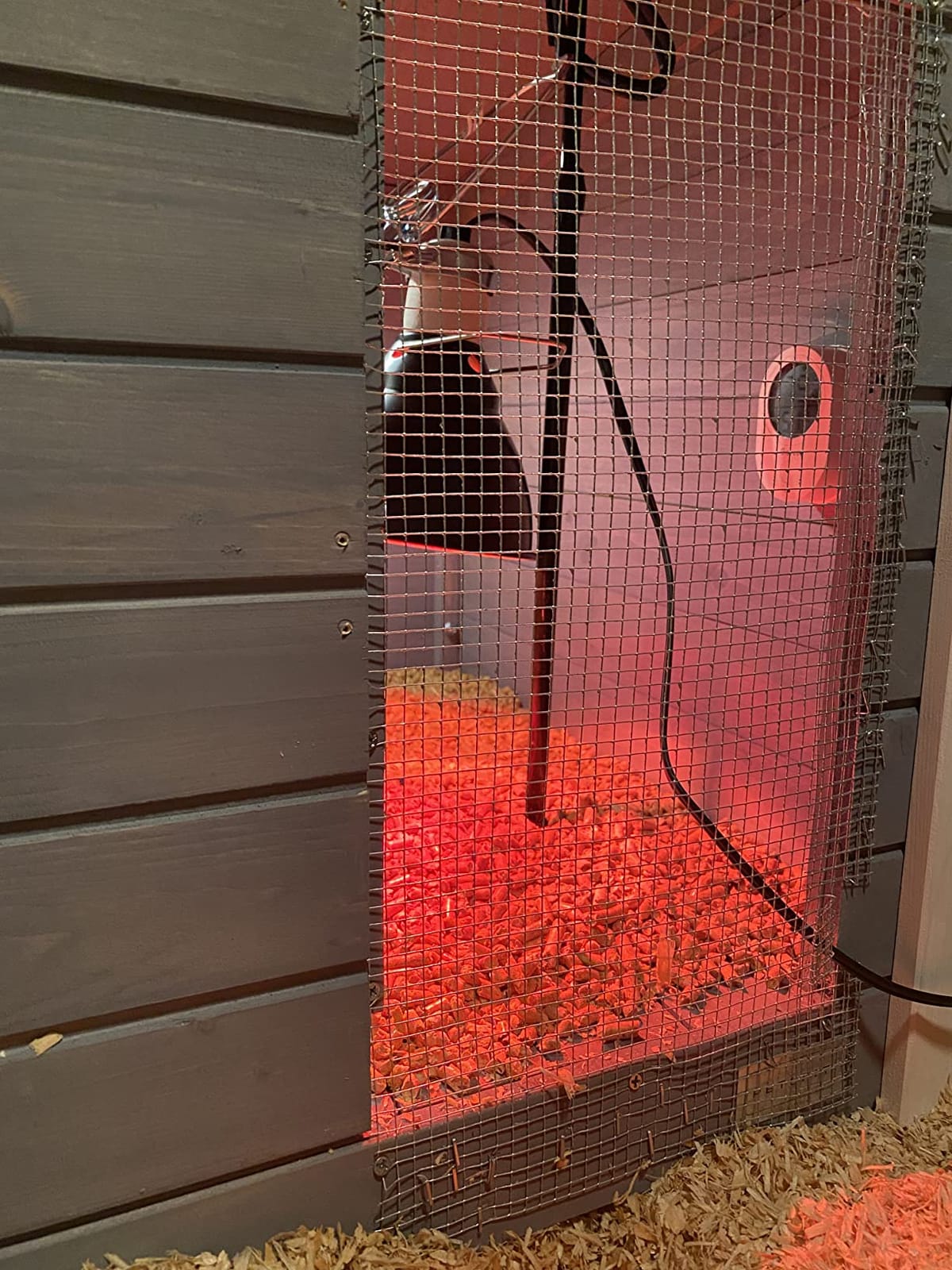
The removable smooth plastic floor panel is the detail that changes the weekly routine. Rinse it, hose it, put it back. No bedding to dig out of a wooden tray, no wood to swell and rot.
The corrugated PVC roof will not crack, warp or absorb heat the way asphalt roofing does, and the transparent sliding PVC window gives you light and adjustable ventilation without a second piece of hardware.
Why it suits small yards
Owners value the compact footprint above everything else. This is a unit you can tuck against a side wall, screen with a hedge, and still walk past to get the bins out, which matters for HOA sight lines as much as for convenience.
The three-section nesting box with a top lid, two indoor roosting bars and an outdoor perch with a chicken swing give a small flock enrichment that most budget coops skip entirely. The swing gets used constantly.
Where the sizing falls short
Run our own capacity check. The 6.07 square foot nesting area divided by 4 gives roughly one and a half birds, and the 12.56 square foot run divided by 8 gives about one. Even reading the total footprint generously, this is a small unit dressed for four to six bantams, not four to six full-size hens.
It is also not walk-in, so every nest check and every clean involves crouching. If you want a small starter flock of two to four hens, that is exactly what this is. If your flock will be six standard birds or more, the extra run space is the deciding factor.
5. HITTITE 19.19 x 9.84 x 6.56 ft Walk-In Metal Coop and Run Review
- Highest average rating in this roundup with a strong five-star share
- Thicker 0.8 mm galvanized pipe than most competing metal runs
- Very large 19.19 x 9.84 ft footprint with walk-in height
- Lockable latch door
- PE tarp spire roof sheds rain and light snow
- PVC coated hexagonal mesh is not predator-proof
- Base needs wood
- stone or extra mesh to stop digging predators
- Spire cover collects more than 2 in of snow in heavy conditions
- At roughly 113 lb it takes two people to move or assemble
The HITTITE carries the highest average rating in the roundup, and owners tell you why in consistent terms: the pipe is heavier than what arrives in comparable products. At 0.8 mm wall thickness against the 0.6 mm used on most competing metal runs, you can feel the difference the moment you lift a section, and it is the reason the frame stays square across seasons.
At 19.19 by 9.84 ft with a walk-in height, this is a serious enclosure rather than a pen. Dividing 189 square feet of run floor by 8 gives comfortable capacity for more than twenty birds, which means it suits a serious backyard flock or doubles as a run for a walk-in coop inside it.
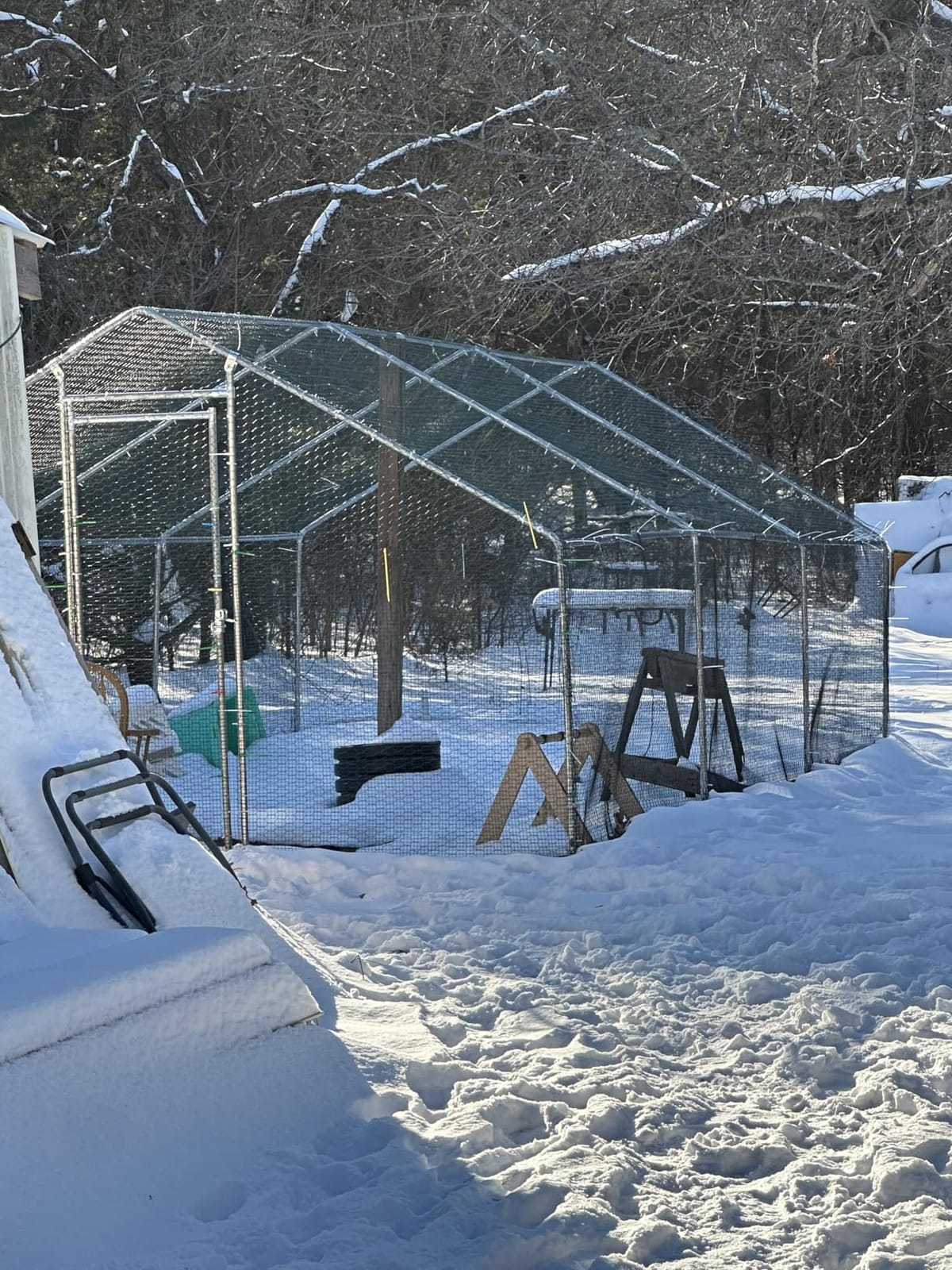
The lockable metal latch door is a genuine step up from the spring hooks and single catches used by most budget runs, and it is the one hardware item that stops a determined adult raccoon more reliably than anything else on the frame.
The UV-resistant waterproof PE tarp over a spire roof profile is designed for runoff, and in mild winters the cover handles rain and snow without intervention.
Why the rating is the highest here
Owners read frame quality as the thing that separates a run that lasts from one that ends up on the curb in three years. Thicker pipe resists the flex that warps door frames until latches stop lining up, and that is the failure that eventually gets a whole run discarded.
At 113 pounds it is heavy, but that mass is the product. If you want a run you can still reposition for rotational grazing, this is the wrong tool. If you want a fixed structure that stays where you put it, the weight works in your favour.
What to plan for
The manufacturer recommends reinforcing with hardware cloth and anchoring the base, and long-term owners agree. The PVC coated hexagonal mesh has small gaps that prevent escape but are not a barrier to biting predators.
Snow is the real maintenance item. Owners in heavy winter areas are advised to remove the cover on snow days and clear any accumulation over 2 inches, because the spire profile concentrates weight in one spot. In a mild suburban climate this never comes up.
6. NUGRIART Compact Metal Walk-In Coop and Run Review
- Reinforced 1 inch galvanized steel frame at an entry price
- Galvanized steel resists rusting for long-term outdoor use
- PVC coated mesh described as solid and hard to damage
- Spire roof sheds rain
- snow and debris cleanly
- Lockable metal latch and easy-clean access
- Coated mesh is no substitute for hardware cloth where predators are active
- Ground stakes and zip ties supplied are basic quality
- 118 x 79 in footprint is compact so capacity is limited
The NUGRIART is the entry-level walk-in: you get a genuine 6.5 ft headroom, a reinforced 1 inch galvanized steel frame and a covered roof at the bottom of the range. For a first flock of four to six birds on a small lot, that is a lot of structure for the money.
At 118 by 79 inches the run floor is roughly 65 square feet, which divides out to eight birds at the comfortable end or six at the tighter end. That makes it one of the few units here that matches its footprint to a realistic suburban flock without overwhelming the garden.
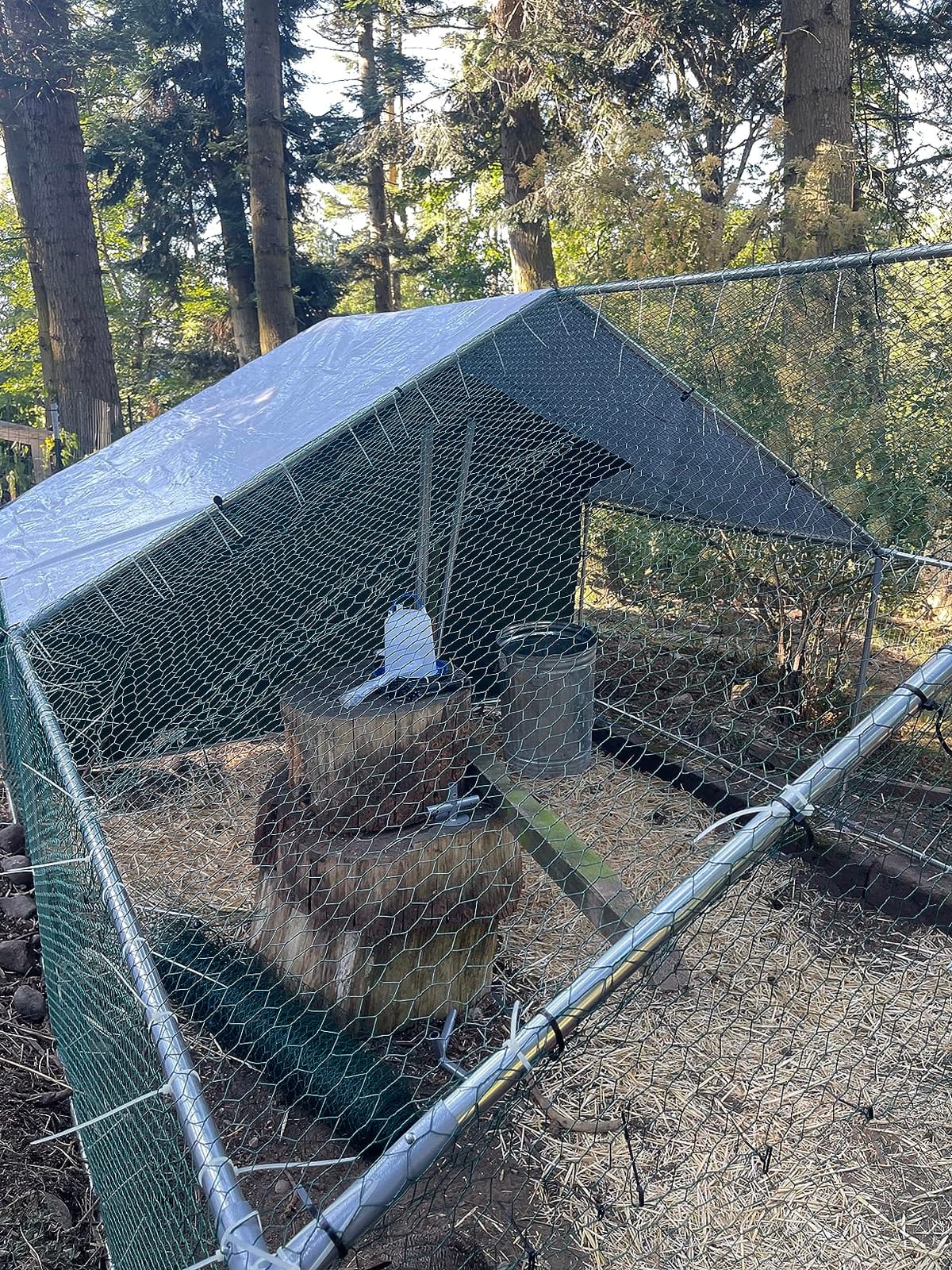
The spire-shaped frame is worth noting for a practical reason. Rain, snow and debris run off a spire instead of pooling in a corner, which keeps the ground under the run drier and reduces the mud that makes weekly maintenance unpleasant.
Assembly uses optimized connection parts, and owners recommend gloves because the galvanized edges are sharp during the build. Detailed instructions ship with the frame.
Best use case
This is the run for someone who wants to walk in and clean without spending much. The walk-in height means you can shovel bedding, replace a roost or reach a sick bird in the back corner without dismantling anything.
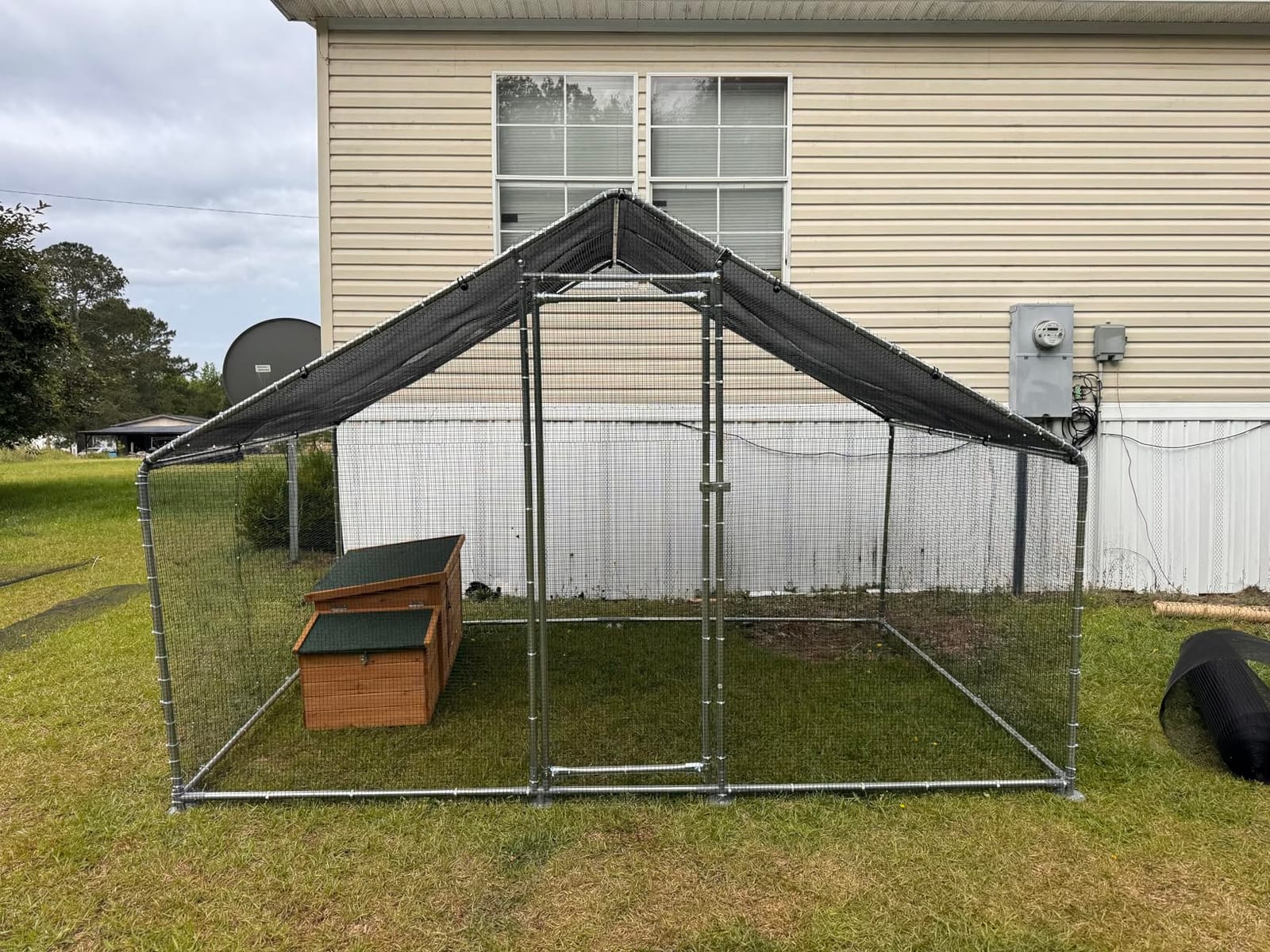
It also pairs well with a small wooden coop placed inside or attached to one end, which is the most common way buyers use a run of this size.
Where you must spend more
The supplied ground stakes and zip ties are the cheapest consumables in this roundup. Serious keepers replace them immediately with proper anchors, and they should.
The coated hexagonal mesh is described as solid and hard to damage, but solid is not the same as predator-proof. In an area with foxes, raccoons or loose dogs, add half-inch hardware cloth to the walls and an apron at the base. That one addition is what turns this from a run into a secure run.
7. Belinova Metal Coop With Welded Hardware Cloth Review
Metal Chicken Coop with Hardware Cloth, Walk-in Poultry Cage for Hen Duck
- One of the few listings shipping real welded hardware cloth instead of hexagonal wire
- Galvanized frame and UV-resistant cover built for year-round exposure
- Walk-in height lets you stand inside to clean
- feed and collect
- Padlock-ready sliding door plus included ground stakes
- Solar dusk light guides birds back to the roost without wiring
- Highest price point among the standard coated-wire runs
- Requires level
- flat ground for proper anchoring
- Open mesh design is less sheltered in heavy rain than a fully roofed wooden coop
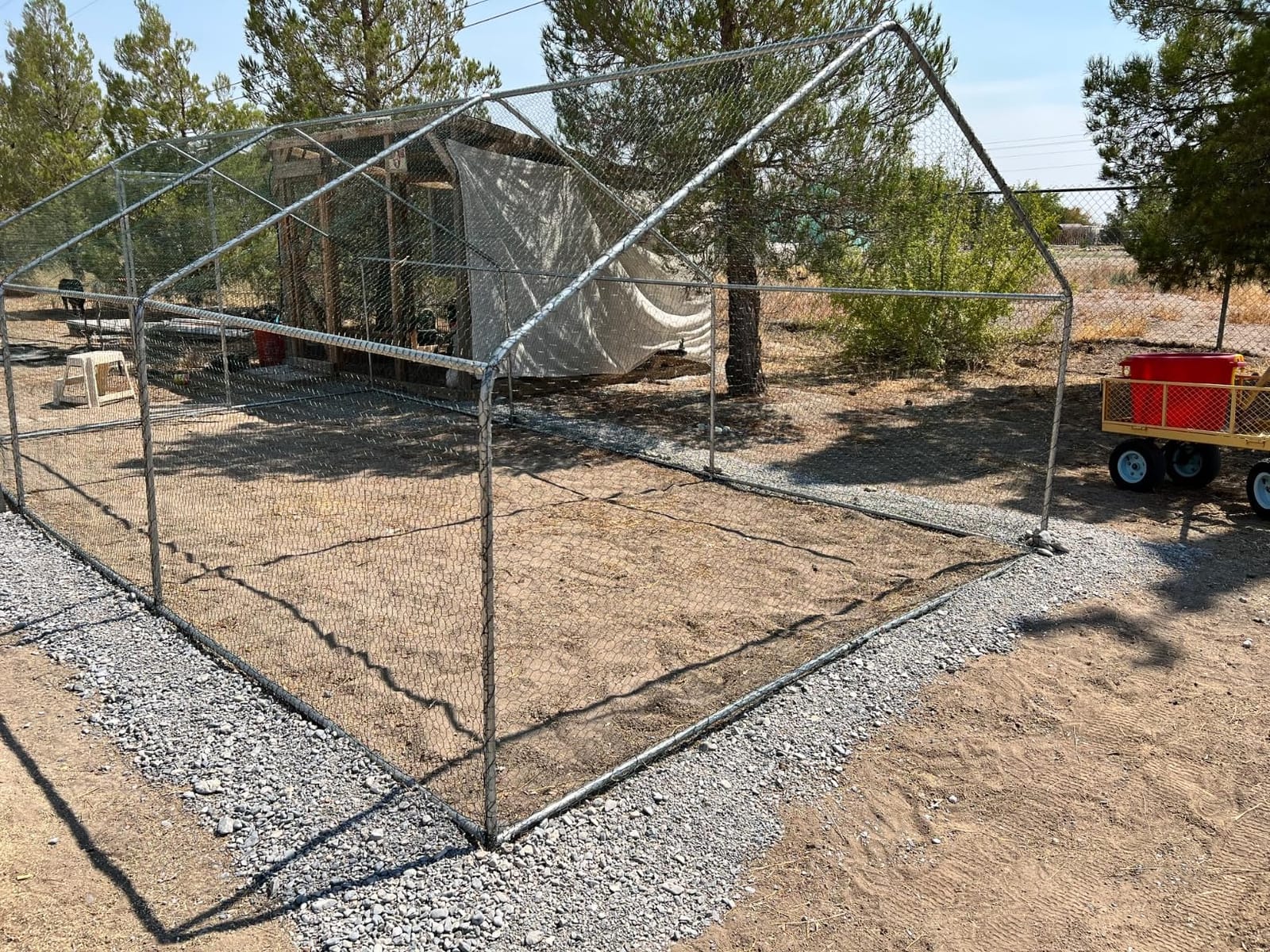
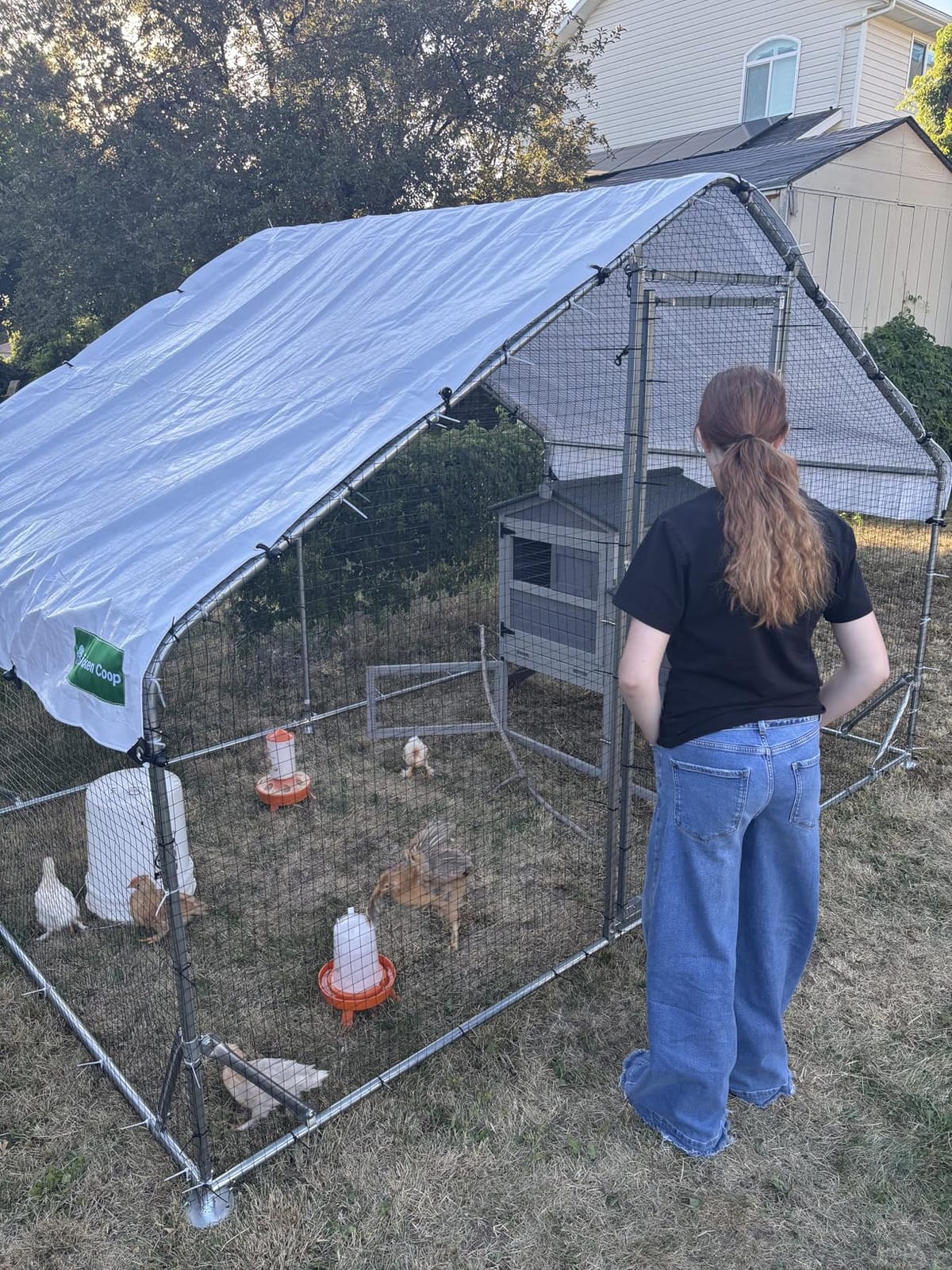
The Belinova exists because of the single most common complaint in this category. Nearly every other run here ships with coated hexagonal wire that owners immediately replace with hardware cloth, and this listing ships with welded hardware cloth already installed. If predator pressure is your main worry, that changes the build from a weekend project into an afternoon.
Hardware cloth resists biting and scratching in a way hexagonal wire never does. The welded grid also stays taut over years, while hex mesh stretches and creates the gaps that small predators learn to work through.
Two details beyond the mesh are worth the read. The sliding door has a padlock tab, so you can lock the run at night with your own padlock instead of hoping a carabiner holds, and the UV-resistant PE cover is held with elastic ball straps that stay taut in wind rather than working loose like twist ties.
The built-in solar panel charges in sun and powers an automatic LED light at dusk, with no wiring and no batteries. It gives birds a path back to the roost after dark, which reduces the clustering at the pop-hole that stresses small flocks.
Where it beats the field
At 13 by 9.86 ft the run floor is roughly 128 square feet, comfortable for 15 to 20 birds at 8 square feet per hen. For a household that wants one flock and no compromises on security, the hardware cloth removes the single most expensive step in hardening a metal run.
The padlock tab and included ground stakes address the two details most often left off. Ground stakes matter in open suburban yards where wind can tip a lightweight frame and take the flock with it.
What to know before you order
It needs flat, level ground. On a slope the ground stakes cannot hold the base and the frame gaps at the bottom become a path underneath, which defeats the point of the cloth above.
Long-term durability reports are thinner than for the established metal-run listings, since this is a recent release with a smaller review base. Budget a season of observation before you treat it as a permanent structure, and consider the walk-in coops in our big flock walk-in guide if you want a wooden structure with more repairable parts.
8. Aivituvin AIR31 Wooden Coop and Run Review
- Well-labelled hardware makes it genuinely easy to assemble
- Hardware cloth already installed on the assembled panels
- Light enough to reposition
- and two units can be joined end to end
- Nesting box latches and multiple access doors aid cleaning
- Good value against purpose-built wooden coops
- Listing says 2 to 6 chickens but realistically suits 2 to 3
- Thin inexpensive wood and hardware that some buyers reinforce
- Stocky rounded perches tip easily and sit close to the droppings shelf
- Nesting box latches break away from the roof quickly
- Ladder and brooder-box hinges reported failing within weeks
- No solid floor so netting must be added underneath
The Aivituvin is the only genuine wooden unit in this roundup, and it behaves like a different category of product. At 74.9 by 26 by 39.4 inches it is a multi-level wooden coop with a ramp to the second level and an attached run, and some variants include wheels so the whole thing can be moved across the lawn.
What surprised us most is the hardware cloth. It arrives already installed on the assembled panels, which is unusual in a product at this level and means the most common upgrade buyers make to budget coops has already been done by the manufacturer.
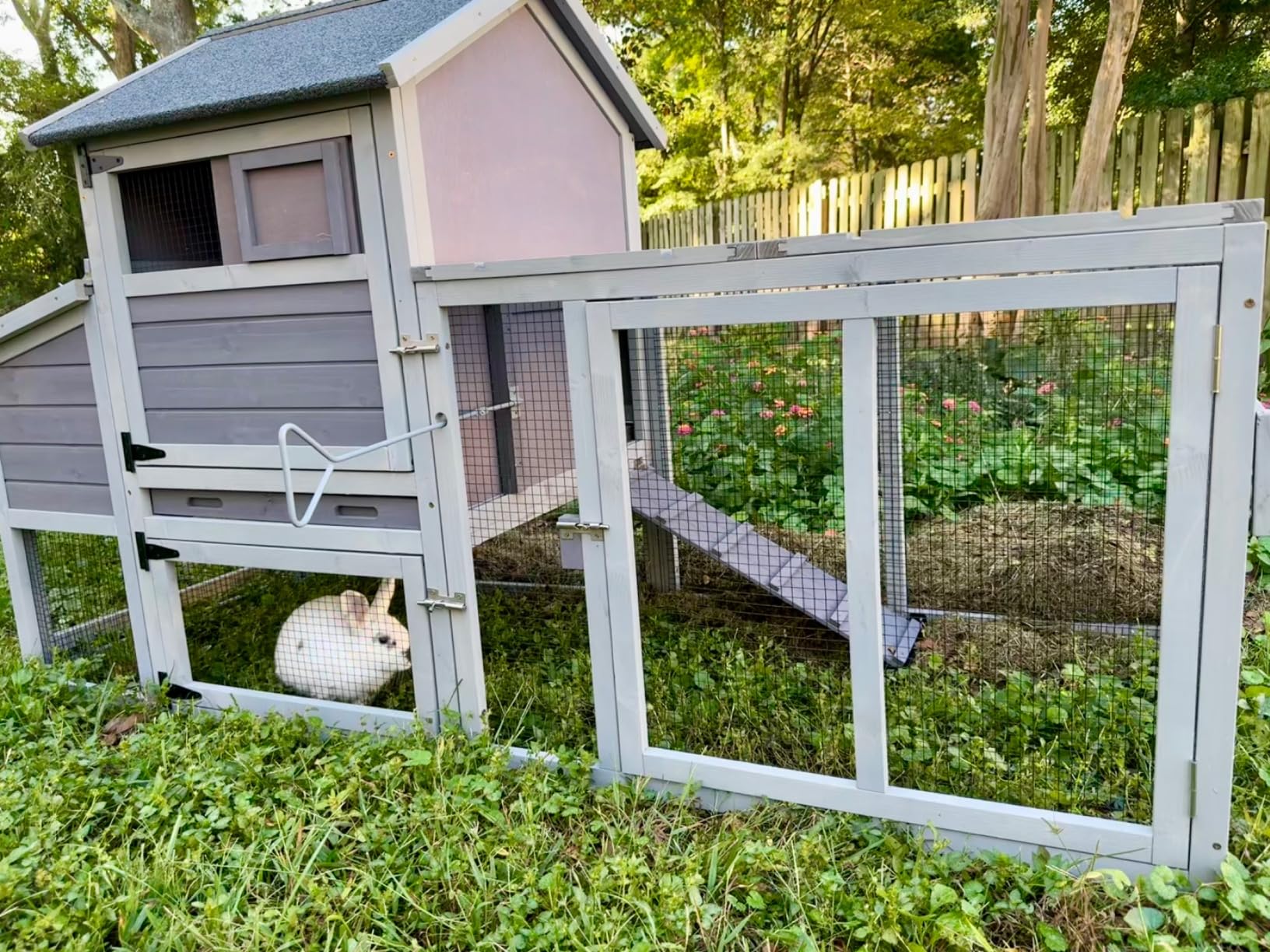
The asphalt roof panel is another quiet upgrade. It blocks heat absorption far better than bare sheet or thin felt, and on a small wooden structure in direct summer sun that is the difference between a shaded interior and a hot one.
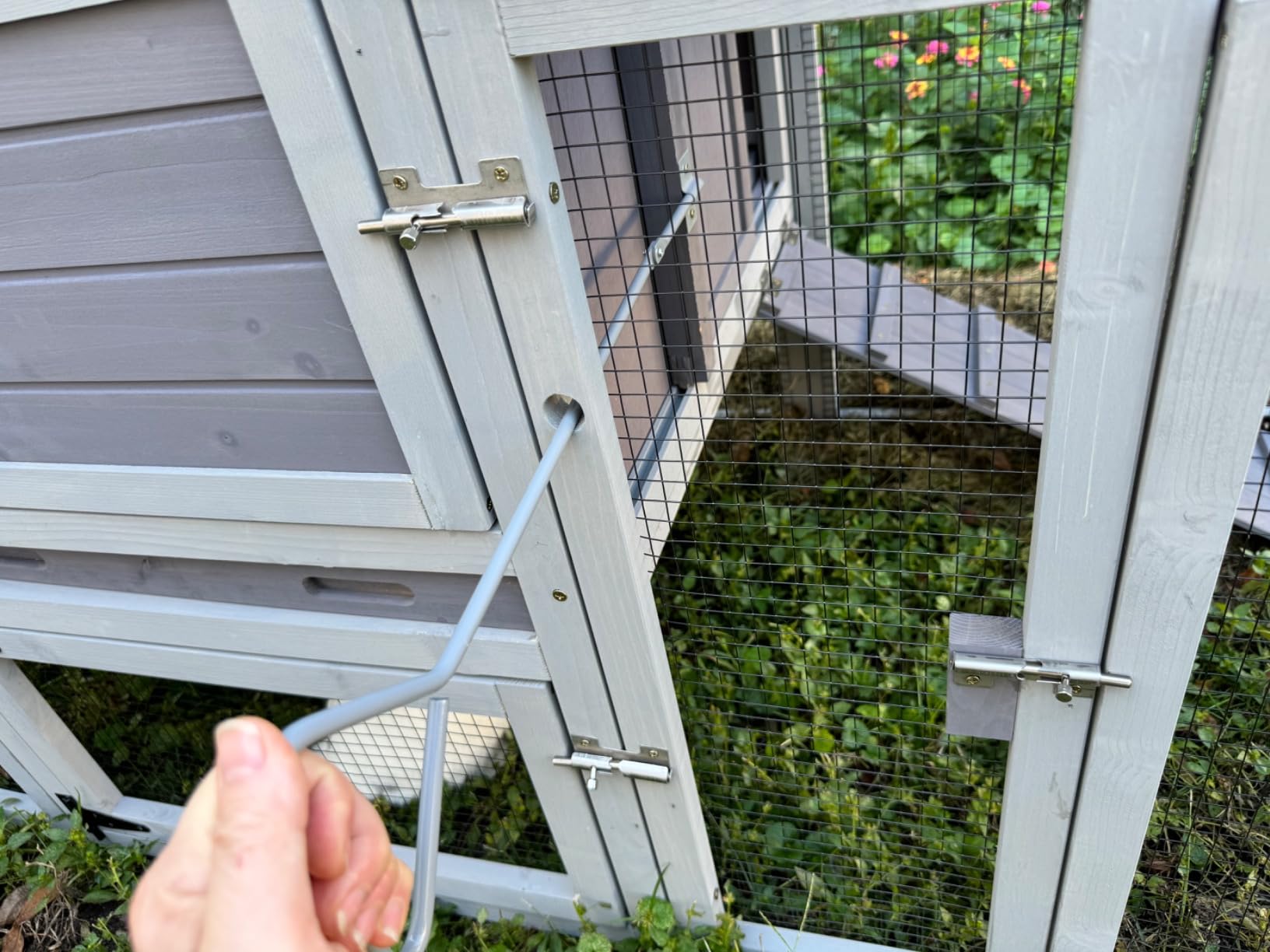
The removable bottom sliding tray, metal wire ventilation panels and four access areas give you more ways in than most small coops provide, and one owner report described a raccoon test in which the cloth and heavy-duty latches held.
Best for rotational grazing
Two units can be joined end to end for a longer coop, and wheels let you move the flock to fresh ground. If your plan is to move birds around the yard rather than confine them to one corner, this is the only unit in the roundup built for it.
For more on that approach, our guide to mobile chicken coops for free ranging covers the trade-offs in more detail.
Where the wood gives out
The capacity is overstated. The listing implies 2 to 6 chickens, but 13.5 square feet of total footprint divided by 4 is closer to three. Buy for two to three hens or buy something larger.
Several owners have reinforced the thin wood and hardware, replaced the Stocky rounded perches with proper 2×4 roosts, and found that the nesting box latches and ladder hinges fail within weeks. There is no solid floor, so most owners staple hardware cloth underneath to stop predators digging in from below. Expect a modification weekend before this coop is finished.
9. Quictent Large Metal Run With Hardware Cloth Walls Review
Quictent Large Metal Chicken Coop Run for 30+ Poultry w/Beige Nest Box
- Largest capacity here at over 30 birds with a wooden nesting box attached
- Welded hardware cloth side walls instead of hexagonal wire
- Frame reinforced with 8 support bars and triangular corner poles
- Dual-latch door and extended mesh ground skirt deter digging
- 750 zip ties and heavier 0.2 in cable ties included
- 365-day complimentary frame and pole parts
- Heaviest unit in the roundup at roughly 149 lb
- Highest price point of the metal runs reviewed
- Optional side and back covers are not included
- One-star reviews run higher than peers at 14 percent
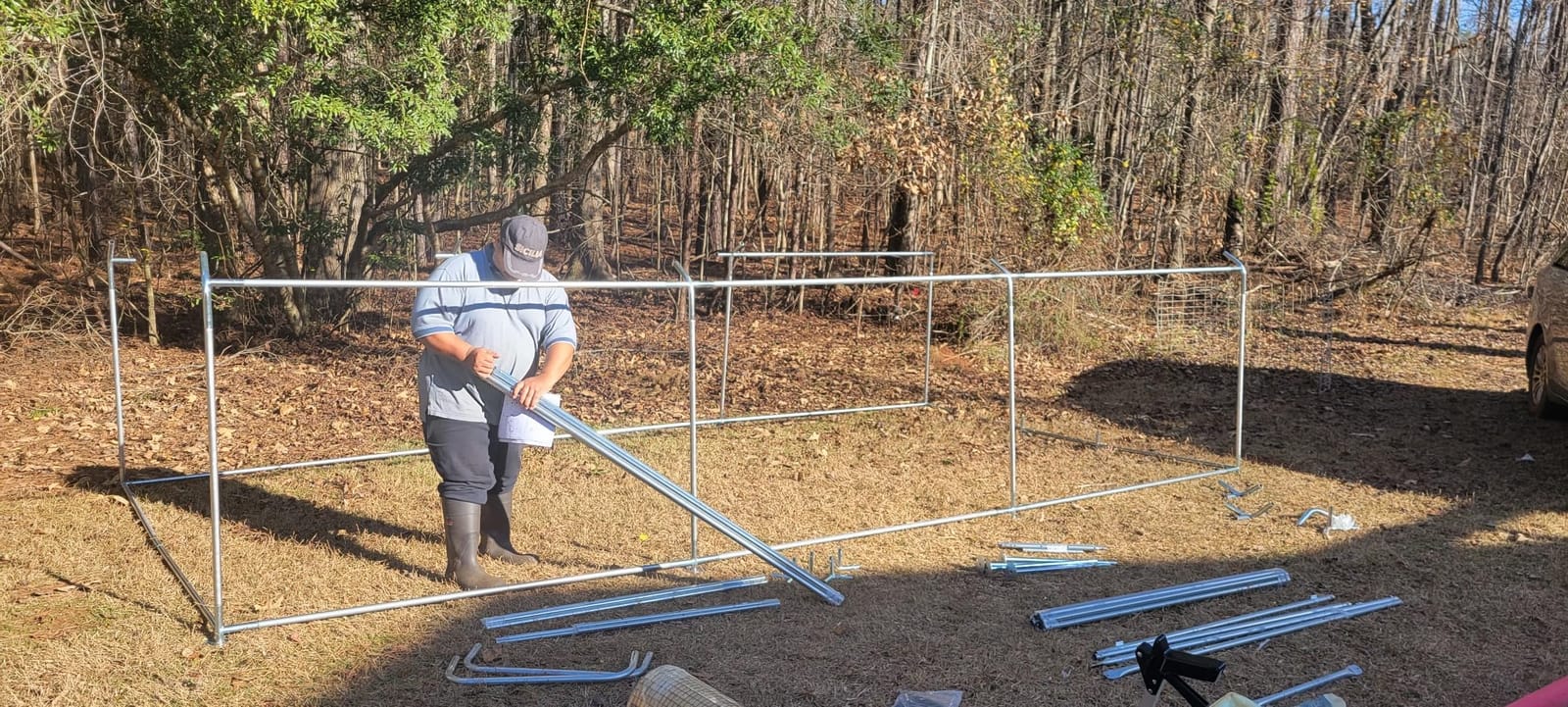
The Quictent is the most thoroughly engineered run in the roundup and the least forgiving of a small yard. It combines a wooden nesting box with 1 x 1 inch 20 gauge welded hardware cloth side walls, which means hens have somewhere dry to lay rather than laying in the open run like they would in a bare metal pen.
Stability is where the engineering shows. One inch rust-free poles are reinforced with 8 support bars and triangular corner poles, so the frame resists the flex that makes door latches stop meeting their catches after a winter.
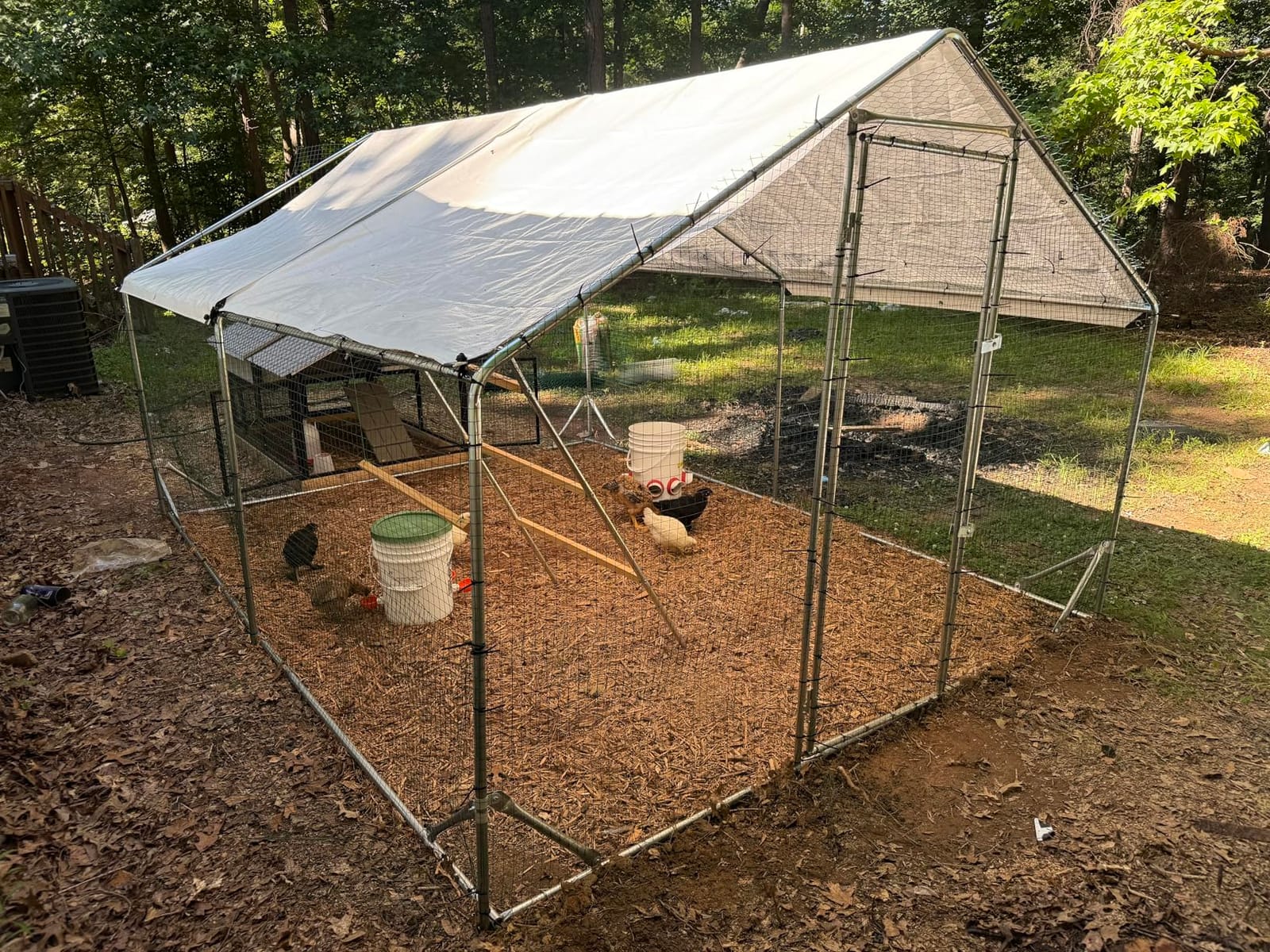
Security hardware is unusually complete for a kit. The dual-latch door with a narrow gap resists the single-latch bypass described in cheaper runs, and the extended mesh ground skirt is a built-in dig barrier, which is exactly what the owners of the coated-wire runs end up adding themselves.
The consumables bundle is a nice practical touch. 750 zip ties and 0.2 inch cable ties, roughly double the thickness of typical ties, are in the box, so you are not hunting for fasteners the night you discover the netting pulling loose.
Where the feature set pays off
At 214.5 by 107.3 inches the run floor is around 160 square feet, and the manufacturer rating is for 30-plus poultry. That is small-farm territory rather than a typical suburban flock, and for a household keeping 12 to 20 birds it is the most honest fit in the roundup.
The parts promise is unusual and worth reading twice. 365 days of complimentary frame, pole and connector parts, plus 180 days for covers and hardware cloth, is real coverage for the components most likely to fail early.
What makes it hard to recommend broadly
At roughly 149 lb it is the heaviest unit here, and assembly plus repositioning both need help. On a suburban lot the 18 ft length also forces a placement decision you will live with for years.
Optional side and back covers are not included, so as supplied the weather protection is roof only. Budget for side panels if you are in a wet climate. One-star reviews sit at 14 percent, higher than peers, and owners attribute that to assembly friction and component durability, so allow time for the build.
10. PawHut 26.2 ft Walk-In Metal Chicken Run Review
- Very long 26 ft run gives far more floor space than smaller units
- Walk-in height and a lockable latch door for security
- Dipping-treated steel wire is smooth enough to avoid injuring birds
- Water and UV resistant Oxford cloth roof keeps birds shaded and dry
- Designed to be paired with a separate wooden coop
- 315 in footprint demands a large yard and is hard to relocate once filled
- Nearly 100 lb so assembly needs more than one person
- Run-only design with no integrated nesting area
- Steel mesh is not predator-proof without hardware cloth and ground anchoring
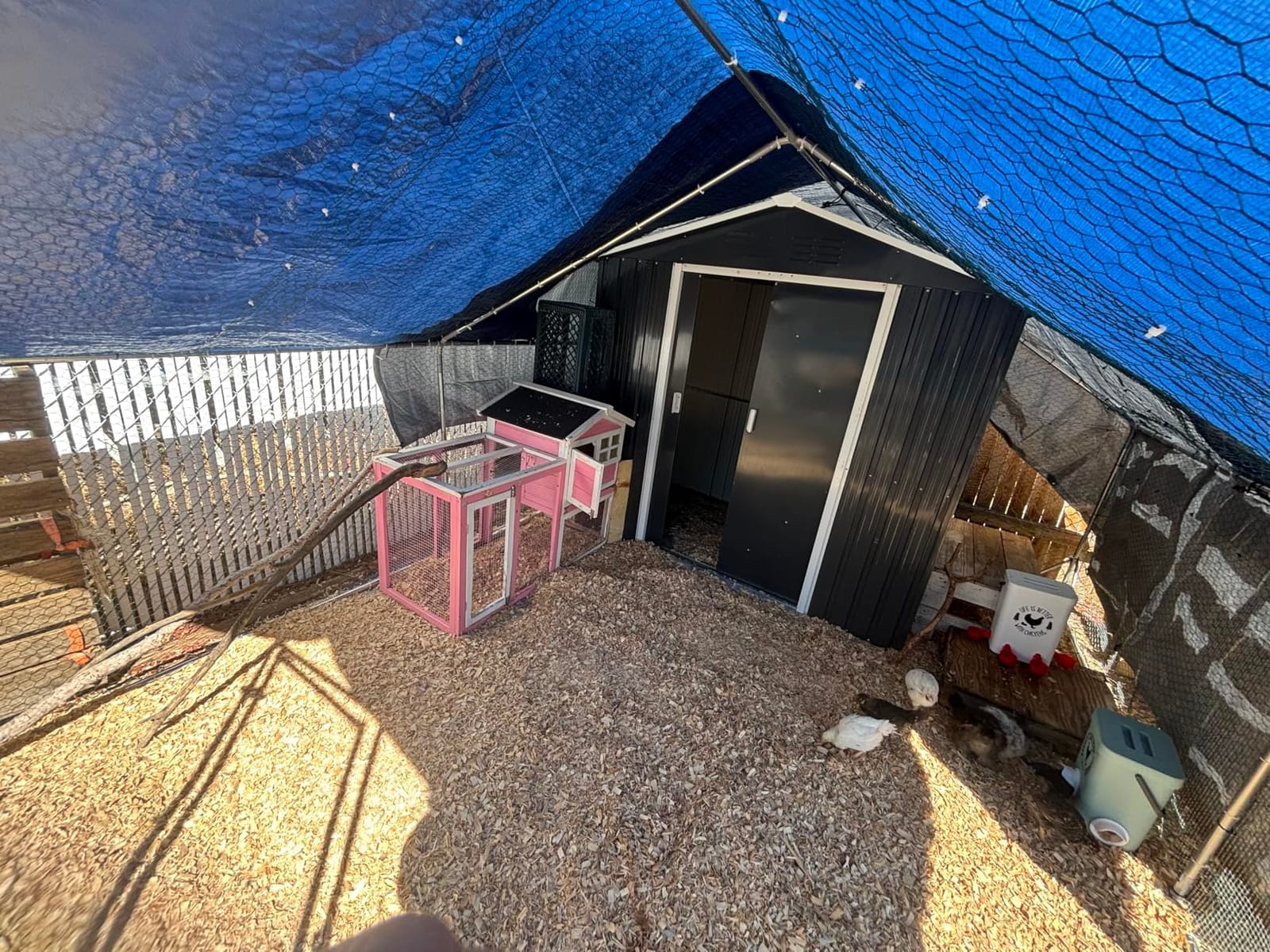
The PawHut is the longest run in the roundup at 26.2 ft, and it is designed to be paired with a separate wooden coop placed inside or attached to one end. That pairing is the sensible way to use it, because as supplied it is a run with no sleeping or nesting area of its own.
At 9.8 ft wide it is wide enough to walk the length of, work from both sides of a coop and still give birds a proper foraging strip. The walk-in height and lockable latch door are both welcome at that length.
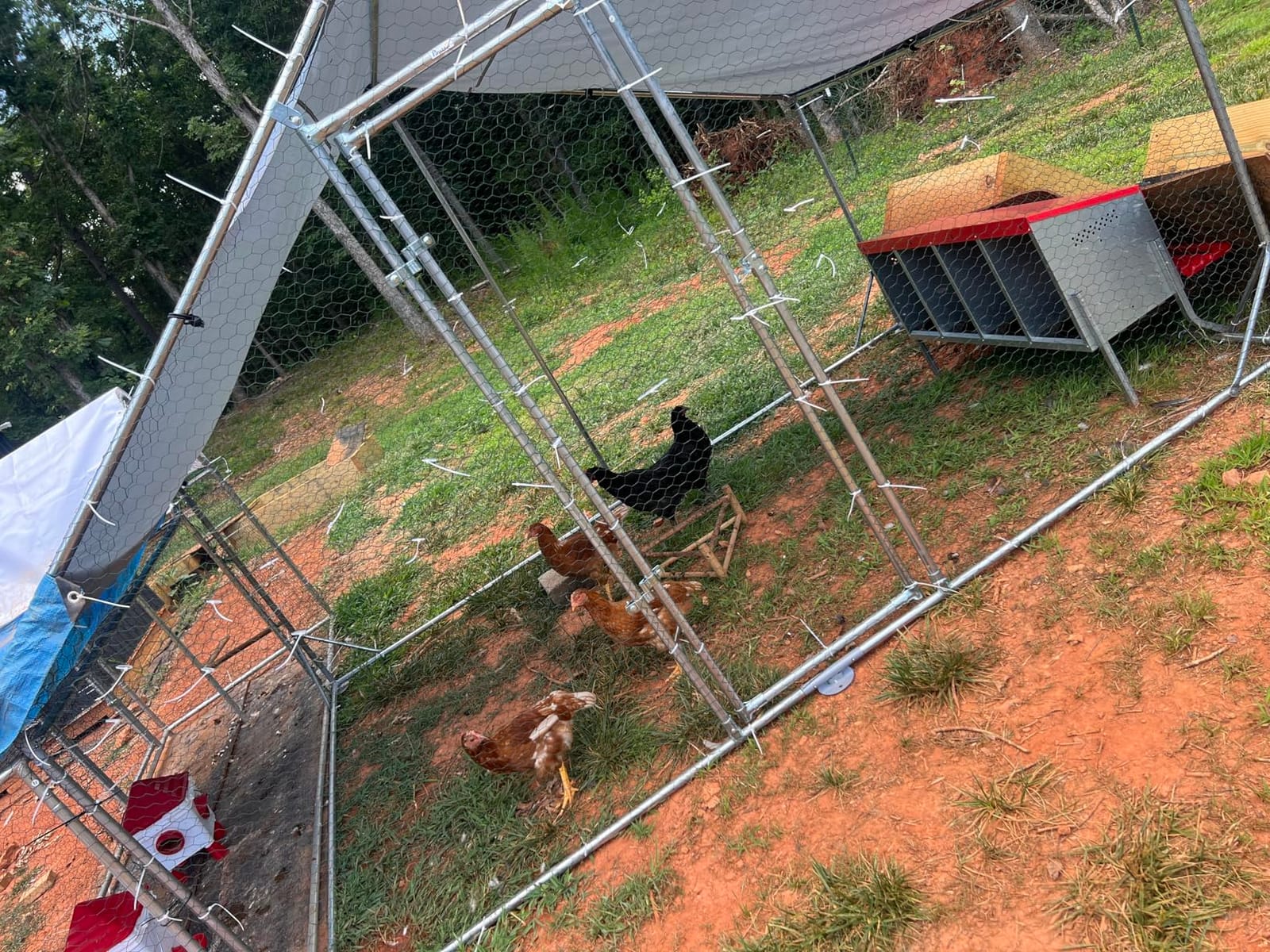
One detail deserves credit. The steel wire is treated with a dipping process specifically to protect animals from injury, and owners note it is smooth enough that birds do not catch beaks or feet on the mesh, which is not true of every run in this category.
The roof uses spring button clip fixings and water and UV resistant Oxford cloth, so it comes down for winter storage and goes back on without tools.
When 26 feet is the right answer
Dividing 257 square feet of run floor by 10 gives comfortable capacity for 25 birds, and the listing rates it for 16 to 24 chickens. For a household that genuinely wants a large flock, no other unit here gives this much usable run in one piece.
It also works as a permanent run for a small number of very free-ranging birds, giving them enough length that they keep moving rather than stripping one corner bare.
Where suburban yards run out
A 315 inch footprint is 26 ft of your garden. On most suburban lots that is the dominant object in the yard, and it sits above the sight line of a typical 6 ft fence in a way that invites neighbour conversation you may not want.
At nearly 100 lb it needs more than one person to assemble and becomes genuinely hard to reposition once the ground settles around the frame. And the steel mesh is not predator-proof without added hardware cloth and ground anchoring, so budget the same reinforcement work the cheaper runs need.
How to Make Any Chicken Coop and Run Predator-Proof
Most predator losses happen at the base of the run or at a latch, not through the walls. Work through these six steps with any coop you are considering, whether or not it shipped with hardware cloth.
1. Replace chicken wire with half-inch hardware cloth. Hexagonal chicken wire is a containment product, not a security product. A raccoon can push through a 1 inch hex gap in seconds, and once inside it takes the whole flock. Welded half-inch hardware cloth resists biting and scratching and stays taut for years.
2. Bury the mesh or add an apron. Digging predators undermine an otherwise solid run. Bend the bottom 12 inches of hardware cloth flat against the ground and pin it, or dig a 12 inch trench and staple the cloth along its base. On soft ground, a 16 inch apron works better.
3. Fit latches a raccoon cannot work. The rule keepers repeat is simple: any latch a toddler can open is a latch a raccoon can open. Use a carabiner, a barrel bolt, a padlock hasp, or a spring-loaded gate hook rated for poultry.
4. Roof the run. Covered runs are consistently worth the upcharge in owner reports. A roof keeps bedding dry, gives shade in summer, and stops hawks landing inside. Every unit in this roundup has a cover of some kind, which is why they rank well here.
5. Bury or wall the predator tunnels. Even with a roof, weasels and stoats exploit the pop-hole area. Add a short vestibule or a 12 inch board at the base of the pop-hole door so nothing can squeeze into the gap under the door.
6. Check the roof edge and the corners nightly for a week. New runs fail at the joints first. Walk the perimeter in the dark with a torch, look for lifted mesh at the corners, and refasten anything that moved before the first full night with the flock inside.
How to Choose a Chicken Coop for a Suburban Backyard
Check the ordinances and HOA rules first. Many municipalities limit flock size, require a setback from property lines, or ban roosters outright. Some require a coop to sit at least 10 ft from a neighbouring structure. Read the local code and the HOA covenants before you buy anything, because a non-compliant coop is an expensive shed.
Measure the run footprint, not the coop. The enclosure is what eats your lawn. A 6 ft fence on three sides and the house on the fourth often leaves a 10 by 20 ft working area, which caps you at roughly 12 to 15 birds on run space alone.
Watch the height against the fence line. A 6.5 ft walk-in run sits right at the top of a typical 6 ft suburban fence. If your covenant has a sight-line rule, a compact unit like the Petsfit or the NUGRIART keeps you compliant without asking anyone for a variance.
Confirm the run is roofed and the base is barriered. Both are non-negotiable in our view. Roof coverage keeps bedding dry and blocks aerial predators, and a dig barrier at the base is the difference between a secure flock and an expensive lesson.
Plan your cleaning access before you commit. A slide-out droppings tray, a washable floor panel or a full-height walk-in door will save you an hour a week for years. Coops that force you to crouch and reach into a dirty corner get resented by owners faster than any other feature.
Check drainage at the site. A run on low ground turns into a mud pit within two rains, and mud under a coop is the main cause of rot in wooden structures. Choose level ground, and consider gravel or a paver base under the run area for anything wooden.
Think about proximity to the house. You will walk to this structure daily, often in the dark, often carrying feed. Leave a clear path from a tap or hose bib and, if you plan an automatic door opener or a light, a reachable outdoor outlet.
Buy for next year’s flock. Chickens arrive in spring and the first flock always grows. Sizing up one tier now costs less than replacing a too-small run in two years, and the same applies to the enclosed sleeping area inside it.
Frequently Asked Questions
What is the best chicken coop and run?
The best chicken coop and run for a suburban backyard is one that pairs a covered run with an enclosed sleeping area, uses welded half-inch hardware cloth rather than hexagonal chicken wire, and has a dig barrier at the base. In our 2026 testing the CHIKENCOOP 9.8 x 6.5 ft walk-in metal run was the strongest all-round pick, while the Quictent and Belinova runs were the only two that shipped with real welded hardware cloth already installed.
How many square feet per chicken do I need in a coop and run?
Allow 4 square feet of enclosed indoor floor space per standard hen and 8 to 10 square feet of run space per hen. Six hens therefore need about 24 square feet inside and 48 to 60 square feet of run. Roosting bars need 8 to 10 inches per bird, and nesting boxes need one per three to four hens.
How many chickens can I put in a 10×10 coop?
A 10 by 10 ft floor is 100 square feet, which divided by 4 gives a comfortable indoor capacity of 25 standard hens. Most suburban keepers run far fewer, because run space and local ordinances usually bind first. A flock of 6 to 10 hens in a 10×10 coop has plenty of indoor room and needs 48 to 100 square feet of run depending on the birds.
Is hardware cloth necessary for a chicken run?
Yes, for any yard with foxes, raccoons, weasels or loose dogs. Hexagonal chicken wire keeps hens in but a raccoon can force through a one inch gap quickly. Welded half-inch hardware cloth resists biting, stays taut for years, and is the single most common upgrade owners make to budget metal runs.
What is the number one predator of backyard chickens?
Raccoons are the most reported predator in suburban yards, and they dig under runs and manipulate simple latches. Foxes, weasels, opossums, domestic dogs and hawks account for most of the rest. Raccoons are deterred by half-inch hardware cloth, an apron at the base and a latch they cannot open.
Do I need a roof on my chicken run?
A roofed run is strongly recommended. It keeps bedding dry, provides shade in summer, reduces mud, and stops hawks landing inside the enclosure. Owner reports consistently treat covered runs as worth the upcharge. At minimum, cover the top and use an apron at the base if you cannot afford a full roof.
Are backyard chickens legal in a suburban neighbourhood?
It depends entirely on your municipality and HOA. Many towns limit flock size, set a minimum setback from property lines, and ban roosters. Check the zoning code and your HOA covenants before purchasing, and confirm a rooster is not required, since hens lay eggs without one.
Final Verdict: Which Suburban Chicken Coop and Run Wins
For most suburban backyards in 2026, the CHIKENCOOP 9.8 x 6.5 x 6.5 ft metal run is the best chicken coop with run on this list. It has the highest owner rating base, a genuinely walk-in 6.5 ft interior, a frame that stays square, and a footprint that suits a 6 to 8 hen flock without taking over the garden. Add half-inch hardware cloth and an apron, and you have a run that holds up to a suburban predator load.
Buy the Belinova instead if predator pressure is severe and you would rather not spend a weekend hardening the mesh yourself. Buy the Quictent if your flock is 12 birds or more and you want welded hardware cloth plus a proper nesting box in one package. Choose the Petsfit or NUGRIART when the yard, not the flock, is the binding constraint.
Whichever one you choose, run the 30-second capacity check before you pay, and read your local ordinances and HOA covenants before the delivery date, not after.