
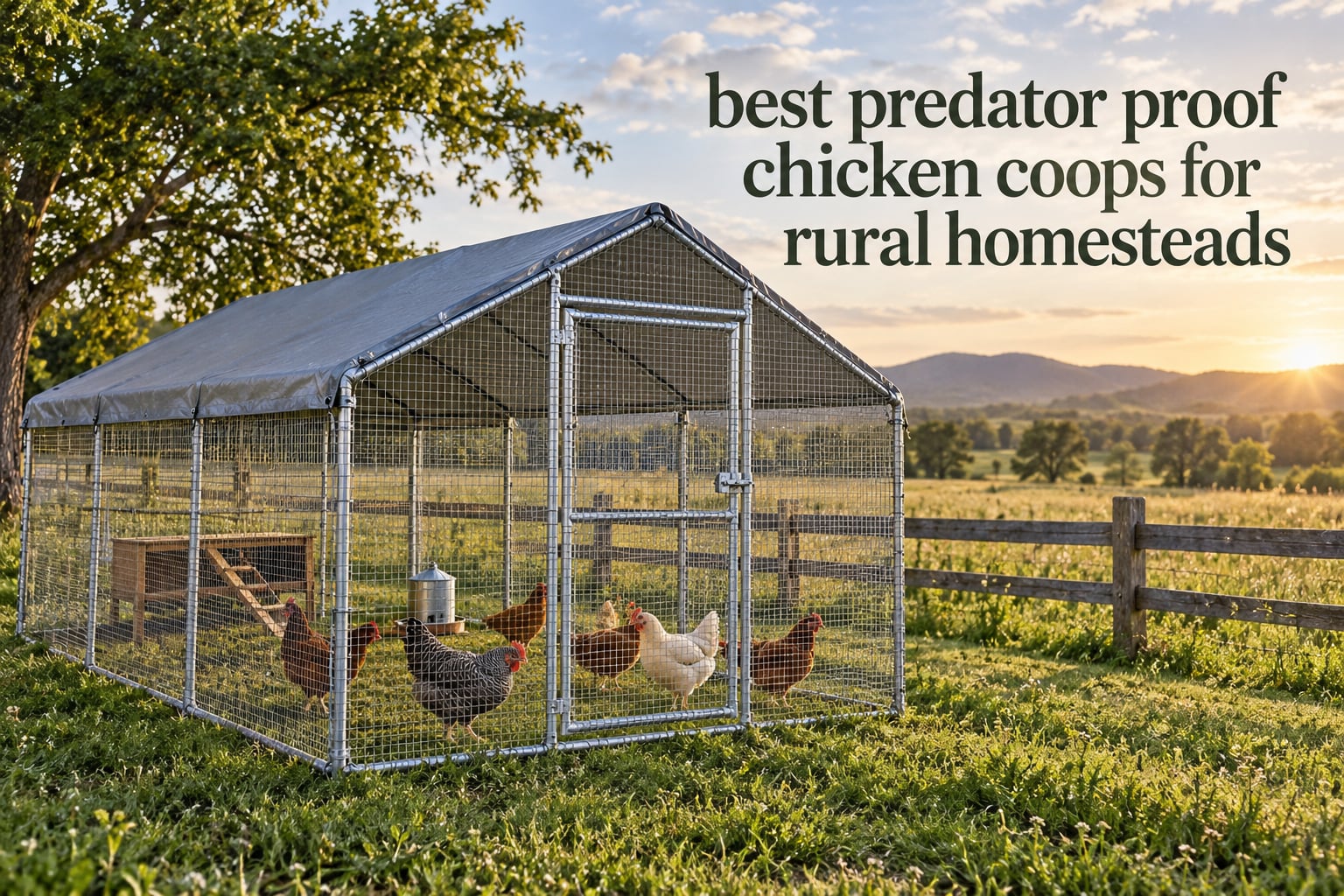
A coop becomes predator proof when three physical specifications work together: half-inch or smaller welded hardware cloth covering every face including the roof, a door latch that needs two separate actions in sequence to open, and a strip of the same mesh laid flat on the soil as an 18 to 24 inch apron around the base. Everything else on the spec sheet is secondary to those three.
That definition matters more than the marketing suggests. Ask any homesteader who has lost hens and they will tell you the same thing: the coop was not torn apart, it was walked through. A raccoon worked a single spring catch, a fox tunnelled under a frame that rested directly on soil, a weasel came in through a vent gap and took birds with no visible damage at all. Predators are not trying to defeat steel. They are looking for the one weak specification you skipped.
That is also where rural homesteads diverge sharply from suburban backyards. Almost every ranking page for this keyword frames itself around small backyard flocks and raccoon pressure. On acreage the list lengthens fast: coyotes testing a fence line at dusk, bobcats working the tree line, black bears visiting orchards twice a year, and a neighbour’s free-roaming dog looking for an easy meal. You are not buying a run for four bantam hens. You are building a structure that has to survive a decade of pressure without you being awake at the same time every night.
Our team compared 12 metal walk-in runs and poultry pens on measurable specifications rather than on the word predator-proof printed in a listing title. We read every technical spec, weighted the owner feedback at volume, and scored each unit on the same three questions. This is the guide we would hand to someone building on five acres who cannot afford to learn the lesson twice.
One honest caveat before the picks: no run on this page is predator-proof until you add the apron. Ground stakes hold a frame down in wind. They do not stop a fox from digging. The cheapest high-value upgrade in this entire category is a roll of half-inch hardware cloth pegged flat around the base, and we cover the how-to further down.
Table of Contents
Top 3 Picks: Best Predator Proof Chicken Coops (October 2026)

CHIKENCOOP 2-Room Metal Run
- PVC-coated galvanized hardware cloth
- Continuous 600D full-top cover
- Two-room walk-in layout
- 3-mode solar light

HITTITE 19 ft Metal Run
- 0.8 mm reinforced galvanized pipe
- PVC-coated hexagonal mesh
- Lockable metal latch door
- Spire roof drainage
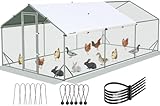
Quictent 30+ Poultry Run
- 20 gauge PVC-coated welded cloth
- Extended mesh ground skirt
- Dual-latch door with narrow pry gap
- 750 heavy-duty cable ties
12 Best Predator Proof Chicken Coops at a Glance
| Product | Specifications | Action |
|---|---|---|
| CHIKENCOOP 2-Room Metal Run |
|
Check Latest Price |
 VEVOR 26 ft Walk-In Run VEVOR 26 ft Walk-In Run |
|
Check Latest Price |
 4ever2buy 9.2 x 12.5 ft Run 4ever2buy 9.2 x 12.5 ft Run |
|
Check Latest Price |
| HITTITE 19 ft Metal Run |
|
Check Latest Price |
 LEMBERI 20 x 10 ft Run LEMBERI 20 x 10 ft Run |
|
Check Latest Price |
 NUGRIART Walk-In Run NUGRIART Walk-In Run |
|
Check Latest Price |
 Belinova Hardware Cloth Run Belinova Hardware Cloth Run |
|
Check Latest Price |
 Quictent 18 x 9 ft Run Quictent 18 x 9 ft Run |
|
Check Latest Price |
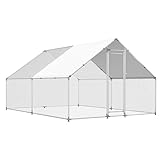 HEYTOWN 13 x 9.8 ft Pen HEYTOWN 13 x 9.8 ft Pen |
|
Check Latest Price |
| Quictent 30+ Poultry Run |
|
Check Latest Price |
 Morngardo 10 x 10 ft Run Morngardo 10 x 10 ft Run |
|
Check Latest Price |
 UDPATIO Walk-In Run UDPATIO Walk-In Run |
|
Check Latest Price |
1. CHIKENCOOP 2-Room Metal Chicken Coop Run: Best Overall for Rural Flocks
CHIKENCOOP 2-Room Metal Chicken Coop Run, Hardware Cloth, Solar Light
- PVC-coated galvanized hardware cloth is a far stronger barrier than poultry netting
- Continuous full-top cover leaves no uncovered seam between the two rooms
- Sloped roof sheds rain leaves debris and light snow
- Reinforced base plates roof supports and ground stakes aid stability
- Solar light runs three modes with no wiring
- Around 106 lb so it is a two-person carry and anchor job
- Mesh still needs a proper ground apron to defeat digging predators
This is the unit we keep coming back to. The two-room connected layout gives you a genuine walk-in predator proof chicken coop arrangement: one space for daytime range, one for shelter and perching, joined by a full-height entrance. At 156 by 118 by 78 inches it fits comfortably on a rural yard without eating the whole paddock.
What separates it from most of the field is the mesh. It is PVC-coated galvanized hardware cloth rather than hexagonal poultry netting, which means a raccoon cannot reach a paw through a diamond gap and hook a leg. Owners in the reviews consistently treat that as the reason their flock is still intact after a season of pressure.
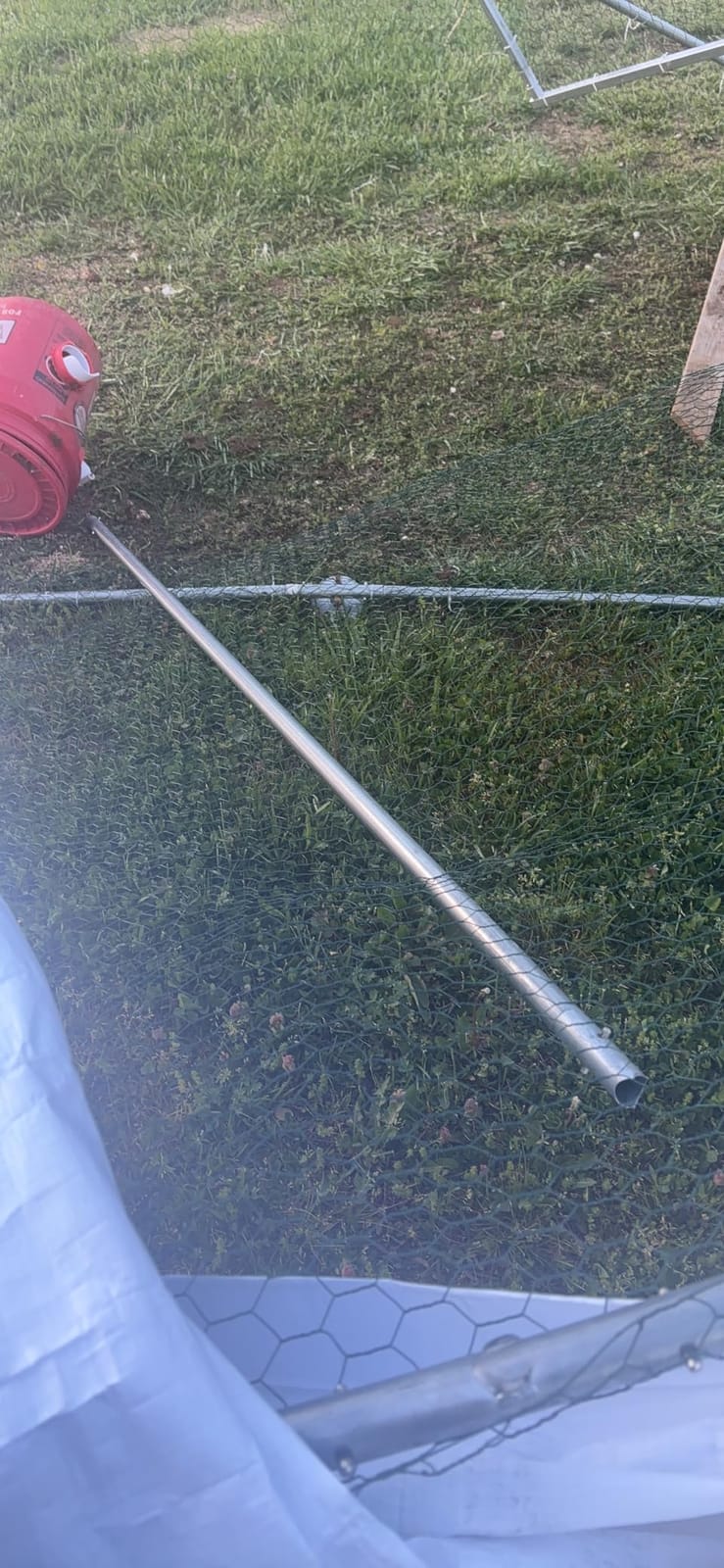
The 600D waterproof and UV-resistant cover runs continuously across the top of both rooms. That continuity is the detail most listings skip. Two covers butted together leave a seam that becomes a climbing route, and raccoons are climbers. A single continuous cover removes the seam entirely.
The 3-mode solar LED light needs no wiring, which matters on acreage where running power to the coop is a project in itself. Be realistic about what it does: it is an evening visibility aid and a supplement, not a defence. Forum keepers report that static lights lose their effect within weeks as animals habituate.
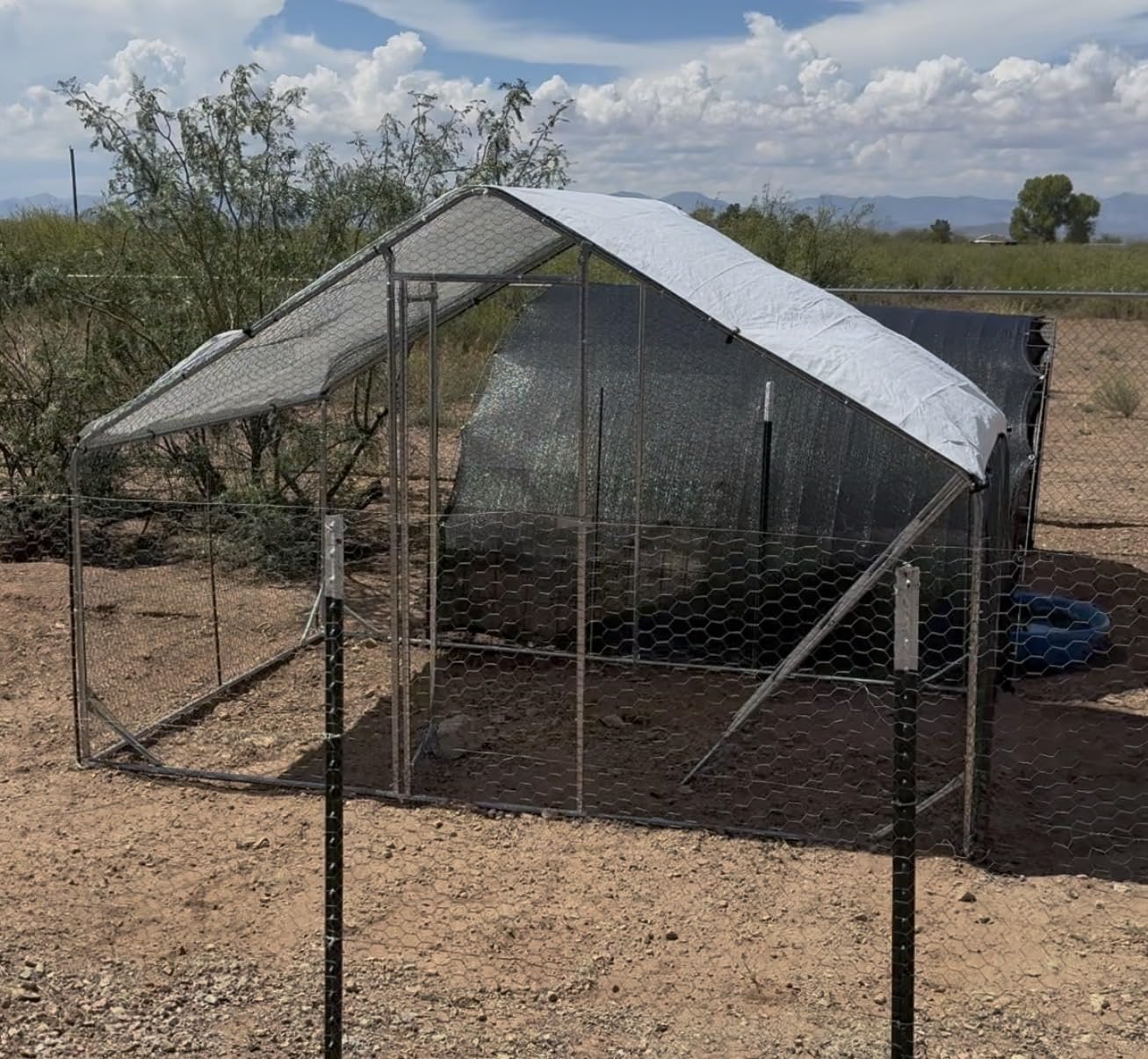
What you are actually buying
A two-room frame with hardware cloth already installed, a cover, a perch, base plates, roof supports and ground stakes. You are still adding the apron. The base plates and stakes included here resist movement and wind, and they are frequently mistaken for a dig barrier. They are not one.
Center perch mounts take one connector and one wooden bar, so plan to source roosting material separately if you want more than the single included bar. The 106 lb weight is honest for the size and means you will want a second pair of hands for assembly and for repositioning.
Where it falls short
At 106 lb it is one of the heavier frames in this group, and that is a real constraint if you plan to move the run seasonally for pasture rotation. A chicken tractor that cannot be moved by one adult is just a fixed run.
The listing also does not claim a bird capacity, and owners sizing it should work from area instead. If you are running a large flock outdoors, this is the point to step up to one of the longer runs further down rather than crowding it.
2. VEVOR 26 ft Walk-In Run: Best for Long Runs and Mixed-Species Use
- Very long 26 ft run from a single frame
- 1-inch galvanized steel pipe frame is stiffer than most competitors
- Spire roof drains water and light snow without sagging
- Locked hen house section sits inside the run
- PE tarp is waterproof sun-resistant and tear-resistant
- Hexagonal mesh alone is not predator proof and the maker recommends a supplemental base barrier
- Around 116 lb and needs two people to assemble
- Only 57 percent of reviews are five-star with a 12 percent one-star share
Length is the headline here. At 314.88 by 118.08 by 78.72 inches you get a walk-in living area of roughly 9.8 by 26.2 by 6.5 feet from a single frame, which is a lot of covered range for a rural setup. If you rotate birds through a long strip of pasture, a long run is worth more than a square one.
The frame is 1-inch thick galvanized steel pipe with precise welding, and that is the stiffer structure you want when snow loads a flat roof. The spire geometry sheds water, debris and light snow without the sagging that flattens lower-profile covers.
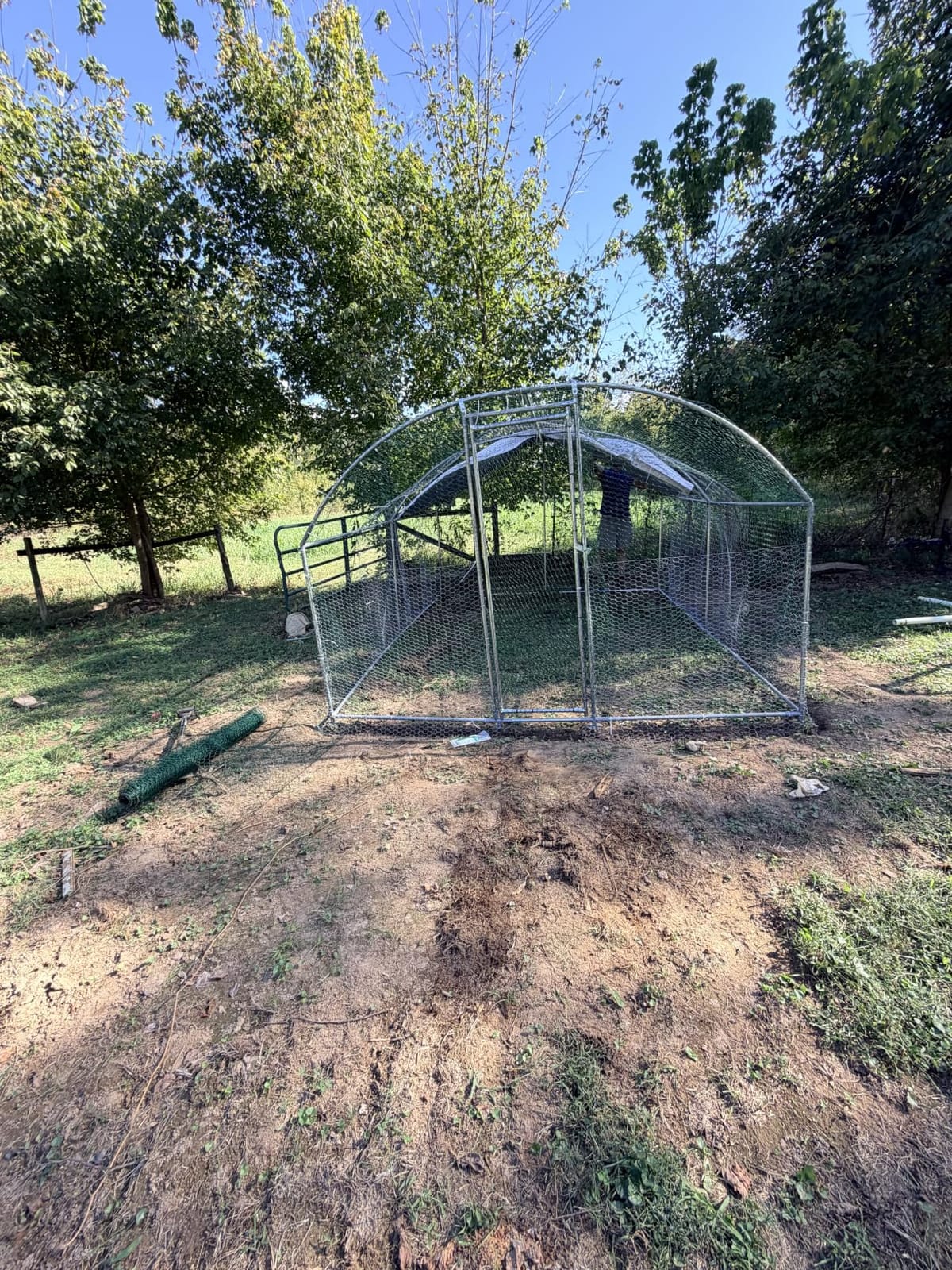
There is a locked hen house section built inside the run, which gives you a secure overnight space without bolting on a second structure. Owners also use this frame for ducks, geese, rabbits and quail, so it works as multi-species housing on a mixed homestead.
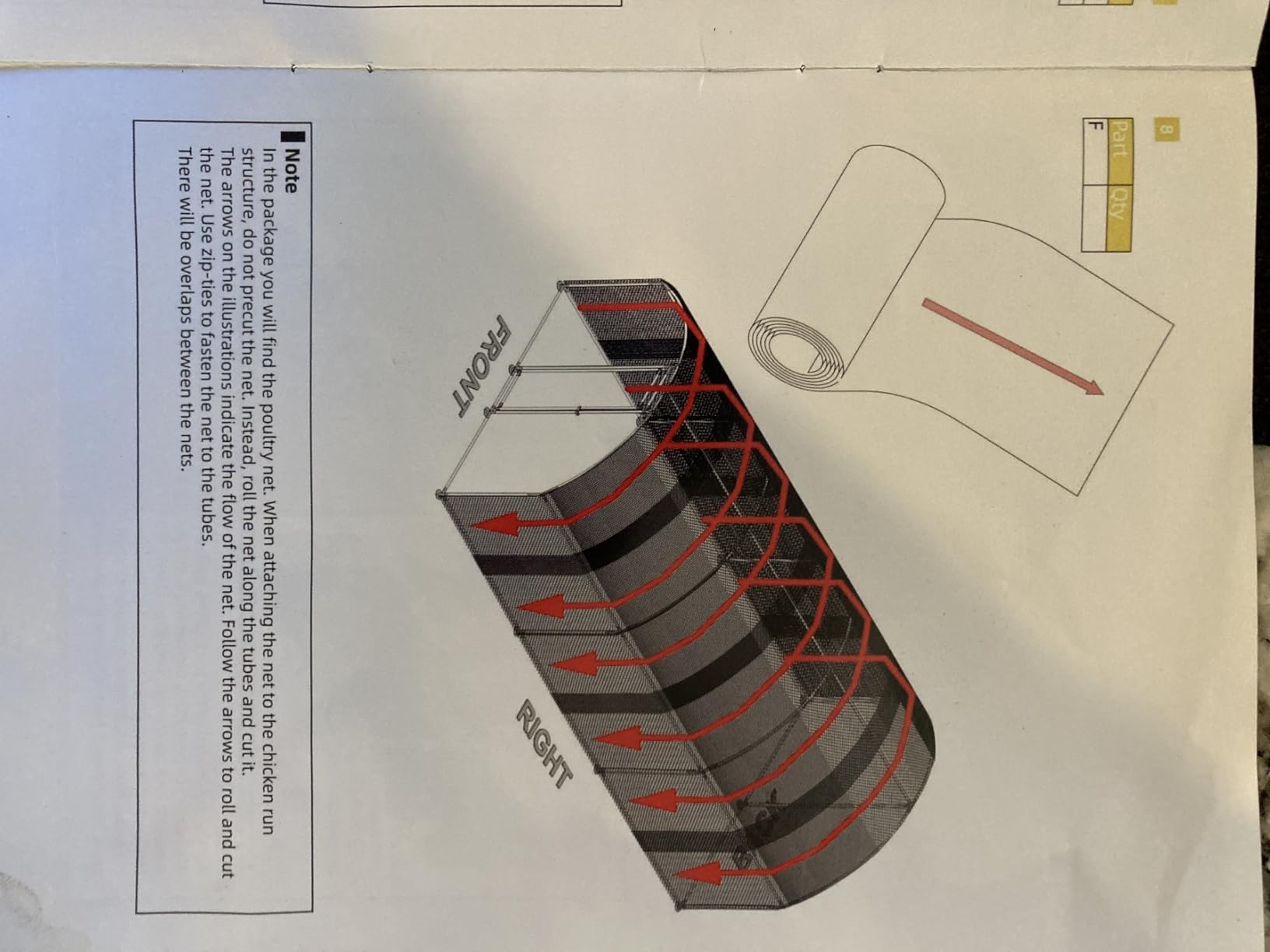
Now the part that matters. The walls and roof use protective hexagonal wire mesh, and the 4.0 average with a 12 percent one-star share reflects that recurring complaint. The manufacturer itself recommends adding a galvanized wire skirt or stones at the base. We would go further and clad the vertical faces in half-inch hardware cloth.
What you are actually buying
A 26 ft frame with hexagonal mesh, a PE-coated waterproof tarp roof, a spire frame, four-sided ventilation, a locked hen house section and a two-person installation process. The weight is 115.96 lb, the heaviest frame among these 12, just ahead of the Quictent 30+ unit.
Four-sided ventilation is a genuine plus. Enclosed runs without airflow build ammonia, and respiratory problems show up as reduced laying and slow winter growth, not as obvious illness.
Where it falls short
Hexagonal mesh makes this a predator-resistant structure that still needs work, not a finished predator proof chicken coop. Budget for a roll of hardware cloth and a full apron before you put a flock in it.
The 12 percent one-star share is among the highest here. Read the reviews around mesh gauge and base gaps first, because that is where the dissatisfaction clusters.
3. 4ever2buy 9.2 x 12.5 ft Hardware Cloth Run: Best Value in a Compact Footprint
- Hardware cloth wraps the entire enclosure rather than only the side panels
- 6.4 ft peak lets an adult stand upright for cleaning
- Footprint fits a working yard without dominating it
- Waterproof anti-UV cover and labeled hardware for fast assembly
- Excellent cost per square foot for a fully hardware-cloth run
- 3.9 average is the lowest among these 12 with 12 percent one-star reviews
- Smaller footprint than the 18-26 ft runs so it will not suit 20-plus birds
- Manufacturer does not publish a product weight
This is the run we would put on a tighter rural yard where a 26 ft frame is not realistic. At 9.2 by 12.5 feet with a 6.4 ft walk-in height it gives you upright clearance for cleaning, which is a genuine quality-of-life gain over crouch-height runs.
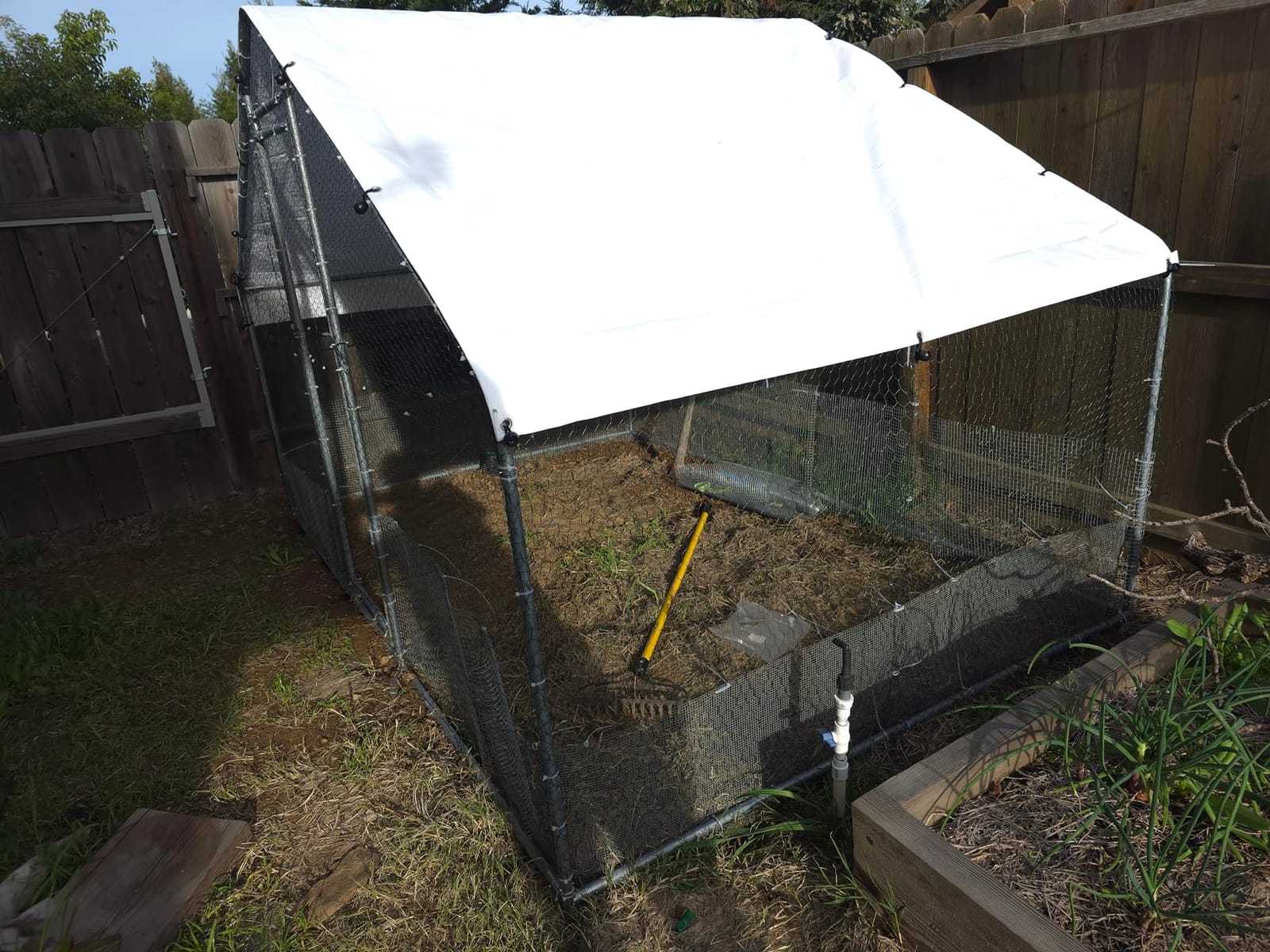
The mesh is the headline. Fully wrapped dense galvanized hardware cloth covers the whole enclosure, not just the side panels, and the rust-resistant steel frame has reinforced joints at the connections that carry the load.
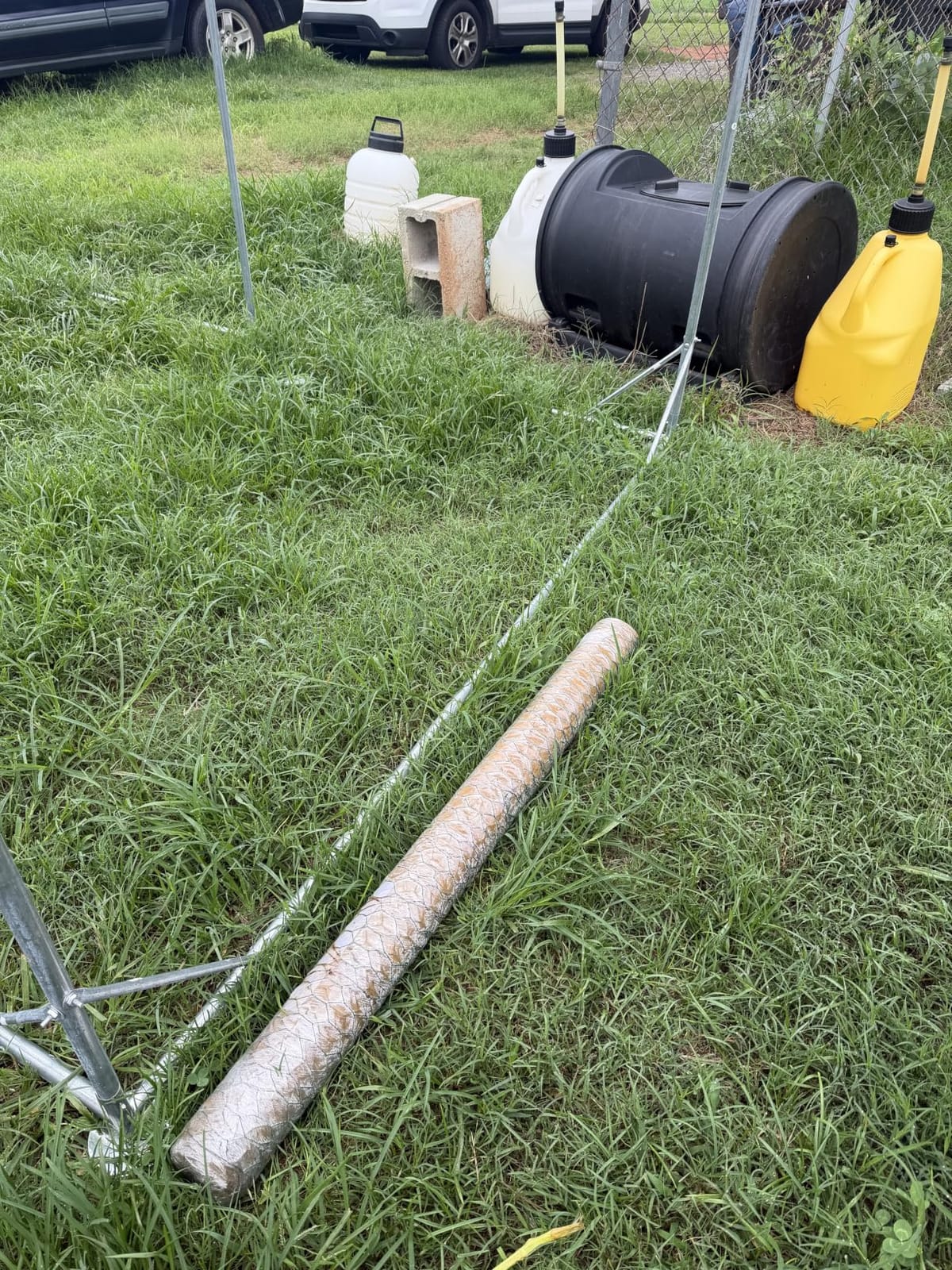
Assembly is the other story here. All parts are clearly labeled and two adults can complete it in about an hour, fast against the five to twelve hour builds reported for some competing frames. The included waterproof and anti-UV PE cover handles rain and sun on all faces.
The 3.9 average is the lowest among these 12 products, with 12 percent one-star reviews, and the feedback clusters around overall finish quality rather than around structural failure. Owners who accept the finish level rate the hardware cloth wrap as the best value in the category.
What you are actually buying
A 9.2 by 12.5 ft walk-in run sized for 12 to 15 chickens, fully clad in hardware cloth, with a reinforced rust-resistant frame, a waterproof anti-UV cover, labeled hardware and a one-hour build. It also works as a duck pen or a garden enclosure.
For a rural flock, work out capacity from area rather than the bird count. Twelve to fifteen birds in roughly 115 square feet of covered run is workable. Twenty birds in the same space is not.
Where it falls short
The 3.9 average and 12 percent one-star share mean this is the least refined unit among the 12 here. Expect cosmetic complaints and possibly a few finishing snags, rather than a failed frame.
It is also the wrong choice for a large rural flock. If you are running twenty-plus birds you need more covered range per bird than this footprint delivers, and the run does not expand in a way that preserves the hardware cloth wrap.
4. HITTITE 19 ft Metal Run: Top Rated for Frame Quality
- 0.8 mm pipe is a genuine upgrade over the 0.6 mm most competitors use
- Among the highest-rated options here at 4.4 with 68 percent five-star reviews
- Spire roof sheds water and light snow effectively
- Lockable metal latch adds real security over simple clips
- Nearly 19 ft of run length
- Maker states the hexagonal mesh alone is not completely predator proof and recommends extra hardware cloth
- Cover should be removed or cleared during heavy snow
Frame gauge is the story here. The 0.8 mm reinforced galvanized pipe is thicker than the 0.6 mm tubing that dominates this price band, and it is the reason for the 4.4 average and the 68 percent five-star share. On a rural homestead where the run sits through ice storms and full sun, stiffer tubing is a real advantage.
At 230 by 118 by 79 inches you get a walk-in run close to 19 feet long with a 6.56 ft peak. The spire roof and UV-resistant waterproof PE tarp handle drainage and light snow well, though the manufacturer advises clearing snow deeper than 2 inches off the cover.
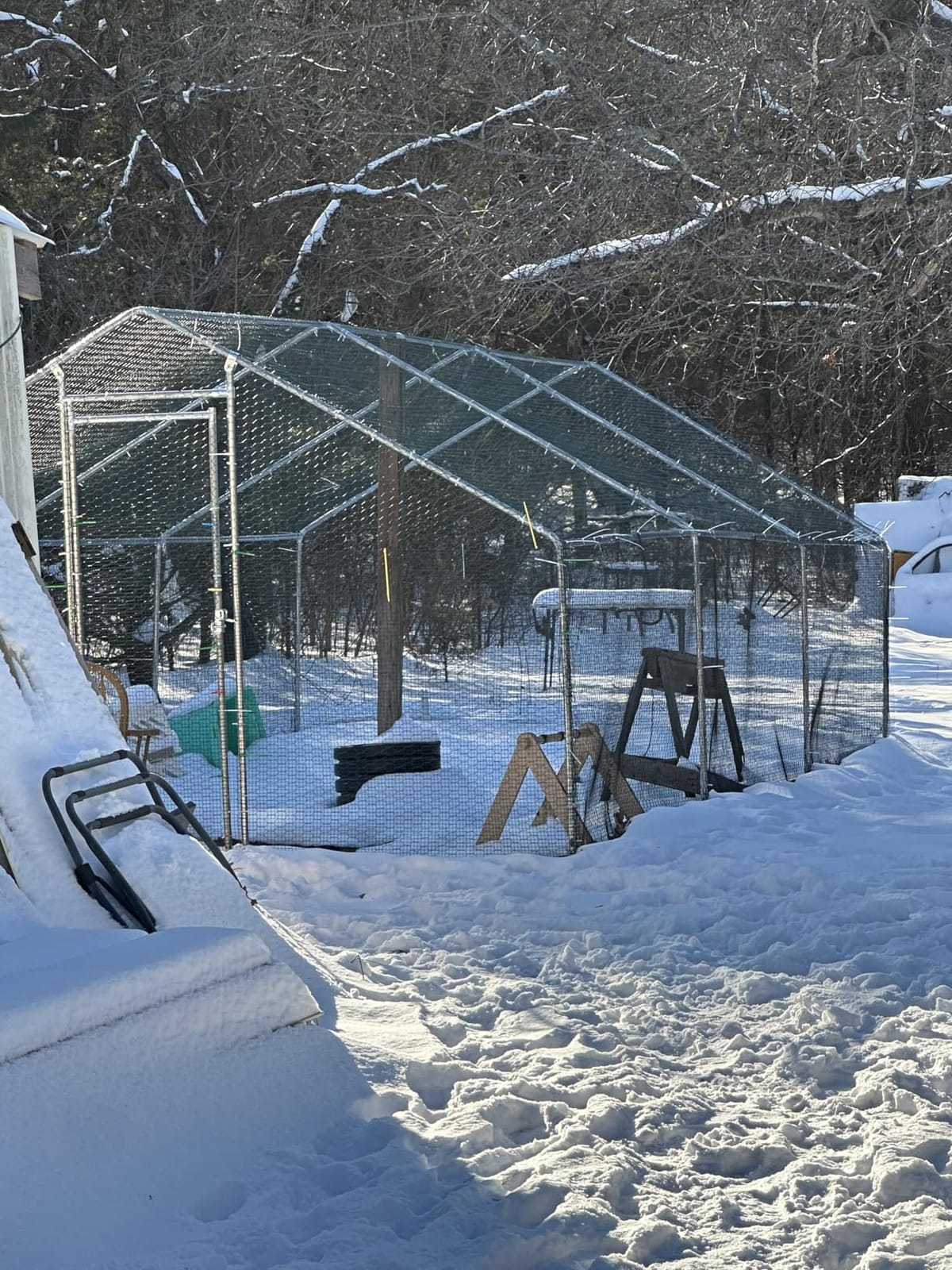
The door has a specially designed lockable metal latch rather than a spring clip or a hook. That single detail puts this run ahead of most of the field on latch action, and latch action is one of the three specifications that actually decide whether your flock is still there at dawn.
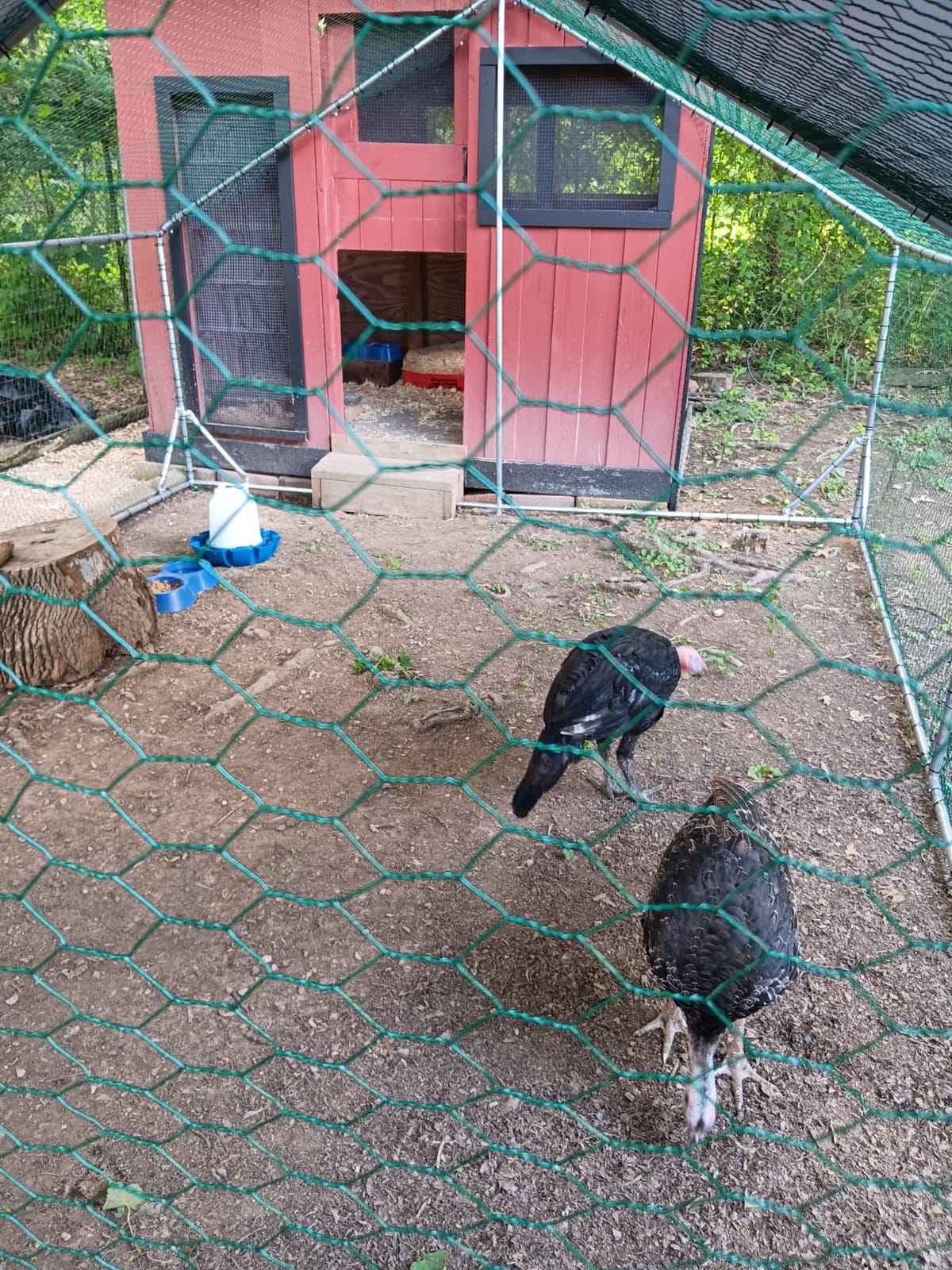
What holds it back is the mesh. It is PVC-coated hexagonal wire on the walls and top, and the listing is unusually candid about that, recommending buyers add hardware cloth and anchor the base for a complete barrier.
What you are actually buying
A 19 ft walk-in run on 0.8 mm reinforced galvanized pipe, with PVC-coated hexagonal mesh, a waterproof anti-UV PE tarp over a spire roof, a lockable metal latch door, an illustrated manual and a two-person assembly process. Listed weight is 113 lb.
Two adults and a tool-light build. Owners report the labeled hardware and manual make this one of the less frustrating assemblies of the 12, which matters if you are working it in on a weekend.
Where it falls short
It is not a finished predator proof chicken coop. The vertical faces are hexagonal wire, and a determined raccoon or fox treats that as a reachable surface. Add half-inch hardware cloth over the walls before you trust it.
The cover is a consumable. Owners on similar units report replacing PE tarps every one to three seasons as UV degradation takes hold, and HITTITE itself advises removing the cover under heavy snow rather than leaving the load on it.
5. LEMBERI 20 x 10 ft Run: Best for Maximum Space per Footprint
- Largest footprint among these 12 runs at 200 sq ft
- 0.98 inch galvanized tubing is among the thickest frames listed here
- PVC-coated mesh resists rust and will not injure feet or beaks
- Owners report it withstood ice storms snow and a trampoline landing
- Walk-in 6.5 ft height allows upright cleaning and egg collection
- Reviewers repeatedly describe the included mesh as thin and better at containing birds than excluding predators
- Several owners replaced the tarp which is widely called thin
- Zip-tie mesh attachment is viewed as weather vulnerable
- About an inch gap around the base invites digging
Square footage per unit of ground is the reason to look at this one. At 20 by 10 by 6.6 feet you get 200 square feet of floor area, which the manufacturer sizes for 25 to 35 birds. Experienced homestead keepers are the ones buying this run, and they are the ones who immediately add their own mesh.
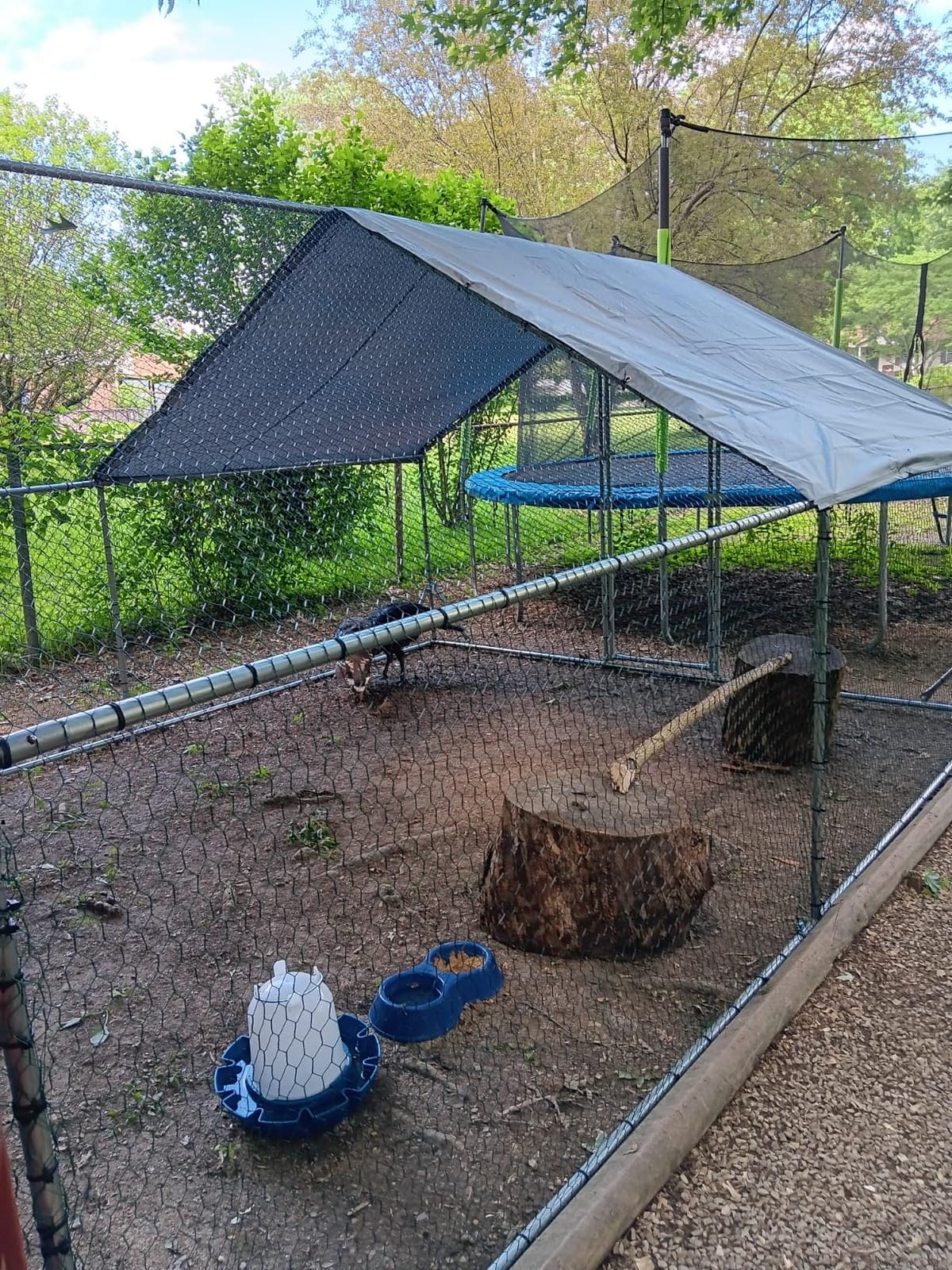
The frame holds up. Owners report surviving ice storms, heavy snow and even a trampoline landing with only a minor bend, which tells you something about the 0.98 inch galvanized steel tube. The Easy-Lock spring-button assembly means no tools for the frame itself.
Where the honesty is valuable: reviewers repeatedly describe the shipped mesh as thin and better at keeping chickens in than keeping predators out. The zip-tie attachment is also flagged as weather-vulnerable, and several owners swapped in stainless ties or their own hardware cloth.
That roughly one inch gap around the base is the other recurring theme. Owners on this model typically bury wire or add a hardware cloth skirt before they trust it with a flock, and on rural ground with fox pressure that step is not optional.
What you are actually buying
A 200 square foot walk-in enclosure on a spire-top frame, with high-tensile PVC-coated galvanized steel mesh, a 210D Oxford waterproof cover, 0.98 inch galvanized tubing and an Easy-Lock spring-button build. It arrives as two boxes and listed weight is 91.01 lb.
Manufacturer support comes with the purchase, which matters at this size. When you are cladding 200 square feet of run in hardware cloth, you will be splicing roll edges repeatedly and a point of contact helps.
Where it falls short
The included mesh and tarp are the weak points, and experienced buyers treat them as consumables to be replaced rather than permanent. Several owners replaced the tarp within a season or two.
It also arrives flat-packed, so plan the assembly. A 20 by 10 ft frame going up on uneven ground is a two-day job for two people, and you want the ground prepared level before the frame arrives.
6. NUGRIART Walk-In Metal Run: Budget Pick for Building Around
- Among the lowest-cost walk-in metal runs in this group
- 1 inch galvanized pipe is thicker than typical offerings and holds up in wind and rain
- 67 percent five-star ratings with a 4.3 average
- Lockable metal latch and perches included
- Spire frame drains rain snow and debris without buildup
- Hexagonal wire mesh means it is a containment run more than a hardened predator barrier
- 118 x 79 inch base is compact and better suited to a handful of birds
- Manufacturer does not list a product weight
Sometimes the right question is what you can build around. With a 4.3 average and 67 percent five-star ratings, this run gives you a genuine walk-in frame with 1 inch galvanized steel pipe, multiple internal perches and a lockable metal latch at a low starting point.
The pipe gauge is the surprise. One inch diameter galvanized steel is thicker than what most runs in this bracket use, and owners report it holds its shape in wind and rain. The spire drainage frame sheds rain, snow and debris without accumulating weight on the cover.
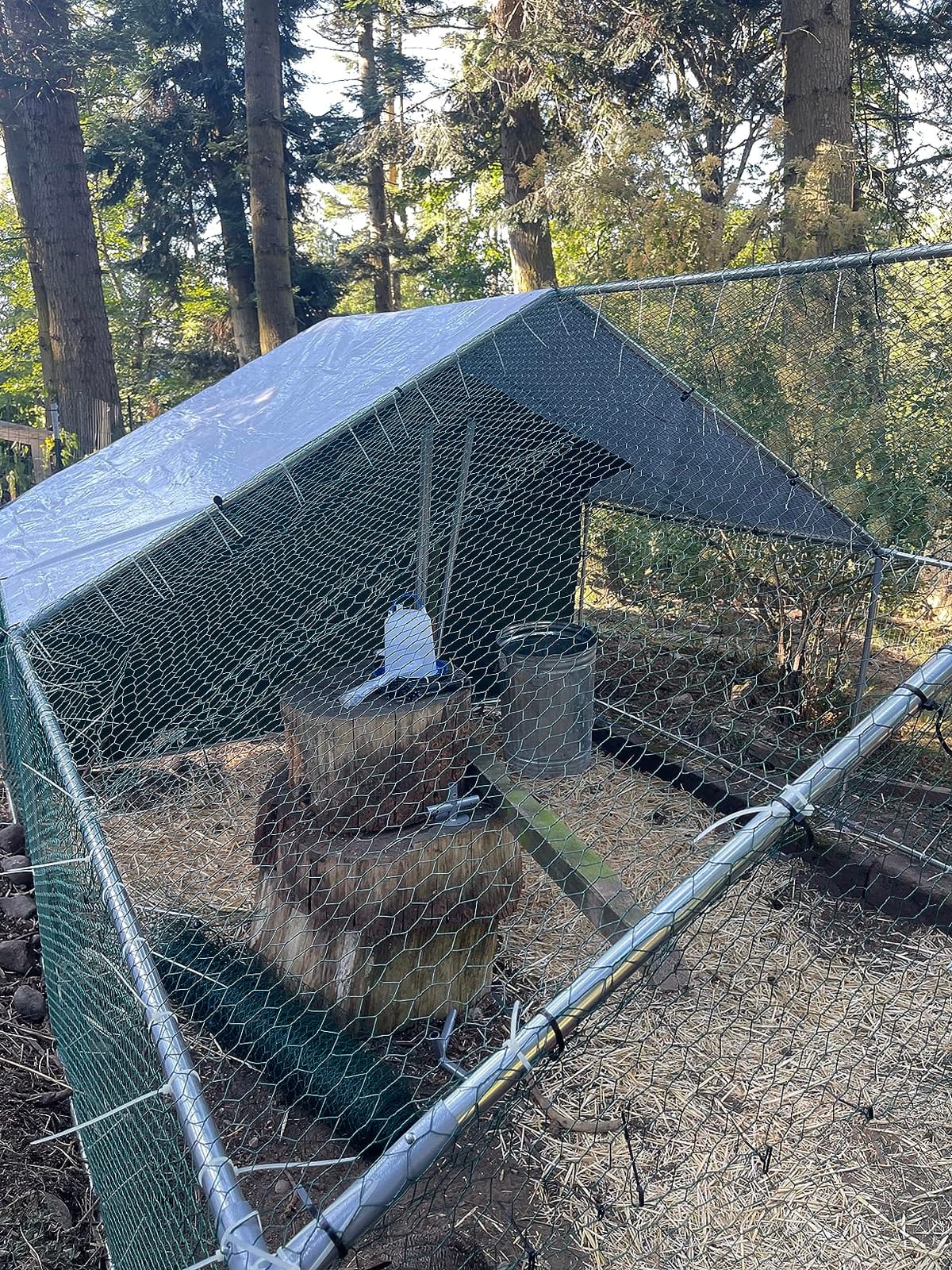
The honest framing: the walls are PVC-coated hexagonal wire mesh with small gaps, not hardware cloth. Owners themselves describe it as keeping chickens in rather than predators out. That is fine as a first layer, a quarantine pen, a duck enclosure or the base of a retrofit you will clad yourself.
On a rural homestead, we would not hand this to a flock with fox or raccoon pressure without cladding. It is also useful as the starting structure for a multi-zone setup, where a separate small pen for introducing or isolating birds is genuinely worth having.
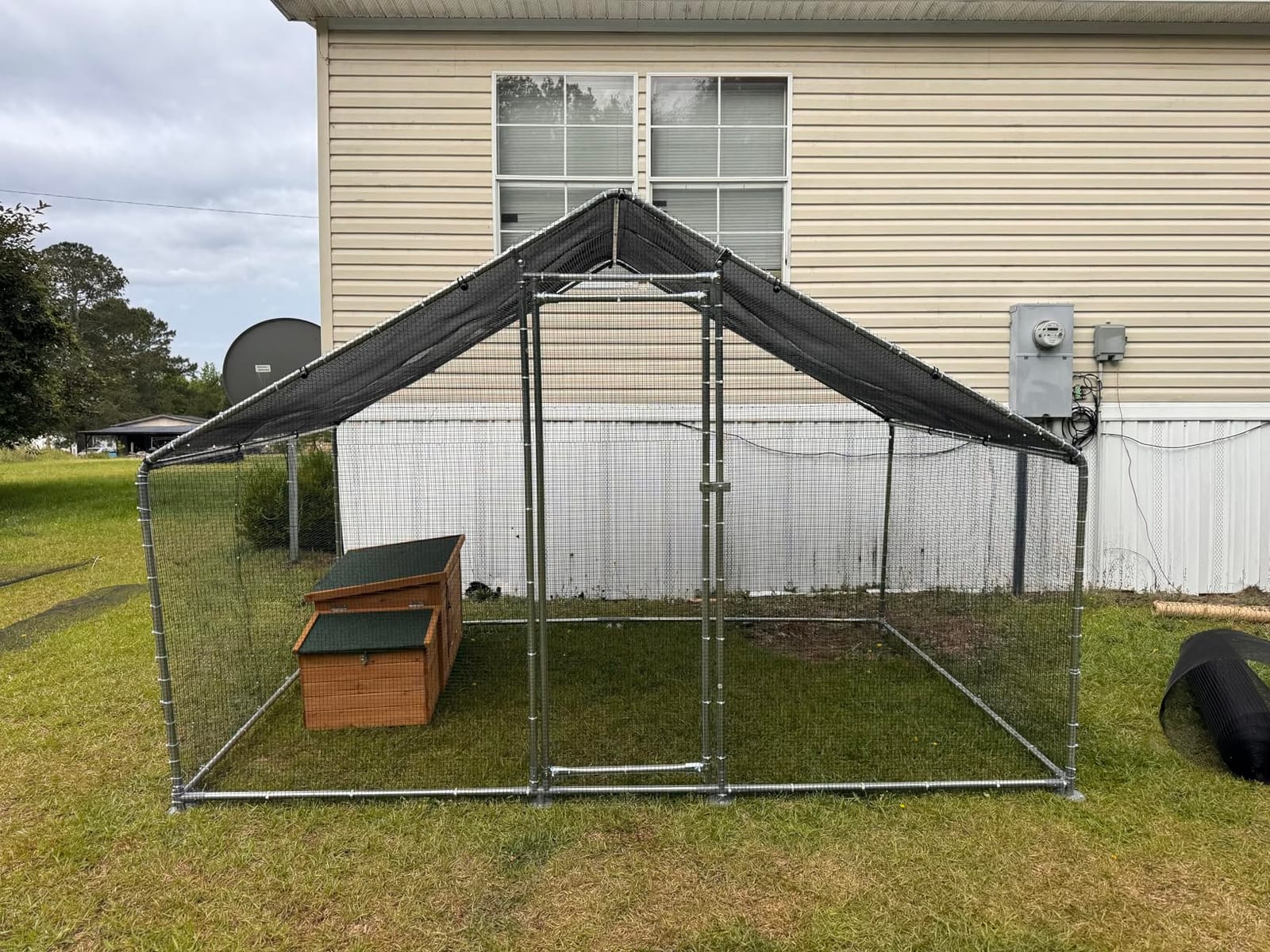
What you are actually buying
A 118 by 79 by 79 inch walk-in run on 1 inch galvanized pipe, with PVC-coated hexagonal mesh, a specially designed metal latch door, a waterproof UV-resistant PE cover over a spire frame, and several interior perches. Gloves are recommended during assembly.
At 118 by 79 inches the base is compact. For a handful of birds, or as a brooder-to-coop transition pen, that is the right size. For a dozen or more, it is tight.
Where it falls short
Hexagonal mesh is the limit. It is a containment run that you upgrade, not a predator barrier that arrives finished. Add hardware cloth on the vertical faces and a full apron before it holds a flock.
No weight is published in the specs, which makes transport planning harder than it should be. On a homestead where you may want to move the run twice a year, that is worth asking about before you commit.
7. Belinova Hardware Cloth Run: Best Lightweight Frame With a Padlock Door
Metal Chicken Coop with Hardware Cloth, Walk-in Poultry Cage for Hen Duck
- Hardware cloth resists biting and scratching from predators better than hexagonal wire
- Elastic ball straps keep the PE cover taut in wind where strapless covers flap
- Padlock tab on the sliding door adds real security
- Integrated solar light needs no wiring and no batteries
- One of the lighter frames here at 62.3 lb while still using hardware cloth
- Only sized for 15-20 birds which is smaller than the 20-30 bird runs
- Requires flat level ground for stability
This is the one we recommend if you want hardware cloth and a genuinely lockable door without hauling a 100 lb frame across the yard. At 62.3 lb it is among the lightest frames here and roughly half the weight of the heaviest runs, which changes the calculation if you plan to reposition seasonally.
The door deserves specific mention. It is a lockable sliding door with a padlock tab, which means you can add your own padlock rather than relying on a supplied clip. On a rural property that is the difference between a coop you secure and a coop you hope.
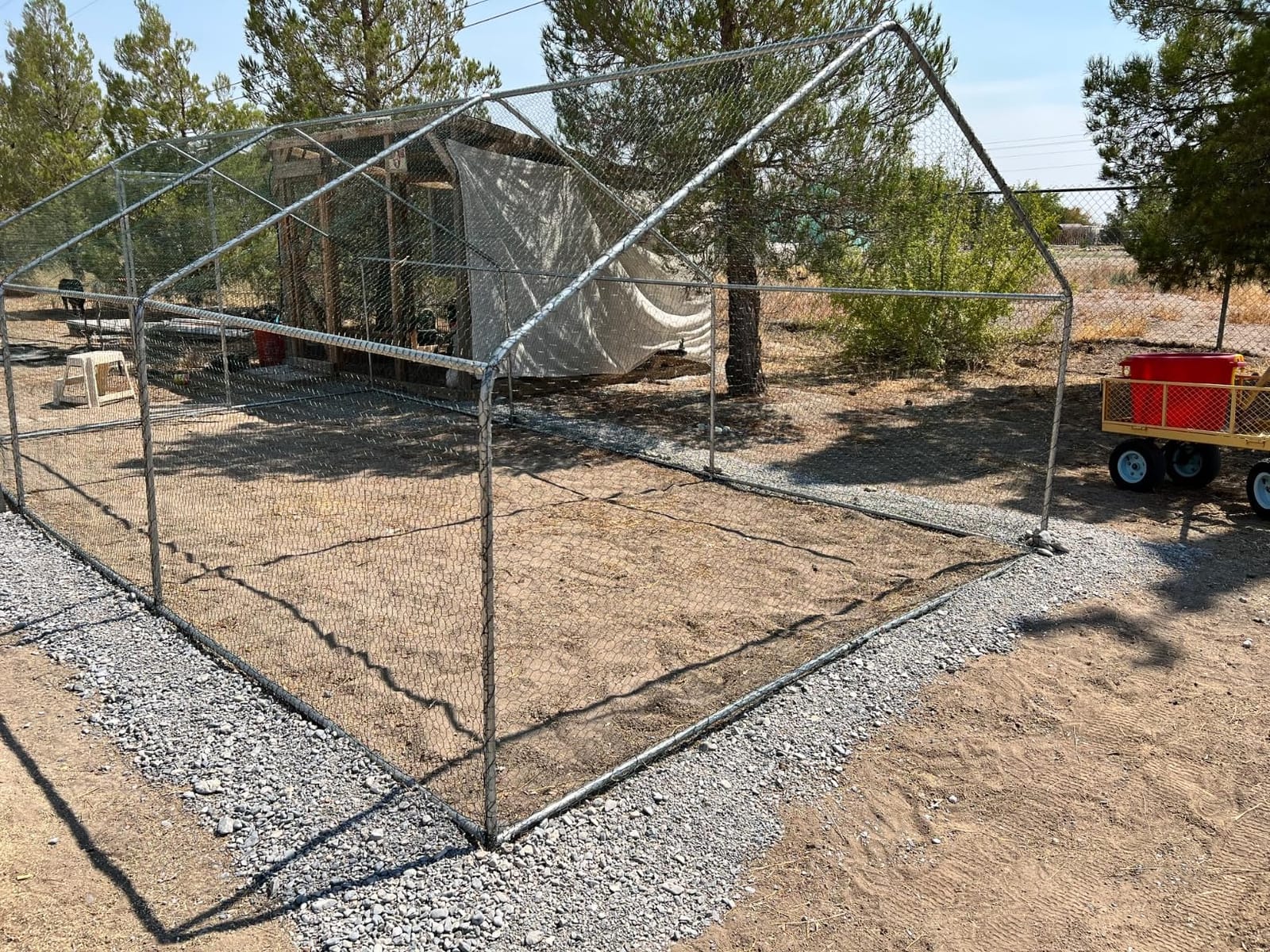
The cover is held with elastic ball straps that stay taut in wind. This is unglamorous and genuinely important: strapless covers flap, and a flapping cover works loose over seasons until the mesh behind it is exposed.
Owners also flag that hardware cloth resists biting and scratching from predators better than hexagonal wire, which matters against animals that test panels rather than force doors. The built-in solar panel drives an automatic dusk-to-dawn LED light with no wiring and no batteries to replace.
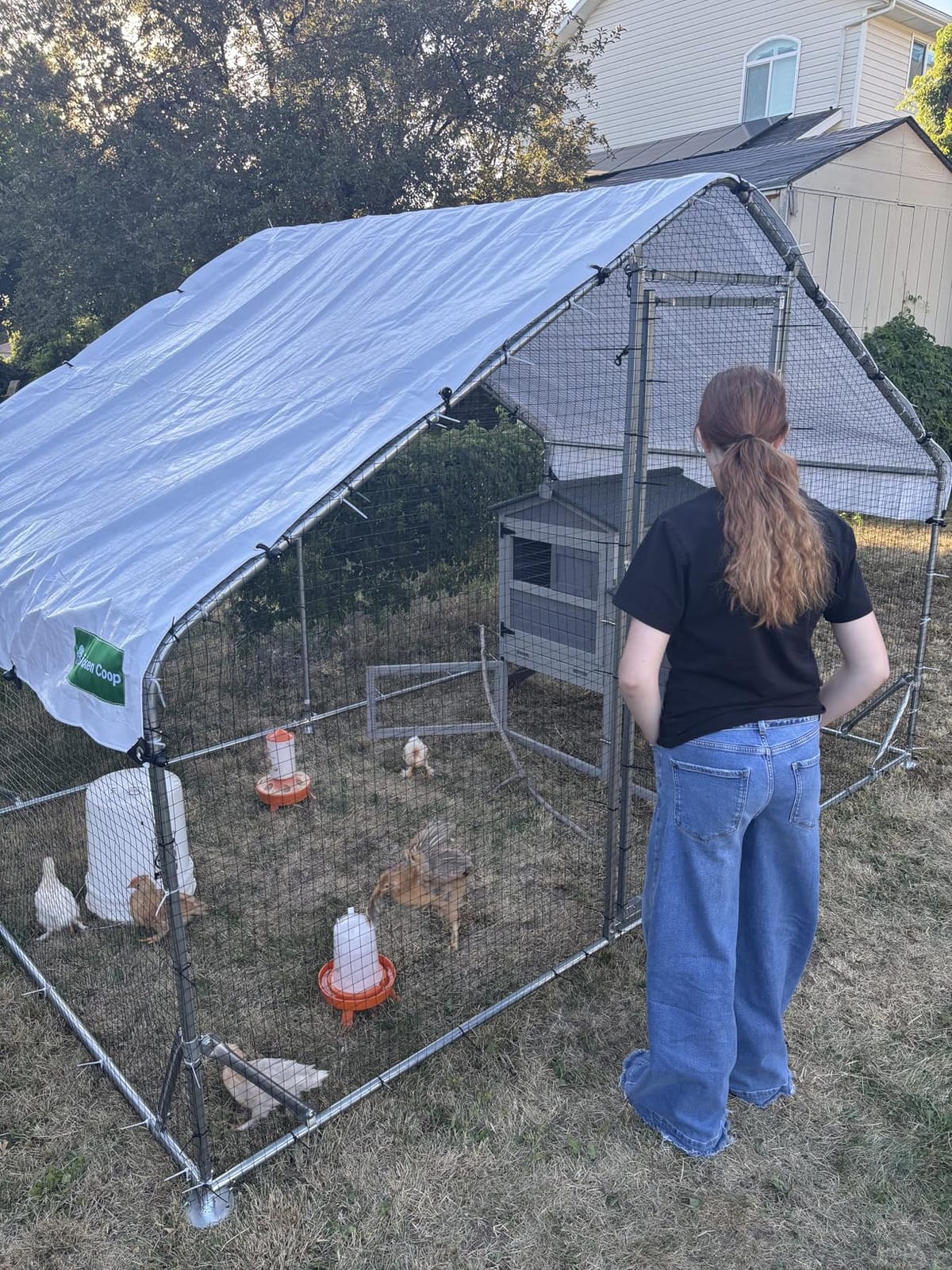
What you are actually buying
A walk-in run clad in premium hardware cloth on a galvanized rust-resistant steel frame, with a wind-holding PE cover, a padlock-tab sliding door, a built-in solar LED light, ground stakes and a walk-in height sized for 15 to 20 birds. Dimensions are 156.16 by 118.37 by 78.02 inches.
Owners report the galvanized frame resisting peeling and cracking across multiple seasons. That tracks with the feedback pattern on similar steel runs, where frames outlast covers by years.
Where it falls short
Capacity is the limit. Fifteen to twenty birds is smaller than the 20 to 30 bird options here, so if your rural flock is growing past twenty this is the wrong size to start with.
It is designed for flat, level ground. On uneven rural terrain you will need to level the site first, or the frame racks and the door stop seating flush, which is where latches get defeated.
8. Quictent 18 x 9 ft Run: Best Bracing With an Extended Ground Skirt
Quictent 18x9x6.6ft Large Metal Chicken Coop Run with Hardware Cloth
- 12 support bars and corner reinforcement make a notably rigid frame
- Extended ground skirt and dual-latch door add real anti-digging and anti-pry protection
- Around 750 heavy-duty zip ties included which allows tight mesh spacing
- Customer service supplied replacement poles connectors and a mesh roll
- Tool-free push-button frame assembly
- Multiple reviewers find the included hardware cloth thinner than expected and upgrade to 19 gauge cloth
- Heavy UV exposure degrades standard zip ties and stainless ties are a common upgrade
- Assembly is tedious with owners reporting 5 to 12 hours
- Door latch cannot be locked against bumping open
The bracing is what separates this from the budget end. Twelve support bars plus reinforced corner poles produce a frame that does not rack, and one owner reports it outlasted a smaller-tube run that collapsed under snow. At 217 by 108 by 79 inches with a 6.6 ft peak it is sized for 20 to 30 poultry.
It also arrives with the two features most often missing. The extended mesh ground skirt reaches below the base line and discourages digging, and the door has a genuine dual latch rather than a single catch. That is two of the three specifications that decide predator-proofing, already in the box.
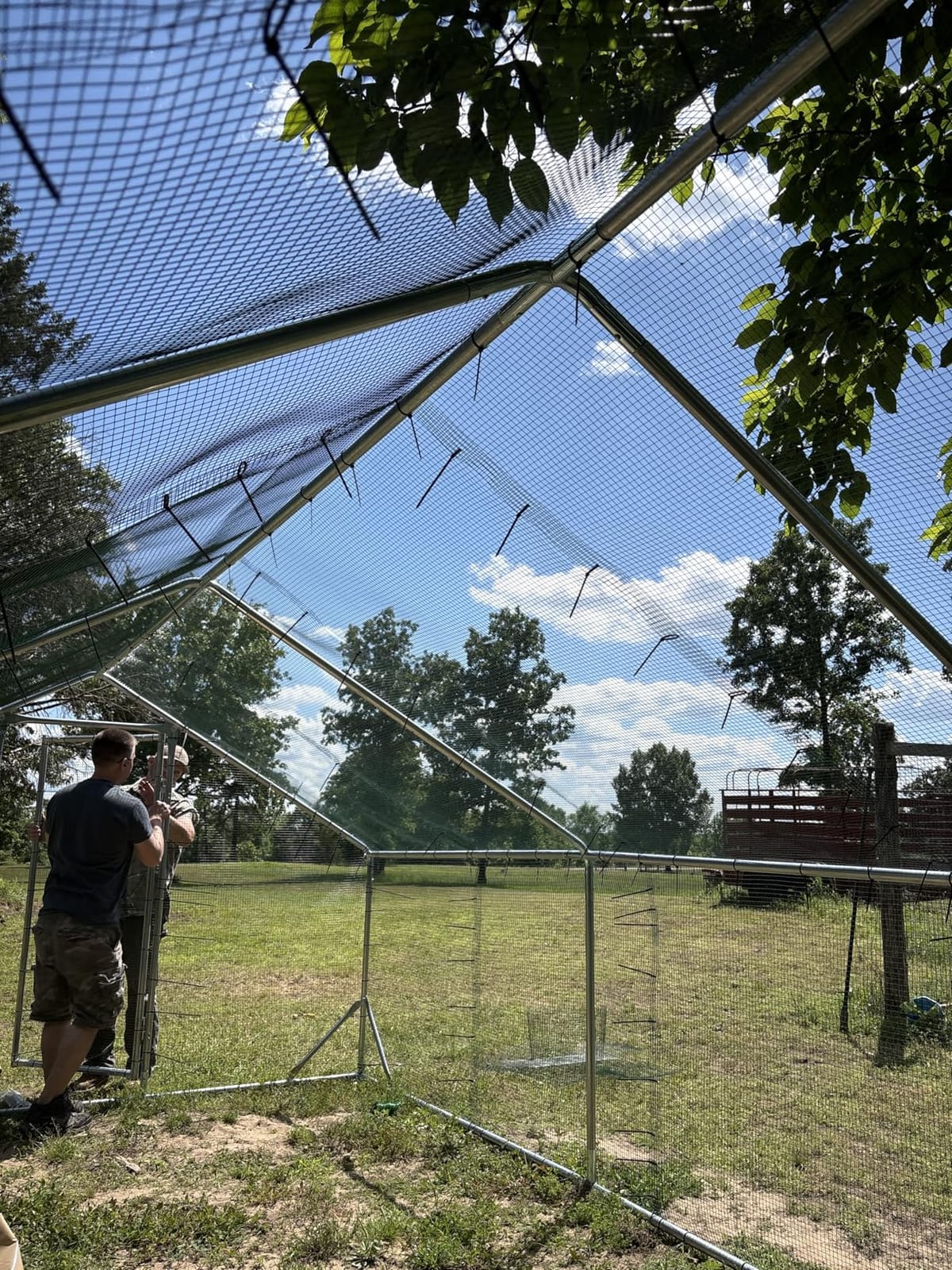
Around 750 heavy-duty zip ties are included, which is enough to space the mesh tightly and close the gaps that a raccoon works through. Owners note the PVC-coated hardware cloth is easier to install and far less visible than bare galvanized cloth, which matters if the run sits in view of the house.
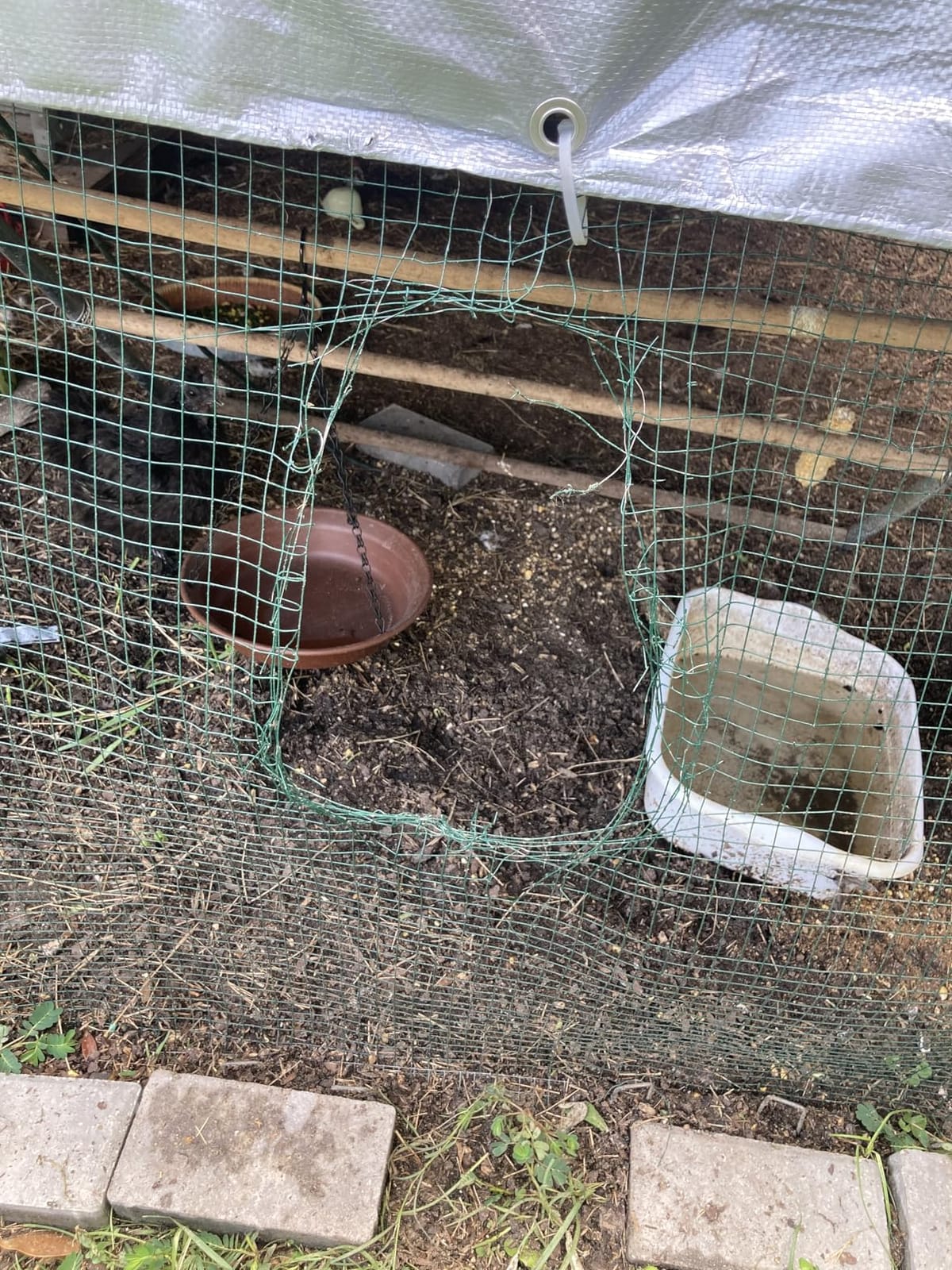
Customer service is a genuine strength here. Owners report receiving replacement poles, connectors and a mesh roll when something arrived damaged, and the warranty runs 365 days on frame parts and 180 days on cover and mesh parts.
What you are actually buying
A 6.6 ft peak walk-in run on extra-reinforced galvanized poles with 12 support bars, PVC-coated hardware cloth on the side walls, an extended ground skirt, a dual-latch door, 180g per square meter waterproof UV-resistant PE covers with elastic ball straps, and tool-free push-button frame assembly. Listed weight is 83.78 lb.
For a rural flock in the 20 to 30 bird range this is one of the more complete packages here. You are still adding an apron, because the supplied skirt is short by design.
Where it falls short
Several reviewers find the included hardware cloth thinner than expected and upgrade to 19 gauge half-inch cloth themselves. If you are already replacing the mesh, factor that labour into your plan before buying.
Two real limits. The door latch cannot be locked against bumping open, so add a carabiner through the hasp on the first evening. And assembly runs five to twelve hours in owner reports, the longest build among these 12.
9. HEYTOWN 13 x 9.8 ft Pen: Best for Mixed-Species Yards
- 25 mm galvanized pipe gives real stability in wind and rain
- Best seller rank 171 shows stronger demand than most similarly sized runs
- Spire canopy drains rain snow and debris with no accumulation
- Walk-in pen size that suits rabbits ducks cats dogs and birds
- 65 percent five-star ratings
- Hexagonal wire mesh with small gaps is containment-oriented rather than a hardened predator barrier
- No model number or weight published in the listing specs
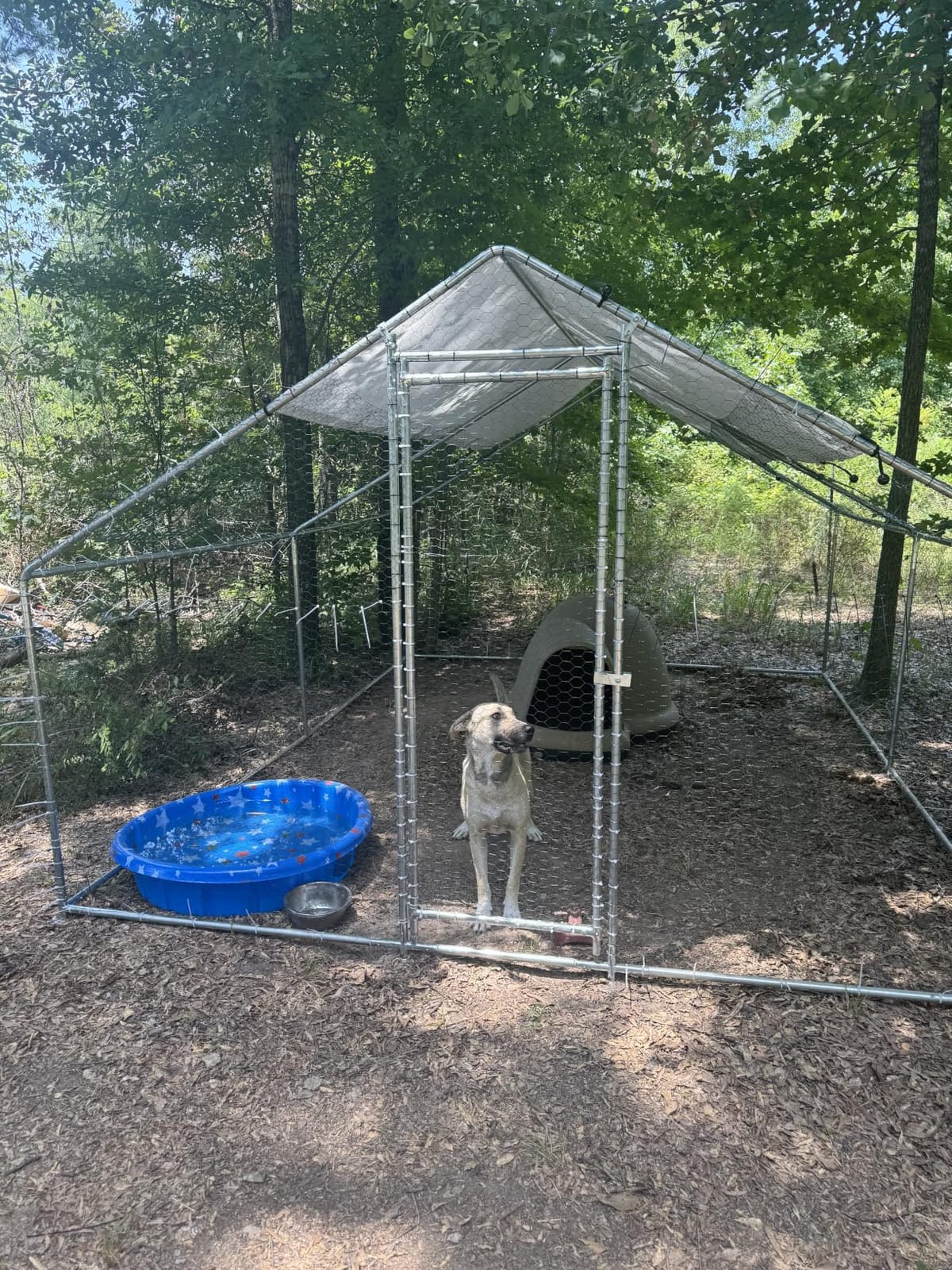
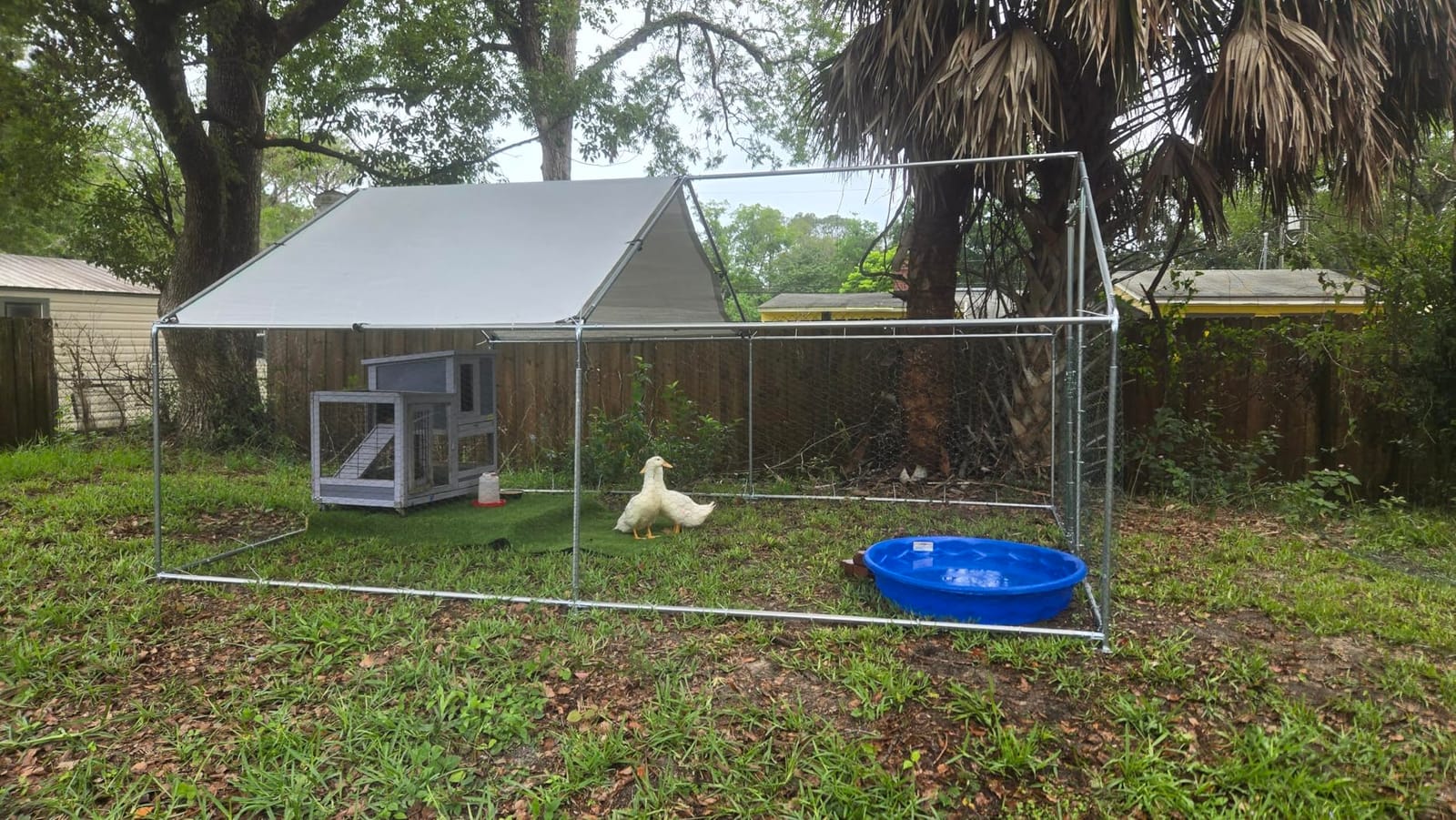
If your rural property runs more than chickens, this is the pen to look at. It is marketed for rabbits, ducks, cats, dogs and birds, and at 157.2 by 117.6 by 78 inches it gives you a walk-in enclosure that doubles as a rabbit hutch or a duck pen through the season.
The frame is 25 mm galvanized steel pipe, and owners consistently credit it with holding stability in wind and rain. On acreage that is where most budget pens fail first. The spire canopy roof drains rain, snow and debris with no accumulation building on the cover.
A best seller rank of 171 in poultry habitat supplies is the strongest demand signal among the runs in this bracket, which usually means the quality complaints are fewer. The 4.2 average with 65 percent five-star ratings is consistent with that.
Be clear about the mesh though. It is PVC-coated hexagonal wire with small gaps, so it is containment-oriented. For ducks and rabbits that is genuinely sufficient. For a chicken flock on land with fox and raccoon pressure, you are cladding it yourself.
What you are actually buying
A walk-in pen on a 25 mm galvanized pipe frame with PVC-coated hexagonal mesh, a waterproof anti-UV PE roof on a spire canopy frame, and a two-person installation with instructions and accessories included. The listing does not publish a model number or a weight.
For a mixed homestead, the practical case is straightforward. One structure that handles poultry, waterfowl and small animals means fewer builds, fewer gaps to seal and one more shelter option when you need to isolate a bird. If your property also raises smaller species, our guide to quail cages for urban homesteads covers the containment detail at a different scale.
Where it falls short
Hexagonal mesh is the ceiling on security. It is a good pen that will need hardware cloth over the vertical faces before you call it predator proof, and the small gaps are exactly the reach-through geometry a raccoon exploits.
Missing weight and model number data is a small but real friction. Ask before you buy, and if you intend to move the run seasonally, plan for two people regardless of what the weight turns out to be.
10. Quictent 30+ Poultry Run: Best Welded Hardware Cloth for Large Flocks
Quictent Large Metal Chicken Coop Run for 30+ Poultry w/Side Hardware Cloth
- Side walls carry 20 gauge PVC-coated welded hardware cloth which is a meaningfully heavier barrier than hexagonal wire
- Triangular corner poles and 8 support bars resist frame racking
- Dual-latch door with a narrow gap is harder to pry than a plain slide
- Wider 0.2 inch cable ties at 750 count reduce mesh gaps
- Sized for 30-plus poultry in a 214.5 inch run
- Side and back covers are not included so full weather sheltering requires an extra purchase
- Hexagonal wire is still used on the roof
- At 112.2 lb it is among the heavier frames here
This is the only run in this group that carries 20 gauge welded hardware cloth on the side walls. Welded square mesh at 1 by 1 inch with a thickened PVC coating is a materially stronger barrier than hexagonal wire, and for a large rural flock that difference is the whole argument.
The rest of the predator-protection detail is present. An extended mesh ground skirt thwarts digging, and the dual-latch door has a narrow gap that resists prying in a way a plain slide bolt does not. Owners looking for real predator resistance single out exactly these two features as the reason to buy.
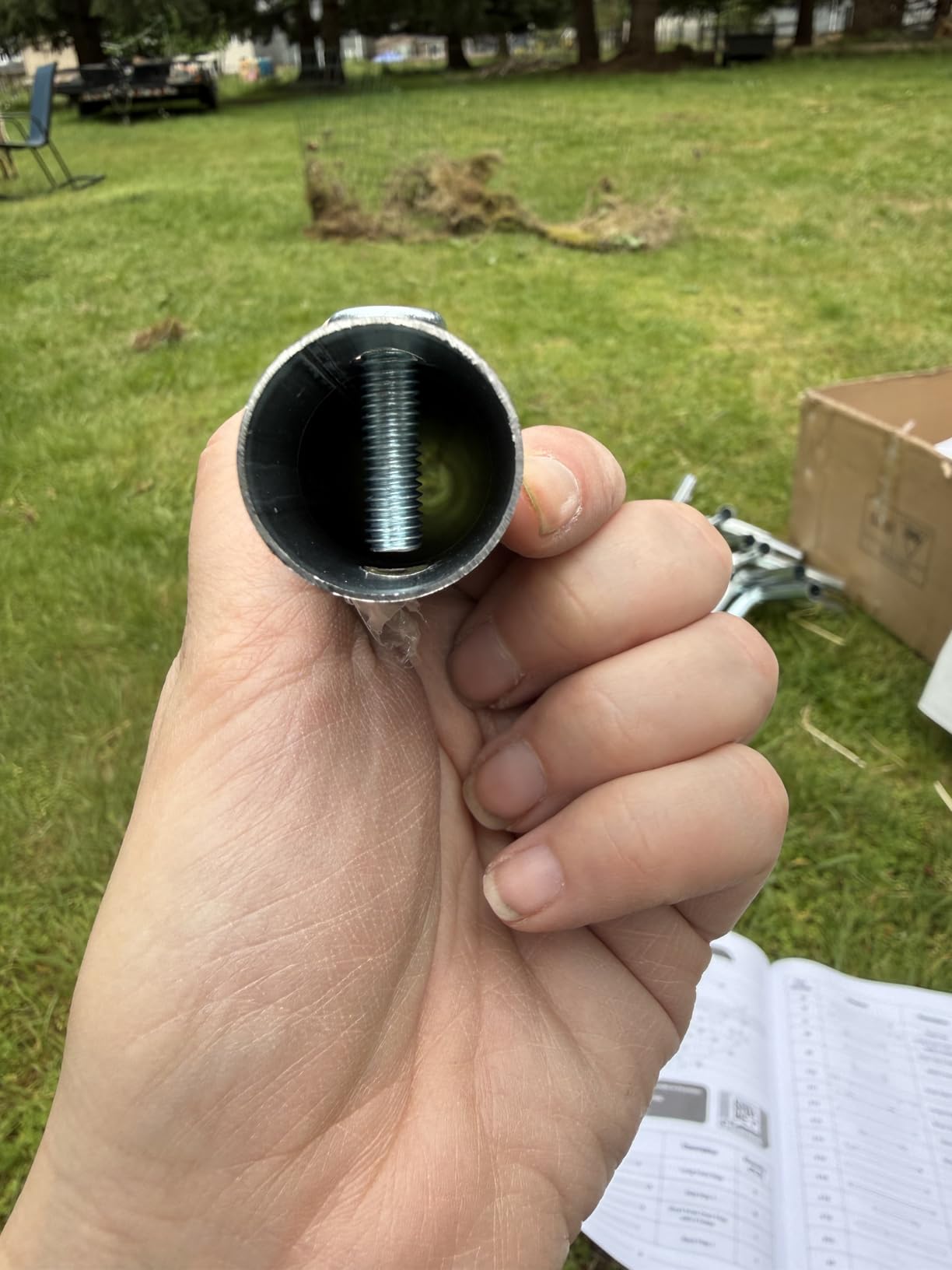
The 0.2 inch cable ties are wider than the 0.12 inch ties that ship with most frames, and 750 of them are included. Wider ties mean less mesh movement over time, which means fewer gaps opening at the frame under wind load.
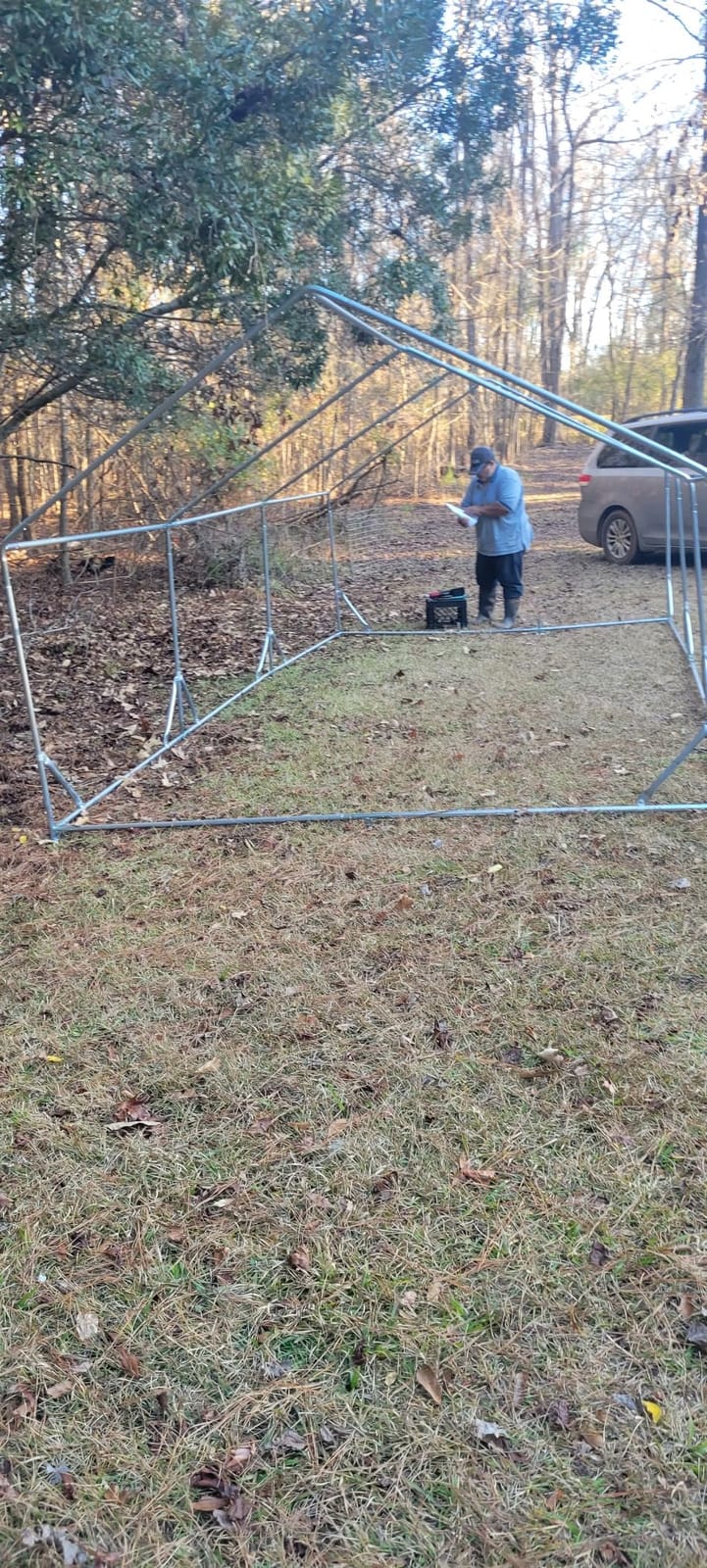
Frame geometry is solid. One inch rust-free poles with 8 support bars and triangular corner poles resist racking, and the 214.5 inch run is sized for 30-plus poultry. The waterproof UV-resistant PE roof cover is included along with hexagonal wire on the roof itself.
What you are actually buying
A large walk-in run with 20 gauge PVC-coated welded hardware cloth side walls, an extended ground skirt, 1 inch poles with 8 support bars and triangular corners, a narrow-gap dual-latch door, a waterproof UV-resistant PE roof cover, 750 heavy-duty cable ties and a 214.5 inch run length. Listed weight is 112.2 lb.
Coverage runs 365 days on frame parts and 180 days on cover and mesh parts. Optional side and back covers are sold separately, so plan that purchase up front if your climate needs full weather sheltering.
Where it falls short
The roof is still hexagonal wire. For full predator-proofing on acreage, cover the top with the same 20 gauge welded cloth you have on the walls, because a raccoon that reaches the roof has already bypassed every latch on the structure.
At 112.2 lb it is among the heaviest frames here, and the missing side and back covers mean a second purchase before the run is weather-complete. Budget both before you commit to it for a large flock.
11. Morngardo 10 x 10 ft Run: Best for Fast Assembly and Square Footprints
Large Metal Chicken Coop 10×10 Walk-in for 20 Chickens, Predator-Proof
- Square 10 x 10 ft footprint uses yard space efficiently for 20 birds
- Reinforced support columns and 1 inch galvanized tubes hold up season after season
- Tool-free snap-pin assembly is the fastest among these 12 at 1-2 hours
- Wide cable ties included to reduce mesh gaps
- Nearly 100 square feet of covered run
- 0.6 inch galvanized mesh gaps are wider than welded hardware cloth on competing models
- Best seller rank of 1305 is the weakest demand signal of the 12
- Tarp acts as a sun sail in wind unless properly anchored
Assembly speed is the reason to consider this one. The tool-free snap-pin build goes up in one to two hours, the fastest among these 12 by a wide margin. If you are assembling alone, on a short weekend, before the first hard frost, that is a real advantage.
At 10 by 10 by 6.5 feet you get 96.8 square feet of walk-in space, and the square footprint uses ground efficiently. Reinforced support columns on 1 inch galvanized tubes hold their shape season after season according to owners.
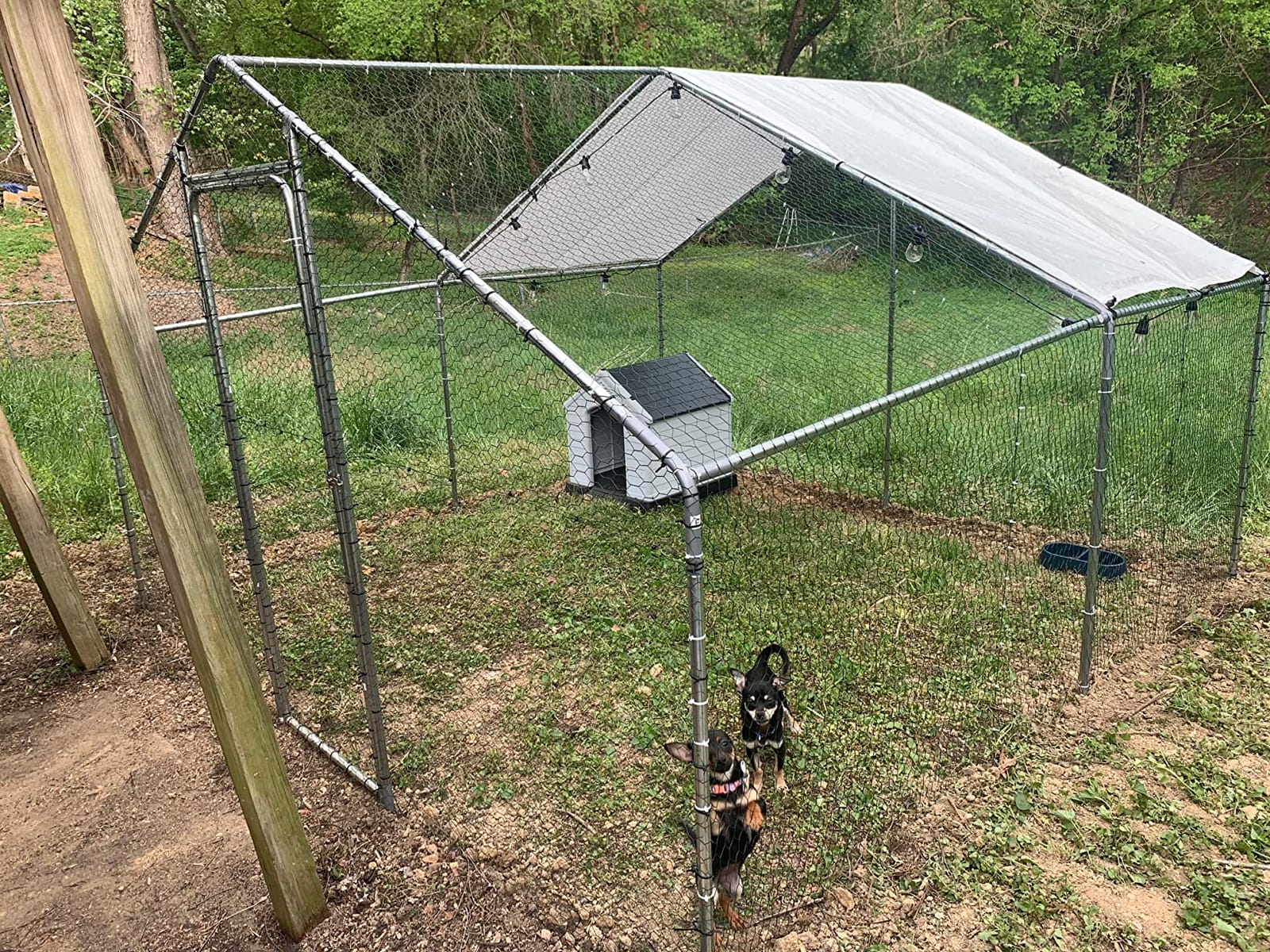
The 180-degree opening door with a secure latch makes egg collection and daily checks straightforward without crouching or stepping over a low wall. The 240D UV-resistant waterproof tarp roof covers the enclosure, and extra wide cable ties are included for mesh attachment.
Now the security reality. The galvanized wire mesh has 0.6 inch gaps, which is wider than the welded hardware cloth used on competing models. Owners rate this one at 4.1 and the consensus is that the 0.6 inch gap is the limiting factor under real predator pressure.
What you are actually buying
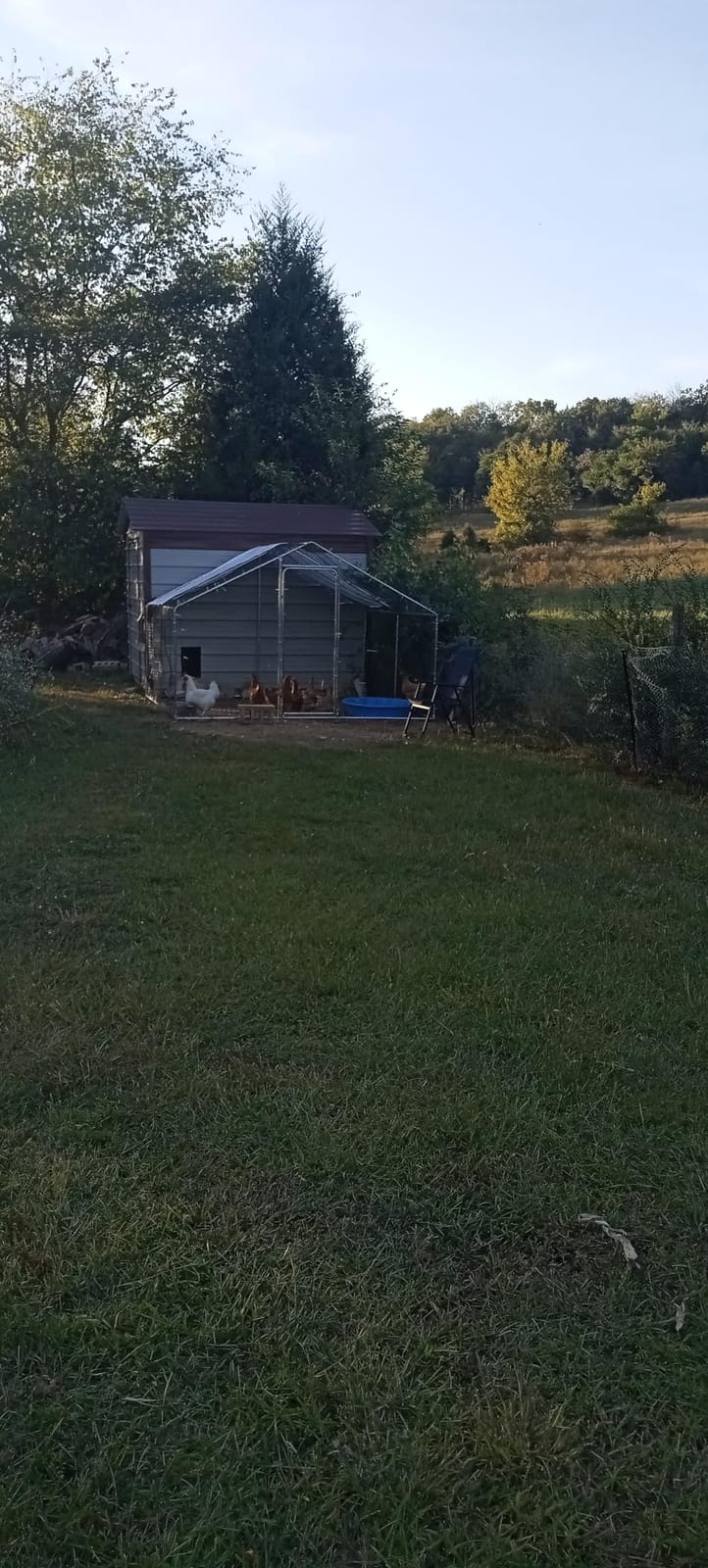
A 10 by 10 by 6.5 ft walk-in enclosure with 96.8 square feet of space, sized for up to 20 chickens by breed, on 1 inch galvanized tubes with reinforced support columns, a 180-degree opening door with a secure latch, a 240D UV-resistant waterproof tarp roof and extra wide cable ties. Listed weight is 82 lb.
Plan the site before the box arrives. Level ground matters for a snap-pin frame, because a racked frame is what eventually opens a latch gap and lets a door swing on its own.
Where it falls short
Half-inch is the number that stops most small predators, and 0.6 inch is not there. Budget for a hardware cloth overlay if your land has raccoon, fox or weasel pressure, and treat the overlay as part of the build rather than an upgrade.
The tarp can act as a sun sail in wind unless it is properly anchored, and the weakest demand signal among these 12 means fewer owners have found problems with it. That cuts both ways: less field history to draw on when you need support.
12. UDPATIO Walk-In Run: Best for Narrow Yards and Two Lockable Doors
UDPATIO Large Metal Chicken Coop Walk in Run House Pen Galvanized Frame
- Highest five-star share among these 12 products at 74 percent with a 4.4 average
- Two lockable doors including a separate feeding access door
- Lightest frame of the 12 here at 60 lb while still using galvanized steel
- Extra zip ties and corner ground stakes included
- Peaked roof and removable PE cover handle rain snow and debris
- PVC-coated wire mesh is hexagonal rather than welded hardware cloth
- Base is 10 x 6 ft which is the smallest footprint of the walk-in options
Two lockable doors is the detail that stands out, including a dedicated feeding access door. On a rural setup that is a genuine convenience: you can reach feed without opening the main access, and you can close it again afterwards, so you are not relying on a single access point.
The 4.4 average with a 74 percent five-star share is the strongest showing here. The galvanized steel frame carries PVC-coated wire mesh at tight spacing, and at 60 lb it is among the lightest frames among these 12.
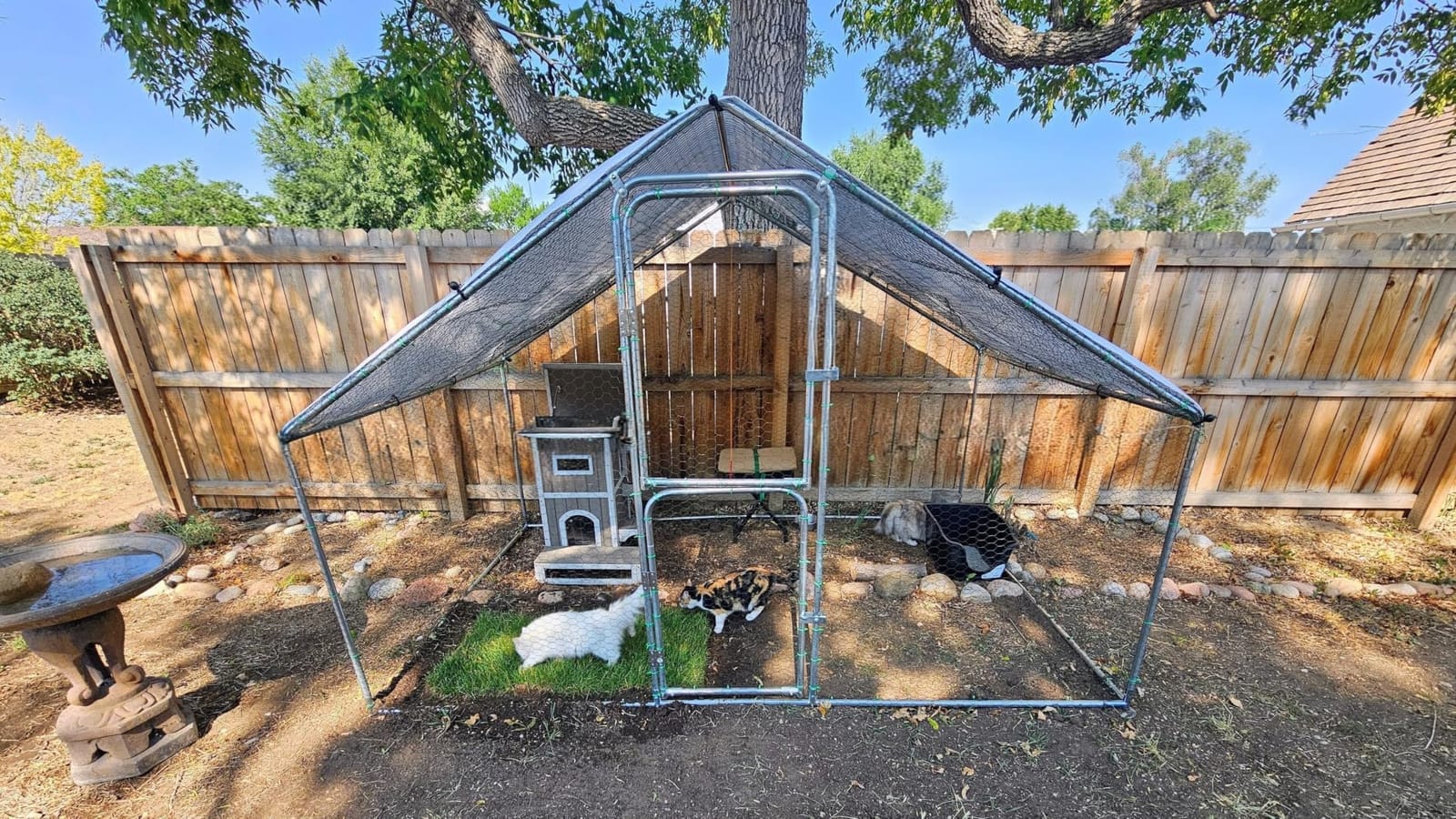
Anchoring ground nails plus extra ground stakes at the frame corners are included, and the removable waterproof PE cover sits over a peaked drainage roof. Walk-in height means you can clean inside without crawling, which is the difference between maintaining a coop and avoiding it.
The constraint is footprint. A 10 by 6 ft base is the smallest walk-in option here, so this suits a side-return yard or a fence-line strip rather than an open paddock. Owners note the smaller base area as the main trade-off in reviews.
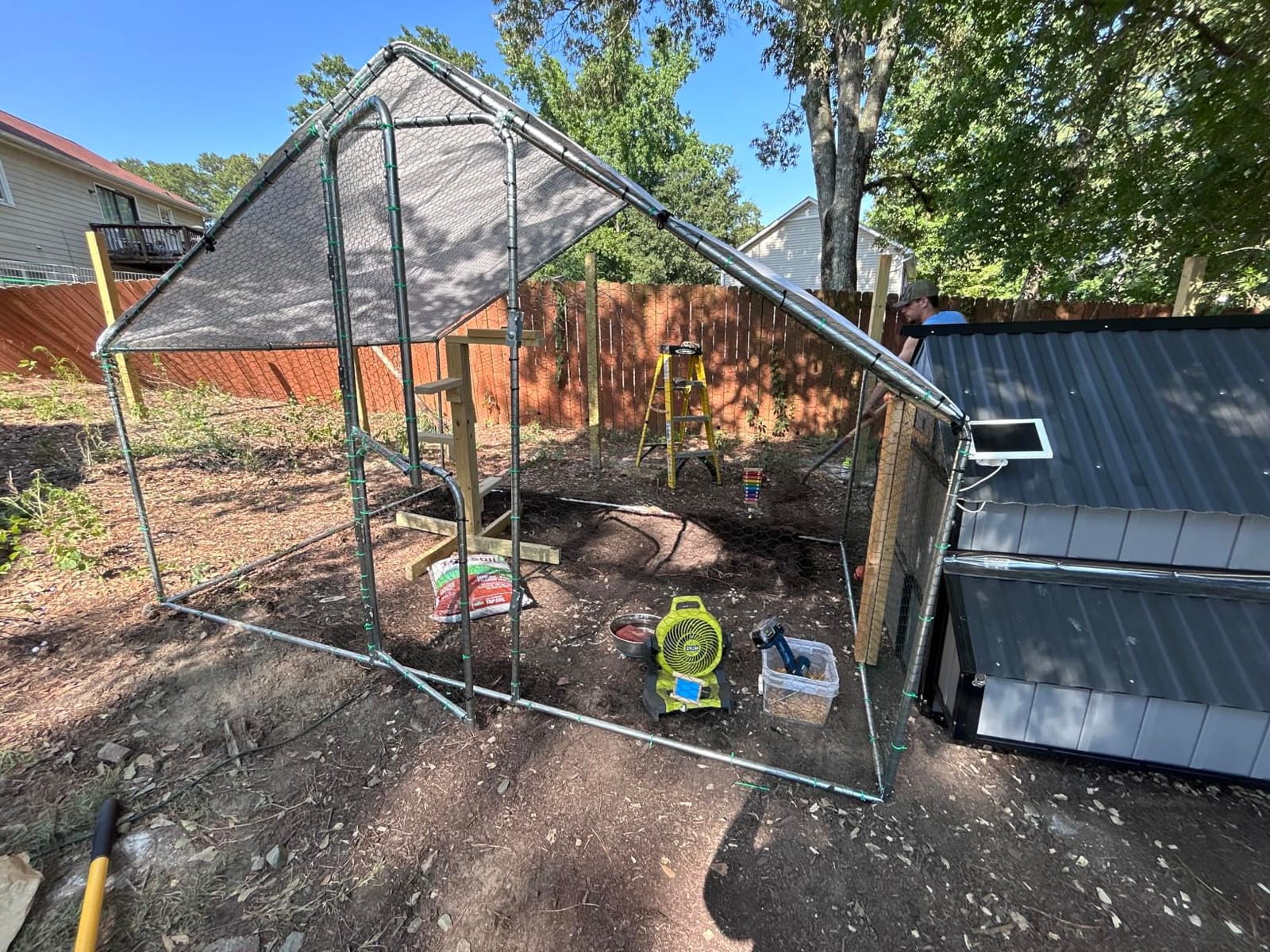
What you are actually buying
A walk-in enclosure with two separate lockable doors including feeding access, a galvanized steel frame with tight-spacing PVC-coated wire mesh, anchoring ground nails and extra corner ground stakes, a removable waterproof PE cover over a peaked drainage roof, and walk-in height. Dimensions are 120 by 72 by 72 inches.
It also works as a rabbit hutch, duck pen or garden protector, which on a homestead means the structure earns its space even outside the chicken season.
Where it falls short
The mesh is hexagonal rather than welded hardware cloth, so this is a tight-spacing containment run that you can upgrade, not a finished predator barrier. Half-inch hardware cloth over the vertical faces is the upgrade we would make.
With a 10 by 6 ft base, this is not a large-flock solution. If you are running twenty-plus birds outdoors, size up rather than planning to add birds into the same footprint later.
How We Picked These Coops
We scored every run on the same three measurable specifications rather than on the word predator-proof printed in the listing title. Owners in the discussions we read use that phrase loosely, and two manufacturers in this group state outright that their own hexagonal mesh is not a complete barrier.
Our evidence came from manufacturer technical specifications, listed dimensions and frame gauges, and owner feedback at volume. Where a manufacturer advises adding a base barrier or a wire skirt, we treated that as a data point rather than a footnote. No manufacturer reviewed this page before publication, and no brand paid for placement.
Capacity figures are treated as claims, not facts. Work from covered run area per bird and indoor floor space per bird instead, and you will size the structure correctly the first time. If you are still narrowing the field, our guides to chicken coops for small flocks and walk-in coops for big flocks cover the sizing question in more depth.
The Three Specs That Decide Predator-Proofing
Ignore the marketing for a moment. A predator proof chicken coop has three load-bearing specifications, and everything else on the spec sheet is decoration by comparison. Get these right and you can clad an ordinary frame; get them wrong and no amount of heavy steel saves your flock.
1. Mesh aperture and which faces it covers
Half-inch or smaller welded hardware cloth, on every face, including the roof. Hexagonal chicken wire and poultry netting fail here because a raccoon can reach through a diamond gap and hook a leg or a neck. The failure is slow, quiet and looks like a predator problem when it is a mesh problem.
Woven wire with a smaller aperture is acceptable; twisted hexagonal poultry netting is not. Watch which faces are covered. Forum keepers report runs where the vertical faces got hardware cloth while the welded wire top stayed as supplied, which is a climbing route a raccoon will find in a single night.
Can raccoons tear through hardware cloth? Not easily, provided the gauge is right and the fixings are sound. 19 gauge half-inch cloth handles raccoon and fox pressure. The common failure is not tearing but pulling, where mesh attached with plastic zip ties in full sun works loose over a season. Stainless ties cost little and solve it.
2. Latch action count
Two separate actions in sequence, not one. A carabiner through a hasp is the cheapest and most effective version, and it is what most experienced keepers reach for first. A spring catch, a hook or a slide bolt is one action, and one action is what a raccoon is looking for.
The rule of thumb from the forums is simple: any latch a curious five-year-old could open is a latch a raccoon will open. Carabiner through a hasp, a barrel bolt, or a padlock-ready hasp all clear that bar. Check that the door frame sits flush when closed, because a frame gap gives an animal somewhere to get a paw behind the catch.
For a dedicated feeding door, a second lockable access point means you are not opening and re-securing the main door every time you refill feed. Two of the runs in this group ship with that arrangement.
3. Dig defence at the base
An 18 to 24 inch strip of half-inch hardware cloth laid flat on the soil, extending outward from the base line, pegged with ground staples. This is the single highest-value upgrade in the category, and it is the one most manufacturer-coops arrive without.
Ground-anchor stakes are for wind. They keep a frame from shifting or tipping in a storm, and the most common misconception in forum threads is treating them as a dig barrier. A frame can be perfectly anchored and still be tunnelled under by a fox.
Laying the apron flat is usually better than burying it. A sod cutter trench 2.5 to 4 inches deep with the cloth flaired outward is the most reported fix among keepers who finally stopped losing birds, and a flat apron on the surface works nearly as well and takes far less digging. Grass grows through it within a season and hides it completely, which is also how you forget it is there.
Should you put hardware cloth under a chicken run? Yes, if predators are in your area, and use the same half-inch aperture as the walls. Rodents are attracted by feed left in the run, and rats then draw larger predators nightly, so clearing feed out of the run each evening is part of your dig defence.
The tiebreakers: frame gauge, roof durability and capacity
Frame gauge decides whether the structure is still square after three winters. In this group you see 0.8 mm pipe, 0.98 inch tube, 1 inch pipe and 25 mm pipe, against a 0.6 mm baseline that most budget listings use. Thicker is better, and it is the cheapest quality signal available.
Roof durability is where the recurring long-term cost hides. PE tarp and Oxford covers degrade under UV, and owners on several of these runs report replacing covers within one to three seasons while the galvanized frames last for years. Budget for a cover replacement rather than assuming a ten-year roof.
Capacity claims deserve scepticism. A 4-bird coop marketed for 8 to 10 is common, and crowding on top of a security problem produces stress and reduced laying. For rural outdoor runs, plan on 8 to 10 square feet of covered run per bird and around 4 square feet of indoor space, and check that the stated bird count fits inside the stated area.
Rural Predator Threat Profile: What Actually Gets In
Suburban buying guides stop at raccoons, foxes and hawks. On acreage the list is longer and the pressure is different, and knowing which animal is testing your run tells you which specification is missing. Most of these animals are not forcing an entry. They are using the gap you left.
Raccoons are the most common rural problem and the most capable climber. They defeat chicken wire by reaching through, defeat single latches with a paw, and defeat roofs by climbing. Block them with half-inch welded cloth on all faces including the top, a two-action latch, and a padlock hasp you actually lock.
Foxes dig. That is the entire method. They defeat base lines and loose ground rather than mesh or latches, which is why runs with excellent walls still lose birds overnight. The apron is the answer, and a buried or flared skirt defeats them more reliably than any light or sound device.
Weasels and mink are the silent-entry problem. They fit through gaps you would not notice, including vent openings and small joints, and they kill without obvious damage. Keep birds locked inside overnight, close the top vent to the smallest opening birds cannot pass through, and check every panel junction. One keeper reported finding a weasel fully inside a coop that was electrically fenced outside.
Rats come for feed, not for chickens, and they are the reason larger predators keep returning. Clean feed out of the run every evening, store feed in metal containers with tight lids, and treat half-inch mesh as a rat barrier rather than a formality.
Hawks come from above, which means mesh on the roof is the specification that matters. A run with perfect walls and a wire top is an open buffet to an aerial predator. Overhead cover also gives your birds shade, which on a rural yard in summer is a separate welfare win.
Snakes are stopped by mesh quality rather than height, since the real vulnerability is gaps near the ground and open bases. The apron handles this as well as anything else. Opossums and skunks are deterred primarily by secure latches and a night house that birds are actually inside.
Coyotes, bobcats and stray dogs are the rural pressure suburban guides leave out. Coyotes work a fence line and wait for a door to be left open or a weak spot to be found. Bobcats are quieter and more local, and dogs are the most dangerous of the three because they are daytime, bold and unbothered by deterrents.
For all three, the answer is the same and it is boring: a sound structure, a secured door, an apron, and a guardian animal. A livestock guardian dog or a working LGD on the property is the strongest single layer for large predators, because nothing static outperforms an animal that treats the flock as its job.
Bears are the one case where hardware cloth on the run is not the control measure. Black bears visiting a rural homestead are managed with habitat management, electric fencing on an outer perimeter, secure food and waste storage, and carcass removal. A run is a containment tool, not a bear defence.
Predator-Proofing a Coop You Already Own
Most people start here rather than with a new purchase, because the coop is already bought and already paid for. The good news is that a budget run can be brought close to spec with one weekend of work and two materials.
Start by replacing the mesh on the vertical faces. Cut half-inch hardware cloth to fit each panel, overlap the pieces by a couple of inches, and fasten with stainless ties or the supplied clips. Do the roof last and cover it with the same cloth. This is the single most common retrofit and it converts a containment run into something that actually resists a raccoon.
Then lay the apron. Lay half-inch cloth flat on the soil extending 18 to 24 inches outward from the base line all the way around, and peg it every 18 to 24 inches with ground staples. Where the ground is soft or sloping, flare it upward so the outward edge sits above soil level, which is what defeats a determined digger.
Expect to splice. Hardware cloth comes in fixed roll widths and 4 to 6 foot heights, and it never matches a coop’s actual aperture, so you will cut and join pieces on every run. Buy one roll, plan your layout so seams land on frame posts rather than mid-panel, and keep a short offcut for patching the places where a nose pushes through.
Replace the latch hardware next. A carabiner through a hasp, or a barrel bolt, takes minutes and costs almost nothing. Check the whole door frame for gaps while you are there, and close the top vent down to the smallest opening your birds cannot pass through.
Finally, decide on the layer beyond the coop. Electric poultry netting works well as an outer perimeter on acreage, but treat it as a perimeter rather than a substitute for mesh. Deterrent lights and sound devices are supplementary at best, because habituation neutralises them within weeks.
Our guides to large chicken coops and mobile coops for free ranging cover the sizing and mobility questions that come up once a run is actually in the ground.
Dusk Lockdown: The Habit That Beats Better Mesh
The most effective predator-protection measure on this page costs nothing and takes four minutes. Almost all predation happens between dusk and dawn, and a coop with excellent hardware cloth still loses birds if the door stands open at eight in the evening because you were at a neighbour’s house.
Lock the birds in, check the latch has seated, and walk the perimeter once. A two-minute lap that looks for a lifted apron corner or a bent tie catches the small failures before an animal finds them. Keep feed out of the run overnight so rats are not running a buffet for the next predator to follow.
If you cannot do that reliably, buy an automatic chicken coop door rather than better mesh. A motorised door with a dusk sensor removes the single most common human failure point in the whole system, and the solar light on two of the runs in this group covers the same need for lighting without wiring.
One caution. Automatic doors fail quietly. Test the sensor and the motor monthly, keep a manual opening you can reach from outside, and treat a door that has not latched as an open door.
Frequently Asked Questions
What is the most predator-proof chicken coop?
It is a coop with three specifications working together: half-inch or smaller welded hardware cloth on every face including the roof, a door latch needing two separate actions to open, and an 18 to 24 inch hardware cloth apron laid flat on the soil around the base. Frame gauge and roof durability are tiebreakers, not the deciding factor.
How to predator proof the bottom of a chicken coop?
Lay half-inch hardware cloth flat on the ground, extending 18 to 24 inches outward from the base line all the way around, then peg it every 18 to 24 inches with ground staples. Where ground is soft, flare the outer edge upward. This blocks tunnelling predators, which ground anchor stakes do not, since those only resist wind and movement.
Can raccoons tear through hardware cloth?
Rarely, if the gauge and fixings are right. 19 gauge half-inch cloth handles raccoon and fox pressure. The usual failure is not tearing but pulling, where mesh fixed with plastic zip ties in full sun works loose over a season. Stainless ties and tight spacing solve it. Keep the door on a two-action latch with a padlock hasp you actually lock.
What scares predators away from a chicken coop?
A livestock guardian dog or working LGD is the strongest layer for bears, coyotes and stray dogs, because no static device matches an animal that treats the flock as its job. Below that: a locked night house, an apron against digging, half-inch welded cloth on all faces including the roof, and a two-action latch. Lights and sound deterrents lose effect within weeks through habituation.
What are the best raccoon-proof locks for a chicken coop?
A carabiner clipped through a hasp is the cheapest effective option and the most widely recommended. Above that, a barrel bolt or a padlock-ready hasp. A single spring catch, hook or slide bolt is one action and is what raccoons defeat. The test: any latch a curious five-year-old could open is a latch a raccoon will open.
Final Verdict
The best predator proof chicken coops for rural homesteads are not the ones with the heaviest steel. They are the ones that arrive with half-inch hardware cloth on the vertical faces, a two-action latch you can lock, and a base you are prepared to skirt with more cloth of the same.
For most acreage setups the CHIKENCOOP two-room run is where we start, because it pairs wrapped hardware cloth with a continuous full-top cover and the highest volume of owner feedback here. For a large flock and genuine pressure, the Quictent 30+ run is the only option that ships 20 gauge welded cloth and a narrow-gap dual latch. For the tightest budgets, the NUGRIART run is a sound frame to build around and clad yourself.
Whatever you choose in 2026, add the apron before the birds arrive, swap the latch on day one, and lock them in at dusk. Those three habits are worth more than any specification on a spec sheet, and they are what turns a good run into a predator proof chicken coop you can actually trust overnight.