
A digital price computing scale is the one piece of equipment that sets the price on every pound of turkey, cheese, potato salad and coffee beans you hand across the counter. It weighs the item, multiplies that weight by a price per pound or per ounce you enter, and shows the total on a display the customer can read while you are still bagging. Choosing the wrong one means a fuzzy display, a price that takes too long to recall, or a scale your state inspector will not accept.
That last point is the one most shopping guides skip. If you sell anything by weight, you are very likely legally required to use a legal for trade scale, and the cheapest generic models sold in volume online usually are not. In this roundup of the best digital price computing scales for delis we look at 12 units that are actually available now, with the certification, capacity, readability, memory and power details you need to decide. Three of them carry NTEP certification, and we flag every scale that explicitly is not for trade.
We also drew on what owners report after living with these machines, because the difference between a good counter scale and a frustrating one rarely shows up in the spec sheet. If you also need to price goods that are not weighed, our guides to price labeling guns and price tag guns cover the shelf side of a counter. For kitchen prep and portioning work rather than retail pricing, our digital kitchen scale guide is the better read.
Table of Contents
Top 3 Digital Price Computing Scales (October 2026)

Safstar 66 lb Price Computing Scale
- 66 lb at 0.001 lb readout
- Three display windows
- Three power supply modes

TORREY LPC-40L Price Computing Scale
- Legal for Trade
- 40 lb with stainless body
- 100 memories and 8 direct keys
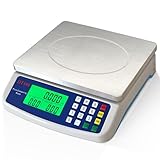
MOCCO 40kg/88lb Price Computing Scale
- 88 lb at 1g increments
- Five unit conversions
- Price count and tare modes
The Safstar leads the list because it combines the widest review base in the group with a fine 0.001 lb readout and three separate display windows for weight, unit weight and unit price. The TORREY LPC-40L is the one to buy when a state inspector has to sign off, since it is certified legal for trade with a stainless body and 100 memories. The MOCCO is the value pick: 88 lb of capacity, five unit conversions and price, weight, count and tare modes in one affordable body.
All 12 Digital Price Computing Scales Compared in 2026
| Product | Specifications | Action |
|---|---|---|
| Safstar 66 lb Price Computing Scale |
|
Check Latest Price |
 BROMECH 88 lb Price Computing Scale BROMECH 88 lb Price Computing Scale |
|
Check Latest Price |
| TORREY LPC-40L Price Computing Scale |
|
Check Latest Price |
 Goplus 66 lb Price Computing Scale Goplus 66 lb Price Computing Scale |
|
Check Latest Price |
| MOCCO 40kg/88lb Price Computing Scale |
|
Check Latest Price |
 Atogou 110 lb Price Computing Scale Atogou 110 lb Price Computing Scale |
|
Check Latest Price |
 CAMRY 66 lb Dual LCD Scale CAMRY 66 lb Dual LCD Scale |
|
Check Latest Price |
 Giantex 66 lb Price Computing Scale Giantex 66 lb Price Computing Scale |
|
Check Latest Price |
 BROMECH 66 lb IPX7 Waterproof Scale BROMECH 66 lb IPX7 Waterproof Scale |
|
Check Latest Price |
 Aclas 60 lb NTEP Certified Scale Aclas 60 lb NTEP Certified Scale |
|
Check Latest Price |
 Penn Scale CM-101 30 lb NTEP Scale Penn Scale CM-101 30 lb NTEP Scale |
|
Check Latest Price |
 BROMECH 66 lb 4-Key PLU Scale BROMECH 66 lb 4-Key PLU Scale |
|
Check Latest Price |
Reading the table, the biggest split is not capacity or price, it is certification. Nine of these twelve describe themselves as not for trade, which makes them perfectly usable for portioning, prep and market stalls that are not selling by certified weight. The three NTEP-certified units sit in the middle of the list because they are the ones a deli or butcher shop can actually pass an inspection with.
Capacity follows a similar pattern. Budget units cluster between 66 and 88 lb, while the Atogou reaches 110 lb. The certified Penn Scale is the outlier at 30 lb, which is enough for produce and small cuts but not for large trays of meat.
1. Safstar 66 lb Price Computing Scale – The Most Proven All-Rounder
Safstar Electronic Price Computing Scale LCD Digital Commercial Food Meat Weighting Scale 66 Ib Capacity
- Large clear LCD with simple intuitive buttons
- 66 lb capacity at a fine 0.001 lb readout
- Stainless steel platform wipes down and sanitizes fast
- Three power options including AC dry cell and rechargeable pack
- Tare weighing counting and unit price in one unit
- Thin platform can flex under heavy loads
- Some units stopped powering on after roughly a year
- Front panel can detach and warranty support is limited
This is the scale I would put on a counter that handles a full day of deli traffic without a fuss. The control panel carries a large LCD with three display windows showing weight, unit weight and unit price at the same time, and the buttons are simple enough that a new hire can ring a sale correctly on their first shift without a training session.
Capacity is 66 lb, or 30 kg, with a readout accuracy of 0.5 g or 0.001 lb. In practice that is finer than most counter work needs, and it means a quarter pound of cheese and a tenth of a pound of ham both price without rounding surprises. Buyers verify the readings against reference weights and come away satisfied.
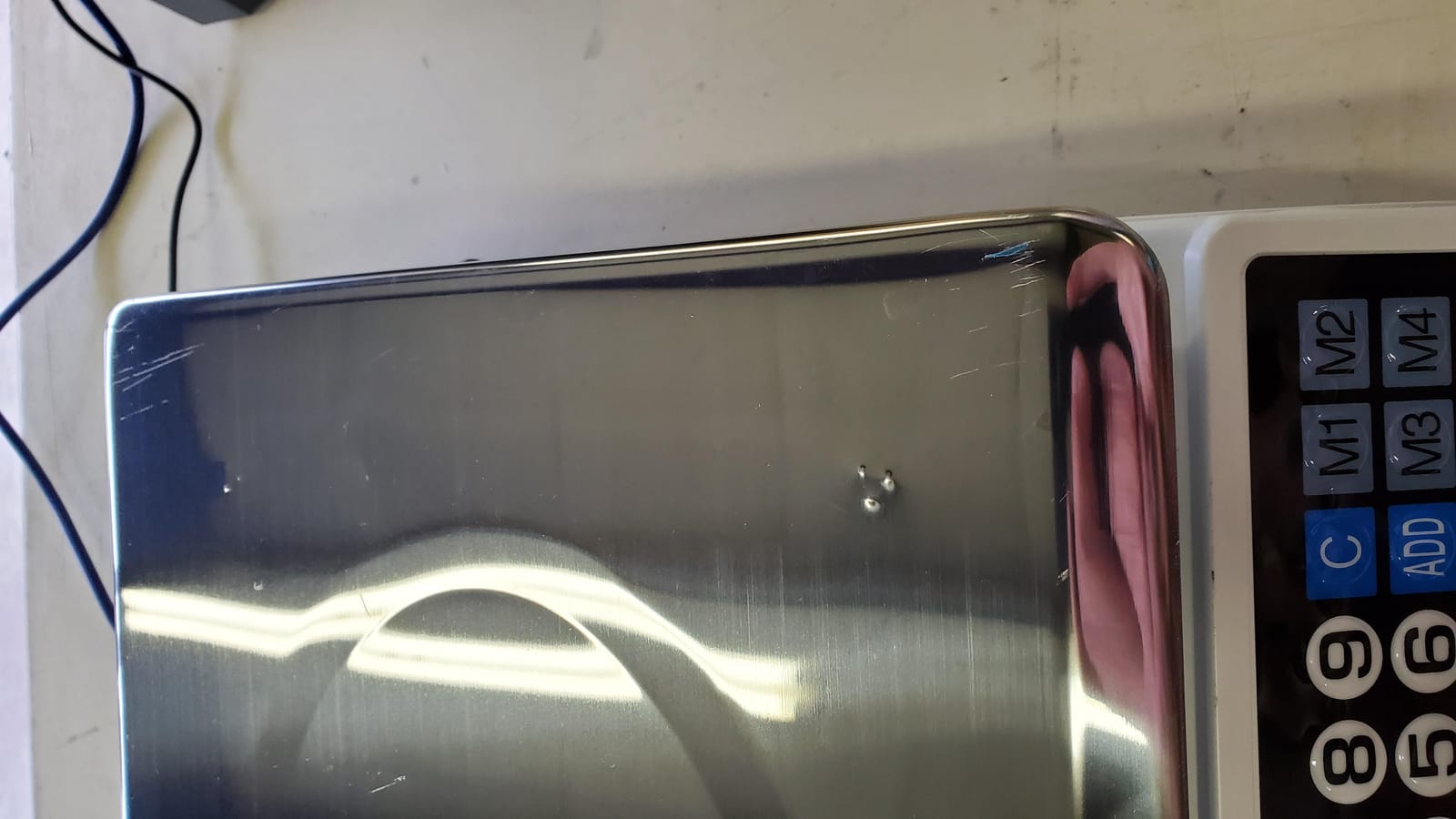
The build is a stainless steel weighing pan on a durable ABS shell, with a built-in bubble level and adjustable feet for stability on an uneven counter. It is the part of the machine you touch every single transaction, and it wipes clean with a damp cloth and sanitizer without any special care.
Power is the quiet strength here. The unit runs from a 110 V or 220 V household socket, from dry batteries, or from a rechargeable accumulator, which means it works behind a counter, at a market stall, or anywhere in between without a dedicated outlet. Multiple owners running several units report consistent performance across the board.
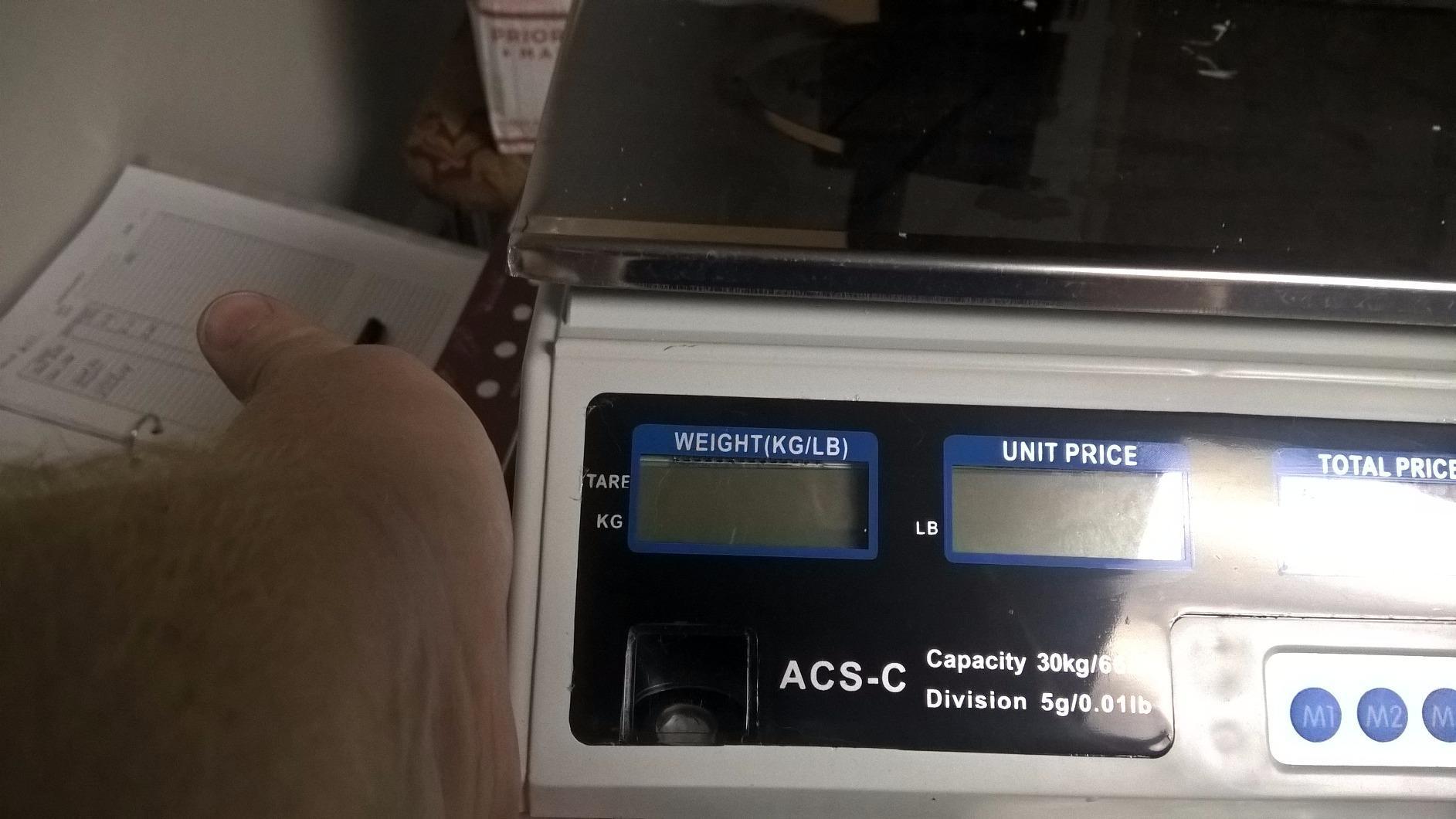
What you should know before buying it?
The weighing platform is thin, and some owners report it flexing or bending under genuinely heavy loads, with one reviewer suggesting it handles loads closer to 20 lb most comfortably. If your heaviest item is a full tray of roasts, check the platform is not visibly bowing before you commit to a big order.
Durability is the other watch point. A minority of owners report the unit simply stopped powering on after months to a couple of years, on battery and on the cord both. The detachable front panel and thin manual add to the frustration, and manufacturer support on warranty claims has been described as unhelpful.
Who it suits and who should pass?
It suits independent delis, produce stands, market vendors and small kitchens that price by weight but do not need to hand an inspector a certificate of conformance. It also suits anyone who wants a genuinely fine readout at a low outlay and does not mind powering it from batteries.
It is the wrong choice for a deli department inside a store that is already under state weights-and-measures scrutiny, because it is not certified for trade. If compliance paperwork matters to you, look at the TORREY LPC-40L or the Aclas PS1B instead.
2. BROMECH 88 lb Price Computing Scale – Most Capacity You Can Carry
- 88 lb capacity in a 5.2 lb body that moves between stalls
- Bright green backlit dual screens with adjustable brightness
- Stainless platform and shockproof ABS housing wipe clean easily
- Pricing counting accumulation and change calculation included
- Built-in rechargeable battery with a US plug charger
- Not certified Legal for Trade
- Some owners report accuracy drifting from a reference scale
- Calibration guidance and manufacturer support are unclear
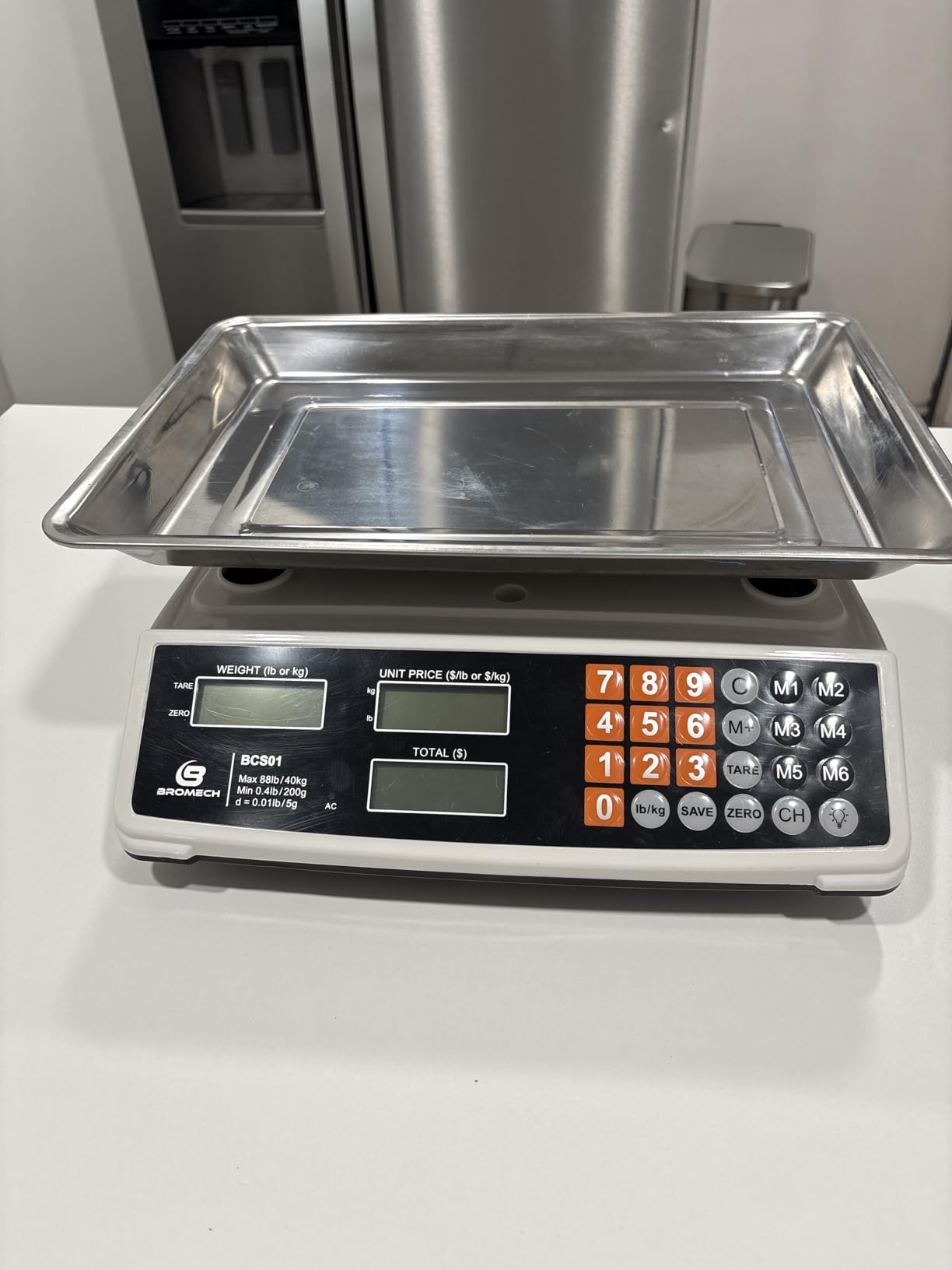
Capacity is the headline here: 88 lb, or 40 kg, in a body that weighs just 5.2 pounds. That combination is unusual. Most scales that reach this weight sit in a much heavier case, and this one is genuinely portable between a market stall, a food truck and a back counter without needing two people to lift it.
The display is a bright green backlit LCD with adjustable brightness and dual screens, so you can read the weight from the operator side and the customer can confirm from the other side of the counter. Pricing, counting, accumulation and change calculation cover most counter workflows, and pounds is the default unit with a one-press conversion to kilograms.
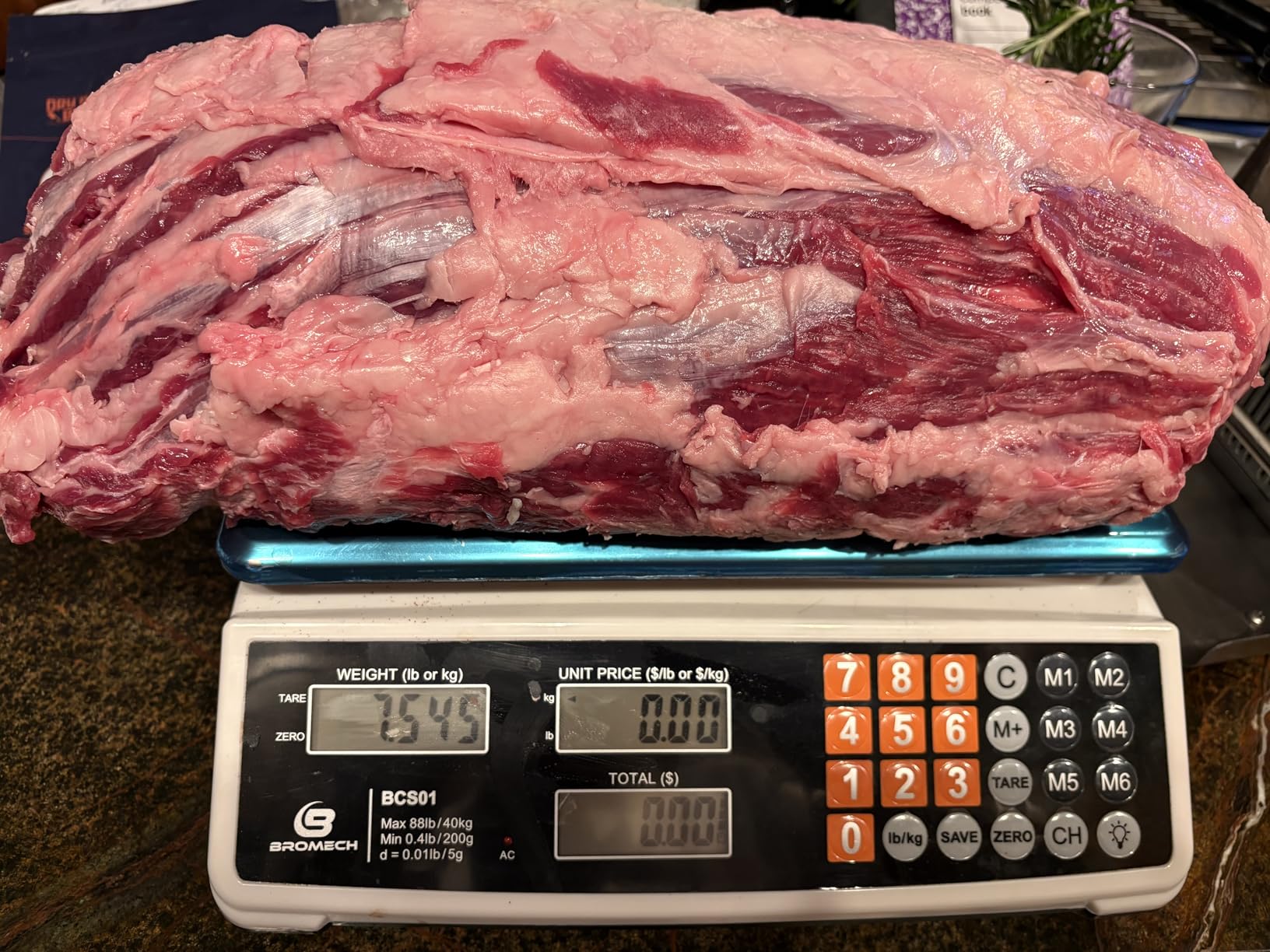
Power comes from a built-in rechargeable battery with a US plug charger that accepts 100 to 240 volts, so a single charger works across regions. The stainless steel platform and shockproof ABS housing are easy to wipe down after handling raw meat or wet produce, which matters more than most spec sheets admit.
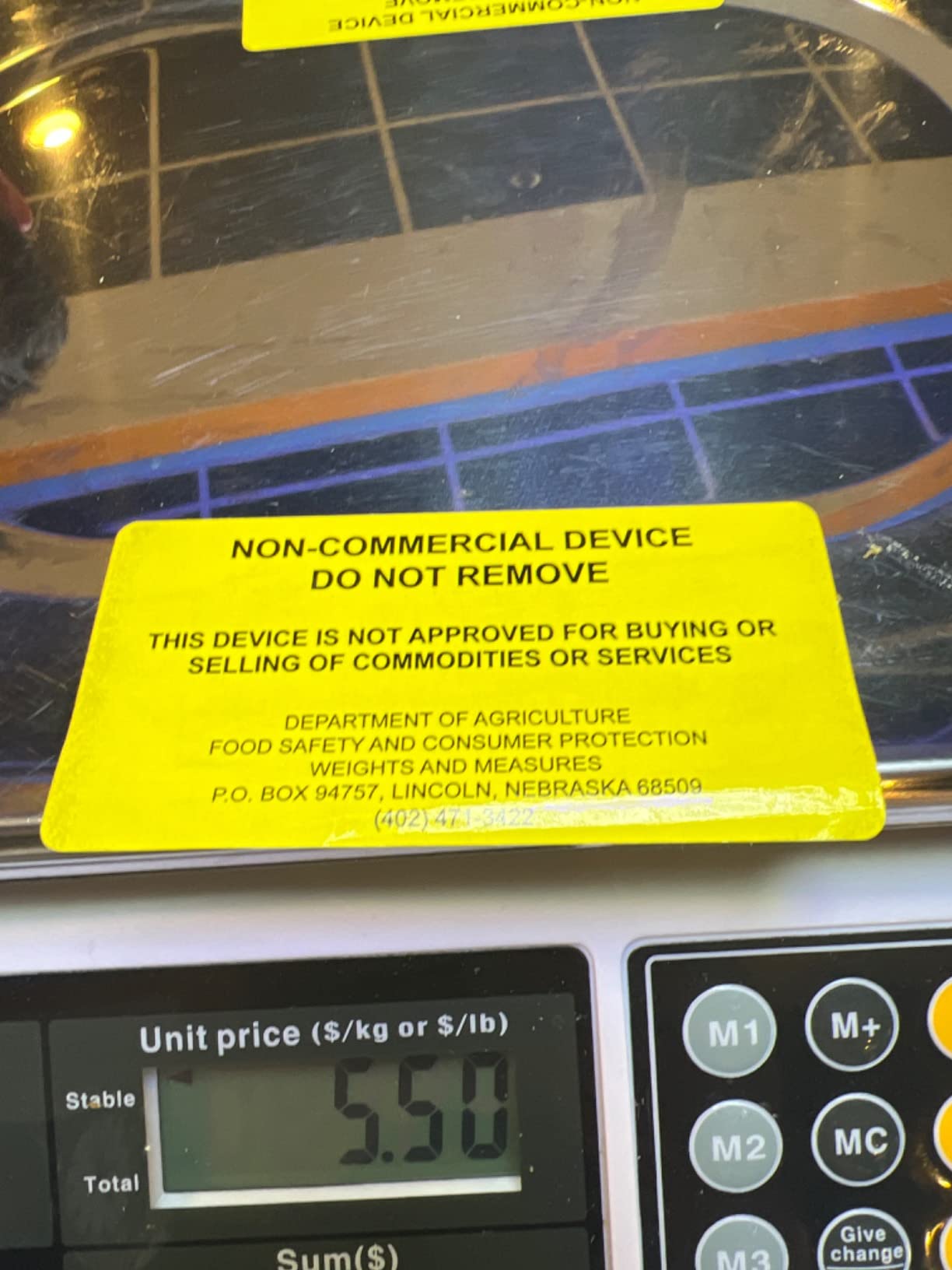
Be clear about the limitation, though. The product itself is labelled not for trade, which means it is a fine scale for market vendors, catering prep and general counter work, but not a scale a state inspector will certify for setting retail prices by weight.
What you should know before buying it?
A small minority of owners report the readings drifting away from a reference scale after several months of use, and the manual does not give most buyers a calibration path. If accuracy over time matters to you, ask the seller for a calibration weight and verify the unit against it before the warranty window closes.
There is also an isolated report of an internal failure with smoke coming from the platform legs about a week after arrival. That is rare, but it is worth checking your unit on arrival and keeping the packaging until you are satisfied it is working.
Who it suits and who should pass?
It suits farmers market vendors, roadside stalls, small produce operations and anyone who needs to weigh awkward heavy items in more than one location. The adjustable backlight is genuinely useful for an outdoor stall where direct sun washes out a normal LCD.
It is the wrong choice for a licensed deli that must produce compliance paperwork, and for anyone planning to run the same unit for years on a certified counter without recalibration support.
3. TORREY LPC-40L Price Computing Scale – The Certified Stainless Workhorse
- Legal for Trade certified for direct retail sales
- Stainless steel construction with front and back displays
- Long rechargeable battery that covers a full market day
- 100 memory entries plus 8 direct access price keys
- Powers on instantly with stable non-drifting readings
- Flimsy plastic battery door with a weak latch
- Instruction sheet printed in tiny low-resolution type
- Only a 1 year parts and labor warranty
This is the one I recommend when a state weights-and-measures inspector is a real possibility rather than a theoretical one. The LPC-40L is certified legal for trade, which means it can be certified and used for direct retail sales, and that single fact changes what kind of business you can run with it.
The body is stainless steel throughout with two displays, one facing you and one facing the customer, so there is no awkward craning around the unit mid-transaction. It powers on instantly and the readings hold steady rather than drifting during a long service, which is the failure mode that quietly erodes trust in a counter scale.
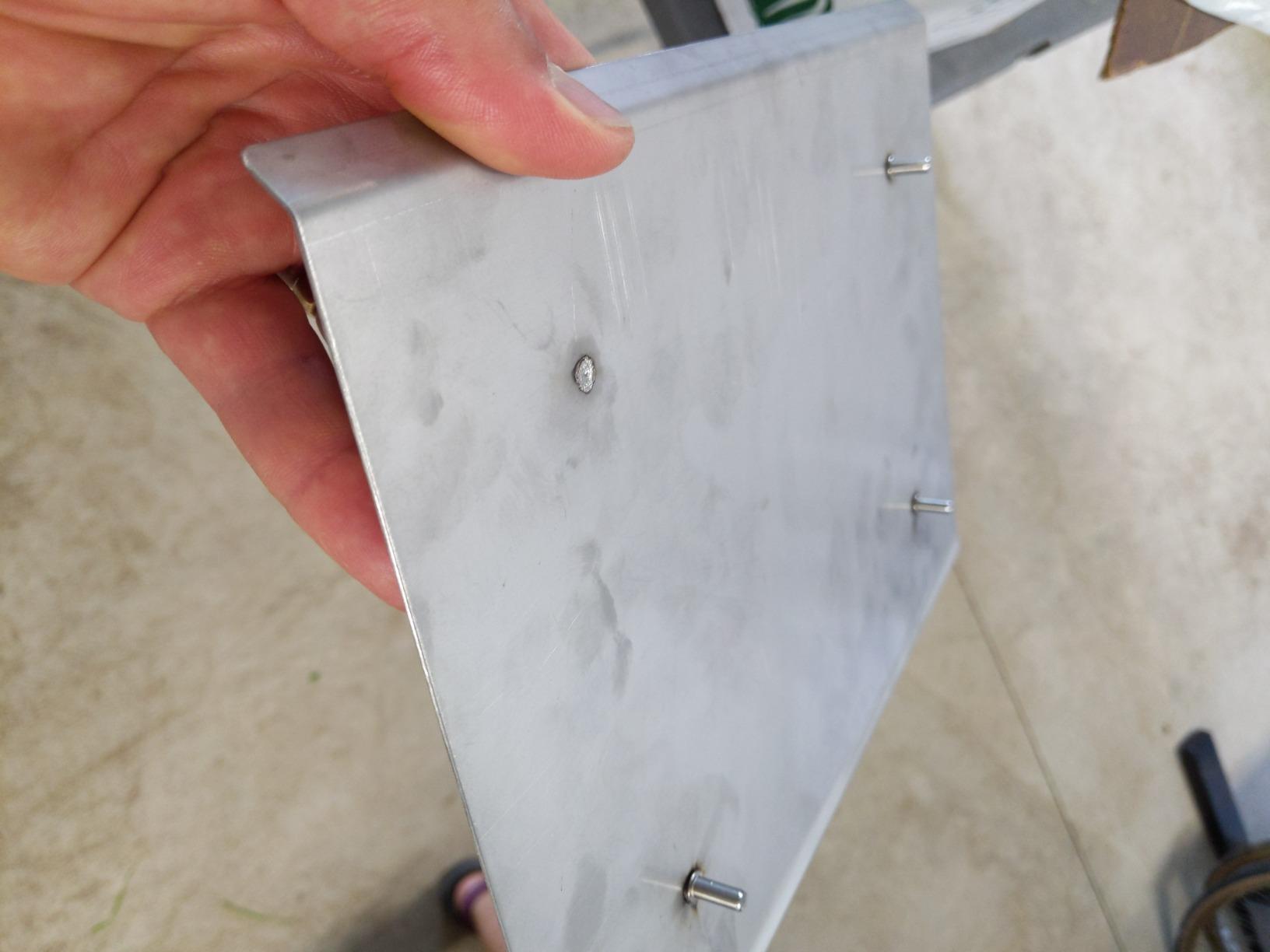
Price entry is where this unit earns its keep. There are 100 memory entries plus 8 direct access keys, so your four or five highest volume items, deli meat and cheese prices mostly, are one press away instead of a full price entry every time. The rechargeable battery is rated around 100 hours, which is comfortably more than a market day or a long shift on a cord.
There is also a printer interface, which gives you a route to drive a receipt or label printer from the scale itself if your workflow needs it. Operation temperature is rated from 14 to 104 degrees Fahrenheit, wide enough for a hot prep room and a cold case.
What you should know before buying it?
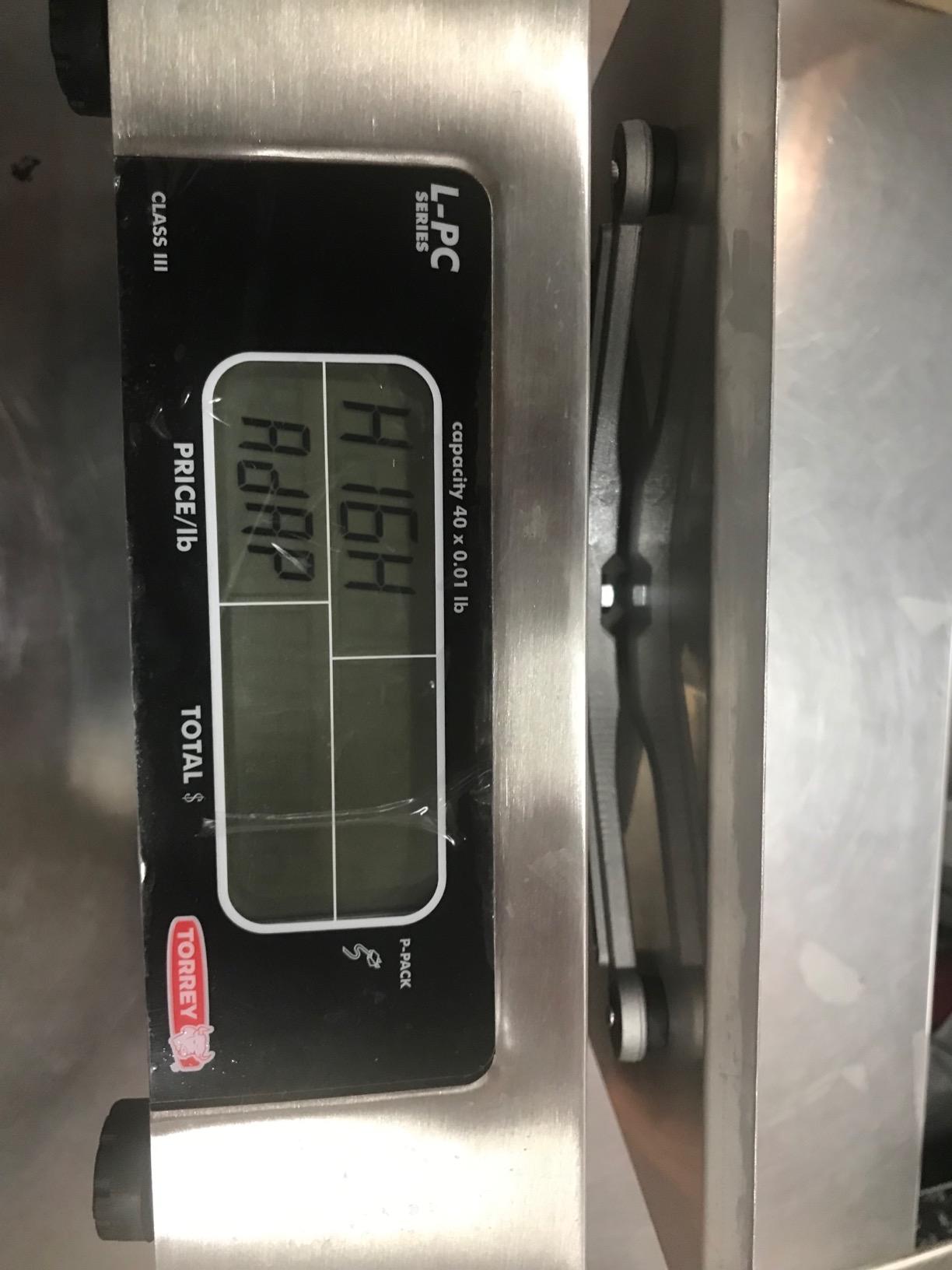
The battery door is the weak point and it is the first thing to check. Owners describe a flimsy plastic door with a poorly molded latch that can pop open on its own and damage the battery contacts. Treat it gently, and if you travel with the unit, remove the battery before transit rather than trusting the latch.
The owner’s manual is printed in very small, low resolution type and takes real effort to decipher, and the warranty is only one year parts and labor. One owner also reported a unit that failed state certification by half a pound, with the company taking months to respond, so allow time for calibration paperwork before you open.
Who it suits and who should pass?
It suits grocery store deli departments, butcher shops and any business that must hand an inspector a certificate of conformance and a calibration record. The stainless body and sealed construction also suit high-volume counters where a wipe-down several times an hour is normal.
It is the wrong choice if you are running a stall on a shoestring and only need accurate weights, or if you routinely weigh loads above 40 lb, since several cheaper units reach 66 lb and beyond.
4. Goplus 66 lb Price Computing Scale – The Dual-Sided Budget Workhorse
Goplus 66lb Price Computing Scale, Digital Commercial Food Produce Scale with Stainless Steel Large Platform, Counting Function for Farmer Market, Kitchen, Meat Shop, Deli
- Dual LCD display readable by operator and customer
- Automatic reading lock steadies the display
- Waterproof stainless platform rinses down easily
- Stores 8 unit prices for faster checkout
- Quick pound and kilogram conversion plus counting
- Not certified Legal for Trade
- Budget construction with a plastic body under the stainless top
The Goplus does two things at a low outlay that most competitors charge more for. It has a genuine dual LCD display, one facing the operator and one facing the customer, and it stores eight unit prices so your most common per-pound items do not have to be retyped between customers.
The reading lock is the feature owners mention most. When the data stabilizes, the scale locks the reading on its own, which stops the number flickering while you are trying to read it aloud to a customer or write it on a bag. On a busy counter that is a small thing that saves a surprising number of seconds per transaction.
The waterproof stainless steel top is easy to rinse after produce and raw meat, and the scale handles pounds and kilograms with a quick conversion. Counting function is included, which is handy for packaging work and for inventory checks on prepacked trays.
Note what this unit is not. It is a budget, not-for-trade scale, valued for function rather than build quality, and the body under the stainless top is plastic rather than all metal. It is a workhorse for market stalls and small counters, not for a store that has to satisfy an inspector.
What you should know before buying it?
Eight stored prices is a modest memory ceiling. If your counter runs dozens of items a day with different per-pound rates, you will be overwriting those slots constantly, which is exactly the friction the higher-memory certified units are built to remove.
Construction is the trade-off. The stainless top over a plastic housing will not take the same abuse as an all-metal case, so avoid dropping it and keep it off the edge of a prep counter where it can be knocked.
Who it suits and who should pass?
It suits produce stands, market vendors, small greengrocers and home operations that price by weight without a state licence requirement. The dual-sided display also makes it a good fit for counters where customers stand on the other side and want to see the total themselves.
It is the wrong choice for a licensed deli or meat department. For that, budget for a certified model and treat the certificate as part of the purchase, not an accessory.
5. MOCCO 40kg/88lb Price Computing Scale – Most Feature Per Dollar
- 88 lb capacity with 1g increments at a low outlay
- Five unit conversions covering g kg oz lb and ml
- Full view green backlit LCD readable from any angle
- Price weight piece count and tare modes in one unit
- Battery or AC adapter both included options
- Not usable for items under 5 g
- 120 second auto-off can interrupt a counting session
- Not certified Legal for Trade
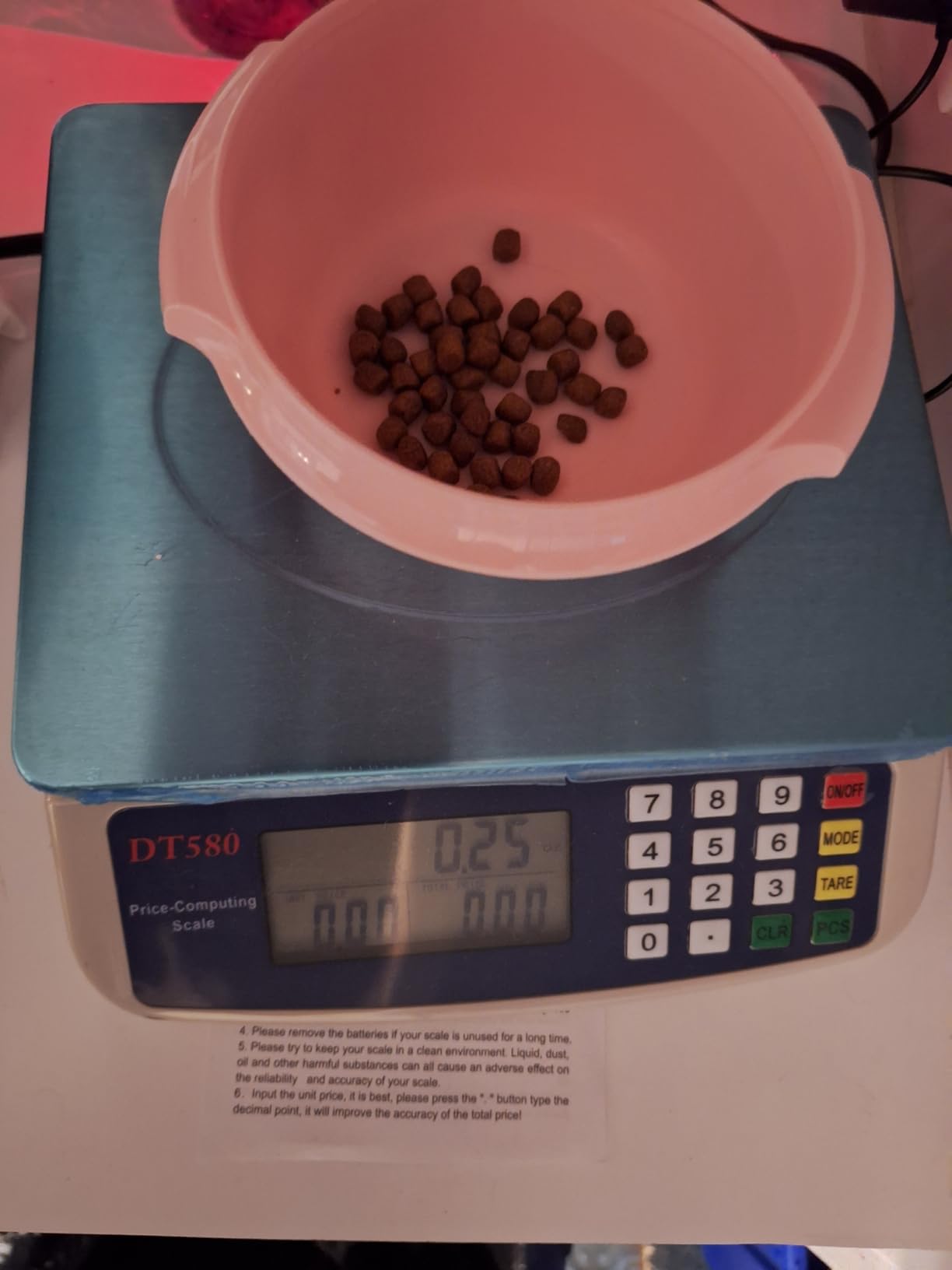
The MOCCO covers more ground for the money than anything else in this roundup. An 88 lb range with 1 g increments, five unit conversions, and price, weight, piece count and tare modes in a single unit is a lot of capability for a first counter scale or a backup unit in a prep room.
The full view green backlit LCD is readable from any angle, which matters when the scale is at the far end of a market table or in a food truck with poor lighting. Unit conversion across grams, kilograms, ounces, pounds and millilitres makes it usable for both retail pricing and kitchen work at the same time.
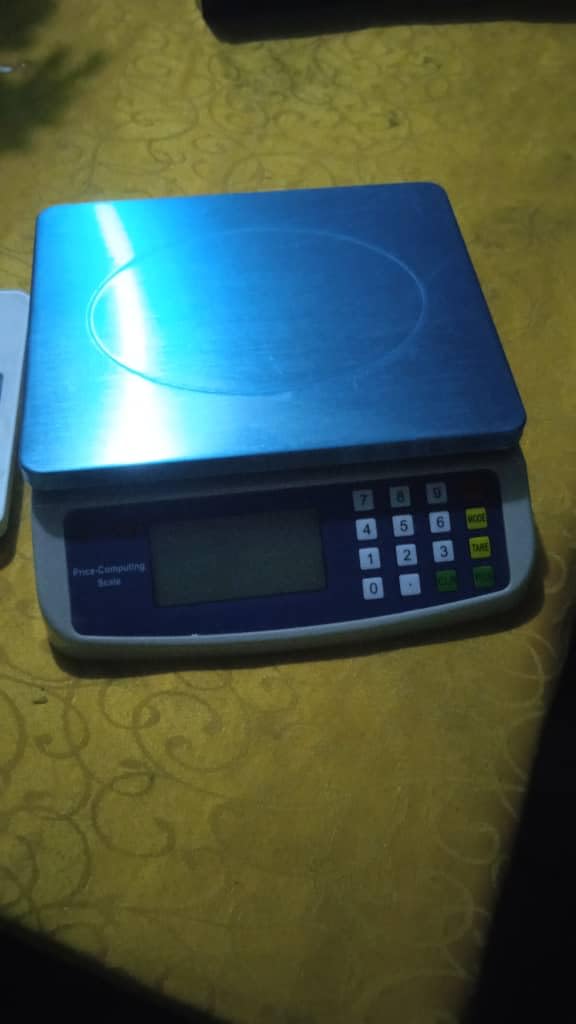
Power is flexible, with both battery operation and an AC adapter included, so you can move it between a plugged-in counter and a mobile stall. A 40 kg ceiling means it handles a full case of produce without straining, and the sensor settles quickly at the top of the range.
The limitation to know is the 5 g minimum. Loads under 5 g will not register, which is fine for deli service and irrelevant for lab or jewellery work. It also is not certified for trade, so it cannot be the scale that sets a retail price in a regulated jurisdiction.
What you should know before buying it?
The 120 second auto-off timer is short. If you are in the middle of a long counting or portioning session, the display can go dark mid-task, and on a budget unit the button sequence to wake it is not always obvious from the manual. This is also the one failure pattern buyers complain about most across this class of scale.
If you work in long sessions, factor the wake-up time into your workflow or choose a model with a longer or disableable timer before you buy.
Who it suits and who should pass?
It suits small delis, market stalls, bakeries, coffee counters and prep kitchens that want one machine for pricing, portioning and counting. Owners rate the value highly and accept the certification limitation as a reasonable trade for what it does.
It is the wrong choice for any business that must pass a state weights-and-measures inspection, and for fine work below 5 g. In both cases you need a different class of instrument entirely.
6. Atogou 110 lb Price Computing Scale – The Biggest Platform in the Group
Atogou 110lb Food Scale, Commercial Kitchen Scale with Price Computing
- Largest capacity here at 110 lb in a compact counter body
- 1g increments verified as precise for portioning
- Runs on AA batteries USB cable or a plug-in cord
- 304 food grade stainless platform sanitizes easily
- Full view LCD readable in bright sunlight
- AC adapter not included and sold separately
- Platform is slightly dished so round bowls can rock
- No milliliter mode for liquid prep
At 110 lb or 50 kg, this is the largest weighing platform in the group, and it does not look it. The body stays compact enough for a deli counter while handling a full case of potatoes or a tray of roasts without straining, and buyers consistently verify the 1 g, or 0.05 oz, increments as genuinely precise for portioning.
Power options are unusually flexible. It runs on two AA batteries, a USB cable, or a plug-in power cord for continuous use, which means the same unit works behind a counter, at a market table and in a food truck. The full view LCD is readable even in bright direct sunlight, a real advantage for outdoor stalls.
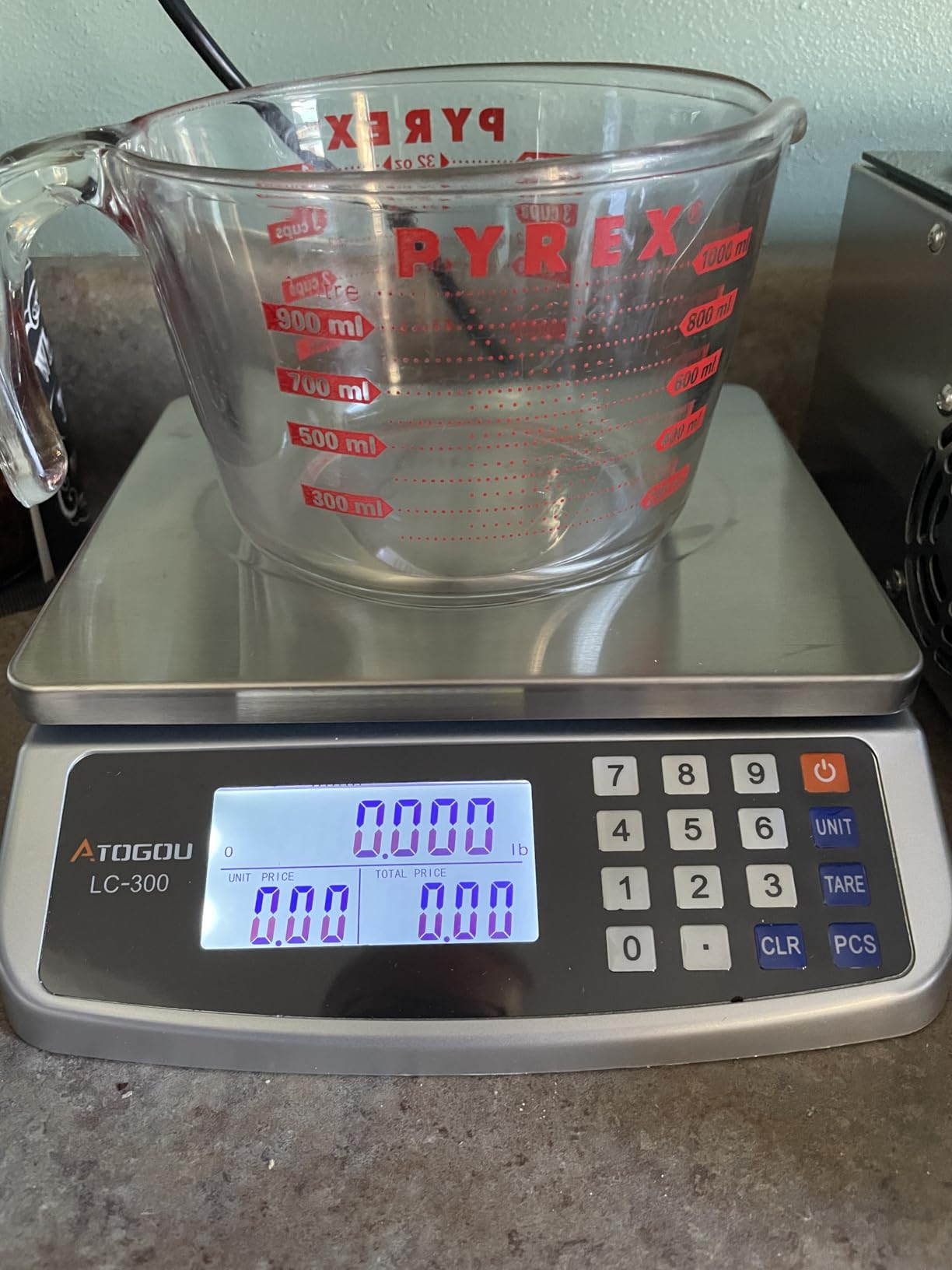
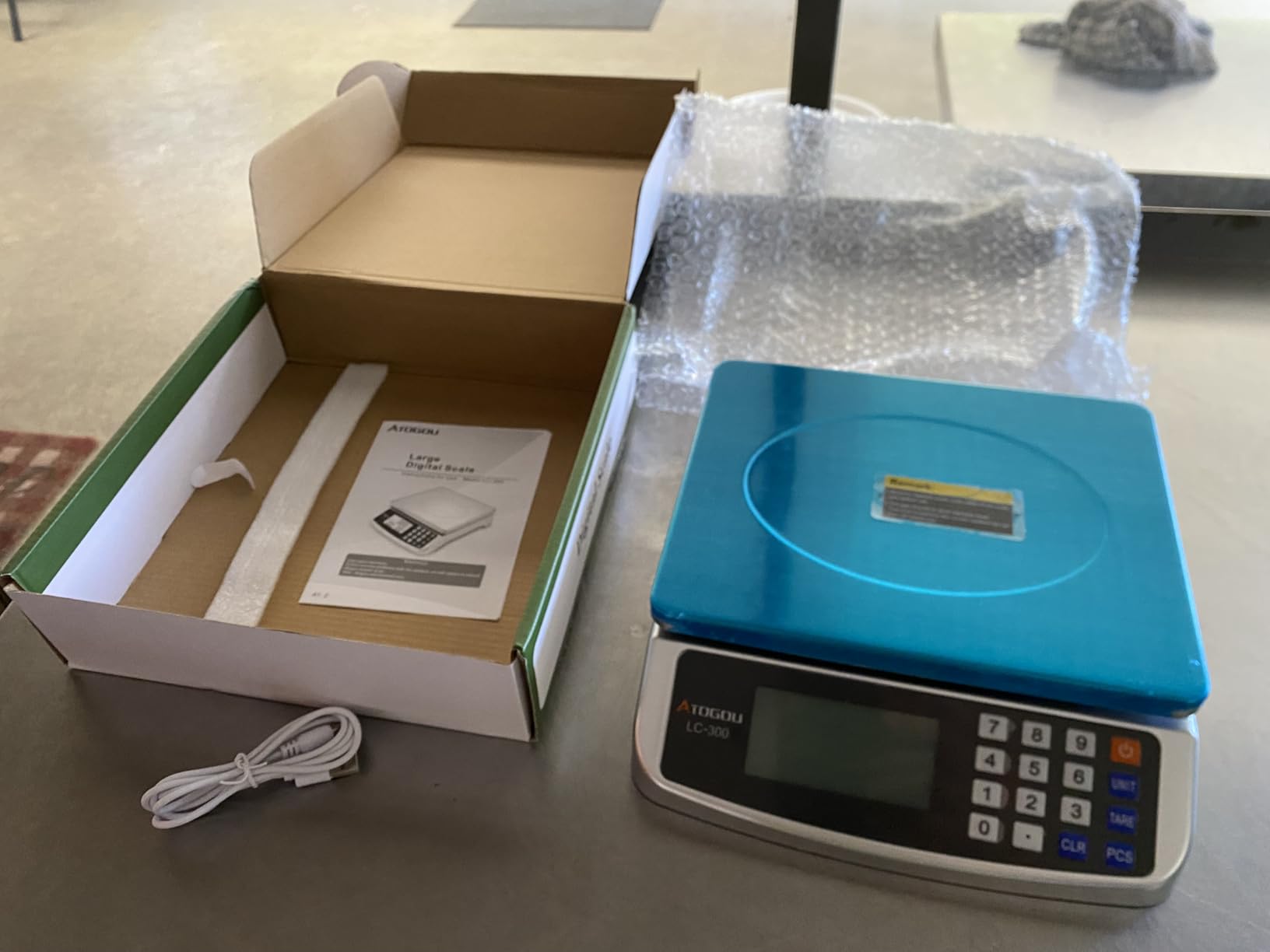
The platform is 304 food grade stainless steel, which is easier to sanitize and more durable than ordinary stainless. Pricing, tare, counting and auto-off functions are included, along with four unit conversions across ounces, pounds, grams and kilograms. The body measures roughly 8.7 by 9.5 by 2.6 inches and weighs about 1.17 kg.
Two practical notes. The AC adapter is not included and must be bought separately, and the platform is not perfectly flat, with a slight indentation that can make round bowls or containers rock. It is explicitly not for trade use.
What you should know before buying it?
The dished platform is the detail most likely to bother you. If you tare a round plastic deli container on this scale, expect to steady it with a hand. Flat-sided containers and trays sit without any fuss, so plan your workflow around that.
There is also no milliliter mode, which rules the unit out for liquid prep, and the missing AC adapter is an easy trap if you assume the box contains a wall plug.
Who it suits and who should pass?
It suits produce operations, mobile vendors, small grocery counters and anyone who regularly weighs items heavier than 60 lb and needs a machine that still fits in a car. The sunlight-readable display is a genuine differentiator for outdoor use.
It is the wrong choice for a certified deli counter and for any kitchen task involving liquids. If either applies, choose a certified model with an ounce mode instead.
7. CAMRY 66 lb Dual LCD Scale – The Battery-Only Counter Unit
CAMRY Commercial Price Computing Scale, 66lb/30kg, Dual LCD
- Front and back LED screens show weight price and total
- 66 lb capacity with a clean stainless platform
- Runs on 3 D cells with no charger or cable to manage
- One button kilogram and pound conversion
- Portable 6 lb body for market stalls
- Not certified Legal for Trade
- 0.02 lb resolution is coarser than several cheaper models
The CAMRY is built around a simple promise: put in three D cells and go. There is no charger, no power brick and no cable to manage, and a low power indicator tells you when the batteries need changing. For a market stall or a counter without a convenient outlet, that removes an entire category of friction.
Dual LED screens on the front and back show weight, unit price and total price simultaneously, so the customer can verify the transaction without leaning over the counter. One-button kilogram and pound conversion, plus tare, zeroing, sum and total display, cover the standard counter functions.
Capacity is 66 lb or 30 kg with a stainless steel platform and shockproof ABS shell, and the whole unit weighs six pounds, so it is genuinely portable. Owners like that it wipes down easily after handling produce or raw meat.
The honest limitation is the division size. At 0.02 lb steps, it is coarser than the 0.01 lb offered by several units that cost less, and it is not certified for trade. Both matter if you are portioning small deli items or selling by weight in a regulated setting.
What you should know before buying it?
Coarse steps show up on small items. A 0.1 lb order of cheese reads in visible increments rather than smoothly, and a customer comparing two similar packages may notice. If your typical sale is under a quarter pound, step up to a finer readout.
Because there is no auto shut-off listed among its features, leaving the scale on means the batteries will drain. Build switching it off into your closing routine from day one.
Who it suits and who should pass?
It suits market vendors, roadside stalls and small counters with no reliable power outlet, and anyone who prefers disposable batteries to a rechargeable pack that eventually fails. The dual-sided LED is a good fit for high-volume customer-facing service.
It is the wrong choice for fine portioning and for any certified retail operation. Check the readout figure against your smallest typical sale before you commit.
8. Giantex 66 lb Price Computing Scale – The Memory Champion at Counter Level
- Stores 8 unit prices plus 99 accumulation entries
- Accurate readings with roughly a 1 second settle time
- Three power modes so it runs on AC cells or a rechargeable pack
- Waterproof stainless platform wipes clean easily
- Large LCD panel shows weight price and total at a glance
- No auto shut-off so it must be switched off manually
- User manual is poorly written
- Some units lost all power within months
The Giantex is the one in this group that gives you real memory at counter level. It stores eight unit prices plus 99 accumulation entries, which means you can recall a price, add the next item, and keep a running total across a multi-item order without touching the register between each item.
Readout accuracy is listed at 0.01 lb or 5 g on a 66 lb capacity, and the upgraded sensor settles in about a second, which keeps the line moving. The large LCD control panel shows weight, unit price and total at a glance, and the thickened ABS body with detachable feet stays stable on a busy counter.
Three power supply modes mean it can run from a 110 V or 220 V socket, dry batteries, or a rechargeable accumulator. Several owners running more than one unit across different locations report consistent performance, and the waterproof stainless platform can be cleaned with water after use.
Two things temper that. There is no auto shut-off, so the scale has to be switched off manually or it will quietly drain the batteries while it sits on the counter overnight. The manual is also unhelpful, so plan to spend a few minutes learning the key layout.
What you should know before buying it?
Durability is inconsistent across the review base. Most owners are happy, but some report total power loss within months, and because the documentation is thin, troubleshooting is on you. Keep the receipt and note the purchase date, because you will need it if the electronics fail early.
Learn the memory layout before you go live. With 99 accumulation entries, it is easy to leave a running total open from a previous customer and surprise the next one. A short closing routine solves it.
Who it suits and who should pass?
It suits deli counters and small markets that ring up multi-item orders regularly and want the scale, not the register, to keep the running total. It also suits operators running several units who want one memory pattern across all of them.
It is the wrong choice if you want a scale that shuts itself off, and it is not certified for trade. If battery drain annoys you, pick a model with a documented auto shut-off instead.
9. BROMECH 66 lb IPX7 Waterproof Scale – The One You Can Rinse
BROMECH Waterproof Commercial Food Scale 66lb with Price Computing
- IPX7 sealed platform can be rinsed directly under water
- Dual front and back 3-line backlit displays show weight price and total
- 100 hour rechargeable battery plus included AC adapter
- Water resistant charging port cover helps prevent spill damage
- Tare 99 entry accumulation and change calculation included
- Not certified Legal for Trade
- Platform is sealed ABS plastic rather than stainless steel
- Smaller review base than the other 66 lb models here
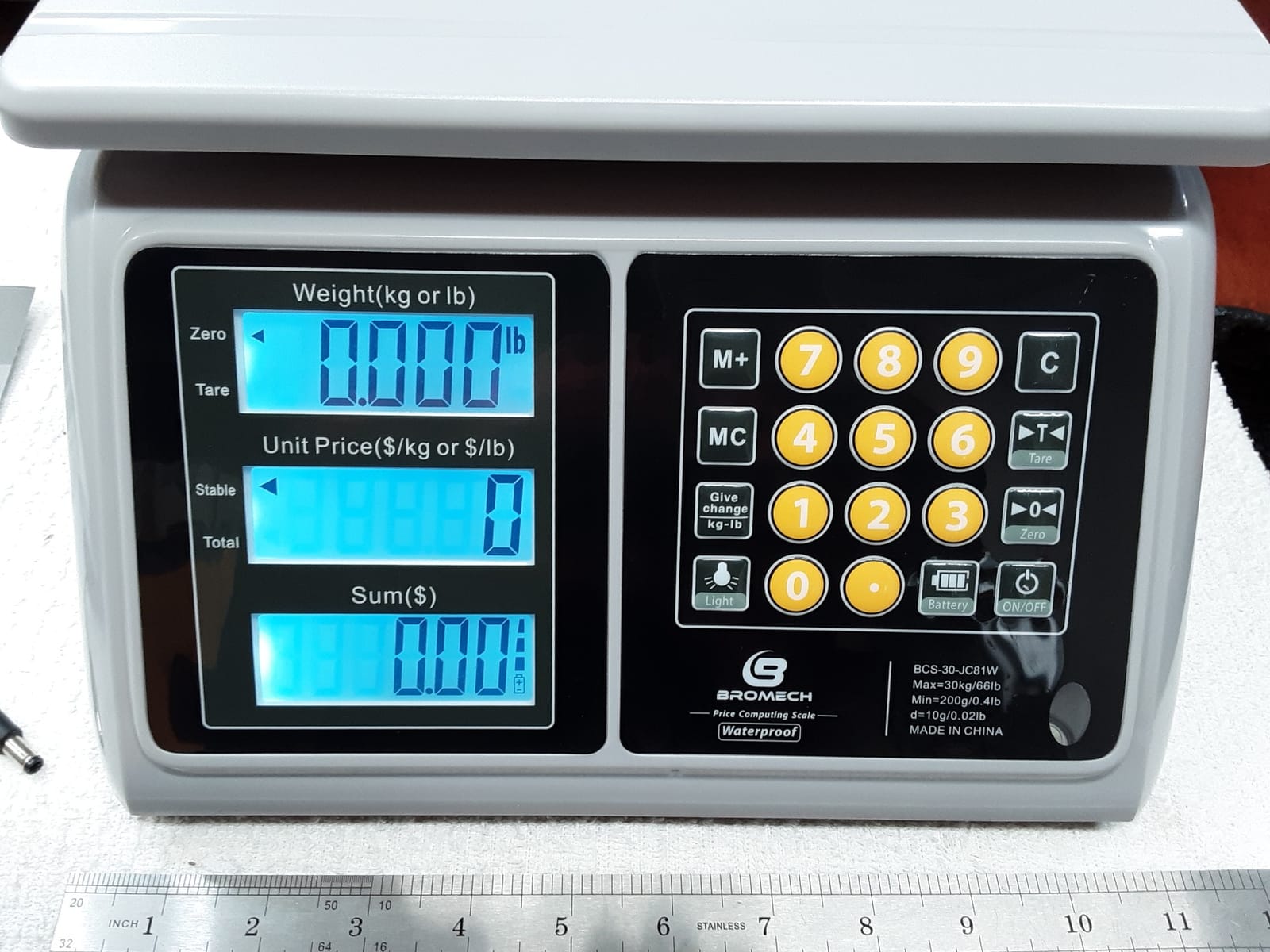
Most counter scales can be wiped down. This one can be rinsed. The IPX7 sealed ABS platform is designed to be washed directly under water, which makes it the pick for seafood counters, fish stalls, butcher departments and food trucks where the platform genuinely gets wet rather than just damp.
Four high precision sensors deliver 0.02 lb readings from that starting point up to 66 lb, or 30 kg, and readings arrive within a second. Dual front and back three-line backlit displays show weight, unit price and total price at the same time, with a backlight for low light conditions.
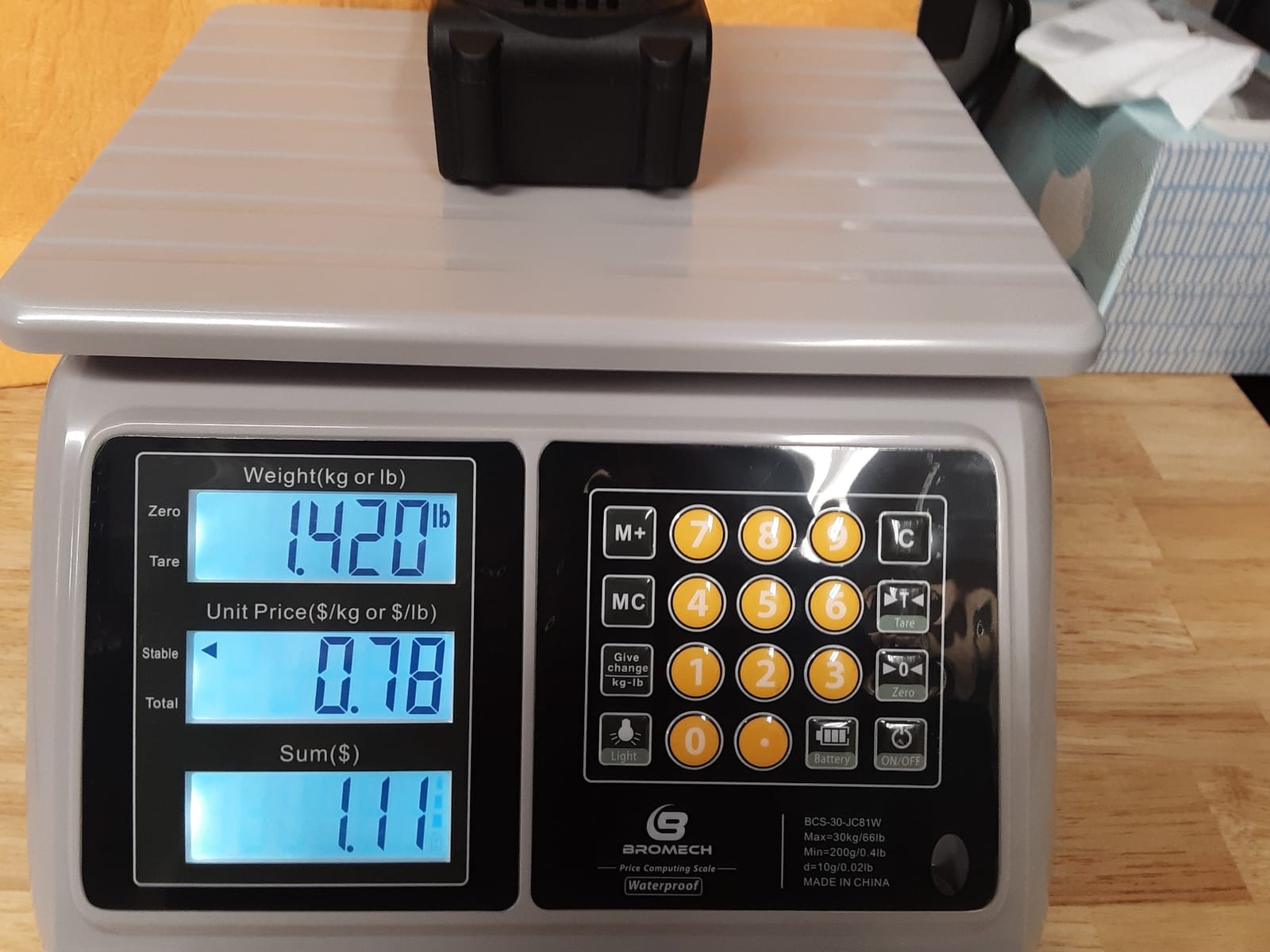
Power is a 100-hour rechargeable battery for cordless days of use, with an AC adapter included for continuous indoor service and a low battery indicator that warns you before power loss. The water resistant cover on the charging port is a small detail that matters more than it sounds in a wet environment.
Tare, 99 entry accumulation, pound and kilogram conversion and change calculation are all included, and the elevated design keeps the displays visible while you are working. An anti dust cover is included in the box.
What you should know before buying it?
The platform is sealed plastic rather than stainless steel, so it will not feel as rigid or as heavy as a metal pan unit, and it is not certified for trade. The other thing to weigh is the review base: with around 100 ratings it is the smallest here, so you have less long-term field history than the better-reviewed models.
Both points are acceptable if wet counters are your problem. If they are not, a stainless platform model gives you a stiffer surface and a larger body of owner feedback.
Who it suits and who should pass?
It suits seafood departments, fish markets, butcher shops and food trucks where the scale gets washed down several times a day. The 100-hour battery also makes it a good fit for a full market day away from an outlet.
It is the wrong choice for a certified retail counter, and for anyone who wants the rigidity of a solid stainless platform under heavy loads. Verify the capacity against your heaviest regular item first.
10. Aclas 60 lb NTEP Certified Scale – Certified Without the Premium
- NTEP certified and NCWM approved under COC 19-141
- Dual 3-line backlit displays for operator and customer
- Runs on AA or D cells with no charging required
- Sealed internal design protects accuracy and electronics
- Removable stainless steel tray is durable and easy to clean
- 60 lb ceiling is lower than several non-certified models
- 0.02 lb resolution is coarse for very small portions
- Small review base of 46 ratings
The Aclas PS1B is the practical middle ground among the certified units. It carries NTEP certification under Certificate of Conformance 19-141, so it is approved for commercial trade, and it is a practical way on this list to get documentation an inspector will accept.
Dual three-line backlit LCD screens show price, weight and total to both you and the customer, with white backlighting for dim counters. The removable stainless steel tray is more durable than a molded plastic tray, resists damage and lifts out for cleaning.
Power is handled by AA or D cell batteries with no charging at all, so you can place the unit wherever it works best and never wait on a recharge cycle. The internal design is well sealed, which protects the electronics and helps hold measurement accuracy over time, and the power-saving design reduces how often you change batteries.
Capacity is 60 lb or 27 kg with 0.02 lb readout accuracy. That is enough for produce, vegetables, meat, deli service and farmers markets, which is exactly where certification matters most.
What you should know before buying it?
The 60 lb ceiling is lower than the 66 to 110 lb offered by several non-certified models, so check your heaviest regular item before ordering. The 0.02 lb step is also coarse for very small portions such as a few slices of cold cut.
With 46 ratings, this is the thinnest long-term record in the roundup. The certification is the reason to buy it, but you are relying on less field history than with the better-reviewed models, so verify the reading against a reference weight early on.
Who it suits and who should pass?
It suits independent delis, produce markets, small butcher shops and farm stands that must be able to show compliance paperwork but do not need a premium brand name. The battery-only operation is a real advantage at a stall with no power.
It is the wrong choice for counters regularly handling loads above 60 lb or portions below a twentieth of a pound. Look at a higher-capacity or finer-division certified model instead.
11. Penn Scale CM-101 30 lb NTEP Scale – Built for a Small Counter
- NTEP certified under COC 04-101A1 for direct sales
- 0.01 lb readability on a 30 lb platform
- Dual backlit LCD displays let the customer follow the sale
- Rechargeable battery runs up to 48 hours per charge
- Removable stainless steel platter wipes clean
- 30 lb capacity is the smallest here and limits heavier items
- Display digits could be bolder and buttons need firm pressing
- One unit's battery failed to recharge and had to be returned
Let us be straight about this one. The CM-101 is the lowest rated pick in the roundup at 4.0 stars from 57 reviews, and the reason is the capacity-to-cost ratio rather than accuracy. Owners consistently praise the readings, and the unit has been certified with no drift, but a 30 lb platform is small for a deli that handles large trays.
It is NTEP certified under Certificate of Conformance 04-101A1, complying with NCWM standards, so it passes state certification for direct sales. Readability is 0.01 lb, which is finer than several cheaper models and fine enough for small meat cuts and produce.
The dual backlit LCD displays sit on the front and back of the unit so the customer can see the transaction as it happens. The rechargeable battery runs up to 48 hours per charge, and an AC adapter is included for continuous indoor use. The platter lifts out for cleaning, which is the part most counter owners mention as a relief.
Penn Scale has distributed commercial food and computing scales across the USA since 1923, and one owner reports six years of daily use on an earlier identical unit. That kind of longevity record is rare in this category, though the unit itself is not made in the USA.
What you should know before buying it?
The display is the everyday annoyance. Owners say the numbers could be bolder, the buttons need a firm press to register, and the touch sensor is not responsive enough for some users, which slows a line down during service. If you are working a rush, test the keys before committing.
Capacity is the bigger constraint. At 30 lb, this is the smallest platform in the roundup, so any tray, case or bucket over that weight needs a second scale. A battery failure has also been reported on a unit that would not recharge and had to be returned.
Who it suits and who should pass?
It suits small counters, specialty cheese and deli shops, mobile carts and second registers where every sale is under 30 lb and certification matters. The removable platter and dual displays make it pleasant to use for its size.
It is the wrong choice for a busy grocery deli or butcher department that regularly handles heavy items, and for operators who need fast key response at volume. The Aclas PS1B gives you certification with roughly double the capacity.
12. BROMECH 66 lb 4-Key PLU Scale – The Fastest Price Recall
BROMECH Price Computing Scale 66lb Digital Commercial Produce Scale
- Four dedicated PLU memory keys recall common prices in one press
- Shockproof ABS housing with an 11.8 x 9 inch stainless platform
- Batteries included plus a DC adapter so it works from the box
- Tare 99 item accumulation and change calculation included
- Two year warranty is the longest stated here
- Cannot tare a numeric value without an item on the platform
- No ounce mode and measures in pounds and kilograms only
- Not NTEP certified for trade use
The idea behind this unit is simple and it works. Four dedicated PLU memory keys, labelled M1 through M4, store your four most common per-pound prices and recall each with a single press. Owners treat this as the feature that actually shortens the queue, because it removes the retyping step entirely.
Capacity is 66 lb or 30 kg with 0.02 lb precision from four high precision strain gauge sensors, settling within about a second. The 11.8 by 9 inch stainless steel platform sits on a shockproof ABS housing with adjustable feet to keep it level, and an anti dust cover is included.

It comes with three D size batteries plus a DC adapter, so it works immediately out of the box with no extra purchase. Tare, 99 item accumulation, change calculation, one-button pound and kilogram conversion and auto shut-off round out the feature set, and the two year warranty is the longest stated in this roundup.
There is one functional restriction worth knowing before you commit. You cannot tare a numeric value without an item on the platform, which rules it out for pick-your-own operations where customers bring their own bowls and the scale sits empty most of the day.
What you should know before buying it?
There is no ounce mode, only pounds and kilograms. If you sell spices, dried herbs or confectionery in small quantities, the ounce display on competing units is worth more than the PLU keys, so weigh which workflow dominates.
It is also not NTEP certified, so it cannot be the scale that sets a certified retail price. One owner also reported breakage and being unable to obtain a return for a damaged cord or battery set, so inspect everything on arrival.
Who it suits and who should pass?
It suits deli counters, produce markets and butcher shops with a short, repeatable set of high volume items, where four one-press prices cover most of the day. The auto shut-off also means you are not draining batteries at the end of a shift.
It is the wrong choice for pick-your-own operations, for ounce-based confectionery, and for any counter that has to satisfy a weights-and-measures inspection.
How to Choose a Digital Price Computing Scale?
Most buyers start with capacity and end with a scale that is either uncertified or too coarse. Work through these criteria in order and the decision gets much faster.
1. Capacity
Add up the heaviest thing you will regularly put on the platform, not the heaviest thing that might once in a while. A 30 lb scale is fine for produce and small cuts and useless for a full tray of roasts. Most deli work sits comfortably in the 40 to 66 lb band, and 88 to 110 lb is worth paying for if you handle cases, bulk candy or produce bins.
2. Readability and division size
Readability is the smallest step the scale can display, and it determines how precisely you can portion. A 0.01 lb step suits cold cuts and small produce. A 0.02 lb step is acceptable for full-pound and half-pound items but shows visible jumps on anything smaller. Below about 0.02 lb, prices and weights stop moving smoothly enough to read aloud at a counter.
3. Legal for trade status
If you sell by weight, check for NTEP certification and ask for the Certificate of Conformance number before you buy. Only three models in this roundup are certified. Nine are explicitly not for trade, which is fine for prep, portioning and many market operations, and a problem the moment an inspector asks for paperwork.
4. PLU memory and price entry speed
Memory ranges from four dedicated keys to 100 stored entries. A good rule is to store your top ten highest volume items if the scale allows it, and to use direct keys for the top four. More memory matters when your price list changes often, such as a daily specials board or a market stall that rotates stock.
5. Printer or no printer
Built-in thermal label printers matter when you pack product on site. If your deli wraps and prices everything at a separate register, a printer adds cost and failure points you do not need. If you pre-pack bulk candy, coffee or dry goods for sale, label compliance with ingredients, allergens and safe handling instructions pushes a printer scale up your list. The TORREY LPC-40L includes a printer interface for that route.
6. Power source and portability
Rechargeable batteries suit counters and market days, and the long-life units in this group are rated in the region of 48 to 100 hours. Dry cells remove the charging cycle entirely at the cost of ongoing battery spending. AC-only is the least flexible choice for a mobile stall. Check whether the adapter is actually included, because on at least one model here it is not.
7. Connectivity and POS integration
A scale that can pass weight and total to your point of sale removes manual re-entry and gives you automatic inventory deduction, which is how you catch shrinkage. The prices you see on this list mostly stop at a standalone workflow, so if integration is central, confirm the interface and the software support before you buy.
8. Cleaning and sanitation
Deli counters get washed down. A stainless steel platform is the default expectation, an IPX7 sealed platform is better, and a plastic platform needs a disinfectant wipe rather than a rinse. For food service environments, confirm whether the model carries NSF certification for your compliance paperwork.
Legal for Trade and Weights-and-Measures Compliance
In most US states, if you sell goods by weight, the scale that determines the price has to be certified legal for trade. Certification is granted by NCWM through the NTEP program, and it comes with a Certificate of Conformance number that identifies the exact model. A serial number alone is not enough, and a generic certification claim without a number is not something to rely on.
In this roundup, the Aclas PS1B carries NTEP certification under COC 19-141 and the Penn Scale CM-101 under COC 04-101A1. The TORREY LPC-40L is listed as legal for trade. Everything else describes itself as not for trade, and one product title says so explicitly, which is unusual and to the manufacturer’s credit.
That distinction matters because an uncertified scale is not simply less accurate. It can be perfectly accurate and still be illegal to use for setting prices, which exposes the business to fines, forced re-pricing and downtime while a replacement is sourced. Verified customer reviews on WebstaurantStore describe the certificate of conformance as the decisive factor when proving to a regulatory board that a scale meets standard.
If you are opening a new counter, budget for three things beyond the scale itself: the certificate of conformance on file, a calibration weight to verify the reading on a schedule, and a record of those checks. Scales that can go a long time without inspection tend to drift, and a documented check costs far less than a failed inspection.
Reliability Lessons From Real Owners
The spec sheets do not tell you what breaks. Across verified customer reviews, a consistent set of failure patterns shows up in this category, and knowing them before you buy is worth more than one extra feature.
Why your scale keeps shutting off mid-service?
Auto shut-off is the most common complaint in this whole category. A short timer means the display goes dark in the middle of a customer interaction, and on budget models the wake-up sequence is not obvious. The usual fixes are to disable the timer, or to build a quick tap back on the key into your counter routine.
Disabling it is model specific. Verified customer reviews on WebstaurantStore document a workaround for that family of computing scales: hold the 2 key together with the power key for a few seconds until the display shows the auto-off setting, type 00 and press Enter. Check your own manual first, because the sequence is not universal.
Rechargeable battery expectations
Battery failure is the second big pattern, and the specific complaint is rarely that the battery ran out. It is that the unit will not run on AC once the battery is dead, which means a dead counter until a replacement arrives. Verified reviews describe owners on their second scale within two years for exactly this reason.
Before you buy, ask the seller directly whether the unit runs on AC power with a failed or removed battery. If it does not, treat the rechargeable pack as a consumable with a known replacement cycle rather than a permanent fixture.
Tare behavior and PLU data backups
Tare is where workflow friction shows up most. Owners report that tare works only intermittently, and that it can clear when the container is lifted off the platform, so the net weight reading is unreliable in a fast line. The workaround that gets shared is to remove the product, hit zero, then tare again.
On memory, the reported failure is severe and worth planning around. Verified reviews describe PLU upload and download software that wiped existing PLU data during an upload. Export or photograph your PLU list whenever you finish building it, and keep a written copy of your key prices somewhere that is not the scale. It takes ten minutes once and can save a full afternoon of reprogramming.
The upside is worth noting too. Owners who have a scale that keeps working report three to four years of service with no issues, and describe long battery life, easy cleaning and readable dual-sided displays as the things they would not give up. Reliability and readability outrank feature count in almost every long-term review.
Frequently Asked Questions
What is a digital price computing scale?
A digital price computing scale is a counter scale that weighs an item and multiplies that weight by a price per pound or per ounce that you program in, then displays the total for the customer. Most deli models show weight, unit price and total on dual screens, one facing the operator and one facing the customer. They commonly add PLU memory, tare, accumulation and change calculation on top of the basic calculation.
Do I need a legal for trade scale to sell by weight?
In most US states, yes. If you sell goods by weight, the scale that determines the price is generally required to be certified legal for trade through the NTEP program, and an uncertified scale can fail a state weights-and-measures inspection even if it is accurate. Ask for the Certificate of Conformance number for the exact model, and keep your calibration records. Prep and portioning work does not carry the same requirement.
What is the most accurate digital food scale for a deli?
Accuracy comes from readability, not from brand. For deli and produce work, 0.01 lb or 0.001 lb steps give the smoothest portioning, and 0.02 lb is workable for full-pound items but shows visible jumps on small ones. Among certified units, the Penn Scale CM-101 offers 0.01 lb readability under COC 04-101A1, while the Aclas PS1B offers 0.02 lb under COC 19-141. Verify any scale against a calibration weight when you receive it.
What capacity deli scale do I need?
Match the platform to your heaviest regular item, not your heaviest possible item. Thirty pounds covers produce and small cuts but not full trays of meat, 40 to 66 pounds covers most deli and butcher work, and 88 to 110 pounds suits cases, bulk candy and produce bins. Most operators find 40 to 66 lb is the right band, and certified models top out lower than the budget models, so plan around that limit.
How do I connect my price computing scale to my computer or POS?
Check the manual for the interface your model provides, commonly an RS-232 serial port or a USB port on the rear of the scale, and confirm the connection is supported before you buy. The TORREY LPC-40L in this roundup includes a printer interface for driving a printer from the scale. Integration lets the scale pass weight and total to your register for automatic inventory deduction, which is how you spot shrinkage.
Why does my price computing scale keep shutting off?
Most budget scales have an auto shut-off timer, and on a 120 second setting it can blank the display in the middle of service. The first fix is to build a quick wake-up tap into your routine. The second is to disable the timer, which is model specific. Verified reviews on WebstaurantStore document holding the 2 key with the power key for a few seconds, typing 00 and pressing Enter on that family of scales.
Conclusion
For most delis buying in 2026, the Safstar 66 lb scale is the safest all-round choice, with the deepest owner feedback in the group, a fine 0.001 lb readout and three display windows. For a counter that has to pass a state inspection, the TORREY LPC-40L is the pick, with certification, a stainless body, 100 memories and eight direct access keys. The MOCCO 40kg/88lb unit covers the most ground per dollar if certification is not a requirement.
Two decisions matter more than the rest. Sort out whether you need a legal for trade scale before anything else, because it is the one thing you cannot add later. Then match readability to your smallest typical sale, because that is what determines whether the numbers on the display feel smooth or jumpy at the counter.
Whichever one you pick, give it a calibration weight on day one, back up your PLU list the same afternoon you build it, and find out now whether it runs on AC with a dead battery. Those three habits prevent most of the failures we found in owner reviews.