
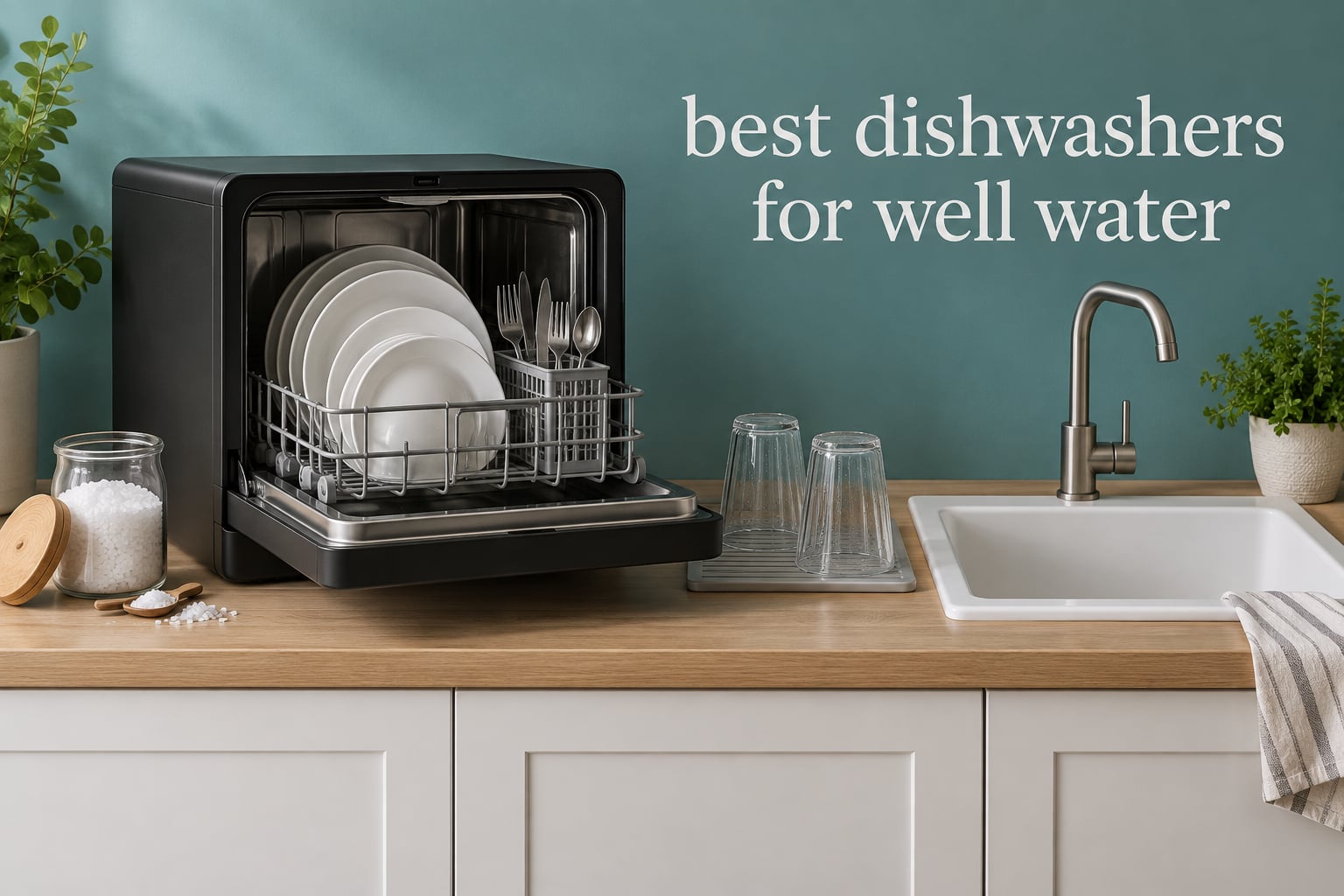
Most published dishwasher roundups assume a plumbed, full-size machine in a house on municipal water. That assumption breaks in a lot of well water homes: cabins, remodels, rental houses, RVs, rural additions where the plumbing run was never sized for a dishwasher, and any kitchen where a full-size box simply will not fit under the cabinets. For those households, the best dishwasher for well water is usually a countertop unit, and the deciding feature is a built-in water softener that regenerates with dishwasher salt, which strips calcium and magnesium out of the incoming water before they can precipitate onto glassware as spots or scale.
We spent weeks reading owner reviews, spec sheets and hard-water forum threads to build this list, and the honest finding is that only two of the eight machines here carry an integrated water softener. That is not a flaw in the roundup. It is the single most useful thing we can tell you about buying a dishwasher for well water, because the other six depend on consumables and descaling discipline rather than hardware.
Throughout this guide we flag the built-in softener status, the noise figure, the tub material and the drying approach for every model, because those four variables decide how much attention a machine needs in a house with 10-plus grains per gallon. If you want a broader look at the format first, our tested picks for countertop dishwashers covers the general category, and our guide to dishwashers for small kitchens is useful if the constraint is cabinet space rather than water chemistry.
One note on sourcing: this is a well water roundup, not a lab test. We are working from manufacturer specifications and a large body of verified owner reviews, plus the recurring experience documented on appliance forums. Where a figure is a manufacturer claim, we say so.
Table of Contents
Top 3 Picks: Best Dishwashers For Well Water (October 2026)
The three machines above cover the three realistic buying situations. The HAVA is the one to buy if your water is very hard and you want the machine to handle it rather than you handling it. The Hermitlux is the one to buy if volume matters more than sophistication, with the largest review base in the group. The AIRMSEN TDQR03 is the one to buy if the glassware is the reason you are shopping at all.
Dishwashers for Well Water at a Glance
| Product | Specifications | Action |
|---|---|---|
 HAVA TDJR09 HAVA TDJR09 |
|
Check Latest Price |
| Hermitlux HDW5CW01 |
|
Check Latest Price |
 AIRMSEN TDQR03 AIRMSEN TDQR03 |
|
Check Latest Price |
 COMFEE’ CDC17P0ABB COMFEE’ CDC17P0ABB |
|
Check Latest Price |
 BLACK+DECKER BCD6W BLACK+DECKER BCD6W |
|
Check Latest Price |
 EUHOMY DW001-5 EUHOMY DW001-5 |
|
Check Latest Price |
 AIRMSEN ZMW-DUHA01 AIRMSEN ZMW-DUHA01 |
|
Check Latest Price |
 COMFEE’ CDC17P2AWW COMFEE’ CDC17P2AWW |
|
Check Latest Price |
Two columns in that table matter more than the rest for a well water household. The first is whether the machine has a softener at all, and the second is how loud it is, because these are countertop boxes that often sit in an open kitchen rather than tucked into a cabinet run.
1. HAVA TDJR09 – The Only Pick With a Tunable Water Softener
HAVA Countertop Dishwasher with Water Softener & Enhanced Energy Efficiency
- Only machine here with a selectable water-hardness setting for limescale
- 5 L tank means no plumbing hookup at all
- 8 programs with touch screen and 18 hour delay start
- ECO mode trims water and energy use
- 60 dB is louder than most countertop rivals
- Small interior caps a load at roughly 13 inches wide
- Some residual water in the tub is normal per the manufacturer
The HAVA TDJR09 is the machine we would put in a house where the water test came back above 10 grains per gallon and the owner has no intention of installing a whole-house softener. It is one of only two units in this roundup with an integrated water softener, and unlike the other one, its hardness level is selectable, so you can match the setting to your measured gpg rather than running it on a default.
That matters more than it sounds. A softener reservoir recharges on a cycle set by the hardness dial, and if the dial is wrong the machine either regenerates too rarely and lets scale through, or regenerates constantly and burns salt. Being able to set it to your actual number is the difference between a machine that manages hard water and one that merely contains it.
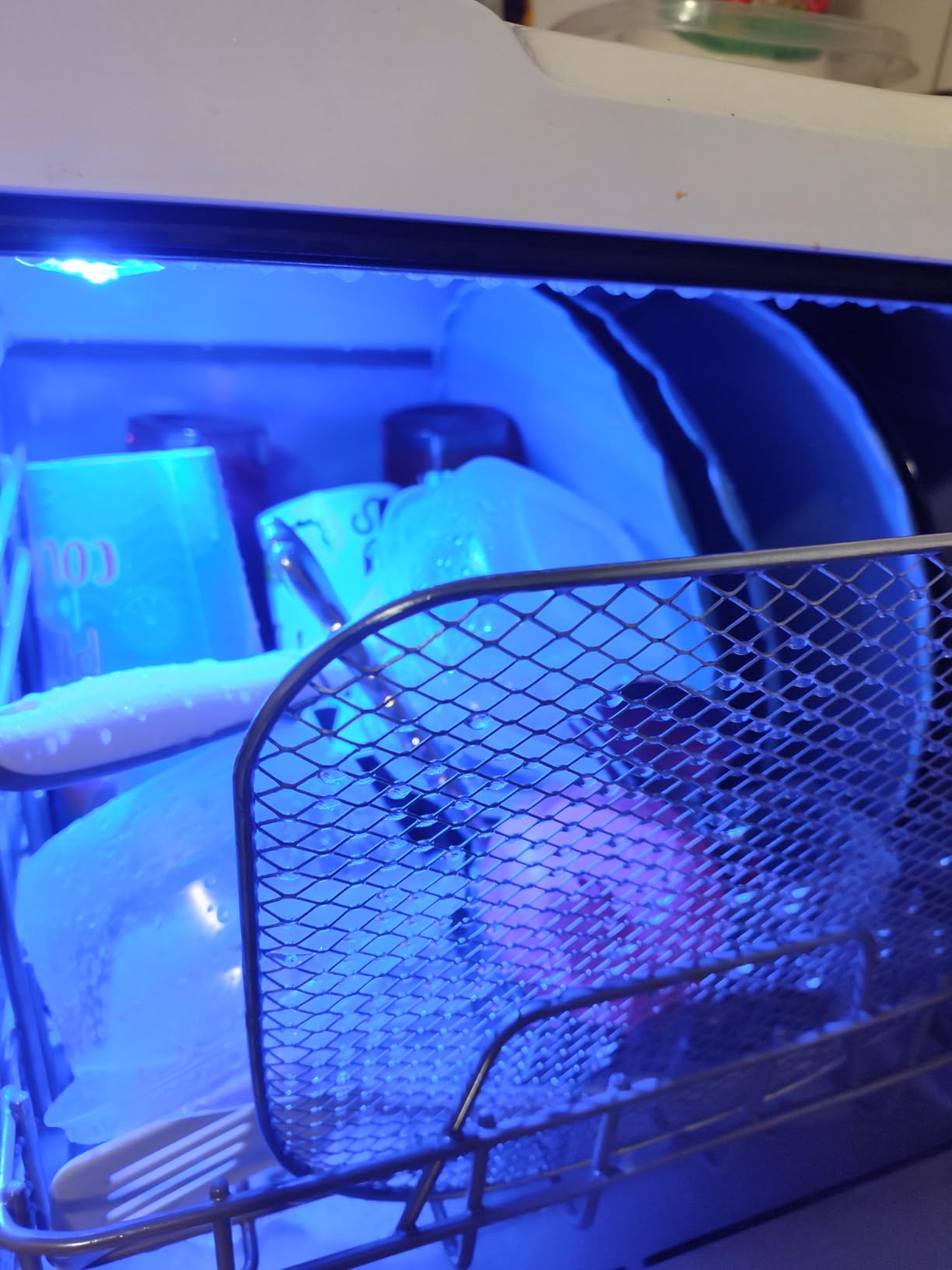
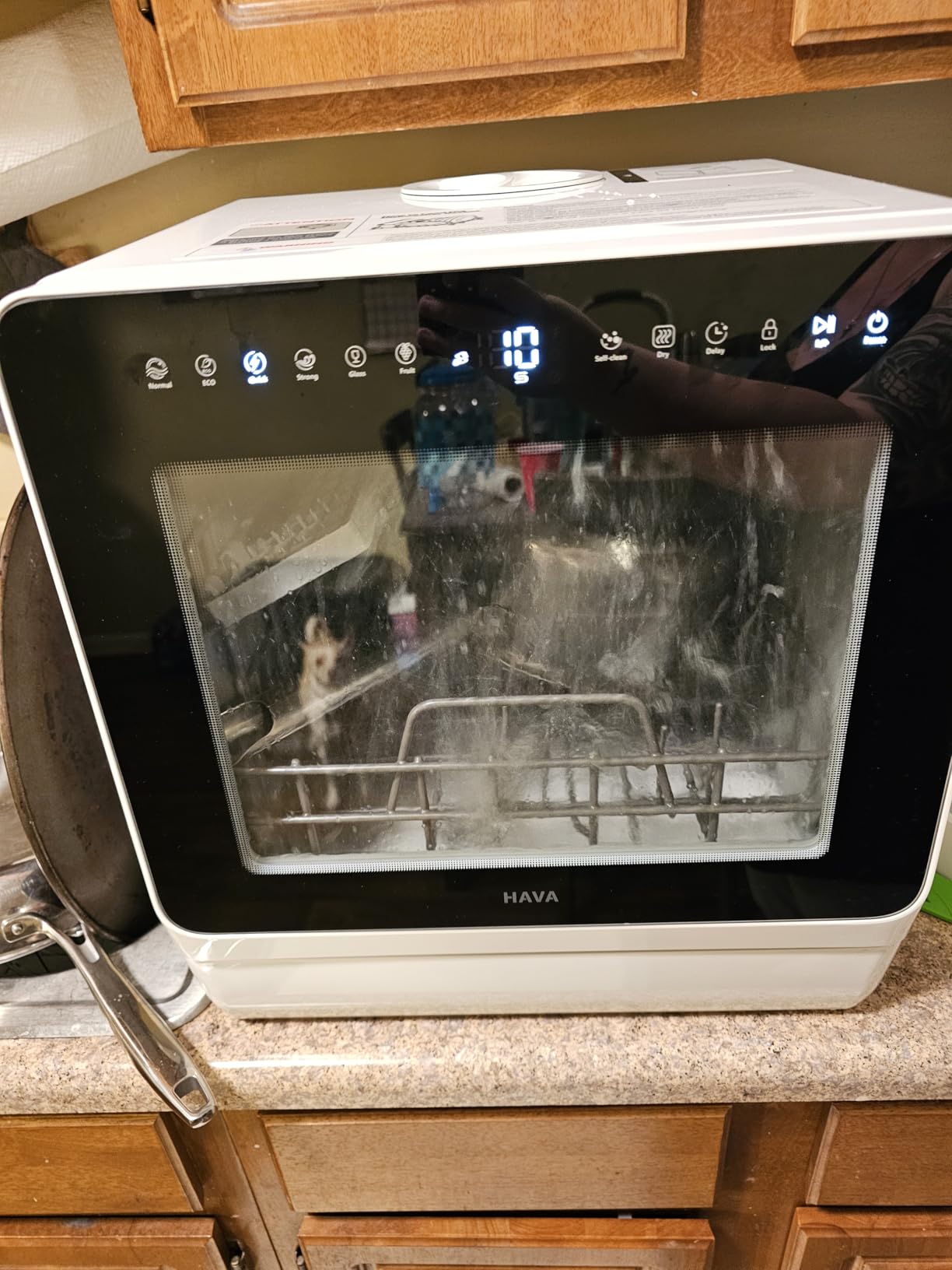
Everything else about the unit is a sensible compact design. The 5 L built-in tank means you can put it on a counter with no faucet connection at all, and the 61 inch inlet and outlet hoses are long enough to reach a nearby sink when you want continuous feed. Eight programs cover economy, rapid, intensive, normal and heated dry, with a touch panel, LED display, child lock and an 18 hour delay start.
The body measures 16.86 inches deep by 16.75 wide by 18.05 high, which clears a standard counter run, and at 13 kg it is light enough to pull out for cleaning underneath. The rack is adjustable with 360 degree coverage, so water reaches the corners of the tub rather than pooling.
This is the right pick if your water tests above 8 gpg
Choose the HAVA if you have measured your water, you know the number, and you want the machine to do something about it rather than relying on a rinse aid dispenser setting and a monthly descaling cycle. It is also the sensible pick for a hard-water home where nobody wants to remember topping up a salt reservoir, because a 5 L tank covers a lot of dishes per fill.
Reviews reflect that positioning well. Across more than 1900 ratings the average sits at 4.3, and the water softener and tank-only setup are the two features owners cite most often as reasons to recommend it.
This is the wrong pick if noise or capacity drives your decision
At 60 dB the HAVA is among the louder countertop machines we looked at, which is a real constraint in an open-plan kitchen or a cabin where the machine sits near the living area. The interior is also modest, so a family running two loads a day will spend more time waiting than owners of larger units.
And the softener is not a licence to skip maintenance. Residue can still appear in the salt chamber or on the tub walls if the reservoir runs dry, and the manufacturer explicitly notes that some residual water in the unit is normal, so do not read a puddle as a fault.
2. Hermitlux HDW5CW01 – Best Value Per Load on Well Water
- Dual water supply modes suit hookup and non hookup homes
- 5 L per cycle cuts water use sharply versus handwashing
- 60 min hot air dry plus 72 hours automatic ventilation
- 7 programs including a glass program
- Large review base at over 4500 ratings
- No water softener
- so mineral film depends on rinse aid and descaling
- About 5 place settings
- Needs 20 inches of clearance under wall cabinets
The Hermitlux HDW5CW01 has the largest body of verified owner feedback of anything in this roundup, and the reason is straightforward: it does the fundamentals well and adapts to where you put it. That flexibility matters in a well water house, because the machine works equally well on a counter with no plumbing and hooked to a faucet beside the sink.
Its two supply modes are the practical headline. The built-in 5 L tank fills by hand from the top, which is what you want in a cabin or an RV, and the faucet connection lets you run it continuously in a normal kitchen when a hookup is possible. The 59 inch inlet hose is long enough to reach from a typical counter position.
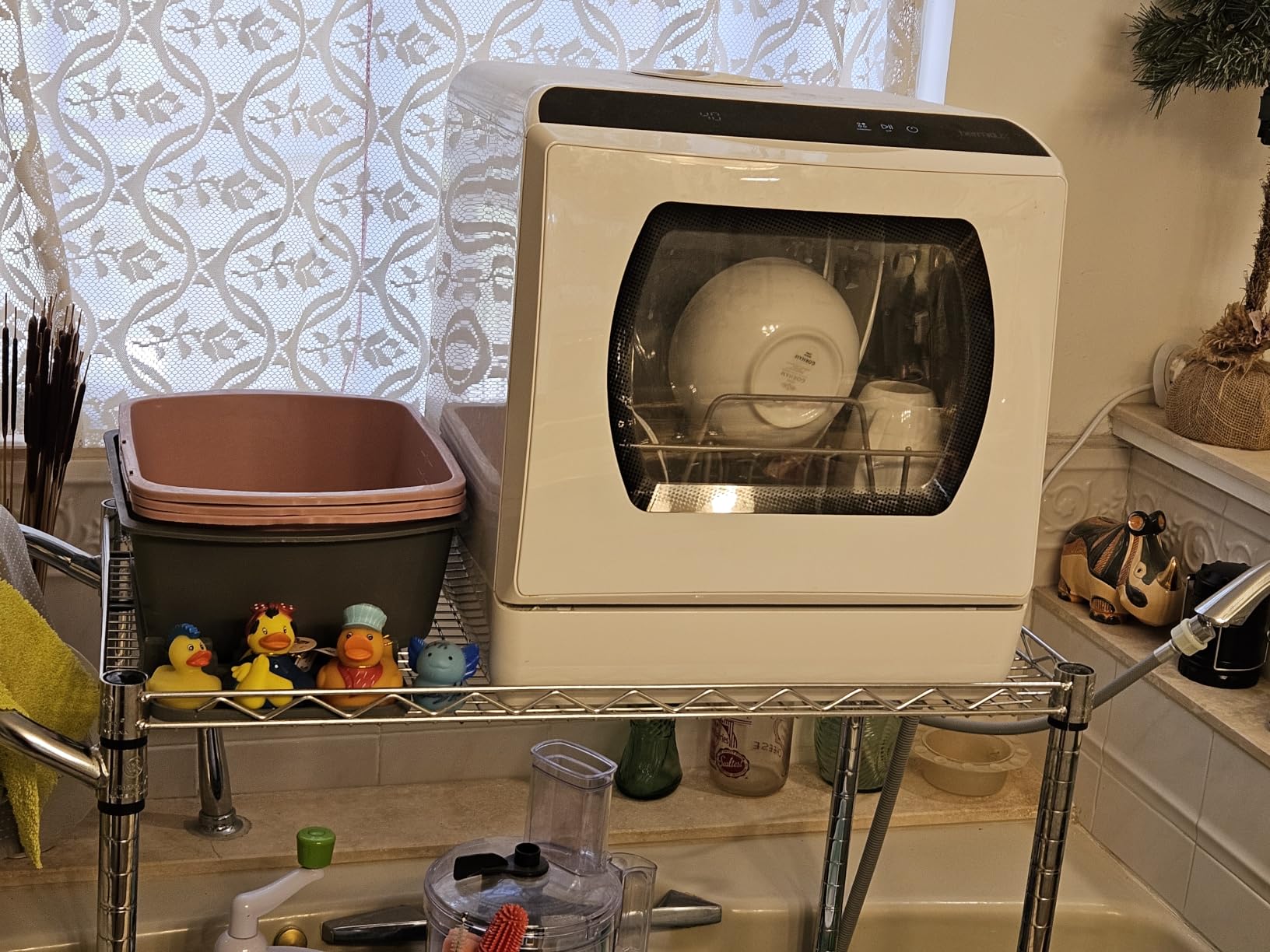
Seven washing programs are offered, including a dedicated glass setting and a self-clean cycle, plus delay start, child lock and a dry function. Washing draws 5 L per cycle, which is the figure owners most often cite when they explain why they bought it. Drying runs 60 minutes of hot air followed by 72 hours of automatic ventilation, and that long ventilation window is genuinely useful on hard water because it keeps moisture moving rather than letting droplets sit and dry into chalky marks.
Coverage comes from 14 water jets spread across upper and lower spray arms, with metal racks coated in PA powder. That coating is worth noting in a hard water house: bare metal rack wire is where limescale first becomes visible, and a coated surface wipes clean where bare steel does not.
This is the right pick if you wash a lot of dishes on a budget
At roughly 5 place settings with a 4.4 average across more than 4500 ratings, this is the strongest volume-to-cost option here. For a household running one or two loads daily where the water is hard but not extreme, paired with a rinse aid and a monthly descaling cycle, it handles the load well.
It is also the easiest unit to relocate, which suits a well water home where the water chemistry question might be answered differently in a few years, for example after a whole-house softener goes in and the machine changes jobs entirely.
This is the wrong pick if you need the machine to fix hard water itself
There is no water softener and no salt compartment in this machine. On water above roughly 8 gpg, the burden shifts entirely to you: rinse aid dialed up, a citric acid or similar descaler on a monthly cadence, and periodic attention to the spray arms and filter.
Also check your clearance before buying. The body is 16.73 deep by 16.85 wide by 18.23 high, and owners report needing at least 20.08 inches between the counter and any wall cabinet to load it comfortably. At 30.9 pounds it is not a one-hand carry.
3. AIRMSEN TDQR03 – Best for Spot-Free Glassware
- Owners most often describe results as spotless and spot free
- Highest average rating in the roundup at 4.6
- Built-in 5 L tank plus included hose for optional faucet feed
- Two year manufacturer warranty
- Transparent double layer door with interior LED
- Large plates must be angled which cuts usable capacity
- No dedicated detergent dispenser so powder sits loose in the tub
- Not a full size replacement for pots and pans
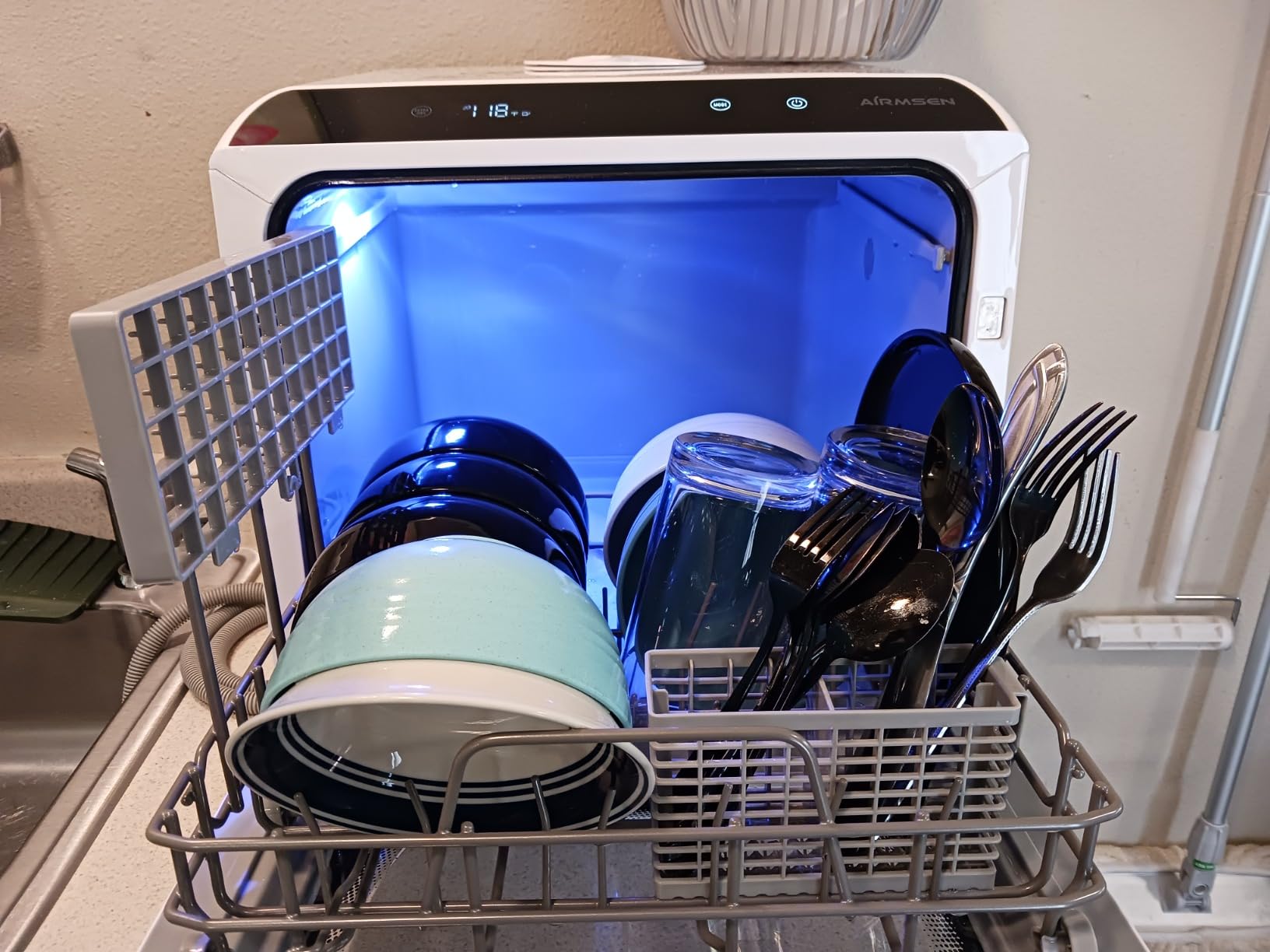
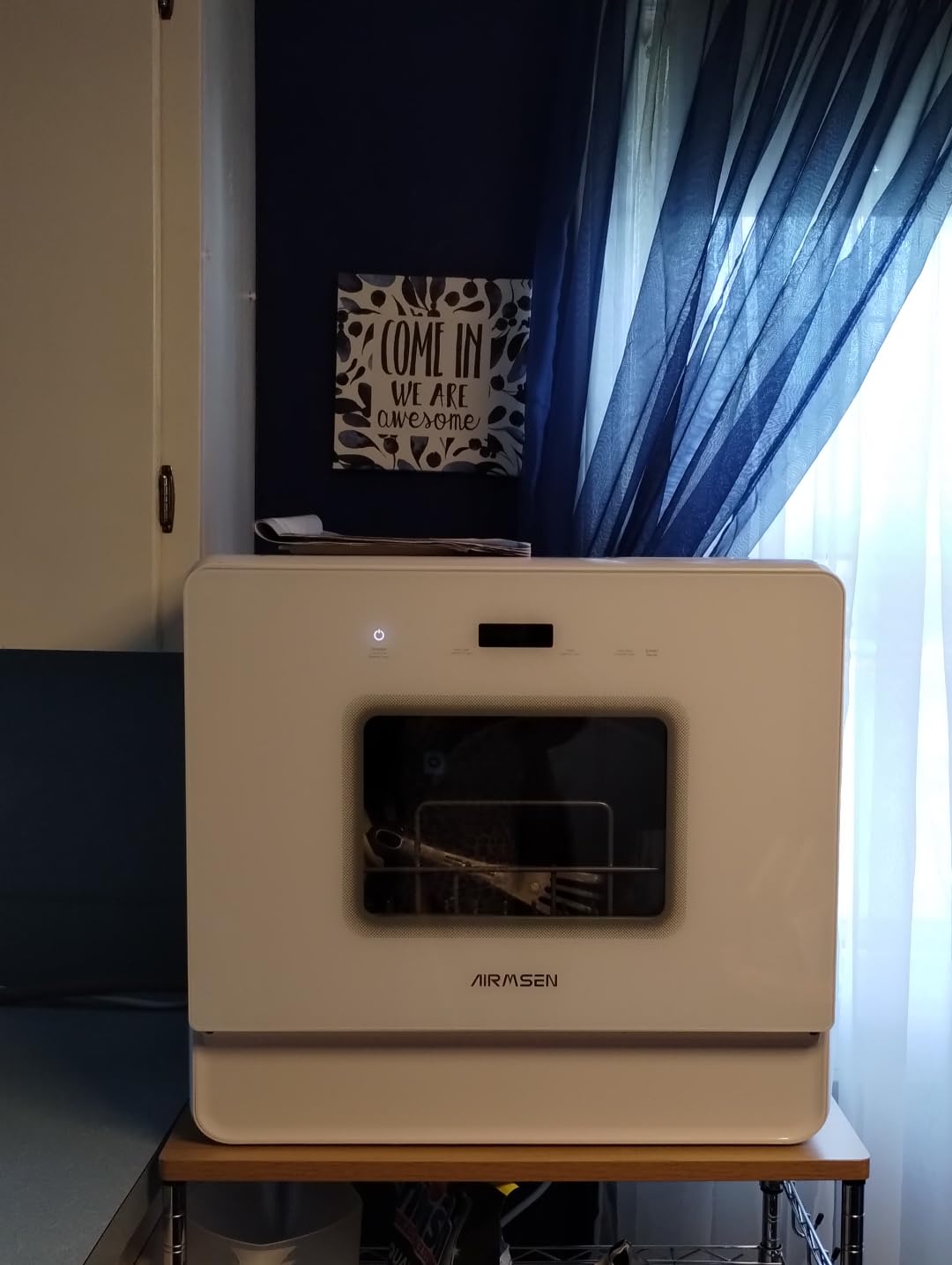
If the reason you are reading about well water dishwashers is cloudy glasses, the AIRMSEN TDQR03 is the one to test first. It has the highest average rating in the group at 4.6 across more than 1600 reviews, and the single most common phrase in that feedback is that dishes come out spotless. Tank-only owners without a nearby sink choose it for that reason as much as for the results.
There is no integrated water softener, so the anti-spot performance comes from the wash system rather than from ion exchange. Water reaches up to 167 degrees Fahrenheit through 14 nozzles arranged for 360 degree spiral spray from both upper and lower arms. Hot water plus thorough agitation breaks down grease and minerals on the glass surface rather than leaving them to dry onto it.
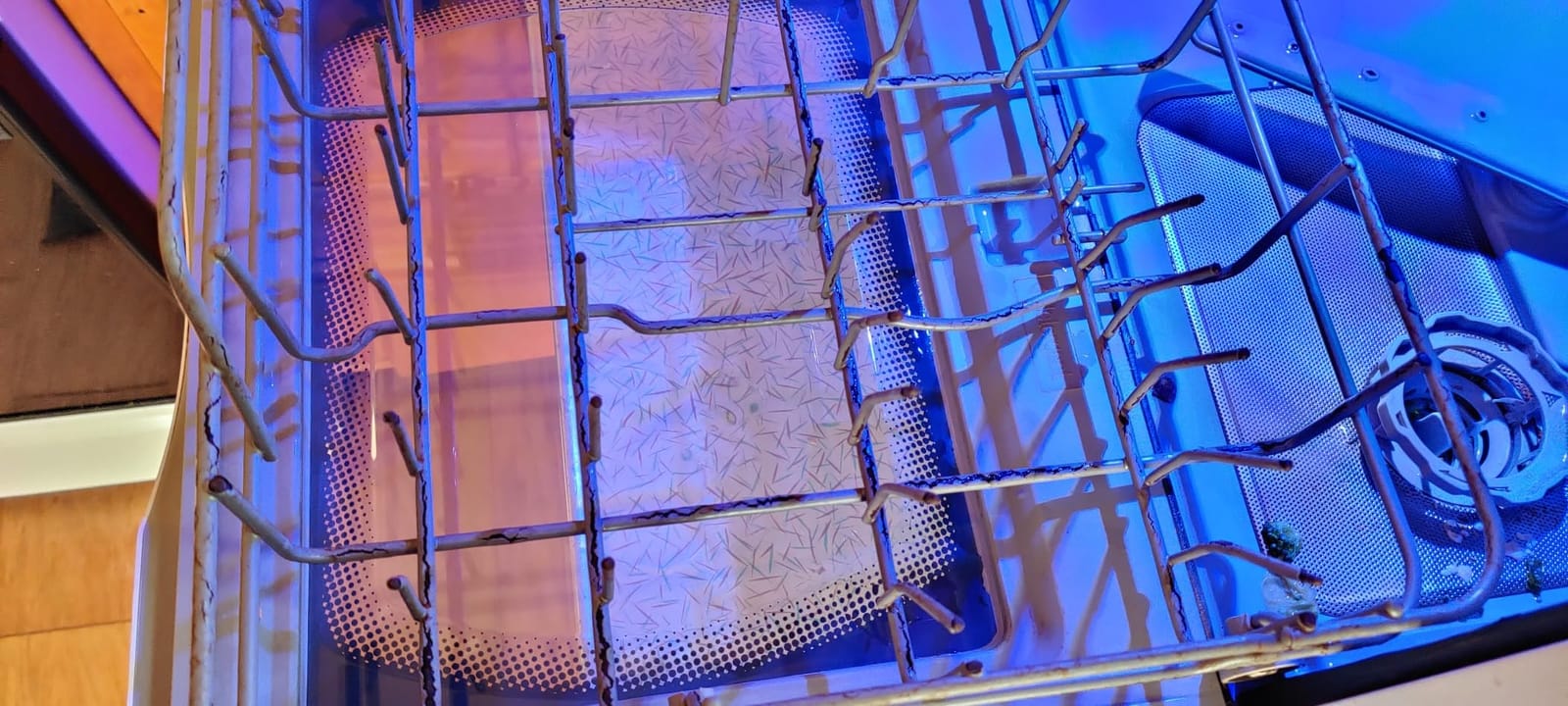
Water use is 5 L per cycle, which owners put at roughly 80 percent below handwashing. The 5 L built-in tank means it runs with no installation, and an included 60 inch hose allows a faucet connection if you want continuous feed. Minimum inlet pressure is listed at 40 kilopascal, a useful number to check if your well pump cycles.
Five washing programs come with two enhanced functions: a 60 minute drying cycle and 72 hours of ventilated storage. That storage mode is the sleeper feature in a hard water house, because it keeps air moving over damp glassware long after the cycle ends.
This is the right pick if glassware is what you are trying to save
Choose this machine if your problem is specifically spots and cloudiness on drinking glasses and stemware, and you are not trying to run a full kitchen through it. The high temperature wash and the dense nozzle layout attack the residue directly, and owners with hard water report the cleanest glassware results in this group.
The 26.5 pound weight and 16.86 by 16.75 by 18.05 inch footprint also make it a realistic choice for a rental or an off-grid cabin, and the two year warranty is the joint longest here.
This is the wrong pick if you wash large plates or pans daily
Plates larger than about 12 inches have to be placed at an angle, which eats into the capacity of a rack that already fits around 40 items at best. Pots and pans still need hand washing; this is not a full-size machine in any configuration.
There is also no dedicated detergent dispenser, so powder or tablets sit in the tub rather than in a compartment. On well water, that is a minor nuisance because undissolved detergent residue is harder to rinse out of the tub than residue flushed from a dispenser, so measure carefully rather than dropping a tablet in.
4. COMFEE’ CDC17P0ABB – Best for a Cabin With Very Little Counter Space
- Built-in tank with a filling guide pitcher means no faucet hookup
- 162F hygiene cycle suits bottles and childrens tableware
- Air Refresh mode circulates air for drying and odor control
- Fits 30+ items up to 9.5 inch plates
- Over 3200 ratings from an established brand
- No water softener or salt compartment
- 62 dB is the loudest unit in the roundup
- Cycles run past two hours
- Cramped utensil holder that will not take all flatware
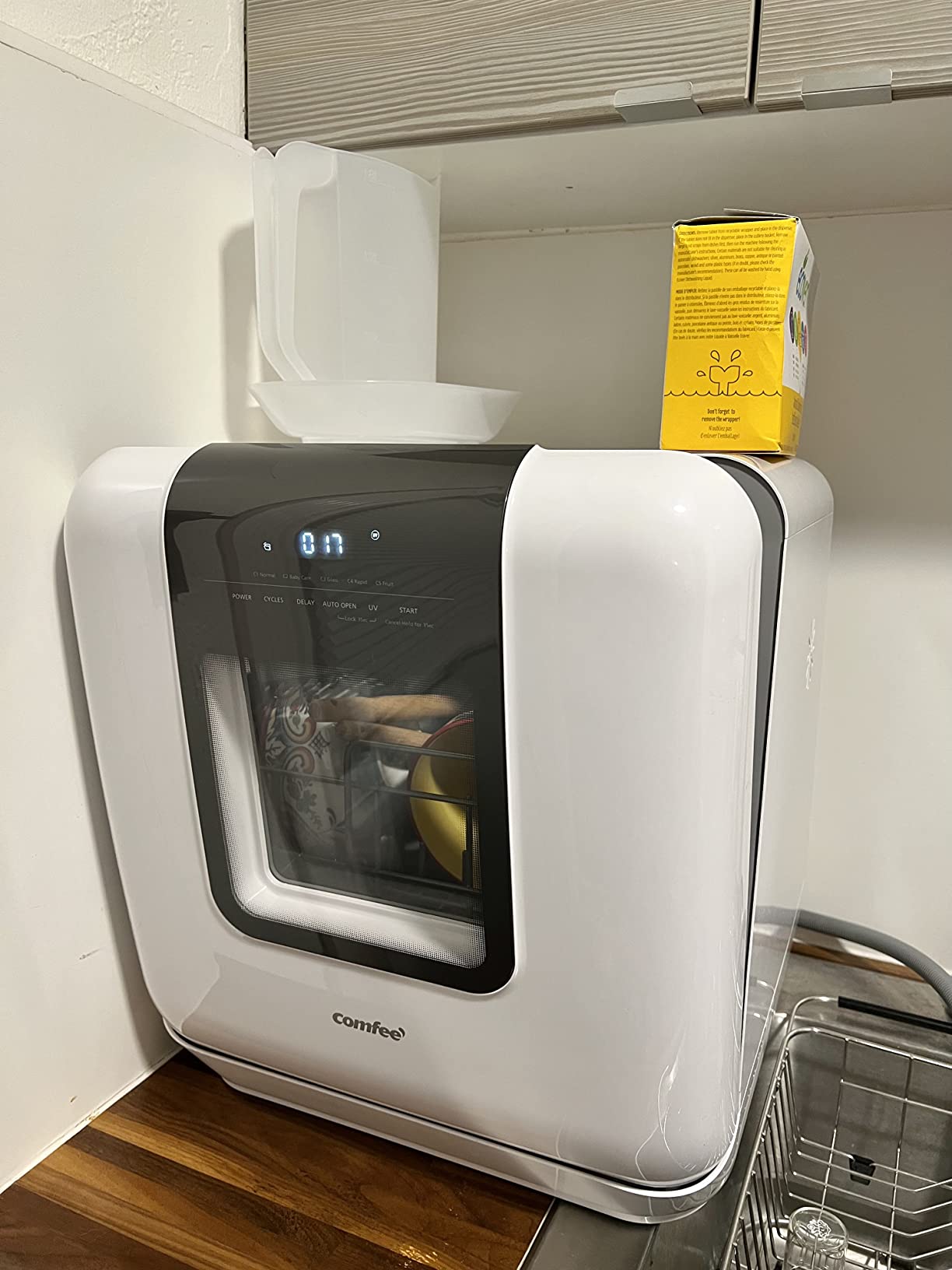
The COMFEE’ CDC17P0ABB is the smallest-footprint unit here, and that is its whole case. At 16.53 inches wide and 17.24 inches tall it clears counters that nothing else in this list will, and the built-in 1.32 gallon tank with a filling guide pitcher means it can be set up anywhere with a power outlet and a place to drain.
Hard water is the weak spot. There is no softener and no salt compartment, and at a 4.0 average across more than 3200 ratings it has the lowest score in the group, with a 15 percent one-star share reflecting durability complaints rather than cleaning failures. If your water is very hard and you are not disciplined about rinse aid and descaling, the glassware will show it.
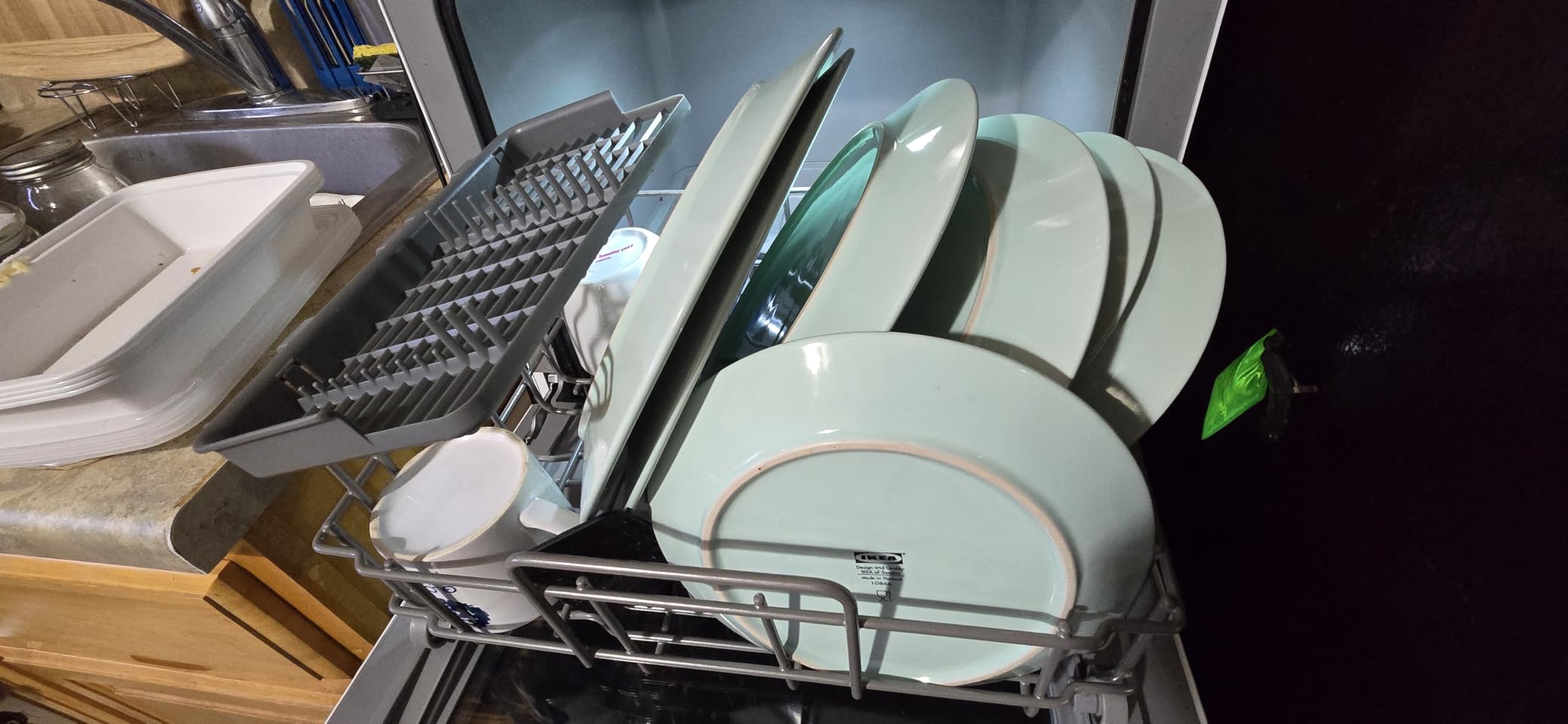
What it does offer is a 162 degree Fahrenheit hygiene cycle for heavily soiled dishes and baby bottles, 360 degree dual spray arms, and an Air Refresh mode that circulates air to remove moisture and odour. An optional direct faucet hookup comes with an included adapter hose if you later decide a permanent connection makes sense.
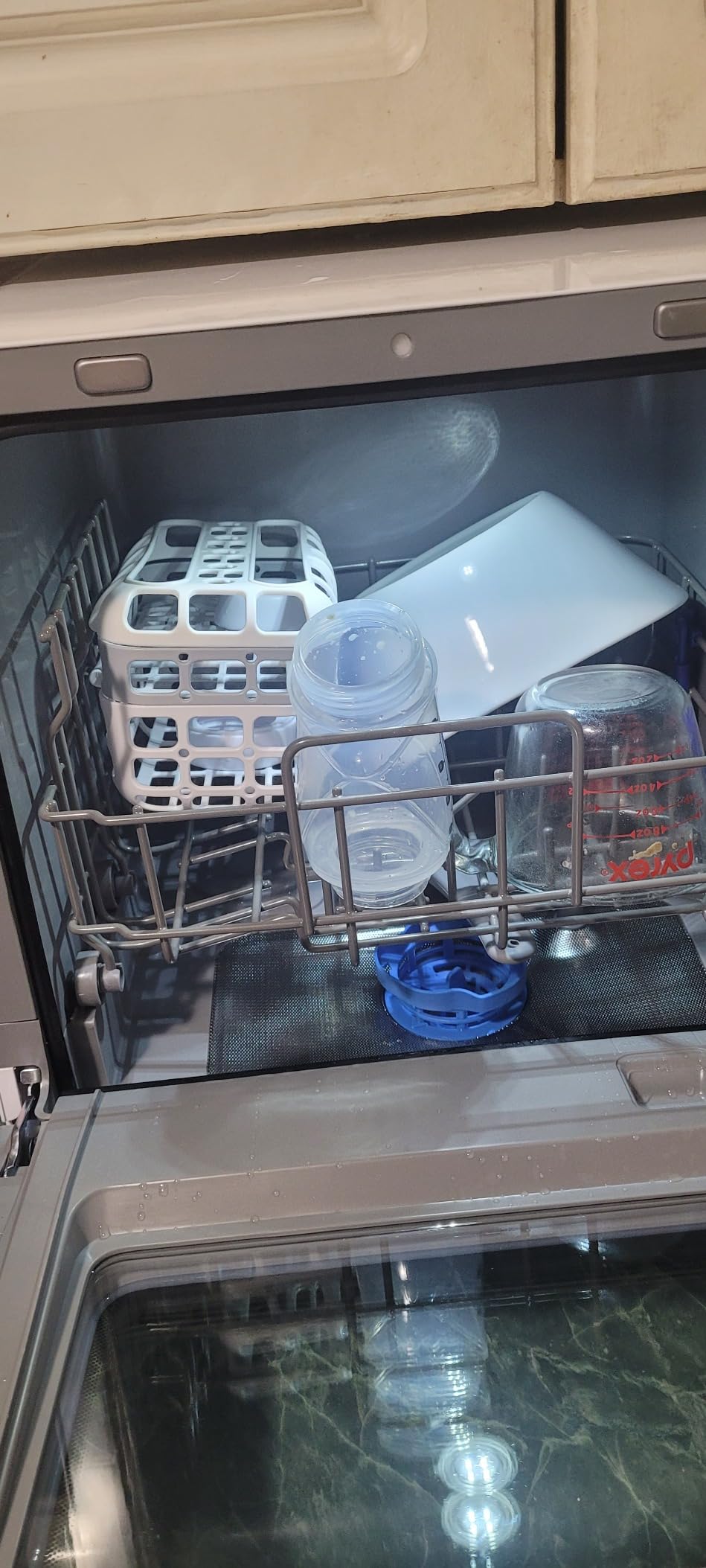
Capacity is 30 or more items up to 9.5 inch plates. The unit needs more than 19.6 inches of clearance under wall cabinets, and the 1.44 foot hose is the shortest in the roundup, so plan the drain route before it arrives.
This is the right pick if space is the binding constraint
In a small cabin, a studio, or a kitchen where the only available counter is a 17 inch gap between the wall and an appliance, this is the machine that fits. It also carries a 36.6 pound weight, heavier than it looks, so plan the lift path rather than the shelf height alone.
The hygiene cycle at 162 degrees is the feature families appreciate most, and the clear manual makes the top-fill routine obvious on the first use.
This is the wrong pick if noise or glassware matters most
At 62 dB it is the loudest unit here, and in a quiet rural house that is immediately noticeable. Combined with cycles that run past two hours on the regular, hygiene and glass programs, it is a slow machine in a small body.
Two further cautions for a hard water house: the drain hose clamp and suction cup are reported as ineffective by owners who improvise their own securing method, and the utensil holder slots are cramped enough that not all flatware fits. Check both against your setup.
5. BLACK+DECKER BCD6W – Best Stainless Steel Tub
BLACK+DECKER Countertop Dishwasher, Energy Star Certified, BCD6W, White
- Stainless steel interior resists baked on grease better than plastic tubs
- Largest capacity here at 6 place settings
- Energy Star certified
- Quick Connect faucet adapter makes hookup reversible
- Recognizable brand with parts and labor cover
- No water softener and faucet hookup only
- Heavy and bulky at 46.2 pounds
- Weak drying without rinse aid
- Plates over 10.5 inches will not fit
The BLACK+DECKER BCD6W is the only machine in this roundup with a stainless steel interior, and that single fact is the argument for it in a well water house. Plastic tubs are cheaper to build and lighter to move, but in a machine that runs hot water through mineral-laden supply on a daily cycle, a metal tub holds up better over a decade and wipes down rather than holding grease in the texture of the plastic.
It is also the roomiest of the eight at 6 place settings, and it carries seven cycles: normal, intensive, eco, glass, 90 minutes, rapid and soak. The glass program is worth using regularly in a hard water home, and the 90 minute cycle suits a smaller evening load.
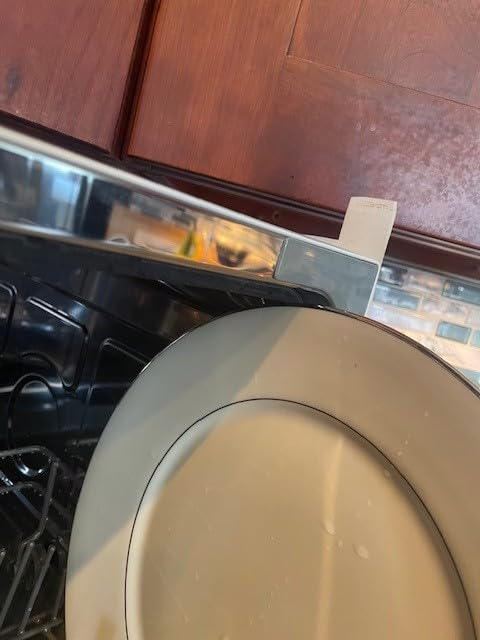
There is no built-in water softener, which means everything about its hard water performance depends on consumables and cleaning cadence. Drying is also the weakest element in this machine: owners report that water leaves during the cycle and that the results need rinse aid to be acceptable, which is exactly the setup that produces spotting when the water is hard.
Long-term owners report consistent cleaning over hundreds of cycles, and reviews in the set stretch back nearly a decade, which is unusually useful depth for a compact appliance. The Quick Connect faucet adapter is genuinely well thought out because it makes the hookup a few-second job, so you can disconnect the machine to move it or clear the counter.
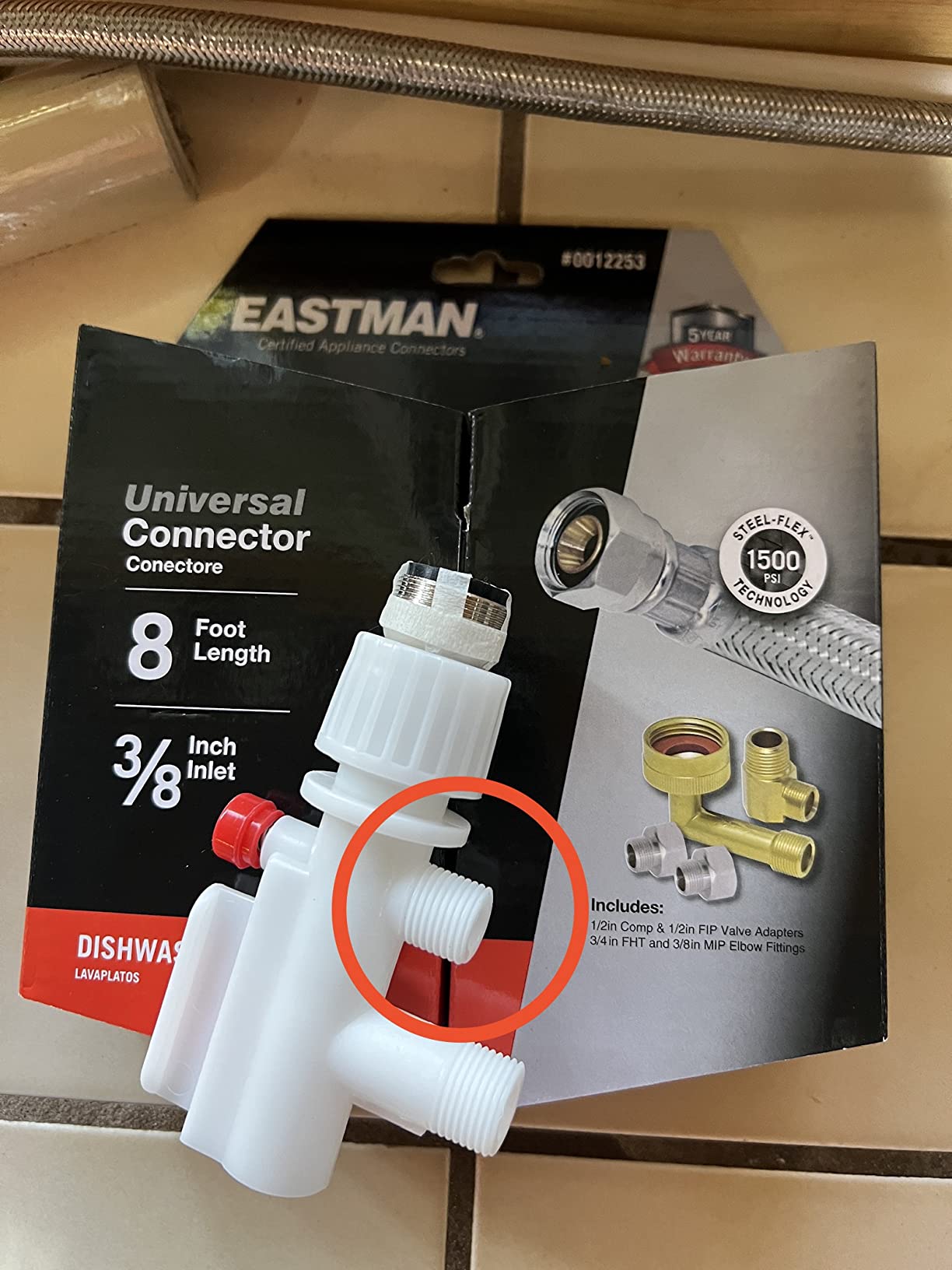
This is the right pick if longevity and tub hygiene are your priorities
Choose it if you want the machine to still be working in ten years and you would rather scrub a stainless tub than live with a plastic one. At 46.2 pounds and 21.5 by 21.7 by 17.2 inches it is the heaviest and most counter-hungry unit here, so it suits a proper kitchen rather than a temporary counter.
Energy Star certification and the reversible faucet connection both help it slot into a working household, and a recognizable brand matters more than usual in a rural area where parts availability drives repair cost.
This is the wrong pick if you cannot hook it to a faucet
There is no built-in water tank, so this machine will not run away from a sink. That single limitation disqualifies it for most cabins, RVs and off-grid setups, and it is the main reason it is not higher in this list for a well water audience.
On hard water, plan to buy rinse aid from day one and to run a descaling cycle monthly, because drying without rinse aid is the weak point and dry mineral residue is what you are trying to avoid.
6. EUHOMY DW001-5 – Best for Quiet Rooms and Drying
EUHOMY Countertop Dishwasher Portable, 6 Programs with 40 dB, No Hookup
- Quietest unit in the roundup at 40 dB
- Built-in 5 L tank with a water level indicator that chimes when full
- Baby Care and Heavy program reaches 167 degrees
- 29 minute quick cycle for small loads
- 60 min hot air dry plus up to 73 hours of ventilation
- No water softener and a verified owner reports residue on hard water
- Inconsistent drying so owners add manual dry cycles
- Utensil holder slots poorly spaced
- Dishes must be pre rinsed or food remains
The EUHOMY DW001-5 does two things the other units here do not. It runs at 40 dB, the quietest figure in the roundup, and it pairs a 60 minute hot air dry cycle with up to 73 hours of automatic ventilation. In a hard water house, that ventilation window is not a gimmick. It is the difference between water evaporating off glassware as droplets and water evaporating off glassware as a film.
There is no water softener, and the review data is direct about the consequence: a verified owner in a hard water home reports visible residue on dishes. At a 4.5 average across more than 1000 ratings, with 78 percent five-star, the machine is otherwise well regarded, so treat the residue as a water problem rather than a quality problem.
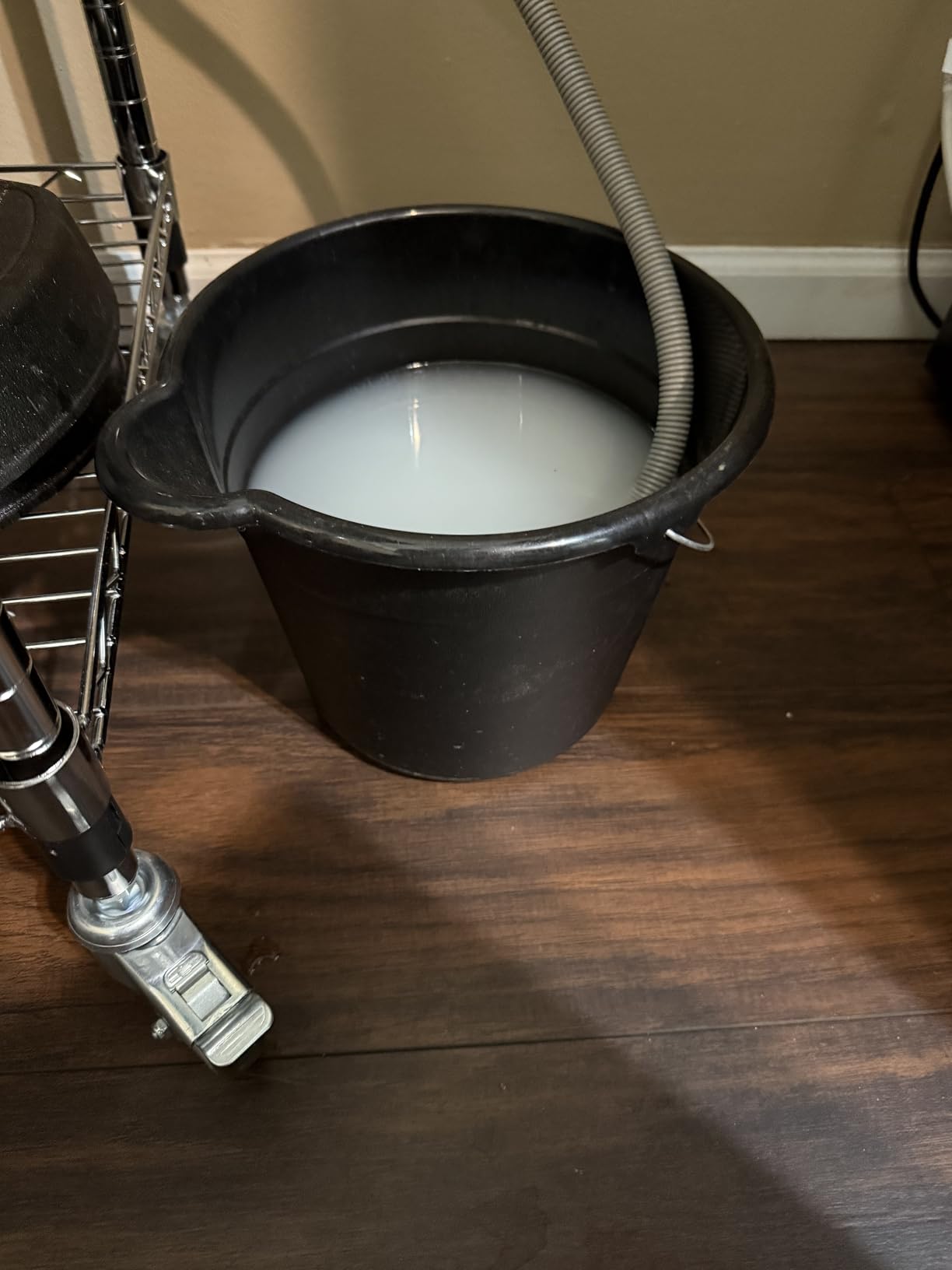
The built-in 5 L tank has a water level indicator that chimes when it is full, which removes the most common failure mode of portable machines: running a cycle on a partly filled tank. A 29 minute quick cycle handles a small evening load, and the Baby Care and Heavy program reaches 167 degrees Fahrenheit. The unit is ETL and DOE certified with a 1 year warranty.
Capacity is 30 or more items with plates up to 10.25 inches. It needs more than 19 inches of vertical clearance under cabinets, and at 28.6 pounds it is one of the lighter machines to move.
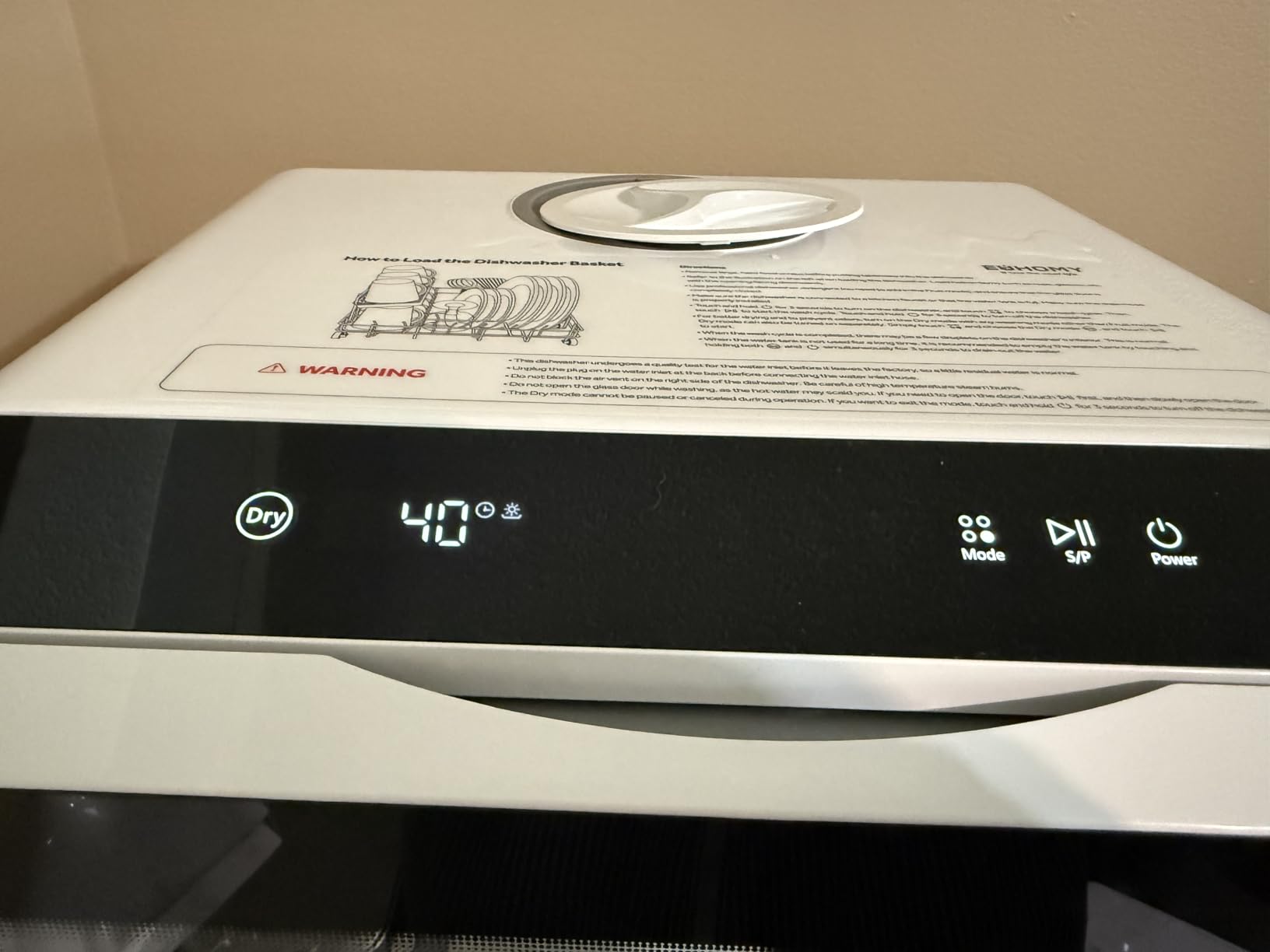
This is the right pick if noise and dry glassware are the priority
In an open kitchen where the dishwasher sits within earshot of a living area or a home office, 40 dB is a genuine step down from the 60 dB machines. The long ventilation cycle also means you can load, run and walk away rather than standing at the machine to towel plates.
The top-fill tank and its audible level indicator make it the easiest machine here to use daily without planning, which matters when a small tank is part of the design.
This is the wrong pick if you need the machine to handle very hard water
There is no softener, and the residue report is the clearest warning in this roundup. If your water is above 10 gpg, this machine will not be the one that convinces you the problem is solved.
Owners also report inconsistent drying, with several adding manual extra dry cycles, and note that the supplied faucet attachment does not always mate with the machine. If you plan on a faucet connection, confirm the fit before relying on it.
7. AIRMSEN ZMW-DUHA01 – Best Slim Body With a Salt Reservoir
AIRMSEN Large Slim Countertop Dishwasher | Built-in Water Tank
- Integrated water softener that accepts dishwasher salt to cut spotting
- 14.2 inch slim depth fits narrow counters with 25 percent more interior
- Two tier rack takes 5 place settings and plates to 11.8 inches
- Three high pressure spray arms and a 167 degree wash
- Two year warranty
- 19.5 inches tall so it will not fit under 15 inch cabinets
- Needs 23.5 inches of cabinet height to refill from above
- Shallow top cutlery tray
- Tank full beep is quiet and unreliable
The AIRMSEN ZMW-DUHA01 is the second and last machine here with an integrated water softener, and in some ways it is the better engineered of the two for a hard water house. Its selling feature in owner reviews is that it accepts dishwasher salt to reduce spotting, cut detergent use and extend machine life, which is precisely the three-part benefit a well water owner is looking for.
The body is only 14.17 inches deep, which lets it sit against a wall where a standard 16.86 inch unit will not, yet the interior is 25 percent larger. The two tier rack holds 5 place settings, plates up to 11.8 inches, and pans with handles up to 18.5 inches long, which no other unit in this roundup manages.
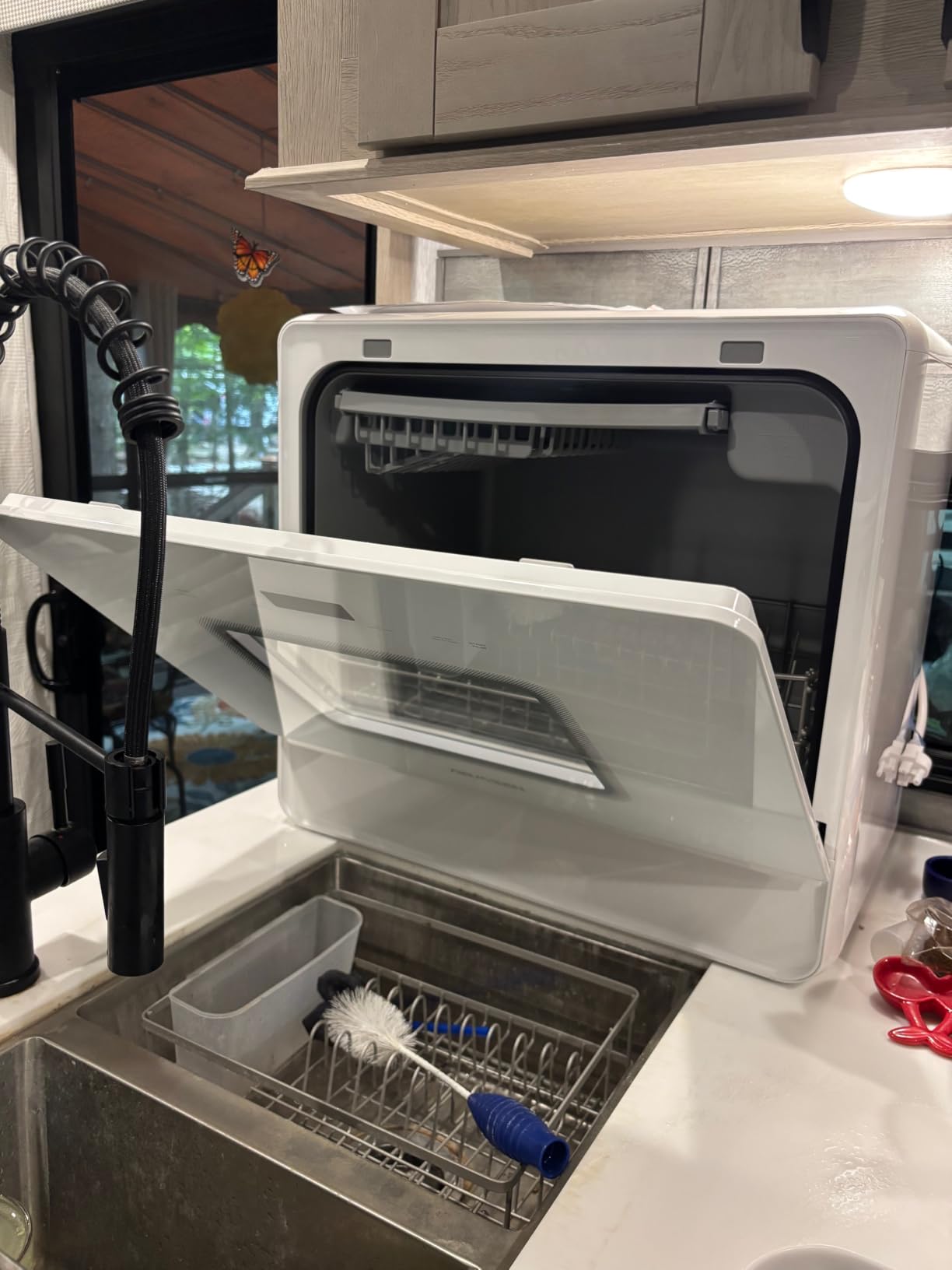
Three high pressure spray arms deliver 360 degree coverage with a 167 degree high temperature wash across seven programs: normal, delicate, heavy, express at 28 minutes, baby care, fruit at 9 minutes and self-clean. The 1.4 gallon built-in tank works out at about 2.5 kettle fills per cycle and uses roughly 80 percent less water than handwashing, with a 2 to 12 hour delay start and a 2 year warranty.
This is the newest and least reviewed machine in the roundup at 514 ratings, with a review mix weighted heavily toward recent model years, so the long-term track record simply does not exist yet. Owners are praising the slim but roomy format, and the dominant issue in that feedback is height rather than performance.
This is the right pick if your counter is shallow and your water is hard
It combines the two things a well water owner usually has to choose between: a salt reservoir that does something about hardness, and a narrow body that fits a counter a standard unit would overhang. The 11.8 inch plate capacity and the 18.5 inch pan handle allowance also make it the most capable loader here.
If your water is hard and your counter is awkward, this is the machine we would test before any of the six without a softener.
This is the wrong pick if your cabinets are low
At 19.5 inches tall it will not fit under common 15 inch cabinets, and one owner reports it running about 3 inches taller than the listed figure. You also need at least 23.5 inches of cabinet height to refill the tank from above.
Some owners see white drip marks after drying, the shallow top cutlery tray will not hold cups as the diagrams suggest, and the tank full beep is quiet enough that owners report missing it, which on a softener-equipped machine means running low unnoticed.
8. COMFEE’ CDC17P2AWW – Best Tank Volume for a Household Load
- 6 L tank is the largest capacity in the roundup
- Auto open door and turbofan vent steam for faster drying
- 162F hygiene cycle plus 192F max rinse
- Upgraded interior takes a 10.5 inch plate
- 0.35 kWh per normal cycle
- No water softener and an owner suspects hard water in an early failure
- 62 dB and a plastic interior
- Reported lifespan of roughly 4 years
- Detergent compartment is missing so pods will not dissolve
The COMFEE’ CDC17P2AWW wins the tank volume competition outright at 6 L, and that is not a small thing in a house without a plumbed dishwasher. A bigger tank means fewer top-fills per day, which is exactly the friction that makes people stop using a portable machine and go back to handwashing.
The drying design is also the best in the roundup for hard water. An auto-open door releases steam as the cycle ends and a built-in turbofan keeps air moving, so glassware emerges closer to cabinet-ready. The 192 degree max rinse and 162 degree hygiene cycle add high temperature options that help with mineral film on heavily soiled items.
The trade-offs are real. There is no water softener or salt compartment, and the most useful caution in the whole file comes from a verified owner who reports an E4 failure after about 10 cycles and wonders whether hard water contributed. That is one report, not a pattern, and it is the kind of question you cannot answer without seeing the water.
At a 4.1 average across more than 3000 ratings, with 67 percent five-star and 12 percent one-star, the machine does well for owners who pre-rinse and use powder detergent, and reported lifespan is around four years before failure, which is short for a decade-oriented investment but not unusual at this size.
This is the right pick if you want fewer top-fills per day
For a household washing 30 to 40 items a day, the 6 L tank plus the upgraded interior that accepts a 10.5 inch plate is the practical combination. Running at 0.35 kWh per normal cycle keeps the running cost low, and the see-through window and LED display are helpful for monitoring a load.
It also suits dorms, apartments and RVs where water is drawn from a tank rather than a supply, and the quick-connect inlet hose is included with an adapter.
This is the wrong pick if detergent pods are your habit
There is no proper detergent compartment, so powder is required and pods will not dissolve properly in the tub. On hard water that matters more than usual, because undissolved detergent residue and mineral residue behave similarly on glass and both read as spotting.
At 62 dB with a plastic interior that holds grease, and a roughly four year reported lifespan, this is a machine to buy for volume and drying convenience rather than longevity.
What Makes a Dishwasher Well Water Friendly
A dishwasher is well water friendly when it has a built-in water softener that regenerates with dishwasher salt, which swaps calcium and magnesium ions for sodium so they cannot precipitate onto glassware as spots or scale. Without that mechanism, the machine is not a well water machine. It is a machine that will need more of your attention in a hard water house.
That is the whole answer in one sentence, and it is worth internalising before you look at any other specification. Everything below is a refinement of it.
Test your water before you buy anything. Pick up a hardness test strip, immerse it, wait the stated time, and compare the colour to the chart on the tube. Under 3 grains per gallon is soft, 3 to 7 is moderately hard, 7 to 10 is hard, and above 10 is very hard. If you have no test strip, your local health department will often test a sample for free, and that number determines everything else on this list.
Set the hardness dial to your measured number. Machines with a softener reservoir have a control that tells the machine how hard the incoming water is so it regenerates at the right interval. A dial set too low lets scale through. A dial set too high burns salt faster than you need and can leave the reservoir over-salted. On the machines here without a dial, you are managing this problem by hand instead.
Understand what a built-in softener does not fix. Ion exchange removes calcium and magnesium. It does not remove iron, manganese, sediment or most dissolved solids, and on well water those are frequently the bigger problem. A pre-filter on the supply line is the more effective fix for iron, and no dishwasher softener will substitute for it.
Pick a drying system that moves air. Condensation drying lets moisture condense on a cool tub wall and runs warm water over it, which works but creates a damp environment. Hot air and auto-open drying push air across dishes, so water leaves as vapour rather than sitting as droplets that dry into chalk. On hard water this is the single most effective non-hardware change you can make, and it is why the ventilation cycles on the Hermitlux, AIRMSEN and EUHOMY are worth paying for.
Prefer a stainless steel tub if you can. Metal resists corrosion and mineral staining better than plastic and wipes down clean. In a decade of daily cycles on hard water, that difference compounds.
Use rinse aid, and know what the dial numbers mean. Rinse aid lowers the surface tension of the rinse water so droplets spread and slide off instead of evaporating into spots. The dispenser dial controls dose: low on soft water, higher on hard water. Most people on well water run the highest setting permanently and would be better served by a machine with a softener.
Know the difference between film and etching. Mineral film sits on the surface, feels slightly gritty, and wipes or dissolves away with vinegar or a citric acid cycle. Etching is a chemical change to the glass itself, caused by alkaline detergent and heat acting together, cannot be scrubbed off, and only gets worse with more of the same. The diagnostic test: rub the cloudy area with a fingertip. If it feels rough, it is etching. If it feels smooth and wiping it helps, it is film. Etching is not hard water damage, though hard water makes it more likely.
Well Water vs Hard Water: What Actually Changes
Well water is not simply harder than municipal water. It is a different category of problem, and treating the two as identical is why some well owners run a descaling routine for years and still have spotted glassware.
Hardness is one measurable variable, reported in grains per gallon. Total dissolved solids is a broader measure of everything dissolved in the water, and it captures minerals a hardness test will not. On a private well, a TDS reading in the 300 to 500 range is common and is itself a predictor of spotting, because the rinse water carries enough dissolved material to leave a deposit as it dries.
Then there are the contaminants specific to wells. Iron above roughly 0.3 mg per litre will stain dishes and fittings orange-brown, and it will also settle in the bottom of a dishwasher tub as rust-coloured sediment. Manganese produces dark or black staining that is notoriously difficult to remove. Sediment from the well casing grinds into spray arm jets and the drain pump, reducing flow and eventually causing error codes, and no amount of salt fixes any of it.
There is also pressure. Well supply from a pressure tank can drop below a machine’s minimum inlet requirement during pump cycling, and the listed minimum for several units here is 40 kilopascal. Marginal pressure produces weak rinsing, which leaves more detergent and mineral residue on dishes, and on well water that shows up as film that looks exactly like a detergent problem.
Our advice for well owners is therefore in this order. Test hardness and TDS before choosing a machine. If iron, manganese or sediment are present, deal with them at the supply with a filter, because no dishwasher is designed for them. Then choose a dishwasher with a salt reservoir and a high temperature wash, and commit to a monthly descaling cycle. More detailed guidance on rural water systems is in our well pump guide, which covers the pressure side of the same problem.
Dishwasher Salt vs a Whole-House Water Softener
Every well water owner eventually asks the same question, and the forums answer it consistently: a whole-house softener fixed the limescale everywhere, in the dishwasher and the washing machine alike, while a dishwasher salt reservoir only ever treats the water that machine sees.
The trade is breadth against convenience. A dishwasher softener costs a few pounds of salt a month and needs refilling, and it does nothing for glassware you wash by hand, for the kettle, for the shower head, or for the washing machine scale that ruins the heating element over time. A whole-house softener treats everything at the point of entry, needs salt or pellets on a schedule you set once, and costs considerably more to install.
For a whole household on a well, the whole-house unit is the better long-term decision because it protects every appliance and every fixture. For a renter, a cabin owner, or anyone who cannot install one, the two softener-equipped machines on this list are the practical answer.
One caution that surfaces repeatedly in homeowner discussions: some people report a bad smell from their dishwasher after a whole-house softener is installed, blaming the machine when the cause is usually stagnant water sitting in the drain hose or a change in the microbial content of the softened supply. If you fit a softener, run the machine hot and empty a few times before loading dishes.
Descaling and Monthly Maintenance on Hard Water
On water above 7 gpg, a monthly routine costs about ten minutes and prevents the buildup that turns into an expensive repair. This is the routine we recommend, and the reason it matters is that scale forms in the spray arms, filter, pump, drain and recirculation hoses, not just in the visible tub.
Run an empty hot cycle with a citric acid or limescale detergent in the detergent compartment. Vinegar is a weaker alternative and does not reach scale inside the recirculation path, so treat it as a maintenance rinse rather than a descaler.
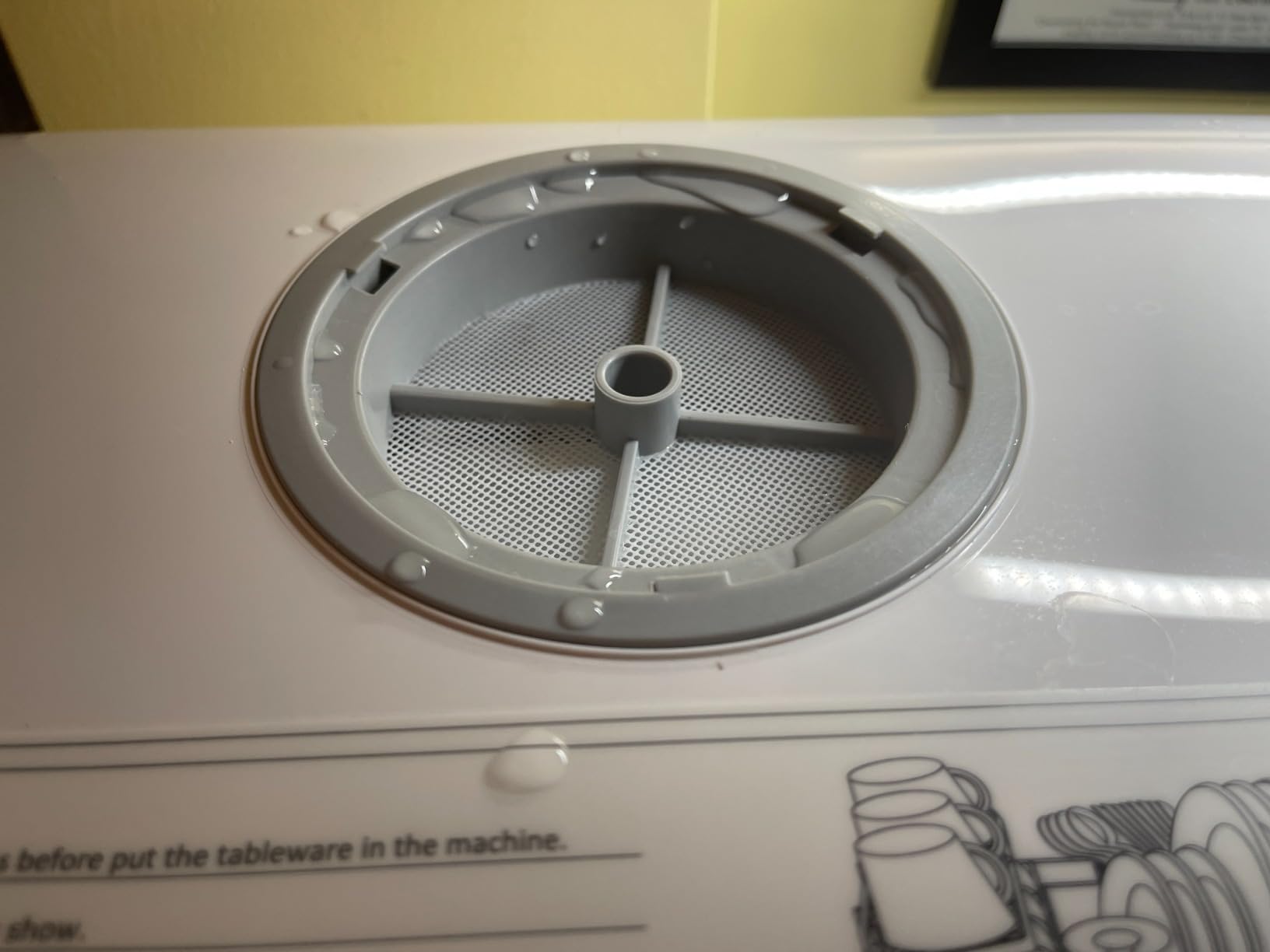
Take the filter out and rinse it under cold running water. A clogged mesh filter starves the pump and it shows up as poor cleaning long before it shows up as a failure.
Check both spray arms by hand. Hold a fingertip over each jet; a jet that feels soft or blocked is a blocked jet. Clear them with a toothpick and flush the arm with hot water.
Wipe the door seal and the door edge, where the drying system condenses moisture, and check the heating element for a visible mineral crust.
Top up the salt reservoir if your machine has one, and refill the rinse aid. On a softener-equipped machine, running the reservoir dry is the fastest route to the spotting the machine was bought to prevent.
Wipe the stainless tub walls while they are still damp, once a month, with a soft cloth. This takes thirty seconds and prevents the chalky film that eventually needs a descaler to shift.
Frequently Asked Questions
Do dishwashers work with well water?
Yes, but only well if the water chemistry suits it. A private well can carry hardness, iron, manganese, sediment and dissolved solids, and only hardness is addressed by a built-in dishwasher softener. Measure grains per gallon and total dissolved solids first, fit a pre-filter if iron or sediment are present, then choose a machine with a salt reservoir and a high temperature wash. Budget for a monthly descaling cycle regardless.
What is the best dishwasher if you have hard water?
The one with a built-in water softener that regenerates with dishwasher salt, because ion exchange removes calcium and magnesium before they can spot glassware. Among the machines reviewed here, the HAVA TDJR09 offers selectable hardness settings and the AIRMSEN ZMW-DUHA01 combines a salt reservoir with a 14.2 inch slim body. Below roughly 7 grains per gallon, a high temperature wash, hot air drying and rinse aid are sufficient.
Does hard water ruin a dishwasher?
Not quickly, but it shortens machine life. Hard water precipitates as scale on the heating element, spray arms and tub walls, and a scaled heating element makes the machine work harder and run hotter to reach temperature. Descaling monthly and using a salt reservoir keeps the mineral load low. Filter failures that owners blame on water are often a symptom rather than a cause.
Is the white film on my glassware mineral deposit or etching?
Rub it with a fingertip. Rough means etching, which is a permanent chemical change in the glass caused by alkaline detergent and heat, and it will not scrub off. Smooth, and improved by wiping with vinegar or a citric acid cycle, means mineral film, which is reversible. Hard water raises the odds of etching but is not the direct cause, so reduce detergent dose and lower the wash temperature if etching is spreading.
Do I still need rinse aid if I use all in one dishwasher tablets?
Usually yes, on hard water. All in one tablets contain detergent and sometimes rinse aid, but the rinse aid dose is sized for average water. On well water above 7 grains per gallon, run the dispenser separately and set it to the highest dose. Rinse aid lowers surface tension so water slides off glassware as a film instead of drying into discrete spots.
Final Verdict for Well Water Homes
The best dishwasher for well water in this roundup is the HAVA TDJR09, because it is the only machine here whose water hardness level you can actually set to match a measured test, and the built-in softener is the feature that actually changes the outcome in a hard water house. If your counter is deep but your glassware is the problem, the AIRMSEN TDQR03 produces the cleanest results owners report. If you are washing a lot of dishes in a small space, the Hermitlux HDW5CW01 has the widest following and the best value per load. If you want a salt reservoir and a narrow 14.2 inch body, the AIRMSEN ZMW-DUHA01 is the one to test.
Measure your water first. The number decides which of these you need, and it is the one piece of information no amount of product research can supply for you.