
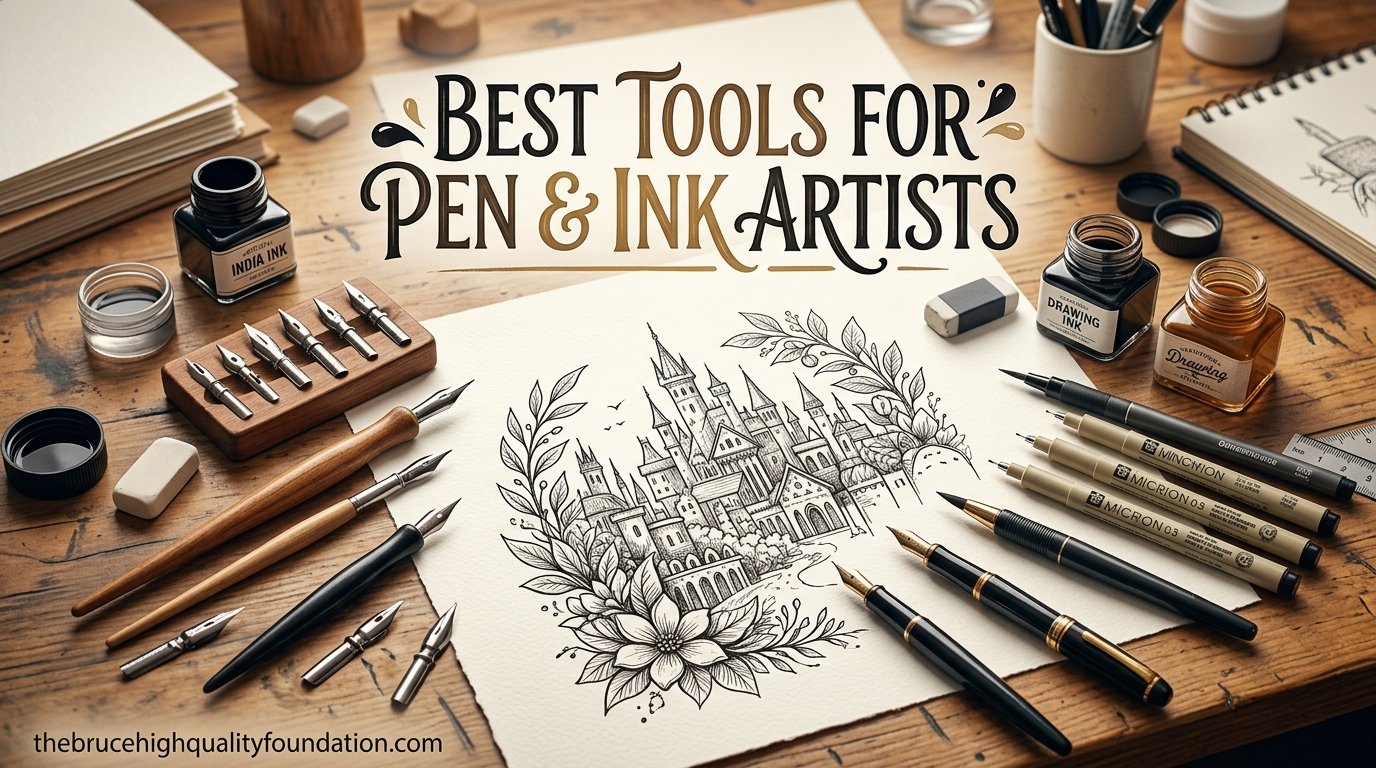
I have spent the better part of a decade testing pens, inks, papers, and nibs, and I can tell you that finding the best tools for pen and ink artists is not about buying the most expensive gear. It is about finding the right combination of instruments that match your style, your hand pressure, and the kind of marks you want to make on paper. Whether you are into tight cross-hatching, loose urban sketching, or expressive brush work, the tools you choose will shape your art in ways you might not expect.
Over the past several months, our team tested 12 essential products that cover every category a pen and ink artist needs: fine liner pens, brush pens, dip pen nibs and holders, bottled inks, bristol paper, and precision erasers. We drew on multiple paper types, tested ink waterproofness with watercolor washes, and put each tool through long drawing sessions to see how it held up. If you want to dive deeper into specific categories after reading this guide, check out our write-ups on the best fineliner pens for drawing and the best India ink sets for artists.
This guide is built for everyone from absolute beginners assembling their first pen and ink starter kit to experienced illustrators looking to upgrade their workflow. We cover what each tool does well, where it falls short, and who it is best suited for. By the end, you will have a clear picture of exactly which tools deserve a spot on your desk in 2026.
Table of Contents
Top 3 Picks for Pen and Ink Artists in 2026
If you want the short version before we get into the details, these are the three tools I would grab first. They represent the best overall value, the best bang for your buck, and the best budget option for artists who are just starting out.
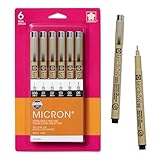
SAKURA Pigma Micron Fineliner Pens
- Archival quality ink
- 6 tip sizes
- Waterproof fade-resistant
The Sakura Pigma Micron set earned our Editor’s Choice because it is the gold standard fineliner that professional artists have relied on for decades. The Tachikawa nib holder takes Best Value because it opens the door to the entire world of dip pen inking at a remarkably low price. And the Pentel Fude Brush Pen is our Budget Pick for artists who want expressive, pressure-sensitive lines without spending a fortune.
Each of these three tools covers a different inking style, which is exactly why I recommend having all three in your kit. You get precision work from the Microns, traditional dip pen character from the Tachikawa holder, and dynamic brush strokes from the Pentel. Together they cost less than what many people spend on a single premium pen.
Best Tools for Pen and Ink Artists in 2026: Complete Comparison
Here is a side-by-side look at all 12 tools we tested. Use this table as a quick reference, then scroll down for the full review of each product.
| Product | Specifications | Action |
|---|---|---|
| SAKURA Pigma Micron Fineliner Pens |
|
Check Latest Price |
 Tombow Fudenosuke Brush Pens Tombow Fudenosuke Brush Pens |
|
Check Latest Price |
 Winsor and Newton Drawing Ink Winsor and Newton Drawing Ink |
|
Check Latest Price |
 Strathmore 300 Series Bristol Strathmore 300 Series Bristol |
|
Check Latest Price |
 Tombow Mono Zero Eraser Tombow Mono Zero Eraser |
|
Check Latest Price |
 Uni Pin Fine Line Pens Uni Pin Fine Line Pens |
|
Check Latest Price |
 Staedtler Pigment Liner Staedtler Pigment Liner |
|
Check Latest Price |
 Pentel Fude Brush Pen Pentel Fude Brush Pen |
|
Check Latest Price |
 Speedball Super Black India Ink Speedball Super Black India Ink |
|
Check Latest Price |
 Canson XL Series Bristol Canson XL Series Bristol |
|
Check Latest Price |
 Speedball C-Series Lettering Set Speedball C-Series Lettering Set |
|
Check Latest Price |
 Tachikawa Comic Pen Nib Holder Tachikawa Comic Pen Nib Holder |
|
Check Latest Price |
1. SAKURA Pigma Micron Fineliner Pens – Archival Ink Precision
- Crisp consistent lines for detailed work
- Archival waterproof ink that lasts decades
- Six tip sizes from 0.20mm to 0.50mm
- Quick-drying prevents smudging
- Durable tips resist fraying
- Not refillable
- Can dry out if left uncapped
- May bleed on thin paper
I have used Sakura Pigma Micron pens since art school, and they remain the first pens I recommend to anyone asking about pen and ink drawing supplies. The 6-pack gives you sizes 005 through 08, covering everything from whisper-thin detail lines to bold outlines. The pigment-based ink is pH neutral, waterproof once dry, and archival quality, which means your artwork will not fade or yellow over time.
What sets Microns apart from cheaper fineliners is the consistency of ink flow. I have never had a Micron skip mid-stroke or spit ink blobs onto my paper. The tips are surprisingly durable as long as you do not press too hard, and the quick-drying ink means left-handed artists can work without smudging. With over 64,000 reviews and a 4.8-star average on Amazon, the community consensus matches my experience.
The main downside is that Microns are disposable. When the ink runs out, the pen goes in the trash. Over time, this adds up if you draw frequently. They can also dry out if you forget to cap them immediately, which has happened to me more times than I care to admit. On thinner paper like standard sketchbook sheets, you may notice some bleed-through with the larger tip sizes.
For urban sketching, manga inking, stippling, and any work that demands consistent line weights, nothing beats the Pigma Micron. I always keep the 01 and 05 sizes in my daily carry kit. If you are building your first pen and ink starter kit, start here.
Tip Size Selection for Your Art Style
The 005 (0.20mm) is perfect for stippling, fine cross-hatching, and microscopic details, but it clogs more easily than the larger sizes. The 01 and 02 are your daily workhorses for general line work. Sizes 05 and 08 give you bold outlines and fill areas quickly. My recommendation: use the 005 sparingly and reach for the 03 or 05 for most of your drawing to extend the life of your pens.
If you do mixed media work with watercolor, the waterproof ink on Microns is a major advantage. Once the ink is fully dry, you can paint over it without any bleeding or smearing. Just give it a few minutes to cure before applying washes.
Long-Term Cost and Value
At roughly two dollars per pen in the 6-pack, Microns are more expensive than budget fineliners but significantly cheaper than premium options like Copic Multiliners. For most artists, the reliability and ink quality justify the price. I go through about one 6-pack every three months with regular use, which feels reasonable for the quality.
One pro tip: store your Microns flat rather than tip-down. This prevents ink from pooling in the nib and extends the life of the pen. I learned this the hard way after ruining two pens by storing them vertically in a cup.
2. Tombow Fudenosuke Brush Pens – Dual Tip Lettering Power
- Both soft and hard tips in one pack
- Excellent for learning brush lettering
- Quick-drying water-based ink
- Smooth ink flow with no skipping
- Affordable entry point
- Not waterproof
- Soft tip can bend with heavy use
- Disposable design
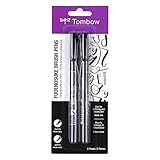
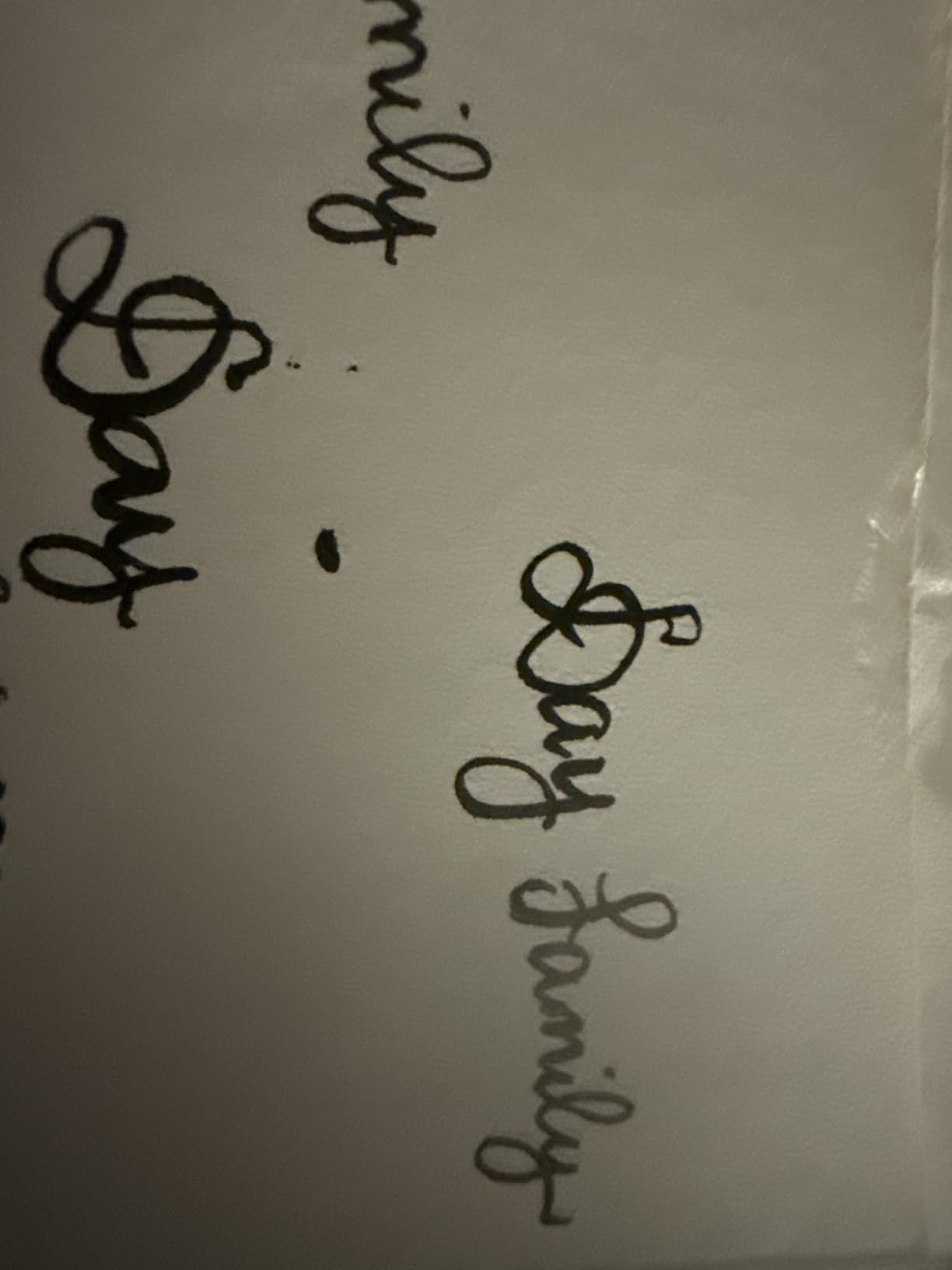
The Tombow Fudenosuke dual pack gives you both a soft tip and a hard tip brush pen, which is ideal for learning pressure control. I have used these for everything from hand lettering to adding expressive line variation in sketchbook drawings. The soft tip responds to even the lightest pressure, making it easy to create dramatic thick-to-thin transitions. The hard tip offers more resistance and is better for consistent line widths.
These are the number one best-selling calligraphy pens on Amazon for good reason. The water-based pigmented ink flows smoothly with zero skipping, and the retractable design means you click to deploy the tip like a ballpoint pen. No cap to lose, which I appreciate as someone who constantly misplaces pen caps.
The biggest limitation is that the ink is not waterproof. If you splash water on your drawing or try to paint over it with watercolor, the lines will smear. This makes the Fudenosuke better suited for standalone lettering and drawing rather than mixed media pieces. On regular printer paper, the ink can also look slightly grayish when you write quickly.
For brush lettering beginners, I cannot recommend these highly enough. The dual-tip approach lets you experiment with different pressure responses without buying two separate products. For more brush pen options, our guide to brush calligraphy sets for illustration covers additional choices.
Soft Tip vs Hard Tip: Which to Use
The soft tip is your go-to for expressive calligraphy, brush script, and dynamic illustrations where you want dramatic line variation. It requires a lighter touch and rewards confident strokes. The hard tip is better for beginners who are still developing pressure control, as well as for consistent handwriting and smaller lettering work.
I typically use the hard tip for everyday journaling and small annotations, then switch to the soft tip for headings and decorative elements. Having both in one package is genuinely useful rather than a gimmick.
Durability and Replacement Timeline
With daily use, expect each Fudenosuke to last about two to three months before the tip starts to lose its snap. The soft tip wears faster than the hard tip because the flexible material fatigues over time. Since the pens are disposable, there is no way to replace just the tip. At under six dollars for the pair, the cost of replacement is manageable.
One thing to watch: the retractable mechanism can accidentally deploy in your bag. I learned to keep mine in a dedicated pen case to prevent the tip from being damaged in transit.
3. Winsor and Newton Drawing Ink – Professional Grade Bottled Ink
- Rich true black with no undertones
- Flows beautifully from brush and dip pen
- Fast drying with excellent adhesion
- Professional quality trusted for decades
- Small bottle lasts long
- Small 14ml bottle size
- Cap can seal shut
- Can stain hands temporarily
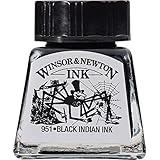
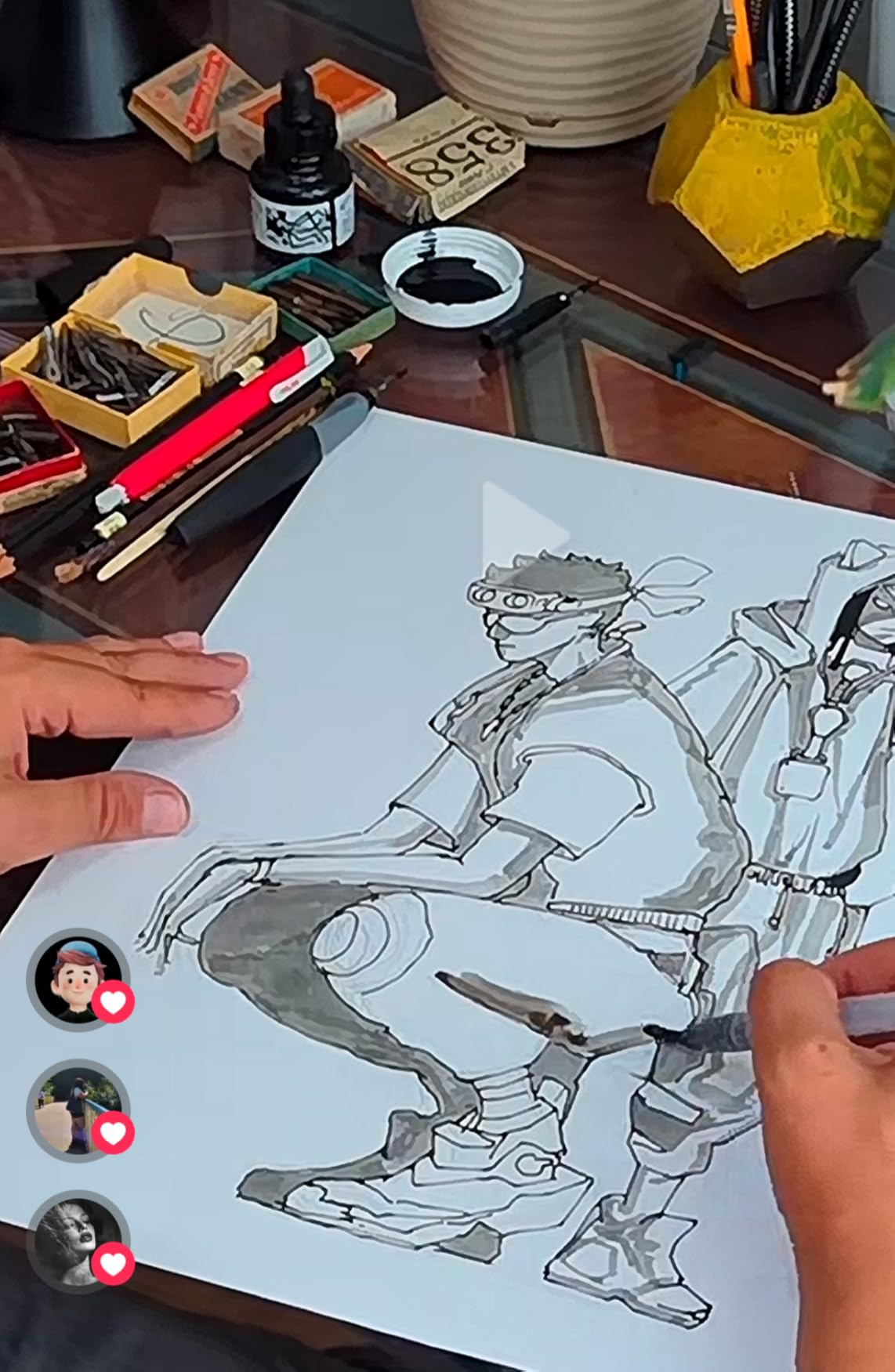
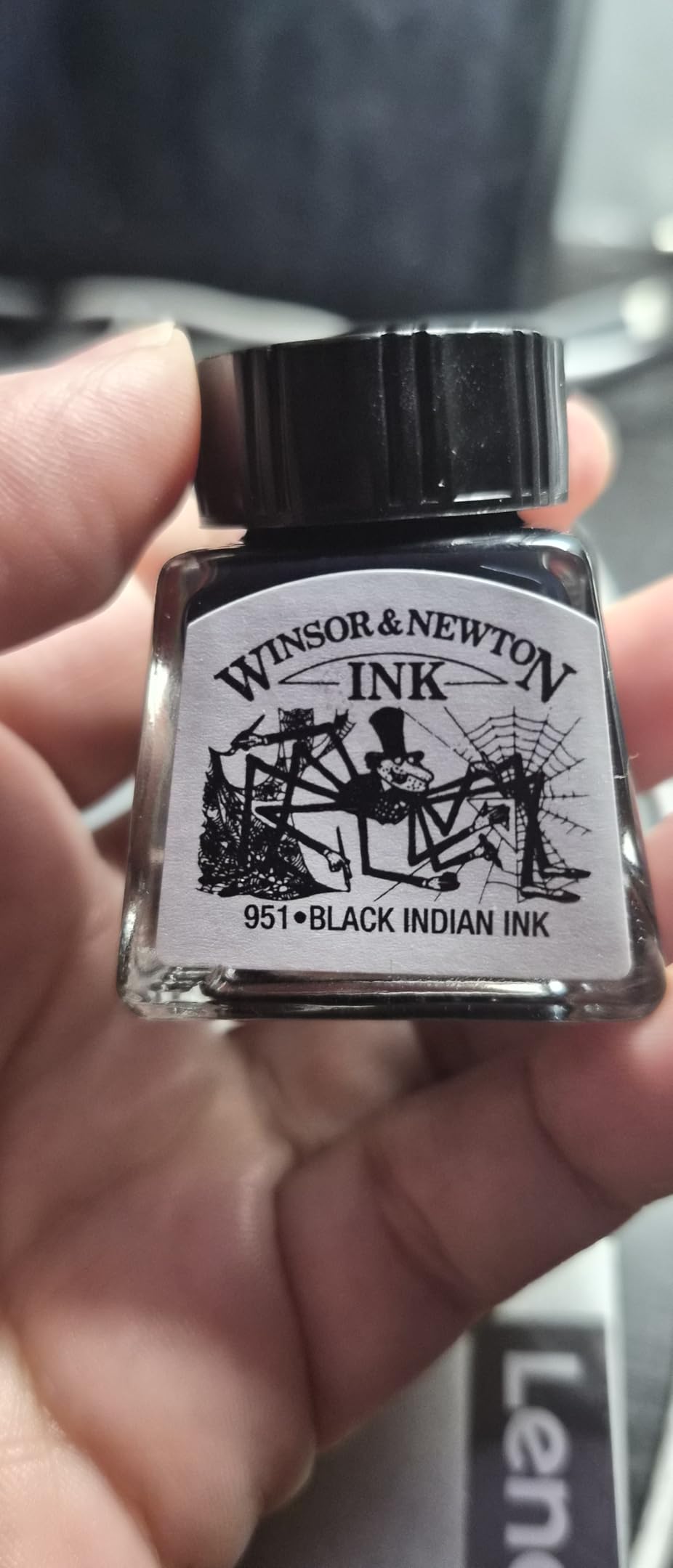
Winsor and Newton drawing ink is what I reach for when a piece needs to look professional and permanent. The shellac-based formula produces a rich, true black that is noticeably deeper and more opaque than standard fountain pen ink. It flows off a brush or dip pen nib like liquid silk, and the fast-drying formula means you can layer strokes without waiting forever between passes.
I have used this ink for ink wash painting, dip pen illustration, and even airbrush work (thinned appropriately). The adhesion on most surfaces is excellent, and once dry, it stays put. Calligraphers have trusted Winsor and Newton for over 50 years, and after using this ink extensively, I understand why.
The 14ml bottle is small, but a little goes a surprisingly long way. I have been working from the same bottle for six months of regular use and it is still half full. The main annoyance is the cap, which can seal itself shut if ink dries in the threads. I wipe the rim after each use to prevent this.
One important note: this ink is very runny compared to tube ink or acrylic ink. It is not a paint replacement. If you try to build up thick layers, they will slide right off. Use it for its intended purpose, which is flowing through pens and brushes onto paper.
Compatibility with Different Tools
This ink works beautifully with dip pens, sable brushes, synthetic brushes, and airbrushes when properly thinned. It does not work in fountain pens because the shellac will clog the feed. If you are looking for fountain pen ink, check our guide to fountain pens for drawing and calligraphy instead.
I have tested it with Speedball C-series nibs, Zebra G nibs, and various brush types. In every case, the ink flowed consistently and dried to a smooth, slightly glossy finish that looks professional.
Lightfastness and Permanence
The black Winsor and Newton ink is highly lightfast, meaning it will not fade when displayed under normal lighting conditions. This makes it suitable for finished artwork you intend to sell or frame. However, some of the colored inks in the same line are dye-based and less lightfast, so check the specifications before purchasing colored variants.
For archival work, pair this ink with acid-free bristol paper and you have a combination that will last for generations without degrading.
4. Strathmore 300 Series Bristol Pad – The Artist Standard Surface
- Ultra-smooth surface for fine detail
- Heavy weight prevents bleed-through
- Acid-free archival quality
- Made in USA
- Excellent value
- Expensive for practice paper
- Packaging can arrive damaged
- Pages may not tear cleanly
Strathmore 300 Series Bristol is the paper I use for finished pen and ink illustrations. The smooth surface is like drawing on glass, which means your pen tips glide effortlessly without catching or skipping. At 100lb/270gsm, it is heavy enough that ink does not bleed through to the next sheet, even with repeated strokes and brush work.
This is the number one best-selling bristol paper on Amazon, and it holds that position for a reason. The acid-free archival quality means your artwork will not yellow or deteriorate over time. I have pieces I drew on Strathmore bristol five years ago that look exactly the same today as when I finished them.
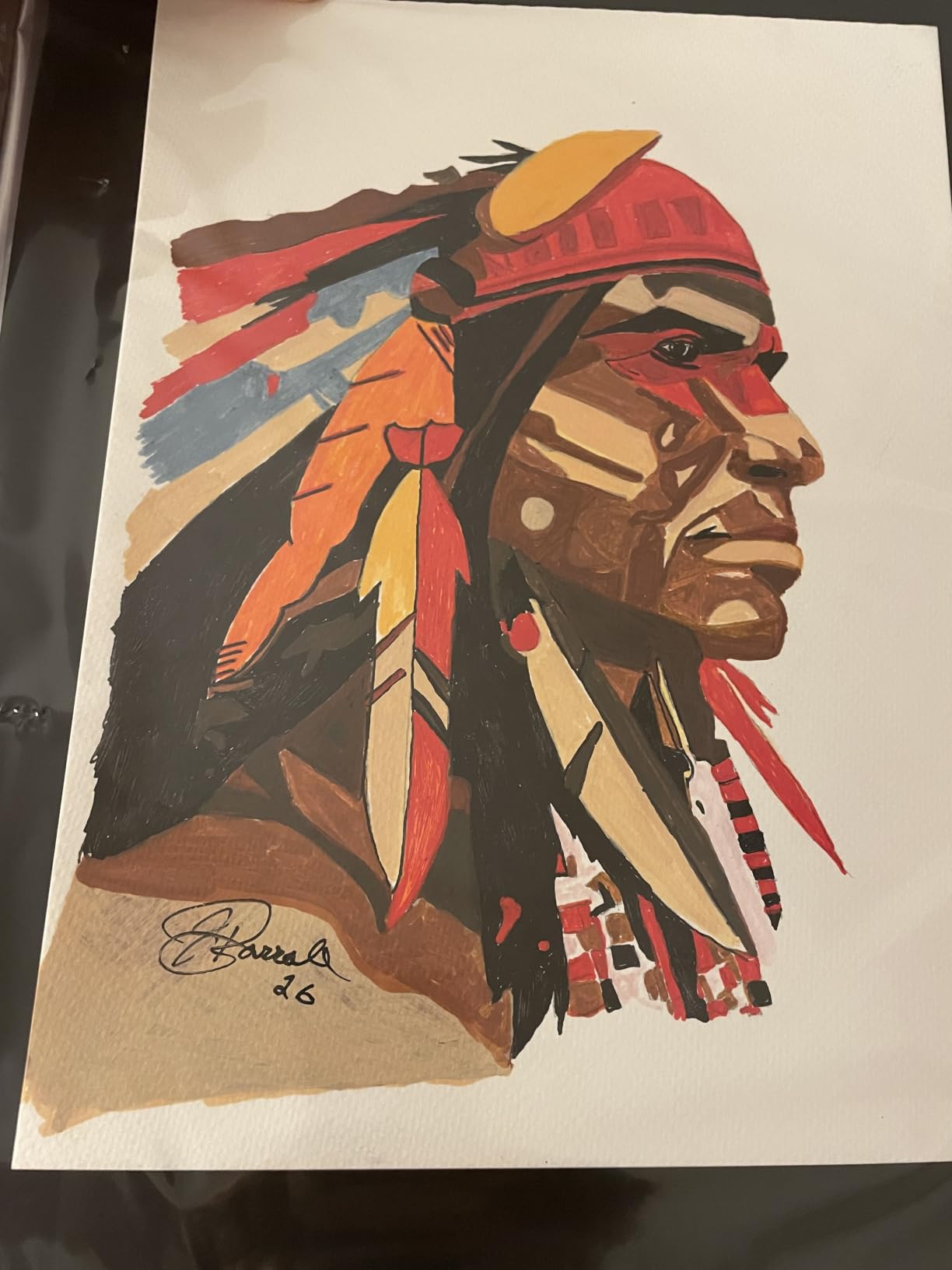
The smooth finish (as opposed to vellum) is specifically designed for pen and ink, mechanical drawing, and marker work. Fine liner tips, brush pens, and dip pen nibs all perform beautifully on this surface. If you have ever struggled with your pen catching on rough paper textures, switching to this bristol will solve that problem instantly.
The main drawback is price. At roughly 40 cents per sheet, this is not the paper for casual practice or daily sketching. I reserve it for finished pieces and use cheaper paper for warm-ups and experiments. Some users have reported packaging issues where pads arrive with bent corners, so check your order when it arrives.
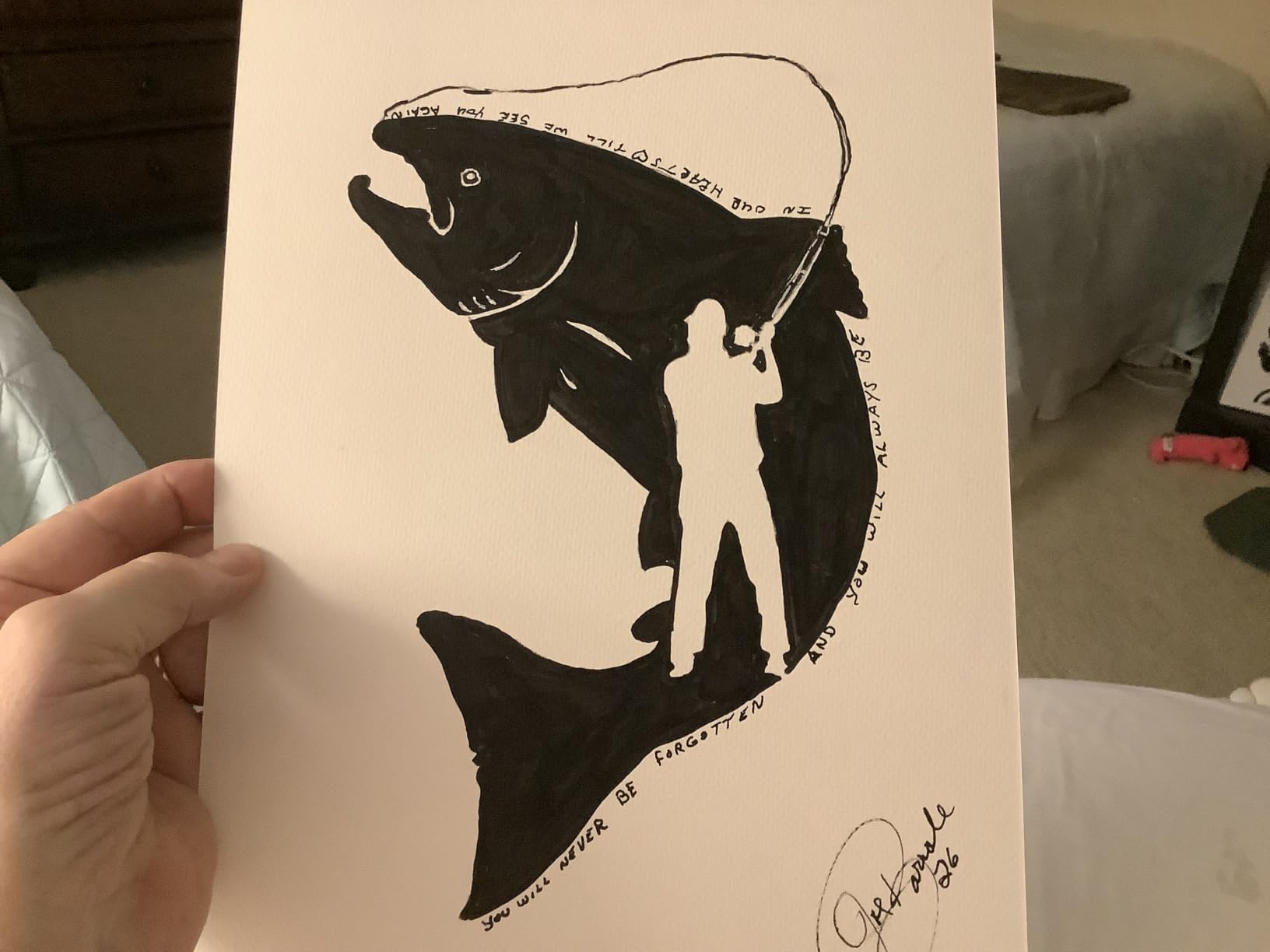
Smooth vs Vellum Surface: Making the Right Choice
Strathmore offers both smooth and vellum finishes in the 300 Series. The smooth finish is ideal for pen and ink because it allows the pen to glide without resistance and produces crisp, clean lines. The vellum finish has more tooth and is better suited for pencil, charcoal, and pastel work.
If you are primarily doing pen and ink drawing, go with the smooth surface. If you work in mixed media that includes graphite or colored pencil, the vellum might give you more versatility. I use smooth for all my ink work and have never felt limited by it.
Sheet Count and Pad Size Considerations
The 9×12 inch pad with 20 sheets is the sweet spot for most artists. It is large enough for substantial pieces but small enough to be portable. Strathmore also offers other sizes if you need something more specific. The tape-bound design allows you to remove sheets cleanly for framing or scanning.
One tip: if you are working on a piece you want to keep, remove the sheet from the pad before inking. Drawing on a flat, removed sheet gives you better control than working on a pad that is slightly padded underneath.
5. Tombow Mono Zero Eraser – Precision Erasing Tool
- Incredible precision for detail work
- Clean erasing without smudging
- Refillable and cost-effective
- Lightweight and portable
- Does not damage paper
- Round tip wears down quickly
- Refills hard to find in some regions
- Prefer rectangular version for some tasks
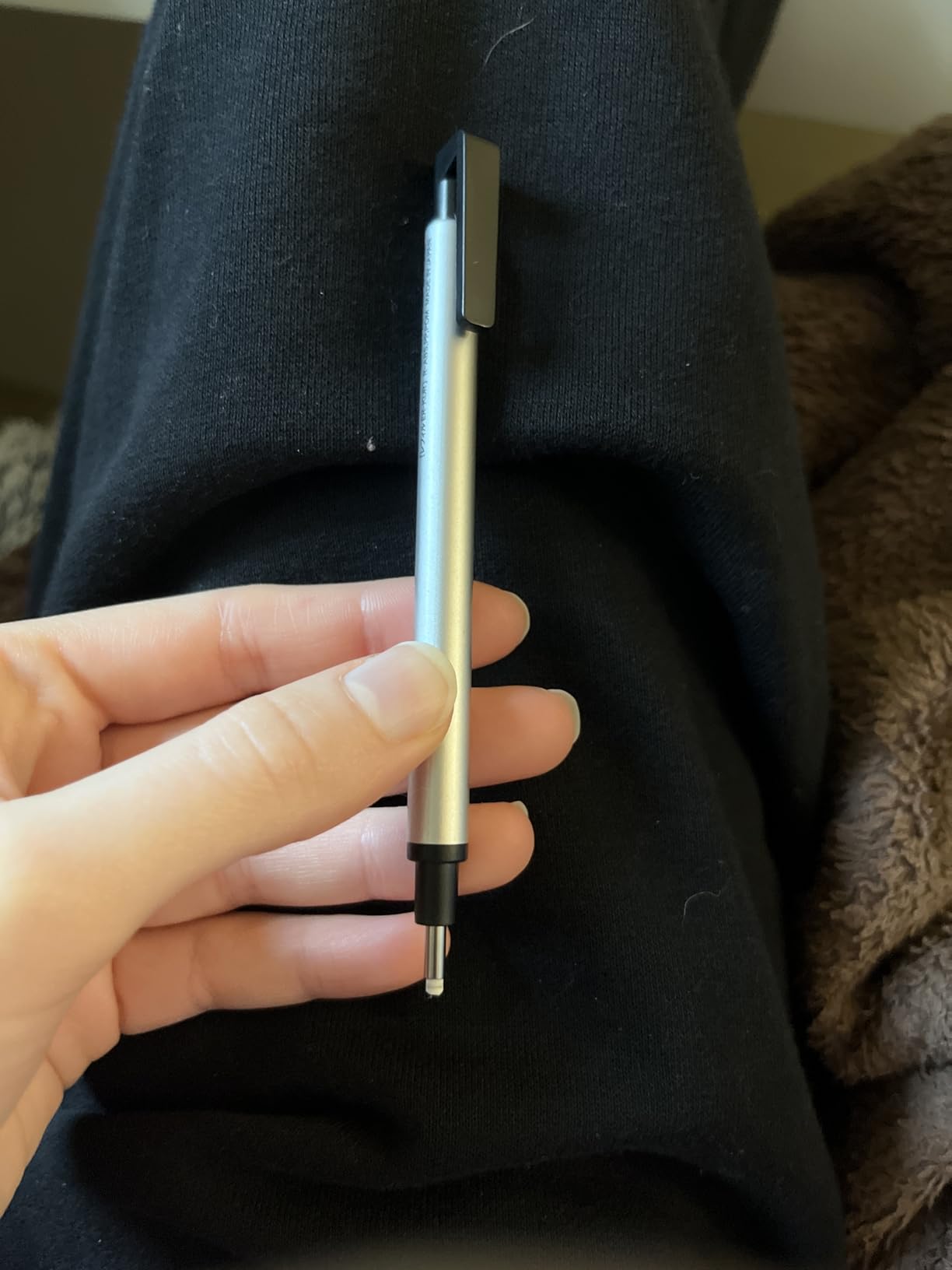
The Tombow Mono Zero eraser is one of those tools that seems unnecessary until you use one, and then you cannot imagine working without it. The 2.3mm round tip lets you erase individual pencil marks without disturbing the surrounding area. For pen and ink artists who work from pencil sketches, this precision is invaluable.
I use the Mono Zero after I finish inking a piece and need to clean up the underlying pencil lines. The tiny tip lets me erase right up to the ink lines without lightening them or causing smudges. It also works beautifully for subtractive drawing techniques, where you lift graphite to create highlights.
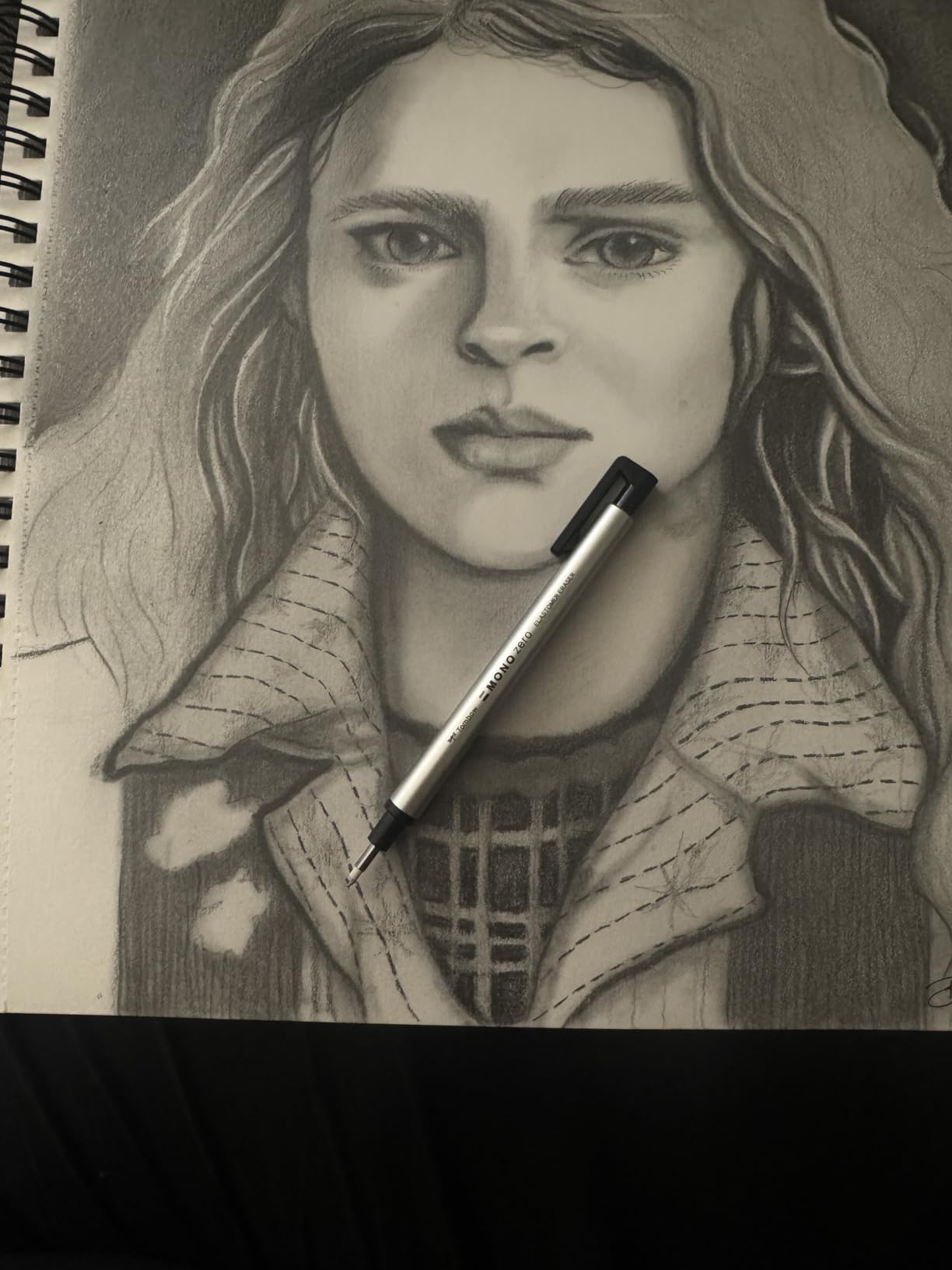
The refillable design is both cost-effective and better for the environment. You click to advance the eraser like a mechanical pencil, and when it runs out, you pop in a refill. The retractable body keeps the tip clean and protected in your bag. At just over five dollars, it is one of the most affordable tools on this list.
The round tip does wear down faster than I would like, especially if you are erasing large areas. Tombow also makes a rectangular tip version that some artists prefer because it maintains a sharp edge longer. I keep both versions in my kit for different tasks.
Integration with Pen and Ink Workflow
My typical workflow is: sketch lightly in HB pencil, ink over the pencil lines, let the ink dry completely, then erase the pencil marks with the Mono Zero. The fine tip lets me get into tight corners and erase guide lines between inked details without accidentally erasing the ink itself.
This tool is especially useful for artists who do detailed work like botanical illustration, architectural drawing, or comic inking where pencil construction lines need to be removed from small, intricate areas.
Refill Availability and Long-Term Use
Refills are available online and in well-stocked art supply stores, though they can be harder to find in smaller cities. I recommend buying a pack of refills when you purchase the eraser so you are not caught without one. Each refill lasts about a month of regular use.
The eraser material itself is high quality. It lifts graphite cleanly without leaving residue or smearing the graphite across the page, which is a common problem with cheaper erasers.
6. Uni Pin Fine Line Drawing Pens – Micron Alternative with Metal Tips
- Metal-clad tips for ruler work
- Water-resistant lightfast ink
- Smooth ink flow no skipping
- Great value vs Micron
- Comfortable matte grip
- Not fully waterproof with watercolor
- Limited max tip size
- Tips can wear with heavy use
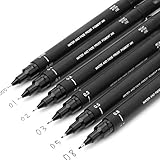
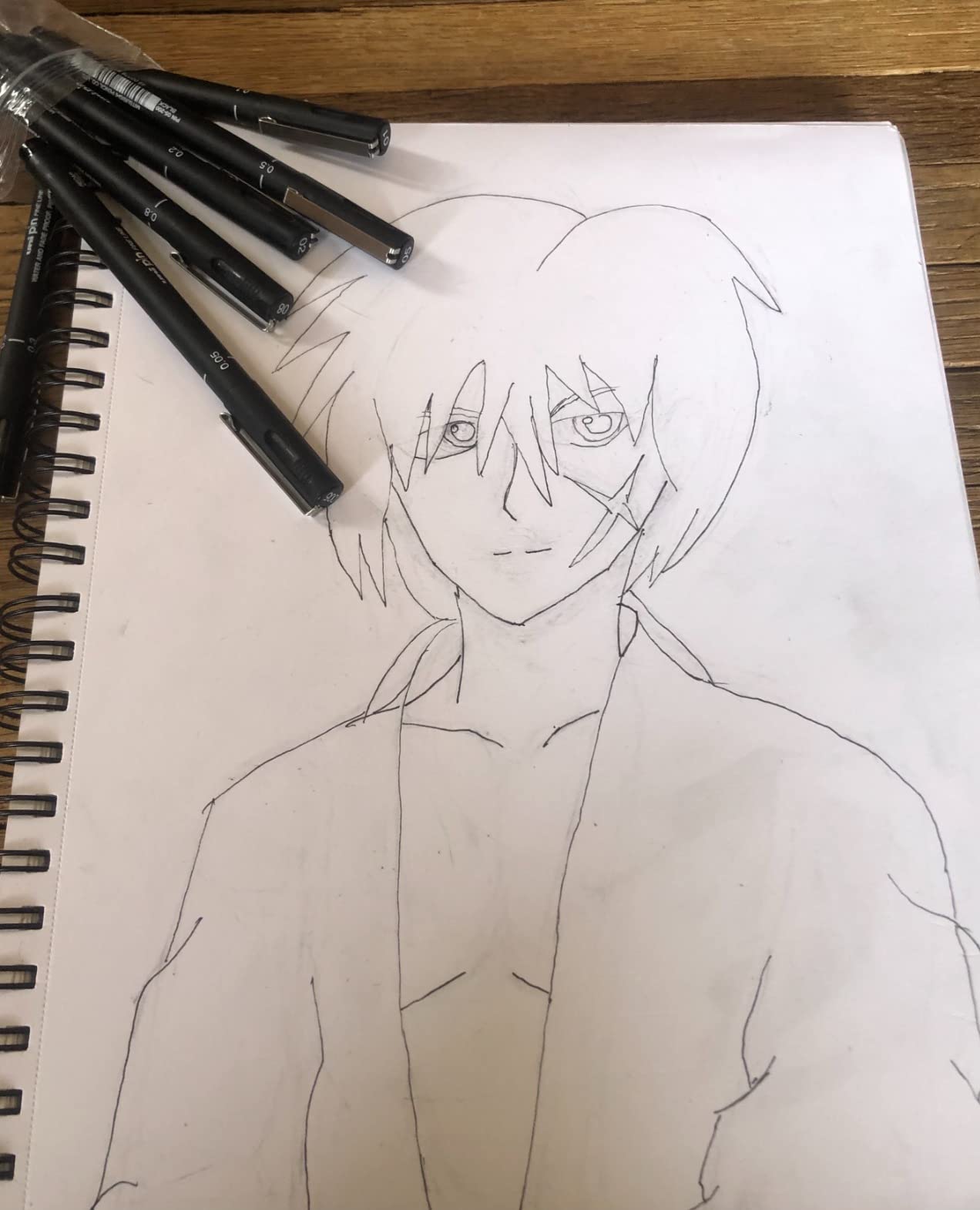
Uni Pin fineliners are the pens I recommend when someone wants Micron-level quality at a slightly lower price point. The 6-pack includes sizes from 0.05mm to 0.8mm, and the metal-clad tips are a genuine advantage over Microns if you use rulers or stencils. The metal collar prevents the tip from fraying when it drags along a straightedge.
In my testing, the ink flow was consistently smooth with no skipping or blobbing. The water-resistant, lightfast ink held up well under normal drawing conditions. The semi-matte body is comfortable during long sessions, and the ergonomic grip zone reduces hand fatigue.
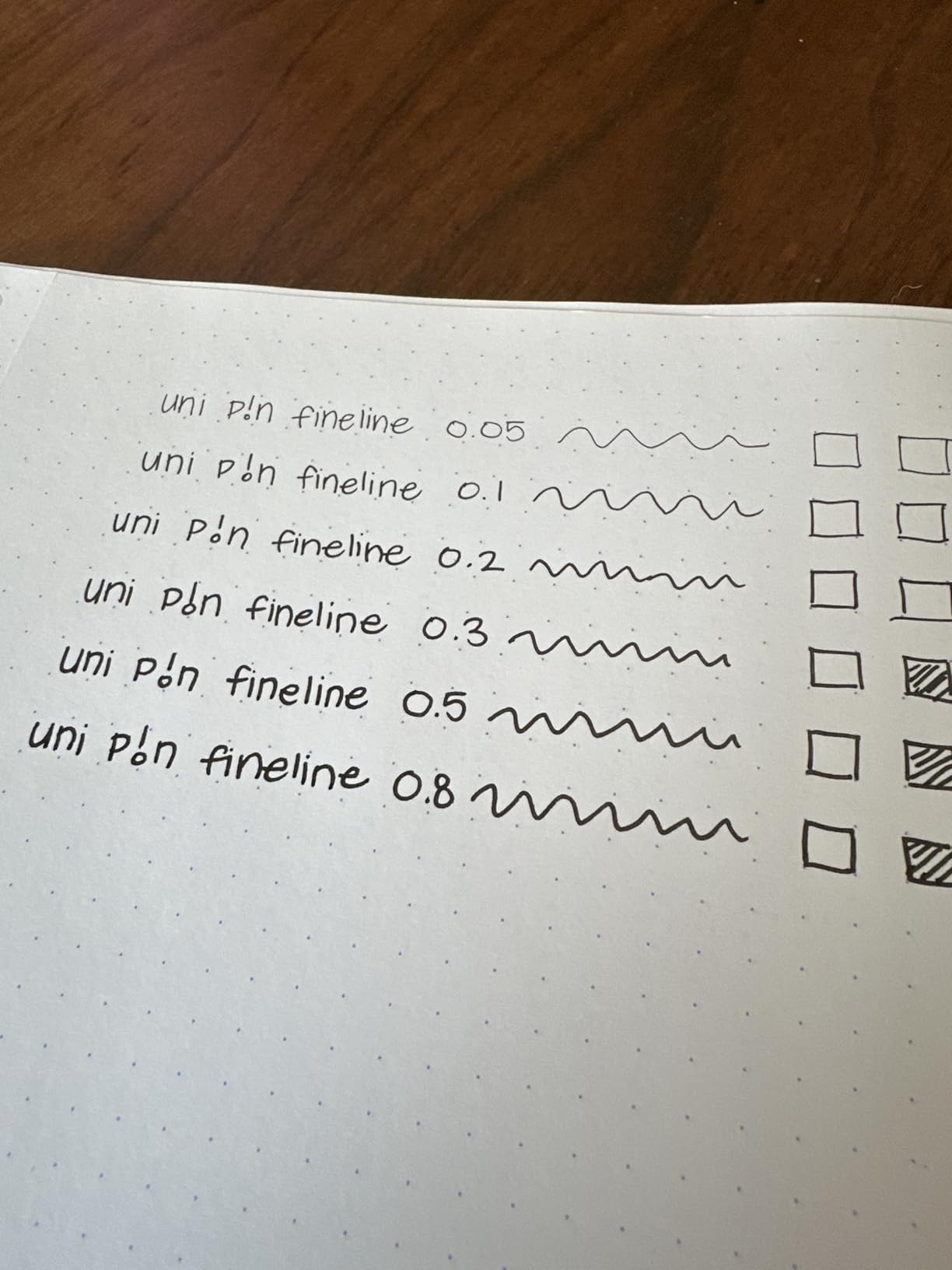
The key difference between Uni Pin and Pigma Micron is waterproofness. Uni Pin ink is water-resistant but not fully waterproof. If you apply a heavy watercolor wash over Uni Pin lines, you may get some bleeding. For light washes or dry media, it performs fine. If waterproofness is critical, stick with Microns or Staedtler pigment liners.
Many artists in online forums report that Uni Pin tips last longer than Microns, particularly when used with rulers. The metal-clad design genuinely makes a difference for technical drawing and architectural sketching where straight edges are essential.
Ruler and Template Compatibility
The metal-clad tips are the standout feature here. If you do architectural drawing, technical illustration, or any work that involves rulers, templates, or French curves, the Uni Pin is superior to the Micron. The metal collar prevents the plastic tip from mushrooming when it contacts a straightedge.
I tested both pens side by side with a metal ruler, drawing 50 lines each. The Micron tip showed visible wear after about 30 lines, while the Uni Pin tip was unaffected after all 50. That is a meaningful durability difference for technical artists.
Ink Performance with Mixed Media
For artists who combine ink with colored pencils, markers, or light watercolor, the Uni Pin performs well. The ink dries quickly and resists smudging under most dry media. For heavy wet media applications, you will want to test the ink on your specific paper before committing to a finished piece.
My recommendation: if you primarily draw with dry media and occasional light washes, Uni Pin is an excellent value. If you do heavy ink-and-watercolor work, go with a fully waterproof option.
7. Staedtler Pigment Liner – 8-Size Professional Fineliner Set
- 8 sizes for maximum versatility
- DRY SAFE prevents drying uncapped
- Lightfast archival ink
- Metal-clad tips for precision
- Ergonomic contoured grip
- More bleed than some competitors
- Larger tips take longer to dry
- Can leave residue on hands
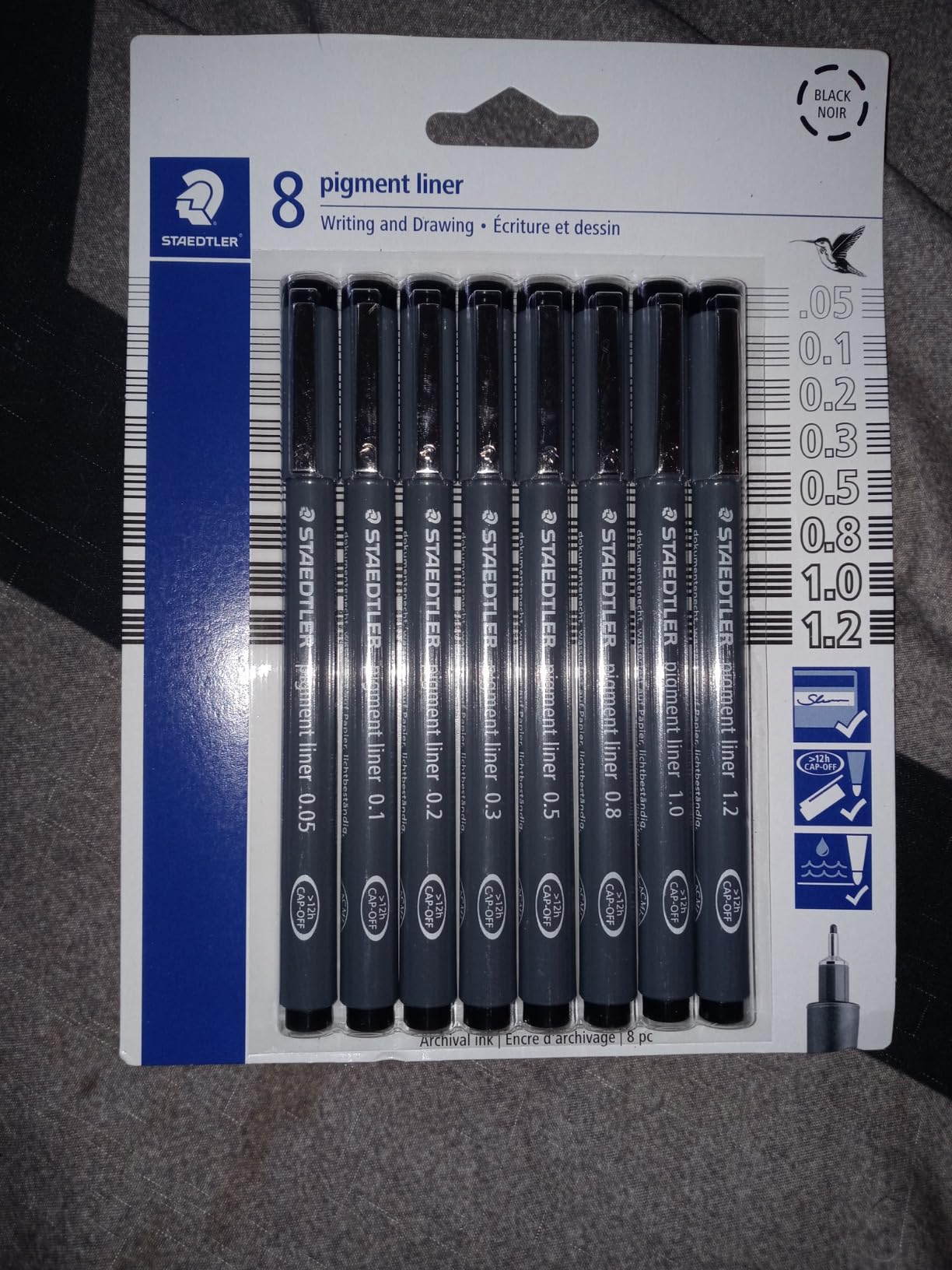
The Staedtler Pigment Liner 8-pack is the most versatile fineliner set on this list. With sizes ranging from a hair-thin 0.05mm to a bold 1.2mm, you have every line weight covered in a single purchase. The archival-quality pigment ink is lightfast, waterproof, and smear-resistant once dry.
The standout feature is Staedtler’s DRY SAFE technology, which prevents the pens from drying out even if left uncapped for up to 18 hours. As someone who constantly forgets to cap pens during intense drawing sessions, this feature alone makes the Staedtler set worth considering over Microns.
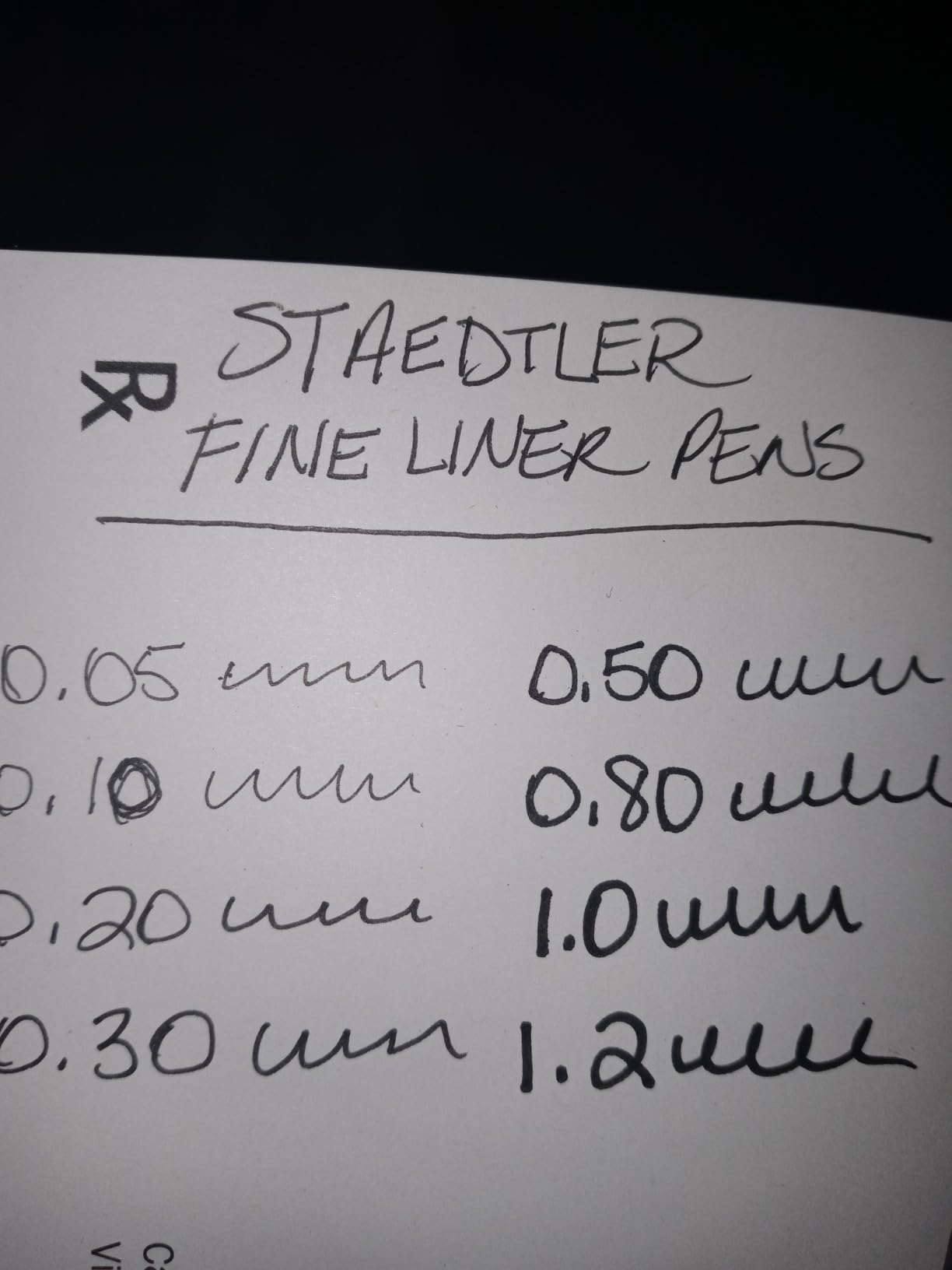
I tested the waterproof claim by applying a watercolor wash over dried Staedtler lines. The ink held firm with zero bleeding or smearing. This makes these pens ideal for line-and-wash techniques where you ink first and add color later. The metal-clad tips also work well with rulers, matching the Uni Pin in that regard.
Some users report slightly more bleed-through than Sakura Pigment Liners on certain papers, particularly with the larger tip sizes. I noticed this on lighter-weight sketchbook paper but not on bristol board. The 1.2mm tip also takes noticeably longer to dry, so be careful not to drag your hand across fresh lines.
DRY SAFE Technology in Practice
The DRY SAFE feature is not marketing fluff. I intentionally left a Staedtler pigment liner uncapped overnight, and it wrote perfectly the next morning. I would not recommend making a habit of it, but for artists who work in short bursts and set pens down frequently, this insurance is genuinely valuable.
Compare this to Microns, which can dry out in under an hour if left uncapped. If you are the type of artist who gets absorbed in the work and forgets caps, Staedtler is the safer choice.
Comparing Tip Size Range with Competitors
The 8-size range from 0.05mm to 1.2mm is the broadest of any set in this guide. Microns max out at 0.50mm in the standard 6-pack, while Uni Pin tops out at 0.8mm. Having access to 1.0mm and 1.2mm tips means you can fill large black areas and create bold graphic statements without switching to a brush pen.
For comic artists and illustrators who need a full range of line weights, this set eliminates the need to buy multiple products. The value per pen is also excellent compared to purchasing individual fineliners.
8. Pentel Fude Brush Pen – Refillable Classic for Expressive Lines
- Refillable with included cartridges
- Nylon bristles last longer than foam
- Pressure-sensitive line variation
- Versatile fine to broad strokes
- Airtight cap prevents drying
- Ink is NOT waterproof
- Requires practice to master
- Reverse-thread cap confuses new users
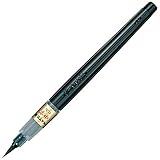
The Pentel Fude Brush Pen (model XFL2L) is a Japanese classic that has earned a devoted following among manga artists, calligraphers, and illustrators. The nylon bristle tip is far more durable than the foam tips found on cheaper brush pens, and it responds beautifully to pressure changes.
What I love about this pen is the range of expression. With light pressure, you get delicate hairlines. Press harder and the brush fans out to create bold, confident strokes. This pressure sensitivity is what makes brush pens so appealing for dynamic, gestural drawing that fineliners simply cannot replicate.
The refillable design is a major advantage. The pen comes with two replacement ink cartridges, and additional cartridges are inexpensive and widely available. This makes the Pentel Fude more economical and environmentally friendly than disposable brush pens. I have been using the same pen body for over two years, just swapping cartridges.
The critical limitation is that the ink is water-soluble, not waterproof. If you get your drawing wet or try to paint over it with watercolor, the lines will run. This pen is best for standalone ink work. Also, the cap uses a reverse thread, meaning you screw it clockwise to open, which is the opposite of most pens. It confused me for the first week.
Mastering Pressure Control
Brush pens require a different technique than fineliners. The key is using your arm and wrist rather than finger pressure to control line width. Start by practicing basic strokes: thin upstrokes and thick downstrokes. Once you develop muscle memory, the brush pen becomes an extension of your hand.
I recommend practicing on cheap paper before committing to a finished piece on bristol. The learning curve is real, but the expressive payoff is worth it. Many artists in the r/penandink community consider the Pentel Fude the best all-around brush pen for the price.
Cartridge System and Ink Quality
The included cartridges use a water-based ink that is very black and opaque. The ink flows consistently from the nylon bristles without dripping or spattering. Replacement cartridges come in packs of 12 and cost roughly the same as two disposable brush pens, making the refillable system genuinely cost-effective over time.
One tip: when installing a new cartridge, give the ink a few minutes to saturate the bristles before drawing. The first few strokes after a cartridge change may be lighter until the ink fully distributes.
9. Speedball Super Black India Ink – Dense Carbon Pigment Classic
- Highly opaque carbon black pigment
- Waterproof and lightfast once dry
- Free-flowing non-clogging formula
- Works with dip pens brushes airbrush
- Made in USA
- Too thick for glass dip pens
- NOT for fountain pens
- Bottle lid hard to open
Speedball Super Black India Ink is the workhorse bottled ink that I recommend without hesitation. The dense carbon black pigment produces the richest, most opaque black lines of any ink I have tested. A single dip gives you enough ink for several strokes without needing to reload constantly.
This ink is waterproof and lightfast once fully dry, which makes it ideal for artwork you want to last. I have used it with dip pens, sable brushes, and synthetic brushes, and it performs beautifully across all of them. The free-flowing formula means it will not clog your nibs or brush ferrules.
The 2-ounce jar lasts a long time. I have been working from the same jar for nearly a year of regular use. The plastic jar is durable and will not shatter if dropped, which is a practical advantage over glass bottles. For a deeper dive into ink options, our guide to the best India ink sets for artists covers additional brands and formulations.
The main caveats: this ink is too thick for glass dip pens without dilution, and it must never be used in fountain pens because the carbon pigment will clog the feed permanently. The bottle lid can also be stubborn, so wipe the rim clean after each use to prevent it from sealing shut.
Drying Time and Layering Behavior
Speedball India Ink dries relatively quickly on bristol paper, typically within 30 to 60 seconds for normal stroke thickness. However, it is not instantly waterproof. If you apply a second layer or a watercolor wash too soon, the first layer can reactivate and smear. I recommend waiting at least five minutes between layers.
For ink wash techniques, you can dilute this ink with water to create gray tones. The carbon pigment stays suspended well in water, giving you smooth, even washes without grittiness.
Tool Compatibility and Versatility
This ink works with virtually every traditional ink application tool: dip pens, bamboo pens, brushes, quills, and airbrushes (when thinned). It performs particularly well with the Speedball C-Series nibs and the Tachikawa nib holder featured later in this guide.
The non-clogging formula means you can leave ink on a nib for short periods without it drying hard. That said, always clean your nibs and brushes after each session to extend their life.
10. Canson XL Series Bristol Pad – Affordable Quality Bristol
- Heavyweight prevents warping
- Bright white high contrast
- Excellent erasability
- Wirebound lies flat
- Great value for professional grade
- Markers may feather slightly
- Not for heavy wet media
- Minor pulp inclusions possible
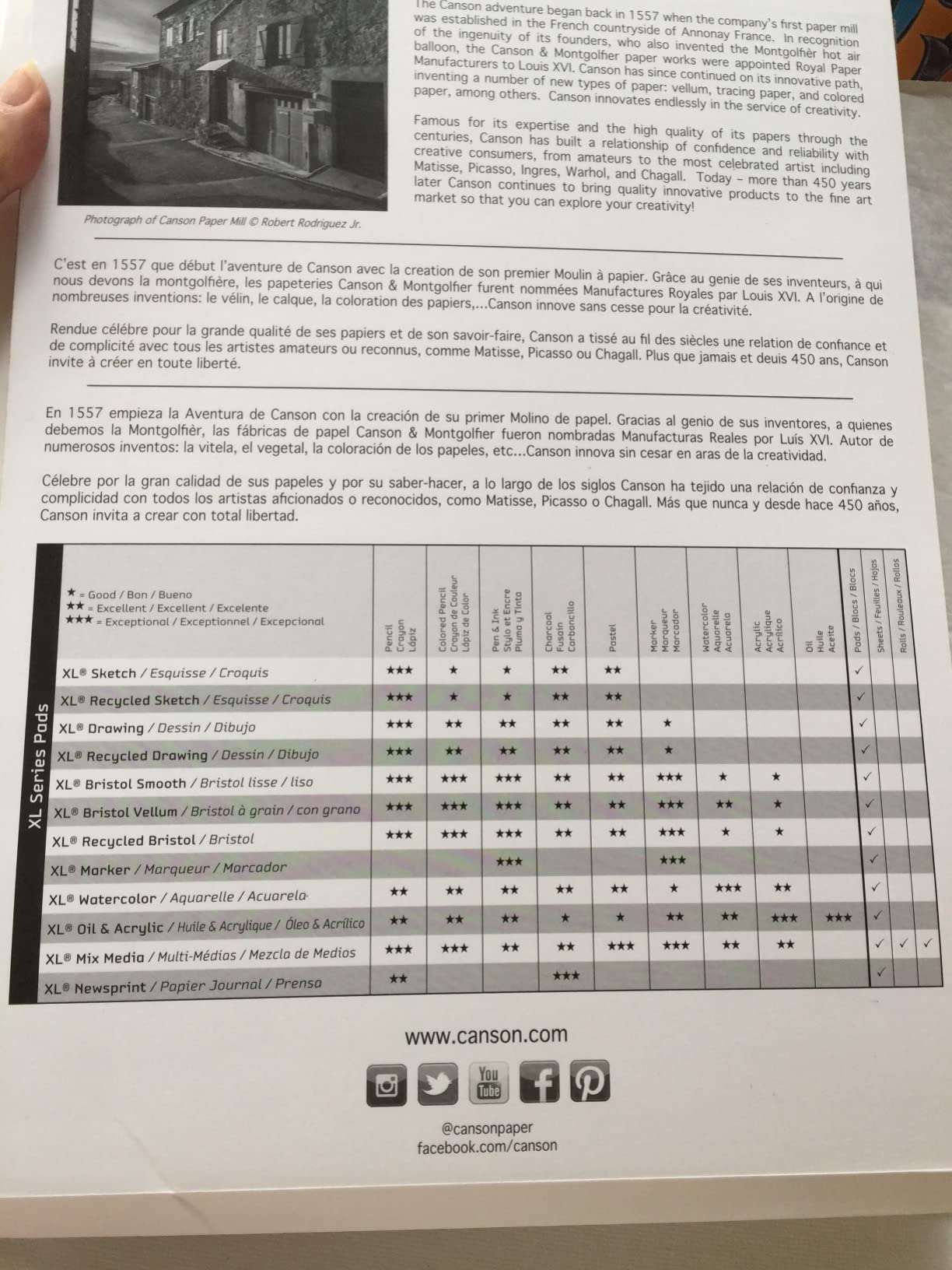
The Canson XL Series Bristol pad is my go-to recommendation for artists who want professional-quality bristol paper at a student-friendly price. At 100lb/260gsm, this paper handles pen and ink beautifully with minimal bleed-through and excellent line crispness. The 25-sheet count gives you more paper per dollar than the Strathmore pad.
I was pleasantly surprised by how well this paper erases. Unlike cheaper papers that pill and tear when you erase graphite, the Canson bristol holds up to repeated erasing without surface damage. This is critical for pen and ink artists who sketch in pencil first and erase after inking.
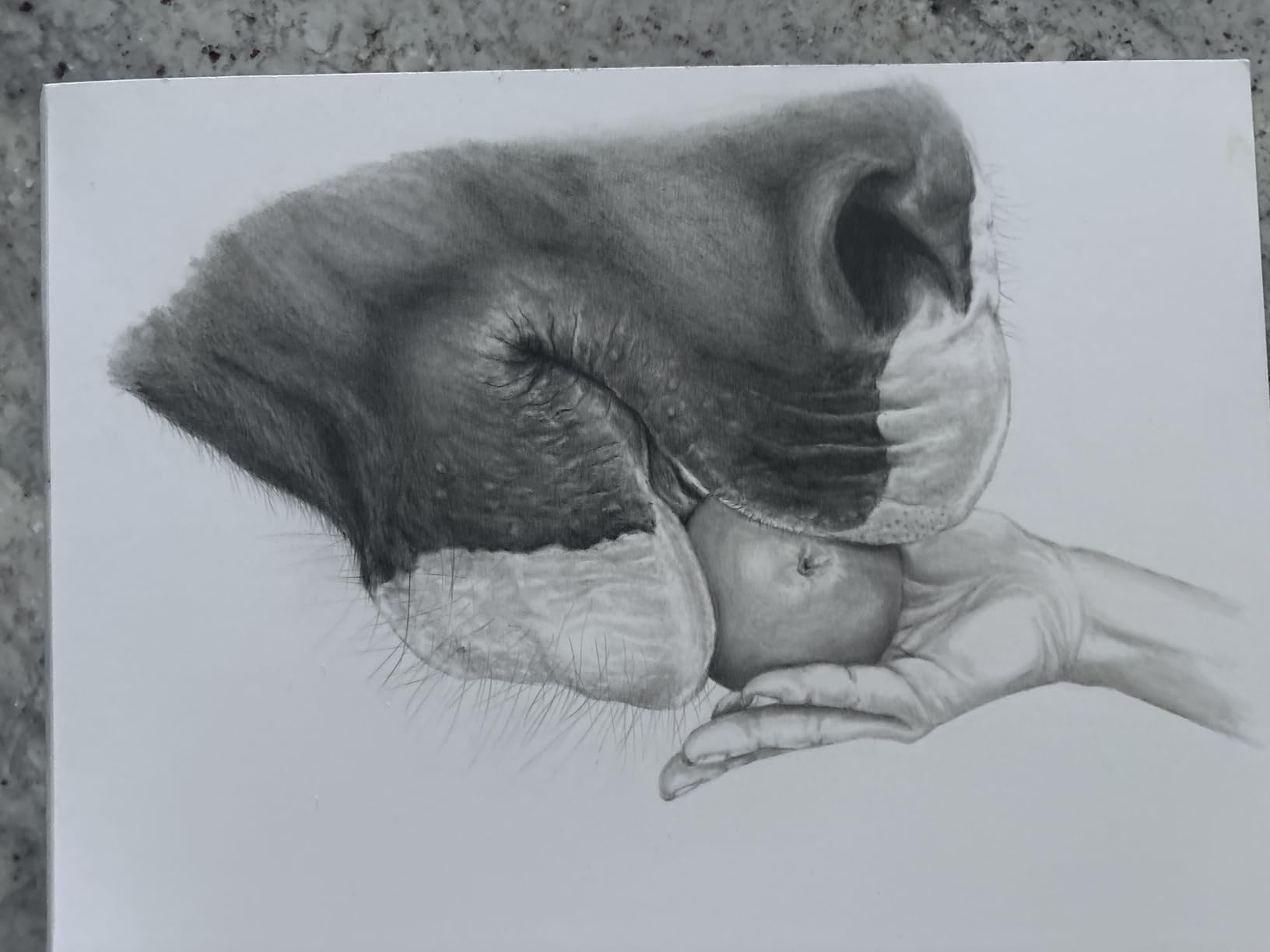
The bright white surface gives your ink lines maximum contrast, making artwork pop. The wirebound format means the pad lies completely flat on your desk, which is more comfortable than tape-bound pads that try to close themselves. The acid-free paper ensures your work will not yellow over time.
The main limitation is wet media. While the paper handles light watercolor washes, it will warp with heavy applications. If you primarily work in ink with occasional light washes, this paper is excellent. For heavy mixed media, consider a watercolor paper instead.
Canson vs Strathmore: Which Bristol to Choose
Both are excellent papers, but they serve slightly different needs. Strathmore 300 Series is the premium choice with a slightly smoother surface and more consistent quality control. Canson XL offers nearly equal performance at a lower cost, with the tradeoff of occasional minor pulp inclusions in the paper surface.
My recommendation: use Canson for practice, studies, and daily drawing. Switch to Strathmore for finished portfolio pieces and commissioned work. For many artists, Canson is more than good enough for everything.
Size and Format Considerations
The 7×10 inch size is compact and portable, making it ideal for urban sketching and travel. If you work larger, Canson also offers 9×12 and 11×14 versions. The wirebound format makes it easy to fold the pad back on itself, which is great for drawing in tight spaces like cafes or trains.
The 25-sheet count means each pad lasts about a month of regular use, making it a practical choice for daily drawing practice.
11. Speedball C-Series Lettering Pen Set – Classic Calligraphy Starter
- Quality hand-crafted nibs with great flex
- Triple reservoir holds more ink
- Excellent for Italic and Gothic letters
- Durable and long-lasting
- Ambidextrous design
- Nibs can catch on paper
- Requires experience to set up
- Beginners may struggle
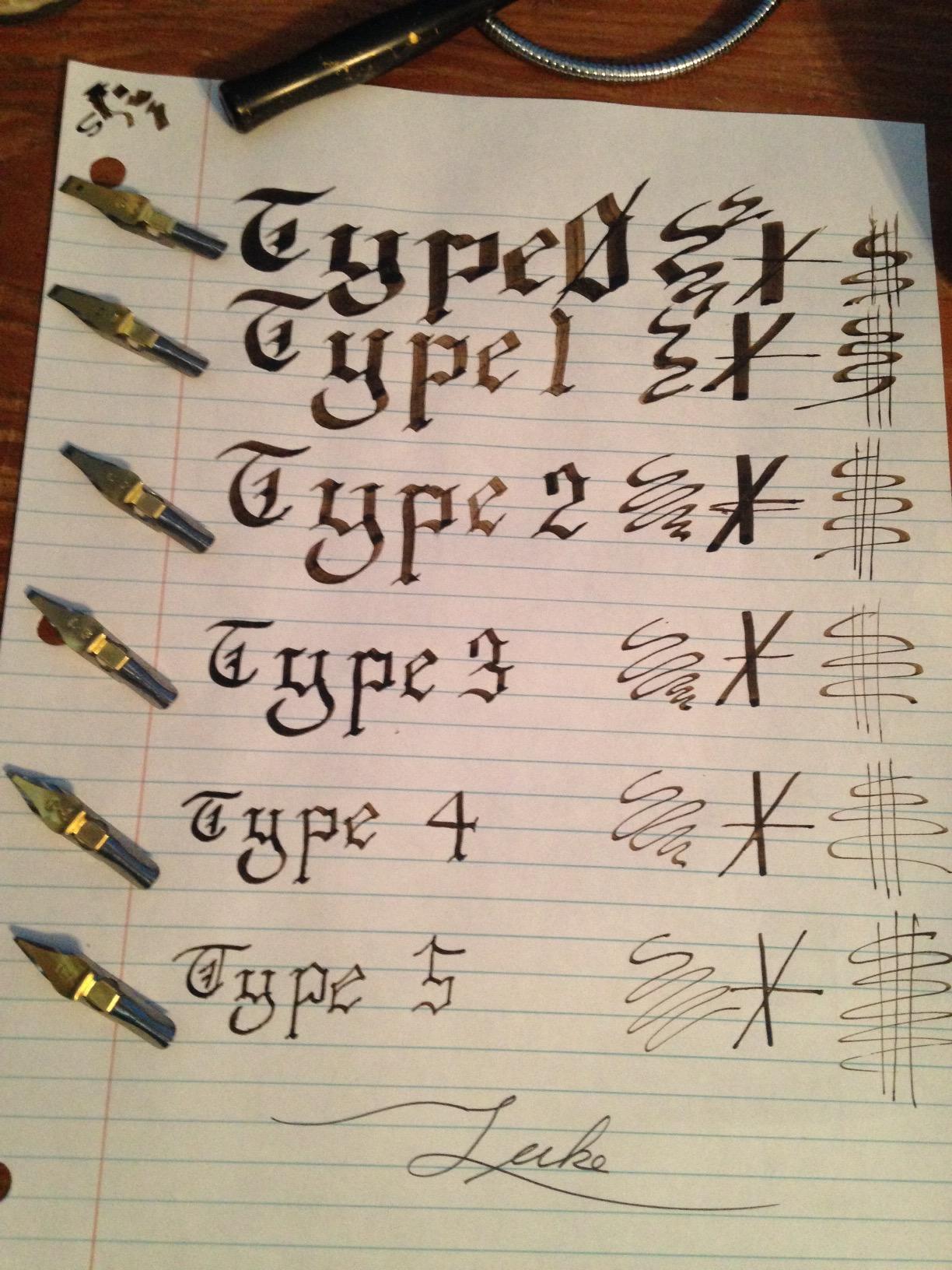
The Speedball C-Series Lettering Pen Set is the traditional calligrapher’s starter kit. You get six C-series nibs in sizes C0 through C5, plus a standard pen holder. The flat nib tips are designed for creating broad-edge scripts like Italic, Roman Gothic, and foundational hands.
The triple reservoir design on each nib is a clever feature that holds significantly more ink than a standard nib. This means fewer dips and longer, uninterrupted writing sessions. The ink flows smoothly and consistently from the reservoir onto the paper.
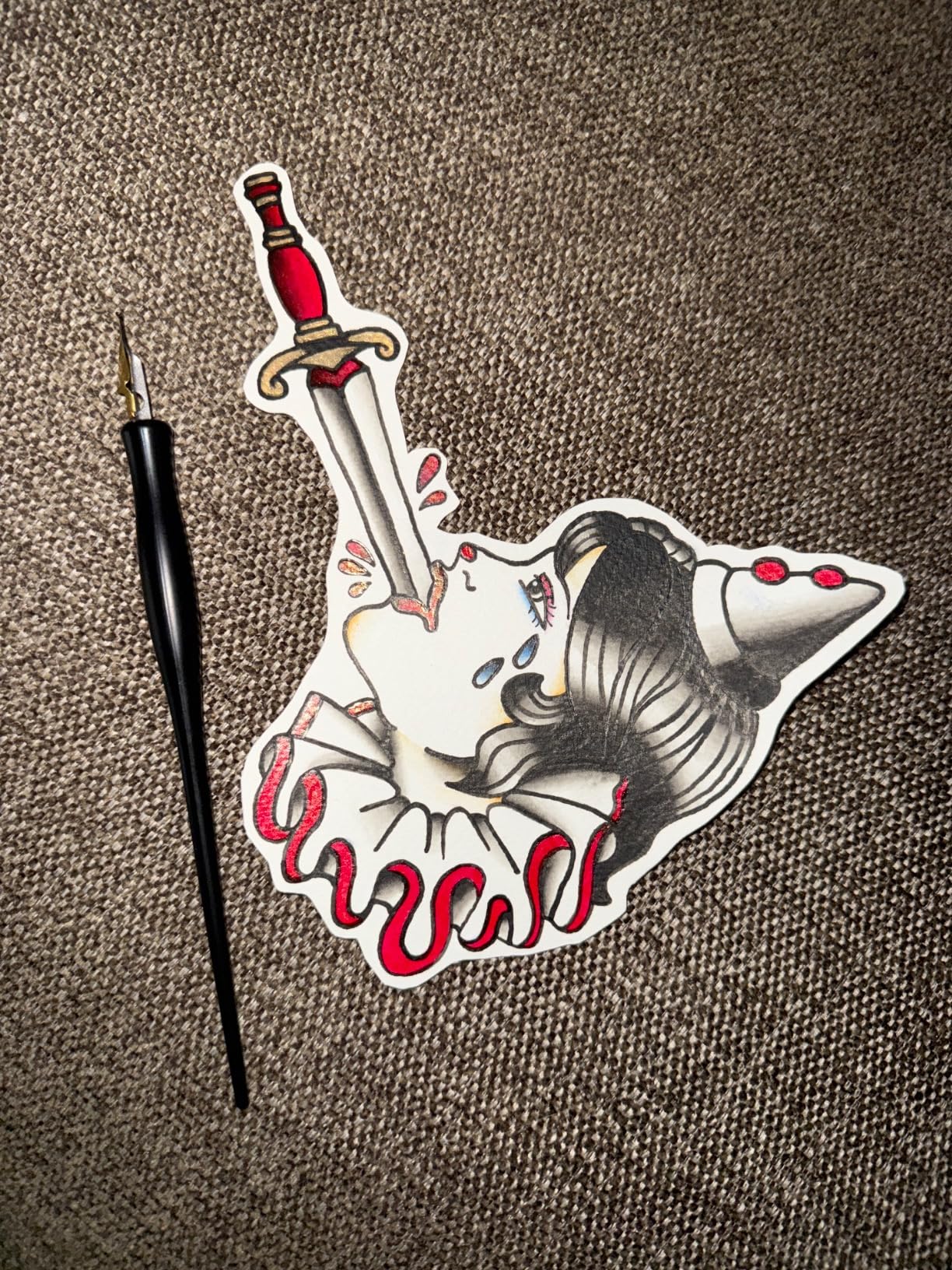
I have used this set for hand-lettered titles on illustrations, decorative borders, and standalone calligraphy pieces. The nibs have excellent flex for variable line weight, and the quality of the hand-crafted nibs is apparent as soon as you start using them. One reviewer mentioned using their C-series nibs for over 30 years, which speaks to the durability.
The main challenge is the learning curve. If you have never used dip pens before, the nibs can catch or scratch on paper if you do not hold them at the correct angle. Beginners should practice on scrap paper before working on final pieces. The nibs also require proper ink and paper to perform well.
Nib Sizes and Their Applications
The six nib sizes range from C0 (widest, approximately 5mm) to C5 (narrowest, approximately 1mm). C0 and C1 are ideal for large display lettering and headlines. C2 and C3 handle body text in most calligraphic hands. C4 and C5 are perfect for small inscriptions and fine detail lettering.
I use the C2 and C3 most frequently for adding hand-lettered titles to my ink illustrations. They produce the classic broad-pen calligraphy look that digital fonts try but fail to replicate.
Setup and Maintenance for Beginners
New Speedball nibs come with a factory coating that prevents rust during shipping. You must remove this coating before use by passing the nib through a flame briefly or wiping it with rubbing alcohol. Skip this step and the ink will bead up and refuse to flow off the nib.
After each session, rinse the nib in water and dry it thoroughly. Store nibs in a dry container to prevent rust. With proper care, these nibs will last for years.
12. Tachikawa Comic Pen Nib Holder – Gateway to Dip Pen Inking
- Comfortable soft grip for long sessions
- Universal fit for Zebra Nikko Maru nibs
- Cap protects nib during transport
- Secure nib fit no wobble
- Excellent value
- Front cap may not stay on
- Cap can break if forced
- Wider body than standard holders
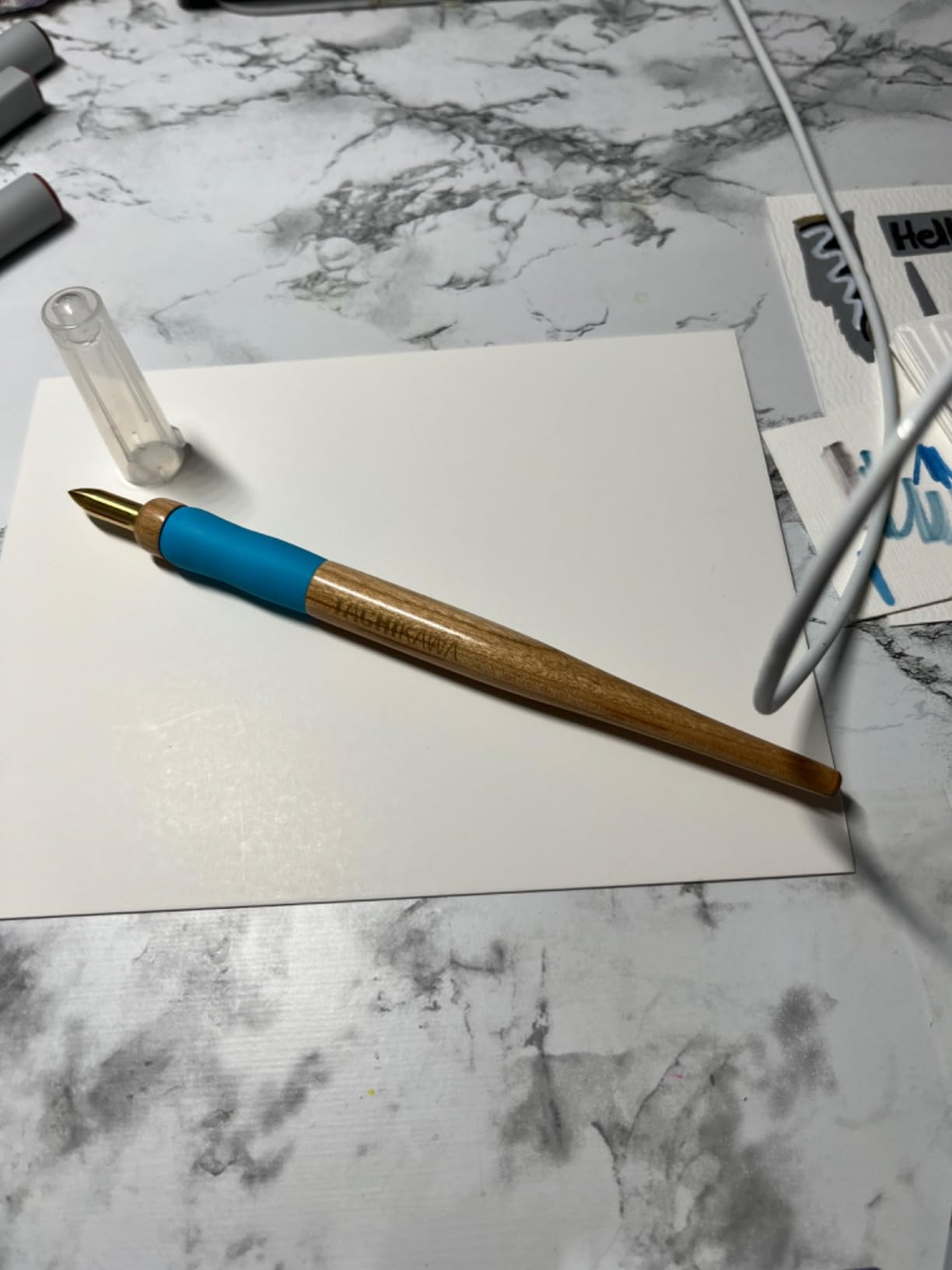
The Tachikawa T-40 nib holder is the single best purchase you can make if you want to explore dip pen inking. For the price of a coffee, you get a well-designed holder that works with virtually every manga and comic nib on the market, including Zebra G, Nikko, Maru, and Speedball nibs.
The soft grip section is genuinely comfortable during long inking sessions. I have spent three-hour stretches inking comic pages with this holder and experienced no hand cramping. The hard plastic inner insert holds the nib securely with zero wobble, which is essential for precise line control.
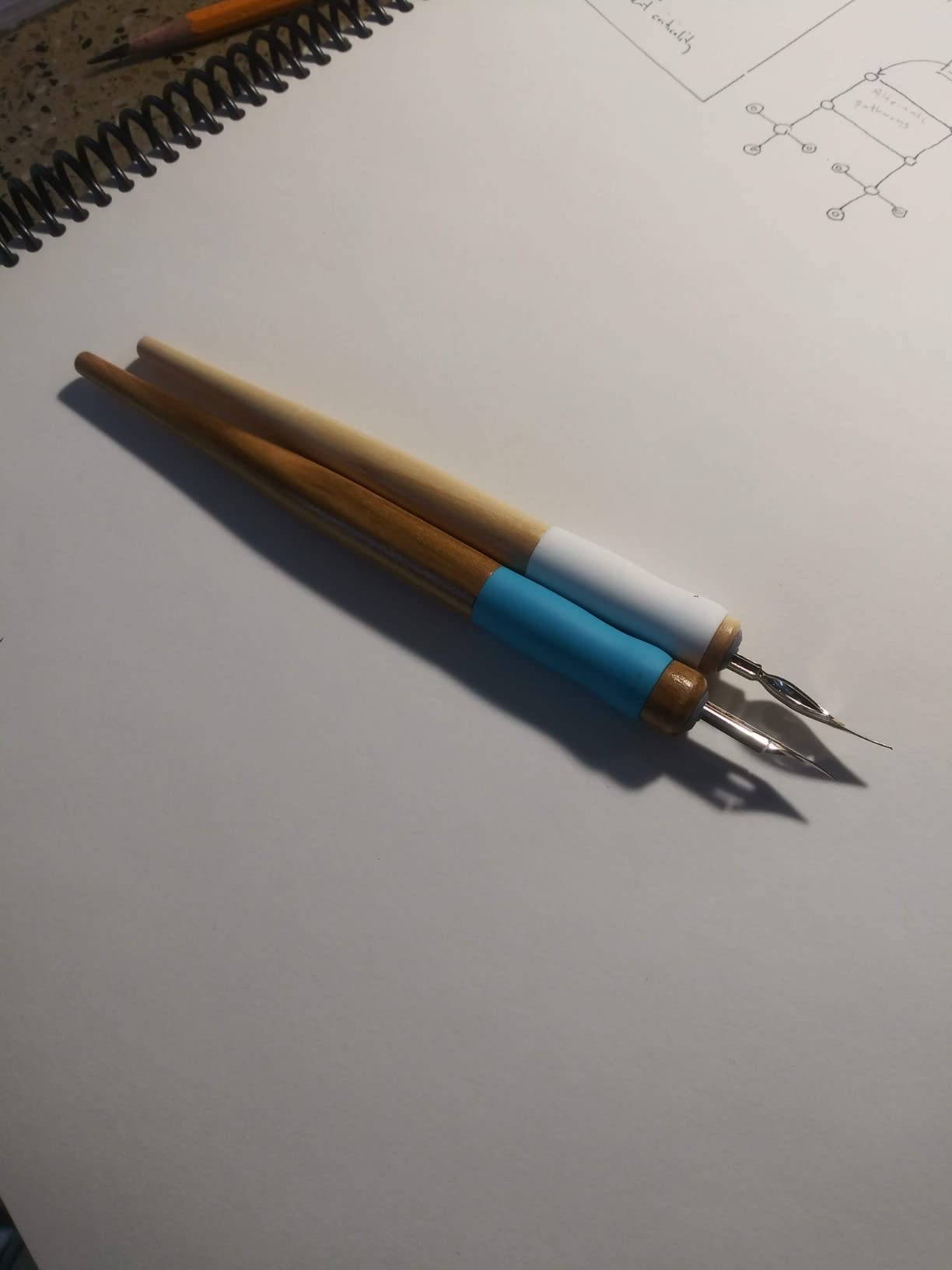
The included cap is a thoughtful touch that most nib holders do not include. You can post the cap on the back of the holder during use, and it protects the nib when the holder is in your bag. This makes the T-40 the most portable dip pen setup I have tested.
The known issue is the front cap fit. Some users report that the cap does not stay securely on the front to protect the nib. Mine has been fine, but this is worth noting. The cap can also crack if you force it on too aggressively. Treat it gently and it will serve you well.
Nib Compatibility and Recommendations
The T-40 works with all standard manga and comic nibs. For beginners, I recommend starting with a Zebra G nib, which is the most forgiving and versatile nib for learning pressure control. The Nikko G is essentially identical. For fine detail work, the Maru (mapping) nib is excellent but requires a very light touch.
Pair this holder with the Speedball India Ink from this guide and you have a complete dip pen setup for under 20 dollars. That is an incredible value for the artistic range it opens up.
Why Dip Pens Still Matter in a Digital Age
Even with digital tools like the Wacom Cintiq and iPad Pro, traditional dip pens offer a tactile quality that digital cannot replicate. The slight imperfections, the varied ink flow, and the organic line quality give traditional ink work character that stands out in a world of clean digital art.
Many professional comic artists still use dip pens for specific effects that digital brushes cannot match. If you are serious about pen and ink art, learning to use a dip pen is worth the effort.
Buying Guide: How to Choose the Best Tools for Pen and Ink Artists
Choosing the right pen and ink supplies can feel overwhelming with the sheer number of options available. This buying guide breaks down the key decisions you need to make, organized by category so you can find exactly what you need for your specific style and skill level.
Understanding Ink Types: Pigment vs Dye Based
The most important specification to understand when choosing ink is whether it is pigment-based or dye-based. Pigment-based inks contain solid pigment particles suspended in liquid. They are waterproof, lightfast, and archival, making them ideal for permanent artwork. Sakura Pigma Microns, Staedtler Pigment Liners, and Speedball India Ink all use pigment-based formulas.
Dye-based inks dissolve completely in liquid. They tend to produce more vibrant colors and flow more smoothly, but they are not waterproof and will fade over time when exposed to light. Winsor and Newton drawing inks are a hybrid: the black is shellac-based and behaves like a pigment ink, while some colored variants are dye-based.
For artwork you want to last, always choose pigment-based ink. For practice, journaling, or pieces that will be scanned and printed, dye-based ink is acceptable and often more affordable.
Choosing the Right Pen Type for Your Style
Fine liner pens like Microns, Uni Pins, and Staedtler Pigment Liners produce consistent, predictable line widths. They are perfect for technical drawing, manga, stippling, and any work requiring precise, uniform lines. Choose these when you need control and repeatability.
Brush pens like the Pentel Fude and Tombow Fudenosuke produce variable line widths based on pressure. They are ideal for expressive drawing, calligraphy, and dynamic illustration work. Choose these when you want organic, lively lines that respond to your hand.
Dip pens offer the widest range of line expression but require the most skill. They can produce everything from hair-thin lines to bold strokes, and the ink character is unique to each nib type. Choose dip pens when you want maximum artistic control and are willing to invest time in learning the technique.
Selecting Paper: Why Surface Matters
Paper is arguably as important as the pen you choose. Bristol paper, like the Strathmore 300 Series and Canson XL, is the standard surface for pen and ink work. The smooth finish allows pens to glide without catching, and the heavy weight prevents ink from bleeding through.
For beginners, I recommend starting with the Canson XL Bristol pad for practice and upgrading to Strathmore for finished work. If you plan to combine ink with watercolor, look for watercolor paper with a hot-pressed (smooth) finish, which gives you the best of both worlds.
Avoid standard printer paper and cheap sketchbook paper for finished ink work. These papers are too thin, causing ink to bleed and feather, and they will not hold up over time. The frustration of fighting your paper is not worth the money you save.
Nib Selection for Dip Pen Artists
If you are venturing into dip pen territory, nib selection is critical. G nibs (Zebra G, Nikko G) are the most versatile and beginner-friendly, offering good flex and ink capacity. They are the standard choice for manga and comic inking. Mapping nibs (Maru) produce extremely fine lines for detail work but require a light touch.
Brause and Leonardt nibs are popular for calligraphy and offer different flex characteristics. Speedball C-series nibs are designed for broad-edge lettering rather than drawing. Start with a G nib in the Tachikawa holder and expand your collection as your skills develop.
Building a Starter Kit at Different Budgets
For a budget starter kit under 25 dollars, I recommend the Pentel Fude Brush Pen, a Canson XL Bristol pad, and a Tombow Mono Zero Eraser. This gives you a versatile pen, quality paper, and a precision eraser for less than the cost of a takeout dinner.
For a mid-range kit around 50 dollars, add the Sakura Pigma Micron 6-pack, a Tachikawa nib holder with a Zebra G nib, and Speedball India Ink. This covers fineliner work, brush work, and dip pen work, giving you the full range of inking techniques.
For a professional kit, add Strathmore 300 Series Bristol, Winsor and Newton Drawing Ink, and the Staedtler Pigment Liner 8-pack. This is the setup I use for commissioned work and pieces I intend to sell or frame.
Tool Care and Maintenance Tips
Always cap your pens immediately after use. Even DRY SAFE Staedtler pens will eventually dry out if left uncapped for extended periods. Store pens flat rather than tip-down to prevent ink from pooling. Keep bottled inks away from direct sunlight and heat sources.
Clean dip pen nibs after every session by rinsing them in water and wiping dry. For stubborn dried ink, soak the nib in pen cleaner or rubbing alcohol. Never leave ink on a nib overnight, as it will dry hard and be difficult to remove.
Store bristol paper pads flat rather than standing on edge to prevent warping. Keep erasers away from heat and direct sunlight, which can make the rubber hard and crumbly. With basic care, all of the tools in this guide will last months or years of regular use.
Frequently Asked Questions About Pen and Ink Tools
What pen do most artists use for pen and ink drawing?
The Sakura Pigma Micron is the most widely used pen among pen and ink artists, with over 64,000 reviews on Amazon. Professional illustrators, manga artists, and urban sketchers all rely on Microns for their archival waterproof ink and consistent line quality. The Staedtler Pigment Liner and Uni Pin are popular alternatives with similar performance.
What tools do I need to start pen and ink drawing?
A basic pen and ink starter kit needs just four items: a fine liner pen (like Sakura Pigma Micron), bristol paper (like Canson XL), a pencil for sketching, and an eraser (like the Tombow Mono Zero). As you advance, add brush pens, dip pens with nibs, and bottled India ink to expand your range of techniques.
Are expensive art supplies worth it for pen and ink?
For core tools like pens and ink, quality matters and mid-range products like Sakura Microns and Speedball India Ink offer professional results at reasonable prices. Premium products like Winsor and Newton ink provide marginal improvements in flow and opacity. The biggest investment should be in paper, as cheap paper will undermine even the best pens.
What is the best ink for pen and ink illustration?
For waterproof, archival artwork, Speedball Super Black India Ink and Winsor and Newton Drawing Ink are the top choices. Speedball offers dense carbon black pigment at an affordable price, while Winsor and Newton provides smoother flow and a professional-grade shellac formula. Both work with dip pens and brushes.
Do I need special paper for pen and ink drawing?
Yes, bristol paper is strongly recommended for pen and ink work. Standard copier paper and thin sketchbook paper will cause ink to bleed, feather, and show through to the other side. Bristol paper like Strathmore 300 Series or Canson XL has a smooth surface and heavy weight (100lb or higher) that produces crisp, clean lines.
Are brush pens good for pen and ink drawing?
Brush pens like the Pentel Fude and Tombow Fudenosuke are excellent for expressive pen and ink work. They produce variable line widths based on pressure, allowing for dynamic strokes that fineliner pens cannot achieve. They require practice to master but are widely used by manga artists, calligraphers, and illustrators.
What nibs are best for beginners learning dip pen inking?
Zebra G and Nikko G nibs are the best choices for beginners. They offer moderate flex, good ink capacity, and are forgiving of inconsistent pressure. Pair them with the Tachikawa T-40 nib holder for a comfortable, affordable setup. Avoid mapping (Maru) nibs until you have developed consistent pressure control.
Can I use watercolor over pen and ink drawings?
Yes, as long as your pen ink is fully waterproof. Sakura Pigma Micron, Staedtler Pigment Liner, and Uni Pin pens all produce waterproof lines that can be painted over with watercolor once dry. Speedball India Ink is also waterproof when fully cured. Always test your ink on scrap paper first, and wait at least five minutes after inking before applying watercolor.
Conclusion: Building Your Ideal Pen and Ink Kit in 2026
Finding the best tools for pen and ink artists comes down to matching your supplies to your personal style and skill level. After testing all 12 products in this guide, my top recommendation for most artists is to start with the Sakura Pigma Micron 6-pack for precision work, add the Pentel Fude Brush Pen for expressive lines, and invest in Strathmore 300 Series Bristol for quality paper. These three tools alone will cover the vast majority of pen and ink techniques.
As you grow, expand into dip pen work with the Tachikawa nib holder and Speedball India Ink, upgrade to Winsor and Newton ink for professional pieces, and keep a Tombow Mono Zero Eraser handy for cleaning up pencil construction lines. The beauty of pen and ink art is that the tools are relatively simple and affordable compared to other mediums, but the range of expression they offer is limitless. For gift ideas, check out our guide to the best gifts for pen and ink artists.