
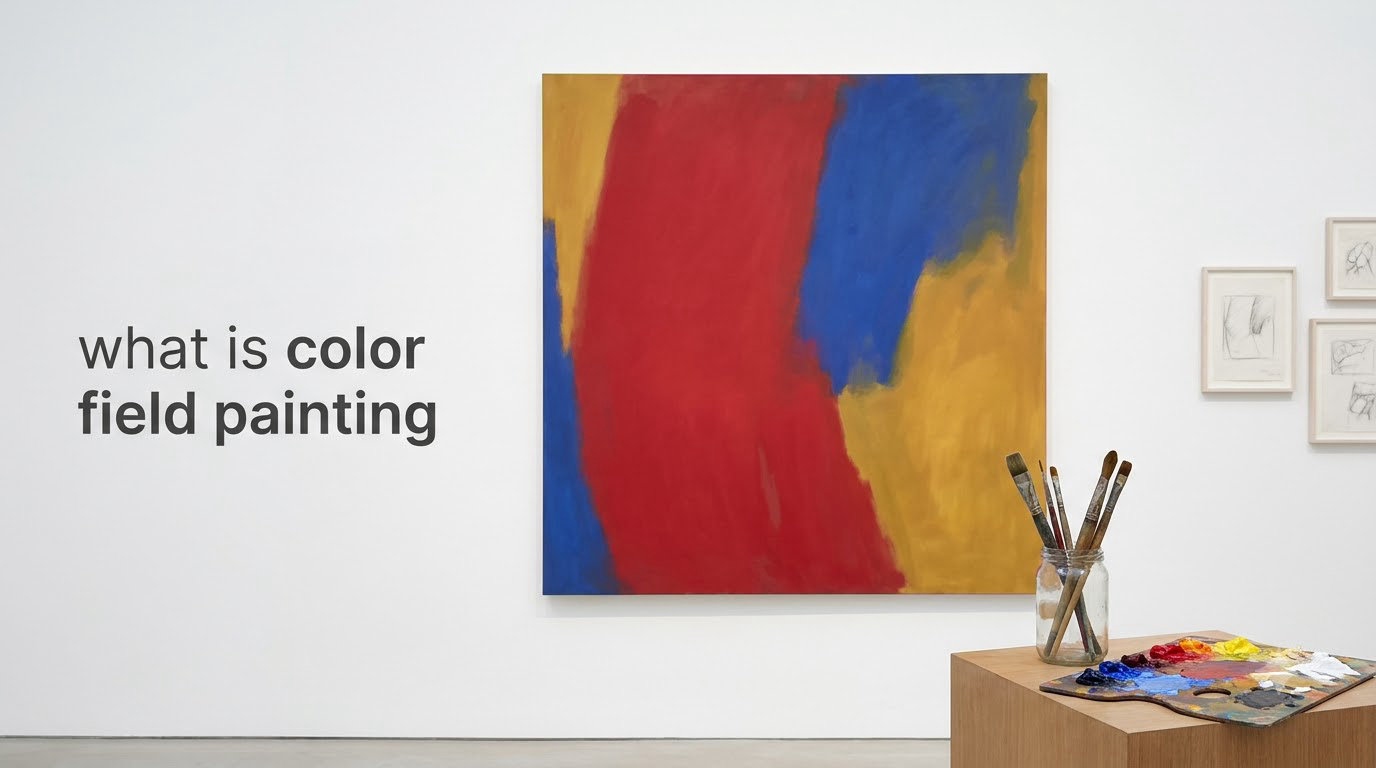
Color field painting stands as one of the most immersive and emotionally powerful movements in modern American art. If you have ever stood before a massive canvas covered entirely in rich, saturated color and felt something shift inside you, you have likely experienced the impact of this distinctive approach to abstract painting.
This art movement emerged in the late 1940s and reached its peak during the 1950s and 1960s, fundamentally changing how artists approached the canvas and how viewers interacted with color itself. Unlike traditional paintings that depict recognizable objects or landscapes, color field painting treats color itself as the primary subject matter.
In this comprehensive guide, I will walk you through everything you need to understand about color field painting, from its historical origins to the artists who defined it and the techniques they employed. Whether you are an art student, a museum visitor, or simply curious about modern art movements, this guide will help you appreciate and identify color field painting with confidence.
Table of Contents
Historical Context: The Emergence of Color Field Painting
Color field painting grew directly from the Abstract Expressionist movement that developed in New York during and after World War II. While European art had been disrupted by the war, American artists began developing a bold new visual language that would dominate the art world for decades to come.
The movement emerged in the late 1940s as artists sought to move beyond the gestural mark-making of earlier abstract work. Critics and art historians often divide Abstract Expressionism into two broad approaches. The first, which we now call action painting, emphasized the physical act of applying paint to canvas, with artists like Jackson Pollock dripping and splattering their materials across large surfaces.
The second approach, which became color field painting, took a different path. Instead of focusing on the act of painting itself, these artists concentrated on the overall effect of color covering the entire canvas. The art critic Clement Greenberg played a crucial role in defining and promoting this approach, arguing that true abstract painting should emphasize the flatness of the canvas surface.
By the mid-1950s, color field painting had established itself as a major force in American art. The style continued to evolve through the 1960s, influencing subsequent movements and remaining relevant to artists working today. Understanding this historical context helps explain why color field painters made the specific artistic choices they did.
Key Artists of the Color Field Movement
Several artists defined the color field painting movement, each bringing their own unique approach while sharing common goals. Let me introduce you to the painters who shaped this influential art movement.
Mark Rothko (1903-1970) created some of the most emotionally resonant works in the color field tradition. His paintings typically feature large rectangular fields of soft, overlapping colors that seem to glow and pulse with inner light. Rothko was born in Latvia and immigrated to the United States, eventually developing his signature style of luminous color rectangles that he called “sacred” paintings. His work aims to evoke fundamental human emotions, and viewers often report experiencing a sense of transcendence or spiritual contemplation when standing before his large canvases. Rothko famously stated that he is not an abstractionist, insisting that his paintings represent simple and basic human emotions.
Barnett Newman (1905-1970) developed a distinctive approach characterized by large color fields interrupted by thin vertical lines, which he called “zips.” These zips serve as compositional anchors and create a sense of spatial tension within the otherwise flat color surfaces. Newman was deeply interested in philosophical and spiritual concepts, and his paintings often explore themes of the sublime and the infinite. His massive canvases, such as the “Brokenobelix” series, create an overwhelming sense of scale that envelops the viewer in pure color experience.
Clyfford Still (1904-1980) worked with jagged, irregular shapes of color rather than Rothko’s soft rectangles or Newman’s zips. His paintings feature bold, aggressive color relationships that create a sense of raw power and emotional intensity. Still believed that art should express the fundamental struggle of human existence, and his work reflects this conviction through its monumental scale and dramatic color contrasts. He viewed conventional artistic techniques as insufficient for expressing the depth of human experience.
Helen Frankenthaler (1928-2011) developed the soak-stain technique that would become central to color field painting. Unlike the more controlled approaches of her contemporaries, Frankenthaler placed unprimed canvas directly on the floor and poured thinned paint onto its surface, allowing the color to bleed and spread organically. This technique created the soft, luminous color fields that became a hallmark of her work and influenced generations of subsequent artists.
Core Characteristics of Color Field Painting
Several defining characteristics distinguish color field paintings from other abstract approaches. Understanding these elements will help you identify and appreciate this art movement when you encounter it in museums and galleries.
The most immediately recognizable feature is the use of large, unbroken fields of color that extend to the edges of the canvas. Unlike earlier paintings that featured distinct figures or compositions with clear centers of interest, color field paintings create a unified surface where the entire canvas participates equally in the visual experience. There is no focal point demanding your attention; instead, your eye moves freely across the entire surface.
The scale of color field paintings contributes significantly to their impact. Artists working in this tradition typically created monumental works meant to engulf the viewer. Standing before a large Rothko or Newman, you become physically immersed in the color environment, and this immersion produces a psychological effect quite different from viewing smaller, more conventional paintings.
The flat picture plane represents another essential characteristic. Color field painters embraced the two-dimensional nature of canvas rather than attempting to create illusions of three-dimensional space. The paint lies on the surface rather than being applied over representational forms, and this flatness reinforces the abstract nature of the work while emphasizing the physical presence of color as color.
Color relationships within these works create emotional resonance without relying on recognizable imagery. The specific hues, their intensities, and their adjacencies work together to produce psychological effects. Warm colors may advance while cool colors recede, or complementary colors may vibrate against each other. These relationships engage viewers emotionally rather than intellectually.
Techniques and Materials
Color field artists developed specific techniques to achieve their distinctive visual effects. These methods reflect the movement’s emphasis on color experience over technical virtuosity or representational accuracy.
The soak-stain technique, pioneered by Helen Frankenthaler, involves applying thinned paint directly to unprimed canvas. By reducing the paint with turpentin or other solvents, artists create a consistency similar to watercolor that soaks into the fabric rather than sitting on its surface. This produces soft, luminous edges where colors merge and blend, creating the ethereal quality characteristic of Frankenthaler’s work. The technique requires working quickly and intuitively, as the paint spreads and merges in unpredictable ways.
Pouring and dripping techniques allow artists to cover large areas quickly while maintaining the loose, organic quality associated with color field painting. Rather than using brushes to carefully apply controlled marks, artists pour thinned paint onto canvas positioned on the floor, allowing gravity to determine how colors flow and pool. This approach eliminates visible brushwork and creates smooth, continuous color surfaces.
The use of unprimed or lightly primed canvas significantly affects the final appearance of color field works. Traditional primed canvas provides a protective barrier between the paint and the fabric, controlling how color absorbs into the surface. Unprimed canvas absorbs paint more readily, producing deeper penetration and more saturated colors. This material choice connects to the movement’s interest in authenticity and direct experience.
Acrylic paints became increasingly popular among color field artists during the 1960s. Unlike oil paints, acrylics dry quickly and can be applied in transparent layers that build up color intensity while maintaining luminosity. Artists like Morris Louis and Kenneth Noland used acrylics to create their signature stained canvas works, applying color in washes that merged with the fabric itself.
Color Field Painting vs Action Painting
Understanding the relationship between color field painting and action painting helps clarify what makes color field work distinctive within the broader Abstract Expressionist movement. These two approaches emerged around the same time and shared certain goals while pursuing radically different methods.
Action painting, exemplified by artists like Jackson Pollock and Willem de Kooning, emphasizes the physical act of applying paint to canvas. Paintings from this tradition feature visible evidence of the artist’s movements: drips, splatters, gestural brushstrokes, and dynamic energy frozen in place. The process of making the painting remains visible and central to the work’s meaning.
Color field painting takes a contrasting approach. Rather than emphasizing the artist’s physical gestures, color field artists seek to create smooth, unified color surfaces that transcend individual marks. The goal is not to document the process of painting but to produce a finished color environment that affects viewers regardless of how it was made. The paint application may be invisible, replaced by seamless color fields.
The emotional effects differ as well. Action paintings often convey energy, movement, and the physical presence of the artist. Color field paintings tend toward contemplation, stillness, and the pure experience of color. Standing before a Pollock drip painting, you may feel the artist’s physical struggle with his materials. Standing before a Rothko, you may experience something closer to meditation or spiritual awakening.
Despite these differences, both approaches share commitments to abstraction, large scale, and the exploration of pure visual experience. Both rejected traditional representation in favor of direct engagement with the materials and possibilities of painting itself. The distinction between them reflects different answers to fundamental questions about what painting could and should be in the modern era.
Later Developments: Post-Painterly Abstraction and Beyond
Color field painting continued evolving throughout the 1960s and 1970s, giving rise to related movements and influencing subsequent generations of artists. Understanding these developments helps place the original color field work in broader historical context.
Post-painterly abstraction emerged in the early 1960s as artists sought to move beyond what they perceived as the emotional intensity of color field painting toward something more systematic and optically focused. Led by critics like Clement Greenberg, this movement emphasized clean edges, precise color relationships, and optical effects. Artists like Morris Louis and Kenneth Noland created stained color works that feature systematic color progressions and hard-edged geometric forms, moving away from the soft, emotional surfaces of earlier color field painting.
The Washington Color School, centered in Washington D.C., developed a distinctive approach to color field painting during the 1950s and 1960s. Artists like Thomas Downing, Morris Louis, and Kenneth Noland explored the effects of color stains applied to raw canvas, often creating works with concentric patterns or systematic color arrangements. This regional movement contributed significantly to the broader development of color-related abstract art.
Hard-edge painting developed alongside and sometimes overlapping with color field painting. This approach features precisely painted geometric forms with sharp, clean edges, contrasting with the soft, organic color transitions typical of stain technique color field work. Artists like Ellsworth Kelly and Frank Stella created works that combined color field concerns with geometric precision, bridging color field painting and minimalism.
Minimalism and contemporary art continue to reflect color field painting’s influence. The emphasis on large scale, the reduction of artistic means to color and surface, and the interest in viewer experience all connect contemporary installation and environmental art to color field painting’s fundamental concerns. Artists working today often cite color field painters as important precedents for their own explorations of color and space.
Legacy and Contemporary Relevance
Color field painting remains one of the most influential art movements of the twentieth century, and its impact continues to be felt in contemporary art practice and museum programming around the world. The movement established approaches to color, scale, and viewer experience that remain relevant today.
Museums across the globe hold significant color field painting collections, making this work accessible to contemporary audiences. The Museum of Modern Art in New York houses important works by Rothko, Newman, and Frankenthaler, while the Clyfford Still Museum in Denver preserves the largest collection of Still’s work. The Smithsonian American Art Museum, the Tate Modern in London, and numerous other institutions offer opportunities to experience these powerful works in person.
Contemporary artists continue to draw inspiration from color field painting’s achievements. Whether working in traditional media or exploring color through digital and environmental installations, artists today acknowledge the debt they owe to the color field pioneers who demonstrated what pure color experience could accomplish. The movement established color itself as sufficient subject matter for serious art.
The spiritual and contemplative aspects of color field painting have only increased in relevance as contemporary life becomes increasingly fast-paced and image-saturated. Standing before a Rothko chapel painting or experiencing a large-scale Newman work offers something increasingly rare: an opportunity for genuine aesthetic contemplation and emotional engagement with art that asks nothing except that you be present with color itself.
Art education continues to emphasize color field painting as essential to understanding twentieth-century art history. Students learning about Abstract Expressionism and its legacy inevitably encounter the color field approach, and many go on to create their own color-related work informed by these predecessors. The movement’s influence on art theory and criticism extends beyond the works themselves to fundamental questions about what painting can do and what it means.
FAQs
What is the meaning of color field painting?
Color field painting is a style of abstract art that emerged in the 1950s and 1960s, characterized by large areas of flat, solid color spread across or stained into the canvas. The movement treats color itself as the primary subject matter, eliminating figures, backgrounds, and compositional centers in favor of unified color environments. Artists sought to create emotional and spiritual effects through pure color experience rather than representational imagery.
Is color field painting still relevant?
Yes, color field painting remains highly relevant today. The movement established fundamental approaches to color, scale, and viewer experience that continue influencing contemporary artists working in all media. Museums worldwide actively collect and exhibit color field works, and the contemplative, immersive qualities of the work resonate strongly with contemporary audiences seeking meaningful aesthetic experiences.
What is the color field painting technique?
The primary techniques used in color field painting include the soak-stain method, where thinned paint is applied to unprimed canvas and allowed to bleed into the fabric, and pouring techniques where paint is dripped or poured onto canvas positioned on the floor. Artists often work on large unprimed canvases, applying color in ways that create soft, luminous edges and seamless color fields. Acrylic paints became popular for their quick drying and luminous finish.
What is the difference between action painting and color field painting?
Action painting and color field painting are both branches of Abstract Expressionism but differ significantly in approach. Action painting, practiced by artists like Jackson Pollock, emphasizes the physical act of painting itself, featuring visible gestures, drips, and energetic marks. Color field painting, practiced by artists like Mark Rothko and Barnett Newman, seeks to eliminate visible brushwork in favor of smooth, unified color surfaces. Where action paintings convey energy and movement, color field paintings tend toward stillness and contemplation.
Conclusion
Color field painting represents one of the most significant achievements in twentieth-century American art. By treating color itself as the primary subject matter and creating immersive environments that envelop viewers in pure chromatic experience, artists like Mark Rothko, Barnett Newman, Clyfford Still, and Helen Frankenthaler established new possibilities for what painting could accomplish.
The movement’s legacy extends far beyond the original works themselves. Contemporary artists continue to explore color relationships, large scale, and viewer engagement in ways that build directly on color field painting’s innovations. Museums worldwide preserve and exhibit these works, offering opportunities for new generations to experience their powerful emotional impact.
Whether you encounter color field painting in a major museum or through reproductions in books and online, understanding the movement’s history, techniques, and goals enhances your appreciation of these challenging and rewarding works. The next time you stand before a large field of color that seems to pulse with inner light, you will have the knowledge to understand what you are seeing and why it matters in the broader story of modern art.