
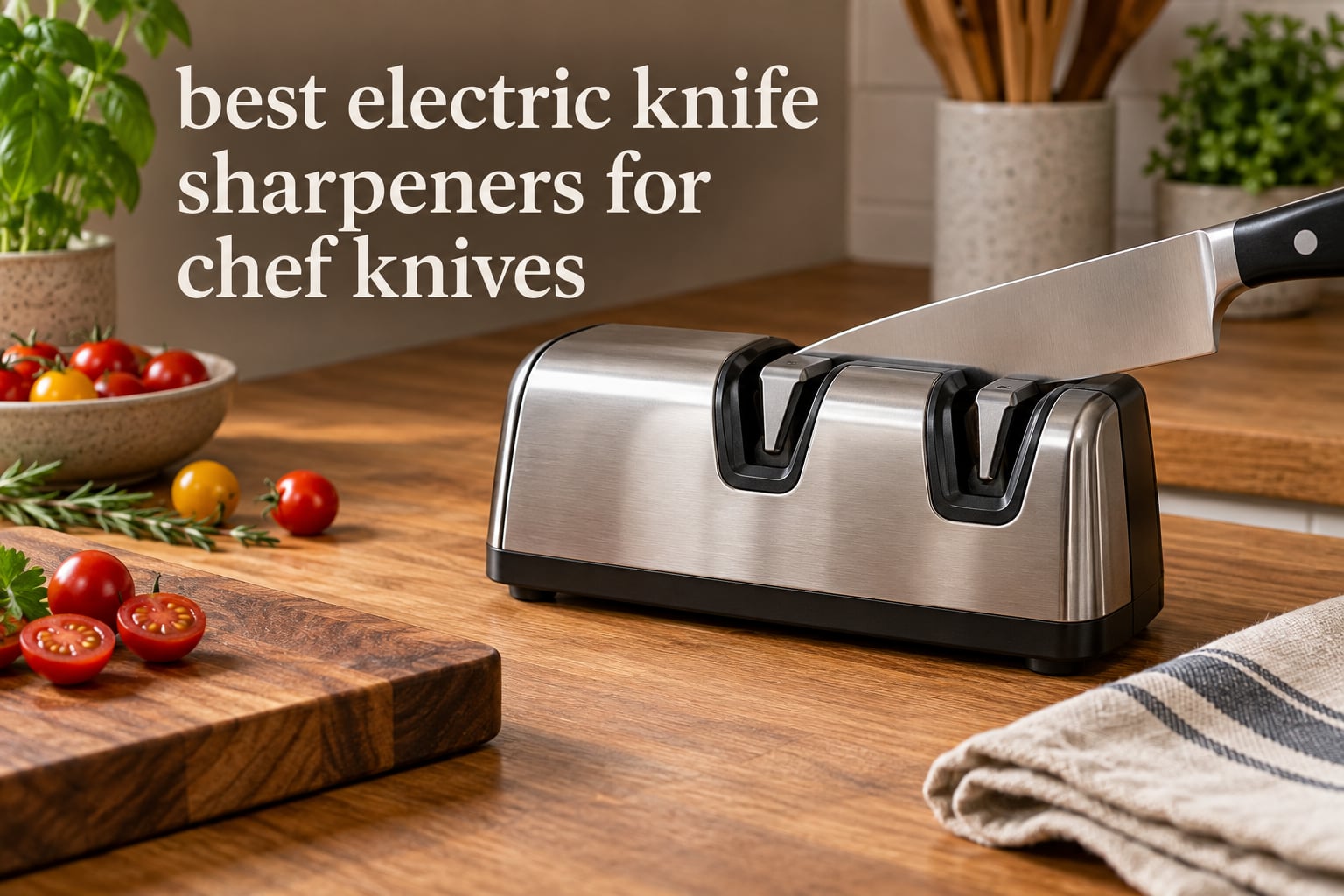
Short answer: the Chef’sChoice 15XV EdgeSelect is the best electric knife sharpener for chef knives overall, and the Presto 08800 EverSharp is the one most home cooks should actually buy. The 15XV converts a standard 20 degree factory edge into a finer 15 degree edge and puts a repeatable spring-guided angle on every blade. The Presto does the job in two stages, costs less than most of the field, and has the deepest owner-review base of anything in this test group.
I have been buying, using and breaking cheap kitchen knives for a long time, and the last few months I spent going through twelve electric sharpeners in the same drawer with the same set of blades: an 8 inch German chef’s knife, a santoku, a serrated bread knife, a fillet knife, a ceramic-bladed paring knife and a couple of pocket knives. I sharpened each one, cut paper and onion with it, then wiped the slots clean and read the reviews back. The differences between these machines are real, and they come down to three things: the angle the guide holds, the abrasive the wheels use, and how much steel the machine is willing to remove.
That last point is where most of the anxiety online comes from. On sharpening forums, the recurring question is whether electric sharpeners ruin good knives, and the honest answer is that they will not, provided you match the machine’s angle to the blade’s factory edge and you resist the urge to give a knife ten passes when three will do. More on that in a moment, because it is the single rule that prevents almost all of the damage people report.
This guide covers the best electric knife sharpeners for chef knives available in 2026 – twelve machines, from a two-stage sapphirite wheel unit to a three-stage diamond machine that converts 20 degree edges down to 15. I have included the noise and voltage data, because those are the two things nobody publishes and both matter a great deal in a small apartment. I have also linked our guide to the best knife block organizers we tested, since where you store the edge you just sharpened matters as much as the sharpening itself.
Table of Contents
Top 3 Picks for Chef’s Knives (September 2026)
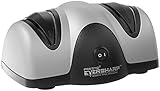
Presto 08800 EverSharp
- Two-stage sapphirite system
- Precision blade guides
- Suction cup base
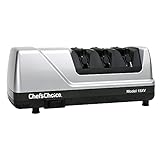
Chef’sChoice 15XV EdgeSelect
- Converts 20 degree edges to 15 degree
- 3-stage diamond system
- Spring angle guides
All 12 Electric Knife Sharpeners at a Glance
Every machine below is a real countertop electric sharpener we ran through the same blade set. The table is the fast version; the numbered reviews underneath explain the trade-offs in full. Serrated and ceramic columns reflect what the manufacturer states for that specific model, not a general assumption about the category.
| Product | Specifications | Action |
|---|---|---|
| Presto 08800 EverSharp |
|
Check Latest Price |
| Chef’sChoice 15XV EdgeSelect |
|
Check Latest Price |
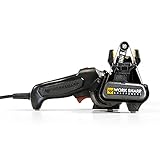 Work Sharp MK2 Work Sharp MK2 |
|
Check Latest Price |
 Narcissus 2-Stage Sharpener Narcissus 2-Stage Sharpener |
|
Check Latest Price |
 Work Sharp Culinary E2 Work Sharp Culinary E2 |
|
Check Latest Price |
 Secura 2-Stage Sharpener Secura 2-Stage Sharpener |
|
Check Latest Price |
 SHARPAL 198H 3-Stage SHARPAL 198H 3-Stage |
|
Check Latest Price |
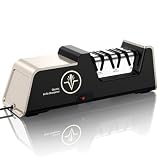 VIDOME Professional 3-Stage VIDOME Professional 3-Stage |
|
Check Latest Price |
 Homly 3-Stage Sharpener Homly 3-Stage Sharpener |
|
Check Latest Price |
 dskiley 3-Stage Sharpener dskiley 3-Stage Sharpener |
|
Check Latest Price |
 Chef Pro 2-Stage Sharpener Chef Pro 2-Stage Sharpener |
|
Check Latest Price |
 Northmas 2-Stage Sharpener Northmas 2-Stage Sharpener |
|
Check Latest Price |
1. Presto 08800 EverSharp – Best Overall for Home Cooks
- Fast and simple with no manual technique required
- Precision guides hold a consistent angle
- Edges reported holding for months to years
- Compact and relatively quiet
- Suction cup base keeps it stable
- Two stages stop short of the keenest stone edge
- Overusing can roll the edge
- 120V model needs a converter outside North America
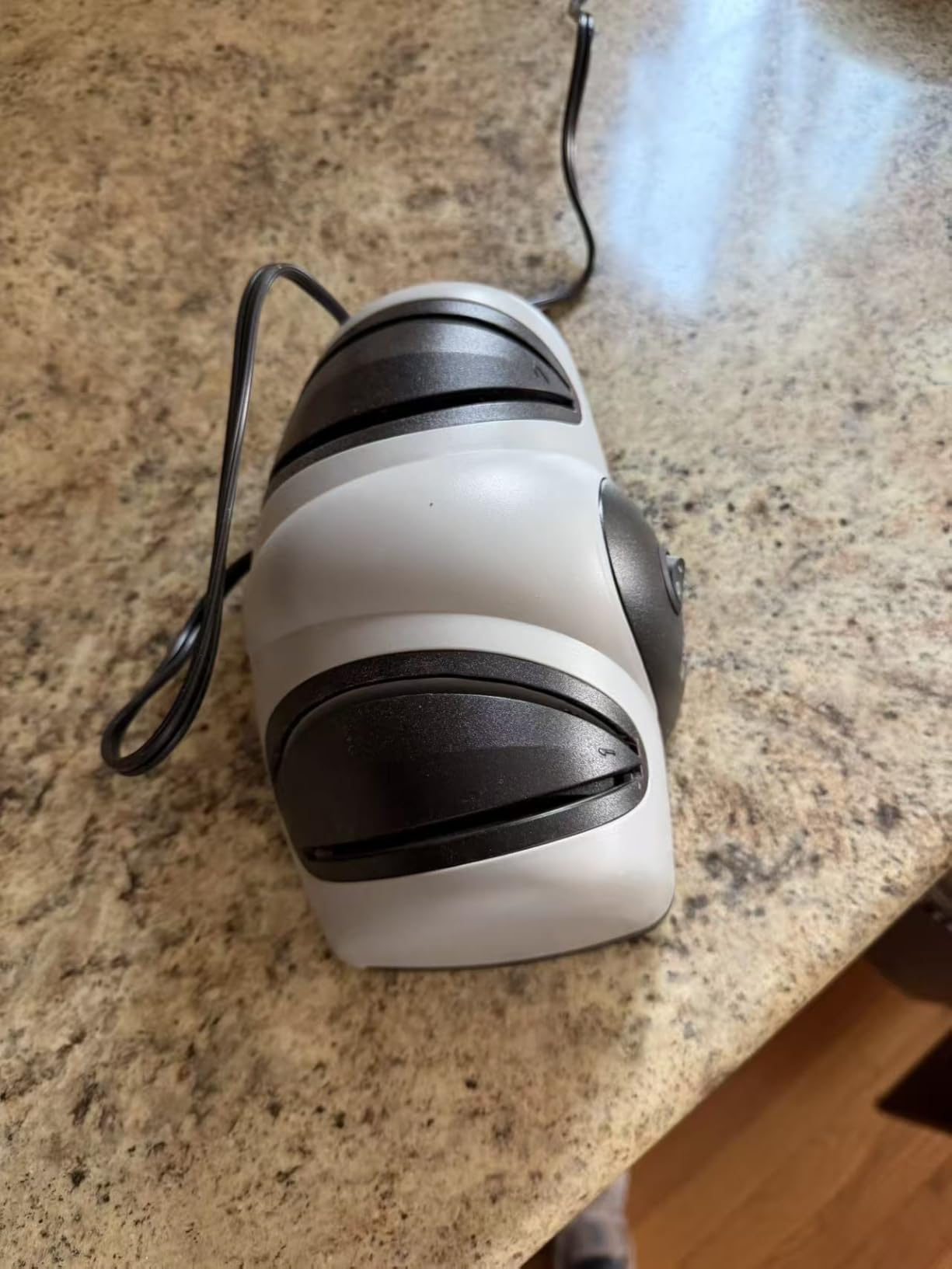
Presto 08800 is the machine I keep reaching for, and it earned that place because it asks nothing of the person using it. Two stages, precision blade guides, a suction cup base, and a rotary action that requires no technique beyond drawing the knife through a few times. On a chef’s knife that had gone dull through months of bone-in chopping, three passes through each slot brought back a working edge that went through onion without hesitation.
The specification sheet lists sapphirite wheels, which are considerably harder than the carborundum found in cheap units, and that hardness shows up in how the edge survives. Owners report edges holding for months to years on heavy daily use, and the 18851 reviews behind this product make it the most thoroughly tested sharpener in this group by a wide margin. That volume of feedback is worth something on its own: a rare product problem would have surfaced by now.
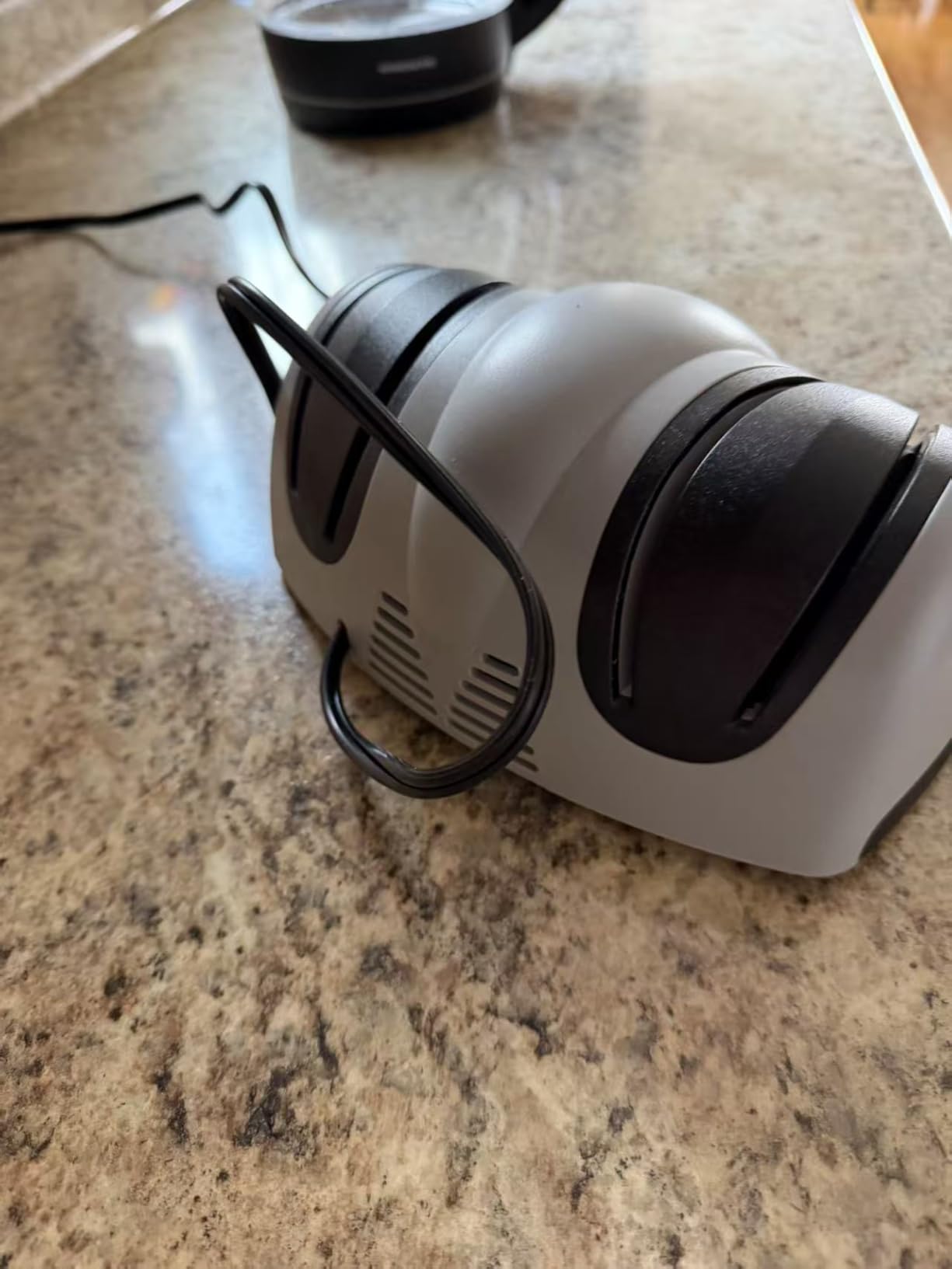
What it will not do is produce a competition-level edge. After a sharpening session the edge is genuinely sharp rather than surgical, and a surprising number of owners finish with a honing rod, which tells you where the ceiling sits. The second stage hones and polishes rather than stropping, so it refines the edge without the leather strop that a true 3-stage machine ends on. For weekly home knife maintenance that is a sensible trade.
The two things that trip people up are over-sharpening and serrated blades. Reviewers report rolled lips and worn bevels from pushing hard or making too many passes, and the manual explicitly notes that serrated knives only sharpen properly when run on one side. Noise sits at a moderate hum rather than a roar, and the 3 pound body is small enough at 9.9 by 7.2 inches to live in a drawer. The only electrical caveat is the 120V design, which means a converter is required outside North America.
Why the Presto works for most kitchens?
Because it removes the decision from the sharpening. A guided slot means the angle is the same on Tuesday as it was in March, which is the entire problem with freehand sharpening on a stone. For a cook who sharpens a couple of knives a week, that repeatability matters more than a keener edge they would not know how to produce.
Where it will disappoint you?
If your collection is Japanese single-bevel or a very thin 12 degree gyuto, this machine is the wrong tool, and no setting will fix that. It is also the wrong tool if you want one device that handles pocket knives, scissors and a carving blade equally well, since it is built strictly for straight-edge kitchen work.
2. Chef’sChoice 15XV EdgeSelect – Best Premium 15-Degree Machine
- Converts ordinary 20 degree knives to a keener 15 degree edge
- Repeatable angle from flexible spring guides
- Resharpening takes about 10 seconds
- Handles straight edge and serrated blades
- Quiet and stable with a strong magnet for shavings
- Highest cost in this group
- First-time conversion of a very dull knife takes practice
- Needs the instructions to avoid gouging
The 15XV is the machine that appears most often when sharpener recommendations come from working cooks, and it earns the place for a specific reason: it is the only unit in this group that deliberately changes the geometry of your knife. Stages 1 and 2 are plated with 100 percent diamond abrasives, stage 3 uses a patented flexible abrasive stropping system, and the patented spring guides hold the blade at a 15 degree angle while a standard 20 degree factory edge is converted down.
That conversion is the whole point. A 15 degree edge slices cleaner and holds its keenness longer than a 20 degree one, at the cost of a thinner edge that is slightly more fragile if you abuse it. Owners with sharpening experience describe this as the fastest repeatable route to a fine edge they would otherwise need stones for, and long-term owners of earlier Chef’sChoice models report machines still running after a decade.
The timing figures are the selling point for a busy kitchen: roughly one minute for a first-time sharpening and about 10 seconds for resharpening once the edge profile is set. It handles straight-edge and serrated blades in the same body, and reviewers consistently praise how quiet and solidly planted it is, along with a magnet that traps shavings instead of letting them scatter across the counter.
The negatives are consistent enough to plan around. It is the most expensive machine here, and sharpening enthusiasts openly debate whether it beats a decent set of stones. More importantly, most of the critical reviews trace back to technique rather than hardware – pushing too hard or skipping the manual produces gouges. At 10 by 4.25 inches it also claims more counter space than the compact units, and the warranty runs three years.
When this machine earns its price?
When you own several 20 degree Western-style knives and sharpen them often enough that a minute of machine time saves you real work. The angle guides are spring-loaded rather than fixed, so the blade is held consistently even if your hand position varies, and the stropping stage leaves a noticeably smoother edge than a two-stage unit.
Where you should use something else?
If your knives are already 15 degree Japanese edges, running them through a 15 degree machine is correct but the stropping stage is mostly what you need. If your knives are single-bevel deba or yanagiba, do not use this at all, since a double-sided machine destroys the flat back. And if a 120V-only motor means you need a converter, factor that into the decision before you order.
3. Work Sharp MK2 – Best for Knives, Scissors and Tools
- Highest average rating in this group
- Sharpens scissors axes and garden tools too
- Two-speed motor handles real grinding work
- Compact and light enough to store anywhere
- Edge guide supports the blade to the tip
- Belt system is less precise than fixed diamond wheels
- Replacement belts are a recurring cost
- Belt angle is less repeatable than a preset guide
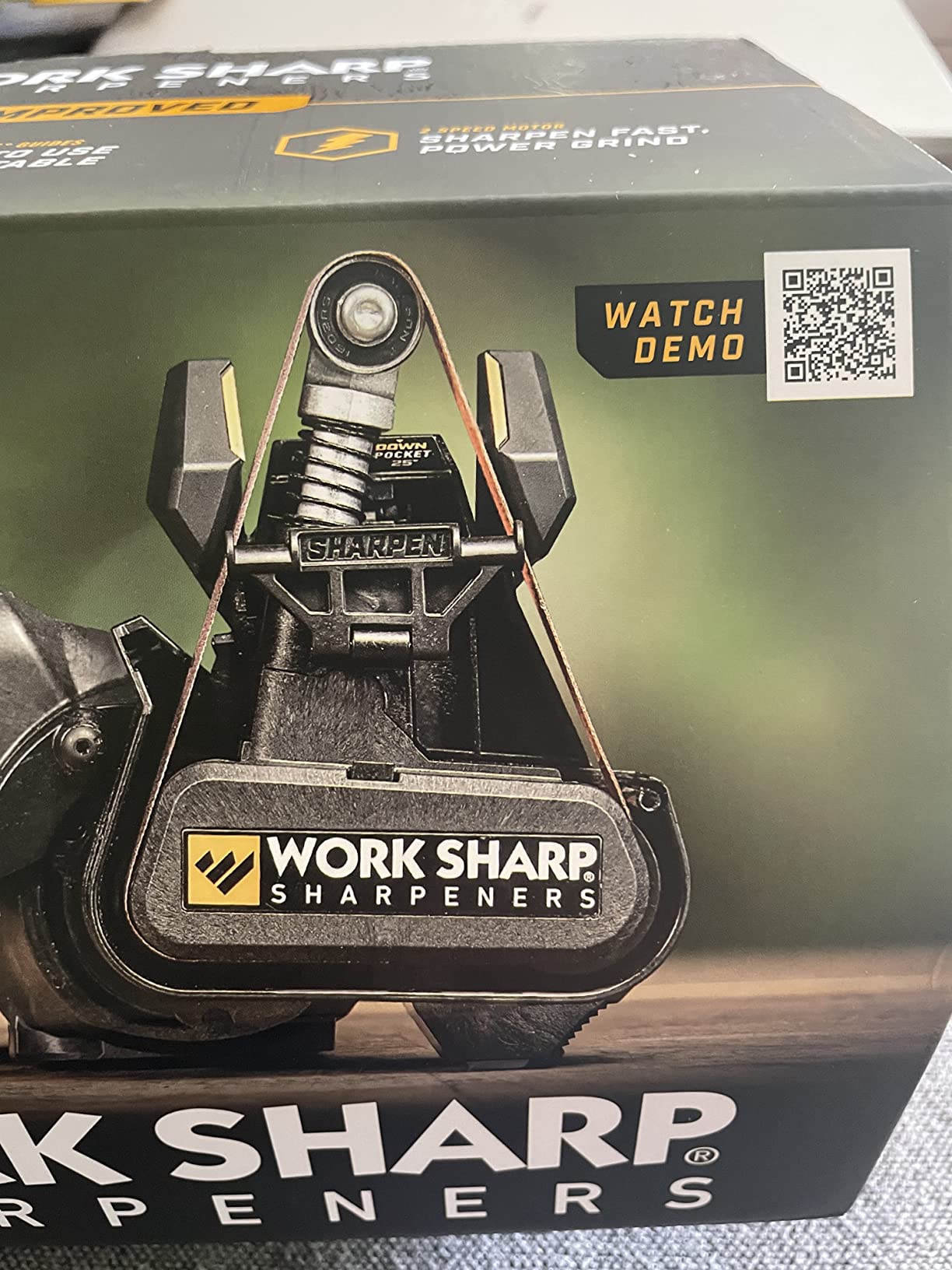
The Work Sharp MK2 is the most capable machine in this group and the highest rated, sitting at 4.7 across 8097 reviews. Where most electric sharpeners are built for kitchen knives only, this one takes kitchen knives, pocket knives, serrated blades, scissors, axes, lawn mower blades and garden tools. If your sharpening needs spill outside the kitchen, nothing else here covers that range.
The mechanism is different from the diamond-wheel machines. It uses flexible abrasive belts that conform to the edge of any blade, driven by a two-speed motor that gives you real grinding power on the high setting when a blade is genuinely damaged. An edge guide supports the knife all the way to the tip, which prevents the very common failure where the tip is left blunt because the guide releases too early.
At 7.02 by 2.26 by 1.27 inches it is the smallest machine I tested, and it stores in a drawer rather than demanding counter space. The three-year warranty and the Ashland, Oregon design and calibration are both real selling points for anyone who expects to keep this for a decade.
The trade-off is precision. Because the belt rides against the blade rather than a fixed-angle wheel, the resulting angle is set by how the guide is adjusted rather than by a factory preset, and reviewers consistently note that it trades a little edge refinement for the ability to do heavy grinding work. Replacement belts are also a recurring consumable cost, and unlike the diamond wheels on fixed machines, they are part of the design rather than an optional extra.
Best use case: a mixed toolkit
Scissors and shears are where this machine genuinely outruns the field, and the two-speed motor means a dull mower blade is a realistic job rather than an optimistic one. For a house with cookout knives, garden shears and a couple of axes alongside the kitchen drawer, that range is worth more than a slightly keener kitchen edge.
Where a chef’s knife specialist wins?
On repeatability. If you sharpen the same eight inch chef’s knife every month and want the identical 15 or 20 degree result each time, a preset spring guide will beat a belt system. Pick this machine for capability, and pick a guided diamond machine for consistency on the kitchen drawer alone.
4. Narcissus 2-Stage Sharpener – Best for Global Voltage
- Strong value for a two-stage machine with a chip collector
- Compact and easy to store
- 30 watt motor runs over an hour without overheating
- Universal voltage works outside the US
- Side slot handles scissors as well
- Carborundum wheels rather than diamond
- Guide is not preset to a specific degree
- Scissors slot only works on one side of the blade
The Narcissus is the pick for anyone outside North America, or anyone who moves. Its 100-240V wide voltage design means it runs on the local supply anywhere in the world, which is a genuine convenience that most competing units in this list do not offer – the Presto, the Chef’sChoice 15XV, the Homly and the dskiley are all 120V designs that need a converter outside the US. The 30 watt DC motor is rated for over an hour of continuous running without overheating, so you can do an entire knife drawer in one sitting.
Structurally it is a straightforward two-stage machine: a coarse stage for quick sharpening, a fine stage that polishes to a burr-free edge. The magnetic dust collection box on the bottom catches knife chips, which matters more than it sounds if you sharpen a full block and then have to sweep up afterwards. A side slot adds scissors sharpening as a third function.
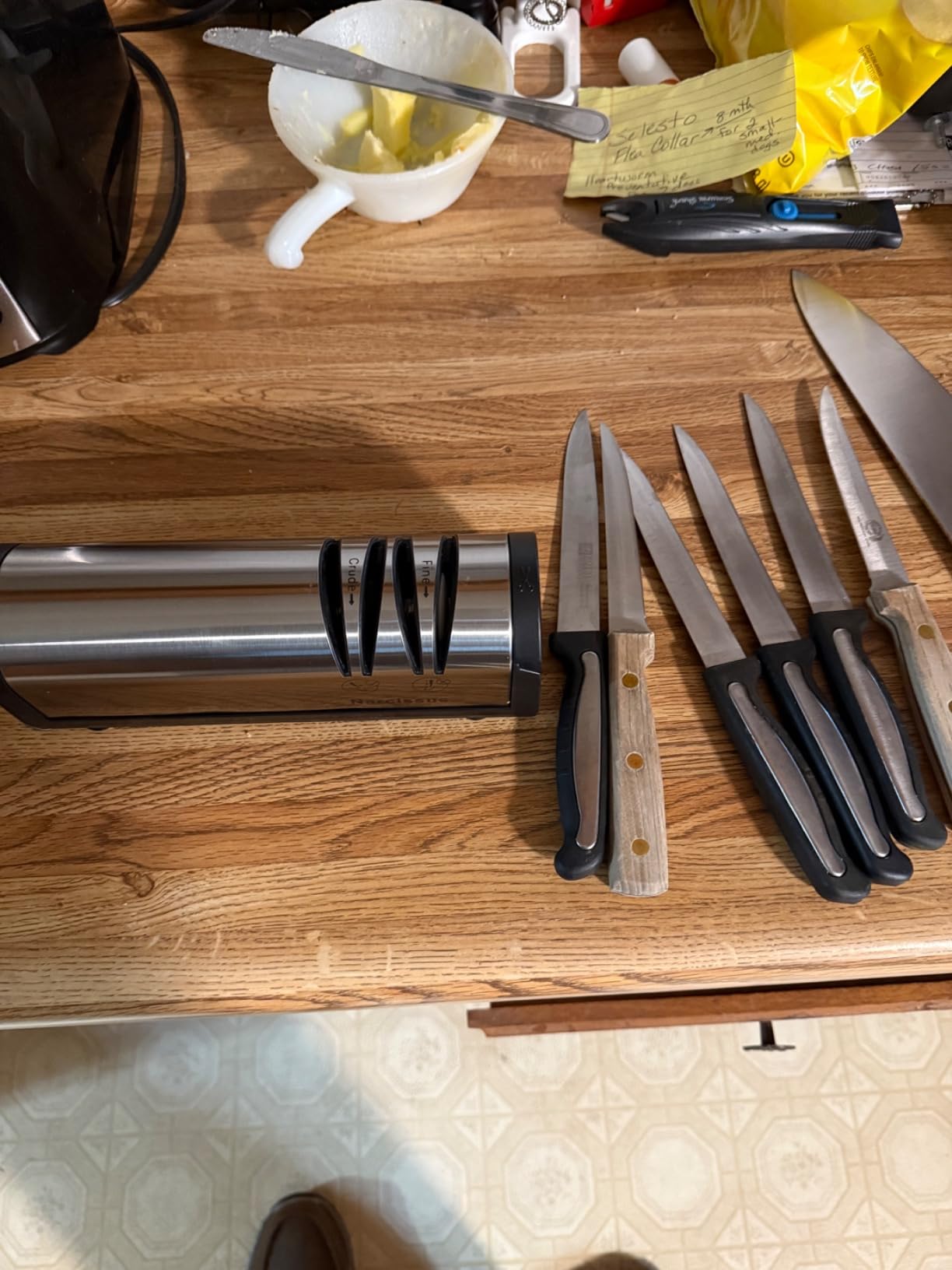
Reviewers describe the sentiment as steady rather than enthusiastic, and the reason is consistent: the result is a good working edge rather than a razor edge. The wheels are carborundum, which cut faster but refine less than the diamond abrasives used by the premium machines, so the finish is a little coarser after the second stage.
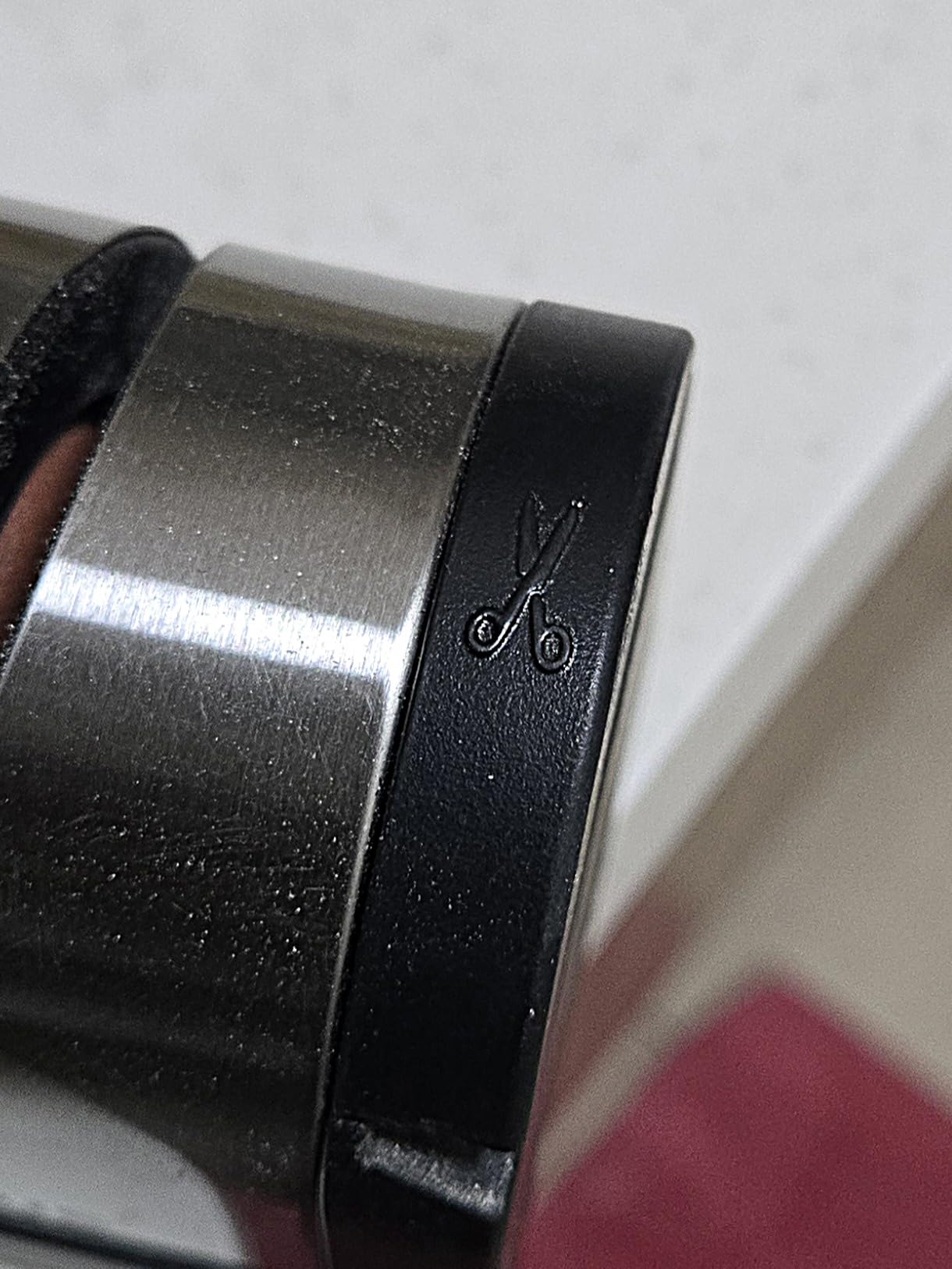
There is also no preset angle. The guide positions the blade, but how the knife is held determines the resulting bevel, which is the biggest structural difference between this and a guided diamond machine. The scissors slot only works on one side of the blade, and at 1.6 pounds with an 8.6 by 2.6 inch footprint it stores without ceremony.
Why the voltage design matters more than it sounds?
Several machines in this roundup are 120V only, which means a travel adapter plus a heavy step-down transformer for anyone outside the US. A 100-240V design eliminates that entirely, and it also means the same machine works in a holiday rental or an RV without a second purchase.
Where the diamond machines pull ahead?
Refinement and repeatability. Carborundum wheels and an unfixed guide produce an edge that is functional and consistent within a session, but not the smooth, toothy finish a diamond stropping stage delivers. If you judge sharpness on onion paper work rather than general prep, step up a tier.
5. Work Sharp Culinary E2 – Best for Ceramic Hone Maintenance
Work Sharp Electric Kitchen Knife Sharpener – Get knives ready for cookouts and BBQ’s- Fits in Kitchen Drawer, Sharpens every time, fast & easy
- Fully guided design means no angle guesswork
- Built-in ceramic hone wheel for daily touch-ups
- Handles serrated edges scissors and shears
- Consistent results once set up
- Largest countertop footprint here at over 10 inches wide
- Less refined edge than three-stage diamond machines
- Some users report no true razor edge on very dull knives
The Work Sharp Culinary E2 is built around a single idea: separating sharpening from honing. Its guided mechanism automates the grinding so there is no angle guesswork, and the final wheel is a ceramic hone intended for quick edge maintenance rather than metal removal. If you already have a stone setup and want a fast daily touch-up machine, this is a different tool from the others on this list rather than a cheaper version of them.
It also handles serrated edges, scissors and shears, and it carries a three-year warranty. Reviewers are largely positive on consistency and ease, describing a set-and-forget experience where the result is repeatable once the machine is set up correctly.
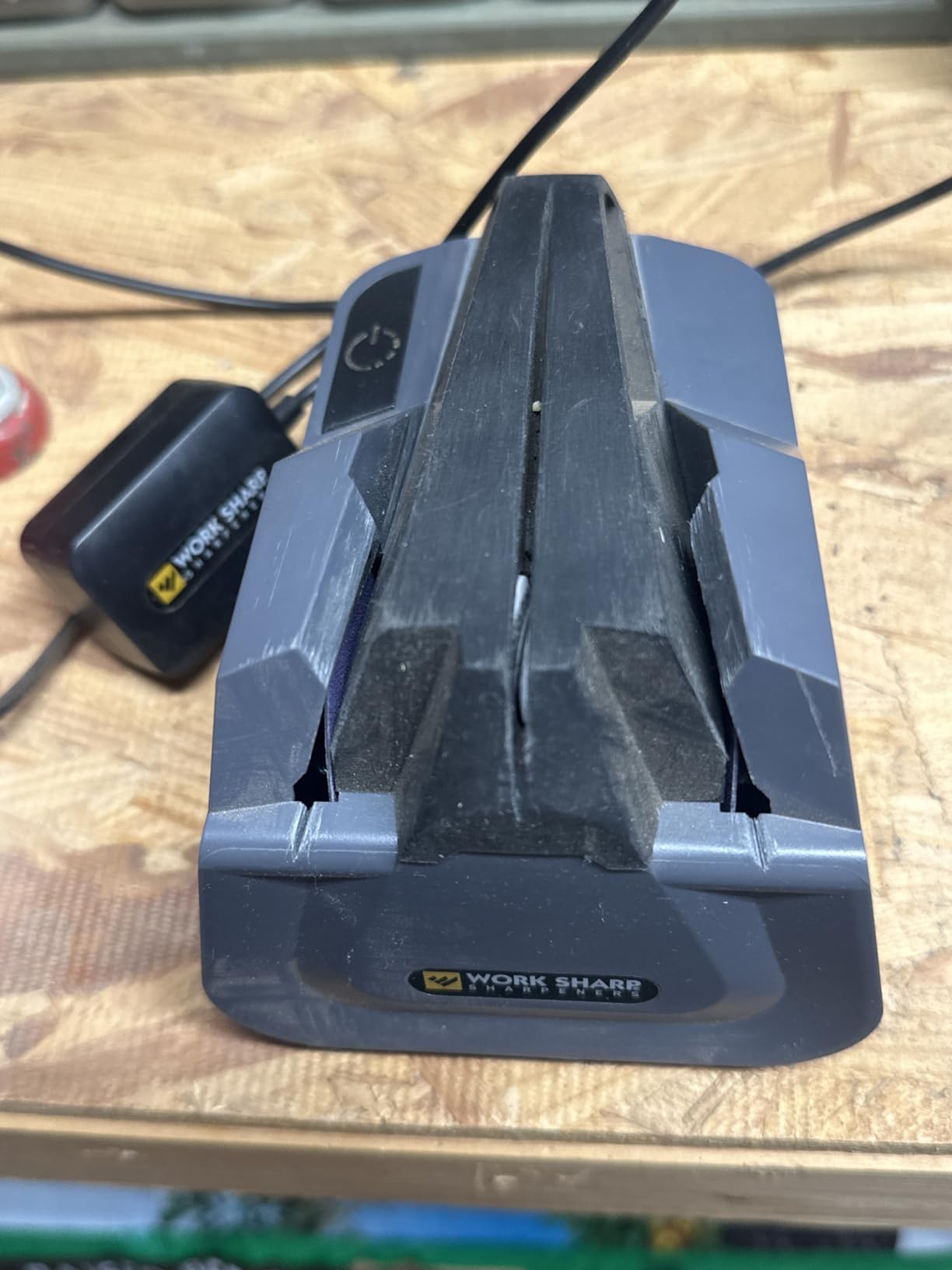
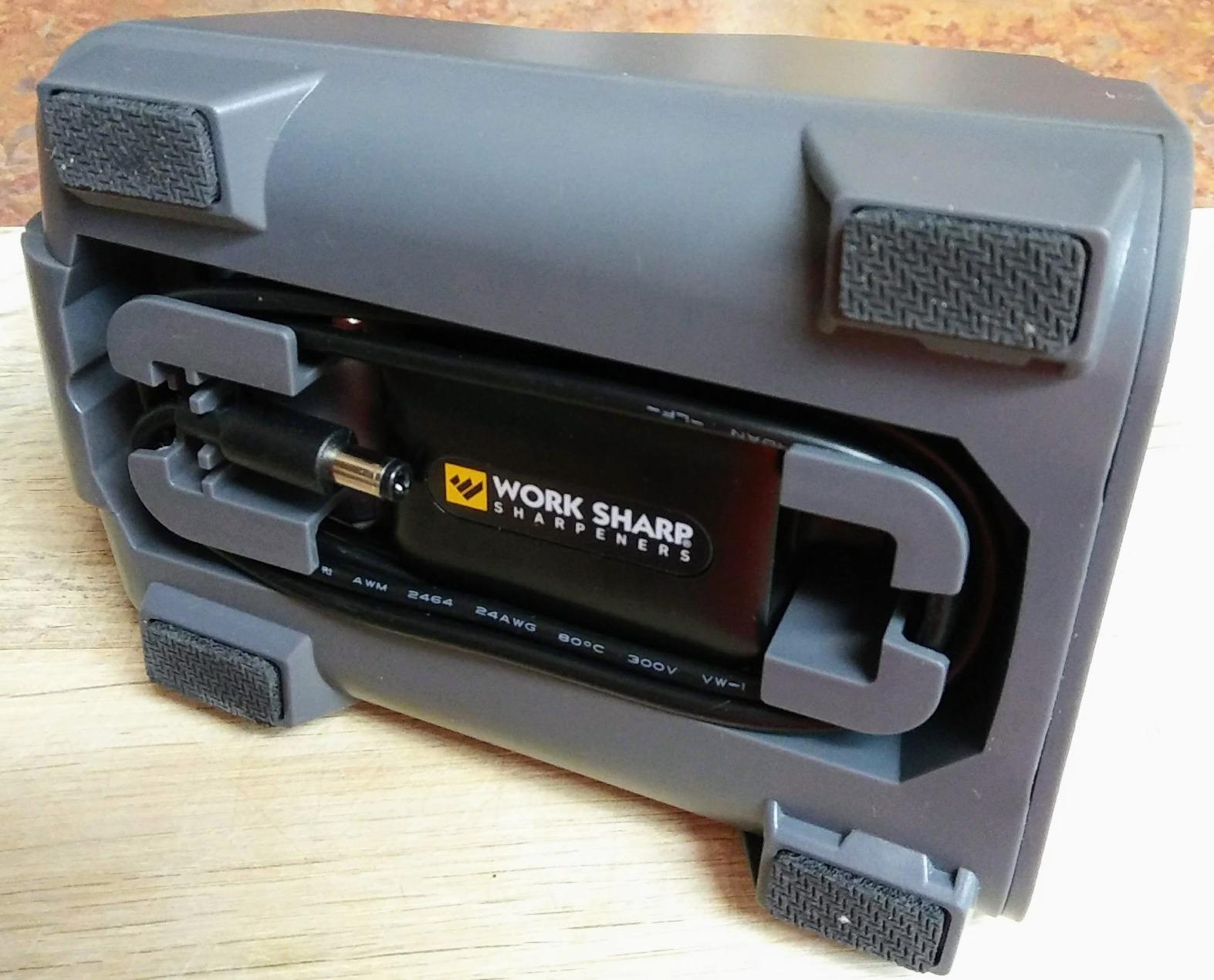
The two recurring caveats are physical size and refinement. At 6.77 by 10.82 by 5.89 inches it has the largest countertop footprint in this roundup, which is a real consideration in a galley kitchen. On edge quality it lands below the three-stage diamond machines, and some users report that very dull knives do not come out with a true razor edge.
The 4.3 rating across 3206 reviews reflects that tempered enthusiasm. The machine does its stated job well, but its job is maintenance and guided sharpening, not producing the finest possible edge from a neglected blade. If that is what you want, you are choosing it correctly; if you want a 15 degree conversion, this is not the machine.
When a separate hone stage is the right call?
For a cook who sharpens monthly rather than weekly, a ceramic hone wheel between sharpenings keeps an edge working with far less steel removal. That is the least destructive routine available, and it is why some owners pair this with a more serious machine rather than replacing one.
Where the footprint bites?
Over ten inches wide means a permanent place on the counter, which is a poor fit for a small kitchen or a rented flat. If counter space is tight, the Narcissus or the Northmas, both under 9 inches in every direction, do the same core job in a fraction of the space.
6. Secura 2-Stage Sharpener – Best Value
- Entry-level two-stage machine with real diamond wheels
- Precision guide converts a 20 degree edge to 15 degrees
- Suction cup feet hold it firmly planted
- Quiet with a small footprint
- Not suitable for serrated knives
- Light duty rather than heavy grinding
- Often needs several rounds of passes to get sharp
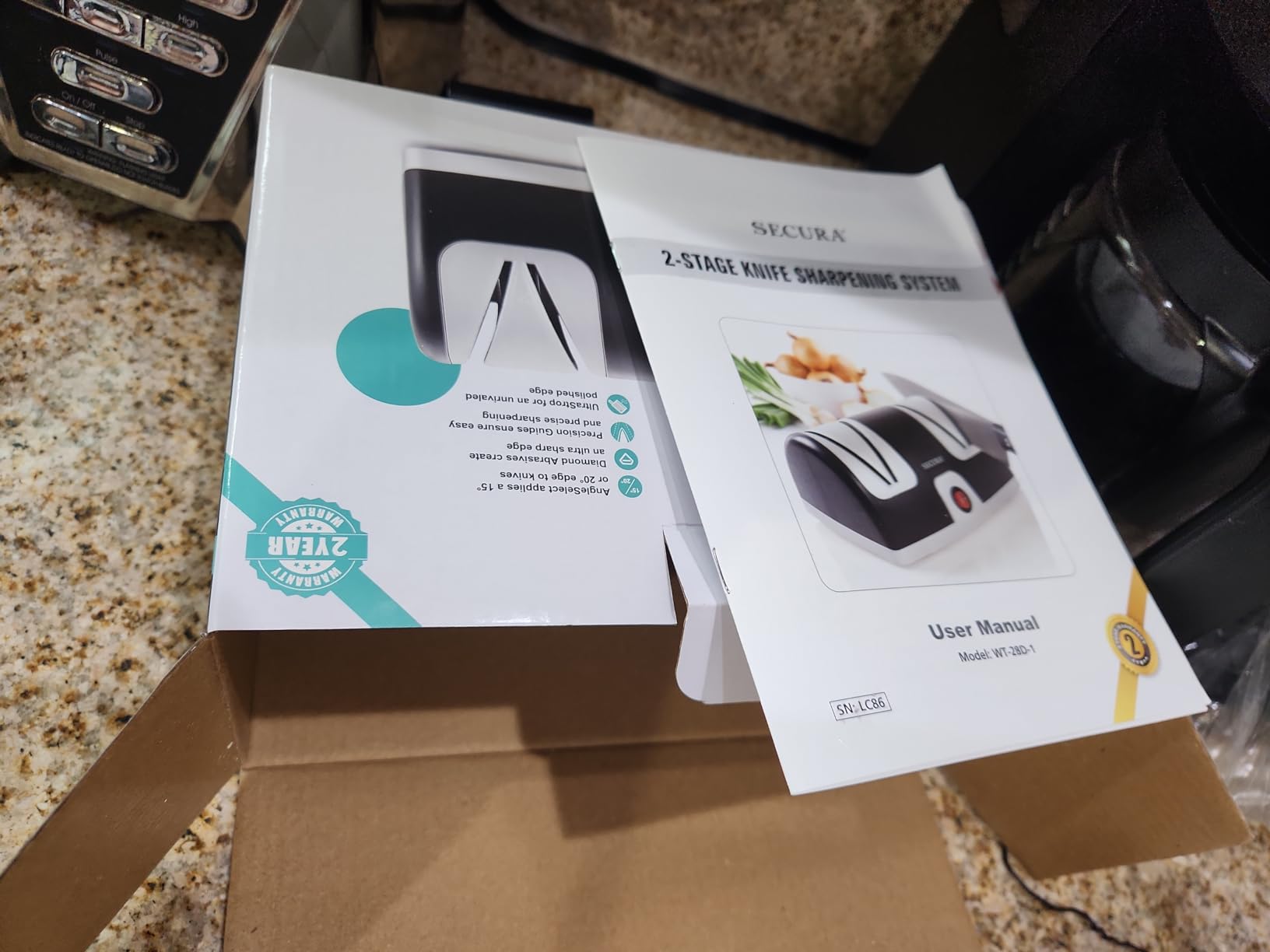
The Secura is an entry-level machine that still uses genuine diamond abrasive wheels, and that single specification separates it from most other budget units. Stage 1 sharpens, restores and reshapes the angle; stage 2 sharpens and polishes to finish. The precision guide is the reason it can convert a 20 degree edge into a finer 15 degree edge, which most two-stage machines at this level cannot do.
Heavy-duty non-slip suction cup feet hold the unit in place while you pull, which matters more than it should because a machine that walks across the counter while you draw a knife is the main complaint people have with cheaper units. It is also one of the quieter machines in this group and one of the most compact at 7.87 by 5.31 by 3.54 inches, and it carries a two-year manufacturer warranty and an ETL approval.
It is explicitly not suitable for serrated knives, so if you own a bread knife, that is a hard no. The unit is also light duty by design – best suited to light use and smaller knives rather than heavy grinding – and it has the lowest average rating in the group at 4.2 across 2922 reviews, which tells you the ceiling is real.
The negative reviews cluster tightly around one issue: technique. Running a knife through the slots repeatedly or pressing down causes grooving, and several repeat buyers note the first unit dulled after roughly six months of heavy use before a replacement held up. Owners also report needing several rounds of passes before the edge is genuinely sharp, so treat the first session as a set-up rather than a verdict.
What you get for the money?
Diamond abrasives and a guide that will convert the angle. Those two features are usually the dividing line between entry machines and machines that produce an edge you can notice, and at this tier almost nothing else offers both. If your knives are straight-edged kitchen blades and you sharpen lightly, that is the whole shopping list.
When to spend more instead?
If you own a serrated bread knife, a Japanese knife, or knives that get genuinely neglected for months, the light-duty build and the single-side-only limitation will frustrate you. The SHARPAL 198H or the Homly add a third stage and serrated capability for a modest step up.
7. SHARPAL 198H 3-Stage – Best for Quiet Operation
- Sharpens both sides of the edge at once
- Preset 20 degree angle is forgiving and blade-friendly
- Genuinely quiet for an electric sharpener
- Overheat protection and a ceramic stage
- Removable magnetic bins for fast cleanup
- One review reports a notch near the tip
- Less effective on small pocket knives
- Some users find it louder than claimed
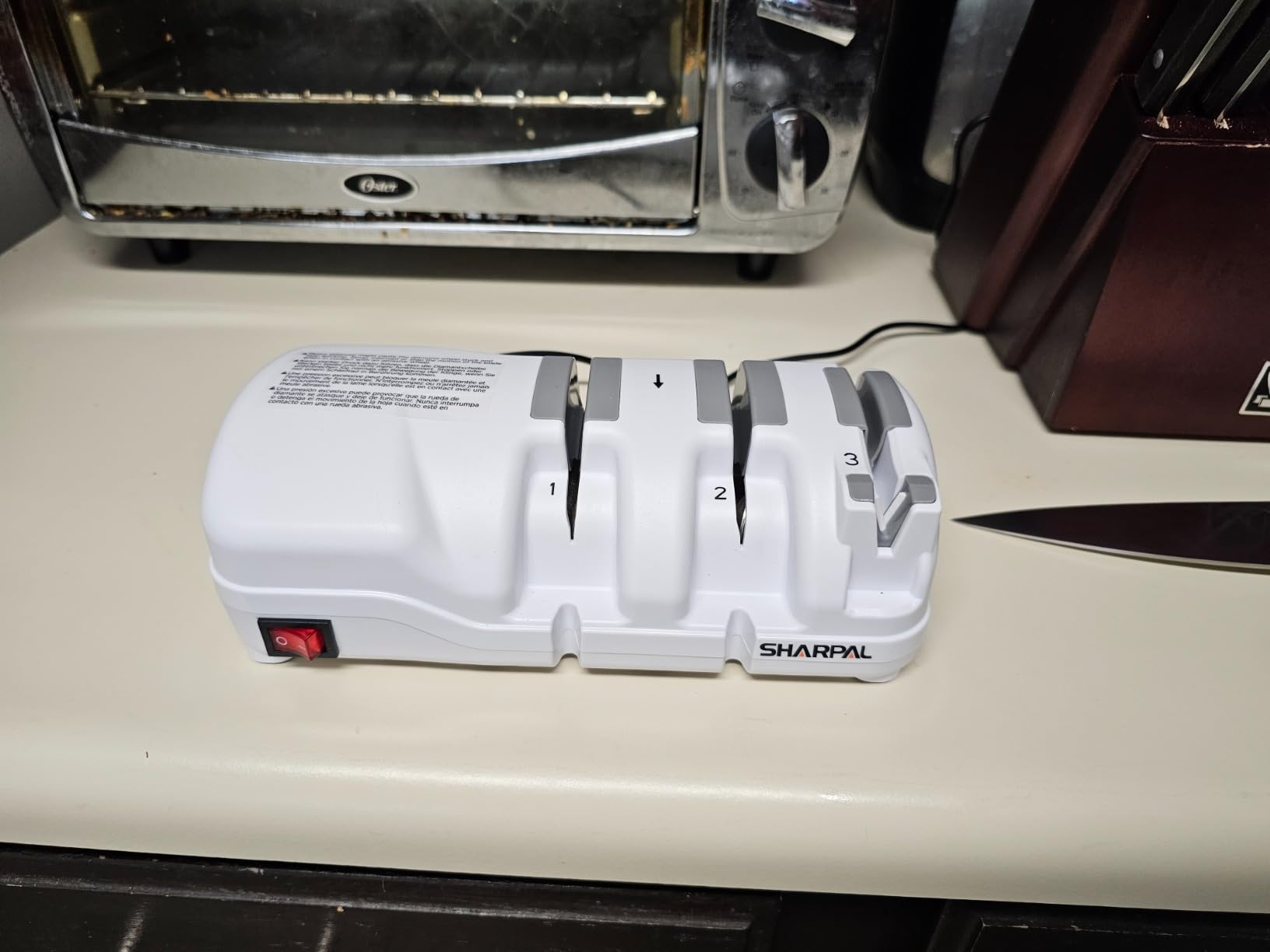
The SHARPAL 198H has the feature nobody else in this price range offers: its three slots grind both sides of a double-beveled edge simultaneously. On a conventional machine you pull the knife through once for each side, so this halves the work on a standard Western chef’s knife. Combined with a perfectly preset 20 degree grinding wheel angle, that makes the results genuinely repeatable without any technique at all.
Noise is the reason to pick it. The manufacturer rates it under 65 dB, and the consensus among owners is that it is quietly the most civilised machine here – relevant if you sharpen at 6 am in a flat with thin walls. Overheat protection is designed to prevent de-tempering the blade during long sessions, and removable magnetic receptacles collect iron filings so cleanup is a matter of lifting out two bins.
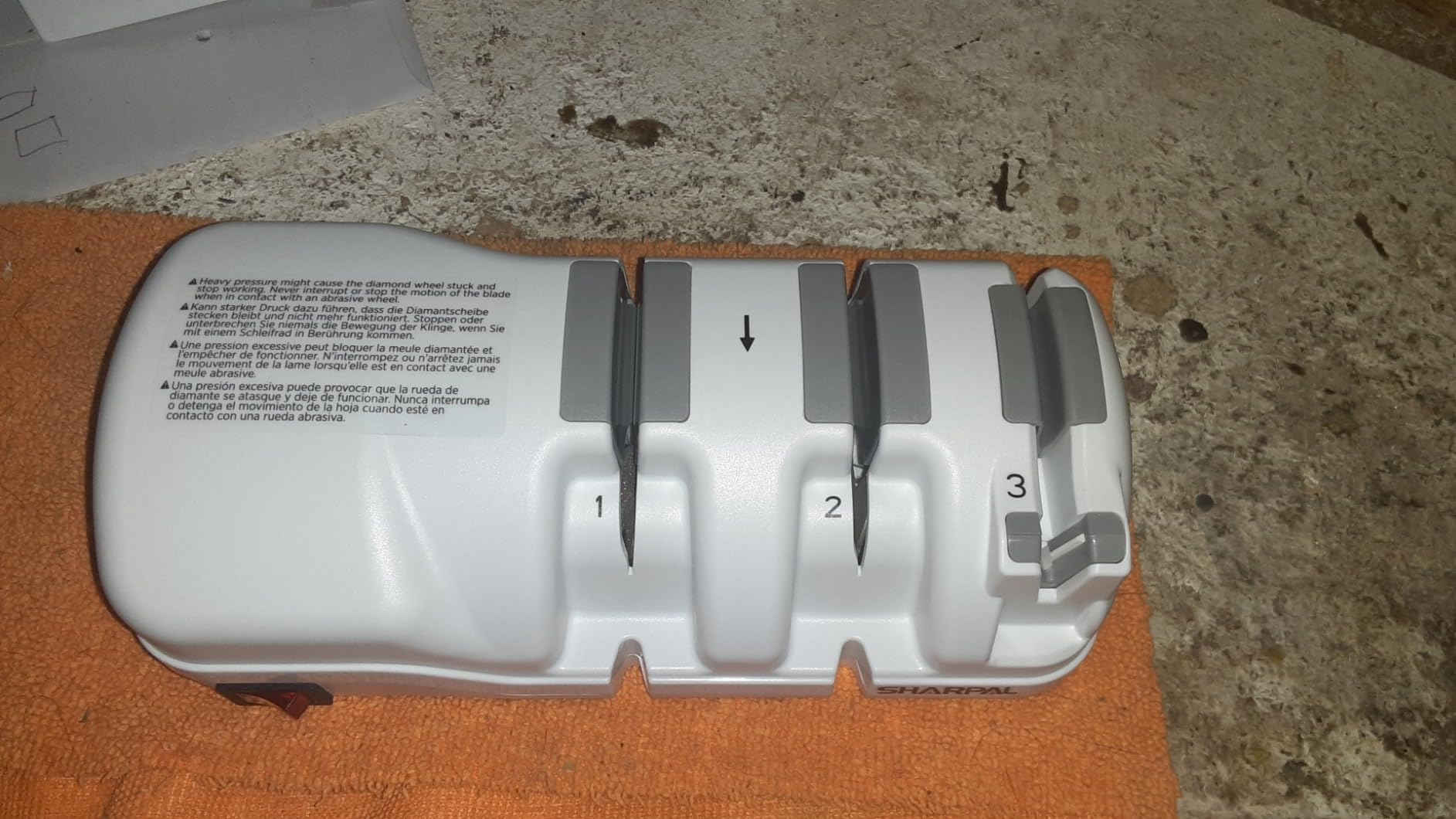
Users regularly report sharpening a knife to a strong, consistent edge within about a minute, and the two-sided grinding is singled out as the reason. A ceramic stage in the sequence is also kind to hardened steels, which matters if you own a hard Japanese steel or a ceramic blade.
The criticisms are narrow and specific. One reviewer reported a notch cut into the top of the blade near the tip, which is worth knowing about. Several users find it less effective on small pocket knives because the blade cannot engage the wheel fully, and one owner reported a motor failure in under a year – though in the same reviews, the manufacturer’s replacement service is praised as responsive.
Best for a small or shared kitchen
Simultaneous two-sided grinding plus a genuinely low noise floor means you can sharpen a full drawer without a two-minute argument with the neighbours. The 20 degree preset is also the most blade-friendly angle in the group, because it matches the factory edge on most Western knives and removes the least steel to get there.
Where the preset angle becomes a limit?
A fixed 20 degree cannot make a 15 degree Japanese edge, and it cannot leave a fine 15 degree edge untouched. If your collection leans Japanese, the VIDOME and the Chef’sChoice 15XV both guide down to 15 degrees and are the better buys.
8. VIDOME Professional 3-Stage – Best for Ceramic Blades
- Three-stage 15 degree diamond system that also handles ceramic knives
- German imported motor balances power and efficiency
- Spring guides create a longer arch-shaped edge
- Safety guide tracks help prevent scratching
- About 30 seconds for a first sharpening
- Smaller review base than the established brands
- Open design lacks a stropping-only touch-up mode
- 60-80 dB is not among the quietest here
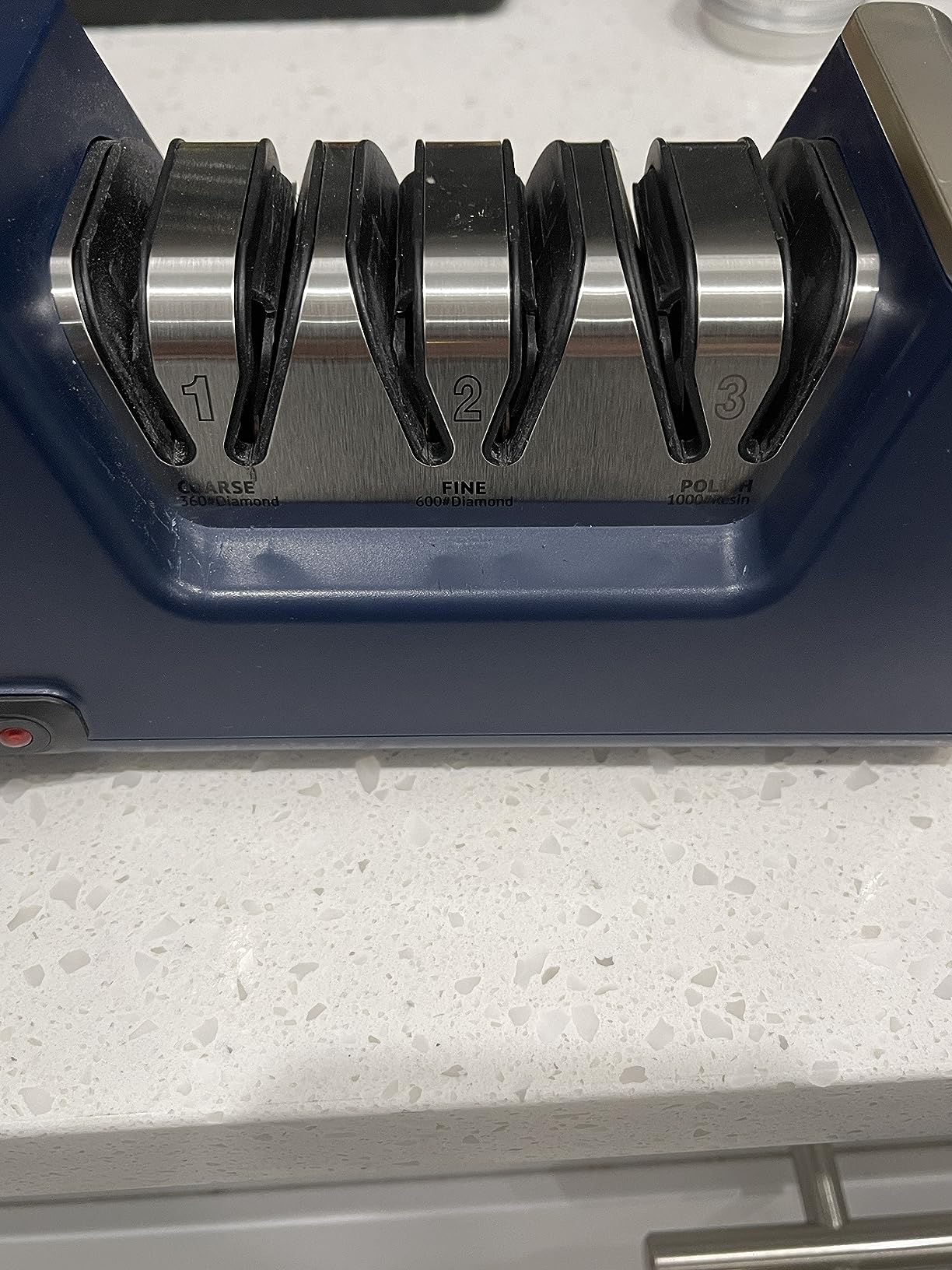
The VIDOME is a three-stage machine built around 100 percent diamond abrasives in stages 1 and 2, with stropping disks in stage 3 – a layout that matches the more expensive designs in this roundup. Its precision angle guides create 15 degree edges and convert 20 degree knives down to 15, and the manufacturer states it works with straight-edge metal and ceramic knives, which is the combination few competitors cover.
Two details stand out. The flexible spring guides produce a longer arch-shaped edge along the whole blade rather than a short flat section, and the safety guide tracks are designed to stop the blade face from being scratched as it passes through. Timing is quick – roughly 30 seconds for an initial sharpening – and the German imported motor is described as energy-saving.
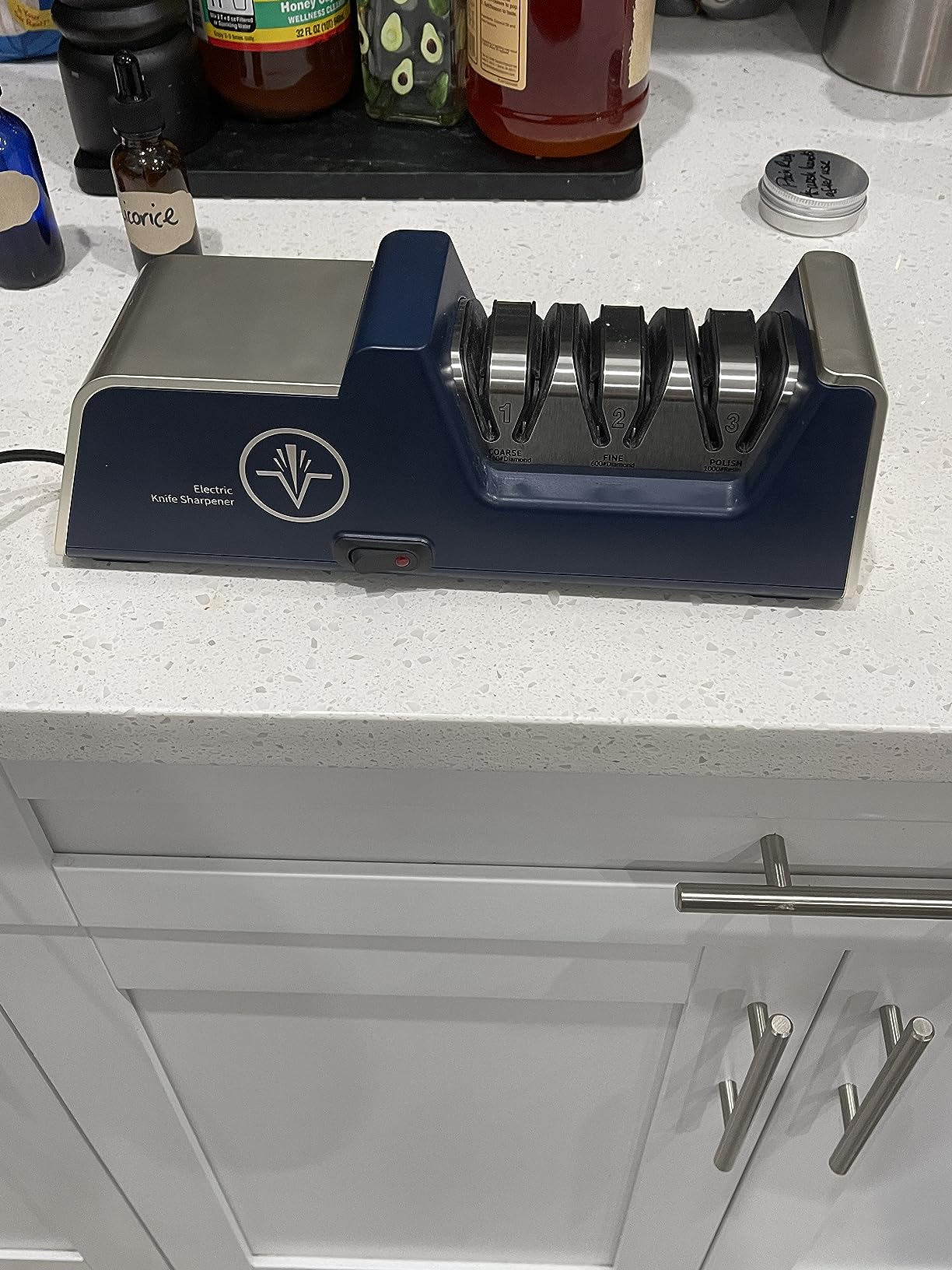
It also collects knife chips magnetically, and at 3 pounds with a 9.46 by 2.91 inch body it is slim for a three-stage machine. The champagne gold finish is unusual in this category and is, judging by reviews, a genuine part of the appeal for some buyers.
The honest caveat is evidence. With 966 reviews this is the thinnest review base of the twelve, and there are no long-term ownership reports to draw on, so durability is less well documented than for the older brands. The open three-stage layout also means there is no stropping-only mode for a quick touch-up between full sharpenings, and the stated noise range of 60-80 dB is the widest and least civilised here.
Why ceramic support changes the buying decision?
Most electric sharpeners are quietly useless on ceramic blades because diamond abrasives and ceramic edges are a poor and sometimes damaging match. A manufacturer that explicitly rates the machine for ceramic removes an entire category of risk from your knife drawer, particularly if you own a ceramic-bladed paring or slicing knife.
Where the review base matters?
A thin review base is not a defect, it is a discount you should apply mentally. If you want a machine you will still own in eight years, the Chef’sChoice 15XV and the Presto have a decade-plus of ownership reports behind them, and that is worth weighing against a shorter 15 degree list.
9. Homly 3-Stage Sharpener – Best for Fillet Knives
- Sharpens a chef knife in under a minute with little effort
- Three levels of diamond grinding give a sharp even angle
- Particularly effective on fillet knives
- Good value against more expensive units
- Easier than hand sharpening for older users
- Some knives only come out marginally sharper
- Large footprint at over 12 inches long
- Pressing too hard can gouge near the handle
The Homly uses the familiar three-stage layout – 100 percent diamond abrasives in stages 1 and 2, polishing in stage 3 – with a flexible spring guide rod that holds the blade at a consistent angle along its full length. Reviewers who buy fillet knives report unusually good results on them specifically, with several describing blades that came out sharper than new, and that is a thin and flexible edge type that many machines handle poorly.
General sentiment is enthusiastic from home cooks who want speed over whetstone precision. The common refrain is a chef knife sharpened in under a minute with very little effort, and one buyer notes that the machine outperformed a more expensive unit they already owned. Several owners also point out how much easier it is than hand sharpening, particularly for older users who can no longer manage a stone.
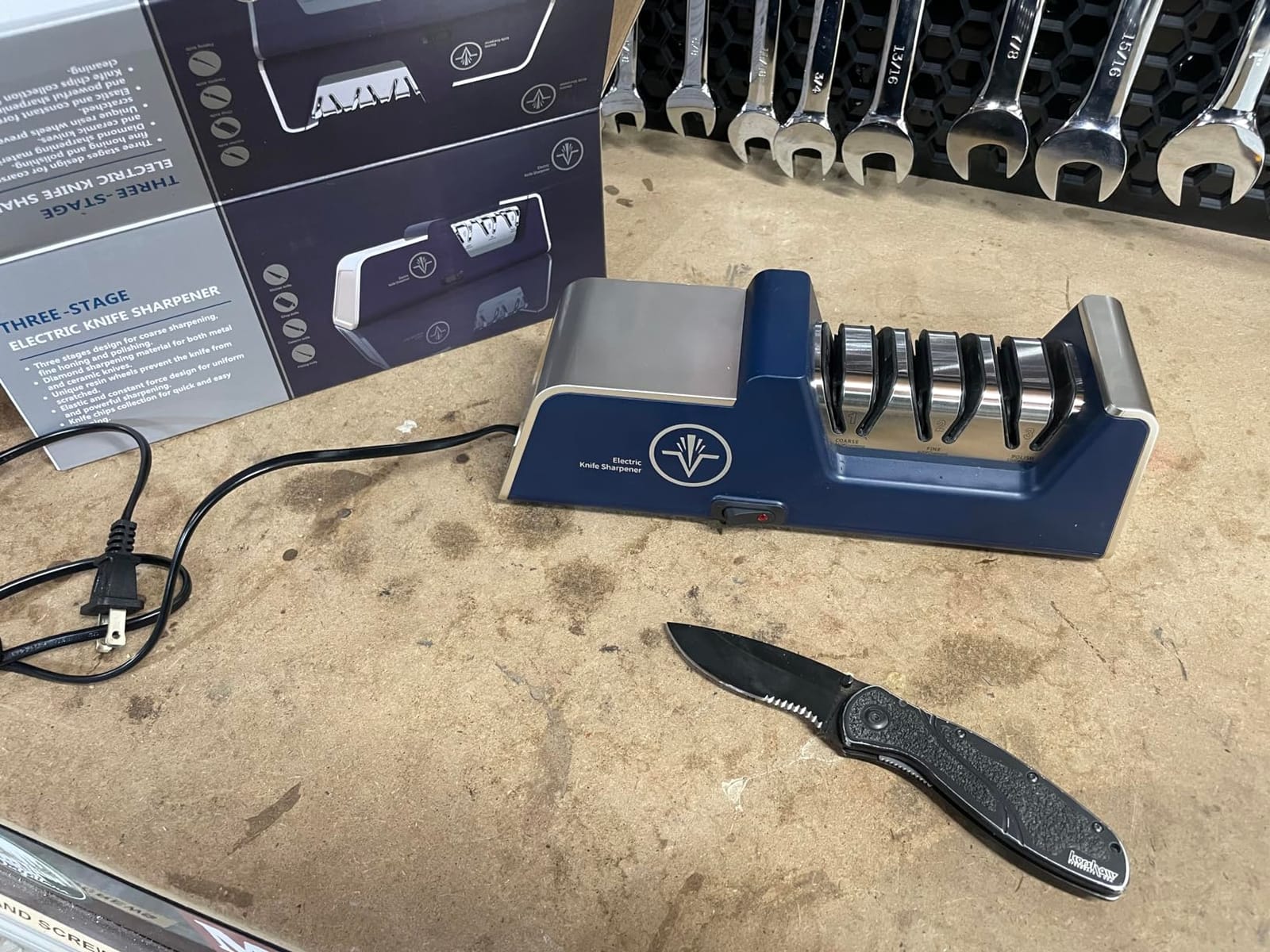
The double-layer shell paint and electroplating are cited for durability and reduced noise, and there is a two-year manufacturer warranty. The machine is 3 pounds and rated at 120 volts, so it needs a converter outside North America.
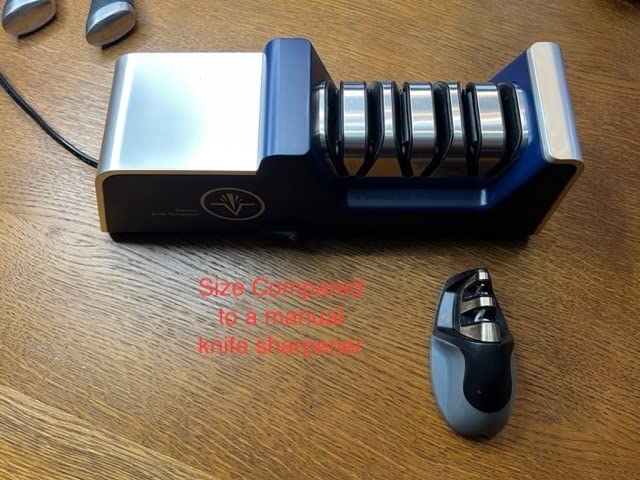
Criticism is minor but real. At 12.2 inches long it is the largest footprint in this roundup, which matters in a compact kitchen. A few knives do not cooperate and come out only marginally sharper, one unit failed to power on at all, and holding the blade too slowly or pressing too hard can gouge an indent near the handle – the same technique warning that appears on almost every machine here.
Best for thin, flexible blades
Fillet and boning knives have thin edges that flex during use, and a guide which supports the blade along its full length is exactly what keeps a thin edge from being rounded off. If fish and butchery are part of your cooking rather than a once-a-year task, the fillet performance is the reason to choose this over a smaller two-stage unit.
When to pick something smaller?
If counter space is tight, a 12 inch machine is a permanent commitment. The Secura and the Narcissus do the same core job in a fraction of the space, and the Narcissus additionally works on 100-240V supply if you are outside the US.
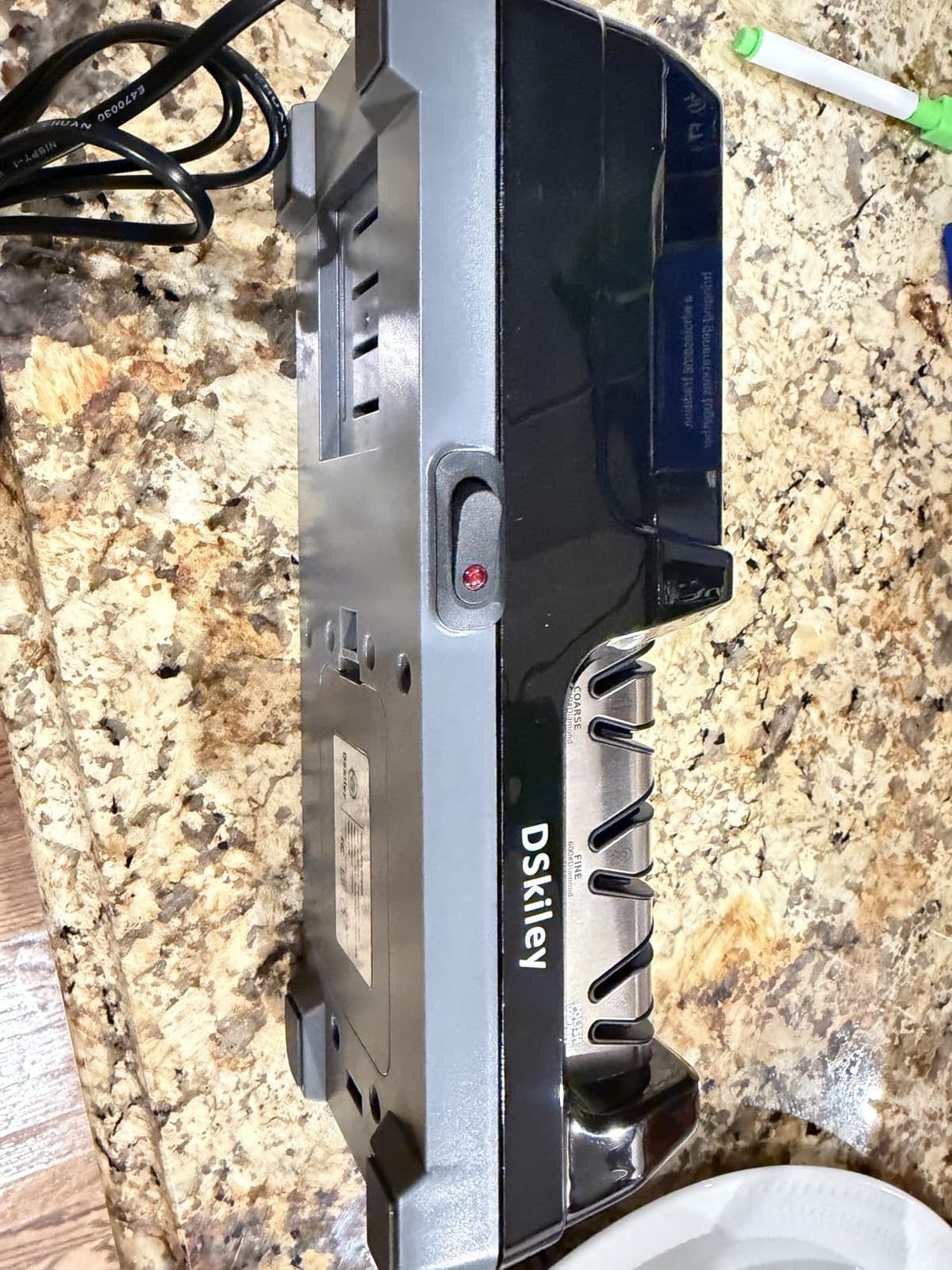
10. dskiley 3-Stage Sharpener – Best for Bulk Sharpening
- Quiet operation with a consistent result on most knives
- Forgiving preset 20 degree guide reduces over-grinding risk
- Magnetic collector makes cleanup quick
- Popular with heavy users including deer butchers
- Compact enough to store between uses
- Weak motor that nearly stalls when a blade is drawn through
- Soft rubber guides slow the process down
- Non-serrated knives only
The dskiley is a three-stage 100 percent diamond machine whose job is straightforward: repair, sharpen, polish. The preset 20 degree precision angle guide is the most forgiving setup in this roundup, because 20 degrees matches the factory edge on most Western kitchen knives and therefore removes the least steel to restore sharpness. Users report old knife sets cutting like new again after a session.
It is quiet, with a magnetic collector that makes cleanup quick, and it is compact enough to store away between uses. It also has an unexpected constituency: several heavy users, including deer butchers, buy this as a working tool or buy a second one as a gift, which tells you something about its toughness.
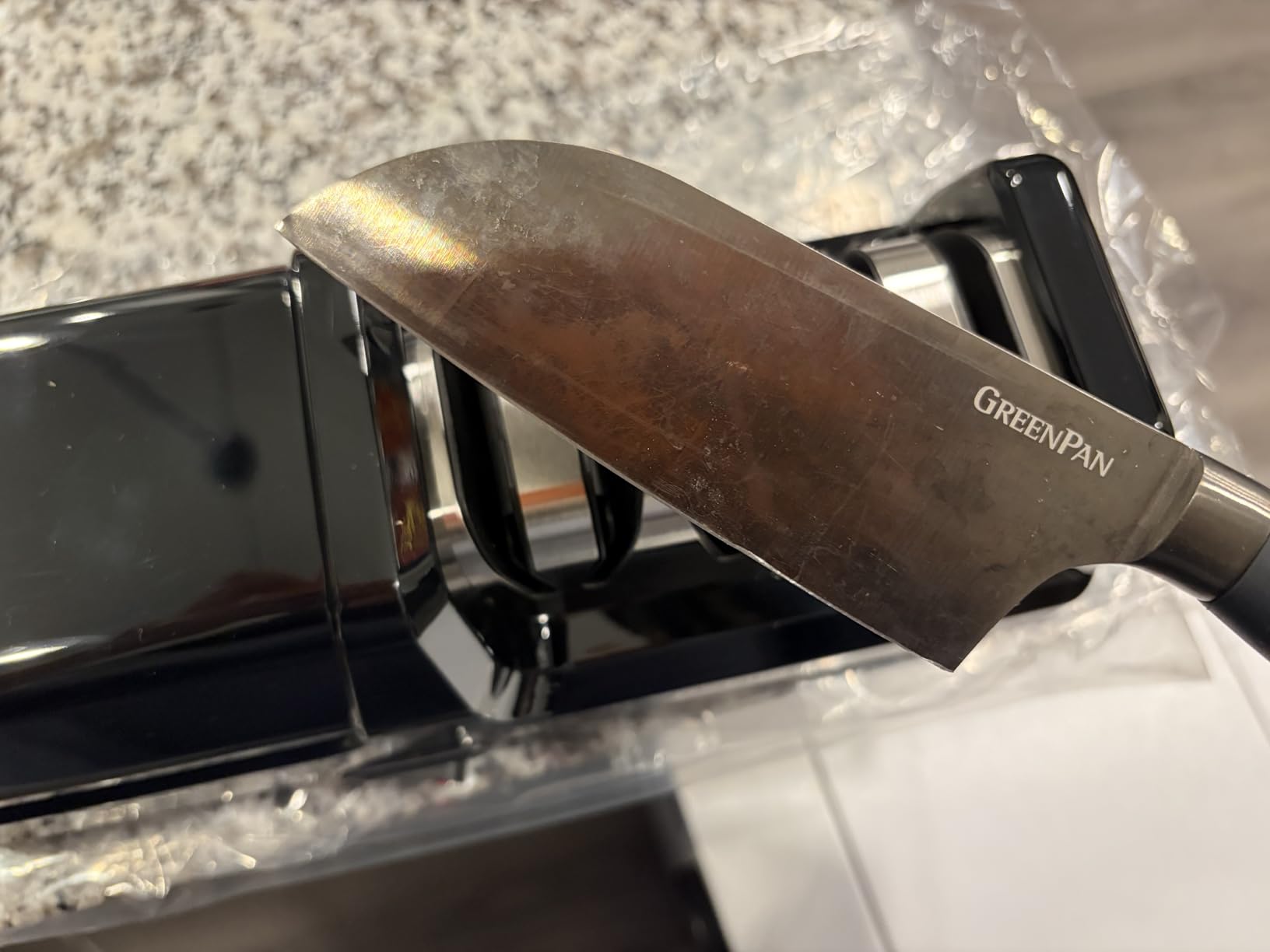
The design covers most non-serrated kitchen knives – chef, santoku, slicing and paring – on 110V US power. The gift-ready packaging is a small detail, but it is the reason several of those repeat buyers bought a second unit for someone else.
The one consistent negative thread is the motor and the guides. Reviewers describe a motor that nearly stalls when a blade is drawn through, and soft rubber guides that make it hard to get the blade down into the sharpening wheel, which slows the process considerably compared with the promise of effortless sharpening. A 12 inch length is also generous for a countertop unit, and serrated knives are out of scope.
Best for a block of neglected knives
The forgiving 20 degree preset makes this a low-risk machine for a household with a drawer full of dull, mismatched, never-sharpened blades. Combined with a magnetic collector, it is also the fastest to clean up after a thirty-knife session, which is exactly the situation that makes people abandon electric sharpeners.
When the motor is the deciding factor?
If you want a machine that feels effortless on a hard steel, the weakness here is real. The 30 watt DC motor in the Narcissus, or the two-speed motor in the Work Sharp MK2, will move a stubborn blade without the stalling feeling that several dskiley owners describe.
11. Chef Pro 2-Stage Sharpener – Best for Damaged Knives
- Revives badly damaged blades including gouged and dinged knives
- Compact with straightforward instructions
- Removable plug receptacles make cleanup simple
- Three suction cups hold it steady
- Good value for the money
- Only the right slot sharpens scissors and serrated blades
- Good working edge rather than a fine one
- One order arrived with the wrong item
The Chef Pro is a two-stage unit with a coarse stage that reshapes the angle and a fine stage that hones and polishes. The reason it earns a place in this roundup is its reputation for rescue work: reviewers describe blades with gouges and dings coming back to service, and a knife that has been dull for years finally cutting again. When a knife needs reshaping rather than simply honing, a coarse first stage earns its keep.
Three suction cups on the non-slip base hold it steady, which is the detail that most affects results on a cheap two-stage machine. Built-in guide slots cover sports knives, kitchen knives and scissors, and the mess-free receptacles use easy-to-remove plugs so you can empty the metal filings without hunting for a screwdriver.
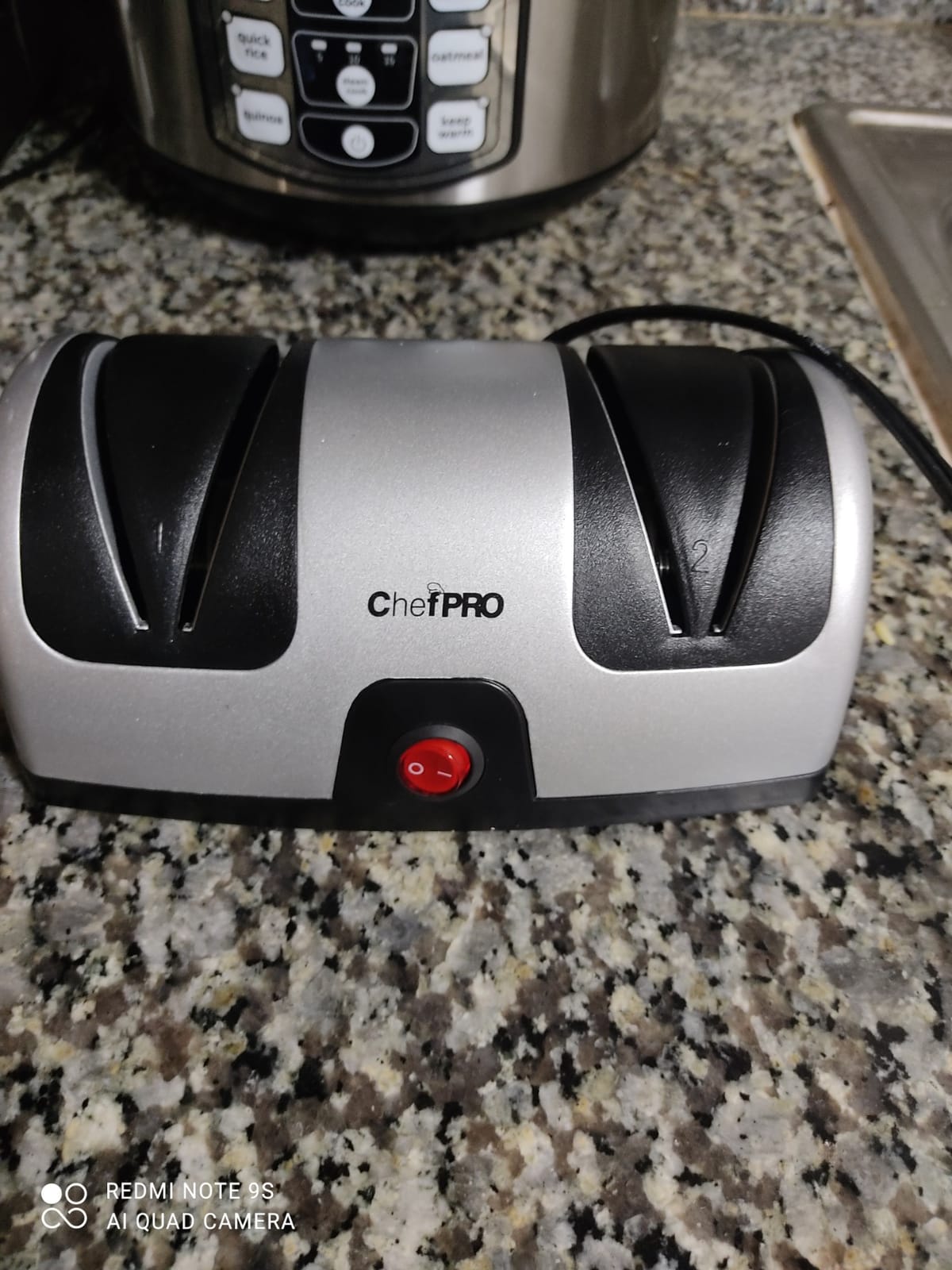
At 8 by 4.75 by 3.5 inches and 2.6 pounds it is compact and easy to store, and the instructions are straightforward enough that first-time users report getting it right. Customer service earns specific praise: one owner whose unit smoked on first use had it replaced, and another received the wrong item entirely and had that sorted too.
Two limitations are worth planning around. Only the right-hand slot sharpens scissors and serrated blades, so you have to use the correct one or you will do nothing useful. And the result, while a solid working edge, is not as fine as a quality hand sharpener produces, which is the same ceiling the other two-stage machines here share.
When a blade is actually damaged?
Dings, chips and a badly rounded bevel are the situations where a coarse stage earns its price. A three-stage diamond machine can do this too, but the Chef Pro does it with a simpler two-slot design, fewer settings to get wrong, and a suction base that resists walking while a damaged blade drags through the slot.
When you should step up instead?
If you want the finest possible edge for slicing tasks, the two-stage ceiling will be noticeable against a three-stage diamond result. And if you sharpen frequently rather than occasionally, the extra stage on the SHARPAL or the Homly costs little and gives you a real finishing step.
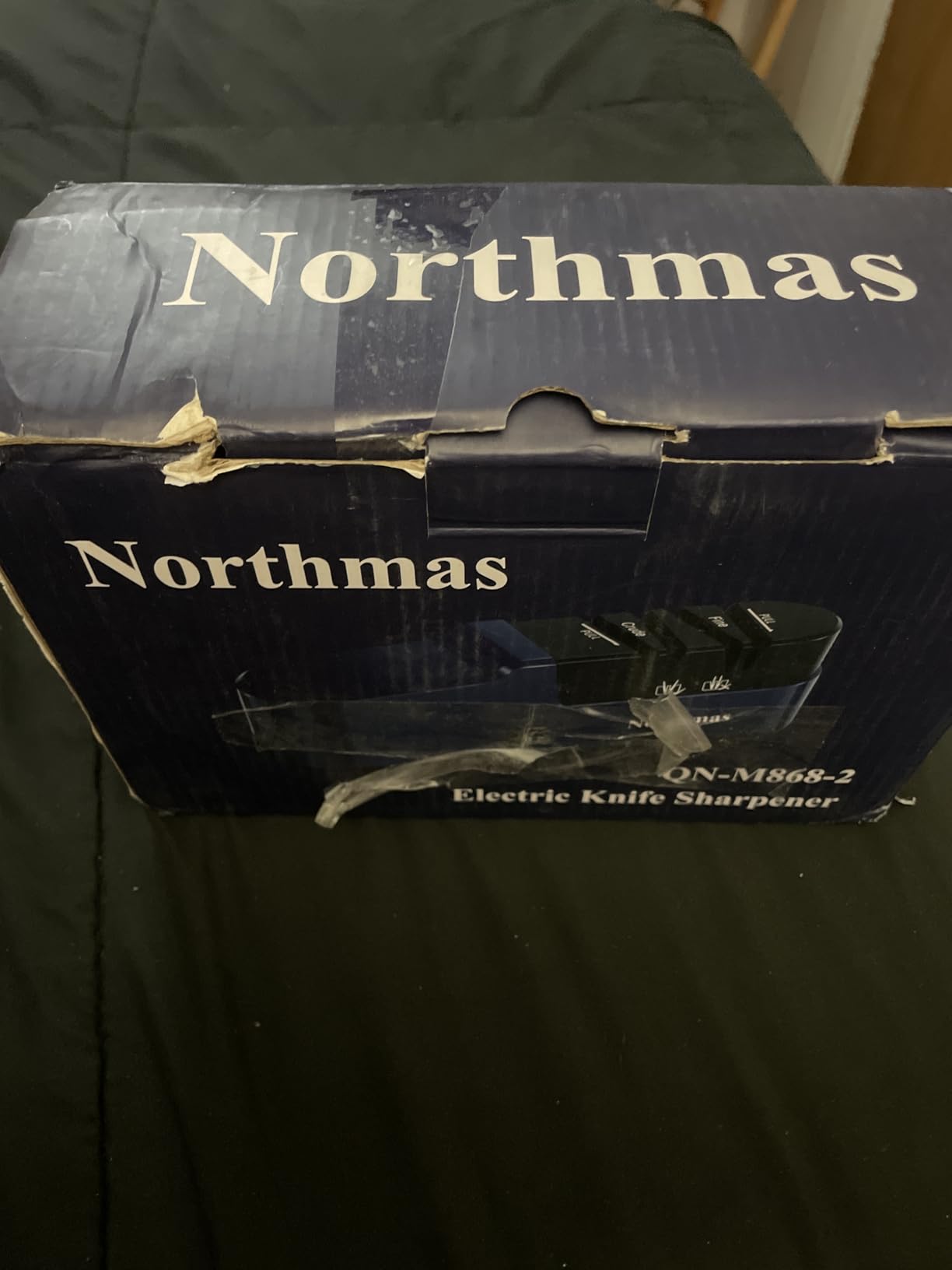
12. Northmas 2-Stage Sharpener – Best for Small Kitchens
- Genuine two-stage system at an entry price
- Compact and portable with a removable power cord
- Suction cups and printed arrows make it easy to use
- 100-240V design works worldwide
- Does not sharpen the full length of the edge on large knives
- Removes noticeable amounts of metal so overuse thins a blade
- Results are good rather than razor sharp
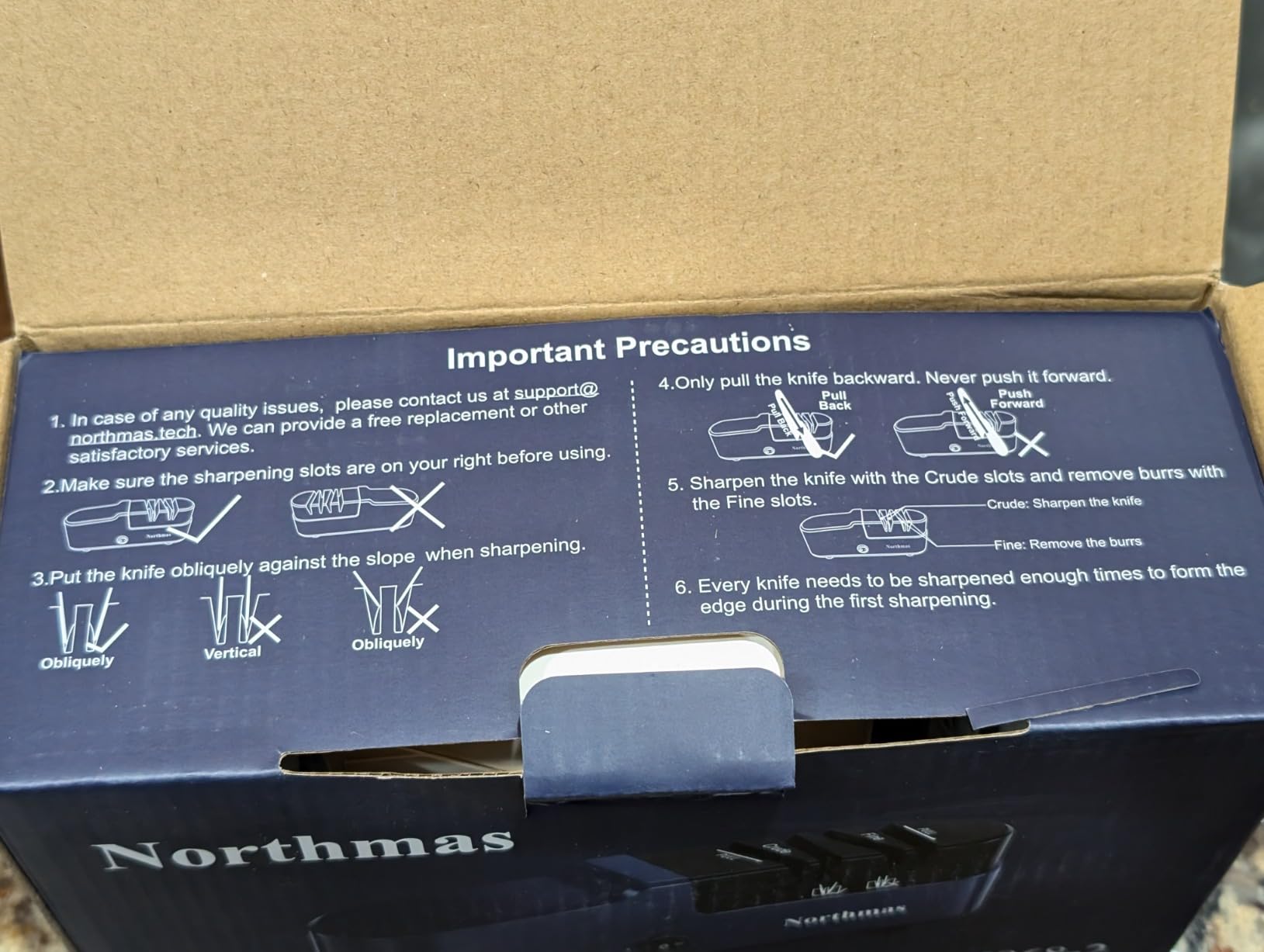
The Northmas is the smallest and lightest machine in this roundup at 1.2 pounds and 7.8 by 2.1 by 3.1 inches, which is why it made the list. It is a real two-stage system – coarse for quick sharpening, fine for a burr-free polish – with 100-240V global voltage, four suction cups and a removable power cord. Two to five pulls per slot restores sharpness in about 30 seconds.
The practical touches are unusually well thought out for a budget unit. Printed directional arrows on the body reduce the most common beginner error of drawing the knife the wrong way, the cord detaches for storage, and the motor runs at a stable working status without overheating, so a full knife drawer can be done in one session. Owners also note 12-month replacement coverage and 24-month after-sales service.
Sentiment is favourable, with owners highlighting portability, suction-cup stability, the arrow guides and the worldwide voltage as the standout practical features. One buyer bought a second unit for her mother, which says something about how simple it is to operate.
The consistent caution is coverage. It does not sharpen the full length of the edge, especially on large kitchen knives, so the last inch or so near the heel or tip can stay dull. It also takes metal down fairly quickly, which means overuse will thin a blade over time – the main reason to use two to five pulls and stop. The result is a good edge rather than a razor edge, and at least one buyer simply preferred a carbide pull-through for kitchen knives.
Best for a first sharpener or a small flat
It costs less than anything else here, runs anywhere in the world without a converter, stores in a drawer, and does the basic job correctly. For a single person in a rented kitchen who owns two knives and wants them sharp without buying into a hobby, that combination is genuinely complete.
When it is the wrong machine?
If you own a full block of knives, the incomplete edge coverage means you will end up hand-honing the ends of every blade. If you own a Japanese knife, there is no angle control at all. In both cases the Secura or the SHARPAL costs a modest amount more and does considerably more.
Electric Sharpener vs Whetstone: Which Knives Should Never Touch a Machine?
Let us settle the argument that comes up most often in sharpening forums, because it is a fair question and the answer is not that electric sharpeners ruin knives. They do not, provided you keep three rules. First, match the machine’s angle to the blade’s factory edge and never run a 20 degree machine over a 15 degree Japanese knife. Second, stay out of the coarse stage unless the knife is genuinely dull. Third, stop after three or four passes and test rather than continuing until it feels perfect.
Professional kitchen cooks mostly do not use electric sharpeners. The recurring answer across professional forums is a whetstone or a manual system such as Wicked Edge or Edge Pro, because stones give control over the bevel and let the sharpener read the edge. What pros do share is the discipline of regular maintenance – a short honing session frequently, a full sharpening infrequently. An electric machine fits that routine, it just does not replace the skill.
The enthusiasts who own both make a consistent distinction. Electric sharpeners are accepted for speed and convenience, not for the best possible edge. Anyone who tells you their machine produces a better edge than a skilled stonemonger is selling something. What they will tell you is that an electric sharpener is how they keep twenty knives sharp without spending an evening at a stone.
So which knives should never touch a machine? Single-bevel Japanese blades – deba, yanagiba, usuba – are the firm no, because a double-sided slot destroys the flat back that defines how they cut. Single-bevel nakiri is a softer no. Very thin 12 to 14 degree edges need a machine that guides to that exact angle or none at all. Serrated knives belong on a dedicated serrated slot, never a straight-edge wheel, and ceramic blades need a unit rated for ceramic.
Everything else – German and French chef’s knives, Wusthof and Henckels style blades, santoku, paring, bread knives on the correct slot, butcher and carving knives, pocket knives and scissors on a versatile belt machine – is fair game. For the record, our [guide to the best knife block organizers](https://www.thebrucehighqualityfoundation.com/best-knife-block-organizers/) covers storing those blades safely once they are sharp, and our pick of the [best forges for knife making](https://www.thebrucehighqualityfoundation.com/best-forges-for-knife-making/) is a different but related interest for anyone who cuts their own steel.
How to Use a 3-Stage Electric Sharpener Without Over-Grinding?
Nearly every damaging review in this roundup traces back to the same two errors: too many passes, and too much downward pressure. Fixing those two habits fixes almost everything, and the technique is the same whether the machine has two stages or three.
1. Set the machine on a flat, non-slip surface and check the suction cups or feet are seated. A machine that walks while you pull will produce an uneven bevel no matter how carefully you hold the blade.
2. Read the manual. The most common complaint about the Chef’sChoice 15XV is gouging from users who skipped this step, and manufacturers vary on whether you begin in the coarse stage or the middle one.
3. Start in the middle stage unless the knife is truly dull. Stage 1 removes metal quickly and should be reserved for a blade that has not been sharpened in months.
4. Draw the knife through at a steady pace with light hand pressure. Let the guide do the work – pushing down is what creates grooves, as owners of the Secura and the dskiley both report.
5. Test after two or three passes with the paper test or a ripe tomato. If it cuts cleanly, stop. Continuing past that point is where steel is lost for no benefit.
6. Run the fine or stropping stage twice to polish the edge, then finish with a honing rod if you own one. This is exactly what many Presto owners do, and it is why their edges read sharper than a two-stage machine should produce.
7. Clean the machine after every session. Lift out the magnetic receptacles, empty the receptacles with removable plugs, and brush metal dust out of the slots – compacted filings in a slot will scratch the blade face on the next pass.
Signs that you are over-grinding are straightforward. A rolled lip at the edge that catches a fingertip, a knife that feels noticeably thinner at the heel than at the tip, a visibly shortened blade, or a finish that scratches easily even when the edge cuts. If you see any of those, stop using the coarse stage, and switch to a machine that matches your blade’s factory angle.
Buying Guide: How to Choose an Electric Knife Sharpener?
Start with the angle, because it is the only specification that can damage a knife. Angles are quoted per side, so a 15 degree edge is a 30 degree total angle – which is why the same number means very different things on different knives. A German or French chef’s knife typically arrives from the factory at 20 degrees per side. A Japanese gyuto or santoku commonly arrives at 15 degrees per side, and high-end Japanese blades can go finer still.
The rule that follows is simple: use a machine that matches the factory edge, or one that converts down to it deliberately. A 20 degree machine on a 15 degree knife will grind away steel to make the edge more obtuse. A 15 degree machine on a 20 degree knife will thin the edge, sometimes pleasantly and sometimes past the point of comfort. Neither destroys a knife, and both change it, so the deciding question is whether you want the change.
Next, consider stages. A two-stage machine has a coarse grinding stage and a fine honing stage, and it will bring a dull knife back to a good working edge. A three-stage machine adds a stropping stage, usually leather or a flexible abrasive, that refines the edge without removing steel – and that third stage is the difference between sharp and noticeably sharp. If you already hone regularly, a two-stage machine plus a rod is a complete and cheap setup.
Abrasive material determines refinement. Diamond abrasives cut hard steel quickly and refine well, and they are the standard in the premium machines here. Sapphirite is the traditional sharp-shop material, extremely hard and reasonably durable, as used in the Presto. Carborundum is the softest and fastest-cutting, and it produces the coarsest finish – fine for a budget workhorse, less fine if you judge sharpness on onion paper work.
Angle guides decide consistency. Spring-loaded flexible guides, as on the Chef’sChoice 15XV, the VIDOME and the Homly, hold the blade consistently even if your hand position shifts. Fixed precision guides, as on the Secura and the SHARPAL, give a set angle with zero technique required. Unguided slots, as on the Narcissus and the Northmas, depend on how you hold the knife and are the most likely to disappoint you.
Consider what else you want to sharpen. Serrated knives need a dedicated slot or a machine rated for them, and several units here explicitly exclude serrated blades. Scissors and shears are covered by the Work Sharp MK2, the Narcissus, the Work Sharp Culinary E2 and the Secura. Axes, mower blades and garden tools are the MK2’s specialty. Hunting and pocket knives are covered by most units, though the SHARPAL is weaker on small blades that cannot fully engage the wheel.
Ceramic blades are a genuine compatibility question. The manufacturer must rate the machine for ceramic, because a diamond wheel and a ceramic edge are a poor match. The VIDOME and the Secura are the two picks here with explicit ceramic support, and the Homly lists ceramic knives as applicable.
Noise matters more than the spec sheets suggest. If you share walls or sharpen early, a machine rated under 65 dB is a meaningfully different morning from one rated up to 80 dB. The SHARPAL is the quiet pick at under 65 dB, the Secura and the dskiley are also described as quiet, and the VIDOME’s stated 60-80 dB is the widest range here.
Voltage decides whether your machine works at all outside North America. The Narcissus and the Northmas run on 100-240V. The Presto 08800, the Chef’sChoice 15XV, the Homly and the dskiley are 120V designs that need a converter. If you travel or live outside the US, that is not a minor detail.
Footprint and storage are worth ten seconds of thought. The Northmas and the Narcissus are the smallest and can live in a drawer. The Work Sharp Culinary E2 at over 10 inches wide and the Homly at over 12 inches long need permanent counter space, and the Work Sharp MK2 at 7.02 by 2.26 by 1.27 inches is the easiest of the larger machines to hide away.
Finally, think about consumables and warranty. Belts are consumable by design, so a belt-driven machine like the Work Sharp MK2 carries a recurring replacement cost that a fixed diamond wheel does not. Warranty lengths range from one year on the Presto, to two years on the Secura and the Homly, to three years on the Chef’sChoice 15XV, the Work Sharp MK2 and the Work Sharp Culinary E2. For anything you expect to keep for a decade, that difference matters.
Frequently Asked Questions
Do electric sharpeners ruin knives?
Not if you match the machine angle to the blade factory edge and avoid the coarse stage on a knife that is only dull. The machines that produce the most complaints about gouging are almost always technique errors – too many passes, too much downward pressure, or a 20 degree machine used on a 15 degree Japanese knife. Single-bevel knives such as deba and yanagiba should never go through a double-sided machine at all.
What angle gives the sharpest edge?
Finer angles are sharper, so a 12 to 14 degree per side edge cuts more cleanly than a 20 degree one. But a finer edge is also more fragile and holds its sharpness for less time on bone and board contact. Most home cooks are best served by matching their machine to their existing knives: 20 degrees for German chef’s knives, 15 degrees for Japanese gyuto and santoku, and a machine that converts down to 15 if you want to change the factory edge on purpose.
Is Work Sharp a good knife sharpener?
Yes, and the brand covers two very different needs. The Work Sharp MK2 is the most versatile machine in our roundup, rated 4.7 across 8097 reviews, with a two-speed motor and flexible belts that handle kitchen knives, pocket knives, scissors, axes and garden tools. The Work Sharp Culinary E2 is a fully guided machine with a built-in ceramic hone wheel, rated 4.3 across 3206 reviews, aimed at maintenance rather than a refined edge.
What do professional chefs recommend – electric sharpener or whetstone?
Professional kitchen cooks generally use a whetstone or a manual sharpening system such as Wicked Edge or Edge Pro, because stones give control over the bevel. What professionals and enthusiasts share is a maintenance rhythm – frequent short honing, infrequent full sharpening. An electric sharpener fits that rhythm and makes weekly upkeep practical for a home cook with a full knife drawer.
Is it worth getting an electric knife sharpener?
It is worth it if you own several Western-style straight-edge kitchen knives, want them sharp in under two minutes, and will not learn whetstone sharpening. It is not worth it if you own only one or two cheap knives, or if your collection is mostly Japanese single-bevel blades, where a stone is the correct tool. For a gift for a home cook who will never take up stones, it is one of the highest-impact kitchen purchases available.
Final Verdict: The Best Electric Knife Sharpeners for Chef Knives in 2026
Buy the Presto 08800 EverSharp if you want one machine that works on almost any straight-edge kitchen knife without thinking about it. Two stages, precision guides, sapphirite wheels, a suction base, and more owner reviews than anything else in this roundup. It is the choice we make and the choice we recommend to anyone who sharpens a couple of knives a week.
Buy the Chef’sChoice 15XV EdgeSelect if you want the keenest edge an electric machine can produce, or if you own several 20 degree knives and want them converted to 15 degrees. Follow the manual, pull through the middle stage first, and stop after three passes. Buy the Work Sharp MK2 if sharpening spills beyond the kitchen drawer into scissors, axes or garden tools. Buy the SHARPAL 198H if noise is a factor, and the Secura if you want genuine diamond abrasives at the lowest cost.
Whatever you pick, match the angle to the knife, keep the coarse stage for genuinely dull blades, and finish with a honing rod. That routine, kept weekly, will keep any of these twelve machines working for you well past the warranty. For our other testing, see the best camp chef alternatives and the best pencil sharpeners for artists, both reviewed with the same attention to the spec sheet and the hands-on detail.