
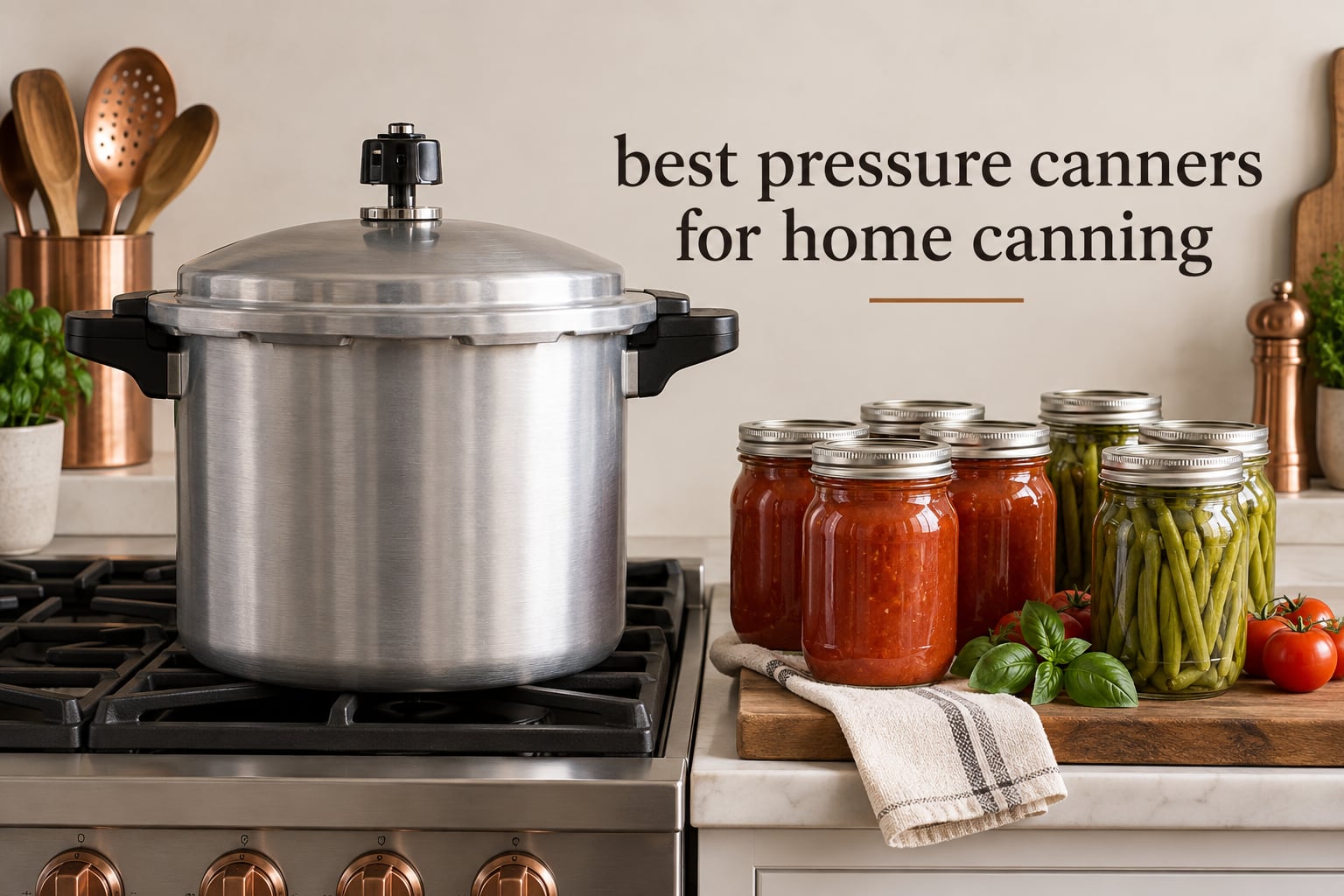
The best pressure canner for home canning is the All American 1930, sold as the 915, because its machined metal-to-metal sealing system needs no rubber gasket, its weighted gauge never needs calibrating, and it is built in Wisconsin to a standard that outlasts most owners. It is also one of the heaviest units in the group and one of the most expensive, which is why we tested eight alternatives side by side before calling it the winner.
Every model below was compared on the same four things: how many jars it holds in one batch, what it takes to keep a safe pressure steady, how you know it is certified for canning rather than just for pressure cooking, and what it costs you in parts and attention over ten years. Ratings and review counts come straight from the product listings, and every capacity figure is given as a jar count, not just quarts, because jar count is what determines how many jars you walk away with per batch.
Before you go further, one honest answer. If all you ever can is tomatoes, pickles, jams or fruit, you do not need a pressure canner at all, and a water bath canner will do the job. You need a pressure canner the moment you want to store low-acid vegetables, dry beans, meat, poultry, soups or stocks, because boiling water alone cannot destroy the botulism spores those foods carry. A certified pressure canner is also the only home method that is USDA-endorsed for those foods, and it cuts processing time dramatically compared with a water bath.
We also weighed two questions that the recommendation threads rarely settle: how many pounds of metal you can actually lift onto your burner, and whether a canner with a rubber gasket is a long-term cost or a one-time detail. If electric appliances interest you, our guide to the best electric pressure cookers covers the machines that are built for speed rather than for validated canning times.
Table of Contents
Top 3 Pressure Canner Picks for 2026

All American 915 Canner
- Metal-to-metal seal with no gasket
- Weighted 5-10-15 lb gauge
- 7 quart or 10 pint jars

Presto 01781 23-Quart
- 7 quarts or 20 pints per batch
- Deluxe pressure dial gauge
- 12 pounds and 12-year warranty

Presto 02152 Digital
- Set and forget pressure control
- No altitude adjustments
- 5 quart jars per batch
Best Pressure Canners in 2026: All 8 Compared
The table below carries the eight canners in ranked order, and it is the fastest way to see how the category splits. Six are manual stovetop units with a dial gauge or a weighted valve, two are electric canning machines with digital control, and the capacities range from 9.5 quarts to 23 quarts. Ratings shown here are the ratings on the product listings, not our score.
| Product | Specifications | Action |
|---|---|---|
| All American 1930 (915) 15.5-Quart |
|
Check Latest Price |
| Presto 01781 23-Quart |
|
Check Latest Price |
| Presto 02152 17-Quart Digital |
|
Check Latest Price |
 Presto 01755 16-Quart Presto 01755 16-Quart |
|
Check Latest Price |
 NESCO NPC-9 Smart Canner 9.5-Quart NESCO NPC-9 Smart Canner 9.5-Quart |
|
Check Latest Price |
 Granite Ware 20-Quart Granite Ware 20-Quart |
|
Check Latest Price |
 T-Fal 22-Quart T-Fal 22-Quart |
|
Check Latest Price |
 Barton 22-Quart Barton 22-Quart |
|
Check Latest Price |
1. All American 1930 (915) 15.5-Quart Pressure Cooker/Canner – Gasket-Free Metal-to-Metal Seal
- No gasket to replace or store
- Weighted gauge needs no calibration
- Positive action clamping locks
- Service and parts from the manufacturer
- Can process real metal cans as well as jars
- 18 pounds empty and much heavier loaded
- Jars must be loaded on the stove not the counter
- Wing nuts tighten in a star pattern
Out of the eight canners we compared, the All American 915 is rated highest by owners at 4.9 from 9772 reviews, and the volume of feedback is substantial enough to trust the pattern. Reviewers describe the same machine over and over: heavy, machined, quiet on the stove, and still going years later.
The mechanical reason is simple. Instead of a rubber gasket squashed between two flat surfaces, the lid clamps down on a machined metal lip, so there is no seal to stretch, harden or split. Nothing to replace, nothing to keep in a drawer, and no mid-season gasket failure at the one moment you needed the canner most. For a buyer who plans to keep canning for decades, that removes the most repeated anxiety in the canning forums, which is the gasket.
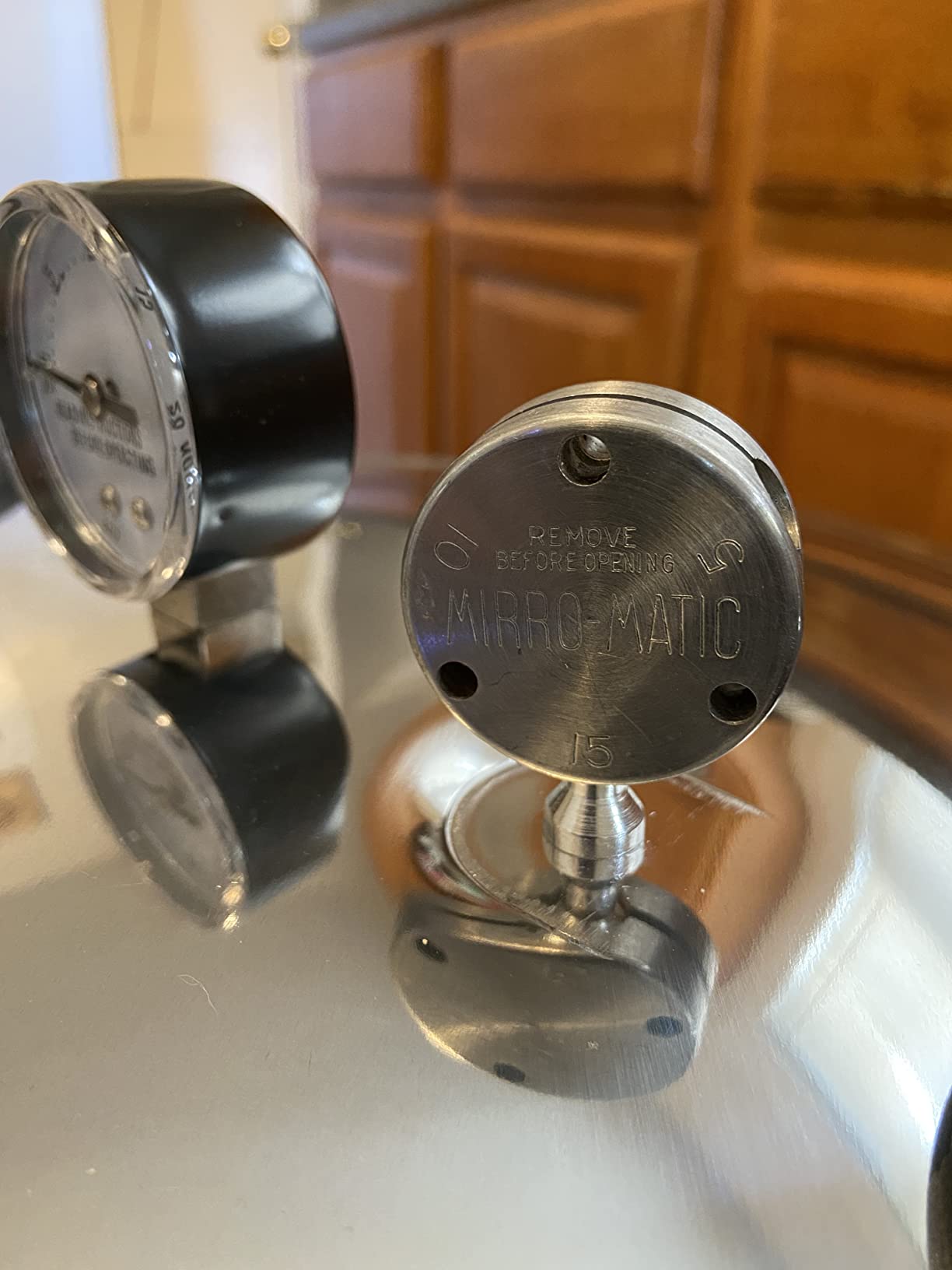
Pressure control is weighted rather than dial-based. A 5, 10 or 15 pound machined weight sits on the vent pipe, and a steady rocking and hiss confirms the canner is holding pressure. The dial on the lid is a reference only. That means there is no annual calibration step and no needle to drift, and reviewers consistently treat the weighted system as the more forgiving of the two approaches.
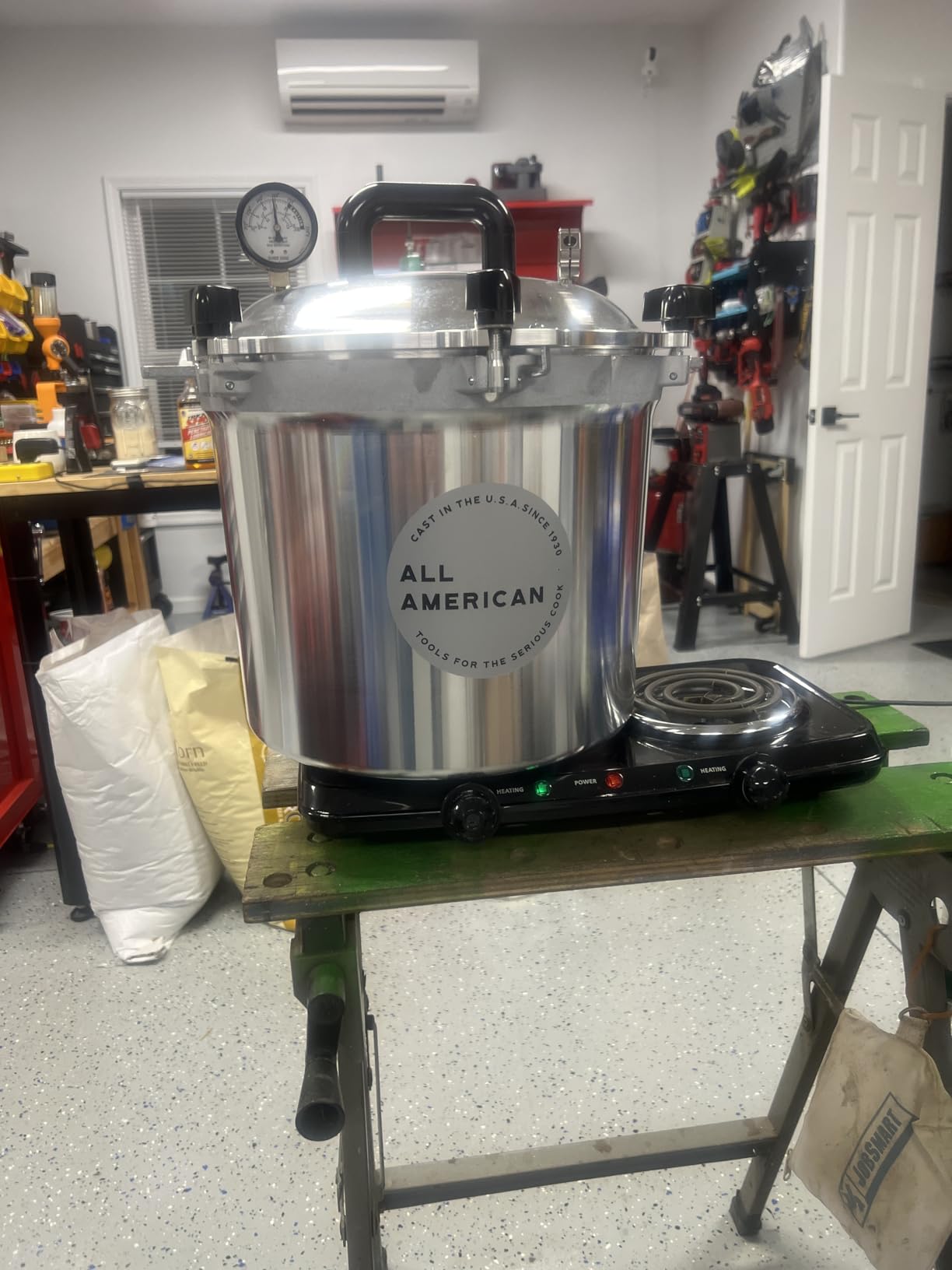
Capacity is 15.5 quarts, which the maker describes as roughly 7 quart jars or 10 pint jars per batch. That is a smaller batch than the 23-quart Prestos in this roundup, and it is the honest trade-off you make for the gasket-free design. Owners who can a large garden every week will notice the difference, and many of them answer it by moving up to the 21.5-quart version in the same family.
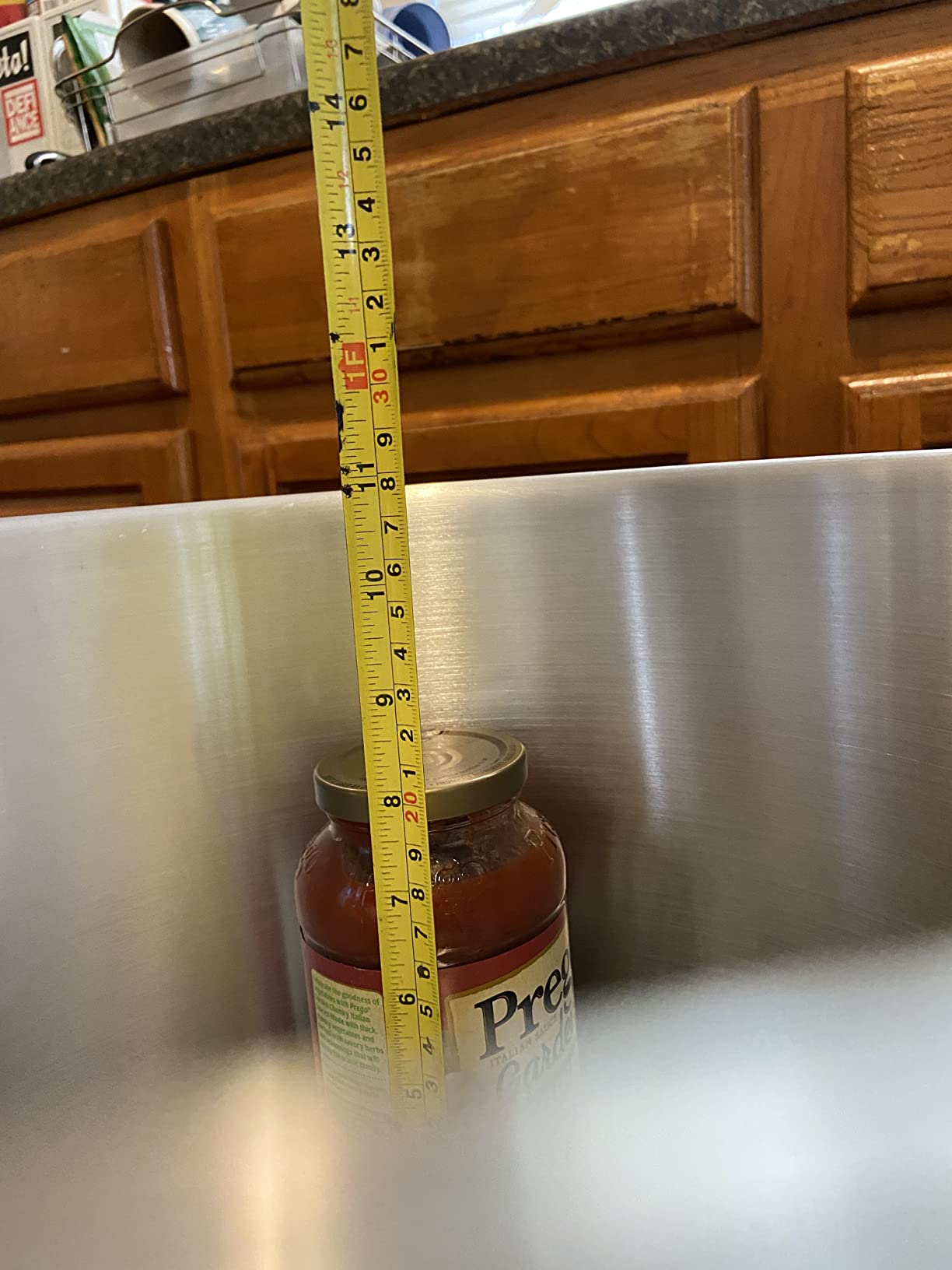
The other detail worth knowing is how it gets filled. Jars are loaded into the canner first and the loaded unit is lifted onto the burner, which at 18 pounds empty becomes a two-handed job with a full rack of hot jars inside. Plan the burner size to match the 12.25 inch base so the canner sits flat and stable, and never slide it across a glass cooktop. Owners who set up a dedicated burner for canning call this the only real ergonomic complaint worth planning around.
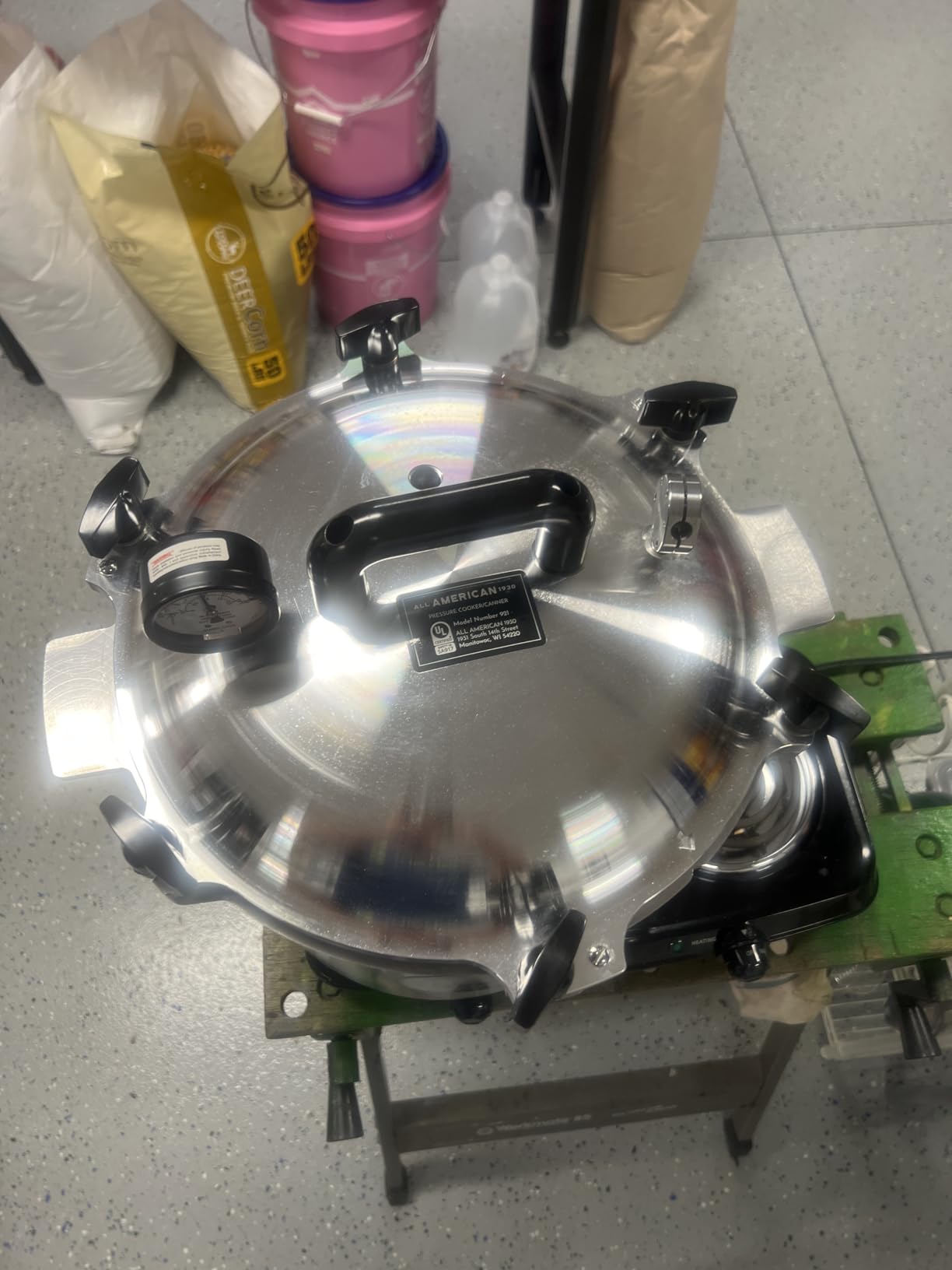
What you give up for the gasket-free seal?
Weight and care, mostly. The 915 is built to be lifted onto a burner, and it needs a tall clearance above the stove because the lid profile is high. It is not a pressure cooker for acidic foods, since aluminum can pit, and the manual warns about using oil on the sealing surface except occasionally.
There is also a technique layer. The wing nuts tighten in a star pattern, and if the canner vapor locks at zero pressure you need to know how to bring it down before the lid will open. Reviewers describe the first few sessions as a learning curve, then describe never switching brands again. The included gauge weight, two trivets and a gauze layer are all in the box.
Who should buy the All American 915?
Buy it if you intend to can for years, if you live above 1000 feet and want a weighted system that manages altitude by swapping a weight rather than recalibrating a dial, and if you would rather never think about a gasket again. It is also the right pick for a family or group that puts up serious volume each season and wants a machine they can pass down.
Pass if your kitchen has a small burner, if lifting a full canner is a genuine problem for anyone in the household, or if the purchase outlay is the deciding factor. In those cases the Presto 01781 below gives you more jars per batch for a fraction of the money, and the gasket cost is easy to budget for.
2. Presto 01781 23-Quart Pressure Canner and Cooker – Best Value for Full Harvests
- 26 half-pints 20 pints or 7 quarts per batch
- 12 pounds and easy to lift
- Warp-resistant heavy-gauge aluminum
- Works on regular and smooth-top ranges
- 12-year limited warranty
- Rubber gasket needs periodic replacement
- Pressure regulator sits loosely on the vent pipe
- Needs close watching on high-output gas burners
The Presto 01781 is the consensus pick in the canning communities, and the reasons are not mysterious. It is rated 4.8 from 20110 reviews, by far the largest review count of any product we compared, and it holds 26 half-pints, 20 pints or 7 quarts, the biggest jar load in this group, while weighing only 12 pounds. That combination of capacity and low weight is rare.
Capacity is the headline. The listing states 26 half-pints, 20 pints or 7 quarts, which means a single load can cover a serious week of garden surplus. Warp-resistant heavy-gauge aluminum spreads heat evenly across the base, and the polished finish is kind to smooth-top ranges. It is also USDA recommended for canning vegetables, meats, poultry and seafood, so the certification question is settled on paper.
The deluxe pressure dial gauge is the part that matters above sea level. A dial reading is something you can check against a known altitude chart, which a weighted valve cannot do. Reviewers who live in mountain communities point to the gauge as the reason this model works for them.
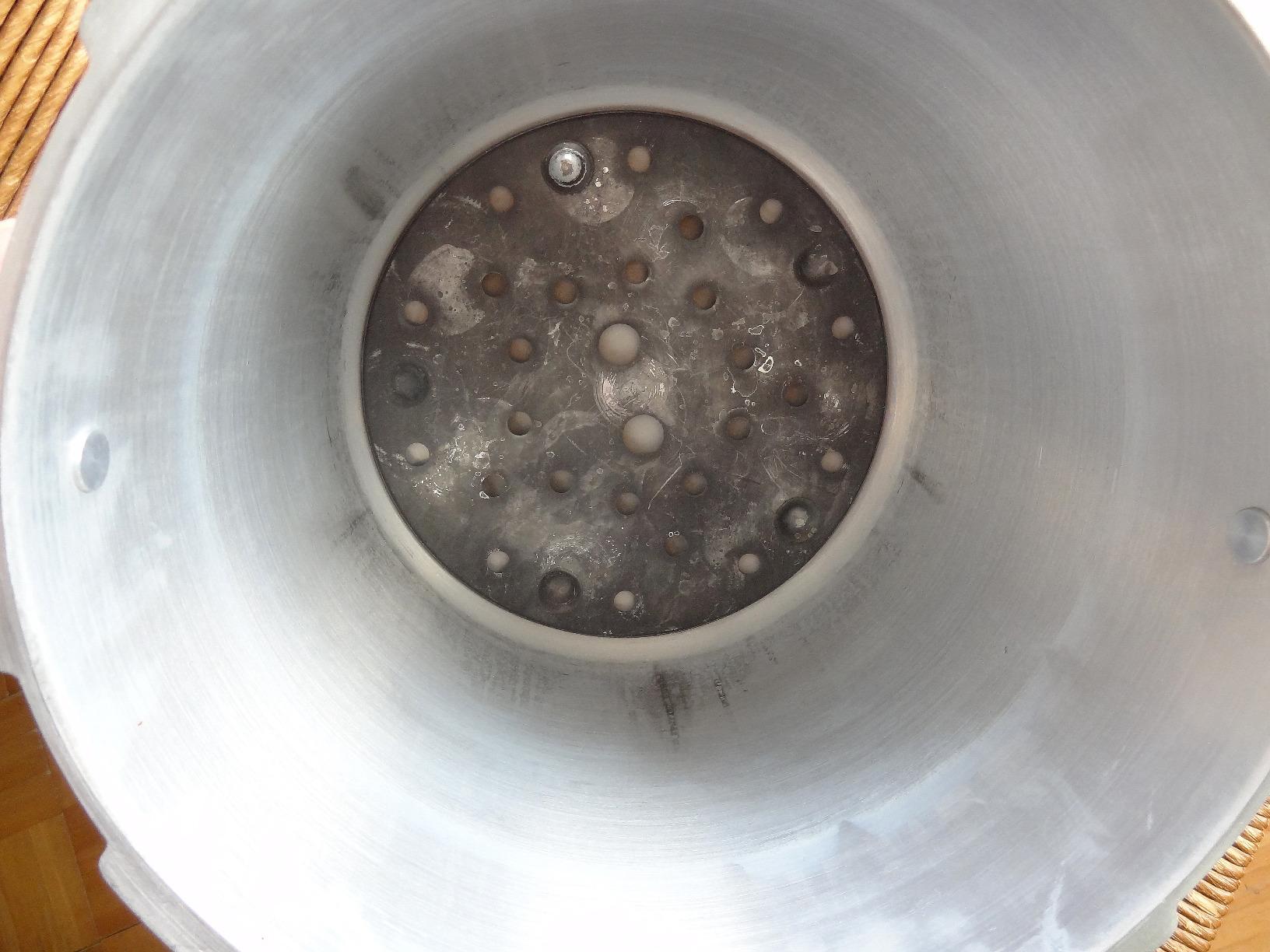
Two cautions belong in the same breath. First, the gasket is a rubber seal and it will need replacing over the life of the canner, which is a genuine recurring cost that the All American design simply does not have. Second, some reviewers note that the pressure regulator sits a little loosely on the vent pipe, and on a gas burner the canner may need adjusting as the flame fluctuates.
The included 76-page instruction and recipe book is genuinely useful for a first-time canner, and the canning rack is in the box. The plastic handles are a departure from the wood handles on older models, and reviewers mention that as a small durability knock, but the 12-year limited warranty is the longest in this roundup by a wide margin.
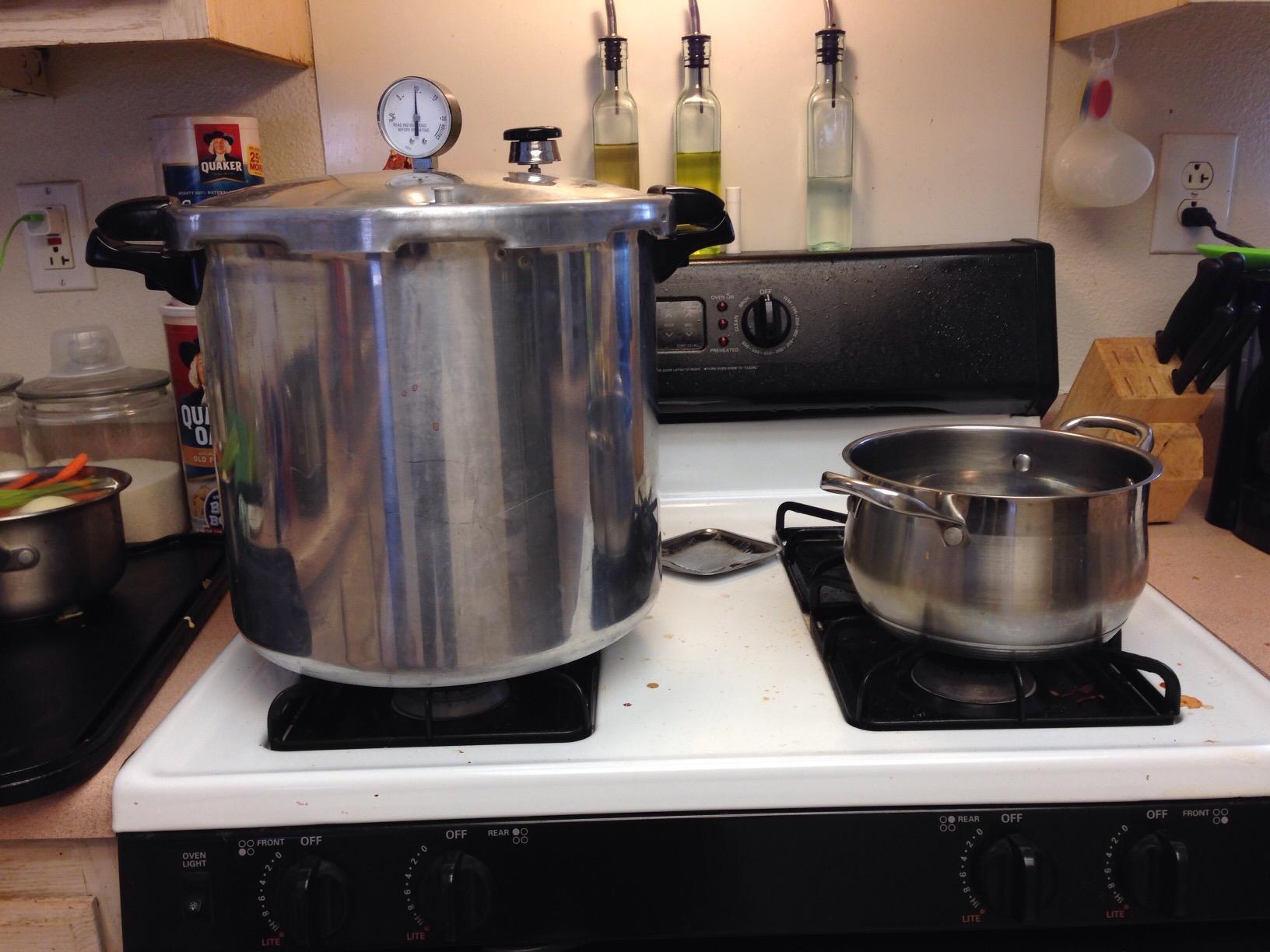
What you get that the premium canners do not offer?
Batch size and reach. Twenty pints or seven quarts in one load is more food processed per hour than the All American 915 manages, and at 12 pounds this is among the easiest full canners in the group to lift off the burner when a batch is finished. For most home canners working a garden, throughput matters more than a gasket you never replace.
Parts access is the other quiet advantage. Replacement parts for Presto are easy to find, and buyers report that the company has sent gaskets at no charge when they asked. In the forums, that availability is the most common reason people land on this brand.
Who should buy the Presto 01781?
Buy it if you want the most jars per batch for the least weight, if you have a smooth-top range, or if this is your first canner and you want the clearest path to safe results. It is the choice most first-time home canners make, and the warranty length is a genuine long-term argument.
Watch for one thing: the gasket. Buy a spare from the start and store it, so a mid-season failure is a swap rather than a canceled batch. If you would rather not manage that at all, and you can accept a smaller batch, step up to the All American 915.
3. Presto 02152 17-Quart Digital Pressure Canner – Set and Forget Automation
- Set and forget digital programs
- No altitude adjustment required
- LED display guides each step
- Frees the stove for other cooking
- Quiet and easy to clean
- Cooling cycle adds 2 to 3 hours per batch
- Only 5 quart jars per batch
- Inner pot coating reported peeling after a few months
The Presto 02152 answers the question that stovetop canners keep generating: can a machine handle the pressure for me. It is an electric canning unit in stainless steel with a digital display, preset programs and a sensor that holds the internal temperature at the exact level the canning program calls for. It is rated 4.6 from 5700 reviews.
The no-altitude-adjustment claim is the headline feature and it is a real one. A stovetop canner at 5000 feet needs a heavier gauge weight or a recalibrated dial; this machine measures the environment and compensates. Reviewers who moved to high ground mid-life call that the reason they bought an electric unit rather than moving to a weighted canner.
It also does not heat the kitchen the way a burner canner does, and it frees your stove for the rest of dinner while a batch runs. Buyers mention the LED display walking them through each step, which matters a great deal in the first season when processing times and venting sequences are still unfamiliar.
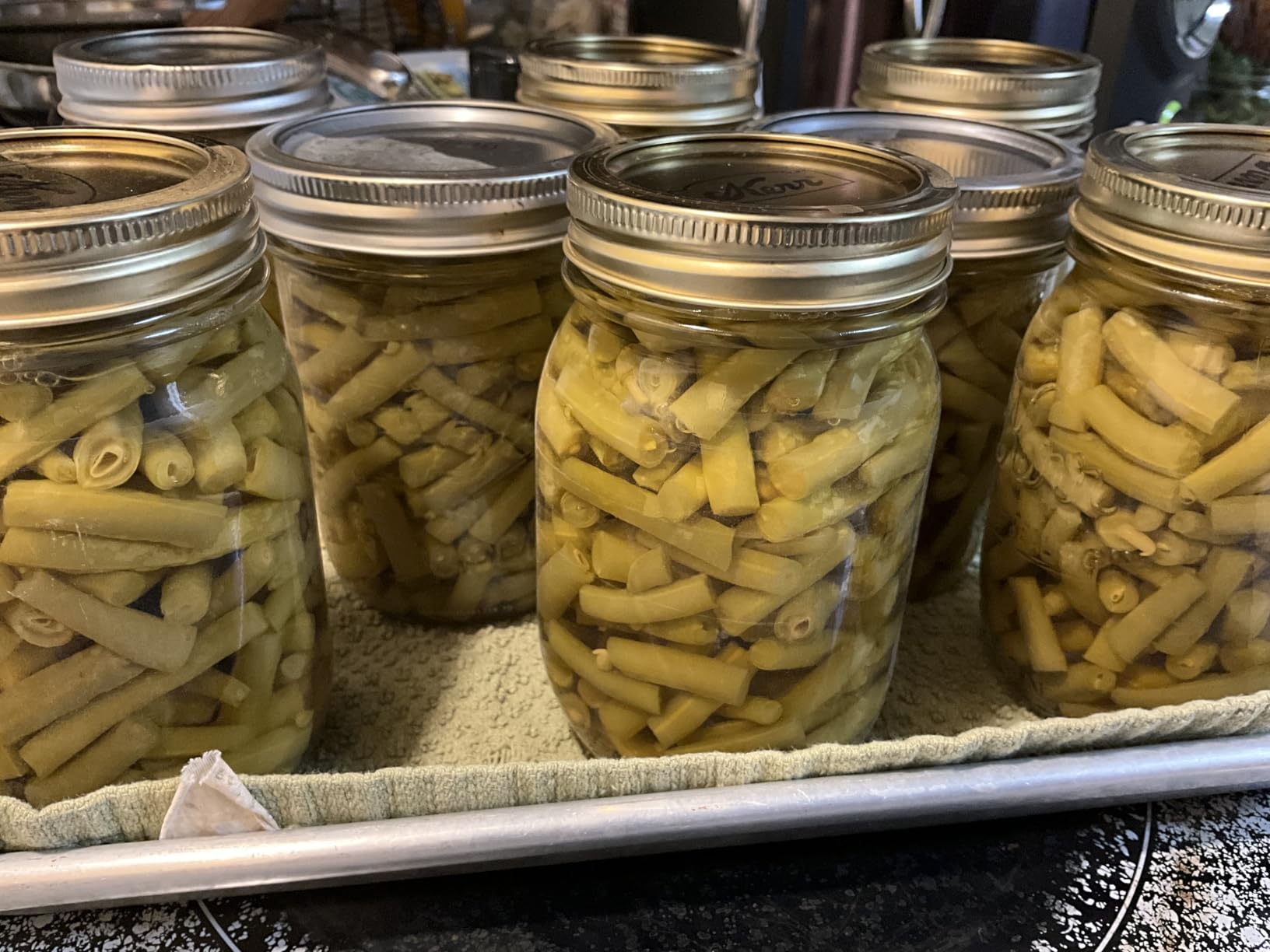
The catch is the cycle, and it is arithmetic you need to do before you buy. After processing, the unit runs a mandatory cooling cycle of two to three hours that cannot be overridden, and the batch size is 5 quart jars. So the realistic ceiling is a few batches a day, which is fine for a household preserving a modest garden and a poor fit for someone putting up a hundred jars a weekend.
Some buyers have reported inner pot coating peeling after only a few months. In those cases Presto customer service replaced parts quickly, according to the review summaries, which is worth knowing when you are weighing an appliance with electronic components against a purely mechanical one. The unit is 24.3 pounds and its 18 inch height means it needs real counter clearance, plus it draws 1485 watts.
Where automation genuinely pays off?
Beginners and high-altitude households get the most out of it. The machine removes the two things people get wrong: holding a steady pressure and adjusting for elevation. If you are nervous about the first year of canning, watching a display confirm that the correct temperature was held for the correct time is a genuine reduction in risk.
It is also one of only two electric units in this group, so it never asks you to lift a canner full of hot jars onto a burner. At 24.3 pounds it is heavy in one piece, but that weight stays on your counter instead of going over your head.
Who should buy the Presto 02152?
Buy it if you are new to pressure canning, if you live where altitude adjustments complicate a dial gauge, or if a hot kitchen in summer is a real problem for your household. Small-batch canning and weeknight cooking in parallel both suit it well.
Pass if your harvest is large, because 5 quart jars and a multi-hour cooldown will not keep up with a September garden. For volume, the stovetop units below process far more food per hour for a lower outlay, and their failure modes are simpler to fix.
4. Presto 01755 16-Quart Pressure Canner and Cooker – Lightweight Mid-Size Pick
- 10.5 pounds and easy to carry
- Works on smooth-top stoves without scratching
- Cover lock shows when pressurized
- Doubles as a pressure cooker
- Presto support has sent free replacement gaskets
- Only the 15 lb weight is included
- Not induction compatible
- Lid takes practice to remove
The Presto 01755 is the same design philosophy as the 23-quart, scaled to fit a kitchen that cannot handle a bigger footprint. At 10.5 pounds it is one of the two lightest canners in this roundup, and it is rated 4.7 from 4201 reviews. For anyone who wants the Presto approach without the 23-quart commitment, this is the middle path.
Its selling point is the smooth-top surface. Warp-resistant aluminum will not scratch a glass or ceramic range, and buyers with those cooktops mention it as a deciding factor. The cover lock indicator is a small window that shows when the canner is pressurized, which removes one of the ways a first-time canner opens a sealed vessel by accident.
It also works as a pressure cooker, so the same machine handles beans, stocks and stocks-then-canning. The warp-resistant body heats evenly, which is the main thing you want for even processing across a full load.
Two practical notes. The unit includes the 15 pound weight only, so if you live above 1000 feet or you want the 5 and 10 pound settings, you will need the adjustable regulator sold separately. And the lid is genuinely difficult to remove until you learn the technique, which every reviewer mentions and every reviewer also says they solved in a session or two.
A third thing worth knowing is cosmetic but annoying: the interior can discolor dark without a splash of vinegar in the canning water. Add a tablespoon or so per batch and the finish stays bright. The warranty here is one year limited, which is far shorter than the 12-year coverage on the 23-quart Presto, so keep the receipt if you keep the canner.
When 16 quarts is the right number?
It is the right number for a household that cans for two or three people, or for a cook who wants to be able to lift a full canner safely and put it on or off a burner without help. Batch size still comes in quart jars, just fewer of them than the 23-quart model.
It is also the right pick for a rental kitchen, a small apartment, or anyone who stores the canner between seasons and finds a 23-quart unit awkward to lift back down.
Who should buy the Presto 01755?
Buy it if you want light weight, smooth-top safety and a mid-size batch, and you do not need adjustable pressure settings at your elevation. It is also an easy first canner for anyone who can already cook with a pressure cooker.
Pass if you can a large harvest regularly and want a 7 quart load, or if you need more than one pressure setting. Those jobs belong to the 23-quart Presto 01781 above, which shares the same parts ecosystem and the same support.
5. NESCO NPC-9 Smart Electric Pressure Canner 9.5-Quart – One Machine, Four Jobs
NESCO NPC‑9 Smart Electric Pressure Canner and Cooker for Home Food Preservation, 9.5‑Quart Stainless Steel with Digital Controls
- Also pressure cooks slow cooks and steams
- High-altitude limiting valve included
- Condensation catcher cuts cleanup time
- Compact footprint frees the stove
- Digital presets are beginner friendly
- 4 quart jars or 5 pints per batch
- Label on the top weight wears off
- Not built for large harvests
The NESCO NPC-9 is the smallest capacity canner here and the most capable as a general appliance. In one machine you get pressure canning, water bath canning, pressure cooking, slow cooking and steaming, and several buyers compare its price favourably against buying a separate electric pressure cooker. It is rated 4.7 from 3307 reviews.
As a canner it is properly certified rather than a repurposed cooker. The listing describes dedicated electric pressure canning with built-in safety controls, a safety lock lid, an automatic float valve and pressure regulation, and the box includes a canning rack, a steam rack, a removable condensation catcher and both standard and high-altitude limiting valves.
That altitude valve matters. Having the correct limiting valve in the box means a high-altitude household can use the machine without hunting for a part. It is a small detail that removes a real stumbling block for first-time buyers.
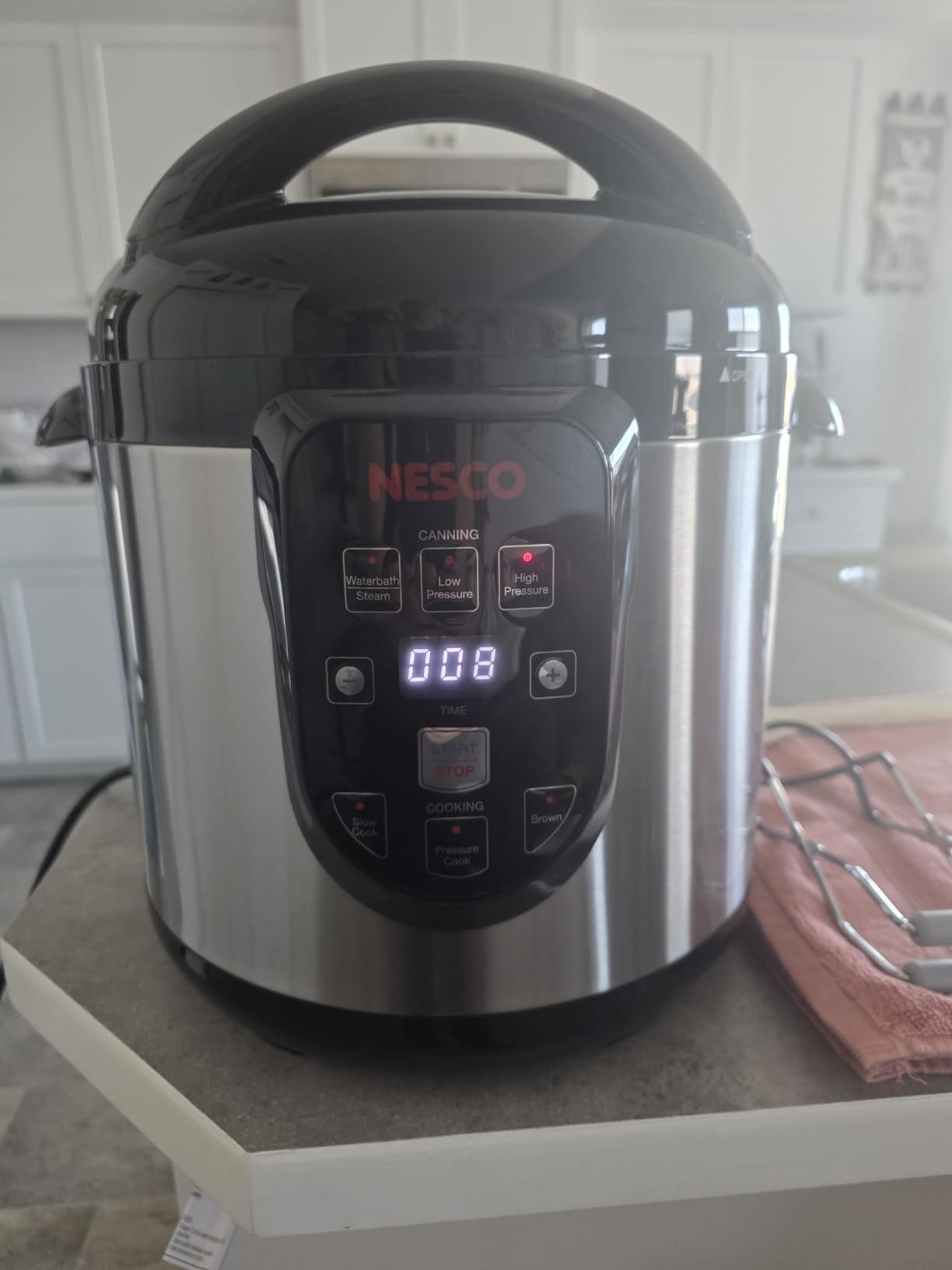
Capacity is where the trade-off bites. The jar capacity is 4 quart jars or 5 pint jars, and the cooling cycle between batches is long. If you are preserving a few jars of soup a week or a modest amount of vegetables, that is completely workable. If you are looking at a full garden, this machine will not keep pace.
Two other reports come up repeatedly. The green weight on top loses its labeling after a few uses, which is frustrating when you need to confirm the setting, and there is a short learning curve for first-time users. Some reviewers note exterior plastic components, which is a difference from the all-metal construction of the stovetop units.
Why the 9.5-quart size is not as limiting as it sounds?
Many of the strongest reviews come from people who own both this and a larger digital canner. Their verdict is that for steady weekly cooking pressure, the NESCO is the better tool, and for canning days the bigger machine wins. Treating them as two different products rather than competing ones is the practical way to think about it.
The removable nonstick inner pot and the condensation catcher also make cleanup faster than on most stovetop canners, which have to be cooled and washed by hand. For a cook who wants one appliance on the counter rather than a heavy pot and a separate cooker, that is a meaningful daily advantage.
Who should buy the NESCO NPC-9?
Buy it if you can small batches, if you want one machine to cover cooking and preserving, or if kitchen heat in summer is a genuine problem. Apartment cooks and older households that want to avoid lifting a full canner onto a burner will find it comfortable.
Pass if you are storing for a household rather than a household of one, or if you want to put up a large autumn harvest in a single weekend. Four quart jars a batch will feel slow within a month. For that, choose one of the 22 or 23-quart stovetop models instead.
6. Granite Ware 20-Quart Pressure Canner – Weighted Valve With No Calibration
- Weighted rocker valve needs no calibration
- Hard anodized body resists rust and stains
- 9 inch base fits glass cooktops
- 10.5 pounds and easy to handle
- UL approved with two release valves
- Not induction compatible
- Quart and pint jars run in a single layer
- The manual has no recipes
The Granite Ware 20-quart reads pressure the old way, and fewer people buy it for that reason. It has no dial to read at all. Pressure is set by a 3-piece adjustable rocker valve that clips onto the vent pipe at 5, 10 or 15 PSI, so there is nothing to calibrate and nothing to read wrong. It is rated 4.6 from 801 reviews, the smallest review base here, and the owners who leave reviews tend to be experienced canners who know exactly why they prefer it.
Construction is hard anodized aluminum, which seals the raw metal away from food contact and resists rust and staining. At 10.5 pounds it ties the 16-quart Presto as the lightest canner we compared, and the 9 inch base is sized specifically to sit flat on a standard glass cooktop burner without overhang.
The jar capacity is listed as 7 quarts, 8 pints, 24 half-pints across two layers, or 4 half-gallon jars. That two-layer half-pint option is genuinely unusual and useful for anyone doing small jars of sauce or stock.
Understand what you are giving up. Because it is a weighted system, there is no dial to check against an altitude chart, so the same weight that gives 10 PSI at sea level gives less at altitude and you change the weight instead. That is a fine system, but it is a different one from what most buying guides describe as the standard.
It is not induction compatible, and quart and pint jars run in a single layer rather than a double stack. The wire rack can be finicky about holding jars perfectly straight, and the manual does not include recipes. Several owners note the thin bottom can scorch food when pressure cooking, which is a cooking function rather than a canning one.
What the weighted approach actually gains you?
Nothing to fail silently. A dial gauge can drift, be knocked, or read inaccurately, and an error there is a safety problem rather than an inconvenience. A machined weight either holds pressure or it does not, and the audible hiss and rocking gives you a constant physical confirmation without looking at anything.
For a buyer who wants a set-it-and-listen system rather than a read-and-adjust system, this is the one in this roundup that gives you exactly that, and it needs no parts beyond an occasional seal.
Who should buy the Granite Ware 20-Quart?
Buy it if you have a gas, coil or glass range, you prefer a weighted valve to a dial, and you like the idea of a body that will not rust or stain. It is also a strong choice for a cook who wants to do a lot of half-pint jars in two layers.
Pass if you have an induction cooktop, since the manufacturer does not list it as compatible. If you want a large double-stacked quart load in one batch, look at the 22 and 23-quart models instead.
7. T-Fal 22-Quart Pressure Canner – Two Racks and Three Pressure Settings
- Two racks support two-layer batches
- Three PSI settings for flexibility
- Handles 7 quart or 18 pint jars
- Works on gas and electric coil cooktops
- Canning guide included in the box
- Gauge may read 1 2 3 instead of 5 10 15
- Steam can leak around the handle
- Heat-up reported as slow
The T-Fal 22-quart is the value entry point into a genuinely large canner, and it ships with more in the box than most. Two canning racks are in the box, a step-by-step canning guide is included, and the jar capacity is listed as 24 half-pint jars, 16 wide-mouth pint jars, 18 pint jars or 7 quart jars. It is rated 4.4 from 6739 reviews.
Having two racks is the quietly useful part. It lets you split a load between two levels, which is how some canners manage mixed processing times in a single batch. The three PSI settings cover low, standard and high pressure, and the lid has a steam release valve and a locking mechanism meant to stop the unit opening under pressure.
It is listed as compatible with gas and electric coil cooktops, and the 22-quart size sits in the range the USDA guidance points to for home pressure canning, which cautions against very small units.
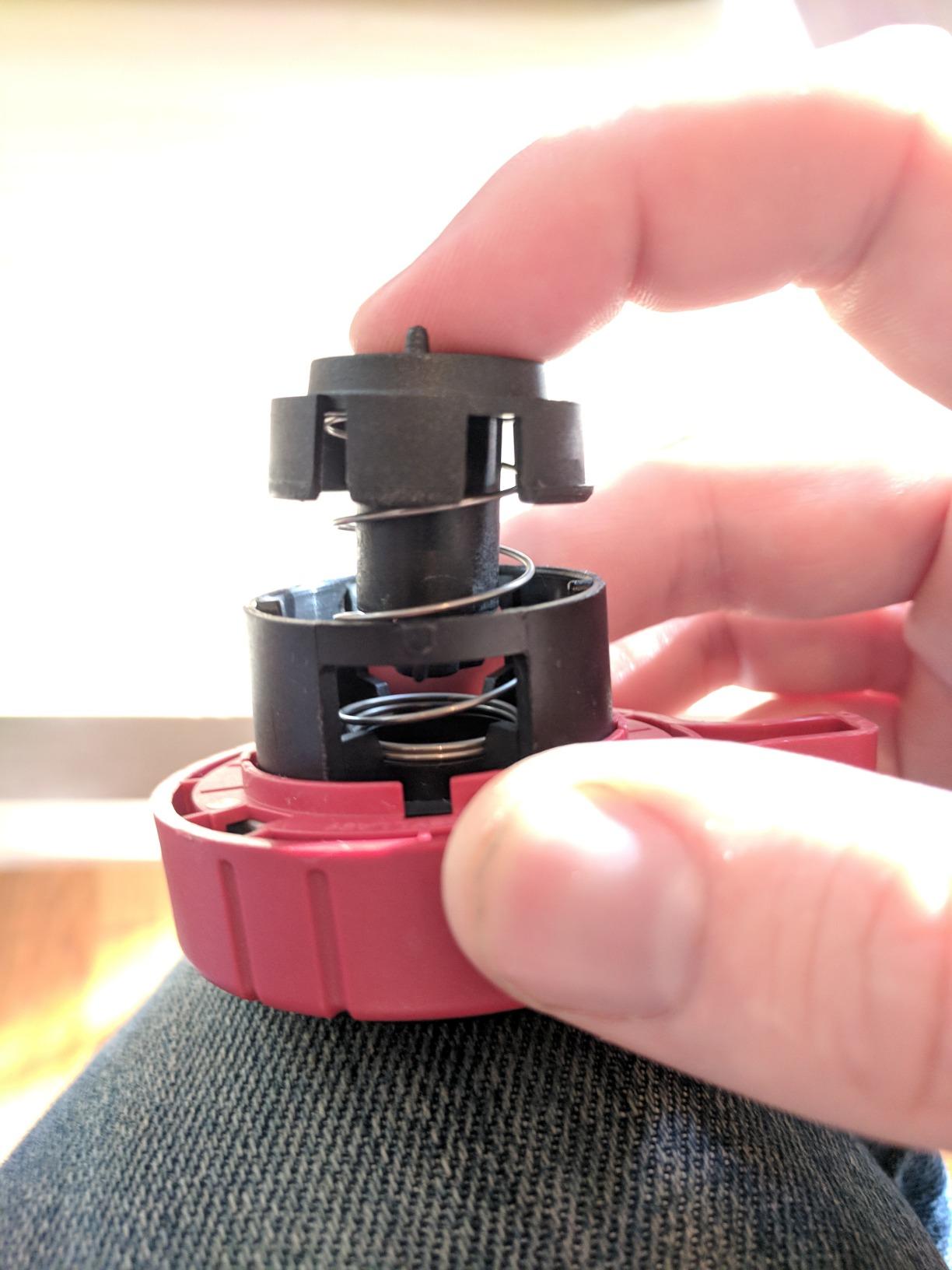
Now the honest part. Reviewers report the gauge can read 1, 2 and 3 on its dial rather than the 5, 10 and 15 PSI the settings actually correspond to, and that is a real confusion for anyone following a processing chart for the first time. Steam can also escape around the handle onto the stove, and some owners report heat-up times as long as three hours on a cool burner.
Gasket sealing and handle alignment come up often enough that they are worth anticipating: the seal may need reseating, and lining the lid up correctly takes practice. The warranty is one year, matching the 16-quart Presto and the All American 915 and far short of the 12-year cover on the 23-quart Presto. A number of owners report discolouration after first use and criticism of the manual quality, but the majority of reviews describe success after working through the quirks.
The gauge complaint, in context
A miscalibrated dial is not automatically disqualifying, because you are not relying on the needle alone. You are matching the sound and behaviour of the canner at a given setting, and if the canner holds the correct pressure for the full processing time, the food is processed correctly. The problem is purely about your confidence in the reading on your first season.
Because the batch size is genuinely large and the price is genuinely low, this model suits a buyer who will can heavily and can accept a slower heat-up and a steeper first-season learning curve. Owners who can successfully use it report not wanting to switch.
Who should buy the T-Fal 22-Quart?
Buy it if your budget is the deciding factor and you want a 7 quart batch with two racks, or if you prefer a canner with selectable pressure settings for a range of foods. It is a reasonable first canner for someone who is willing to spend a season learning it.
Pass if you want the cleanest out-of-the-box experience. The Presto 01781 in this same capacity class has a far higher rating, a much longer warranty, and none of the gauge complaints. If you can stretch to it, that is the better buy.
8. Barton 22-Quart Pressure Canner – Budget Induction-Compatible Pick
- Induction compatible with the widest stove range
- 7 quart or 18 pint jars per batch
- 12.9 pounds
- Safety device blocks pressurizing before locking
- Pressure relief valves included
- Roughly one in eight reviews is a single star
- Gauge accuracy questioned at altitude
- Aluminum wears faster than a cast body
The Barton 22-quart exists for one specific situation: you have an induction cooktop and you want a full-size canner. The listing states compatibility with gas, electric, induction and ceramic cooktops, and that is not something the mainstream brands in this roundup will promise. It is rated 4.2 from 1698 reviews, the lowest rating of the eight, and that number deserves an explanation rather than a dismissal.
The rating spread is wide. Around 70 percent of reviews are five stars, and roughly 12 percent are one star, which is the classic signature of inconsistent quality control between production runs rather than a design flaw. Buyers who receive a good unit report strong performance; buyers who receive a poor one find a gauge that does not read accurately and a body that wears faster.
The safety hardware is genuinely thorough for the money. There is a spring safety device that prevents the canner from pressurizing before the lid is securely closed, a sure-locking lid system, a safety lock cover valve that only releases after pressure is exhausted, and pressure relief set at 13 PSI.
Capacity is 7 quart jars, 18 pint jars or 24 half-pint jars, so batch size is genuinely competitive with much more expensive units. At 12.9 pounds it is light, and the manufacturer states the unit reduces cooking time by up to 70 percent.
What you give up is support and consistency. The brand is less established, and a buyer with a failed gauge or a leaking lid has fewer places to turn than a Presto or All American owner. If you care about a ten-year service life rather than a first season, that gap matters more than the saving.
How we would use the Barton 22-quart?
As a second canner for beans, or as the machine you use on a burner that only induction can reach. Dry beans are the most common reason people buy a pressure canner in the first place, and they are also the most forgiving food to process, which pairs sensibly with a unit that has a wider quality spread.
We would also check the gauge against a known reference before the first batch and keep a backup plan for any food where a wrong reading would matter. That is a reasonable precaution with this model, and a habit that is good practice with any manual dial gauge.
Who should buy the Barton 22-quart?
Buy it if induction compatibility is a hard requirement and the rest of the market will not give it to you at this size, and you are comfortable verifying the gauge yourself. It is a capable canner for the money.
Pass if you have any other cooktop, or if the lowest purchase outlay matters less than knowing the machine will still be accurate in five years. In that case the Presto 01781 is the better long-term decision at a similar capacity.
How to Choose a Pressure Canner in 2026?
Price tells you very little in this category. The eight canners here span a range where the cheapest buys a 22-quart aluminum unit and the most expensive buys a 15.5-quart gasket-free machine, which is worth sitting with. What separates them is the seal, the gauge, the capacity per batch and how much of the work the machine does for you. Here is how each of those decisions actually plays out.
Stovetop or electric: which one fits your kitchen?
A stovetop canner heats faster and processes more food per hour, and it costs less. An electric canning unit does the pressure management for you, never needs an altitude adjustment, and keeps your kitchen cool. The trade is batch size and cycle time: the digital units in this roundup run smaller loads and add a long cooling cycle afterwards.
Choose electric if you are new, if you live at altitude, or if you cannot have a burner tied up. Choose stovetop if you process in volume, if you already understand pressure canning, or if you want a machine that will still work if the electronics fail. Note that a general-purpose electric pressure cooker is not the same product, which is a distinction we come back to below.
Gasket or metal-to-metal seal: what it costs over ten years?
A gasket canner uses a rubber or silicone ring to make the seal. It is cheap to buy, easy to inspect, and needs replacing periodically. Presto support has even sent free gaskets to owners who asked, so the real cost is often lower than people fear. The key is to buy a spare, store it somewhere dry, and check it before every season.
A metal-to-metal canner clamps machined surfaces together. There is nothing to replace and nothing to perish, and the All American 915 is the clearest example in this roundup. That is a real ten-year saving, and it is the single strongest argument for the premium price. If gasket anxiety is what is stopping you, this is the design that removes it.
Capacity and jar count: sizing a canner to your harvest
Capacity is a jar count, not a quart number. A 23-quart canner holding 7 quart or 20 pint jars is not a small upgrade over a 20-quart canner holding 7 quarts; the difference shows up in what you can do with half-pints and wide-mouth pints. If you can a lot of sauce, count pints. If you can beans and vegetables, count quarts.
Two practical rules. First, match the base diameter to a burner that can heat the whole bottom evenly, because a small canner on a huge burner scorches and a huge canner on a small one never reaches pressure. Second, plan around your stove, not just your jars. A 23-quart canner needs a clear surface and headroom, and a loaded canner has to be lifted off and on rather than carried to the sink.
Weighted gauge or dial gauge, and why altitude changes everything
Boiling water is not the same at 2000 feet as it is at sea level, and food safety rules account for that. Above 1000 feet, pressure canning requires a heavier weight or a higher gauge setting, depending on the system. Below that line, a standard 10 PSI weight or setting is what you use.
A dial gauge lets you read the pressure and compare it to a chart for your elevation, which is flexible and precise, provided the gauge is accurate. A weighted valve cannot be read against a chart, but it also cannot drift, and you change the weight when you move up a mountain.
Neither system is better in the abstract. It is a choice between reading a number and listening to a sound. If you know your elevation and it is stable, the dial is convenient. If you travel, move often, or simply want one less thing to verify, the weight is calmer.
Stovetop compatibility: gas, glass, coil and induction
Most aluminum canners work on gas, coil and smooth-top ranges. Induction is the exception, because it requires a magnetic base, and only the Barton 22-quart in this roundup is listed as induction compatible. If your cooktop is induction, that single fact eliminates most of the category before price or capacity enter the conversation.
Avoid dragging any aluminum canner across a glass cooktop. Lift it instead. The All American owners mention this most often, because the 915 is the unit you are most tempted to slide.
If you are thinking about the plumbing side of a canner setup rather than the canning side, our guides to water pressure regulators and pressure tanks for wells cover the regulators and valves that control pressure in a house, which is the same physics in a different system.
Pressure Canning Safety: 10 PSI, 11 PSI and What You Must Never Can
Low-acid foods carry botulism spores that a water bath cannot destroy. Pressure canning at 10 to 11 PSI drives the internal temperature high enough to neutralize them, which is why a certified pressure canner is not a convenience but a requirement for anything except high-acid foods. Use a canner that is certified for canning specifically, follow the processing time for your food, jar size and altitude exactly, and treat any deviation as a reason to start over.
Yes, jars may touch the side of the pressure canner. USDA guidance permits jars to sit against the canner wall; what it warns against is jars touching each other in a way that prevents circulation, or an overfilled canner that stacks beyond the rack. Jars can touch the sides of the pot, and with an All American they will as you load the canner on the stove.
On the 10 versus 11 PSI question: 10 PSI is the standard pressure for most home pressure canning, and 11 PSI is used for a small number of specific foods and processes. The rule is to follow the processing chart for the food in front of you rather than to generalise, and to increase the pressure when the chart’s altitude table says to at your elevation.
Some things should not be pressure canned at all, because pressure destroys the texture of starches and because a can is a sealed anaerobic environment that invites botulism. Pasta, rice, flour, and any starch-thickened soup or sauce belong in a freezer rather than a can. Pureed soups and stocks are commonly pressure canned, but only with a tested recipe that accounts for the thickening behaviour. Dairy products, pasta sauces thickened with flour, and cooked grains are the common home-canning failures that show up in the forums as spoiled food.
Two operating habits prevent most problems. Venting, which clears air from the canner before pressure builds, is not optional and not something to rush. And the cooldown is not a suggestion; a canner that is depressurized too fast, or opened above 1,000 feet with the contents still hot, can draw jars inwards and fail to seal.
Finally, the question people ask most often and answer worst. A general-purpose electric pressure cooker is built to cook food fast, not to hold a validated temperature for a validated canning time, and unless the manufacturer states canning certification for your exact model, do not use it for preserving low-acid foods. Our electric pressure cooker guide is the right place to compare cooking-focused machines, but canning certification is a different question and a different claim.
Frequently Asked Questions
Is there a pressure canner that doesn’t require a gasket?
Yes. The All American 1930, sold as the 915, uses an exclusive machined metal-to-metal sealing system with positive action clamping locks instead of a rubber gasket, so there is no seal to replace or store. That gasket-free design is the main reason it costs several times more than an aluminum canner like the Presto 01781. Every other model in our roundup, including the Granite Ware and both Presto units, uses a rubber or silicone gasket that will need periodic replacement.
Is it worth buying a pressure canner?
Only if you plan to preserve low-acid foods. If you can tomatoes, pickles, jams and fruit, a water bath canner is sufficient and cheaper. If you want to store green beans, corn, carrots, dry beans, meat, poultry, soups or stocks, then a pressure canner is not optional, because a water bath cannot reach a temperature high enough to neutralize botulism spores. It also cuts processing time dramatically compared with a boiling water bath.
Can jars touch the side of a pressure canner?
Yes, jars may touch the sides of the pressure canner. What USDA guidance warns against is jars touching each other in a way that blocks steam circulation, or a canner packed beyond the height of the rack. All American owners in particular load jars into the canner and set the whole unit on the burner, so side contact is part of normal use.
What vegetables should not be pressure canned?
Avoid anything whose texture is built on starch or on its own steam pressure. Pasta, rice, flour-thickened soups and sauces, and cooked grains all break down into an unsafe or unappealing result under pressure. Pureed soups and stocks can be pressure canned, but only from a tested recipe written for canning. High-acid foods such as tomatoes and fruit are better suited to a water bath canner anyway, since they process at a lower temperature.
Which pressure canner has the highest rating?
In our roundup the All American 1930 (915) has the highest rating at 4.9 from 9772 reviews, followed by the Presto 01781 23-quart at 4.8 from 20110 reviews and the Presto 02152 17-quart digital at 4.6 from 5700 reviews. Note that the highest-rated and the most-reviewed are different models, so the Presto 01781 is the safer statistical bet while the All American is the stronger match on rating.
Can I use an electric pressure cooker instead of a pressure canner?
Only if that exact model is certified for canning. General-purpose electric pressure cookers are engineered to cook food quickly, and they do not necessarily hold a validated temperature for the processing times a canning schedule requires. Look for a unit whose manufacturer states canning certification and that includes a canning rack and canning programs, such as the NESCO NPC-9 or the Presto 02152 in our roundup.
The Best Pressure Canner for Your Kitchen in 2026
After working through all eight, the All American 1930 (915) remains our best pressure canner for most people who plan to can for years, and its 4.9 rating from 9772 reviews is the strongest evidence in the set. The gasket-free metal-to-metal seal and the weighted gauge remove the two recurring headaches in this category outright. The cost is weight, and the honest test is whether your household can comfortably lift a loaded canner onto a burner.
If lifting is the issue, or the outlay is, the Presto 01781 23-quart is the value answer: 7 quarts or 20 pints per batch, a dial gauge you can check against an altitude chart, and a 12-year warranty. Buy a spare gasket with it. If you want no monitoring at all and you live above 1000 feet, the Presto 02152 digital unit removes the altitude problem entirely and does not heat the room. If you have induction burners, the Barton 22-quart is the only induction-compatible option in this group.
Whichever one you choose, buy it for the foods you actually intend to can, keep a spare gasket on hand if your model uses one, and follow the processing chart for your altitude exactly. Our guides to water pressure booster pumps and high pressure shower heads cover the other side of household pressure, if that is what brought you here.