
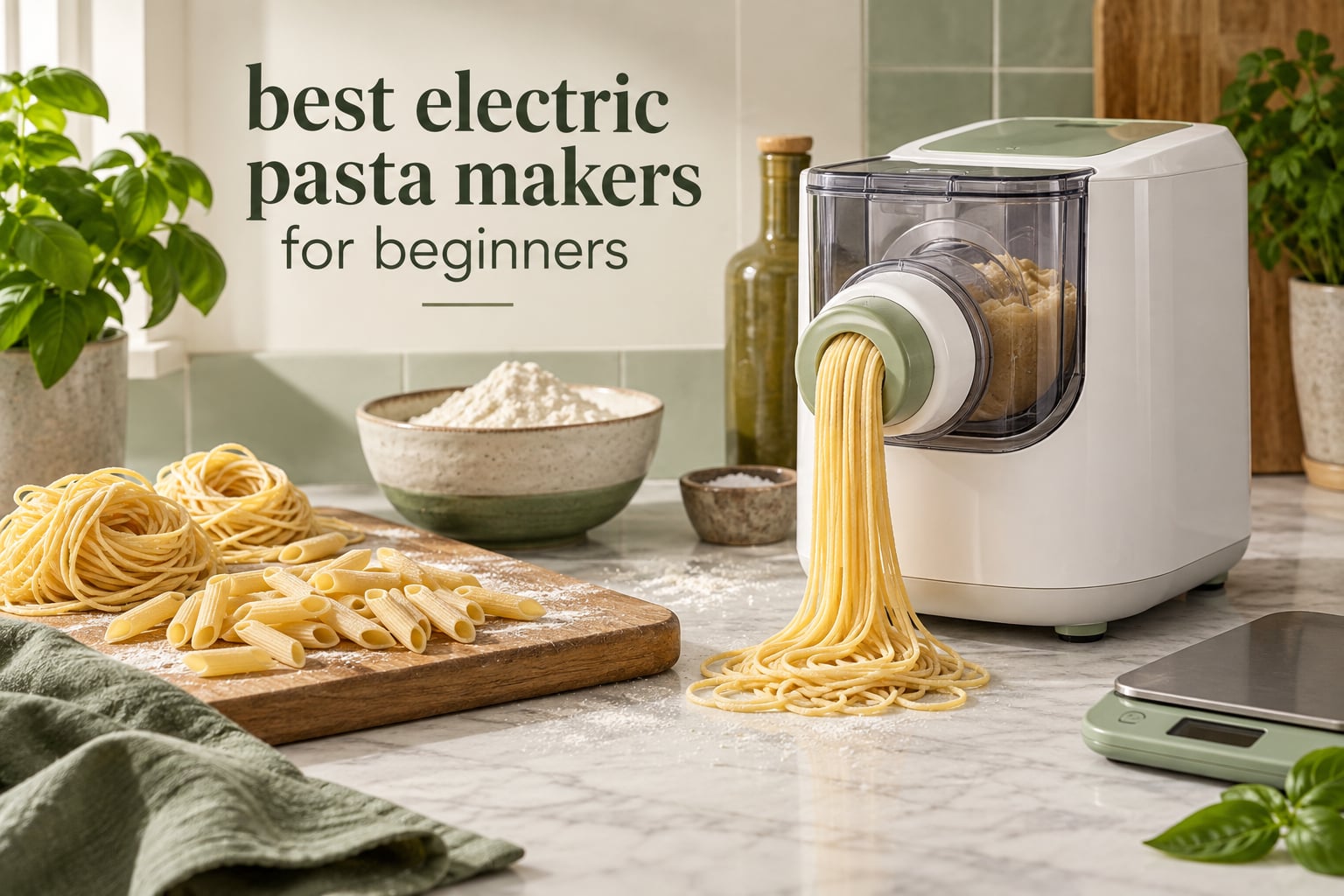
Yes, an electric pasta maker is worth it for most beginners, but not for the reason most sellers claim. It will not make the dough for you on every model, and it will not teach you to make dough at all on any model. What it removes is the hardest, most repetitive part of the job: rolling and cutting even sheets by hand. That single fact is why a first-timer can turn out consistent spaghetti on attempt one instead of attempt five.
We spent weeks reading the review data and working through eight machines for this roundup, and the honest answer is that your first machine should be forgiving rather than powerful. Beginners who buy a complex brass-die extruder on day one get stuck at the dough stage, and the machine never gets a fair trial.
That is the framing for this guide to the best electric pasta makers for beginners in 2026. We cover eight machines across three distinct types: all-in-one automatic extruders, standalone roller-and-cutter machines, and motorised rollers. Each pick gets a plain-language verdict, an honest note on cleaning, and a clear list of who it suits and who should skip it. We also include the five mistakes that ruin a beginner’s first batch, because dough consistency, not the machine, is the real reason most first attempts fail.
If you want the wider picture first, our guide to the best pasta making machines for home cooks covers manual crank machines too, which are worth a look if you enjoy the hands-on process.
Table of Contents
Top 3 Electric Pasta Makers for Beginners (September 2026)

Philips Viva Collection Compact
- Fully automatic from flour to noodles
- 2-3 servings in 18 minutes
- 3 shaping discs included
- Dishwasher-safe parts

Philips 7000 Series HR2660
- Up to 8 portions per batch
- 8 shaping discs included
- Pasta ready in under 10 minutes
- HomeID app recipes
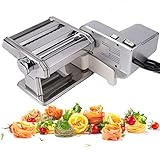
Shule Motorized Stainless Roller
- Stainless steel body and rollers
- 0.5mm to 3mm thickness dial
- Removable 2-speed motor
- Hand crank included
All 8 Picks Side by Side in 2026
Everything below is a roller or an extruder, not the same kind of machine. Read the shape column and the dough column together, because those two facts decide whether a pick fits your kitchen.
| Product | Specifications | Action |
|---|---|---|
| Philips Viva Collection Compact HR2370/05 |
|
Check Latest Price |
| Philips 7000 Series HR2660/03 |
|
Check Latest Price |
| Shule Motorized Stainless Roller |
|
Check Latest Price |
 Shule Roller with Ravioli Roller Shule Roller with Ravioli Roller |
|
Check Latest Price |
 GVODE 3-in-1 Roller and Cutter GVODE 3-in-1 Roller and Cutter |
|
Check Latest Price |
 VEVOR 150W 8-Shape Maker VEVOR 150W 8-Shape Maker |
|
Check Latest Price |
 Newhai 135W Stainless Roller Newhai 135W Stainless Roller |
|
Check Latest Price |
 Imperia Pasta Presto Imperia Pasta Presto |
|
Check Latest Price |
1. Philips Viva Collection Compact: Best Electric Pasta Maker for Beginners Overall
- Fully automatic
- press one button
- Dishwasher-safe parts
- Compact footprint with disc storage
- Gluten-free doughs work
- Only 3 shapes included
- Flour must be weighed on a scale
- Small batches of 2-3 servings
- Gear and motor failures reported
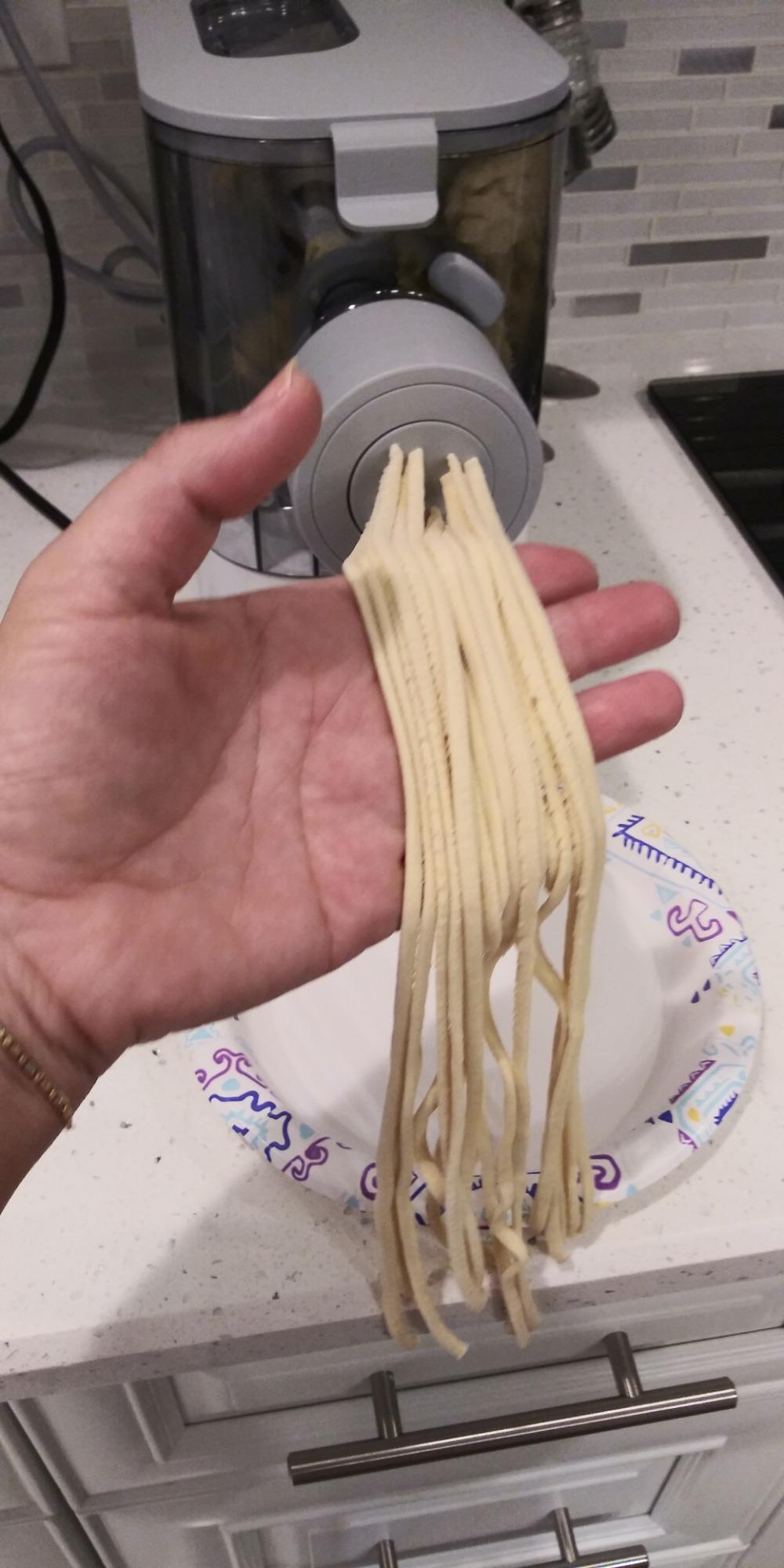
This is the machine we would hand to someone on their first attempt. You measure flour and liquid into the supplied cups, close the lid, press the button, and roughly 18 minutes later you have two to three servings of spaghetti, penne or fettuccini. Nothing about the process requires roller technique, and that is exactly the point.
It is also the most forgiving machine in this list. The double extrusion pass smooths the dough on the way out, which reduces the stringy, torn strands that a single-pass machine produces when your hydration is slightly off. For a beginner, that buffer is worth more than any extra die in the box.
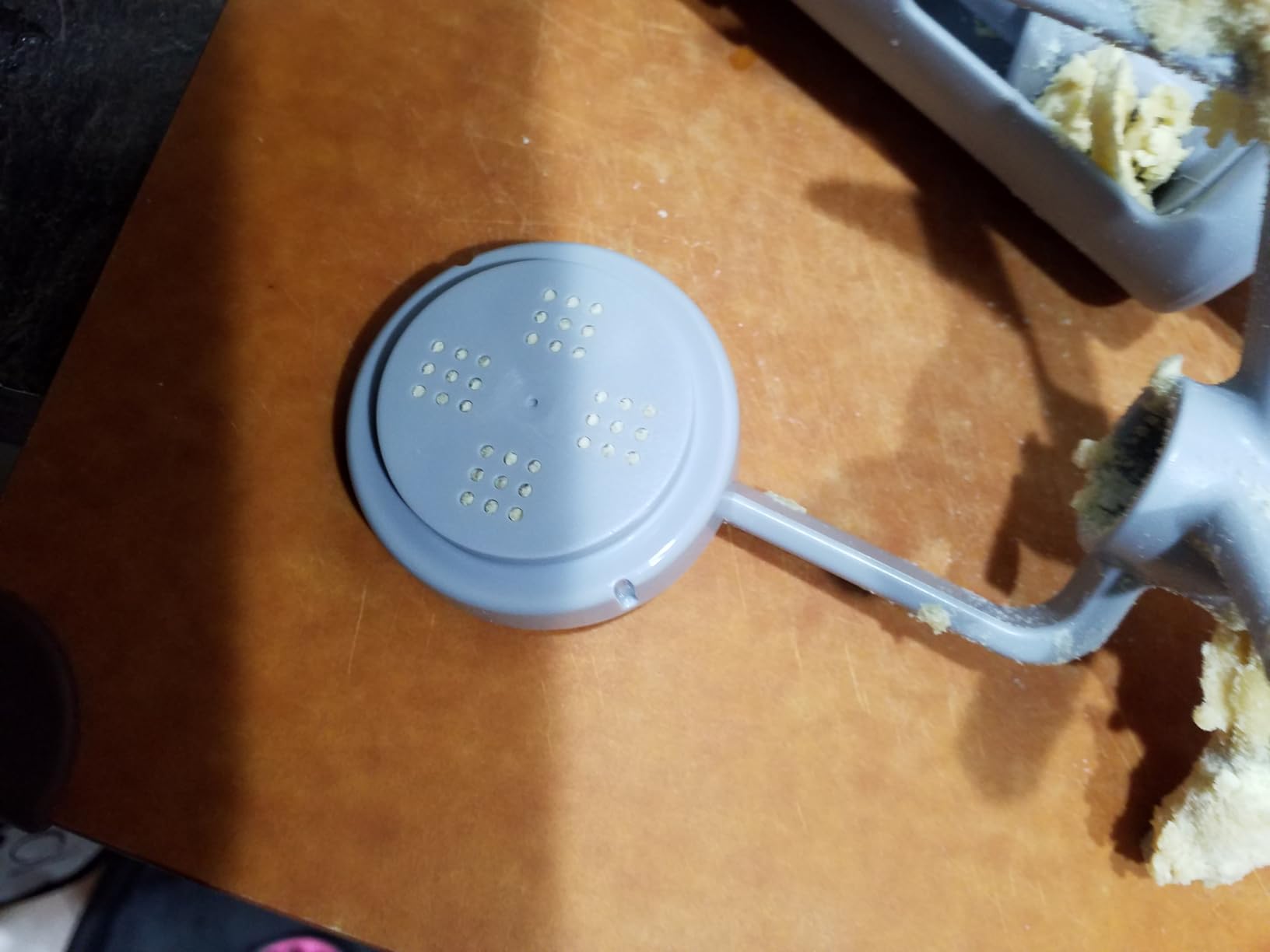
The catch is capacity. Two to three servings is a small household’s worth, or one generous portion for a hungry adult. If you are cooking for four, you run it twice. Owners running it for a family treat the second batch as a non-event because the machine does not need cooling time, but it is worth knowing before you buy.
Cleaning is where the honesty is needed. The removable parts are dishwasher safe, which is genuinely rare in this category, but dough still has to dry and be brushed or scraped out of the cutting chamber first. Never rinse the chamber, and never put the whole body near water. The included recipe book and measuring cups mean you are not guessing at ratios on day one, though the cups themselves are awkward to read, so a kitchen scale is a worthwhile addition.
Durability is the honest weak spot. Across more than two thousand reviews, some owners report gear or motor failure after extended use. Treat it as a first machine you might replace eventually rather than a lifetime purchase, and clean the drive parts as the instructions say.
Who this machine suits?
It suits a couple, a single-person household, or anyone cooking fresh pasta once or twice a week who wants the result without learning to hand-roll. It also suits gluten-free cooks, because extruded doughs work well with flour blends that are hard to roll by hand.
If you live in a small kitchen, this is one of the few automatic machines that does not need a permanent counter corner. The built-in disc storage means the three shaping discs live inside the body, not in a drawer.
Who should skip it?
Skip it if you regularly feed four or more people in one sitting, because two batches changes the economics of the evening. Also skip it if your priority is shape variety from day one; three discs is a gentle introduction, and extra discs are sold separately.
If you would rather spend the same money on a machine you can use for polymer clay or other crafts as well, a motorised roller is a more flexible tool, and we cover those next.
2. Philips 7000 Series HR2660/03: Best for Large Batches and Shape Variety
- 8 portions per batch
- 8 discs included
- HomeID app recipes
- Dishwasher-safe non-stick parts
- Also mixes cookie and bread dough
- Heaviest and largest here
- Reliability complaints from some buyers
- App needed for some recipes
- Premium cost
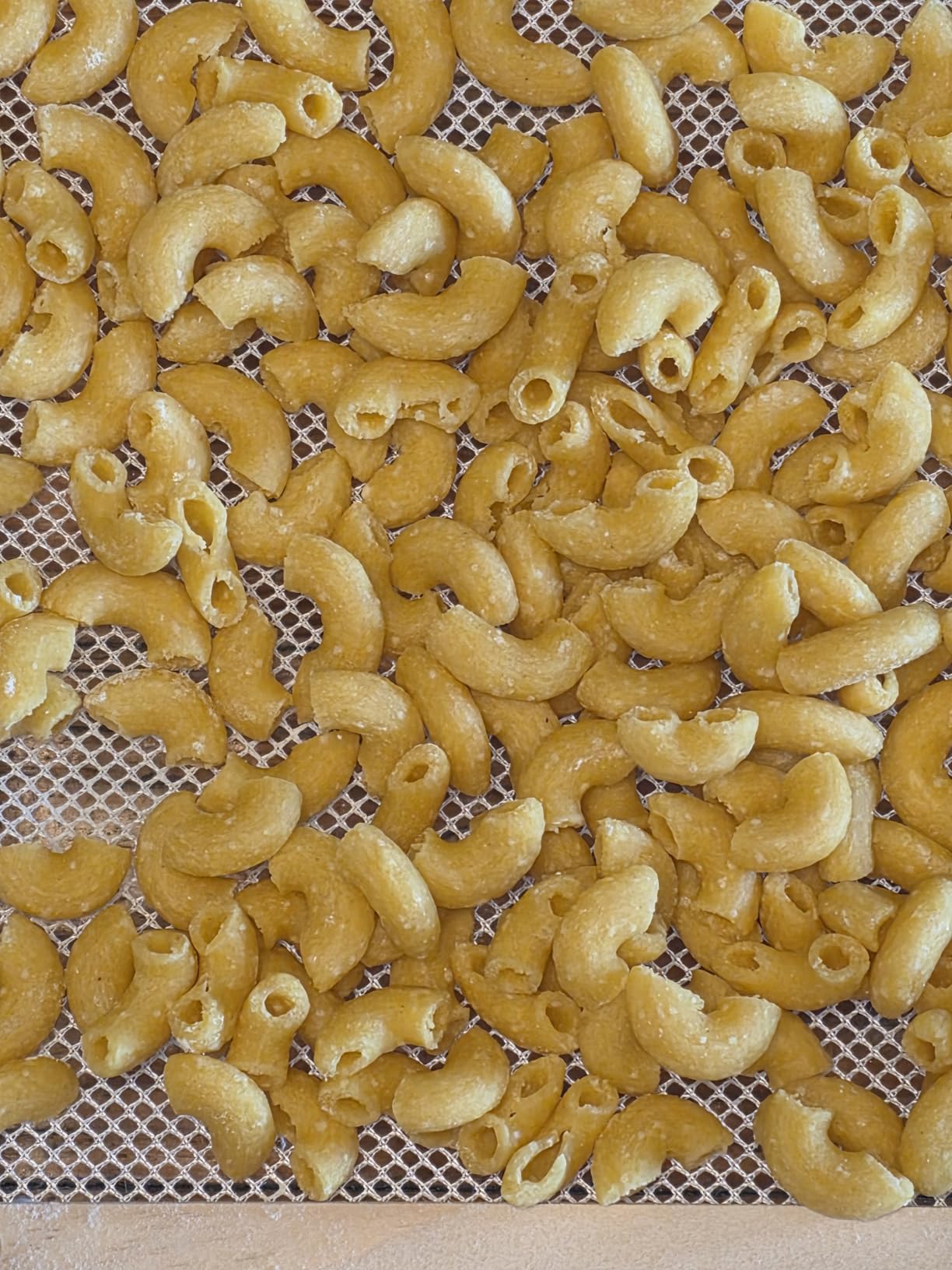
Where the Viva makes a small batch, this machine makes a meal. Up to eight portions in one cycle, and the 150W ProExtrude motor is strong enough to push a stiff, well-rested dough through without stalling. With 8 portions in a single cycle, this is the pick that solves a full family batch rather than reframing it as two runs.
Eight shaping discs come in the box, and the sheet thickness range runs from 1mm to 1.5mm. The HomeID app walks you through recipes with measured quantities, which quietly removes one of the biggest beginner problems: making a dough that is consistent batch after batch. Owners who use the app report noticeably more repeatable results than those who freehand it.
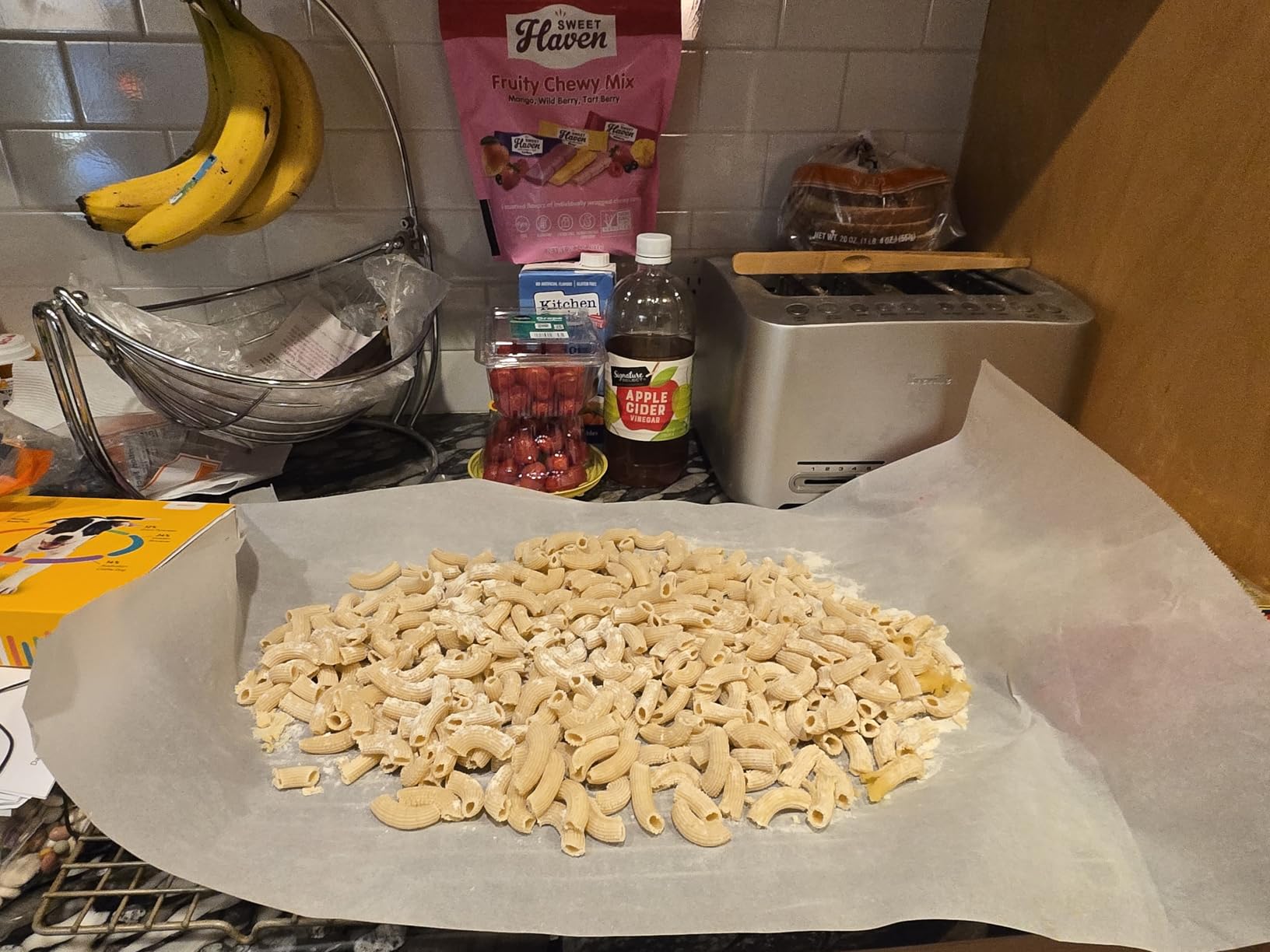
The mixing function is a quiet bonus rather than a headline feature. The same bowl handles cookie dough, pizza dough and bread dough, so a machine that is idle six days a week is not wasted hardware. Owners mention it most when they cook for crowds, which is exactly the case this machine is built for.
Reliability is the reason this sits at second rather than first. Roughly one review in nine is a one-star rating, and those complaints cluster around motors and gears over time. That is a real pattern in the data rather than a handful of outliers, and it is the main reason we did not hand it the top spot despite the higher capacity.
It is also the heaviest unit here at 20 lbs with a tall body. Plan a dedicated counter spot, and expect to move it when you need the space. Cleaning is easier than it has any right to be, since the non-stick parts are dishwasher safe, but the chamber still needs a dry pass first.
Who this machine suits?
It suits families of four or more, batch cooks who want a week of pasta done in one run, and anyone who wants more disc options from an automatic machine than the three-disc models offer. It also suits cooks who like pushing dough through an app-guided recipe instead of eyeballing flour by feel.
If you already own a stand mixer, compare the two before buying. The mixing function here is convenient, but it is a pasta machine that happens to mix, not a mixer that happens to make pasta.
Who should skip it?
Skip it if counter space is tight or if you cook for two. A 20-pound machine with eight portions of capacity is overkill for a small kitchen, and you pay for capacity you will not use.
Also consider skipping it if motor longevity is your main worry. The one-star cluster is real, and a heavier machine with more electronics is usually the first place that kind of failure shows up.
3. Shule Motorized Stainless Roller: Best Value Roller and Cutter
- Full stainless steel body
- Works motorized or hand crank
- 0.5mm to 3mm thickness range
- Removable motor
- Table clamp included
- Not dishwasher safe
- Chrome wears off rollers
- Alignment and gear issues reported
- Motor is loud
Now we change category. This is a roller and cutter, not an extruder, which means you make the dough yourself and the machine flattens and slices it. It is a well-priced roller that is also the one that rewards a beginner who wants to learn an actual skill rather than press a button.
The stainless steel body is the headline. Budget rollers are usually plastic shells with steel rollers inside, and the shell is what cracks first. This one is stainless throughout with anodized aluminium rollers, and it carries a table clamp to stop the frame walking across the counter while you feed dough. The 18-position dial runs from 0.5mm to 3mm, a wider range than most machines in this roundup, and you get two cutting widths, a narrow 1.5mm and a wide 6.6mm ribbon.
The motor detaches completely, and a hand crank is included, so the machine works with or without electricity. That matters more than it sounds: the motor is the most common failure point on a machine like this, and being able to crank it manually means a dead motor is an inconvenience rather than a write-off.
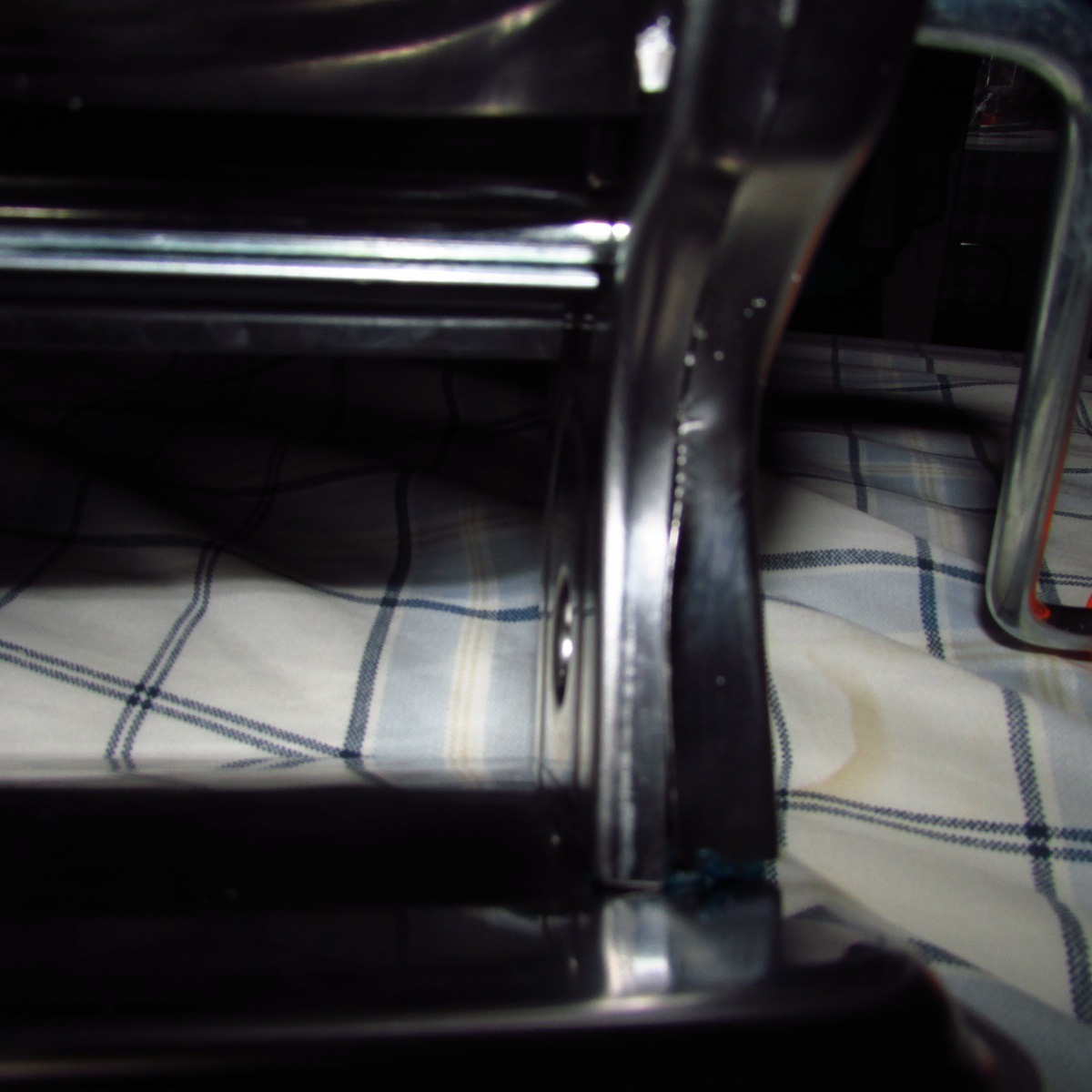
Owners also use it for polymer clay and other craft sheets, which is a genuine second use that the extruders in this list cannot offer. Whether that matters depends on whether you make those crafts, but it adds flexibility for the money.
Cleaning is wipe-clean only. Nothing goes near water, the gears specifically must stay dry, and you need a dry brush or a wooden scraper to push residue out of the rollers. This is a step more than the Philips machines ask of you, and it is the main ongoing cost of buying cheap stainless.
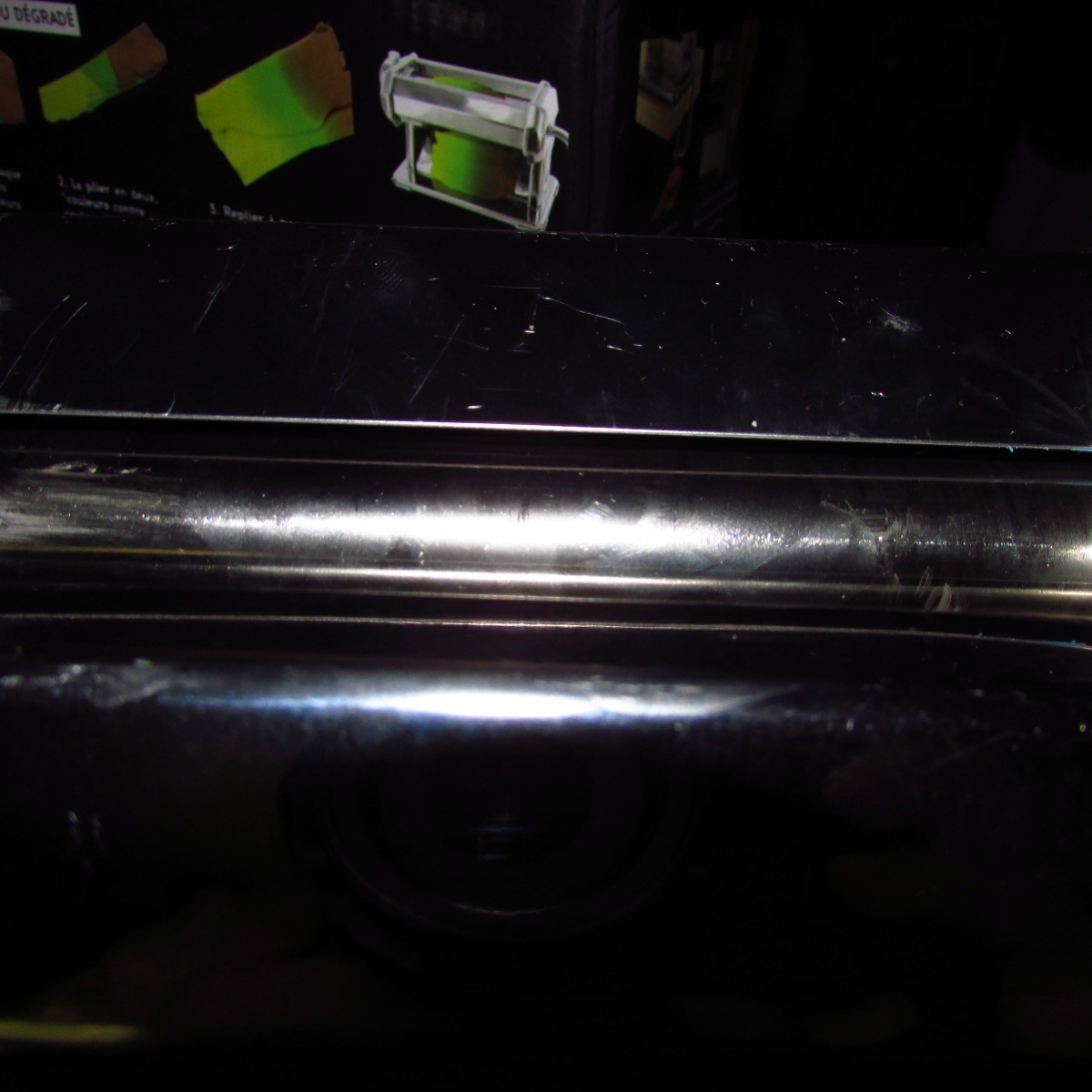
The reported problems are honest ones: chrome wearing off the rollers over time, some units developing alignment issues, gears failing eventually, and a motor that runs loud enough to notice. None of these appear on day one, but all of them appear eventually.
Who this machine suits?
It suits a beginner who wants to learn roller technique without paying premium-tier money, and anyone who wants lasagna sheets, wide ribbons and filled pasta rather than extruded spaghetti. It also suits small kitchens, because the body is compact and clamps to the table instead of needing a permanent footprint.
It suits buyers who like having a fallback. A hand crank that still works when the motor does not is unusual at this level and removes one common reason to replace a machine.
Who should skip it?
Skip it if you want dough-free convenience or if you will not make pasta yourself. A roller assumes you can already produce a workable dough, and a complete beginner without that skill will stall before the machine is involved at all.
Skip it if washable parts are non-negotiable for you. This machine cannot be rinsed, and the cleanup is a dry-brush routine every single time you use it.
4. Shule Roller with Ravioli Roller: Best Budget Machine for Filled Pasta
Shule Electric Pasta Maker with Motor, Hand Crank and Ravioli Roller
- Ravioli roller included
- 7 thickness settings
- Works motorized or hand crank
- Stainless steel body
- Table clamp included
- Not dishwasher safe
- Sharp edges and misalignment reported
- Chrome wears on rollers
- Only 2 pasta widths
If your goal includes ravioli rather than only noodles, this is the pick. It shares the stainless body and detachable motor design of the Shule above, then adds a ravioli roller to the box. Almost nothing else at this price includes one, and making filled pasta by hand is the single biggest step up in difficulty from flat ribbons.
Seven thickness settings run from 0.5mm to 3mm, and the roller handles dough sheets up to 150mm wide. That width is the practical limit for a filled pasta square, so you can make a full-size ravioli rather than a token one. The detachable motor and included hand crank work exactly as they do on the Shule roller, which means the same learning curve transfers between the two machines.
The in-box list is long for a budget unit: the pasta maker, the motor, a fixing plate, a table holder, the hand crank, the ravioli roller and an adjustable clamp. Nothing extra needs buying before your first session, which removes the most common early frustration with budget machines.
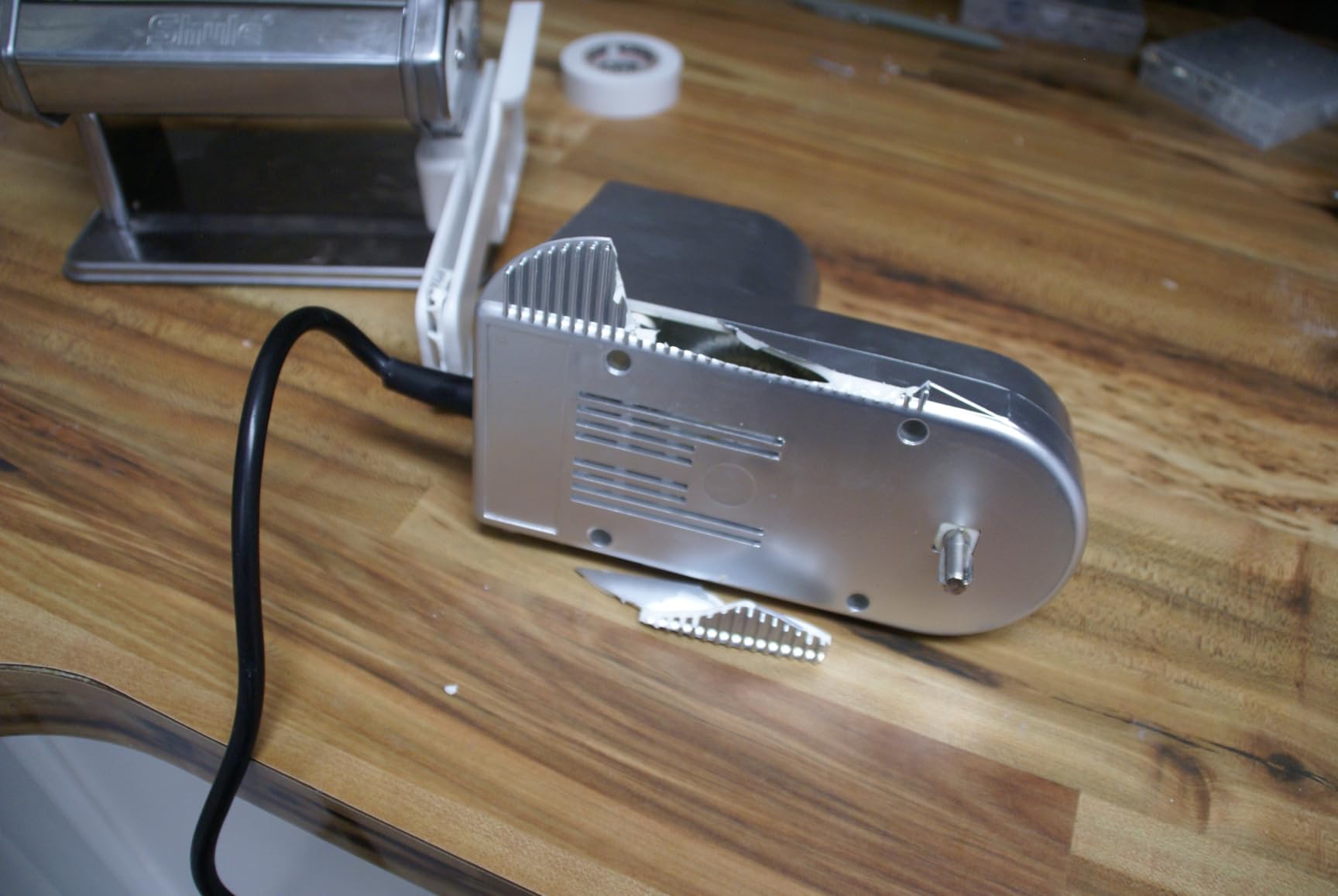
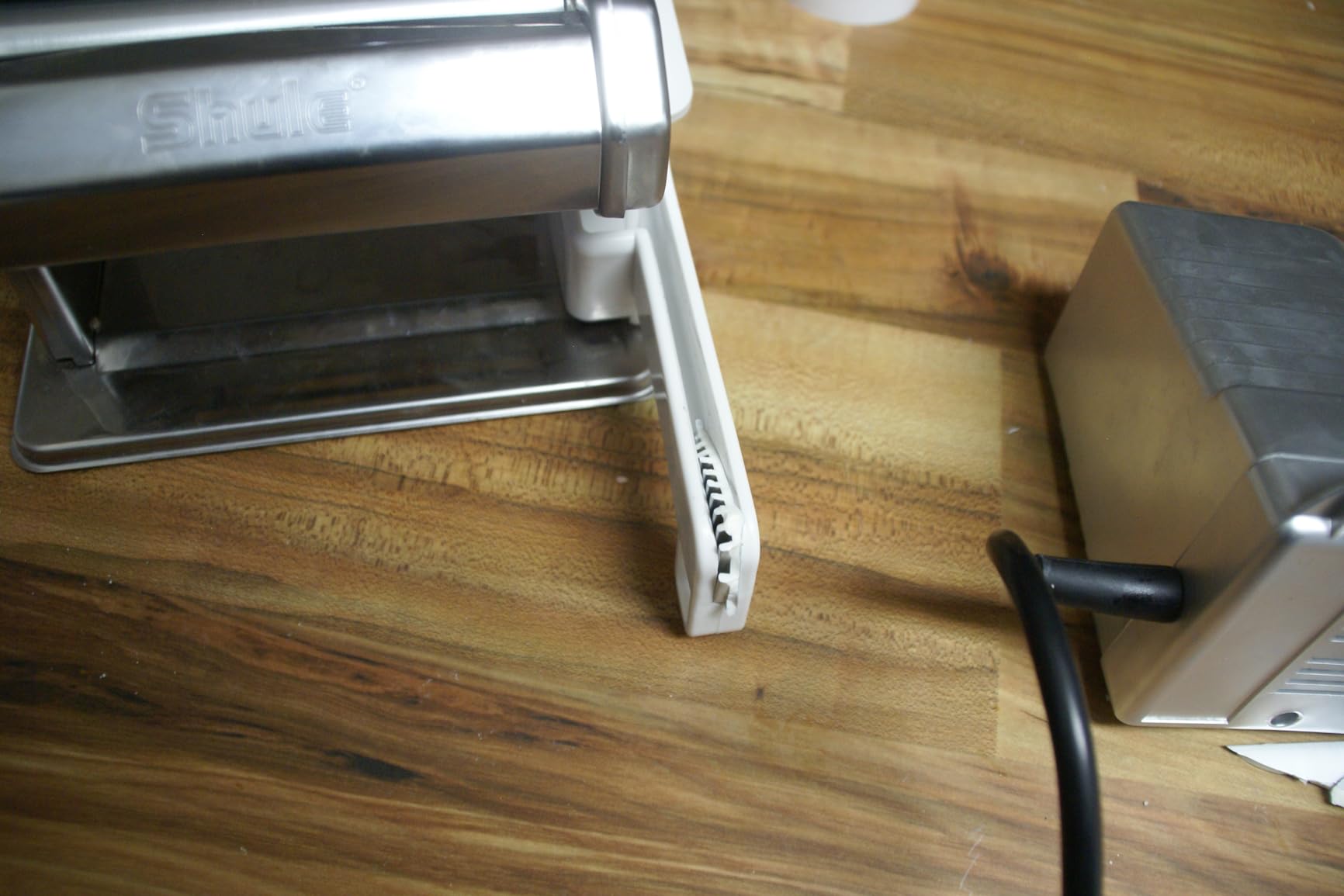
Quality control is where budget machines show their age, and this one is no exception. Owners report sharp edges on arrival, rollers sitting slightly out of alignment, and chrome wearing through with use. None of these are dealbreakers on a machine at this level, but a beginner who opens the box to a sharp edge is a bad first impression and worth checking before the first roll.
It is also not dishwasher safe. Same rule as before: dry brush, wooden scraper, no water on the gears, wipe the body with a barely damp cloth and dry it immediately.
The motor is loud, and there are only two pasta widths available, so this is not the machine for someone who wants to experiment with a dozen shapes. It is the machine for someone who has a specific list of dishes in mind and wants tagliatelle, wide ribbon and ravioli.
Who this machine suits?
It suits a beginner who wants filled pasta in the first month rather than after a year of practice. Ravioli is fiddly but achievable, and a dedicated roller removes the hardest step, which is getting a square sheet even enough to seal.
It also suits anyone making pasta for a mixed group, since flat ribbons and filled squares cover two very different meals from the same machine. As with the Shule above, a second-hand unit is worth considering, because the metal frame ages better than plastic shells do.
Who should skip it?
Skip it if filled pasta is a someday idea. There is no advantage to the ravioli roller over the plain Shule if you will not use it, and the plain one is the more considered purchase.
Skip it if you want quiet operation or washable parts. Both are missing here, and neither is a small thing if the machine lives in an open kitchen.
5. GVODE 3-in-1 Roller and Cutter: Best for the Thinnest Sheets
GVODE Electric Pasta Maker Machine, 3-in-1 Pasta Roller & Cutter Set, White
- Thinnest sheets at 0.4mm
- Reverse function clears jams
- Metal drive gears
- Two speeds
- Lightweight and compact
- Plastic housing feels cheap
- 15 min on and 5 min off cycle
- Only 3 cutting heads
- Short review history
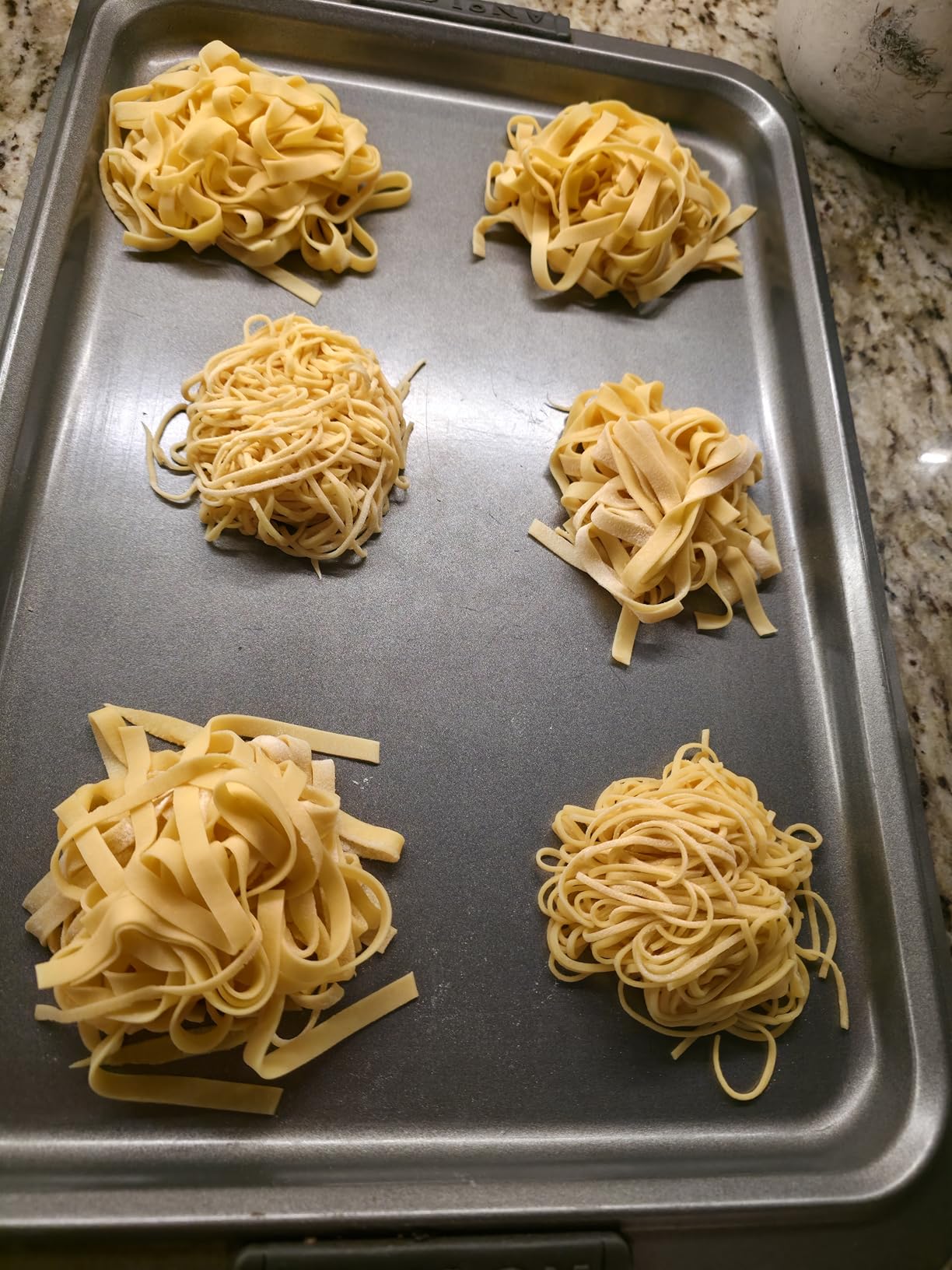
This is a newer design and it solves two problems the older budget rollers share. First, the sheet range goes down to 0.4mm, thinner than the 0.5mm floor on the Shule machines, which matters if you make angel hair or want translucency. Second, it has a reverse function, so when dough bunches and jams you can back it out instead of reaching for a screwdriver.
That reverse button is the single most beginner-friendly feature on any roller in this list. Jams are the most common beginner failure with a hand-fed roller, and a machine that can undo one keeps a frustrating moment from becoming an abandoned hobby.
The 700W motor is the most powerful on paper, and the drive gears are metal rather than plastic, which is the part that usually breaks first. The 3-in-1 head swaps between a sheet roller, a fettuccine cutter and a spaghetti cutter, so three functions come out of one attachment set.
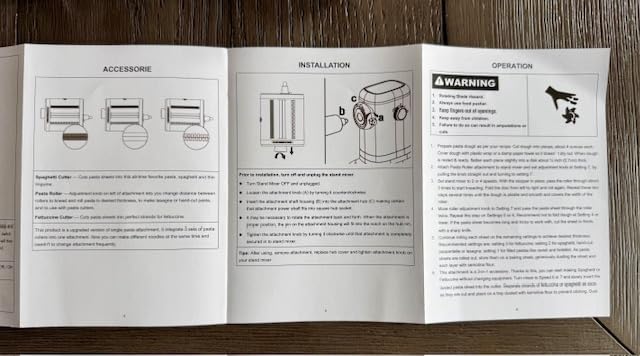
The design is a recent-generation model, and that is both the strength and the weakness. Newer means the engineering is current, with a reverse gear, a wider thickness range and metal internals. It also means fewer years of owner reports, and the review history here is short by the standards of the rest of this list.
Two things to know before you commit. The housing is plastic, so while the working parts are metal, the body will not last like the all-stainless machines. And the recommended duty cycle is 15 minutes of running followed by a 5-minute cool-down, which rules out long batch-cooking sessions. Two good batches with a break beats one long session that trips the thermal cutout.
Cleaning is the easiest story here because the shell is smooth with few crevices, and the attachment removes for wiping. It is still a dry-clean machine, but there is less to get into.
Who this machine suits?
It suits a beginner who gets stuck on jams. The reverse function alone removes the most common reason people abandon a first roller, and the thin settings suit anyone who wants delicate pasta rather than sturdy ribbons.
It also suits small kitchens and people who move appliances around, since it weighs around 8 pounds with a compact body and no clamp to install. Storage is a real factor for many beginners, and a machine you will actually keep out on the counter gets used more than one in a cupboard.
Who should skip it?
Skip it if you plan to make large batches in one sitting. The 15-minute duty cycle means frequent breaks, and that changes how a long cooking session feels.
Skip it if you want a machine that will still look good in ten years. Metal internals help, but a plastic shell ages faster than the stainless bodies here, and the short review history makes the long-term picture less certain.
6. VEVOR 150W 8-Shape Maker: Eight Shapes, Thin Reliability History
- 8 discs included
- 500g capacity for 4 servings
- 4 automatic modes
- Full accessory kit
- Dishwasher-safe parts
- Early failure reports
- Thin instructions
- Dough sticks in crevices
- Ratios must be precise
This is the shape-count champion of the group. Eight shaping discs come in the box from an automatic extruder, twice what the Philips Viva offers and more than the most expensive roller in this roundup. For a beginner who wants to see what extruded pasta actually is, spinning through four different shapes in a first session is genuinely motivating.
A 500g flour capacity gives about four servings, and a batch takes roughly 14 minutes. The two-way kneading rod is worth noting because simpler single-rod machines tend to leave unmixed flour pockets that then jam the die.
The accessory kit is the best in the budget tier: two measuring cups, a spatula, a cleaning brush and all eight discs. Dishwasher-safe parts mean cleanup is a rinse rather than a ritual, which matters more than it sounds when you are deciding whether to make pasta again next week.
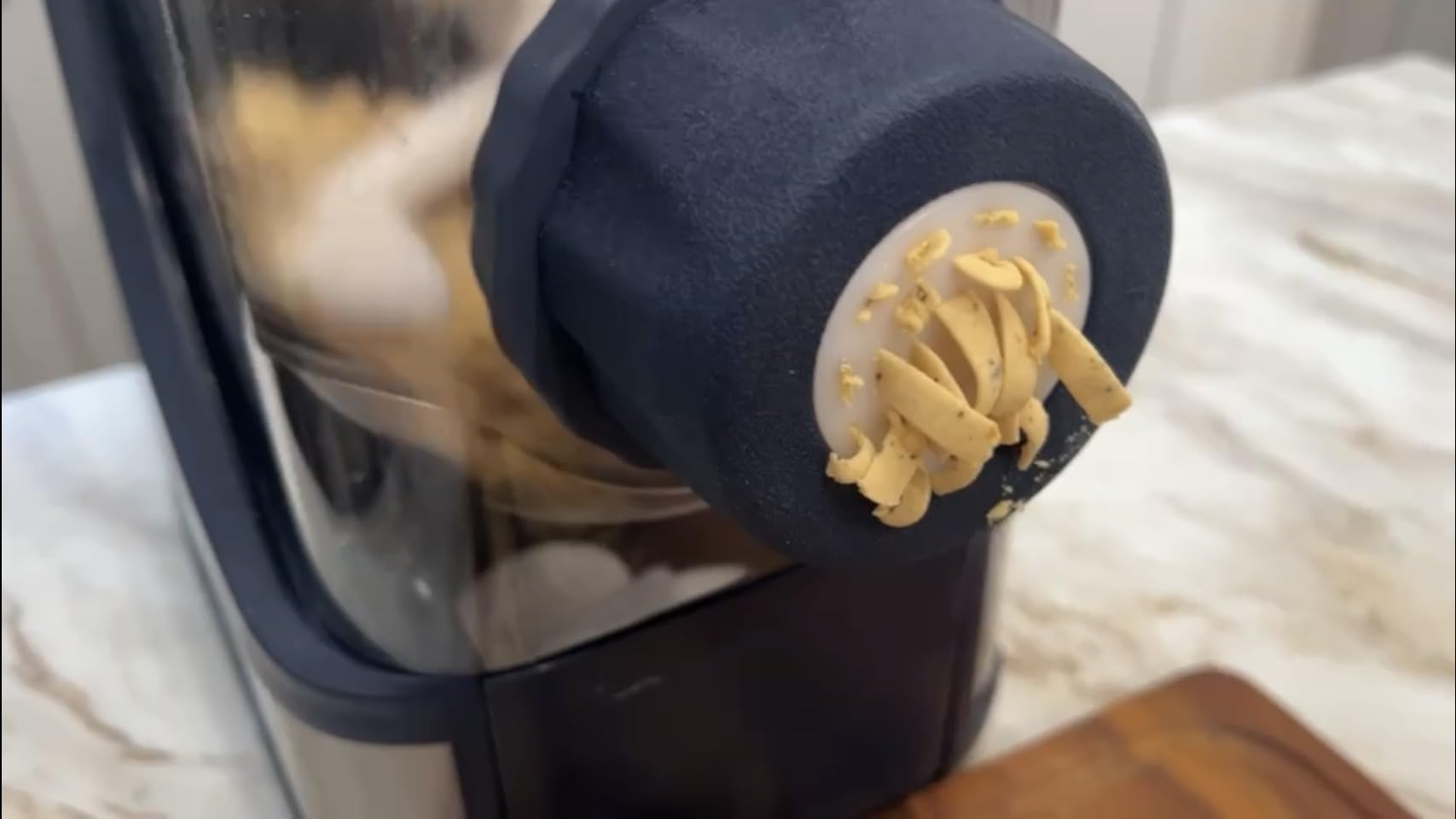
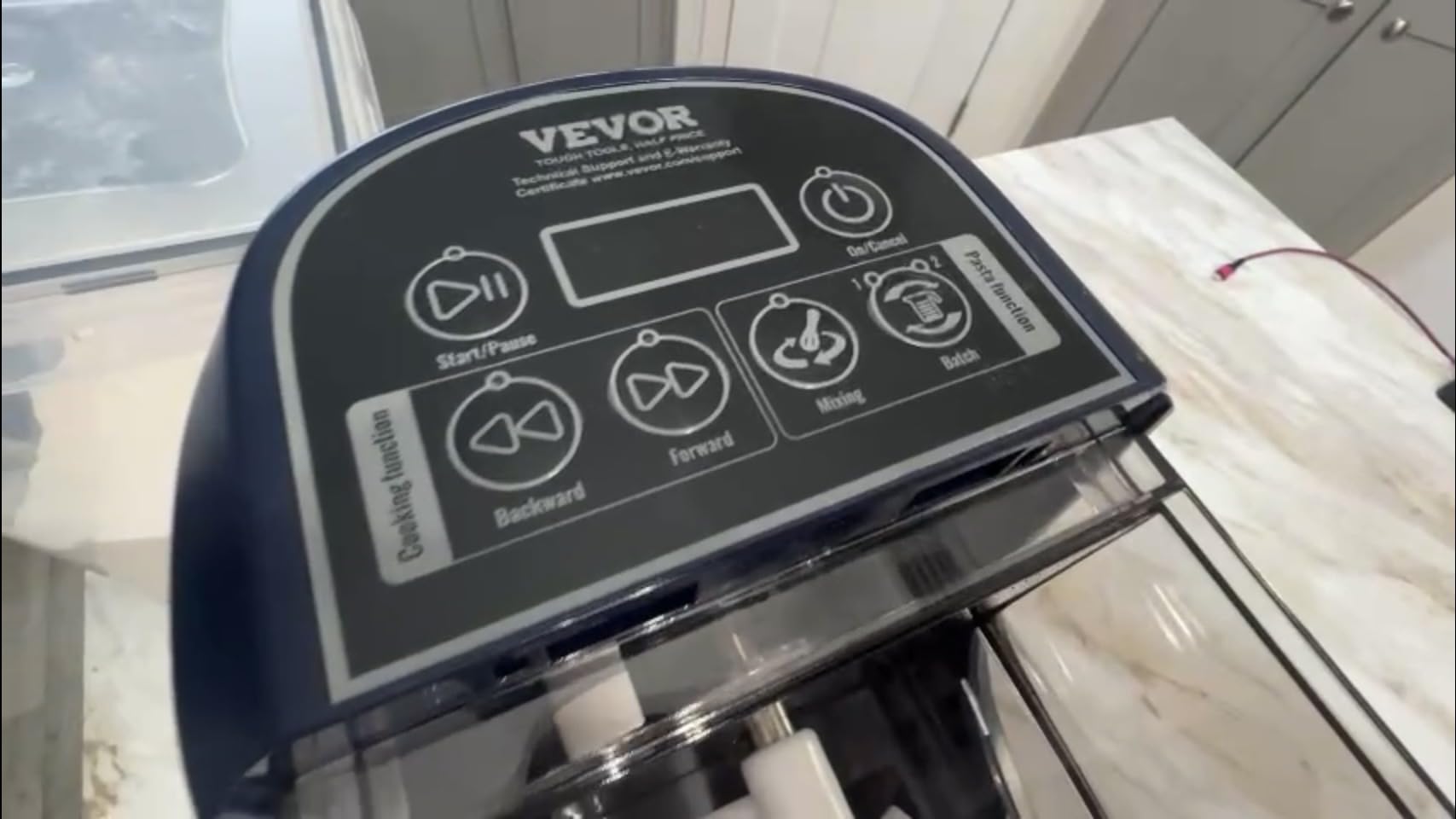
Now the honest part. Buyers report early failure, including units breaking within a handful of uses, and that pattern comes up repeatedly in the review data rather than as a single complaint. Owners also report sparse instructions and dough sticking in the crevices of the mixing chamber, which is the one chore the dishwasher-safe parts do not solve.
Success is also more sensitive to measurement than on the Philips machines. Roughly a 500g flour batch has to be weighed accurately, and a free-pour from a cup tends to give inconsistent hydration. If you already own a kitchen scale, that risk drops considerably.
One last caution is the shape count itself. With eight discs, you are tempted to try all eight in one session, and each change means a new dough batch. On a machine with this track record, more sessions means more chances to meet a problem. Two or three shapes is a better introduction.
Who this machine suits?
It suits a beginner on a strict budget who wants an automatic machine that mixes dough as well as extruding it, and who is willing to weigh flour precisely. Doing the dough yourself removes the single biggest skill barrier in this category, and this machine does it for you.
It also suits anyone who cooks for four. Four servings per batch is a realistic family portion, and the dishwasher-safe parts make the clean-up after a long evening short.
Who should skip it?
Skip it if durability is your top priority, or if the idea of a machine failing after a few uses would sour the whole hobby. The failure pattern here is the reason we ranked it sixth rather than in the top tier, despite the shape count.
Also skip it if you want clear printed guidance. The instructions are repeatedly described as thin, and for a machine that requires measured ratios, that is a real cost in your first hour.
7. Newhai 135W: Best All-Stainless Contact Surface
Newhai Electric Pasta Maker, Stainless Steel 135W for Home, 2 Noodle Sizes
- All stainless contact surfaces
- Low noise
- Rounded safety corners
- 8 thickness settings
- One-key press and cut switch
- Only 2 noodle sizes
- Heavy break-in cleaning
- Some units run hot
- Oil smell persists
What sets this machine apart is material. The body, the rollers and the blades are 430 stainless steel, and the food-contact surfaces are all metal rather than a mix of metal and plastic. For a machine that touches wet dough every session, that is the construction that ages well.
It is also the quiet one. Low-noise operation is called out repeatedly in owner feedback, which matters in an open-plan kitchen or a small apartment where a loud motor is genuinely disruptive. The rounded corners are a small thing that reduces the chance of a knocked knuckle on a machine you use with wet hands.
The one-key switch between pressing dough and cutting it is a nice simplification. You are not hunting through a mode selector mid-recipe, which on a machine you use while slightly floury is a real convenience. Eight thickness settings from 0.5mm to 3mm and a 5.5 inch sheet width cover ribbons well.
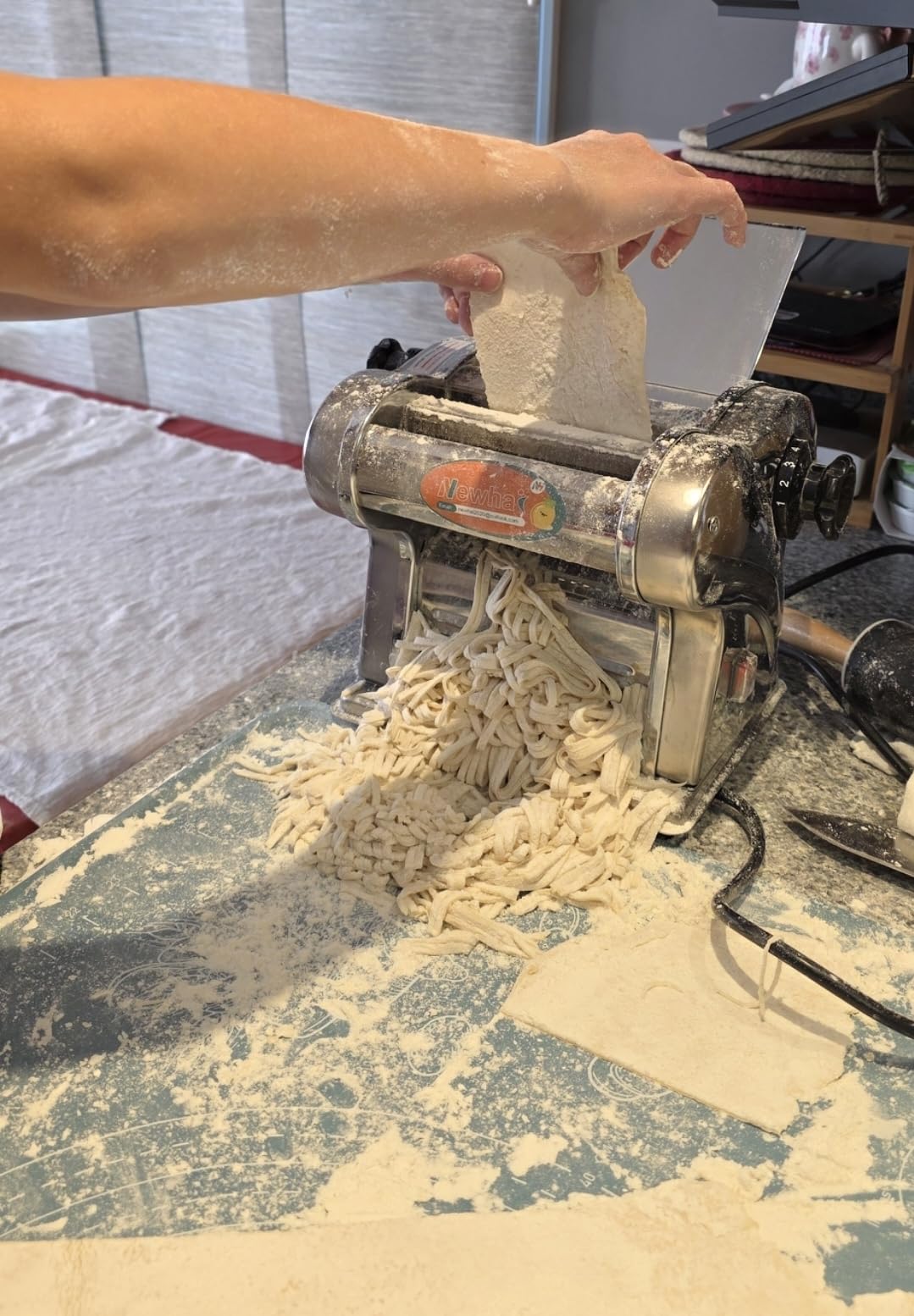
Two noodle sizes is a hard limit. You get 1.5mm round spaghetti and a 4mm flat noodle, and that is the whole menu. Anyone who wants to experiment with unusual shapes will find this restrictive, and it is the main reason it does not rank higher despite the best rating and the best materials.
Read the break-in instructions carefully. New units arrive with protective oil on the rollers that needs 15 to 20 passes of dough pushed through to clear. Some owners also report an oil smell that persists, and a few units run hot enough to be a concern during long sessions. The machine should not be run continuously for extended periods.
Cleaning follows the same dry rules as the other rollers, and the note about not getting water near the gears is repeated more than once in owner feedback for a reason.
Who this machine suits?
It suits a beginner who plans to keep this machine for years rather than months. All-metal construction and a quiet motor are the two things owners praise most, and both translate directly into a machine that is pleasant to use at the end of a long dinner.
It suits anyone sensitive to plastic in food contact, and anyone sharing a home where a loud motor would be genuinely unwelcome. It also suits cooks focused on flat and round classics rather than a wide shape library.
Who should skip it?
Skip it if shape variety is the appeal. Two noodle sizes is a narrow range, and buying extra dies is not always straightforward on a roller machine this size.
Skip it if you want to use the machine the day it arrives without a cleaning ritual first. Plan for a break-in batch, and the rest of the experience is good.
8. Imperia Pasta Presto: Premium Italian Roller and Cutter
Electric Pasta Maker- Imperia Pasta Presto Non-stick Machine w 2 Cutters and 6 Thickness Settings
- Italian made construction
- Non-stick coating
- Built-in motor
- 6 thickness settings
- Compact 9 by 6.5 inch base
- Highest cost in the group
- Only 2 built-in cutters
- 1.9mm fixed sheet thickness
- Limited shape range
Its owner record is the longest of any machine here, and that history matters more than any spec line. Made in Italy from 18-10 stainless steel with a non-stick coating, it is the pick backed by the deepest body of long-term owner reports rather than a few seasons of feedback.
The non-stick surface is the practical reason owners stay with it. Dough releases more cleanly from coated rollers, which means less tearing when you pull a sheet off, and less residue to scrape out of the chamber afterwards. Combined with a built-in motor, it is close to set-and-forget among roller machines.
Six thickness settings and two built-in cutters, tagliatelle and fettuccine, cover the classic Italian flat pastas well. The base measures 9 by 6.5 inches, so it needs a modest corner of counter rather than a dedicated station, and the non-stick rollers mean a thorough wipe is usually enough between sessions.
It is also the most expensive machine in this roundup, by a wide margin, and that gap is hard to justify for a first purchase. The premium buys materials and a name, not capability. You get two shapes where the VEVOR gives eight, and a fixed 1.9mm sheet thickness that limits how thin you can go.
That fixed thickness is the detail most often missed in listings. Six settings sound flexible, but the sheet that reaches the cutter is 1.9mm, which suits ribbons and lasagna and does not suit angel hair or very fine nests.
At 8 pounds it is heavier than its footprint suggests, so it is stable but not easy to move while full of dough. If you want one machine and plan to keep it indefinitely, this is the one most likely to still be working in a decade.
Who this machine suits?
It suits a cook who has already decided that fresh pasta is a permanent part of their kitchen and wants a machine they will not replace. The Italian construction and the long owner history are the reason to choose it over a cheaper roller with a similar shape range.
It also suits anyone making tagliatelle, fettuccine or lasagna sheets as the main event. Those are the shapes it does best, and the non-stick rollers reduce tearing on wide sheets more than bare steel does.
Who should skip it?
Skip it as a first machine on value alone. Everything a beginner learns about dough consistency transfers to a cheaper roller, and you can always move up later once you know which shapes you actually make.
Skip it if you want a shape library or very thin sheets. Two built-in cutters and a 1.9mm sheet are narrower than what most of the other picks offer for far less.
How to Choose an Electric Pasta Maker as a Beginner?
Choose the machine that matches the pasta you actually want to eat, not the one with the longest feature list. That is the whole buying decision, and the rest is detail. A person who makes lasagna and wide ribbons every month should buy a roller, and a person who wants weeknight spaghetti without touching dough should buy an automatic extruder. Neither answer is wrong, and buying the wrong one is how machines end up in cupboards.
Three machine types and which one fits a first-time buyer
Automatic extruders take flour and liquid, mix and knead, then push the dough through a shaping disc. They are the most hands-off and the most expensive per unit of counter space, and they are the best choice for a true beginner because dough quality is handled for you. Standalone roller-cutter machines assume you can already make dough; they flatten and slice it. They cost far less, teach you a real skill, and are the better choice if making dough is something you want to learn. Stand mixer attachments are a third path entirely, and they are worth considering only if you already own a compatible mixer, because on their own they are not an electric pasta maker at all.
Die extruder or roller and cutter: which should a beginner buy?
A die extruder forces dough through a shaped opening, which is why it makes round strands and hollow tubes and why it needs dough that is firm enough to hold its shape. A roller and cutter flattens a sheet and slices it, which is why it makes flat ribbons and why it needs dough that is elastic rather than stiff. Extruders are more forgiving of slightly wet dough because the disc sets the shape. Rollers are more forgiving of dough that has been rested well, because elasticity is what keeps the sheet from tearing. If your instinct is that you are bad at dough, buy the extruder. If you enjoy the craft side, buy the roller.
Five mistakes every beginner makes with an electric pasta maker
Wetting the dough too much. This is the number one reported failure across every owner forum we read. Wet dough sticks inside the die and inside the mixing chamber, and the fix is rarely more flour; it is a firmer dough and a shorter mixing time.
Skipping the rest. Dough that has just come out of a mixer or been hand-kneaded has not relaxed, and unrelaxed dough fights the rollers. Thirty minutes wrapped, longer in a cold kitchen, makes a visible difference to how the sheet behaves.
Overloading the batch. Feeding a roller a thick stack of dough is the fastest way to misalign it. Feed thin sheets, one pass at a time, and the machine stays accurate far longer.
Not trimming the extrudate. Long strands tangle and jam on the way out. Cut to a length you can handle on the drying rack before the pile becomes a problem.
Cleaning wet. No roller or extruder in this roundup tolerates water in its chamber or near its gears. Let the residue dry, then brush or scrape it out, and never rinse the body.
How to clean an electric pasta maker without getting the rollers wet?
Let everything dry first. That single habit removes most of the work. Once the dough residue is dry, a dry brush or the included cleaning tool lifts almost all of it, and the chamber can be wiped with a barely damp cloth that is then dried immediately. Run a piece of dry dough through the rollers a few times at the end of a session and it picks up the last of the residue for you. Store the discs dry, out of the chamber, so nothing traps moisture overnight.
Budget roughly five minutes of cleanup per session, and more than that on the first few uses while you are learning. If you do not enjoy dry-brush cleaning at all, filter our picks for dishwasher-safe parts and choose an automatic extruder instead.
Who should skip an electric pasta maker entirely?
Skip one if you make pasta twice a year. A machine that sits in a cupboard for eleven months a year is not a purchase, it is a storage solution with a plug. Skip one if you already own a compatible stand mixer, because the per-use cost of an attachment is a fraction of a dedicated machine. And skip one if what you really want is the relaxation of making dough by hand, because a machine takes that part away and the process is often the point.
A hand-crank roller is a genuinely defensible first purchase. It costs a fraction of any machine here, it has fewer things to break, and it teaches the technique that makes every later upgrade easier. If that appeals, our home cook’s pasta machine guide covers the manual options properly.
Frequently Asked Questions
What is the best pasta maker machine for a beginner?
For a complete beginner, the Philips Viva Collection Compact is the best starting point because it mixes, kneads and extrudes in one cycle, so you never have to learn roller technique to get a usable result. If you prefer the hands-on process, a manual crank roller teaches the skill for a fraction of the cost and upgrades more easily later.
Is an electric pasta maker worth it?
An electric pasta maker is worth it if you want fresh pasta without learning to roll and cut by hand, or if you regularly cook for four or more people and need one machine to cover a full batch. It is not worth it if you make pasta twice a year, if you already own a compatible stand mixer, or if making dough by hand is the part you enjoy.
Which brand of pasta maker is considered the best?
For automatic machines, Philips has the strongest combination of owner history, dishwasher-safe parts and a compact footprint. For roller and cutter machines, Shule offers the best value in stainless steel, while Imperia is the pick for Italian-made construction you would keep for a decade. The brand matters less than matching the machine type to the pasta you actually want to make.
Which type of pasta maker is better, electric or manual?
Electric machines are better for beginners who want consistent results quickly and for anyone cooking large batches, since they remove the hardest repetitive work. Manual rollers are better for small kitchens, tighter budgets and cooks who want to learn technique, and they have fewer failure points. A manual machine also works as a fallback if an electric motor ever fails.
What should I do if my pasta dough is too dry?
Add water a teaspoon at a time and knead the dough again rather than dumping in a large amount. If the dough is dry because it was mixed for too long, the gluten has tightened and it will need a longer rest, often thirty minutes wrapped, before it relaxes enough for the rollers or die.
Conclusion
Start with the Philips Viva Collection Compact if you want your first batch of fresh pasta to work without learning anything beforehand. It is compact, forgiving with dough that is slightly off, and the removable parts go in the dishwasher, which matters more than any feature list.
If you cook for a family, move up to the Philips 7000 Series for eight portions and eight shapes in one cycle. If you would rather learn the craft, take the Shule motorized roller in stainless steel, keep the hand crank for when the motor gives up, and read the drying step properly before your first batch. Either way, weigh your flour and let the dough rest, because dough consistency, not the machine, decides how your first evening goes.
Last updated in 2026. We revisit these picks as new models arrive, and if you want a broader look at the category, our guide to the best pasta making machines for home cooks covers the manual end of the market in detail.