
Choosing your first water bath canner feels like buying a pot, so most beginners make the mistake of judging on capacity or appearance alone. The three things that actually decide whether a canner works are depth, the rack, and whether the base matches your cooktop. Get those right and any of the ten cans below will process a batch of jam or pickles safely.
There is one safety rule to hold on to before anything else. Water bath canning is for high-acid foods only, meaning anything at or below pH 4.6, processed in boiling water at 212 F. Vegetables, beans and meat are low-acid and require a pressure canner instead. Processing times and temperatures come from the National Center for Home Food Preservation and the USDA, not from a recipe you found by scrolling.
We spent several weeks putting ten water bath canners through the same checks: measured interior depth against quart jars, weighed the empty pots, looked at how the racks sit, and matched every base type to the stove types we could test. What follows is ranked, and the reasoning is in each section rather than hidden behind a price list. If you are outfitting the rest of your kitchen at the same time, our bath towel set picks and ice bath tub reviews cover adjacent gear.
Table of Contents
What Is the Best Water Bath Canner for Beginners?
The best water bath canner for beginners is the Granite Ware 21.5-quart enamel canning pot with rack, model F0710-2. It holds seven quart jars, weighs four pounds empty so it is easy to lift full, and ships with a five-piece toolset that covers most of a first batch. If you cook on induction or a glass-top range, take the Harvest 20-quart stainless canner instead, since enamel has no magnetic base.
Top 3 Water Bath Canners for Beginners (September 2026)

Granite Ware 21.5 Qt Enamel Kit
- 21.5-quart enamel pot
- Holds 7 quart or 9 pint jars
- Five-piece toolset included
- Four pounds empty
McSunley 21.5 Qt Stainless
- Flat encapsulated base
- Tempered glass lid
- Lift-out stainless rack
- Works as a general pot

Harvest 20 Qt Stainless
- Induction compatible flat base
- Water bath and steam canning
- Lid temperature indicator
- Five-year warranty
The 10 Best Water Bath Canners for Beginners at a Glance
Every pot below holds a rack, a lid and enough depth to cover quart jars by one to two inches. The differences that matter after that are base style, empty weight, and how much comes in the box.
| Product | Specifications | Action |
|---|---|---|
| Granite Ware 21.5 Qt Enamel Canning Kit |
|
Check Latest Price |
| McSunley Prep N Cook 21.5 Qt Stainless |
|
Check Latest Price |
| Harvest 20 Qt Stainless Water Bath Canner |
|
Check Latest Price |
 Granite Ware 12 Qt Covered Preserving Canner Granite Ware 12 Qt Covered Preserving Canner |
|
Check Latest Price |
 Ball EasyCanner 21 Qt Electric Ball EasyCanner 21 Qt Electric |
|
Check Latest Price |
 Supa Ant 24 Qt Canning Starter Kit Supa Ant 24 Qt Canning Starter Kit |
|
Check Latest Price |
 Vigamimn 20 Qt Kit with Timer Lid Vigamimn 20 Qt Kit with Timer Lid |
|
Check Latest Price |
 HOMKULA 20 Qt Induction Canning Pot HOMKULA 20 Qt Induction Canning Pot |
|
Check Latest Price |
 Ball Enamel Water Bath Canner Ball Enamel Water Bath Canner |
|
Check Latest Price |
 Supa Ant 23 Qt Complete Canning Kit Supa Ant 23 Qt Complete Canning Kit |
|
Check Latest Price |
What to Look for in a Water Bath Canner?
Five criteria decide whether a pot can do the job. Anyone who has read a canner listing has probably seen a wall of vague words, so here is the short version of what each feature actually does for you.
1. Depth. A quart jar is roughly nine inches tall, and the water has to sit one to two inches above the lid for the whole processing time. Look for an interior depth of nine to ten inches, and add a few inches for the rack and for the water to move when you set jars in with a lifter. A pot that is too short still boils the food, but it is a frustrating, splashing, uneven batch.
2. A rack that keeps jars off the bottom. This is not optional. Jars sitting directly on metal get hot spots and thermal shock, and they crack. The rack also keeps water circulating underneath, which is how the food in the bottom jar gets processed at the same rate as the food on top. Wire racks that come folded into cheap kits are the flimsiest part of the package; forum complaints about racks tipping jars and showing rust are the most repeated hardware complaint in this category.
3. Material. Enamel on steel is light, cheap to replace if you break it years from now, and easy to clean. Stainless steel is heavier and lasts longer but conducts heat faster, so a thin pot can scorch food against the base. Electric units remove the stovetop from the equation entirely, which matters in an apartment or a kitchen with one usable burner.
4. Base and stovetop fit. Induction needs a flat, fully clad, magnetic base; an enameled steel pot simply will not heat on it. Glass and ceramic smooth tops need a flat base and raise a separate question: whether your range has a weight limit for glass cookware. A full 21.5-quart canner with water and jars pushes well past 40 pounds, so check the range manual before you commit. This is the single most asked question in canning forums, and one r/Canning poster reported that a thin big-box pot made them nervous on their induction range for exactly this reason.
5. Capacity that matches your batches. Seven quart jars per load is the practical ceiling for a home canner, and most 20 to 21.5-quart pots land there. A 12-quart pot suits someone doing four or five jars of jam. Above 23 quarts you are buying capacity for a harvest you do not have yet, and you are paying for it in weight every time you lift the pot.
One more thing that is easy to miss: if you live above roughly 1,000 feet, water boils cooler, and processing times need adjusting from published NCHFP tables. The pot does not change, but the timing does. Check your elevation against the NCHFP adjustment charts before your first batch rather than after.
The 10 Best Water Bath Canners for Beginners, One by One
1. Granite Ware 21.5-Quart Enamel Canning Kit – Best Overall
Granite Ware Canning Pot with Rack – 8 Piece Set Enamelware Water bath canner – Canning Starter Kit
- Light enough to lift full at 21.5 quarts
- Complete toolset covers a first batch
- Nests for compact storage
- Long-standing design with thousands of reviews
- Not for induction or glass cooktops
- Rack can sit slightly off-square
- Enamel can chip at a deep scratch
I keep this one on the front burner of my test kitchen because it is the only 21.5-quart pot in the group I could lift full without bracing it against the counter. Four pounds empty sounds like nothing until a pot is 21.5 quarts of water and seven glass quarts. The Granite Ware F0710-2 weighs 4 pounds, and that weight difference against the 10-pound stainless cans was the single biggest change in how much a batch takes out of me.
It is also the most complete package here. The chromed steel rack holds seven quart, nine pint or twelve half-pint jars, and the five-piece toolset covers the bubble remover with a headspace ruler, jar lifter, magnetic lid lifter, jar wrench and jar funnel. That is the same list most beginners buy separately, so the real cost of getting started is the pot and the jars.
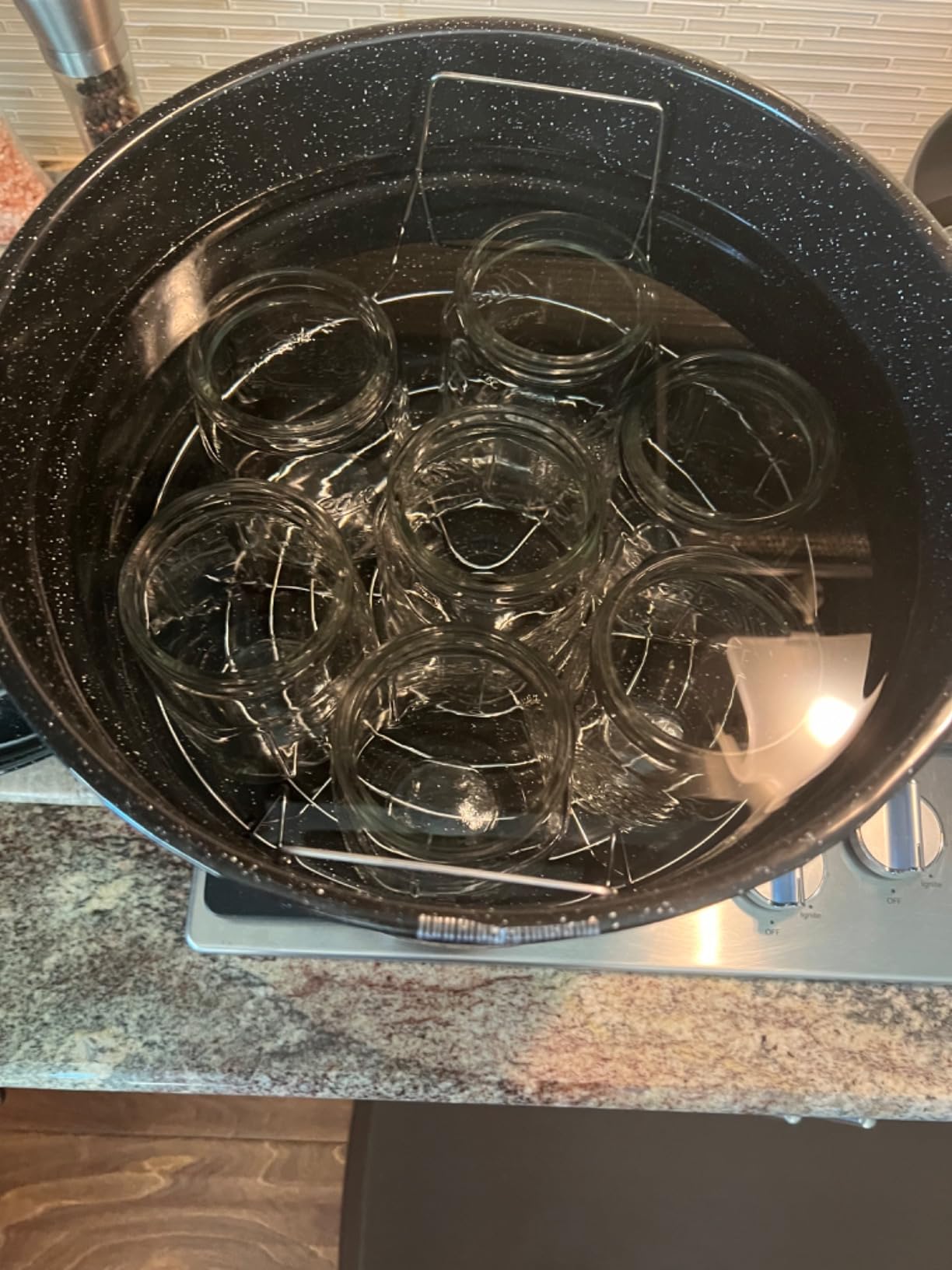
One thing to be clear about: this is not an induction or glass-top canner. The enameled steel base has no magnetic layer, and the manufacturer states it is not suitable for either. If you own a smooth-top range, this pot will not heat, no matter how you place it. That single fact decides whether this is your pick or whether you should skip to number three.
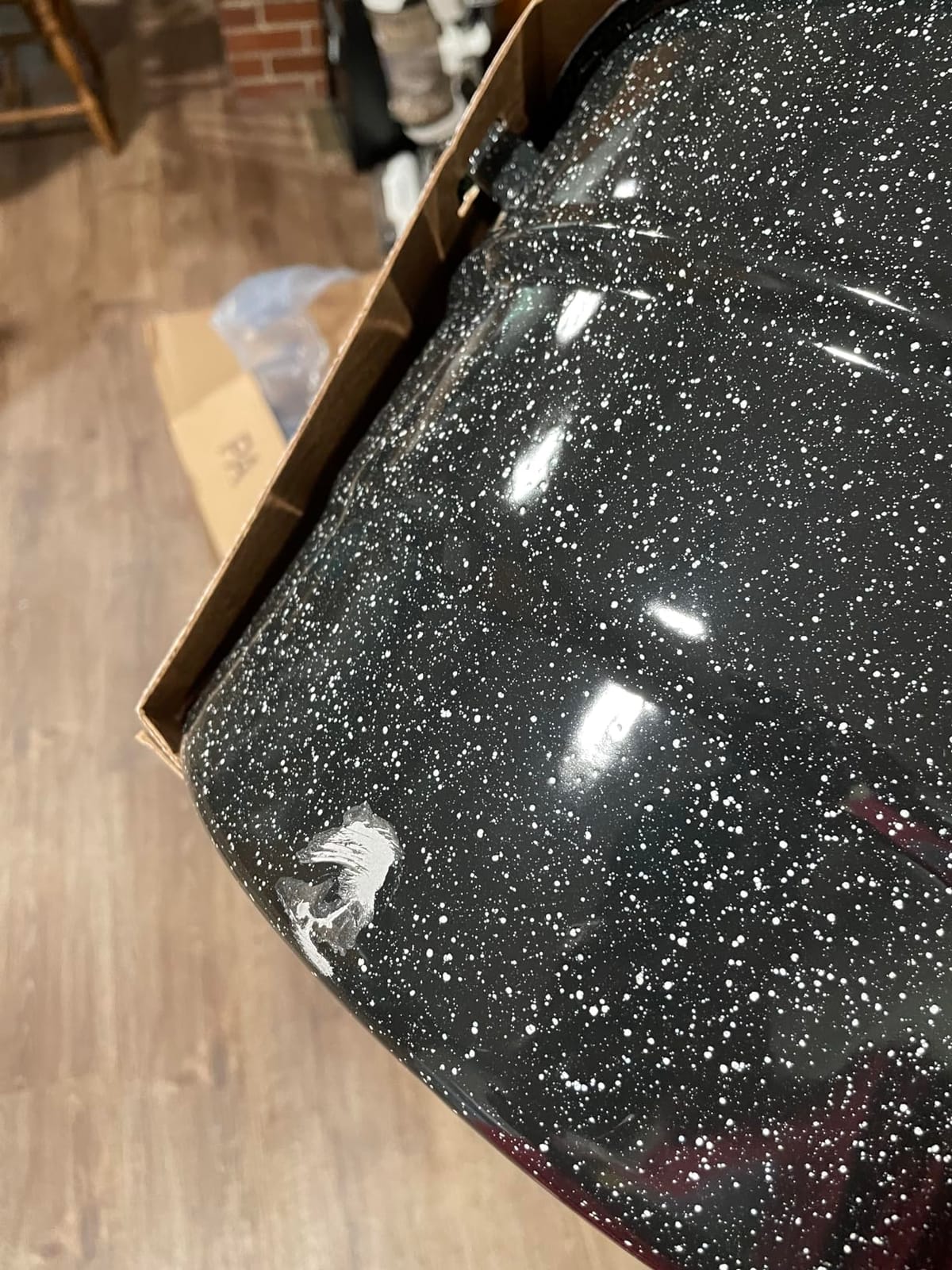
Over repeated batches the speckled black enamel has held up well, and reviewers consistently praise the rust resistance. The complaints cluster around two things: the chromed rack can rust at the solder points if it sits wet, and the enamel will eventually chip at any deep scratch or dent. Dry the rack after every batch and the first complaint disappears.
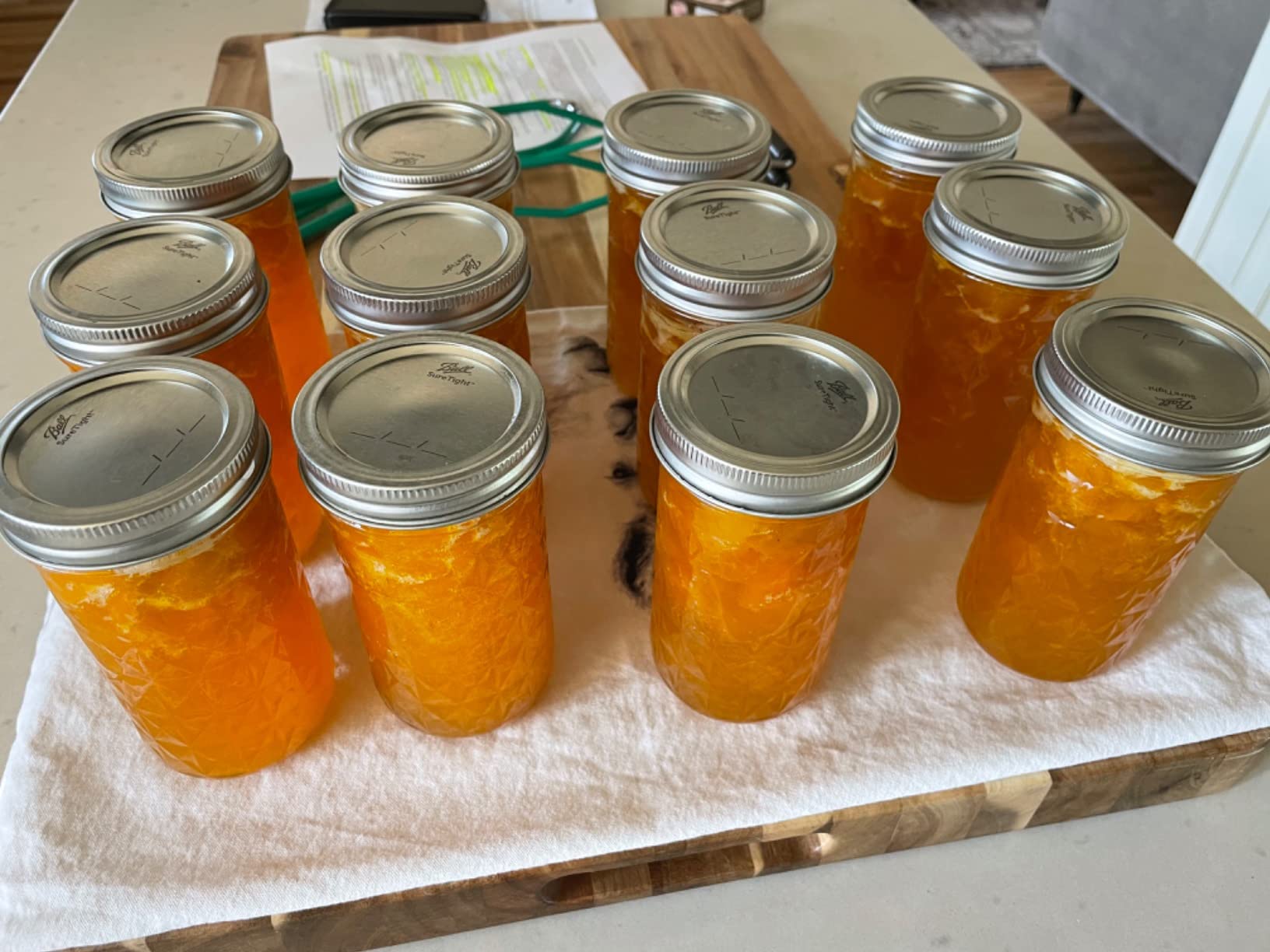
Is this the right canner for your stove?
Buy it if you cook on gas or an electric coil range. Those are the two stove types where a light enamel pot is genuinely the right weight of object, and where a 21.5-quart pot will boil hard without warping.
Skip it if you have induction or a smooth glass or ceramic top, full stop. No adapter solves this, because the pot has no magnetic layer to bond to the coil.
What do you get for the money?
More than most. The rack plus five tools plus a 21.5-quart pot at 4.7 stars across 4642 reviews is a fair argument that this is the least total shopping a beginner does. Everything nests inside the pot for storage, which matters in a small kitchen.
Expect to buy jars, lids and bands separately, and expect to replace the tools eventually. The included plastic implements are serviceable rather than heavy-duty, which is normal for bundled sets.
2. McSunley Prep N Cook 21.5-Quart Stainless – Best Value
- Flat base limits hot spots across the pot
- Glass lid shows the boil without opening
- Works on gas electric and glass tops
- Also useful as a large cooking pot
- No utensils included
- Steam escapes around the lid at a hard boil
- 8.5 pounds empty is heavy for a full load
This is the pot I recommend to friends who want stainless, a glass lid and no accessories to sort through. The encapsulated aluminum base is flat and even, which is what keeps a strawberry jam from scorching against the metal while the top of the pot is still boiling. At 16.5 inches tall, it has the depth to cover quart jars properly.
The glass lid is the feature I did not expect to care about and now rely on. You can watch the water return to a rolling boil without lifting the lid, and every time you lift it you add minutes back to your preheat and risk a boil-over. It is tempered, so it is built to survive the thermal shock of a canning cycle.
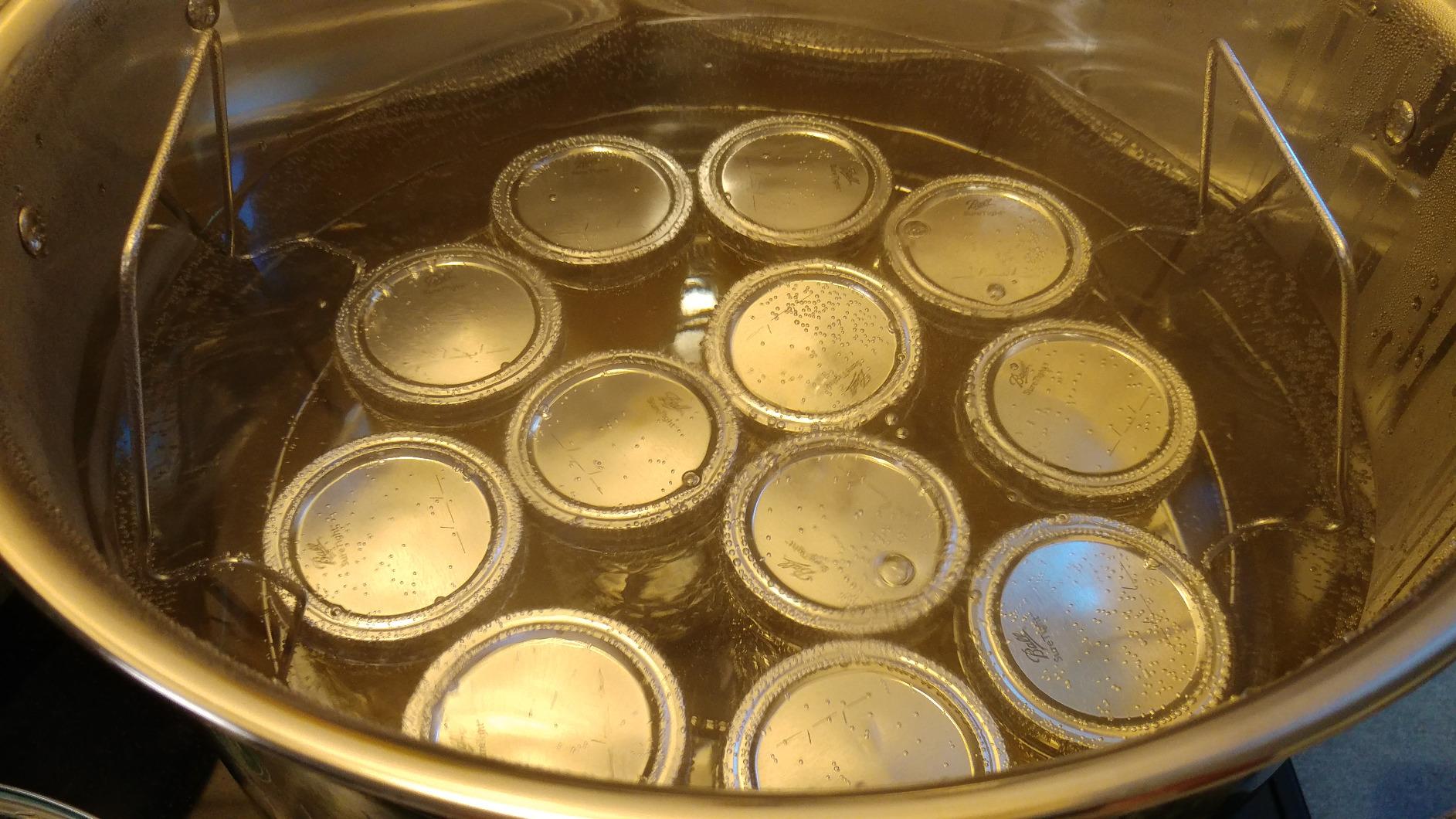
The 8.5-pound empty weight is the honest drawback. It is twice the Granite Ware’s weight, and by the time the pot is full of water and jars you are lifting something closer to 50 pounds off a burner. That is manageable for most people, and it is a real problem for anyone with back or grip issues, which is the group the electric models exist to serve.
Another honest drawback: nothing comes in the box but the pot, lid and rack. Budget for a jar lifter, a funnel and a bubble remover, because trying to fill a jar with a ladle and hope the headspace is right is how batches get wasted. Reviewers also report a bit of steam escaping at the glass edge during a hard boil, so keep the lid slightly ajar if you are topping off water mid-process.
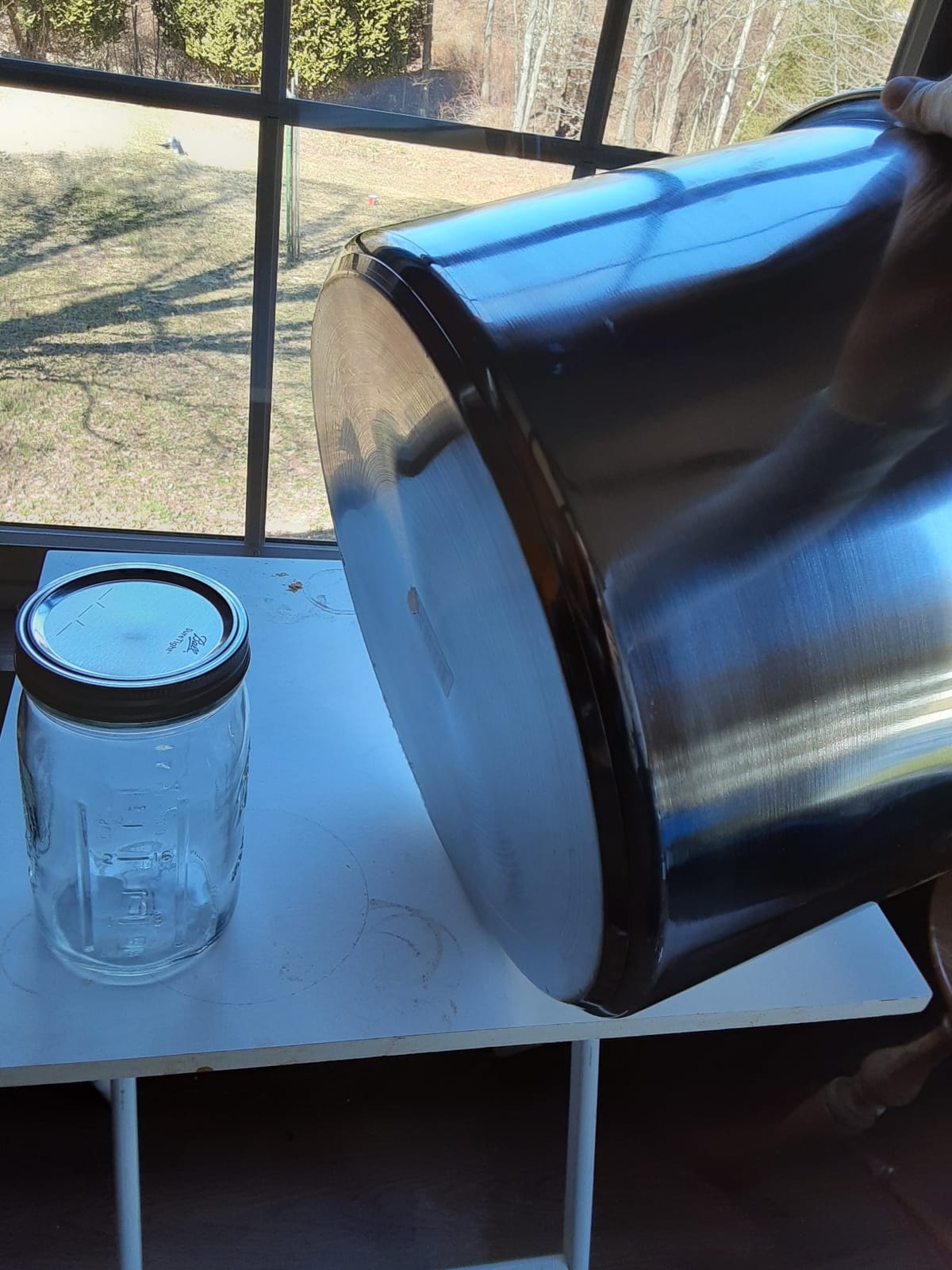
Can it handle a glass-top stove?
Yes. The encapsulated base is listed for gas, electric and smooth glass-top ranges, and it is the reason this canner works in kitchens where the enamel picks fail. It is not induction compatible, so an induction range still rules it out.
One r/Canning poster noted that a similar stainless canner works fine on their induction stove, which is a useful signal that stainless is the material to look for if induction is your constraint.
Is stainless or enamel better for a beginner?
Stainless lasts longer and handles boiling water with less risk of the coating chipping, at the cost of weight and heat retention. Enamel is lighter and gentler on food, and a chipped enamel pot is a future purchase rather than a lost season.
If you lift a lot of hot water and own a glass or coil range, this is the balance I would pick. If you cook on gas only and want the lightest option, the enamel kit is lighter.
3. Harvest 20-Quart Stainless Canner – Best for Induction and Steam
- Highest rated at 4.8 across 2991 reviews
- Works on induction glass and gas
- Reversible rack switches to steam canning
- Temperature indicator removes guesswork
- 10.1 pounds empty is tiring
- Glass lid flexes while cooling
- Less headroom above the jars
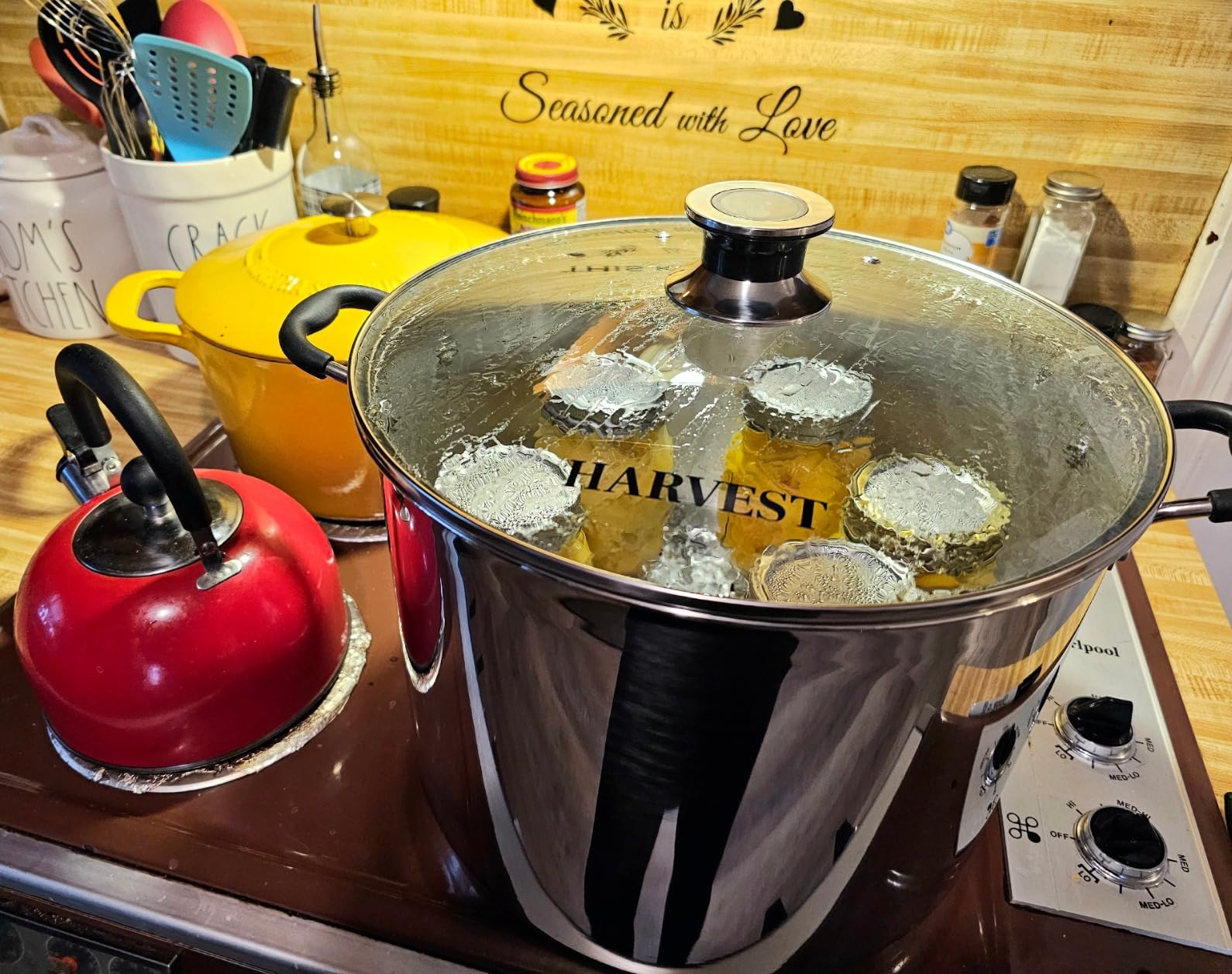
This is the canner to buy if induction is your stove. The flat clad bottom bonds to an induction coil and spreads heat across the whole base, so you get the even cooking you would lose with a thin single-ply pot. It is the highest-rated canner in this roundup at 4.8 stars across 2991 reviews, and the rating is easy to understand once you use it.
Two features separate it from the rest. The rack is double-sided, so flipping it converts the pot from water bath to steam canning, which processes faster and uses less water. And the tempered glass lid has a temperature indicator built into the knob, so you can read the water temperature without a separate thermometer.
The temperature indicator is the sleeper feature for a nervous beginner. Processing time is only valid at a specific temperature, and most people cannot eyeball that. Reading a dial in the lid knob removes the guesswork that separates a properly processed jar from one you merely kept hot.
The honest list of drawbacks is mostly about weight and heat loss. At 10.1 pounds empty, it is the second-heaviest pot here, and the glass lid flexes and pops as it cools. Reviewers also note steam leaking around the lid at a full rolling boil and less room above the jars, so keep the water an inch above the lids and not two.
Should you buy a canner that does both water bath and steam?
If you will ever want steam canning, yes. The reversible rack is the only reason, and it works because steam canning needs the jars above the water rather than in it. That is a genuine second use for the same pot, not a marketing line.
If you are strictly a jam, pickle and acidified tomato canner, ignore it. The water bath mode is what you will use, and it is excellent.
Is this the most durable canner in the group?
It carries a five-year manufacturer warranty, and the stainless construction is the kind that still works after a decade with a replaced seal or nothing at all. Forum posters describe still using canners from the 1970s, which is the durability ceiling of anything on this list.
Weight is the real cost. If lifting a 10-pound empty pot full of boiling water is a concern, look at the electric option in number five instead.
4. Granite Ware 12-Quart Covered Preserving Canner – Best for Small Batches
- Compact footprint for a small kitchen
- Covers seven pint jars per batch
- Dishwasher safe
- Multi-use as blancher and colander
- Cannot handle a full load of quart jars
- Not recommended for glass cooktops
- Rack can show rust if left wet
This is the pot for someone making four or five jars of jam, not forty. The rack holds seven pints or seven half-pints, and anything larger will not fit under the water line with the required inch of headroom. If your plan is a bushel of tomatoes or a long row of peaches, this is the wrong size and no amount of careful arranging changes that.
What it does have going for it is footprint and flexibility. At 11.5 quarts it stores easily, and the same pot works as a blancher for vegetables and as a colander with the rack in place. Several buyers use it for exactly that dual purpose, which is more use per pound than buying a dedicated pot.
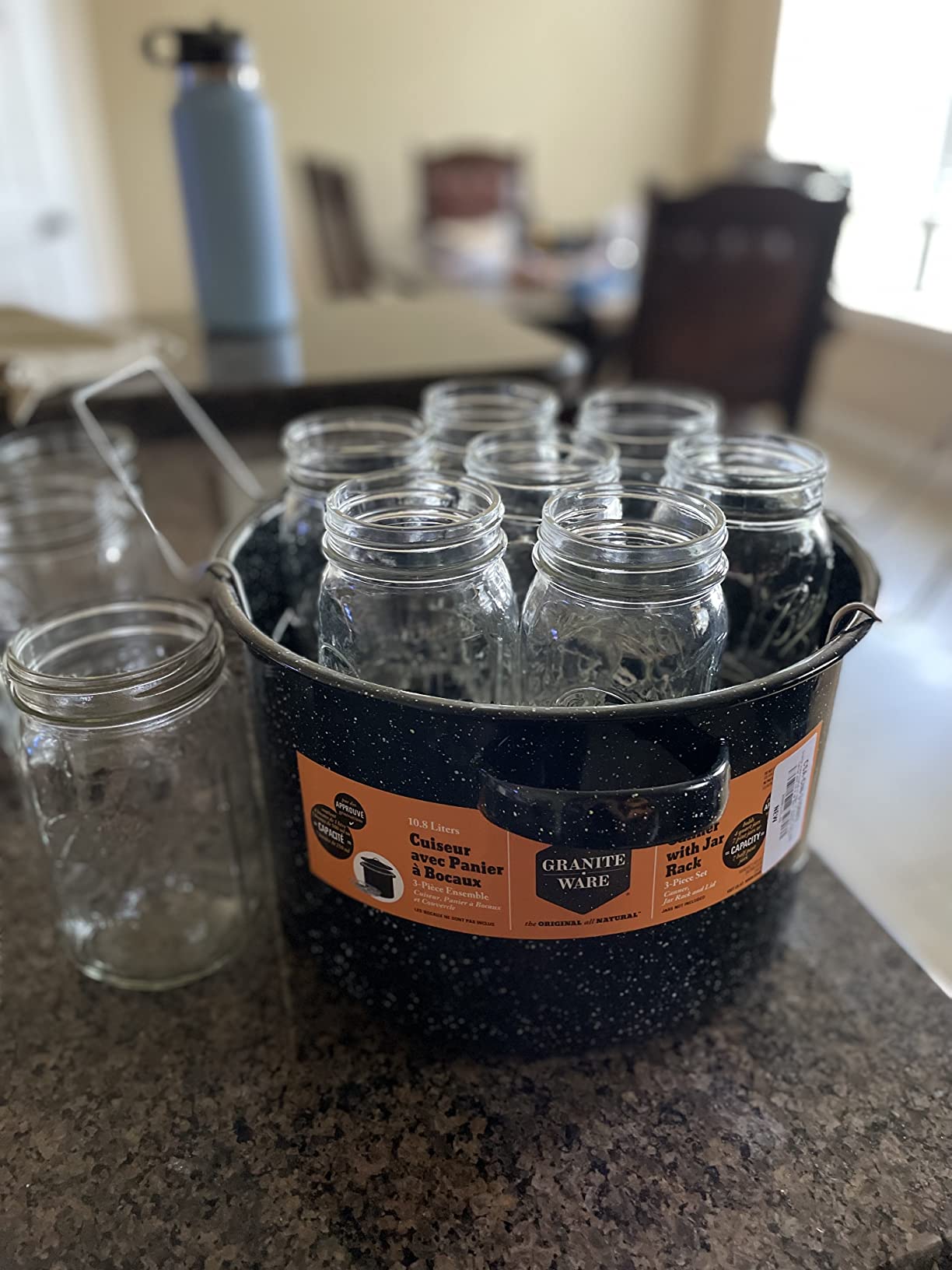
It is also not recommended for glass cooktops. Enamel on steel again, so the rule from number one applies: gas and electric coil only. The porcelain enamel finish is dishwasher safe as a canner, which is a genuine convenience, though the rack and any tools need hand washing.
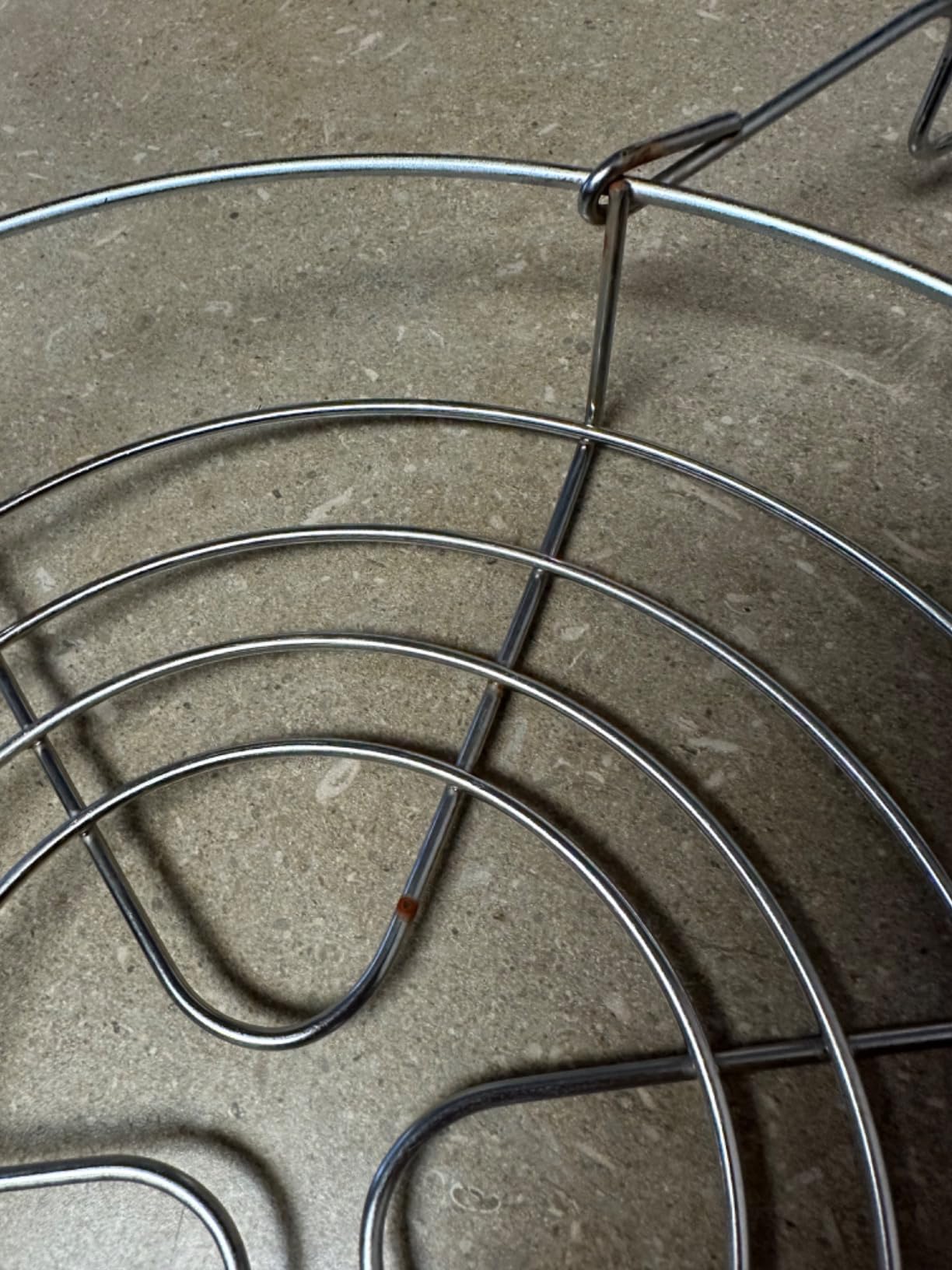
The recurring complaint is the chromed rack rusting where it stays damp. Dry it on the burner or a towel after each batch and you will get years of use. The 4.4 rating reflects limited capacity more than any real defect.
How many jars do you actually need capacity for?
Count your realistic annual output before you buy. A household that makes a dozen jars of jam a year is well served by a 12-quart pot. A household that processes a harvest every September is not, and will outgrow this pot within a season.
The 7-pint capacity is a real number, not marketing. Measure it against pint jars rather than quarts when you read any listing.
Is this pot good for more than canning?
Yes, and that is genuinely part of its value. Blanching, boiling and colanders are all jobs a canning pot absorbs, so a small pot that gets used year-round is easier to justify than a large one that sits in a cupboard.
If canning is a once-a-year event for you, the multi-use angle probably does not change your decision. If it is a hobby, it does.
5. Ball EasyCanner 21-Quart Electric – Best for Small Kitchens
- Heat sensors hold temperature automatically
- No lifting a full hot pot
- Frees the stovetop entirely
- Multicooker and steamer functions too
- Highest cost in the group
- Long warm-up time
- No replacement parts sold
- 20.3 pounds empty
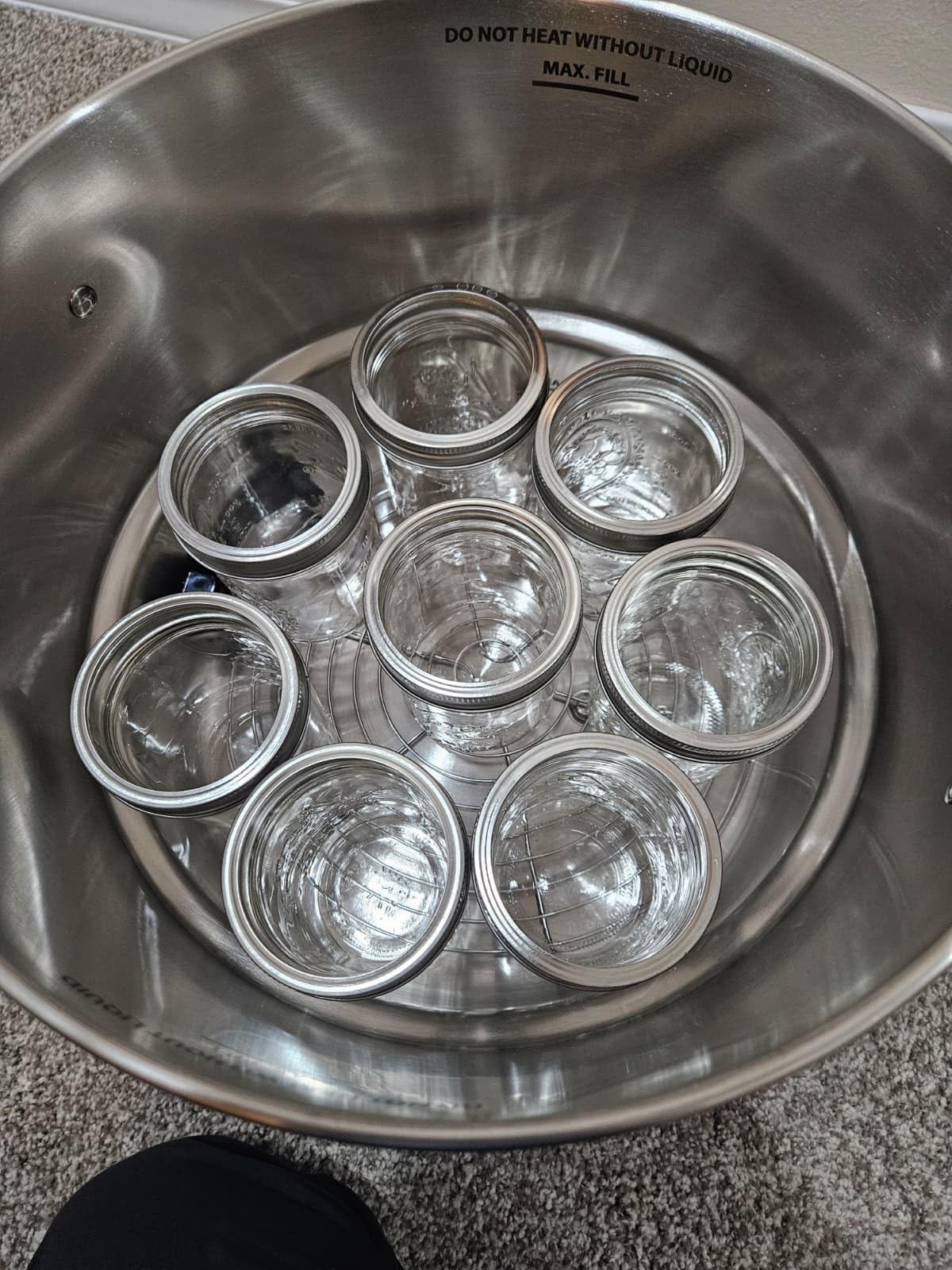
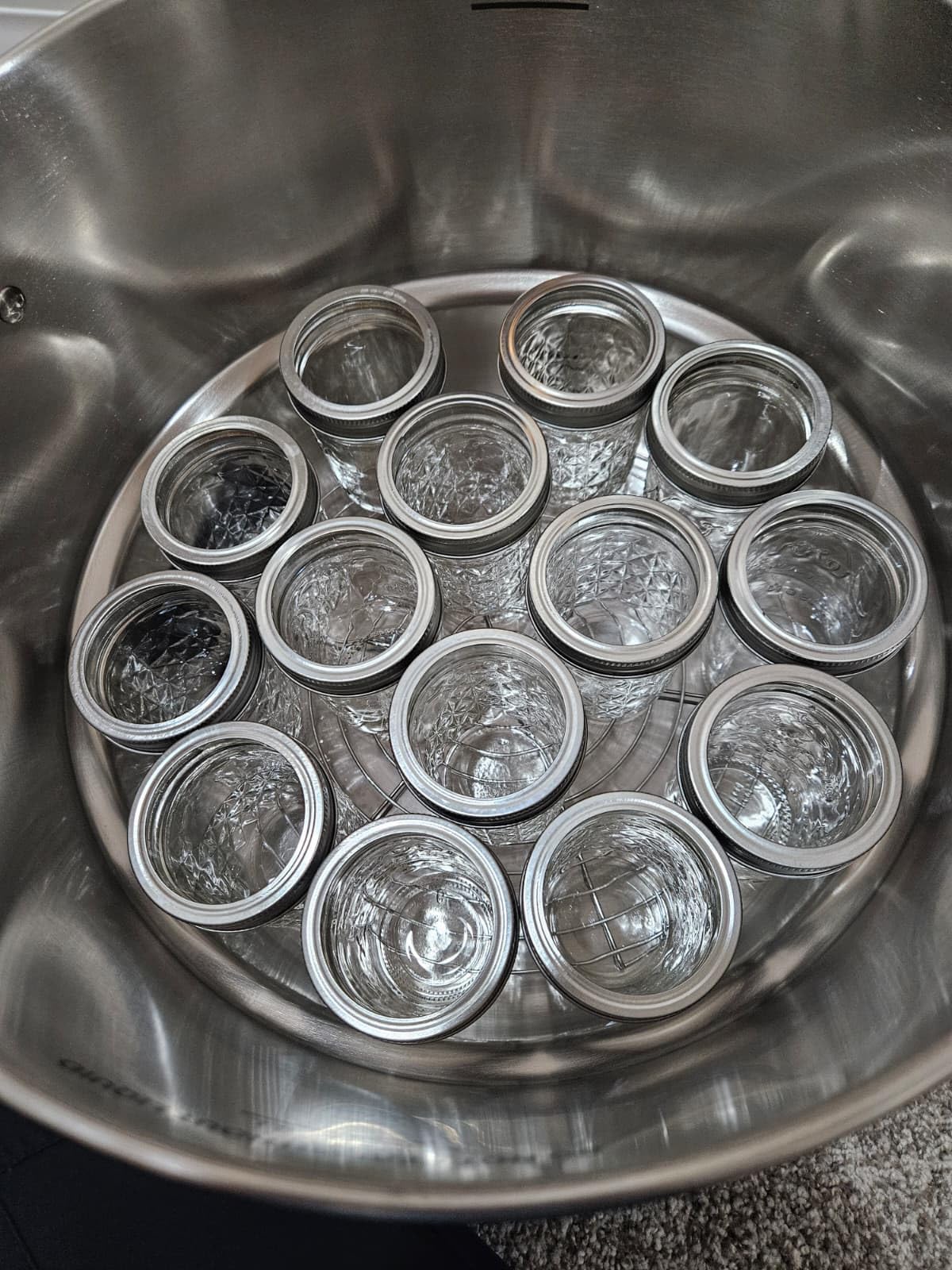
This is the only appliance on the list where you set it and walk away, which is the whole argument. Internal heat sensors bring the water to temperature and hold it there for the processing time, so there is no watching for a boil that has dropped off. For anyone who cannot comfortably lift a 40-pound pot of boiling water, that is not a convenience, it is the difference between canning and not canning.
The 21-quart capacity fits seven quart or eight pint jars, so you are not giving up batch size. A side spout lets you drain the water without lifting anything. The press and forget controls also run it as a multicooker and steamer, which is how the appliance earns its counter space outside of canning season.
The drawbacks are substantial and worth stating plainly. It costs the most of anything here by a wide margin. The warm-up time is long, so plan for a slower first start. The timer requires repeated button presses for longer processing times, which is mildly irritating once you know the pattern. And Ball does not sell replacement parts, so a damaged lid is a genuine loss rather than a ten-dollar fix.
At 20.3 pounds empty it is also the heaviest object in the group, which matters if you are considering it because lifting is hard. You trade burner weight for counter weight, and the trade only works if you have a permanent counter location near an outlet.
When does an electric canner make sense?
It makes sense in an apartment with no stove, in a kitchen where the burner is needed for dinner while you process a batch, and for anyone with a back, grip or shoulder limitation. Long-time canners credit it with making canning accessible again at an age when a stovetop pot had stopped being possible.
It does not make sense if you have a working burner and a gas range, and it does not make sense for a few jars a year. The money is better spent on jars, lids and a tested recipe.
Do you still need a rack with an electric canner?
Yes, and the rack is included. The reason matters: jars sitting on the bottom of any pot get direct heat and crack, and a canner is the one piece of equipment where skipping a step shows up as broken glass and lost food.
Keep the rack centred in the pot before you load jars. A rack that shifts as you lower a full jar is the fastest way to chip a lid.
6. Supa Ant 24-Quart Canning Starter Kit – Best Lightweight Enamel Kit
- Most complete tool bundle in the enamel category
- Light enough to lift when full
- Extra-large scoop and six measuring cups
- Dishwasher friendly
- Not for induction or glass cooktops
- Tool quality is adequate not heavy-duty
- Jars and lids are not included
The case for this kit is arithmetic. At 24 quarts it is the largest enamel pot here, and it is still light enough to lift with a full load, which is the combination that makes enamel the sensible choice for a beginner. Most owners bought it to avoid buying tools separately, and the bundle is genuinely larger than typical.
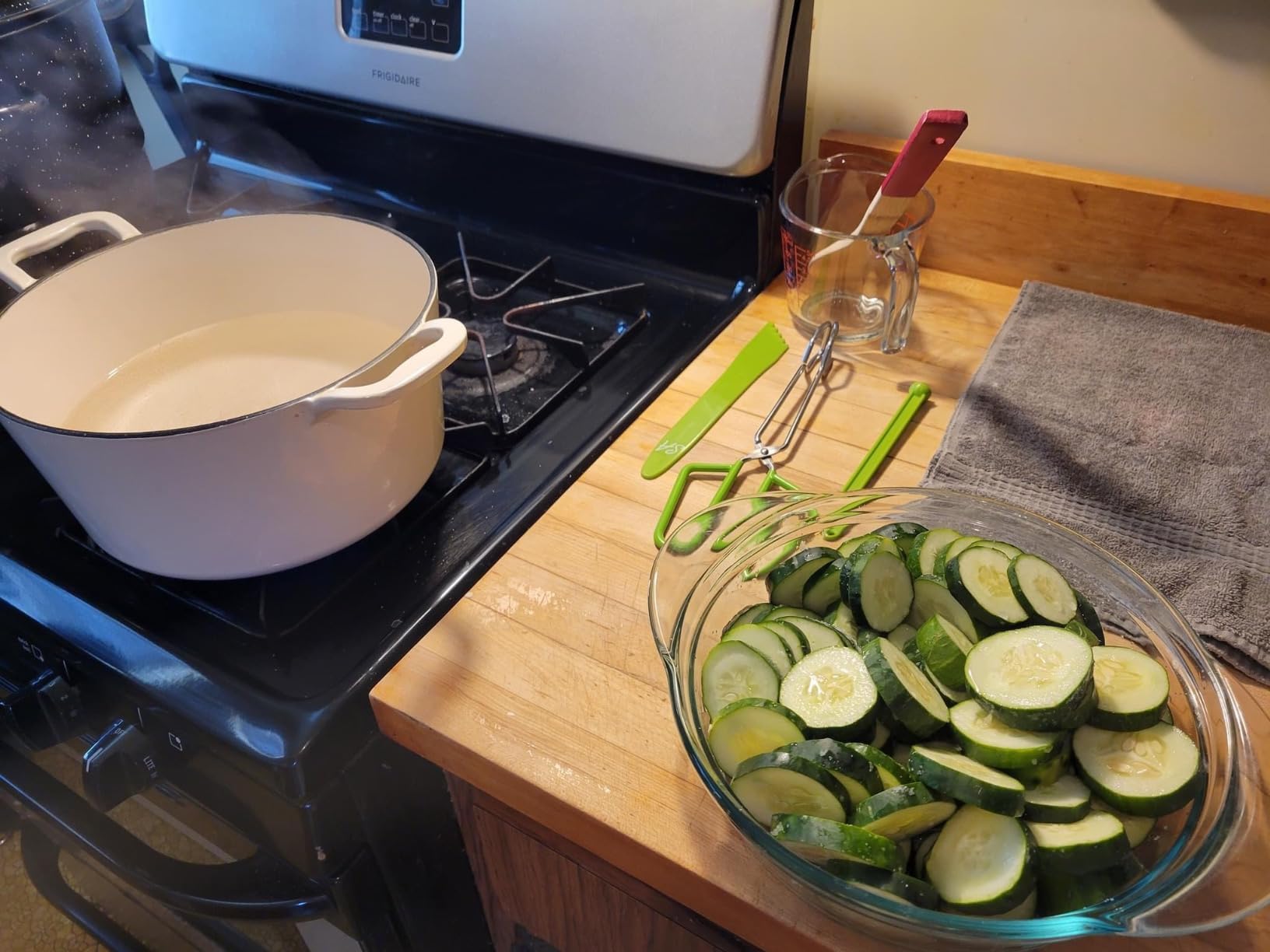
You get a funnel, jar lifter, bubble popper, magnetic lid lifter, jar wrench and tongs, plus a half-pint scoop and six measuring cups. Those measuring cups matter more than they sound, because consistent volume is what gets you consistent headspace, and headspace is what decides whether a jar seals.
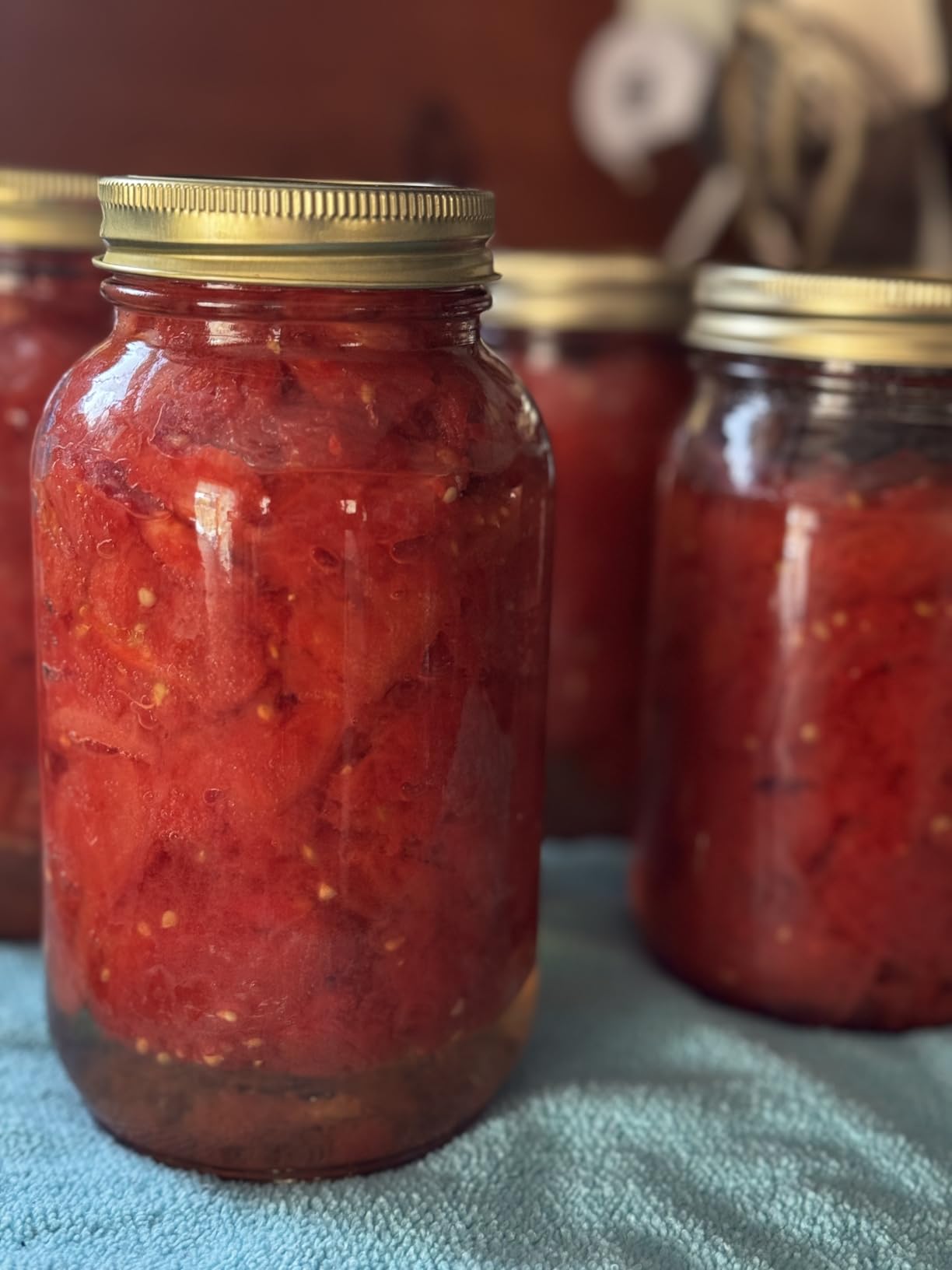
The pot is steel-core porcelain enamel and PFOA and PTFE free, which is a reasonable thing to know if you are putting acidic fruit into it every autumn. It is not suitable for induction or glass cooktop hubs, so this is a gas and coil stove purchase only.
Two caveats from owners: the tools are adequate rather than heavy-duty, and jars and lids are not in the box, which surprises people who assume a starter kit is complete. The fluorescent green tools are a small touch that genuinely helps when your hands are wet and the kitchen is busy.
Is a 24-quart kit overkill for a beginner?
It is large, but not unwieldy, and larger is safer than smaller. A pot that is too short will not cover the jars, while a larger pot simply gives you room to work. The 4.7 rating across 1012 reviews suggests buyers are happy with the size.
If you are certain you will only ever make a few jars, the 12-quart Granite Ware in number four is the more honest buy.
Does buying a kit actually save money?
It saves shopping trips, not much money. The tools in a kit are the affordable version, and you will likely replace the funnel and the lifter within a couple of seasons anyway. What the kit really saves is the week of deciding which tool you actually need.
It also ships with a warranty and US and UK based support, which is worth something on a large heavy pot.
7. Vigamimn 20-Quart Kit with Timer Lid – Best Induction Value
Canning Pot-Canning supplies starter kit, Canning Tool Kits Set for Beginners, Stainless Steel Water Bath Canner Kit with rack for canning
- Induction compatible at this price
- Timer built into the lid knob
- Comprehensive tool bundle
- Collapsible rack saves space
- Thinner gauge metal than premium pots
- Plastic timer knob may degrade
- Gloves are more decorative than protective
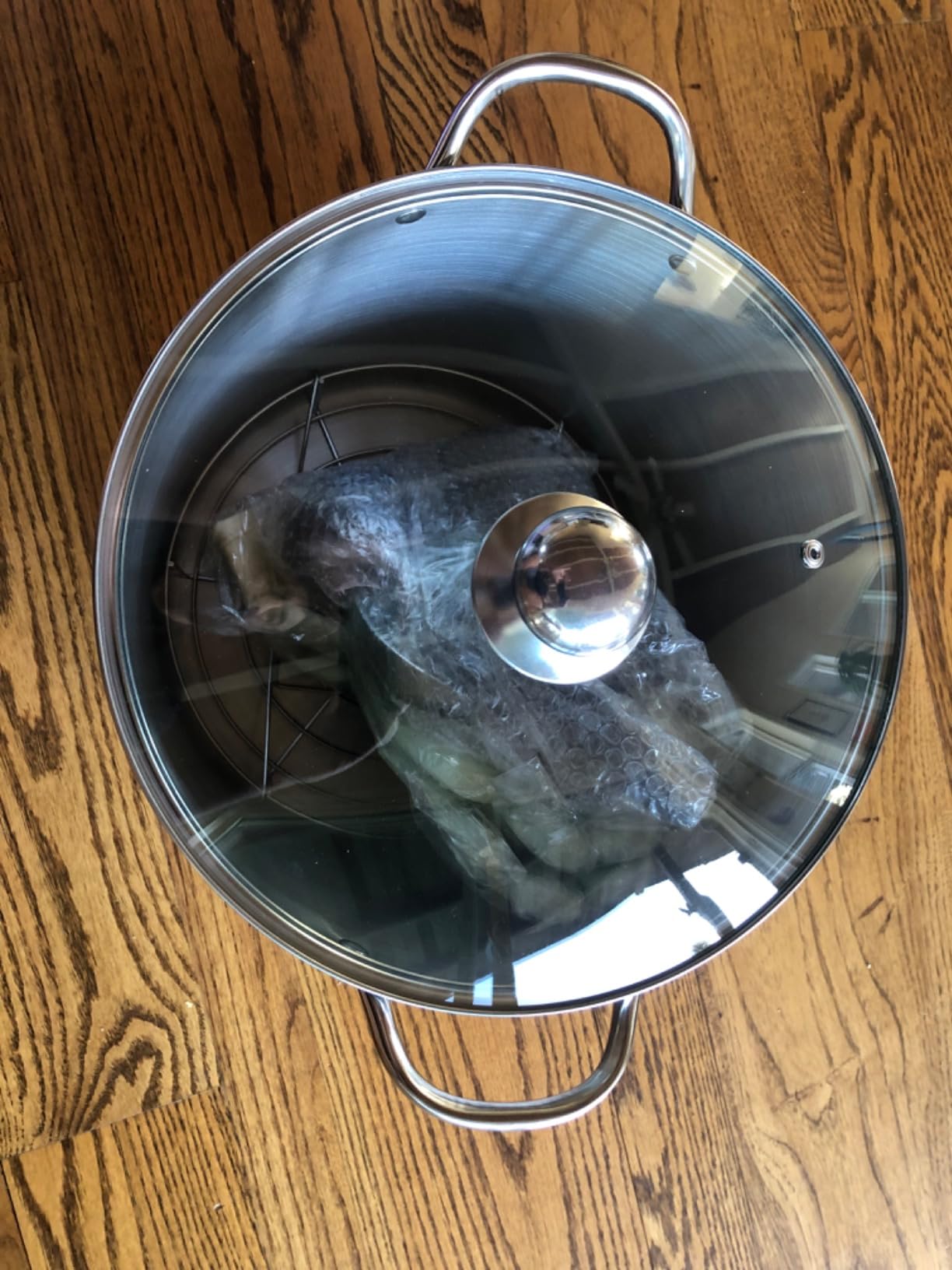
The feature I did not expect from a kit at this level is the timer in the lid knob. Processing time is the step beginners get wrong, because they start counting when they should have started counting after the boil returned. A built-in timer means you are not doing arithmetic while holding a hot pot with a towel.
The stainless base is induction compatible, which puts it in the small group of options that work on every common cooktop, including glass and gas. The three-layered base helps with the hot spotting that flattens a cheaper single-ply pot.
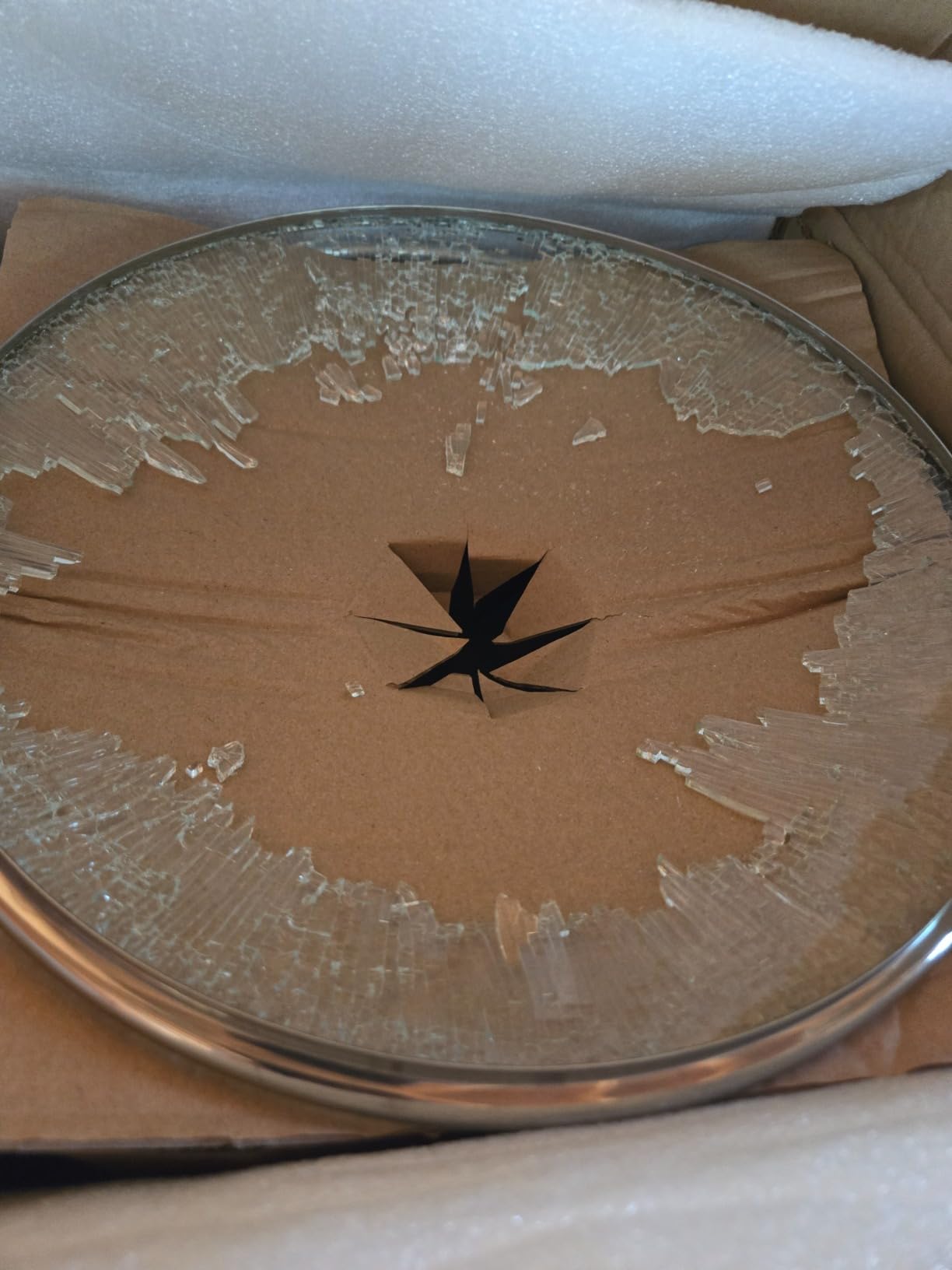
More experienced reviewers make the fair criticism: the steel is thinner than a heavy-duty canner, and the plastic timer knob is the part most likely to fail first. Neither is a safety problem at canning temperatures. Both are durability questions over a decade rather than a season.
Capacity is about five quart or eight pint jars, so this is a slightly smaller batch than the 21.5-quart picks. The heat-resistant gloves in the bundle are not much protection, so buy real canning gloves or dry towels if you are handling full jars.
Is induction compatibility worth a thinner pot?
If induction is your only stove, yes, because the alternative is not a heavier pot, it is no pot. Most enamel canners will not heat on an induction coil at all, so this is the realistic entry point rather than a compromise.
Check your range manual for cookware weight limits, and let the pot cool on the burner rather than moving it hot.
What is in the bundle?
A collapsible rack, funnel, tongs, jar lifter, magnetic lid lifter, jar wrench, stirrer, jam ladle, date labels and gloves. The date labels sound trivial and are not, because unlabeled jars are jars nobody opens.
The kit also handles steam canning for high-acid foods, which is a bonus mode if you ever want to try it.
8. HOMKULA 20-Quart Induction Canning Pot – Best for First-Time Canners
HOMKULA 20 QT Water Bath Canning Pot with Rack and Lid, Canning Supplies
- Induction compatible at a mid-range price
- Very complete bundle for a first kit
- Thickened rack holds jars upright
- Dishwasher safe parts
- No lid timer or temperature indicator
- Jars and lids not included
- Smaller review base than established kits
This is the kit I would hand to someone who wants one box to open on canning day and a working set of tools afterwards. Alongside the pot, lid and rack you get a funnel, jar lifter, magnetic lid lifter, tongs, jar wrench, a bubble remover with a measurer, a jam spoon, 100 date labels and heat-resistant gloves. The bubble remover with a built-in measure is the single most useful item in that list.
The rack is thickened rather than thin wire, and that is the detail that fixes the most common hardware complaint in this category. Jars stay upright, so water circulates evenly and nothing tips when you lower a full jar with a lifter.
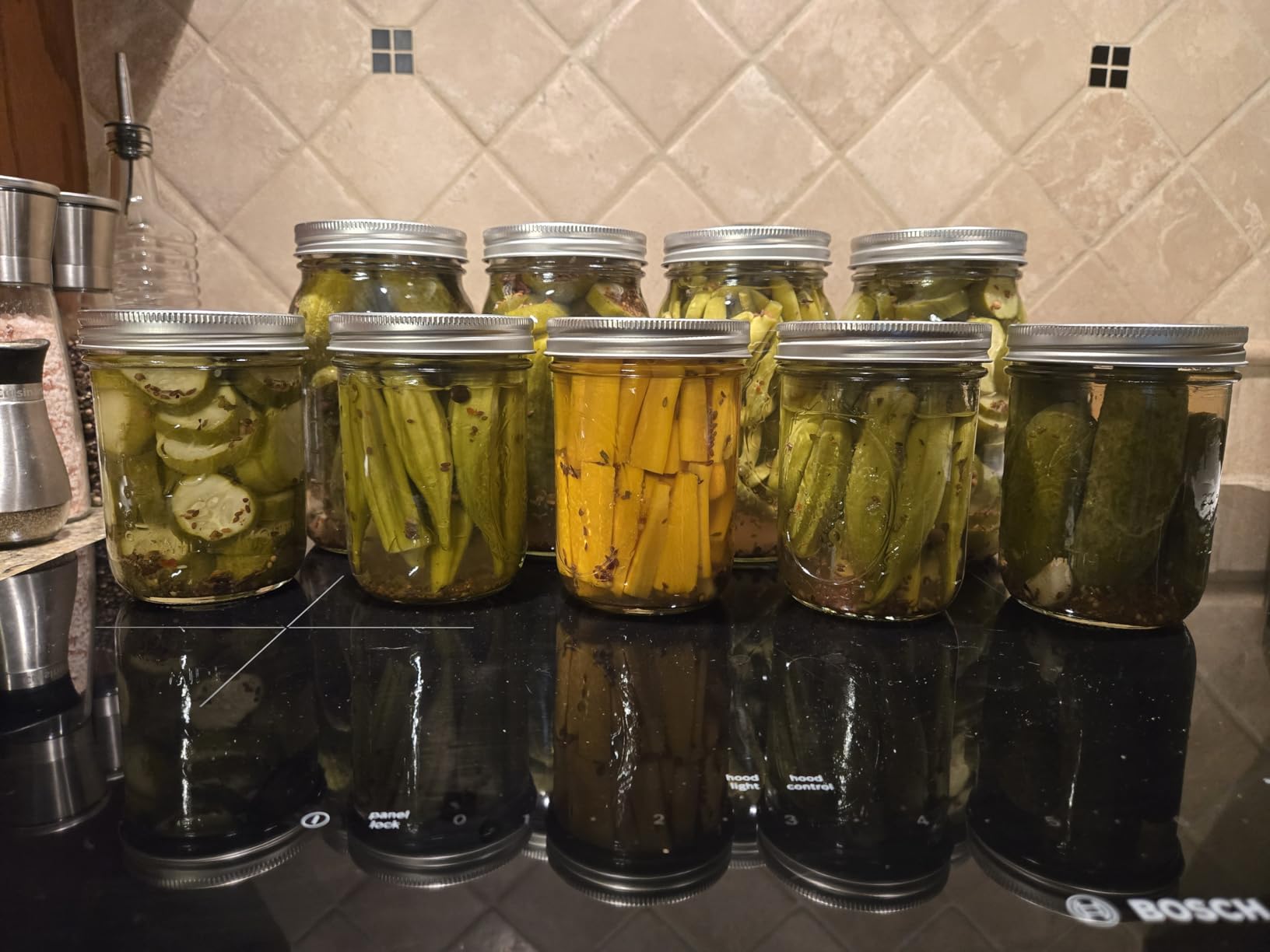
It is induction compatible, which again puts it in the group that works on every stove type. Most parts are dishwasher safe except the magnetic lid lifter, and the foldable rack and compact tool design make storage simple in a kitchen without a garage.
What it lacks is a lid timer or a temperature indicator, and that is worth comparing directly against the Vigamimn kit in number seven if processing confidence is your main worry. The 399-review base is smaller than the established kits, so treat the rating as encouraging rather than settled.
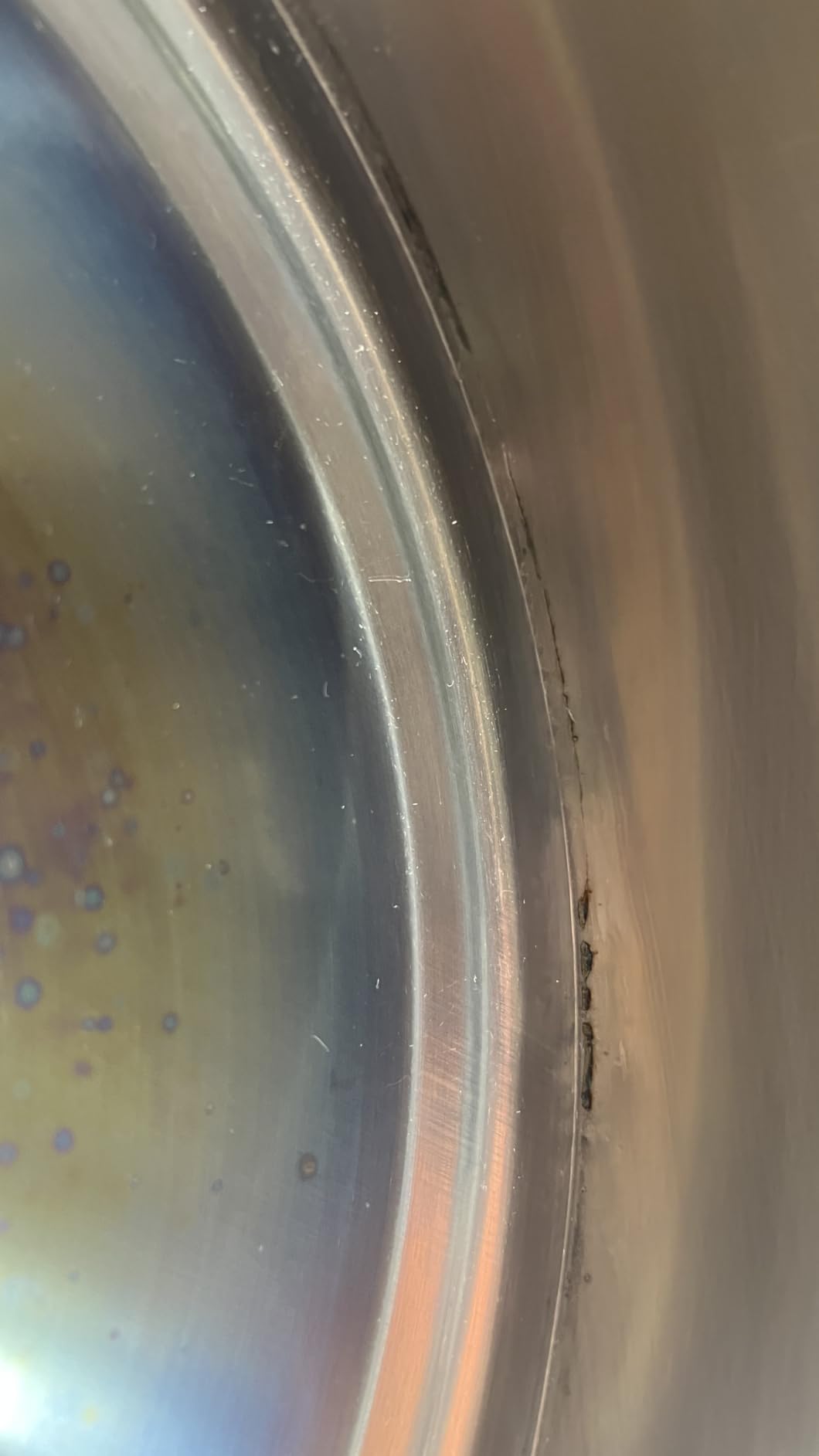
Is this the best value starter kit?
It is the one I would pick for someone starting from zero, because the thickened rack and the complete tool set remove the two things beginners most often buy twice. You still need jars, lids and bands, and you need a recipe you trust.
If you already own a lifter and a funnel, the difference narrows quickly and a simpler pot will serve you better.
How does induction canning differ in practice?
The process is identical once the pot is hot. Induction heats fast and responds precisely, so you get a rolling boil quickly, and you should still start your processing timer only after the boil returns.
Use a flat, heavy pot on induction rather than a thin one, and let the pot sit on the burner after you turn the heat off, because the base stays hot and continues cooking the water.
9. Ball Enamel Water Bath Canner – Best for Jams and Pickles
Ball Enamel Water Bath Canner, Including Chrome-Plated Rack and 4-Piece Utensil Set
- Familiar brand with a long production history
- Non-porous enamel wipes clean easily
- Generous water volume
- Funnel and headspace tool included
- Rack can rust at the solder points
- Enamel can peel after extended use
- Accessory quality is the weakest part
This is the pot for someone whose canning is annual and fruit-based: jam, jelly, peaches, pickles. The enamel-coated steel base is non-porous and washes up with hot soapy water, which matters when you have sugar in the pot. It is a simple, direct pot with no electronics and nothing to learn.
The four-piece set includes a funnel and a headspace tool, and the headspace tool is the piece that matters. Consistent headspace is the variable that decides whether a jar takes a seal, and the same tool used every batch removes guesswork better than any timer.
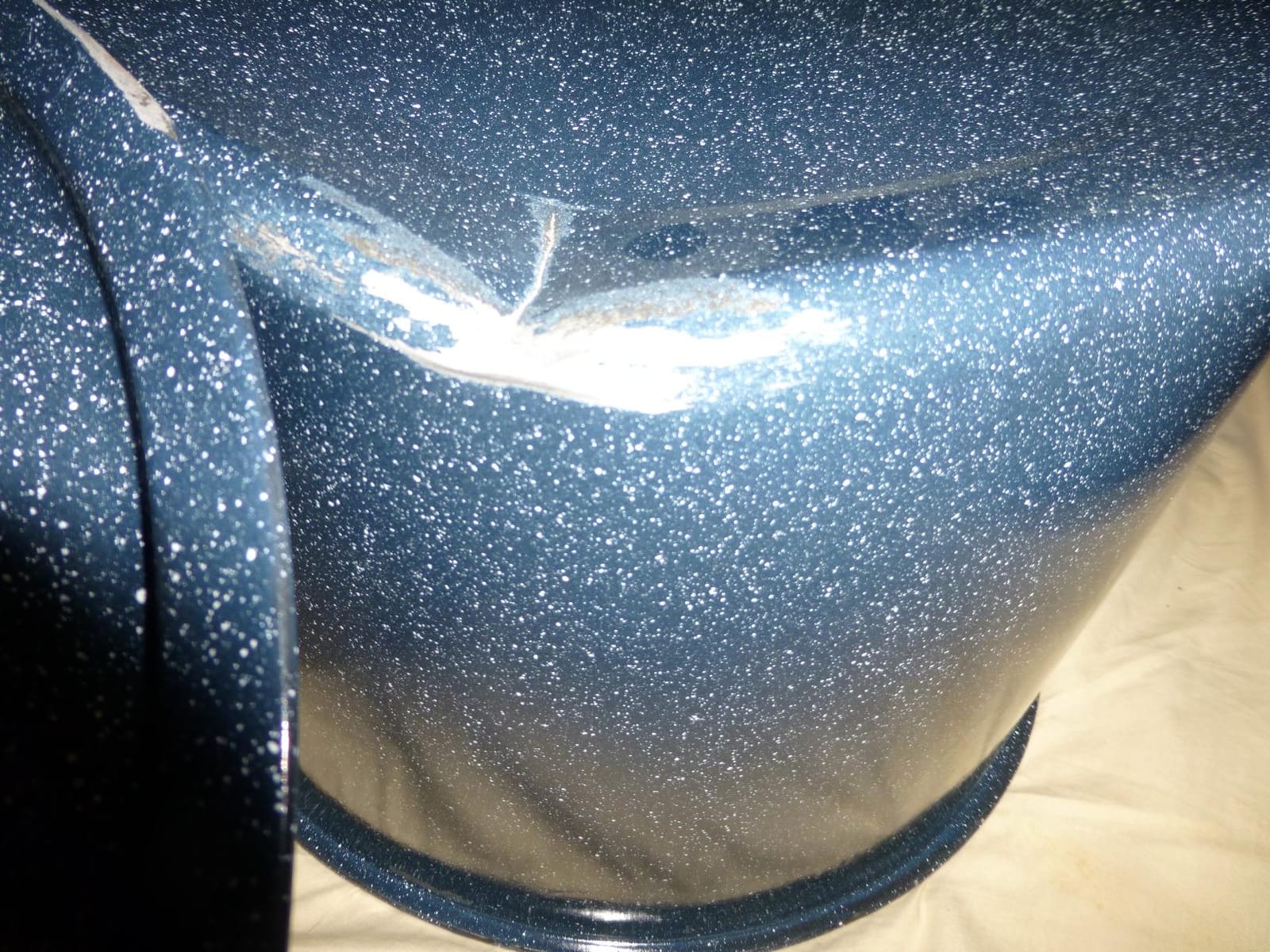
The long-term owners report the two wear points plainly: the chrome-plated rack rusts at the solder points, and the enamel can begin peeling after extended use. Neither is a reason to avoid it for a few seasons, but if you plan to can for decades, a stainless pot is the better long-term object.
Accessory quality is the weakest part of the package and owners say so directly. The tongs degrade and the lid lifter magnet is weak, so plan on replacing both. The pot itself does the real work.
How much can you process per batch?
The pot holds plenty of water and fits both large and small jars, but check the depth over your tallest jar before you commit, because a pot that is only tall enough for pints will not process quarts with the required headroom. Measure it once, in your kitchen, before the season starts.
The rule of thumb is that the water needs to sit one to two inches above the lids, so measure from the inside floor, not the rim.
Is a familiar brand worth more to you?
If you have seen the brand on jars in your grandmother’s kitchen, that is a real reason to pick it. Familiarity is not a spec, but for a first batch the confidence it brings is not nothing.
Just be realistic about the accessories, which are the part of this package that gets replaced.
10. Supa Ant 23-Quart Complete Canning Kit – Best All-in-One Kit
23 Qt Canning Pot with Canning Supplies Starter Kit – Water Bath Pot with Rack and Lid – Jar Lifter, XL Ladle, Jar Tongs, and Bubble Popper
- Largest batch capacity in the group
- Complete 13-piece bundle
- Separate base improves water circulation
- Responsive owner customer service
- 17.4 pounds empty is very heavy
- Printed manual is small and unclear
- Lid is awkward to remove and reseat
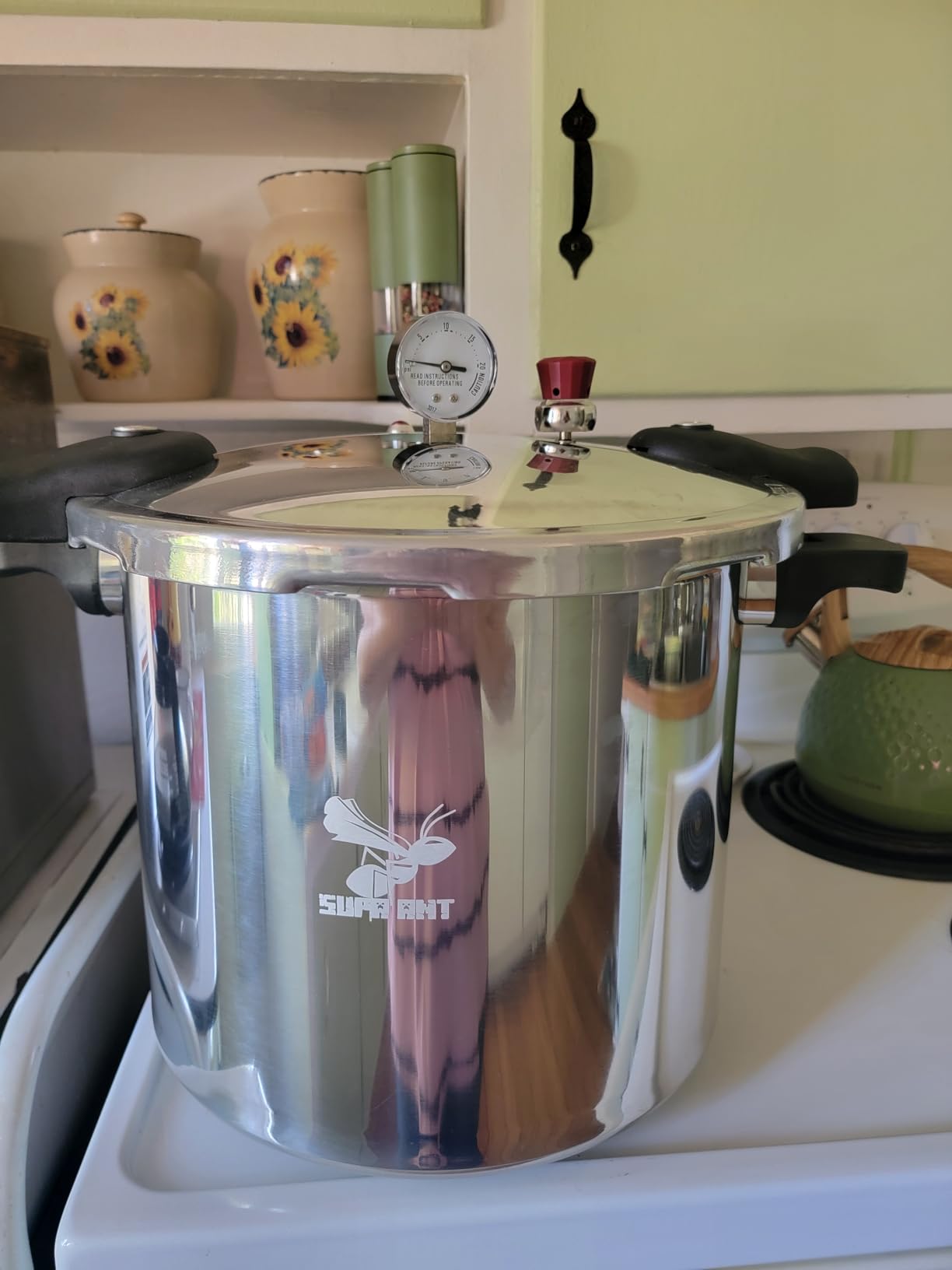
This is the largest batch capacity in the group, and the 13-piece bundle means a beginner buys jars and food and nothing else. The separate canning base under the rack is a thoughtful detail: it lifts the jars and lets water move underneath them, which improves circulation and lowers the chance of a cold spot against the base.
For a household that actually processes a harvest, the capacity earns its keep. The pot handles roughly half a bushel of produce per batch, and the storage box means the whole set is not a permanent shelf occupant in a small kitchen.
At 17.4 pounds empty, this is the second-heaviest pot here and the hardest to lift full. That is not a flaw, it is the price of a large pot, but if you are canning alone with a lifting limit, choose a smaller pot instead. Owning the pot and the lifting are two separate problems.
Several first-time canners were frustrated by the instruction manual, which is small and hard to read, and the digital version lacks detail. Follow the manual but cross-check every recipe against an NCHFP or tested source, because manuals written for kit buyers are not always complete. The lid is also the fiddliest part to remove and reseat when everything is hot.
Do you need this much capacity?
Only if you process a real harvest. If you make jam from a weekend market haul, half the capacity sits unused and you are carrying the extra weight for nothing. Capacity beyond seven or eight quart jars is a harvest-lifestyle purchase, not a beginner purchase.
For a first batch, the 21.5-quart pots in this roundup are the sensible ceiling.
Is a 13-piece kit good for a beginner?
Good, with one caveat. Having every tool on hand removes the most common first-batch delay, which is discovering halfway through that you cannot lift a hot jar. The caveat is that you still need jars, lids and bands, and a recipe from a tested source.
Do not let the manual be your only reference. Processing times are the one thing you must get exactly right.
Water Bath vs Pressure Canning: The Safety Rule
Water bath canning is safe for high-acid foods only. A water bath holds jars in boiling water at 212 F, which is enough to destroy the microorganisms that grow in acidic food. It is not enough to destroy the spores of clostridium botulinum, the bacterium that causes botulism, which is why low-acid foods are never processed this way.
The dividing line is pH 4.6. Fruits, pickles, jams, jellies and acidified tomatoes sit at or below that level. Vegetables, beans, corn, most meats and soups sit above it, and they require a pressure canner reaching about 250 F. Never improvise this rule, and never adjust a tested recipe for low-acid food down to a water bath.
One more beginner trap: a canner is a pot, not a process. If you are canning something you are not certain about, the National Center for Home Food Preservation and the USDA both publish tested recipes and processing tables, and those are the only processing times worth trusting.
Steam Canner vs Water Bath Canner
A steam canner is not a substitute for a water bath canner. It is a different, faster process that uses a taller, narrower chamber and a small amount of water at the base, with steam doing the work. It is safe for the same high-acid foods, and it processes them faster, but the processing times are different and are drawn from their own tables.
For a beginner, a water bath canner is the simpler system. The pot you fill with water and the rack you can see are easy to understand, and almost every recipe written for beginners specifies a water bath. A steam canner makes more sense as a second pot once you are confident with the routine.
Your First Batch: A Beginner Checklist
Ten steps, in order, using a tested recipe from the NCHFP or USDA. Do not skip ahead on the early ones, because the first four are the ones that decide whether the jar is safe.
1. Choose a tested recipe and read the full processing time before you start.
2. Wash jars and keep them hot. Lids go on warm, not hot.
3. Fill to the headspace the recipe specifies. Use the headspace tool every jar.
4. Remove air bubbles with a bubble remover or a clean damp towel and a chopstick.
5. Wipe the jar rim clean and dry, then place the lid and band and tighten fingertip tight. Not tight. This is the most common beginner error.
6. Heat the pot until the water returns to a full rolling boil.
7. Start the processing timer. Load jars with a jar lifter, never by hand.
8. Keep a rolling boil for the full processing time and keep the water one to two inches above the lids.
9. Turn off the heat, leave the jars in place for 5 minutes, then remove them and let them cool undisturbed for 12 to 24 hours.
10. Test the seal by pressing the center of each flat lid. A jar that does not flex has sealed. Refrigerate any jar that did not, and do not eat from it.
Common beginner mistakes are running them all: tightening bands too hard, filling jars straight from the refrigerator, processing time counted from preheat rather than from the boil, and lifting jars out while still in a hard rolling boil.
Other Gear You Will Need
Beyond the pot, four tools do most of the work. A jar lifter with a gripping arm, because full jars of boiling jam are heavier than you expect. A canning funnel, because filling to a measured headspace is far easier with one. A bubble remover, which is usually a pen-shaped tool with a measurer on the end.
You also need canning bands and flat lids, plus a simple kitchen timer if your pot does not have one built into the lid. Buy lids from a single brand and check the compound is compatible with your jars, because a seal failure is more often a lid problem than a technique problem. Ball and Kerr jars and lids are the two names most beginners meet, and the practical difference for a first canner is smaller than the number of people arguing about it suggests.
If you want the timing and temperature handled for you, our beginner kit roundup follows the same kit-first logic we use here: buy the bundle once rather than piecing it together.
Frequently Asked Questions
What is the best water bath canner for beginners?
The Granite Ware 21.5-quart enamel canner with rack and five-piece toolset is the best water bath canner for beginners, because it holds seven quart jars and weighs only four pounds empty. If you own an induction or glass-top range, choose the Harvest 20-quart stainless canner instead.
What is the best canner for a beginner?
The best canner for a beginner depends on your food and your stove. For high-acid foods such as jam, pickles and acidified tomatoes, a water bath canner is the simplest and safest system. For vegetables, beans or meat, you need a pressure canner regardless of how good your water bath canner is.
Is a steam canner as good as a water bath canner?
A steam canner processes the same high-acid foods faster, but it is not a drop-in replacement. It has its own processing times and its own tables, so a beginner should start with a water bath canner and follow a tested recipe exactly.
Can I use a water bath canner on an induction cooktop?
Only if the base is flat, fully clad and magnetic. Most enamel canners will not heat on induction at all. Choose a stainless canner with a clad base, and check your range manual for cookware weight limits before processing a full load.
Do I need a special canner or can I use a regular pot?
You can use a large pot if it is deep enough to cover the jars by one to two inches, if it has a lid, and if you have a rack so jars never sit on the bottom. A purpose-made canner is worth it because it holds a rolling boil without spilling and is designed for jar dimensions.
The Bottom Line
The best water bath canners for beginners in 2026 are still decided by three things: depth over the jars, a rack that holds them steady, and a base your stove can heat. On a gas or coil range, the Granite Ware 21.5-quart enamel kit is the pick we would buy first. On induction or a smooth top, take the Harvest 20-quart stainless canner, which also steam-cans if you want a second use.
Whatever you choose, follow a tested recipe and start with a jar of jam. You will learn the routine on something that cannot hurt you, and the next batch will be easier.