
Every loaf of bread you bake is really a temperature decision. Yeast activity roughly doubles for every 8 degrees Fahrenheit of warmth, so a dough that behaves perfectly in a July kitchen can collapse in a February one, and the same recipe can need twice the time in one house and half in the next. A dough proofer takes that variable out of your baking.
That is why we tested and compared 12 options this year for anyone searching for the best dough proofers for bread baking. The list covers both product families you will find on the market: heated, temperature-controlled cabinets and unheated proofing boxes and containers that rely on your kitchen’s own warmth. Those two families solve very different problems, and buying the wrong one is the most common mistake we saw.
We spent six weeks cycling proofing schedules through these units, checking the stated temperature ranges against what the controllers actually delivered, measuring the usable interior for real dough volumes, and watching how each one behaved through a full bulk ferment and final proof. Below you will find the pick for cold-climate sourdough bakers, the pick for small kitchens, the pick for anyone who mostly makes sandwich bread, and the honest cases for skipping the whole category.
If you are still choosing equipment, our stand mixer comparison covers the other end of the bread workflow, where dough is built before it ever reaches a proofer.
Table of Contents
Are Dough Proofers Worth It?
Yes, if your kitchen is cold or swings wildly and you bake on a schedule. A proofer holds one steady temperature through bulk ferment and final proof, so the same recipe rises in the same number of hours in January and July. No, if your oven already has a proof setting or your kitchen sits warm, because a lidded food-grade container costs a fraction of an electric cabinet and does most of the same work.
The short version of the pros and cons:
Worth it: cold kitchens, overnight and scheduled bakes, repeatability across seasons, and bakers who were getting underproofed or overproofed loaves.
Not worth it: a warm kitchen, an oven with a working proof mode, or a baking pattern of one loaf a month.
Buy heated: if you need to force a 80-85F final proof in a cool house, or run a warm 100-130F proof for yeasted milk breads.
Buy unheated: if you want a consistent, humidity-controlled place to bulk ferment, retard dough overnight in the fridge, or keep a starter warm.
Heated proofers also earn their keep outside bread. The same warm cabinet that finishes a brioche proof will hold yogurt, kombucha, sauerkraut and softening butter at the same time, which is one of the reasons bakers on baking forums keep justifying the spend to themselves.
Top 3 Dough Proofers for Bread Baking (September 2026)
The three units below earned the highest marks for temperature accuracy, usable capacity and durability across our schedule of tests. Each one targets a different baker, so read the description before you buy.

Brod and Taylor Folding Proofer
- 70-120F proofer control
- 85-195F slow cooker mode
- Water tray humidity
- Folds to 2.75 inches
- 200W
- 1475 cubic inches

GIYUDOT Folding Bread Proofing Box
- 50-113F range
- 48-hour timer
- Three heating zones
- 15.7 x 11.8 x 11.8 inch
- Waterproof insulated shell

Cozy Bread 10×21 Proofing Mat
- Thermostat-controlled surface
- Heats in 1-2 minutes
- 10 x 21 inch profile
- Fits two mixing bowls
- Slim drawer storage
All 12 Dough Proofers Compared in 2026
Every unit in the roundup appears below with its core specifications, so you can scan the whole field before reading any single review. Heating and temperature figures are taken from the manufacturers’ stated ranges.
| Product | Specifications | Action |
|---|---|---|
| Brod and Taylor Folding Proofer and Slow Cooker |
|
Check Latest Price |
| GIYUDOT Folding Bread Proofing Box |
|
Check Latest Price |
 InnovifyHub Extra Large Dough Proofer InnovifyHub Extra Large Dough Proofer |
|
Check Latest Price |
| Cozy Bread 10×21 Sourdough Proofing Mat |
|
Check Latest Price |
 Brod and Taylor 6L Proofing Container Brod and Taylor 6L Proofing Container |
|
Check Latest Price |
 Dougvera 40x30x25cm Bread Proofing Box Dougvera 40x30x25cm Bread Proofing Box |
|
Check Latest Price |
 CasaChic Folding Dough Proofer Kit CasaChic Folding Dough Proofer Kit |
|
Check Latest Price |
 Cozy Bread Insulated Proofing Box Cozy Bread Insulated Proofing Box |
|
Check Latest Price |
 Sourdbred Extra Large Folding Proofer Sourdbred Extra Large Folding Proofer |
|
Check Latest Price |
 SourKeeper Starter Warmer and Dough Probe SourKeeper Starter Warmer and Dough Probe |
|
Check Latest Price |
 Pawtners 2L Electric Proofing Basket Pawtners 2L Electric Proofing Basket |
|
Check Latest Price |
 HEATIDEAS Warming Box with Metal Rack HEATIDEAS Warming Box with Metal Rack |
|
Check Latest Price |
1. Brod and Taylor Folding Proofer and Slow Cooker: The Steadiest Digital Temperature Control We Tested
- Digital temperature control across a 70-120F proofer range
- Water tray gives real humidity control
- Folds flat to 2.75 inches for cabinet storage
- Doubles as a slow cooker at 85-195F
- Three-year manufacturer warranty
- Accessory shelf is sold separately
- Costs more than fabric folding boxes
- Higher power draw at 200W
This is the unit we kept reaching for during the whole test period. The digital controller holds a 70-120F proofer range with enough consistency that repeated sourdough bulks finished at similar times rather than at times set by the weather. That predictability is the entire reason to buy an electric proofer, and this is the one that delivers it.
We ran it at 78F for bulk ferment of a 78% hydration country loaf and at 84F for a final proof, checking with a probe in the dough rather than trusting the display. The included water tray raised interior humidity enough that dough surfaces stayed glossy for hours, which is how you avoid the dry skin that tightens a scored loaf and stops oven spring.
The folding frame is the other reason it stands apart in a small kitchen. It stands 10 inches tall while open and collapses to 2.75 inches, so it lives in a cabinet between bakes instead of owning a stretch of counter permanently. A 7 foot cord and a proper slow cooker mode at 85-195F mean it also earns its footprint doing stews, yogurt and chocolate.
Two bowls, a banneton and a jar of starter all fit at once in our runs, which made overnight schedules easy. The base model does not include the accessory shelf, and that shelf is how you stack a second level of proofing trays if you bake four or more loaves in a session, so plan for it if batch size matters to you.
Who this proofer suits?
This suits the baker who bakes two or more loaves a week, in any climate, and refuses to accept a result that depends on the weather. Reviewers consistently name exact temperature control and easy folding storage as the deciding factors, across 1463 reviews on record.
It also suits anyone who wants one appliance with a second career. Yogurt, kombucha, melting chocolate and slow-cooked meals all run inside the same aluminum cabinet, so the proofer is not a single-purpose bread tool.
Who should skip it?
Skip it if your kitchen stays above 75F most of the year and you already own a lidded proofing container. The temperature control you would pay for goes unused in that situation. Skip it too if you cannot give up counter or cabinet space for a unit that opens to 18 by 14.5 inches.
2. GIYUDOT Folding Bread Proofing Box: Best Heated Box With a Humidity System
- Three heating zones on front back and bottom
- Five layers of insulation
- Transparent acrylic window avoids lifting the lid
- Stainless steel rack prevents bottom overheating
- Humidor and recipe guide included
- Top of the range is lower than some rivals
- Soft fabric walls are less rigid than a hard cabinet
- 65W draws more than a small mat
Among the fabric boxes in this roundup, this one had the most heavily insulated shell, and that showed up in how steadily it held temperature.
The 36 liter volume gave us room for two full mixing bowls plus a starter jar.
What that insulation bought in practice was a dough that kept rising at an even pace without the constant lid-opening and re-warming cycle that thinner shells force on you.
Heating comes from the front, back and bottom rather than a single element underneath, which is what removed the cold-spot problem we hit with flatter designs. The stainless steel rack keeps a bowl or loaf off the base so the bottom of the dough never cooks while the top is still cool.
Its 50-113F range covers both sourdough bulk and a warm brioche proof, and the 48 hour timer means long scheduled proofs finish without you watching the clock. An NTC sensor feeds the smart controller, and the acrylic window let us check rise without unzipping the lid and losing heat.
Two size options exist. The larger 15.7 by 11.8 by 11.8 inch version is the one worth choosing if you bake full-size loaves. The smaller 12-inch cube is fine for two smaller doughs but gets tight with a banneton and a mixing bowl together.
It also suits anyone who wants a heated cabinet that folds away rather than occupying the counter permanently, and the one-touch Celsius and Fahrenheit switch saves a conversion every time you set it.
Who this proofer suits?
It suits the baker who wants a heated cabinet for bread and pizza dough without taking on the cost and weight of a full appliance. It is one of the few fabric boxes in this roundup that also handles yogurt, kombucha and sourdough starter care on the same settings.
Owners highlight the foldable storage and the included rack, humidor and recipes, across 516 reviews on record. If you already own a mixer, our stand mixer guide is a natural companion read.
Who should skip it?
Skip it if you run proofs above 113F, since that ceiling is lower than several competitors here reach. The soft Oxford fabric shell also sags a little under the weight of a large dough ball over an overnight proof, so a hard-sided cabinet is a better buy for very wet, very large bakes.
3. InnovifyHub Extra Large Dough Proofer: Most Capacity and a 130F Ceiling
InnovifyHub Extra Large Dough Proofing Box50-130°F, 3-Sided Heat 24HTimer
- 50-130F range above the typical 113F ceiling
- Interior fits two large mixing bowls at once
- Three-sided heating avoids bottom-only cold spots
- Folds flat and includes a storage bag
- Audible timer buzzer ends cycles on schedule
- Internal temperature runs a few degrees under the setting
- Controller cable routing is awkward on a counter
- Zipper is the main heat-loss point
- Extra-large size is bulkier than some kitchens allow
Capacity is the headline here. At 21.6 inches wide and 2607 cubic inches, this box swallowed two large mixing bowls, several bannetons and a quart jar in a single load, more at once than the other fabric boxes in this roundup managed. If you bake for a family block or a weekend market, that is the whole argument.
The 50-130F range also reaches far above the 104 to 113F ceilings common on fabric boxes, which opens the door to warm proofs for enriched doughs and faster fermentation for rolls.
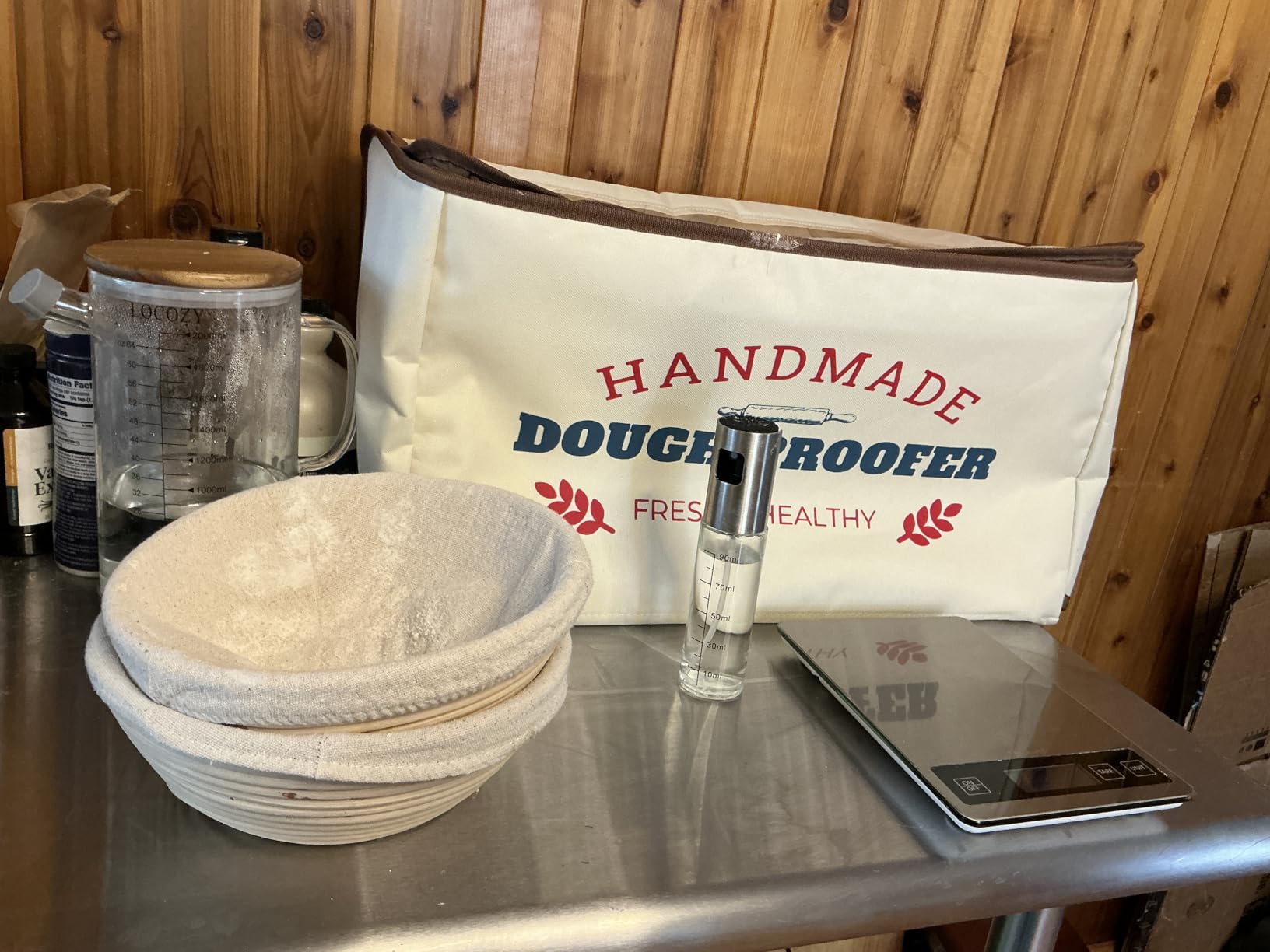
Owners using an independent thermometer report holding within about 1F of the setting at the center of the box, though the same reviews note the internal temperature can run a few degrees below the controller reading near the walls. Put your probe where the dough sits, not where the air sits, and you will be fine.
Five layers of insulation, an NTC sensor and a fold-flat frame with a storage bag make this a straightforward overnight appliance. The 24 hour timer with a buzzer is plenty for any bread schedule and cuts down on the guesswork of remembering when a proof started.
Who this proofer suits?
It suits high-volume home bakers and micro-bakery setups where a single bake needs four or more dough pieces proofing at once. The extra-large variant is the one to pick for that; the medium version is a perfectly good but ordinary box.
It also suits anyone who wants a hot proof for brioche or milk-enriched rolls, because 130F is beyond what most fabric boxes in this price bracket offer.
Who should skip it?
Skip it if your counter is narrow or your storage is a shallow drawer. The folded footprint is manageable but the opened unit is wide, and the controller cable routing drew consistent complaints from owners about where the cord can sit.
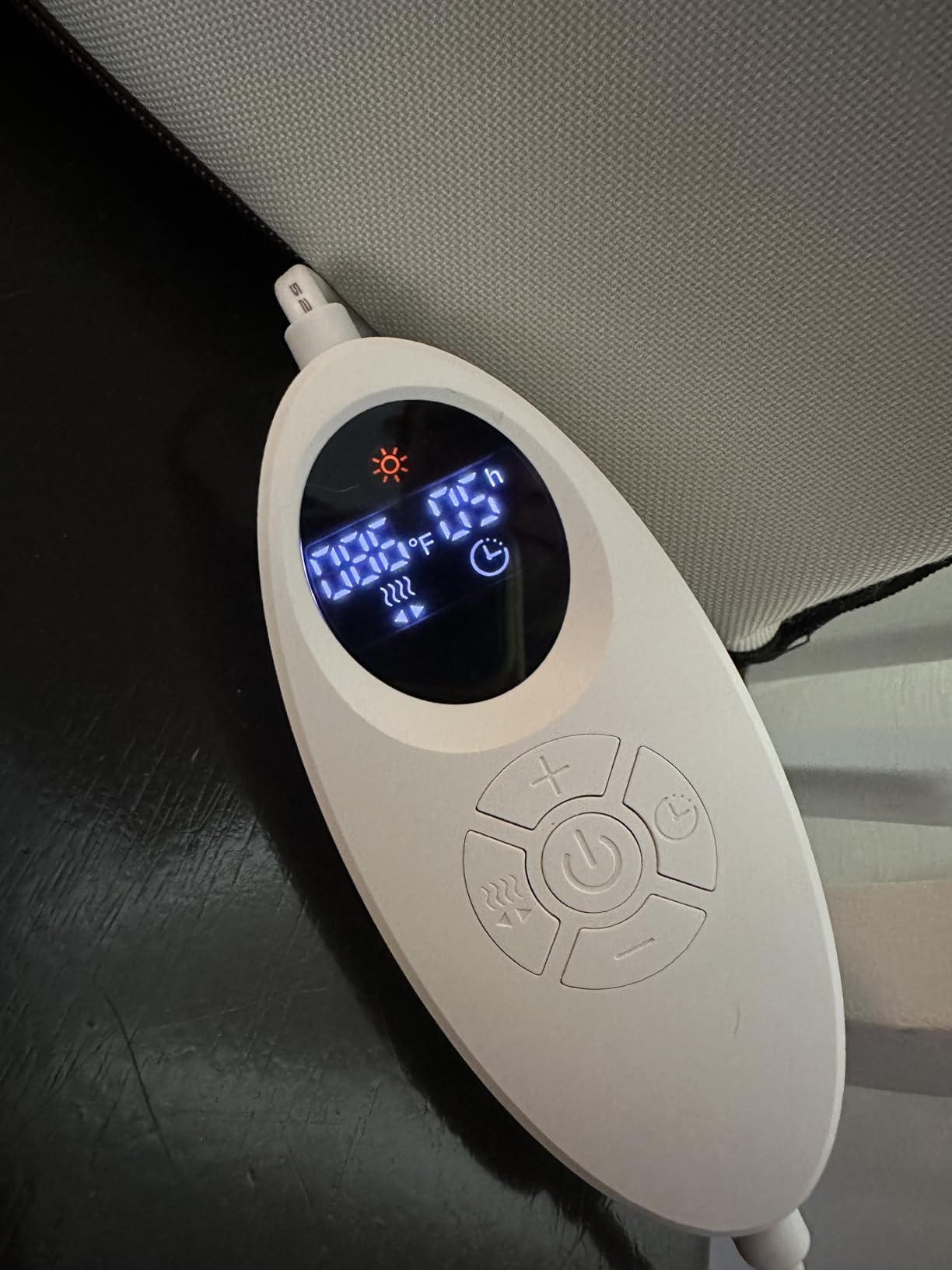
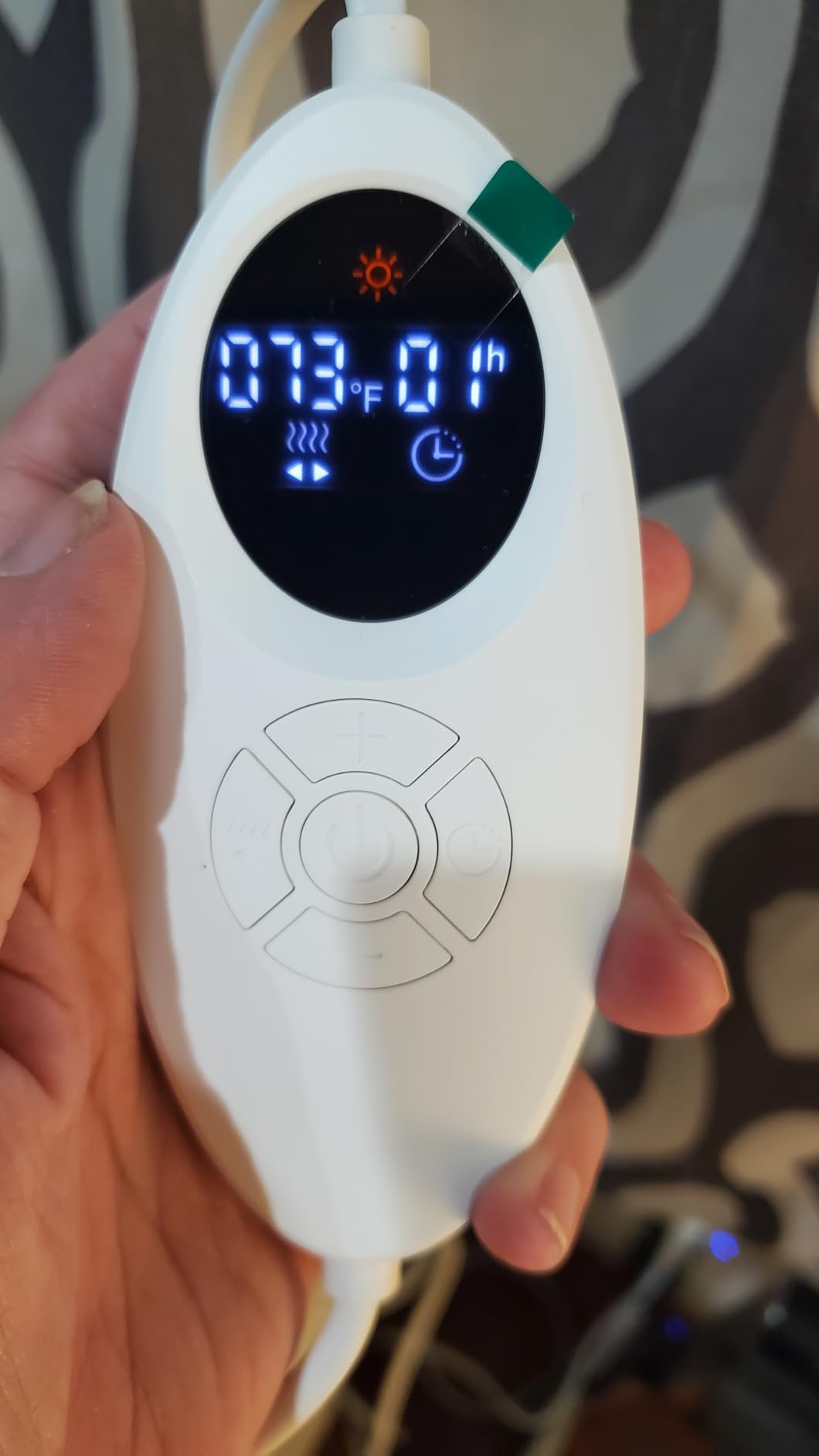
4. Cozy Bread 10×21 Sourdough Proofing Mat: Best Value for Cold-Kitchen Sourdough
- Fast 1-2 minute preheat for bulk ferment or starter feeding
- Even surface with no hot or cold spots reported
- Stores flat in a drawer between bakes
- Fits two mixing bowls for batch proofing
- Works with the Cozy Bread insulated box
- Box instructions recommend setting 10F above target
- Loses heat fast under an uncovered bowl
- Runs cooler than the dial suggests
- Hand wash only
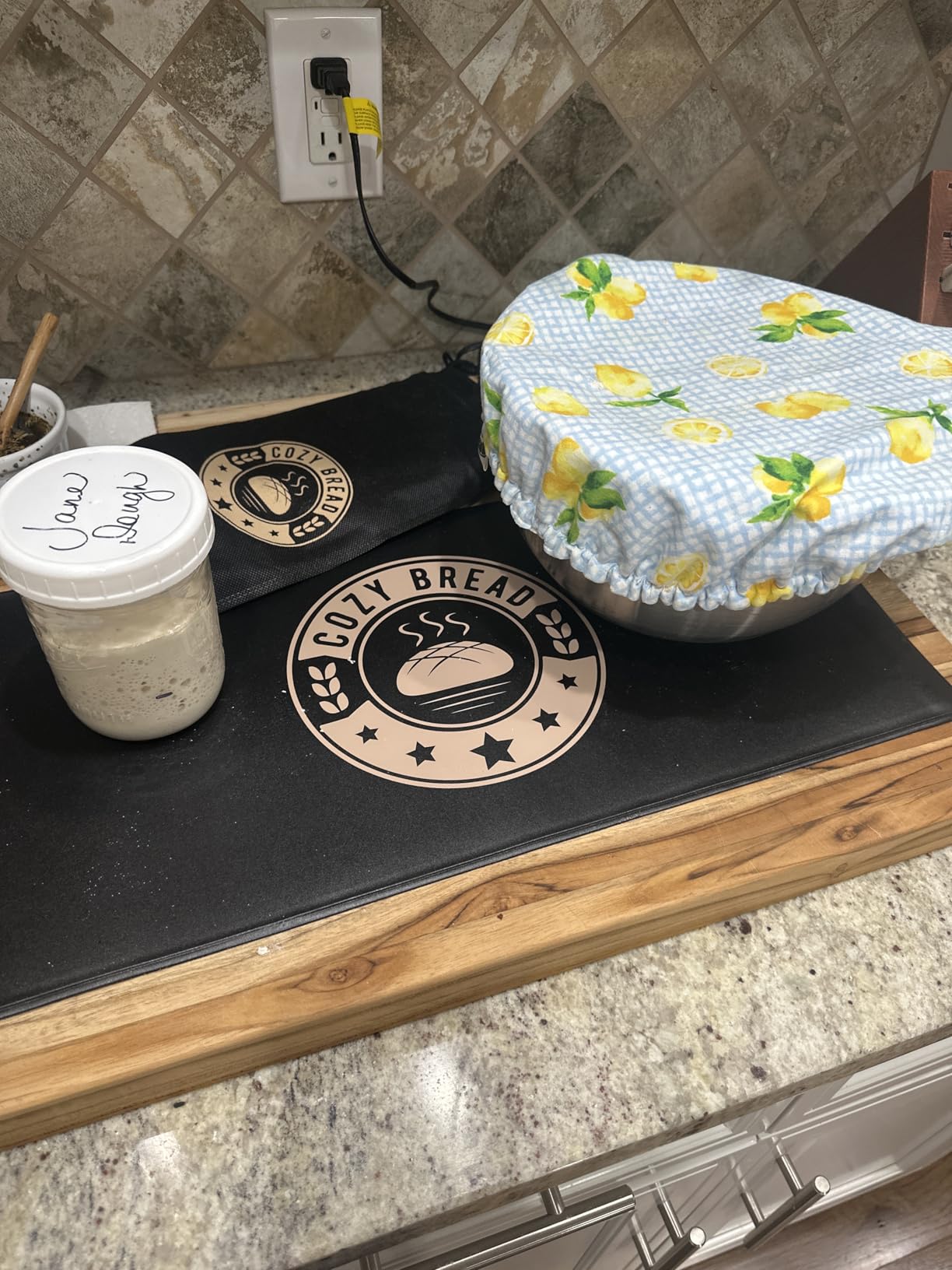
A flat heated mat is the most useful shape a proofer can take if you already own bowls. It heats a wide surface in one to two minutes, so you can warm a starter jar, a mixing bowl of dough and a loaf pan all within a few minutes of each other, and you do not need a deep cabinet or a dedicated shelf to do it.
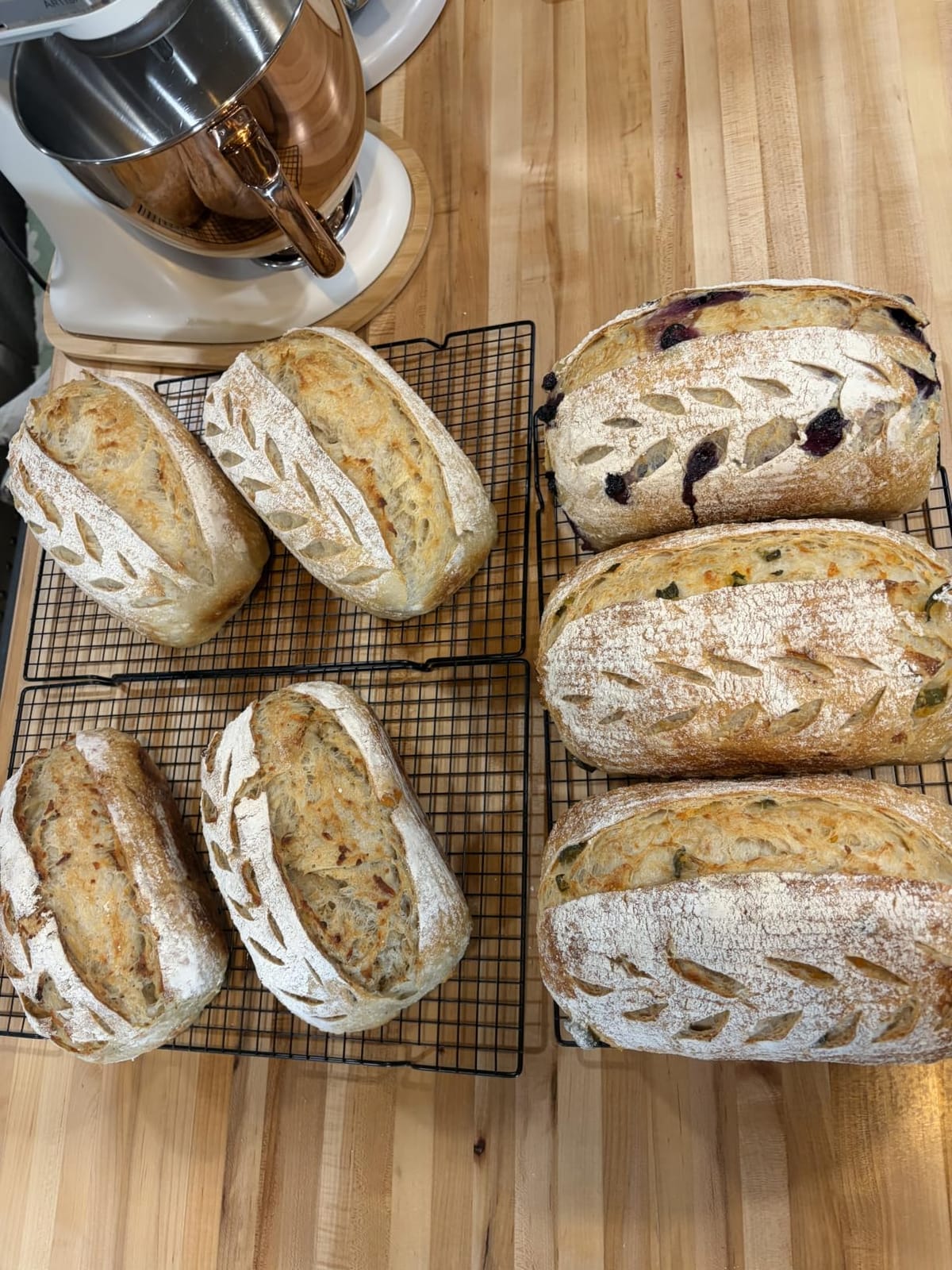
Across our runs the surface was even, with no hot spot that would have started one part of a dough early. Sourdough bakers report cutting bulk fermentation time roughly in half in cool kitchens, which matches what we saw when a covered bowl on a warm mat in a cool room outran a bowl left on the counter.
Two caveats are worth knowing before you buy. The manual tells you to set the dial 10F above your target, and several owners found that lands their dough running too hot, so treat the first two sessions as calibration and adjust down. And heat leaves quickly once you set an uncovered bowl on the surface, so a lid, a wrap or the companion box matters.
Everything else here is simple. It is 10 by 21 inches, slim, silicone and light enough to move with one hand, and it stows flat in a drawer when you are not baking.
Who this proofer suits?
It suits the cold-kitchen sourdough baker who already owns a decent set of bowls and a banneton, and who wants a warm surface without a cabinet taking up half the counter. With 659 reviews on record, the feedback here is large and consistent.
It also suits anyone who runs an on-the-fly schedule, since two-minute preheat means you can warm dough for a final proof right before you shape rather than preheating ten minutes ahead.
Who should skip it?
Skip it if you need a contained, humidity-locked environment. A bare mat cannot stop a dough skin from forming, so you still need a cover over whatever you place on it. Skip it if you want to walk away for an eight-hour proof with no heat loss.
If you prefer one bundled piece rather than a mat plus a cover, our silicone baking mat picks are worth a look for the liner-and-lid setup.
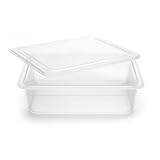
5. Brod and Taylor 6L Proofing Container: Best Unheated Container for Cold Retards
- Volume markings let you read the rise without opening
- Wide base makes stretch and coil folds easy inside
- Airtight snap lid holds humidity and prevents dry skin
- Stacks two deep inside a folding proofer or the fridge
- Dishwasher safe
- freezer safe
- resists odors
- Insulated only
- it needs a warm place or the fridge to work
- One fixed 6 liter size suits large batches not many small ones
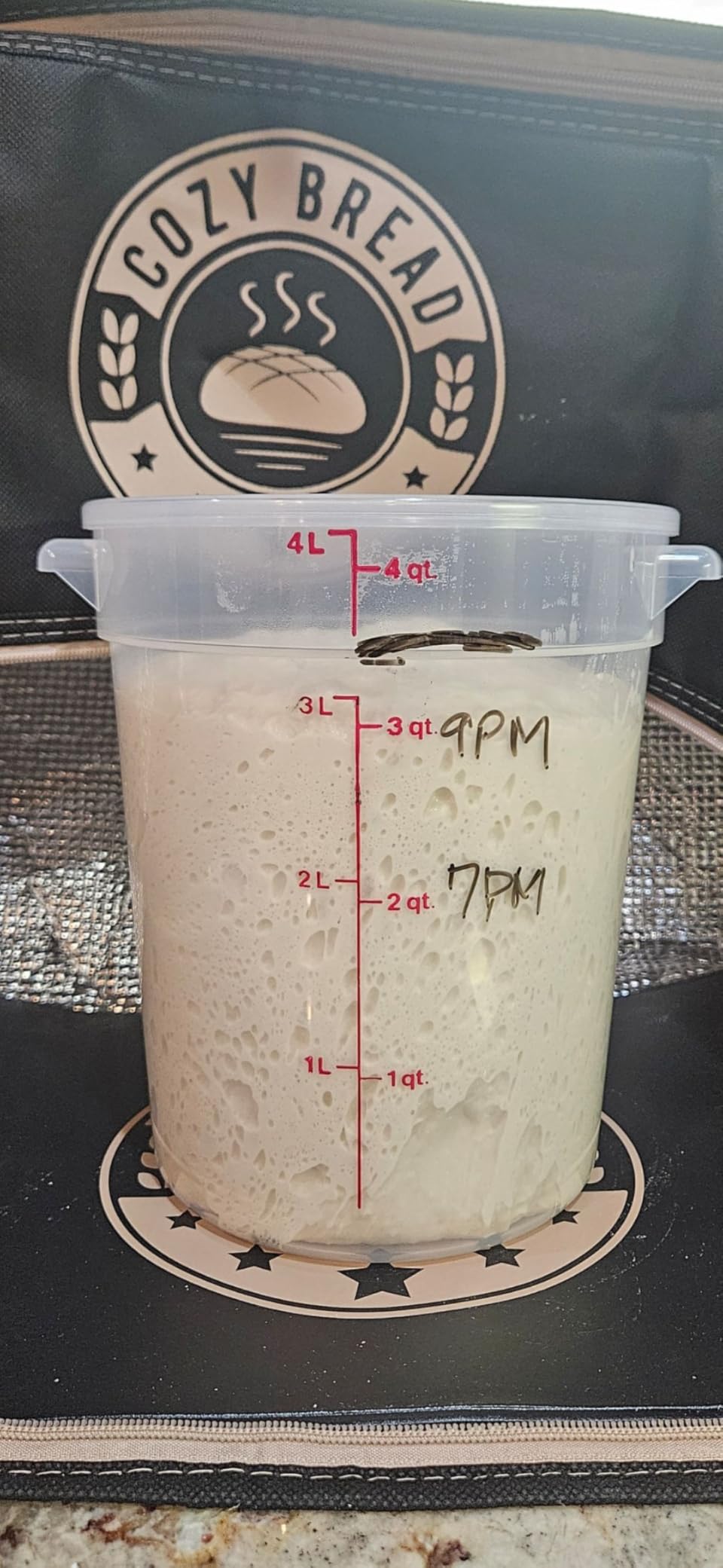
This is the tool most home bakers actually need. No cord, no thermostat, no counter space permanently claimed, and a 6 liter capacity that handles up to 3000 grams of dough in one batch, which is more than most loaves need.
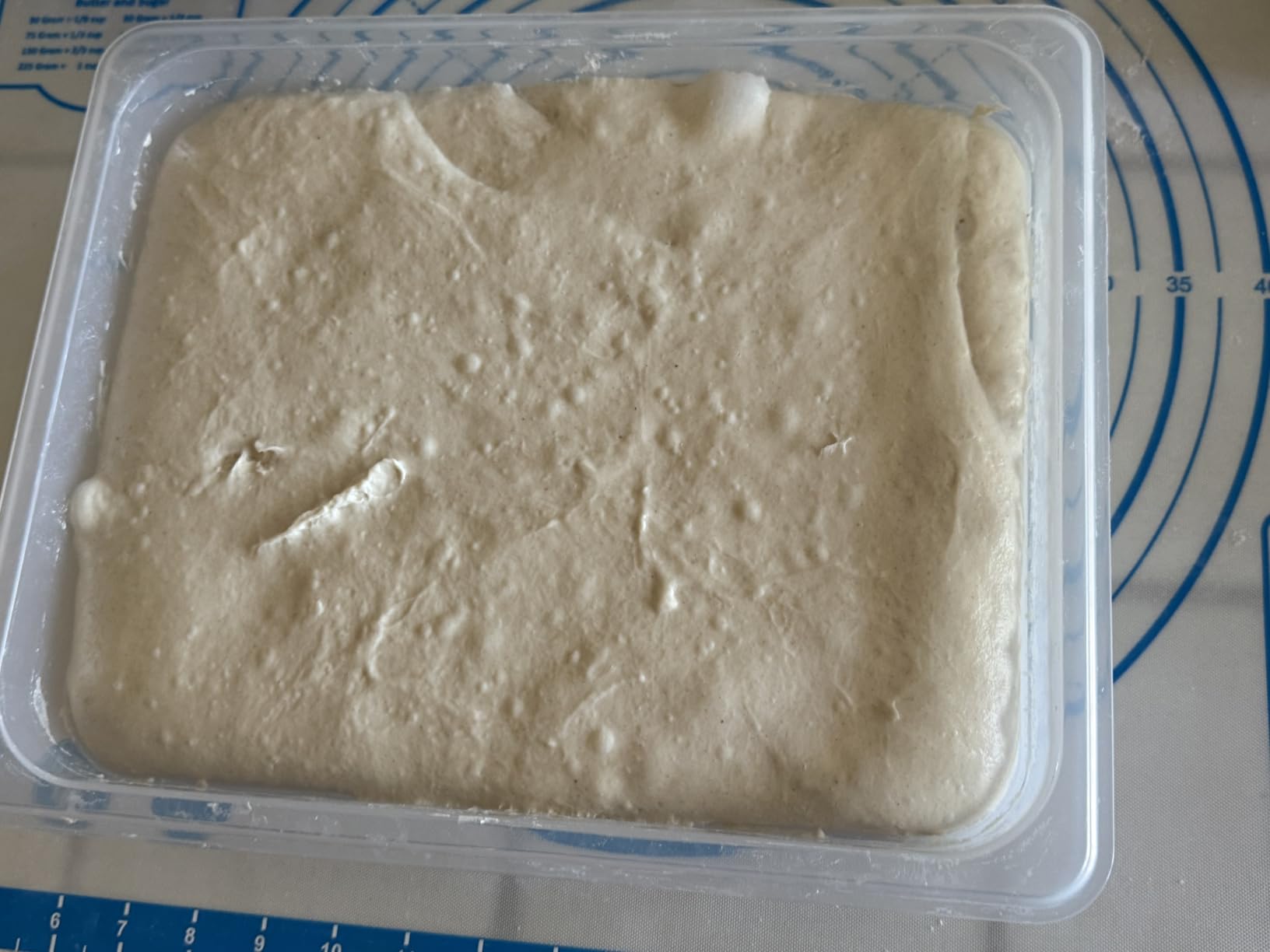
The feature we appreciated most is the volume markings on the translucent walls. You can watch the rise through the side of the container without lifting the lid, and you do not lose the humid environment every time you check. The airtight snap closure is what makes that possible and also what keeps a crust from forming on the surface of the dough.
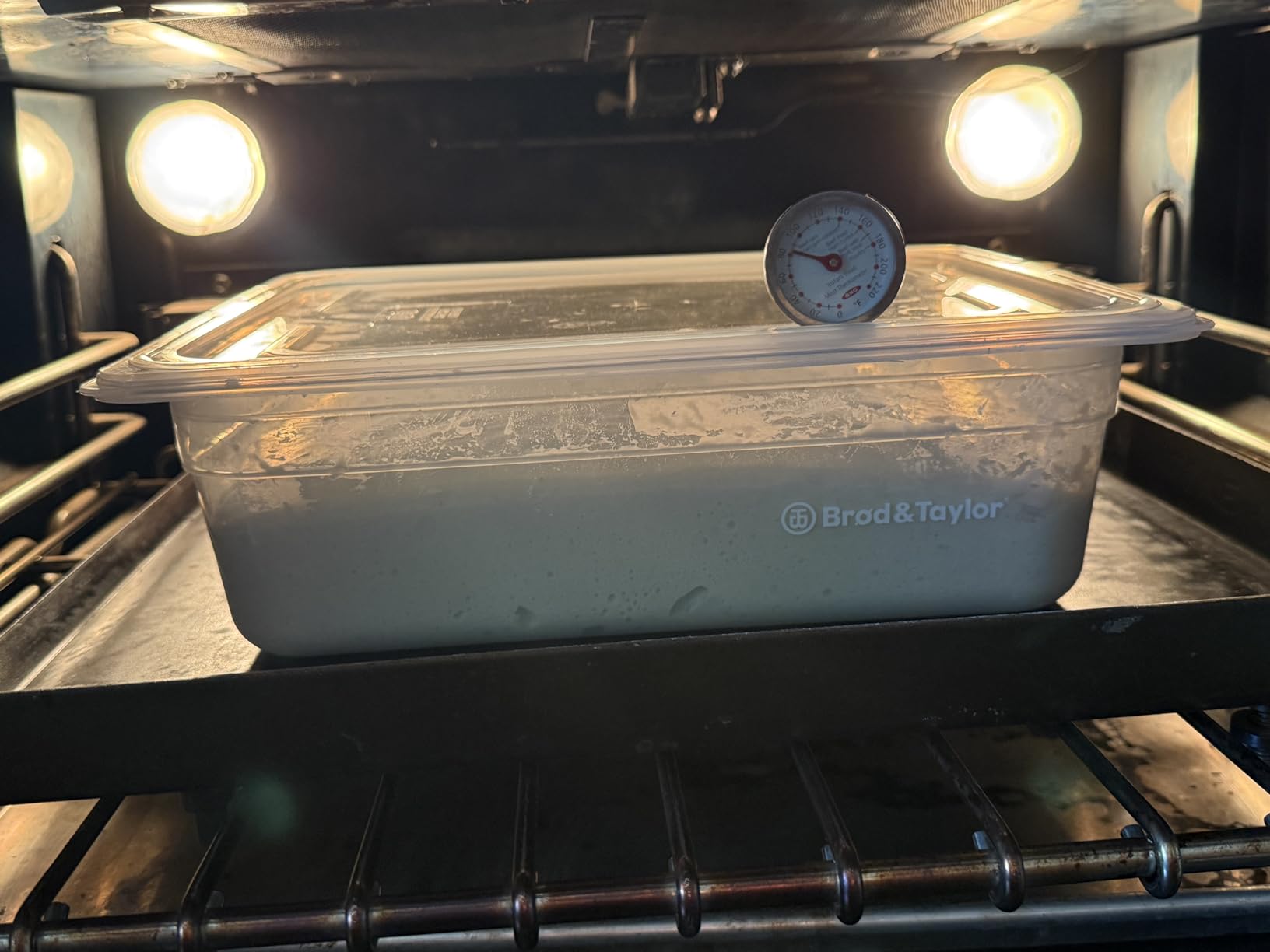
Material matters here, and BPA-free food-grade polypropylene is the right call. It is dishwasher safe, freezer safe, it does not stain or hold odors, and dough releases cleanly even on the high-hydration recipes that usually glue themselves to a plastic surface. The wide base also makes it an unusually good container for in-container fold techniques, since you have room to work the dough.
It stacks two units inside a folding proofer, or two units in a refrigerator shelf, which solves the fridge space problem that bakers on r/Sourdough keep asking about. That nesting behavior is what turns this from a single-use bowl into a system.
Who this proofer suits?
It suits any baker whose kitchen is warm enough for bulk fermentation but not consistent enough to trust, and it is the natural overnight cold retard vessel since it goes straight into the fridge. Bakers on r/Breadit describe the frustration of a changing room temperature, and this removes it at a fraction of the cost of heating.
It suits demanding high-hydration bakers especially, since the release is clean and the airtight seal stops a formed skin during long ferments. Because it nests two deep in a fridge, it also suits anyone whose shelf space is already spoken for.
Who should skip it?
Skip it if your kitchen is genuinely cold, because this container is insulation and not a heat source. It will faithfully hold whatever temperature the room gives it. Also skip it if you bake many small rolls, since one fixed volume suits one large batch rather than a tray of small pieces.
6. Dougvera 40x30x25cm Bread Proofing Box: Best for Bakers Who Want to See the Number
- Real-time digital display of the internal temperature
- Three heating layers on bottom front and back
- Four-layer insulated shell with foil lining blocks drafts
- Transparent PVC top for monitoring without heat loss
- UL-listed heating wire with bi-metal thermostat
- Only 45 reviews so limited long-term durability data
- Soft insulated shell limits usable height for tall loaves
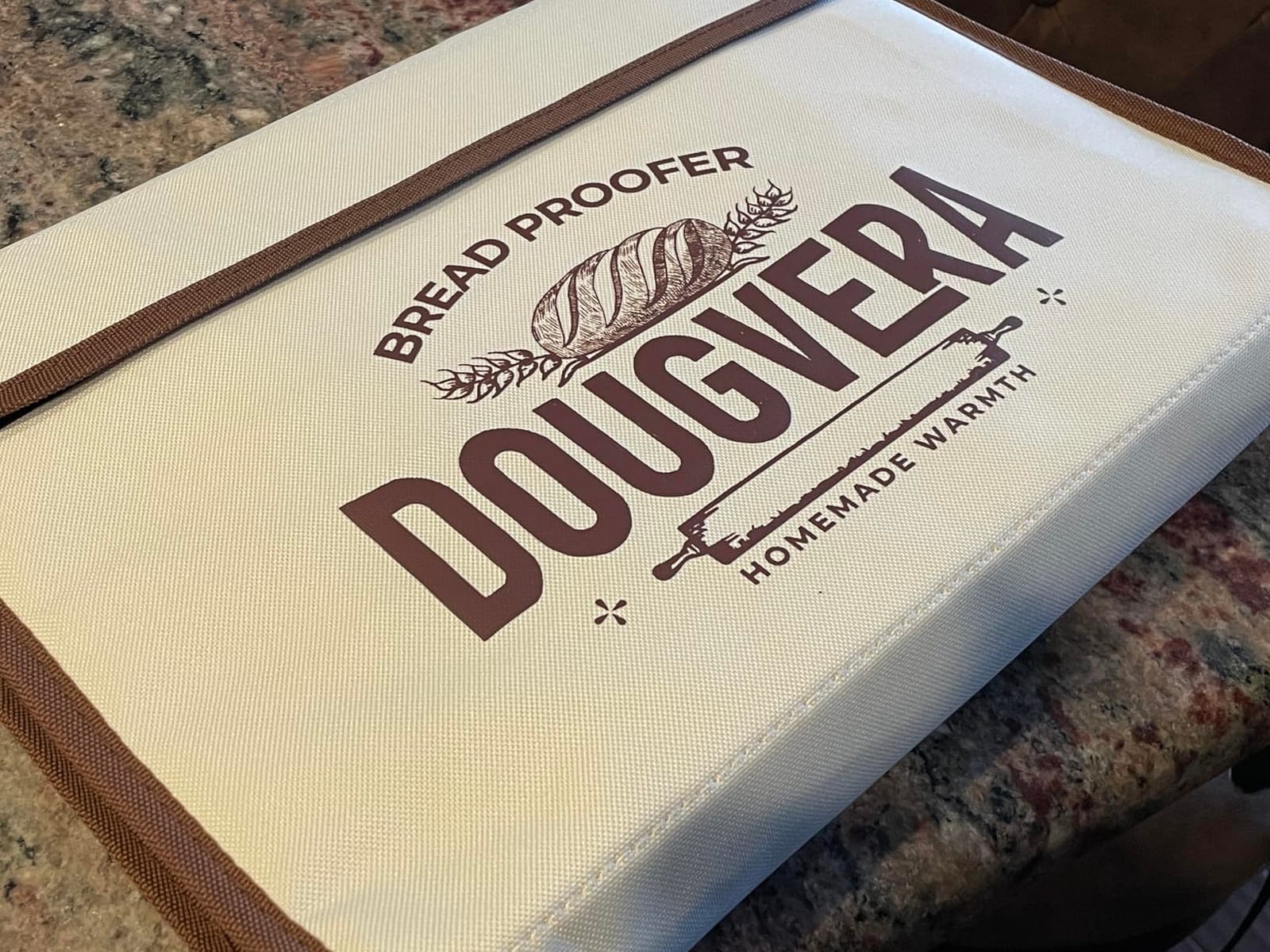
Most fabric boxes hide their temperature. This one puts a live readout on the front, and in a category where controllers and actual dough temperature routinely disagree, seeing the number changes how you bake. We found the displayed figure tracked the interior closely across our full schedule.
The build is more serious than the fabric construction suggests: 600D waterproof Oxford fabric, 7mm EPE foam and an inner aluminum foil layer, with a UL-listed heating wire and a bi-metal thermostat. The three heating layers sit on the bottom, front and back rather than a single strip underneath.
At 40 by 30 by 25 centimeters, the 30 liter cavity takes a large bowl with room above it, and a 0 to 48 hour timer covers every bread schedule including a long cold-forward proof. The clear PVC top means you can watch a rise without unzipping, and the whole thing folds flat when the bake is done.
One practical note. The 7 foot US standard plug cord is longer than most, which helps when you reach an outlet from a counter island and is awkward near a tight backsplash.
Who this proofer suits?
It suits the baker who has been burned by controllers that read well and bake badly. A visible internal temperature is the feature that buys confidence, and it pairs usefully with a probe in the dough if you want both numbers.
It also suits anyone who ferments other things alongside bread, since the 41-113F band covers yogurt, sauerkraut and kombucha work.
Who should skip it?
Skip it if durability history matters to you more than features. With 45 reviews on record, there is simply not a long track record, and that is a real limitation when you are trusting a unit to run unattended overnight for years.
Also weigh it against a hard-sided cabinet if you bake very tall loaves. An insulated fabric shell gives you less usable internal height than its exterior dimensions suggest.
7. CasaChic Folding Dough Proofer Kit: Best Bundled Starter Setup
- Kit includes banneton lame scraper water bowl and humidity gauge
- Range reaches 158F for hot proofs
- Five-layer insulation with metal rack for circulation
- Folds flat for storage
- Also ferments yogurt kefir and kombucha
- No printed instruction booklet included
- Lowest setting of 86F is too warm for summer starter care
- One owner reported it barely moved above room temperature
Most proofers are sold as a box. This one arrives as a working bread setup, with a banneton basket, a lame, a scraper, a water bowl, a humidity gauge and a metal rack already in the box. If you are starting sourdough from scratch, that bundle replaces several separate purchases.
The 70-158F range is the widest on the list and the only one that reaches true hot-proof territory, which makes it interesting for enriched doughs. Five layers of insulation plus a metal rack give 360 degree circulation under the dough, so nothing sits on a cold floor.
Two limitations are worth flagging. There is no printed instruction booklet, which beginners notice immediately, and the lowest setting of 86F is too warm to hold a sourdough starter at feeding temperature through a summer month, when you want closer to 76F.
There is also a small number of owners reporting the box barely raised the internal temperature above room temperature at the bottom setting. Our own runs held warmth acceptably, but that report is the reason we would calibrate with a thermometer before trusting it for a schedule.
Who this proofer suits?
It suits a first-time sourdough baker who wants the fermenting box and the shaping tools together, and it suits anyone who wants to experiment with hot proofs for brioche or focaccia where higher temperatures genuinely help.
It also suits bakers who like a full kit as a gift, since the banneton and lame are items most beginners would otherwise have to identify separately.
Who should skip it?
Skip it if you already own a banneton, a lame and a scraper, because the accessories are then weight you are paying for twice. Skip it if you keep a starter in warm months, because the low end of the range runs too hot for feeding.
8. Cozy Bread Insulated Proofing Box: Best for Apartment Storage and Small Counter Space
Cozy Bread® Proofing Box | Compatible with 10″ x 21″ Proofing Mat (Heat Mat Not Included) | USA Brand
- Holds 3-4 loaf pans or a 9x13 pan of rolls plus a loaf
- Collapses completely flat for storage
- Insulated walls hold heat steadily around a heating mat
- Smooth interior wipes clean
- Costs far less than a full electric cabinet
- Box only
- the heating mat is sold separately
- No temperature control of its own
- Not a food warmer despite looking like one
This is the space answer. At 0.37 kilograms and collapsible to nothing, it lives in a closet between bakes and comes out for a proof, which is exactly the profile apartment bakers keep asking for on forums.
The insulated walls do the actual work. Set a warm surface inside, close the box, and the enclosure holds that temperature far longer than an uncovered bowl would, which is the difference between a dough that stays warm for four hours and one that drifts.
It holds 3 to 4 loaf pans, or a 9×13 pan of rolls plus a loaf, so it is genuinely bread-sized rather than pizza-sized. The interior is smooth and BPA-free and wipes clean without scrubbing.
Understand the purchase before you make it. The heating mat is not included, and the box has no thermostat of its own, so on its own it does nothing. Several owners also note it looks enough like a food warmer that guests try to put dishes in it, which is fair.
Who this proofer suits?
It suits small kitchens and renters where a permanently occupied counter is not an option. It also suits batch bakers of rolls and sandwich loaves, since the pan capacity is the standout feature.
If you already own any 10 by 21 inch warming mat, this box makes a complete system, and the most common owner note is simply that the two pieces have to be bought together.
Who should skip it?
Skip it if you want a single self-contained purchase. Buying the box first and the mat later is how people end up with an empty insulated shell. Skip it if you want precise temperatures, because the enclosure amplifies whatever heat is applied rather than regulating it.
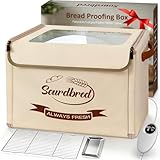
9. Sourdbred Extra Large Folding Proofer: Best Viewing Window for Watching a Rise
- Oversized 12.8 by 9 inch acrylic window shows the whole rise
- Folds to 2 inches for drawer storage
- Water tray adds humidity on demand
- Metal rack keeps dough elevated for circulation
- Five-layer insulated waterproof lining
- Narrowest ceiling in the roundup at 104F
- About 9 percent one-star reviews
- Some report the controller or heating underperforming
The 12.8 by 9 inch acrylic window is the reason this one is worth a look. On a proofer with a fabric shell, seeing your dough without opening anything is genuinely useful, and a window this large shows a full mixing bowl, not just a corner of it.
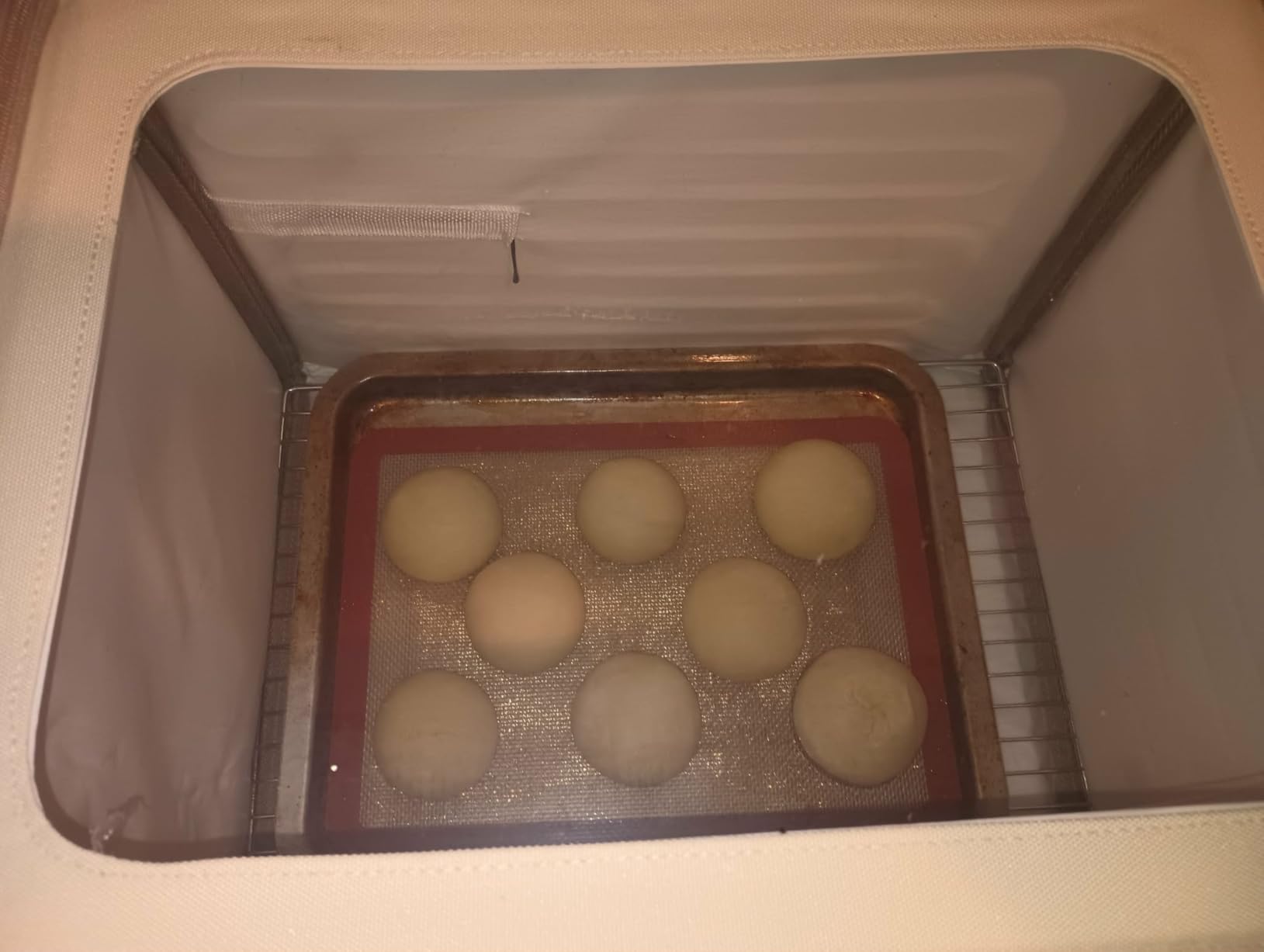
It holds about one large bowl plus four large bottles, so it covers a starter jar, a dough and a couple of small ferments in the same run. Heating on the front, back and bottom, with five layers of insulated waterproof lining, kept the interior steady in our tests.
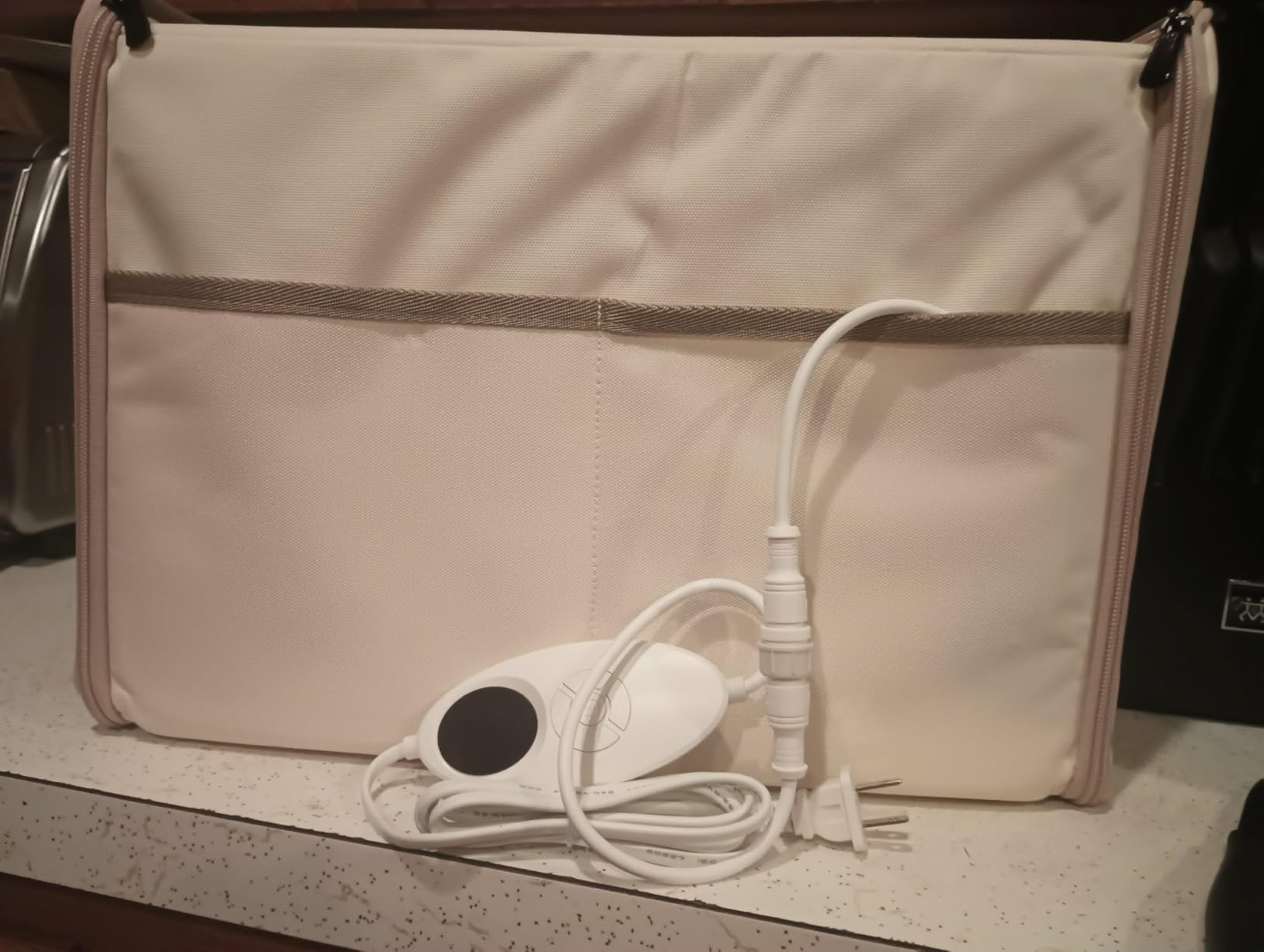
It folds to 2 inches, which is the thinnest packed size in this roundup, and there are leather carry handles for moving it between kitchen and counter.
Two cautions. The 68-104F range is the narrowest ceiling of the heated boxes here, which rules out hot proofs entirely. And roughly 9 percent of its reviews are one star, the highest share in the group, with owners citing controller or heating performance that did not meet the setting.
Who this proofer suits?
It suits the visual baker who learns by watching, and anyone running a starter and a dough in the same warm environment, since the capacity fits both plus bottles for ferments.
It also suits anyone whose storage is a shallow drawer, because two inches folded is the smallest packed footprint measured here.
Who should skip it?
Skip it if you want proofs above 104F, and skip it if you are risk-averse about electronics, given the one-star share. Buy a box with a higher ceiling and a longer review history instead.
10. SourKeeper Starter Warmer and Dough Probe: Best for Starter Care and Bulk Ferment in Small Batches
- Probe reads actual dough core temperature not just air
- 1F increment control with a live display
- Owners report roughly halved bulk times in cold kitchens
- Fits mason jars and Cambro containers
- Larger plate holds two pint-and-a-half jars
- Plate runs hotter than the printed chart suggests
- Temperature keeps climbing at a steady setting
- Instructions are essentially absent
- Plug and fuse config concerns outside the US
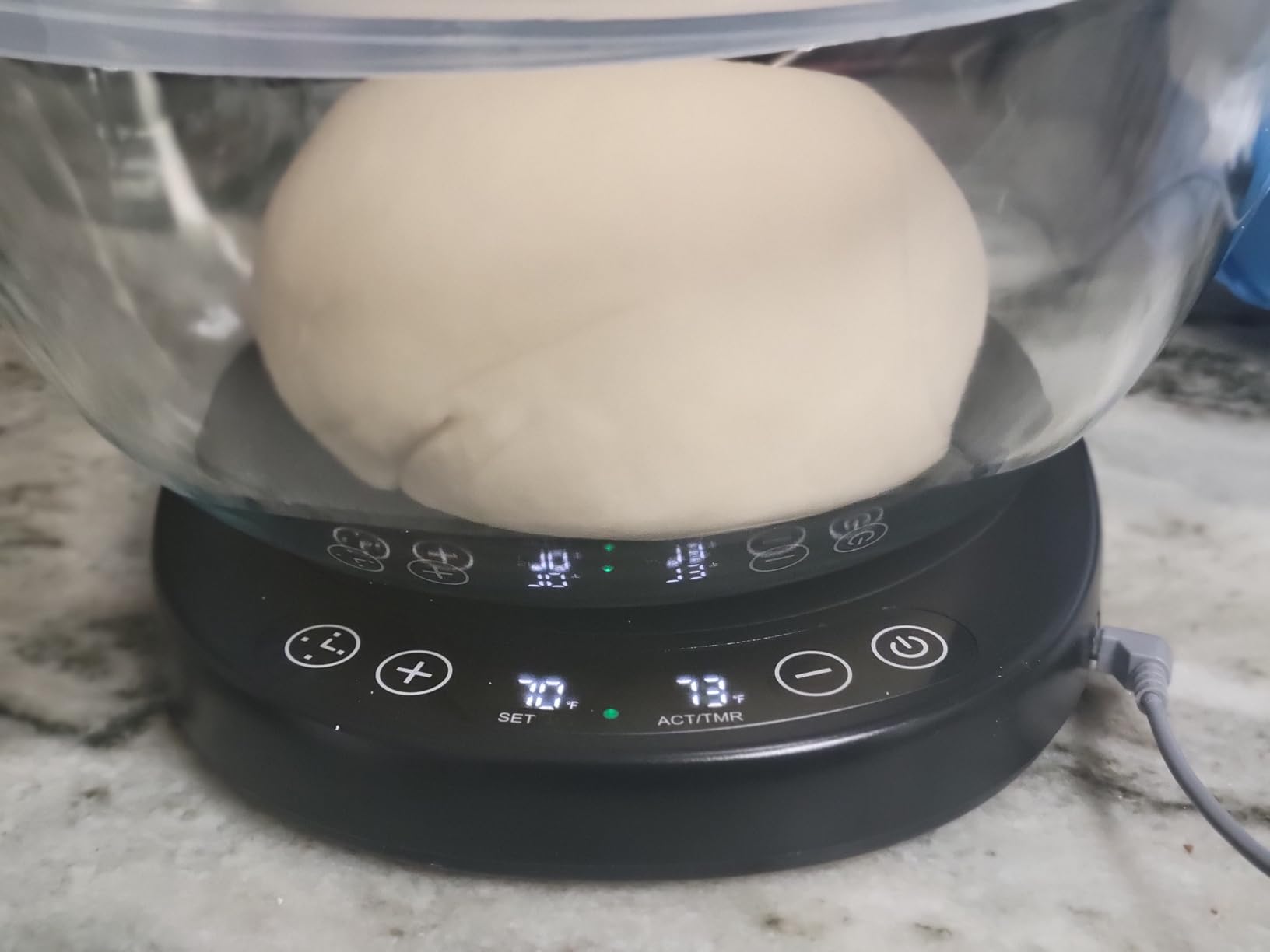
With 1246 reviews on record, this is the most widely reviewed warmer in the roundup, and the reason is simple. Instead of guessing at air temperature, the stainless steel probe reads the core temperature of your dough, which is the number that actually predicts fermentation speed.
Owners report roughly halved bulk times in cold kitchens, and we found the same pattern. A covered bowl on this plate moved from room temperature toward a usable fermentation temperature in a fraction of the time the same bowl would have taken on the counter.
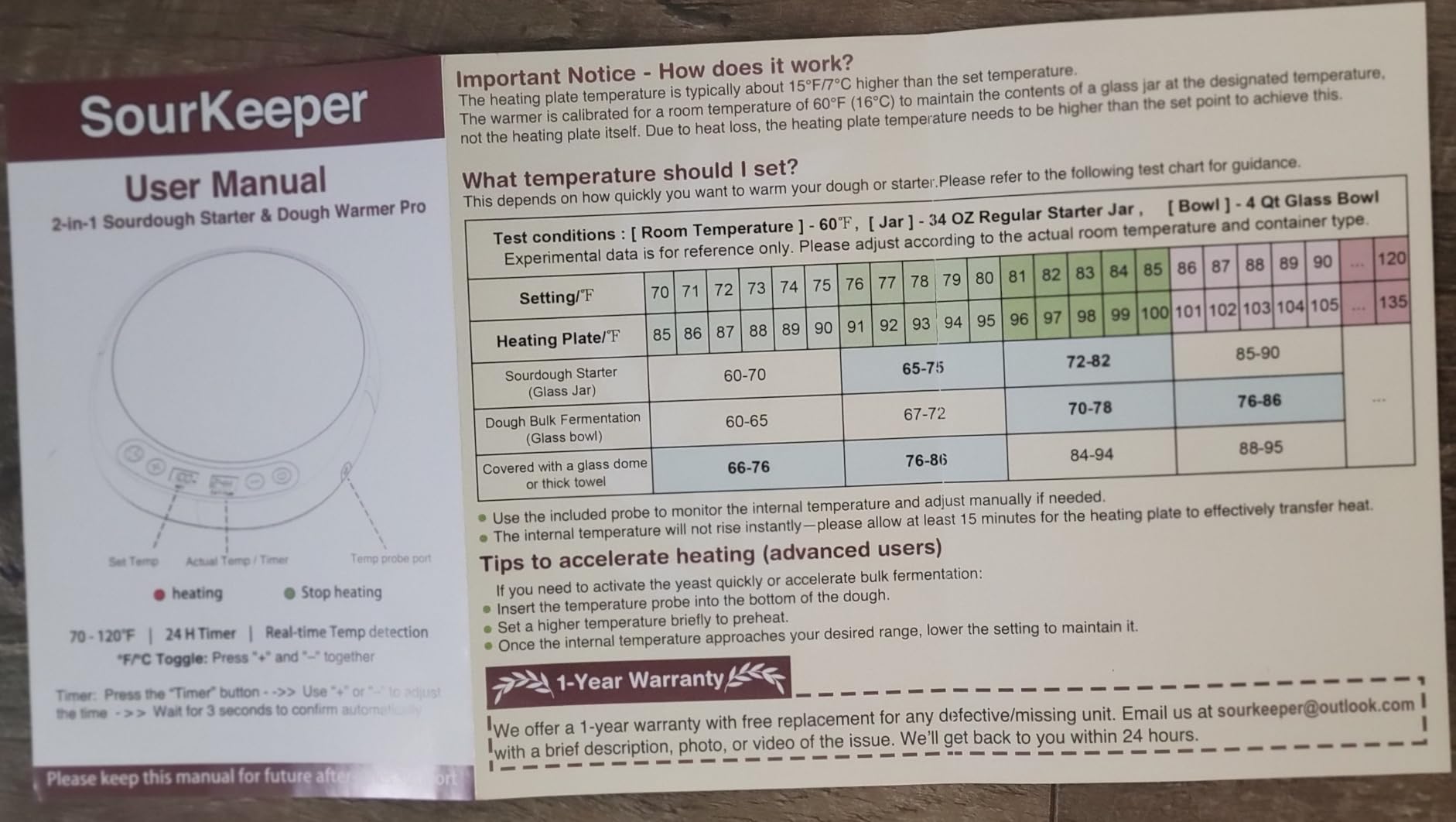
Control is in 1F increments from 70 to 110F with a built-in display, plus a 24 hour timer and automatic on and off warming. The base is 6.5 inches square and less than an inch tall, so it replaces a countertop cabinet rather than competing with it, and the larger plate on this version fits two pint-and-a-half jars.
Calibration is the main thing to plan for. Several owners report the plate running hotter than the printed chart, and internal temperature continuing to climb even at a steady setting, so treat the first week as calibration with the probe. Instructions are also close to absent, which owners across reviews mention directly.
Who this proofer suits?
It suits the baker who maintains a starter and wants it fed on a schedule through winter, plus anyone doing a single large dough who would rather measure than estimate. It is a genuinely small footprint for what it delivers.
It also suits bakers who stretch the tool beyond bread, since the same plate handles softening butter and cream cheese, and yogurt or other warm ferments.
Who should skip it?
Skip it if you bake multiple loaves at once, since this warms one bowl or a couple of jars. Skip it if you are outside the US without checking the plug and fuse configuration, which several one-star reviews raise. And skip it if you want proofs above 110F.
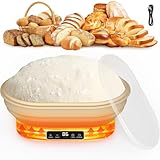
11. Pawtners 2L Electric Proofing Basket: Best Heated Banneton for Single Loaves
Heating Sourdough Bread Proofing Basket, 2L Electric Thermostatic Oval
- Works as a heating banneton and a general fermentation vessel
- Foldable silicone is easy to clean and unbreakable
- Detachable heating unit leaves the bowl dishwasher safe
- Clear lid allows monitoring without lifting
- Also works for yogurt thawing and warming food
- Only six discrete temperature settings
- Timer tops out at 6 hours
- 2L oval is small for large high-hydration doughs
This is the smallest, most focused unit here. Instead of a cabinet, it is a 2 liter oval silicone basket with a heating element built into the base, which means it does the job of a banneton and adds heat, in one object.
For a single loaf, that is a better fit than any box. There is no wasted heated air, no zipper to lose heat through and nothing to fold away, and the heating unit detaches so the bowl itself goes in the dishwasher.
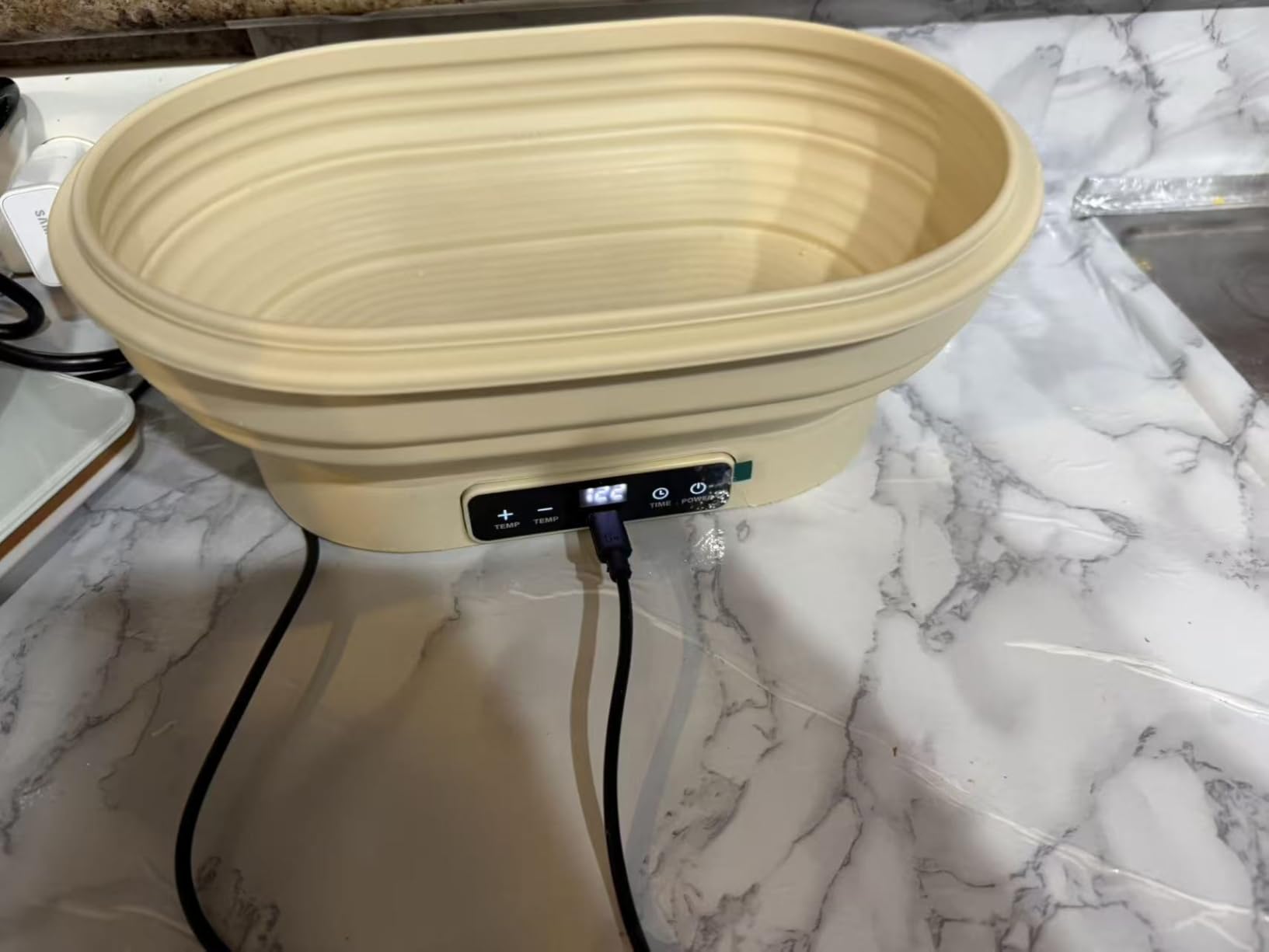
Six temperature settings from 77 to 122F cover a sourdough proof and a warm enriched proof, and a clear LCD screen plus a transparent lid mean you can watch without opening it. A 4L version exists if you bake larger loaves.
The tradeoffs are the resolution of the controls and the clock. Six discrete steps is coarse next to a 1F increment controller, and a 6 hour maximum timer will not cover a long proof on its own, so keep a kitchen timer for long schedules.
Who this proofer suits?
It suits the baker who makes one loaf at a time and would rather have a purpose-built tool than a box that is mostly empty air. It also suits anyone who wants a banneton that doubles as a warmer for butter, yogurt or thawing.
Foldable silicone also means nothing here can shatter, which matters in a small kitchen with hard floor surfaces and limited shelf height.
Who should skip it?
Skip it if your dough is very wet and very large, because 2 liters is a real limit on high-hydration bulk. Skip it if you run proofs longer than six hours or want precise temperature stepping, and consider the 4L variant before buying.
12. HEATIDEAS Warming Box with Metal Rack: Best Compact Box for Single-Bowl Batches
Bread Proofer Warming Box with Temperature Timer Control Metal Rack
- LED shows actual dough body temperature not just the setting
- Steady warm environment gives predictable rise times
- 0-48 hour auto-off timer with 0H always on option
- Folds flat and wipes clean
- Fits one standard proofing bowl
- Some packages arrived without the advertised metal rack
- One owner reports the thermostat running about 5 degrees off
- Bottom surface runs warm
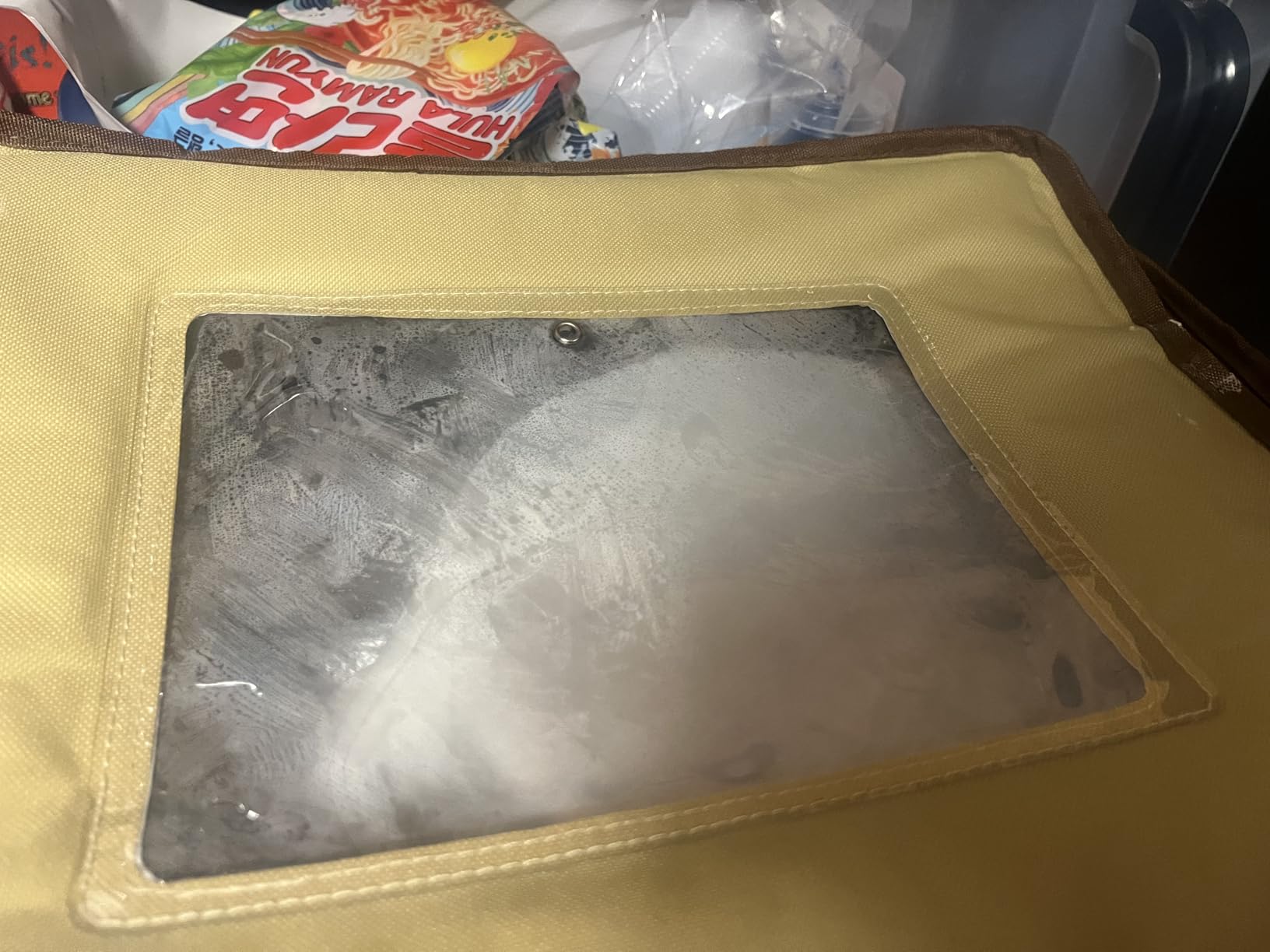
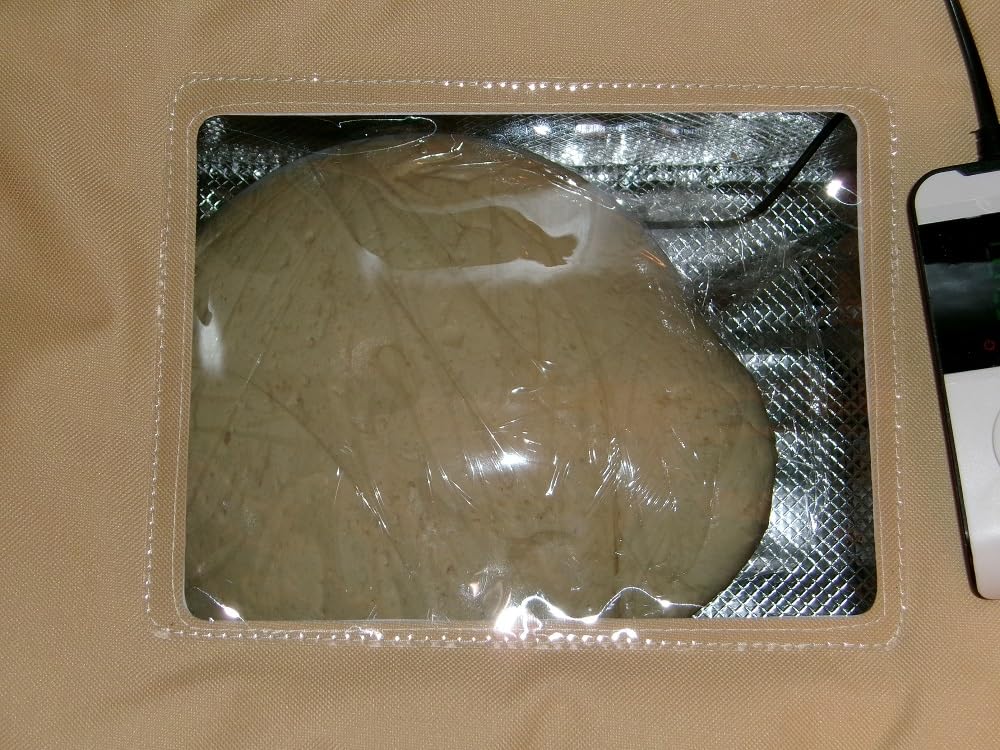
- Zipper top is the main heat-loss point
This is a compact, honest box for the common case of one mixing bowl. At 13 by 15.75 by 9.8 inches it accepts a standard proofing bowl, which is the shape most home bread dough is actually fermented in.
The plug-in NTC sensor is a step above the usual. Owners report taping it to the outside of a mixing bowl to track the temperature of the dough body rather than the air in the box, which is the number that matters, and the LED shows both temperature and the time remaining on the timer.
Power draw is a modest 45W, below the 65W, 100W and 200W figures the other heated boxes here are rated at. The 0 to 48 hour auto-off timer with a 0H always-on position means you can leave it running for a long schedule without babysitting. The vinyl shell wipes clean and folds flat.
Two things to check on arrival. Some packages have been missing the advertised metal rack, so confirm it is in the box. One owner also reports a thermostat running about 5 degrees off, and the bottom surface runs warm enough that a cooling rack underneath helps airflow.
Who this proofer suits?
It suits the baker working from a single bowl at a time who wants a scheduled, low-draw appliance that can run overnight without a large footprint. The 50-113F range also suits sauerkraut, tempeh, kombucha and yogurt, so the box earns use outside bread.
It suits anyone who prefers a visible, probe-based temperature reading over a dial setting they have to learn.
Who should skip it?
Skip it if you bake more than one bowl at a time, since the cavity is sized for a single bowl. Skip it if you need a quiet, insulated cabinet, because a zipper top loses heat faster than a snap lid or a rigid cabinet.
Heated vs. Unheated Proofers: Which One Do You Need?
Buy unheated if your kitchen runs warm and stable and you mainly want a consistent, humidity-controlled place to bulk ferment and to hold dough overnight in the fridge. Buy heated if your kitchen is cold, swings between seasons, or if you want to schedule a proof and walk away from it.
The unheated group in this roundup is led by the 6 liter proofing container, which is airtight, stackable, dishwasher safe and works in a fridge as readily as on a counter. It costs a fraction of an electric cabinet and handles the majority of bread schedules in a temperate kitchen.
The heated group runs from a flat warming mat to a full digital appliance. A mat suits a baker who already owns bowls. A fabric folding box suits a baker who wants capacity, a timer and a temperature window at a moderate cost. A digital appliance suits a baker who wants the same result every time and does not mind a permanent counter presence.
There is a third path worth naming, and bakers on r/SourdoughStarter bring it up often. Many ovens already include a proof setting, which makes a proofer redundant. If yours has one that holds around 80F, test it before you buy anything.
How to Choose a Dough Proofer: 6 Checks?
Check capacity against your real batch, not the loaf count on the box
Most capacity claims are stated in bowls or in liters, which is only useful if you know your own dough volume. A 900g sourdough loaf in a wide bowl and a 900g loaf in a tall tub occupy very different spaces. The best rule we found: if you want two loaves proofing at once, confirm the interior is at least 15 inches wide and 11 inches tall. Anything smaller is a one-dough box that will feel cramped the first time you try it.
Check the temperature range against the stages you actually bake
Read the range as three separate questions. Can it hold 75-80F for a sourdough bulk ferment? Can it hold 80-85F for a final proof? Can it reach 100-130F for a hot proof on an enriched dough? A box with a 50-104F range fails the third question outright, and a box whose lowest setting is 86F cannot hold a starter at feeding temperature in summer.
Check humidity control, because it is the most overlooked feature
A water tray, a humidor or a stated damp-towel option matters more than most buyers expect. Dough that dries out in ten minutes forms a skin that tightens during scoring and suppresses oven spring. The expandable window, the clear lid and the airtight snap closures all exist for the same reason: letting you check the dough without destroying the humidity you built.
Check the folded footprint against your actual storage
Fold-flat claims are only meaningful with a number. The folded heights stated in this roundup run from 2 inches to 2.75 inches. Measure the drawer or the shelf before you order, because an appliance that lives permanently on the counter is a very different purchase from one that disappears between bakes.
Check power draw if you plan overnight runs
Draw across the heated boxes here runs from 45W up to 200W. A 65W box left running for 10 hours uses about 0.65 kWh, while a 200W unit left on overnight uses meaningfully more. This is a small part of an electricity bill, but the forum DIY crowd raises it, and the honest answer is that a heated box costs pennies per overnight proof while a container costs nothing at all.
Check materials, and check whether they are stated
NSF-certified, food-grade polypropylene or high-density polyethylene are the right choices for stackable containers, since they are dishwasher safe, resistant to staining and release dough cleanly. Clear polycarbonate or clear SAN wins when visibility is the point. Silicone folds and will not break but does not hold a rigid shape. Avoid any plastic that does not declare food-contact use, and for heated units check for a listed heating element and thermostat. If you want more on the containers themselves, our bakeware set picks cover the shape question.
Temperature Decoder: What to Set for Each Stage?
Set a sourdough bulk ferment at 75-80F, a final proof at 80-85F, and a warm proof at 100-130F for enriched or brioche doughs. Those three numbers are what every proofer range in this roundup is really being judged against.
Most of the heated boxes here top out at 104 to 113F, which comfortably covers bulk and final proof and leaves nothing for hot proofs. The InnovifyHub at 130F and the CasaChic at 158F are the two that reach further.
The bottom of the range matters just as much. A box that bottoms out at 86F cannot hold a starter at feeding temperature in a warm month, and a box that starts at 50F spends longer reaching temperature but gives you a genuine cold room option. The Brod and Taylor spans 70-120F for proofing and 85-195F in slow cooker mode, which is a wide band of uses from one appliance.
One more decoding note. Read the stated range as the controller range, then measure the dough. Owners across this roundup report internal temperatures running a few degrees under the setting on fabric boxes, and a probe is the only reliable answer.
How to Use a Dough Proofer Step by Step?
Five steps, and the order matters more than the settings do.
Preheat for 15 to 20 minutes. Empty boxes take longer than you expect to reach temperature. A warming mat is the exception and preheats in one to two minutes.
Add water for humidity. Fill the water tray or humidor with warm water. Skip it only if you are proofing a very enriched dough where you want a drier surface.
Load the dough low and centered. Leave clearance on all sides, and use the rack so the base is not sitting on the heated surface.
Set the temperature and start the timer. Aim for 75-80F bulk or 80-85F final proof, and subtract a couple of degrees if your box runs warm.
Verify with a poke, not the clock. A gentle finger press that springs back slowly and leaves a slight dent means the dough is ready. A fast snapback means it needs more time.
For a cold retard, skip the heating entirely. Shape, put the dough in an airtight container, and move it straight to the refrigerator. In the morning, take it out, let it warm while your oven heats, and score and bake.
Cheaper Alternatives to Buying a Proofer
An oven with a proof setting is the best substitute if you already own one, and setting around 80F will cover both bread stages. Beyond that, here is what actually works, ranked.
Oven light on: genuinely useful in cool kitchens, and it costs nothing. Weak, uneven and the box gets hot, so watch it.
Bowl with plastic wrap and a damp towel: the classic home method and it works in a warm room. It is what the 6 liter container simply does better.
Hotboxed bathroom: shower, run hot water, close the door, put the dough on a shelf. Humidity comes free.
Cooler with a candle warmer: a picnic cooler and a tea light hold a warm, humid pocket for hours. Popular on r/Sourdough, and it works.
Microwave with a cup of hot water: a mug of hot water beside your bowl, with no food inside the microwave. Short proofs only, and mind the plastic.
What none of these give you is a thermostat. That is the actual thing a proofer buys you, and it is why bakers describe the premium units as buying “exact temps and peace of mind” rather than extra capacity. If you bake in a stable warm kitchen, the free methods above are the honest answer. If your results swing with the weather, that swing is what you are paying to remove.
Frequently Asked Questions
Are dough proofing boxes worth it?
Yes, if your kitchen is cold or swings wildly between seasons and you bake on a schedule. A proofer holds one steady temperature through bulk ferment and final proof, so the same recipe rises in the same number of hours in January and July. No, if your oven has a working proof setting or your kitchen stays warm, because a lidded food-grade container covers most bread schedules at a fraction of the cost. Heating is only needed for cold climates or scheduled proofing.
What is a good proofing box for dough?
For bread, size it to at least two loaves or four to six dough balls, and look for a clear-sided, lidded, food-grade container or a heated box with a thermostat reaching at least 90F and a water tray. A 6 liter airtight container handles up to 3000 grams of dough in one batch. A heated cabinet is the better pick when you need a controlled 80-85F final proof in a cool room.
What can I use instead of a dough proofing box?
A greased bowl covered with plastic wrap or a damp towel is the standard home substitute and works fine in a warm kitchen. An oven with a proof setting is better because it is thermostatically controlled. Other options include the oven light left on, a hotboxed bathroom after a shower, a cooler with a candle warmer for a warm humid pocket, and a microwave with a mug of hot water and no food inside.
What temperature should a dough proofer be set to for sourdough?
Set 75-80F for bulk fermentation and 80-85F for the final proof, checking the dough rather than trusting the clock. Yeast activity roughly doubles for every 8 degree rise, so a cool room can stretch a four-hour bulk into eight. Many fabric boxes run a few degrees under the controller setting, so measure the dough core with a probe during your first session and adjust.
Should a proofing box be airtight?
Mostly yes for the rising stage. An airtight snap or zip lid keeps humidity in and stops a dry skin forming on the dough, which would tighten during scoring and suppress oven spring. A vented or lightly breathable box makes more sense for cold storage in a refrigerator, where you want some exchange with the fridge air. The practical rule is airtight while proving, looser while retarding.
Conclusion: Which Dough Proofer Should You Buy?
Buy the Brod and Taylor Folding Proofer if you want the most accurate, most proven heated setup and bake more than once a week. Buy the 6 liter proofing container if your kitchen is warm and you mainly want a reliable bulk ferment and cold retard. Buy the Cozy Bread mat if you already own bowls and want a compact, low-cost fix for a cold kitchen.
Our full comparison of the best dough proofers for bread baking covers twelve options across every price and capacity point, from a single-heated-banneton approach to a folding digital appliance. Whichever one you choose, calibrate it with a probe in the dough during your first bake, and the results become repeatable from the second loaf onward. If you are still working out the rest of your bread setup, start with our bread maker guide.