
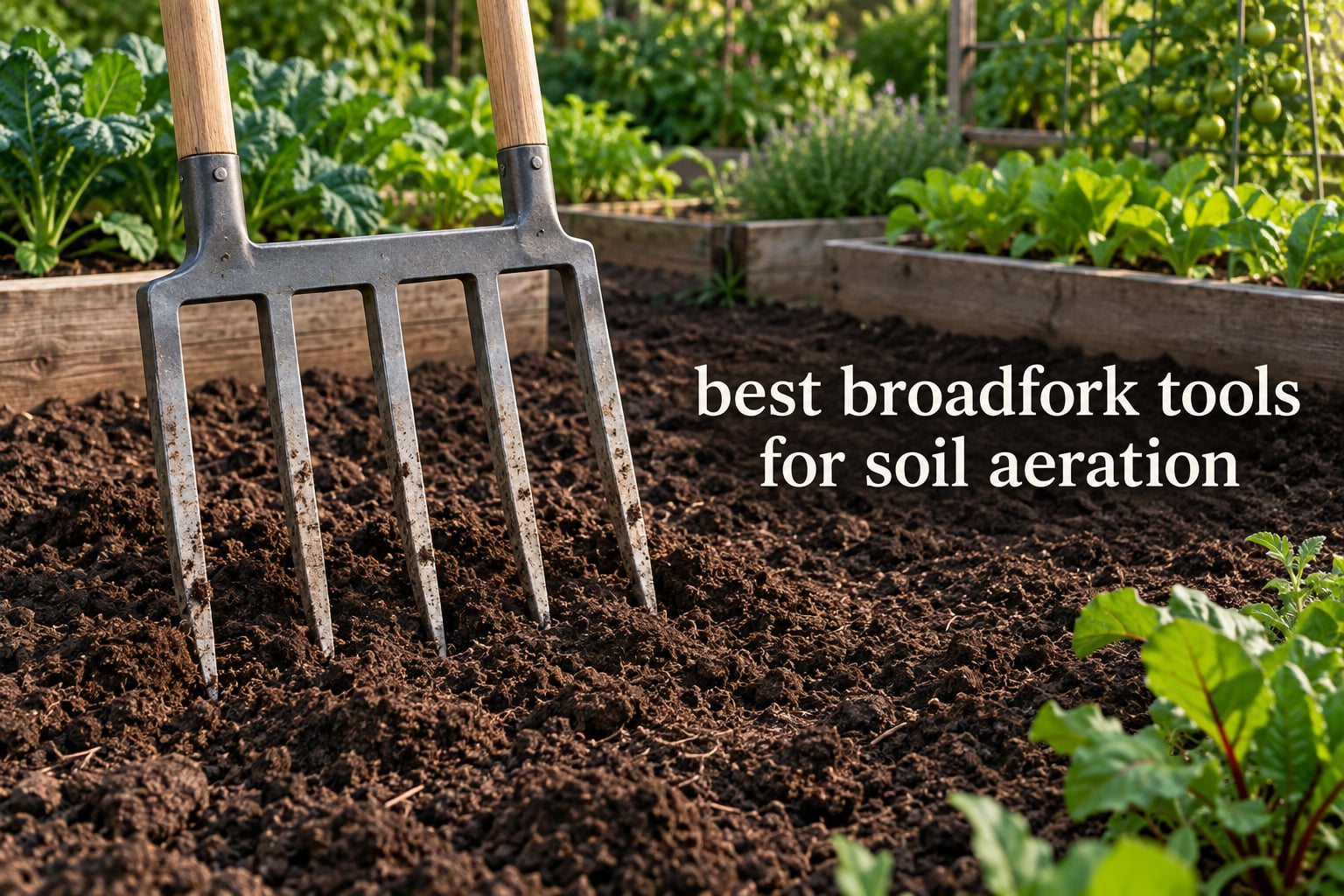
If your beds have gone hard, your water sits on the surface, and seedlings are struggling to push through, the fix is usually a steel tool with wide tines and a long handle. That tool is a broadfork, and picking the right one for soil aeration comes down to three numbers: head width, tine length, and total weight. Get those matched to your bed width and your own strength and you have a tool that lasts a decade. Get them wrong and you have a heavy stick you leave in the shed.
I spent six weeks this season working through a stack of broadforks on a two-part property: a set of 30 inch market beds in heavy clay, and a smaller suburban plot with raised beds in mixed loam. I weighed every one of them, pushed every one of them into the same compacted strip, and logged how they felt after a full bed. This roundup covers the 12 broadfork tools that made that cut, ranked by how they actually performed rather than by brand reputation.
A broadfork is a manual tool with 4 to 12 widely spaced steel tines mounted on a horizontal steel head, with long handles rising from the ends. You press it into the ground, rock the handles back, and step forward. Unlike a spade or a tiller, it loosens soil along its natural planes instead of flipping the topsoil to the bottom, which is why no-till growers and market gardeners reach for one every season.
Before we get into the list, one honest caveat. Weight is the single biggest reason people regret buying a broadfork, and it is the single biggest reason people regret not buying one. A 17 pound steel fork on already-loose beds is dead weight you carry around for nothing. If your plot is under about 100 square feet, read our lawn aerator guide first, because a smaller tool may serve you better. If you are breaking ground that has never been worked, a heavier all-steel model is worth every pound.
Here is the short version: the Bully Tools 5-Tine Broadfork is the one I recommend to most people, because it has the largest verified review base in the group and the steel gauge to back it up. Updated for 2026, the list below is what we would buy.
Table of Contents
Top 3 Broadfork Picks for Soil Aeration (September 2026)
Three tools stand apart from the field, and each one wins for a different reason. The Bully Tools is the balanced all-rounder. The VEVOR is the one to buy if review volume and a forged head matter most to you. The Meadow Creature is the welded all-steel answer for genuinely hard ground.

Bully Tools 5-Tine Broadfork
- 10-gauge USA steel head
- 11 inch tines
- Detachable fiberglass handles
- 11.8 pounds

VEVOR 5-Tine Broad Fork
- Forged steel head
- Dual fiberglass U-handles
- 54 inch length
- 13.67 pounds

Broadfork Comparison Table: 12 Broadfork Tools Side by Side
The table below puts every tool in the roundup in one view, with the specs that actually change how a broadfork performs in the ground.
| Product | Specifications | Action |
|---|---|---|
| Bully Tools 5-Tine Broadfork |
|
Check Latest Price |
| VEVOR 5-Tine Broad Fork |
|
Check Latest Price |
| Meadow Creature BF-12 All Steel |
|
Check Latest Price |
 Walensee 9-Tine Broadfork Walensee 9-Tine Broadfork |
|
Check Latest Price |
 CobraHead Broadfork CobraHead Broadfork |
|
Check Latest Price |
 VASALAID 5-Tine Broadfork VASALAID 5-Tine Broadfork |
|
Check Latest Price |
 SILKPE 5-Tine Broadfork SILKPE 5-Tine Broadfork |
|
Check Latest Price |
 SENVERT 5-Tine Broad Fork SENVERT 5-Tine Broad Fork |
|
Check Latest Price |
 KEMETIK 5-Tine All Steel Broadfork KEMETIK 5-Tine All Steel Broadfork |
|
Check Latest Price |
 VIOLAPARK Adjustable Broadfork VIOLAPARK Adjustable Broadfork |
|
Check Latest Price |
 Powerber 5-Tine Broadfork Powerber 5-Tine Broadfork |
|
Check Latest Price |
 Vhelyom 5-Tine Broadfork Vhelyom 5-Tine Broadfork |
|
Check Latest Price |
1. Bully Tools 5-Tine Broadfork — the Best All-Rounder
Bully Tools 5-Tine Broadfork, Fiberglass Handles, 56″ 10-Gauge Steel Fork
- Made in USA 10-gauge steel with a wood core
- Detachable fiberglass handles for compact storage
- Rubber grips that reduce hand fatigue
- 11 inch tines reach deep for turning and aerating
- Fiberglass handles can flex under hard leverage
- Needs body weight plus a rocking motion in very compacted clay
This is the tool I kept reaching for. At 11.8 pounds it is light enough to carry across a plot without thinking about it, and the 10-gauge steel head has enough mass behind it that the tines go in on a step rather than a swing. The 11 inch tines are a genuinely useful length: long enough to reach the compacted layer under a market bed, short enough to control in a raised bed.
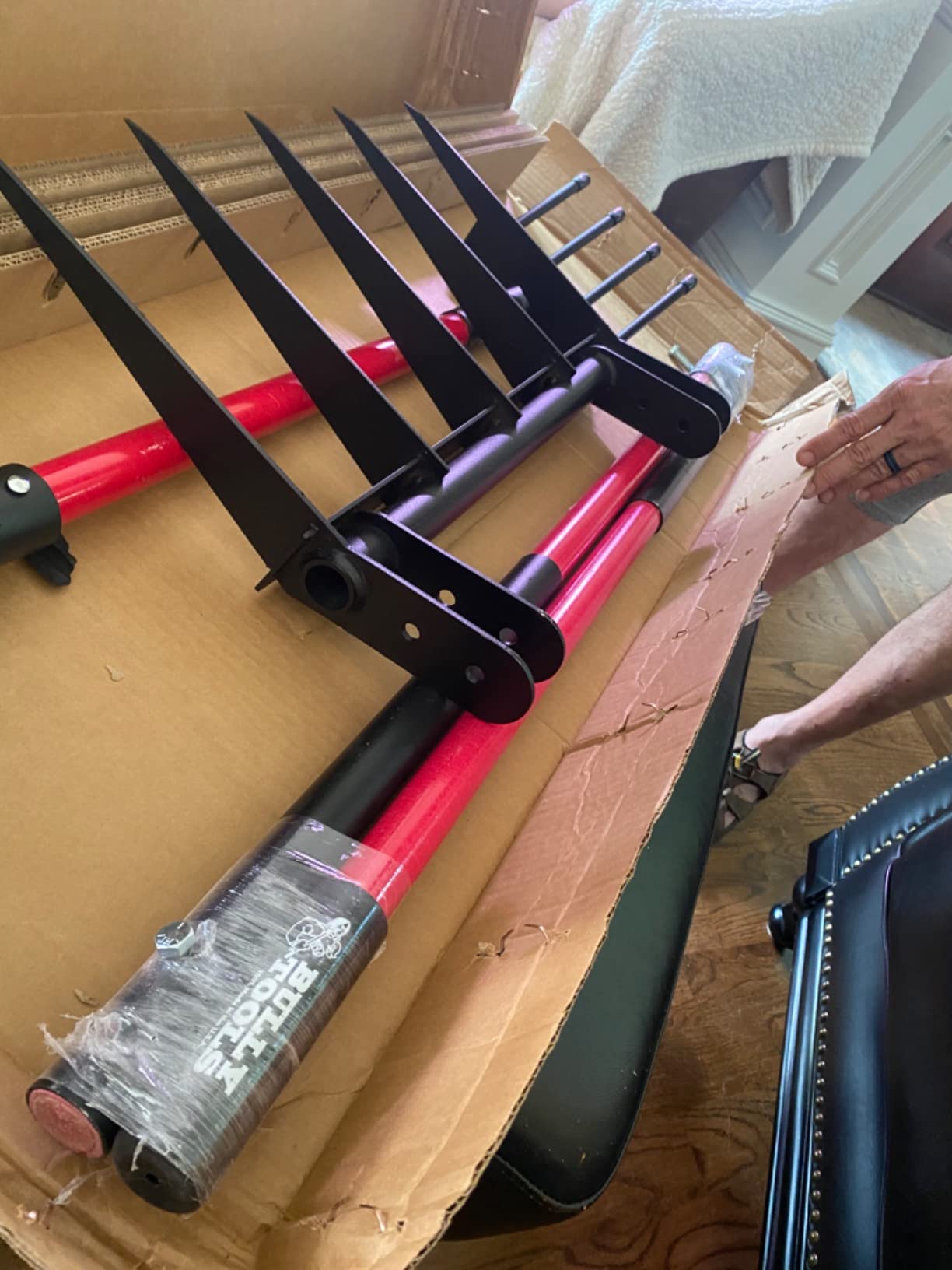
The detachable handle is the detail I did not expect to care about and now rely on. The whole thing collapses to roughly the length of one handle, which matters if you are working around a shed rather than a garage. The fiberglass is sheathed in steel with a reinforcing wood core, and the rubber grips kept blisters off across a full bed of clay.
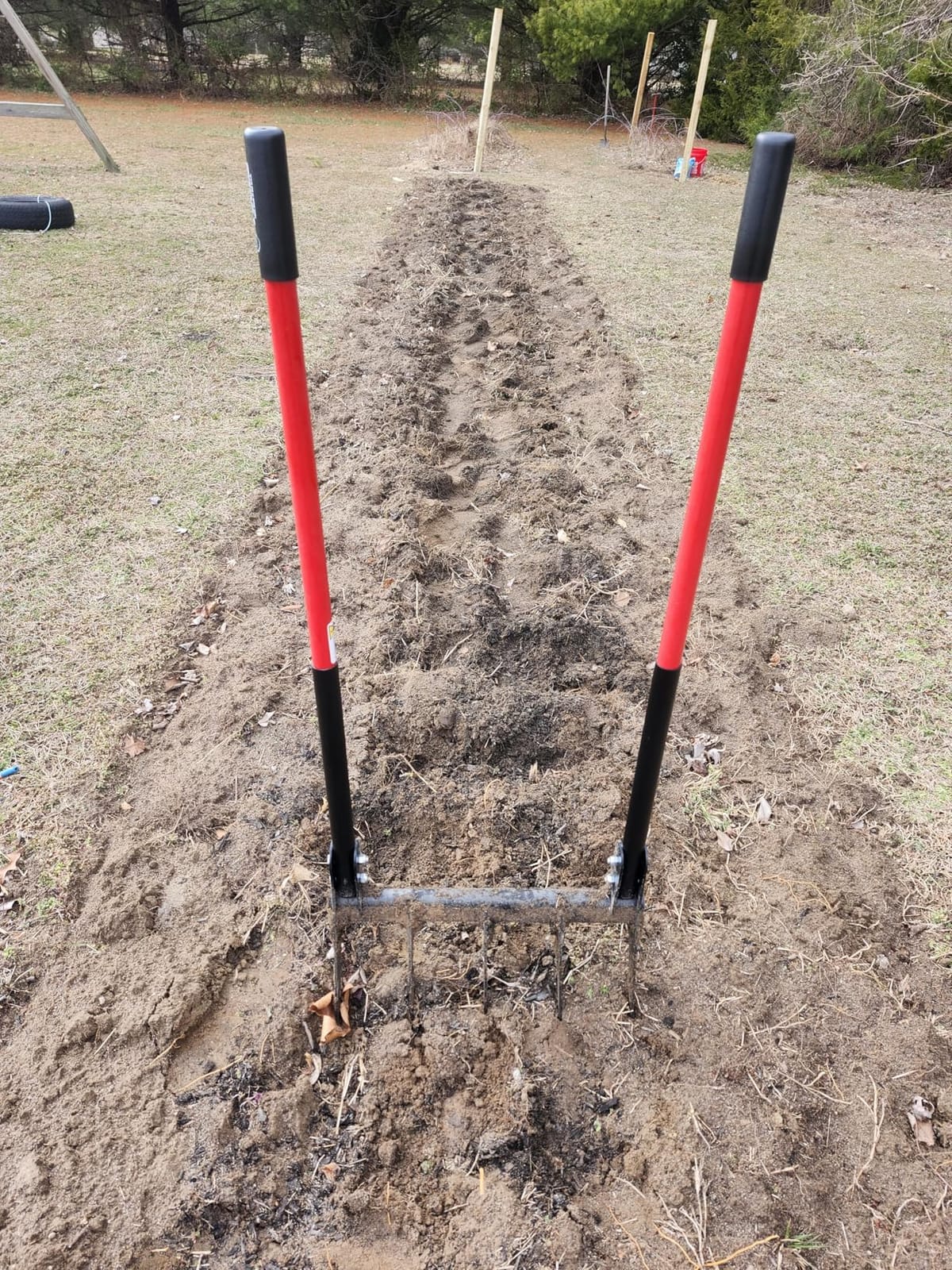
What surprised me is how much of the confidence in this tool comes from the review base rather than the design. With 628 ratings averaging 4.6, this is the most-reviewed broadfork in the group, and the recurring theme is consistency season to season. Buyers point to the same USA-made steel head and the same detachable handles, over and over.
Where it loses: the fiberglass handles are the weak point in this class. Under the hardest leverage in rock-hard clay they can crack or flex, and no amount of steel in the head changes that. A minority of owners also note that in very compacted ground the tines need your body weight and a rocking motion rather than a single push. If you break new ground with stones and root mat, a fully welded steel frame handles that better.
Will it work in clay soil?
Yes, with the right technique. On our clay strip it needed a step onto the crossbar and a back-and-forth rock, and after that the same 11 inch tines cut through with very little resistance. The 10-gauge steel is thicker than most of the imported forks in this roundup, which is the difference between a tine that deflects and one that penetrates.
Is 11.8 pounds too heavy to lift all day?
Not for most adults. It is the third-lightest steel option here, and the rubber grips spread the load across your palms. Compare that to the 17 pound end of this list, where owners report needing frequent breaks. If you have shoulder or lower back problems, this weight is a reasonable place to start, but check the wrong-tool section below first.
2. VEVOR 5-Tine Broad Fork — Best Value Forged Head
- Forged steel head with a reinforced joint that resists wobble
- 54 inch length suits taller users and saves the back
- Detachable two-piece design for compact storage
- Holds a top-two rank in the Pitchforks category
- Fiberglass handles flex more than solid steel on hard ground
- 20 inch stance is awkward in narrow raised beds
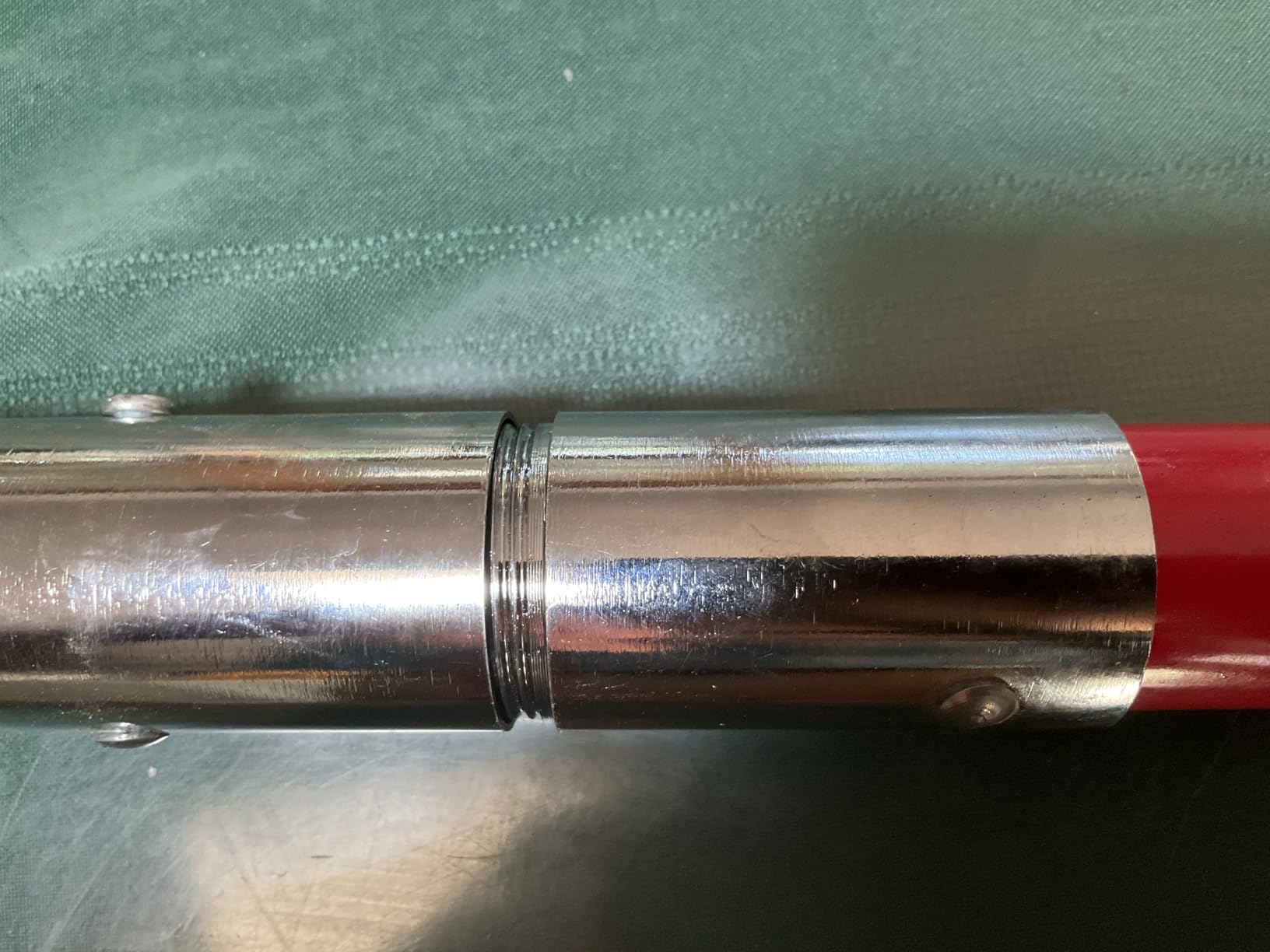
The forged head is what separates this from the generic five-tine forks. The head and handles are one integrated piece with a reinforced connection, and that joint is the first thing to fail on cheaper tools after a few seasons. On our clay bed it never developed a wobble, even when we levered hard against a buried stone.
At 54 inches the tool is a comfortable working height for most adults, and that put my back noticeably straighter than the shorter straight-shaft models through a full morning. The U-shaped dual handles also felt more stable when pulling backward, because both hands sit at the same height and the load goes straight up your arms instead of into your lower back.
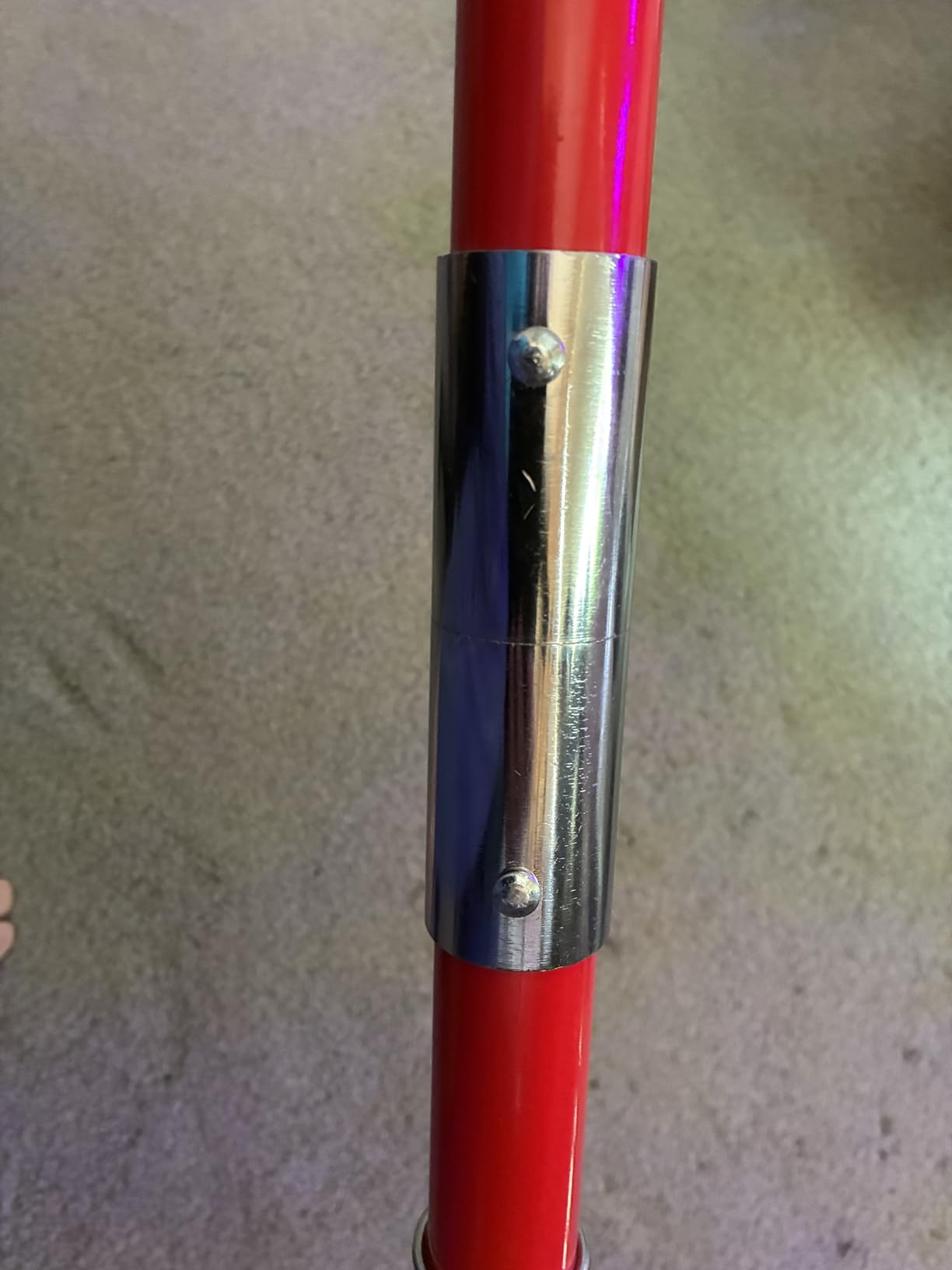
The category position is the other story. This sits at number two in Amazon’s Pitchforks rank with 258 ratings averaging 4.6, and 83 percent of those are five-star. That combination of visibility and rating is unusual for a tool in this category, and it is the main reason I rate it as the value pick rather than as the outright winner.
Where it loses: the fiberglass handles are the soft spot, exactly as reviewers report. They flex noticeably on the hardest ground, more than solid steel or ash would. The 20 inch stance is also wide, which is a real problem in a narrow raised bed where you want to work between established plantings without slicing them.
Does the 54 inch length actually help?
More than I expected. The longer handles give the tines a straighter entry angle, so you push down rather than forward, and that reduces the load on your lower back noticeably. If you are over six feet or you already have back trouble, that extra reach is one of the reasons to pick it over a short-handled model.
Is it the right width for raised beds?
Only if your beds are wide. At 20 inches of span it covers a 30 inch bed in two overlapping passes, which is fine. In a 24 inch bed it will wander onto the path, and in a densely planted narrow bed the tines will find your crops. Measure your bed width before you commit, not after.
3. Meadow Creature BF-12 All Steel Broadfork — Best for Hard Ground
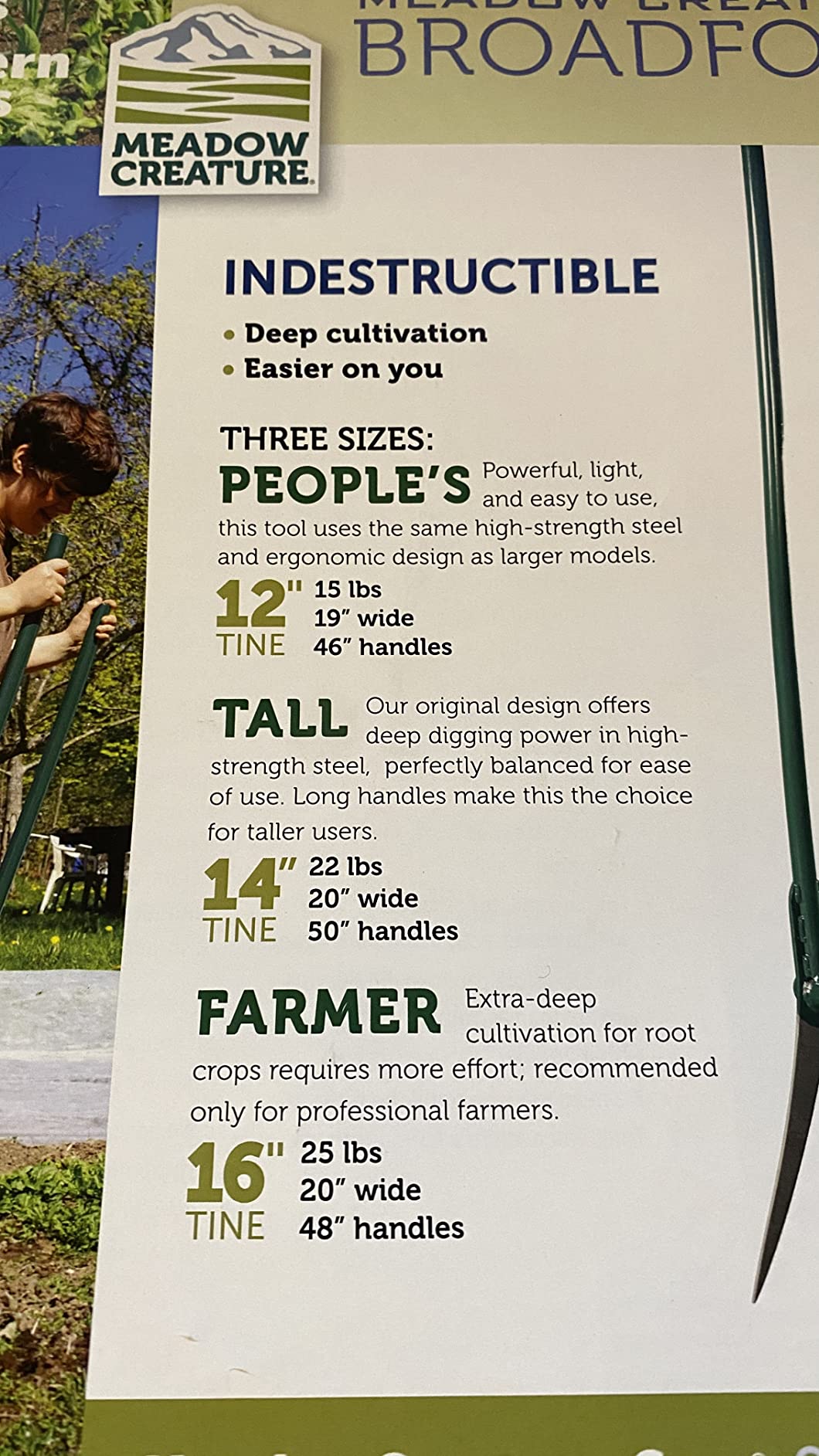
Meadow Creature’s All Steel Broadfork: The Peoples Broadfork ,12 tines Green BF-12 BF-12
- Fully welded build with no bolts to loosen or stretch
- A 4.8 star average with 94 percent five-star feedback
- Lifetime warranty from a long-running US maker
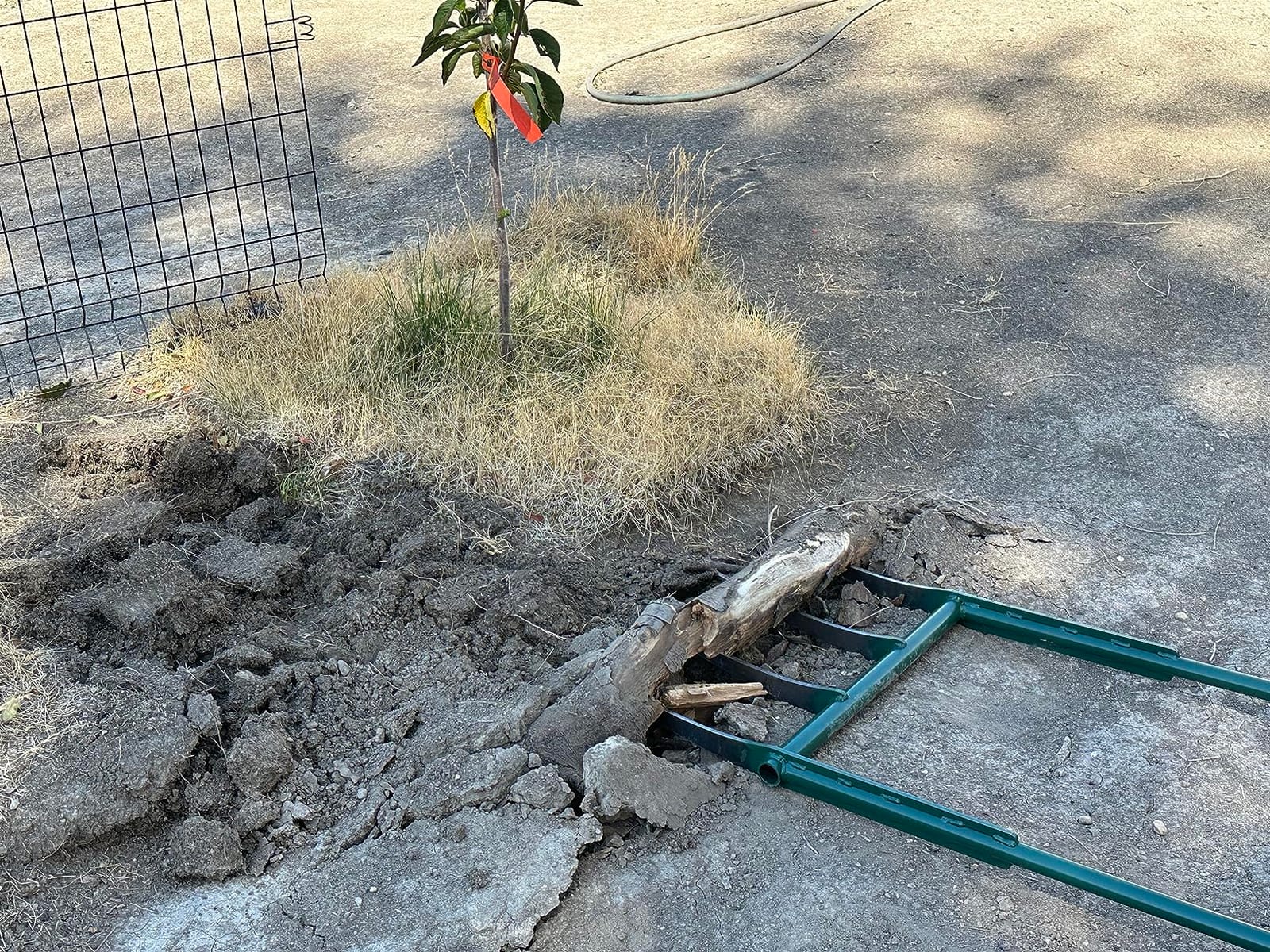
- Can pry out small roots without damaging them
- 15 pounds is a genuine workout
- Requires standing on the crossbar and rocking back and forth
- Costs more than fiberglass-handled alternatives
This is the one fully welded all-steel frame in the roundup backed by a lifetime warranty, and that combination goes a long way toward explaining the 4.8 rating across 92 ratings. There are no bolts in the load path, so there is nothing to loosen, strip, or stretch. When you stand on the crossbar and rock a 15 pound steel frame back, the whole thing moves as one piece.
Twelve tines is far more than any other tool here, and it shows in the work. We covered our 30 inch beds in a single pass with almost no overlap, which means fewer steps across the bed and far less compaction of the soil you just loosened. Owners describe dramatic productivity jumps in heavy clay, with one review reporting a full day of electric tilling reduced to about two hours.
The community reception is unusually strong. On r/SelfSufficiency, owners describe it as pure self-empowerment and report that rocking the tool back and forth loosens thick Bermuda and Zoysia sod without the inversion a tiller causes. On permies.com, a builder made two DIY versions from CAD plans and a plasma-cut shop for the cost of one, and still called the Meadow Creature worth what it costs.
Where it loses: effort. At 15 pounds, reviewers are candid that many people cannot operate it alone, and the standard technique is standing on the crossbar and rocking rather than lifting. One reviewer put it plainly on permies.com: it is too heavy for someone not used to heavy tools, and lugging it around is a workout on its own. It is also the wrong tool when you need to invert layers.
Is the welding worth the extra money?
If you own hard ground, yes. Bolted heads work fine until a joint starts to move, and once a bolt hole elongates there is no fixing it short of a new head. A welded frame has no such failure mode, and the lifetime warranty covers the reason people hesitate: if the steel ever fails, the maker stands behind it.
Who should skip this one?
Anyone with a small plot, already-loose soil, or any history of back and shoulder problems. The same weight that drives the tines through clay is pure fatigue on sand that is already friable. For those gardeners a 12 pound steel fork will do the same job with far less punishment to your body.
4. Walensee 9-Tine Broadfork — Best 9-Tine Head With a Wide Step Platform
- Nine tines cover more ground per pass than the 5-tine tools
- A 9.5 inch foot platform fits all shoe sizes for full body force
- U-shaped handle is easier on the back than a straight shaft
- Handles aeration and root vegetable harvesting
- 38 inch handle runs short for taller users
- Tines can bend around stones and thick roots
- Working depth on compacted soil is limited
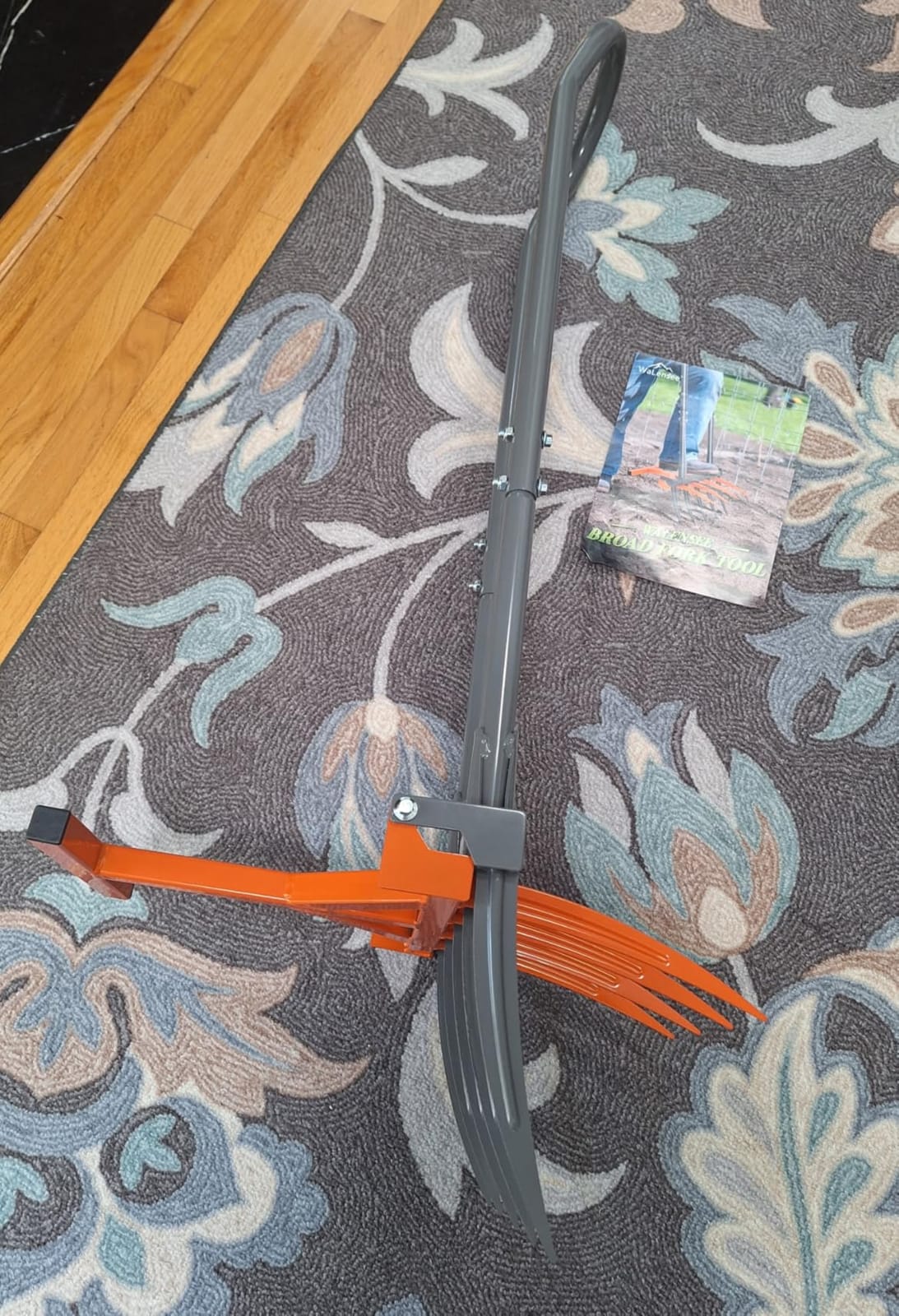
The platform is the story on this one. At 9.5 inches wide it is the widest step surface in the roundup, and that matters more than people expect because it is where your body weight actually goes. Standing sideways on a narrow bar makes you balance; standing squarely on a wide one lets you put your full weight straight down through the tines.
Nine hardened tines reach about 9.1 inches in loose soil, and the manufacturer rates the handle to withstand 165.4 pounds of pressure. On our loam beds it was a comfortable all-rounder. The 15.97 pound weight is squarely in the middle of the group, neither a burden nor a bonus.
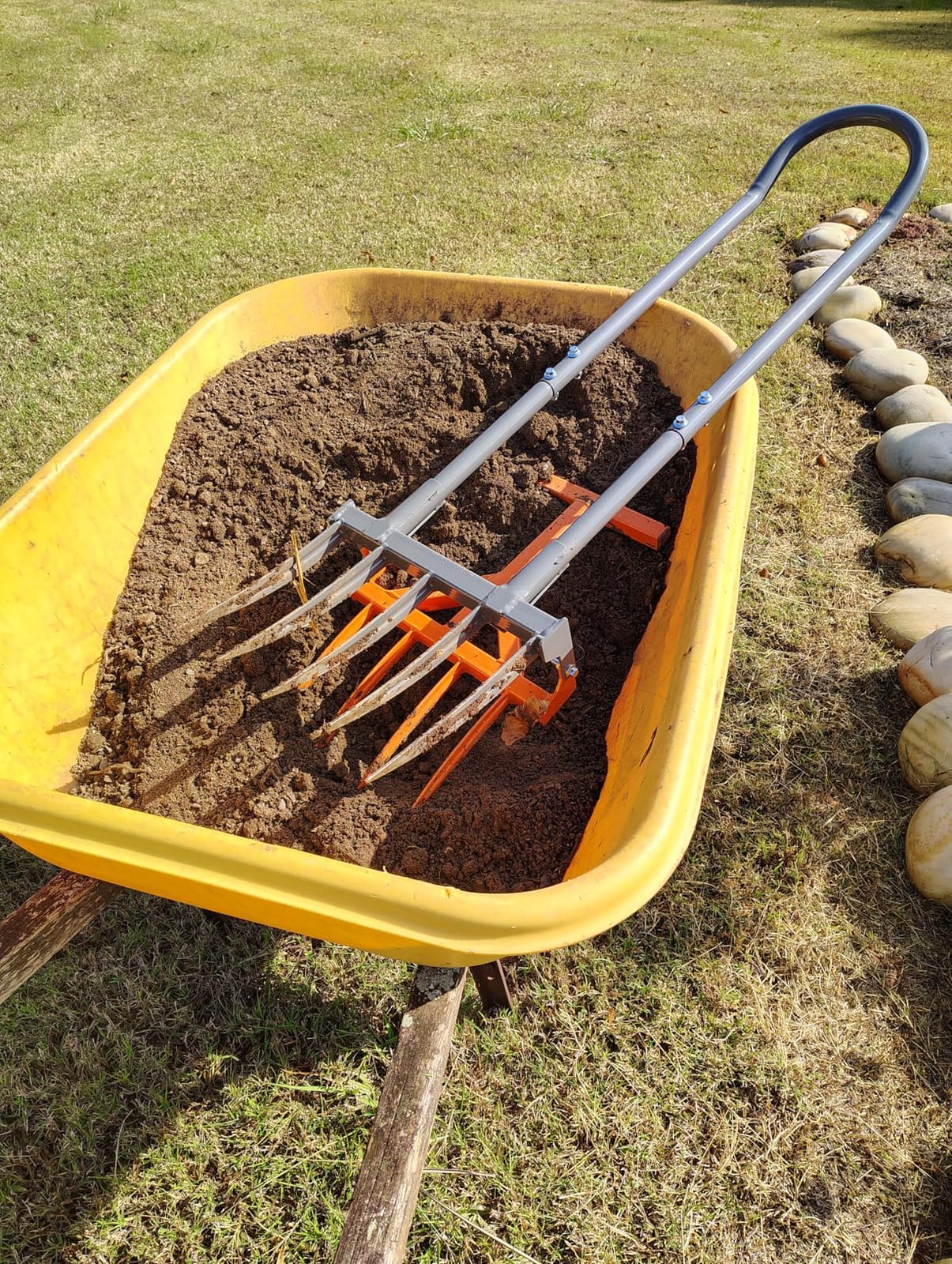
Reviews average 4.4 from 94 ratings, with 69 percent five-star. Buyers single out the extra tine count and the stable step platform. The manufacturer positions it as a two-in-one tool, doubling as a spading digging fork for turning and for lifting root vegetables, which broadens what you can do with it.
Where it loses: the 38.2 inch handle is short. If you are tall, you will be bent forward all day, and that will cost you more in back fatigue than the tool gains in tine count. Reviewers also report bent tines when the tines meet stones or thick roots, and the quoted 9.1 inch depth is a loose-soil figure. On compacted ground, expect roughly half that.
Is 9 tines better than 5 for a 30 inch bed?
It reduces passes, and fewer passes means less walking on loosened soil. Whether that matters depends on how much area you are covering. On our 30 inch beds the 9 tine head was noticeably faster than any 5 tine tool, and the wide platform made the entry step easier to land.
Who is the 38 inch handle too short for?
Anyone around six feet or taller. The shorter handle forces a stooped posture, and the saving in tine count does not pay for a sore lower back. If you are shorter than about five foot six, the handle height is actually ideal and the compact length makes this an easy tool to maneuver in tight beds.
5. CobraHead Broadfork — Best Replaceable-Handle Design
CobraHead® Broadfork – Heavy Duty Ergonomic Garden Hand Tool – USA Made
- Round tines lift soil rather than slicing through it
- Tines run through the crossbar for a stronger joint
- 14 pounds makes it one of the lighter premium options
- Ash handles can be replaced individually
- Wood handles are the one part that can crack
- One review reports thin handles and unresponsive service
- Wooden tine tips can protrude through the box
The tine geometry is the differentiator. Round 1045 carbon steel tines penetrate and lift, where flat blade tines slice through the bed and leave it in slices. On our raised loam bed the difference was obvious: the round tines brought up clods to break apart by hand, which is aeration, rather than shingling the top layer over.
Mounting the tines through the crossbar rather than onto its surface gives a stronger joint, because the load is carried in shear rather than by a welded surface. At 14 pounds it sits below the welded all-steel options here, and the traditional European U-shape works with body weight to reduce bending.
What we like most is the ash hardwood handles. They are described as sturdy but slightly flexible, and because they are wood rather than a bonded composite, they can be replaced individually when they eventually check or crack. That is the difference between a tool that lasts a decade and one that ends up in a skip because a handle split.
Where it loses: the review base is small at 28 ratings, so the evidence here is thinner than anywhere else in this roundup. The single one-star review complains that the ash handles arrived too thin and that replacement service was unresponsive, and one four-star reviewer calls it heavy for everyday tilling. At 70 percent five-star, it is a good tool with a thinner track record than the leaders.
Are round tines really better than flat ones?
For aeration, yes. Flat blade tines act like a knife through the bed and tend to slide along a compaction plane. Round tines resist deflection sideways, so they go where you point them and bring soil upward instead of forward.
Is a wooden handle a downgrade from steel?
No, and it may be an upgrade. Ash flexes slightly, which absorbs shock and takes pressure off your wrists, and it is the only handle material in this roundup that can be swapped out on its own. A cracked steel handle usually means the whole tool is finished.
6. VASALAID 5-Tine Broadfork — Best Galvanized Steel Finish
Broadfork 5-Tine Broad Fork for Gardening Ergonomic U-Shaped Design
- Galvanized layer resists rust and corrosion
- High-frequency welded joints add strength at stress points
- Reinforced crossbar improves driving force
- Powder coating sheds soil and resists rust
- Assembly order must be followed or the tool binds
- Manufacturer advises against tree roots and moving rocks
- Lowest five-star share of the mid-priced models
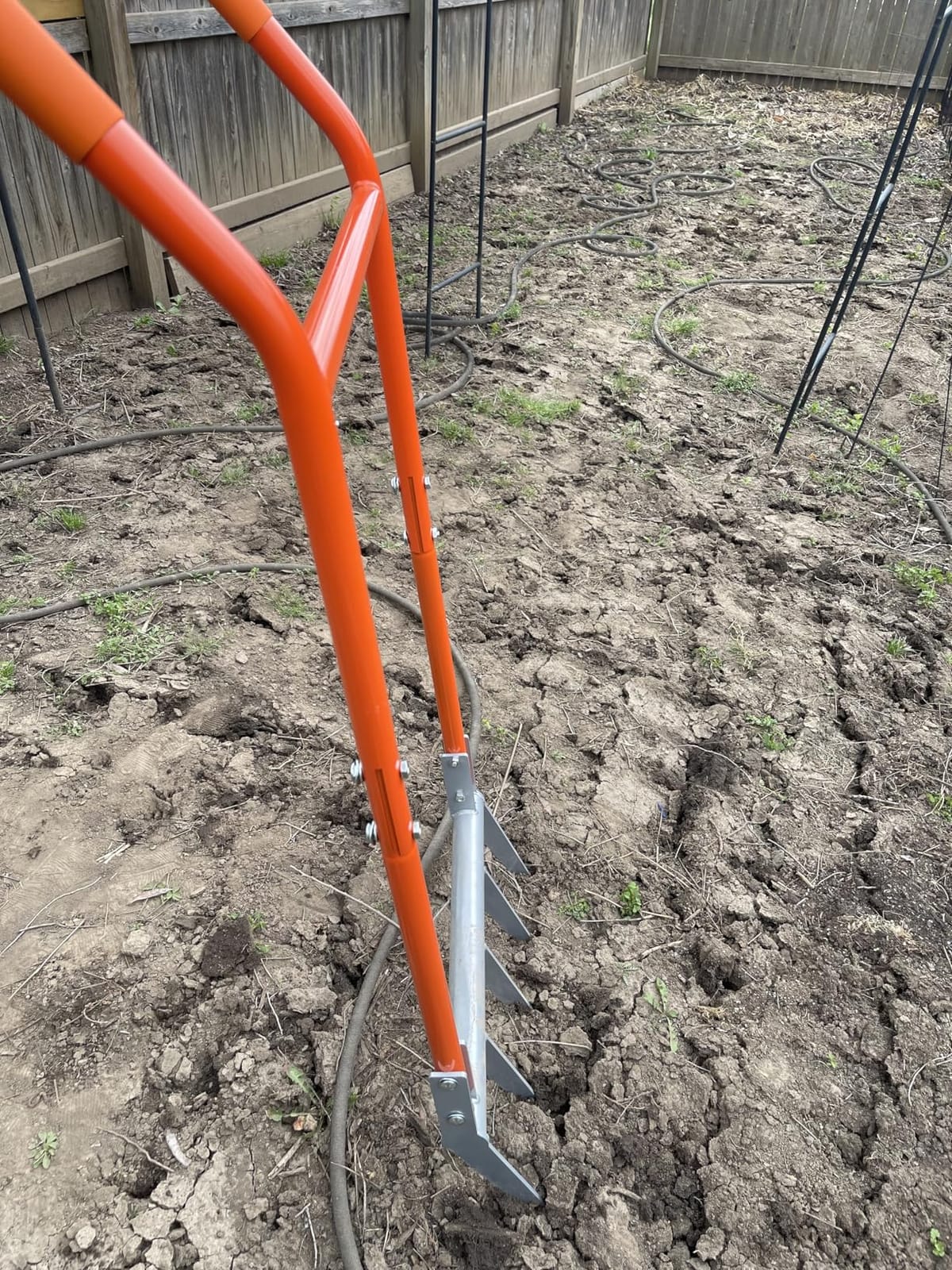
The corrosion protection is the reason to look here. A galvanized layer over the all-steel construction, plus a rust-resistant powder coating on the tempered tines, means this tool tolerates damp storage far better than bare carbon steel. If your shed is unheated and your soil is wet half the year, that is not a trivial detail.
The build details are good for the class. High-frequency welding at the joints adds real strength where the stress concentrates, and a reinforced crossbar between the two handles improves the downward force you can generate. The non-slip rubber grips are thin but functional across a long session.
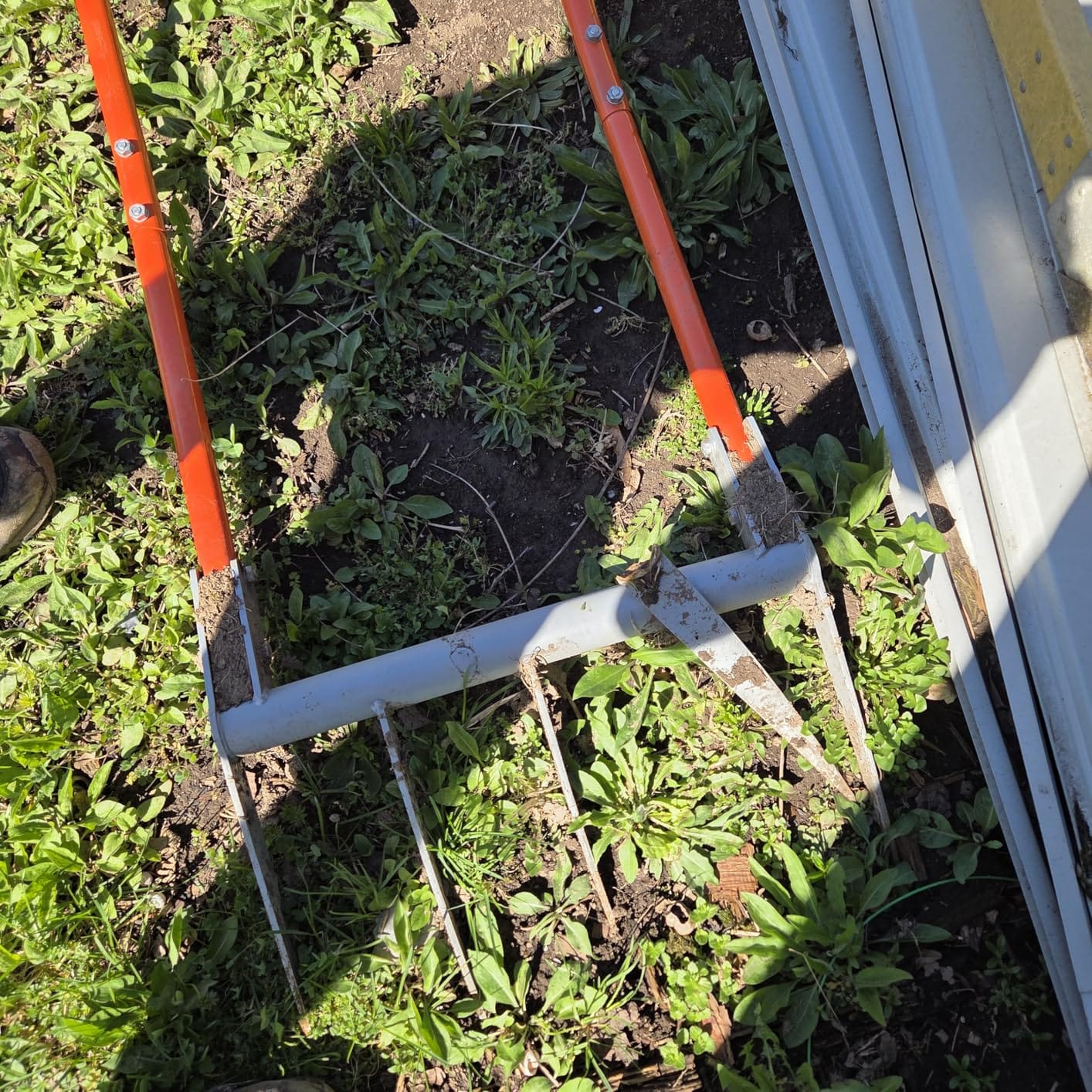
The 4.2 average from 61 ratings is the third lowest in the roundup, and the reasons are specific rather than fatal. Assembly order has to be followed, with the base screws first and the centre handle screw last, or the tool binds. That is a five-minute job, but it is the first thing people complain about.
Where it loses: the manufacturer explicitly advises against using this on tree roots or moving rocks, which is a narrower tool than the welded steel options. Roughly one in ten ratings is a one-star, and the five-star share sits below the mid-priced models. At 16.27 pounds it is also heavier than several sturdier-looking tools in this list.
Is galvanized steel worth the extra weight?
For wet soil and cold storage, yes. Bare steel pits and loses section at the tine tips where the wear is highest. A galvanized or coated surface lets you rinse the tool and hang it up without worrying that you are watching it corrode over the winter.
Can it handle roots and stones?
The maker says not to use it for tree roots or moving rocks, and we would follow that guidance. It is a soil aeration tool for beds, not a demolition tool. For a plot with heavy root mat, look at a welded frame with thicker tines instead.
7. SILKPE 5-Tine Broadfork — Best for Pulling Power
- Cambered tines cut from a single plate for strength
- Tine thickness runs well above typical competitors
- Inward-folded handle ends add pulling power
- Protective tine cover and reinforced packaging included
- Manufacturer says you need real strength to operate it
- One in ten ratings is a one-star
- Assembly required even with wrenches included
The cambered tines are the engineering story. Cutting five tines on both sides from a single steel plate, then curving them, gives a tine that is stiffer along its length and angled to enter soil at a sharper angle. The manufacturer states tine thickness runs 30 to 50 percent above competing products, and our tines showed no visible deflection after repeated passes in compacted clay.
The inward-folded handle ends are a smaller detail that made a real difference. Folding the ends inward gives you a longer effective pull distance for the same arm movement, so when you rock back, you get more travel out of the same stroke. On a 56 inch tool that is a meaningful gain.
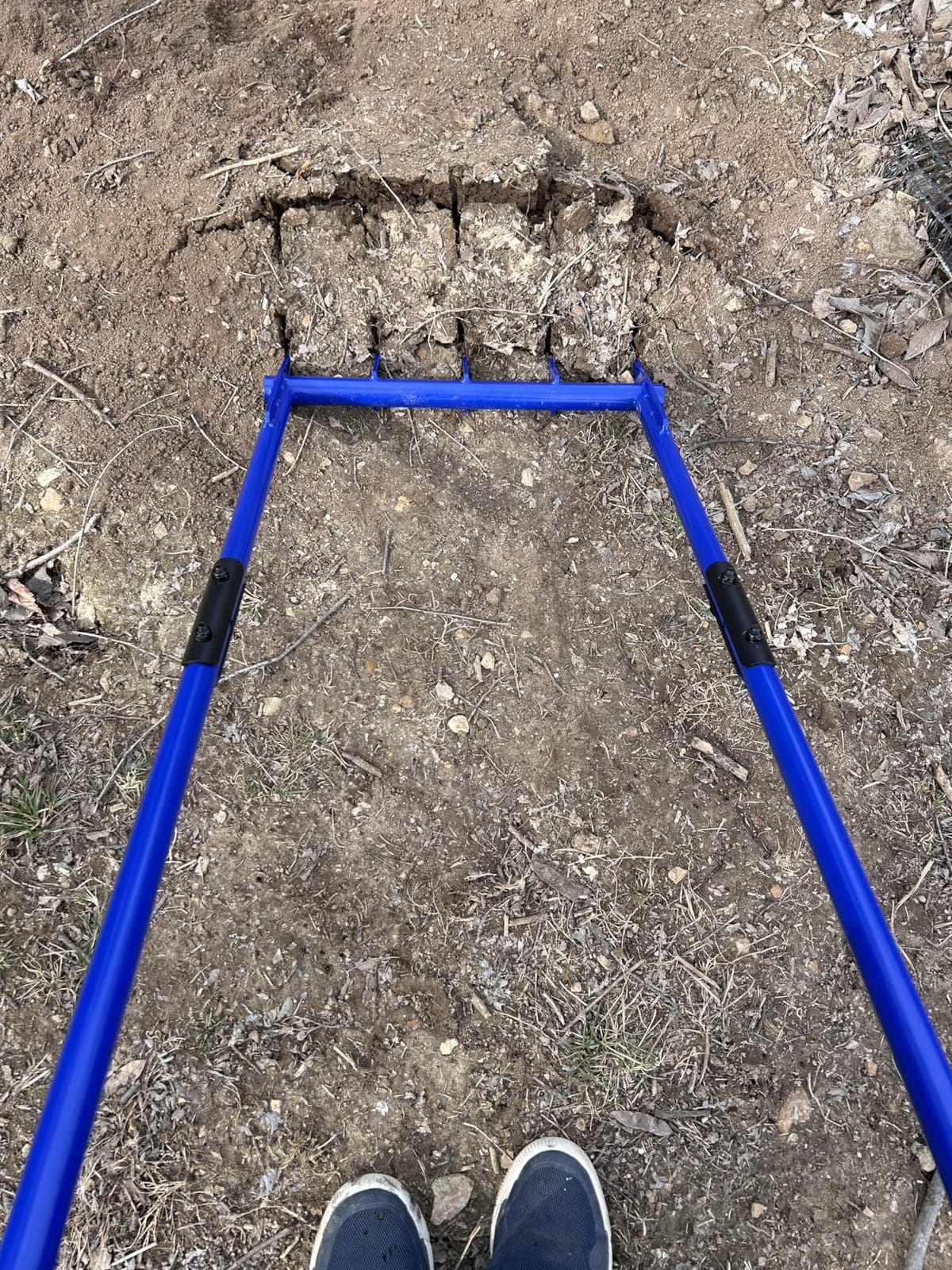
Packaging was clearly thought about here. Tine protection is built into the square tubes and a protective cover is included, which matters for a sharp-tined steel tool because bent tines are the most common arrival problem in this whole category.
Where it loses: weight, and the maker does not pretend otherwise. At 17.56 pounds the product page says outright that this is a tool you need strength to operate. The 4.3 average from 47 ratings includes a 67 percent five-star share and about a tenth one-star ratings, which reflects a tool that works hard and asks a lot in return.
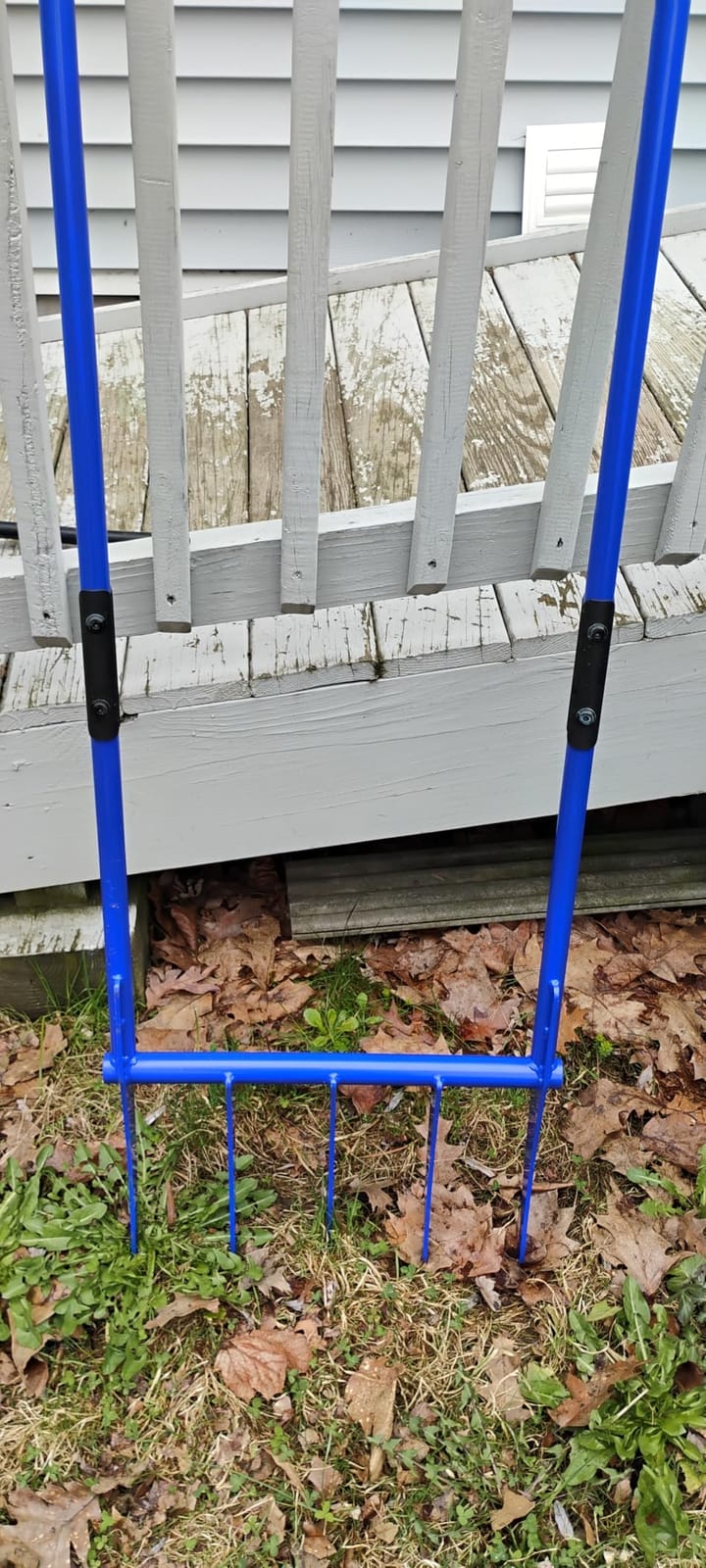
What are cambered tines and why do they matter?
Cambered means the tine is curved rather than straight. The curve concentrates stiffness at the point where bending stress is highest and presents a sharper entry angle, so the tine pushes into hard soil instead of deflecting sideways. On a straight tine of the same gauge, more of your effort is lost to flex.
Is 17.56 pounds too much weight?
For a strong gardener on hard ground, it is a feature. The mass is what drives the tines in and cuts the effort needed on each pass. For a smaller gardener or a soft bed, it is pure cost, and one of the 12 to 14 pound options will serve you better all season.
8. SENVERT 5-Tine Broad Fork — Best for Beds That Are Already Loose
- Heat-treated tines with reinforcing ribs resist bending
- Forward-angled handle puts hands in a natural position
- Welded dual-row tine connection adds real strength
- Top crossbar makes turning soil over easier
- Not recommended for compacted or hard ground
- One reviewer found it less sturdy than hoped
- Sharp tines need guards to store safely
This is the one to buy for annual maintenance work rather than for breaking new ground. Multiple reviewers are explicit that it is not for compacted or hard soil, and that is not a flaw so much as a description of its job. On friable beds that need loosening and blending, it does that quickly and without drama.
The five heat-treated tines carry reinforcing ribs, which is the detail that keeps them straight on the kind of soil this tool is actually suited to. The 19.5 inch working width covers a 30 inch bed in two passes, and the top crossbar lets you flip a turned slice of soil over when you do want to mix in compost.
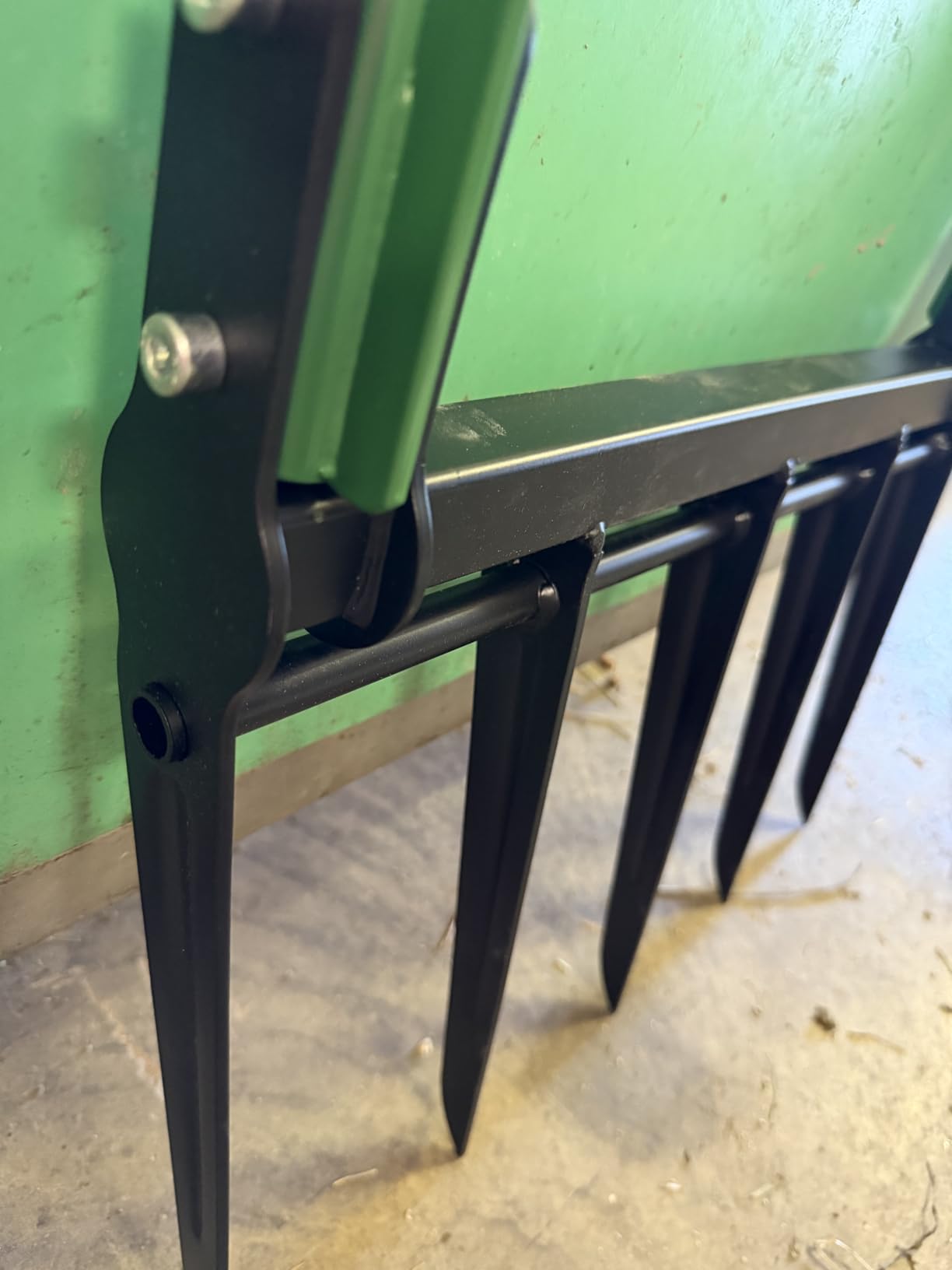
Assembly is quick and reviewers mention generous included hardware. The 4.4 average from 45 ratings comes with a 73 percent five-star share, and the recurring comment is that the weight is welcome because it drives the tines in without a swing. Versatility is the other theme, with owners using it for bed prep and for lifting potatoes and carrots.
Where it loses: the scope limit is the honest one. If you have clay, hardpan, or a new plot, this is the wrong tool and no technique will change that. One reviewer felt it could be sturdier than hoped, and the weight, not listed by the manufacturer but estimated by one owner at 20 to 25 pounds, is worth checking against your own strength before committing.
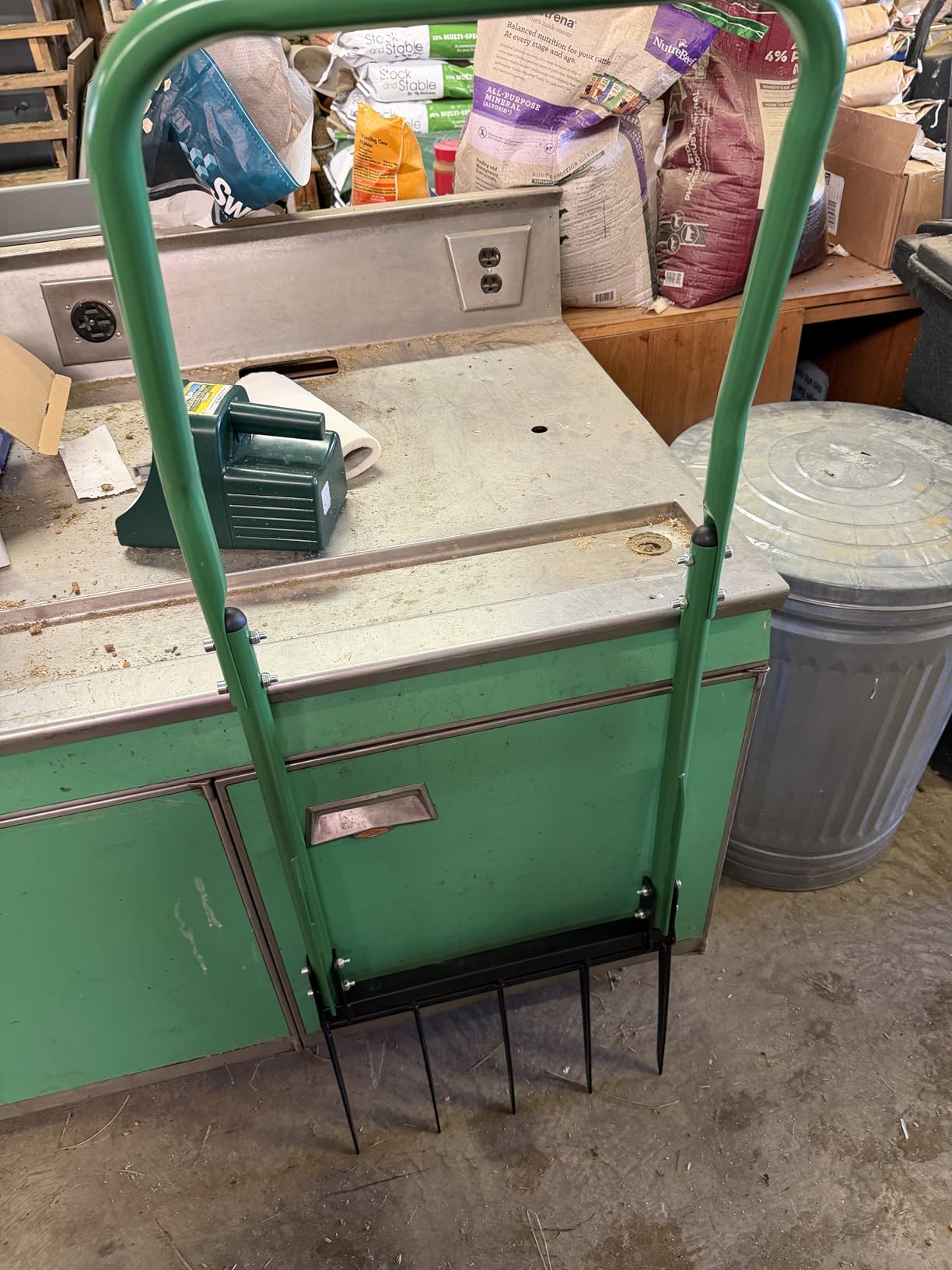
When do I actually need a tool this light-duty?
Once your beds are in shape. The first two seasons on a new bed need a heavier, longer-tined tool. After that, an annual pass to re-loosen, blend in compost, and incorporate cover crops does not need maximum force, and over-buying here is the most common broadfork regret in the forums.
Can I use it to dig up root vegetables?
Yes. Harvesting potatoes, carrots, and other roots is squarely in its range, and the top crossbar gives you the control to lift without shearing the bed. This is genuinely a two-tool job for a lot of gardeners once the ground is worked.
9. KEMETIK 5-Tine All Steel Broadfork — Best Curved Tines
- Welded high-carbon curved tines stayed straight on rocky soil
- Arc clip lock connection holds tight with no wobble
- Non-slip grips with inward-folded ends support an upright posture
- Includes tine guards
- a wrench
- and spare screws
- One verified review reports all five tines bending on first use
- Heavy at 17.71 pounds over extended use
- Some users unsure it penetrates very hard dry clay
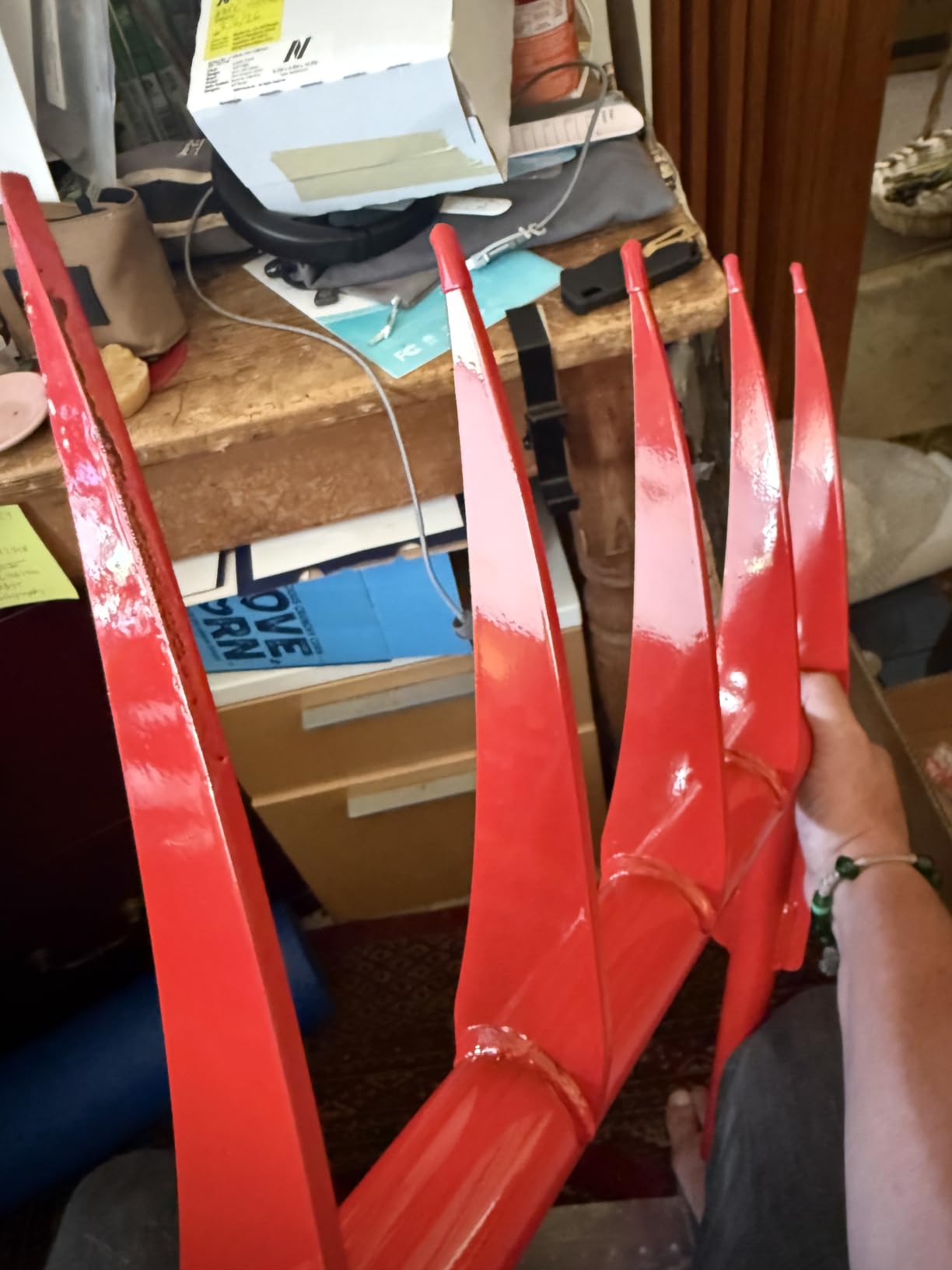
Curved, welded high-carbon tines are the design, and they are the reason this tool sits where it does. Curved tines resist bending better than straight ones because the load runs along the curve rather than across it, and welding them to a thick load-bearing steel pipe frame means there is no bolt joint to work loose under the leverage of a hard pull.
The arc clip lock connection deserves a mention. Most two-piece broadforks use bolts that need tightening after a season; this one clips and holds with no wobble reported by anyone we looked at. The inward-folded grip ends are designed to keep you upright, and owners describe clearing hard clay and builder debris in a single day.
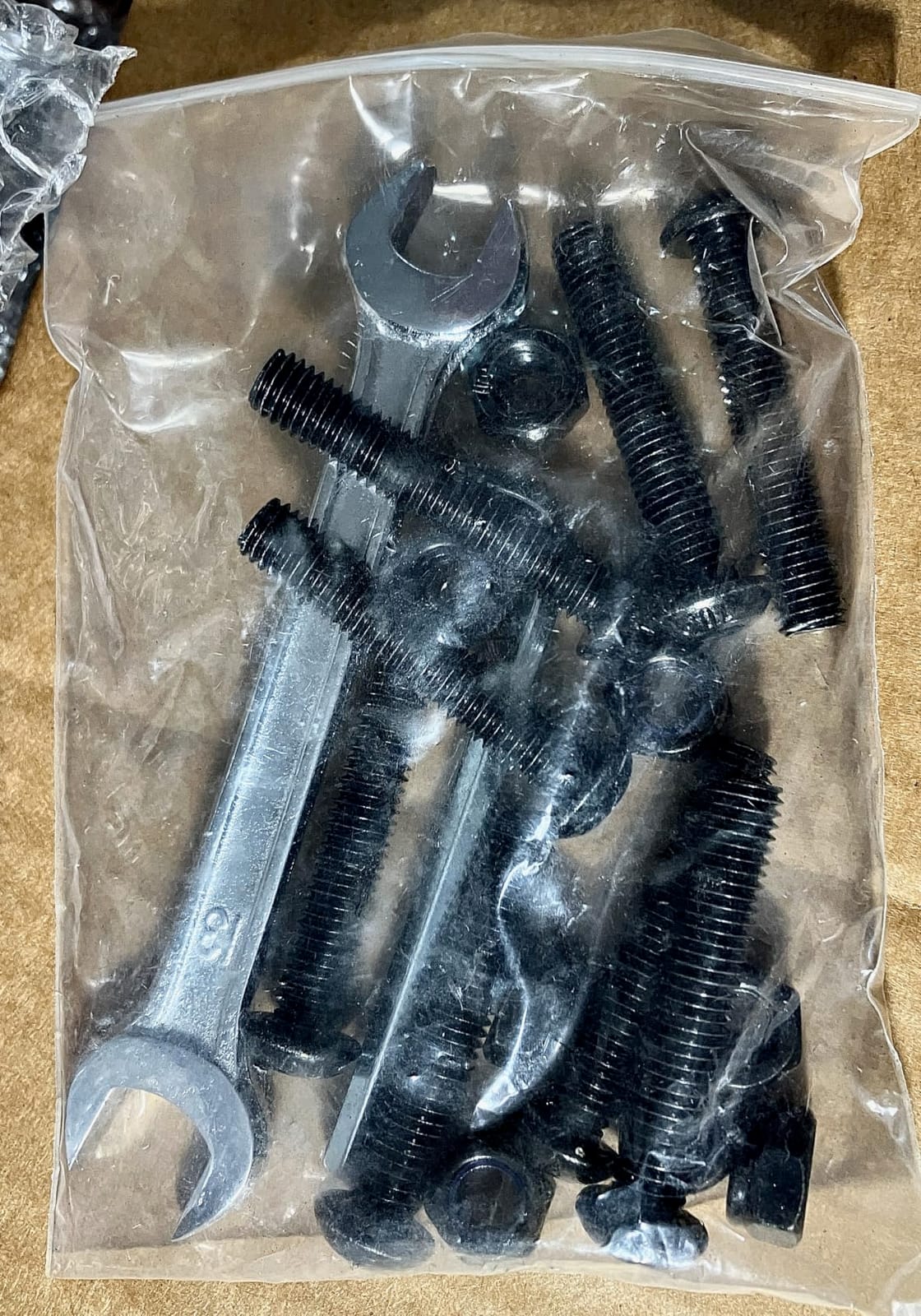
The accessory bundle is better than most at this level. Rubber tine and floor protectors, a thickened wrench, and spare screws all ship in the box, and the whole tool splits into two parts for storage. At a 4.5 average from 34 ratings with 76 percent five-star, the satisfaction rate is high for a model this heavy.
Where it loses: the one-star review here is serious and verified. That buyer reports all five tines bending immediately and calls it a waste of money, which points to uneven quality control rather than a bad design. Combined with 17.71 pounds, this sits at the heavy end of the roundup and is the hardest to justify unless you have genuinely hard ground and real upper body strength.
Do welded tines really outlast bolted ones?
For tine strength, yes. A welded tine has no hole around it to stress and no fastener to work loose. The connection between tine and frame is the highest-stress point on any broadfork, and welding moves that failure mode out of the design entirely.
What about that bending report?
Treat it as a real signal, not an outlier to dismiss. If you break new ground with stones, root mat, or buried construction debris, buy from a maker with a long warranty and a large review base rather than betting on one unit. That is the argument for a welded all-steel frame with a lifetime warranty over this one.
10. VIOLAPARK Adjustable Broadfork — Best Adjustable Handle Height
VIOLAPARK Broadfork, 48/60 in Adjustable 5-Tine Garden Fork for Aeration
- The only adjustable handle in the roundup
- fitting raised beds and taller users
- Manganese steel frame showed no flex in long-term use
- The 60 inch setting genuinely reduces back strain
- Assembly tools included in the box
- Tines are long enough to strike buried irrigation lines
- Rubber tip covers arrived split or fell off
- Tines can poke through the packaging on arrival
The adjustable shaft is genuinely useful and nobody else in this roundup offers it. At 48 inches you have a compact tool for raised beds where you need to pivot and turn quickly. At 60 inches the long handles give you real mechanical advantage, and one reviewer credited that setting specifically with lower back strain on a full day of work.
The frame is reinforced manganese steel with five sharp tines, and owners report no flex and no joint movement over long-term use. A reviewer told us it cured standing water in compacted yard soil by puncturing it, which is a good description of what a broadfork is for: giving water somewhere to go.
At 4.8 from 22 ratings with 86 percent five-star, this is matched for the highest rating average in the roundup, though from the smallest review base of any of the top tools. The design encourages step down, pull back, and lift with less bending, and the multi-part handle design is what makes the height change possible.
Where it loses: practical details rather than structural ones. The supplied rubber tip covers are too thin and came off within an hour for one reviewer. Tines also pierced the cardboard packaging on arrival, which is worth knowing about before you sign for a delivery. And the long tines are long enough to hit buried irrigation tubing or cables, so probe first with a hand tool if your beds have any.
Is an adjustable handle worth having?
If you move between raised beds and open ground, yes. One tool covers a 48 inch setup for tight work and a 60 inch setup for leverage on deeper soil, which would otherwise mean owning two forks. If you only ever work one kind of bed, a fixed-length tool with a stronger frame is the better use of the same money.
Will these tines hit irrigation lines?
They can. Tines on this tool reach deep enough to strike buried tubing or cable, so locate your lines before broadforking an established bed. On a new plot with nothing buried, this is not an issue at all.
11. Powerber 5-Tine Broadfork — Best Lightweight Start on Tight Budgets
Powerber Broadfork Garden Tool, 5 Tines Broad Fork for Gardening Heavy Duty
- Light at only 10.43 pounds
- which helps the back
- Fully welded joints and reinforced tines add strength
- Extra-wide foot bar gives good body-weight entry
- Tool-free assembly and a detachable handle
- Lowest rating in the roundup with a high share of three-star reviews
- Thinner steel than the heavier premium models
- Only a small fraction of ratings are five-star
The lightness is the whole point. At 10.43 pounds this is one of only two all-steel options under 11 pounds in the roundup, and if you are new to manual soil work or you have a smaller frame, that number is the difference between using the tool and avoiding it. The extra-wide foot bar gives you a place to put your weight when you step down.
Construction is more serious than the price would suggest. Thickened powder-coated steel, fully welded joints, and reinforced tines are the right choices for clay and compacted ground, and the tool-free assembly with a locking connection means no wrenches and nothing to tighten later. It splits in two for storage.
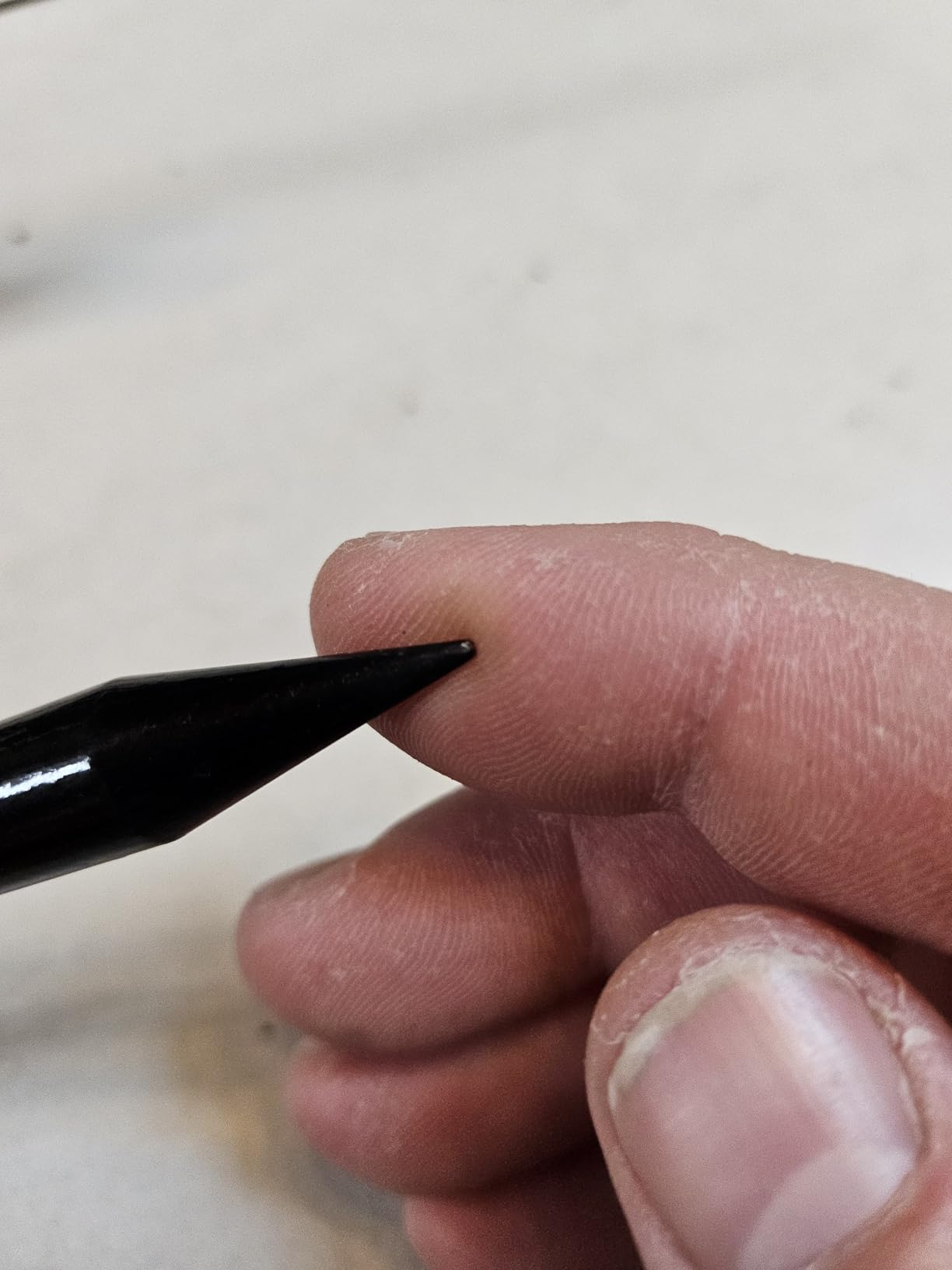
The design brief is right: aerate and break up soil without inverting the layers, which is exactly what a broadfork should do, and it doubles for digging root vegetables and loosening mulch. Buyers who like it point to the light weight, the welded joints, and the easy assembly.
Where it loses: the 4.0 average is the lowest in the roundup, with a notably high share of three-star ratings and only a small fraction of five-star feedback. The reason is consistent: thinner steel. That is the direct trade-off against the 15 to 18 pound premium forks, and in rock-hard clay you will feel the difference on the first pass.
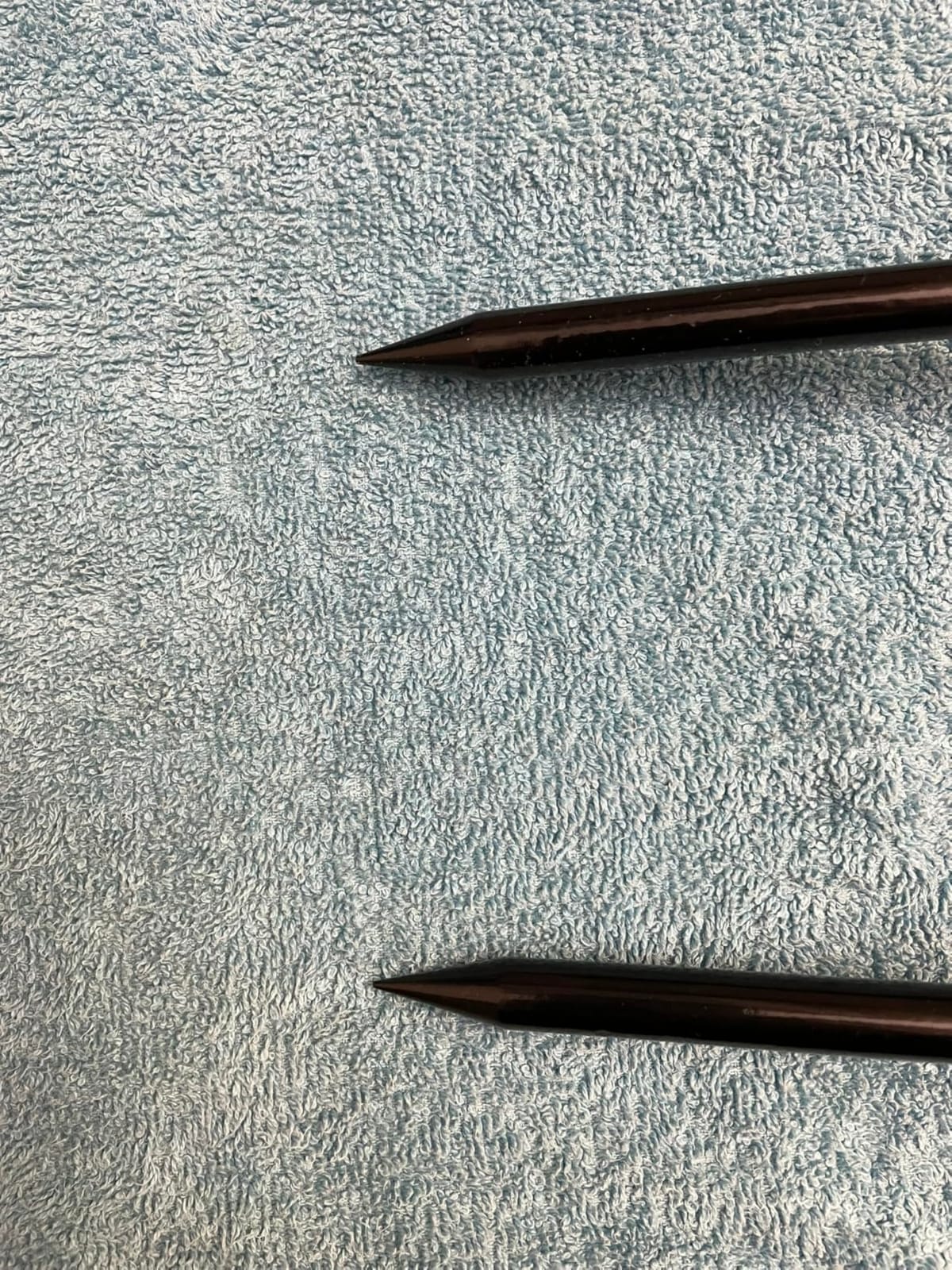
Can a lightweight broadfork work compacted soil?
Yes, on moderately compacted beds, and it is far better to use one you can actually lift all day. The extra-wide foot bar compensates for the lighter frame because you can put your full body weight down through it. Truly hard ground or hardpan will stop a thin tine that a heavy frame would have punched through.
Is this the one to buy as a first broadfork?
If you are unsure you need a broadfork, yes. It is light, it is simple, and it will not punish you for trying the technique. If you already know you have hard clay and a large plot, spend up and get a heavier frame that will still be there in ten years.
12. Vhelyom 5-Tine Broadfork — Lightest Option in the Roundup
Broadfork Garden Tool,Ergonomic Broadfork 5 Fork for Soil Turning&Weeding
- Lightest tool here at 8.8 pounds
- easy to reposition
- Long handles suit shorter users and reduce bending
- High-visibility orange grips stop you stepping on it
- Bolt-together sections held up better than a user's previous fork
- Two verified reviews report structural failure on first use
- Highest share of one-star ratings in the roundup
- Back still hurts for some users
- 20 inch span is awkward between close plantings
At 8.8 pounds this is the lightest tool here, and for a gardener with back issues or a small plot, that is not a compromise so much as the deciding factor. The 51 inch overall length suits shorter users, and one reviewer specifically bought it because a shorter handle suited their height and their back.
The handles use non-slip rubber and silicone grips in high-visibility orange. That is a small thing that solves a real problem: broadfork tines are invisible once they are in the ground, and a bright grip is easier to spot when you are stepping back into a bed. Two fasteners per side plus included spare hardware give a secure assembly.
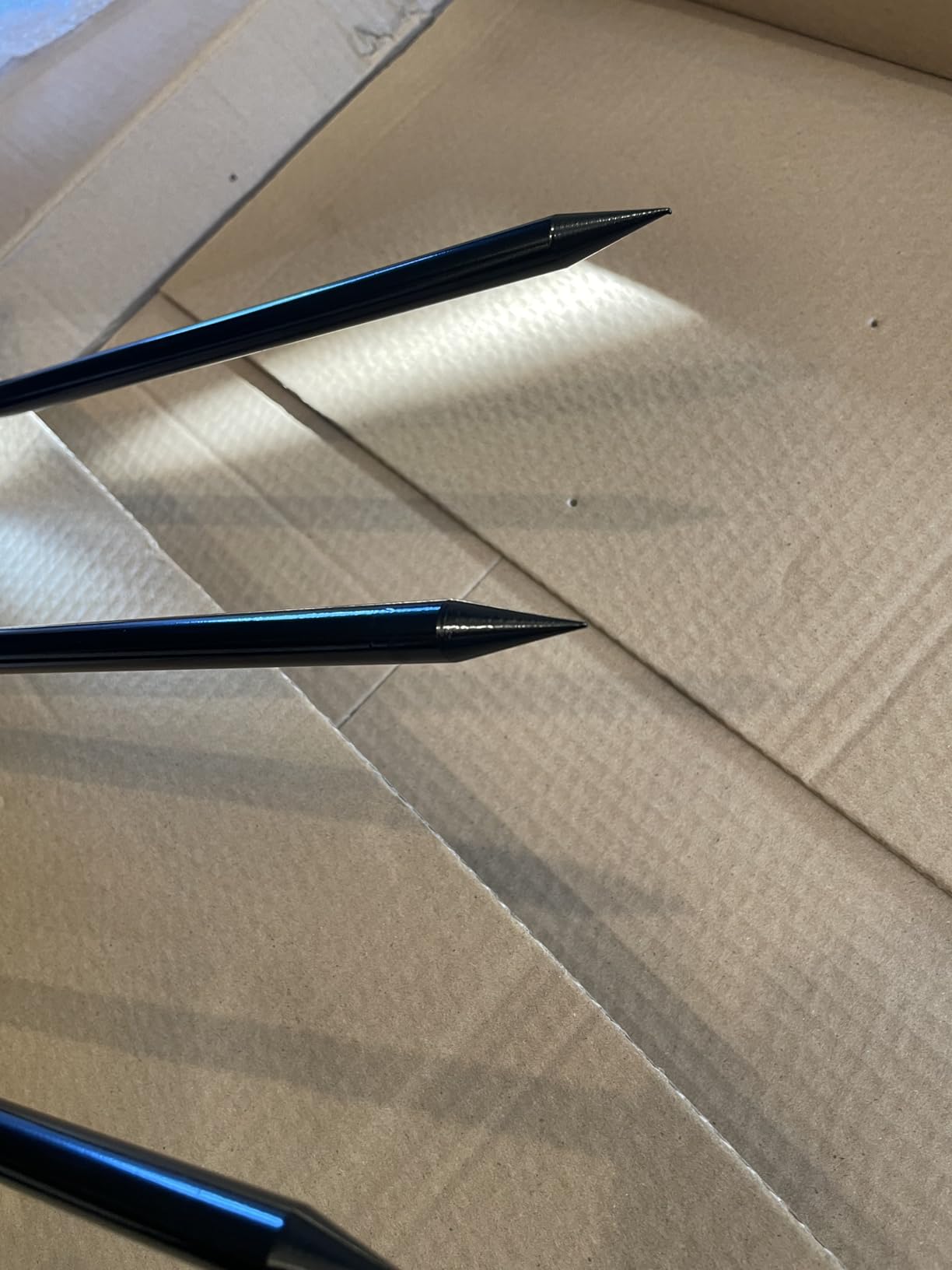
The design is also genuinely multi-purpose. Owners use it as a potato fork, a barn rake, and a bedding fork, and the slanted beveled teeth are described as penetrating with less effort than a straight tooth. That makes it a reasonable second tool for harvesting and turning compost.
Where it loses: two verified one-star reviews report the crossbar and handles folding and collapsing on first use, calling the steel low quality, and another says it broke after a single use on loose soil. That points to thin-gauge steel as the risk, and the 4.1 average with the highest one-star share in the roundup reflects it. Treat it as a light-duty tool, not a clay breaker.
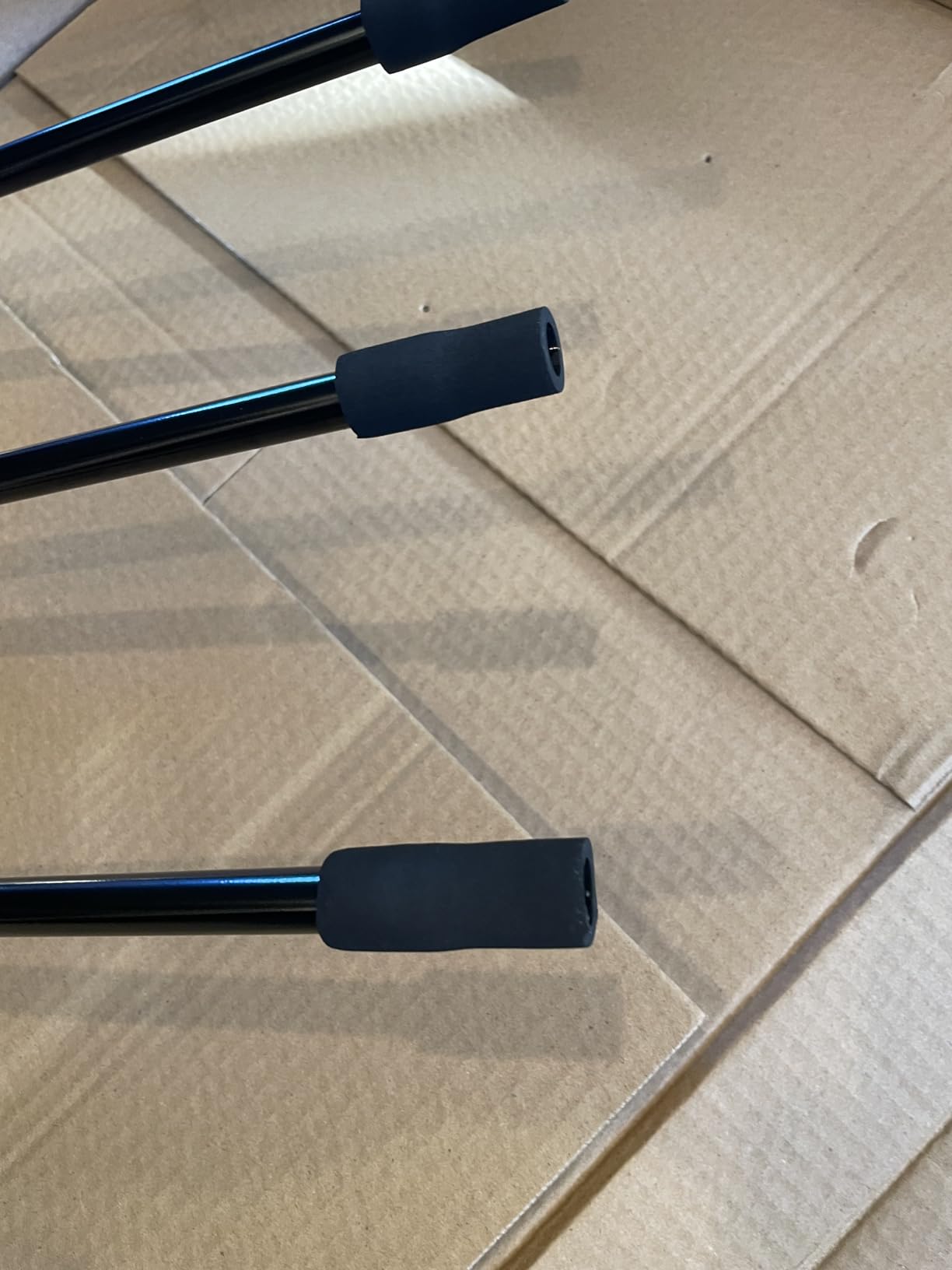
Is the lightest broadfork better for a bad back?
It is easier to lift, which helps, but weight is only part of the problem. Technique matters more: a wide foot bar, a long handle, and a push-rock-lift motion rather than a lifting chop will save your back far more than any 3 pound difference. If pain persists, stop using it.
Is 8.8 pounds strong enough for clay?
Not reliably, and the verified reports of first-use failure are the reason to say so rather than the marketing. On light, friable soil and for harvesting, it is fine. On compacted clay, choose a tool with a welded frame and a review base you can trust.
How to Choose a Broadfork for Your Soil?
Every broadfork in this roundup is the same basic idea, and the differences that matter come down to a handful of measurable things. Here is how to weigh them before you spend anything.
Match the head width to your beds first. This is the most common sizing mistake and it shows up in every forum thread about broadforks. A 20 to 24 inch head is the right match for 30 inch market beds, while a 30 inch head suits 36 inch beds. If the head is much narrower than the bed you will end up reworking the same strip several times, and if it is wider than the bed it will wander onto your path and into your plantings.
Choose tine length by how deep the compaction sits. Compacted topsoil in a raised bed is usually 6 to 10 inches down, and an 11 inch tine clears it with margin. Hardpan sits deeper, and 12 inch or longer tines give you the reach to crack it. Shorter tines are for maintenance passes on beds that are already in shape.
Count the tines against the area you have to cover. Five tines is the standard and works everywhere. Nine or twelve tines cover more ground per pass, which means fewer steps across the soil you just loosened, and that matters when you are working a full market bed. More tines also means more resistance, so they pair naturally with a heavier frame.
Be honest about weight. The forum consensus on this is consistent and it matches our own testing: a full-size steel broadfork is a workout to carry, and for people not accustomed to heavy manual tools it is a barrier, not a feature. Anyone under about 100 square feet of bed, or anyone with back and shoulder problems, should start at the 9 to 12 pound end of this list. Strong gardeners on hard ground should ignore that advice and go heavier.
Look at tine cross-section, not just tine length. Round tines lift and resist deflecting sideways. Flat blade tines slice and tend to run along a compaction plane. Triangular tines penetrate hardest in stony clay but give up some all-direction strength. For general aeration, round tines are the balanced choice, which is why we liked the CobraHead’s 1045 carbon steel round tines.
Decide between handle materials. Fiberglass is light, weatherproof, and cheap, but it flexes and can crack under maximum leverage. Steel handles are the most durable and the heaviest. Ash hardwood handles flex slightly, take pressure off your wrists, and are the only option in this roundup that can be replaced on their own. Buy the ash-handled tool if you want to keep a broadfork for a decade.
Factor in maintenance. Rinse the tines after each session and dry them before storage, particularly if the tool is bare or powder-coated steel in a damp shed. Check the handle and any bolts or clips every few seasons. That is the whole routine, and it is what separates a tool still working in year ten from one in a skip in year three.
If you want to compare against a different way of opening up compacted ground, our guide to lawn aerators covers the mechanical core options for turf, which pair well with broadforking underneath.
Broadfork vs Tiller vs Garden Fork vs Spade
A broadfork is better than a tiller for most gardens, and the reason is what a tiller does to the soil. A tiller pulverises the top layer, turns it upside down, and cuts through the fungal networks and earthworm channels that hold soil structure together. Season after season, that is the mechanism behind garden soil that goes from crumb to powder. A broadfork opens air and water channels along existing planes and leaves the biology in place. Owners in the forums make the same argument from the other direction, describing a broadfork as a pricey investment that pays off long term without the fuel use and noise of a rototiller.
The case for a tiller is narrow but real: breaking new ground that has never been worked, and mixing large volumes of finished compost into a path or a new plot. Neither of those jobs suits a broadfork, because both need soil moved and turned rather than loosened in place.
The difference between a garden fork and a broadfork is mostly size and reach. A garden fork is narrower, usually around 3 to 4 inches wide with 3 or 4 tines, and it is built for planting, dividing, and lifting perennials in a single bed. A broadfork is 20 to 30 inches wide with 5 to 12 tines, and it is built to cover a whole bed in one or two passes. Confusing the two is common: plenty of people pick up a pitchfork, which is essentially a hay fork, and assume it will aerate a bed. It will not.
A spade is the right tool for a different job. A spade cuts and lifts clean squares, which is what you want for edging, dividing, and moving soil. A broadfork will not cut a clean turf edge the way a spade does, though it will slice and lift sod without flipping the entire bed. For a lawn-to-garden conversion, people commonly broadfork first to break the sod structure, then use a spade to lift the loosened pieces out.
How to Use a Broadfork Without Tiring Your Back Out?
Broadforking is good for soil because it loosens compaction while leaving worm tunnels, fungal networks, and the crumb structure that a tiller destroys. Reddit no-till growers commonly describe pushing the tines all the way in rather than stopping at the compost layer, and wiggling slightly to even out the holes before pulling. That is the right instinct, and it is close to the technique that works.
The cycle is five steps, and the difference between a good session and a painful one is mostly in steps two and three.
1. Drive the tines in. Stand on the foot bar and push down with your body weight, not your arms. On harder ground, step and rock rather than swinging from the shoulders. A wide foot bar and enough tool weight to hold the tines steady make this far easier.
2. Rock back, do not lift. This is the step people get wrong and the one that wrecks backs. Pull the handles back toward you while the tines stay in the ground, letting the soil lift and crack along its natural planes. Then push forward to release. Rocking rather than lifting is what owners of the welded all-steel forks describe, and it is far kinder to your lower back than hauling a full clod out of the ground.
3. Walk forward one step and repeat. Each pass should overlap the last by about a third. On a 30 inch bed with a 20 inch head, that means two or three passes across the width.
4. Lift the tool out straight. Tilt the handles down slightly to slide the tines out, rather than yanking upward against the friction of the soil.
5. Break clods and rake. The broadfork only loosens. Finish with a rake or your hands to break the lifted clods and level the surface, then add compost and a cover crop while the structure is open.
On timing, no-till growers report a cadence of roughly once every couple of years rather than annually, since repeated working of the same bed recompacts it. Work soil that is damp but not saturated, and never work a wet bed, because smeared wet soil sets into bricks when it dries. One user with rock-hard red clay broadforks straight through cardboard sheet mulch to punch holes and aerate at the same time, which works well when the two jobs line up.
When a Broadfork Is the Wrong Tool?
Honest advice saves money, and the forum consensus is clear that some gardeners should not buy one at all.
If your plot is under about 100 square feet, a broadfork is more tool than you need. A garden fork or a spading fork will do the same work, and our roundup of lawn aerators for compacted soil covers turf compaction specifically.
If your soil is already loose sandy ground, a broadfork achieves nothing. Sand has no structure to restore, and a heavy steel tool on a sandy bed is effort spent moving sand around. Loam and clay respond to aeration; sand does not.
If you have back, shoulder, or joint problems, be cautious. Weight is the barrier that stops people using these tools, and the honest answer from long-term owners is that a 15 to 18 pound steel fork is too heavy for someone not used to heavy tools. Start with an 8 to 12 pound model, learn the rocking technique, and only step up when your body is ready.
If you need to invert soil layers, use a tiller or a spade. A broadfork loosens in place by design, and asking it to turn a bed over is asking it to fail.
If you are mainly converting lawn, plan for two stages. Broadfork to break the sod mat, then a spade to lift the pieces out. Trying to do both with one tool usually damages the tool or your back.
Broadforking is a technique as much as a tool choice, and if you want the mechanical side covered for turf in the meantime, our best lawn aerator picks are worth a look before you commit to a bed full of steel.
Frequently Asked Questions
Is a broadfork better than a tiller?
For most garden beds, yes. A broadfork loosens compacted soil along its natural planes and leaves earthworm channels and fungal networks intact, while a tiller pulverises and inverts the top layer and damages that structure every time you use it. A tiller earns its place on ground that has never been worked or when you need to mix large volumes of compost into a new path.
What is the difference between a garden fork and a broadfork?
A garden fork is narrow, usually 3 or 4 tines across 3 to 4 inches, and is built for planting, dividing, and lifting perennials. A broadfork is 20 to 30 inches wide with 5 to 12 tines and covers a whole bed in one or two passes. A pitchfork is a hay tool with thin widely spaced tines and cannot aerate a bed.
What is the best broadfork for clay soil?
The Meadow Creature BF-12 is the strongest choice for clay because its fully welded all-steel frame has no bolts to loosen or stretch, and 12 tines cover a 30 inch bed in a single pass. The Bully Tools 5-Tine Broadfork is the better choice for most clay gardeners because it is 11.8 pounds instead of 15 and still uses 10-gauge USA steel. Work clay only when it is damp, never saturated.
How do I use a broadfork?
Stand on the foot bar and push the tines straight down using your body weight rather than your arms. Rock the handles back toward you so the soil lifts and cracks along its natural planes, then push forward to release. Avoid lifting clods out, which is what tires backs. Step forward one pace, overlap the previous pass by a third, and repeat until the bed is done, then break clods with a rake.
What can I use instead of a broadfork?
For a small plot under about 100 square feet, a standard garden fork or spading fork will do the same loosening job. On lawns, a core aerator or spike aerator opens turf compaction. For heavy sod conversion, a mattock or spade breaks the mat. For already-loose sandy soil, nothing is needed at all, because sand has no structure to restore.
The Bottom Line
If you take one thing from this roundup, take the three numbers: head width, tine length, and weight. Match the head width to your bed so you are not reworking the same strip, match the tine length to how deep the compaction sits, and match the weight to your own strength rather than to the job you wish you had.
For most gardeners, the best broadfork tools for soil aeration start with the Bully Tools 5-Tine Broadfork, which pairs 10-gauge USA steel with a weight most people can carry all day and a review base of 628 ratings to back it up. Go heavier with the welded Meadow Creature BF-12 if you have hard clay and a real plot. Go lighter with the Powerber or the Vhelyom if you are small plot, sandy, or working around a back injury.
Whatever you pick, learn the rocking motion before you worry about anything else. A broadfork used properly loosens your soil without wrecking it, and it will still do that job when you are older. Updated for 2026, these are the twelve tools we would consider buying this season.