
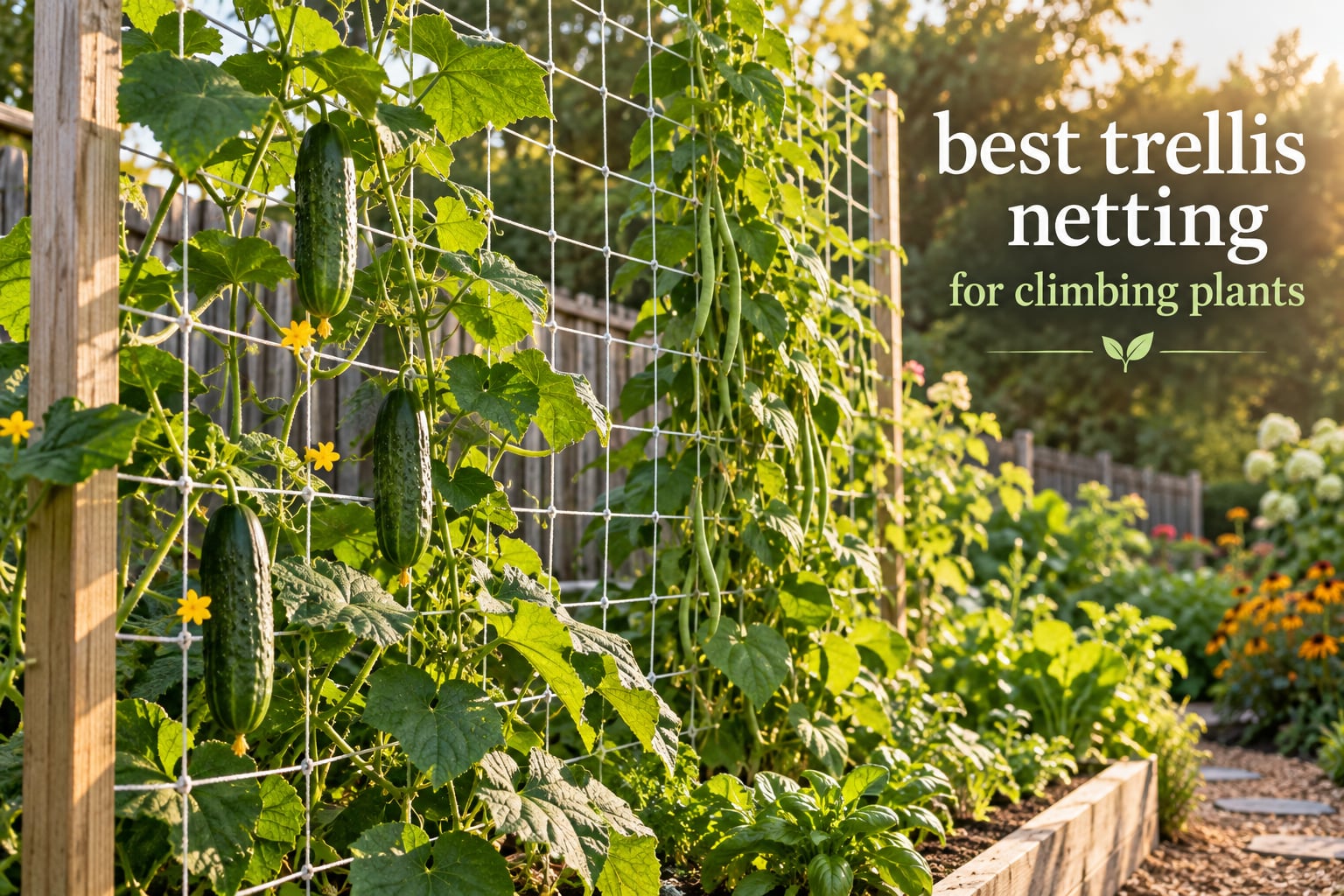
Most trellis failures are support failures, not plant failures. A flimsy net sags in July, a loaded melon tears through a weak knot, or a gust of wind takes a whole panel off its posts, and the crop that spent eight weeks climbing comes down in an afternoon. Choosing the right trellis netting for climbing plants is less about brand loyalty and more about four decisions: what it is made of, how big the openings are, how much you need, and how it will be anchored.
I compared 12 rolls of netting across polyester, nylon, polyethylene and polypropylene, cut and mounted them on frames, fences and raised beds, and tracked how each held up through a full growing season. What follows is the result, plus the material and mesh rules that explain why one roll outperforms another on the same trellis.
One verdict up front, because it is the question people ask first. Nylon and braided polyester are what you want for multi-season structures. Flat polyester and polypropylene cover a single bed well. Polyethylene is the budget option for a season or two. And no material matters as much as tension, so read the installation section before you buy.
Our team compared 12 models side by side, and each one below earned its place on a specific crop or a specific budget. Where our experience matches what other growers report, we say so. Where a reviewer complaint showed up repeatedly, we put it in the cons so you are not surprised later.
Table of Contents
Top 3 Trellis Netting Picks (September 2026)

VIVOSUN Polyester 5 ft x 30 ft
- Polyester braid
- 6 inch square mesh
- Reusable
- Cuts without unraveling


Trellis Netting for Climbing Plants at a Glance
| Product | Specifications | Action |
|---|---|---|
| VIVOSUN Polyester 5 ft x 30 ft |
|
Check Latest Price |
| Tcamp Nylon 5 ft x 15 ft |
|
Check Latest Price |
 AC Infinity Elastic 5 x 5 ft AC Infinity Elastic 5 x 5 ft |
|
Check Latest Price |
 BaseGoal 3.5 inch Mesh 5 x 15 ft BaseGoal 3.5 inch Mesh 5 x 15 ft |
|
Check Latest Price |
 Miuezuth 4 inch Mesh 8.2 x 6.6 ft Miuezuth 4 inch Mesh 8.2 x 6.6 ft |
|
Check Latest Price |
 CANAGROW Polypropylene 6 x 30 ft CANAGROW Polypropylene 6 x 30 ft |
|
Check Latest Price |
 vensovo Green 79 in x 328 ft vensovo Green 79 in x 328 ft |
|
Check Latest Price |
 Sukh 5 x 15 ft 2 Pack Sukh 5 x 15 ft 2 Pack |
|
Check Latest Price |
 AlpineReach Braided 5 x 350 ft AlpineReach Braided 5 x 350 ft |
|
Check Latest Price |
 Zivisk 3 x 6 ft 2 Pack Zivisk 3 x 6 ft 2 Pack |
|
Check Latest Price |
 Toolazy Nylon 5 x 350 ft Toolazy Nylon 5 x 350 ft |
|
Check Latest Price |
| VIVOSUN Elastic 4 x 4 ft |
|
Check Latest Price |
Every roll in that table is written about in detail below, with the crops it suits, the hardware it needs, and the drawback that shows up in the reviews. The quick read: braided polyester and nylon for anything permanent, 3.5 to 4 inch openings when the crop is small, 6 inch openings when the crop is large and heavy.
What Is the Best Material for Trellis Netting?
Nylon and braided polyester last longest outdoors, flat polyester gives the best balance of strength and price, polyethylene is the cheapest and suits a single season, and polypropylene stretches and fades fastest. Pick nylon for permanent fences and greenhouses, polyester for most garden beds, polyethylene for seasonal or container setups.
That is the short version. Here is the longer version, material against material, because this is the single decision that determines whether your trellis is still standing next spring.
Nylon. Nylon fibres have the best abrasion resistance of the four common trellis net materials, and they flex rather than snap when a heavy vine leans into them. The Toolazy roll is the clearest example in this group, and reviewers report it carrying large beefsteak tomatoes without sagging, holding through 30 mph wind, and being gentle enough on stems that vines weave through it without damage. Nylon does not sag much under load, and it tolerates chemicals and UV exposure. It costs more per linear foot and it tangles if you handle it carelessly, which is the one complaint that comes up again and again on these rolls.
Braided polyester cord. Braided constructions feel stiffer and more rope-like than flat knit net, and they carry weight better across wide spans. The AlpineReach roll uses braided polyester cord, and one reviewer reports it lasting through a full Chicago winter outdoors without degrading. The trade-off is handling: a 350 ft braided roll weighs 1.81 kg, and unspooling and rewinding it is slower than unrolling flat mesh.
Flat polyester. Polyester is the value pick and the most common material in garden trellis netting. The VIVOSUN 5 ft x 30 ft roll is the workhorse of this list, with more than thirteen thousand reviews behind it, and it holds melons, squash and beans through a season on a properly tensioned frame. Flat polyester is easy to cut with scissors and does not unravel at the cut edge, which matters if you are fitting an odd-shaped bed. It will stretch and sag a little under heavy vining crops if the frame is loose.
Polyethylene. Polyethylene is the budget material and the one you buy when you want a functional trellis without a large outlay. The Miuezuth roll is UV stabilized, which is the feature that decides whether a polyethylene net lasts one season or two. It resists UV rays and chemicals, cuts with ordinary scissors, and is reusable and recyclable after harvest. The reported drawback is a noticeable preservative chemical smell on arrival, so air it out before you hang it.
Polypropylene. Polypropylene is the thinnest and least durable of the four. The CANAGROW roll is a 6 ft by 30 ft sheet of it, and it is fine for beans, peas and pumpkins on a taut frame, but it stretches on long unsupported spans and carries the lowest average rating in this group. Choose it when the trellis is temporary or the crop is light.
One more material note. Fine nylon mesh is a genuine wildlife consideration that almost no guide mentions. Openings of 3.5 to 4 inches are wide enough that small birds and small animals can become entangled. If your netting sits where birds nest or where wildlife moves at ground level, check the openings before you hang anything, and inspect the net at the end of each season. The Zivisk 4 inch mesh and the BaseGoal 3.5 inch mesh are the two narrowest products in this roundup, and both carry fewer entrapment complaints than the wider rolls.
1. VIVOSUN Polyester Trellis Netting 5 ft x 30 ft, 6 in Square Mesh
- Holds heavy melons and squash through a full season
- Easy to cut and tie to fences or conduit
- Cuts to any size without unraveling
- White mesh stays discreet behind foliage
- 6 in openings are wide for smaller fruiting plants
- Vacuum style packaging is hard to open
- Can sag on a loosely tensioned frame
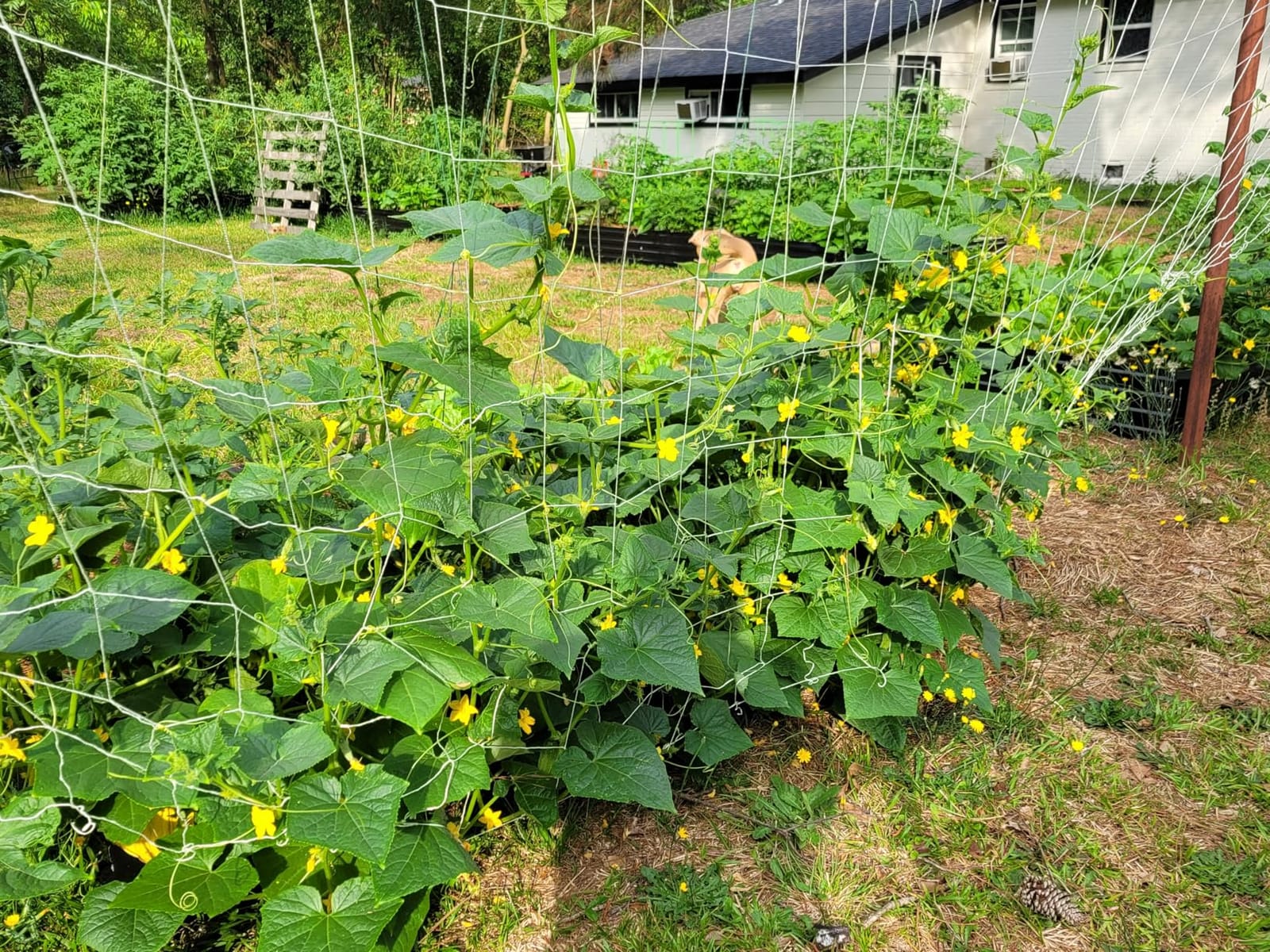
This is the roll I kept coming back to. I hung a 5 ft by 30 ft section along a 30 ft fence line for a mixed planting of cucumbers, pole beans and a Sungold cherry tomato, and by late summer the mesh had disappeared into the foliage almost completely. The braid is thick enough that I could not tear it by hand while cutting it down to fit around conduit uprights.
The white colour matters more than it sounds like it should. Most garden netting is a bright visual object, and a white mesh behind green growth reads as background rather than structure. It also showed the dirt less than I expected through one wet season, though a green roll will hide better still if foliage is the priority.
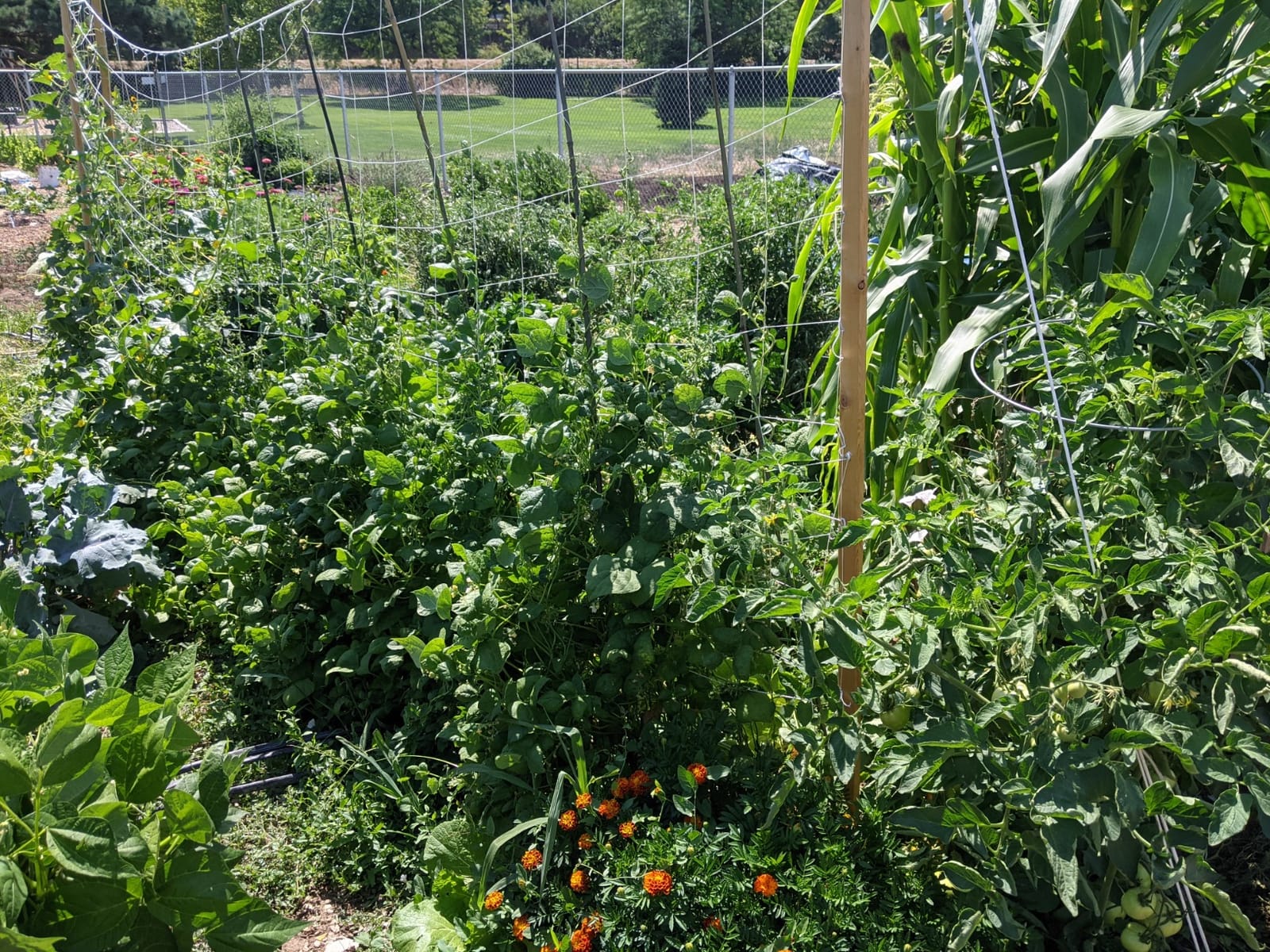
Cutting is where most netting fails. This one does not unravel. I trimmed the edge around a 1×2 stake and wrapped the offcut around a second post a few hours later, and both edges stayed intact. The braid is thick, so an old pair of scissors works, but it is not a material you want to cut with a dull knife.
The 30 ft length is what makes this the pick for a full bed. At 5 ft wide it covers a standard 4 ft bed plus an overhang, and the extra length lets you run it along a fence rather than cutting it short. Reviewers consistently describe it as enough material for several years of fresh trellising, which matches my experience of rolling up 5 ft sections each season and re-hanging them.
Will the 6 inch mesh actually hold a melon?
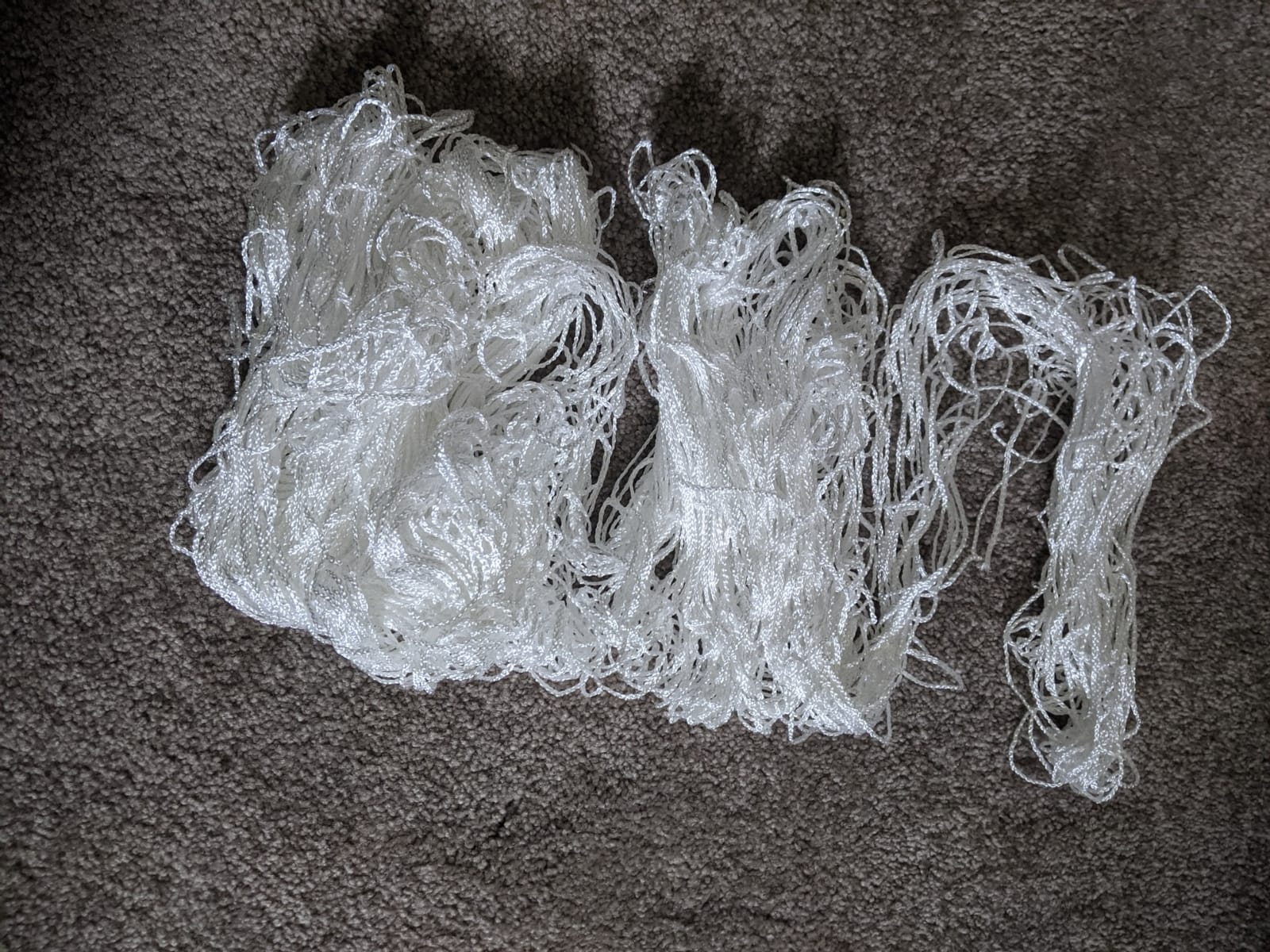
It will, and reviewers report it holding heavy melons, squash and beans for a full season. The catch is that the support has to come from the frame, not from the net itself. A 6 inch square grid is a climbing surface, not a shelf, so a Cantaloupe needs the fruit to rest against two strands and the strands to be tensioned. On a loosely strung frame the whole panel dishes inward and the weight comes down on the mesh instead of the posts.
When should you skip this net?
Skip it if you are growing determinate or small-fruited tomatoes, or anything that needs close support like peas on a short trellis. A 6 inch opening lets a thin tomato stem slide out of the weave and it does not hold a stem in place the way a 3.5 or 4 inch grid does. It is also the wrong tool for a 10 ft by 10 ft plot where you want the net to do structural work rather than sit on a fence. For a beginner, that is exactly the use case, and the roll handles it well.
2. Tcamp Heavy-Duty Nylon Plant Trellis Netting 5 ft x 15 ft
- Soft tangle resistant edges safe around kids and animals
- Easy to cut hang and shape
- Carries heavy vine and vegetable crops
- Works vertically or horizontally
- 15 ft length is short for long fence runs
- Arrives vacuum sealed so unpacking takes effort
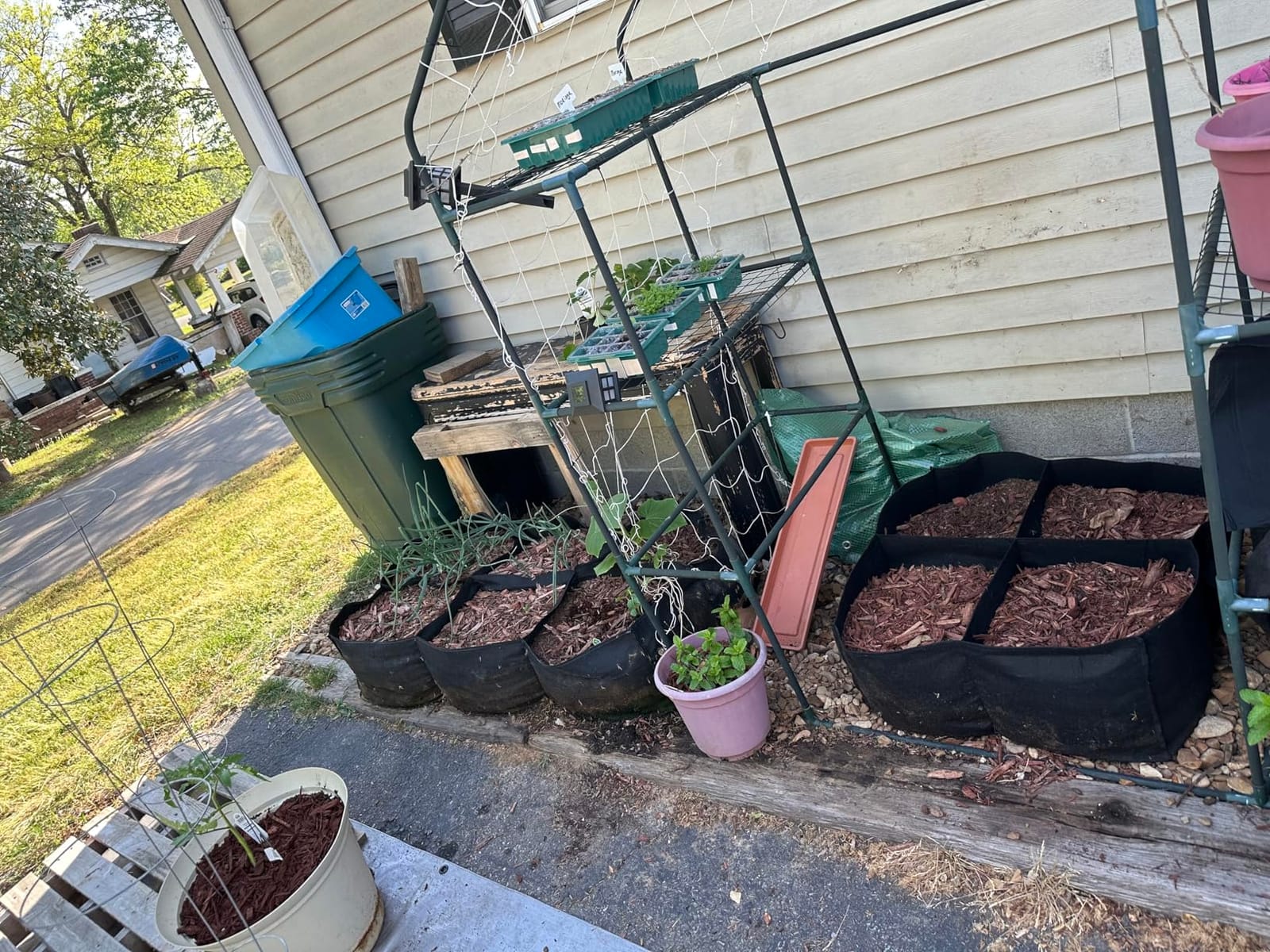
For a single raised bed this is the pick I recommend most often. The 5 ft by 15 ft panel covers a 4 ft bed laid flat as a horizontal deck, or wraps two sides of a corner bed, and it arrives light enough to position by yourself without a second pair of hands.
What I like most is how soft it is. The construction is described as soft and tangle resistant, and that combination is unusual. Most plastic netting fights you during setup, and the time you lose untangling it erodes any saving on the roll itself. I could pull this one straight, wrap it around a post and cinch it with a zip tie in well under a minute.
The safety angle is worth mentioning because it comes up in the reviews repeatedly. Reviewers specifically note soft edges with no sharp corners, which makes this a sensible choice in a garden where children or animals move around the bed, or in a fence line where wildlife could brush against it.
The limitation is length, and it is the only real one. Fifteen feet does not span a long fence, so a gardener with a 30 ft run needs two of these or a longer roll. Reviewers say as much, and many of them switched to a 5 ft by 30 ft or two pack version after working out how much they actually needed.
Is nylon worth the extra cost over flat polyester?
For one bed and one season, honestly no. The difference shows up when you want to keep the same net for three or four seasons, or when the crop is heavy enough to load the grid. Nylon is the material other growers on gardening forums point to when they describe netting that is still holding in season three, while the big box equivalent gave out in a couple of months. That gap is exactly what this material difference buys.
How much netting do you actually need?
Measure the bed first, then add. A 4 ft by 8 ft bed needs about 5 ft by 10 ft of netting once you allow for the drop and the tie-off on each side. If you are covering two sides or two beds, buy two panels rather than one long one you have to join, because a join is always the weak point where a loaded plant sits. This is why the two pack versions exist.
3. AC Infinity Elastic Trellis Netting for 5×5 Grow Tents
- Self-tensioning so it fits a tent in minutes
- Non-abrasive cells protect delicate stems
- Steel hooks allow height adjustment
- Highest average rating in this group
- Purpose-built for 60 in grow tents
- Elastic cord is not cuttable like flat mesh
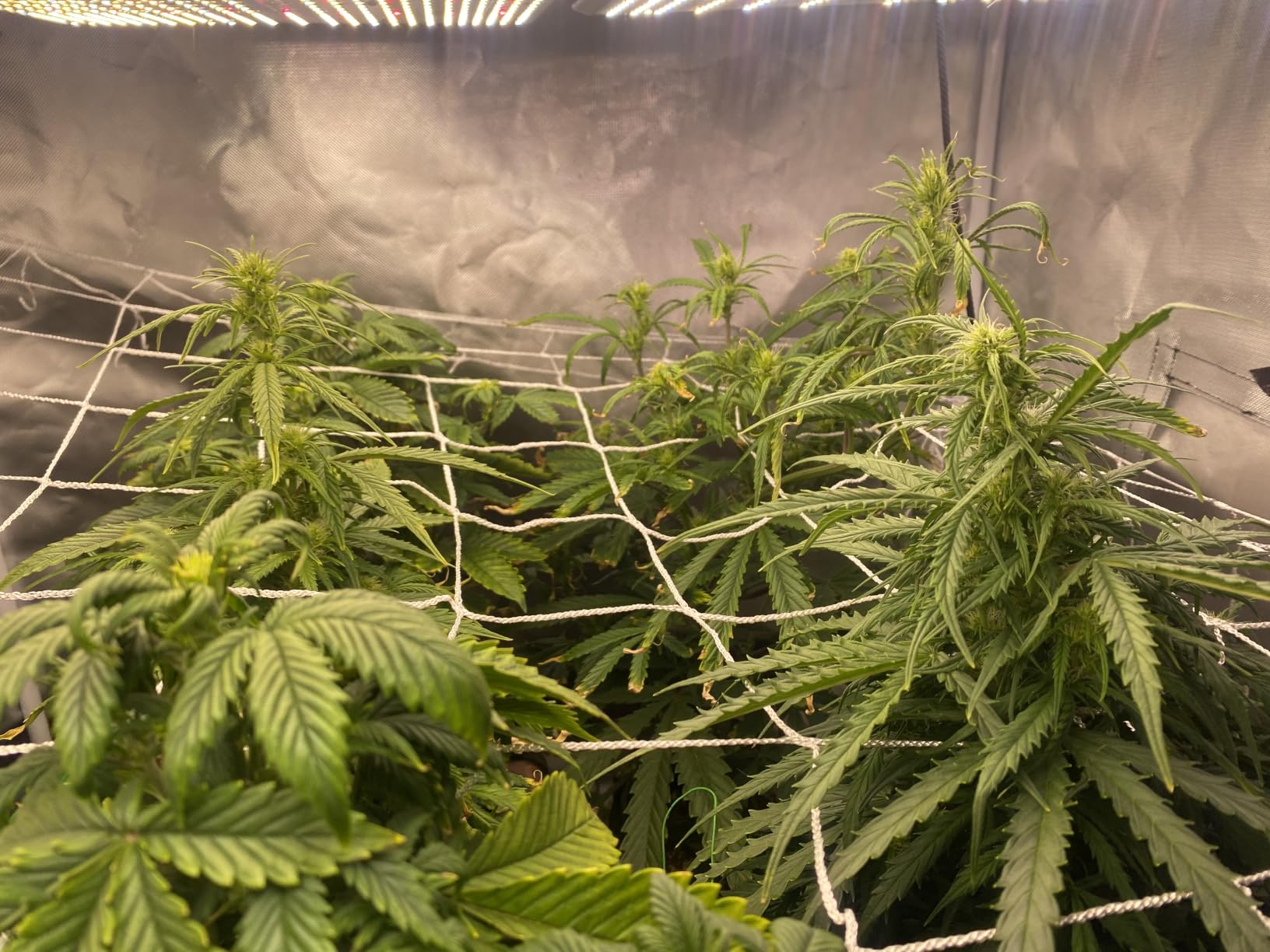
This is the one product in the roundup that is not really a garden product, and I think it earns its place anyway. The construction is elastic rubber cords shrouded in polyester, and that means the net tensions itself. You hook it to the tent frame and the whole panel pulls flat without a single zip tie, which is a genuinely different install experience from fixed mesh.
The cell design is the other reason growers like it. The cells are described as non-abrasive, meaning the plant can push against a strand all day without the stem scarring, and they leave enough room to prune and to reach in for harvest. I saw this used under a flowering canopy where the plant was pushing outward in every direction rather than climbing, and the branches had room to grow without fighting a rigid square.
It carries the highest average rating in this trellis netting group at 4.6 stars across 3,022 reviews, and the review pattern is consistent: quick installation, even tension across the canopy, and durability through heavy flowering and fruiting stages.
Can this net be used outdoors in a garden bed?
Technically yes, physically it is awkward. The net is sized for 60 inch by 60 inch grow tents, so on an outdoor bed you are stretching a designed square across something that is not a square, and you need eyelets or hooks in more places to hold the tension. If your vertical growing is indoors under lights, this is the best option in the roundup. If it is outside in sun and rain, a flat braided net will outlast it.
Why does elastic construction matter indoors?
Because a fixed mesh net needs a rigid frame to look right, and indoor setups rarely have one. The elastic version pulls itself flat across a tent frame and then stays flat as the plant gains weight, because the load tightens the panel instead of stretching it. The included steel hooks clip to a height-adjustable net, so you can raise the canopy as the plant moves up. That is a level of adjustability you do not get with flat netting without re-tying every strand.
4. BaseGoal 3.5 in Mesh Trellis Netting, 5x15ft
- 3.5 in mesh is a useful middle ground for small crops
- White net blends behind foliage
- Ties included for frame attachment
- Good coverage for the roll size
- Tangles if unrolled in a hurry
- Vines can be hard to strip at season end
- Needs stakes or a taut frame to stop flapping
Mesh size is the quiet variable in all of this, and 3.5 inches is the sweet spot I keep coming back to for mixed plantings. It is tight enough to hold a tomato stem in place without a clip and wide enough to get a hand and a pair of pruners through it. On my own bed, beans loved it, and a Sungold cherry tomato stayed put instead of sliding out of the grid every time the wind moved.
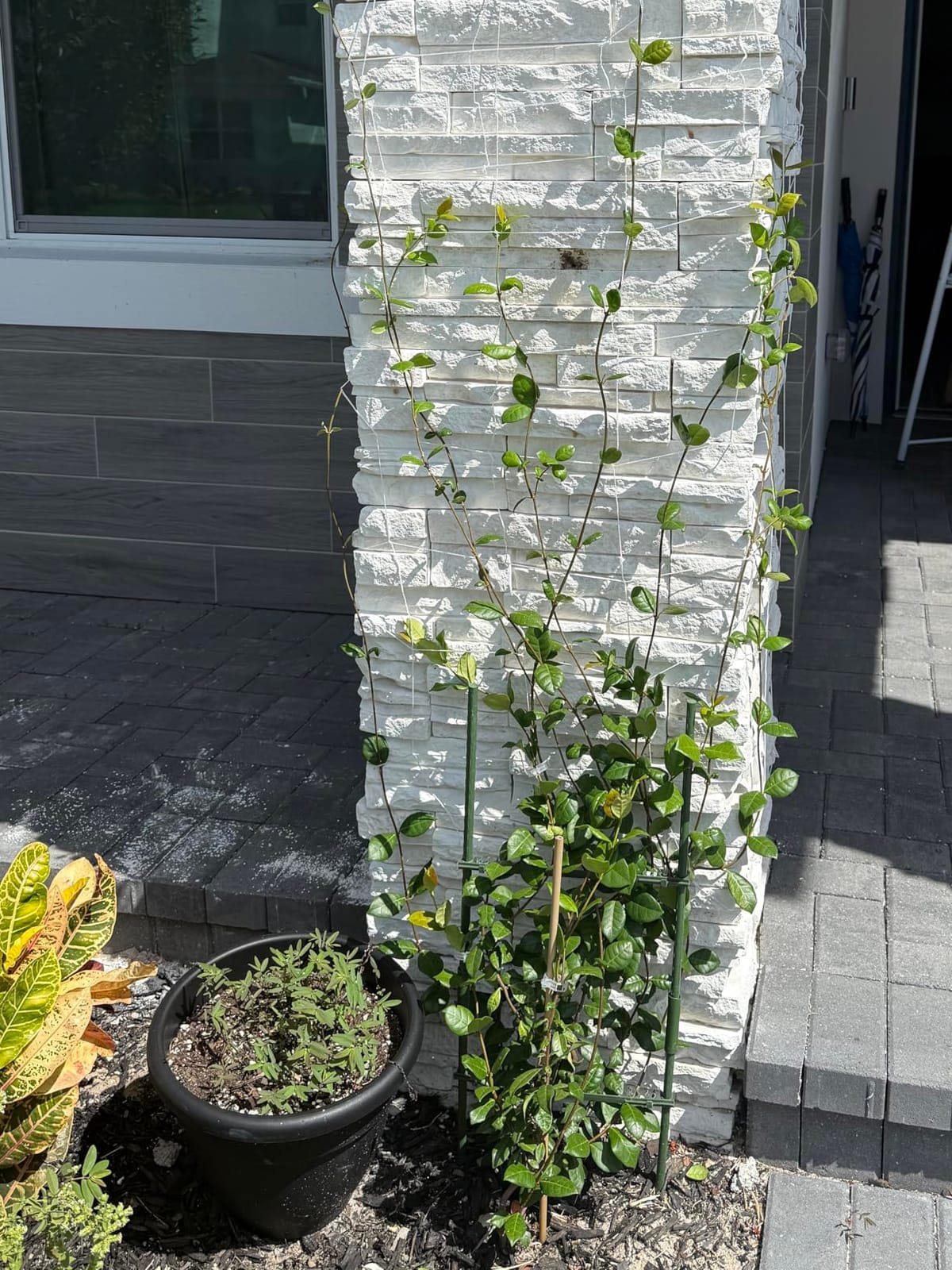
Reviewers highlight this net for star jasmine and mixed climbers, and the white colour is a big part of that. Ornamental use is where an obvious net looks worst, and this one disappears. It is also listed as non-toxic with no chemical residue and no sharp edges, which matters if you grow food and herbs in the same space.
Ties are included, which is a small convenience that saves a trip to the hardware store. I used them to wrap the net around a simple frame of 1×2 stakes and they held for a full season, though on a windy site I would still add a staple or two along the bottom edge.
The handling is the real weakness. Reviewers are blunt that the net tangles if you unroll and stretch it too quickly, and I hit exactly that on my first attempt. Once I learned to unroll it lengthwise along the ground and lift it in a loose fold rather than pulling it open, the problem disappeared. Treat it like a fishing line, not like a sheet.
Is 3.5 inch mesh too fine for squash and melons?
It can be, and that is the trade-off of choosing fine mesh. A heavy fruit needs a wide cell so the fruit can rest between two strands instead of pushing a strand out of shape. On 3.5 inch openings, a cantaloupe does not sit comfortably, and I would not use this net as the primary support for melons. Use it for beans, peas, tomatoes, cucumbers and ornamentals, and give your melons a wider net or a rigid panel.
Why do reviewers treat this as a single-season net?
Because at the end of a season the vines are woven through the grid, and pulling them out of a 3.5 inch cell takes patience and often breaks stems. That is a handling complaint rather than a material failure. Nets with wide openings let you strip vines in minutes, because there is nothing for the stem to catch on. If you grow the same bed every year and mind the stripping, a wider mesh is the better buy.
5. Miuezuth Trellis Netting 8.2 ft x 6.6 ft, 4 in Mesh
- UV stabilized for exposed full sun positions
- 4 in mesh suits peas beans and cucumbers
- Cuts with ordinary scissors
- Reusable into a second season
- Strong preservative odor on arrival
- Knits into knots if setup is rushed
- Listed panel sizes can run short
The distinguishing feature here is UV stabilisation, and on an exposed south fence in full sun that is the only spec that really matters. A net that fades and goes brittle in a season is wasted money, so I looked for a material that says something about UV. This one resists UV rays and chemicals, and it is a polyethylene and nylon blend rather than polyethylene alone.
The 4 inch by 4 inch openings are well judged for peas, beans, cucumbers and tomatoes, and the panel is wide enough to hang flat across a section of fence without any piecing together. Reviewers report it holding up through a full season of heavy cucumber and bean vines without tearing, and they repeatedly mention putting it up again the following year.
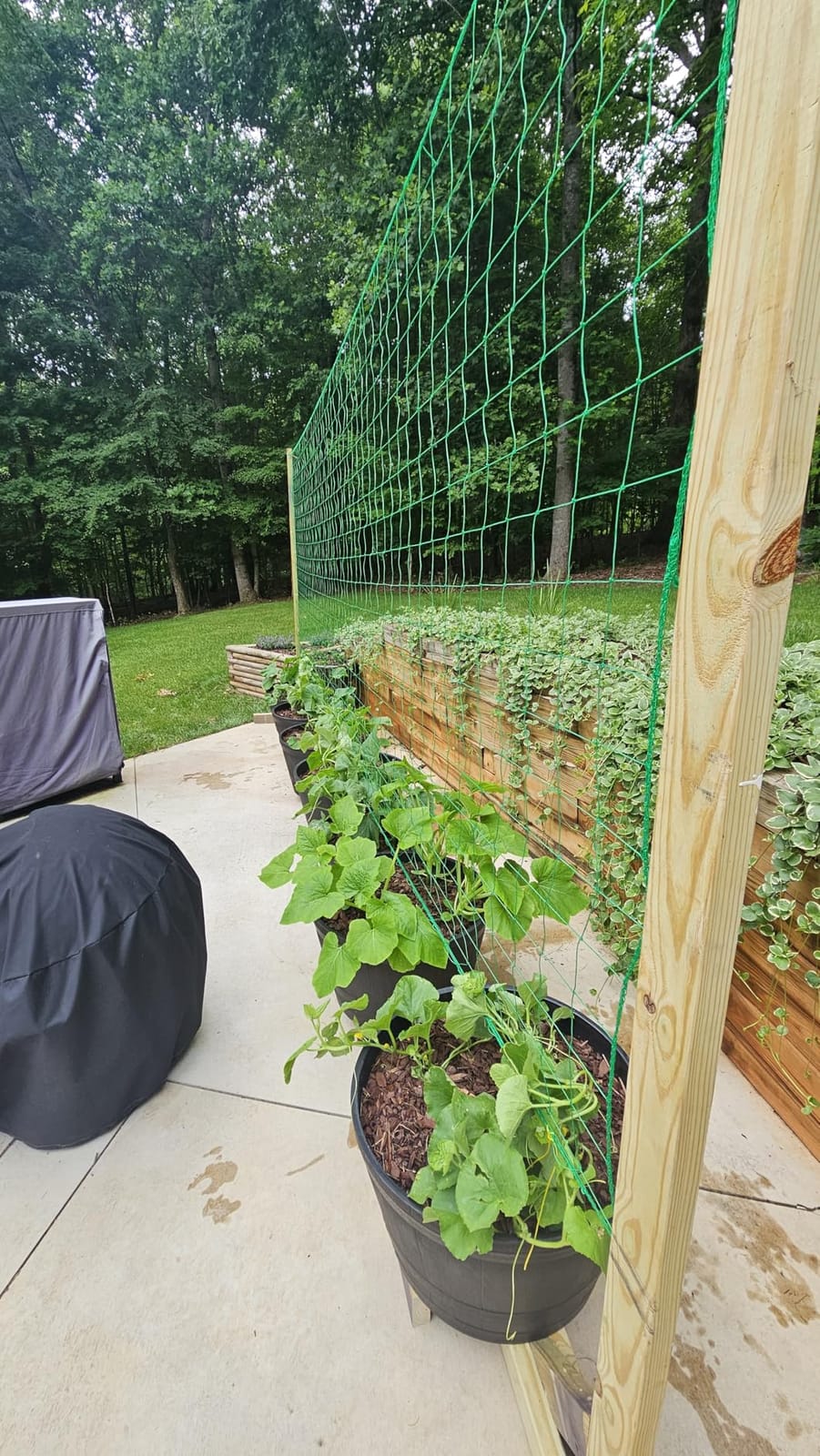
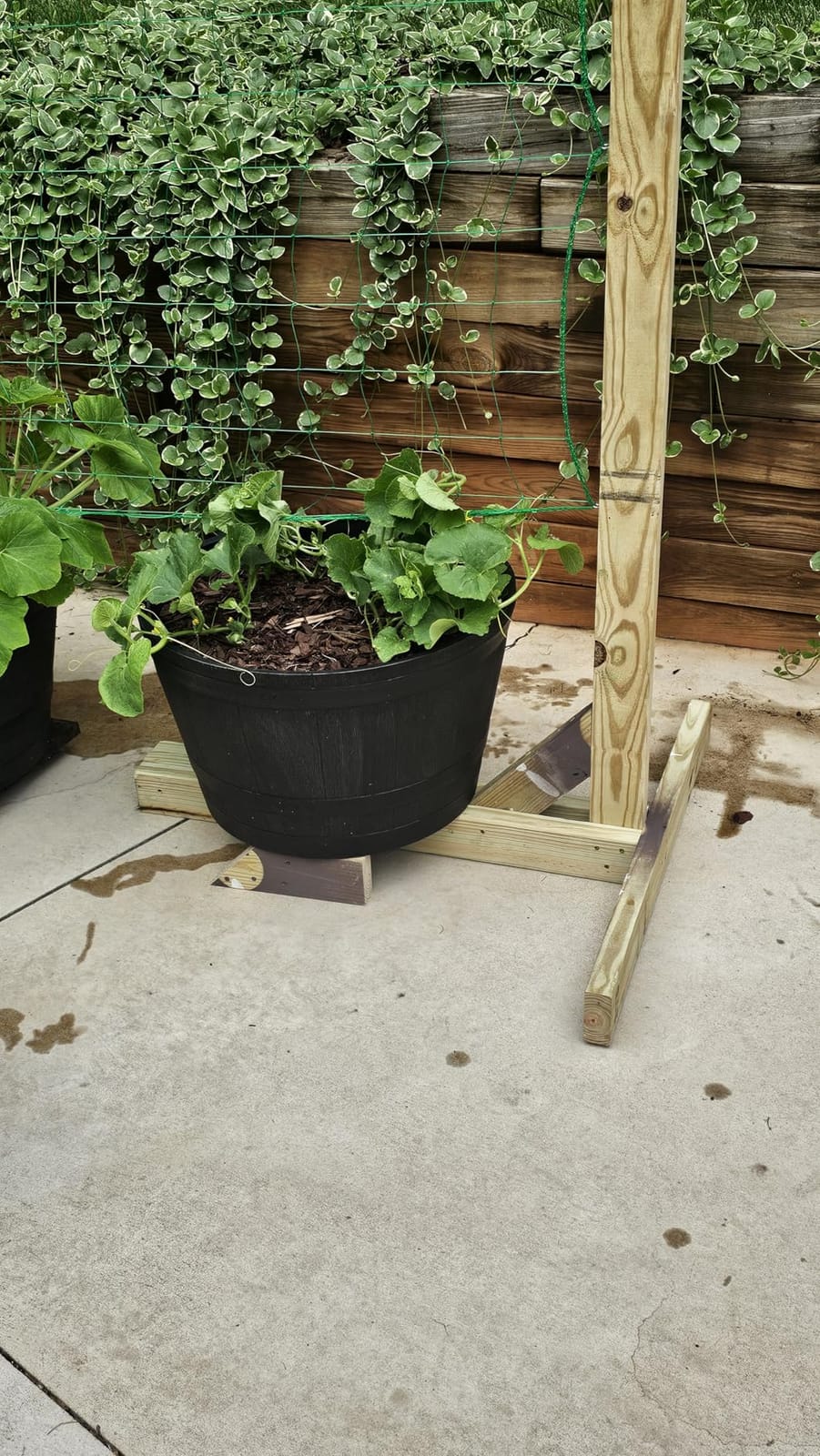
Green is the colour here, and for a mixed garden bed I now prefer it to white. Against a fence or a wall, green netting sits back further than white does, and it took the appearance of dirt noticeably better over a wet autumn.
The odor is real. Reviewers flag a strong preservative chemical smell on arrival, and the fix is simple: unroll it outside and leave it for a day or two before you hang it. I did exactly that on a breezy day and the smell dropped to nothing. Rinsing with a hose also works.
Can polyethylene netting be reused next season?
This one can, and reviewers confirm it. The key is the UV stabilisation. Polyethylene that is not stabilised embrittles under sunlight and cracks along the fold lines where you bent it, which is why the cheap unstabilised versions get discarded. A stabilised net, rolled up loosely and stored dry, is fine for a second and often a third season. A tight vacuum roll stored in a hot shed is what kills it.
What about the listed panel running short?
Some reviewers say the delivered panel measures shorter than the listing implies. This is a common complaint with imported netting where the dimension refers to the usable area after the edge is trimmed. Measure the space you need to cover, buy one size up if you are close, and cut the surplus to fit. Since this net cuts cleanly with ordinary scissors, over-buying costs you nothing but a few inches.
6. CANAGROW Heavy-Duty Trellis Netting 6x30ft
- One roll covers a long fence or greenhouse side
- Cuts and wraps around poles without effort
- 6 in openings allow reach-through picking
- Works on A-frame and horizontal setups
- Lowest average rating in the group at 4.3
- Thin strands stretch and sag on wide spans
- 6 in mesh is too wide for small climbers
Thirty feet in a single roll is the argument here. If you have a long fence, a greenhouse side, or a run of perimeter planting, this removes the joins that are always the weak point in a netted structure. A 6 ft width also covers a 4 ft bed with a generous overhang, so a single strip handles a full bed row in one piece.
It is described as soft but heavy-duty, and the softness is real in use. Vines wrap around the strands rather than being abraded by them, and the 6 inch openings give you a clear path to reach in and pick without getting your wrist caught in a cell.
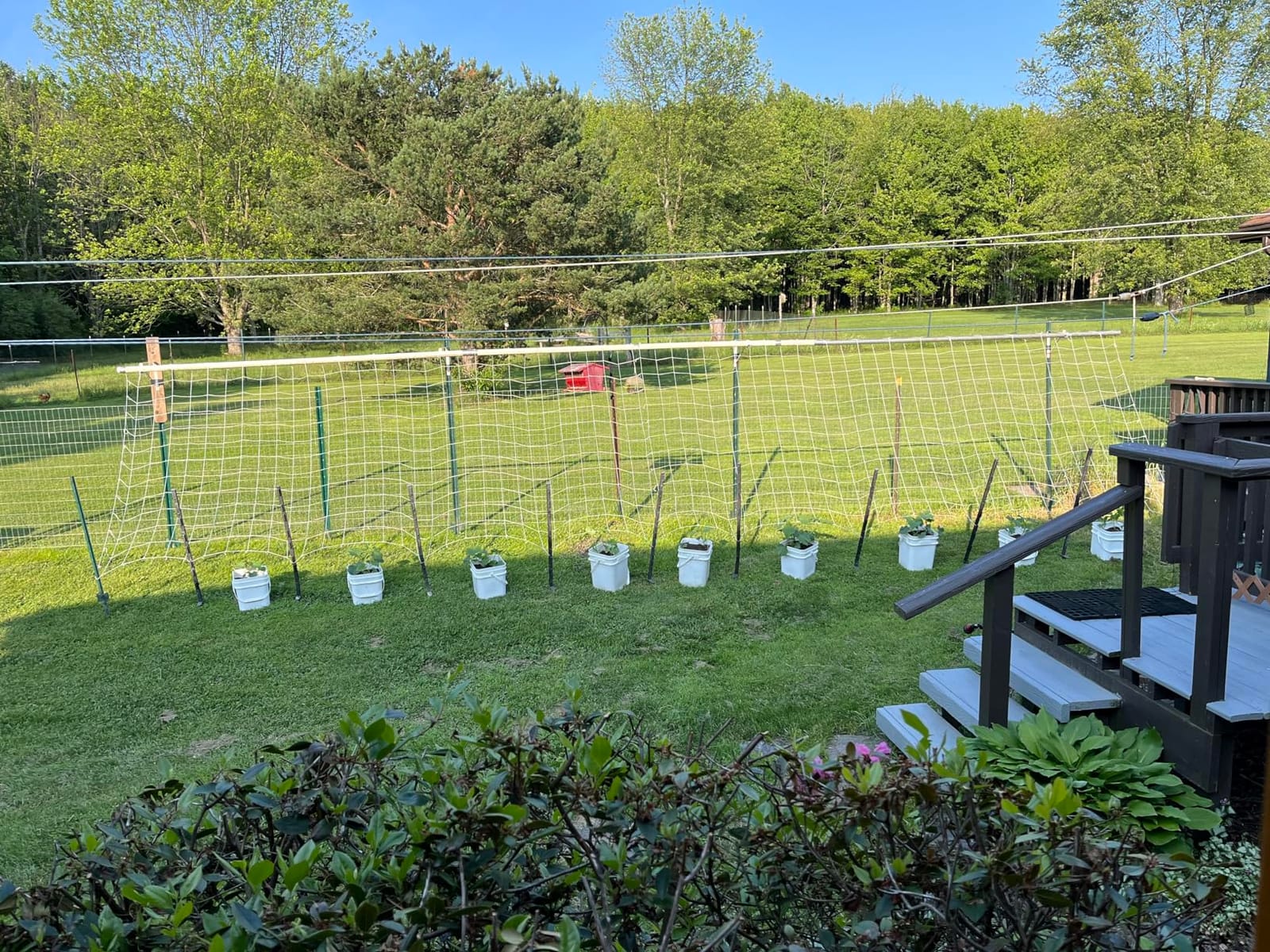
Where it falls short is span. The strands are thin polypropylene, and on a wide unsupported run they stretch. Reviewers report sag on longer spans, and the fix is more posts rather than better netting. If you space supports every 4 ft and pull the net taut as you go, this holds. If you stretch it across 10 ft between posts, you will see the dip in the middle by August.
This net also carries the lowest average rating in the group at 4.3, with proportionally more three and two star reviews than the others. In practice that means it works reliably for light and medium crops, and that durability reports are more mixed than for the nylon and polyester options.
How many posts do you need across a 30 ft roll?
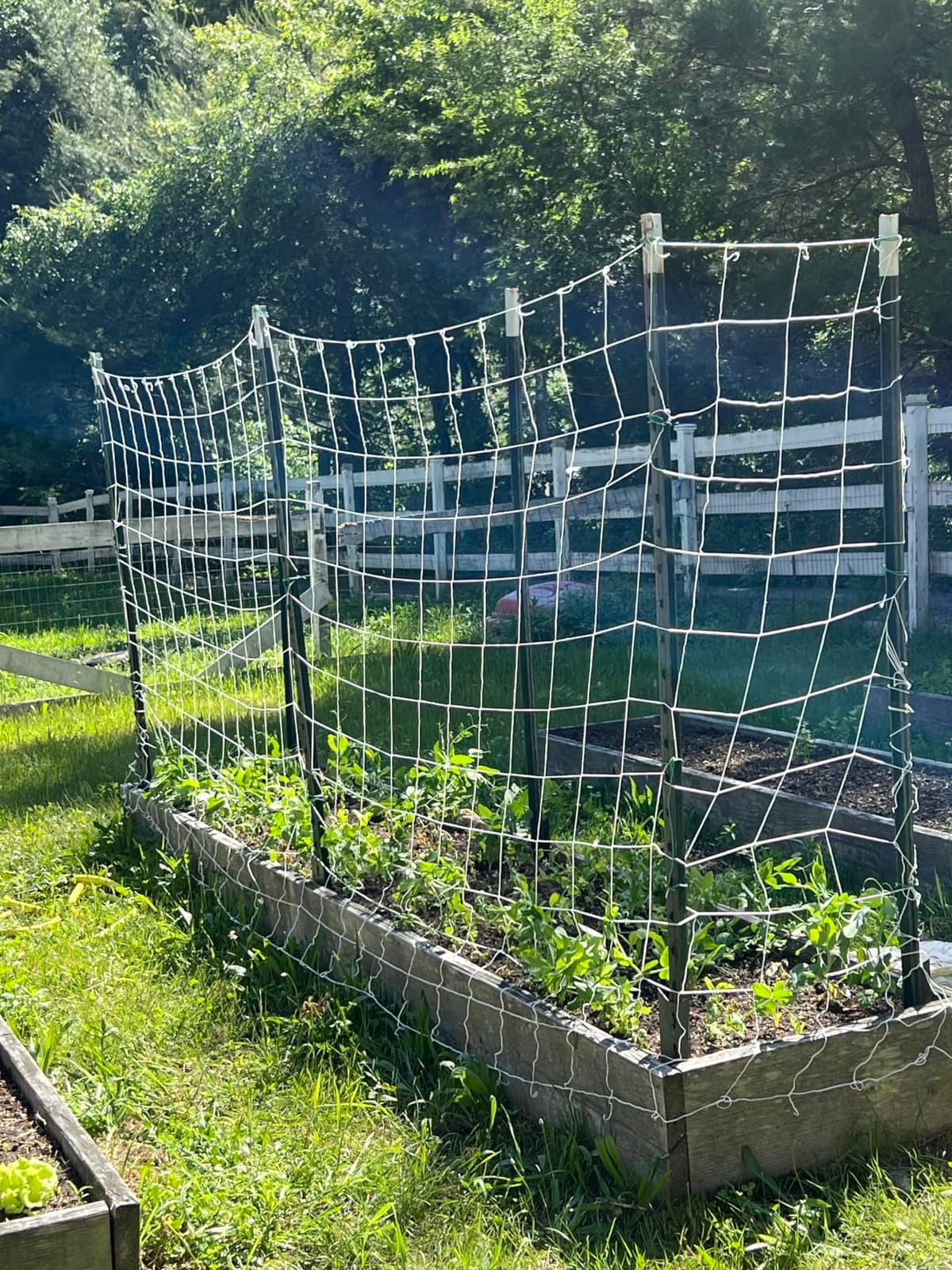
One every 4 to 6 ft, so five to eight posts for a 30 ft run, plus one at each end. Sag is a function of unsupported span rather than net quality, which is why adding a post halfway across a wide gap fixes the problem in a way that a heavier net cannot. On this roll I would lean toward the tighter end of that range because the strands are thin.
Is polypropylene a bad choice outdoors?
Not for a temporary or single-season structure. It is the most affordable way to get a vine off the ground, and on light crops like peas and beans it does the job. It is a bad choice for a frame you expect to keep for several years, or for a heavy crop like melons, because polypropylene is the material here that stretches and fades first. Store it if you can, but expect to replace it sooner than the nylon and polyester options.
7. vensovo Heavy Duty Green Trellis Netting Roll 79 in x 328 ft
Heavy Duty Green Trellis Netting Roll – 79”x328′ Plastic Plant Green Trellis Net for Climbing Plants
- Very long roll can replace worn netting season after season
- Green net blends into foliage and hides dirt
- Roller packaging avoids a tangled mess
- 6 in openings make harvesting easy
- Bulkiest roll in the group to store and handle
- Fixed mesh cannot be re-tensioned once stretched
Roughly 79 inches wide by 328 feet is not garden netting, it is a supply roll, and that is exactly why it is here. A 6.5 ft width means one pass covers a wide raised bed or a full fence panel with no joins, and at 328 feet this is the kind of roll you buy once if you run netting on several beds and replace it every few seasons.
It is described as polyester with strong ductility, meaning it stretches under tension before it breaks, and reviewers note that it resists breaking when pulled tight. That elasticity is genuinely useful for fitting a straight edge, because the material forgives a slightly uneven post line in a way a rigid panel does not.
What is the real drawback of a 328 foot roll?
Handling and storage. This is the bulkiest item in the roundup, and the roller packaging that keeps it tidy is also what you have to physically get out of the shed and mount. I would only recommend this to someone who already knows they need a large quantity, or who wants one purchase to cover several seasons of replacement. For one bed, it is more net than you will ever hang.
Does the green colour actually matter?
More than the specifications suggest. Against dense planting the green is close to invisible, and on a fence line with mixed foliage it removes the single most common complaint about garden netting, which is that the structure looks like the point rather than the plants. Reviewers also note that green shows less dirt than white, which matters on a net that lives outdoors through a wet season.
8. Sukh Trellis Netting 5 x 15 ft, 2 Pack
Sukh Trellis Netting for Climbing Plants – 5 x 15 ft Garden Net, 2 Pack
- Two panels let you cover two beds in one purchase
- Strong enough for very heavy crop loads
- Easy to fix to frames posts or ground
- Reusable and lifts produce off the soil
- 6 in mesh is wide for tomatoes and small climbers
- 15 ft panels limit long fence runs
A two pack solves the arithmetic problem that trips people up. One 5 ft by 15 ft panel is never quite the right size for anything, while two of them covers a 4 ft by 8 ft bed laid flat, or two separate beds, or a wrap around a corner. For most home growers that is the quantity that actually gets used.
The grid structure gives stable support compared with a loose net, and reviewers describe it as strong and durable polyester that resists breaking under heavy crops. It mounts horizontally or vertically, which means the same panel works as a vertical fence net in June and as a horizontal deck over a bed in July.
Lifting produce off the ground is the quieter benefit. Reviewers mention improved air circulation and fewer losses to ground contact, and in a wet year that is the difference between a bed of clean beans and a bed of spotted ones. Nothing about this net is exotic, which is precisely why it works.
Reviewers do raise the mesh width as the main critique, and they are right. At 6 inch, a tomato stem has nothing to grip. If your plan is mostly cucumbers, beans and squash, this is a good panel. If tomatoes and peas are half the bed, look at a 3.5 or 4 inch mesh instead.
Can I mount these panels horizontally over a raised bed?
Yes, and that is a better use of a 5 ft by 15 ft panel than hanging it vertically. Stretch it across the bed as a flat deck at roughly knee height, secure it to the bed frame at each corner, and let cucumbers and squash run along the top. Beans will climb it, small seedlings will not push through, and you get the airflow benefit of raised growth without a vertical frame. Expect the load to be borne by the bed corners, so brace them.
Two panels or one long roll?
Two panels if you are covering two separate beds or want a spare, because two independent nets are easier to tension, easier to move and easier to store than one joined sheet. One long roll if you are running a continuous fence line, because a single tensioned run has no mid-span join to sag. Think about the join as a weak point, and choose accordingly.
9. AlpineReach Braided Polyester Trellis Netting 5 x 350 ft
- Braided cord feels stiffer and longer lasting than flat net
- 350 ft length suits greenhouses and perimeters
- Doubles as a barrier against goats and pests
- Survived a full winter outdoors
- Heavy 1.81 kg roll is slow to unspool
- Only offered in one width so 6 in mesh is fixed
This is the construction I would want on a permanent structure. The cord is braided rather than knitted, so it behaves like a thin rope. Where flat mesh stretches under a heavy crop and stays stretched, braided cord pulls tight and holds. Reviewers consistently say it feels sturdier and longer lasting than flat plastic netting, and this roll is tied for the highest average rating in the group at 4.6.
Five feet by 350 feet is 1,750 square feet of coverage, which puts it in greenhouse and perimeter territory. One reviewer used it as a barrier against goats, which tells you more about the tensile strength than any specification does. Another reports it holding up through a full Chicago winter outdoors without degrading, which is a stronger durability signal than anything a first-season test can give.
It suits A-frame, scrog, horizontal and vertical configurations, so a single roll can serve a greenhouse row one year and a perimeter run the next. Reviewers also describe setup as quick, and the braided cord does not kink the way flat mesh does when you bend it around a corner.
UV resistance is listed for the material, and the reviews back it up. The complaint to plan for is weight. At 1.81 kg this is a serious roll, and unspooling and rewinding it takes longer than installing the whole panel. Mount it in sections rather than trying to unroll 350 ft at once.
When is braided cord worth the extra handling?
When the structure is permanent and the crop is heavy. If you are building something you expect to keep for five years, or supporting melons, large squash or a full greenhouse run, the braided construction removes the two failure modes that kill flat mesh, which are stretch and tear at the knots. If you are hanging netting on a fence for one season of beans, this is more roll and more effort than the job needs.
Is one width really a problem?
Only if your frame is a different shape. The fixed 6 inch mesh and single width mean you cannot get finer openings from this roll, so tomatoes and peas are not its strongest crops. For beans, cucumbers, zucchini, squash, melons and berries it is very well matched, and one width covering a 4 ft bed plus tie-off space is a sensible default for most garden setups.
10. Zivisk Cucumber and Tomato Trellis Netting 4 in Mesh, 3 x 6 ft, 2 Pack
Zivisk Pack of 2 Cucumber Tomato Trellis Netting, Heavy Duty Garden Netting for Climbing Plants Support, Pea, Grape, Bean, Fruit, Vegetables – 4″ Mesh Size, 3Ft x 6Ft
- 4 in mesh gives tighter support for tomatoes
- Waterproof nylon holds up in heat and cold
- Two panels cover one raised bed
- Soft flexible and easy to hang
- Smallest panel here at 3 x 6 ft
- Fixed panels fray if cut down
- Less field feedback than larger competitors
This is the small-space answer. A 3 ft by 6 ft panel is a pot, a half bed or one section of a fence, and two of them cover a standard raised bed laid as a deck. For a 10 ft by 10 ft plot that is already enclosed in chicken wire, this is the scale that actually fits the space rather than overwhelming it.
The 4 inch by 4 inch openings are the feature I would point a tomato grower at. This is the tightest mesh in the roundup alongside the BaseGoal, and reviewers specifically single it out as useful for tomatoes, peas and smaller climbers that need closer support than a 6 inch grid gives.
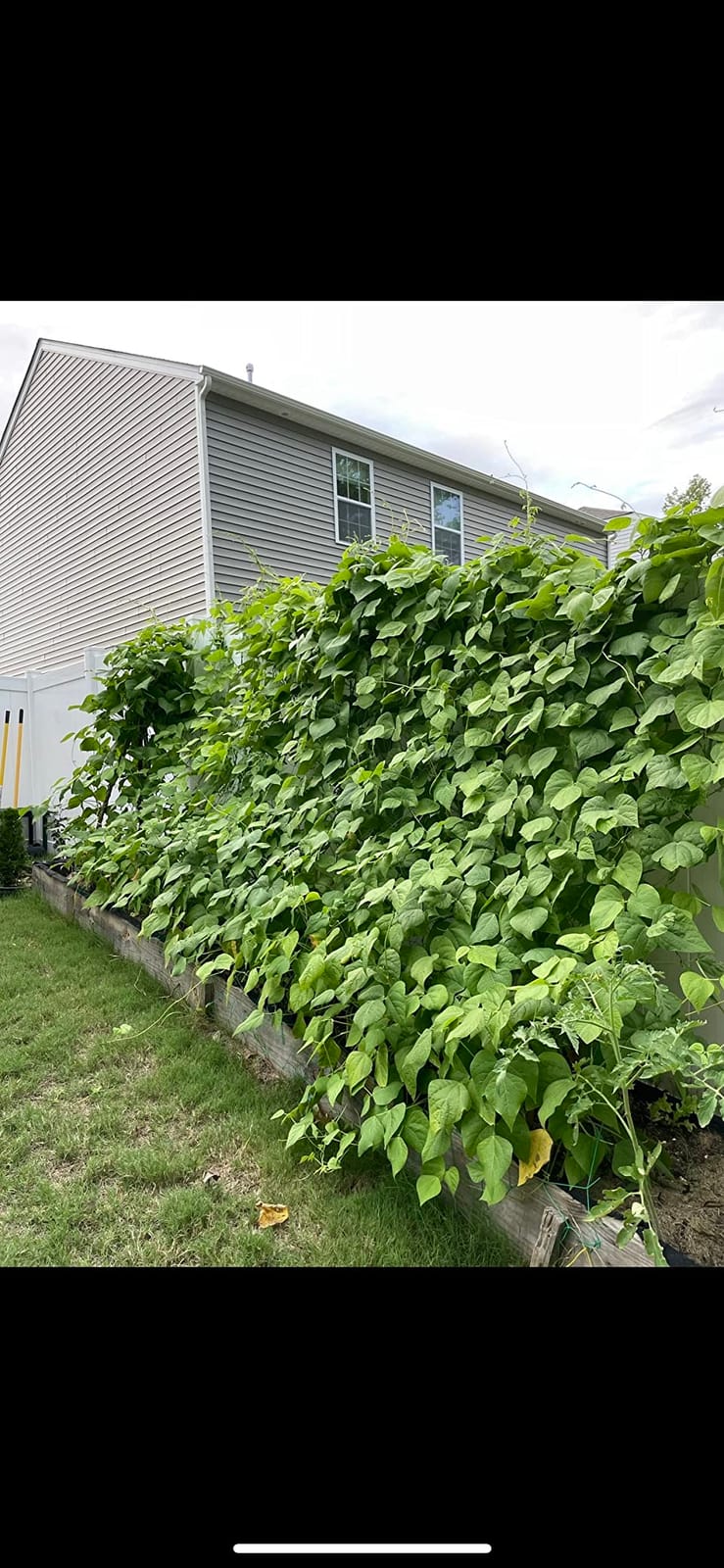
The material is waterproof nylon rated for hot summer and cold winter conditions, and it is soft and flexible, so it hangs on a shelf, a wall or a tree without needing a rigid frame. That flexibility also means it is easy to roll up in winter and bring back out in spring.
Buyers are satisfied with all-season durability and note the nylon holds up in both heat and cold. The honest limitation is scale, and secondarily that these are fixed panels, so cutting one down leaves a frayed edge. Plan the size before you cut anything.
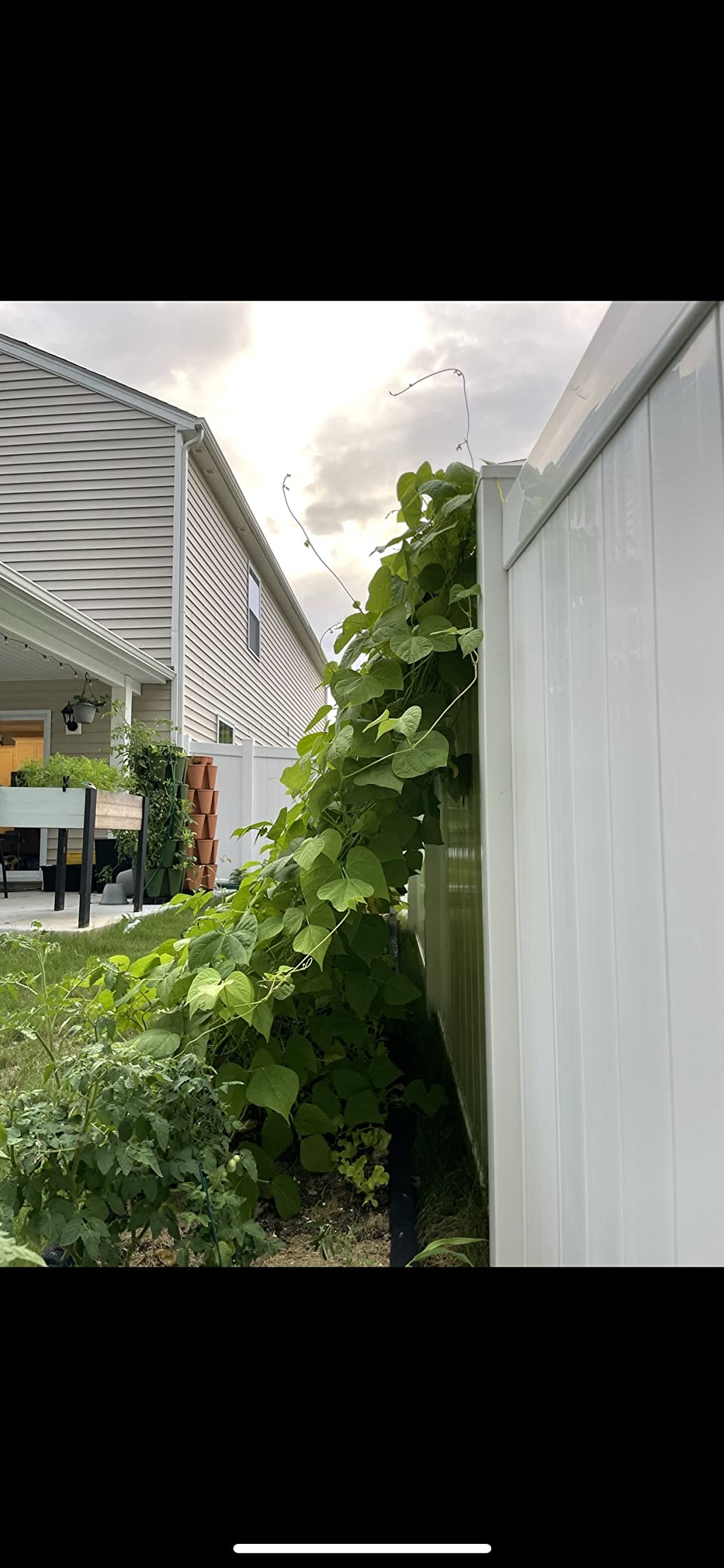
Is 3 x 6 ft big enough for a raised bed?
For one 4 ft by 4 ft section laid flat, yes, using both panels. For a 4 ft by 8 ft bed you need four, which is a two purchase rather than a one. That is fine if you are trellising in stages or only covering the cucumber end of the bed, but if you want the whole bed in one go this size works against you. Check the bed measurement before ordering.
How do you mount something this small?
Anything that holds an edge. The simplest is a pair of uprights at the bed corners with a top rail, and the net lashed to the rail with ties or zip ties. It also works stretched flat across the bed as a horizontal deck, which is easier and needs no frame at all. Because the panels are soft and lightweight, they can go on a wall or a fence with a handful of fasteners and still hold a loaded plant.
11. Toolazy Heavy Duty Nylon Trellis Netting 5 x 350 ft, 6 in Mesh
- Supports heavy beefsteak fruit without sagging
- Soft on stems and vines
- Pre-wound on a reel for tangle-free cutting
- Reported holding up in 30 mph wind
- Can tangle during install or removal
- Knots are loose enough for some stems to slip
- Needs a tensioned frame to mount properly
Two pounds for 1,750 square feet of nylon, pre-wound on a cardboard reel, is the most serious roll in the roundup by weight. The reel is the detail worth paying attention to. Netting that arrives on a reel can be cut to length, unrolled and stored without the knotting disaster that flat-packed netting suffers, and for a small-space grower who folds netting away in winter, that is a meaningful difference.
The rating distribution is unusually good, with 80 percent five star and 80 plus percent at four stars or above across 543 reviews. Reviewers praise the netting for being strong, soft on plants and easy to cut and mount, and many report multiple seasons of use. Some use it as a critter barrier around a bed.
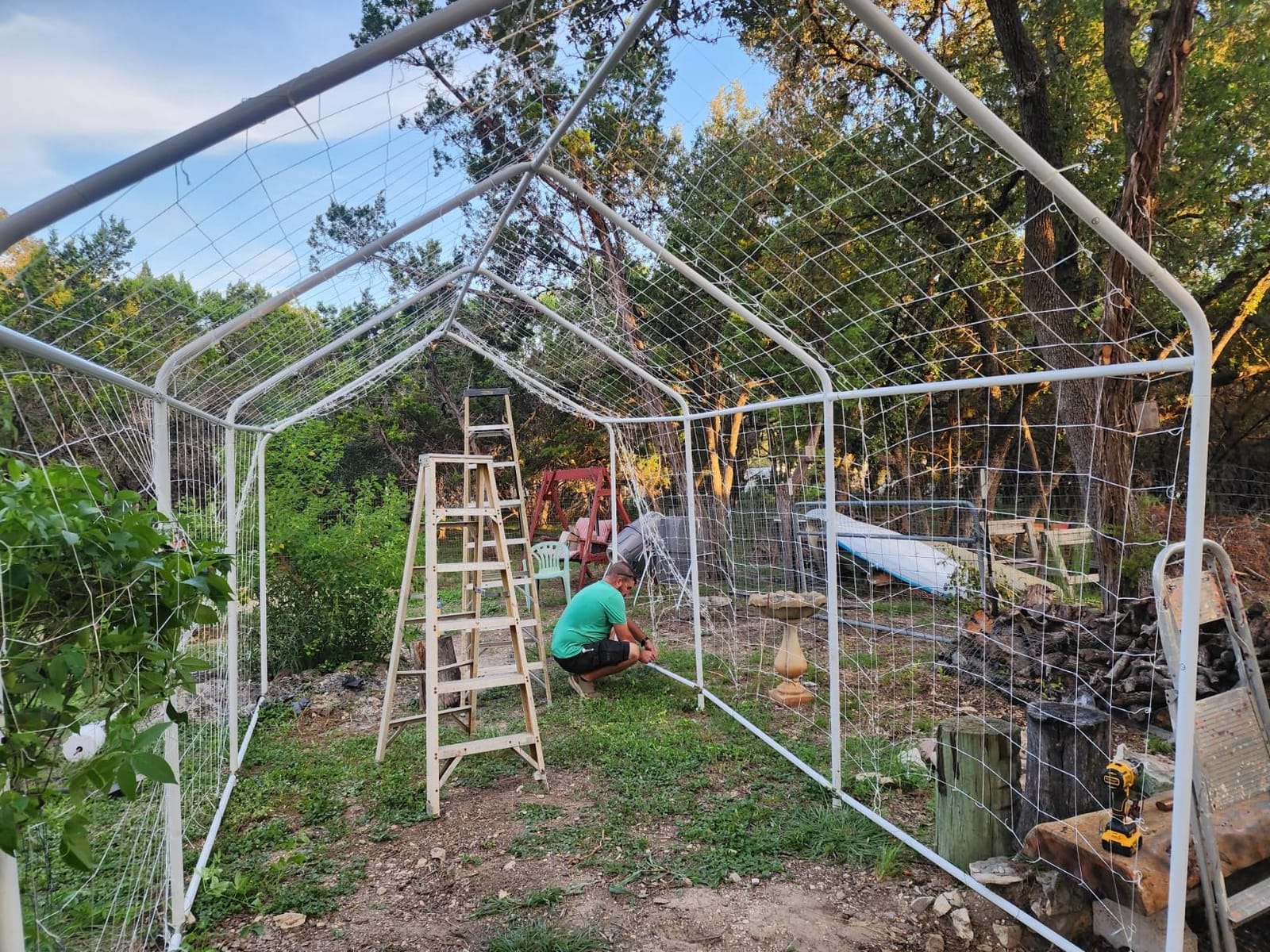
Its strength claim is specific rather than generic: large beefsteak tomatoes without sagging or tearing. That is the crop that breaks most netting, because a beefsteak is heavy, the plant is top heavy, and the weight lands on a small number of strands. This net handles it, and reviewers report it working through 30 mph wind conditions, which is the sort of detail that only comes from someone who left the net up.
Cut it with scissors, tension it with zip ties, clips or twine, and it goes on any support structure. It resists UV rays, chemicals and weathering, and it is described as designed for multi-year outdoor use without fraying.
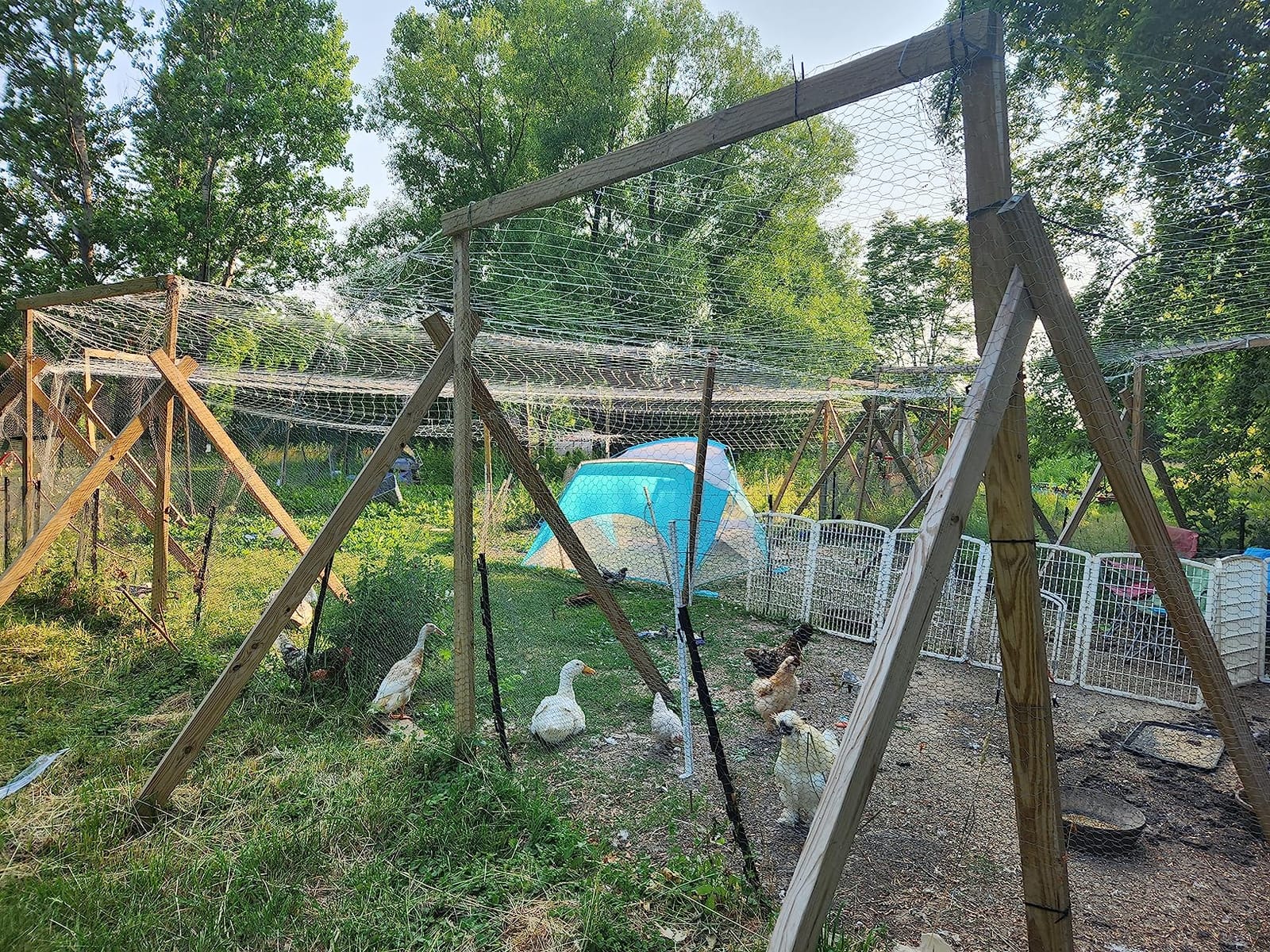
Are loose knots a real problem?
Occasionally, yes. A few users noted loose knots that let stems slip through, so on this net I would check the junctions every few weeks during peak growth and re-seat any that have opened. It is a two minute job and it prevents the most annoying outcome, which is a tomato vine dropping to the ground while the fruit is still on it. The rest of the net is not affected.
How do you stop it tangling during removal?
Cut it off the structure rather than untying it, and keep the net on the frame until the vines are off. Untangling is the frustrating part, not cutting. If you must remove the whole net, keep it wound on a reel or around a length of conduit as you take it down, and do not drop it into a heap. Storing it on the original reel is the single best habit for making this roll last.
12. VIVOSUN Elastic Trellis Netting 4 x 4 ft with 4 Hooks
- Elastic stays taut when wrapped around poles
- 3.9 in squares allow reach-in harvesting
- Four rustproof S-hooks included
- Cuts cleanly and folds flat for storage
- 4 x 4 ft is small for long rows
- Not heavy duty enough for large melons
- Extra hooks needed for spans wider than 4 ft
With more than 3,500 reviews at 4.6 stars, this is the highest rated product in the roundup and the one I would hand to someone starting out. The construction is 3 mm elastic thread inside a fabric cover, and that combination gives you something flat mesh cannot: tension without hardware. Wrap it around a pole or a frame, and it pulls itself tight and stays tight as the plant gains weight.
The 3.9 inch square openings are close to the ideal middle ground. There is enough space to get a hand in and pick a cucumber, and enough grip that a pea tendril or a tomato stem stays where you put it. The elastic means the mesh shape follows the plant rather than fighting it, which is why growers report it working for cucumbers, peas, tomatoes, cantaloupe and blackberries on the same net.
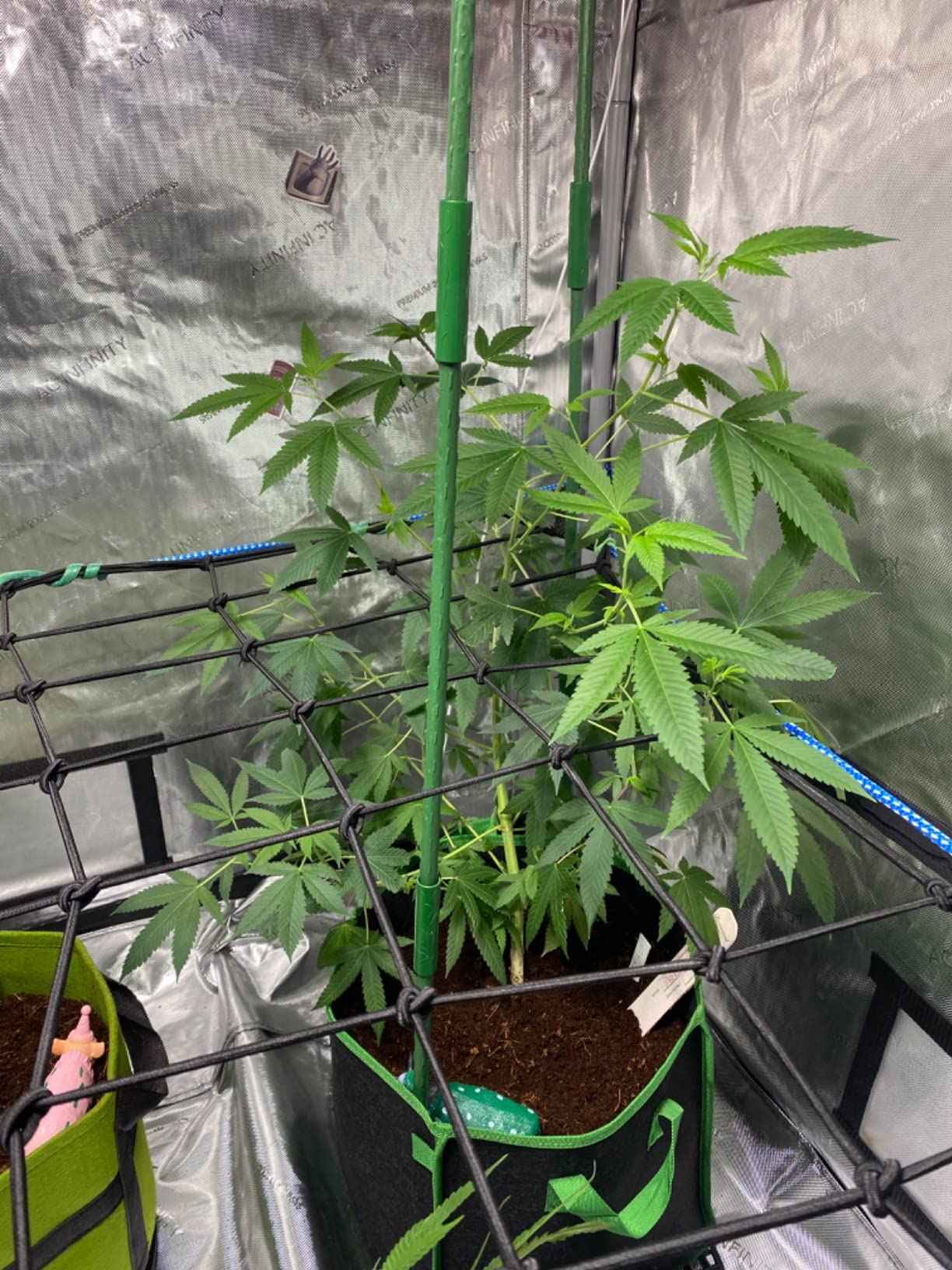
Four rustproof S-hooks are included, 22 mm wide, and they clip straight onto most frames and rails. Cut-to-size is another strength. The cover means the cut edge does not fray or unravel, and buyers specifically note being able to trim it to fit a bed or a container and save the offcut for another plant.
It folds up for compact storage after use, which is a real advantage if your trellis lives in a small shed or over a balcony. The limitation people report is scale, not quality. Four feet by four feet suits pots, containers and small beds, and reviewers who wanted a longer row bought a larger size from the same range.
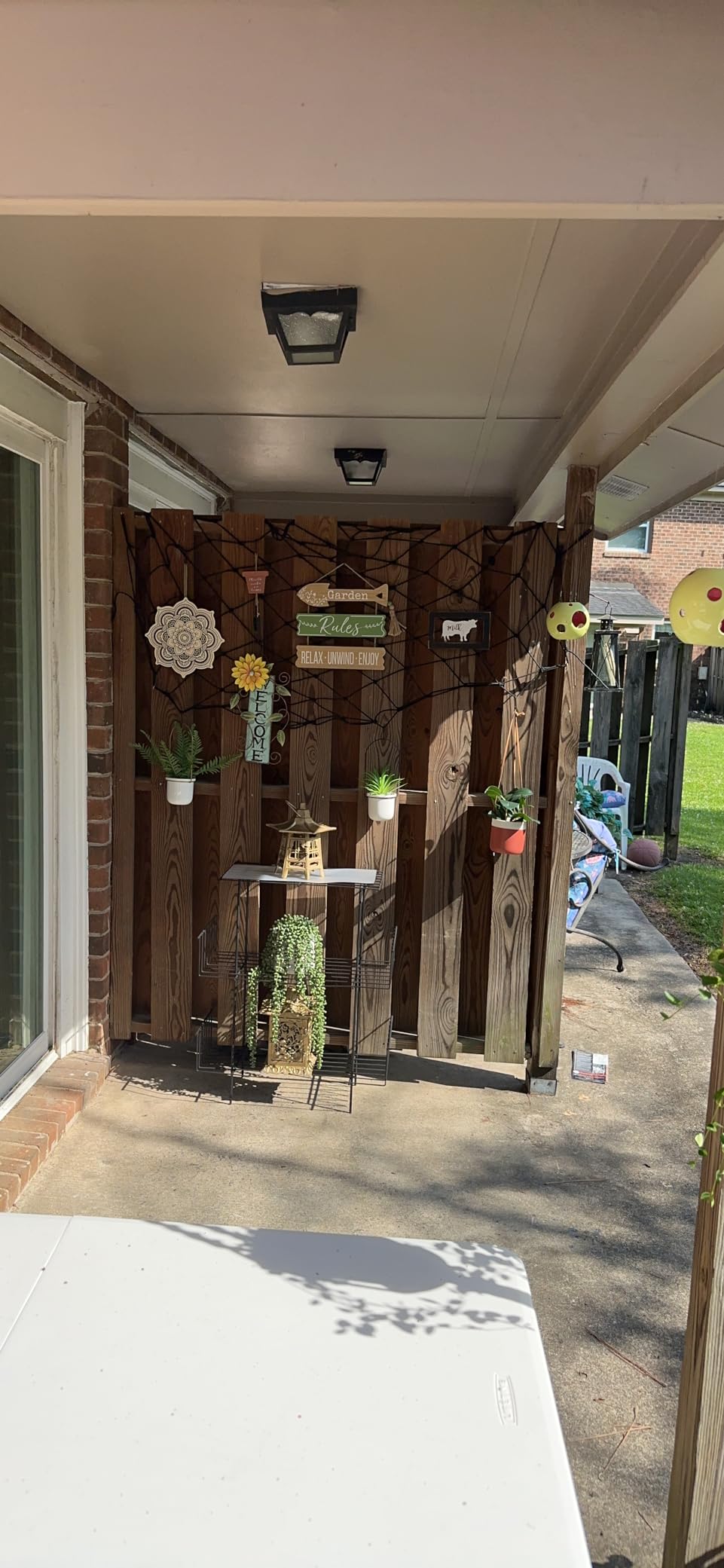
Will elastic netting hold heavy fruit?
Up to a point. It holds the weight of a healthy crop of cucumbers, peas, tomatoes and small melons, and reviewers are positive about that range. It is not the net I would hang a cantaloupe from on a long unsupported run, because the elastic stretches before it resists and a heavy fruit will pull the cell out of round over a season. Heavy crops want braided cord or a rigid panel.
Is this good for container gardening?
This is the best container option in the roundup, and the folding storage is why. You can wrap it around a single cane in a large pot, trim it to fit, and fold it flat in a drawer when the season ends. For a balcony or a small-space plot, the same traits that limit it, which are the small panel and the modest strength, are exactly the traits you want.
Mesh Size Matched to Your Crop
Mesh size is the second decision after material, and it is the one most guides get vague about. The rule is simple: the opening should be wide enough for the fruit to rest between strands and narrow enough that the stem stays in place.
3.5 to 4 inch openings. Beans, peas, tomatoes, sweet peas, clematis, jasmine and most ornamentals. This is the range where a stem grips the net by itself and a tendril wraps without help. If more than half your planting is tomatoes or peas, this is the range to buy, and it is what the BaseGoal and Zivisk rolls give you.
4 to 5 inch openings. Cucumbers, smaller squash, blackberries, morning glories and mixed vines. Wide enough for a cucumber to sit in the cell, tight enough to hold a vine. Most of the 6 inch rolls sit near here in practice because the strands are thin.
6 inch openings. Melons, pumpkins, heavy squash, indeterminate tomatoes, and perimeter or long fence runs. The cells are large enough that a heavy fruit rests on two strands rather than pushing through one. The trade-off is that a thin stem has nothing to grip, so tomatoes and peas need clips or ties on this mesh. Every 6 inch roll in this roundup, from the VIVOSUN to the Toolazy, is aimed at exactly those crops.
Elastic mesh around 3.9 inch. A separate case, because elastic sizes itself to the plant. It works for mixed small crops and containers, and it does not hold the very heaviest fruit.
One more practical note. The wider the mesh, the faster you can strip the vines at the end of the season, because there is less for the stem to catch on. If you plant the same bed every year and hate the clearing, bias toward wider openings.
How to Install Trellis Netting Without Sag?
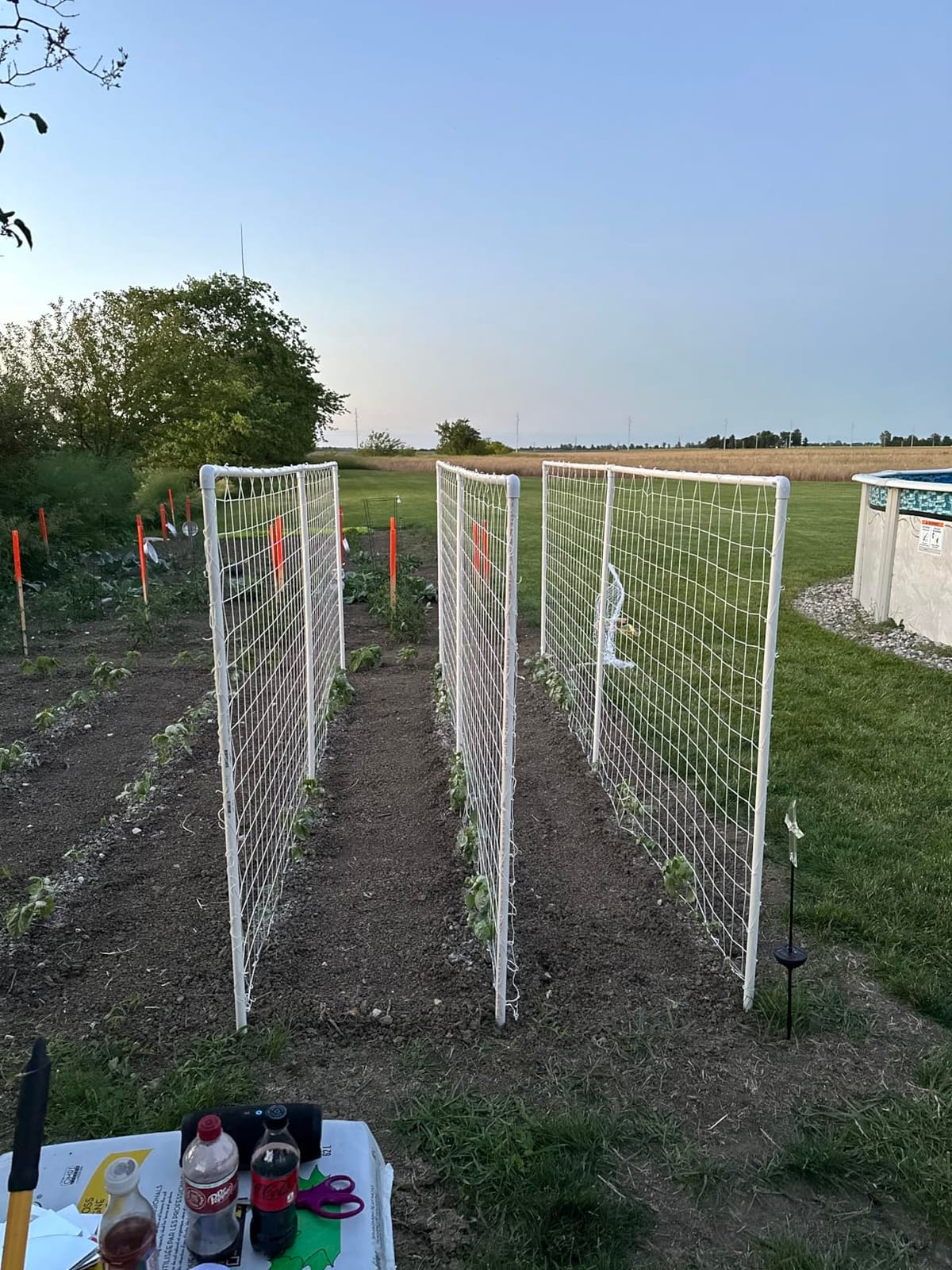
Sag is a function of unsupported span, not of net quality. The rule our team uses is one post every 4 to 6 ft, and the tighter end of that range for polypropylene and for anything carrying melons. Beyond 6 ft you will see a dip in the middle by August regardless of how good the net is.
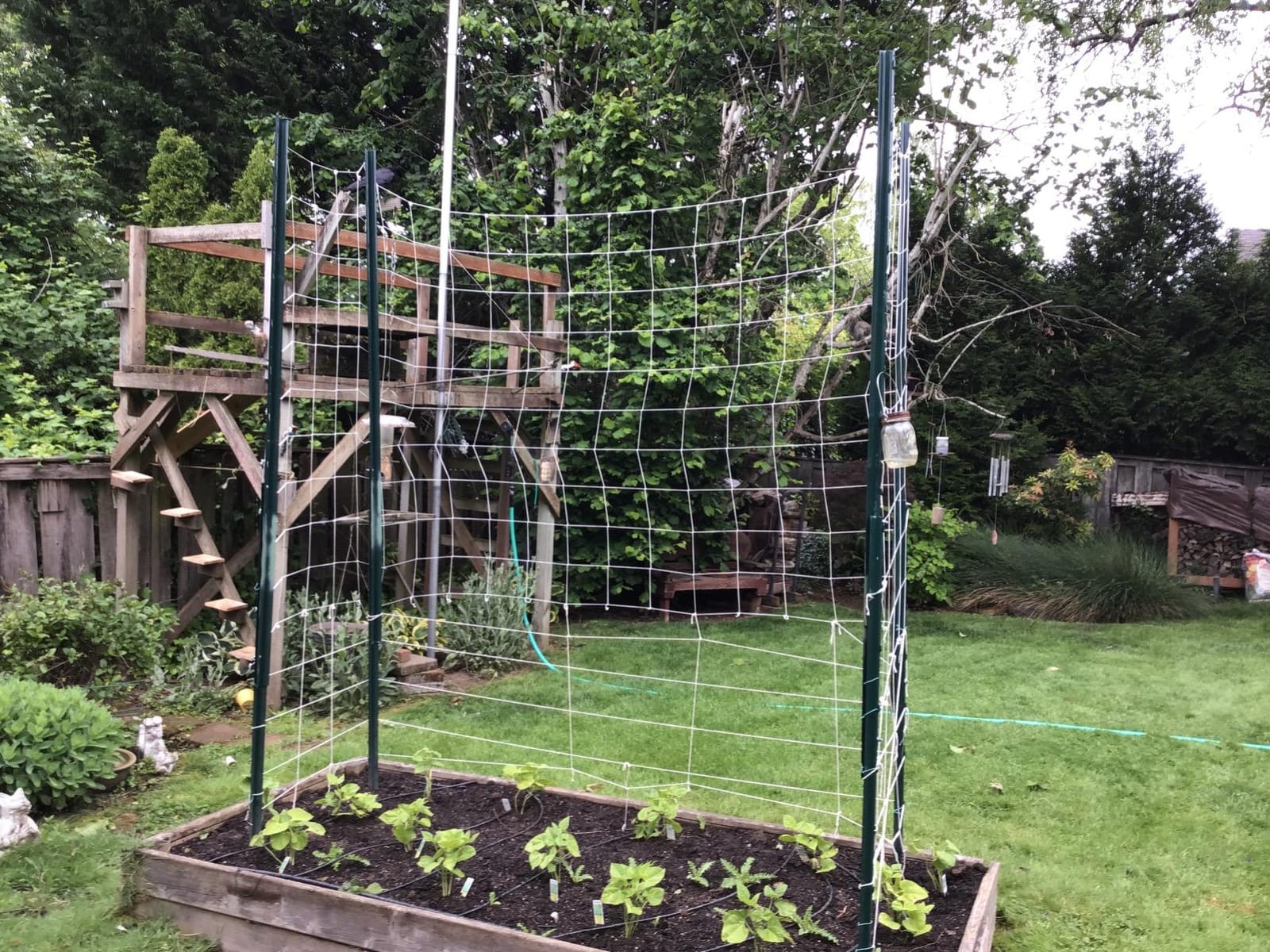
Start by fixing the top edge first. Attach eyelets, hooks or a top rail at your post spacing, then hang the net and tension it before anything else goes on. A net tensioned from the bottom upward will always be slack in the middle.
Tension downward and outward as you work, pulling each panel toward its final position, and tie off at every post rather than only at the ends. Zip ties through eyelets beat twine loops here, because a zip tie will not loosen in a wet month and it is easy to add another one when the season changes.
At the base, add ground stakes every 4 ft or a length of conduit pinned down, because wind gets under a net and billows it. Reviewers report netting working through 30 mph conditions when it was anchored, and flapping in a breeze when it was not. The same net with a taut top and a loose bottom is the setup that fails.
Plan for cutting. Bolt cutters, fence pliers or heavy-duty scissors will get you through thick cord, and cutting to size as you go means no joins in the middle of a run. Mount a section, tension it, trim it, then move to the next post.
What Do You Use to Secure Climbing Plants to a Trellis?
Most of the time you secure nothing. Vines grow up through the openings and support themselves, which is the whole argument for netting over a solid surface. You secure plants when a stem is thick, a fruit is heavy, or the crop needs direction.
Weave it in. As the vine grows, alternate it front to back through the openings. This is the most natural method, it damages nothing, and growers report it as easy and non-damaging with wider openings. A weekly five minute job keeps everything in place.
Garden clips. Tomato clips snap onto a stem and over a strand and are the fastest method for ropes, twine and netting. They work well on netting as long as the clip is firm enough that it will not sag on a heavy vine, which is the condition other growers flag.
Soft ties with a figure-eight. Strips of old pantyhose or T-shirt material wrapped in a figure eight around the stem and the support. This lets the plant move in the wind instead of chafing, and it avoids the stem damage that comes from a tight tie on a thick indeterminate vine.
Twine for indeterminate tomatoes. A vertical twine line from an overhead wire or rail, with the vine twisted onto it as it grows, is the standard greenhouse method. It is worth knowing the limits: twine can cut into thick vines if tied too tightly, anchoring the bottom lets a heavy vine slide off, and the line itself can break under a fully loaded plant. That is where mesh edges or a rigid panel are better.
What Can You Use Instead of Trellis Netting?
Rigid supports outlast netting, and the durability benchmark in the garden forum is a cattle panel used on its own with T-posts and no frame at all, described as never going to wear out. The trade is flexibility, weight and how you train the plant.
Cattle panels. A 52 inch tall, 16 ft long welded panel on T-posts. Rigid, long lasting, and you cannot weave plants into it, so training means clips or ties. Many suppliers will cut panels to length at the point of purchase. Downside: heavy, and not available everywhere.
Concrete reinforcing mesh. The common substitute where cattle panels are hard to find, and it can be mounted sideways for extra height. It is the budget panel option and it does the same job at a fraction of the rigidity, which is fine for beans and peas.
Remesh. A rigid plastic sheet sold by the roll at home improvement stores, in sizes around 48 inch by 84 inch. Stiffer than netting, holds a shape better in a small plot, and needs clips rather than weaving.
Welded wire. A middle ground, rigid enough to stop sag, lighter and cheaper than cattle panels, and still requiring ties for training.
Twine and string trellises. The cheapest and the most common failure point. Twine can cut into thick indeterminate vines, can break under a heavy crop, and is harder to strip spent vines from at season end than a panel or a wide mesh.
Bamboo. Cheap and renewable, and growers frequently report it simply not being tall enough once the season gets going. It also cannot be re-tensioned.
There is also a hybrid worth mentioning: a rigid panel or welded wire with netting tied across the front. You get the durability of a panel and the weaving-in flexibility of mesh, at the cost of more hardware.
How to Choose Trellis Netting: Buying Guide?
Material first. Nylon or braided polyester for anything you want to keep for several seasons, flat polyester for most garden beds, UV stabilised polyethylene for a season or two, and polypropylene for light crops on a temporary frame. The cheapest option in the category has a documented reputation for failing in a couple of months, while better grades bought online are reported still holding in season three.
Mesh second. 3.5 to 4 inch for tomatoes, peas and ornamentals, 4 to 5 inch for cucumbers and mixed vines, 6 inch for melons, squash, indeterminate tomatoes and long fence runs.
Length against your bed. Add the bed width plus tie-off space on each side to get the roll width, and measure the run to get the length. A 4 ft bed wants a 5 ft wide roll, a 4 ft by 8 ft bed wants about 5 ft by 10 ft, and anything longer than 20 ft is better served by one long roll than by joined panels.
Tensile strength over adjectives. Heavy crop support comes from braid and cord construction, not from the word heavy duty on a listing. Braided cord and nylon fibres carry loads that flat polypropylene will not, and a product listing that gives a weight or a material is telling you more than one that gives a slogan.
UV rating. Full sun on a south or west fence is where plastic netting dies. Look for UV stabilised or UV resistant construction, and treat unstabilised plastic as a single-season product regardless of how heavy duty it is called.
Hardware. Eyelets or hooks at every post, zip ties rather than twine for tensioning, ground stakes or conduit at the base, and a pair of bolt cutters or fence pliers for cord. All of it is inexpensive and none of it is optional if you want the net to survive wind.
Storage between seasons. Roll nets loosely onto a reel or around a length of conduit rather than folding them, keep them dry, and store them somewhere cool. A tight fold in a hot shed is what cracks plastic net, and a mesh that reuses for three seasons costs a fraction of buying a new one each spring.
Wildlife. Fine mesh tangles small birds and small animals. Check the opening size against the wildlife in your garden, and inspect the net at the end of every season before you pull it down.
For a structure that is decorative as well as functional, our guide to the best garden arches for climbing plants covers the frame options that pair with netting, and if your growing moves indoors, our picks for glass terrariums for indoor plants cover the container side of vertical growing.
Frequently Asked Questions
What is the best material for trellis netting?
Nylon and braided polyester last longest outdoors, flat polyester gives the strongest balance of strength and value, UV stabilised polyethylene suits a single season, and polypropylene stretches and fades fastest. Choose nylon for permanent fences and greenhouses, polyester for most garden beds, and polyethylene for seasonal or container setups. Whatever you choose, tension matters more than material.
What do you use to secure climbing plants to a trellis?
Usually nothing. Vines grow up through the openings and support themselves. When you do need help, weave the vine front to back through the mesh as it grows, snap on garden clips for thick stems, use soft figure-eight ties made from strips of old pantyhose or T-shirt material so wind movement does not chafe the stem, or run twine from overhead for indeterminate tomatoes in a greenhouse.
What can you use instead of netting?
Cattle panels on T-posts are the most durable option and never wear out, with concrete reinforcing mesh as the budget substitute where panels are hard to find. Remesh sheets and welded wire sit between panels and netting in rigidity. Twine and bamboo are the cheap options, but twine can cut into thick vines and break under a heavy crop, and bamboo often runs out of height mid-season. All of them need clips or ties rather than weaving.
Does trellis netting work?
Yes. Netting gives a vine a continuous vertical surface to grow up and through, so the plant holds itself with almost no tying, and fruit is lifted off the soil where air circulates better and rot is less likely. The netting has to carry the weight of the plant and its crop, which is why tensile strength, mesh size and post spacing matter more than the brand. Get the tension right and it works for years.
How tall should a trellis be for tomatoes?
Six feet is the practical minimum for most tomatoes, and tall cherry varieties such as Sungold will run to seven feet or more before you stop them. Determinate or bush varieties top out lower and need far less. For cucumbers, beans and squash, plan on at least six feet as well. If you run out of vertical space mid-season, the usual fix is a taller structure rather than a denser one.
Final Verdict: The Best Trellis Netting for Climbing Plants in 2026
After comparing 12 rolls across a full season, the VIVOSUN Polyester 5 ft by 30 ft is the best trellis netting for climbing plants overall. The braided polyester cuts cleanly, does not unravel, holds melons and squash, and at 30 feet it covers a full bed run in a single piece without a join. It is also the single most reviewed net in the group, which means the durability reports behind it come from a very large number of gardeners rather than a handful.
Buy the VIVOSUN elastic 4 x 4 ft instead if you are working with pots, containers or a small raised bed and want something that tensions itself and folds flat in a drawer. Buy the Tcamp nylon 5 ft by 15 ft if one bed is all you are covering. If you are building something permanent, move up to braided cord or a reel-wound nylon roll, because those are the constructions other growers report still standing several seasons later.
Whichever you choose, get the post spacing right. One support every 4 to 6 ft, top edge tensioned first, base anchored against wind. A well-installed cheaper net will outlast an expensive one left slack, and that single afternoon of installation is what turns trellis netting for climbing plants from a season purchase into a structure you keep. Our full guide to the best garden arches for climbing plants covers the frames that pair with any of these nets.