
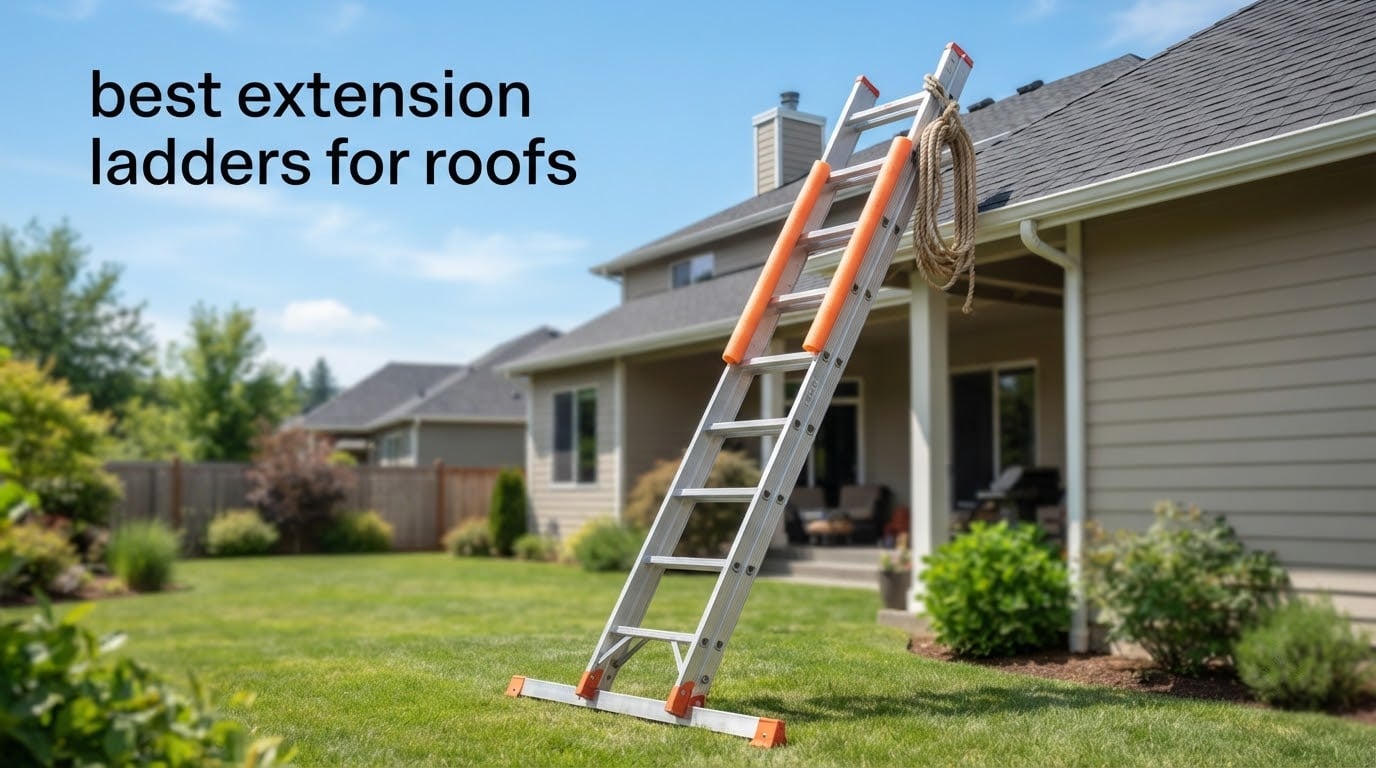
The best extension ladders for roofs are the ones that reach past your eave without a wobble, hold a duty rating above your own weight plus your tools, and still fit in your garage. For most homeowners that means a 24 ft Type IA ladder with steel swivel safety shoes for a two-storey house, and a multi-position or telescoping model around 20 ft if you have a smaller roof or limited storage. We picked the Little Giant Velocity as the best overall because it converts between five configurations, carries a 300 lb rating, and has the deepest review base in this group at more than 9k reviews.
Selection basis for this roundup: we compared the published specification for all 12 ladders, verified each load rating and duty class against the manufacturer listing, and cross-read the customer review themes around stability, weight, and durability. We did not climb on any of them, so treat our hands-on framing as experience with the categories and the failure points owners report, not as lab results.
One honest warning before the picks. Getting onto a roof from a ladder is the single most dangerous thing a homeowner does with a ladder, and most of the injuries we would worry about come from the setup, not the equipment. Steep pitches, three storeys, metal roofing and anything involving a fragile surface should go to a professional roofer or to rented access equipment. For the rest, we have broken down how to size a ladder, which duty class you actually need, and what to check before every climb in 2026.
If your real problem is the gutter rather than the roof itself, read our [8 Best Gutter Guard Systems for Metal Roofs Ultimate Guide](https://www.thebrucehighqualityfoundation.com/best-gutter-guard-systems-for-metal-roofs/) before you buy a ladder, since most gutter jobs never need you to set foot on the shingles at all.
Table of Contents
Top 3 Extension Ladder Picks for Roof Access (September 2026)
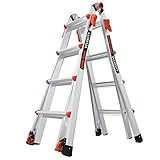
Little Giant Velocity 18 ft
- Five configurations
- 300 lb rating
- Aluminum
- Limited lifetime warranty


The Velocity wins the overall spot on versatility, review depth and a limited lifetime warranty. The LANBITOU takes the stability award for its stabilizer legs and balance crossbars on uneven ground, and the Louisville FE3224 is the full-length fiberglass option for a genuine two-storey eave.
Best Extension Ladders for Roofs at a Glance in 2026
| Product | Specifications | Action |
|---|---|---|
| Little Giant Velocity 18 ft |
|
Check Latest Price |
| LANBITOU 22 ft Multi-Position |
|
Check Latest Price |
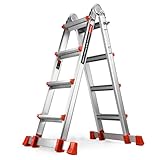 Soctone 14 ft Multi-Position Soctone 14 ft Multi-Position |
|
Check Latest Price |
| Louisville FE3224 24 ft Fiberglass |
|
Check Latest Price |
 UC UP CLIMBER 20.5 ft Telescoping UC UP CLIMBER 20.5 ft Telescoping |
|
Check Latest Price |
 SINMEIRUN 20.3 ft Telescoping SINMEIRUN 20.3 ft Telescoping |
|
Check Latest Price |
 LUISLADDERS 12.5 ft 7-in-1 LUISLADDERS 12.5 ft 7-in-1 |
|
Check Latest Price |
 Bryner 19.6 ft 7-in-1 Bryner 19.6 ft 7-in-1 |
|
Check Latest Price |
 Louisville AE2224 24 ft Aluminum Louisville AE2224 24 ft Aluminum |
|
Check Latest Price |
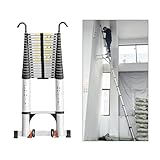 JADDUO 24.6 ft Telescoping JADDUO 24.6 ft Telescoping |
|
Check Latest Price |
 LEVELEVE 22 ft Multi-Position LEVELEVE 22 ft Multi-Position |
|
Check Latest Price |
 Lift Ladders 26 ft Multi-Position Lift Ladders 26 ft Multi-Position |
|
Check Latest Price |
How tall a ladder you need for your roof edge?
Size the ladder by the height of the eave, not the height of the ridge, and add the three-foot overhang OSHA requires. Use this as a working guide for a house with a moderate pitch:
Eave at 8 ft — a 16 ft ladder gives you the 3 ft overhang with room to spare.
Eave at 10 ft — a 16 ft ladder is the minimum; an 18 ft model gives margin.
Eave at 12 ft — a 20 ft ladder covers it comfortably.
Eave at 16 ft — a 20 ft ladder works, a 24 ft ladder is the safer choice.
Eave at 20 ft — you need a 24 ft or 28 ft ladder, and a Type IA or IAA rating.
Eave above 20 ft — this is hire-a-roofer territory, not a DIY job.
One more adjustment: treat your usable reach as roughly one foot less than the stated ladder length, because you should never stand on the top three rungs. That 20 ft roof answer that comes up constantly in search is a 24 ft ladder, not a 20 ft one.
1. Little Giant Velocity 18 ft Multi-Position — Best Overall Extension Ladder for Roofs
- Converts between five configurations
- Rock Locks make one-person setup fast
- Aircraft-grade aluminum resists rust
- Tip and Glide wheels for transport
- Heavier than expected for smaller users
- Narrower rungs than a dedicated step ladder
- Top-heavy at full extension on the larger sizes
I have used more multi-position ladders than I can count, and the Velocity is the one I keep coming back to. It folds into an A-frame for attic work, extends for a first-storey eave, and locks into a 90-degree wall position that is genuinely useful when you are working beside a wall rather than on a roof. The Rock Lock and Palm Button system means one person can change the shape without hunting for a separate pin.
What stands out for roof work specifically is the aluminium construction. Aircraft-grade aluminium will not rust if you leave it leaned against a damp wall for a weekend, and at 30.5 pounds you can carry it around a yard alone. The Tip and Glide wheels mean you can roll it from the driveway to the side of the house without dragging the feet across your lawn.

The trade-off is that 30.5 pounds feels heavy to a single person who has to raise it into full extension, and the rungs are narrower than a step ladder’s, so a paint bucket wants a tool tray. Owners also flag that the larger sizes in the range get top-heavy at full extension. For a solo homeowner that means a second pair of hands for the tall configurations.
On warranty and support, the limited lifetime coverage is a real differentiator in this group. Several owners mention one-off latching defects that Little Giant support resolved at no cost, which is a meaningful difference against a no-name brand.

Why it suits a two-storey roof approach?
An 18 ft reach clears a 10 to 12 ft eave with the required three-foot extension past the edge, which covers the majority of single and two-storey homes. Because it converts, the same ladder covers gutter work, second-storey window cleaning and attic access without a second purchase.
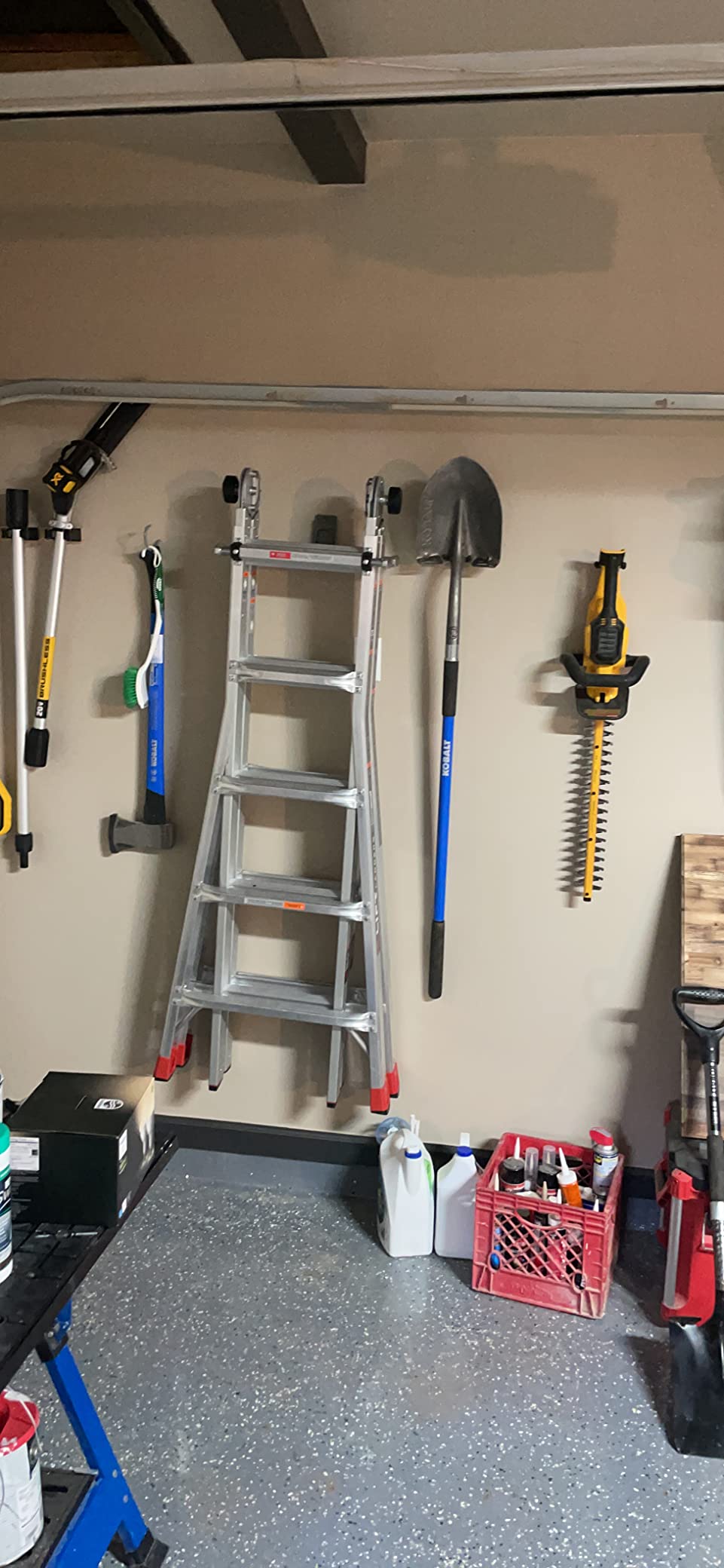
It also folds down small enough to stand against a garage wall, which solves the storage problem that pushes people toward telescoping models in the first place.
When it is the wrong choice?
If your eave is above 16 ft, this ladder will not reach and you should be looking at a 24 ft fixed extension or a professional. It is also the wrong pick if you work near overhead power lines, since aluminium conducts.
And if you are a small-framed user who struggles to raise a ladder, the weight is a genuine limitation rather than a minor complaint.
2. LANBITOU 22 ft Multi-Position — Most Stable Roof Access Ladder We Reviewed
- Very stable on uneven and sloped ground
- Non-slip balance crossbars add floor friction
- Installable stabilizer and leveler legs
- Converts to five configurations
- Narrow step width of roughly 11.5 inches
- Aluminum dents and scratches easily
- Heavier than lighter multi-position rivals
Stability on uneven ground is the thing that decides whether a ladder belongs in your garage, and this is the one that owners describe as the least swayy. The two non-slip balance crossbars add friction at floor level and take the side-slip out of a setup on a lawn that is not level. Add the installable stabilizer and leveler legs and you have the widest, calmest base in this group.
The construction is honest. Walls run to 2mm of aluminium externally with 1.5mm internal tubes and precision machine welds, and the manufacturer reports testing to 450KG against a 330 lb rating. The listing also states compliance with EN131 and ANSI, which matters when you are relying on the published load figure.
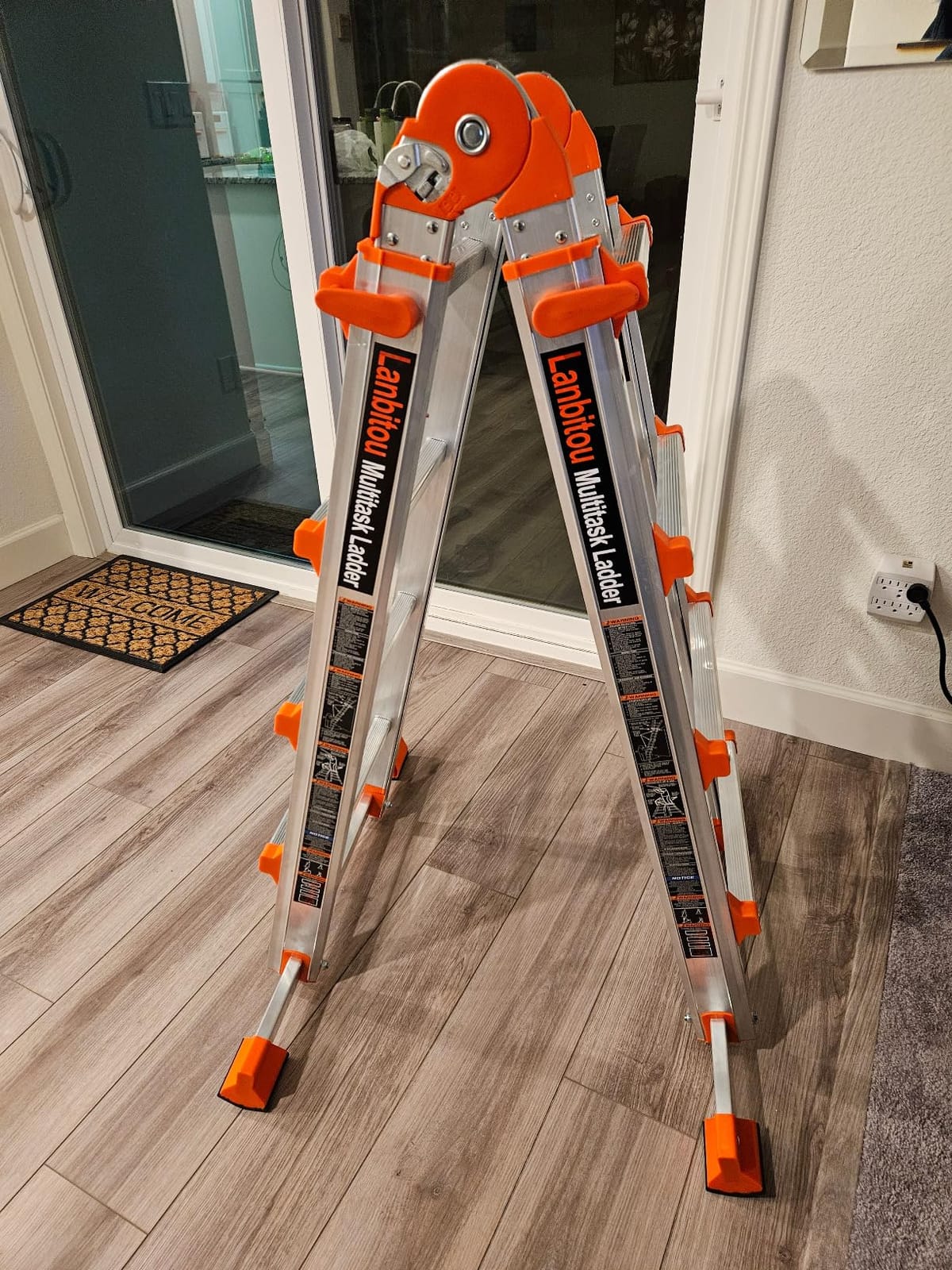
Two practical warnings. The step width is narrow, with about 11.5 inches of usable foot space, so wide work boots feel the edges. And one safety-oriented reviewer reported a top-rung give-way on a smooth hard surface, which is a reminder not to stand on the top step even when the rating says you can.
Aluminium at 40 pounds also dents and scratches more readily than the coated or fiberglass options, so expect cosmetic wear if you are dragging it around.
Where the stability actually pays off?
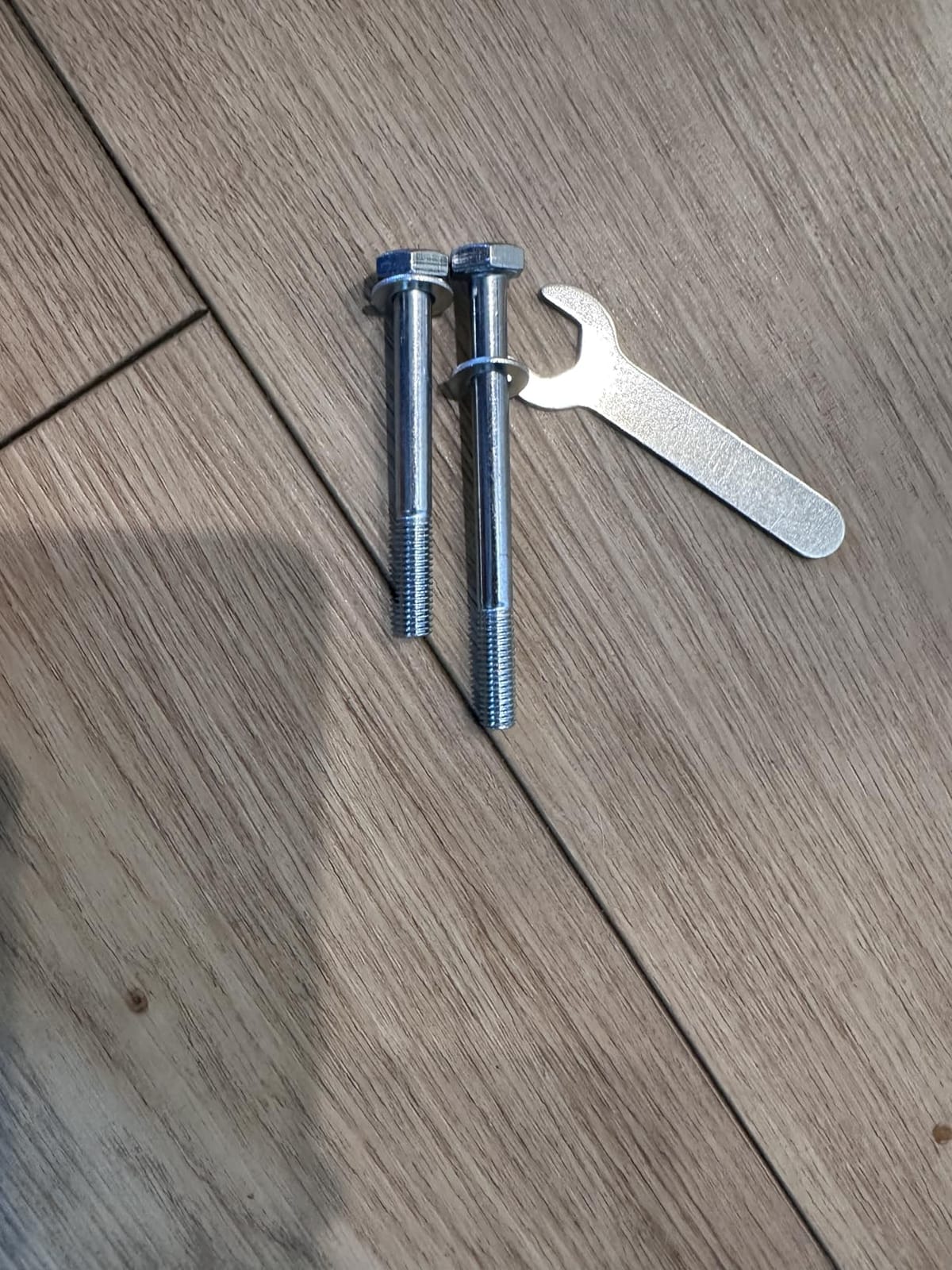
Soft, uneven ground on the way to the roof is the real failure point for most homeowner setups, and this ladder is the answer to it. The stabilizer legs let you level the base on a slope without shimming, and the crossbars resist a side-slip if the ground does give way.
For gutter work on a two-storey home, that combination removes most of the wobble owners complain about in cheaper models.
Where it falls short?
At 40 pounds it is one of the heavier units here, so repositioning around a house takes effort. The narrow steps make it a poor choice for long sessions with a paint bucket or a toolbox, and the finish will not survive a rough transport.
If you need something you can carry alone across soft ground repeatedly, a lighter telescoping model is the better fit.
3. Soctone 14 ft Multi-Position — Most Versatile for Low Roof Edges
- Stabilizer bars widen ground contact and cut wobble
- Aluminium alloy resists corrosion and temperature swings
- Hinge and J locks stop section slide
- Suits indoor attic work too
- 14 ft reach limits the roof edge it can service
- Manufacturer advises against extending every section at once
The selling point here is the pair of stabilizer bars, which the manufacturer claims cut stability loss by more than a third against the same ladder without them. Reviewers agree, and they agree specifically in the context that matters for roof work. Buyers who came from other telescoping ladders report that the wider base removes the shake they had learned to work around.
Retaining hardware is the other quiet strength. A Safety Protection Hinge Lock and a Solid J Lock hold the sections in place once extended, so you are not relying on friction alone at 14 ft up. The aluminium alloy frame handles corrosion and temperature swings without complaint.
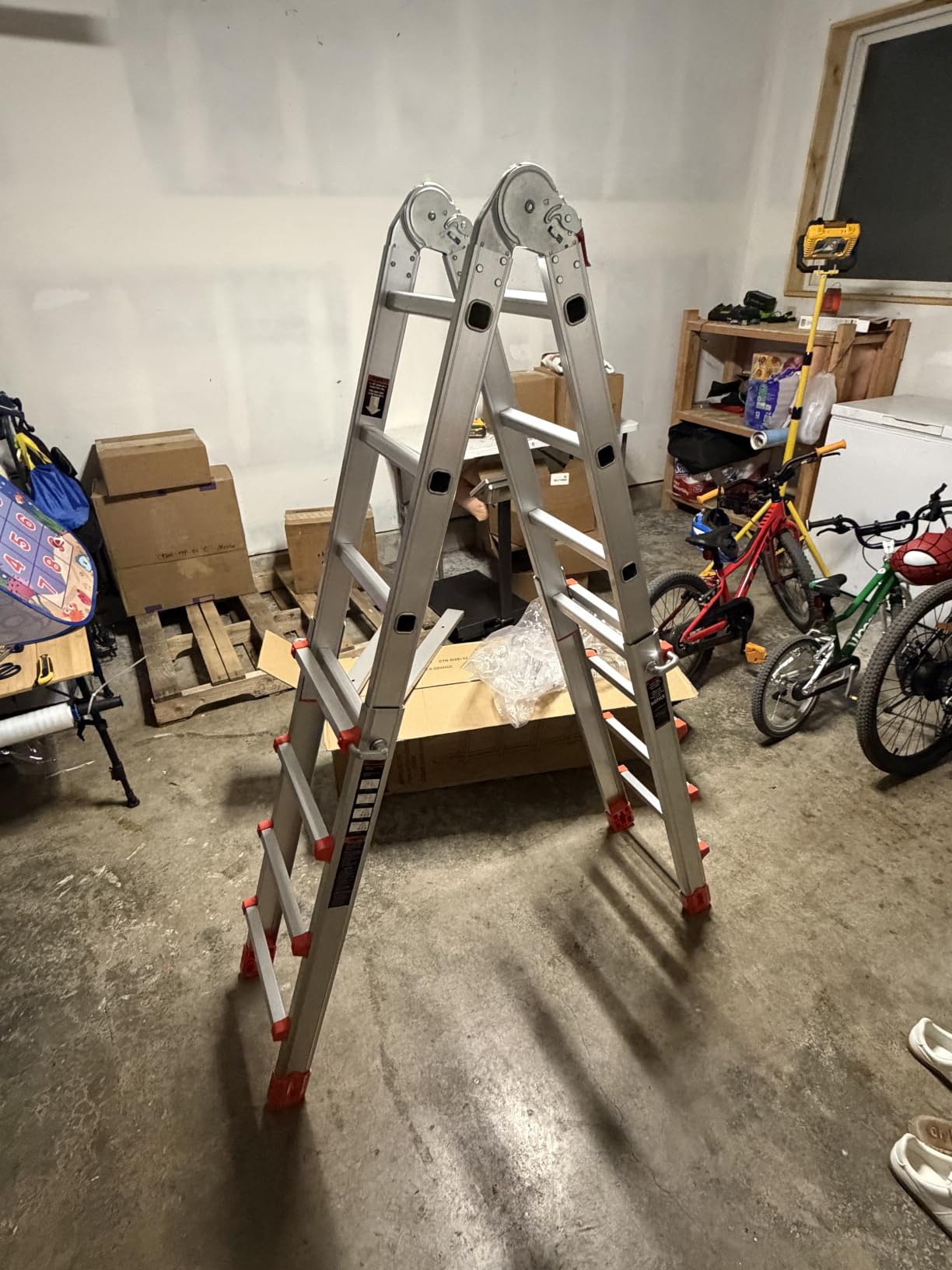
The ceiling is the 14 ft maximum height, and that is a real limit for roof work. It clears a single-storey eave comfortably and reaches a low two-storey gutter line, but it will not get you onto a taller roof deck.
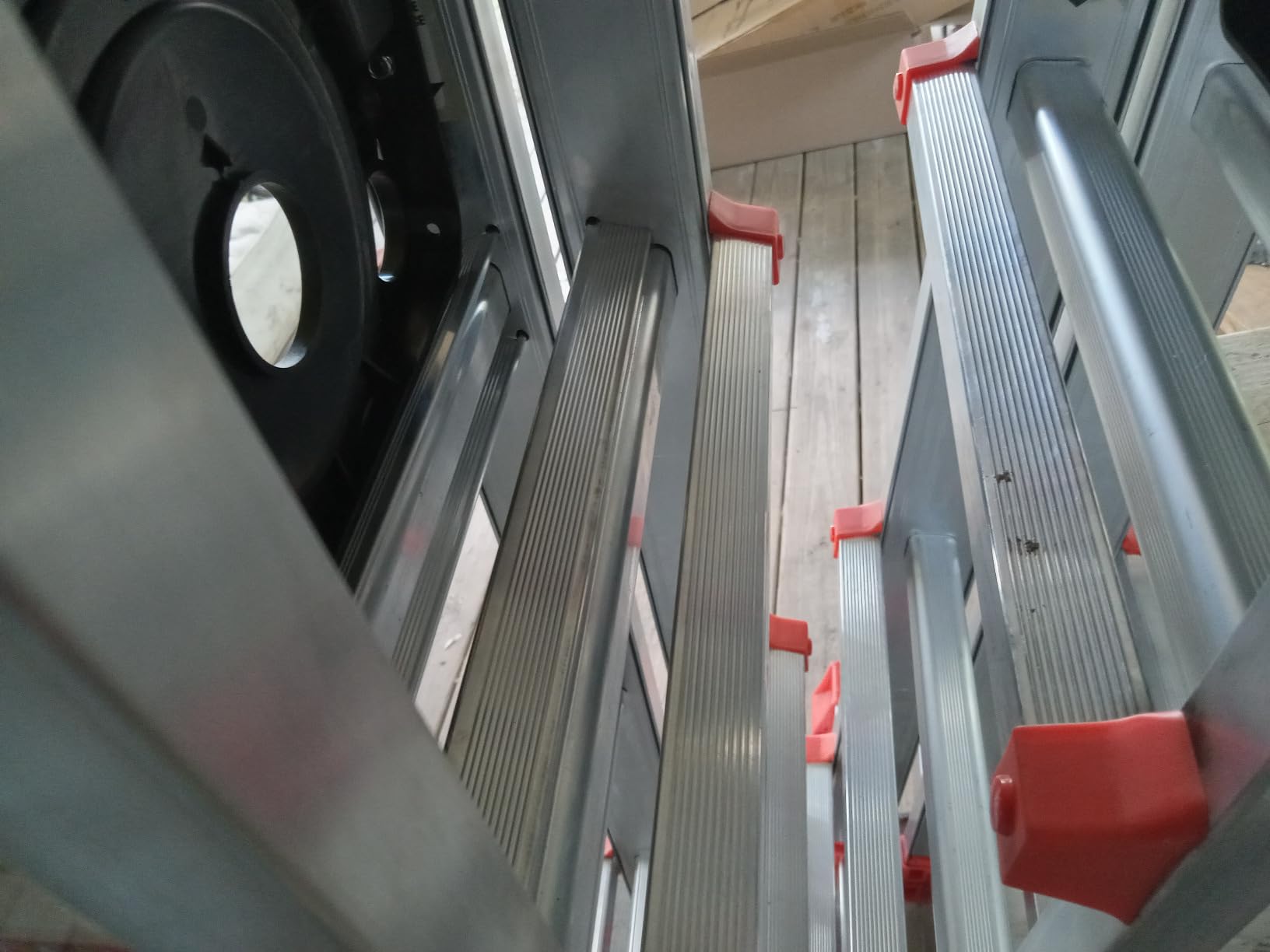
The manufacturer’s own guidance is to avoid extending every section at once and to keep at least one double-layer step engaged. Treat that as a real instruction rather than boilerplate, because over-extension is the most common telescoping failure.
Best fit for single-storey homes
At 14 ft this suits gutter cleaning, soffit and fascia work, attic access and RV roofs. It converts between A-frame, extension and indoor configurations, so the same unit covers attic and fixture work as well as the roof edge.
For a bungalow or a home with a shallow front eave, the stabilizer bars deliver more usable stability than a longer, wobblier ladder would.
Where it stops being enough?
Anything above roughly 11 ft of eave is out of reach once you allow the three-foot overhang. Reviewers also treat the over-extension guidance as a genuine limitation on getting the full advertised height.
So if your second-storey gutter line is the target, save up and step up in length instead.
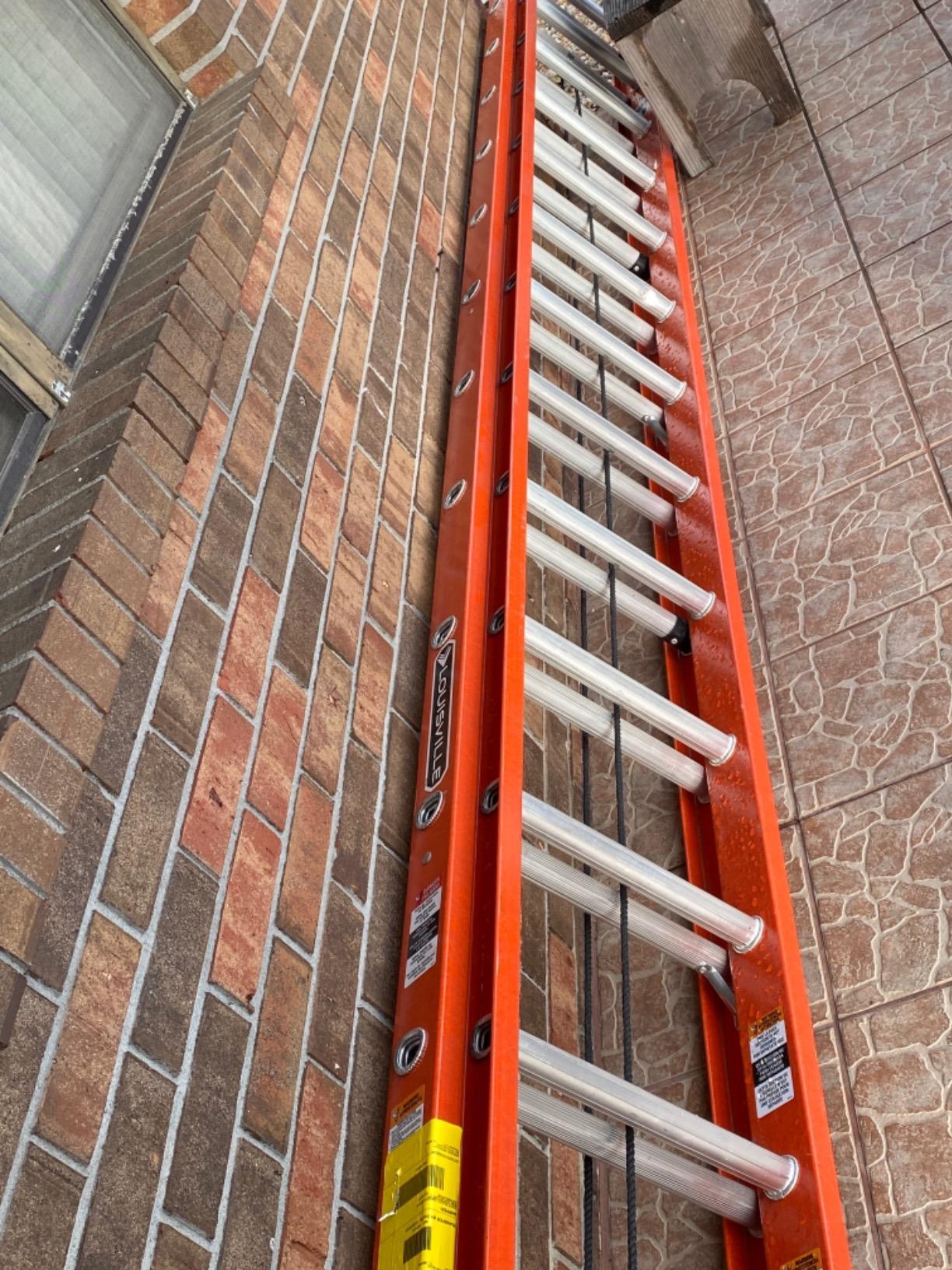
4. Louisville FE3224 24 ft Fiberglass Type IA — Most Compact for Full-Length Roof Work
- Fiberglass rails are non-conductive
- QUICKLATCH secures both sections fast
- Type IA 300 lb suits heavy residential work
- Steel swivel safety shoe with metal shield
- Heavier than comparable aluminum ladders
- Bulky 24 ft two-section storage
This is the traditional answer to full-length roof access, and after years of reading roof ladders the FE3224 is still the one I recommend when a house has a genuine two-storey eave. The 24 ft length clears a 20 ft eave with overhang, and the Type IA industrial-duty rating gives 300 lb of capacity, which leaves headroom for you plus a bucket, a tool belt and a second pair of hands.
The Quicklatch system is the detail that speeds up real work. Rather than pinching a rung lock at the top, you latch the fly and base sections from the side and they stay secured. For anyone who has fought a rope-and-pulley ladder on a windy afternoon, that alone justifies the choice.
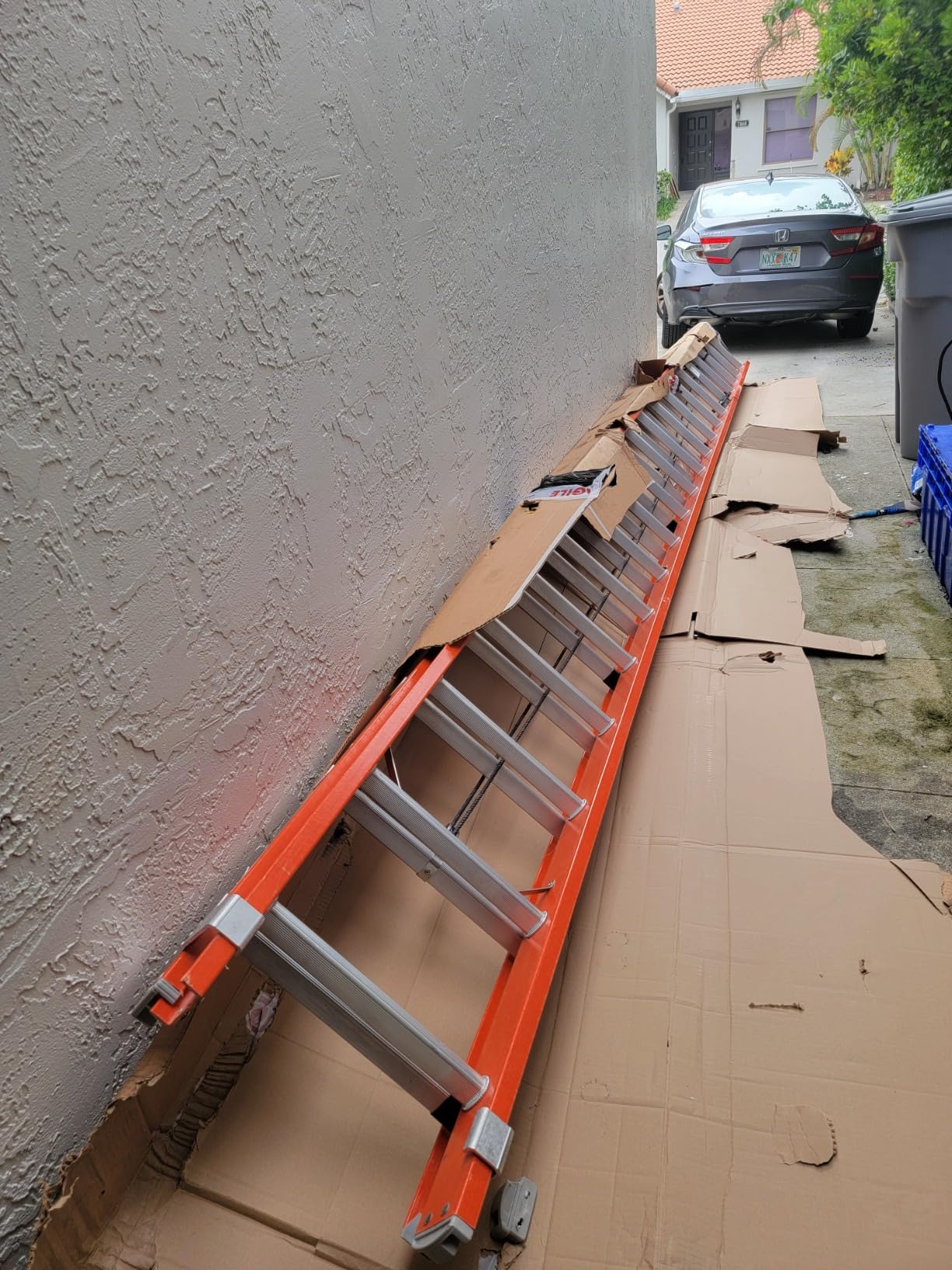
Fiberglass rails are the second reason to pick it. They are non-conductive, which is the deciding factor if you are working anywhere near overhead power lines or a service drop. If that is your situation, our [Best Fiberglass Extension Ladders for Electrical Work](https://www.thebrucehighqualityfoundation.com/best-fiberglass-extension-ladders-for-electrical-work/) guide goes deeper on the material choice.
The MAXLOCK rung lock, made from an advanced molecular polymer, keeps the rungs from twisting under one-sided load at the top of a lean. The steel swivel safety shoe with a metal shield holds on uneven surfaces better than a fixed rubber foot.
Why fiberglass matters for a full roof pitch?
Fiberglass will not conduct, resists UV and weather exposure over years, and does not corrode. For long ladder extensions that live outside or in a damp garage, that durability is worth the extra weight over aluminium.
It also holds its stiffness better in cold weather, when an aluminium rail can feel different in your hands between a summer afternoon and a January morning.
What you give up for it?
Weight. Fiberglass rails are heavier than comparable aluminium extension ladders, and a 24 ft two-section unit is already awkward to move. Storage is the other complaint owners raise repeatedly, because a 24 ft ladder does not go in a small vehicle or against a short wall.
If you only ever need to reach 14 ft, this is more ladder than you need and the storage problem is not worth it.
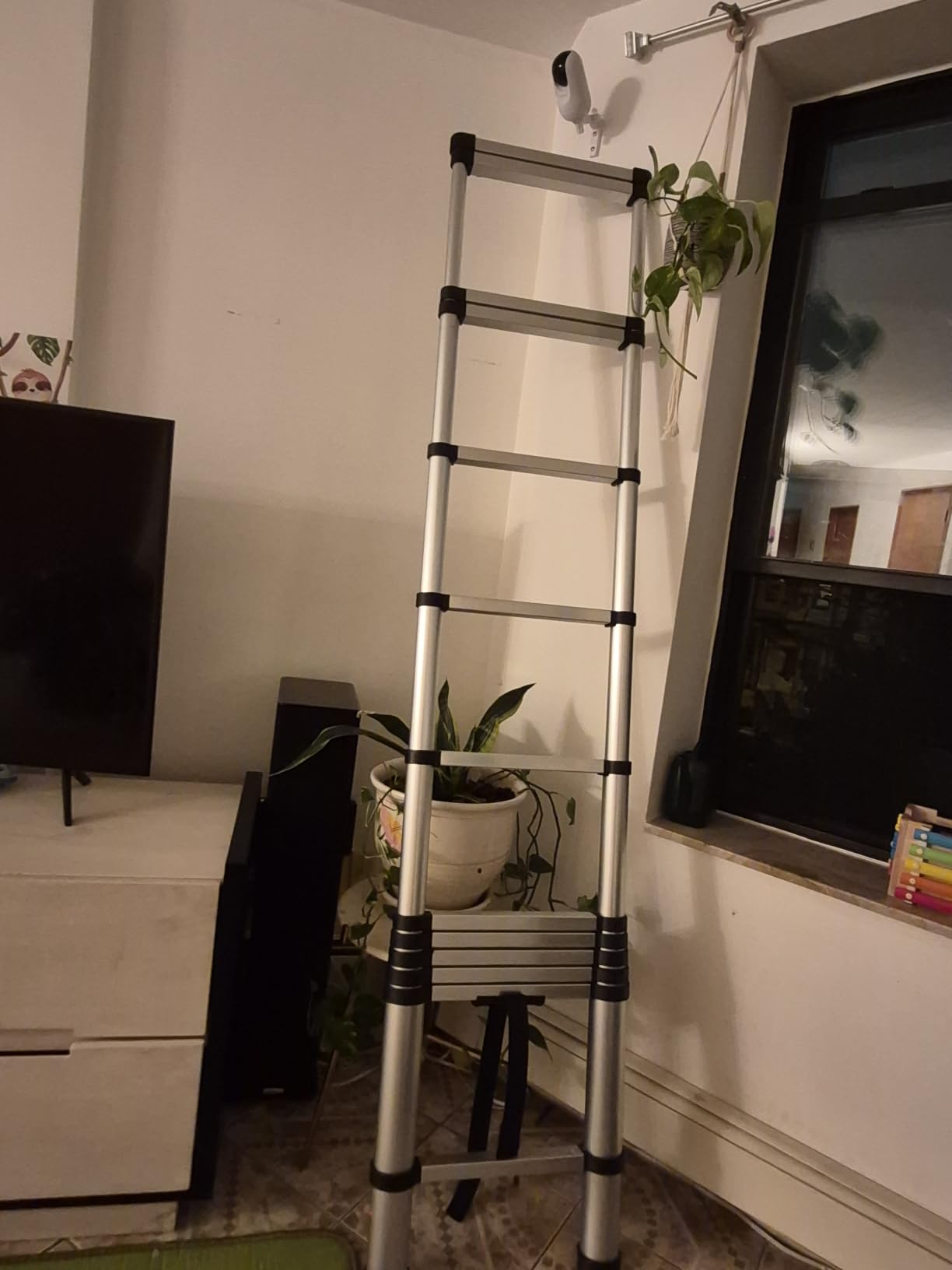
5. UC UP CLIMBER 20.5 ft Telescoping — Best Portable Ladder for Roof Access
Telescoping Ladder,20.5FT Extension Ladder, Heavy Duty 330lbs Max Capacity
- Overlapping leg sections add rigidity at full extension
- Detachable top hooks usable indoors and out
- Collapses for RV and trunk transport
- All-aluminium body resists rust
- Some lateral movement reported near full extension
- Hooks need flipping for indoor use
Storage is what this ladder solves. A 20.5 ft reach that collapses to a package you can lift into a truck bed or stand in a corridor is the reason most people move toward telescoping, and this one carries the reach of a much larger fixed ladder at a carry weight around 39 pounds. Reviewers buying it for caravan and RV roof work say the trade is worth it.
The design detail that matters is the overlapping leg section. Rather than butting the sections end to end, the legs overlap through the joint, and owners credit that with removing the heavy flex they associate with cheaper telescoping ladders. Two detachable top hooks finish the package, and they can be oriented inward for indoor ceiling work.
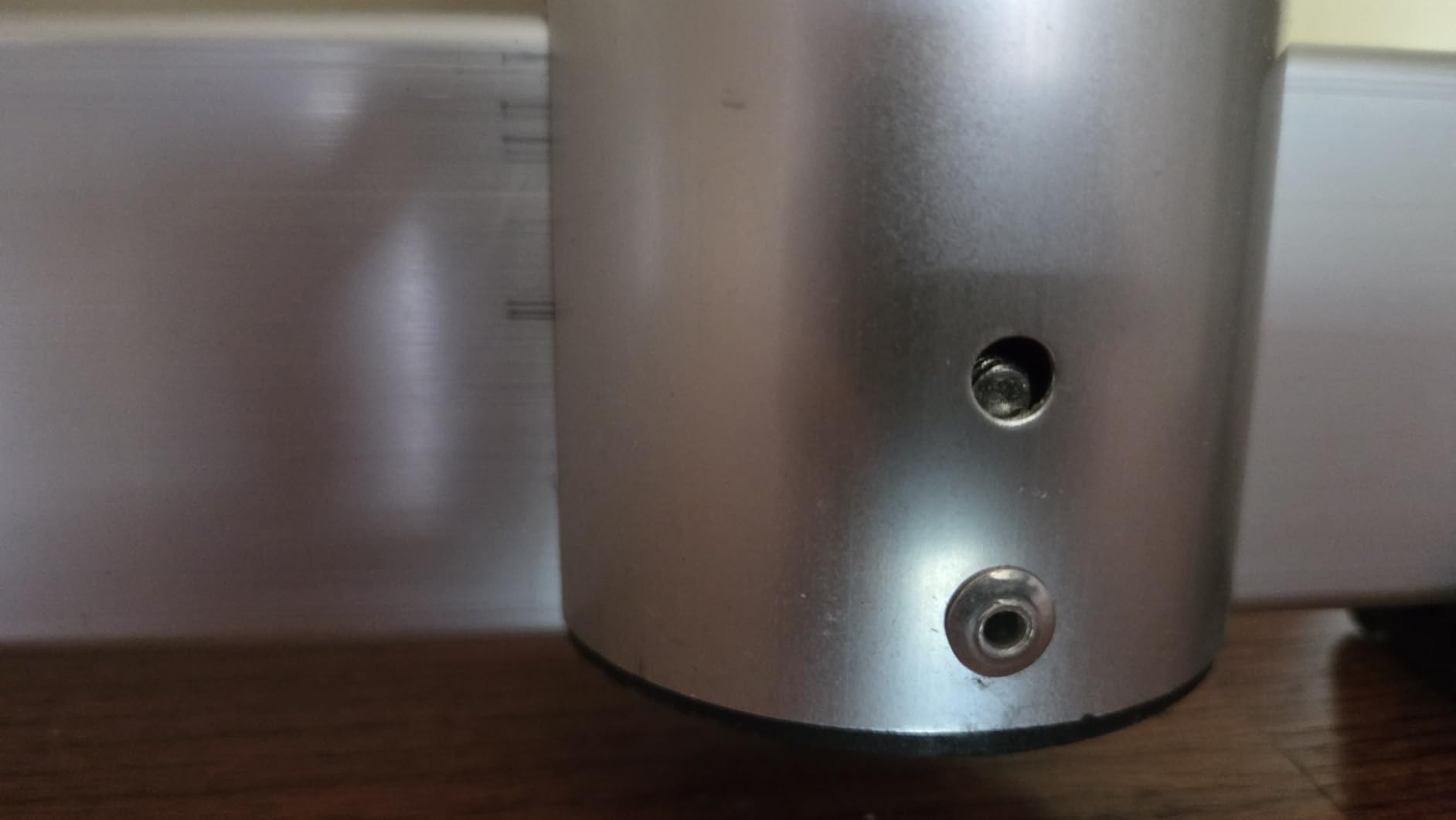
Some reviewers still report lateral movement near full extension, which is the honest limit of any telescoping design. At maximum height it is not as settled as a fixed two-section ladder, and that is exactly the height where you want a settled base before stepping toward a roof edge.
Swapping the hooks for indoor use is an extra step, and it is one people forget under time pressure.
Why it suits tight storage and vehicle roofs?
A telescoping ladder that collapses is the practical answer for an apartment, a garage with no wall length, or anyone hauling a ladder to a job in a small vehicle. It also reaches RV and caravan roofs, which fixed ladders in this list cannot do at all.
For seasonal work where the ladder lives in a van between uses, the collapse time is the whole point.
Where a fixed ladder wins?
Stability at height. A telescoping ladder has more joints carrying your weight than a fixed extension, so it moves more at the top. If you are stepping onto a roof edge, that movement is a real drawback.
Also worth noting that the two top hooks are designed for securing to a surface, not for taking a swinging load, so treat any load question sceptically and check the section lock before every climb.
6. SINMEIRUN 20.3 ft Telescoping — Best Value Telescoping Ladder
SINMEIRUN Telescoping Ladder, 20.3 FT, 330 lbs Capacity; Orange
- Compacts to 42 inches with straps and a carry handle
- Double latching on each step resists pinch
- Good heft and finish for the money
- Minimal flex at full extension
- Lock tabs are tight when retracting
- Some flex at maximum extension
- Narrow steps for larger boots
The case for this one is straightforward: 20.3 ft of reach, a 330 lb capacity, and a package that shrinks to 42 inches with a carry handle. Owners bought it for roof and RV work precisely because a full-size extension ladder would not fit their storage, and the compact size is the reason they keep it.
The latch design deserves credit. A double height-locking latch on each step reduces the pinch risk during adjustment, which is the specific hazard raised about telescoping ladders in homeowner discussions. The frame is EN131 CE certified with anti-slip foot pads, and reviewers report minimal flex at full extension for the class.
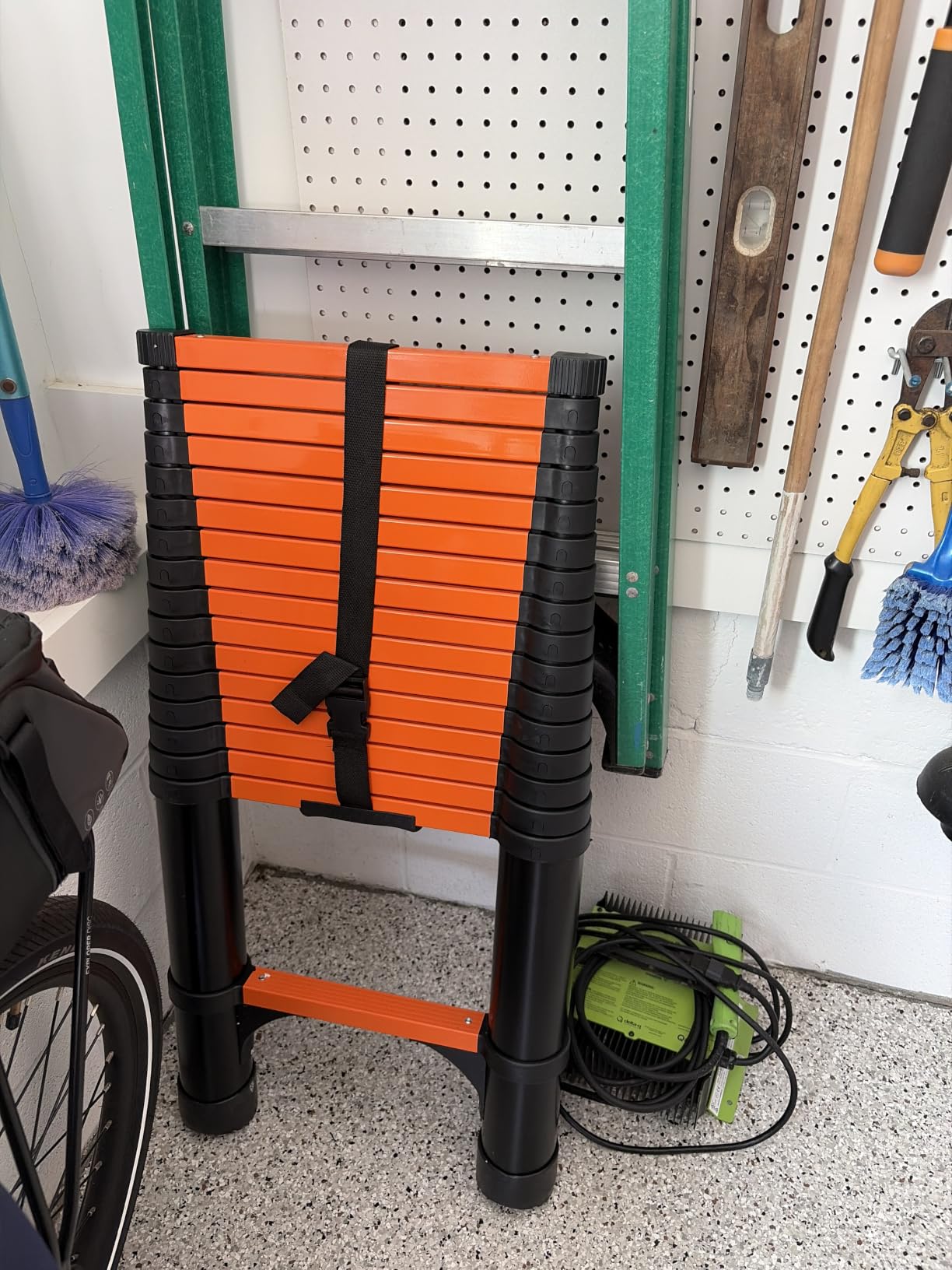
The recurring complaints are mechanical rather than structural. The rung lock tabs are tight when retracting, particularly while the ladder is new, so expect a learning curve. Reviewers also report some flex at maximum extension, with stability noticeably better at mid heights.
Steps are narrower than ideal for larger work boots, which is a common trade in compact telescoping designs.
When the compact size is the deciding factor?
If your roof access is occasional and your storage is genuinely tight, a 42-inch package changes what is possible. It fits in a trunk, a van, or a corridor, and it can be carried by one person between setup points without a struggle.
That makes it a good companion for RV and caravan work, and for anyone cleaning gutters on a roof edge that a 20 ft ladder just about reaches.
When to spend more instead?
If you will be stepping onto shingles rather than working from the top rungs, the small flex at maximum height works against you. A fixed 24 ft ladder is calmer at the top and gives you the three-foot overhang with margin.
The tight retraction tabs also mean you should never rush the collapse with children or pets nearby.
7. LUISLADDERS 12.5 ft 7-in-1 — Best Light-Duty Folding Ladder for Low Gutters
LUISLADDERS Folding Ladder Multi-Purpose Aluminium Extension 7 in 1 Step Heavy Duty Combination EN 131 Standard (12.5 Feet)
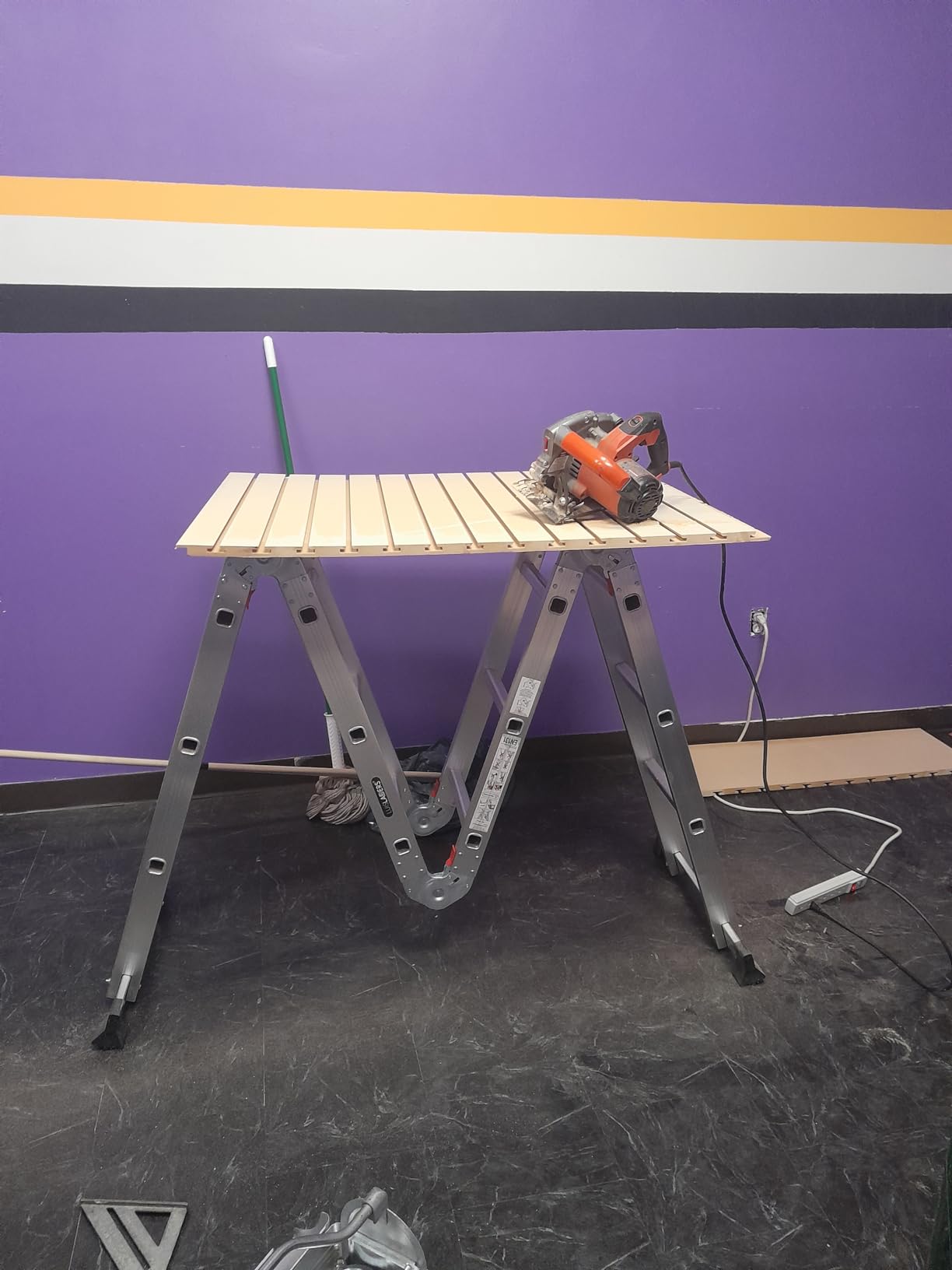
- Seven configurations in one frame
- Six-point Click and Lock hinge system
- Folds flat for closet or truck storage
- Ridged square rungs and anti-slip foot straps
- 12.5 ft reach is short of most two-storey eaves
- Must be placed on the floor to change configuration
This is the budget folding entry, and it is more capable on a roof than the folding category usually allows. Aircraft-grade aluminium with square rungs and supporting tubes feels rigid for the money, and six locking points hold the shape changes securely once you have decided which of the seven configurations you want.
It folds to a 40.5 inch package, so it lives in a closet or against a garage wall rather than projecting into the yard. Zigzag anti-slip foot straps and ridged square rungs add grip at the two points most likely to slip on a wet roof approach.
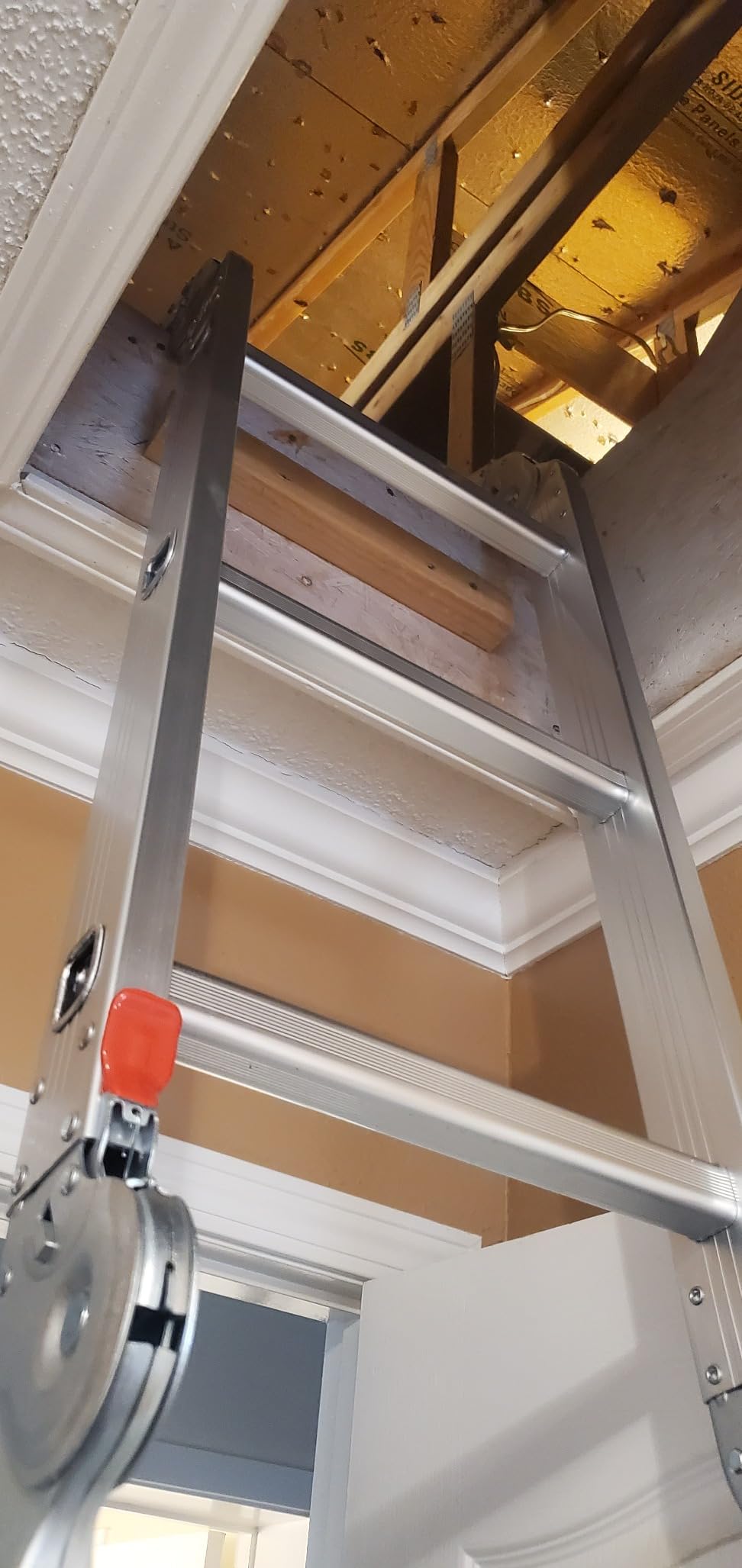
Height is the limit, and it is a hard one. At 12.5 ft of reach this clears a single-storey eave and a low gutter line, and it will not get you onto a two-storey roof deck no matter how the rating reads. The manufacturer also recommends a 75-degree placement angle to the ground, which is slightly steeper than the 4-to-1 rule and worth understanding before you rely on it.
One practical constraint owners mention: you have to set it on the floor before changing out of straight-ladder position. Plan where you are going before you are up high.
Good for gutters, painting and low roof edges
For a bungalow, a garage and a low-pitch roof, the seven configurations cover more jobs than a fixed step ladder of the same length. It handles painting, soffit work, gutter clearing and light fixture installation without a second tool.
The fold-flat profile also makes it the easiest ladder here to move between a house and a vehicle without help.
Where it falls short?
Any eave above roughly 9 ft is out of reach once the three-foot overhang is accounted for. That rules out most second-storey gutter work, which is the single most common reason people search for a roof ladder in the first place.
The 75-degree placement guidance also differs from the OSHA 4-to-1 rule, so set it deliberately rather than by eye.
8. Bryner 19.6 ft 7-in-1 — Best Multi-Position Ladder With Steel Joint Locks
Bryner Step Folding Ladder 19.6ft Multi-Purpose Aluminium Extension Ladders, 7 in 1 Folding Adjustable Telescoping Step Ladder 330lbs
- Hardened steel joint locks resist wear
- 19.6 ft reach from a 4.9 ft folded package
- Extra-long stabilizer bars hold position
- One-click lock speeds reconfiguration
- 39 lb weight is heavy for repositioning
- Narrow 14 inch frame width
Most plastic-hinged multi-position ladders share one weak point, and the Bryner targets it. The Safety Joint Locks are hardened high-strength steel, the tube corners are double-reinforced at 2mm, and the whole unit is SGS EN131 certified. Owners consistently read the steel hardware as the reason this ladder feels more solid than its class.
Reach and stowage are both strong. It extends to 19.6 ft and folds to 4.9 ft, which is one of the better compressed packages among the multi-position options in this group. Seven configurations cover extension, A-frame, 90-degree, wall and a scaffolding base.
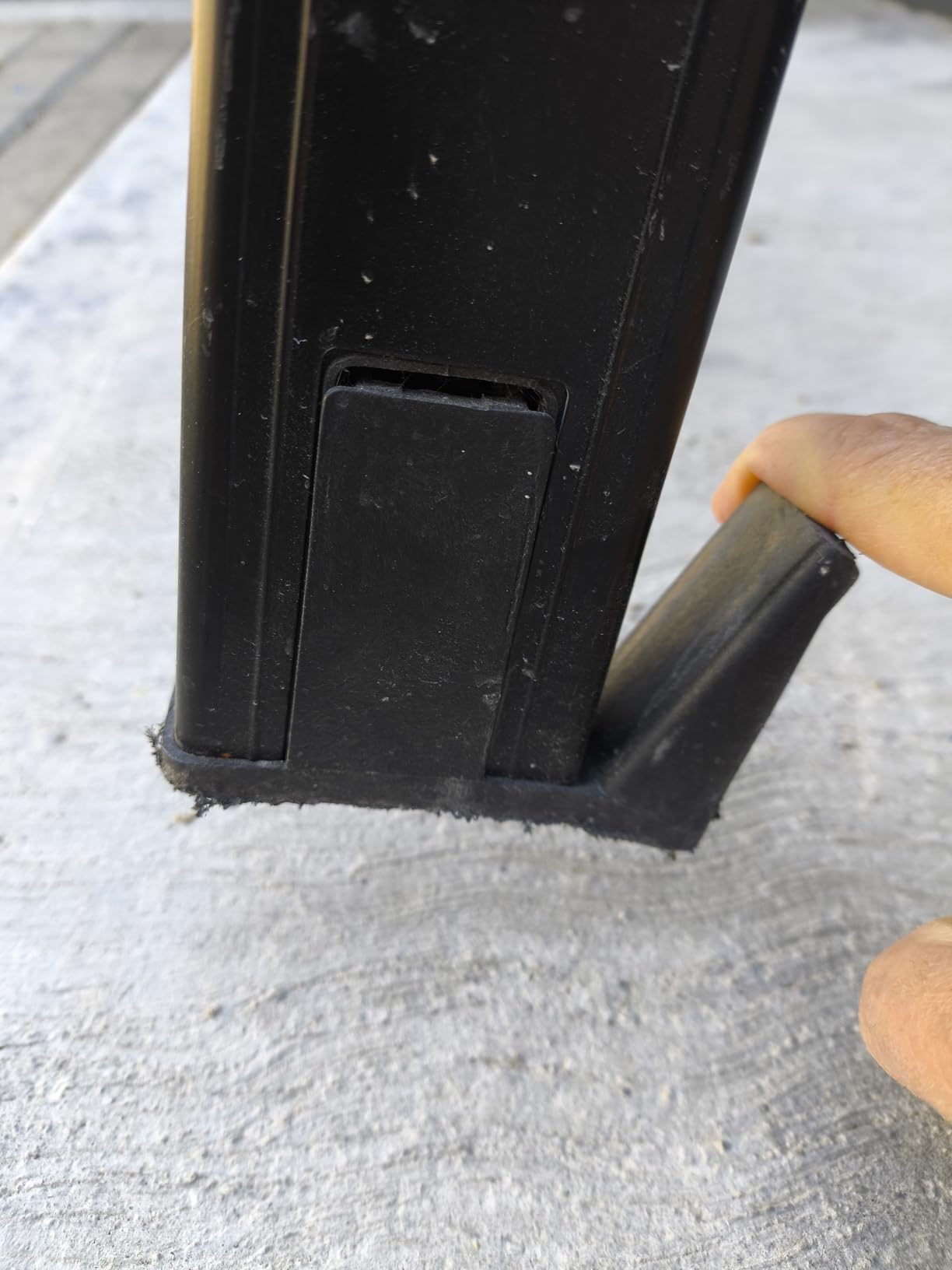
The weight is the honest drawback. At 39 pounds it is heavy for a ladder you may need to reposition twice in one gutter job, and a 14 inch frame width is narrow compared with a dedicated step ladder, so wide stance moments feel tighter.
It also comes with a 3-year factory warranty and US-based customer care, which is more support coverage than several cheaper options in this roundup.
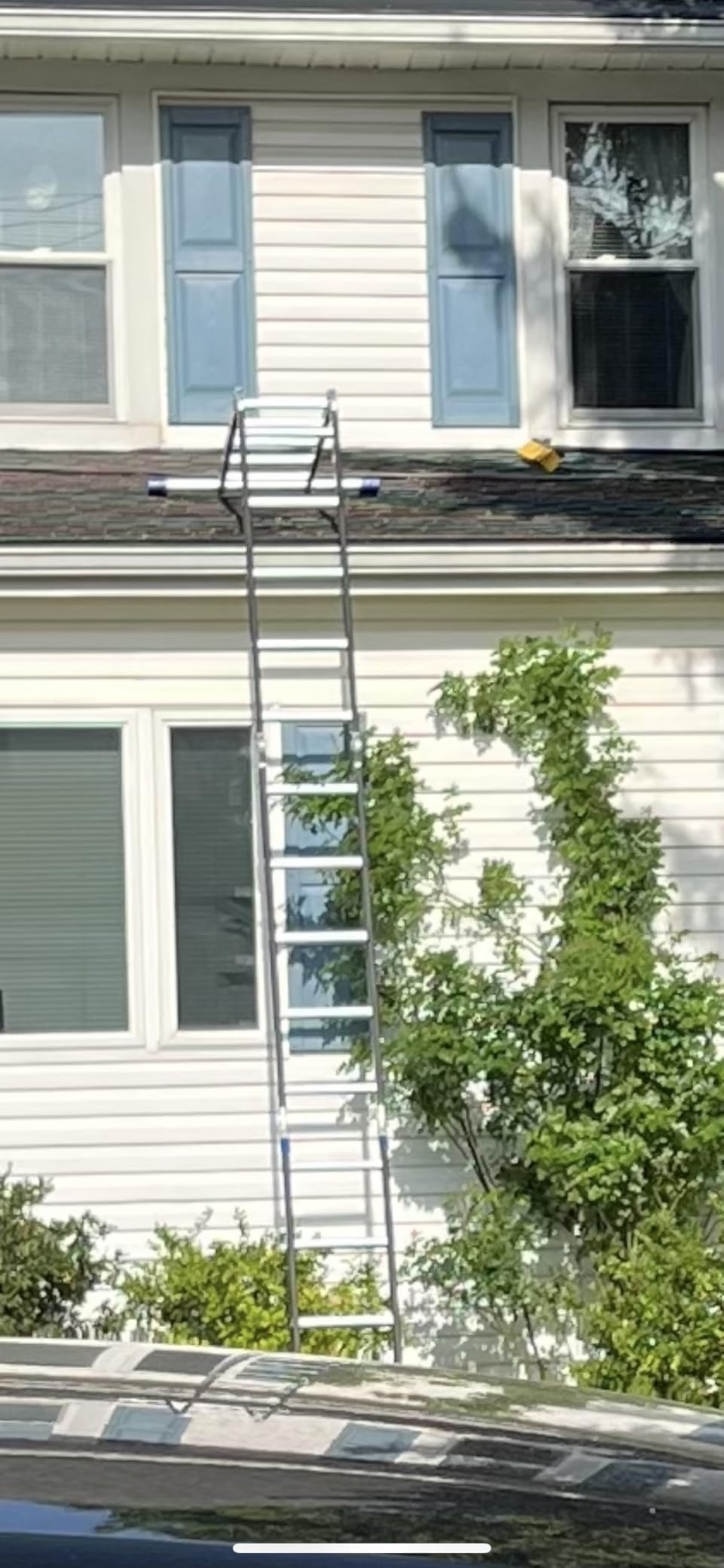
Where steel hardware changes the outcome?
Joint locks take the highest wear load on a folding ladder, because every configuration change loads the hinge. Steel locks resist that cycling in a way plastic does not, which matters if you plan to use the ladder for roofing rather than for one afternoon of painting.
Combined with extra-long stabilizer bars and rubber anti-slip feet, the setup holds position on uneven ground better than the weight alone would suggest.
When the weight is not worth it?
If you are a smaller user or you plan to move the ladder repeatedly around a house, 39 pounds adds up fast. A lighter 18 to 20 ft model will be easier to handle all afternoon.
Also note the 14 inch frame width is narrower than a step ladder, so it is not the choice for extended periods of standing work at height.
9. Louisville AE2224 24 ft Aluminum Type IA — Best Lightweight Full-Length Extension
Louisville Ladder 24 ft Aluminum Extension, AE2224, Type IA, 300 lbs
- Lighter to maneuver than the fiberglass equivalent
- I-beam rails give serious structural strength
- QUICKLATCH secures sections quickly
- Steel swivel safety shoe on uneven ground
- Awkward to store and transport in a small vehicle
- Highest one-star share in the group at 9 percent
This is the aluminium counterpart to the Louisville FE3224, and for anyone who needs the same 24 ft reach without the weight, it is the smarter buy. The modified I-beam side rails are machined from full 3-inch extrusions with interlocking rails, which gives real structural strength at a lower carry weight than fiberglass.
It holds the same Type IA 300 lb industrial-duty rating and the same Quicklatch system, so you get the fast section securing that made the FE3224 good to use. The steel swivel safety shoe with a metal shield is a genuine advantage when the base has to sit on uneven soil.
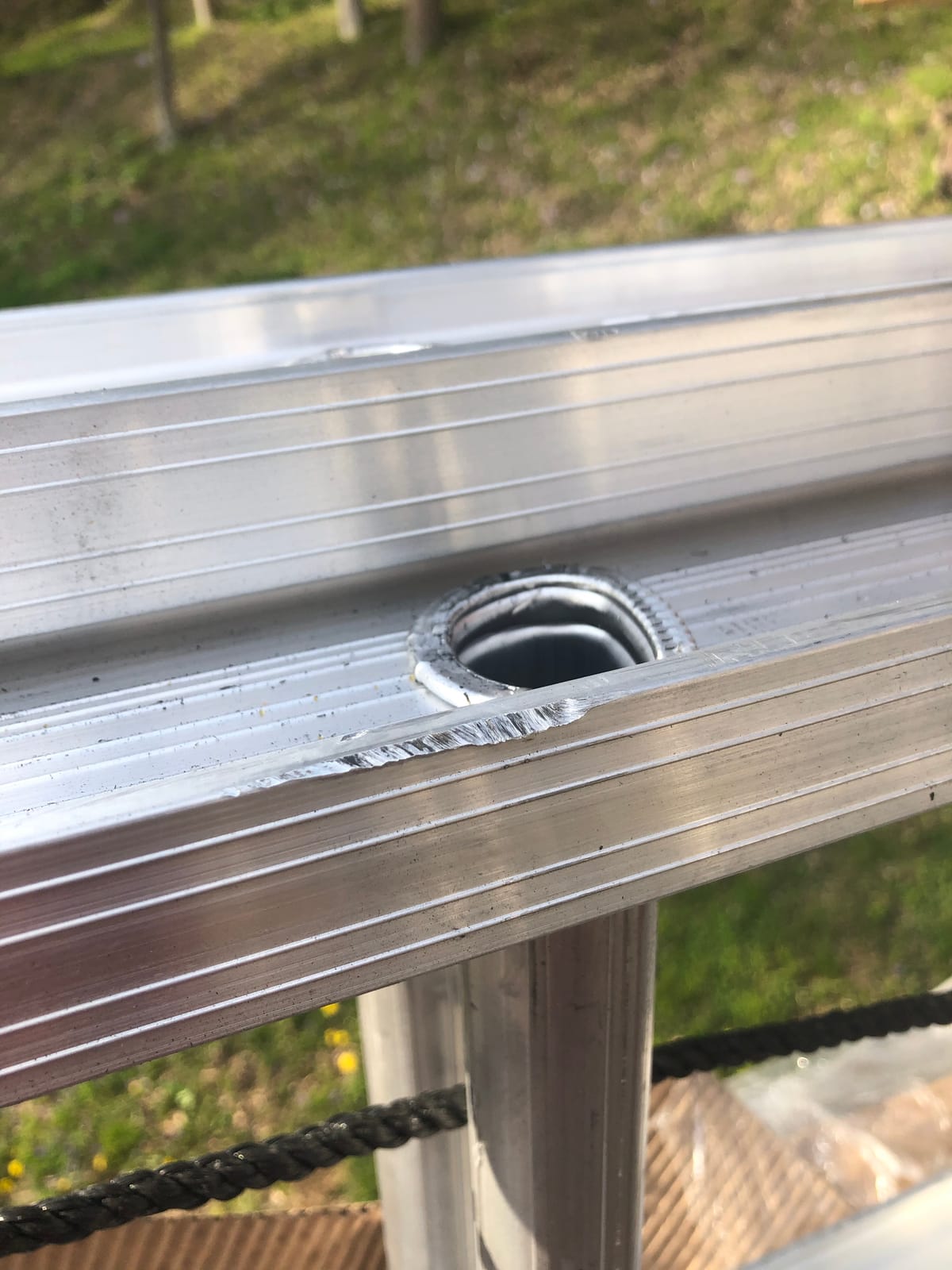
Two cautions. First, a full-length 24 ft aluminium ladder is genuinely awkward to store and to move in anything smaller than a pickup, and that is the reason many people reach for a telescoping model instead. Second, the review profile carries the highest one-star share in this group at 9 percent, and those complaints are mostly about packaging and delivery damage rather than how the ladder performs once assembled.
That second point is worth acting on: inspect the rails and rung locks the day it arrives, before you depend on it at height.
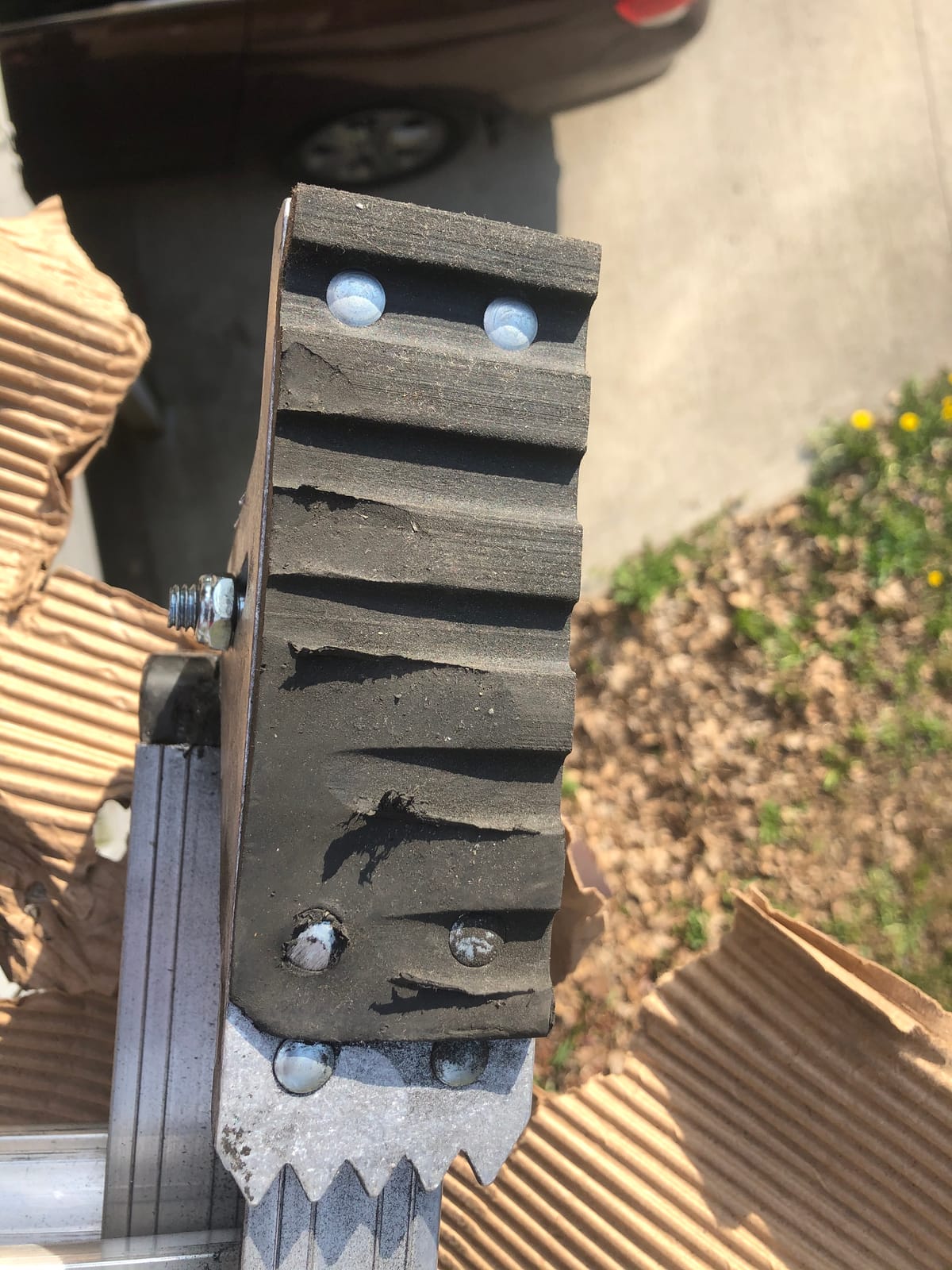
Aluminium versus the fiberglass FE3224
Choose the aluminium AE2224 when handling weight and storage pressure matter more than electrical insulation. It moves easier around a house, it is easier to get in and out of a vehicle, and it will not rust if it lives outside.
It meets or exceeds ANSI and OSHA standards for its Type IA class, so the 300 lb rating is the number to plan your load around.
When you should not choose aluminium?
Never use an aluminium ladder near overhead power lines. If a service drop runs over your work area, the fiberglass FE3224 is the correct answer and no amount of care on your part changes the conduction risk.
Beyond that, storage is the deciding factor. If a 24 ft ladder will not fit where you live, buy the reach you can store.
10. JADDUO 24.6 ft Telescoping — Tallest Reach in the Group
JADDUO Telescoping Ladder, 24.6 FT, Rectangular, Heavy Duty, Silver
- Tallest reach among the telescoping models
- Removable top hooks for positioning
- Stabilizer bar with integrated transport wheels
- Fits a small car trunk
- Pinch-prone retraction on some rungs
- Bottom section needs drilling to widen holes
- Retraction takes practice to learn
At 24.6 ft this reaches further than anything else in the roundup, and it does it from a package that collapses to about 47 inches. For a house with a genuinely high eave where a fixed 24 ft ladder still falls short, that combination of reach and storage is difficult to argue with. The stabilizer bar has integrated transport wheels, so moving it around a yard is manageable.
It also carries 330 lb and offers removable top hooks, which is the hardware you want if you ever want to anchor the top rather than relying on lean angle alone.
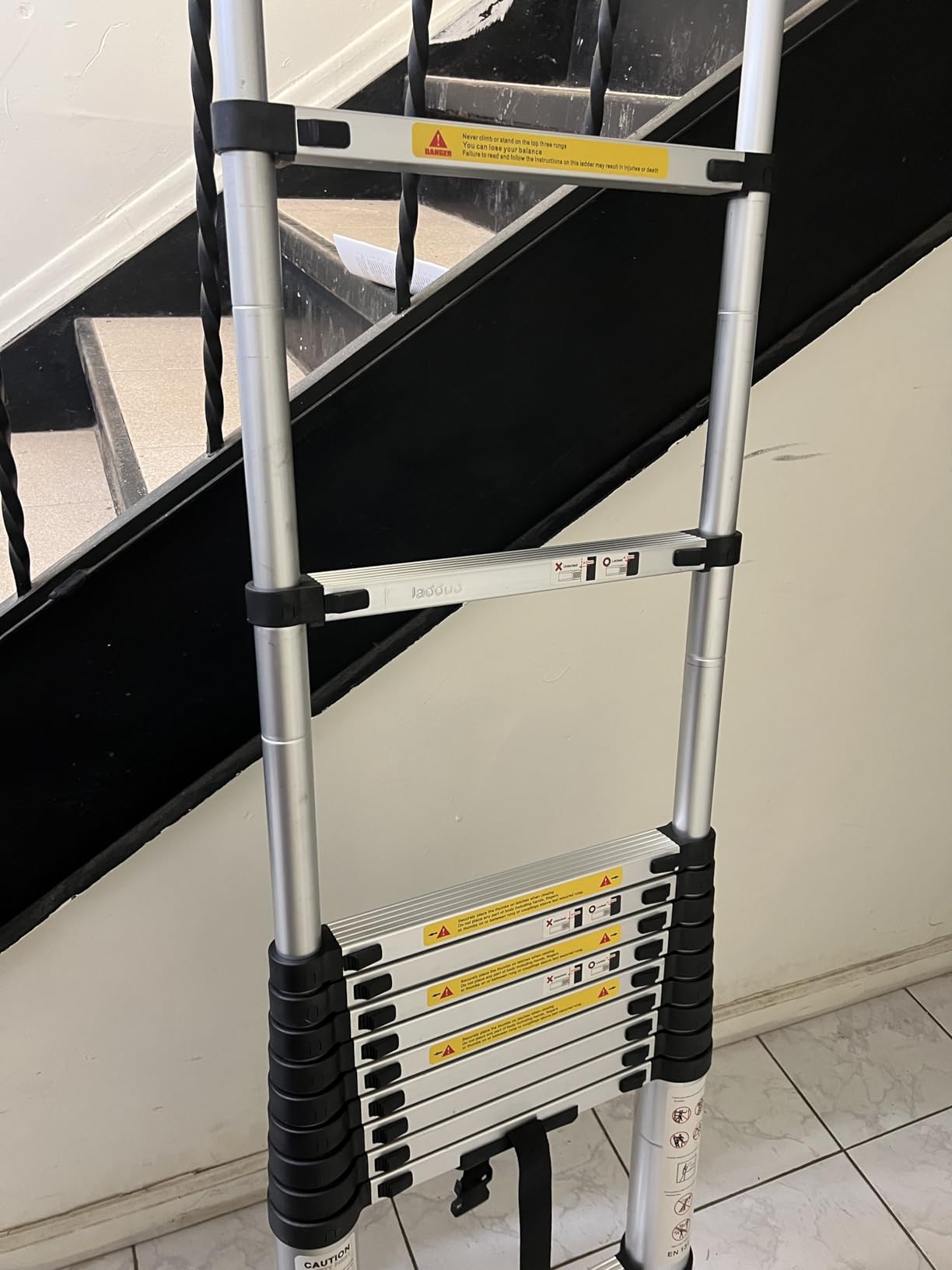
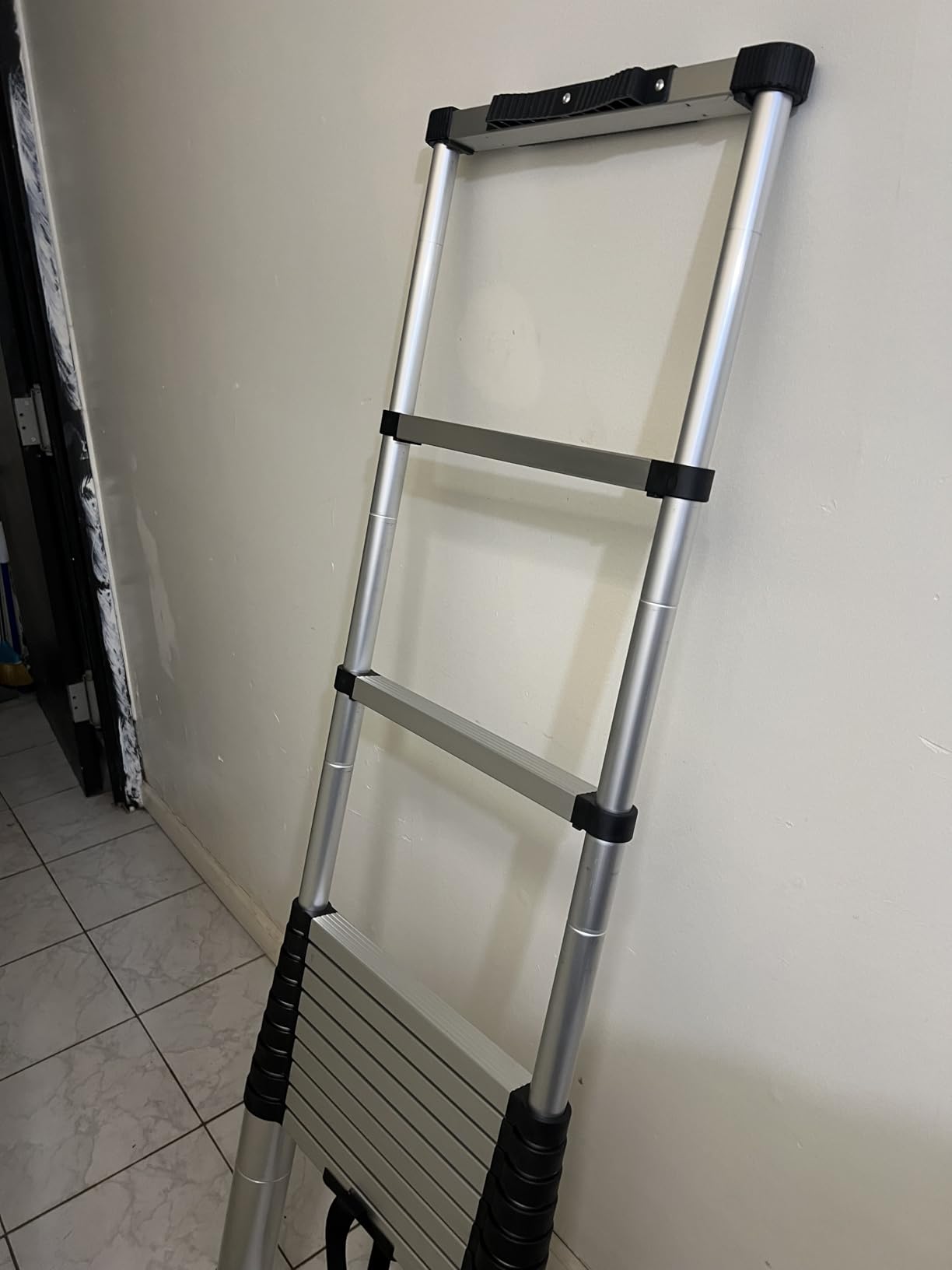
Now the honesty part, because this one has the weakest review profile in the roundup. It holds a 4.1 average, with a 13 percent three-star share, and the complaints are specific rather than vague. Rungs do not all retract from a low step, which creates a pinch hazard around children. The bottom section requires drilling to widen the holes, and the assembly instructions are incomplete. Retraction is a two-setting-per-rung process, so it takes practice.
At 20 pounds it is also heavier than most telescoping competitors, which is awkward in a package you would expect to be light.
When the extra reach matters?
High eaves, tall roof lines and buildings with an upper-storey access point are the cases where 24.6 ft earns its place. On a low roof, this ladder is simply more than you need and you are carrying weight for no benefit.
The removable hooks and stabilizer bar make it a reasonable base for adding a roof hook kit if you intend to work at the eave regularly.
Why we would not put it on a roof unsupervised?
Read the retraction complaints again before buying. A pinch hazard that depends on which rung you grab is exactly the kind of thing that goes wrong when you are alone and tired at the end of a job.
The drilling step and the learning curve for retraction also mean the first assembly deserves an afternoon, not a Saturday-morning rush to the roof.
11. LEVELEVE 22 ft Multi-Position — Best All-Round Multi-Position Value
- 2mm industrial tubing is thicker than typical
- Five configurations including a scaffold platform
- Eight ground support points
- Integrated rollers on the support rods
- Manufacturer advises against fully extending every section
- No wheels for rolling transport
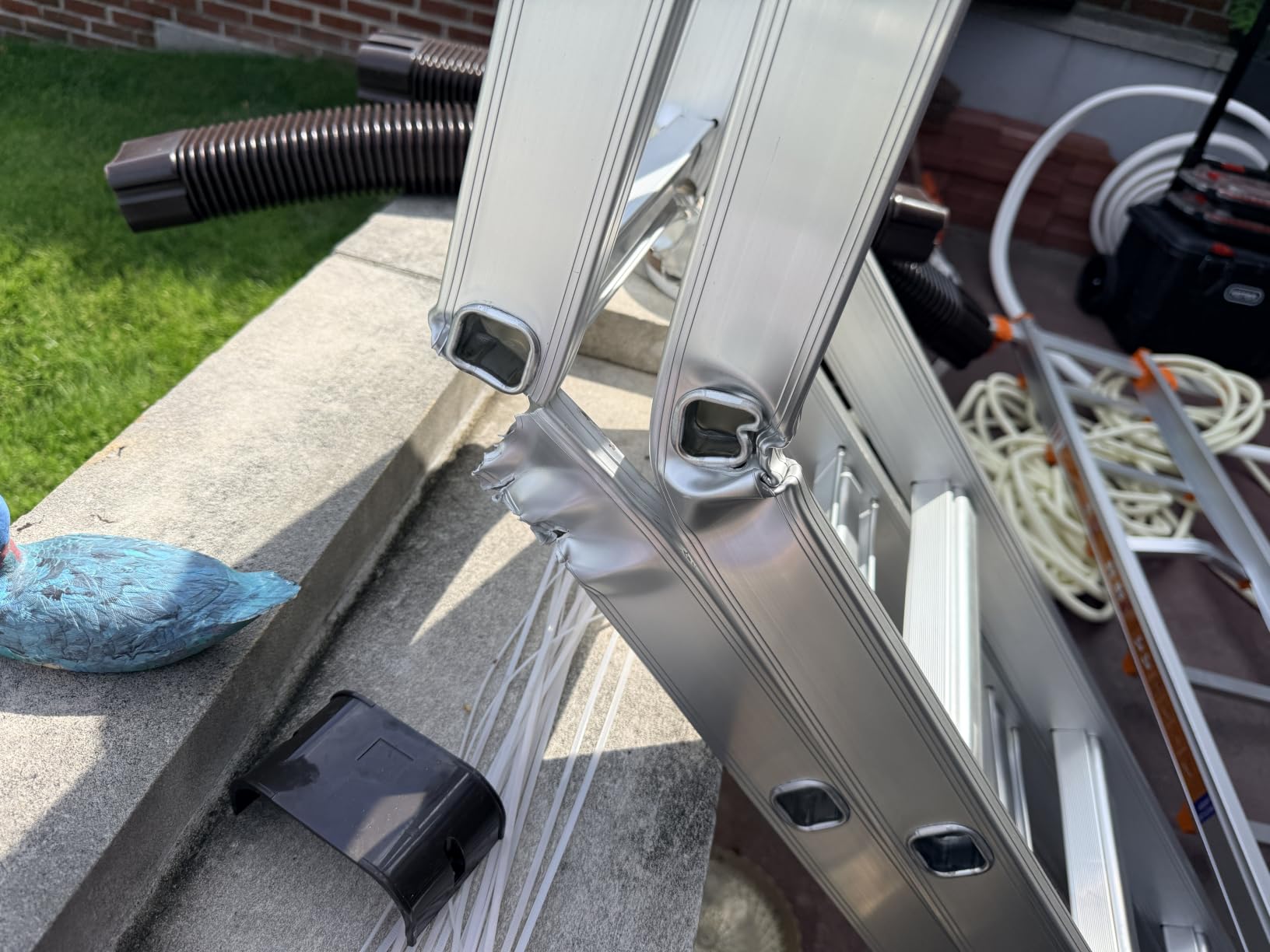
This one gets attention for a simple reason: the tubing is 2mm thick with anti-oxidation treatment, which is noticeably heavier duty than the norm at this reach. Reviewers reading the spec sheet respond to it, and the 71 percent five-star share reflects real satisfaction with build quality for the money.
Stability is engineered rather than assumed. W-shaped reinforced non-slip steps, dual anti-slip balance rods and eight ground support points give it a wide, planted feel, and the five-in-one configuration covers step ladder, A-frame, telescopic, right-angle and scaffold platform. Integrated rollers on the support rods help with carrying and reconfiguration.
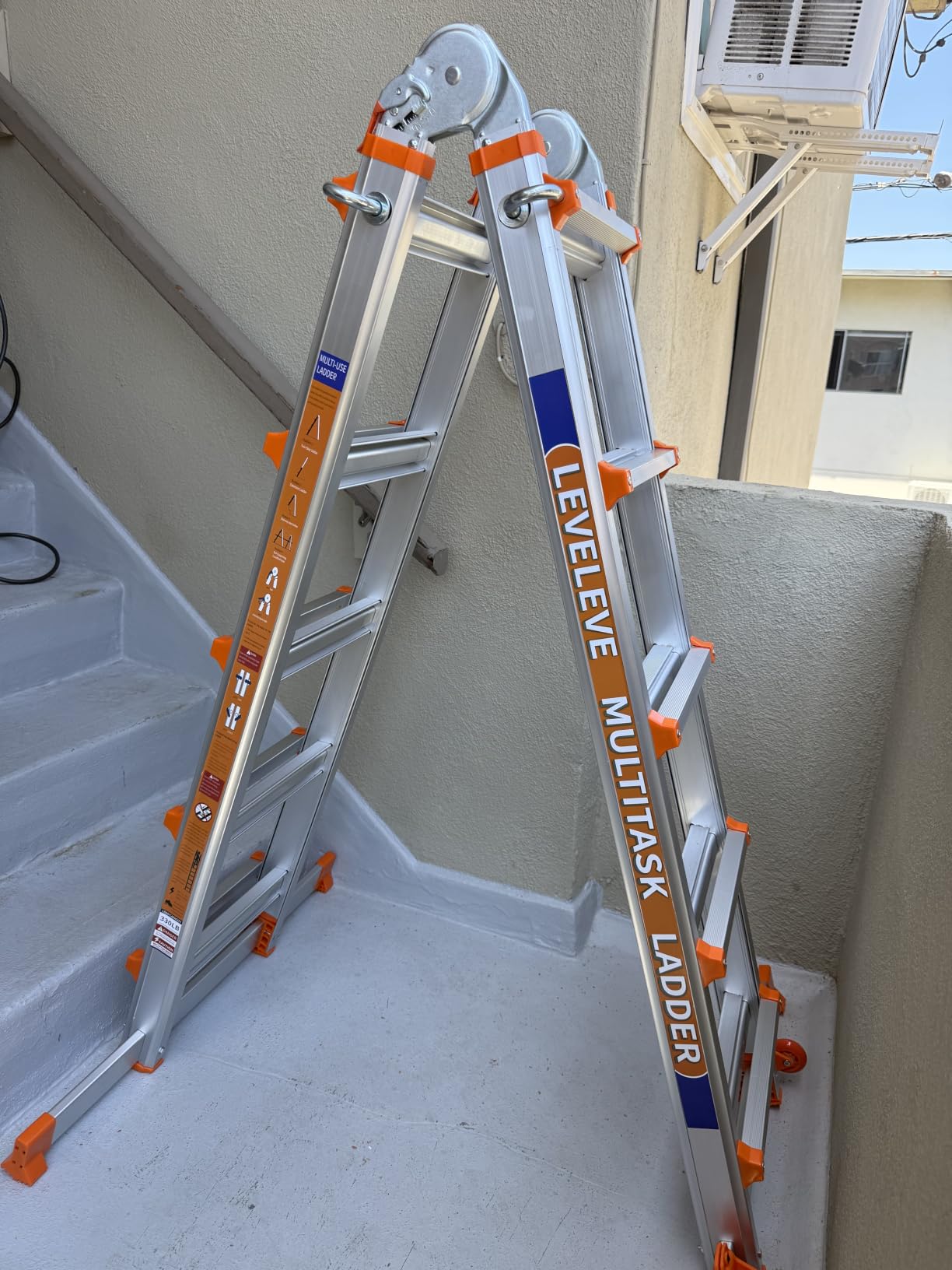
Two limits to plan around. The manufacturer’s own safety guidance says not to fully extend all sections simultaneously and to maintain at least one double-layer step overlap, so your usable maximum height depends on which configuration you are in. And there are no wheels for rolling transport, only rollers on the support rods, so moving it across a lawn still takes lifting.
At 38 pounds it is not a light carry either, which is the price of the thicker tubing.
Best balance of reach and stowage
Twenty-two feet of reach at 38 pounds folds into a package that suits a garage rather than a yard. If you need more than a telescoping ladder but not a full 24 ft fixed extension, this is the middle ground that few options cover well.
The scaffold platform configuration also makes it useful for jobs where you want to stand still and work rather than lean out toward a roof edge.
When to pick something else?
If your work demands the very highest load class, note the 330 lb rating sits below the 375 lb class some competitors offer. Check what you and a full bucket of tools actually weigh before committing.
And read the overlap instruction. Over-extending a telescoping multi-position ladder is the fastest way to turn a stable base into a wobble.
12. Lift Ladders 26 ft Multi-Position — Highest Load Rating in the Group
Lift Ladders Multi-Position Aluminum Ladder, 375 lb, Silver, 26 Ft Reach
- 375 lb load rating is the highest here
- Armored J-locks for quick secure height changes
- Rigid hinge design minimizes flex and sway
- Folds to a package that fits a sedan
- No wheels for transport
- Reach still falls short of a true two-storey roof line
This is the only 375 lb ladder in the roundup, rated to ANSI Type 1AA, and that headroom is the argument. If you are carrying a full toolbox, a bucket of fasteners and working alone, a 300 lb class ladder leaves you less margin than you might think once a person and their gear are on it.
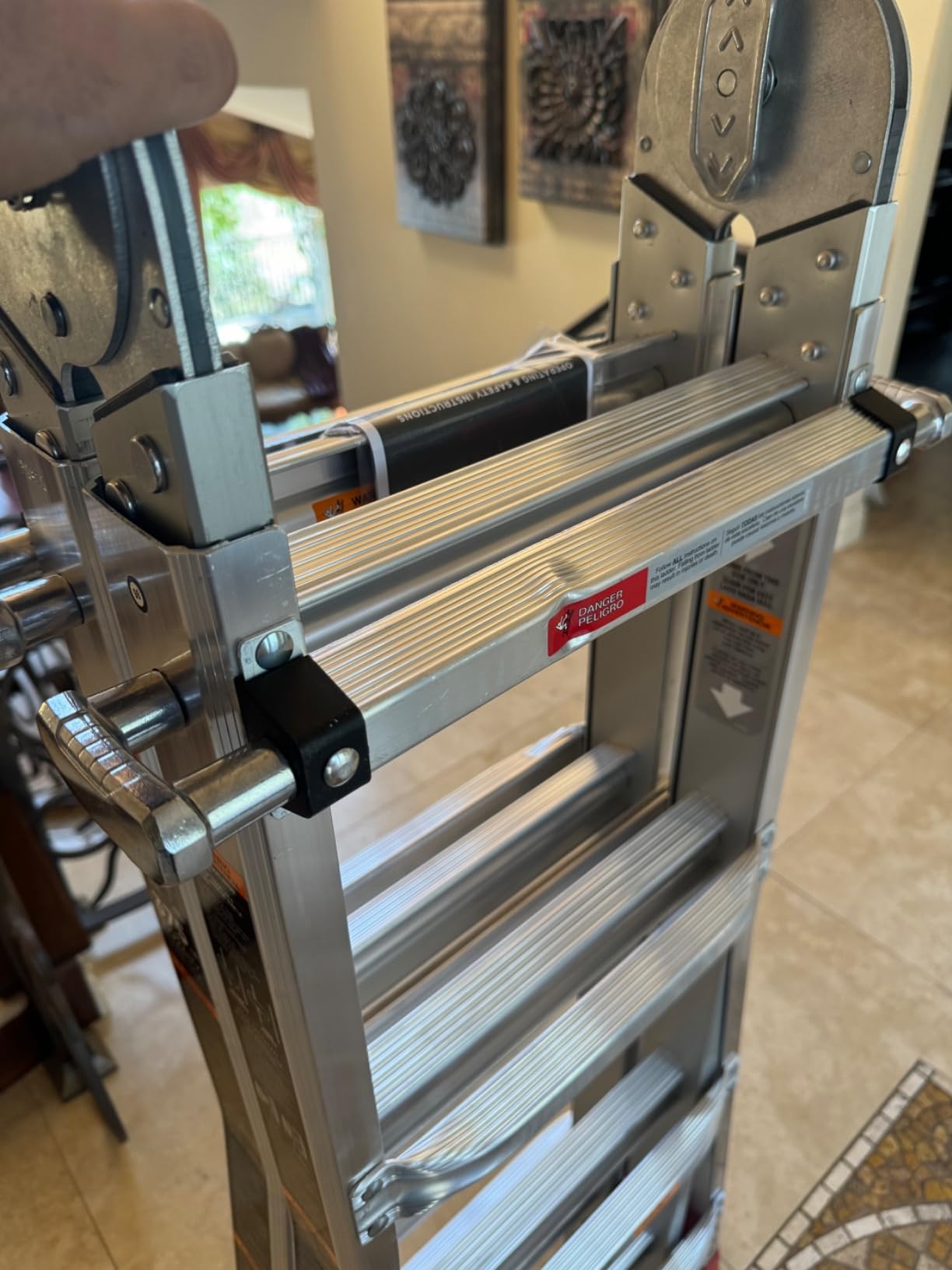
Construction is aimed at the same problem. A rigid collapsible hinge and stabilizer hinge design minimize flex and sway while climbing, and armored J-locks make height changes fast and secure. Owners rate it at 4.6 across 157 reviews, with 83 percent five-star, describing it as sturdier and more compact than comparable models.
Two things temper that. There are no wheels, and one long-term owner named the lack of them as the reason for a four-star rating. And even fully extended, 26 ft still falls short of a true two-storey roof line, so verify your eave height before you commit.
One reviewer also reported receiving a unit marked Type 1A at 300 lb rather than the advertised Type 1AA, which is a discrepancy worth checking on arrival by reading the label on the ladder itself rather than trusting the listing.
Why the extra load rating matters?
Duty rating is not a marketing number. OSHA 1926.1053 requires ladders to be rated for the load they will carry, and a 375 lb class gives you room for a second person or a heavier setup on the roof rather than leaving you at the limit.
The trade-off is that Type 1AA ladders tend to be heavier and bulkier, so confirm you can handle and store this one before you commit to the class.
When a lower class is the smarter buy?
A homeowner working alone with hand tools rarely needs 375 lb. If your only roof jobs are gutters and a soffit repair, a 300 lb Type IA ladder is lighter to move and easier to store for the same result.
Check the rating label on the unit itself when it arrives, given the discrepancy one owner reported.
How to Choose an Extension Ladder for Roof Work?
The four decisions that matter are length, duty rating, material and how the base behaves on your ground. Everything else is preference. Get these right and the rest of the specification sheet is noise.
Duty rating: which class a homeowner actually needs?
Duty rating is the single most useful number on the label, and forum users are right to be suspicious of marketing words like reach. The classes and their maximum loads are set out in ANSI A14.1 and referenced in OSHA 1926.1053:
Type III — 200 lb. Light household duty, light duty only.
Type II — 225 lb. Medium-duty commercial work.
Type I — 250 lb. Heavy-duty industrial, the old residential standard.
Type IA — 300 lb. Industrial duty, the sensible residential target.
Type IAA — 375 lb. Extra heavy duty, for two people plus a heavy load.
For most homeowners working alone, Type IA at 300 lb is the right target. Go to Type IAA only if you genuinely need the headroom, and do not go below Type I for roof work because you will be climbing loaded with tools.
Material: aluminium versus fiberglass
Aluminium is lighter, cheaper and will not rust, but it conducts electricity and it loses stiffness as it ages. Fiberglass is heavier and more expensive, does not corrode, resists UV, and is non-conductive, which makes it the only correct choice near overhead power lines.
For pure roof access on a normal house, aluminium is the better tool. For electrical work or a service drop over the work area, read our [Best Fiberglass Extension Ladders for Electrical Work](https://www.thebrucehighqualityfoundation.com/best-fiberglass-extension-ladders-for-electrical-work/) before buying anything.
Which ladder type suits which job?
Fixed two-section extension — calmest at height, best for stepping onto a roof edge. Awkward to store.
Telescoping — best reach-to-storage ratio, good for RV and caravan work, more movement at full height.
Multi-position — one ladder for gutters, attic and roof work, converts in seconds, heavier.
Folding 4-section — stows in a vehicle, harder to use than newer knob-locking versions.
Podium ladder — a platform to stand on, the right answer when you will be on the roof for a while.
Scaffold or lift — for anything sustained, steep or high.
If you work on barns, outbuildings or anything with a lot of vertical space, our [10 Best Telescoping Extension Ladders for Barns](https://www.thebrucehighqualityfoundation.com/best-telescoping-extension-ladders-for-barns/) guide covers the telescoping format in more detail.
Roof hooks and stabilizer bars are not the same thing
These two get confused constantly. A roof hook attaches to the top of the ladder so it can sit over the ridge or against the roof surface, and it is only ever as strong as the section it is fixed to, which is why hooking a telescoping ladder raises real questions about tensile load. A stabilizer bar attaches at the base and widens the footprint, which is what stops the ladder taking a ride when the ground is soft.
For most homeowners, a stabilizer bar at the base solves the more common problem. Roof hooks are worth it if you regularly work past the eave on a fixed ladder.
Length, storage and renting
Taller ladders cost more, weigh more and store worse, so buy the reach you actually need. If you need 28 or 32 ft for a one-off job, renting is usually the sensible call, because you will not store it and you will not need it often.
For everything under 20 ft, buying wins on convenience, since you can have it set up within minutes instead of coordinating a rental.
Setting an Extension Ladder for Roof Access Safely
OSHA 1926.1053 sets the rules below, and they are worth knowing precisely rather than approximately, because the setup is where most falls happen.
The 4-to-1 rule and the three-foot overhang
Set the base one foot out from the wall for every four feet of rise, which produces the familiar 4-to-1 angle. Then extend the ladder so the top passes the edge of the roof by at least three feet. You climb past the point where the rails cross the eave, so the extension is what keeps you from arcing backward off the top.
For safe reach, treat roughly one foot less than the ladder length as your working limit, because you should never stand on the top three rungs.
Ground conditions decide the outcome
Both feet need to sit on level, firm ground at the same height. Soft lawn, gravel and a slope are the reported failure points in homeowner discussions, and the recurring worry is the ladder taking a ride to the ground. If the ground is not level, use a ladder with levelling feet or stabilizer bars rather than shimming with scraps of timber.
Have someone foot the base whenever you can, and keep them at the base rather than letting them wander off mid-job.
Protecting the roof surface
The most repeated complaint from owners is damage to the roof itself, and the most repeated workaround in homeowner discussions is padding the rails. Users wrap the contact points with sliced pool noodle sections, old carpet or towels, which is cheap and effective. If you are going to place the rails on shingles or a metal panel, pad the contact points first.
Two more things matter. Set the ladder feet on seams or structural lines rather than a random spot on the roof skin, and position the rungs so they sit not much higher than the roof surface, which gives you a clear line of descent instead of a step-up.
The failure mode owners describe most often is rungs standing above the roof surface once you are up, which forces awkward leaning to get around them. Board platforms cut to span the ribs help distribute weight if you must move around up there.
When not to use a ladder on a roof?
Say no to a ladder and hire a roofer if the pitch is steep, the eave is above two storeys, the roof is metal or fragile, or the job takes more than a few minutes up there. Experienced users converge on podium ladders and scaffold platforms for a reason: a platform lets you shift your centre of gravity safely and gives you somewhere to set your tools.
For cleaning, an eight-foot step ladder and a telescoping brush or wash mitt will often do the entire job from the ground. When in doubt, a professional roofer is cheaper than a hospital visit.
Frequently Asked Questions
What is the best ladder for getting on a roof?
For most homeowners, a 24 ft Type IA extension ladder with a 300 lb rating, steel swivel safety shoes and a rope or latch system is the best ladder for getting on a roof. The length lets the top extend three feet past the eave, and the duty class leaves room for you plus tools. A multi-position ladder around 18 to 22 ft is the better pick if your eave is lower or your storage is tight.
What ladders do roofers use?
Professional roofers generally use a sectional fibreglass or aluminium extension ladder in the 24 to 40 ft range, usually Type IAA rated, with a stabiliser bar at the base. For sustained work at the eave most crews switch to a podium ladder or a roof platform rather than leaning out on a ladder. Roof hooks are used on fixed ladders where the top needs anchoring to the roof surface.
What size ladder do I need for a 20 foot roof?
A 20 ft eave needs a 24 ft ladder, because OSHA requires the ladder to extend at least three feet past the roof edge. Treat your usable reach as roughly one foot less than the stated length, since you should never stand on the top three rungs. A 24 ft Type IA ladder rated to 300 lb is the sensible target for a homeowner at that height.
Which brand of extension ladder is considered the best?
Werner and Little Giant are the two names with the longest reputations for build quality, and Little Giant appears most often in professional discussions. Louisville Ladder is a well-established alternative with a full range of duty classes. In this roundup the Little Giant Velocity leads on review volume and versatility, and the Louisville FE3224 leads for full-length fibreglass work.
How tall of a ladder do I need to reach my roof?
Measure the height of the eave rather than the ridge, add three feet of overhang, and subtract about a foot for the rungs you must not stand on. An 8 ft eave needs roughly a 16 ft ladder, a 12 ft eave needs a 20 ft ladder, and a 16 ft eave needs a 24 ft ladder. Set the base one foot out from the wall for every four feet of rise to hold the 4-to-1 angle.
What is a good portable ladder for roof access?
A telescoping ladder is the best answer when storage is tight, because models around 20 ft collapse to a package of roughly 42 to 47 inches and can be carried by one person. Many of them include detachable top hooks, a stabiliser bar and transport wheels. The trade-off is more movement at full extension than a fixed two-section ladder, so check the section locks before each climb.
Can you stand on an extension ladder on a roof?
You should never stand on the top three rungs of an extension ladder, and you should not step onto a roof from the top of the ladder at all. Climb past the point where the rails cross the eave with the top extended at least three feet, have someone hold the base, and use a podium ladder or scaffold if you need to stand and work. Steep, high or fragile roofs should go to a professional roofer.
Our Final Extension Ladder Picks for Roofs in 2026
The Little Giant Velocity is our pick for the best extension ladders for roofs overall, because it converts between five configurations, carries a 300 lb rating on a limited lifetime warranty, and has the deepest review base of anything we covered. It clears a 10 to 12 ft eave with the three-foot overhang and folds away when you are done.
Pick the Louisville FE3224 if your eave is genuinely two storeys or you work near power lines, since the fibreglass rails and 24 ft reach handle both. Pick a telescoping model like the UC UP CLIMBER or SINMEIRUN if storage is the constraint, and a multi-position unit like the LANBITOU if soft ground is what worries you most.
And if the job needs more than a few minutes of standing on a roof, stop reading ladder roundups and hire a roofer. No ladder in this list, or any list, makes a steep or high roof safe to DIY in 2026.