
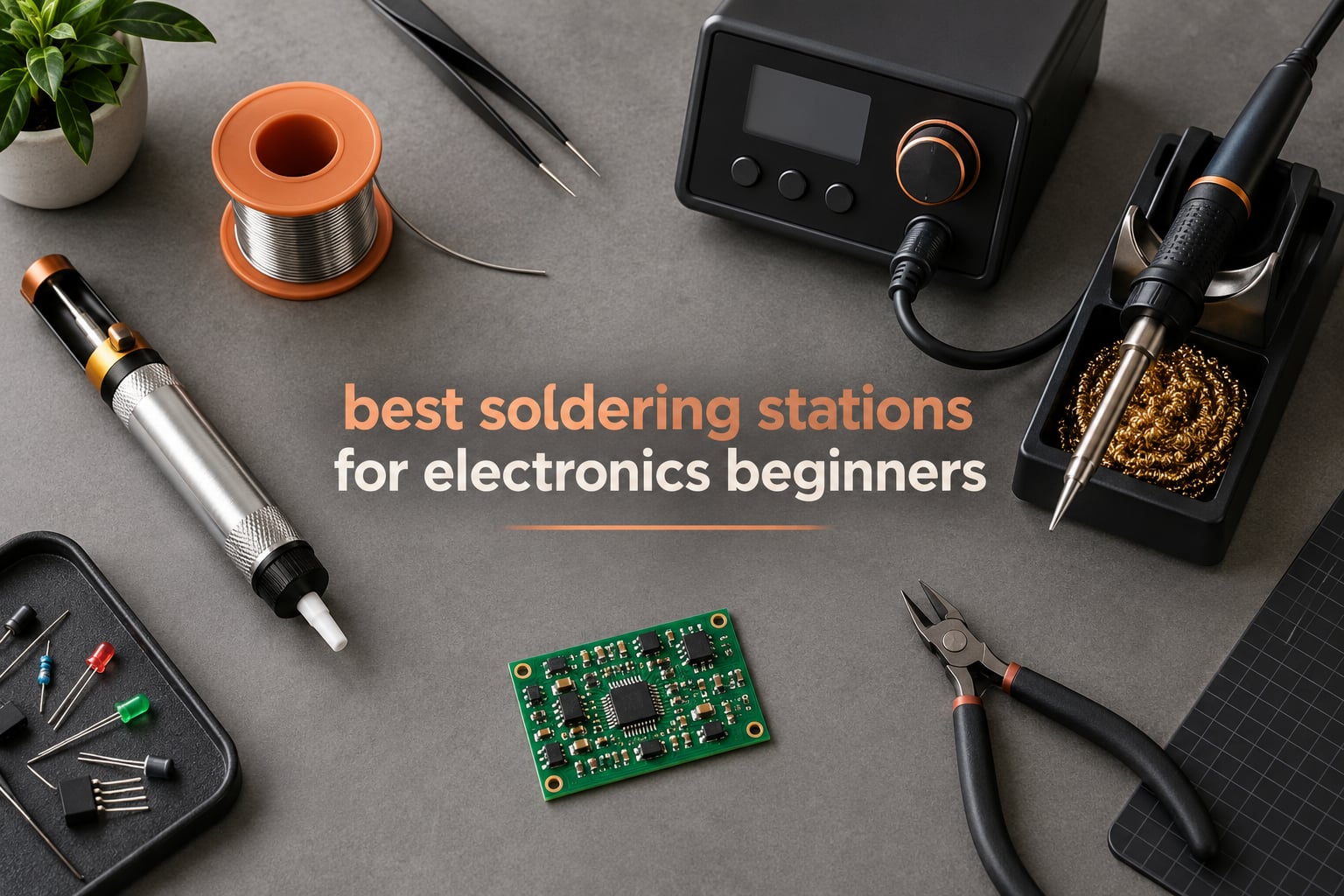
The best soldering stations for electronics beginners in 2026 is the Weller WE1010NA for anyone who wants one tool that will not need replacing, and the YIHUA 926 III for anyone who wants a full bench on their first day. Both are temperature controlled, both regulate heat with a closed loop rather than a fixed thermostat, and both keep a steady setpoint through a whole board rather than drifting as the tip cools.
We built this list around published specifications, then leaned on long-term ownership reports from r/soldering, eevblog, elektronauts, and forum.allaboutcircuits.com, because the forum consensus on soldering gear is more durable than any spec sheet. Ten stations made the cut. Every one of them is a real bench station with a replaceable tip, a holder, and an adjustable setpoint, because that is the minimum for learning on a board you care about.
One framing point before the list, because it is where most beginners go wrong. Wattage is the number sellers shout about, and it is not the number that decides whether your joints come out clean. A 130W element and a 60W element can both deliver the same tip temperature if the controller holds the setpoint properly.
What separates a good station from a frustrating one is thermal recovery, the speed at which the heater puts heat back into the tip after a joint absorbs it. A high-wattage iron that overshoots and swings wide while you wait for it to come back will scorch a board faster than a modest station that holds its temperature. Read the recovery behaviour, not the wattage badge.
We also flagged what actually arrives in each box, because that is the most common beginner regret on the forums. A station with no tip, no stand, or no power supply reads as a broken product until you find the missing piece in the manual. Each section below says plainly what comes with the iron.
Table of Contents
Top 3 Best Soldering Stations For Electronics Beginners (October 2026)

All 10 Stations Compared Side by Side in 2026
| Product | Specifications | Action |
|---|---|---|
| Weller WE1010NA 70W Digital Station |
|
Check Latest Price |
| YIHUA 926 III 60W LED Station Kit |
|
Check Latest Price |
 YIHUA 939D+ 75W Equivalent Station YIHUA 939D+ 75W Equivalent Station |
|
Check Latest Price |
 TOAUTO DS90 90W Dual Display Station TOAUTO DS90 90W Dual Display Station |
|
Check Latest Price |
 X-Tronic 3020-XTS 75W Station Kit X-Tronic 3020-XTS 75W Station Kit |
|
Check Latest Price |
 WEP 927-IV 110W Station with Magnifier WEP 927-IV 110W Station with Magnifier |
|
Check Latest Price |
 X-Tronic 3060-PRO 75W Station Kit X-Tronic 3060-PRO 75W Station Kit |
|
Check Latest Price |
 Crtsweker 100W Digital Station Kit Crtsweker 100W Digital Station Kit |
|
Check Latest Price |
 WEP 926LED V3 130W MAX Station WEP 926LED V3 130W MAX Station |
|
Check Latest Price |
 WEP 882D 2-in-1 Solder and Hot Air Station WEP 882D 2-in-1 Solder and Hot Air Station |
|
Check Latest Price |
1. Weller WE1010NA 70W Digital Station – The Best Overall Pick
- Holds setpoint within plus or minus 4F
- Quick heat-up
- ESD safe station iron and cable
- Temperature lock protects tips and components
- One year manufacturer warranty
- Larger footprint on the bench than compact kits
- Runs on 120V mains only
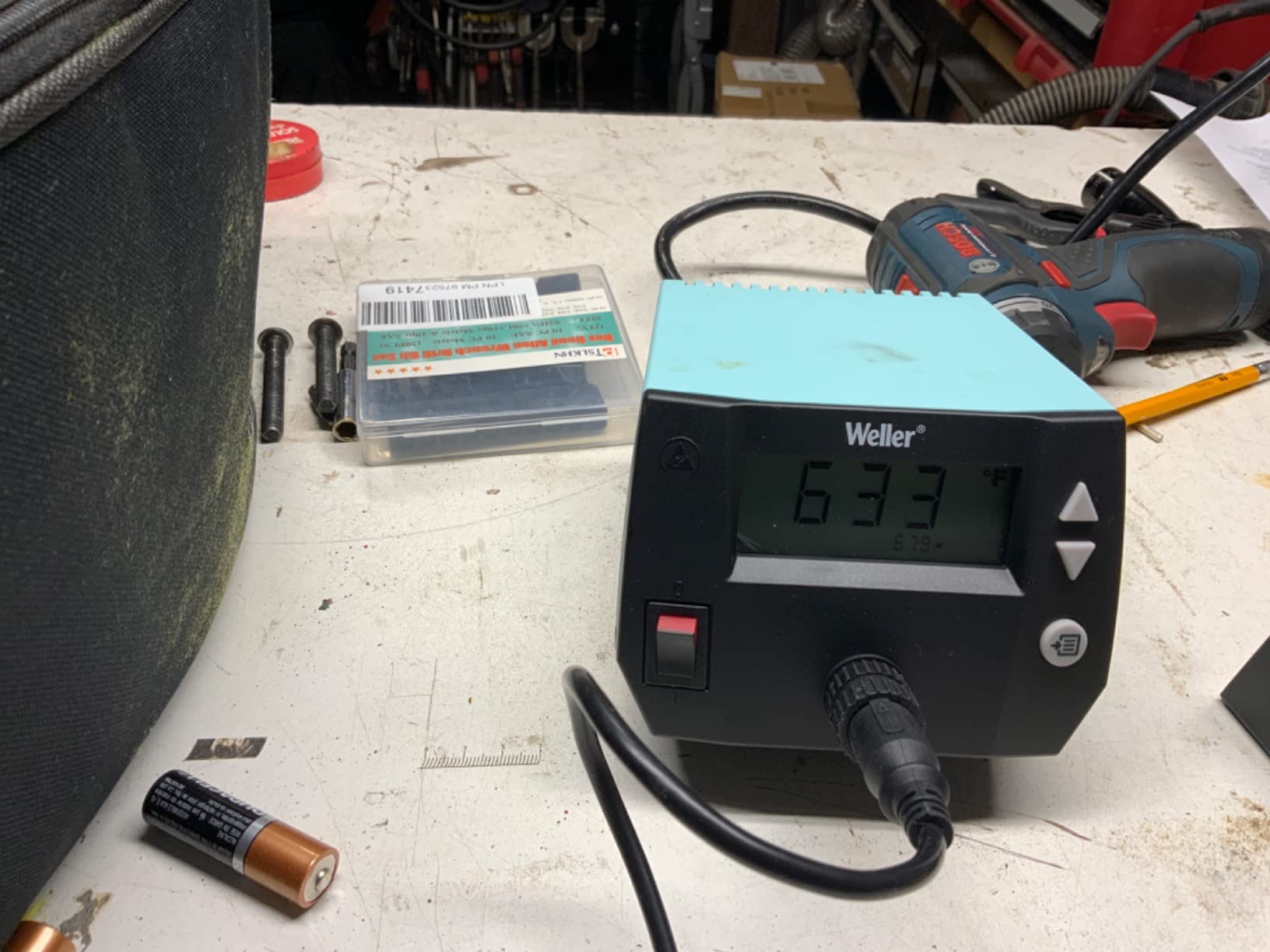
This is the station we hand to someone who tells us they will still be soldering in two years. Weller rates it at 70 watts with a digital setpoint on an LCD, and reviewers single out the temperature stability figure of plus or minus 4F as the reason joints come out repeatable. That stability matters more than raw power for a beginner, because it means the tip behaves the same on joint nine as on joint one.
Weller describes the unit as 40 percent more powerful than the models it replaces, and the heat-resistant silicone cable is the kind of detail that shows up in long ownership reports. The station, iron, and cable are all listed as ESD safe, which removes a whole category of worry when you are working near MOSFET gates or CMOS parts.
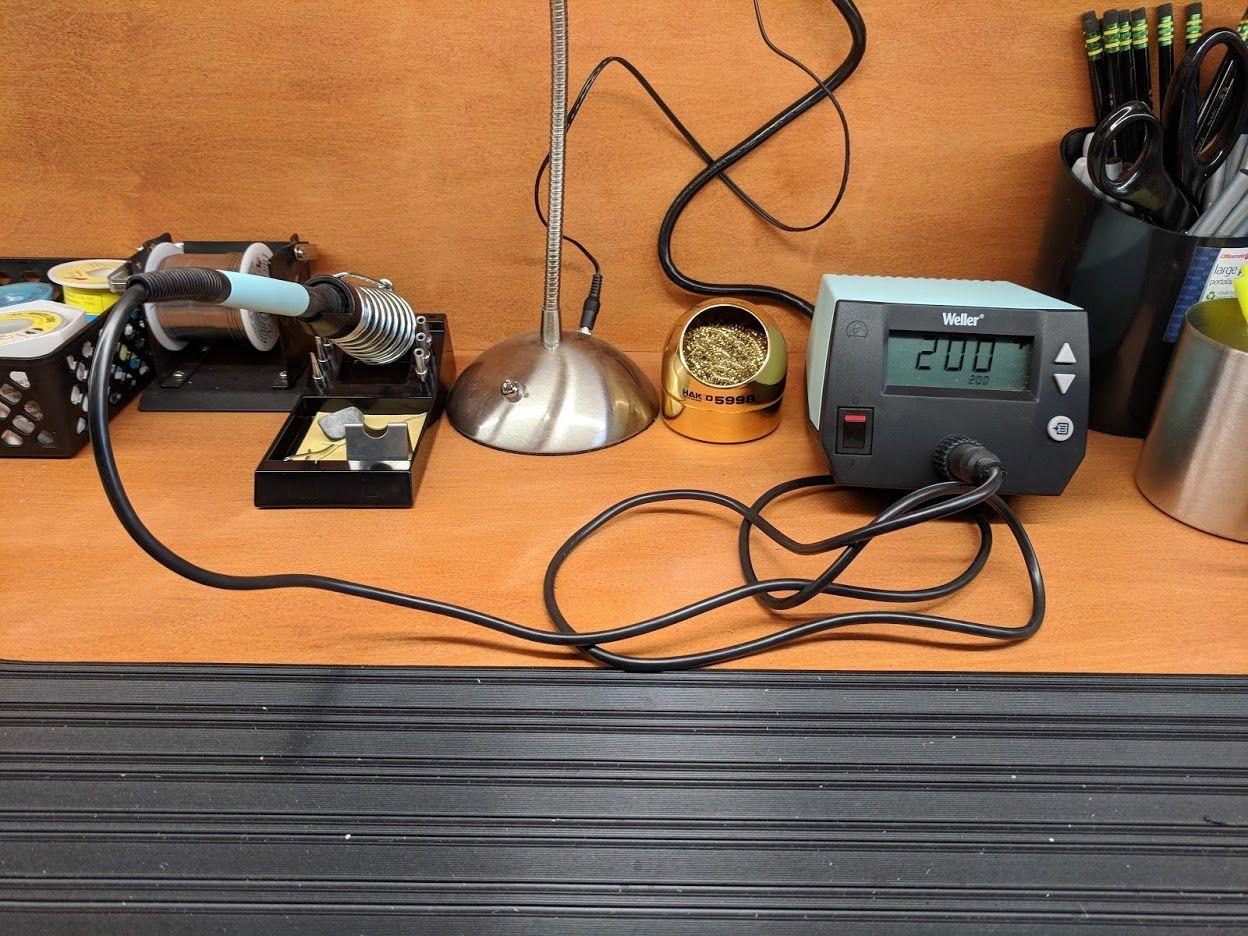
The safety features are genuinely useful for someone learning habits. Standby mode drops the temperature when the iron goes back in the holder, and auto setback protects both the tip and the components on your board if you walk away mid-task. Password protection locks your setpoint so a curious hand or an accidental knob turn does not leave you soldering at 400F when you meant 350F.
The honest drawback is size. At 12.5 by 6 by 9 inches and 5.5 pounds, it takes real bench space, and the iron runs on 120V mains, so it is not the right unit for a 230V region. Neither is a dealbreaker for most people. Both are just worth knowing before you commit.
What temperature range means for your first projects?
The listed ceiling of 400F suits leaded solder and light through-hole work, which is where most beginners spend their first months. Lead-free joints generally want more heat than this ceiling allows, so if your kit ships with lead-free wire, budget for a station with a higher rated maximum or expect to work slower and add more dwell time.
The ±4F stability spec is the number to hold onto. When you dial 350F and the readout stays there, you can learn technique on a repeatable tool instead of chasing a wandering setpoint.
Where it will frustrate you?
Nothing here is a fault, but it is not a compact kit either. You get a station with a safety rest and sponge, not a bench full of helping hands, magnifiers, or solder. If your workspace is already crowded, that footprint may push you toward one of the all-in-one designs further down this list.
It is also the leanest package here, so a total beginner who might abandon the hobby has more at stake than with a bundled kit. A mid-tier station with a three-year warranty is the more forgiving place to start.
2. YIHUA 926 III 60W LED Station Kit – Best Value With Everything Included
- Largest review base in this roundup
- Six extra tips plus solder roll and solder sucker
- Heat to working temperature in under 30 seconds
- Compact 9.5 by 5 by 4.5 inch footprint
- Two helping hands in the box
- Helping hand arms limit larger work
- 110V only
- Some reports of tip screws stripping over time
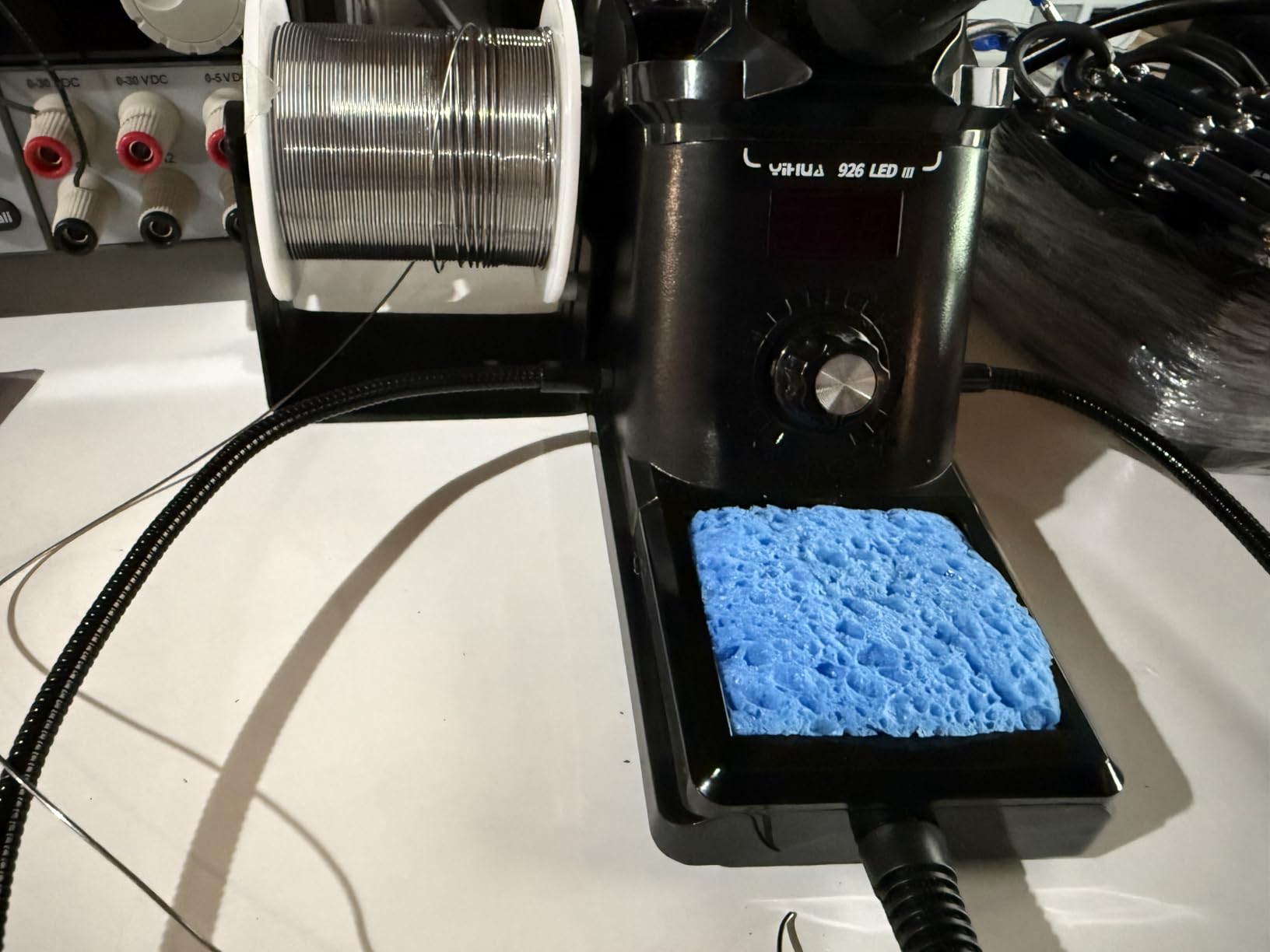
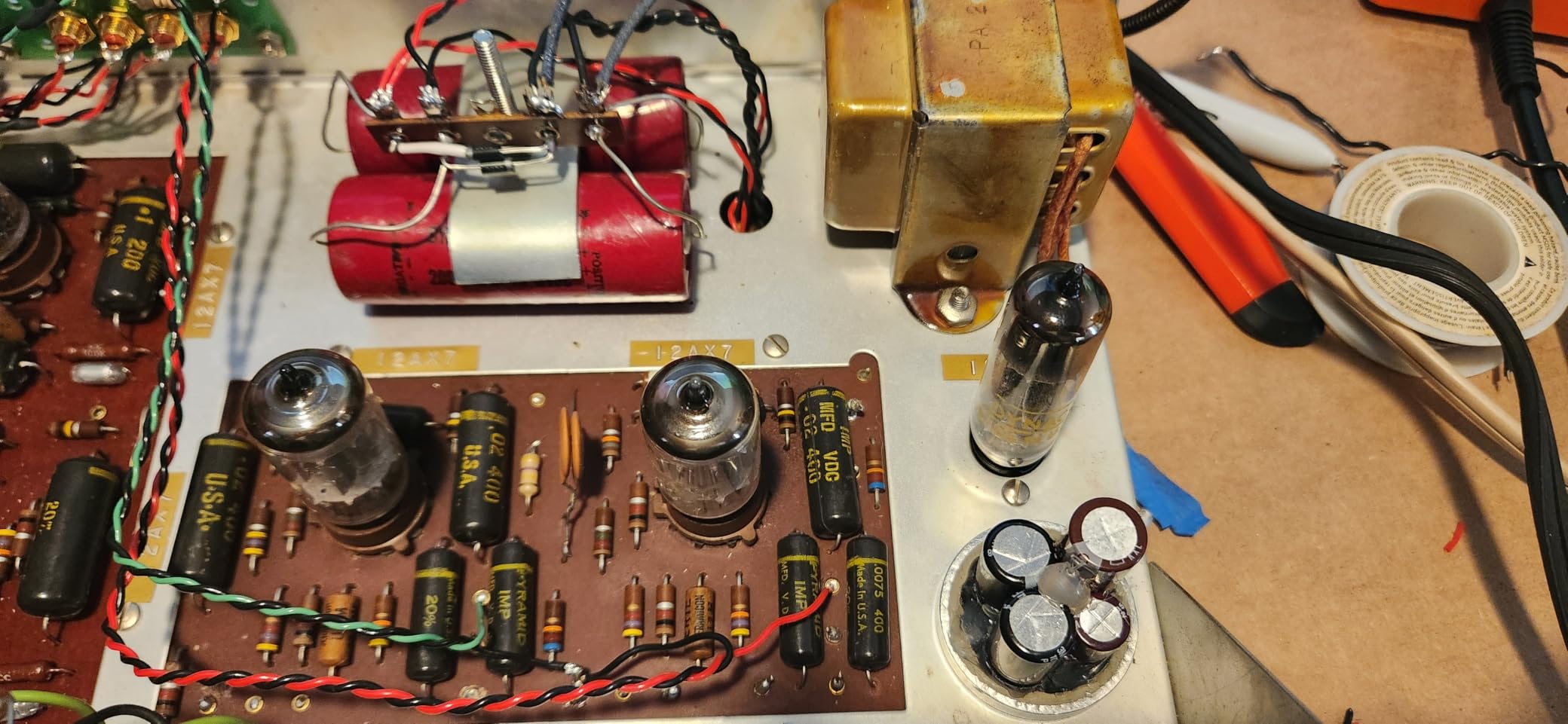
More than seven thousand reviews sit behind this kit, and that volume is part of the reason we put it second. If you want a complete bench on day one without a second shopping trip, this is the list’s clearest value pick. You get two helping hands, six extra tips, a 35g roll of lead-free solder, a solder sucker, tweezers, a sponge, and a spanner for tip changes.
The controller is PID with a 194F to 896F range, which is wide enough to cover leaded through-hole work and lead-free SMD rework on the same dial. Reviewers consistently report heat-up in under 30 seconds, which keeps you moving during a first session. The LED readout toggles between C and F, and the single knob handles both temperature and menu navigation.
The sleep mode is adjustable from zero to thirty minutes, so you can set it to match how often you actually pause. Temperature calibration support is a small line item that most kits in this range omit, and it matters if you find the readout drifting from what the tip is really doing.
The mesh protector on the back is a small touch with a practical purpose. It stops the hot iron handle resting against the housing, which is a cheap way to damage the silicone over time.
What the 194F floor actually gives you?
Starting at 194F means you can work on heat-sensitive parts and existing boards without blasting them. That wide range is unusual at this tier, and it matches the span offered by the X-Tronic 3060-PRO.
For a beginner, the practical read is that you will live between 330F and 400F for most of your first year. The extra range is headroom for when you move to lead-free work, not something you will use on day one.
Where it will frustrate you?
The helping hands that come in the box are the weakest part of the package. Reviewers note the arms can be limiting for larger assemblies, so treat them as a starter solution and upgrade later if you find yourself fighting them.
There are also reports of tip screws stripping after extended use and base clips loosening. It is also 110V only, so if you are outside North America or Japan, this is not the unit for you.
3. YIHUA 939D+ 75W Equivalent Station – Best Built-In Safety
- Built-in transformer for contact-safe voltage
- Fast heat-up and recovery
- Brushed aluminum control panel
- Solid metal alloy iron stand
- Three year warranty
- 110V only
- Internal fuse not externally accessible
- Iron cord is short
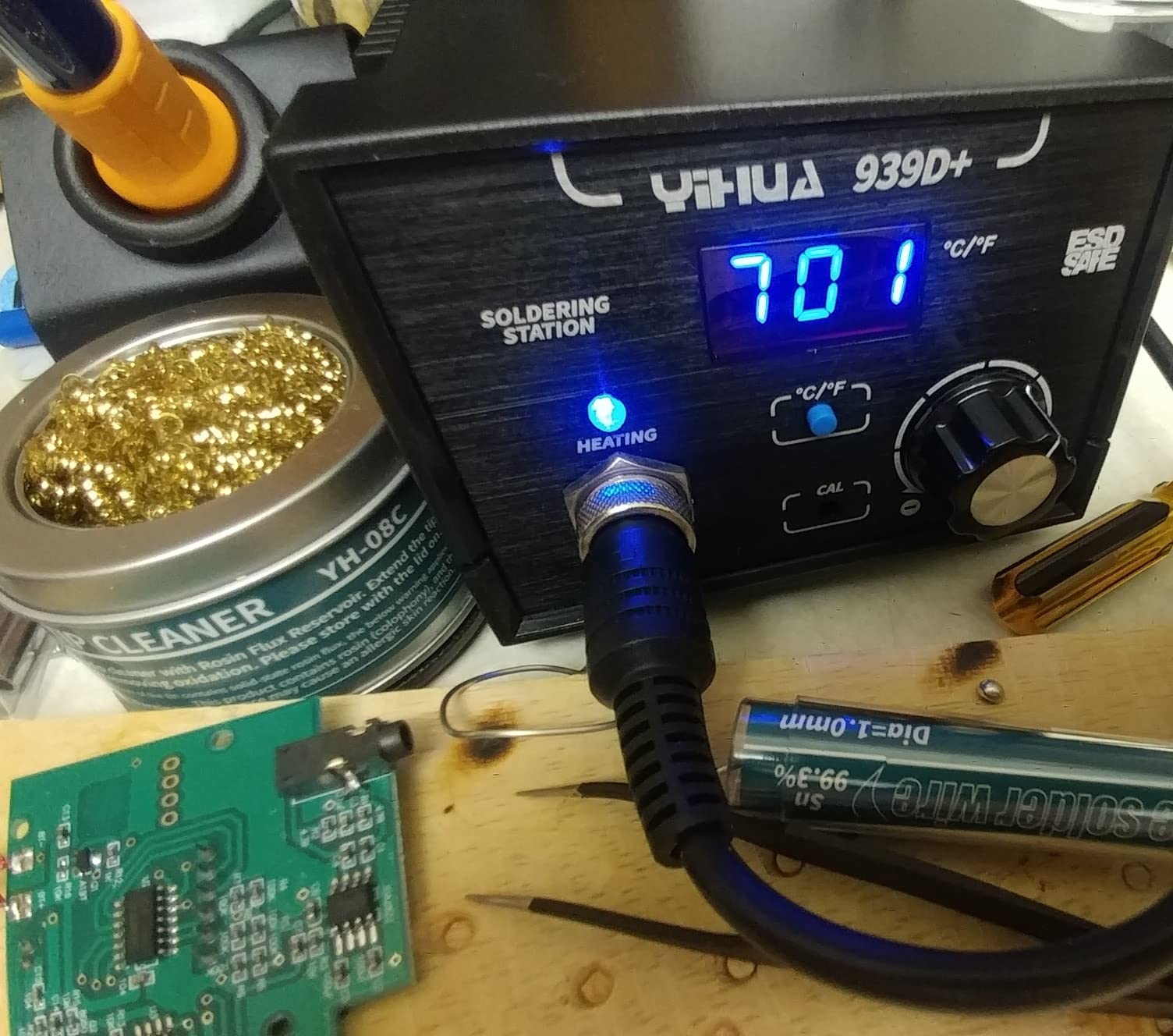
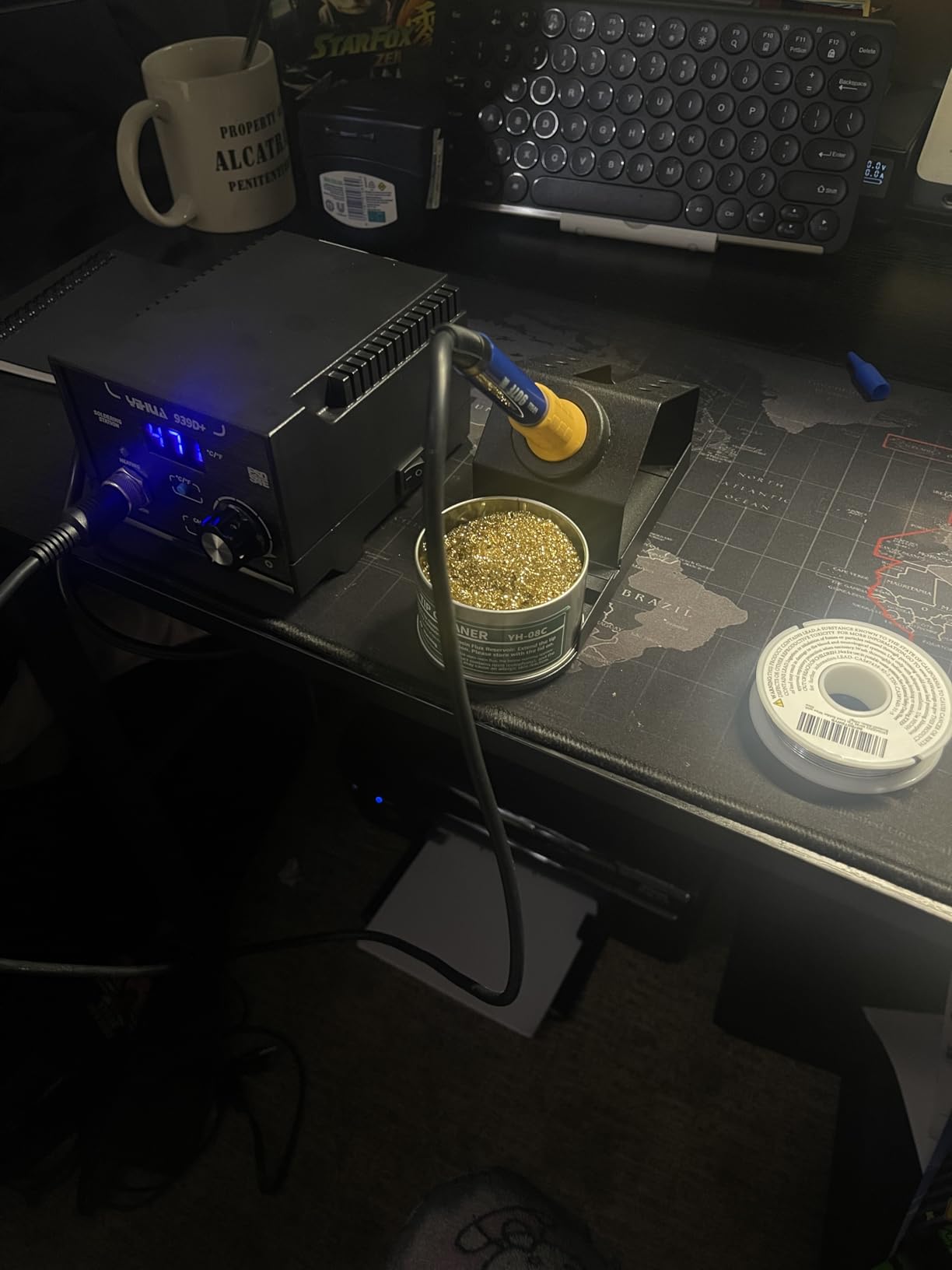
The 939D+ is the one on this list where the safety engineering is the headline feature rather than a line in the specifications. It has a built-in transformer that drops the voltage to the iron for contact safety, which is the difference between a handpiece at mains potential and one that is properly isolated. For a beginner working on live circuits, that is worth more than extra watts.
Wattage is listed as 120 watts with a 75W equivalent working output. The temperature range runs 392F to 896F with plus or minus 5C stability, and the controller applies temperature compensation in 20 millisecond intervals. Automatic handle detection is the detail we like most: the station notices when the iron goes back in the stand and manages the setpoint accordingly.
The build is a brushed aluminum control panel with a solid metal alloy iron stand, and that is not a cosmetic upgrade on this list. A metal stand does not soften or melt the way plastic holders can, and it keeps the tip where you left it when you turn around.
Parts availability comes up repeatedly in the reviews, which matters more than people expect. When something eventually fails, you want a replacement iron or stand you can source, not a discontinued model number.
Why the isolation transformer is the deciding spec?
A transformer between the mains input and the iron means the handpiece sits at a low, isolated voltage. For a beginner who will inevitably touch an iron tip while probing a live board, that removes a failure mode that cheaper ceramic-element irons share.
The 939D+ is also described as ESD safe, so it protects static-sensitive parts as well as you. If you are building with Arduino boards or Raspberry Pi accessories, both of those concerns point the same direction.
Where it will frustrate you?
The 392F floor is higher than some kits on this list, which means less headroom for very delicate heat-sensitive work. If you plan to rework small SMD parts on older boards, check that range against what your solder actually needs.
Reviewers also flag the internal fuse not being externally accessible, the base lacking rubber feet, and the iron cord being on the short side. The base sliding when you tug the cord is the one that annoys people most.
4. TOAUTO DS90 90W Dual Display Station – Best for Quick Setups
- Reaches 590F in 5 seconds according to the maker
- Dual red and blue temperature displays
- Patented anti-static grounding wire
- PID precision control with temperature lock
- Complete kit with five tips and consumables
- Lightweight plastic casing
- Included solder holder is barely adequate
- Power cord could be longer
Heat speed is the pitch here. TOAUTO specifies a 90 watt ceramic heating core and claims it reaches 590F in five seconds. Whether or not you hit that exactly on a cold start, the ceramic element does deliver fast recovery, which is the behaviour that matters when you are moving through a row of through-hole joints.
The dual display is unusual and genuinely handy. Setpoint in red on one row, actual temperature in blue on the other, so you can watch the tip converge instead of guessing. The dual-color arrangement also makes it obvious at a glance when the two readings have not settled yet.
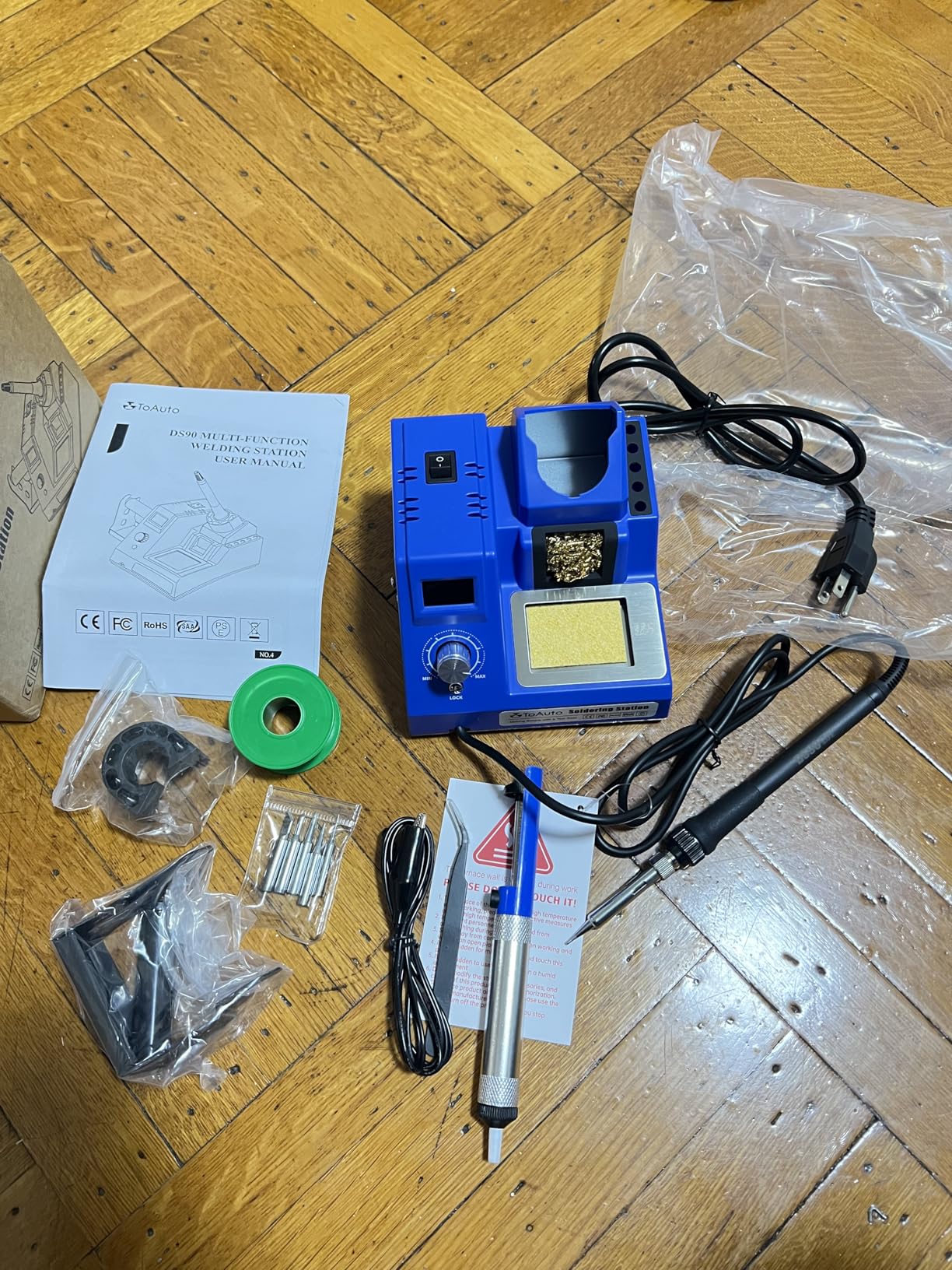
The temperature range of 302F to 842F is wide enough for both leaded and lead-free work, with plus or minus 2C stability listed. Auto standby kicks in at ten minutes and sleep at twenty, and the temperature lock mode stops accidental knob turns from wrecking a board mid-solder.
What arrives in the box is generous: a grounding wire, soldering wire, tweezers, five tips, a solder sucker, a brass cleaner, a sponge, a bracket, and a manual. It carries ESD, CE, FCC, and RoHS certification with a one year warranty.
How the grounding wire changes your workflow?
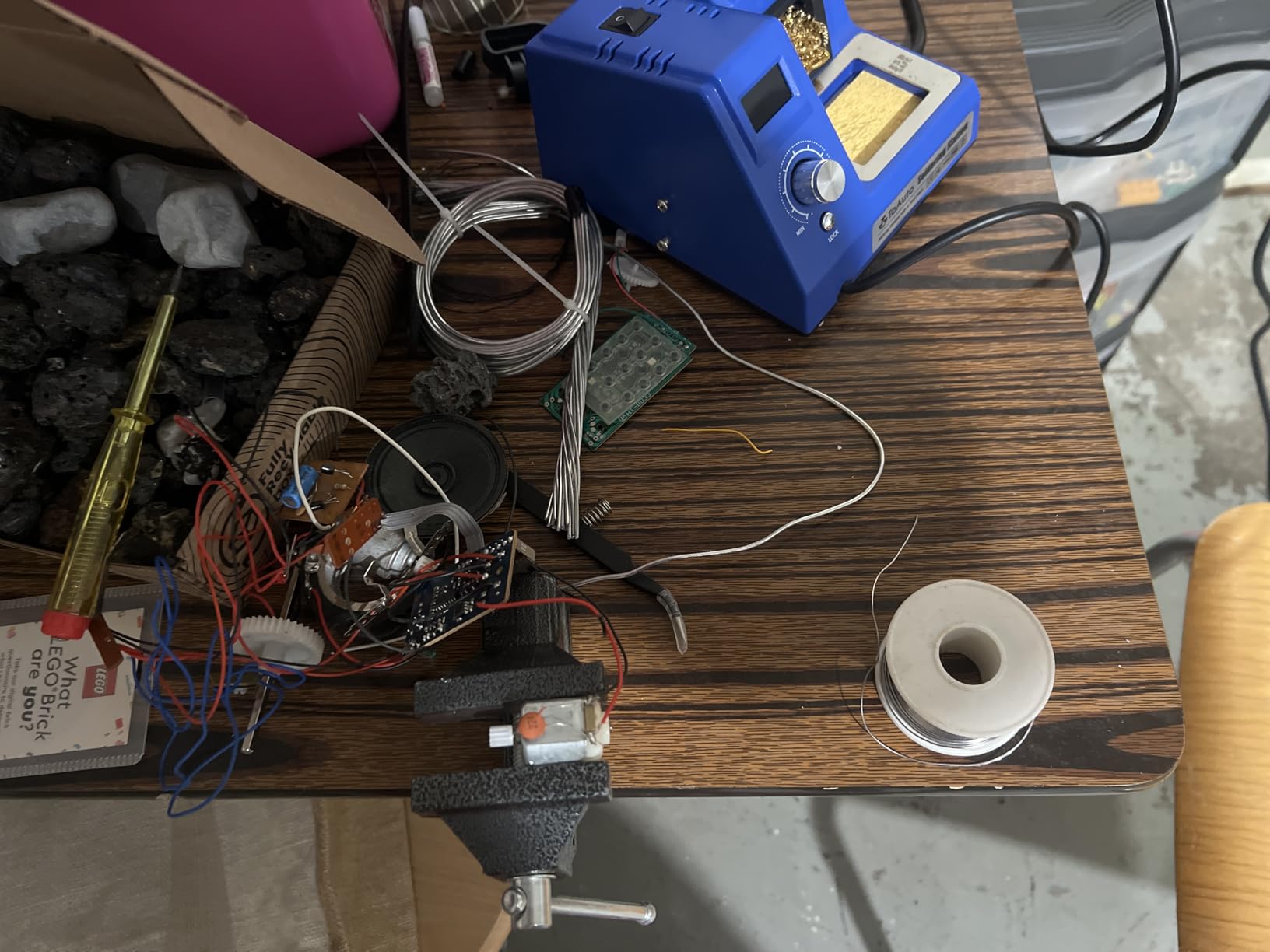
The patented grounding wire is the feature that sets this apart from a plain budget station. Connect it and the tip sits at the same potential as your bench, so any stray charge drains instead of jumping into a MOSFET gate or an IC. For someone about to do their first SMD work, that is cheap insurance.
Because the ground reference is present, the station also behaves better around unpowered but charged boards. It is not a substitute for an ESD mat at the professional tier, but it is a meaningful step above nothing.
Where it will frustrate you?
The casing is lightweight plastic, and reviewers are honest that it feels less premium in the hand than the brushed aluminum of the 939D+. It is a unit that will not be mistaken for a professional tool.
The included solder wire holder is barely adequate, and the power cord is short. Both are things a two minute fix solves if you already have a bench, but they are gaps on day one.
5. X-Tronic 3020-XTS 75W Station Kit – Best Support and Warranty
- Three year warranty with lifetime US based support
- 40 inch pliable cord with no memory
- Integrated water soft and brass sponge holder
- Heat-up in under 30 seconds
- Two helping hands and silicone mat included
- Iron is wired directly to the base and not separately replaceable
- Base is lightweight and may slide
- Temperature knob can be sensitive
X-Tronic is a US company based in Lincoln, Nebraska, and it shows in the support story. Its units carry a three year warranty with lifetime support from the company itself. If something goes wrong, you are not filing a ticket with an anonymous marketplace listing, which is a genuine difference when you are new at this.
The 75 watt station uses PID temperature compensation across a 392F to 896F range with plus or minus 2C stability, and reviewers report heat-up in under 30 seconds. The LCD readout has a physical C and F toggle switch rather than a menu dive, which is exactly the kind of unthinking convenience you want when your hands are busy.
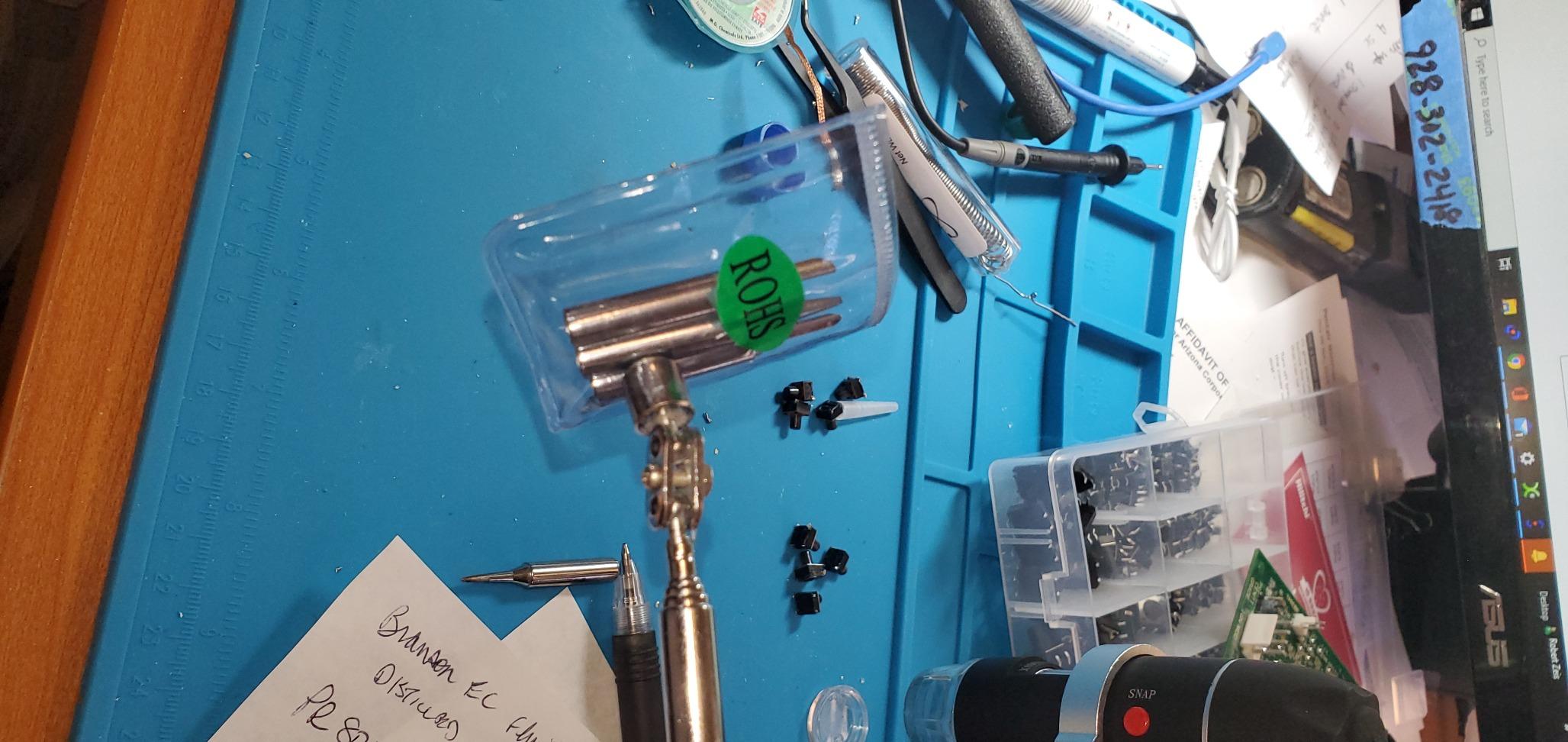
The cord is the sleeper feature. A 40 inch pliable silicone iron cord with no memory, meaning it stays where you drop it instead of springing back into a twist. Long ownership reports specifically praise this, and it is a daily-use annoyance that most people only notice once they switch to a station that has it.
The box includes two helping hands, a silicone tool mat, five extra tips, a side mount solder roll holder, a 50g lead-free solder roll, a spring iron holder, a brass sponge with flux, and a wet sponge.
Why a three year warranty matters for a first station?
Beginners solder a lot of tips. Burnt tips are normal on the first ten boards, and a station with easy tip sourcing and real support turns a frustration into a five minute fix. X-Tronic is the pick on this list if support matters to you more than headline wattage.
The brass sponge with cleaning flux is included rather than sold separately. Brass wool strips oxidation off a tip without the thermal shock a wet sponge causes, which means less tip wear over a year of practice.
Where it will frustrate you?
The iron is wired directly into the base, so if the handpiece fails you are not swapping a cheap cable, you are dealing with a bigger repair. That is the trade for the light, flexible cord.
The base itself is light enough to slide when you pull the cord, and the temperature knob is described as sensitive. Owners also report that the heating element may need replacing under genuinely heavy daily use, which is a normal consumable but not a free one.
6. WEP 927-IV 110W Station with Magnifier – Best for a Small Desk
- Three preset channels save dial time every session
- Integrated magnifier with LED lighting
- Magnifier helping hands and tip storage built into the body
- Lead free solder and desoldering pump included
- Compact size feels cramped for larger assemblies
- 110V only
- Temperature stability is not specified
This is the station for a bench that is also a desk. At 3.94 by 5.91 by 1.89 inches, it sits low on the bench among the units here, and it folds the magnifier, the helping hands, the tip storage, and the solder dispenser into the same body rather than spreading them across the bench.
The three preset temperature channels are the smart part. Set one for leaded through-hole, one for lead-free, and one for tinning wires, and you stop re-dialing every time you switch jobs. With a dual numerical display showing both setpoint and actual temperature, you get the same convergence readout the TOAUTO offers without the wider body.
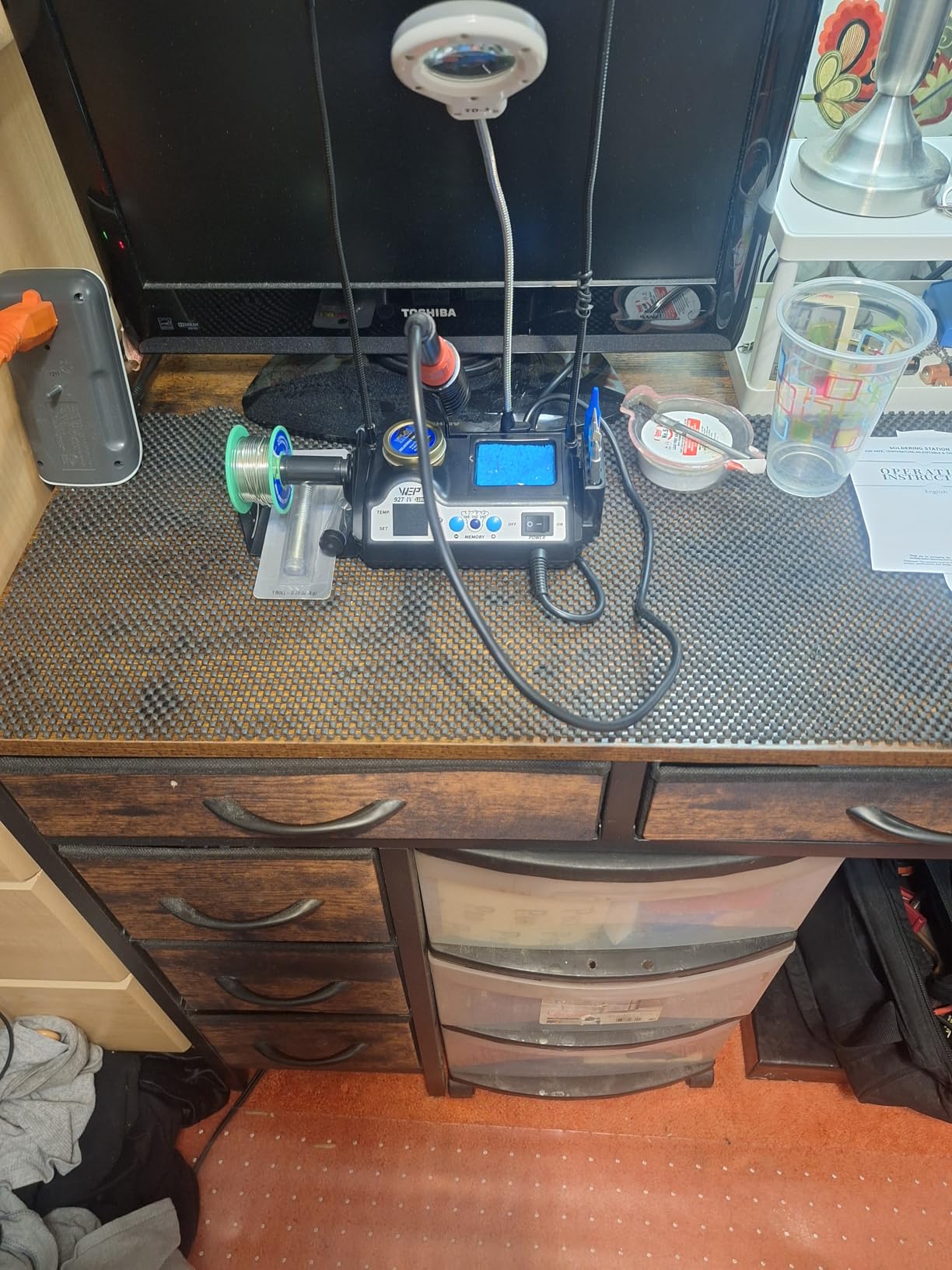
Sleep mode runs on a timer you can set anywhere from zero to ninety-nine minutes, which is unusually granular. The 110 watt heating element is one of the higher figures here, and in a unit this small the recovery is what keeps it from feeling like a lightweight iron.
The integrated LED magnifier is the feature reviewers mention most, and it is genuinely useful when you are trying to see a solder fillet on a small through-hole pad. Tips are WEP number 1400 series, and the box includes the station, iron, solder wire, tips, desoldering pump, tweezers, brass wool with rosin flux, a sponge, helping hands, magnifier lights, and a storage block.
When a built-in magnifier actually pays off?
Magnification earns its place on fine through-hole work and on inspecting a joint after you pull the iron away. Being able to lean in without rearranging a lamp and a separate magnifier is the difference between checking your work and guessing at it.
Because the lighting is built in and angled at the work area, you also solve the shadow problem that plagues a desk lamp positioned behind your head. For a beginner learning to judge a joint by sight, that is a real gain.
Where it will frustrate you?
Compact means cramped. Reviewers note the size can feel tight for larger assemblies, and there is no room to spread out a kit spread or a partially disassembled device.
Temperature stability is not published for this unit, which makes it harder to compare directly against the plus or minus 2C and plus or minus 4F figures elsewhere on this list. It is also 110V only, like most of the stations here.
7. X-Tronic 3060-PRO 75W Station Kit – Best Complete Workbench Set
- Two displays showing setpoint and real temperature
- Three preset memory functions
- Digital temperature calibration
- Four detachable helping hands and a mini magnifier
- Sixteen piece accessory kit with three year warranty
- Sixteen accessories need bench space you may not have
- Accessory set is heavier than a first-timer needs
- Base may be lightweight
The 3060-PRO is the 3020-XTS with more of everything, and for a beginner who wants the workbench fully sorted on the first day, it packs one of the most complete accessory sets we found. The wattage breakdown is interesting: 60W in the iron and 15W on the control board, which is why they quote 75W as a headline number.
Dual control panels is the feature that separates it. One panel holds your setpoint, the other shows the live tip temperature, and you watch the gap close as the element heats. The 194F to 896F range with plus or minus 2C stability is the widest span among the X-Tronic models and matches the YIHUA 926 III.
Three preset memory functions, digital temperature calibration, and a sleep timer adjustable at zero, five, ten, or thirty minutes give you the control set that most stations skip. Calibration is worth calling out: it lets you correct for offset between the sensor and the real tip, which is what keeps a station honest over years.
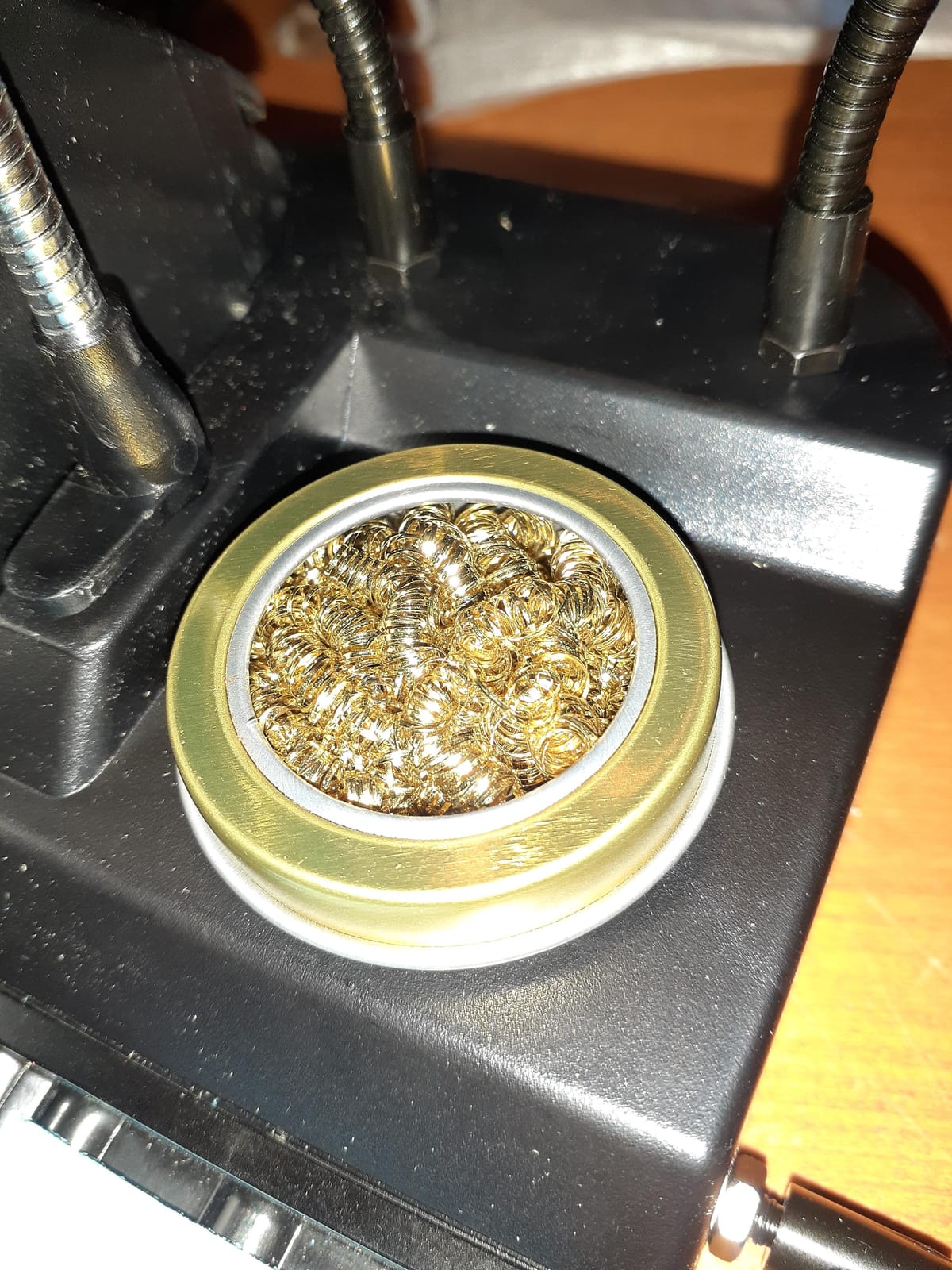
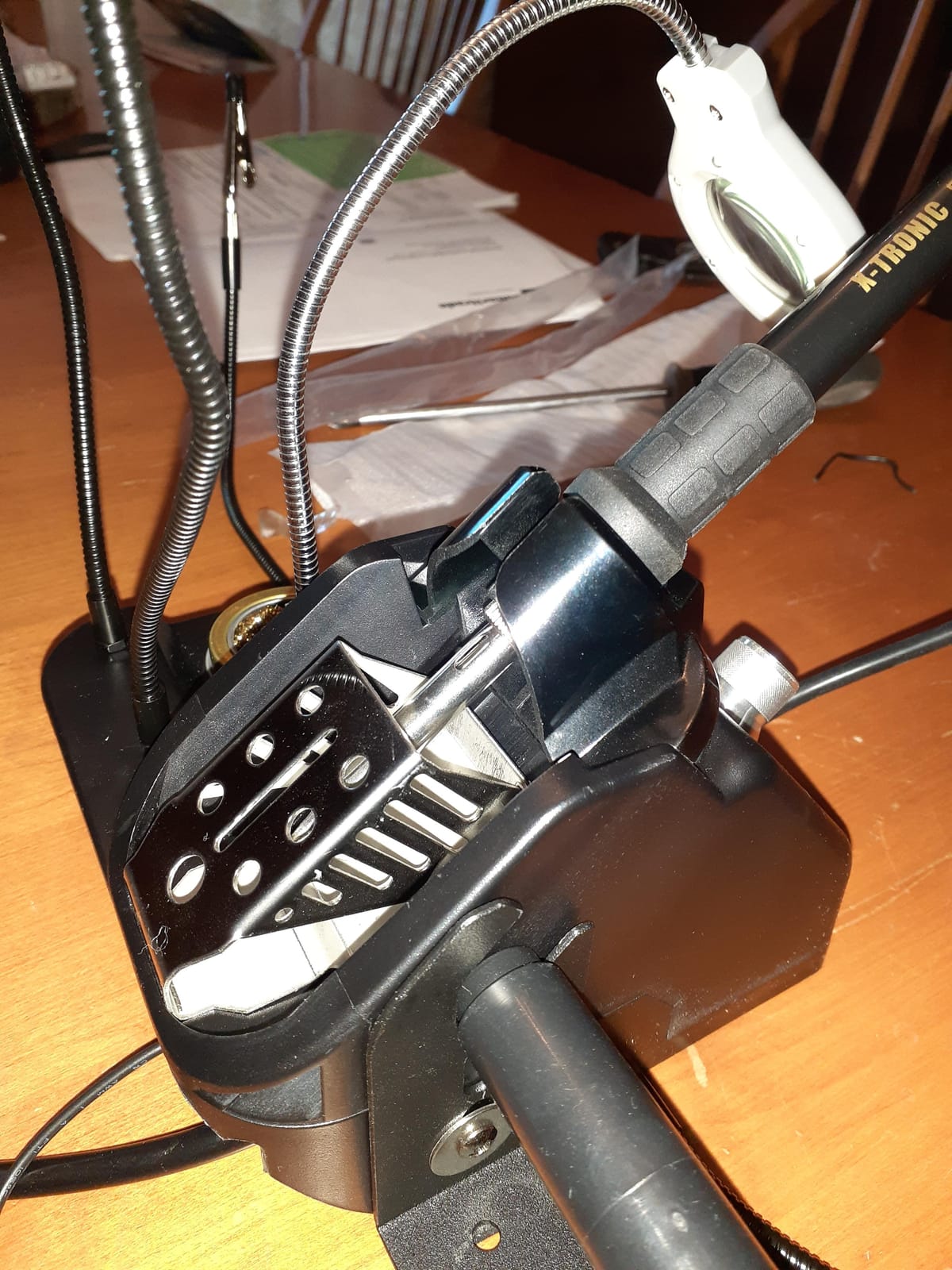
The box lists sixteen items: main power unit, iron, iron wrench, solder roll holders, five tips, solder sucker, tweezers, solder roll, an anti-static grounding wire, a brass sponge with flux, a wet sponge, a mini magnifying lamp, and four detachable helping hands. The 57 inch silicone iron cord and 55 inch power cord are both longer than on the 3020-XTS.
Why three presets change a soldering session?
Without presets you re-dial for every change of job, and every re-dial is a chance to set the wrong temperature. Three memories let you keep a low setting for fine SMD work, a mid setting for through-hole, and a high setting for tinning and larger connectors, then switch in one press.
Combined with the dual panels, this is the control layout we would want someone learning on. You can see the setpoint and the actual temperature at the same time, so a cold or overshooting tip is visible rather than something you discover through a bad joint.
Where it will frustrate you?
Sixteen accessories need somewhere to live. If your bench cannot hold a magnifier lamp, four helping hands, tip storage, and a solder dispenser without crowding your work area, this kit works against you.
It is also the top of the X-Tronic range and the base itself is described as light. You are paying for the accessory set, not for a heavier chassis.
8. Crtsweker 100W Digital Station Kit – Best No-Fuss Start
- Complete kit including solder wire and pump
- Compact 0.86 kg design
- Auto sleep timer adjustable down to zero
- On and off switch for safety
- Four vent steel pipe cooling
- Newer brand with a shorter track record
- Temperature stability is not published
- Build quality is behind the branded units
This is the pick for someone who wants a station with no brand loyalty to reason about and no accessories to hunt down. It arrives as one box with two helping hands, a solder wire dispenser, a cleaning sponge, a tip cleaner, five tips, elbow tweezers, a solder sucker, solder wire, a screwdriver, and a mini wrench.
The 100 watt element heats quickly and the range of 356F to 896F covers leaded through-hole comfortably while still reaching into lead-free territory. Temperature calibration is included, which is uncommon at this tier, and the auto sleep timer is unusually granular, running from zero to six hundred seconds.
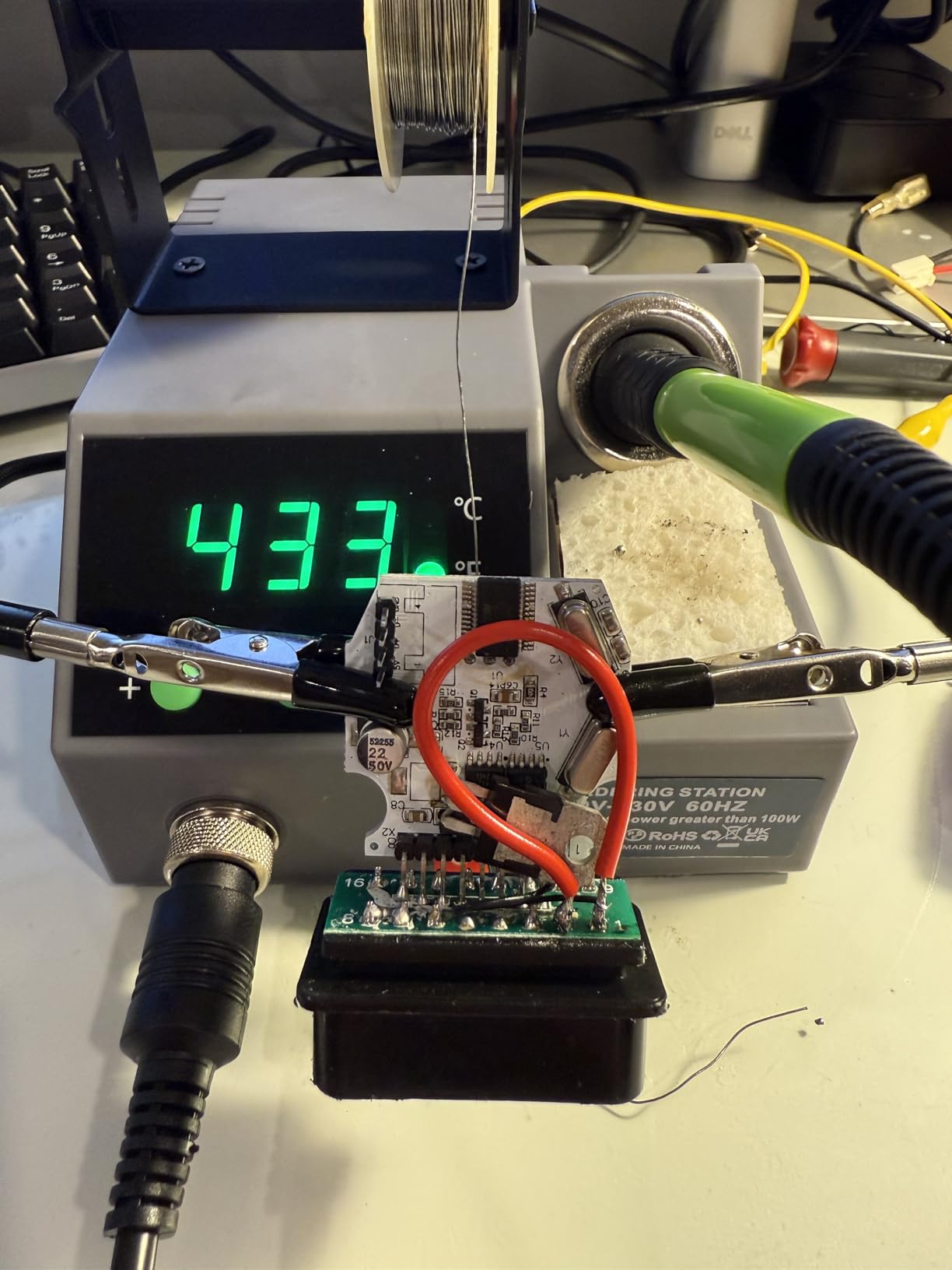
The ergonomic handle has a silicone sheath, and the heated shaft is an upgraded steel pipe with four vents for cooling. That venting matters: a shaft that sheds heat keeps the handle cooler and reduces the wicking of solder back into the handle, which is the failure that ends cheap irons early.
At 0.86 kg it sits among the lighter stations here, and an on and off switch on the body gives you a clean way to shut down without reaching behind the bench.
What a calibration function is worth on a budget unit?
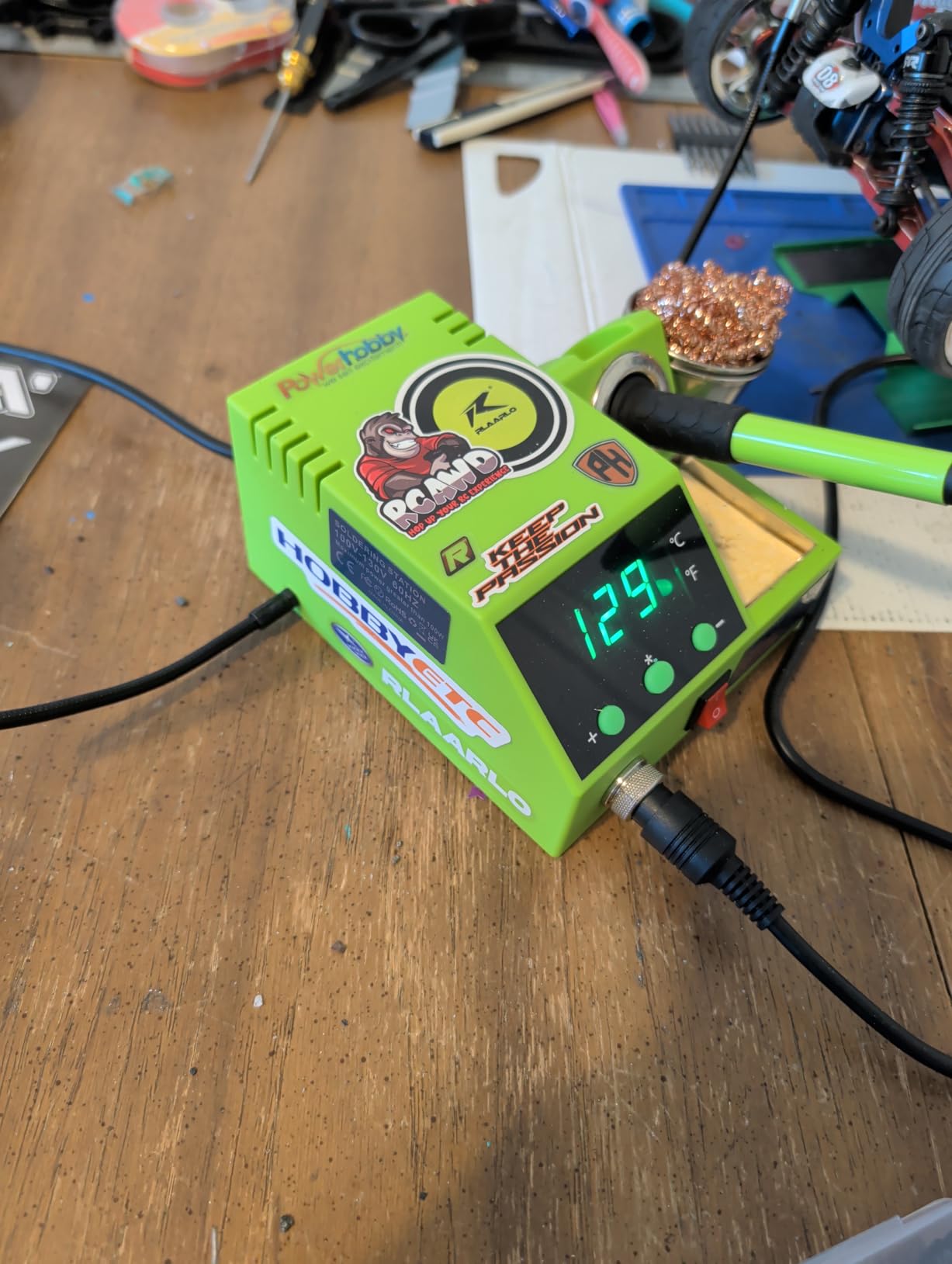
Calibration lets you nudge the readout to match what the tip is really doing. Sensors drift, and a station that reads 400F while the tip is running cooler or hotter than that will eventually teach you the wrong habits. Having the adjustment built in is a real advantage here.
Set your actual temperature once with a contact thermometer, store the offset, and forget about it. It is a fifteen minute job that pays off across every joint you make afterwards.
Where it will frustrate you?
The brand is newer with a shorter track record, and the review base here is among the smallest on this list. Long-term durability is the open question, and reviewers say so directly. Budget for a tip or two and treat the first year as an evaluation period.
Temperature stability is not published, so you cannot compare its control quality numerically against the units that publish plus or minus figures. Build quality also sits below the branded models on this list.
9. WEP 926LED V3 130W MAX Station – Budget Pick
- Everything packed into one low-cost entry package
- Integrated holder saves bench space
- PID microcontroller for temperature compensation
- Sleep mode after ten minutes idle
- Complete starter kit with tips solder and pump
- Cheap plastic construction
- Some reports of display error codes after months of use
- Tips may not fit the storage holes
The 130 watt rating is the headline, and it is worth understanding exactly what it means before you let it influence your choice. That figure is a maximum rating rather than sustained working power. The station runs PID microcontroller control, which is the part that determines whether the wattage translates into a stable tip temperature.
For an absolute beginner or occasional RC and hobby work, this does the job and almost nothing further needs buying. The range of 392F to 896F suits both leaded and lead-free, and sleep mode after ten minutes of idle extends tip life if you get called away.
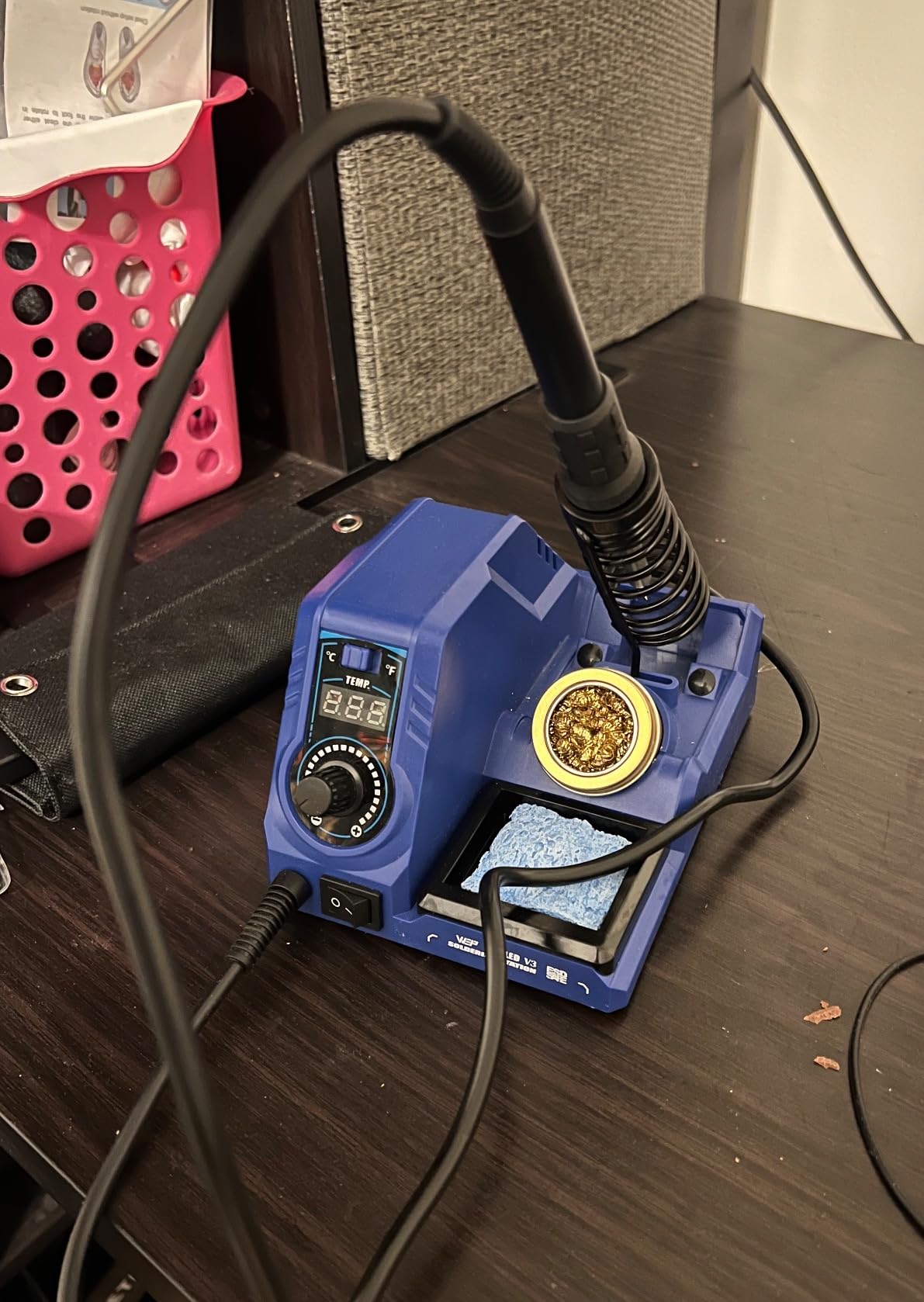
The integrated iron holder on the station body is a genuinely good space decision in a compact design. The box contains the station, five soldering tips, solder wire, a tip cleaner, tweezers, a desoldering pump, a soldering holder, and a solder wire dispenser.
Temperature is adjusted with a single control knob, and the digital readout shows the real-time tip temperature. That is enough control for a first station and no more.
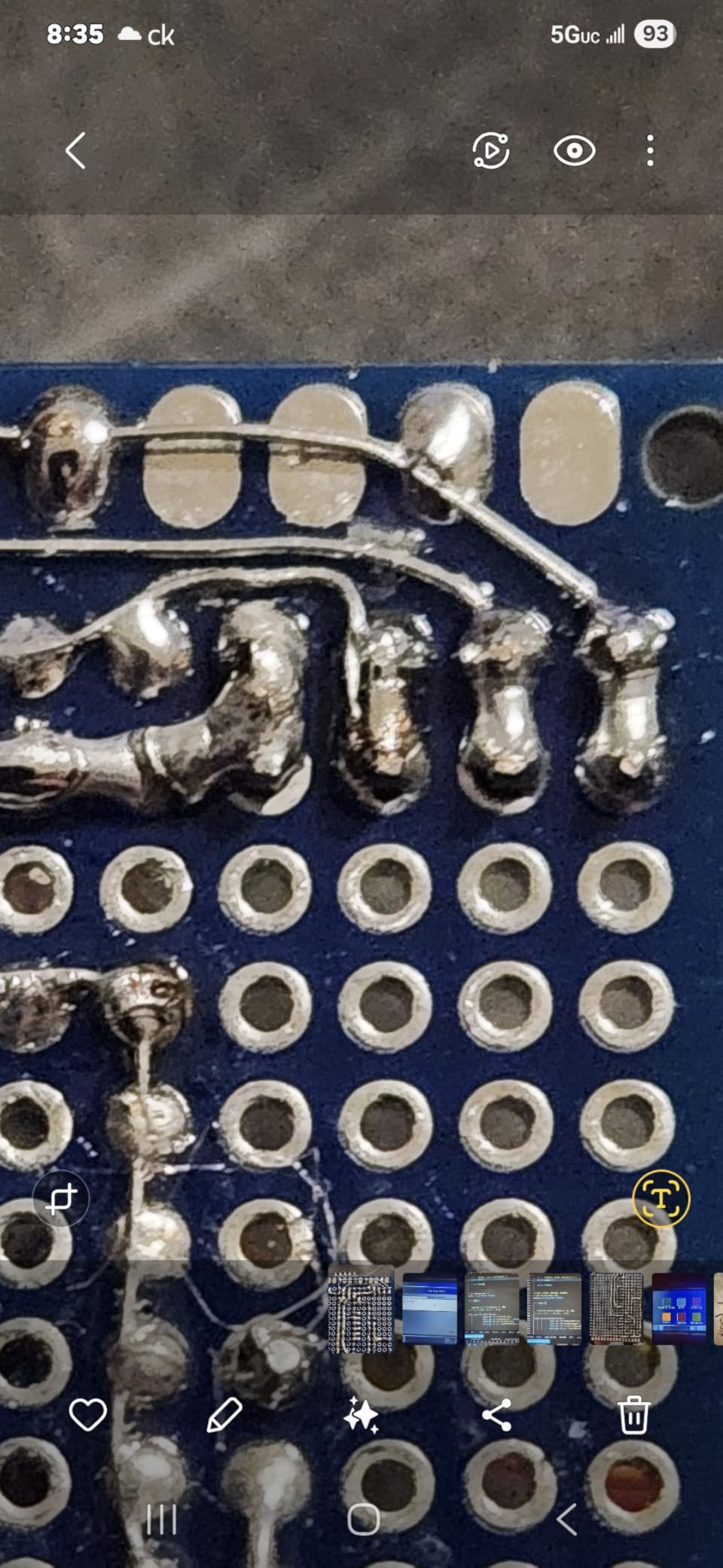
What 130 watts does and does not tell you?
High wattage shortens initial heat-up. It does not guarantee that the tip holds temperature when you sink it into a large ground plane or a big through-hole pad. Recovery, not peak power, is what determines whether your joints finish evenly.
Treat the wattage figure as a speed number and the PID controller as the quality number. That distinction is the single most useful thing to carry into any buying decision on this list.
Where it will frustrate you?
Construction is cheap plastic, and reviewers report display error codes appearing after a few months of daily use. That is the pattern that matters: this unit works, but it is not built for years of daily service.
Tips do not always fit the storage holes, and the review base here is on the thinner side. Buy it if you solder occasionally; look at the WEP 927-IV or the X-Tronic 3020-XTS if you expect to solder weekly for years.
10. WEP 882D 2-in-1 Solder and Hot Air Station – Best if You Need Hot Air Too
- Soldering and hot air in one unit
- Dual displays and separate temperature controls
- Three hot air nozzles included
- Two spools of solder wire
- Adjustable air volume on the hot air side
- Adds a learning curve for total beginners
- Compact size limits hot air airflow
- Single channel shared between both functions
Hot air rework comes up constantly in beginner forums, usually from people who do not yet need it. If you only intend to solder through-hole joints and wires, this is one function too many and the extra dial is a distraction.
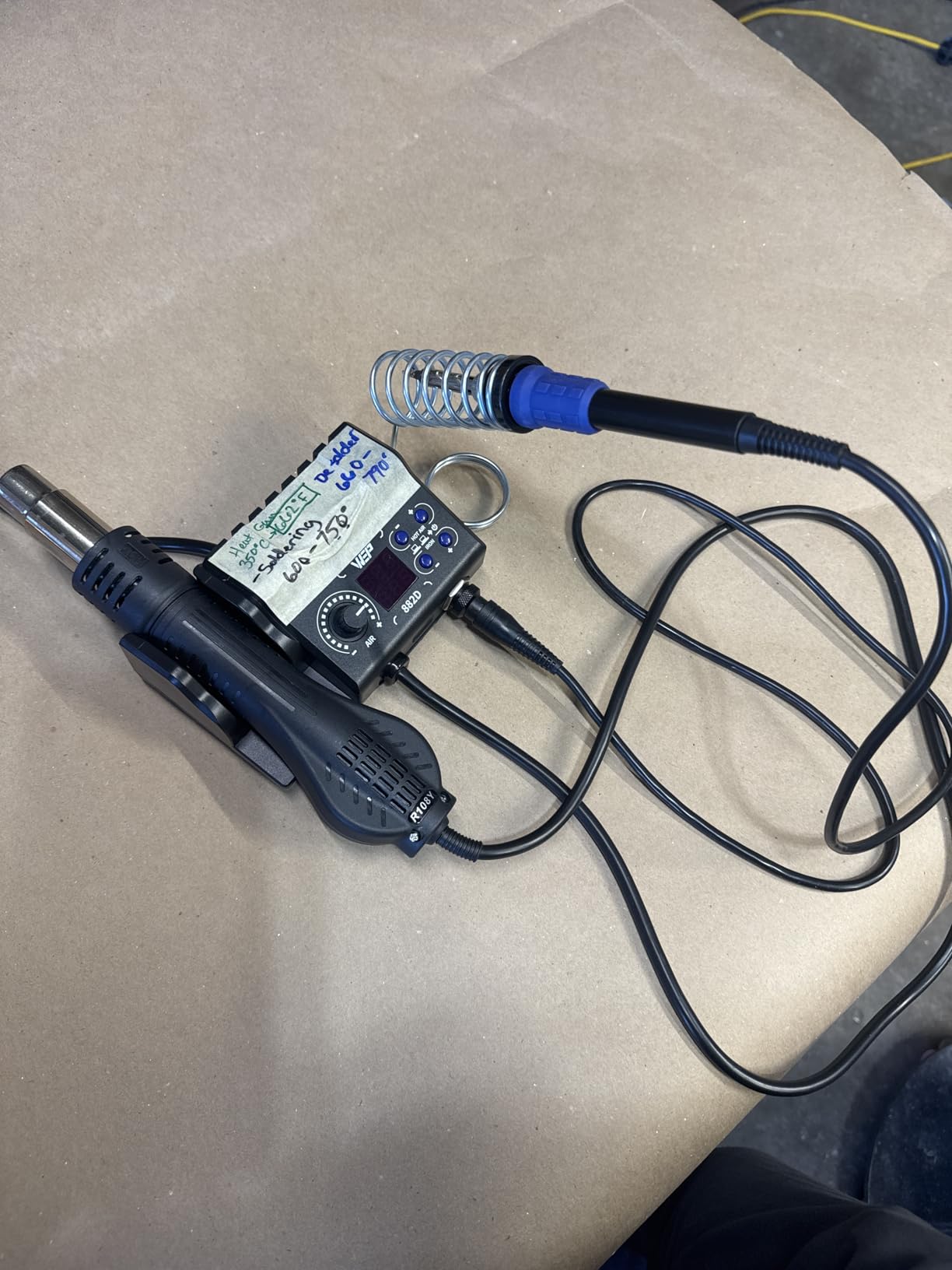
If you do plan to remove and replace surface-mount parts, or repair phone and laptop boards, the value is different. The 882D combines a soldering side running 392F to 896F with a hot air side running 212F to 896F, each with its own LED display, its own power switch, and its own temperature control. The air volume adjusts separately, which is the control that decides whether you lift a component or blow it across the board.
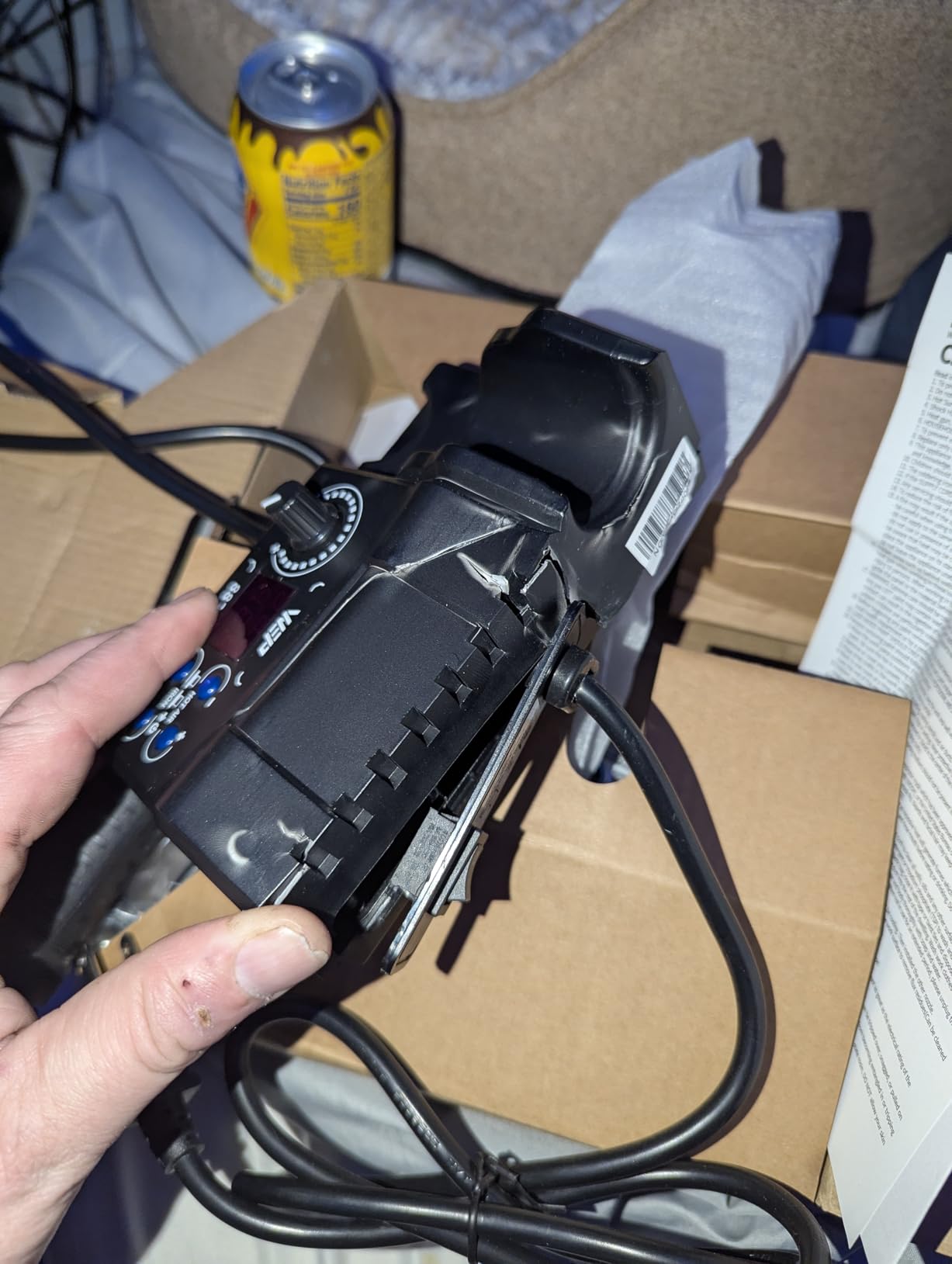
Total rated output across both functions is 750 watts. PID control applies to the soldering side and the hot air side independently, and there is a calibration function alongside sleep mode for the iron and standby for the hot air gun, plus automatic shutdown.
The box includes the station, five soldering tips, three hot air nozzles, two spools of solder wire, a brass wool tip cleaner, tweezers, and a desoldering pump.
When hot air becomes worth learning?
Hot air is the right tool for removing a multi-pin surface-mount component or shrinking heat-shrink without lifting a pad. It is the wrong tool for your first twenty joints, because it demands a steady hand and airflow control that takes practice to control.
Plan to learn the soldering side first and treat the hot air gun as a later addition. Practising removal on a scrap board with a few spare components is far kinder to your confidence than trying it on something you care about.
Where it will frustrate you?
Compactness has a cost here. At 3.54 by 5.9 by 2.28 inches, airflow is limited, and reviewers note the small body can constrain hot air performance. It is a capable unit in a tight footprint rather than a compact version of a benchtop one.
Both functions share a single channel, so you cannot hold two solder temperatures at once. And for a first-time buyer, two tools to learn is genuinely harder than one.
How to Choose a Beginner Soldering Station?
Temperature control beats everything else
A station that holds your setpoint is the single most important feature. When the tip is at the temperature you asked for, dwell time becomes predictable, and predictable dwell time is what produces a joint that flows cleanly instead of one that is either cold and balled up or hot and burned through the pad.
Look for a numeric setpoint you can dial rather than a fixed-temperature element. A thermostat with three positions will not let you tune for leaded versus lead-free, and those two need genuinely different heat.
Thermal recovery matters more than wattage
Recovery is how fast the tip returns to setpoint after a joint steals heat from it. Big ground planes, chunky connectors, and solid copper pours all pull heat out of the tip fast. An iron that cannot get the heat back means you wait, and waiting is when beginners hold the tip on a joint too long and cook the board.
This is why the 90 watt ceramic element in the TOAUTO DS90 and the PID-controlled units across this list are all sensible choices despite their differing wattages. Read the recovery claims, not the peak wattage.
Cartridge systems decide how long the station stays useful
The two platforms you will meet most are fixed-tip irons, where the element and tip are one sealed assembly, and cartridge systems, where the whole heater and tip form a single replaceable cartridge. Cartridge platforms such as the T12 and the C245 family are standard across the enthusiast world because you can swap a burnt element without a soldering iron of your own.
One warning from the forums worth repeating: cartridges that share a model number are not always interchangeable. Sellers frequently list T12-style tips that differ electrically or mechanically, and a cartridge from a different vendor can run hot, run cold, or fail to seat. Buy tips from the same source as the station until you know the platform.
ESD safety and grounding are not optional
An ESD-safe station keeps the tip at the same potential as your work, so static does not jump into a sensitive part. The TOAUTO DS90 includes a patented grounding wire, the YIHUA 939D+ pairs a built-in isolation transformer with ESD-safe design, and the X-Tronic 3060-PRO includes an anti-static grounding wire.
Readers on badcaps.net have reported consistently shorting MOSFET gates and CMOS parts within two weeks of using a non-grounded iron. That is the argument for buying a grounded station rather than a fixed-temperature iron with no grounding at all.
Check the voltage before you check anything else
Every unit on this list with a stated input is 110V, and none of them will run correctly on a 230V supply. A mismatched station can damage the heater or the control board, so check the input voltage first, then the plug type, then everything else. This is the most common buying mistake in the category and it is entirely avoidable.
Our multimeter roundup is worth a look here, because verifying the mains supply before you plug anything in takes about a minute with one.
Read what is in the box before you order
Every station here arrives with a tip, a holder, and a cord. What varies is the supporting cast: helping hands, spare tips, solder, a pump, a magnifier, a brass sponge. The YIHUA 926 III and the X-Tronic kits carry among the fuller accessory sets, while the Weller is the leanest and expects you to build out the bench yourself.
Confirm two things in the listing before you commit: that a replacement tip for your platform is easy to source, and that the spare parts are the same brand. A station is a long-term tool only if you can keep it working.
Understand what you are choosing between
A bench station, a bare plug-in iron, and a USB-C smart pencil solve different problems. A station gives you regulated heat and a safe resting place, which is what you want at a desk. A bare iron is cheaper but has no holder and often no thermal control. A smart pencil such as a Pinecil or TS100 runs low voltage and needs a compatible power supply, so it is not automatically the portable answer people assume.
Our broader electronics soldering guide covers the format question in more depth, and it is worth reading before you decide.
Set your upgrade trigger in advance
The forum consensus is consistent: beginners either overbuy a professional station they will never use, or underbuy a fixed-temperature iron and blame themselves for bad joints. Both failure modes are avoidable with a simple rule.
Stay on a mid-tier station until you hit one of three triggers. Move up when you solder more than a few hours a week. Move up when you start doing surface-mount rework. Move up when your tip cannot recover between joints. Until one of those happens, the money is better spent on good tips, brass wool, and a proper helping hand.
Your First Five Solder Joints
Do not start on a board you care about. Take a scrap piece of perfboard, some spare header pins, and a length of hookup wire, and work through these in order.
Tin a tip first.Set the station to about 350F for leaded solder, touch the fresh tip to fresh rosin core solder, and leave a bead of shiny metal on the tip. This coats the tip and tells you immediately whether your temperature control is working.
Tin the wire ends.Strip three wires, twist each strand tight, and run solder down into the strands until they wick through. Tin looks like a slightly translucent cone, not a blob. This is the easiest joint you will ever make.
Make a straight through-hole joint.Heat the pad and the leg together for about two seconds, then feed solder into the joint away from the tip. Pull the solder first, then the iron. A good joint looks shiny and slightly concave. A ball sitting on top is a cold joint.
Join two tinned wires.Bring both tinned ends together, heat them, and feed a small amount of fresh solder into the joint. Keep the heat moving and pull the iron away along the wire.
Build one row on a perfboard.Three or four joints in a row with the same technique. If the first four look consistent, your temperature control and technique are working.
If you are using lead-free solder, move the setpoint up roughly 30 to 50F higher than the leaded figures above, which is why stations with a higher ceiling, like the ones rated to 896F, are worth having before you need them. For lead-free, dwell time also increases, and you should hold the iron on the joint longer while keeping the far end of the tip on the pad.
Safety and the Essentials You Actually Need
Wear safety glasses. Not because molten solder will throw far, but because solder spits, flux smokes, and a stray strand of wire springing off a bench is genuinely common. It is the cheapest protection available and the only item on this list we would never skip.
Ventilate properly. Soldering fumes are the main long-term health risk and they are not the sweet smell of flux, which is vaporized rosin activator. A small fume extractor positioned a few inches from the work area matters more than opening a window, and it is the accessory most beginners skip.
Buy brass wool rather than relying on a wet sponge alone. A wet sponge gives a sudden thermal shock that shortens tip life, and it pushes molten solder residue down the shaft where it can wick into the handle. Brass wool strips oxidation gently and leaves the tip plated. If your kit came with a sponge, use it for wiping, and use brass wool for cleaning.
The rest of the essentials are short: rosin core solder in a diameter you can actually see, a desoldering pump for mistakes, copper solder wick for removing joints, and a flux pen for joints that will not flow. A decent helping hand is worth more than any of them, and we have reviewed the best options in our helping hands guide.
If you also work on jewellery-scale assemblies, our soldering kit roundup covers the finer tip shapes that suit small joints.
One last habit: work on a heat-resistant surface, and never leave a hot iron face down. Sleep and standby modes help, but they are a backup, not a replacement for putting the iron in its holder.
Frequently Asked Questions
What is a good soldering station for electronics?
A good soldering station for electronics has an adjustable digital setpoint, a closed-loop temperature controller, a metal iron holder, a replaceable tip platform, and an ESD-safe or grounded handpiece. Those five things separate a station you can learn on from a fixed-temperature plug-in iron. Among the ten we compared in 2026, the Weller WE1010NA is the strongest all-round pick, holding temperature within plus or minus 4F with an LCD setpoint and password-protected settings.
What is the best basic soldering kit for beginners?
The best basic kit includes a temperature-controlled station, at least two tips, a holder, solder, a desoldering pump, and a tip cleaner. The YIHUA 926 III packs all of that into one box: two helping hands, six extra tips, a 35g roll of lead-free solder, a solder sucker, tweezers, a sponge, and a spanner, all around a 60W PID station with a 194F to 896F range. Kits sold purely on accessory count are less useful than kits with a well-regulated controller.
Is a soldering station better than a soldering iron for beginners?
Yes, for anyone soldering more than a few times a month. A station regulates the tip to a setpoint you choose, gives the heat back quickly after each joint absorbs it, and includes a holder so a hot iron is never face down on a bench. A bare plug-in iron runs at whatever temperature the element settles at, which is why beginners on cheap irons often overheat boards while waiting for a sluggish tip to catch up.
What wattage soldering iron do I need for electronics?
Between 60 and 90 watts covers almost all electronics bench work, and roughly 200F to 480F is the temperature span you want. Higher wattage ratings shorten heat-up but do not guarantee better joints, because thermal recovery matters more than peak power. Look for a published temperature stability figure, such as plus or minus 2C or plus or minus 4F, and treat the wattage number as a speed specification rather than a quality one.
Why am I so bad at soldering?
Almost always it is temperature or technique rather than talent. The common causes are a tip that is too cool for the joint, holding the iron on the pad too long, feeding solder to the tip instead of to the joint, and moving the iron before the solder has flowed. Set the correct temperature, heat the pad and the leg together, keep the solder against the joint, and pull the iron along the lead before lifting it away.
What should you always wear when soldering?
Safety glasses, every time. Solder spits, flux residue smokes, and cut wire ends spring off the bench often enough that eye protection is cheap insurance. A fume extractor matters more for long-term health than any clothing choice, because solder vapour and rosin flux fumes are the main hazard of the hobby.
The Verdict and Your Upgrade Path
The best soldering stations for electronics beginners come down to one question: how long will you be soldering. If you are not sure, the Weller WE1010NA is the station to buy, with plus or minus 4F stability, an ESD-safe iron and cable, standby with auto setback, and password-protected settings that stop you ever cooking a board at the wrong temperature.
If you want a complete bench in one box and would rather not spend the extra, the YIHUA 926 III gives you six tips, solder, a pump, tweezers, and helping hands around a 60W PID station.
Move up from any of these when you solder for hours rather than minutes, when you start surface-mount rework, or when your tip cannot recover between joints. Do not move up before then. Better tips, brass wool, and a fume extractor will improve your soldering more than a more expensive station will.