
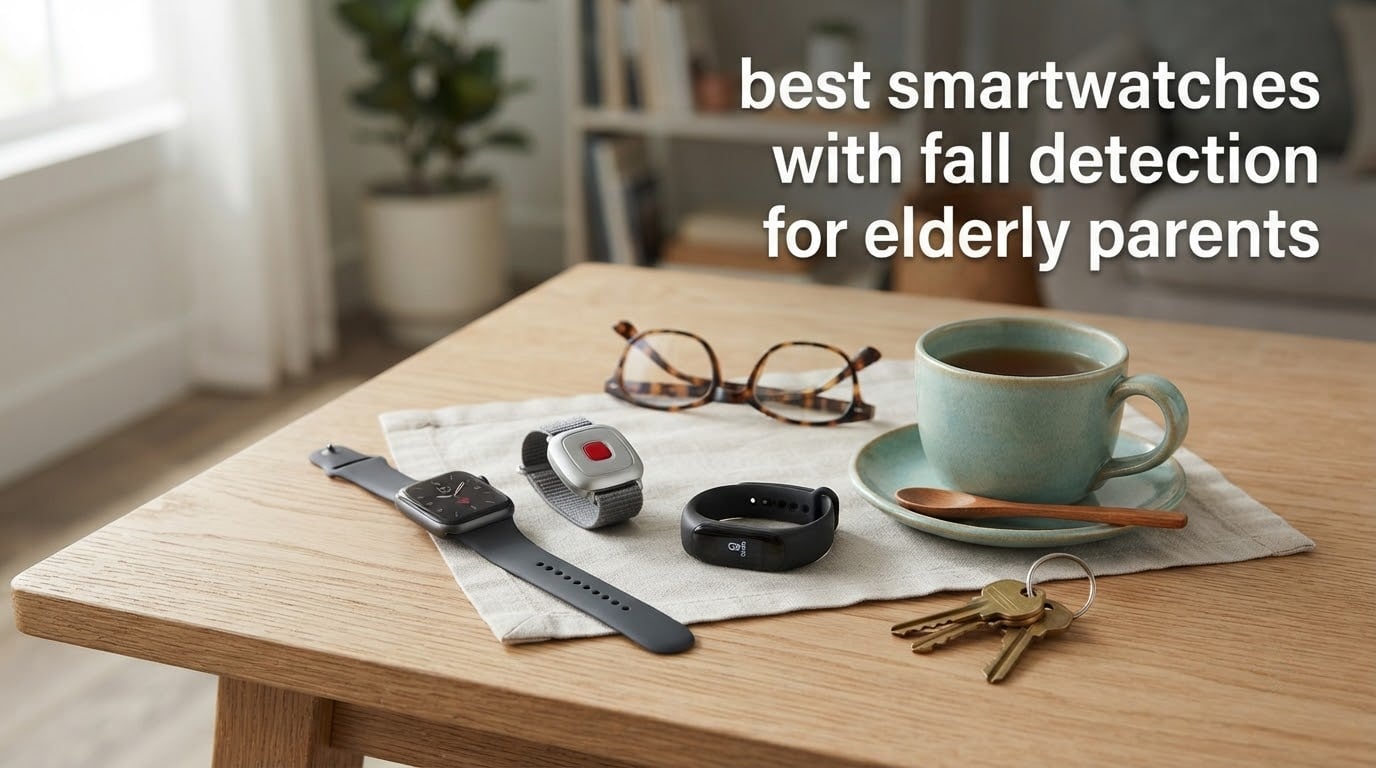
The gap between a parent falling and anyone finding out is the thing most families underestimate. One caregiver in an r/eldercare thread described the exact scenario that drives most of these purchases: their mother fell in the evening and nobody reached her until the following morning. That single evening is why fall detection exists, and why choosing well matters more than choosing fast.
We spent weeks reading owner reviews across twelve wearables that advertise automatic fall detection, then narrowed them to the ones a non-technical adult child can actually buy, set up and support from another city. Our picks cover three very different situations: a parent who already lives in your Apple or Android household, a parent who owns no smartphone at all, and a parent with dementia who may wander.
A note before we start: fall detection is a safety net, not fall prevention. Grab bars, bed rails, night lights and non-slip flooring do more to reduce injuries than any watch does, and our pick of walking shoes for elderly people or a properly fitted walker is often the cheaper half of a good safety plan. Read on for the hardware comparison.
Table of Contents
Top 3 Picks: Best Smartwatches With Fall Detection for Elderly Parents (October 2026)

Apple Watch Series 11
- Hard fall and crash detection
- Check In arrival alerts
- ECG and hypertension notices
- 24-hour battery

Samsung Galaxy Watch 7
- 2000-nit AMOLED display
- Sleep apnea detection
- Energy Score and Wellness Tips
- 40mm compact case

Apple Watch SE 3
- Hard fall and crash detection
- Irregular rhythm alerts
- Sleep apnea notifications
- Fast 15-minute charging
All 12 Watches Side by Side
Every device below sends an automatic alert with a location when the sensors recognise an impact followed by stillness. The differences that matter day to day are independent connectivity, battery endurance and whether a human being picks up the alert.
| Product | Specifications | Action |
|---|---|---|
| Apple Watch Series 11 |
|
Check Latest Price |
| Samsung Galaxy Watch 7 |
|
Check Latest Price |
| Apple Watch SE 3 |
|
Check Latest Price |
 SecuLife Medical Alert Smartband SecuLife Medical Alert Smartband |
|
Check Latest Price |
 Cellular Medical Alert Smart Watch Cellular Medical Alert Smart Watch |
|
Check Latest Price |
 Audar E2 Senior Smartwatch Audar E2 Senior Smartwatch |
|
Check Latest Price |
 Samsung Galaxy Watch 8 Samsung Galaxy Watch 8 |
|
Check Latest Price |
 Apple Watch Ultra 2 Renewed Apple Watch Ultra 2 Renewed |
|
Check Latest Price |
 Apple Watch Series 10 Apple Watch Series 10 |
|
Check Latest Price |
 Samsung Galaxy Watch 9 Samsung Galaxy Watch 9 |
|
Check Latest Price |
 Google Pixel Watch 5 Google Pixel Watch 5 |
|
Check Latest Price |
 Fitbit Sense 2 Fitbit Sense 2 |
|
Check Latest Price |
1. Apple Watch Series 11 for the Safety Suite You Actually Need
- 4.7 stars across nearly 8700 reviews with 87 percent five-star ratings
- ECG with irregular rhythm and high or low heart rate alerts
- Hypertension notifications added at this tier
- Superdurable glass reported to hold up to knocks
- 24-hour battery plus 8 hours from a 15-minute charge
- Costs more than the Apple Watch SE 3 below
- Still needs an iPhone for full function
- Stock sport bands do not breathe well
This is the one I would put on my own mother’s wrist. The safety case is simple: hard fall detection and Crash Detection connect to emergency services, Check In tells a loved one she arrived, and if she misses a call the alert escalates. That escalation is the part families overlook, and it is exactly what closes the evening-to-morning gap.
What separates this model from the SE below is the health picture rather than the safety picture. ECG, irregular rhythm notifications and hypertension notifications sit alongside the fall suite, so a parent with a heart history gets irregular rhythm screening without a second device.
![Apple Watch Series 11 [GPS 42mm] Smartwatch with Rose Gold Aluminum Case with Light Blush Sport Band - S/M. Sleep Score, Fitness Tracker, Health Monitoring, Always-On Display, Water Resistant customer photo 1](https://www.thebrucehighqualityfoundation.com/wp-content/uploads/2026/10/B0FQF9ZX7P_customer_1.jpg)
The trade-off is cost and ecosystem. It costs more than the Apple Watch SE 3 further down, and the family needs at least one iPhone for pairing. Users upgrading from an older Apple Watch note that step counting is less precise than dedicated fitness hardware, which is irrelevant for a safety purchase but relevant if you are tracking activity.
Battery life is up to 24 hours with 8 hours recovered in a 15-minute charge, which works if charging becomes a morning habit and fails if it does not. Skin temperature tracking during sleep and sleep apnea notifications add useful overnight context on the same hardware.
![Apple Watch Series 11 [GPS 42mm] Smartwatch with Rose Gold Aluminum Case with Light Blush Sport Band - S/M. Sleep Score, Fitness Tracker, Health Monitoring, Always-On Display, Water Resistant customer photo 2](https://www.thebrucehighqualityfoundation.com/wp-content/uploads/2026/10/B0FQF9ZX7P_customer_2.jpg)
Who this watch suits
A parent who already lives inside your iPhone household, or whose children all use iPhones. It is the pick when you can pair the watch remotely and hand your parent one job, which is wearing it.
It also suits a parent with a heart history who will use the ECG app occasionally. The readings are screening-level irregular rhythm notifications, not a diagnosis, and should never be presented as one.
Where it falls short
The price tier is the obvious drawback, and it is the reason we also picked the SE. If your parent will not accept any device that looks like a fitness gadget, or if nobody in the family owns an iPhone, this stops being the right answer regardless of how good the sensors are.
The other limitation is daily charging. A 24-hour battery with a 15-minute top-up is manageable, but a watch that dies at 2am protects nobody.
2. Samsung Galaxy Watch 7 40mm for Android Households
- 4.6 stars across nearly 8000 reviews with 80 percent five-star ratings
- 2000-nit display is readable in poor light
- Heart rate tracking filters out movement artefacts
- Compact 40mm case suits smaller wrists
- Sleep tracking includes moderate to severe sleep apnea detection
- About 30 hours of battery means daily charging
- Bluetooth model has no built-in GPS
- Pairs with Android devices only
If your parent or your household runs on Android, this is the equivalent of the Apple Watch pick, and at 4.6 stars across nearly 8,000 reviews it is the most proven Android wearable here. The bright AMOLED panel matters more than it sounds: fall alerts and messages need to be readable at a glance, not held close to the face.
The Galaxy AI Energy Score gives a plain-language sense of daily readiness, and Wellness Tips turn it into something a parent can act on without help. For a wrist-worn device aimed at older users, plain language is a feature, not a gimmick.
![Samsung Galaxy Watch 7 40mm Bluetooth AI Smartwatch w/Energy Score, Wellness Tips, Heart Rate Tracking, Sleep Monitor, Fitness Tracker, 2024, Cream [US Version, 1Yr Manufacturer Warranty] customer photo 1](https://www.thebrucehighqualityfoundation.com/wp-content/uploads/2026/09/B0D1YNVD88_customer_1.jpg)
Sleep tracking detects moderate to severe sleep apnoea, which is relevant because nighttime bathroom falls and poor sleep overlap. Improved heart rate tracking filters movement artefacts, so readings stay usable during a walk rather than only while sitting.
Two constraints to know before buying. This is the Bluetooth configuration, so it has no built-in GPS and needs the paired phone for location data. Battery life is about 30 hours, so it is a nightly charge.
![Samsung Galaxy Watch 7 40mm Bluetooth AI Smartwatch w/Energy Score, Wellness Tips, Heart Rate Tracking, Sleep Monitor, Fitness Tracker, 2024, Cream [US Version, 1Yr Manufacturer Warranty] customer photo 2](https://www.thebrucehighqualityfoundation.com/wp-content/uploads/2026/09/B0D1YNVD88_customer_2.jpg)
Who this watch suits
An Android household where the parent already carries a Samsung or compatible Android phone. Ecosystem matching came up repeatedly as a real purchase driver in caregiver forums, and this removes that friction.
The 40mm case is genuinely small, which helps with smaller wrists and with parents who have been wearing a slim analog watch their whole life.
Where it falls short
No standalone GPS means fall alerts depend on the phone being nearby or connected. For a parent who walks far from home without a phone, that is a meaningful gap.
Daily charging is the other friction point. If your parent forgets chargers, the Fitbit Sense 2 further down this list is the one pick with a multi-day battery.
3. Apple Watch SE 3 40mm for the Same Safety Suite at a Lower Tier
- 4.7 stars across roughly 4500 reviews with 87 percent five-star ratings
- Hard fall detection and Crash Detection notify emergency contacts automatically
- Check In confirms arrival at a destination
- Up to 8 hours of battery in a 15-minute charge
- Compact 40mm case fits smaller wrists
- 18-hour battery is the shortest Apple figure here
- Requires an iPhone for full functionality
- GPS-only configuration has no standalone cellular
Here is the honest recommendation: for most families buying the Apple Watch Series 11 is overspending, because the fall, crash and heart alert suite is essentially the same. Hard fall detection, Crash Detection and Check In all work, and the irregular rhythm and high or low heart rate alerts are present.
What you give up is ECG, hypertension notifications and the larger battery. That is a real difference if your parent has a diagnosed heart condition. If they do not, this is the smarter purchase.
![Apple Watch SE 3 [GPS 40mm] Smartwatch with Midnight Aluminum Case with Midnight Sport Band - S/M. Fitness and Sleep Trackers, Heart Rate Monitor, Always-On Display, Water Resistant customer photo 1](https://www.thebrucehighqualityfoundation.com/wp-content/uploads/2026/10/B0FQFW7M9H_customer_1.jpg)
Faster charging is the quiet win. Eight hours of use from a 15-minute top-up, at up to twice the speed of the previous SE, makes a nightly charge far less likely to be skipped. Battery life itself is 18 hours, which is the shortest in this roundup and the reason we ranked it third rather than first.
The Always-On display is easy to read at a glance, and the 40mm aluminium case weighs under an ounce, so it stays comfortable overnight. Sleep score, sleep apnoea notifications and wrist temperature tracking all work through the phone app.
![Apple Watch SE 3 [GPS 40mm] Smartwatch with Midnight Aluminum Case with Midnight Sport Band - S/M. Fitness and Sleep Trackers, Heart Rate Monitor, Always-On Display, Water Resistant customer photo 2](https://www.thebrucehighqualityfoundation.com/wp-content/uploads/2026/10/B0FQFW7M9H_customer_2.jpg)
Who this watch suits
A parent in an iPhone household who has no heart condition, and a family that wants Apple reliability without paying for ECG features they will never use. This is the configuration we would put on a wrist without hesitating.
It also suits anyone who asked for the best fall detection watch for seniors but has an existing iPhone, because the pairing setup and the caregiver apps are already familiar.
Where it falls short
Eighteen hours of battery is the shortest life in this roundup, and this configuration cannot place calls without a paired phone or a cellular model. If the parent walks out without a phone, alerts still depend on the phone being in range.
The full function set also requires an iPhone. A family split across Android and iOS should not buy this.
4. SecuLife Medical Alert Smartband for Parents Who Do Not Carry a Phone
Seculife Medical Alert Smartband for Seniors — Alerts Go Direct to Family, No Call Center | Auto Fall Detection, GPS Tracking, Heart Rate Monitor, 2-Way Calling, SOS Button, Waterproof (White)
- Family-direct alerts skip the call centre delay entirely
- Hands-free auto-answer means a senior never has to press anything
- GPS geofencing with entry and exit notifications suits dementia risk
- Large simple interface with an easy caregiver app
- Full feature set depends on a recurring subscription
- About one day of battery is short for an overnight safety device
- Square screen is small for reading
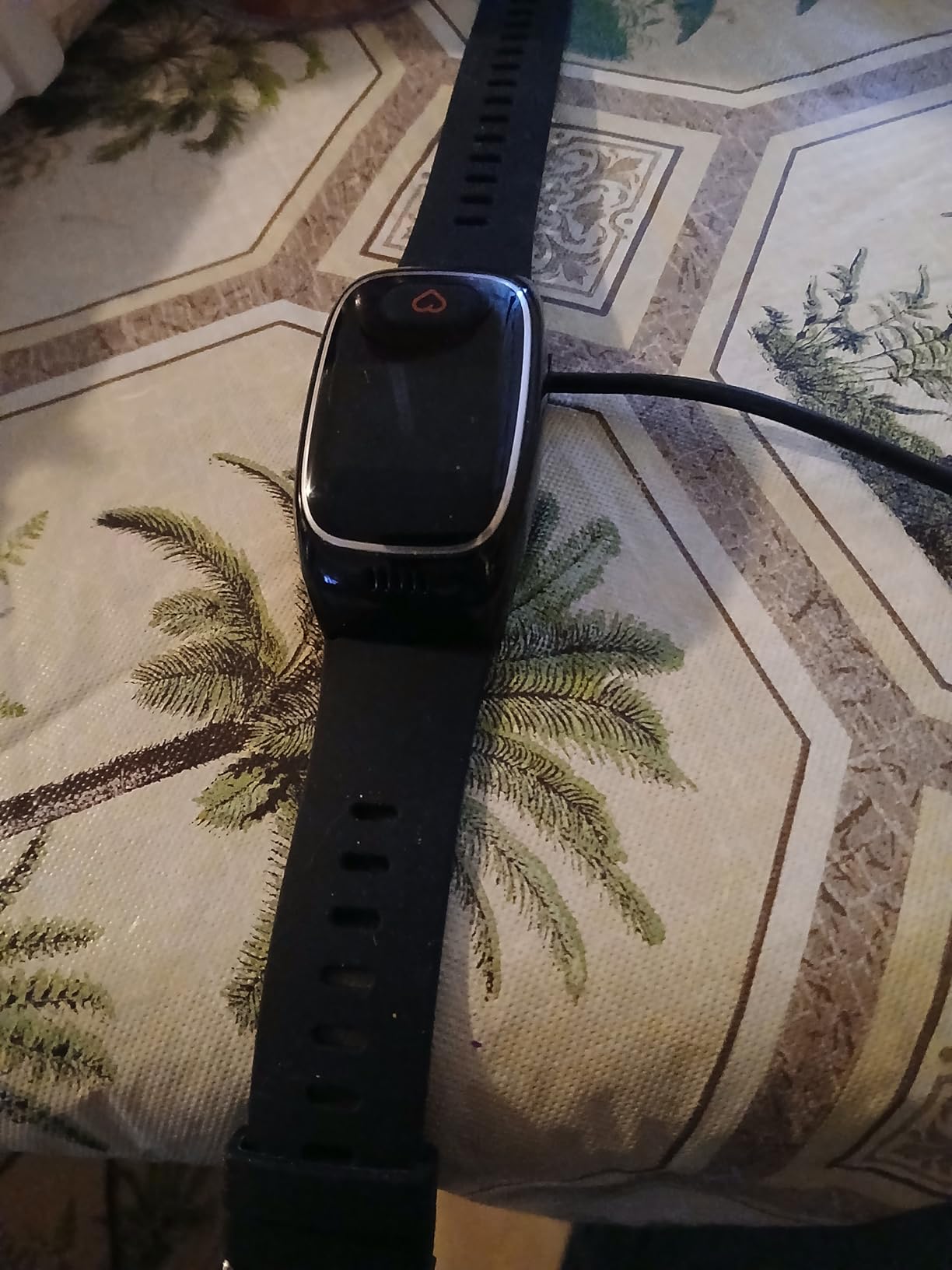
This is the pick I would buy for a parent with no smartphone. It runs on its own 4G LTE cellular connection, needs no phone, no app install on the parent’s device and no home Wi-Fi, which removes the single biggest source of setup failure in this whole roundup.
The design decision that separates it is hands-free auto-answer. Approved contacts’ calls are answered automatically, so a hard-of-hearing parent can respond without finding a control. That matters because in one r/eldercare account a user rejected an otherwise suitable device specifically because the monitoring centre tried to talk to a very hard-of-hearing mother and could not be heard.
Alerts go straight to pre-selected family contacts with no call centre involved, which removes a human handoff from the chain. A 3-second press of the heart button does the same thing manually. For a hard-of-hearing parent, a text or SMS alert on a family phone is worth more than a voice call to the wrong person.
GPS geofencing with entry and exit notifications is the strongest wandering support in this roundup, and one year of location history is stored. Two-way calling runs through a built-in speaker and microphone, and the Secupro caregiver app is described by owners as easy to set up.
Who this watch suits
A parent who will never carry a smartphone, especially if they are hard of hearing. The combination of direct-to-family alerts, auto-answer and SMS backup is the most inclusive design here.
It also suits a parent with dementia who needs geofencing. Entry and exit notifications tell the family when a boundary is crossed, which pendant systems rarely do well.
Where it falls short
The recurring monthly subscription is required for the full feature set, and that ongoing cost is the part families are most surprised by. Ask for the total, not the promotional figure, before you commit.
About one day of battery means an overnight gap if it is not charged, and the square screen is small. Plan the charge into the same routine as a phone.
5. Cellular Medical Alert Smart Watch for Families Who Want a Human Answering
- 24/7 live monitoring with a real person answering
- Two-way voice without needing a nearby smartphone
- Automatic fall detection shares GPS location with responders
- Lowest device price of any dedicated medical alert device here
- Heart rate
- blood oxygen and blood pressure monitoring
- Requires an active monitoring subscription and cellular coverage
- SOS button sits close to the wrist and gets pressed by accident
- Some units stopped powering on and needed replacement
This is the only pick in the roundup where a trained person answers the alert. Everyone else routes to a family phone, which means the alert is only as reliable as your family’s ability to pick up. For an adult child who works full time, that is the question that decides everything.
One owner account describes the device contacting an 81-year-old after a fall and getting an ambulance to her within ten minutes. That is the response path no family-notification watch can replicate, because nobody is awake and reachable at 3am in your house.
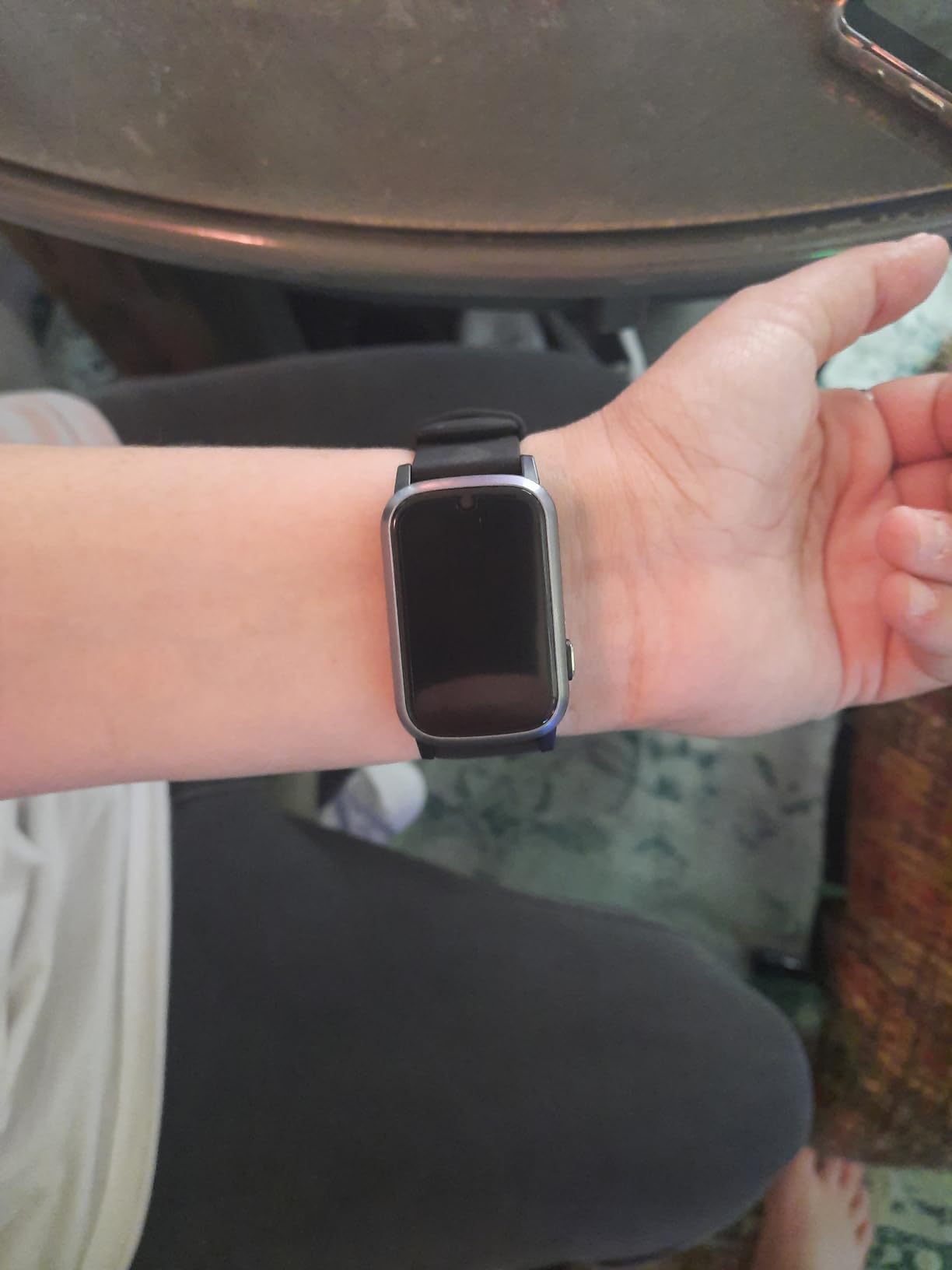
Mechanically it is straightforward: press and hold the SOS button for 3 to 5 seconds, and fall detection runs automatically on a qualifying monitoring plan with GPS location attached. The Med Alert Pro caregiver app shares an account across up to three devices and adds Find Me and Refresh Location.
The 2-inch rectangular touchscreen with physical button control is legible, and heart rate, blood oxygen and blood pressure monitoring add useful context. Battery life is about 3 days with a 2-hour magnetic charge, and IP67 water resistance covers the bathroom, which is where most indoor falls happen.
Who this watch suits
A parent with several falls already, whose adult children cannot guarantee a 2am response. The monitoring centre is the feature; everything else supports it.
It also suits families on a tighter budget who still want professional monitoring rather than family-only alerts, since the device itself is the cheapest dedicated alert watch we reviewed.
Where it falls short
The subscription and cellular coverage are required after purchase, and the recurring cost is what families on low incomes report as the real problem. Promotional pricing that changes after year one is a known pattern in this category.
Reliability reports are mixed, with some units stopping powering on, and customer service and cancellation processing described as unresponsive by several owners. The SOS button also sits close enough to the wrist that resting on it triggers calls. Treat the subscription as cancellable at any time and test it yourself before relying on it.
6. Audar E2 Senior Smartwatch for Scheduled Health Readings
Audar E2 Senior Smartwatch with Fall Detection & SOS, Vital Sign Monitoring
- Vital sign readings reported as accurate by owners
- Remote caregiver dashboard lets several family members monitor at once
- Magnetic strap cannot snag or fall off
- Looks like a normal smartwatch rather than a panic button
- Fall detection missed genuine falls in multiple owner reports
- Frequent false alarms on some units
- Screen text is very small and menus disappear quickly
This is the most unusual pick here. Instead of waiting for a fall, the Audar E2 takes scheduled readings of heart rate, blood pressure, blood oxygen and body temperature at 30-minute, hourly, two-hourly or four-hourly intervals, or on demand, and pushes AI weekly wellbeing reports to a caregiver dashboard.
That flips the problem. If your parent’s risk is deterioration rather than a sudden collapse, a device that shows a trend is more useful than one that only reacts to impact.
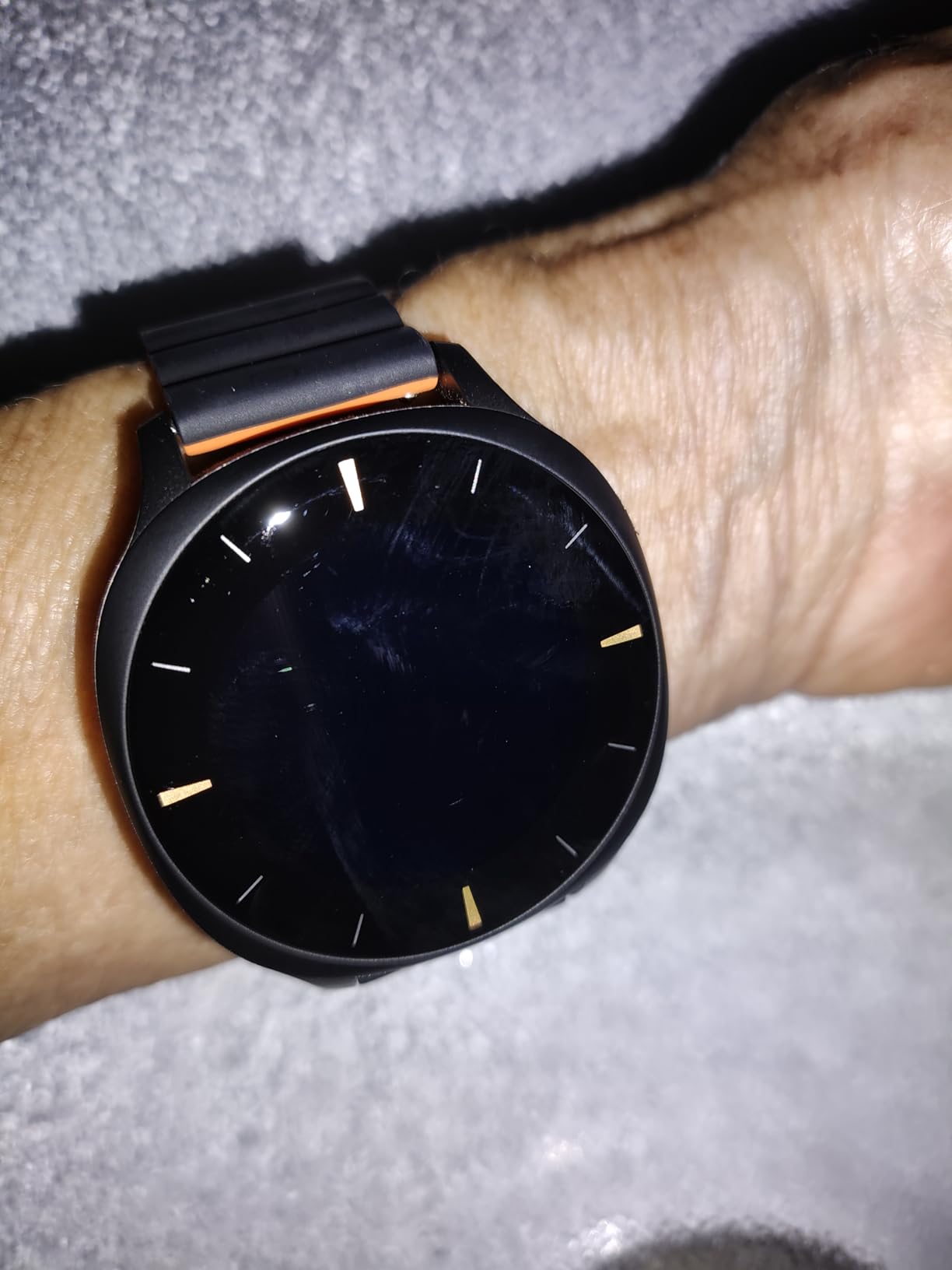
The built-in eSIM connects to low-cost IoT networks across more than 20 countries with no roaming, and it needs no smartphone, app install, Wi-Fi or Bluetooth. Battery life runs up to 10 days with hourly measurements, and up to 30 days on standby, which is by far the longest gap between charges in this roundup.
The magnetic adjustable strap fits wrists from 135 to 238 mm and is reported as secure and comfortable. Owners specifically note it looks like a normal smartwatch, which is exactly what gets it accepted. IP67 water and dust resistance and a one-year manufacturer warranty round out the build.
Who this watch suits
A parent with a chronic condition whose family wants readings between visits, and any family that cannot manage a nightly charge. Ten days of battery removes the single most common failure mode in this category.
It also suits a parent who dislikes anything that looks medical. Reviewers consistently describe it as looking like a normal smartwatch.
Where it falls short
Fall detection is the weak point and we will not dress it up. Owners report both genuine falls going unalerted and frequent false alarms, and false alerts carry per-recipient messaging costs. If falls are your main concern, choose a different device for that job.
Blood pressure readings need calibration against a separate cuff that is not included, so the number is only as good as that cuff. The 1.77-inch screen has small text and quick-disappearing menus, which is a genuine problem for reduced vision.
7. Samsung Galaxy Watch 8 40mm for Standalone GPS on Android
Samsung Galaxy Watch 8 (2025), Graphite, 40mm, Bluetooth Smartwatch
- Built-in GPS tracks walks without a phone present
- Two-year warranty is longer than most rivals here
- Light 30 g design suits continuous wear
- Works with Samsung and other Android phones
- Improved interface is clearer at a glance
- Battery life is the most common complaint with once or twice daily charging
- Sensor accuracy drifts on some units
- Bundled Samsung flat wireless chargers are incompatible with this band
- Preinstalled apps cannot be removed
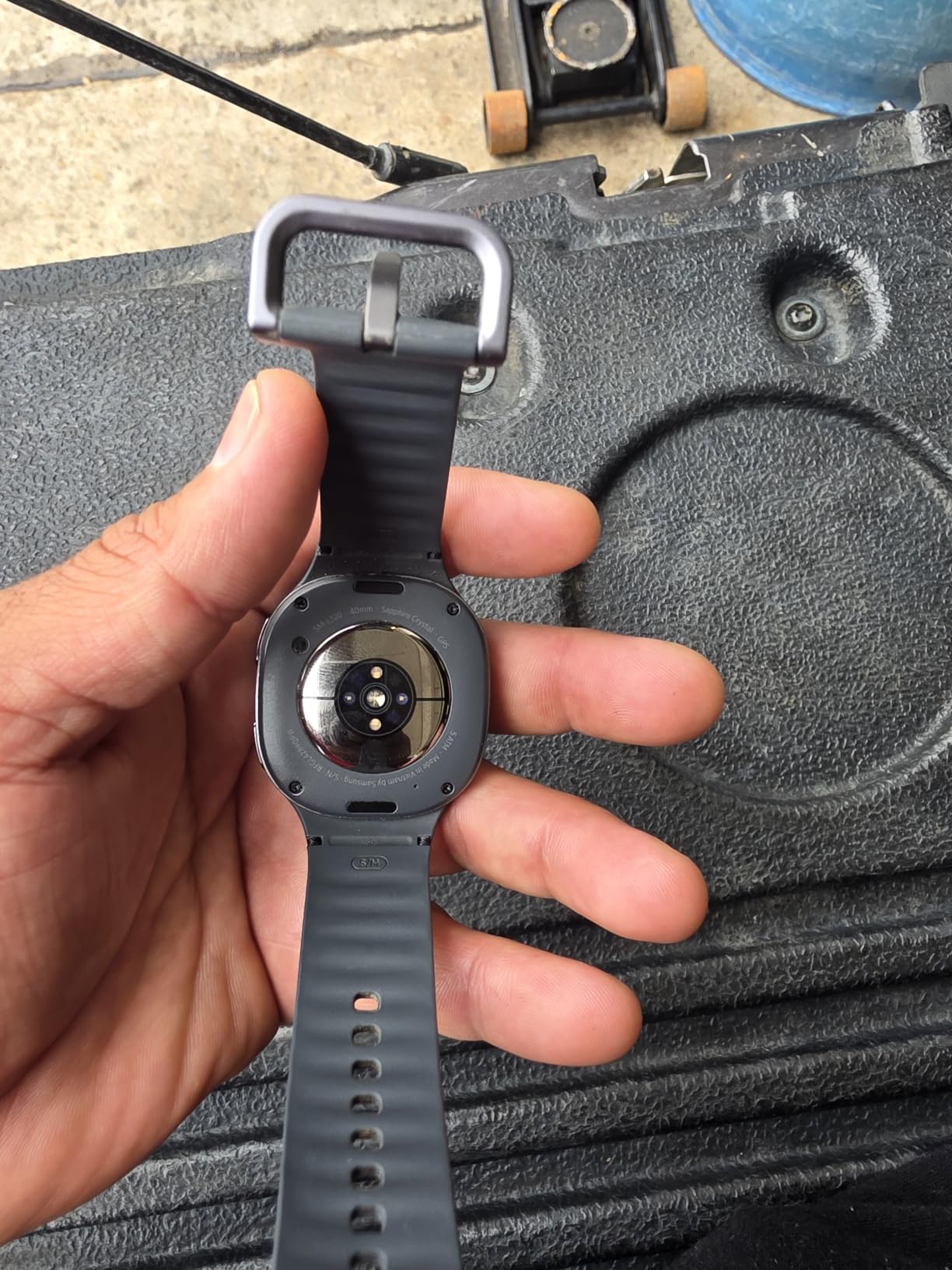
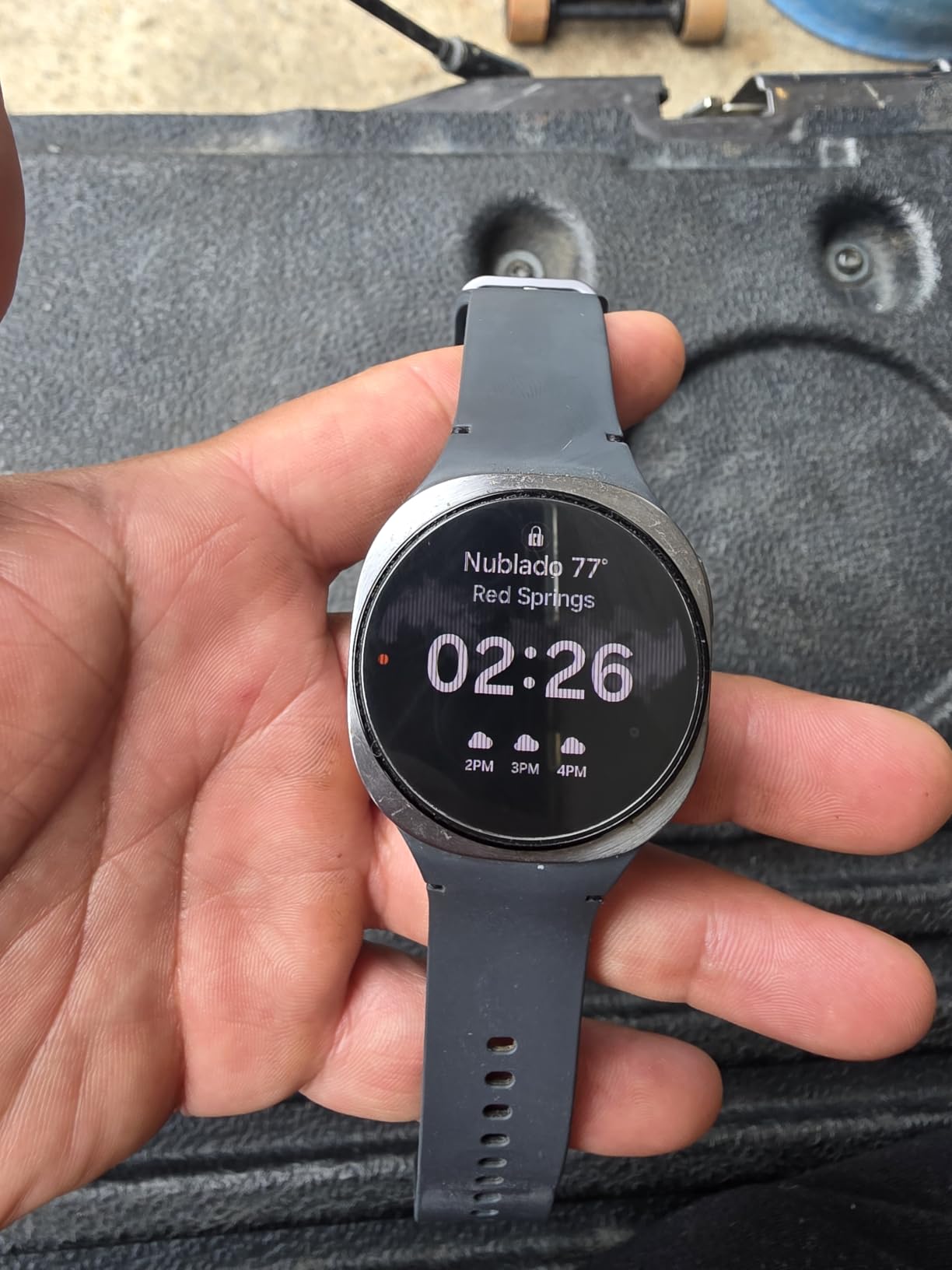
The reason this one is on the list is a single feature: built-in GPS in this configuration. A fall alert from a parent walking a dog at the park does not depend on a phone being in a pocket, which is the exact scenario an r/eldercare user raised when her mother fell outside.
At 30 g it is the lightest Samsung model here, and a thinner, lighter design is what decides whether a parent keeps the watch on overnight. Sleep Coaching with Bedtime Guidance and the Running Coach both received positive mentions from owners who upgraded from earlier Galaxy or Fitbit devices.
Blood pressure monitoring works after calibration with a separately sold cuff, which is a trend-setting feature on an Android watch but still a trend rather than a measurement. The Energy Score summarises prior-day sleep, activity and heart rate, and a personal AI assistant handles hands-free requests.
Two-year warranty coverage is longer than most competitors offer. Battery life is the standing complaint, with owners reporting one or two charges a day, and that is the reason this sits below the Galaxy Watch 7 despite the GPS advantage.
Who this watch suits
An Android household where the parent walks regularly outdoors and you want location alerts that do not depend on a phone. It is also the pick when a warranty longer than one year matters to you.
The light weight suits a parent who finds wrist devices uncomfortable after a few hours, and who will otherwise remove the watch within days.
Where it falls short
Battery complaints dominate the reviews, and charging once or twice daily is a poor match for a device meant to protect someone overnight. Some owners also report oxygen and heart rate readings drifting versus clinical devices.
The bundled Samsung flat wireless charger is reported as incompatible with this band design, and preinstalled apps cannot be uninstalled. If battery endurance is your priority, the Galaxy Watch 9 below covers the same health ground differently.
8. Apple Watch Ultra 2 for Parents Who Walk Far From Home
Apple Watch Ultra 2 [GPS + Cellular, 49mm] – Titanium Case with Blue Ocean Band, One Size (Renewed)
- Built-in cellular lets the wearer call for help without a phone
- 100 m water resistance suits swimming and outdoor use
- 36-hour battery extends to 72 hours in Low Power Mode
- 3000-nit display stays readable in sunlight
- Customizable Action button triggers safety features in one press
- Renewed condition limits warranty to 90 days
- 49mm case is unwieldy on small wrists
- Requires an iPhone for setup and most features
- Battery is still single-day at most
The Ultra 2 is the only watch in this roundup with 100 m water resistance and a battery that comfortably outlasts a full day. Both matter more than they first appear: a parent who swims or walks a long route in winter is the case where a 24-hour battery and 50 m rating become the safety feature.
Cellular is built in, so the wearer can call and text without an iPhone, even with international roaming. Fall detection and Crash Detection run through the same emergency framework as other Apple Watches, and the Action button gives a one-press trigger that does not require navigating a menu.
![Apple Watch Ultra 2 [GPS + Cellular, 49mm] - Titanium Case with Blue Ocean Band, One Size (Renewed) customer photo 1](https://www.thebrucehighqualityfoundation.com/wp-content/uploads/2026/10/B0CTD71KKG_customer_1.jpg)
One important caveat: this is a Renewed unit, and the warranty is 90 days rather than the standard Apple coverage. That is the trade you make for the cell-level pricing, and it is only a sensible trade if a family member can handle setup support.
The 49 mm titanium case is the largest Apple Watch size and can feel unwieldy on a smaller wrist. The 3000-nit always-on display is genuinely easier to read than any other watch here in direct sunlight, which matters when the alert arrives during an outdoor walk.
![Apple Watch Ultra 2 [GPS + Cellular, 49mm] - Titanium Case with Blue Ocean Band, One Size (Renewed) customer photo 2](https://www.thebrucehighqualityfoundation.com/wp-content/uploads/2026/10/B0CTD71KKG_customer_2.jpg)
Who this watch suits
An iPhone household where the parent swims, cycles or walks far from Wi-Fi and a phone. It is also the pick for a parent who needs to make a call for help without anyone else’s phone nearby.
Buy it only if someone can handle Renewed condition variance. For a gift, a new-unit Apple Watch is the safer call.
Where it falls short
The 90-day limited warranty is the first concern on a device meant to last years. Battery life is still a single day at most in normal use, and the case size rules it out for small wrists.
Full functionality needs an iPhone, and the price sits well above mainstream smartwatches even in Renewed condition.
9. Apple Watch Series 10 46mm for the Largest Readable Screen
- Largest display in the Apple range with up to 30 percent more screen area
- Fall Detection
- Crash Detection
- Emergency SOS and Check In
- ECG
- blood oxygen and sleep apnoea notifications
- 80 percent charge in about 30 minutes
- Crack resistant
- IP6X dust resistant and 50 m water resistant
- Requires an iPhone for full function
- Needs regular charging despite fast charging
- Stock rubber and loop bands are reported as less breathable
Screen size is the whole argument here. Up to 30 percent more display area than Series 9 in a thinner, lighter body means the emergency dial, the alert text and the SOS control are physically easier to hit, which is the part that matters when a hand is shaking.
The safety suite is complete: Fall Detection, Crash Detection, Emergency SOS and Check In, with alerts connecting to emergency services. The ECG app with high and low heart rate and irregular rhythm notifications adds screening, and the Vitals app tracks overnight heart and respiratory rate.
![Apple Watch Series 10 [GPS 46mm case] Smartwatch with Rose Gold Aluminum Case with Plum Sport Loop. Fitness Tracker, ECG App, Always-On Retina Display, Carbon Neutral customer photo 1](https://www.thebrucehighqualityfoundation.com/wp-content/uploads/2026/10/B0DGHV2B2Z_customer_1.jpg)
Faster charging to 80 percent in about 30 minutes is the practical improvement over the model below. Crack resistant glass, IP6X dust resistance and 50 m water resistance make it the toughest mainstream Apple option in this roundup, and depth and water temperature sensors suit a parent who swims.
At 4.7 stars across more than 1,000 reviews with 88 percent five-star ratings, owner satisfaction tracks the other Apple models closely. Training load, Activity Rings and depth sensors are fitness features that will simply go unused, which is fine.
![Apple Watch Series 10 [GPS 46mm case] Smartwatch with Rose Gold Aluminum Case with Plum Sport Loop. Fitness Tracker, ECG App, Always-On Retina Display, Carbon Neutral customer photo 2](https://www.thebrucehighqualityfoundation.com/wp-content/uploads/2026/10/B0DGHV2B2Z_customer_2.jpg)
Who this watch suits
A parent with reduced vision, or arthritic hands, where a larger target and bigger text are the deciding factor. It suits anyone who will not wear a watch that feels fiddly.
It also suits a parent who swims, given the 50 m rating and water temperature sensors, on an iPhone household that has already committed to the ecosystem.
Where it falls short
It still depends on an iPhone for full function, and it needs regular charging even with the faster charger. If your parent will not charge nightly, do not buy a fast-charging watch and hope.
Stock rubber and loop bands are reported as less breathable, and replacing the band with a breathable fabric or leather option improves comfort more than any software change.
10. Samsung Galaxy Watch 9 for Overnight Health Patterns
Samsung Galaxy Watch9, Cream, 40mm Bluetooth Smartwatch
- Vitals
- sleep coaching and Heart Health Score give a clear overnight picture
- Very light at 1.1 ounces so it is easy to forget it is on
- Soft breathable sports band with an air pocket design
- Works with Samsung and other Android phones
- Two-year warranty
- Battery life is roughly one day with health tracking on
- About two hours to reach a full charge
- Stock 40mm band is short for larger wrists
- Feature breadth can feel overwhelming to new users
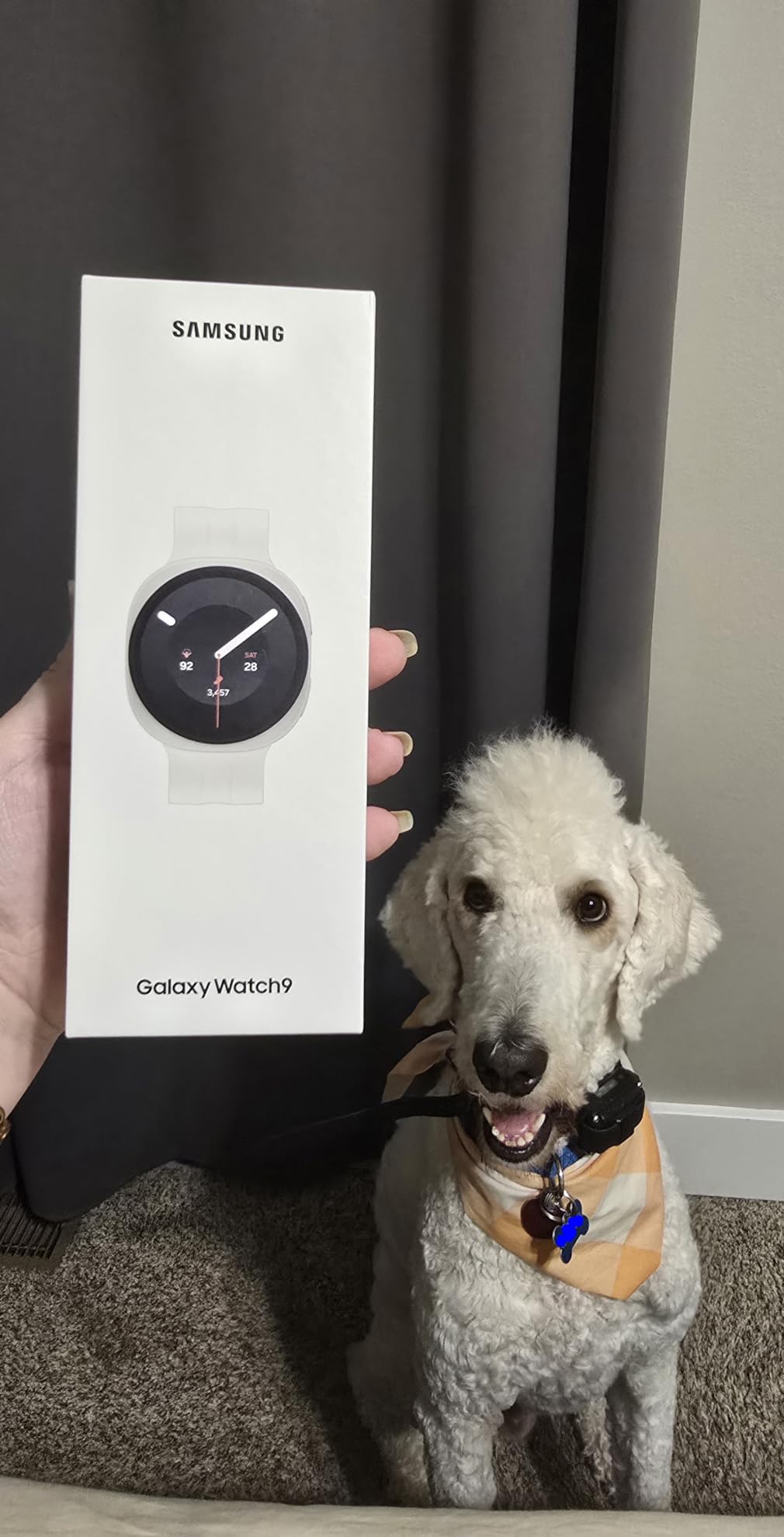
This is the lightest watch we reviewed by a wide margin, and for a parent who finds wrist devices irritating that is not a small detail. The soft sports band uses a breathable air pocket design, and at 1.1 ounces most wearers genuinely forget it is there.
Its distinguishing feature is the overnight health picture. Vitals tracks health metrics during sleep, catches shifts from usual patterns and gives tailored guidance, while a single Heart Health Score combines sleep time, BMI, activity and vascular load into one number a family can follow.
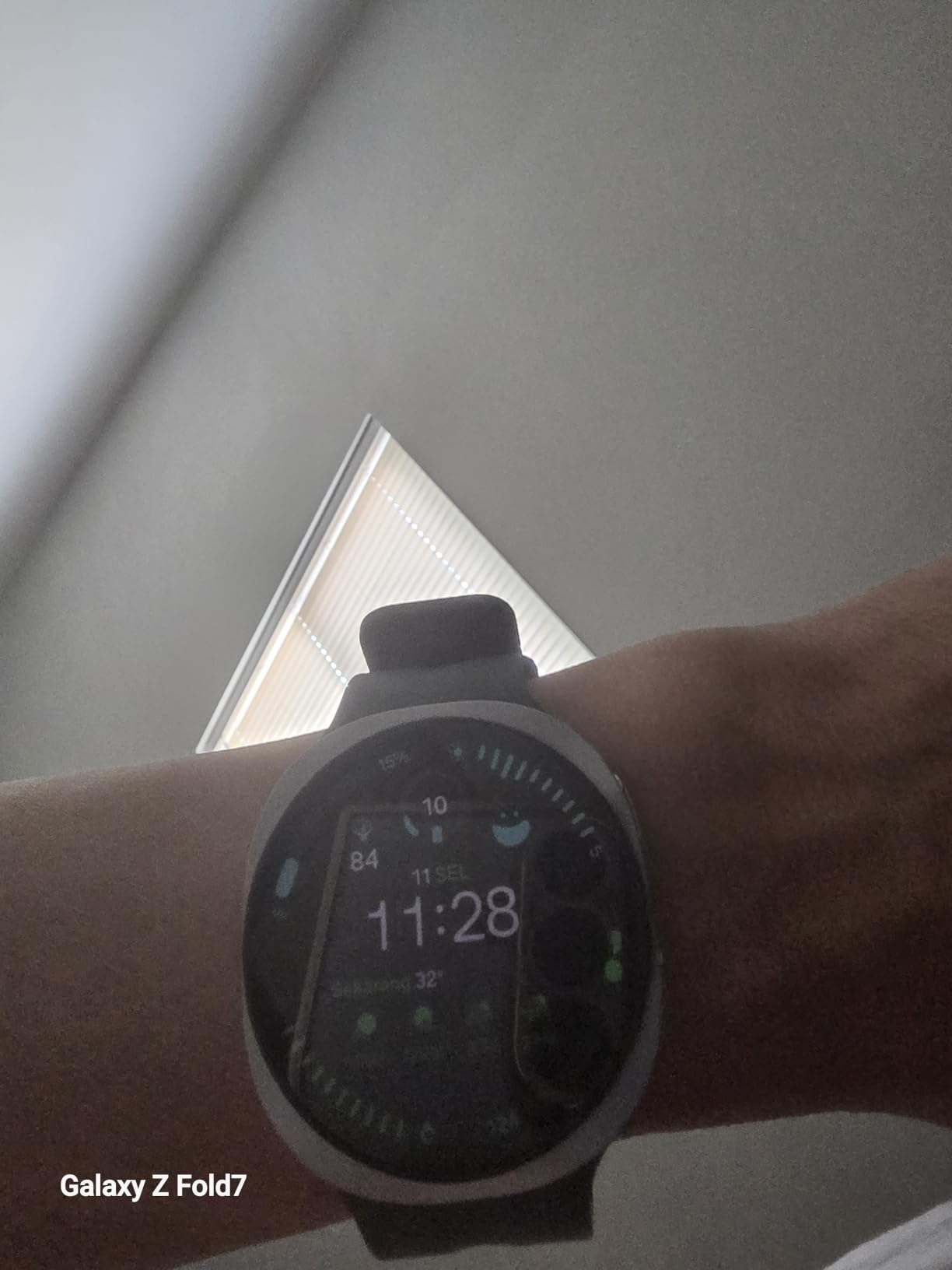
Samsung fall detection and emergency alerts run through Samsung Health. Built-in GPS, NFC and Wi-Fi are listed alongside Bluetooth, so location works away from the paired phone, and Tap to Pay keeps essentials on the wrist without a wallet.
Raise your wrist and talk to the assistant with no wake phrase, which is the interaction style most usable for a parent who will not tap small targets. Fitness Index gives personalised guidance based on stated fitness level goals.
Who this watch suits
A parent on Android who will not tolerate a heavy watch, and whose family wants an overnight trend view rather than a single alert. The Heart Health Score is easy for an adult child to check on a Sunday morning.
The wrist-raise voice assistant suits a parent with arthritis who finds tapping a small screen painful.
Where it falls short
Battery life is roughly one day with health tracking enabled and takes about two hours to fill, which is the weakest charging figure among the Samsung models here. The stock 40 mm band is short for larger wrists and usually needs replacing.
Older Galaxy Watch chargers are not compatible, so you will need a new one, and some users find the breadth of fitness features overwhelming. Blood pressure monitoring still requires a separately sold cuff.
11. Google Pixel Watch 5 for the Only Loss of Pulse Feature Here
Google Pixel Watch 5 (41mm) – Android Smartwatch – Fog – Wi-Fi
- Loss of Pulse Detection can prompt a call to emergency services when pulse is lost
- Only smartwatch in this roundup with that feature
- Up to 40 hours of battery is the longest here
- Google's most accurate heart rate tracking per the manufacturer
- Domed Actua 360 display with scratch-resistant Gorilla Glass
- Android only
- not compatible with iOS
- Smallest review base at 81 reviews
- Wi-Fi configuration has no LTE so it cannot connect away from Wi-Fi
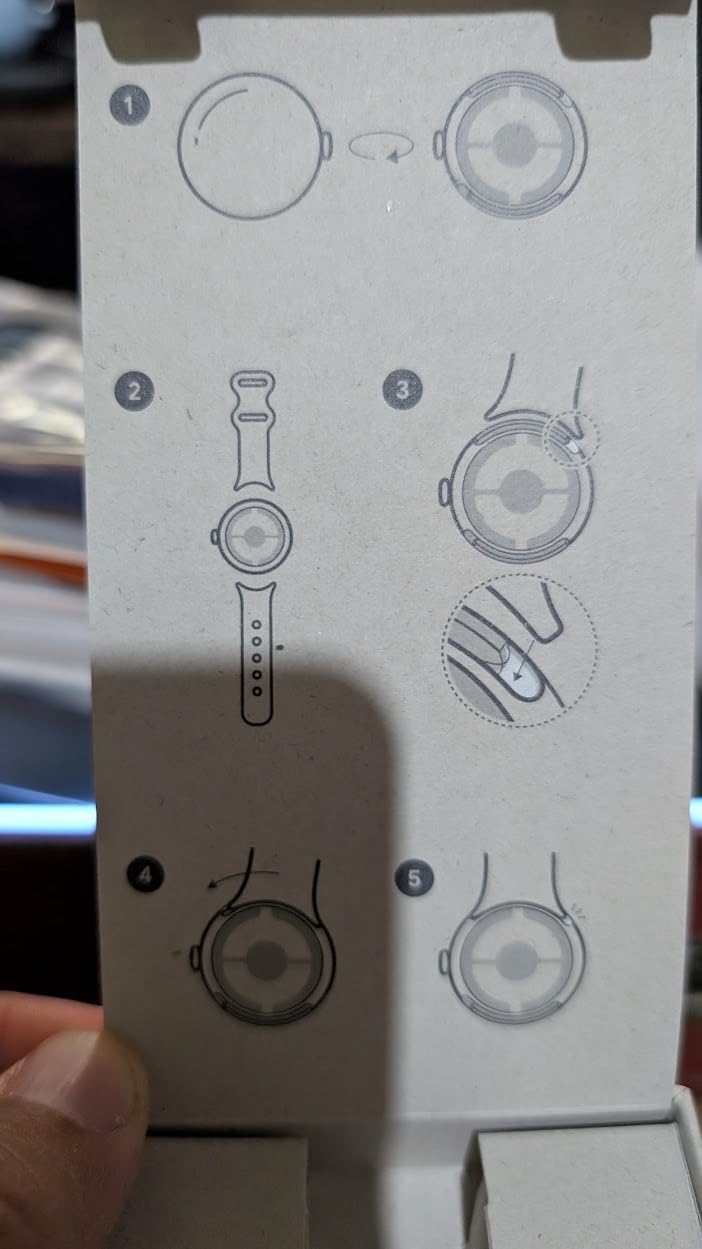
Loss of Pulse Detection is the reason this watch is here. If the watch senses a loss of pulse in an unresponsive wearer, it can prompt a call to emergency services, and the manufacturer describes it as the only smartwatch with the capability. That is a cardiac event path rather than a fall path, and it is genuinely distinct from everything else on this list.
At 4.6 stars with 84 percent five-star ratings, satisfaction is high, but 81 reviews is the thinnest sample here. Buyers are early adopters rather than a broad installed base, which is worth weighing against the battery advantage of up to 40 hours.
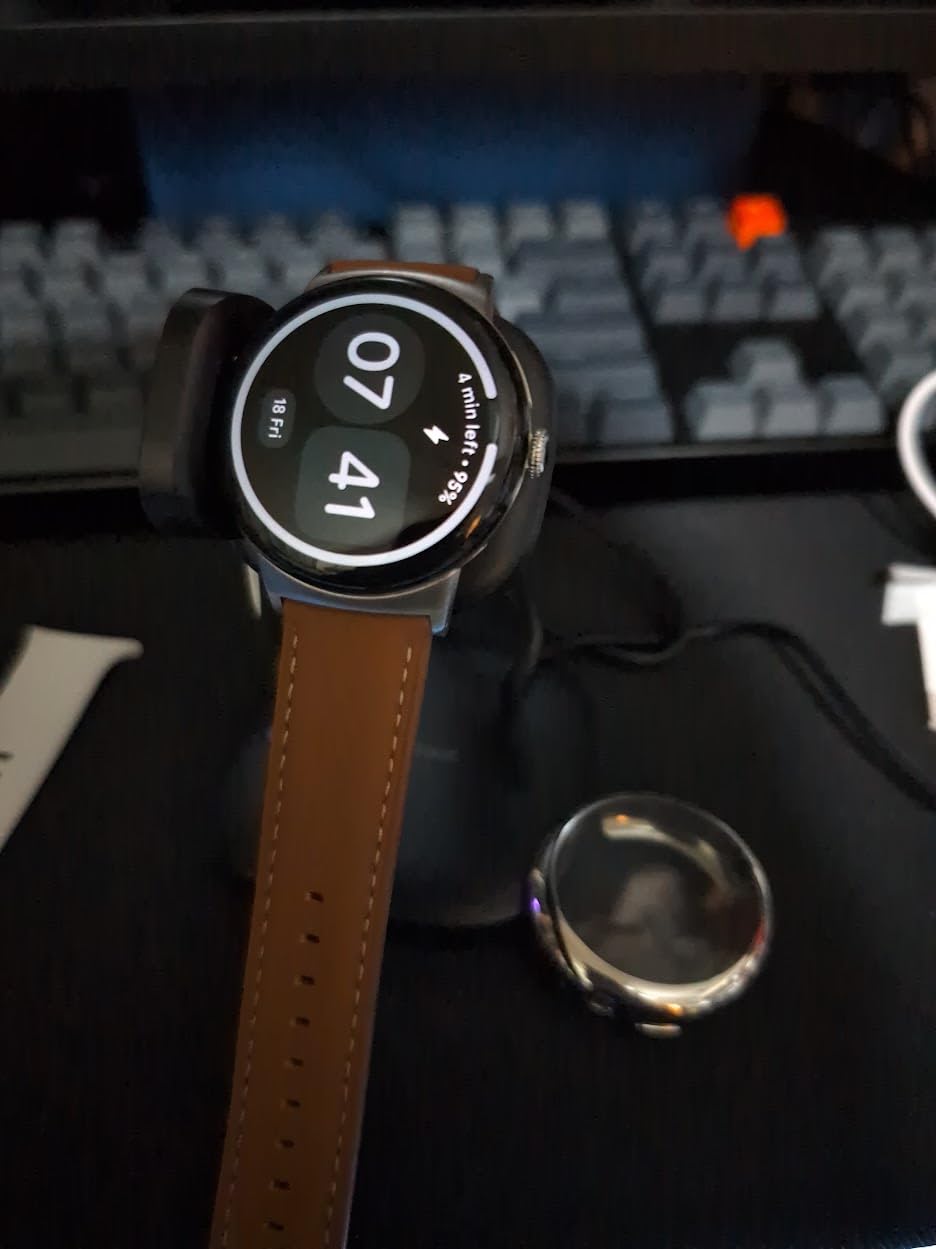
Sleep tracking covers stages and breathing regularity, summarised into a Sleep Score, and heart rate tracking is described by Google as its most accurate, fine-tuned for activity. The domed display with Gorilla Glass sits in a 41 mm case weighing 31 g.
Gemini Intelligence with Google Health supplies personalised insights, and a one-year manufacturer warranty applies. This is the Wi-Fi configuration, so fall alerts depend on a connection the watch can reach.
Who this watch suits
An Android household with a parent who has a history of cardiac episodes, where the loss of pulse path outweighs everything else. It also suits anyone who wants a long battery with fewer nightly charges.
For a parent who is active rather than sedentary, the activity-tuned heart rate tracking is the second reason to consider it.
Where it falls short
Android only, so it is a non-starter for an iPhone household. Without LTE this configuration cannot connect away from Wi-Fi, which limits outdoor use compared with the cellular picks.
The 81-review base means long-term reliability is unproven. If you want a proven safety device rather than an emerging one, choose a model with thousands of reviews.
12. Fitbit Sense 2 for Battery Life, Not Fall Detection
Fitbit Sense 2 Health and Fitness Smartwatch – Shadow Grey/Graphite
- Longest battery in the roundup at 6+ days per charge with about 30 minute charging
- Sleep stages with a Sleep Score and smart wake alarm
- Accurate heart rate
- skin temperature and blood oxygen tracking
- Works with the Fitbit app on both Android and iPhone
- Lightweight and low profile for all-day wear
- No automatic fall detection
- so it is not a safety device for falls
- ECG readings are often inconclusive from finger placement
- GPS can drop mid-workout
- Stock silicone band does not breathe well
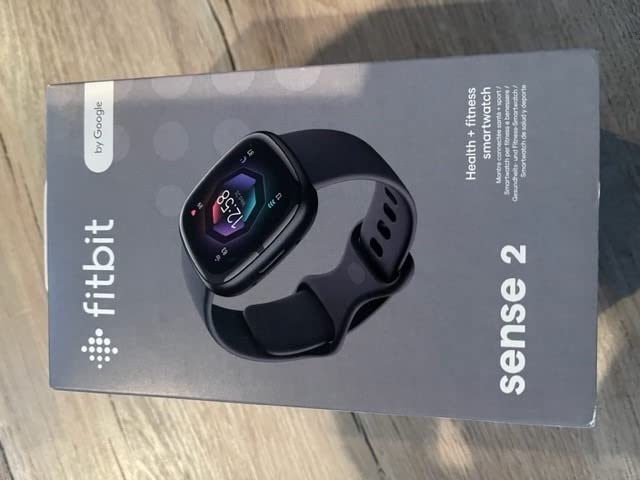
I want to be straight with you about this one: the Fitbit Sense 2 does not have automatic fall detection. It appears here because it is the only pick that solves the compliance problem outright, with 6+ days of battery and about 30 minutes of charging per cycle.
Nothing else on this list survives a week of neglect. A parent who forgets to charge will simply wear a dead watch, and a dead watch provides no protection at all. For a parent who will never adopt a nightly charging habit, that reliability beats a better sensor.
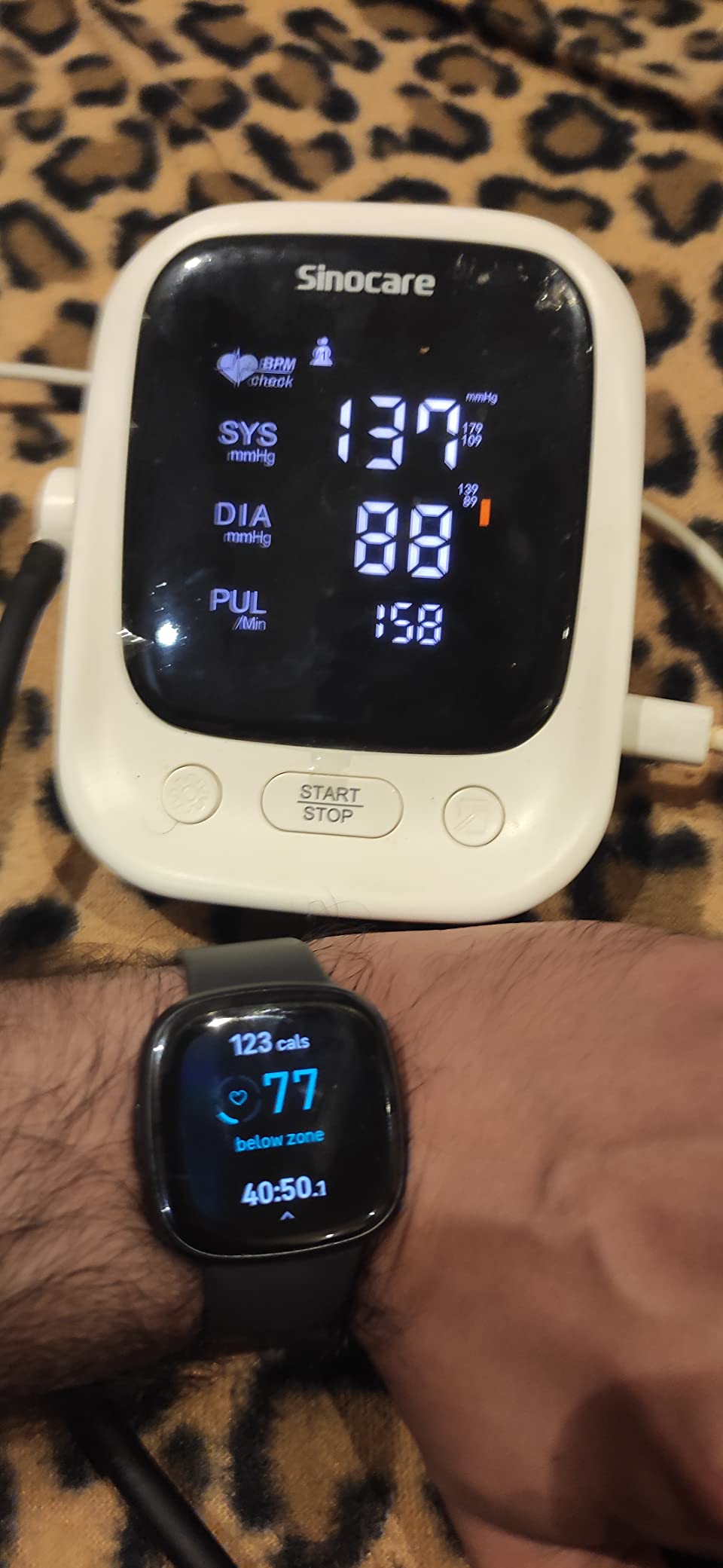
The rest of the package is solid health tracking: all-day stress detection with cEDA, an ECG app for atrial fibrillation assessment, SpO2, built-in GPS with a workout intensity map, and a Daily Readiness Score with Active Zone Minutes.
At 4.1 stars across more than 10,000 reviews, this is the most reviewed watch here, with 13 percent one-star reviews. Owners report hardware failures on units owned for a year or two, finicky ECG readings and GPS dropouts.
Who this watch suits
A parent who will not charge daily, and a family that wants health trends rather than emergency response. It works with both Android and iPhone, so no household is excluded.
It also suits a still-active parent who walks and swims, given the 50 m water resistance and detailed sleep stage tracking with a Sleep Score.
Where it falls short
There is no automatic fall detection. If a fall is the risk you are buying against, this is the wrong device, no matter how good the battery is.
ECG readings are frequently inconclusive because of finger placement, step counts undercount in low arm-motion activity such as pool exercise, and the stock silicone band is reported to irritate skin. App changes have also removed features some owners relied on, such as stair tracking.
How Fall Detection Actually Works (and Why It Misses Soft Falls)
Fall detection uses a three-axis accelerometer and a gyroscope to recognise a specific pattern: a sharp downward acceleration, an impact, then stillness. That combination matters, because a hard fall produces all three signals and simply dropping the watch produces only the first.
After the pattern is recognised, the watch waits through a cancel window, usually 30 to 60 seconds, before it alerts anyone. If the wearer does not dismiss it, a location-tagged emergency notification goes to the emergency contacts on the caregiver’s phone, or to a professional monitoring centre that triages the call and can dispatch services.
A hard fall is a high-impact event of the kind a cyclist produces. A soft fall is the slower slide off a sofa, the shuffle that goes wrong in a bathroom at night, or the step that gives way. Most consumer algorithms are tuned on younger, more able bodies, and a senior biomechanics profile produces gentler impacts that may sit below the detection threshold.
There is a second false-alarm source worth naming: arm movement. Watches trigger more often than people expect during ordinary activity because swinging an arm generates the same acceleration signature. This is why every pick here also has a manual SOS button, and why false alarms should be treated as a tuning problem rather than a reason to abandon the device.
One clarification families often need. An Apple Watch calls emergency services directly. A medical alert watch calls a monitoring centre, which then decides what to send. That triage step is why a professional service can be worth more than a better sensor.
How We Picked the Best Smartwatches With Fall Detection for Elderly Parents
We filtered on the seven requirements that actually determine whether these devices work, then read owner reviews for failure modes. Automatic detection with no required button press came first, because a device that needs to be pressed after a fall fails exactly when it is needed.
Independent cellular or a paired-phone-free path to alerts came second. Water resistance of at least 5 ATM came third, since the bathroom is the single highest-risk room. Battery endurance of at least 24 hours, or a hot-swap solution, came fourth.
Fifth, we weighted the caregiver app, because an emergency-contact list that a non-technical adult child cannot configure is worthless. Sixth, we required a published or claimed senior-appropriate calibration rather than a generic sensor. Seventh, we required a review base large enough to trust.
We did not test these devices in a laboratory. Every performance claim below comes from the manufacturer specifications and from owner reviews, and we have flagged where reviewers disagree. Our contribution is the selection logic, the cost-of-ownership framing and the setup guidance, not lab results.
Consumer Smartwatch or Medical Alert Watch: Which One Do You Actually Need
Decide by who answers the alert, not by which screen looks better. If a family member will reliably answer a phone at any hour, a consumer smartwatch with fall detection is the better device, because it does more and costs less over three years.
If nobody can guarantee a 2am response, or if the parent is hard of hearing, a medical alert watch with a monitoring centre is worth the recurring fee. That is the only tier in this roundup that produces a response when the family is asleep.
One more rule that saves money. If the parent will not carry a phone, stop looking at consumer smartwatches entirely and pick from the dedicated cellular devices. No amount of setup will fix a watch whose alerts need a phone that is not there.
Before any cellular watch goes in the basket, check coverage at the parent’s address on the carrier’s map. Devices here use 4G LTE or cellular IoT networks, and a device that cannot connect is a device that cannot call.
Test the whole chain before you trust it: trigger a fall alert from the sofa, let the cancel window run out, and confirm the alert arrives at the family phone you expect. Do this the day the device arrives, not the day of an actual fall.
Plan the charging routine before setup, not after. Put the charger on the same surface as the coffee maker, or use a device with a multi-day battery if the routine will not hold.
Finally, frame the conversation well. Say the watch lets the family know if help is needed, rather than saying the family will be tracking them. On the r/AgingParents threads, parents who already wore their own analog watch were the hardest to convert, and wording made the difference.
One last honest limitation. None of these devices detect heart attacks, provide blood pressure accuracy without calibration, or replace a medical alert pendant in the way a hospital would want. If your parent is high fall risk, talk to their clinician about a neck or waist-worn device alongside any watch.
Frequently Asked Questions
What is the best smartwatch for elderly parents?
The Apple Watch Series 11 is our overall pick, and the Apple Watch SE 3 is the better value choice for most families. Both give hard fall detection, Crash Detection, Check In and heart rate alerts, and both need an iPhone in the household. For an Android household the Samsung Galaxy Watch 7 40mm is equivalent. For a parent with no smartphone at all, the SecuLife Medical Alert Smartband alerts family directly and needs no phone.
What is the best fall detection device for elderly people?
It depends on who answers the alert. A consumer smartwatch works when a family member reliably picks up the phone at any hour. A medical alert watch with a 24/7 monitoring centre works when nobody can, because a trained operator answers and can dispatch help. The Cellular Medical Alert Smart Watch in this roundup is the only pick with a live monitoring centre.
Does Medicare cover fall detection devices for seniors?
Original Medicare does not cover consumer smartwatches. Some Medicare Advantage plans offer allowances or wellness incentives that can offset the device cost or the monthly cellular fee, and Medicaid programmes vary by state. A health savings account or flexible spending account may reimburse a device or monthly plan with a medical justification from a clinician, so check your plan documents directly.
Is there a monthly charge for Apple Watch fall detection?
Fall detection itself carries no monthly charge from Apple. The recurring cost comes from the cellular plan if you choose a GPS and Cellular model rather than the GPS-only version, and it is also the only way a parent can call for help without carrying a phone. Add a family cellular plan and fall detection costs nothing extra.
Which is better for elderly people, the Apple Watch or Life Alert?
The Apple Watch wins on features, battery and health tracking, and it costs far less over three years with no subscription. A Life Alert style service wins on response, because a trained operator answers at any hour and can dispatch an ambulance. Choose the watch when your family will reliably answer alerts, and choose the monitored service when they will not.
Which smartwatch is medical-approved for health monitoring?
No smartwatch on this list is approved as a diagnostic device. Some models offer irregular rhythm notifications or ECG features that are cleared for specific screening uses, and one watch here offers Loss of Pulse Detection that can prompt an emergency call. Treat every reading as a prompt to call a clinician, never as a diagnosis.
Conclusion
For most families, the best smartwatches with fall detection for elderly parents come down to one honest question: who picks up the phone at 2am. If the answer is your family, buy the Apple Watch Series 11 or the Apple Watch SE 3 for an iPhone household, or the Samsung Galaxy Watch 7 40mm for Android, and spend the difference on grab bars and better seating rather than on a larger watch.
If nobody can answer, buy the monitored device and accept the subscription. If the parent owns no phone, buy the SecuLife or the Audar E2 and skip the consumer smartwatches entirely. If the risk is wandering rather than falling, geofencing matters more than any sensor.
Set the device up yourself, run one test alert before anyone relies on it, and pair it with cameras that cover the entry points, as we cover in our camera guide for watching elderly relatives. None of this replaces a conversation with your parent’s clinician, and none of it is a substitute for fall prevention at home.