
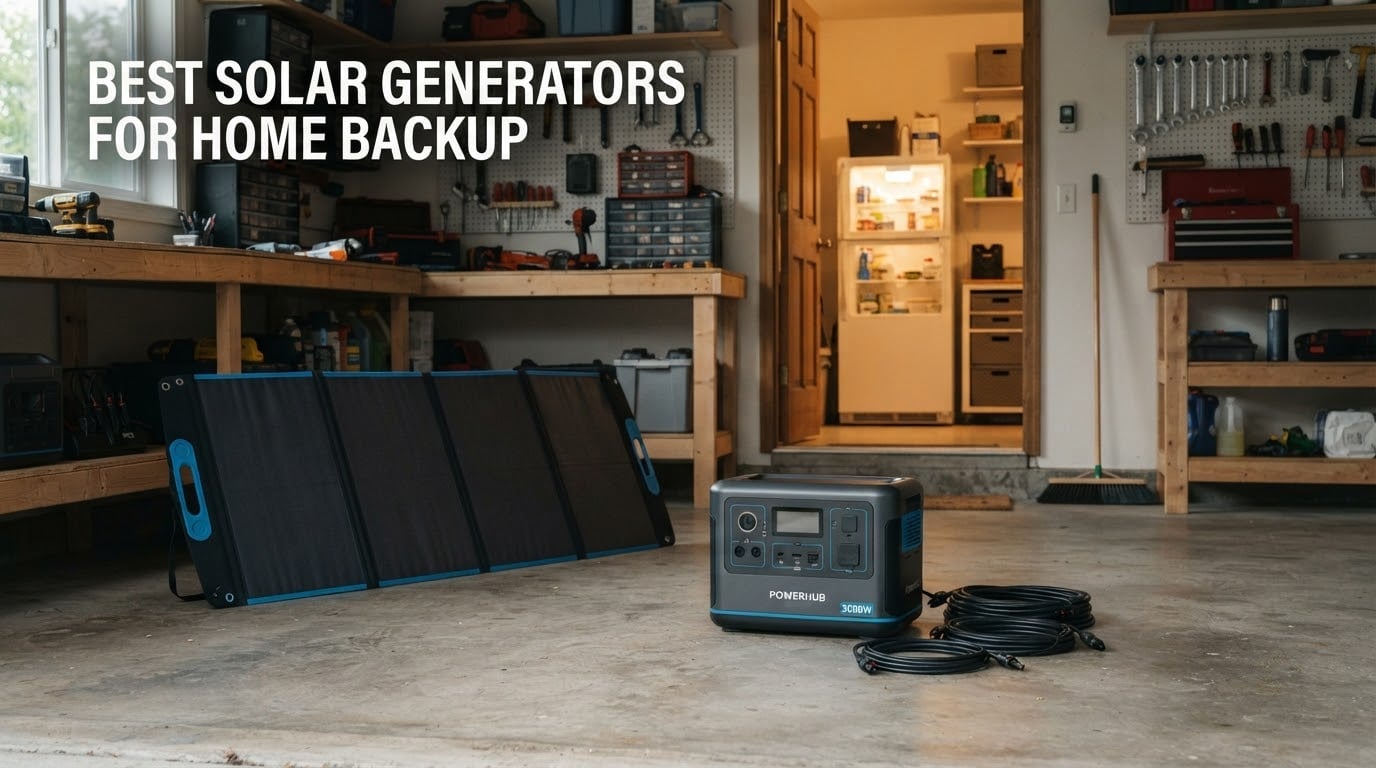
The power went out at 11pm on a Tuesday in the middle of August. No warning, no flicker first, just a dark kitchen and a humming house that had gone completely silent. The fridge kept its cold for about six hours on its own, the router died in seconds, and the neighbour’s gas generator was already coughing awake two houses down.
That night is the whole reason a solar generator exists. Not to re-create the grid, but to keep a fridge cold, a CPAP blower running, a router alive and a couple of lights on until the grid comes back. The problem for buyers is that the category has exploded in 2026 and almost every listing leads with a giant number that means very little.
This guide ranks the best solar generators for home backup using published capacity, continuous output, surge rating, cycle life, recharge speed and the real complaint patterns owners report. Ten units, from a 1024Wh starter model to a 5.5kWh dual-voltage system, and a clear note on which one to buy for which kind of outage. If you also want power away from a house, our picks for the [best RV solar generators for emergency backup](https://www.thebrucehighqualityfoundation.com/best-rv-solar-generators-for-emergency-backup/) cover the same hardware from a different angle.
Table of Contents
Best Solar Generators for Home Backup: What They Actually Are
A solar generator is not a generator at all. It is a portable power station: a lithium iron phosphate battery, an inverter, a charge controller and a set of outlets, packed into a case you can carry. There is no engine, no fuel tank, no exhaust pipe and no carbon monoxide.
The panels do not power your home directly. Solar panels charge the battery, and the inverter converts the battery’s stored DC power into standard 120V AC that a fridge or a laptop can use. That two-step process explains almost everything else on this page: runtime is decided by capacity in watt-hours divided by your load in watts, and recharge speed is decided by how much wattage you push in from the wall or the sun.
Two spec numbers carry most of the buying decision. Continuous output, in watts, is what the unit can run all day. Surge power, also in watts, is the short burst a compressor motor or a pump needs to start. Every unit below lists both.
How Big a Solar Generator Do You Need?
Start with the loads, not the marketing number. A full-size refrigerator pulls roughly 150W while running and asks for 300W to 400W to start. A CPAP machine with a heated humidifier sits around 60W to 100W. LED lighting and a router together are closer to 40W. A window air conditioner can pull 1,000W or more once it is running. Add up the watts you want on at the same moment, then add the highest single starting surge among them.
That total is your sizing target. Multiply that number by 1.2 and you have the continuous output your inverter needs. If the result is more than any unit’s continuous rating, you have your answer already: the load does not belong on a battery.
Runtime is a separate calculation. Take the unit’s watt-hour capacity, divide by your total load in watts, and you get the theoretical hours. Real runtime runs about 10 to 20 percent below that because of inverter losses, heat and the small idle draw every unit carries. Jackery’s HomePower 3000 lists a household figure of up to 15 hours and a refrigerator figure of one to two days, which is the kind of honest range you should expect from the category.
Two rules of thumb from the forums. On r/preppers, a roughly 300Wh station plus a small panel is widely treated as an adequate first kit, which tells you how little buys you. On iRV2 and similar RV boards, the sizing formula that keeps repeating is daily watt-hours, plus peak simultaneous load, plus startup surge. That is the same arithmetic above, just written by people who do it every season.
Here is the tier structure most buyers land on. A 1kWh unit covers a fridge, a router, lights and a CPAP overnight. A 2kWh unit adds a freezer or a small window unit for a few hours. A 3kWh to 5kWh unit runs a household’s essentials through a long event. Anything above 5kWh is where multi-day and whole-home planning starts to matter.
Top 3 Picks: Best Solar Generators for Home Backup (October 2026)

Those three cover the most common situations: an overnight essentials kit, a 2kWh unit that arrives with panels in the box, and a high-capacity system you can grow into.
Best Solar Generators for Home Backup at a Glance
| Product | Specifications | Action |
|---|---|---|
| Anker SOLIX C1000 Gen 2 |
|
Check Latest Price |
 BLUETTI Elite 200 V2 BLUETTI Elite 200 V2 |
|
Check Latest Price |
 EcoFlow DELTA Pro EcoFlow DELTA Pro |
|
Check Latest Price |
 Jackery Explorer 2000 v2 Jackery Explorer 2000 v2 |
|
Check Latest Price |
 Jackery HomePower 3000 Jackery HomePower 3000 |
|
Check Latest Price |
 BLUETTI Apex 300 plus B300K BLUETTI Apex 300 plus B300K |
|
Check Latest Price |
 Anker SOLIX S2000 Anker SOLIX S2000 |
|
Check Latest Price |
 EcoFlow Delta 3 Classic EcoFlow Delta 3 Classic |
|
Check Latest Price |
 OUPES Mega 1 OUPES Mega 1 |
|
Check Latest Price |
 Jackery Solar Generator 1000 v2 Jackery Solar Generator 1000 v2 |
|
Check Latest Price |
1. Anker SOLIX C1000 Gen 2 – Best for Overnight Essentials
- 49-minute full AC recharge
- 2000W output from a 1024Wh battery
- 10ms UPS keeps laptops and routers alive
- ran a CPAP for three nights without a recharge
- only 25 pounds so it moves room to room
- Gen 2 lost expandability compared with the first generation
- one engineer measured 15-20 percent harmonic distortion on a microwave load
- no storage case so cables stay loose
- bundled solar panel is unstable in wind
This is the unit we keep coming back to. It has the largest review base of anything in the roundup at 1632 reviews, and the pattern in them is consistent: people bought it for a fridge or a medical device, and it did the job without drama. At about 25 pounds it is the easiest unit here to move from the garage to the bedroom when the outage moves rooms.
What stands out is the power-to-capacity ratio. 2000W of continuous output from a 1024Wh battery is unusual, and it means the unit can start a compressor-heavy load that a same-size competitor would refuse. The 10ms UPS switchover is short enough to keep a desktop, a router or an oxygen concentrator running without a reboot.
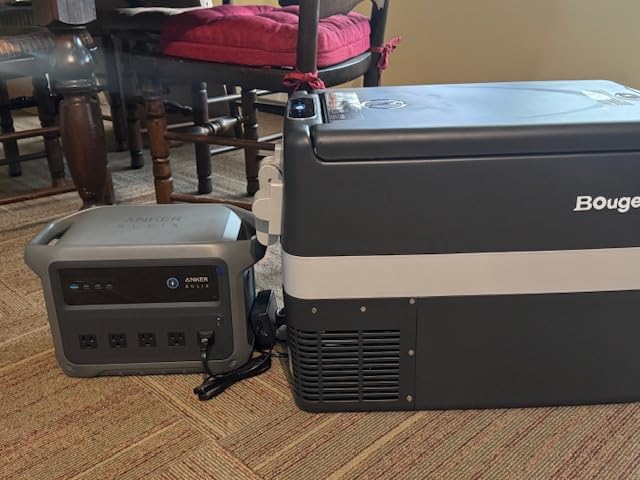
The most valuable thing we found in the reviews is a CPAP-specific one. Owners report running a CPAP machine for three nights straight on a single charge, and 15 minutes of top-up covering a full night. That is the highest-value use case in this whole category, because a medical device failure is not a convenience problem.
Recharge speed is the other quiet advantage. A full charge in 49 minutes on AC at 1600W means you can top it up from empty to a full night of essential loads while the power is still on, before a storm makes landfall.
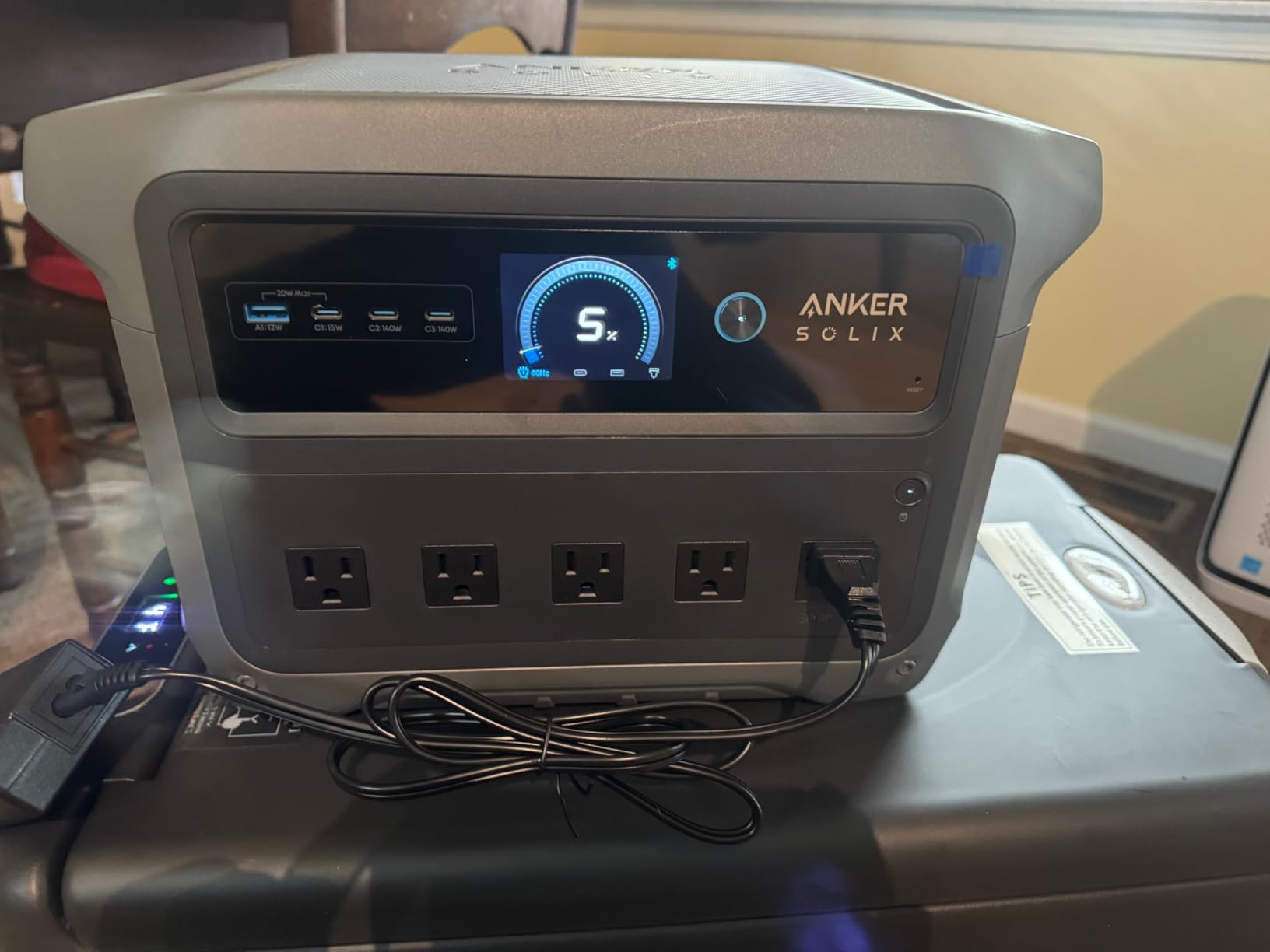
Why it works as an always-on home unit
Owners report installing it above a fridge as an unattended UPS, where it covered a five-hour outage without a hiccup. With a 4,000-cycle battery rated to hold at least 80 percent capacity and a 10-year InfiniPower rating, it is a unit you can leave plugged in rather than cycle constantly.
Ten total ports, including 9 power outlets, means you can run networking gear, a lamp, a phone charger and a medical device at once without a power strip. The Time-of-Use mode in the app also lets you shift charging to off-peak tariff hours, which quietly lowers the cost of owning it.
Where it falls short
Two things to know before you buy. Gen 2 is not expandable, which is a real change from the first generation, so this is a fixed-capacity choice rather than a starting point for a growing system. And an engineer posting oscilloscope measurements reported roughly 15 to 20 percent harmonic distortion when powering a microwave, though Anker’s support responded to the finding.
There is no dedicated storage case in the box, so plan a basket or a crate for the cables. The bundled solar panel is also the weakest accessory, so treat the unit as an AC-charged backup with optional solar rather than a solar-first system.
2. BLUETTI Elite 200 V2 – Best 2kWh Unit With Panels
BLUETTI Elite 200 V2 Solar Generator & 2x200W Solar Panel Included 2073.6Wh
- Two 200W solar panels included in the box
- 6000-cycle battery rated to 17 years
- compact 53.4 pound body with 2kWh of capacity
- 0-80 percent in 50 minutes on AC
- 10W idle draw stretches standby runtime
- Not expandable with BLUETTI add-on battery modules
- MPPT controller caps solar input at 60V so maximum solar input is hard to reach
- app lacks adjustable AC charge rates and solar priority
- Bundled panels are light and unstable in wind
This is the most complete package in the roundup. The box contains the power station and two 200W panels, which removes the single most common complaint in this category: buying a power station and then discovering the panel is a separate expense. For anyone starting from zero, that matters more than any spec on the sheet.
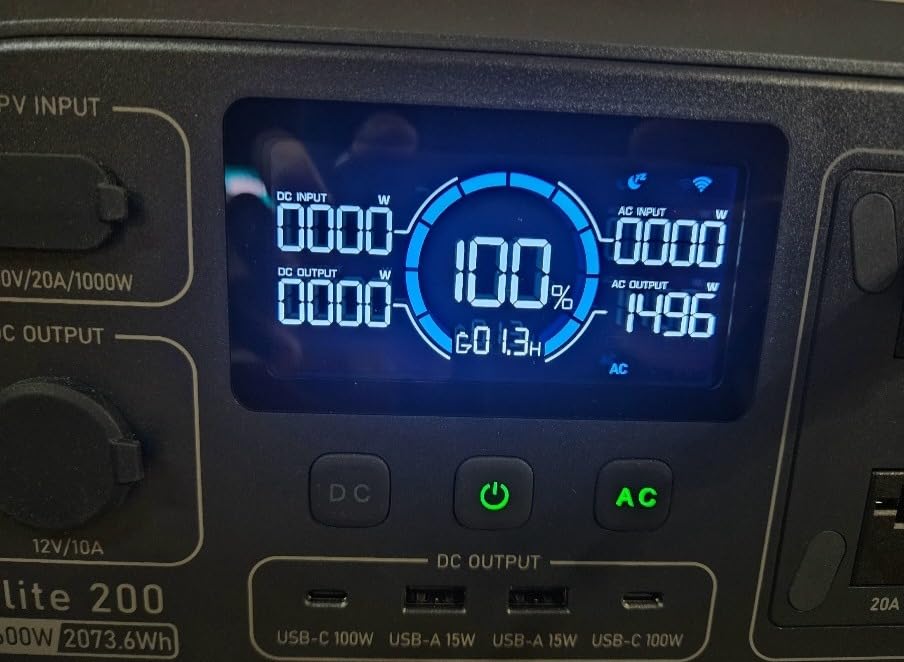
Capacity and output are well matched. 2073.6Wh with 2600W continuous and a 3900W power-lifting mode is a generous inverter for a mid-size battery, and the 3900W lifting figure covers the startup surge of most household pumps and compressors.
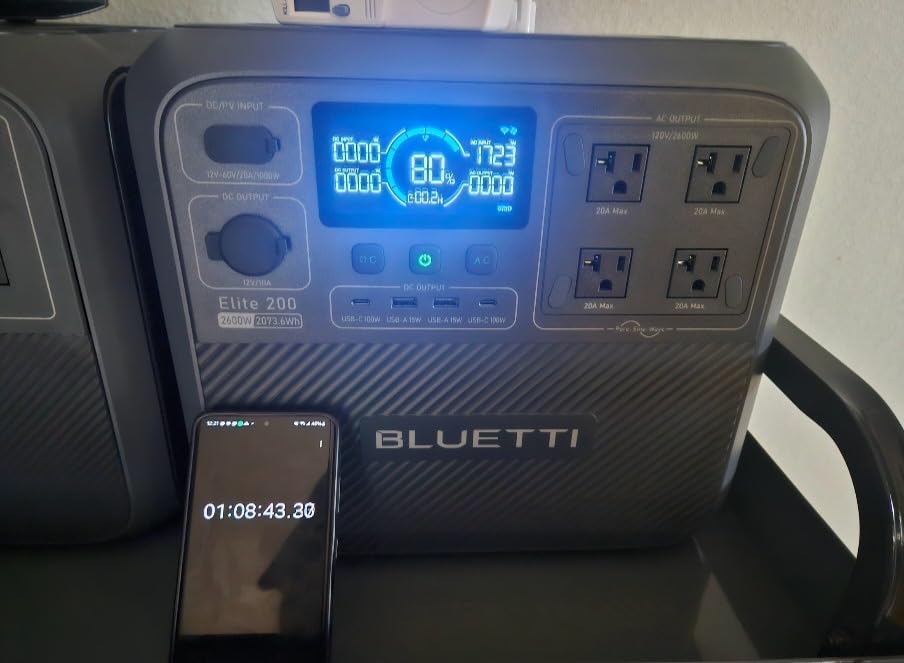
Reviewers repeatedly describe running a full-size refrigerator for 24 hours or more on a charge, which matches the arithmetic: roughly 150W of fridge draw against just over 2kWh of usable capacity. The 10W idle figure is well below many competitors and helps when the unit spends days doing nothing between outages.
Cycle life is the strongest number here, with 6000-plus cycles and a 17-year lifespan claim backed by CNAS-certified automotive-grade cells. For a buyer who intends to keep a backup unit for a decade, that published figure is worth as much as the capacity number.
Why the included panels matter more than they sound
On r/solarenergy advice threads, brand recommendations cluster around Anker SOLIX, EcoFlow, Bluetti, Pecron and Jackery, and the recurring practical point is that panels are frequently not included, which quietly inflates the real cost of a setup. This bundle sidesteps that entirely.
Recharge options are broad: 50 minutes to 80 percent using AC and DC together, about two hours on an alternator, 5.5 hours with 400W of solar and 2.4 hours with 1000W panels. That range means it works in a garage, in a car park or on a roof.
Where it falls short
The fixed battery is the biggest limitation. BLUETTI’s other units in this roundup scale with add-on modules, and this one does not, so you are buying a closed 2kWh box rather than a platform.
Second, the MPPT controller caps solar input at 60V, which makes the maximum solar input spec hard to reach with a single string. Third, the app is the most criticised part: owners report no adjustable low AC charge rate, no temperature monitoring and no solar-priority charging. It is a hardware product with software that lags behind it.
3. EcoFlow DELTA Pro – Best for Multi-Day Whole-Home Backup
EF ECOFLOW Portable Power Station 3600Wh DELTA Pro, 120V 3600W AC Output
- Expands from 3.6kWh to 25kWh for multi-day events
- 3600W continuous with five 120V AC outlets
- fastest recharge in the roundup at 1.8 hours on 240V
- five charging inputs including EV station and smart generator
- app control over Wi-Fi or Bluetooth
- Solar input capped at 15 amps which limits panel throughput
- 99 pounds needs the extendable handle to move
- Solar controller input is more restrictive than comparable units
This is the pick when an outage is measured in days rather than hours. The 3600Wh starting capacity is the largest single-battery figure in the roundup, and the expansion path to 25kWh is the widest, which is what separates a weekend event from a week-long grid failure.
Owners describe smooth, steady output under real household load, with many reporting a refrigerator, furnace blowers, lights and internet running for 15-plus hours on a single charge. That combination of blower motors and electronics is exactly the mixed load that punishes a weaker inverter.
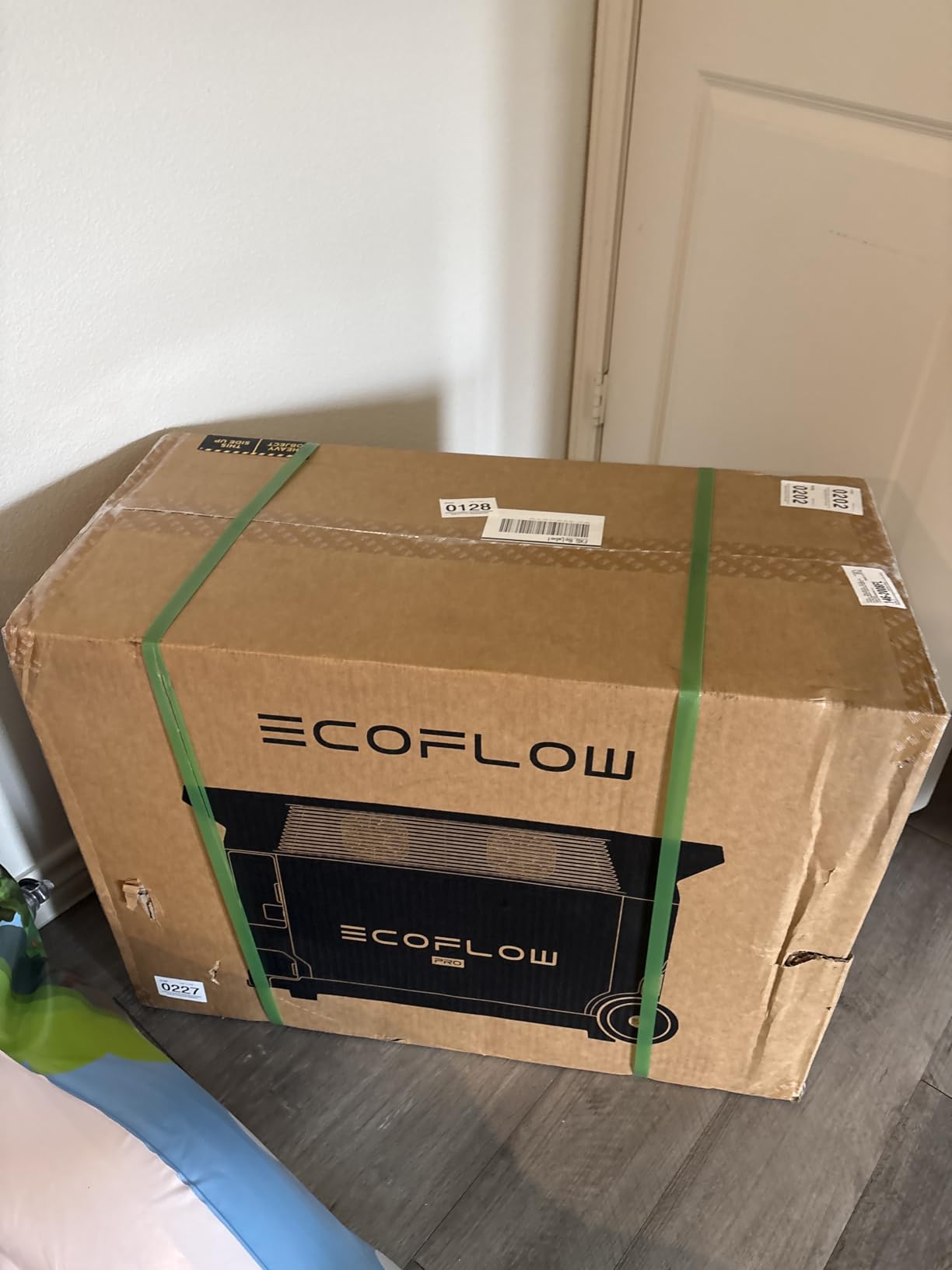
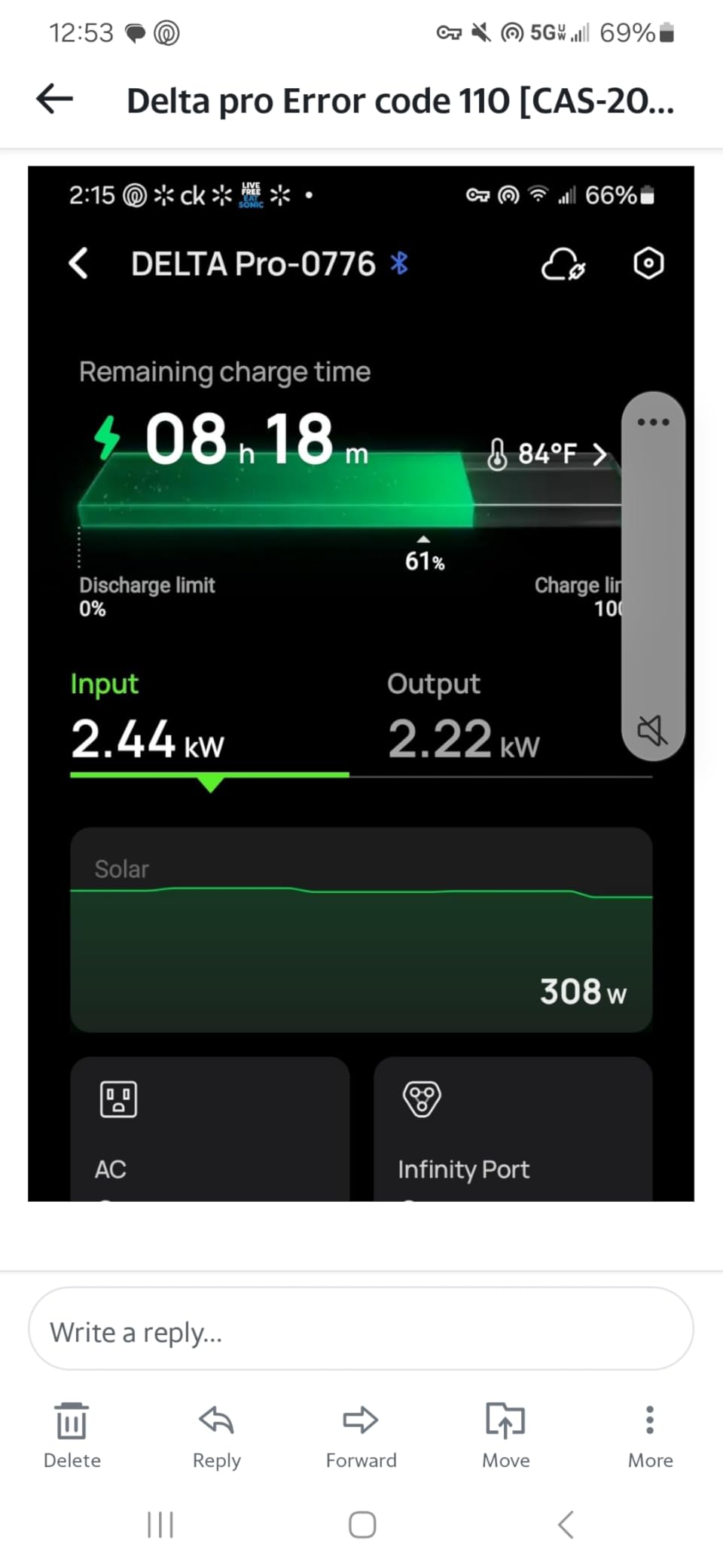
Recharge speed is the standout spec. 1.8 hours from a 240V connection at 3000W, 2.7 hours from a 1800W wall outlet, and 2.8 hours of solar with four 400W panels. Fifteen total outlets, including two USB-C at 100W, five AC outlets and a car socket, mean one box can serve a family rather than one person.
The X-Boost mode lifts output to 4500W, and pairing two units gives 7200W. That is the honest path to running a 5-ton air conditioner or a water heater, and it is why this unit shows up in mobile-business reviews as much as residential ones.
Why buyers with long outages pick this one
The expansion maths is the argument. Starting at 3.6kWh and adding Extra Batteries or a Smart Generator gets you to a system that can carry a household through multiple days, which is the situation where gas and charging-station logistics get hard. A permanently installed system is the other route, and our guide to [home battery backup systems for solar homes](https://www.thebrucehighqualityfoundation.com/best-home-battery-backup-systems-for-solar-homes/) covers that comparison in depth.
At 3600W continuous, it also has more headroom than any 2kWh unit in this list, so a window air conditioner or a microwave does not force a choice between loads.
Where it falls short
It is the heaviest unit in the roundup at 99 pounds. Two people, or the extendable handle and a clear path, are needed to move it, and that is worth thinking about if the outage starts while you are not in the room with it.
The solar input cap of 15 amps is the second limitation and the one that shows up most in reviews. If you plan to live entirely off panels during a long outage, this unit is not the one to do it on. Wall recharge is where its strength sits.
4. Jackery Explorer 2000 v2 – Best for Portability
Jackery Explorer 2000 v2 and 2x200W Solar Panels, 2042Wh, 2200W AC Output
- 39.5 pound Cell-to-Body chassis for a 2kWh unit
- 0-80 percent in 66 minutes on AC
- Silent charging mode at 30dB for indoor use
- 20ms UL1778 certified UPS keeps computers on
- Bundled with two 200W solar panels
- Power station and panels ship separately which confuses the cable setup
- only three AC outlets on a 2200W inverter
- the L-shaped DC7909 plug must be removed for the DC8020 panel plug
At 39.5 pounds this is the lightest 2kWh unit in the roundup, and the Cell-to-Body packaging is the reason. Jackery built the cells into the chassis rather than bolting a battery pack onto a frame, and the result fits under an arm and up a staircase.
The output is a straight 2200W continuous with matching 2200W surge, which is a simple inverter to reason about. If your peak load is under 2200W, this runs it, and there is no X-Boost trickery to model.
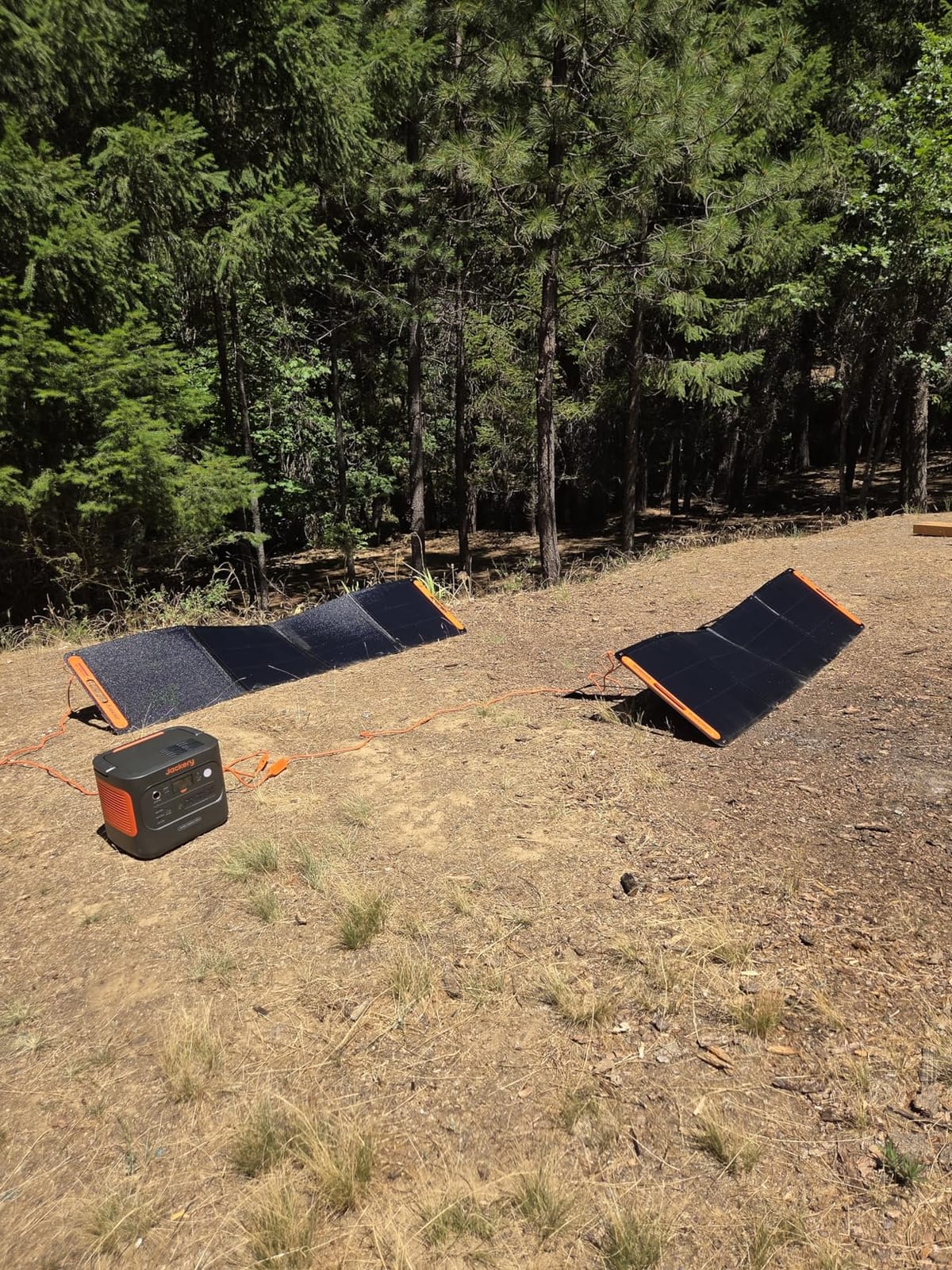
Two details make it good for indoor backup. The 30dB silent charging mode means you can recharge it in a bedroom overnight, and the 20ms UL1778-certified UPS keeps routers and computers running through a switch without a reboot.
Reviewers consistently describe the unit as unusually quiet and compact for 2kWh, with fast charging and near-silent operation. The 268 reviews are concentrated on the power station itself, which is the part that matters.
Why carry weight changes the buying decision
Weight is not a spec, it is a usability decision. A unit you can lift alone is a unit you will actually bring to the bedroom, the basement or a neighbour’s house. On Bogleheads-style forums, the workaround people describe for long outages is carrying a portable power station to a friend who still has grid power, and that only works if you can lift it.
For a household that wants one unit to cover a fridge, some lights and a home office, the 2042Wh capacity and 2200W output are the right pairing.
Where it falls short
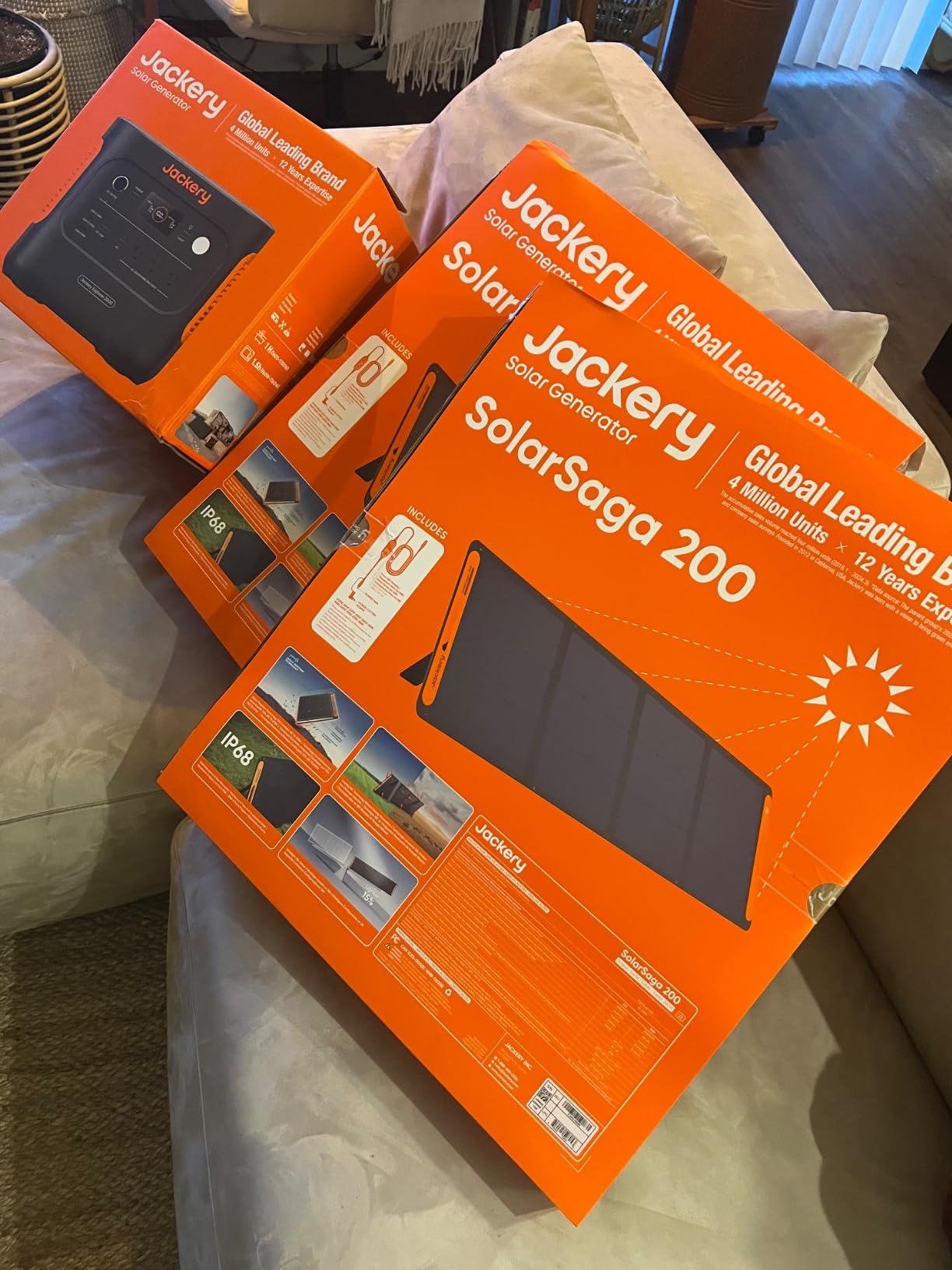
The dual-plug cable arrangement is the most-reported friction, and Jackery itself flags it in the listing. The power station and panels ship separately, and the L-shaped DC7909 plug has to be pulled out before you can use the straight DC8020 plug for the panels.
Three AC outlets on a 2200W inverter is also a tight count for a family, so budget for a power strip. And at 66.8 pounds the full package with two panels is no longer a one-person carry.
5. Jackery HomePower 3000 – Best for RV and Home Dual Use
Jackery HomePower 3000 and 2x200W Solar Panels, 3072Wh, 3600W AC Output
- Built-in TT-30 RV port plus dual 100W USB-C PD
- full charge in 1.7 hours using AC and DC together
- 3600W continuous with 7200W surge covers compressor startup
- owners report running camper A/C and a microwave at once
- UL-certified 20ms UPS for sensitive electronics
- Cannot be expanded with additional battery packs
- undocumented minimum load threshold for stable UPS behaviour
- advertised Alexa integration does not work
- 59.5 pounds is worth adding a wheel kit for
This is the dual-purpose pick: one unit for a house outage and the same unit in a truck on Friday. The built-in TT-30 RV port is the specific feature that makes that possible, since most home-only units need an adapter and most RV-only units lack 3600W of output.
3072Wh with 3600W continuous and 7200W surge is a rare balance. The surge figure is high enough that a 5-ton air conditioner or a refrigerator compressor will start without the unit browning out, which is the most common disappointment people report with mid-size units.
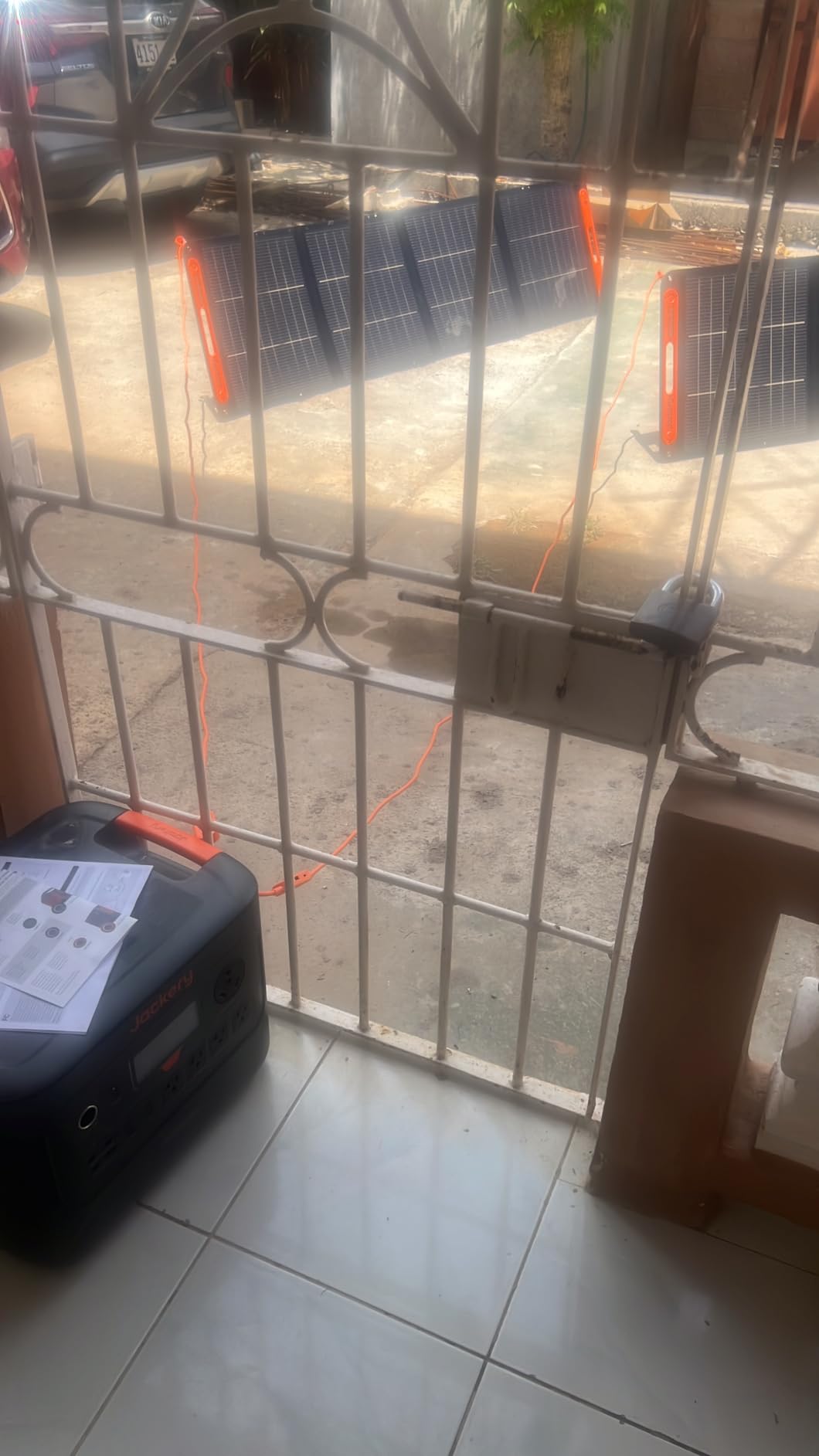
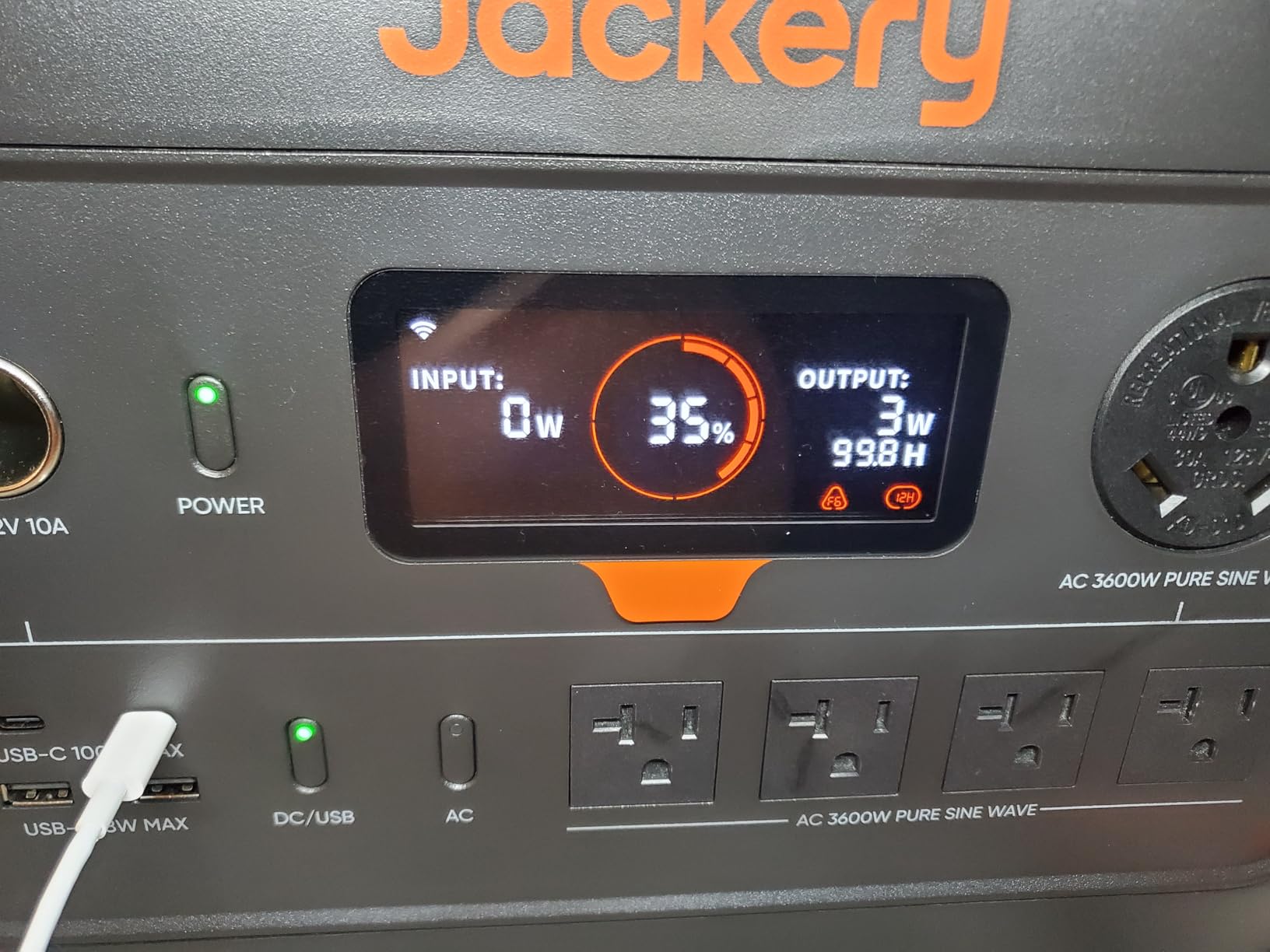
Owners report running a refrigerator for up to two days on a full charge, and Jackery’s own figures cite up to 15 hours of household runtime. The 1.7-hour hybrid AC and DC recharge is quick enough to refill overnight after a full day of use.
Cell-to-Body packaging makes it 47 percent smaller and 43 percent lighter than comparable 3kWh units, which is why it sits at 59.5 pounds. Very quiet cooling is another repeated comment, and that matters when the unit lives in a living room rather than a garage.
Why the RV port changes what one unit can do
Owners describe powering camper air conditioning and a microwave simultaneously, plus e-bikes and networking gear. If your outage plan and your weekend plan share a purchase, this is the unit that avoids buying twice. Our [best portable generators for home backup](https://www.thebrucehighqualityfoundation.com/best-portable-generators-for-home-backup/) guide covers the gas-powered alternative if runtime matters more than weight.
The 4000-cycle rating holding 70 percent capacity is mid-pack here, lower than BLUETTI’s 6000 or Anker’s 10000. For a buyer planning a decade of service, that is a real difference in the arithmetic.
Where it falls short
No expansion. This is a fixed 3072Wh platform, and pairing units is the only route to more capacity, which is a more expensive path than add-on battery modules.
There is also an undocumented minimum load threshold for stable UPS behaviour, and support is the single most-discussed issue in the reviews: one detailed negative review describes non-working support channels, an undeliverable promised Alexa integration and a non-returnable purchase policy, though Jackery’s seller later partially addressed it. If you rely on smart-home control, test the app before the storm.
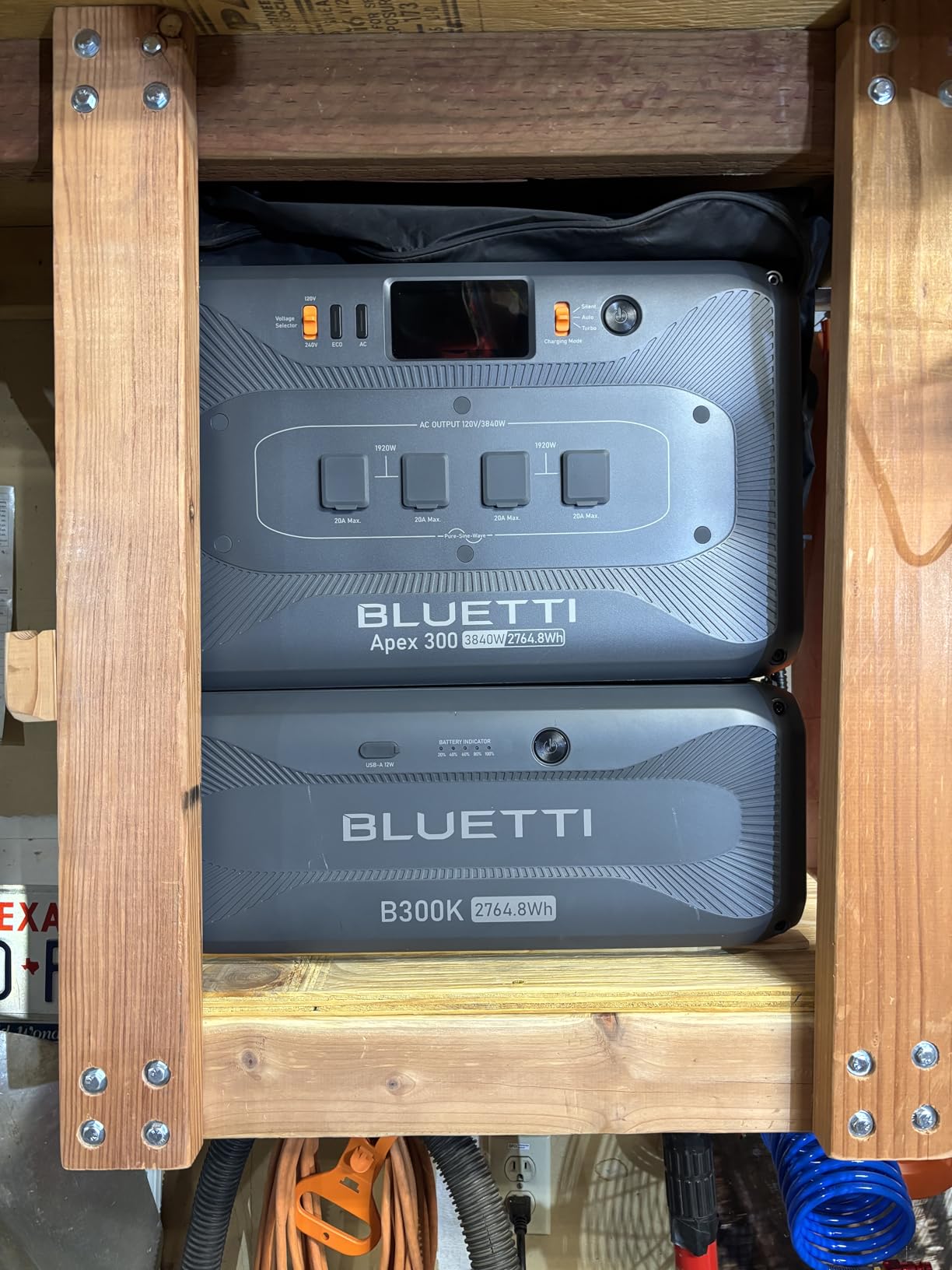
6. BLUETTI Apex 300 with B300K – Best for 240V Dual-Voltage Output
BLUETTI Apex 300 Portable Power Station & B300K Expansion Battery 5529.6Wh
- Simultaneous 120V and 240V output runs normal and heavy loads together
- 5529Wh combined capacity covers multi-day outages
- six AC outlets power window units and RV ovens directly
- 80 percent charge in 45 minutes on AC
- 22dB silent operation with under 10ms UPS
- 11 percent one-star share
- the highest here
- driven by early-unit failure reports
- B300K expansion battery ships separately so two deliveries are needed
- heaviest bundle in the roundup at 83.8 pounds
This is the only unit in the roundup with simultaneous 120V and 240V output, and that single fact changes what a battery backup can do. A standard 120V-only unit simply cannot run an electric water heater, a 240V oven, or a clothes dryer, no matter how large its battery is.
Combined capacity is 5529Wh across the Apex 300 and its B300K expansion battery, with 3840W continuous and 7680W surge. Six AC outlets mean a window air conditioner or an RV oven plugs in directly with no shore hookup.
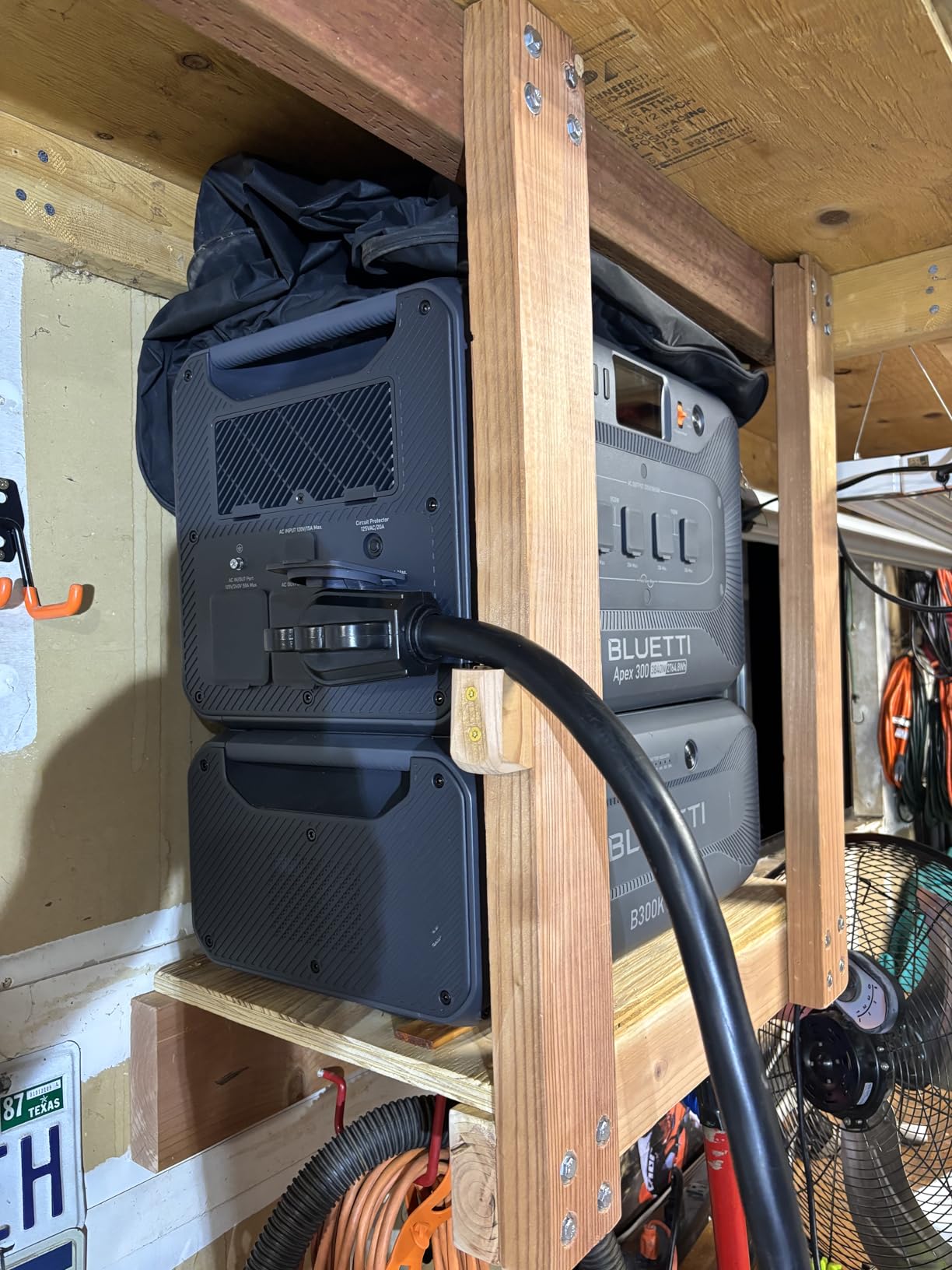
Recharge is fast at 80 percent in 45 minutes on AC, and the built-in 2400W solar input expands to 6400W. That solar headroom is the highest in the roundup, so if you plan to recharge from panels during a long outage, this is the unit designed for it.
The 6000-plus cycle rating to 80 percent and 17-year lifespan are strong, and the 22dB silent operation makes it usable in a living space.
Who the dual voltage actually helps
Most homes have a handful of 240V circuits: the range, the dryer, the water heater, sometimes a well pump or a 5-ton air conditioner. A 240V output lets you cover one of those during an outage instead of only covering the small stuff. That is the difference between keeping the house habitable and keeping the lights on.
For a home with a central air conditioner, the 7680W surge figure is the number that matters, because compressor startup is where mid-size units tend to fail.
Where it falls short
It has the lowest rating and the smallest review base in the roundup at 4.4 across 164 reviews, and the reason shows in the distribution: 11 percent one-star against 78 percent five-star. Those critical reviews describe units failing shortly after delivery, and we would weight early-unit failure reports more heavily than usual when the review pool is this young.
Two logistics notes. The B300K ships separately, so plan for two deliveries, and the bundle is the heaviest here at 83.8 pounds. The dual-voltage architecture is genuinely useful, but the reliability record is the least settled of the ten.
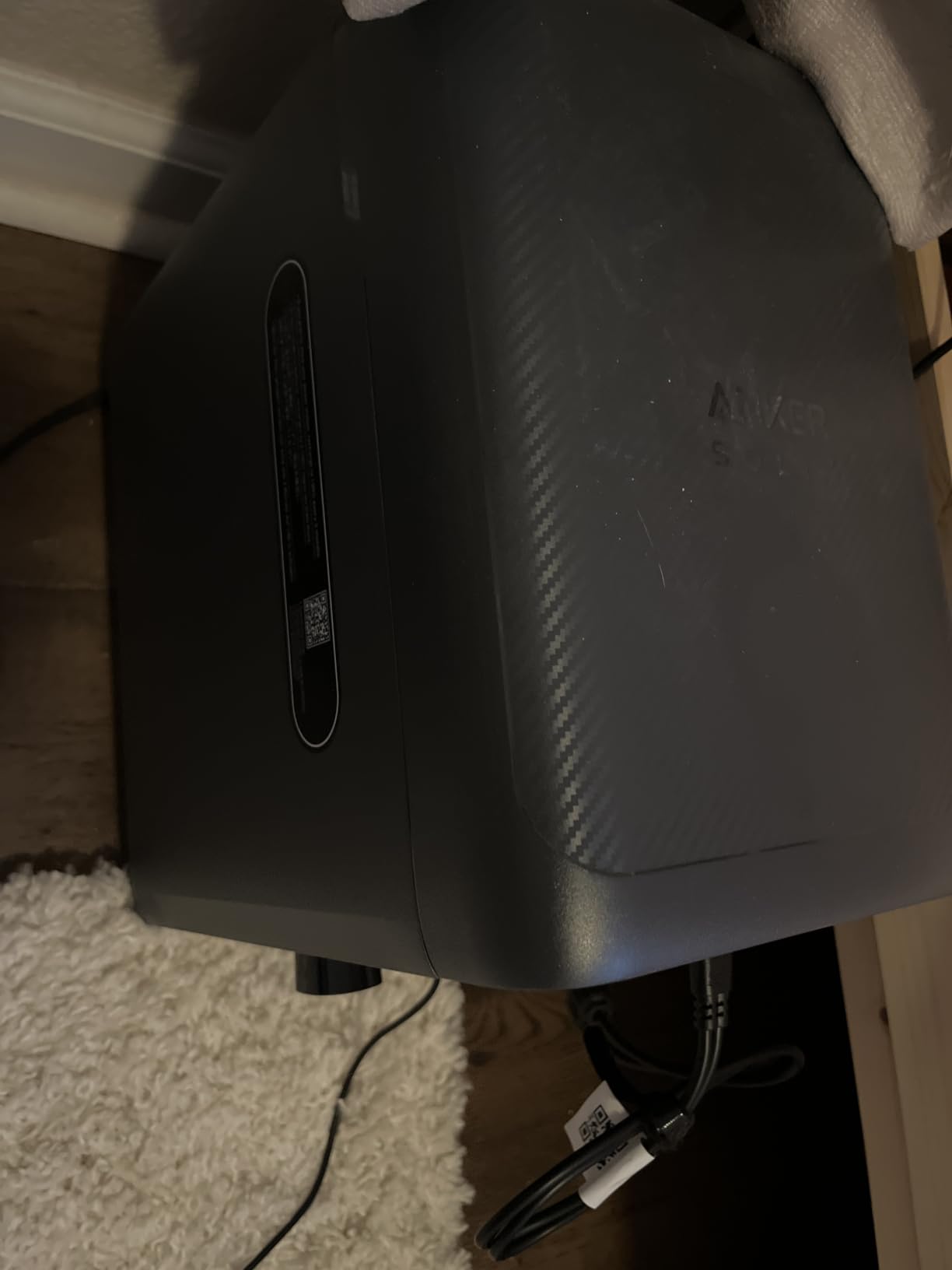
7. Anker SOLIX S2000 – Best Runtime per Watt of Battery
- 10000-cycle battery rated to a 15-year lifespan
- 6W idle and 3W in UPS mode give roughly 35 hours of fridge runtime
- six charging methods including up to 400W solar input
- app allows charge limits down to 100W and time-of-use modes
- front and rear outlets separate always-on loads
- Charging fan is loud and droning at the 1200W setting
- no 12V DC port at all
- two-hand carry with edge grips rather than a proper handle
- strong chemical smell on the very first charge
Efficiency is the whole argument here. A 6W idle draw and 3W in UPS mode is the lowest parasitic load in the roundup, and idle draw is what decides how long a unit lasts when it is plugged in waiting for an outage. Owners cite roughly 35 hours of refrigerator runtime from the 2010Wh battery as a result.
Owners also report powering a full-size 220L fridge for an hour on about 3 percent of the battery, and running a chest freezer for three to four days on a single charge. Those are the real numbers that a watt-hour figure alone does not give you.
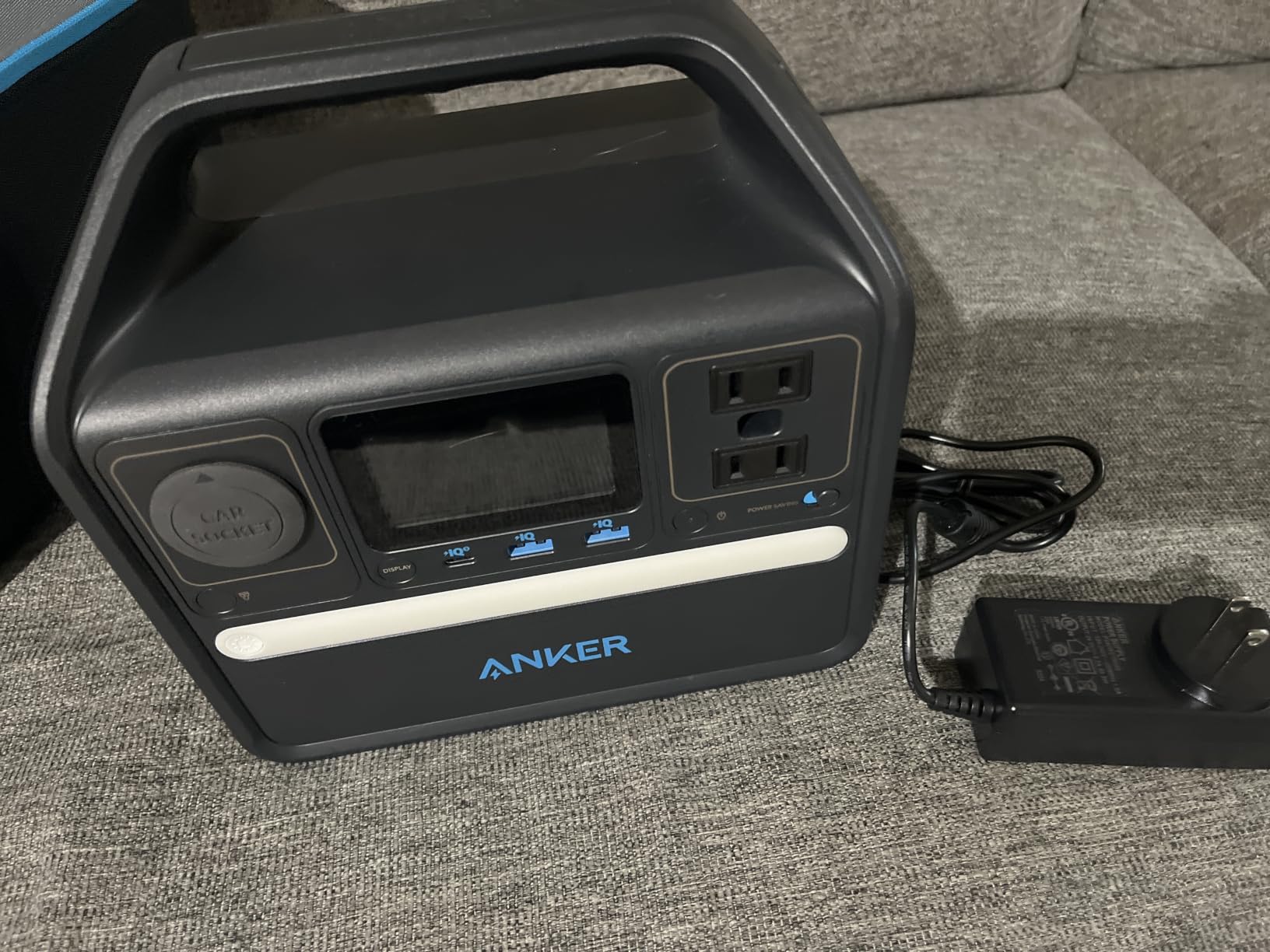
The 10000-cycle rating is the best published longevity number here, backed by a 15-year lifespan claim. If your plan is to keep one backup unit for a decade, that figure moves the decision more than 100Wh of extra capacity does.
Physical design is a quiet strength. At 35.7 pounds and 8.2 inches wide, it is the smallest and lightest 2kWh unit in the roundup, and eight outlets split across front and rear faces let you keep always-on appliances neatly separated from everyday devices.
Why idle draw matters more than buyers expect
A backup unit spends most of its life doing nothing while still drawing power for the inverter and battery management. Over a year of readiness, a 20W difference in idle draw is a meaningful slice of stored energy. The 3W UPS figure is why the fridge numbers on this unit beat its capacity class suggests.
Charging flexibility is also strong. Six input methods including AC, solar up to 400W, a generator, an alternator charger and the car outlet, plus app control that lets you drop charging to 100W when the household breaker is tight.
Where it falls short
The charging fan is loud and droning at the 1200W setting, which several reviewers call out as unsuitable for a bedroom or office. That is a real problem for a unit meant to live indoors during an outage, so plan to recharge it in another room.
There is no 12V DC port at all, which removes an option some users rely on for older equipment. And at 35.7 pounds with edge grips rather than a handle, it is a two-hand carry, and one reviewer reported a strong chemical burn-off smell on the very first charge.
8. EcoFlow Delta 3 Classic – Best Starter Unit in the Sub-1kWh Class
- 90 percent five-star share
- the strongest rating distribution here
- 0-80 percent in 45 minutes and full in about an hour on AC
- under 10ms UPS makes it viable for a fridge or network gear
- one owner ran two sump pumps for two days on half a charge
- app scheduling lets you run on battery during peak tariff hours
- Not compatible with EcoFlow Smart Extra Battery expansion packs
- 26.7 pounds is still a two-hand carry for some users
- a few reviews report units arriving used or with screen damage
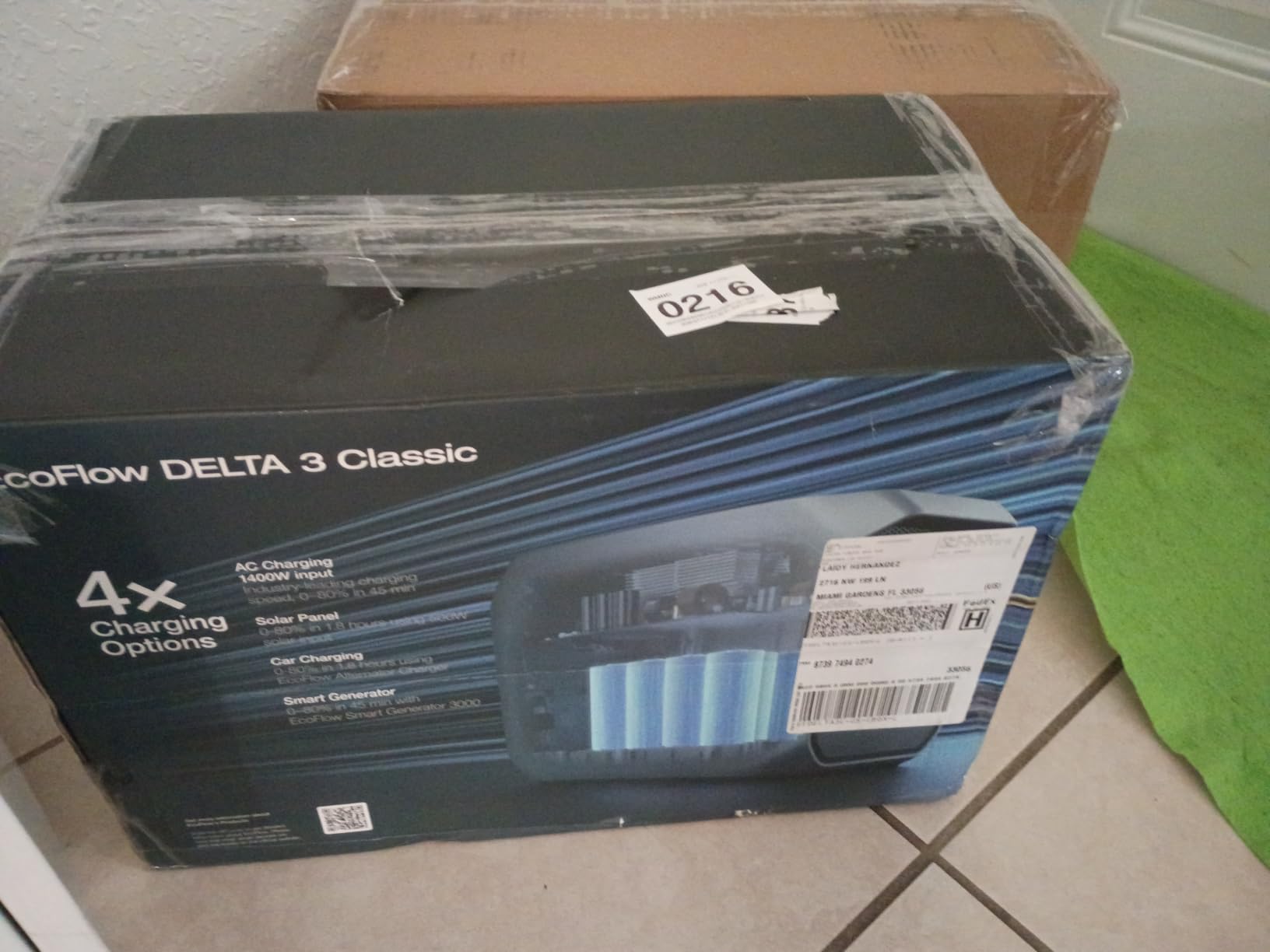
Among 1024Wh units, this one has the strongest published rating distribution in the whole set, with 90 percent five-star reviews across 1294 reviews. Owners single out charging speed, the sub-10ms UPS and the physical design, including well-labelled cables and high-quality packaging.
1800W continuous with 3600W surge is a good inverter for a small battery, and the X-Boost mode lifts it to 2600W. That is enough headroom to run a refrigerator, a router, some lights and a small CPAP without any of them competing for the inverter.
Two sump pumps for two days on 50 percent of the charge is the kind of report that matters for anyone whose real concern is water rather than electronics. A sump pump is a continuous draw, and it is the load that drains most backup setups fastest.
Recharge is where this unit separates itself from its class: 0 to 80 percent in 45 minutes on AC, and a full recharge in about 2.5 hours with a 500W panel. Storm Alert and Self-Powered modes in the app are practical touches for people who do not want to babysit a display.
Why this is the right first unit for most homes
On r/preppers, the recurring starter-kit advice is that a small station plus a panel can get a household through a first emergency without a large purchase. This is that class of unit, done well, and 1294 reviews is a real evidence base for the money.
The practical limit is worth stating plainly. A single 1024Wh battery is a night of essentials, not days. It runs a fridge, networking and lighting comfortably, and it will not run a 5-ton air conditioner or carry a household for a week.
Where it falls short
It is not compatible with EcoFlow Smart Extra Battery expansion packs, so this is a closed 1kWh box. If you want to grow later, the Delta Pro in this roundup is the expandable route.
At 26.7 pounds it is still a two-hand carry for some users. And the critical reviews cluster outside the US, where a small number describe defective units and third-party sellers shipping previously opened or used products, so buying from an authorised seller is worth the effort.
9. OUPES Mega 1 – Best Expandability in the Entry Class
- Expands to 5120Wh with up to two B2 extra batteries and no extra inverter
- 0-80 percent in 36 minutes on AC and 26 minutes with solar combined
- 2000W pure sine wave output from a 1024Wh battery
- built-in MPPT and bypass charging support
- sub-20ms UPS protects servers and medical devices
- Bluetooth-only app with no Wi-Fi or remote monitoring
- 3500-cycle rating is the lowest here
- 1496 reviews appear pooled across the OUPES product line rather than this model
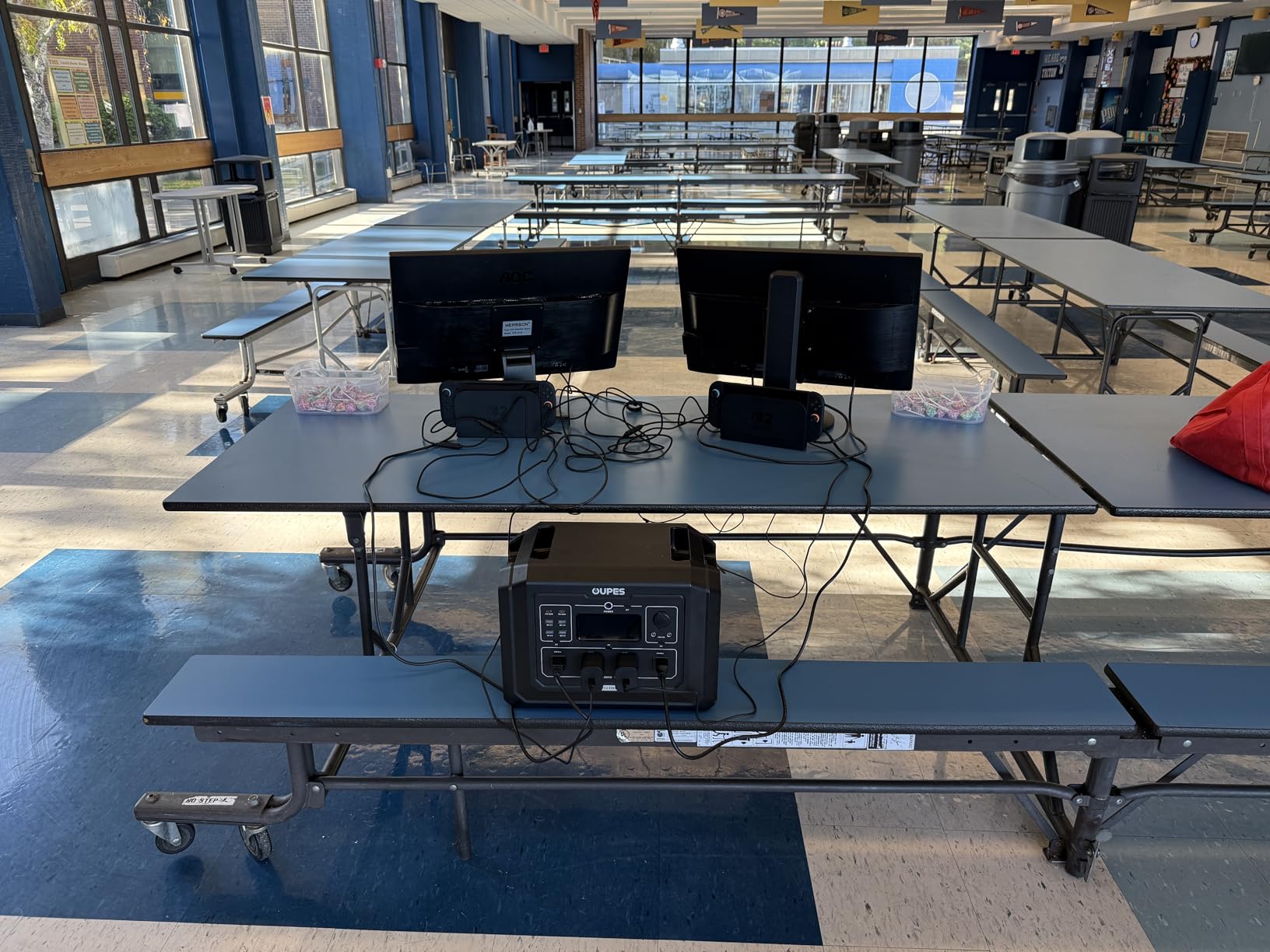
Expandability is the differentiator. The Mega 1 starts at 1024Wh and scales to 5120Wh with two B2 extra batteries, and critically those packs add capacity without needing a second inverter. Most units in this price range are closed boxes, so this is the cheapest route we found to a 5kWh-capable system.
2000W of pure sine wave output from a 1024Wh battery is a strong ratio, and 4500W surge covers compressor startup. Pure sine wave matters more than buyers expect for sensitive electronics and for anything with a motor.
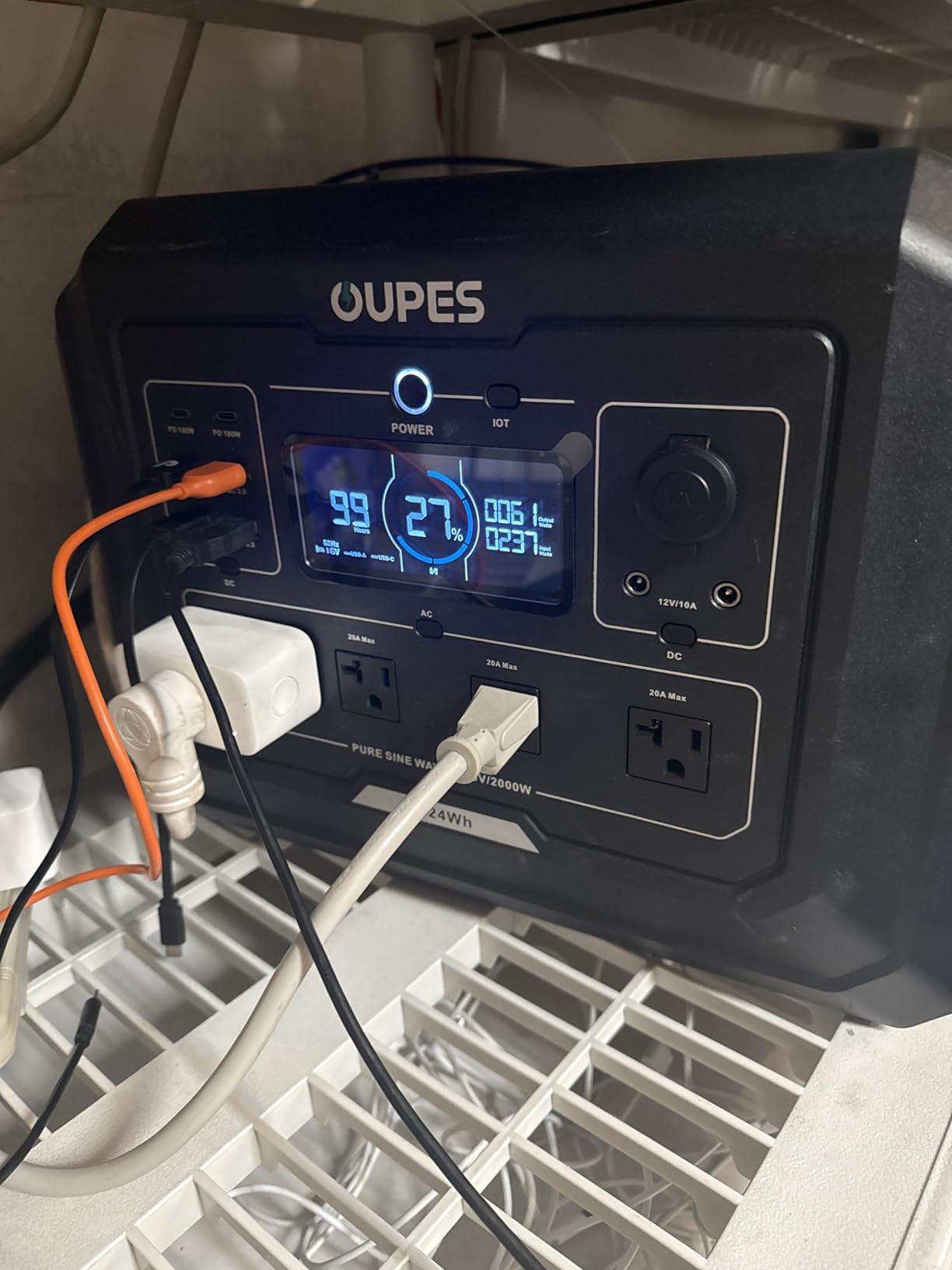
Charging is the fastest in the roundup: 0 to 80 percent in 36 minutes on AC, and 26 minutes when solar is combined. For a unit you might top up between outages, that speed is genuinely useful.
One caution on the numbers. The 1496 reviews appear to be pooled across the OUPES product line rather than this model alone, so the per-model signal is thinner than the raw count suggests. Treat the rating as a brand-level indicator, not a model-level one.
Why a 3500-cycle battery still makes sense here
The 3500-plus cycle rating to 80 percent capacity is the lowest in this roundup, well below the 6000 and 10000 figures elsewhere. For a home that experiences a handful of outages a year, that difference takes a decade to matter. For a household that cycles it daily as a tariff-battery, it matters immediately.
Built-in MPPT and bypass charging are useful if you already own panels or a generator. Dual 100W USB-C PD ports and four QC3.0 USB-A ports cover device charging without touching the AC outlets.
Where it falls short
App control is Bluetooth only, with no Wi-Fi and no remote monitoring. That is a real limitation if you want to check remaining capacity from another room, and it is the clearest gap against the app control on the EcoFlow and Anker units here.
Beyond the app, verify the expansion battery compatibility and the cycle-life figure with the manufacturer before you commit, because the pooled review count makes model-specific claims harder to trust. If remote monitoring matters to you, the Delta 3 Classic or the C1000 Gen 2 handles it better.
10. Jackery Solar Generator 1000 v2 – Best Lightweight Starter Kit
Jackery Solar Generator 1000 v2 and 200W Solar Panel,1070Wh,1500W AC
- Lightest unit in the roundup at 23.8 pounds with a foldable handle
- ran a 15-year-old full-size side-by-side fridge for 9 hours overnight
- three pure sine wave AC outlets plus PD 100W USB-C
- 0-100 percent in one hour with app-enabled emergency charging
- solar panel charges while the unit powers a load
- Bundled 200W panel sags in the middle and is awkward in wind
- included panel-to-unit cable is too short to place the panel in shade
- the 1-hour fast charge shortens battery lifespan
- unit and panel arrive separately
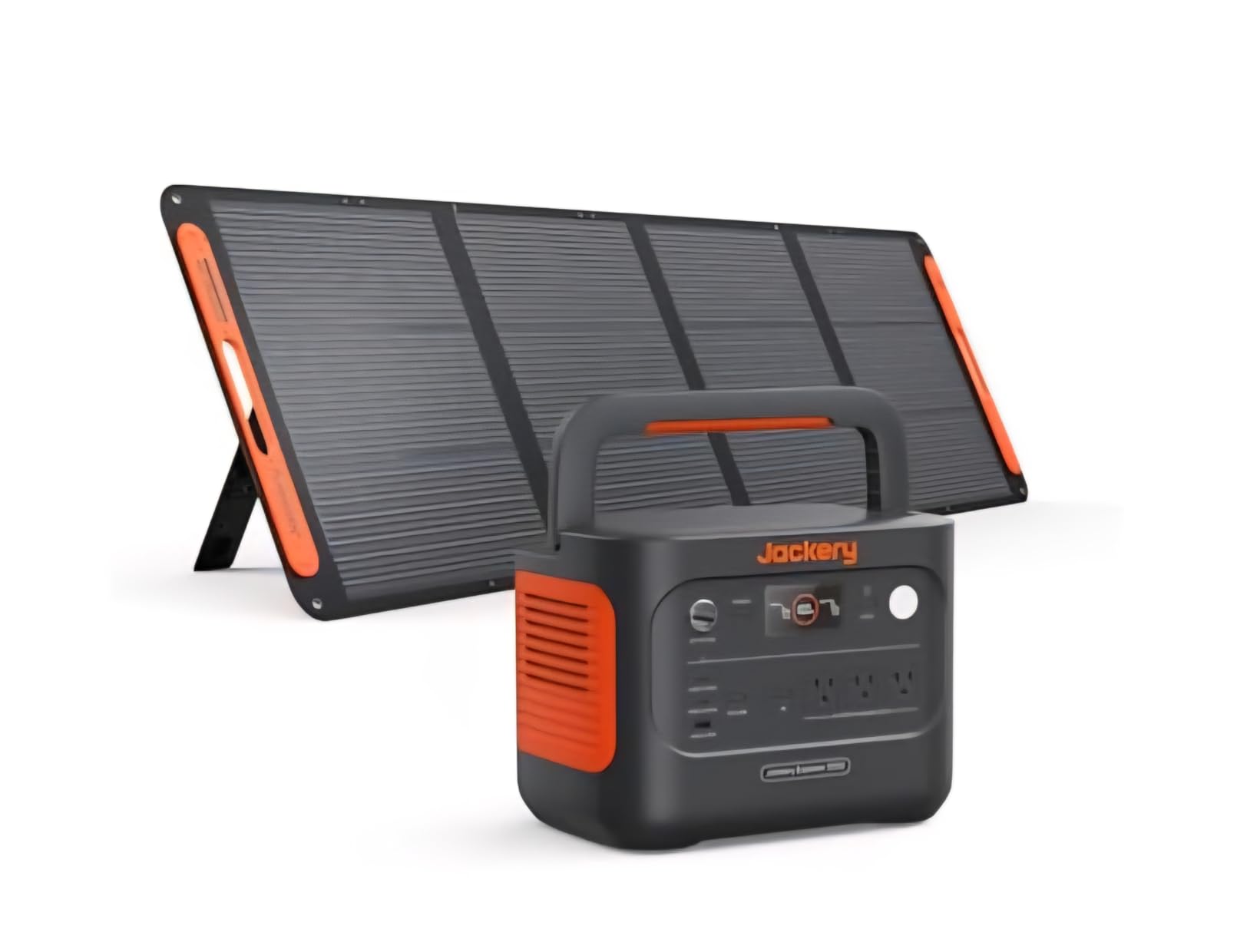
This is the most established product in the roundup, with 1406 reviews and a number two sales rank in outdoor generators. At 23.8 pounds with a foldable handle, it is the only 1kWh unit here you can comfortably carry with one hand, which is what a 15-year-old or a renter needs most.
1500W continuous and 3000W surge covers a refrigerator, a router, lights, a CPAP and a laptop without argument. Three pure sine wave AC outlets are fewer than the competition offers, but pure sine wave is the right waveform for the loads that matter.
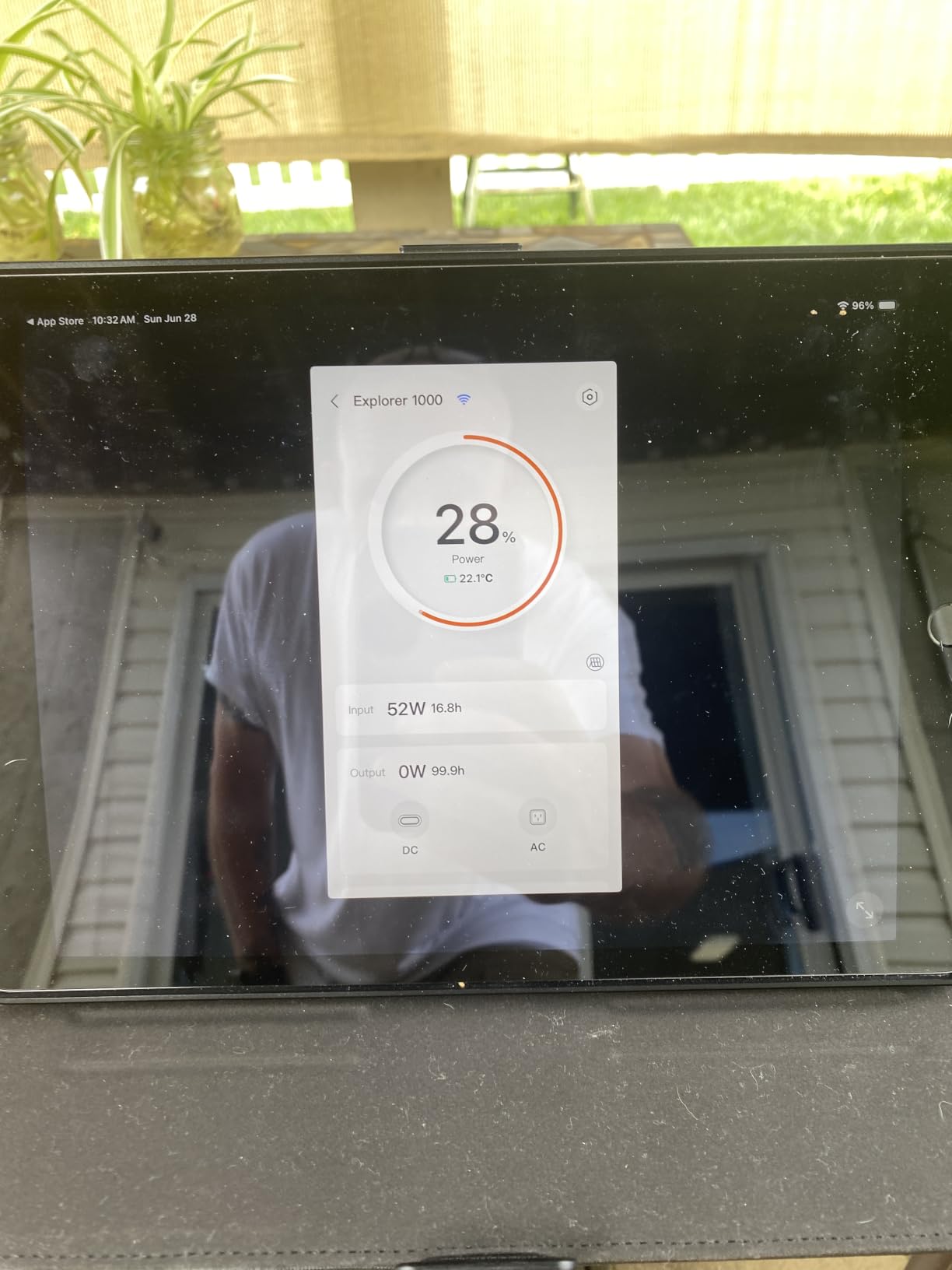
The standout review is a real outage one: owners report running a 15-year-old full-size side-by-side refrigerator for nine hours overnight. That is a genuine test on aging equipment, and it is the kind of report that tells you more than any runtime claim on a listing page.
Battery life is rated at 4000 cycles retaining over 70 percent capacity, with a 10-year lifespan. The app-enabled emergency charge takes it from empty to full in one hour, which is the fastest recovery from an unplanned outage here.
Why the lightest unit is the most practical one
During an outage, the problem is rarely watts, it is logistics. Where is the unit, can you get it down the stairs, can you carry it to a neighbour who still has power. A 23.8 pound unit answers all three in a way a 99 pound one does not.
For apartments, rentals and older adults, the ability to move the backup between rooms is a genuine safety feature rather than a convenience. It is also the classic case for the [best solar generators for off-grid living](https://www.thebrucehighqualityfoundation.com/best-solar-generators-for-off-grid-living/) setups where weight is the deciding factor.
Where it falls short
The bundled 200W panel is the weakest part of the package and is criticised repeatedly. It sags in the middle, is awkward to keep upright in wind, and the included cable is too short to place the panel in shade, which limits when you can actually use it.
The 1-hour fast charge has to be enabled in the app and shortens battery lifespan, so treat it as an emergency feature rather than a habit. The unit also runs very hot on the exhaust side in hot weather, and the v2 marking on the casing is nearly invisible, which makes it easy to have both generations in one drawer.
How We Picked the Best Solar Generators for Home Backup
Every unit here was assessed against the same five criteria, written for this category rather than borrowed from another one. The weights reflect what actually determines whether a battery survives an outage.
Battery chemistry and capacity, at 30 percent. Every unit in the list uses LiFePO4 cells, and the differences that matter are usable watt-hours, published cycle counts and whether capacity can grow. Chemistry is weighted heavily because forum buyers consistently rank fire safety and longevity above raw capacity in homes with children or older residents.
Inverter and surge capability, at 25 percent. Continuous output has to exceed your peak load with 20 percent headroom, and surge has to clear the highest single starting draw. Pure sine wave output is the tiebreaker at this level.
Recharge options, at 20 percent. Wall speed, solar input wattage and alternate inputs determine whether you can recover during an event rather than before one. Fast AC recharge and high solar input are treated as equally valuable.
Expandability and runtime efficiency, at 15 percent. Idle draw, UPS switchover time and the route to more capacity decide how many days a unit actually covers.
Owner-reported reliability and support, at 10 percent. We read the one-star reviews as carefully as the five-star ones, weighted early-unit failure reports heavily when a product is new, and treated the share of one-star reviews as the clearest single reliability signal available. Brands recommended repeatedly on r/solarenergy advice threads, including Anker SOLIX, EcoFlow, Bluetti, Pecron and Jackery, were given the benefit of the doubt on support, not on specifications.
Solar Generator vs Gas Generator for Home Backup
These two solve different problems, and the honest answer is that most households in storm-prone areas want one of each. A battery is better for electronics, medical devices, indoor use and overnight runtimes. A gas generator is better for multi-day runtime, high-power heating loads and refuelling in a long event.
The safety difference is the strongest argument for batteries. A gas generator produces carbon monoxide, and fatal accidental poisoning indoors is a documented and recurring risk, which is why the manual is explicit about never running one in a house, a garage or near an open window. A solar generator has no combustion, no exhaust and no placement restriction beyond ventilation for its own electronics.
Runtime is where gas wins. A full jerry can represents far more usable energy than any battery below 5kWh, and a small gas unit will run indefinitely as long as you have fuel. Batteries are bounded by capacity, which is the honest limit described in the next section.
Noise and maintenance point the same way. Battery units are near-silent and need no oil changes, spark plugs, fuel stabiliser or winter storage. Gas units are loud enough to wake a neighbourhood and need annual servicing. On cost per delivered watt-hour over a decade, a battery wins on running costs and gas wins on the entry purchase.
Typical use decides it. Keep the fridge, router, lights, medical equipment and one laptop on the battery, and keep the gas unit for the water heater, the range and the days when the sun does not come out.
240V Output and Transfer Switches: Powering Your Panel Safely
To power more than a handful of outlets, a solar generator has to connect to your home through a transfer switch or a smart home panel, and that connection is electrical work, not a weekend project. Never plug a power station straight into a wall outlet, a standard interlock is designed for grid-tied systems rather than storage, and using the wrong method is how people damage equipment or create a backfeed hazard for line workers.
What 240V output actually unlocks: a 120V-only unit powers lights, electronics, small pumps and portable air conditioners. A 240V unit can also run an electric water heater, a range, a clothes dryer and some central air conditioners. In this roundup, only the BLUETTI Apex 300 provides simultaneous 120V and 240V output, which is why it is the only unit here that can cover a 240V circuit without a separate step-down transformer.
The three-feature check that appears in most buying guides is worth repeating: battery chemistry, voltage output, and transfer switch compatibility. If a seller cannot answer all three with a datasheet, that is a signal about the rest of their support.
Budget for the install to be a real line item. An electrician, a listed transfer switch, permitting and possibly a service-panel upgrade can add more than the power station itself, and in some jurisdictions the work must be inspected before it can be energised. If your goal is backup rather than a full-house system, our guide to [home battery backup systems for solar homes](https://www.thebrucehighqualityfoundation.com/best-home-battery-backup-systems-for-solar-homes/) covers the permanently installed route in more detail.
What a Solar Generator Cannot Do
A solar generator is not a grid replacement, and buying one with the wrong expectations is the main source of disappointment. Here is what these units genuinely cannot do.
They cannot run indefinitely without energy input. Runtime is capacity divided by load, and when the battery is empty, it is empty. Recharging takes hours, and a multi-day storm with no sun is the scenario where a battery needs a plan, a car, or a generator alongside it.
They cannot handle every household load. Central air conditioning, an electric water heater, a space heater and an electric range all draw more than a mid-size battery inverter can deliver, and a surge-heavy load can trip an overload protection system even when the average draw looks manageable.
They are not maintenance-free in the way a gas generator is not. Batteries lose capacity over years, perform worst in extreme cold, and need periodic top-ups during storage. Storing a unit for months at a full charge in a hot garage is the fastest way to shorten its life, so a monthly top-off to around 50 to 80 percent is the habit worth building.
And they are not a substitute for a permanently installed system if your outages regularly run past several days. A permanently installed battery is the better answer for that situation, which is a point r/solarenergy regulars make often when comparing portable stations against installed systems.
What to Look for When Buying a Solar Generator
Check these seven things in this order, and you will make a defensible decision quickly.
Usable capacity in watt-hours, not marketing capacity. Divide by your realistic load and subtract 15 percent for inverter losses. A 1kWh unit is an overnight tool; a 3kWh unit is a weekend tool.
Continuous output in watts, with 20 percent headroom over your peak simultaneous load. Then check surge, because a compressor that will not start is the same as an appliance that does not run.
Battery chemistry. LiFePO4 is the right answer for a home. It has a far better cycle life and a much higher thermal stability than NMC, and every unit in this roundup uses it, so you do not have to choose.
Published cycle life. A number beats a claim. Anker’s 10000 cycles and BLUETTI’s 6000-plus are concrete; a vague number of years is not. At one full cycle a week, 6000 cycles is a decade-plus of service.
Idle draw and UPS switchover time. A low idle draw protects you during standby, and a switchover under 10ms is what keeps a CPAP or a desktop alive through a flicker. This is the specification that separates a real backup from a power bank with a large battery.
Recharge options, with wall speed first and solar input second. Fast AC charging means you can recharge before a storm, and high solar input wattage matters if you plan to run from panels during the event.
Expandability, and whether solar panels are included. Several units here are closed boxes, and several ship with panels in the box at no extra charge. Both details change the total cost of a setup more than any other single spec.
Two safety notes. Never run a gas generator indoors, in a garage or near an open window, because of carbon monoxide. And follow the manufacturer’s storage and temperature guidance for any battery unit, since heat and deep discharge are what shorten battery life.
Frequently Asked Questions
How long will a 2000 watt solar generator run a refrigerator?
A full-size refrigerator draws roughly 150W while running, so a 2000Wh battery gives about 13 hours before losses, and 3000 to 5000Wh gives a day or more. The 3072Wh Jackery HomePower 3000 is listed at one to two days for a refrigerator, and the Anker SOLIX S2000 is reported at roughly 35 hours on a 2010Wh battery thanks to its low 6W idle draw.
What size solar generator is needed to run a house?
Size it to your essential loads, not your whole house. Add the running watts of everything you want on at once, add the highest starting surge, and buy an inverter at least 20 percent above that. For a fridge, router, lights and a CPAP, 1000 to 2000Wh is enough. For household essentials through a long outage, 3000Wh and up. For 240V loads, you need a dual-voltage unit or a permanently installed system.
Can a solar generator power an entire house?
Not on one battery, unless your definition of the whole house is a fridge, some lights and networking. Units at 5kWh and above with 240V output, or a system of paired units, can cover most essential circuits. A permanently installed battery is the right answer for genuine whole-home coverage, and our picks here are sized for outages rather than for replacing the grid.
What are the disadvantages of a solar generator?
The main ones are bounded runtime, weight, and cost. A battery gives you only the energy stored in it, so a multi-day outage with no sun needs another recharge plan. Units range from about 24 pounds to nearly 100 pounds, which matters if you cannot move one easily. And unlike a gas generator, there is no cheap refuelling option when the battery is flat.
Which solar generator is best for whole-home backup?
The EcoFlow DELTA Pro is the strongest whole-home starting point in this roundup, with 3600Wh that expands to 25kWh, 3600W continuous output and 15 outlets. For 240V circuits such as a water heater or range, the BLUETTI Apex 300 is the only unit here with simultaneous 120V and 240V output. Past several days, a permanently installed system is a better answer than any portable unit.
Do solar generators work on cloudy days?
Yes, but at reduced output. Solar input wattage is measured in ideal conditions, and on an overcast day a panel produces a fraction of its rating. A good habit is to charge from the wall before a storm, since AC charging is typically several times faster than solar, and to treat panels as a top-up during an event rather than your primary energy source.
What size solar generator do I need for a refrigerator?
For a refrigerator alone, 1070Wh and about 1500W of continuous output is enough for a night, which is why the Jackery Solar Generator 1000 v2 is a legitimate fridge-only answer. If you want lights, a router and a medical device running at the same time, move to 2000Wh or more. Remember that a fridge compressor needs roughly double its running watts to start.
What to look for when buying a solar generator?
Check seven things: usable watt-hours, continuous output with 20 percent headroom over your peak load, surge rating, LiFePO4 chemistry, published cycle life, idle draw and UPS switchover time, and recharge options with wall speed first. Then check whether solar panels are included and whether the battery is expandable, since both change the real cost of the setup.
The Best Solar Generators for Home Backup: Our Final Verdict
For most households, the Anker SOLIX C1000 Gen 2 is the right first buy: 2000W of output from a 1024Wh battery, a 10ms UPS that keeps medical and network gear alive, a 49-minute wall recharge and 25 pounds of weight. It covers a fridge, a router, lights and a CPAP through a night with room to spare.
Buy the BLUETTI Elite 200 V2 if you want panels in the box and a 6000-cycle battery, the EcoFlow DELTA Pro if outages run past a day and you want room to grow, and the BLUETTI Apex 300 only if you have 240V loads to cover. Whatever you choose in 2026, size it to your essential loads, keep it charged before a storm, and treat it as insurance for the essentials rather than a replacement for the grid.