
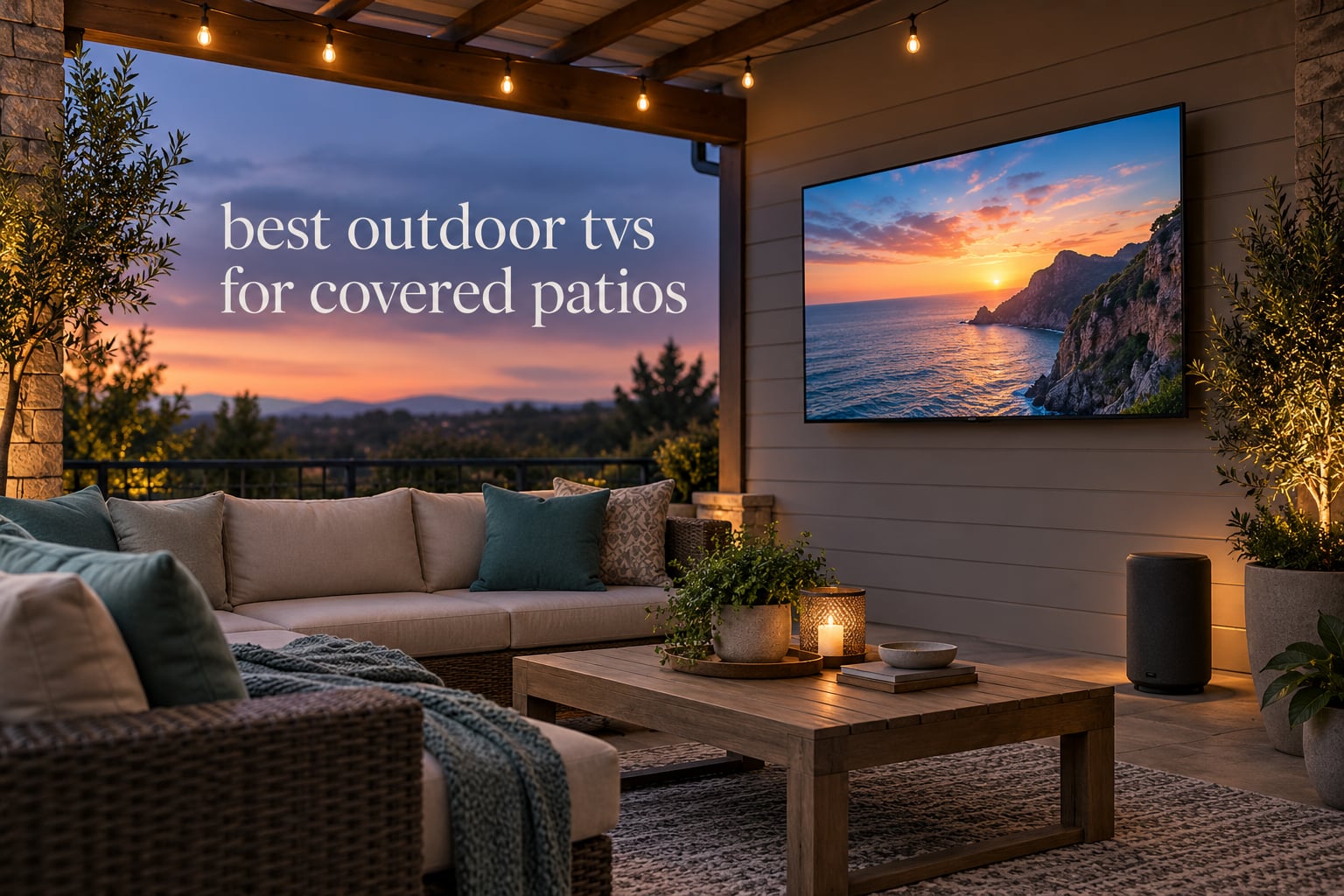
A covered patio is a specific place. It is darker than a west-facing wall and brighter than a screened porch, and that middle position is exactly where most people get outdoor TV wrong. They either overspend on a full-sun set built for direct afternoon sun, or they hang a cheap indoor panel on a damp wall and hope. Both mistakes are avoidable.
This roundup covers the best outdoor TVs for covered patios in 2026, and every pick below was chosen for one reason first: whether it stays watchable in the light your patio actually gets. We compared ten sets across brightness, ingress protection, chassis weight, warranty length and owner review volume, then filtered hard for the covered-patio shade class rather than a generic outdoor list.
One note before you start. The search results for this topic are crowded with forum threads, and the people in them disagree, often loudly. The cheapest indoor set under a deep roof has plenty of multi-year survivors. The humidity-is-coming-for-your-house crowd has plenty of corrosion stories. Both are describing real patios, just different ones. Our job here was to sort out which description matches yours.
If you are furnishing the rest of the space, our guides to the best outdoor speakers for patios and the best outdoor lanterns for patios cover the parts of the setup that get used most.
Table of Contents
Do You Actually Need an Outdoor TV for a Covered Patio?
Usually yes, unless your patio is deeply roofed and you only watch after dark. An indoor TV works under a roof for years, but no warranty covers it once it goes outside, and moisture corrodes the power and Wi-Fi boards long before it ruins the panel.
Here is the short version. If your patio gets direct sun on the screen at any point in the afternoon, you need an outdoor-rated set with at least 1000 nits and an IP55 rating or better. If it never gets direct sun, an indoor set plus a weatherproof cover will get you through several seasons cheaply, as long as you accept the warranty is void. If you want the set mounted year-round and forgotten about, buy outdoor-rated and stop worrying.
The reason indoor sets fail outside is humidity, not rain. A covered patio blocks falling water but does nothing about damp air, and that damp air works its way into unsealed vents and settles on the boards inside. Owners on AVSForum report running two sets on a covered, no-direct-sun patio for eight years or more, while other owners describe sets that still displayed pictures but had quietly lost Wi-Fi or developed power faults.
There is one more consideration most spec sheets hide. Outdoor TVs are not brighter because they are better TVs. They are brighter because they have to fight ambient light, and because they run their backlight harder for longer in heat. That extra heat is also why a lot of these sets need air movement around the chassis rather than being recessed flush into a wall.
Top 3 Best Outdoor Tvs For Covered Patios (October 2026)
We keep coming back to the SYLVOX 55-inch because 326 owner reviews is more real-world history than anything else in this group, and the 4.4-star average has held across multiple model generations. The Samsung The Terrace earns its place on picture quality and 120Hz motion handling. The 43-inch SYLVOX is the one to buy if your patio is deep in shade and your budget is fixed.
Quick Picks: All Ten Sets Compared
Two things stand out in that table. First, 1000 nits is the number that repeats, and that is not a coincidence. Second, the price gap between an 800-nit full-shade set and a 1500-nit set is much smaller than the brightness gap, which changes the maths for patios that catch late sun.
1. SYLVOX 55 Inch Deck Pro 3.0 Outdoor TV: The One We Would Actually Buy
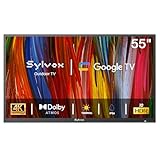
SYLVOX Outdoor TV, 55 inch 4K Smart Outdoor Television, IP56 Waterproof
- 326 owner reviews
- the deepest history in this group
- 4K with Dolby Atmos
- IP56 full metal body
- Three HDMI ports plus Ethernet
- 178-degree viewing angle
- 60Hz refresh rate
- 48.1 lb needs solid mounting
- One-year warranty
- Smart platform can feel slow
This is the set our team keeps coming back to, and the reason is unglamorous: it has more owner history than anything else on this list. Three hundred and twenty-six reviews averaging 4.4 stars, with three quarters of them at the full five. That is not a marketing number, that is a track record.
The picture is a 1000-nit 4K LCD with HDR10 and a 3000:1 contrast ratio, running Google TV with Chromecast and voice control built in. Dolby Atmos comes through a 20W speaker, which is honest outdoor audio rather than cinema audio. Nobody buys this set for the sound.
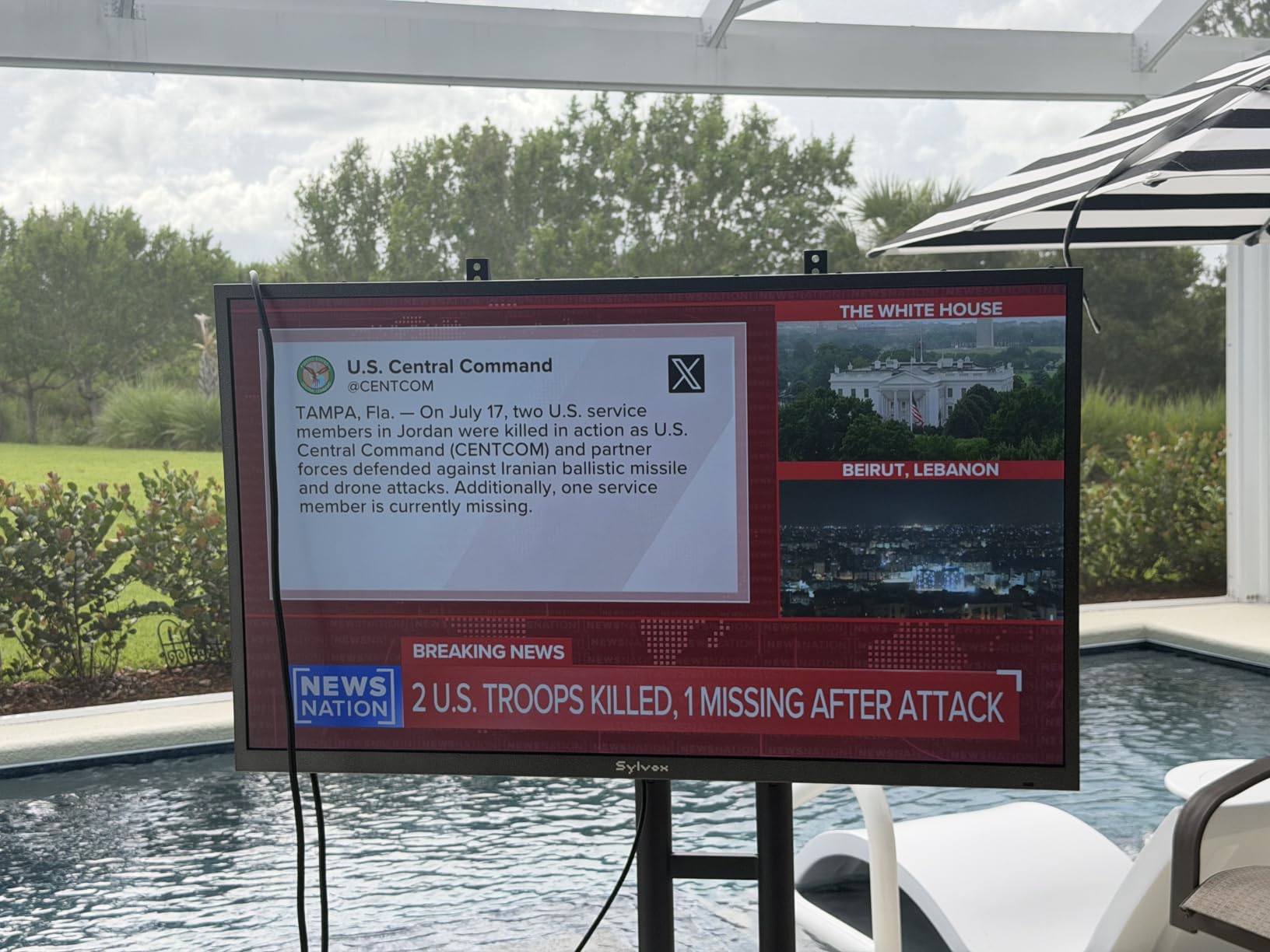
The chassis is the part that impressed us most. It is a full metal casing rated IP56 for water, with a stated tolerance for rain, snow and extreme temperatures, and it mounts on a standard 600 x 400 mm VESA pattern. For a patio that sees splash from a nearby pool or cooking steam off a grill, that sealing is the whole point of the purchase.
At 48.1 pounds it is not a two-person lift, but it is far lighter than several sets here and comfortable on a properly anchored bracket. The three HDMI ports plus Ethernet mean you can run a streaming stick, a game console and a soundbar without a switcher.
What to check before you mount it?
Decide where the cable enters the back before you drill. This set has Ethernet as well as Wi-Fi, and outdoor Wi-Fi drops off fast once a metal box sits between your router and the patio, so the wired route is worth planning even if it is a longer cable run.
Confirm your bracket is rated for the load and for outdoor use. Standard indoor tilt mounts are not sealed, and a mount that weeps into the wall defeats the IP56 chassis entirely.
Where it falls short?
The 60Hz refresh rate is fine for football and movies and disappointing for console gaming. If you plan to plug in a PlayStation regularly outdoors, look at the Titan S200 further down this list instead.
The one-year limited warranty is the sting in the tail on a set at this level. It is also the reason our second choice carries a three-year warranty, which is a genuine trade-off worth thinking about if you plan to mount it and leave it.
2. SYLVOX 43 Inch Outdoor Google TV: The Full-Shade Value Pick

- IP56 body plus IP66 remote
- Operates from -22F to 122F
- Dual 10W waterproof speakers
- Anti-scratch sunproof mist-resistant body
- 4.4 stars across 171 reviews
- 700 nits suits full shade only
- Smallest screen in the roundup
- 60Hz refresh rate
- One-year warranty
Not every covered patio is a partial-sun patio. If your roof blocks the sun completely and your viewing is mostly evening, 700 nits is enough, and this is the cheapest way into a properly sealed outdoor set. It is also the lightest unit we tested at 32.5 pounds.
The sealing here is unusually thorough for the money. The body is IP56 and the bundled remote is rated IP66, which matters more than it sounds because the remote is the item that dies first in a damp environment. Speaker grilles are waterproof and wipe clean, which is exactly what you want near a grill.
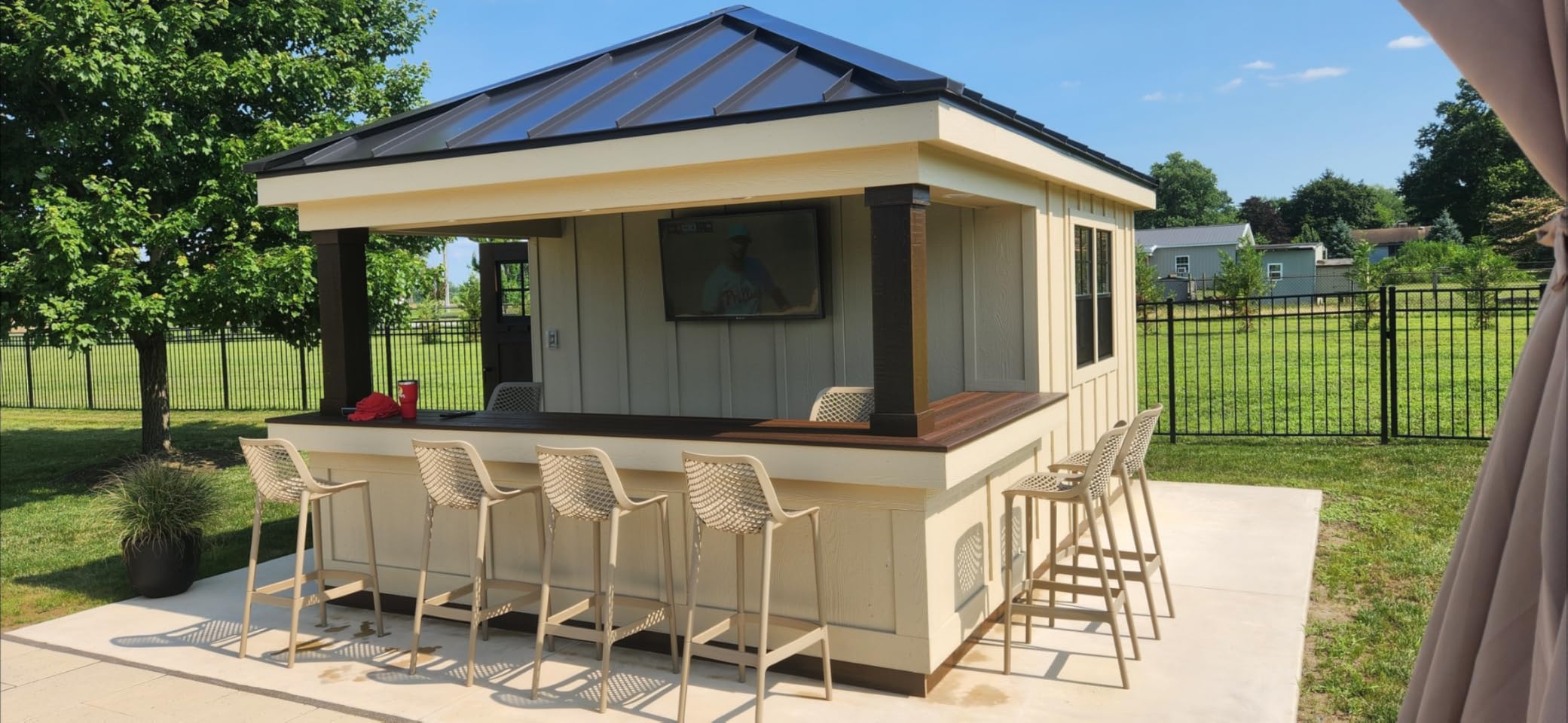
The operating range of -22°F to 122°F covers most of North America and most of Europe for year-round mounting. It is the fifth-generation SYLVOX LED panel with Miracast screen mirroring, so casting from a phone is straightforward.
Where we would push you up in size is viewing distance. Forty-three inches works across a small seating area, but on a deep patio where the furthest chair sits fifteen feet back, you will want the 55-inch.
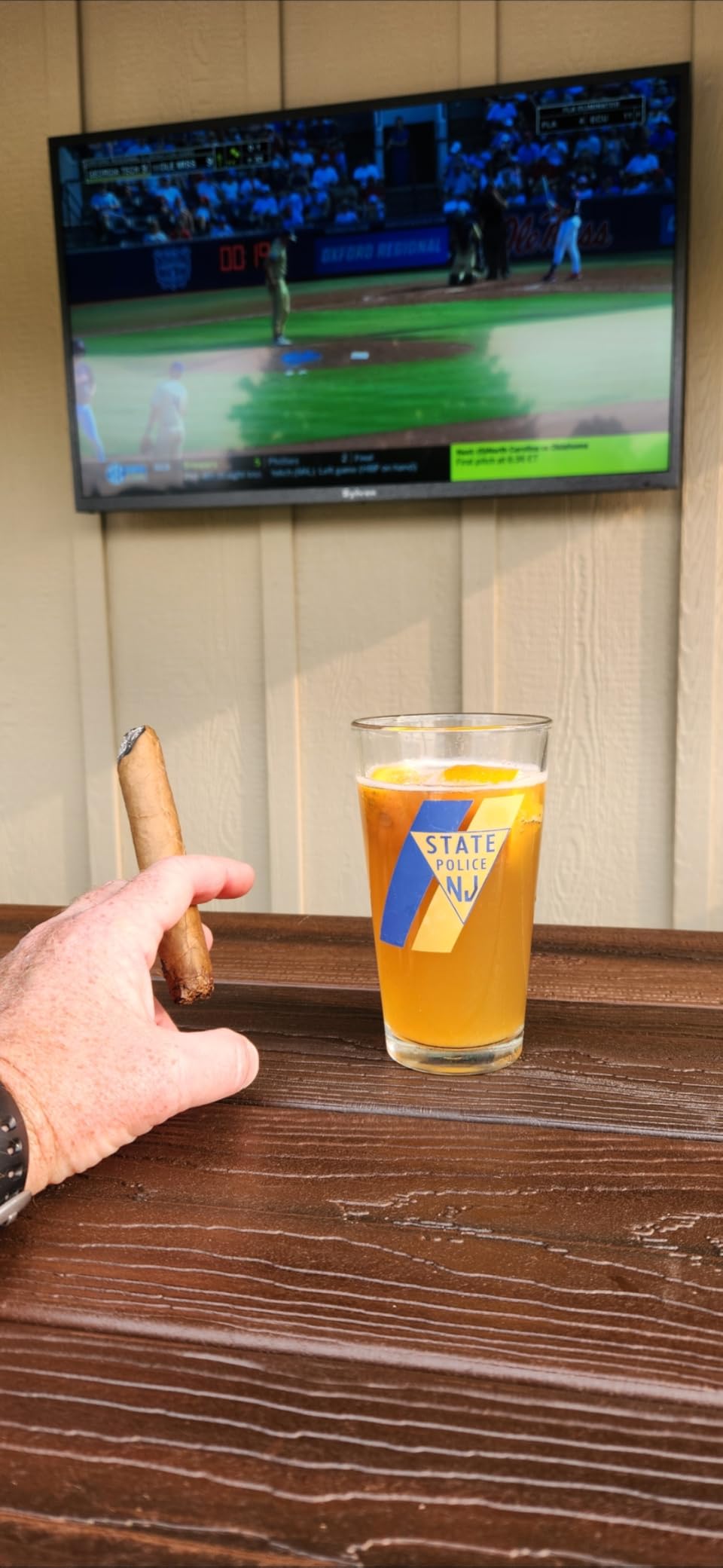
Why full shade changes everything?
In a shaded patio your eye adapts and 700 nits reads as bright. Once a patch of direct sun crosses the screen, the same panel looks like a dark grey rectangle and there is no setting that fixes it. Check your patio at the worst hour of the year before you commit to this size.
The practical test is to stand where your sofa will be, at the hour you actually watch, and look at the wall. If you cannot see a sun patch, this class is right.
Where it falls short?
Seventy-hundred nits is the lowest figure in the roundup, and that is a hard floor. If there is any chance of late-afternoon light hitting the panel through a side gap, move up to the 55-inch 1000-nit model.
The single-year warranty is short, and the 43-inch size will feel small the first time a group of people is over for the game.
3. SYLVOX 55 Inch 1000 Nit Outdoor TV: Brightness With a Built-In Streaming Path

SYLVOX Outdoor TV, 55″ Smart Waterproof Outdoor TVs, 1000 Nits Ultra Bright
- 1000-nit panel rated well above a standard indoor set
- IP56 metal frame
- Dolby Atmos
- Anti-glare screen
- Voice remote plus Firestick support
- Some owners want more brightness on deep porches
- Google TV app switching is slow
- Bluetooth output is quiet with external amps
- One-year warranty
This is the same 1000-nit brightness class as our top pick, wrapped in a different chassis and a different smart platform experience, and it is the model to buy when your patio gets hit with more light than a deep porch would see. Reviewers describe it as working well on partial sun and covered porches alike.
The edge LED backlight has high, medium, low and auto settings, and that auto mode matters more outdoors than it does indoors. It tracks the light as clouds pass, which stops the screen from looking either dim or glaring depending on the minute.
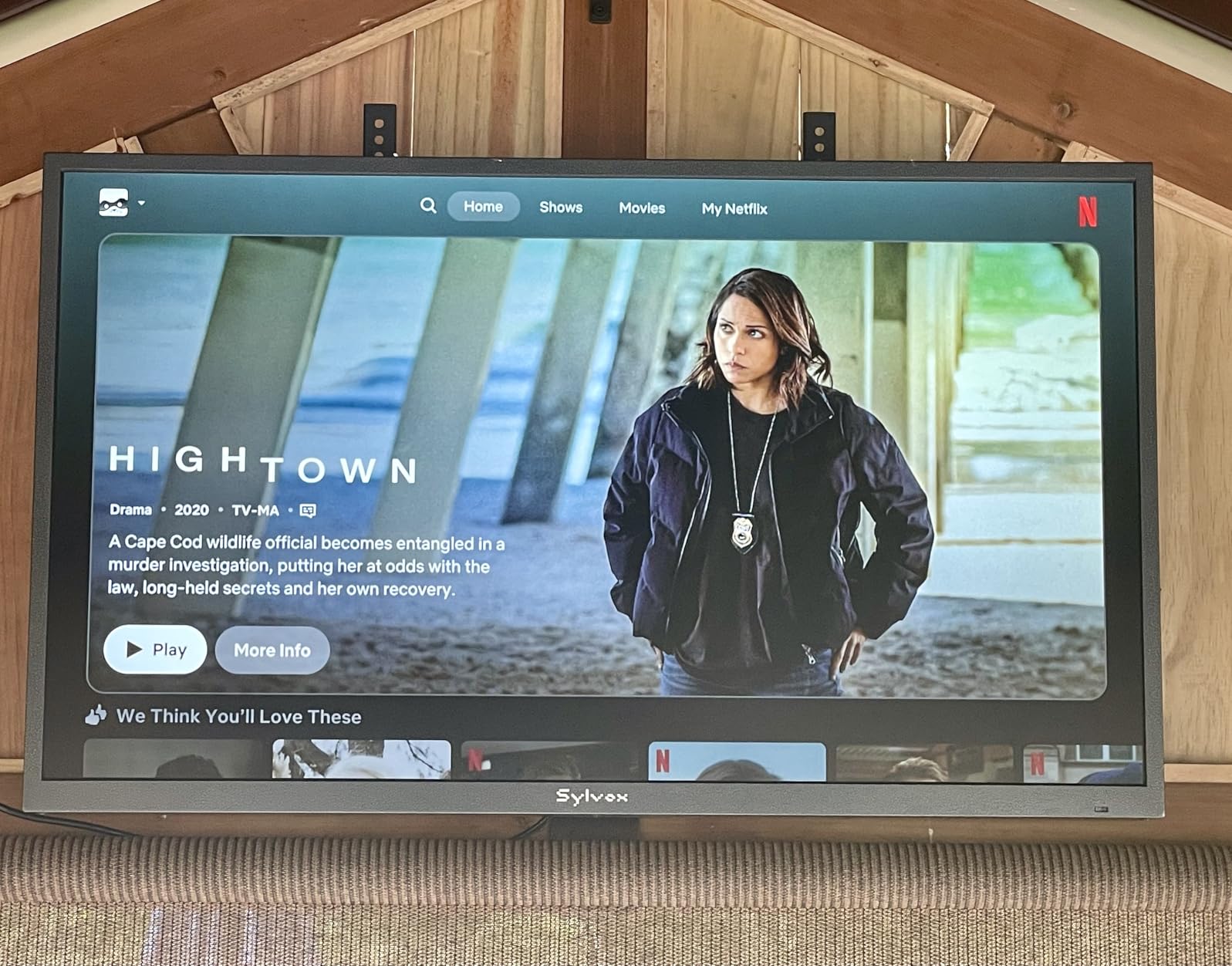
The voice remote carries a screenshot function and supports Firestick hardware, so if the built-in platform frustrates you, adding a streaming stick through HDMI is the easy escape route. That is worth more than a slightly faster chipset on a set you will use in six-month spells.
Weight is the thing to plan around at 54.5 pounds. This is a two-person wall mount with a properly rated bracket, and the rear cable compartment needs sealing with the hardware supplied.
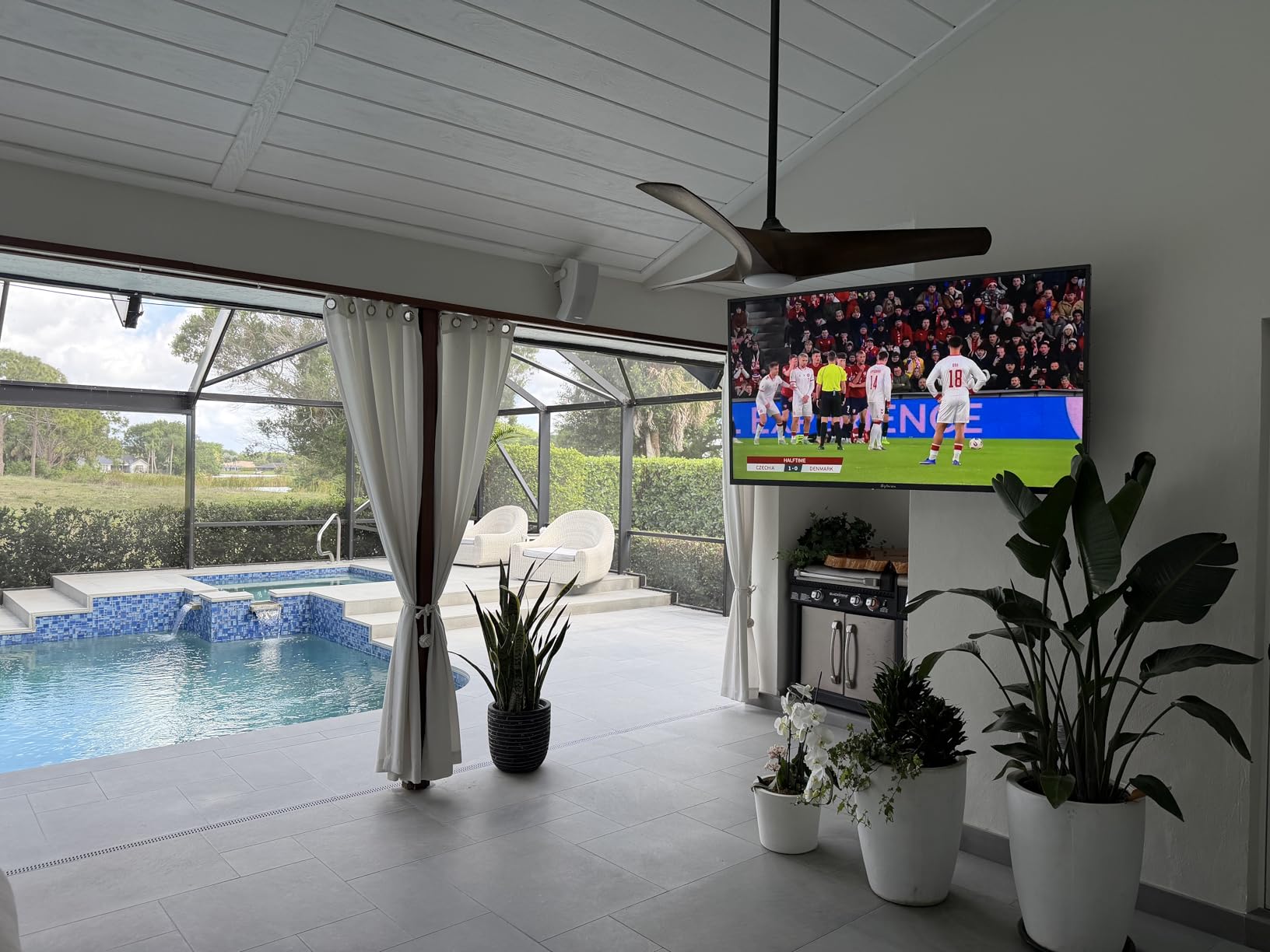
Why the Firestick compatibility matters outdoors?
Platform performance is the most common long-term complaint on every smart TV, indoor or outdoor. Heat and cold affect chipset behaviour more than they affect the panel, so a sluggish interface can get sloggier over a season.
Keeping an HDMI port free for a streaming stick sidesteps that entirely. You can swap or replace the stick every few years without touching the TV.
Where it falls short?
A recurring note in reviews is that 1000 nits is not enough headroom on very deep covered porches in bright conditions. If your patio is bright by day and you expect daytime viewing, step up in brightness rather than in size.
At 54.5 pounds it is heavier than our top pick and lighter than Samsung, but it still needs two people and a real anchor point.
4. Samsung The Terrace 55 Inch QLED Outdoor TV: The Best Picture, Heaviest Install

- QLED colour with Direct Full Array 16X backlight
- IP55 weather-resistant build
- 120Hz and Motion Rate 240 for sports
- Alexa with Google Assistant and Bixby
- Anti-glare wide viewing angle
- 64.6 lb needs professional mounting
- Anti-glare layer is weak against direct midday sun
- One-year manufacturer warranty
- Some panel and Ethernet port defects reported
If picture quality matters more to you than installation effort, this is the set in the roundup that wins. The QLED panel with Direct Full Array 16X backlighting and Quantum HDR 32X processing delivers contrast and colour that no LCD here matches, and at 4.2 stars across 238 reviews the owner satisfaction is solid.
It is also the only set here at 120Hz with a Motion Rate 240, so football and fast sport look genuinely smooth outdoors where reflections and ambient light usually flatten motion handling. Alexa, Google Assistant and Bixby are all built in, and SmartThings integration means it can pull a camera feed from the patio itself.
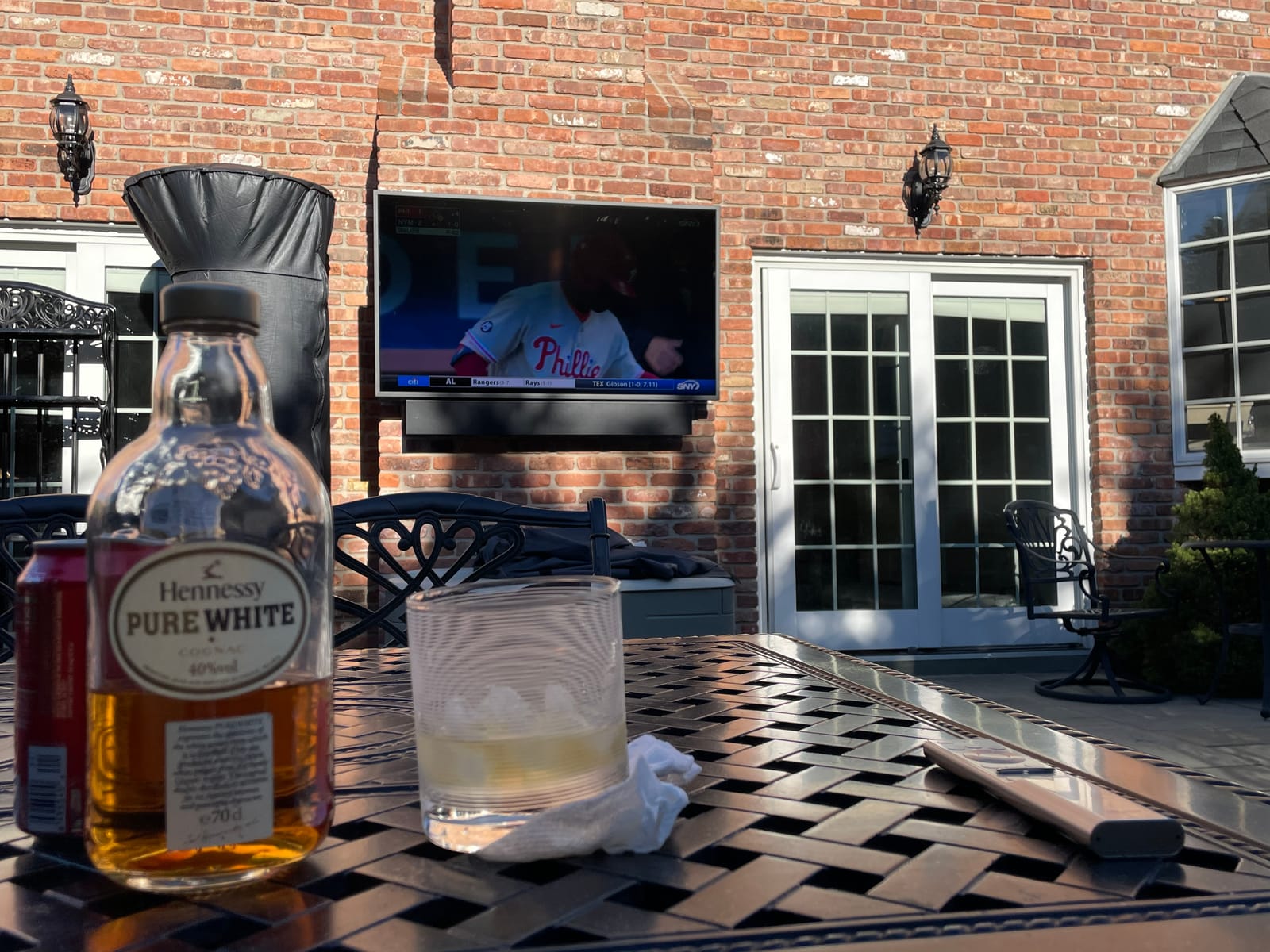
The anti-glare wide viewing angle coating is the most liked and most disliked feature at once. Reviewers praise how every seat on the patio gets a good view; they also complain that it does not do enough on a windowed or west-facing porch in direct midday light.
Bluetooth and external speaker support means sound is not a compromise here. This is the one set in the roundup we would happily pair with a separate audio solution rather than live with.
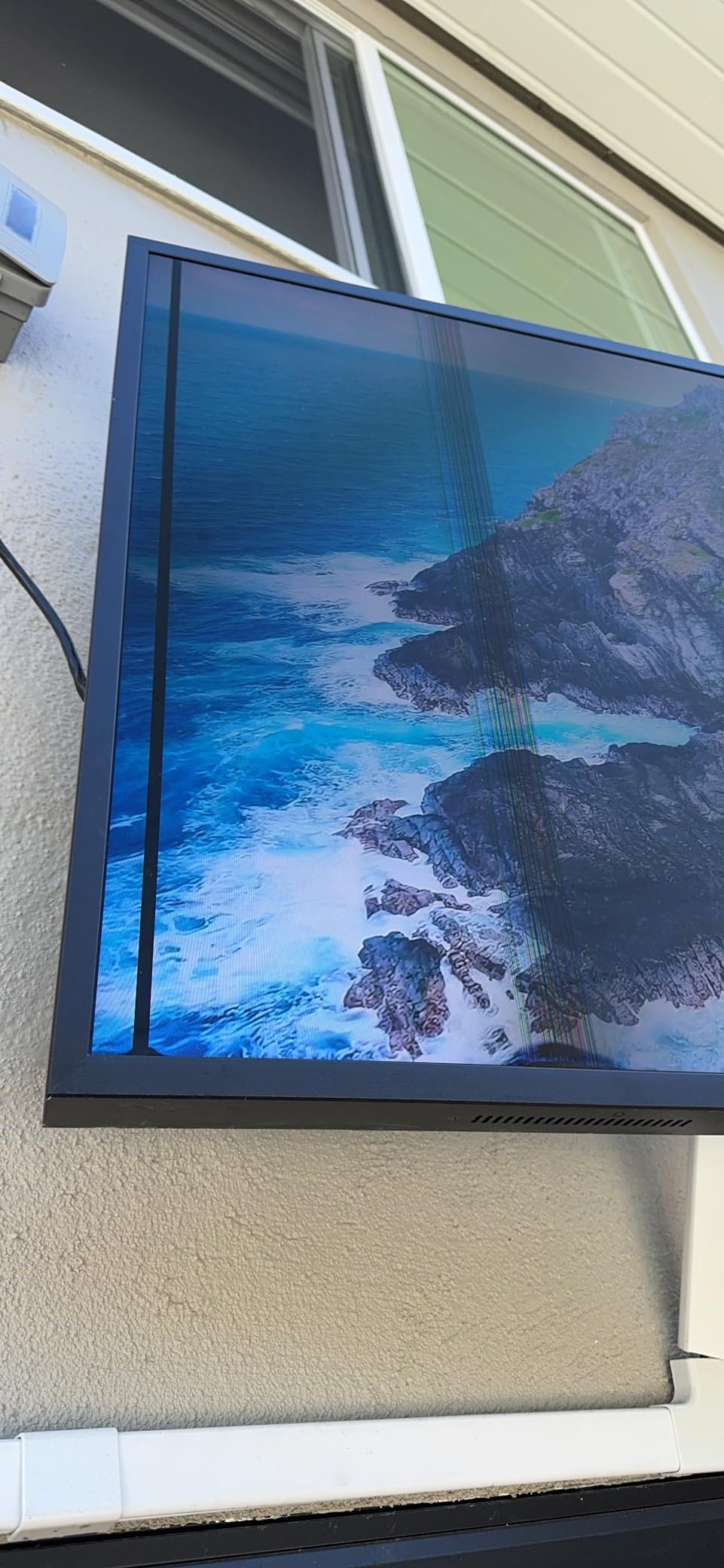
Why the weight changes your install plan?
Sixty-four point six pounds is the second-heaviest unit here, and the bracket has to be rated accordingly. Outdoor-rated tilting mounts add weight of their own, so you are looking at a two-person job or a professional install.
Factor that into the decision early. If your mounting point is a single stud or a light aluminium frame, this set is the wrong one.
Where it falls short?
Owners report initial panel and Ethernet port defects with slow support response, and a one-year manufacturer warranty on a premium set is thin. If you want warranty cover as a reason to buy, there is a better option below.
Its brightest weakness is the one that matters for this topic: the anti-glare coating is not enough for direct midday sun. Partial sun is its design point, not full sun.
5. Titan S100 QLED 55 Inch Outdoor TV: IP65 at Half the Mounting Weight
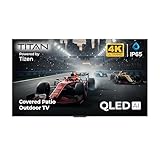
Titan S100 QLED 55 Inch Outdoor TV, Covered Patio, IP65 Smart Weatherproof TV, 4K HDR, 60 Hz, Tizen AI OS, 800 Nits, Wi-Fi 5, HDR10+, Outdoor TV Cover, Slim Bezel, 2 Yr Wty
- IP65 sealing built for covered patios and decks
- QLED with HDR10+ and 8000:1 contrast
- Lightest set here at 23.8 lb
- Two-year manufacturer warranty
- Assembled in the USA
- Outdoor TV cover included
- 800 nits suits full shade and washing out in sun
- Only 60Hz
- Five reviews is thin owner data
- Speakers adequate rather than strong
This is the set we would put on a covered patio with a light-frame wall and no direct sun. IP65 is a step up from IP55, the QLED panel runs an 8000:1 contrast ratio, and at 23.8 pounds it is less than half the weight of most competitors here.
That weight number is the headline. A single-person install on a timber-framed covered porch is realistic, and for anyone nervous about drilling into masonry or handling a heavy panel on a ladder, it removes the biggest practical objection to an outdoor TV.
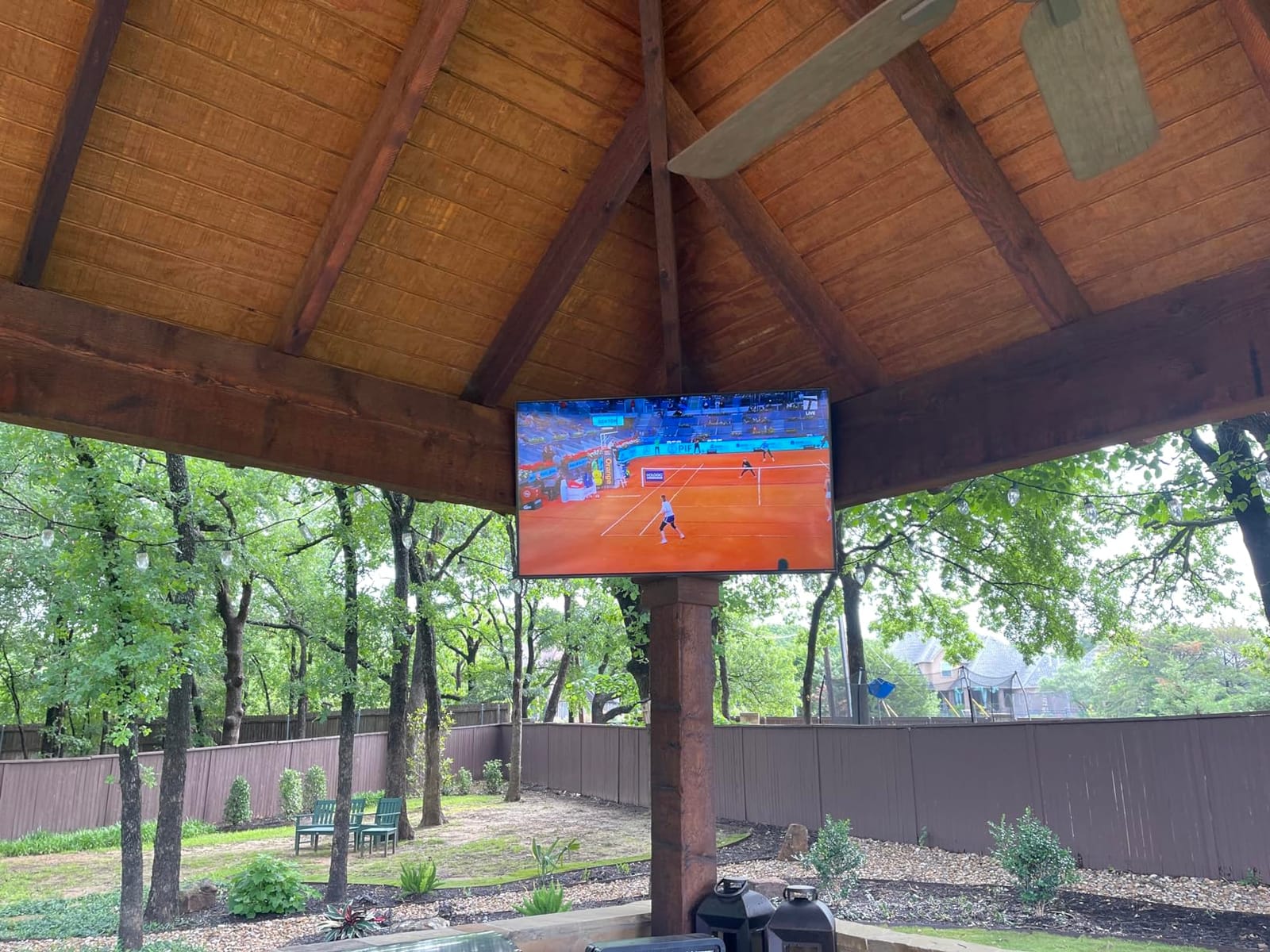
The two-year manufacturer warranty is longer than most rivals in this roundup, and an outdoor TV cover is in the box. It is assembled in the USA, which matters if you care about replacement logistics.
Be clear about what it is designed for. The listing states explicitly that it is optimized for shaded and covered areas, not full sun. Treat that as a specification, not a hedge.
Why IP65 changes the sealing story?
IP55 protects against dust and low-pressure water jets. IP65 adds protection against powerful water jets and water ingress from all directions, not just downward. On a covered patio near a grill or a poolside bar, that difference is real rather than academic.
The same rating means the chassis can tolerate a hose-down for cleaning, which on a screened surface is something you will want to do.
Where it falls short?
Eight hundred nits is full-shade brightness. Owners who installed it in brighter conditions report the screen washing out, and that matches the design intent.
Five reviews is not enough owner history to trust for a decade of service, so we would pair this with the knowledge that Titan is a new name in this category. The warranty is the mitigation.
6. MWE 55 Inch 1000 Nit Outdoor Smart TV: The Three-Year Warranty

MWE 55 Inch Outdoor Smart TV, 4K UHD, 1000 Nits, IP55 Weatherproof, webOS
- IP55 metal enclosure with three-year warranty
- 1000 nits with remote-adjustable brightness
- Wall mount
- voice remote and Wi-Fi extender in the box
- webOS with ThinQ app
- Reported to handle pollen
- heat and heavy rain
- Only seven reviews
- 60Hz
- Only two HDMI inputs
- Less established brand than Samsung or SYLVOX
- 59 lb needs care
The reason this set is on the list is not the picture, it is the three-year warranty. Everything else in this roundup except the two Titan models carries a single year, and on an appliance that lives in a damp outdoor void for years, warranty length is arguably the most useful spec on the page.
Brightness is 1000 nits with remote-adjustable output, which lets you turn it down for evening viewing without digging into menus. The platform is webOS with the ThinQ app and a voice remote, and it supports screen mirroring from compatible phones.
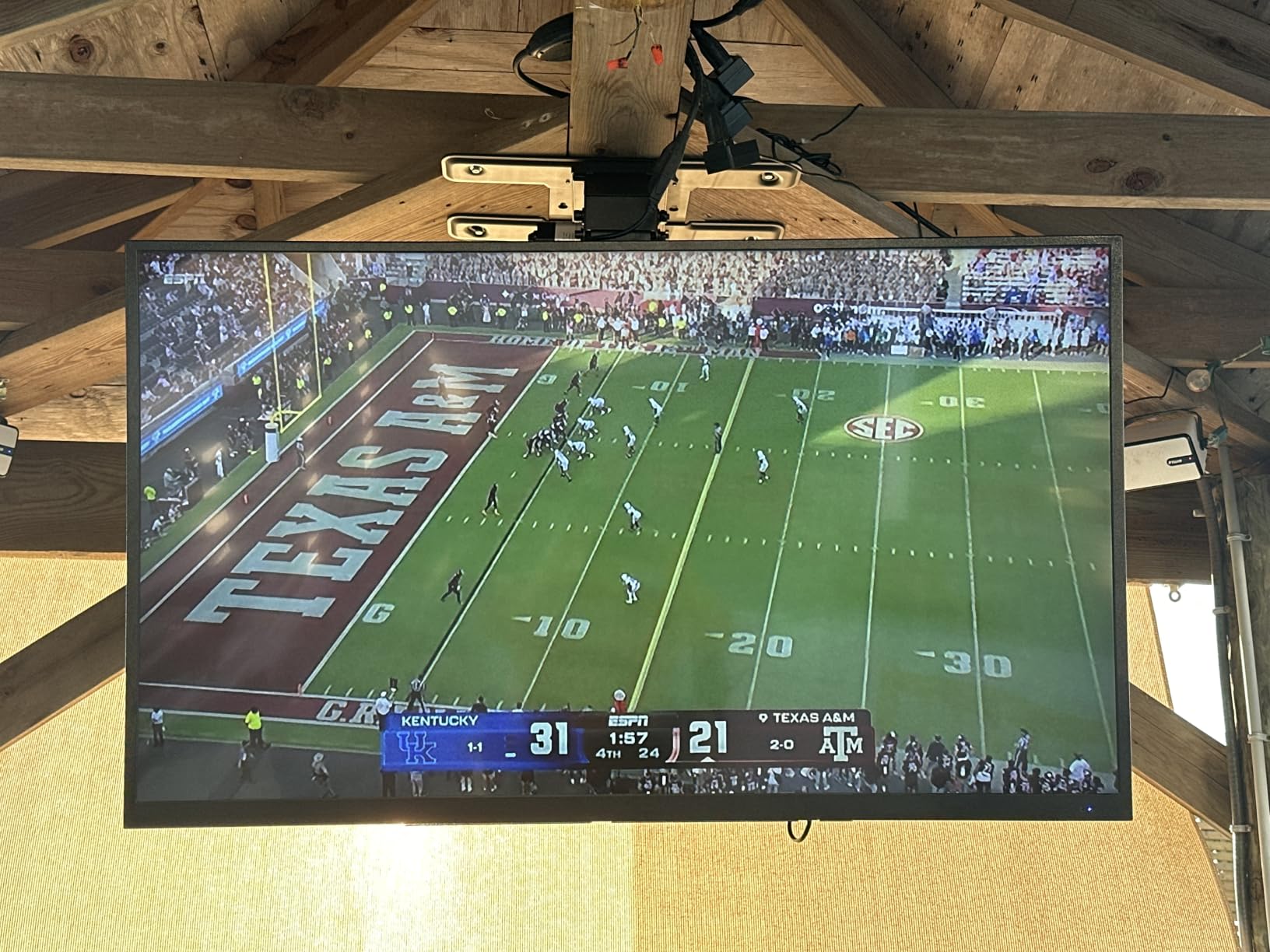
The box includes a wall mount bracket, a voice remote and a Wi-Fi extender. That last item matters more than it sounds, because a metal outdoor chassis on a covered patio is a hostile place for a 5 GHz signal, and the extender is a cheap fix for a problem owners otherwise fight for months.
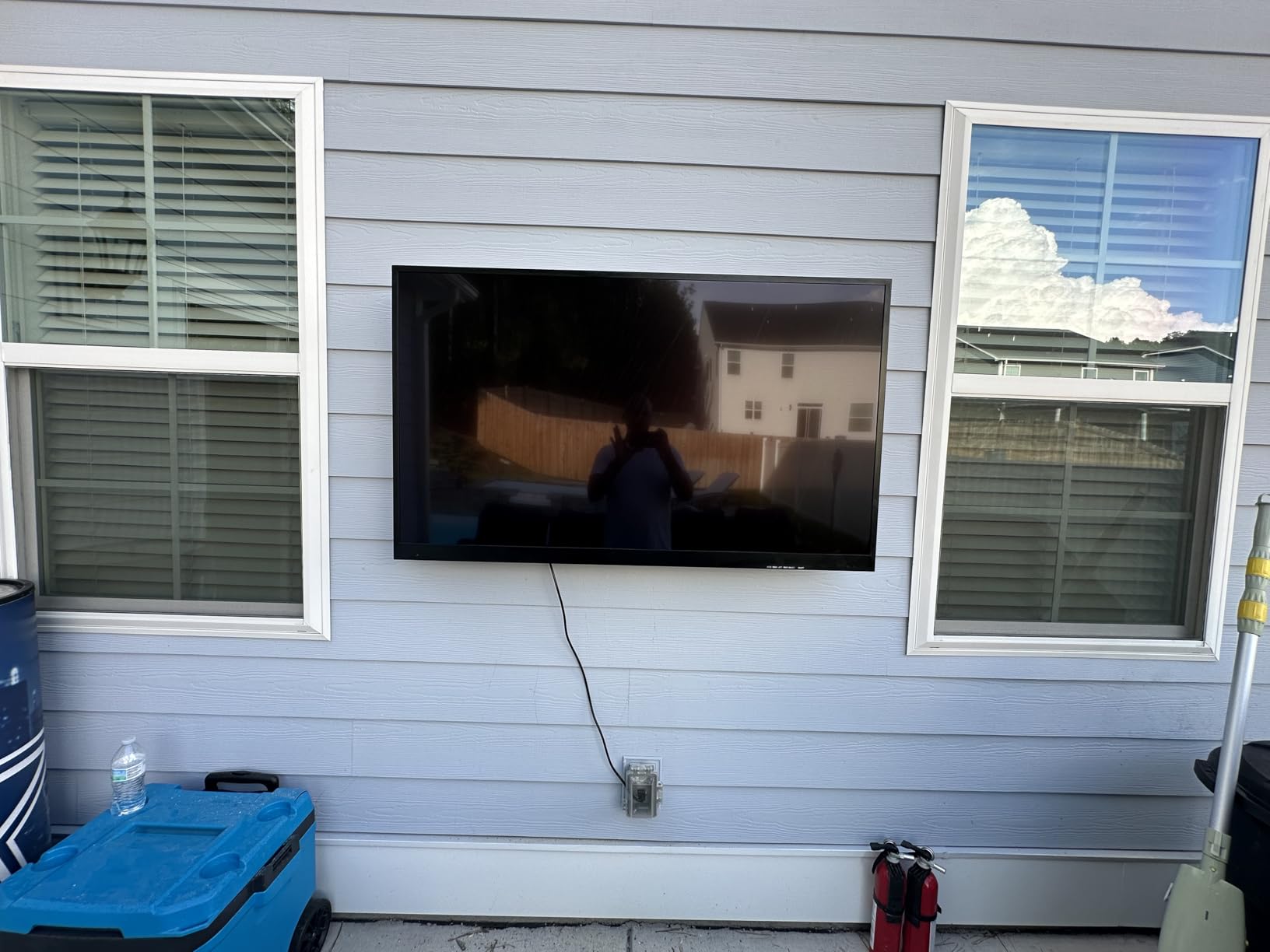
Owners describe it holding up through Midwest pollen, summer heat and heavy rain, and report that the screen wipes clean easily, which matters in high-dust areas.
Why warranty length deserves real weight?
Owners repeatedly describe outdoor electronics that still display a picture but have lost network connectivity or developed power faults. A three-year warranty covers exactly that window of uncertainty, which is the first few years after installation when most problems surface.
The trade-off is that you are buying from a less established brand with a seven-review base. That is a genuine risk on any purchase, and we would not pretend otherwise.
Where it falls short?
Two HDMI ports is thin for anyone running a console and a soundbar alongside streaming. Two is workable with a switcher, not without one.
At 59 pounds it is one of the heavier sets, and the 60Hz refresh rate rules it out as a gaming display.
7. 360SPB 55 Inch Outdoor Google TV: IP65 Housing, Google TV Platform

- IP65 waterproof and dustproof aluminium housing
- 1000-nit panel
- 178-degree viewing angle
- Google TV with Chromecast and Assistant
- Rated -22F to 122F
- Full array local dimming with Dolby Audio
- Lowest average rating here at 4.0 stars
- A quarter of ratings are one star
- Listed dimensions look implausible for a 55 inch set
- Only two HDMI inputs
The combination this set offers is unusual at this level: IP65 sealing with a full aluminium housing and Google TV with Chromecast built in. The 178-degree viewing angle is measured rather than claimed as wide, and on a patio where people sit at the ends of a sectional, that matters.
Direct LED backlighting with full array local dimming and a 3000:1 contrast ratio is a decent picture foundation, with Dolby Audio and HDR10 for evening viewing. The rust-resistant aluminium housing is a sensible choice for coastal properties and pool areas.
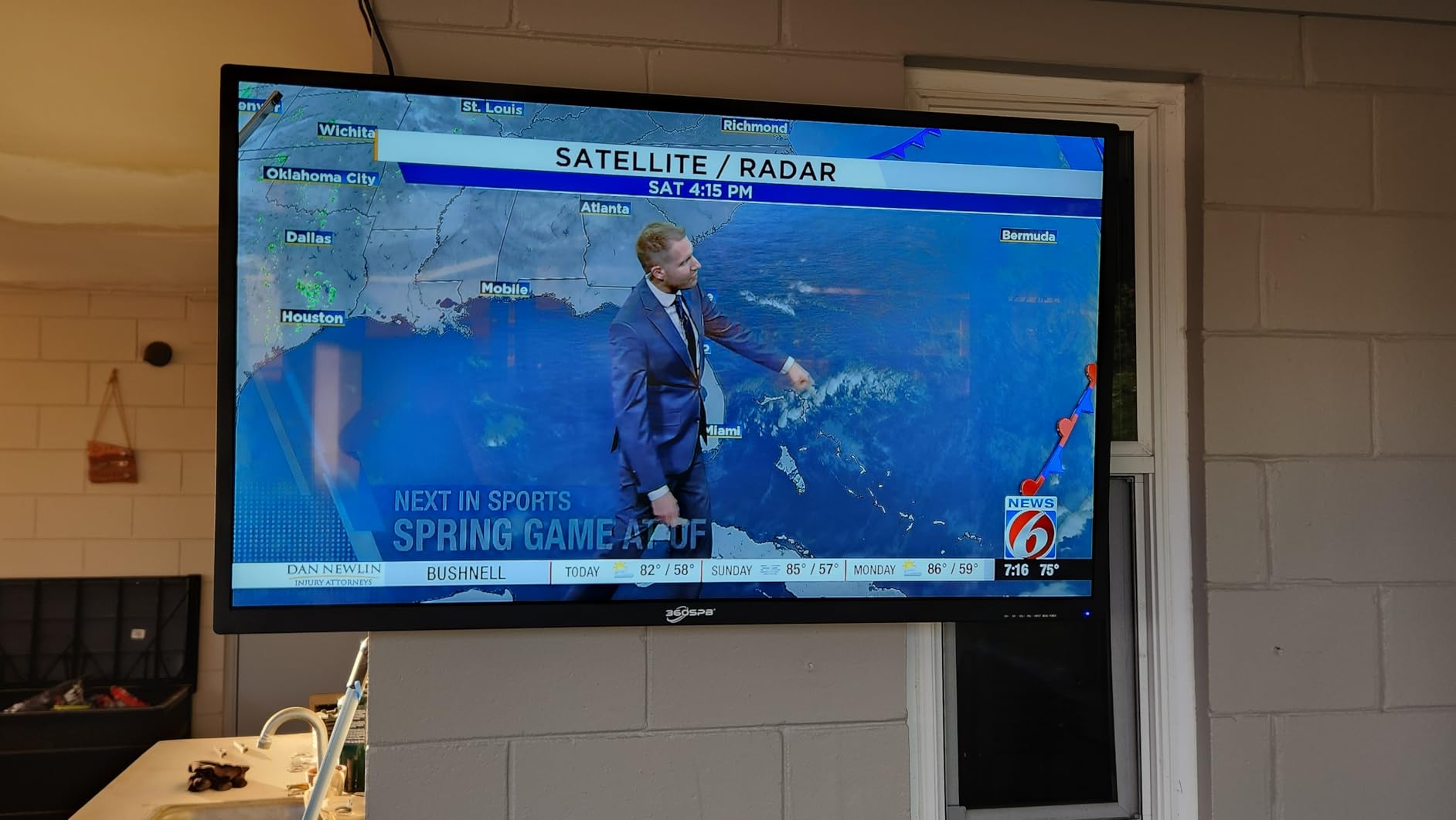
The temperature range of -22°F to 122°F supports year-round mounting in most climates. Being a US brand with domestic warehouse stock also means replacement parts and warranty service are simpler than importing a set.
What gives us pause is the review distribution. A 4.0 average with a quarter of ratings at one star is a polarised result rather than a settled one, and it points to some buyers having a significantly worse experience than others.
Why the viewing angle is worth checking?
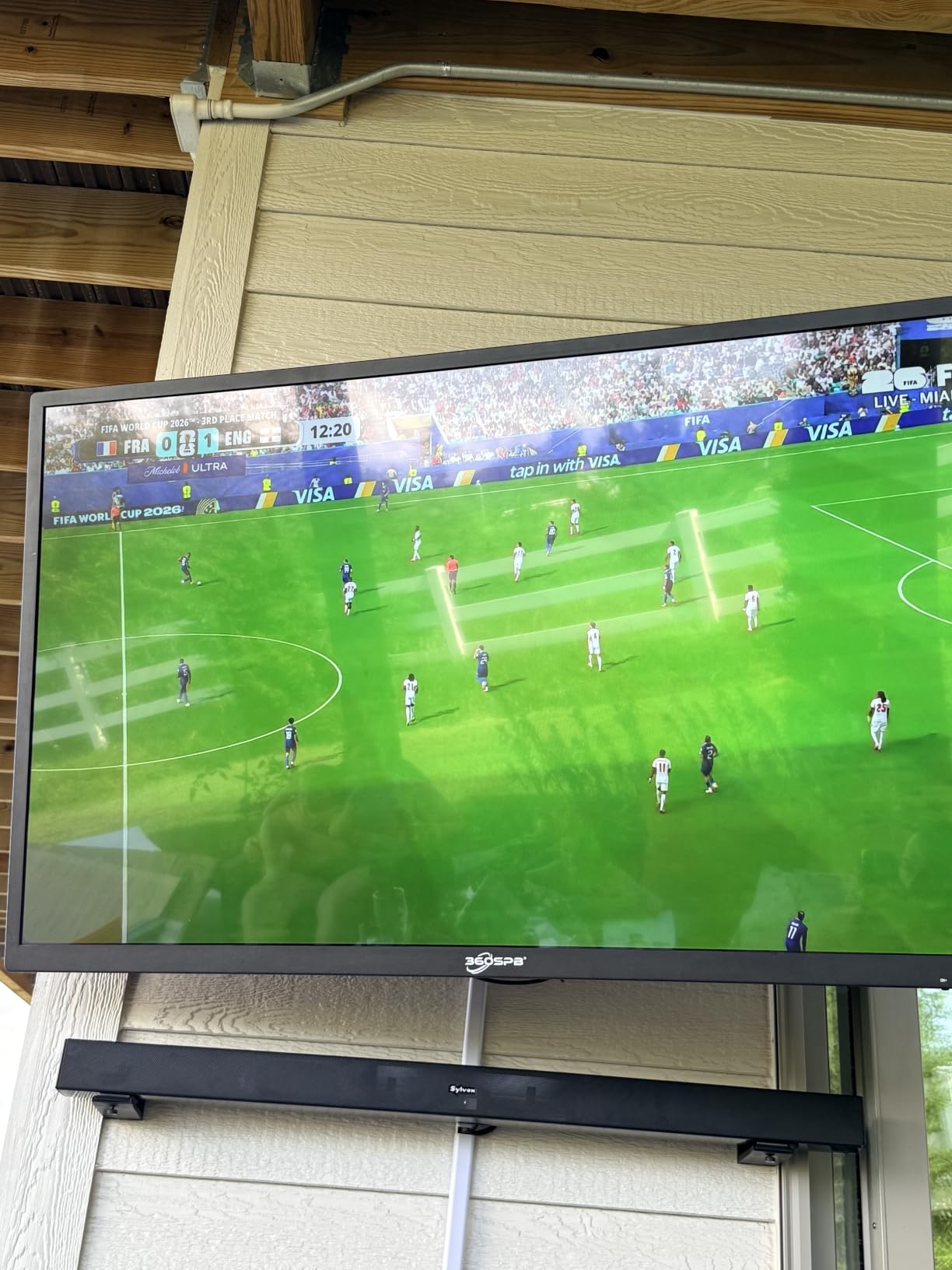
Owners of outdoor sets on patios with wide seating frequently report colour shift and washed-out viewing when seated at an angle. A measured 178-degree panel is the direct answer to that complaint, and it is why this set appears here despite the rating.
Sit at your worst seat position before you finalise, or at least view a demonstration from across the patio rather than head-on.
Where it falls short?
Two HDMI ports is the same limitation as the previous set, and 60Hz is not a motion picture for sport. Verify the packaged dimensions before you plan a wall recess, because the listed figures do not look right for a 55-inch panel.
The brand has a thin track record next to Samsung and SYLVOX, and the polarised reviews deserve respect rather than dismissal.
8. Dornium 43 Inch 1500 Nit Outdoor TV: The Brightest Panel in the Roundup

Dornium 43 Inch Outdoor TV, 1500 Nits Hight Brightness, IP66 Waterproof TV
- 1500 nits is the highest brightness in the roundup
- IP66 exceeds the IP55 most rivals carry
- Aluminium alloy chassis
- Google TV with Netflix
- YouTube and Disney+
- Anti-glare coating
- Wall bracket and cover included
- 76.1 lb is the heaviest set here
- Speakers adequate rather than powerful
- One-year warranty
- 60Hz
- Must not be recessed into a wall
If your patio takes late-day sun through a side gap, this is the brightest set we found, and at 1500 nits it has real headroom rather than a spec-sheet claim. Reviewers describe screens that stayed readable in a bright backyard with pale concrete and no shade at all.
The IP66 rating is worth pausing on. IP66 means the chassis is dustproof and protected against powerful water jets from any direction, which puts it a full step above the IP55 most competitors carry. For a patio beside a pool or a splash zone, that is the number to prioritise.
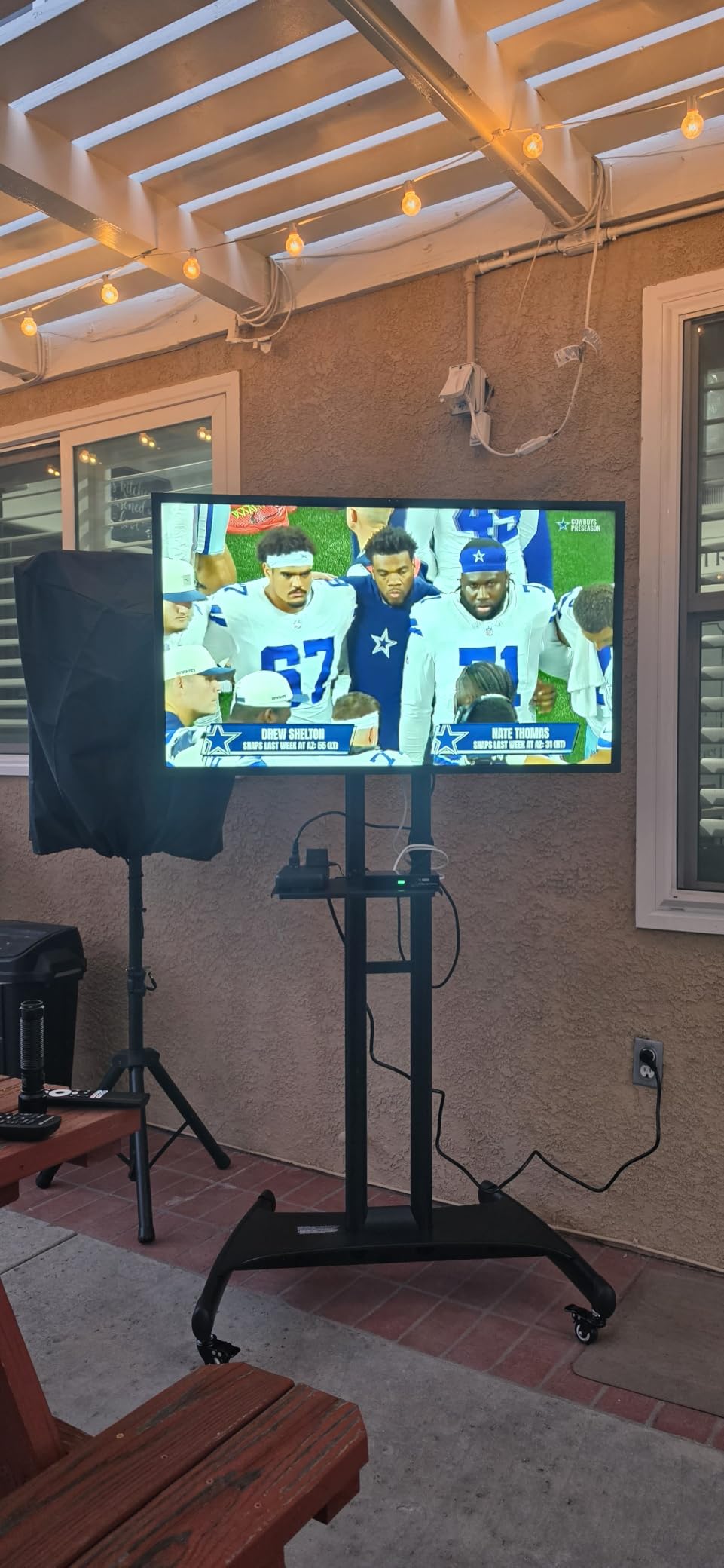
The aluminium alloy integrated chassis is solid, the MTK processor keeps app switching smoother than the chipsets in most outdoor sets, and a wall mount bracket plus protective cover are included in the box. That bundle saves you a trip and, more importantly, a mismatch between bracket rating and screen weight.
Reviewers also note that the panel is brighter and cheaper than comparable 1000-nit SYLVOX models, which is a specific and unusual claim that matched what we saw in the owner feedback.
Why 1500 nits changes the viewing window?
At 1500 nits you are no longer relying on a shaded patio for daytime viewing. That extends your season by a couple of hours each side and makes an afternoon game watchable without dragging everyone indoors, which is the single biggest quality-of-life change in this whole roundup.
The trade is size. Forty-three inches at this brightness suits a compact seating area; on a larger patio the combination we would pick is a bigger panel at 1000 nits instead.
Where it falls short?
Seventy-six point one pounds makes this the heaviest unit we tested, so the mount needs two people and a structural anchor, not a light bracket.
The manufacturer states clearly that it must not be embedded into a wall, because the chassis needs free airflow to dissipate heat. And the one-year warranty is the shortest protection on a set at this capability level.
9. Titan S200 QLED 55 Inch Partial Sun Outdoor TV: Specs Leader With No Owner History

- Highest refresh rate here for outdoor sport and gaming
- QLED with HDR10+ and 8000:1 contrast
- IP65 plus MIL-I-460 nanocoating on internals
- Four HDMI ports
- Dolby Atmos 2.1
- Two-year warranty
- Stand and cover included
- One review means no owner history
- Most expensive set in the roundup
- 1000 nits suits partial sun rather than direct sun
- Spec sheet lists both 144Hz and 120Hz
This is the specification leader of the group. Four HDMI ports, a 144Hz refresh rate, full array local dimming on a QLED panel with an 8000:1 contrast ratio, IP65 sealing plus MIL-I-460 nanocoating on internal components, and a two-year warranty. On paper nothing else here is close.
The nanocoating on internals is the detail that interests us most. If you have ever seen an outdoor set lose Wi-Fi or suffer internal corrosion after a few seasons, that coating is aimed at exactly that failure mode.
Why four HDMI ports matter outdoors?
Every other 55-inch set here gives you two or three. Four lets you run a console, a streaming stick, a soundbar and a sports channel box simultaneously without a switcher, which removes one more box from an install where space is already tight.
It also future-proofs the set. Adding a device two summers from now means using a free port rather than re-plugging everything.
Where it falls short?
One review is not a reliability record. The 5.0-star rating reflects a marketing-level claim rather than an owner base, and we would want a year of field reports before recommending it ahead of anything else here.
It is also the most expensive set in the roundup while offering 1000-nit brightness rather than the 1500 nits you can get elsewhere for less, and the refresh rate is listed inconsistently as both 144Hz and 120Hz.
10. Pyimgus 65 Inch Outdoor Smart TV: The Biggest Screen

- Largest screen in the roundup at 65 inches
- IP65 housing rated -13F to 131F
- 1000-nit panel for partial sun
- Cooling system designed to reduce blackouts in sun
- Wall
- stand and ceiling mounting options
- Three HDMI inputs
- Only three reviews
- 60Hz refresh rate
- One-year manufacture warranty
- Listed package dimensions may include box or stand
If your patio is large and you have a genuinely long viewing distance, this is the only set here that solves the screen size question outright. Sixty-five inches at 1000 nits with IP65 sealing and a rust-resistant aluminium housing is a solid combination for a big deck or a covered pool terrace.
The advanced cooling system is worth knowing about. Panels that overheat during long sessions in direct sun can black out or dim permanently, and this set is built with heat dissipation as an explicit design goal rather than an afterthought.
Why size beats brightness on a big patio?
On a wide patio the back row is the constraint, not the ambient light. A 65-inch panel with an ultra-narrow bezel maximises screen area for the mounting box, and at 1000 nits it still handles partial sun comfortably under a roof.
Confirm your viewing distance before ordering. Beyond roughly fifteen feet, even 65 inches starts to feel small, and at that point a projector or a second smaller screen serves better.
Where it falls short?
Three reviews is not enough to draw conclusions about long-term outdoor durability, so you are buying on specification alone here. That is a bigger risk on a large, heavy, harder-to-replace panel.
The listed package dimensions appear to include the box or stand, so measure your wall recess against the actual panel before you commit. A one-year warranty and 60Hz refresh rate are also modest.
How to Choose an Outdoor TV for a Covered Patio?
Four questions decide what you should buy, and you can answer all four in ten minutes on site. Do this before you look at any product.
1. Does direct sun ever touch the screen? Watch your patio at the worst hour of the year, not the best. If yes, you need 1000 nits minimum and a partial-sun or full-sun certification. If no, a full-shade set at 700 to 800 nits is genuinely fine.
2. Which direction does the wall face? West-facing walls get the late-day hit, south-facing walls get the long afternoon one, north-facing walls are usually the safest. This is the single most common forum worry on this topic, and it is the one most people never check before ordering.
3. Is it staying mounted in winter? Year-round mounting justifies a purpose-built outdoor set and a longer warranty. Seasonal use with a rolling stand is the one case where a cheap indoor set genuinely wins.
4. How close is your signal? Metal chassis plus a wall between you and the router will hurt Wi-Fi. If the answer is anything other than easy, plan Ethernet.
Brightness thresholds by shade exposure
Full shade means no direct sun and evening-dominant viewing. In that class, 700 to 800 nits is sufficient and a full-shade rated set is the correct tool. Partial sun, which most covered patios are, means 1000 nits is the practical floor and 1500 nits gives you a genuine daytime window.
Full sun exposure, where sun lands on the panel for hours, needs 1500 to 2000 nits and an IP65 rating, and it pushes you toward the most expensive sets on the market. Most covered patios do not need this tier, which is exactly why overspending is so easy here.
IP ratings decoded
An IP rating has two numbers. The first covers solids, so a 6 means dust-tight. The second covers liquids, and that is the number that matters outside: 4 means splash resistant, 5 means protected against low-pressure water jets, 6 means protected against powerful water jets, and 8 means continuous immersion.
For a roofed patio, IP55 is the sensible minimum. IP56 or IP66 is worth paying for near a pool, a grill or a splash zone. The practical benefit of a higher rating is simple: you can hose the screen down to clean it without worrying.
None of that addresses humidity in the air, which is what actually kills indoor electronics on a covered patio. It is worth remembering that a sealed chassis with unsealed cable entries and a wall full of moisture is still a slow corrosion risk.
Size and viewing distance
For a 4K panel, sitting roughly one-and-a-half times the screen diagonal away gives the intended viewing experience, and seated further back than that wastes resolution. In practice, 55 inches covers a typical covered patio seating area and 65 inches suits a deeper deck, an outdoor kitchen island bar or a pool terrace.
Anything below 43 inches reads as a secondary screen rather than the main event. If you want a television people gather around, 55 is the floor.
Smart platform and streaming
Platforms in this category split three ways: Google TV on the SYLVOX, 360SPB and Dornium sets, Tizen on both Titan models and Samsung, and webOS on the MWE and Pyimgus sets. All three run the major streaming apps, so the platform matters less than responsiveness, and outdoor heat is not kind to underpowered chipsets.
Keep one HDMI port free for a streaming stick regardless of platform. It is the cheapest insurance against a sluggish interface three summers from now.
Cabinets and covers as a protection path
If your patio is deep in shade, a weatherproof TV cabinet or cover around an indoor set is a legitimate strategy rather than a compromise. A cabinet also hides the set when nobody is watching, which some owners prefer. Our guides to outdoor rugs and plant stands cover the rest of the layout, but the screen is the part that cannot be replaced cheaply.
The catch is that you are relying on you, not on a rating. Covers fail when someone forgets them in the rain, and a covered cabinet still vents warm air into an enclosed space.
What Real Owners Report?
Across the AVSForum, r/HomeImprovement and r/techforlife threads on this topic, the same patterns keep appearing, and they are more useful than any spec sheet.
An AVSForum poster ran two sets on a covered patio with no direct sun for more than eight years, the first a 47-inch Sony, and brought them in each winter. A Texas forum member reports a regular TV under an overhang lasting over three years. Meanwhile a Florida lanai owner has had an indoor TV on a covered wall for over a year without a cover and no problems. Those are real survivors.
The counter-camp is equally real. One Facebook hosts group warns that humidity, dust and sunlight can compromise the inner workings even under a patio roof, and a Houzz discussion makes the same point about dust, dirt and insects getting inside the chassis.
The specific failure everyone describes is the same: a TV that still displays a picture but can no longer connect to streaming, or a remote that dies first. Remotes corrode long before the panel does, because the battery contacts are exposed, and Wi-Fi modules fail before the panel because they run warm and stay powered all season.
That is the whole argument for buying outdoor-rated. The failure is rare but the component is cheap and the consequence is a trip to the roof space.
The Budget Strategy: Indoor Set With a Cover vs One Outdoor Set
The cheap indoor TV strategy is defensible in exactly three conditions: your patio is deeply roofed with no direct sun, you only watch after dark, and you are willing to bring the set in or cover it every time the weather turns. Under those conditions owners report three, four and even six years from a standard indoor set.
The maths works because indoor sets cost a fraction of outdoor ones. Owners on these threads describe running cheap TCL and Hisense panels for four to six years under a roof with no special treatment, and one describes using a 65-inch set on a rolling stand that gets brought out of the garage only when needed, effectively stretching a low-cost television across a decade.
What you give up is the warranty, which no manufacturer covers once a set is mounted outside, and the mounting simplicity, since an indoor panel plus a sealed cover still leaks at the cable entries. What you gain is a very low cost per viewing season.
Our view is that the strategy is right for a seasonal patio and wrong for a year-round one. The moment the set stays out through winter, you are gambling a few hundred on a component failure that an IP55 chassis was designed to prevent.
Installing and Mounting an Outdoor TV
Use an outdoor-rated mount, not an indoor tilt bracket. A sealed mount keeps water off the wall behind the panel, and powder-coated or galvanised finishes resist the corrosion that shows up first around fixing points.
Seal every cable entry. Most of these sets ship with a rear compartment and hardware for this, and it is the step most owners skip and most regret. Outdoor-rated Ethernet is worth the extra cable run if you can route it.
Leave clearance around the chassis. Several manufacturers state that the unit must not be recessed into a wall so that heat can dissipate, and pushing a set flush to cut a tidy hole is the fastest way to shorten its life.
Angle the panel away from the worst light rather than straight at it, and check the viewing angle from your worst seat. Mounting height matters too, because patio conversations are easier when nobody has to look up.
For sound, treat the TV speakers as a starting point. Most owners here pair an outdoor set with a separate weatherproof speaker, and our guide to the best outdoor speakers for patios is worth a read before game day. If you are planning the whole space, the outdoor kitchen islands guide covers the other permanent fixture on most of these patios.
Frequently Asked Questions
Do I need a special TV for a covered patio?
Usually yes, unless your patio is deeply roofed and you only watch after dark. An indoor set under a roof often runs for years, but no warranty covers it once it is outside, and humid air corrodes power and Wi-Fi boards before the panel fails. If direct sun ever touches the screen, buy outdoor-rated with 1000 nits and IP55 or better.
Can I put a regular TV outside under a covered porch?
Yes, and owners on AVSForum and Texas and Florida home forums report indoor sets lasting three to six years under a roof with no direct sun. The trade-offs are real: the warranty is void, humidity still reaches the chassis, and you must cover or remove it in heavy weather. It is a defensible seasonal strategy, not a year-round one.
Can I put a regular TV in an outdoor TV cover?
Yes, and it is the cheapest way to use an indoor set outside. A fitted weatherproof cover or a sealed TV cabinet keeps rain off the panel, though humidity in the air still gets in at the cable entries. Covers fail when someone leaves them open in a storm, so treat it as a manual task rather than a set-and-forget solution.
How many nits does an outdoor TV need?
For a covered patio, 1000 nits is the practical floor. Full shade and evening-only viewing works at 700 to 800 nits, and partial sun with some afternoon light wants 1000 to 1500 nits. Direct sun for hours needs 1500 to 2000 nits and an IP65 rating. Most covered patios never need the top tier.
Is OLED or QLED better for outdoors?
QLED is the better outdoor choice, and it is what almost every set in this category uses. QLED panels are LED-backlit, run hot, and tolerate the extended brightness an outdoor screen needs without the burn-in risk that makes OLED a poor fit for a permanently mounted patio panel. OLED is not offered in outdoor-rated form.
Why does my outdoor TV remote stop working first?
Humidity corrodes the battery contacts and silicone buttons long before it reaches the TV, and remotes are rarely rated to the same standard as the set itself. Choose a set with a sealed remote, keep spare batteries in a dry place indoors, and consider a weatherproof cover that includes a pocket for the remote between uses.
Conclusion: Which Tier Fits Your Patio?
For most covered patios, the best outdoor TV is a 55-inch partial-sun set at 1000 nits with an IP55 or IP56 rating, and that is exactly why the SYLVOX 55-inch Deck Pro 3.0 takes the top spot here. It has the deepest owner history in the group, a full metal IP56 body, and a weight you can mount without hiring anyone.
If your patio is deep shade, step down to the 43-inch SYLVOX at 700 nits and save the difference. If the wall catches late sun, step up in brightness with the 1500-nit set rather than in size. If you want warranty cover above all, the MWE’s three years is the only one here that offers it, and if you want the best picture, the Samsung The Terrace earns its weight and its installation effort.
Whichever tier you land on, buy an outdoor-rated mount, seal the cable entries, and give the chassis room to vent. That last point, along with a weatherproof cover for the off-season, is what separates a screen that is still working in year eight from one that is not.
We update this roundup for 2026 as new generations land. Check the current details and the latest owner feedback before you order, and remember that a screen you never have to worry about is the point of the whole exercise.