
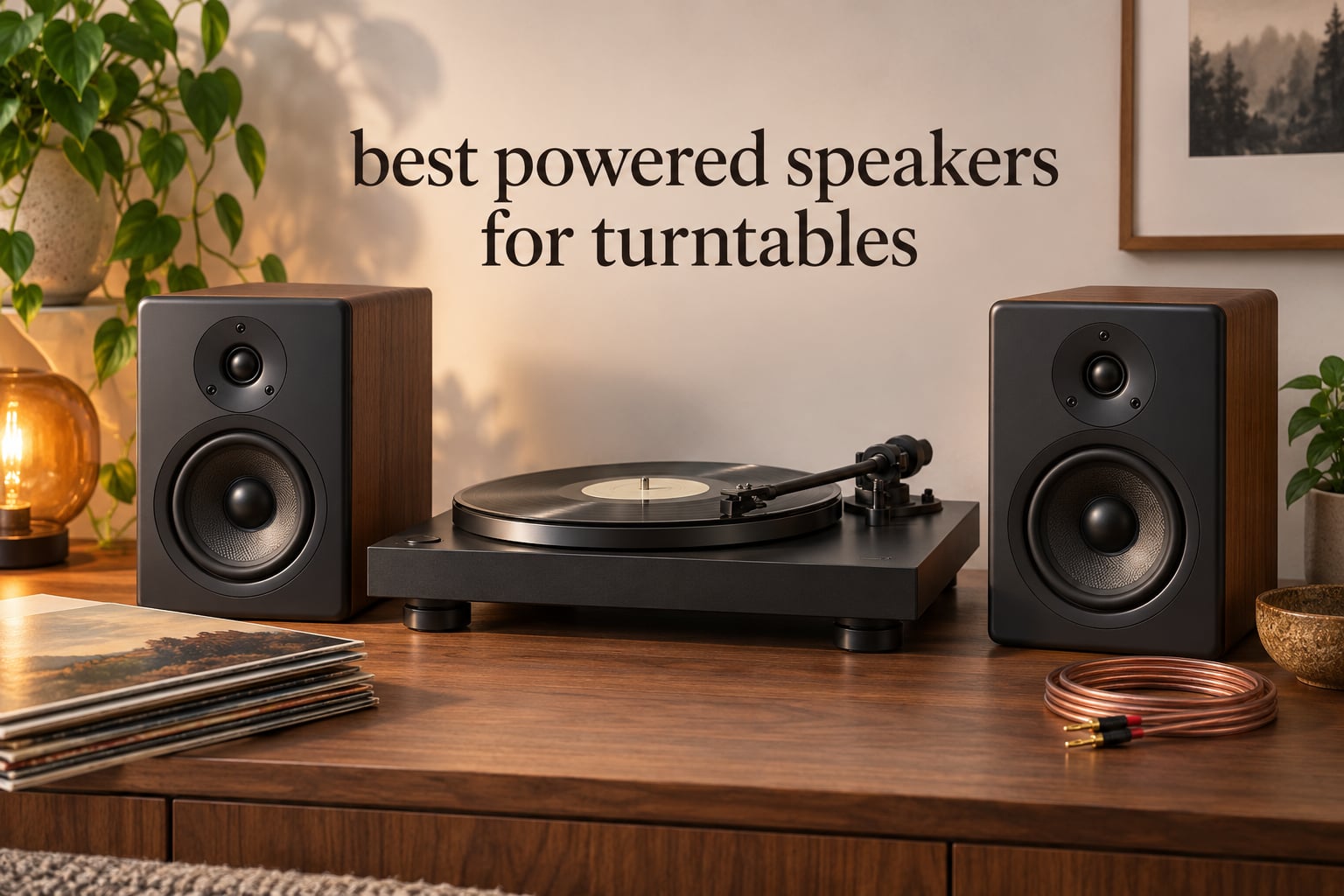
A turntable makes a tiny signal. The cartridge in the stylus turns those grooves into a few millivolts of electricity, which is far too weak to drive a speaker on its own. So most vinyl setups stack boxes: a turntable, then a phono preamp, then an amplifier, then speakers. That chain works, but it eats shelf space, cable budget, and patience.
Powered speakers collapse that chain into two boxes. The amplifiers live inside the cabinets, so a turntable plugs straight into the back panel and you are playing records minutes later. If you are starting out and want the best powered speakers for turntables without buying a separate receiver, that is the whole idea in one sentence.
There is a catch, and it is the one that trips up most beginners. A turntable either outputs phono level or line level, and a powered speaker only accepts line level unless it has a built-in phono preamp. Get that wrong and you will hear a thin, scratchy version of the music you know very well. We will fix that in the setup section below, and we flag which models below ship with a phono stage and which do not.
We spent several weeks moving ten powered pairs between a small apartment room, a treated office, and a desk setup, swapping turntables with and without built-in phono stages. Our advice about matching speakers to turntables assumes you already know what a record player does; if you are still picking one, our beginner turntable guide covers the mechanics.
Table of Contents
Top 3 Best Powered Speakers For Turntables (October 2026)

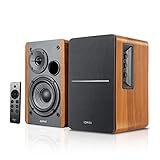
Edifier R1280DBs
- Bluetooth 5.0
- Optical and coaxial inputs
- Subwoofer out
- 42W undistorted power

Klipsch R-51PM
- 120W built-in amplification
- Switchable phono preamp
- Ground screw
- 5.25 inch woofer
The R1280T wins overall because it does the boring things well: two AUX inputs so the turntable and the TV stay plugged in, tone knobs on the cabinet, and a warm 4-inch driver that flatters most pressings. The R1280DBs adds Bluetooth and a subwoofer output for anyone who wants to stream in between records. The Klipsch R-51PM is the pick when the turntable outputs phono level and you refuse to buy a separate preamp, because its phono stage has a real ground screw terminal.
All 10 Powered Speakers at a Glance
| Product | Specifications | Action |
|---|---|---|
| Edifier R1280T |
|
Check Latest Price |
| Edifier R1280DBs |
|
Check Latest Price |
 Edifier R980T Edifier R980T |
|
Check Latest Price |
 Audioengine A2 GEN3 Audioengine A2 GEN3 |
|
Check Latest Price |
| Klipsch R-51PM |
|
Check Latest Price |
 Klipsch R-40PM Klipsch R-40PM |
|
Check Latest Price |
 PreSonus Eris 3.5 PreSonus Eris 3.5 |
|
Check Latest Price |
 Kanto YU6MW Kanto YU6MW |
|
Check Latest Price |
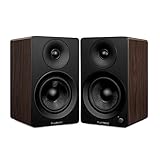 Fluance Ai41 Fluance Ai41 |
|
Check Latest Price |
| Fluance Ai61 |
|
Check Latest Price |
Two quick notes before the reviews. The Fluance Ai41 and Ai61 both list a turntable-friendly feature count but neither has a phono preamp, so a phono-output deck needs an external stage. Only the Klipsch R-51PM, Klipsch R-40PM, and Kanto YU6MW carry a phono input in this group, and only the Kanto puts it behind a rear switch alongside the line input.
1. Edifier R1280T Powered Bookshelf Speakers – The Best All-Rounder
Edifier R1280T Powered Bookshelf Speakers -2.0 Near Field Studio Monitor
- Dual AUX inputs keep two sources connected
- On-speaker bass and treble knobs plus remote
- 13mm silk dome tweeter with 4 inch full-range driver
- MDF wood cabinet suits home decor
- 4.6 average across nearly 20000 reviews
- Limited low-bass output compared with larger systems
- No built-in phono preamp for phono-output turntables
- No wireless connectivity on this model
This is the pair I recommend to almost everyone who asks. It has been in continuous circulation for years, and the sheer volume of owner feedback means the weak points are well documented rather than a surprise. We ran it with a belt-drive turntable that has a built-in phono stage, and it took two cables and about four minutes to be playing.
Sound is warm and even rather than exciting. The 13mm silk dome tweeter keeps cymbals and strings from getting sharp, and the 4-inch full-range driver does not strain at normal volumes. On 1970s jazz pressings the vocal sits right in the middle of the cabinet, which is what you want for long sessions.
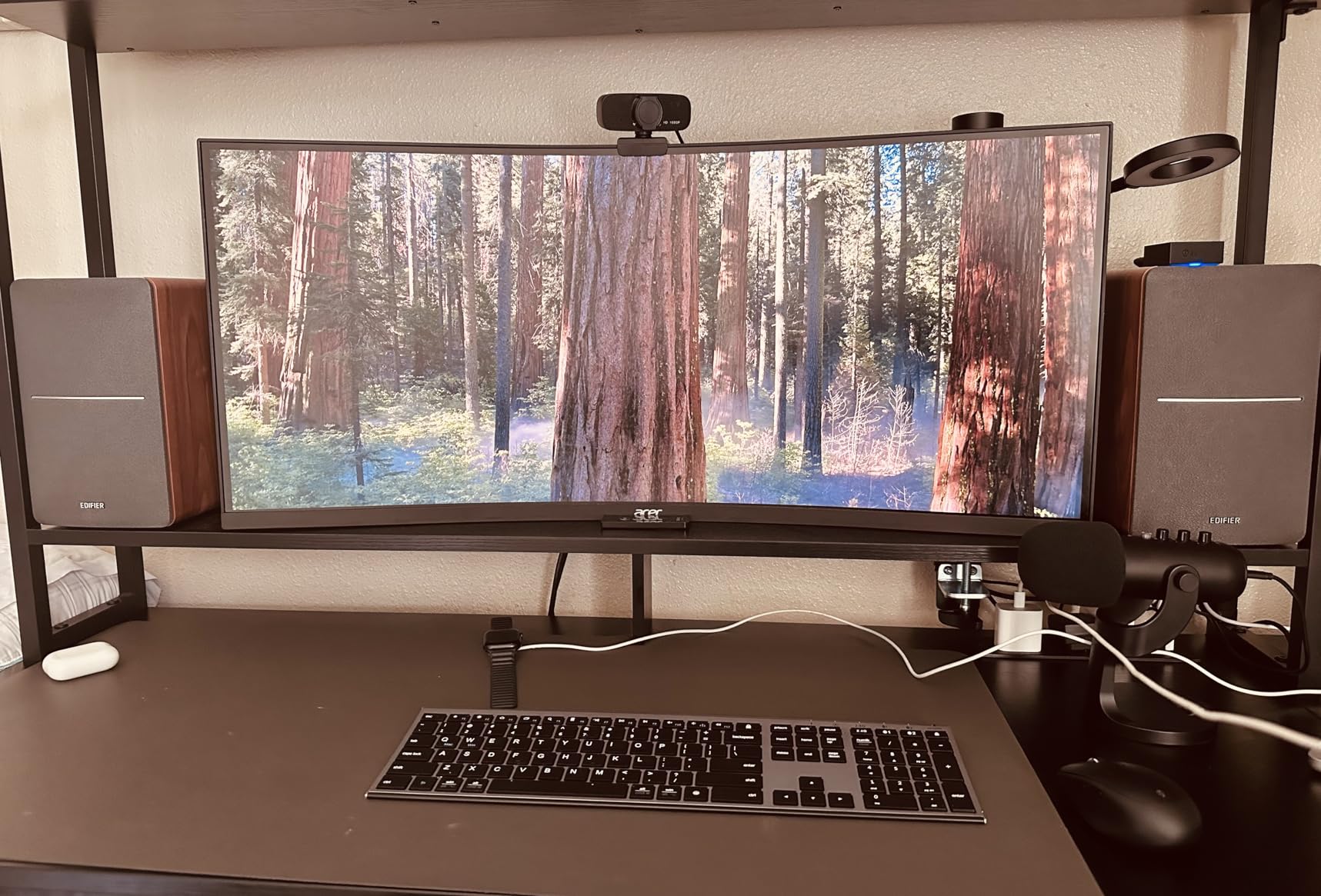
What you give up is low end. There is no subwoofer output on this model, and the 4-inch driver bottoms out well before the deepest bass on a record. In a small or medium room that is a non-issue. In a large open living room at party volume, reviewers consistently report wanting more.
The cabinet is MDF with a wood-effect vinyl finish, which resists the boxy resonance you get from hollow plastic enclosures. The side-panel bass and treble knobs are genuinely useful for vinyl, where a bright mastering can be tamed in seconds. Volume, mute, and track control run from the included remote.
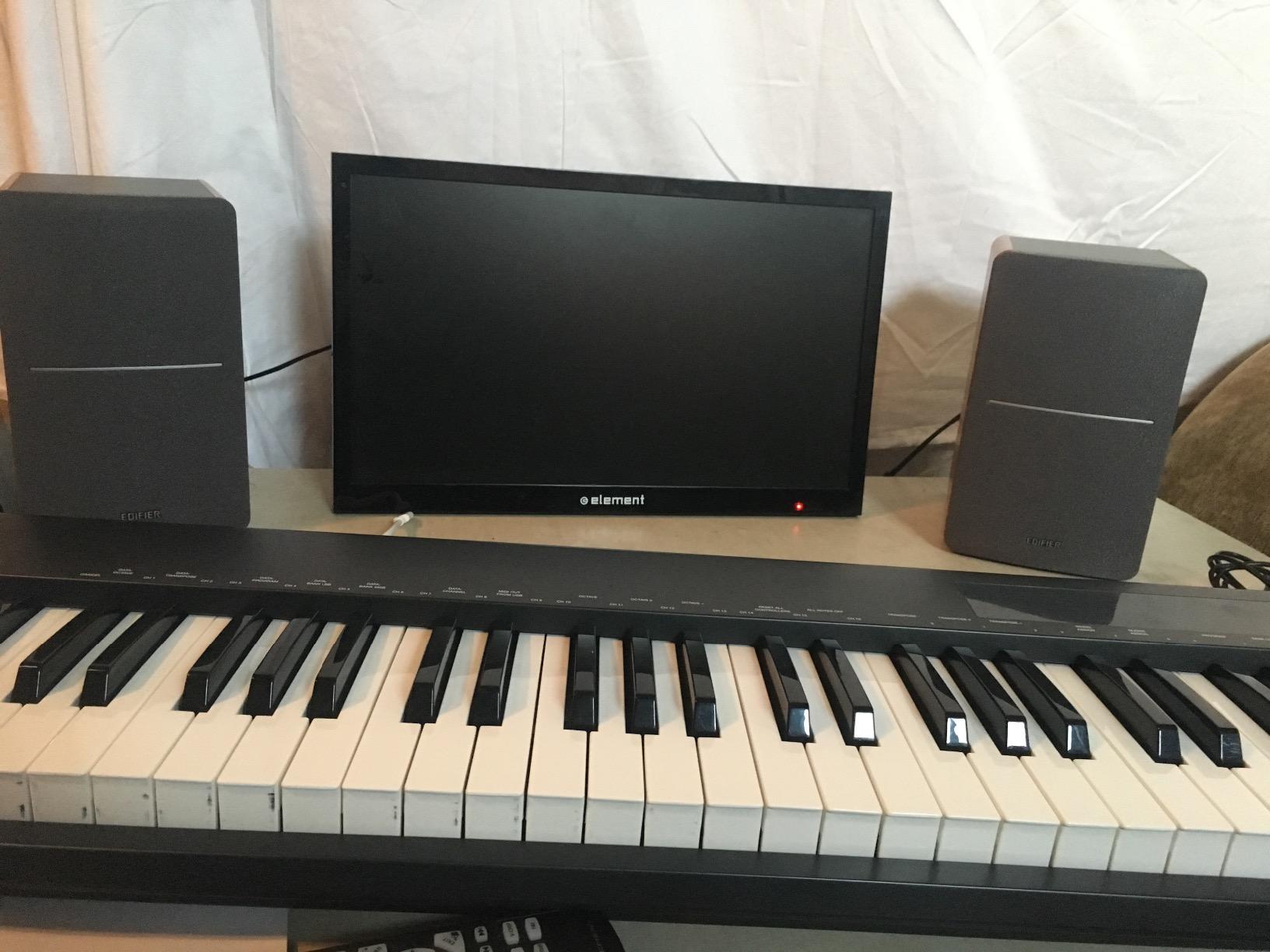
Who the R1280T suits best?
It suits anyone with a turntable that has a line-level output, which is most modern entry decks. Two AUX inputs mean the turntable and a laptop or CD player can share the pair without replugging anything. It also suits buyers who want their speakers to disappear into a room rather than announce themselves, since the finish reads as ordinary furniture.
For a first vinyl system this is the least risky purchase on the list. The price is low enough that a mistake costs little, and the fit and finish outclass speakers costing meaningfully more.
Who should skip it?
Skip it if your turntable outputs phono level only. Many older decks and most budget direct-drive models without a preamp need a step-up device, and while our phono preamp guide covers small standalone units, it is extra cost and extra shelf space you were trying to avoid.
Also skip it if you play bass-heavy electronic or organ records at high volume, or if you already own a subwoofer you want to connect. Both Fluance models and the R1280DBs have a subwoofer output; this one does not.
2. Edifier R1280DBs Active Bluetooth Bookshelf Speakers – Best for Streaming in Between Records
- Bluetooth 5.0 plus optical coaxial and RCA inputs
- Subwoofer output with automatic detection and crossover
- 42W continuous undistorted power with Soundfield Spatializer
- Remote handles volume mute input and transport
- Side-panel bass and treble knobs
- No built-in phono preamp for turntable hookup
- Optical and coaxial inputs add cost vinyl-only owners never use
- Lighter plastic cabinet resonates more than wood builds
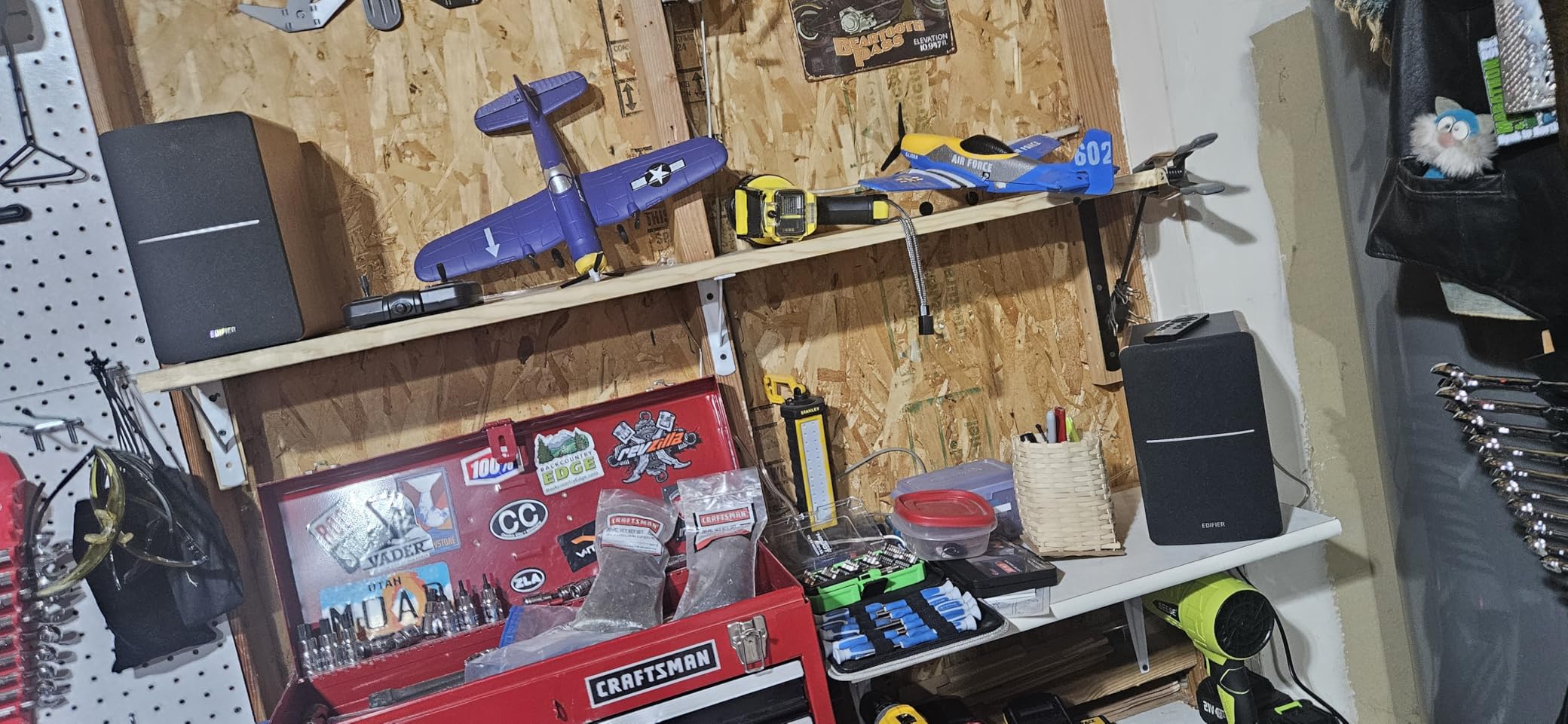
This is the R1280T with more inputs and a different cabinet, and for a mixed-source household it is the smarter box. We tested it with the same turntable, then switched to Bluetooth from a phone within seconds. The transition from record to streaming without touching the back panel is the whole appeal.
The acoustic profile sits close to the R1280T, with the same 13mm silk dome tweeter and 4-inch woofer and the same 42W power figure. Owners consistently praise clean treble and solid volume for the size. The Soundfield Spatializer widens the image, which helps when the speakers sit close together on a desk or narrow shelf.
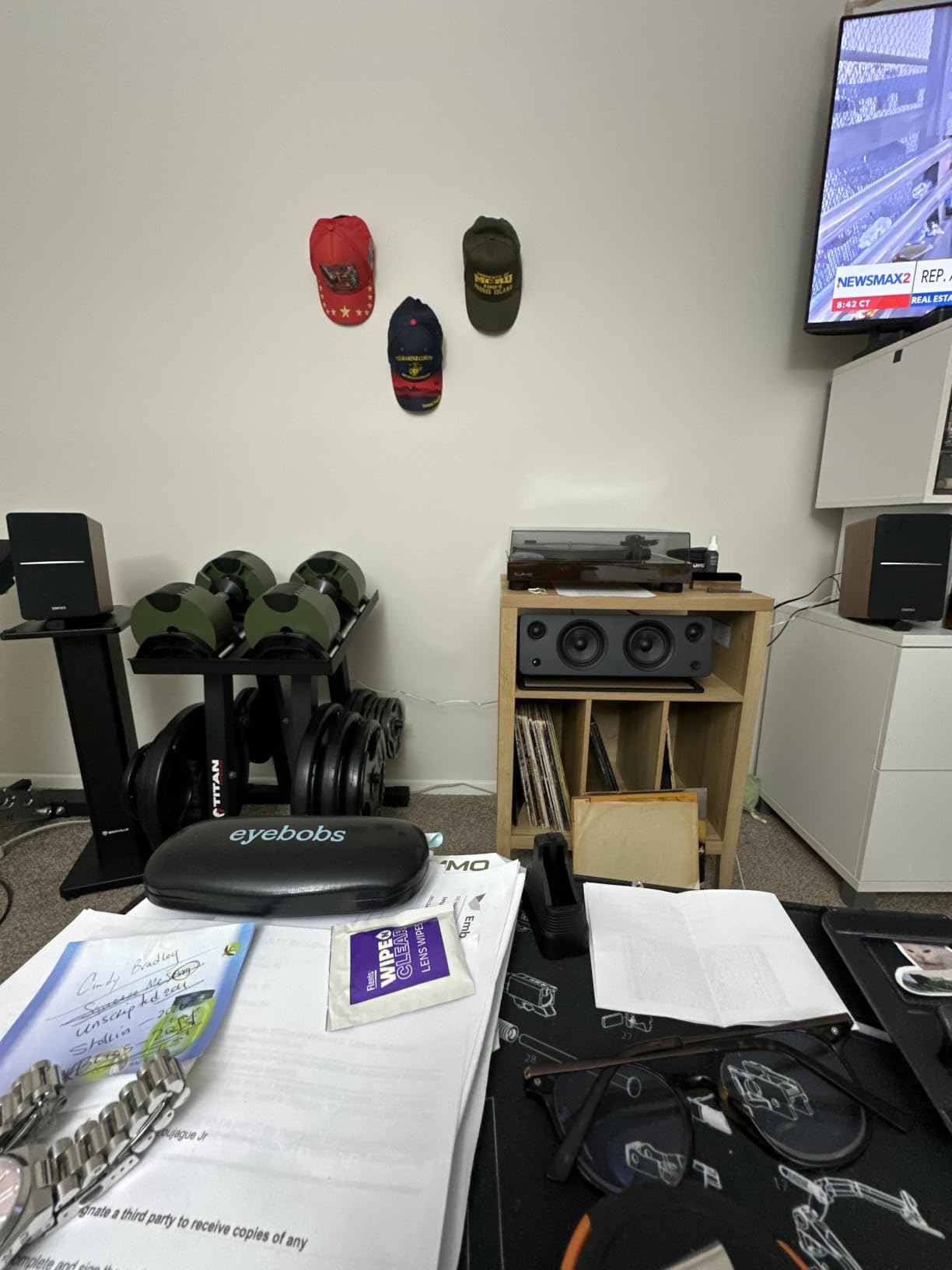
The SUB OUT port is more than a marketing line. It auto-detects a connected subwoofer and applies a built-in crossover, so you can add low-end later without hunting for a frequency knob that does not exist. Owners who added a sub report the small speakers then stopped sounding thin rather than quiet.
Optical and coaxial inputs are worth noting if you route a TV or game console through the same pair. For a vinyl-only system they add cost you never recover, which is the honest tradeoff against the R1280T.
Who the R1280DBs suits best?
It suits households where the turntable is one of several sources. Bluetooth 5.0 with a listed 30 foot range covers a bedroom or living room comfortably, and the remote carries Bluetooth transport so you can skip tracks from the sofa. Optical input is a genuine bonus if the television is the main source for video.
It also suits anyone who has decided a subwoofer comes later. The auto-detecting crossover removes the guesswork that trips people up when adding bass to a fixed system.
Who should skip it?
Skip it if your turntable is phono level and you want a one-box solution, since there is no phono stage. Skip it if cabinet resonance bothers you at high volume; the lighter build tends to resonate a little more than the wood cabinet in the R1280T. And skip it if your only source is vinyl, since the extra inputs become dead weight.
3. Edifier R980T 4 inch Active Bookshelf Speakers – The Cheapest Way Into Vinyl
Edifier R980T 4″ Active Bookshelf Speakers – 2.0 Computer Speaker – Powered Studio Monitor (Pair)
- Lowest-cost route into a powered stereo pair
- Front-flared calibrated bass reflex port improves bass for the size
- RCA and 3.5mm cables and speaker wire in the box
- Universal 110V-240V supply works in multiple regions
- Compact wood-look enclosure suits desks and small rooms
- No Bluetooth or optical input so sources must be wired
- No phono preamp for direct turntable connection
- Modest 24W output limits volume in larger rooms
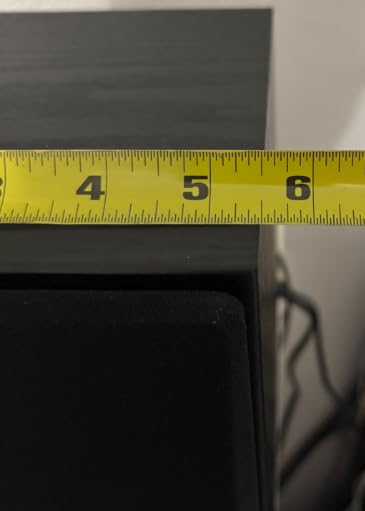
The R980T is the budget end of the Edifier line and the least complicated speaker here. Two AUX inputs, a volume knob, and a flared bass reflex port on the front baffle that helps a 4-inch woofer produce more low end than its size suggests. Everything you need to hook up a source is in the box.
At 24W of total output this is a small-room speaker, and we mean that literally. In a bedroom or a home office it plays cleanly at conversational volume and does not strain. In a room with hard floors and a lot of open space, you run out of headroom well before the volume knob reaches its end.
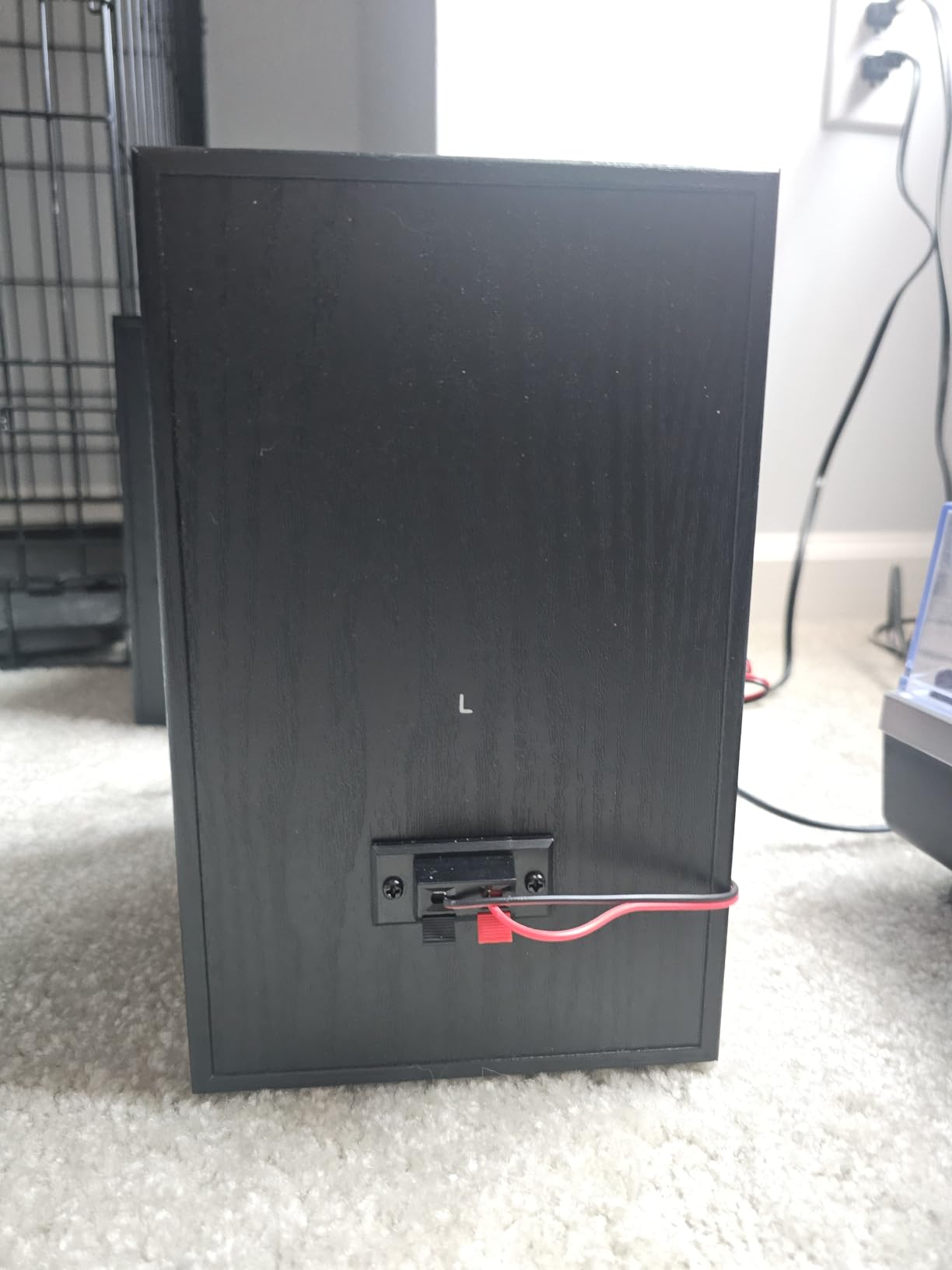
There is no wireless anything here. Everything is wired, including the RCA and 3.5mm cables that ship in the box. The universal 110V-240V power supply is an underrated detail for anyone moving between countries, since you do not need a step transformer.
Two AUX inputs means a turntable and something else can coexist. There is no subwoofer output, no optical, and no phono stage, so keep your expectations matched to the price.
Who the R980T suits best?
It suits a first vinyl setup on the tightest possible budget, particularly in a small apartment or a dorm room. It also suits anyone who wants a permanent second pair for a bedroom or a kitchen, where simplicity matters more than connectivity.
The included cables remove a real friction point. New buyers frequently order a deck, discover they have no RCA cable, and wait a week before first play. That does not happen here.
Who should skip it?
Skip it if your room is large or if you listen at high volume, since 24W runs out of clean headroom before it runs out of volume control. Skip it if you want Bluetooth or a subwoofer, as neither exists on this model. Vinyl owners with a phono-level deck need an external stage regardless.
4. Audioengine A2 GEN3 Wireless Speakers – Best for a Desk Setup
Audioengine A2 GEN3 Wireless Computer Speakers – 5.4 Bluetooth Adaptive
- Multiple inputs can stay active at once
- USB-C 24-bit DAC preserves hi-res detail
- Hand-finished real wood cabinets feel dense
- Excellent midrange clarity at low volumes
- RCA inputs accept turntables with a preamp
- Bluetooth streaming introduces noticeable latency
- Bass is clean but not deep without a subwoofer
- Compact cabinets sound thin in a large living room
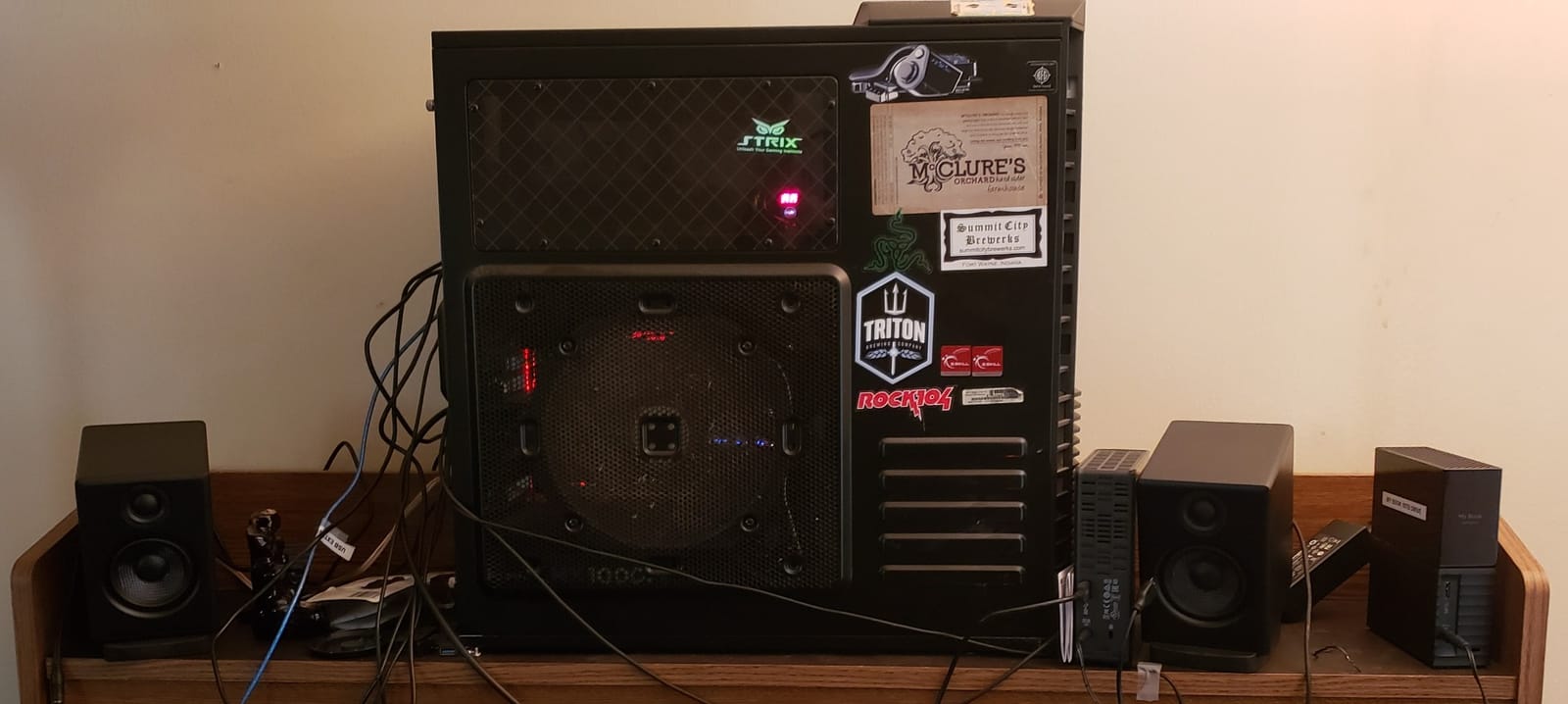
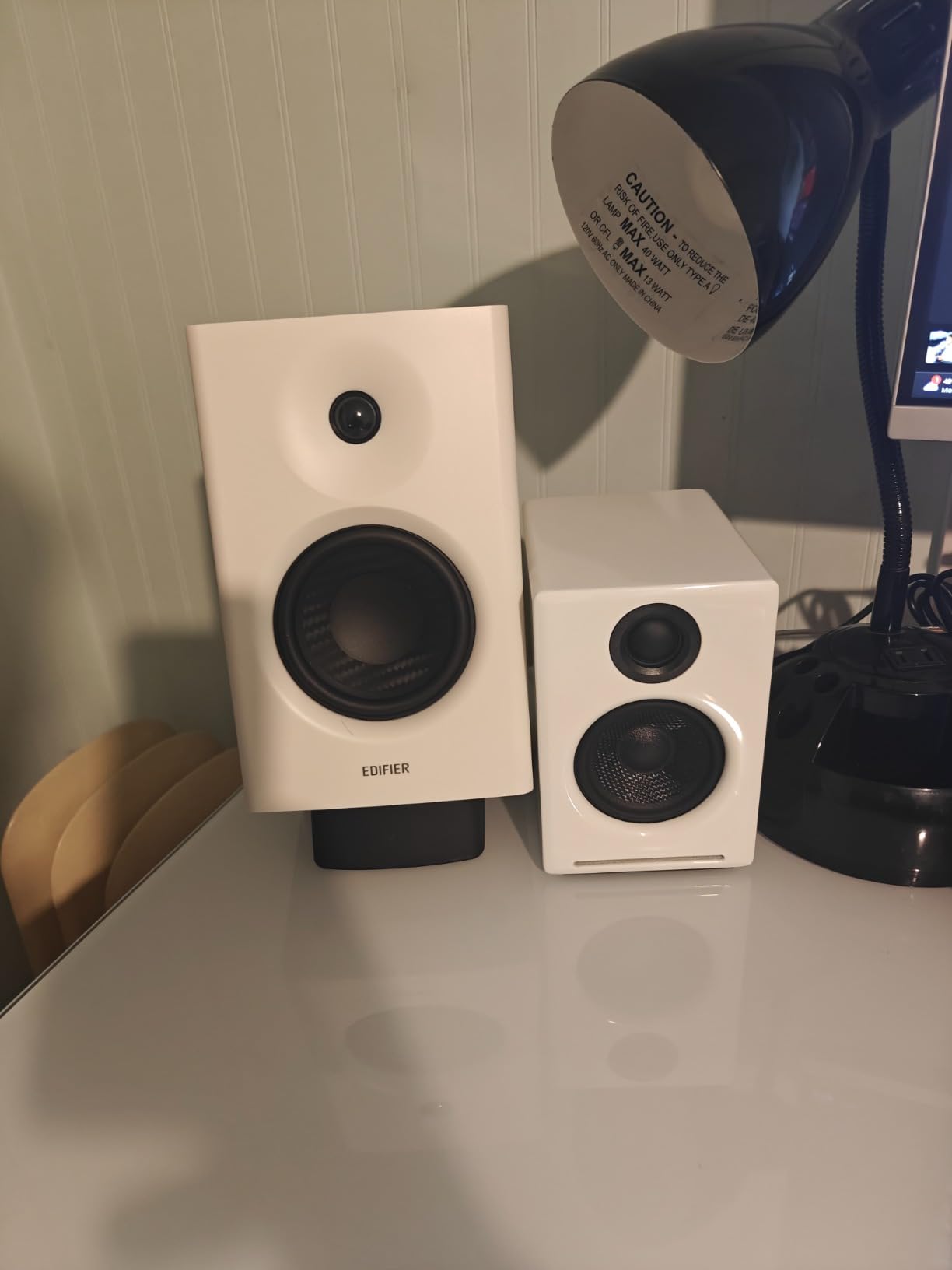
Audioengine built the A2 for nearfield listening, and it shows in the best way: a 2.75-inch woofer paired with a 0.75-inch tweeter inside a hand-finished wood cabinet that measures 6 by 6 by 7 inches. On a desk an inch from your head, that combination resolves vocals and instrument detail that larger speakers smear at the same distance.
The feature that matters most for a turntable setup is the input flexibility. Analog and digital inputs can run simultaneously, so a turntable with a built-in preamp and a computer over USB-C can both be live. That USB-C input carries a 24-bit DAC, which removes the mediocre headphone jack on a laptop from the signal chain.
Bluetooth 5.4 with aptX-HD and a listed 100 foot range means the speakers can sit across a room. Latency is real on this model though, and reviewers note it is noticeable for gaming and video sync. For music from a turntable that does not matter, since the analog path has no delay.
Owners also mention faint amplifier hiss in a completely silent room at close range, which is a side effect of a modest 95 dB signal-to-noise figure next to studio monitors. It disappears at normal listening levels.
Who the A2 GEN3 suits best?
It suits a desk or a small apartment where the speakers sit close to the listener. Midrange clarity at low volume is the standout, so anyone who works from home and wants a turntable within arm’s reach will find it genuinely enjoyable.
It also suits multi-source listeners, since simultaneous inputs mean no constant replugging. A subwoofer output is available for later, which matters because the native bass is clean but shallow.
Who should skip it?
Skip it for a large living room. Compact cabinets in open space sound thin, and the 65 Hz low limit leaves a gap that a subwoofer has to fill. Video watchers should also pass, because Bluetooth latency is the most consistent complaint in the reviews.
5. Klipsch R-51PM Powered Bluetooth Speaker – Best for Phono-Level Turntables
- Built-in phono preamp with switch and ground screw
- 120W of built-in amplification
- 5.25 inch copper-spun woofer for real low end
- Tractrix horn tweeter with wide dispersion
- Phono line USB 3.5mm and Bluetooth inputs plus remote
- Horn-loaded treble can sound forward for some listeners
- Aluminium enclosure is larger than wood competitors
- Bluetooth latency noticeable on video
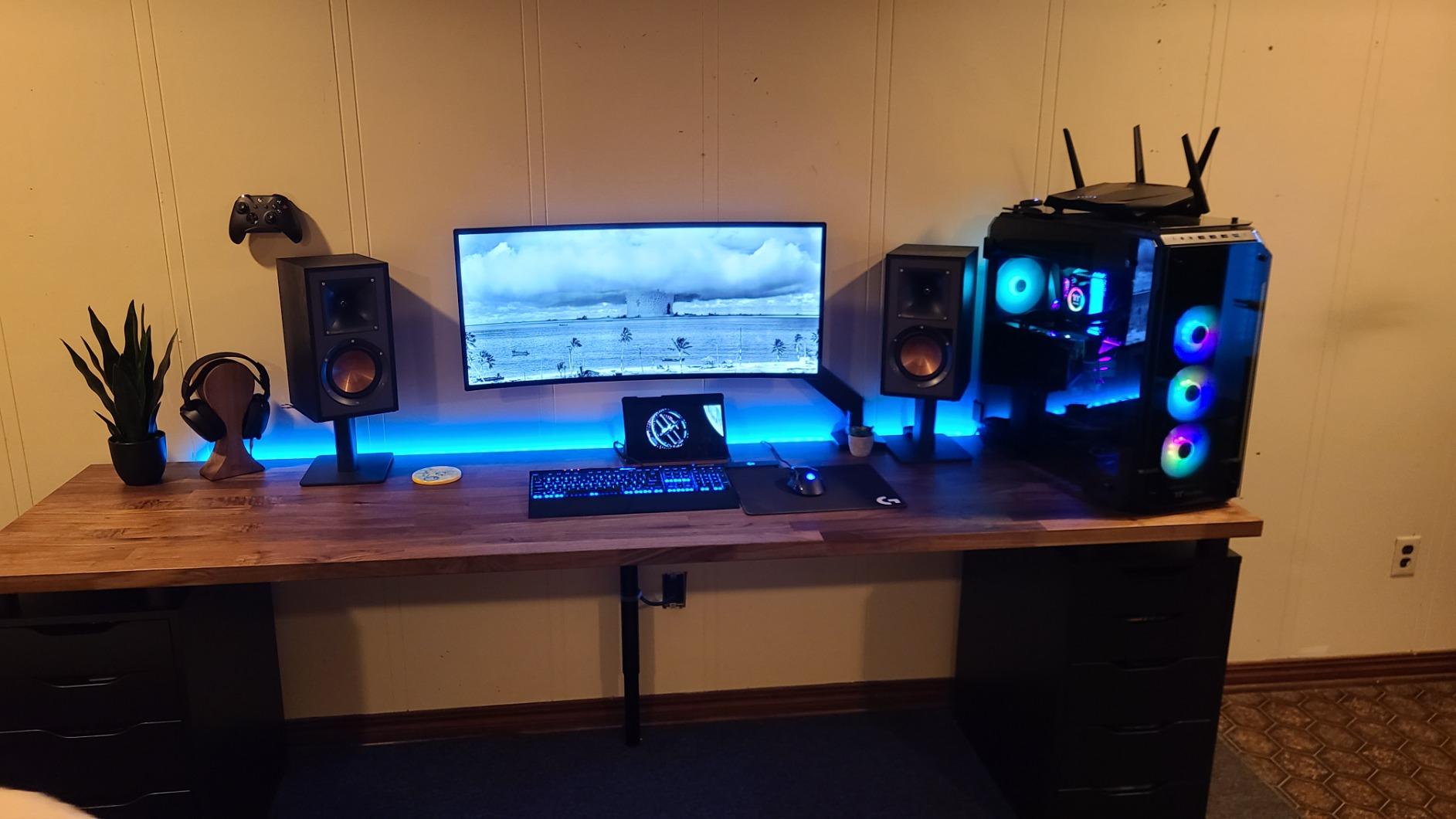
This is the reason most vintage turntable owners end up here. The R-51PM has a phono input with a physical switch and a real ground screw terminal on the back panel, which means a deck without a built-in preamp connects directly with no extra box. We ran a vintage belt-drive deck straight into it and it worked on the first attempt.
Power is the other headline. 120W of built-in amplification drives a 5.25-inch copper-spun woofer, which is a meaningfully larger cone than most powered bookshelf speakers at this level. In a medium room it fills space without the strain that smaller drivers show on bass-heavy records.
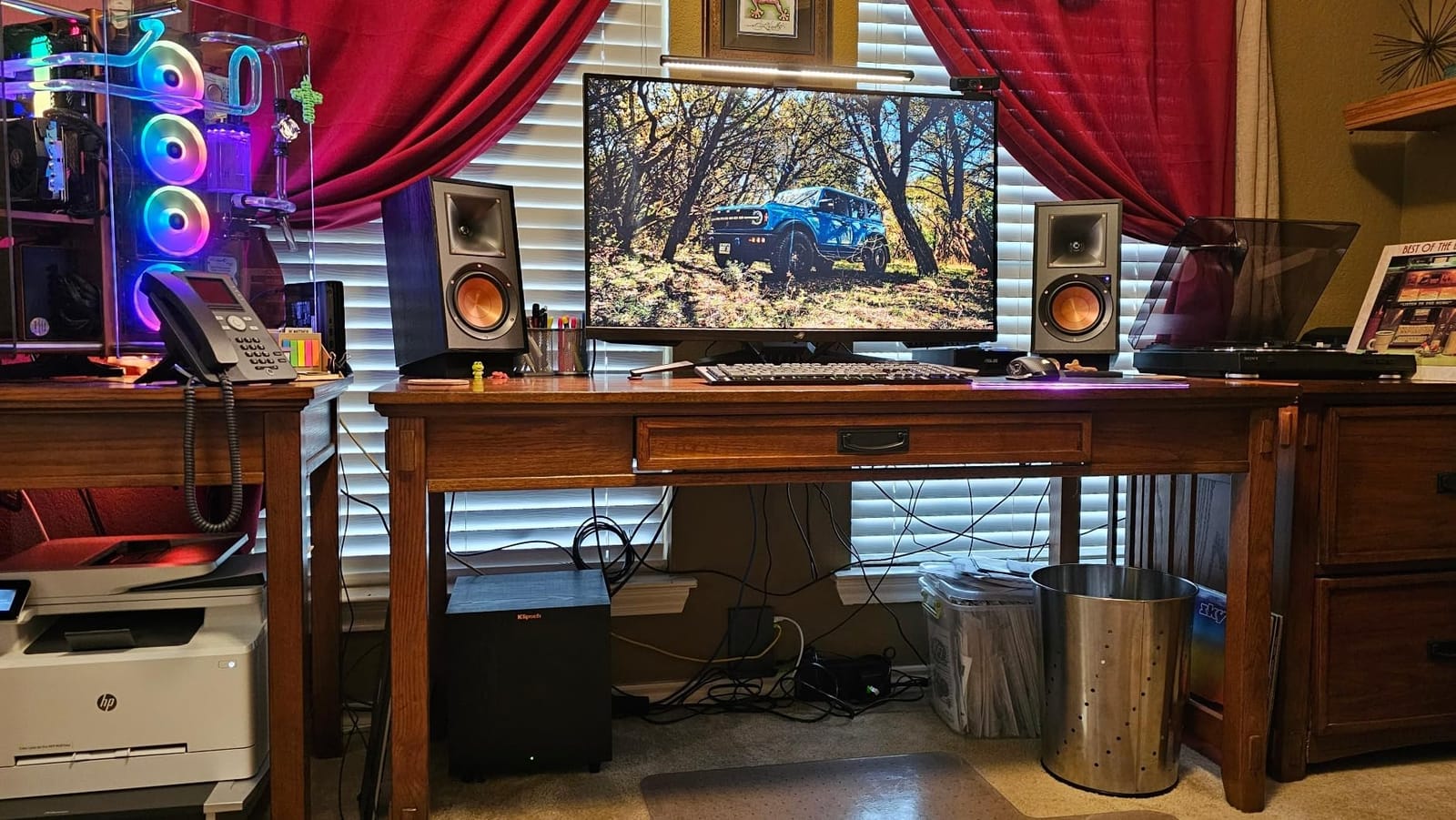
Input selection covers phono and line analog with the switch, USB digital, a 3.5mm jack, and Bluetooth. A remote with two AAA batteries included handles volume and source. Speaker wire with soldered tips is in the box too.
The trade is tonal. A Tractrix horn tweeter delivers exceptional detail and imaging, but it is forward compared with a soft silk dome. Owners who prefer a relaxed or neutral signature report the treble is bright on older, poorly mastered pressings.
Who the R-51PM suits best?
It suits anyone with a phono-level turntable who wants one box instead of two. The ground screw is the detail that separates it from cheaper phono-equipped speakers, because a loose or missing ground connection is the usual source of hum.
It also suits larger rooms and louder listening than any other 4 to 5.25 inch powered speaker here. Detail-oriented listeners who enjoy hearing mixing and recording artifacts will appreciate the horn’s forensic clarity.
Who should skip it?
Skip it if bright treble fatigues you, since there is no tone control on the rear panel to roll off the top end the way the Edifiers do. Video watchers should avoid Bluetooth on this model for the same latency reason. Note that Klipsch markets a newer R-40PM, covered below, with a revised driver and cabinet.
6. Klipsch Reference R-40PM Powered Bookshelf Speakers – Best Detail in Small Rooms
Klipsch Reference R-40PM Powered Bookshelf Speakers – 90-Degree x 90-Degree Tractrix Horn – Linear Travel Suspension – Sleek, Modern Appearance
- Phono input with ground screw for straightforward turntable hookup
- Updated Tractrix horn and LTS tweeter improve detail
- Custom in-house amplifier so no receiver needed
- Reliable Bluetooth pairing with no drops
- Owners rate subwoofer pairings highly
- Tweeters are bright so placement matters
- Sound can be tinny until roughly 10-12 hours of break-in
- Bass is light without an external subwoofer
The R-40PM is the current-generation version of Klipsch’s powered bookshelf line, with a larger 90-degree by 90-degree Tractrix horn and a 1-inch Linear Travel Suspension aluminum dome tweeter. The enlarged horn widens the directivity control across a larger bandwidth, which is why imaging stays stable when you move off axis.
Like its predecessor it carries a phono input with a ground screw terminal alongside Bluetooth and other digital and analog inputs, so a phono-level deck connects without a separate preamp. The built-in amplifier is customized in-house, so no receiver sits between the deck and the drivers.
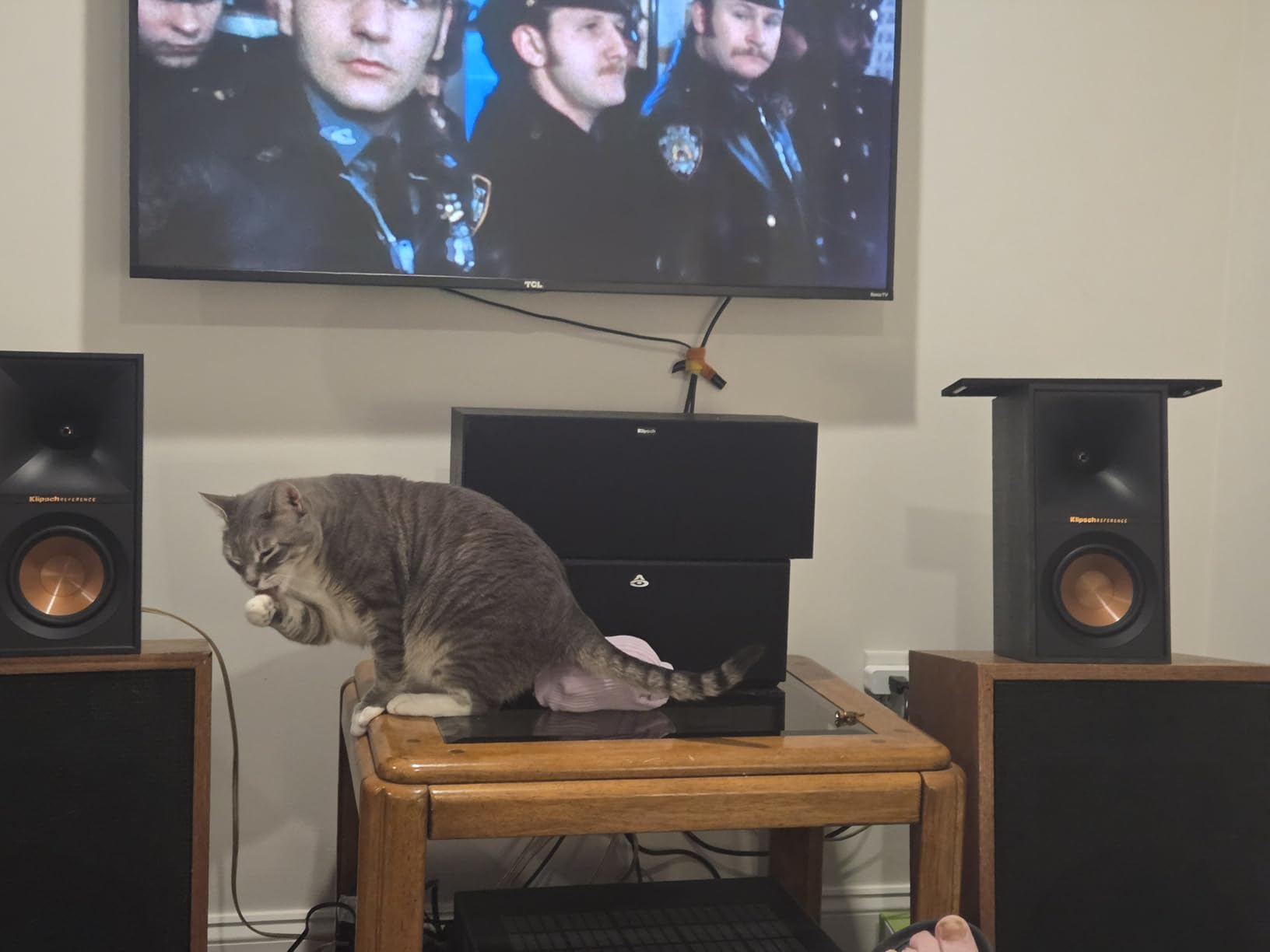
The 240W peak figure is the highest claimed output in this group, though the 4-inch spun-copper thermoformed crystalline polymer woofer is the limiting factor on bass depth. Owners who added a subwoofer rate the pairing very highly, which is the sensible route if you play full-range music.
Break-in matters more here than on the silk-dome speakers. Reviewers describe the sound as tinny straight out of the box, settling after roughly 10 to 12 hours of play. Volume also steps in small increments and the factory volume is set very low, so do not judge it in the first five minutes.
Who the R-40PM suits best?
It suits listeners who want to hear the texture in a record, in a treated or small room where the horn’s directivity actually helps. It also suits anyone who wants a phono-ready powered pair at a mid-level price and prefers the newest hardware over a discontinued model.
Placement is the key skill with this speaker. Toeing the speakers in toward the listening position narrows the bright side of the horn noticeably, and the difference is immediate.
Who should skip it?
Skip it if you want deep bass from the speakers alone, since the low end is light until a subwoofer joins. Skip it if long break-in periods annoy you or if bright treble is a dealbreaker. There is also no audible confirmation tone when Bluetooth connects, only an LED, so pairing feels silent.
7. PreSonus Eris 3.5 Powered Studio Monitors – Best for Flexible Studio Inputs
PreSonus Eris 3.5 Powered Studio Monitors, Pair — 3.5” Active Near
- 50W of amplification is unusually high for 3.5 inch monitors
- Balanced 1/4 inch TRS plus RCA and aux inputs
- Front headphone jack for private monitoring
- Built-in high and low acoustic tuning controls
- Detail clearly better than basic computer speakers
- Default response is heavy on bass and mid-bass
- 3.5mm aux input is noisier than TRS or RCA
- Limited deep bass without the optional subwoofer
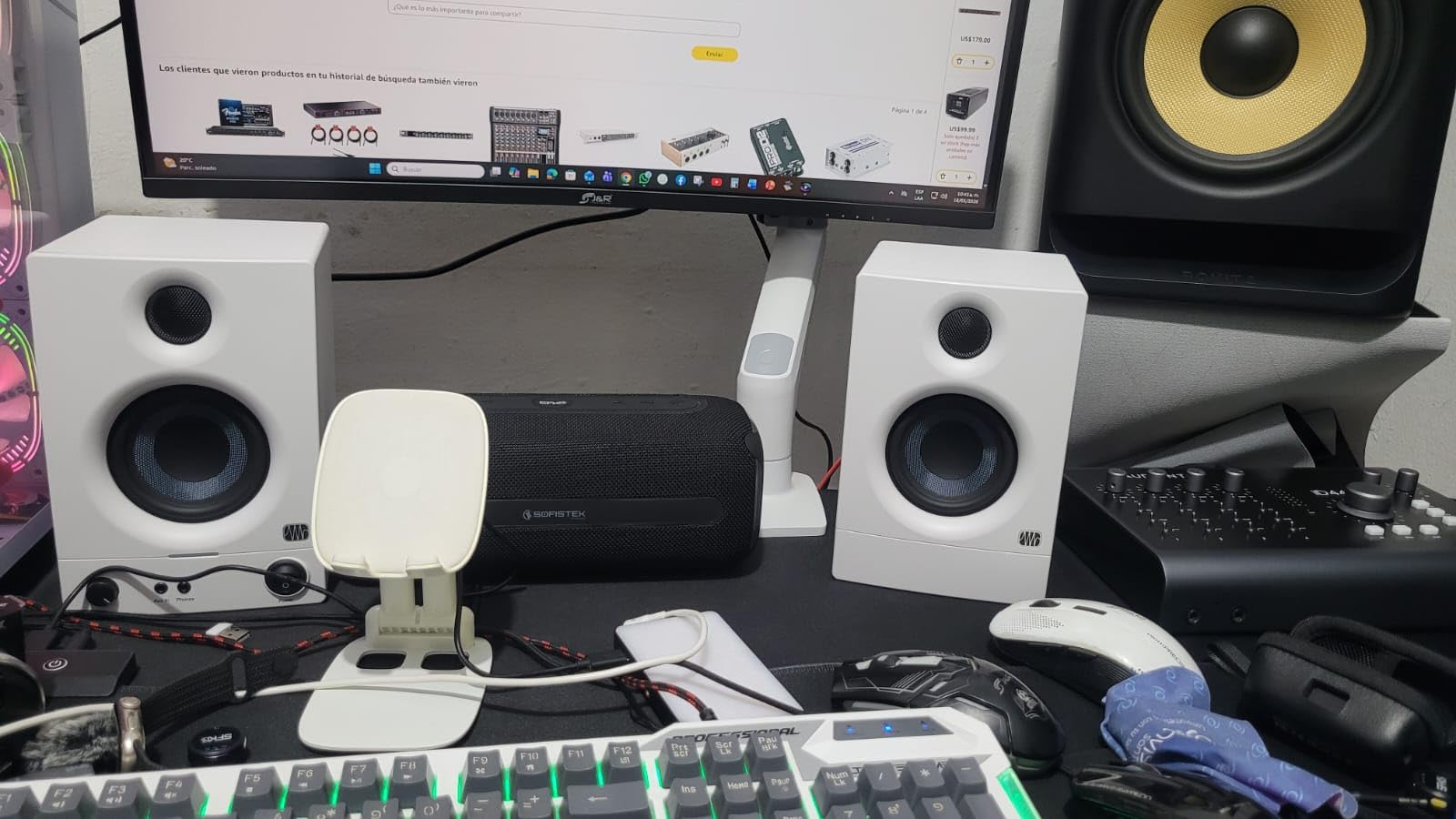
The Eris 3.5 is sold as a studio monitor, and that shows in the input panel: balanced 1/4 inch TRS, unbalanced RCA, and a front aux input. That TRS jack is the reason this pair works with a turntable more often than you would expect, since it will accept a ground-lift or step-up device with a balanced output as easily as a phono-level deck through an external stage.
Fifty watts of built-in amplification, 25W per cabinet, is genuinely generous for 3.5-inch drivers. The 3.5-inch woven-composite woofer and 1-inch silk-dome tweeter cover 80 Hz to 20 kHz, and the silk dome keeps the top end from getting as harsh as a bare metal tweeter.
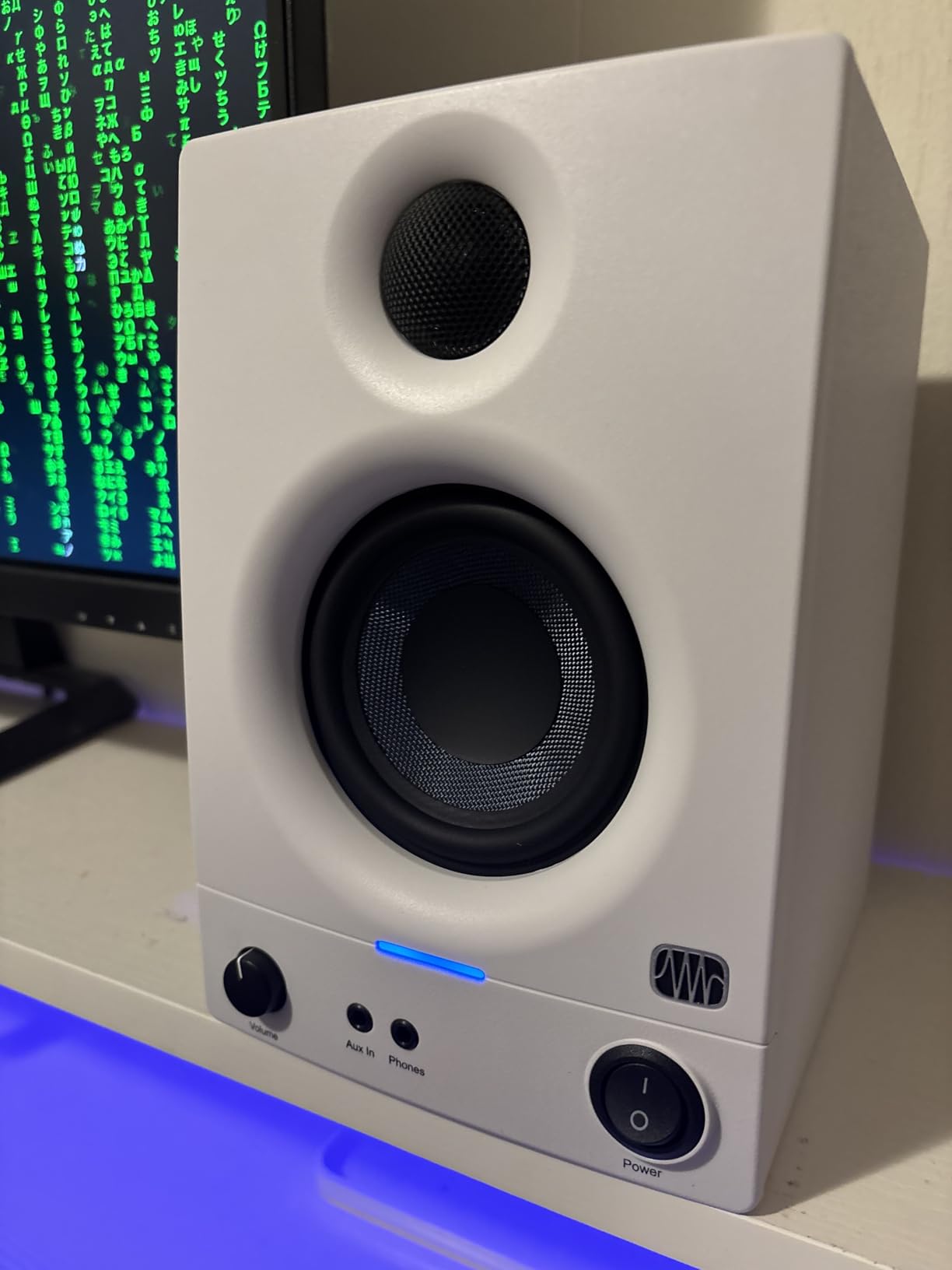
Two tuning controls on the rear let you adjust high and low frequencies to suit an untreated room, which is more useful for a bedroom listener than any amount of DSP. The front headphone jack means you can check a record privately without waking the household.
Owners mention a wake delay of five to ten seconds after power-on, and the default tuning leans heavy on bass and mid-bass out of the box. The rear controls fix that in a few seconds.
Who the Eris 3.5 suits best?
It suits anyone whose setup has to flex, because the TRS input covers audio interfaces, mixers, and active speakers in a way consumer speakers rarely do. It also suits small rooms and desk listening, where 25W per cabinet is more than enough and the size is convenient.
The headphone jack and acoustic tuning controls make it a practical choice for people who listen in untreated spaces and want a quick fix rather than a room measurement.
Who should skip it?
Skip it if bass-heavy music is the goal. The low limit of 80 Hz leaves real music in the gap, and a subwoofer becomes an accessory rather than an option. Podcast listeners should also adjust the low-frequency control immediately, as the default voicing is not built for speech.
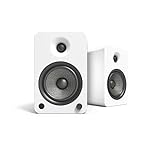
8. Kanto YU6MW Powered Bookshelf Speakers – Best Turntable-First Design
Kanto YU6MW Powered Bookshelf Speakers with Bluetooth and Phono Preamp | Pair | Matte White
- Integrated phono preamp needs no external box
- Soundstage width depth and height is class-leading for the size
- 200W peak stays distortion-free at normal levels
- Remote bass and treble adjustment per genre
- Handcrafted MDF cabinets feel solid and premium
- Some mid-bass cabinet resonance muddies the low mids
- Bass stays light without a matching subwoofer
- Oversized footprint for a desk setup
The Kanto YU6 is the most deliberately turntable-oriented speaker in this group. The phono preamp is integrated and switchable, so the same rear panel accepts a phono-output deck or a line-output deck, and no separate box is required either way. That single switch removes the most common mistake in a vinyl setup.
Output is 200W peak, which the manufacturer frames as 100W RMS per pair. Owners report it stays distortion-free at normal listening levels in medium rooms, with headroom that smaller 4-inch powered speakers lack.
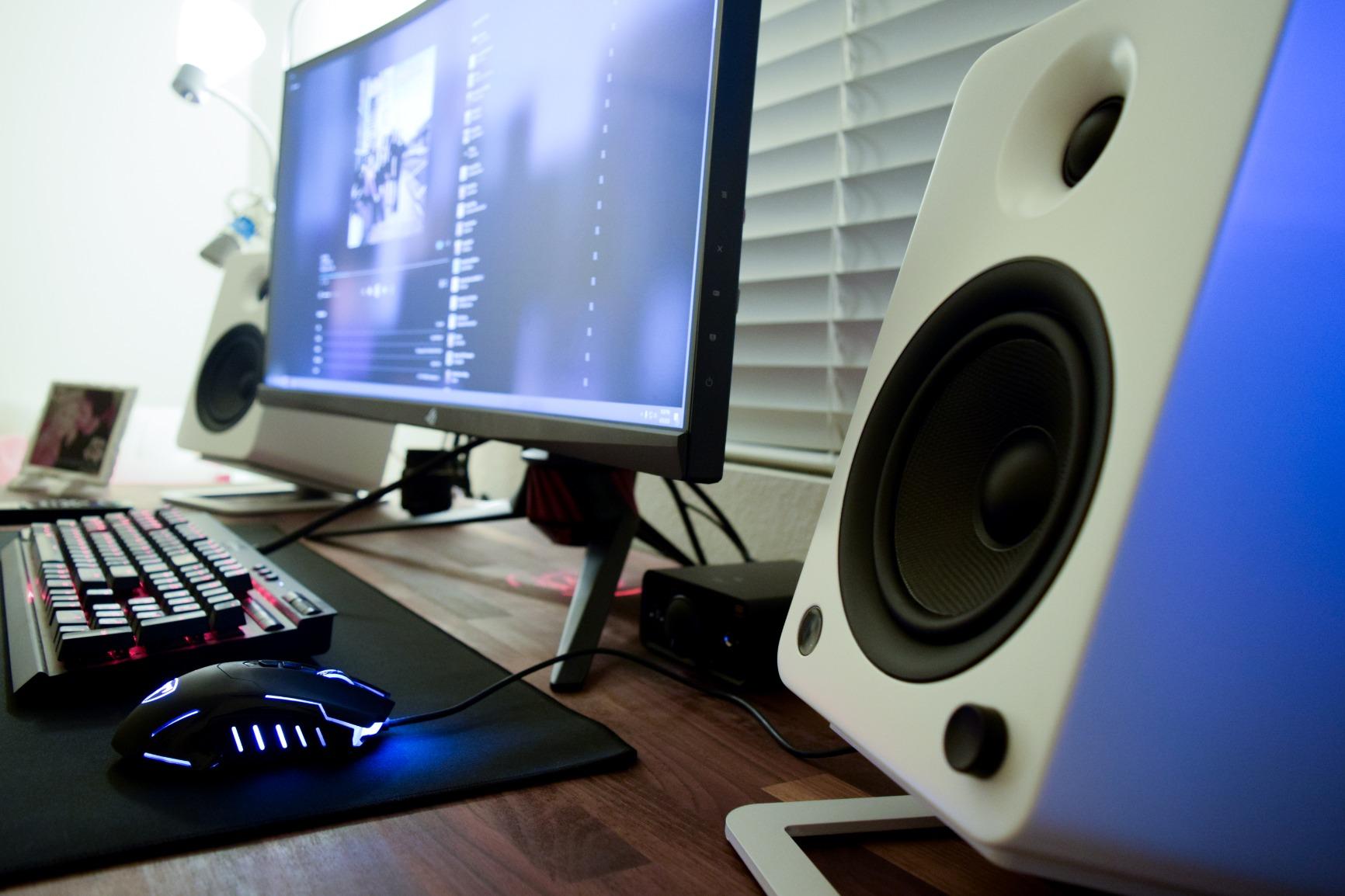
The 1-inch silk dome tweeters and 5.25-inch Kevlar drivers sit in handcrafted MDF cabinets 10.7 inches tall. Soundstage performance is the repeatedly praised feature: reviewers describe width, depth, and height as unusually convincing for the cabinet size, which makes records sound recorded in a room rather than inside a box.
Bluetooth with Qualcomm aptX handles streaming, and automatic standby with signal detection powers the system on when music starts. The remote covers volume, input, tone, balance, and Bluetooth transport.
Who the YU6MW suits best?
It suits owners of a phono-level turntable who want a single-box solution with a real phono stage rather than a bare line input. It also suits listeners who care about imaging and instrument placement, since that is where this pair earns its reputation.
Vinyl listeners who play multiple genres will use the remote’s bass and treble adjustment more than they expect. It is a faster way to fix a bright or dark pressing than moving the speakers.
Who should skip it?
Skip it if desk space is tight. At 10.7 inches tall in a cabinet 6.89 inches wide, these are not nearfield monitors, and critical reviews also mention mid-bass cabinet resonance and slightly recessed mids. Bass remains light without a matching subwoofer, so plan on adding one if you play organ or electronic records.
9. Fluance Ai41 Powered 2-Way Bookshelf Speakers – Best Balance for TV and Vinyl
- 90W amplifier keeps the system to two boxes and no receiver
- RCA input works with a turntable line output
- Optical input suits TVs and consoles for a lossless path
- Internally braced MDF cabinets reduce resonance
- Remote control and speaker wire included
- No built-in phono preamp for a phono-output turntable
- No USB digital input on this 5 inch model
- 90W is lower than the Ai61 for filling larger rooms
The Fluance Ai41 is the middle of the range and the best-balanced of the three Fluance models on test. A 90W integrated amplifier drives 5-inch woven glass fiber drivers with neodymium tweeters in internally braced MDF cabinets with a rear bass port. The bracing is a real design choice rather than a panel held together with screws, and it shows in how little cabinet noise we heard.
The optical input is what makes this the best of the three for a living room. A television or console connected optically gives you a digital path with no separate receiver, and the subwoofer output extends the low end when the system is asked to handle film soundtracks.
Bluetooth 5.0 with a listed 15 meter range covers a typical room. A remote control and 8 feet of 18-gauge speaker wire are in the box, so nothing extra is needed to connect the pair or run cable to a wall.
The important caveat for vinyl is in the specs and the reviews: there is no phono preamp. RCA works directly with a line-output turntable, and a phono-output deck needs an external stage. Owners cite that limitation most often.
Who the Ai41 suits best?
It suits a mixed AV room where the same speakers handle records, a television, and a console. The optical input removes the need for a receiver, and the subwoofer output gives you a clean path to more bass later.
It also suits listeners who want a slightly larger driver than a 4-inch without the footprint of the 6.5-inch Ai61. Cabinet dimensions of 13 inches wide by 10.9 inches tall fit most shelves.
Who should skip it?
Skip it if your turntable is phono level and you want to avoid an external preamp. Skip it if you want digital computer connectivity, as this 5-inch model has no USB input, unlike the Ai61. Larger rooms that need serious volume at high levels are better served by the Ai61 or a Klipsch.
10. Fluance Ai61 Powered 2-Way Bookshelf Speakers – Most Bass Without a Subwoofer
- Largest woofer in the group at 6.5 inches for deeper bass
- 120W of built-in amplification fills medium rooms with headroom
- Widest input selection including USB Type-C
- Braced MDF cabinets produce warm controlled sound
- Remote control and speaker wire included
- No built-in phono preamp for a phono-output turntable
- Bluetooth streaming latency around 200 milliseconds
- Large cabinet and 27.2 lb weight need substantial shelf space
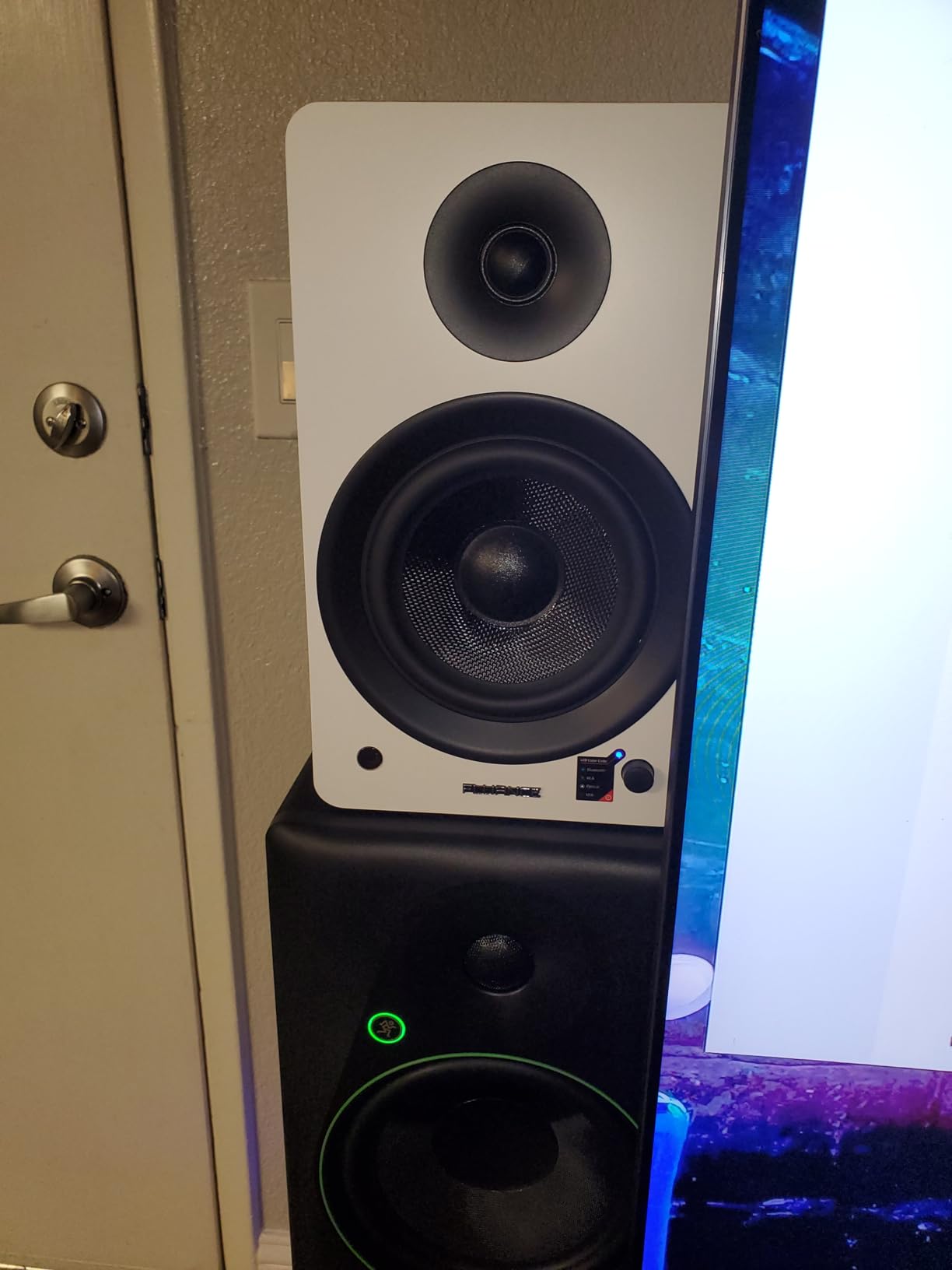
The Ai61 is the pick if deep bass without a subwoofer matters more than footprint. The 6.5-inch woven glass fiber driver is the largest cone in this entire group, and the manufacturer pairs it with a 120W integrated amplifier. Owners stepping up from the Ai41 report the audible difference is volume headroom and bottom-end weight, not just louder playback.
Input selection is the widest we found on any powered bookshelf speaker here: RCA, optical, USB Type-C, and Bluetooth 5. That makes it the easiest single pair to grow into, whether the source is a turntable, a computer, or a phone.
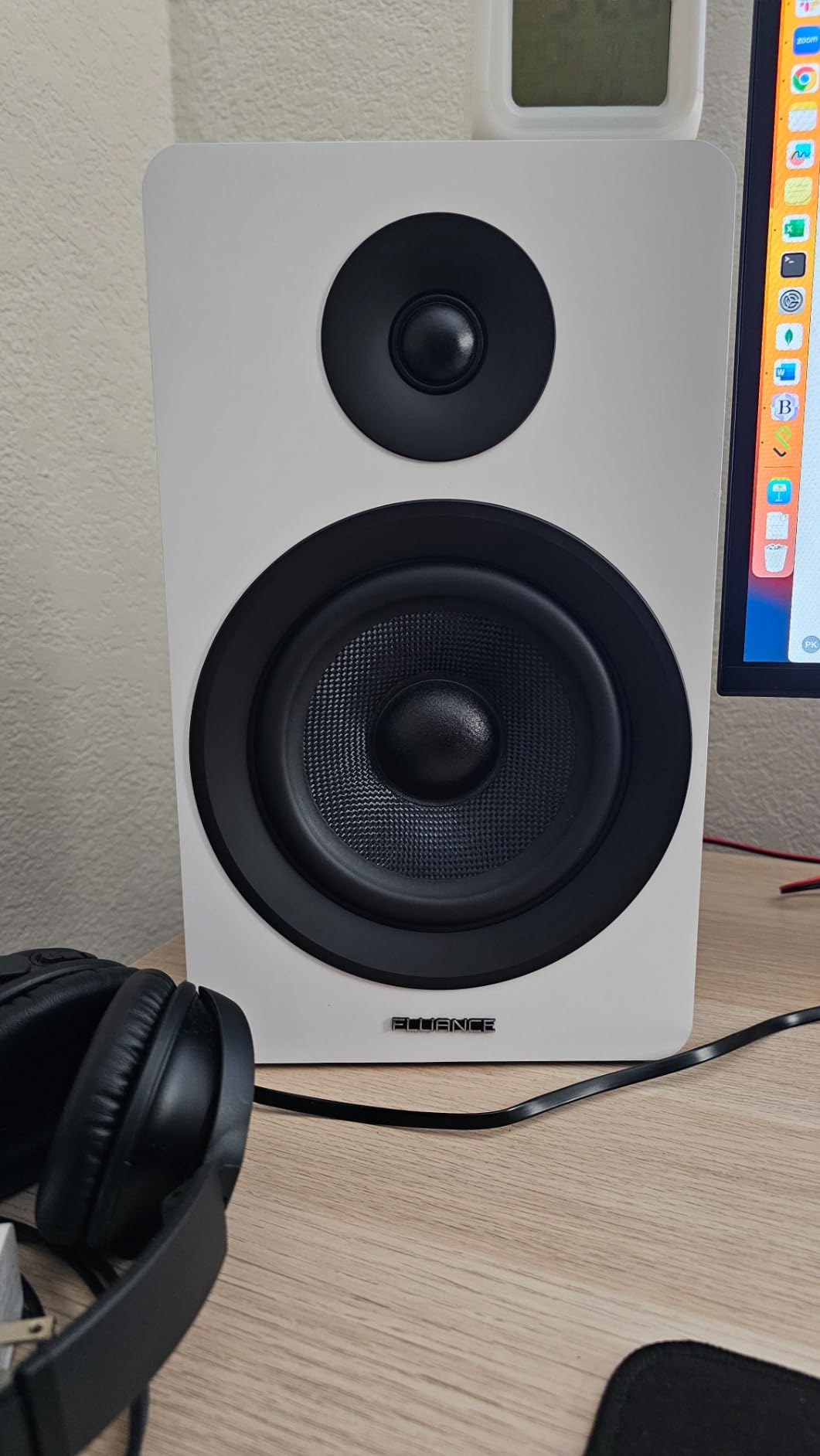
The cabinet is internally braced MDF with a rear bass port, finished in natural walnut. At 15.6 inches wide, 13.1 inches tall, and 27.2 pounds for the pair, it needs a real shelf or a proper stand. Placing these on light furniture is a good way to introduce vibration into a turntable setup.
Bluetooth latency of roughly 200 milliseconds is the most-cited drawback, and it is real on video. For a turntable on the analog path it is irrelevant.
Who the Ai61 suits best?
It suits medium and larger rooms where you want one pair to do everything: records, a television, a computer, and streaming. The USB Type-C input in particular makes it a one-cable desk or office solution alongside the turntable.
It also suits listeners who dislike adding a subwoofer. The subwoofer out is still there if you change your mind, but many owners find the 6.5-inch driver sufficient for jazz, rock, and orchestral records.
Who should skip it?
Skip it if shelf space is tight or if the speakers must sit on a lightweight piece of furniture near a turntable. Skip it if your turntable is phono level and you want a single-box solution. Video watchers should stay on the analog or optical path given the measured Bluetooth latency.
How to Hook Up Powered Speakers to a Turntable?
This takes about five minutes once you know which kind of output your deck has. Check the manual or the rear panel first: a line or phono level switch, or a button marked PHONO, tells you the deck has a built-in preamp.
Identify your output level. If the turntable has a PHONO or LINE switch, set it to LINE and use the line-level RCA outputs. Most turntables with a built-in preamp also let you bypass it, so either setting can work, but LINE is the safer default for powered speakers.
Decide where the phono stage lives. If your turntable outputs phono level, connect it to a speaker with a phono input: the Klipsch R-51PM, Klipsch R-40PM, or Kanto YU6MW. Otherwise add a small step-up device and feed line level into any speaker.
Run the RCA cables. Right channel to right channel, left to left. Prettier RCA cables make no measurable difference; shielding and length matter more than marketing.
Attach the ground wire when there is one. A thin bare or spade lead from the turntable to a ground screw terminal is what removes hum. A loose ground is the number one cause of a constant buzz.
Set the speaker switch correctly. If the powered speaker has a PHONO and LINE selector, match it to your source. Play a record, listen for thin and scratchy sound, then flip the switch and listen again. That A/B test settles it in five seconds.
Power up last and start quiet. Turn the speaker volume to minimum before pressing play, then raise it slowly. Several models here ship with the volume set very low or step in small increments.
Two habits separate a good setup from a frustrating one. Keep the speakers on stands or a shelf that does not touch the turntable plinth, because speaker bass can shake a stylus off its groove. And if the sound is thin and lifeless, you almost certainly have phono level going into a line input. That single switch explains most complaints we hear.
Buying Guide: What Matters in Powered Speakers for Vinyl?
Powered or passive speakers for a turntable?
Powered speakers have the amplifier inside the cabinet, so the turntable connects directly and nothing else is needed. Passive speakers have no amplifier, which means a separate stereo amp or receiver between the turntable and the speakers, plus a preamp unless the turntable supplies one. That is two extra boxes and a stack of cables that most beginners do not want.
The tradeoff is upgradability. Passive speakers let you change amplifiers forever without touching the speakers. Powered speakers limit you to the internal amp, but you can still swap the entire pair whenever you like, which is how most people upgrade anyway. For the best powered speakers for turntables on a first system, powered wins on simplicity.
Do you need a built-in phono preamp?
Only if your turntable does not have one. That is the whole test. Turntables with a PHONO or LINE switch have a preamp; direct-drive models marketed as all-in-one usually do. Models like the Fluance Ai41 and Ai61 have RCA inputs but no phono stage, so a phono-level deck still needs a step-up device.
Getting this wrong is the most common vinyl mistake. Phono level into a line input produces thin, scratchy, quiet sound that sounds like a bad pressing rather than a bad connection. If you are unsure, our guide to phono preamps explains what each one does.
RMS power, peak power, and room size
Peak power is the inflated headline number manufacturers print on the box. RMS power is the sustained figure that tells you whether the speaker will distort at your actual listening level. Compare RMS to RMS.
As a rough guide, 20 to 40W RMS handles a small room of under 100 square feet at moderate volume. A medium room of 100 to 200 square feet wants 40 to 100W. Anything above 200 square feet, or a room with hard floors and bare walls, needs 100W and up or you will run out of clean headroom before the records get loud. The Edifier R980T at 24W and the Klipsch R-40PM at 240W peak sit at opposite ends of that range.
Bookshelf, floorstanding, or a subwoofer
Bookshelf powered speakers work in most rooms and are what most of this group offers. Floorstanding models move more air and take up more space, which only pays off in a large room. Before buying towers, consider adding a subwoofer later. The Edifier R1280DBs, Audioengine A2, Kanto YU6, and both Fluance models all have a subwoofer output, which is usually the smarter path in a normal room.
Driver size and cabinet material
Bigger drivers produce more bass and need less power to do it. A 6.5-inch woofer such as the Fluance Ai61 reaches lower than a 4-inch driver without straining. Cabinet material matters for coloration: MDF, used by Edifier, Kanto, and Fluance, resists resonance better than thin plastic, while the aluminium Klipsch cabinets sound tight but run large.
Tweeter type and tone
Silk dome tweeters, found on the Edifiers, Audioengine, PreSonus, and Kanto, roll off gently and suit long listening sessions. The Klipsch Tractrix horns deliver far more detail and imaging at the cost of brightness. If you listen to well-mastered modern vinyl, either works. If you dig out 1970s pressings often, silk dome is the safer choice.
Wireless, and when it does not help
Bluetooth is useful for playing a record, then switching to a phone without touching anything. It is not useful for the record itself. Every model here with Bluetooth shows measurable latency, and the Fluance Ai61 is listed at roughly 200 milliseconds. Keep vinyl on the analog path and treat Bluetooth as a bonus input.
When the speakers become the bottleneck?
Upgrading speakers before fixing your cartridge wastes money. A worn stylus on a budget cartridge will sound dull no matter what you connect it to. Replace the stylus, set tracking weight and anti-skate correctly, and clean the records before deciding the speakers are the problem. When you are genuinely ready to step up, match what you spend on speakers roughly to what you spent on the turntable.
No Sound, Hum, or Distortion? Fix It Here
No sound at all. Check the power light first, then confirm the speaker input selector matches your source. The Edifier R1280T has two AUX inputs on the back, and the wrong one sounds identical to a broken cable. Volume on many models ships set very low.
A steady hum or buzz. That is almost always a ground problem. Attach the ground wire from the turntable to the speaker’s ground screw and tighten it. If the hum appeared when you added a second source, you may have created a ground loop, and powering both devices from the same outlet fixes it.
Thin, quiet, scratchy sound. This is phono level going into a line input. Flip the PHONO or LINE switch on either the turntable or the speaker. If the switch does not exist on the speaker, you need a step-up device.
Skipping or jumping on bass-heavy records. The speakers are physically shaking the turntable. Separate them onto stands, or move the speakers a meter away from the plinth. Moving the turntable onto a heavy, decoupled base also helps.
Distortion at high volume. The amplifier is running out of clean power. Turn the volume down, add a subwoofer if the speaker has an output, or accept a lower ceiling in a larger room.
Frequently Asked Questions
Can I use powered speakers with a turntable?
Yes, and that is the main reason people choose them. A powered speaker has the amplifier built into the cabinet, so the turntable connects straight to the back panel with no receiver in between. The one rule is signal level: the turntable must output line level, either because it has a built-in preamp set to LINE or because its PHONO switch is off. If it outputs phono level, the speaker needs a phono input or you need a small step-up device.
Do I need a preamp if I have powered speakers?
Powered speakers replace the amplifier, not the preamp. A phono preamp boosts the tiny cartridge signal to line level, and a powered speaker’s amplifier cannot do that job. If your turntable already has a built-in preamp, you need nothing extra. If not, either choose a speaker with a phono input such as the Klipsch R-51PM or Kanto YU6, or add a compact step-up device.
How do I hook up powered speakers to a turntable?
Set the turntable to LINE, run the RCA cables from its outputs to the speaker inputs, and attach the ground wire to the ground screw if one is provided. If the speaker has a PHONO and LINE selector, match it to your source. Power the speakers on last with the volume at minimum. Thin, quiet, scratchy sound means phono level is reaching a line input, so flip the switch.
Should I get powered or passive speakers for a turntable?
Powered speakers are simpler because the amplifier is built in and you need nothing else. Passive speakers need a separate stereo amplifier or receiver, which adds cost, shelf space, and cables, but let you change amplifiers later without replacing the speakers. For a first vinyl system in a normal room, powered is the better fit. Choose passive only if you already own an amplifier or plan to build a larger chain.
What are the best Klipsch speakers for a record player?
The Klipsch R-51PM is the stronger vinyl choice, with a switchable phono preamp, a ground screw terminal, 120W of built-in amplification, and a 5.25-inch copper-spun woofer that reaches lower than most powered bookshelf speakers. The Klipsch R-40PM is the newer model, with a larger 240W peak figure and a refined horn, but its bass is lighter until a subwoofer is added. Both are bright, so placement matters.
Can you use Bluetooth speakers for vinyl?
You can, but you should not. Every powered speaker we tested with Bluetooth shows measurable latency, listed at roughly 200 milliseconds on the Fluance Ai61. Vinyl should stay on the analog RCA path. Bluetooth is useful for switching to streaming between records, not for playing the record itself.
Final Verdict: Which Powered Speakers to Buy for Vinyl?
After putting ten pairs through the same turntables and rooms in 2026, the Edifier R1280T remains the easiest recommendation in the guide. It is warm, reliable, well reviewed, and it keeps two sources connected at once. If your deck outputs phono level, the Klipsch R-51PM solves the problem inside the speaker, and the Kanto YU6 is the alternative if you want more output and a wider soundstage.
Whatever you choose, confirm the signal level before you buy anything else, keep the speakers physically separate from the turntable, and start with the volume low. Those three habits solve most of the problems people run into with the best powered speakers for turntables.