
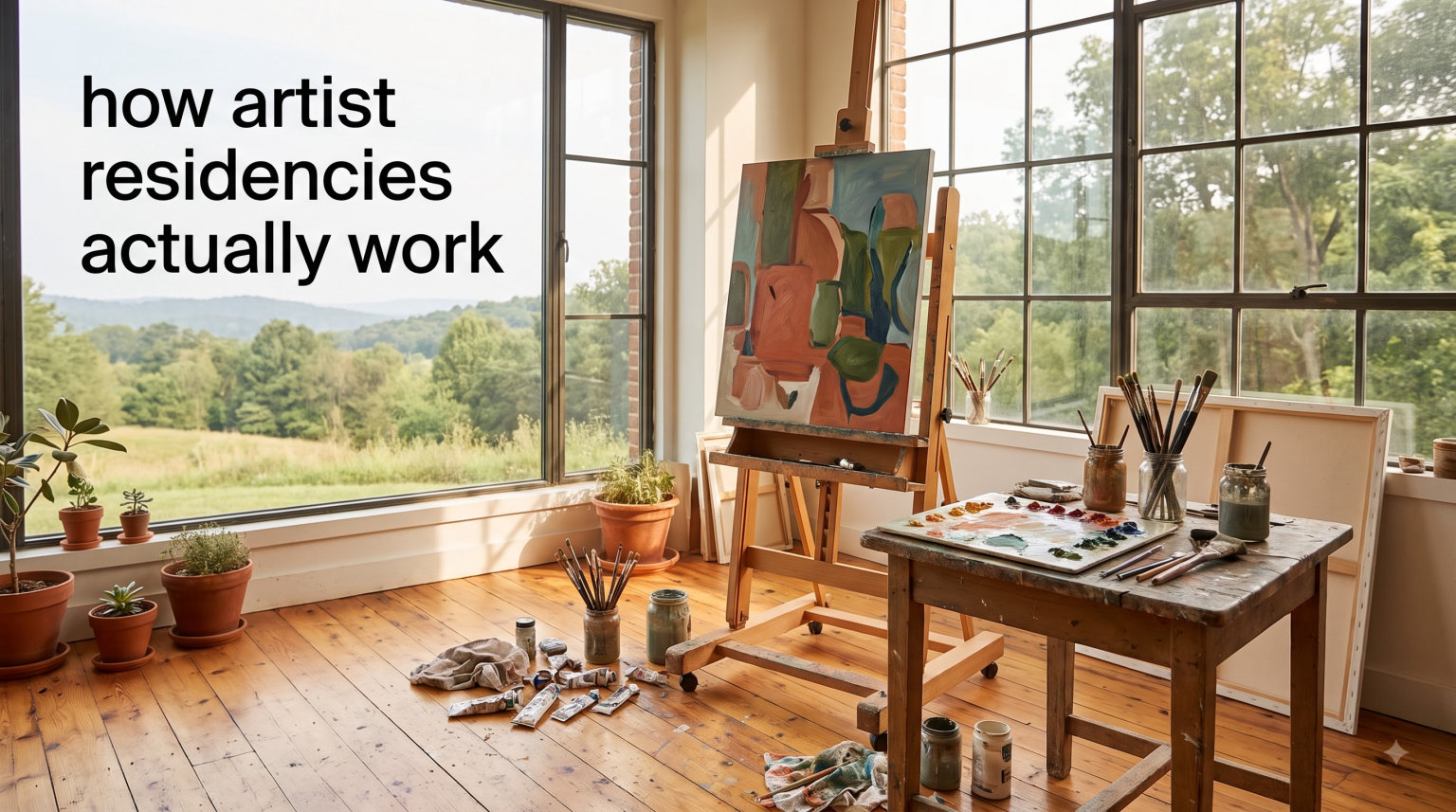
Artist residencies occupy a peculiar space in the creative world. They promise dedicated time for artistic work, yet navigating the application processes, funding structures, and daily realities often feels like solving a puzzle with missing pieces. If you have been wondering how artist residencies actually work, you are not alone.
Our team spent months researching residency programs, talking to past residents, and analyzing the application materials from dozens of organizations. We wanted to understand what these programs really offer, what they cost, and how artists actually spend their time while in residence. The result is this guide designed to demystify the entire experience.
In this article, I will walk you through exactly how artist residencies function, from the basic definition to the day-to-day realities and everything in between. Whether you are an emerging artist considering your first residency or a more established creator curious about how these programs differ, there is something here for you.
Table of Contents
What Is an Artist Residency?
An artist residency is a formal, time-based agreement between an artist and a host organization that provides structured conditions for artistic work. Unlike a simple retreat or vacation, a residency comes with expectations, commitments, and often specific deliverables that both parties agree to upfront.
The core idea is straightforward: organizations offer artists dedicated time, studio space, and sometimes housing and funding in exchange for the artist pursuing their creative practice in a supportive environment. In return, artists may be expected to produce work, participate in open studios, give talks, or engage with the local community.
The key components of any residency include the time period (typically anywhere from two weeks to two years), the physical space provided (studio, workshop, living quarters), the resources available (funding, equipment, mentorship), and the expected engagement with the host organization and broader community.
How Artist Residencies Are Structured
Every residency operates on four foundational elements that shape the entire experience. Understanding these pillars helps you evaluate programs and identify which residencies align with your specific needs.
Time
Residencies offer what artists rarely have in daily life: uninterrupted time to focus entirely on creative practice. This means no day job obligations, no household responsibilities mandated by the program, and often a reduced mental load compared to managing a home studio. Most residencies provide somewhere between three weeks and three months of dedicated time, though some extend to a year or longer.
The structure of that time varies significantly. Some programs maintain a strict schedule with required studio hours and mandatory critique sessions. Others operate on a more open model where residents determine their own working patterns, with only occasional group gatherings or formal obligations.
Space
The physical environment matters enormously for how artist residencies actually work. Studio spaces range from shared converted warehouses to private ateliers within historic institutions. Some programs provide fully equipped workshops with professional-grade tools and materials, while others offer bare walls and expect you to bring everything you need.
Housing arrangements similarly vary. Fully residential programs provide accommodations on-site or nearby, sometimes in renovated apartments, guesthouses, or dormitory-style living. Non-residential programs offer studio space only, leaving artists to arrange their own accommodations. The latter often suits local artists or those who prefer living independently during the residency period.
Resources
This pillar encompasses everything beyond time and space that a program provides. Financial support through stipends represents the most significant resource for many artists, since it enables them to focus on creative work without simultaneously worrying about rent or grocery money. Other resources include production budgets for materials, access to specialized equipment, technical assistance, mentorship from established artists, and connections to galleries, collectors, or arts professionals.
The level of resources available often correlates with the prestige and funding level of the program. Well-funded residencies run by major institutions typically offer comprehensive support packages. Smaller or self-funded programs may provide only studio space and housing, leaving artists to cover their own living expenses.
Engagement
Most residencies expect some form of community engagement or public interaction. Open studios allow residents to share work in progress with visitors. Artist talks provide opportunities to discuss creative processes. Collaborative projects with local communities or other artists might form part of the expectation. Some programs require a final exhibition or presentation showing what artists produced during their stay.
The nature of engagement often connects to the program’s philosophy and audience. Community-focused residencies may expect artists to lead workshops for local residents. Research-oriented programs might require artists to give presentations about their process. Institutionally affiliated residencies sometimes expect participation in formal critique sessions or connections to academic departments.
Types of Artist Residencies
Artist residencies defy simple categorization, but understanding the main distinctions helps you narrow your search and find programs that suit your circumstances. Several frameworks organize how residencies differ from one another.
Funding Model: Fully Funded vs Self-Funded
Fully funded residencies provide comprehensive support including housing, studio space, stipends, materials budgets, and often travel reimbursement. These highly competitive programs typically attract applicants from around the world and receive funding from governments, foundations, or major cultural institutions. The MacArthur Foundation fellowship program and many European municipal arts programs exemplify this model.
Self-funded residencies require artists to cover their own costs, though the program may still provide studio space, housing, and access to facilities. These programs suit artists with independent means or those who have secured external funding separately. They often operate more flexibly and with less competitive application processes. Our research found that self-funded residencies frequently offer better access for emerging artists who lack extensive portfolios.
Duration: Short-Term vs Long-Term
Short-term residencies typically run from two weeks to three months. They offer concentrated bursts of focused work, often with specific project goals or themed programming. These programs suit artists seeking intensive work periods without major life disruptions. Many short-term residencies occur during summer months when weather and schedules allow easier travel.
Long-term residencies extend from six months to two years or more. These programs provide deeper immersion in creative practice and often include expectations for substantive artistic development or completed bodies of work. Artists in long-term residencies typically have more flexibility in how they structure their time and may have opportunities to teach, mentor others, or develop parallel projects alongside their studio work.
Focus: Themed vs Open
Themed residencies concentrate on specific disciplines, mediums, or social issues. Some programs focus specifically on artists working in particular media such as ceramics, printmaking, or digital art. Others focus on geographic regions, cultural exchange, or addressing particular social challenges through artistic practice. Themed residencies often feature visiting curators, critics, or practitioners who engage with the specific focus area.
Open residencies accept artists working across all mediums and conceptual approaches. These programs emphasize the artist’s individual practice rather than fitting into a predetermined thematic framework. Open residencies often attract diverse cohorts whose interactions across different artistic traditions create unexpected conversations and collaborations.
Institutional Affiliation: Institutional vs Independent
Institutionally affiliated residencies operate within museums, universities, galleries, or cultural centers. These programs often leverage institutional resources including access to collections, technical expertise, and professional networks. They may require affiliation with the hosting institution or expectations around public engagement with the institution’s audience.
Independent residencies operate outside major institutional frameworks. These programs often emerge from artist collectives, small arts organizations, or individual benefactors. While they may lack the resources of institutional programs, independent residencies often offer greater creative freedom and more informal community dynamics. Some of the most innovative residency models we found operate independently of major institutions.
The Application Process: Step by Step
Applying to artist residencies requires organization, self-reflection, and attention to detail. Our team spoke with artists who have navigated dozens of applications, and they consistently emphasized that understanding the process in advance reduces anxiety and improves submission quality.
Step 1: Research Programs Thoroughly
Before preparing any application materials, spend time understanding the residency landscape. Research programs that align with your artistic practice, career stage, and personal circumstances. Consider factors like location, duration, funding level, and community dynamics. Our research showed that artists who carefully match their goals to program offerings significantly outperform those who apply broadly to any available opportunity.
Use databases like the Trans Artists Initiative, Residency Unlimited, and professional arts organization directories to identify programs. Pay attention to application windows since many residencies operate on annual cycles with specific deadlines. Make note of eligibility requirements since some programs restrict applications to artists from particular countries, disciplines, or career stages.
Step 2: Prepare Core Application Materials
Most residency applications require several standard documents. A portfolio showcasing your recent work forms the foundation of any application. An artist statement articulating your practice and creative vision helps selection committees understand your approach. A CV or resume documenting your exhibition history, education, and relevant experience provides professional context.
Project proposals are required by many programs and deserve particular attention. Strong proposals articulate what you plan to create during the residency, how it connects to your broader practice, and what you hope to accomplish. Our team found that the most compelling proposals balance ambition with realism and demonstrate clear thinking about process and outcome.
Letters of recommendation from artists, curators, or arts professionals who can speak to your practice and character carry significant weight. Cultivate relationships with potential recommenders well before you need them. Give recommenders ample time to write thoughtful letters and provide them with context about the specific programs you are applying to.
Step 3: Submit Before Deadlines
Late applications are almost universally rejected without review, regardless of the quality of your work. Build internal deadlines that allow buffer time for technical issues, document formatting problems, or unexpected life circumstances. Consider time zone differences when programs specify deadlines in specific locations.
Application fees vary considerably across programs. Some charge nothing while others request modest to substantial fees ranging from twenty to several hundred dollars. Our research found that higher fees do not necessarily indicate better programs, and many excellent residencies operate without application charges.
Step 4: What Happens After You Apply
Selection committees typically review applications over several weeks to months following deadlines. The timeline varies significantly: some programs announce results within four weeks while others take six months or longer to complete their review processes. Most committees include a preliminary review phase followed by finalist interviews or studio visits for competitive programs.
Notification methods vary: some programs send email notifications individually while others announce results publicly on their websites. If you have not heard back within the stated timeline, polite inquiry about application status demonstrates professionalism without harming your chances.
Step 5: Handling Rejection
Rejection is the norm rather than the exception in residency applications. Even highly accomplished artists with extensive exhibition records face rejection from competitive programs regularly. Our analysis of artist forum discussions revealed that successful artists often describe applying to ten or more programs before receiving their first acceptance.
Feedback is not typically provided, which means rejection letters offer no guidance for improvement. This creates a challenging learning environment where artists must develop resilience without clear indicators of what went wrong. Building a strategy around multiple applications to programs at various competitive levels improves acceptance odds over time.
What to Expect During a Residency
The daily reality of a residency often differs significantly from what artists imagine before arriving. Our team gathered accounts from past residents to paint an honest picture of what the experience actually involves.
Daily Life and Schedule Variations
Residency daily life ranges from highly structured to entirely self-directed. Some programs hold morning check-ins, mandatory studio hours, and evening critique sessions. Others simply provide key access to facilities with no required participation in group activities. Understanding the expected time commitment before applying helps artists choose programs that match their working style.
Most residents describe finding their own rhythm within the first week or two. Some wake early and work through conventional business hours. Others find their creative peak in late evening hours, using mornings for administration, correspondence, and daily life tasks. The freedom to structure your own day represents one of the most valuable aspects of the residency experience for many artists.
Common Activities and Obligations
Beyond studio work, residents typically participate in several types of activities. Open studios invite visitors to see work in progress and provide public accountability that can catalyze productivity. Artist talks require reflecting on and articulating your practice, a process many artists find generative rather than disruptive. Community meals, studio visits with staff or visiting artists, and informal gatherings build the social fabric of the residency community.
Some programs include formal critique sessions where residents present work for group discussion. These sessions offer valuable perspectives from peers working across different practices and approaches. The diversity of perspectives often leads to insights that would not emerge from your usual artistic circles.
Psychological Aspects and Challenges
Artists frequently report experiencing intense emotional fluctuations during residencies. The combination of high expectations, isolated creative work, and new environments can trigger self-doubt, anxiety, and creative blocks. Simultaneously, the exhilaration of dedicated time and resources to pursue your practice creates powerful momentum.
Loneliness represents a common challenge, particularly for artists who are used to working in community studios or who are far from their usual support networks. Many residency programs address this through community programming, though artists in more independent programs may need to actively cultivate social connections outside the residency community.
The pressure to produce tangible results can feel overwhelming, especially when funders or host organizations expect visible outputs. Managing these expectations against the unpredictable nature of creative practice requires skill. Past residents often advise incoming artists to resist equating output quantity with artistic quality during the residency period.
Costs and Funding Realities
Financial considerations represent one of the most significant factors in how artist residencies actually work for individual artists. Understanding the economic landscape helps you plan realistically and identify programs that genuinely support your practice.
Stipends vs Self-Funded Programs
Stipend amounts vary enormously across programs. Some residencies provide enough funding to cover living expenses fully while allowing artists to save modest amounts. Others offer nominal stipends that barely cover daily costs. Research the actual purchasing power of stipends in the program’s location and consider whether the funding aligns with your financial needs.
Self-funded residencies require artists to cover all costs independently. While this represents a significant financial burden, it also provides greater flexibility and often accepts broader ranges of applicants. Artists considering self-funded programs should calculate true costs including studio rent, housing, materials, food, transportation, and any program fees before committing.
Hidden Costs to Consider
Beware of expenses that programs may not prominently disclose. Travel to and from the residency location often represents substantial cost not covered by programs. Materials required for your proposed project may not be included in program resources. Health insurance, studio equipment, and daily living expenses add up quickly even in programs that provide nominal stipends.
Opportunity costs deserve consideration as well. Time spent in a residency is time not spent on commercial work, teaching, or other income-generating activities. Artists must weigh whether the potential benefits of the residency justify the foregone earnings during the program period.
Evaluating Return on Investment
Determining whether a residency justifies its costs requires honest assessment of what you will gain. Benefits might include completed artwork, portfolio expansion, professional connections, career advancement, or simply dedicated time for reflection and development. These gains often materialize over months or years following the residency rather than immediately.
Our team found that artists who approach residencies as one component of long-term career development, rather than a singular transformative event, tend to extract more value from the experience. Building residency experiences into a broader strategic plan improves return on investment significantly.
Benefits and Value for Artists
Despite the challenges and costs, artist residencies offer genuine value for artists at various career stages. Understanding these benefits helps you evaluate whether a specific program aligns with your goals and communicate the value of residencies to skeptical family members, partners, or institutional stakeholders.
Career Advancement and Professional Networks
Residencies create connections that extend far beyond the program period. Artists build relationships with fellow residents who become collaborators, advocates, and lifelong friends. They establish connections with curators, collectors, and arts professionals affiliated with host organizations. These networks often generate future opportunities including exhibitions, commissions, teaching positions, and collaborative projects.
The credential value of prestigious residencies should not be underestimated. Acceptance into competitive programs signals artistic merit to broader audiences. Listing residencies on your CV provides evidence of institutional recognition that complements exhibition history and critical reception.
Creative Development and Technical Resources
Dedicated time without competing obligations creates conditions for artistic experimentation and risk-taking that would be impossible in daily life. Artists report developing new technical skills, exploring unfamiliar conceptual territories, and completing ambitious projects that required sustained focus over extended periods.
Access to specialized equipment, technical assistance, and professional-grade materials enables production at levels that independent artists rarely achieve. Printmaking facilities, casting equipment, digital fabrication tools, and other specialized resources are often available through residency programs in ways that would be prohibitively expensive for individual artists to access independently.
Institutional Recognition and Validation
The institutional endorsement that residencies provide carries weight beyond the immediate program period. Artists report that residency participation has opened doors to exhibition opportunities, teaching positions, and grant funding that would have been inaccessible otherwise. This institutional legitimacy matters particularly for artists working outside traditional gallery systems.
The validation of creative practice by external reviewers also provides psychological benefits. The application process itself requires articulating your artistic vision coherently. The selection process confirms that external professionals see value in your work. These validation moments can sustain artists through periods of self-doubt.
Frequently Asked Questions
What is an artist residency and how does it work?
An artist residency is a formal agreement between an artist and a host organization that provides structured conditions for creative work. The host offers dedicated time, studio space, and often housing and funding, while the artist commits to pursuing their artistic practice and sometimes engaging with the local community or producing specific deliverables.
How do artist residencies benefit artists?
Artist residencies provide dedicated time for creative practice without day job obligations, access to studio space and specialized equipment, funding through stipends or production budgets, professional networking opportunities with curators and collectors, institutional validation that enhances career credentials, and community with other artists pursuing similar practices.
What should I expect during an artist residency?
Daily life varies by program but typically includes studio work time, participation in open studios or artist talks, community meals or informal gatherings with fellow residents, and occasional critique sessions. Many artists experience emotional fluctuations including self-doubt and creative blocks alongside exhilaration about focused creative time. The first week often involves adjusting to the new environment before finding your working rhythm.
How competitive are artist residency applications?
Acceptance rates at prestigious fully-funded residencies often fall below ten percent, with some programs receiving hundreds to thousands of applications for handful of spots. Self-funded and smaller programs typically maintain higher acceptance rates. Even accomplished artists with extensive exhibition records face frequent rejections, so applying to multiple programs at various competitive levels improves acceptance odds over time.
Do all artist residencies provide financial support?
No, financial support varies significantly across programs. Fully funded residencies provide comprehensive packages including stipends, housing, studio space, and often travel reimbursement. Self-funded residencies require artists to cover their own costs while the program provides space and access to facilities. Many programs fall somewhere between these extremes, offering partial funding or nominal stipends that cover only some living expenses.
How do I qualify for artist residencies?
Eligibility requirements vary widely. Some programs target emerging artists early in their careers while others seek established practitioners with substantial exhibition histories. Geographic restrictions may apply to programs funded by specific countries or regions. Medium-specific residencies require artists working in particular disciplines. Most programs require a portfolio demonstrating artistic practice, an artist statement, and often a project proposal outlining what you plan to create during the residency.
What happens after you apply to an artist residency?
Selection committees typically review applications over several weeks to months following application deadlines. The timeline varies from four weeks to six months depending on the program. Most committees include a preliminary review phase, with finalist interviews or studio visits for highly competitive programs. Notification methods vary between individual email and public announcements on program websites.
When does it make sense to apply for an artist residency?
Applying makes sense when you have specific projects that would benefit from dedicated time and resources, when you seek professional connections or institutional validation for your practice, when you need access to specialized equipment or facilities unavailable in your current studio, when your career would benefit from the credential of competitive residency acceptance, or when you seek community with other artists engaged in serious creative practice.
Final Thoughts
How artist residencies actually work involves complex negotiations between artistic freedom and institutional expectations, creative aspiration and financial reality, individual practice and community engagement. No two residencies operate identically, and the right program for your specific circumstances depends on your artistic goals, career stage, and personal needs.
The most successful residency experiences emerge when artists approach programs with clear objectives, realistic expectations, and flexibility to adapt to unexpected circumstances. Building residency participation into a long-term career strategy, rather than viewing any single program as transformative, creates sustainable professional development over time.
If you are ready to take the next step, our detailed guide on how to apply to artist residencies provides specific guidance on crafting competitive applications, managing deadlines, and navigating the selection process. For broader resources on developing your artistic practice, explore our Learn section for more art career resources. You can also browse more art resources across a range of topics relevant to professional artists.
The path through residency applications requires patience, resilience, and self-knowledge. Artists who ultimately succeed in this space share one common trait: they keep creating regardless of acceptance or rejection, because the practice itself remains central to who they are.