
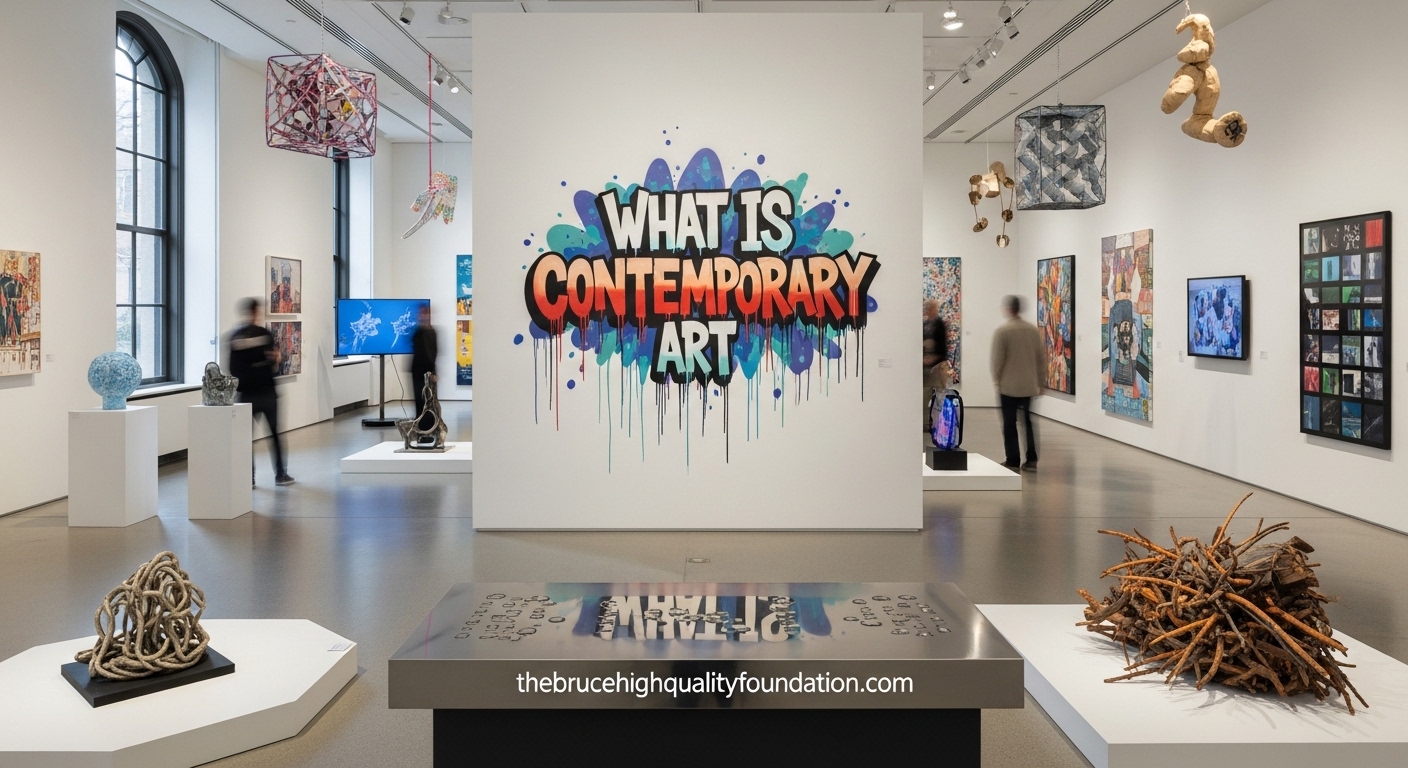
Have you ever walked through a museum, stopped in front of a seemingly simple installation, and thought to yourself, “I don’t get it”? You are not alone. The world of contemporary art can feel intimidating, confusing, and sometimes even frustrating. Terms get thrown around, prices make headlines, and the question on many people’s minds remains unanswered: what is contemporary art, really?
Our team has spent years visiting galleries, speaking with artists, and trying to make sense of this often misunderstood field. The good news is that contemporary art is far more accessible than it might appear at first glance. You do not need an art history degree to appreciate it, understand it, or even collect it.
In this guide, we will break down what is contemporary art in the simplest terms possible. We will explore when it began, how it differs from modern art, introduce you to famous artists working today, and give you practical tools for appreciating it. Whether you are a complete beginner or simply curious, this article will give you a solid foundation for engaging with the art of our time.
Table of Contents
- The Quick Answer: What Is Contemporary Art?
- What Is Contemporary Art? A Deeper Look
- When Did Contemporary Art Begin?
- Contemporary Art vs Modern Art: What’s the Difference?
- Key Characteristics of Contemporary Art
- Famous Contemporary Artists You Should Know
- Common Forms and Mediums in Contemporary Art
- How to Appreciate and Understand Contemporary Art
- Frequently Asked Questions About Contemporary Art
- Why Contemporary Art Matters
The Quick Answer: What Is Contemporary Art?
Contemporary art is art made by living artists, typically from the 1970s to today, that reflects current issues, diverse perspectives, and our rapidly changing world.
That is the core definition. But to truly understand what makes art contemporary, we need to look deeper at the ideas, approaches, and cultural context that define this period.
What Is Contemporary Art? A Deeper Look
When we talk about contemporary art, we are not referring to a specific style, movement, or technique. Unlike Impressionism or Cubism, contemporary art does not have a unified visual language. A contemporary artwork could look like anything: a painting, a performance, a video installation, or even a social media post. What ties these works together is when they were made and the mindset behind their creation.
Living Artists Focus
The simplest way to identify contemporary art is to look at who made it. If the artist is alive and working today, their art is contemporary. This might sound obvious, but it is actually a crucial distinction. Contemporary art is made by people who are experiencing the same world we are: dealing with climate change, navigating digital technology, confronting social justice issues, and living through the same historical moments.
This living connection means contemporary art often speaks directly to our current concerns. When you view a piece made in 2026, you are seeing an artist’s immediate response to the world as it exists right now.
Global Perspectives
Another defining feature of contemporary art is its global nature. While earlier art movements were often centered in specific cities, like Paris or New York, contemporary art happens everywhere. Artists from Tokyo, Lagos, Mexico City, and Berlin all contribute equally to the conversation. This diversity of voices means contemporary art reflects a wide range of cultural perspectives, not just Western viewpoints.
We see this global influence in the themes artists choose to explore, the materials they use, and the traditions they reference. A contemporary artist in Brazil might draw on indigenous craft techniques, while one in South Korea might engage with K-pop culture and digital aesthetics.
Diverse Mediums and Forms
Contemporary artists work with an incredibly wide range of materials and methods. Traditional painting and sculpture still exist, but they share space with video art, performance, installation, digital media, and interactive works. An artist today might use 3D printing, artificial intelligence, found objects from the street, or even their own body as their medium.
This freedom to use any material expands what art can be and do. It also means that when you encounter contemporary art, you need to be open to experiencing it in ways that go beyond simply looking at a wall-mounted canvas.
When Did Contemporary Art Begin?
Art historians generally mark the beginning of the contemporary period around the 1970s, though there is some debate about the exact starting point. Some institutions point to the end of World War II in 1945 as a dividing line. Others argue that the 1960s and 70s, with their social upheaval and artistic experimentation, mark the true beginning.
The 1970s saw the rise of several movements that define contemporary practice: conceptual art, which prioritizes ideas over objects; performance art, which uses live action as the medium; and installation art, which transforms entire spaces. These approaches broke from the modernist emphasis on specific mediums like painting or sculpture.
What is important to understand is that contemporary art is a period designation, not a style label. It simply means art made in our current historical moment. As time moves forward, the boundaries shift. Art made in the 1980s was contemporary then, and art made in 2026 is contemporary now.
Contemporary Art vs Modern Art: What’s the Difference?
This is the question that confuses almost everyone. The terms sound similar, but they refer to very different periods. Understanding the distinction will immediately elevate your art knowledge.
| Aspect | Modern Art | Contemporary Art |
|---|---|---|
| Time Period | Approximately 1860s to 1970s | 1970s to present (2026) |
| Key Movements | Impressionism, Cubism, Surrealism, Abstract Expressionism | Conceptual art, Performance, Installation, Digital art |
| Focus | Medium-specific innovation, formal experimentation | Idea-driven, interdisciplinary, social engagement |
| Famous Artists | Picasso, Van Gogh, Monet, Pollock | Kusama, Banksy, Basquiat, Ai Weiwei |
| Geography | Primarily Western (Europe and America) | Global (all continents equally represented) |
| Relationship to Tradition | Often rejected or radically transformed traditional forms | Freely mixes traditional and new approaches |
The key takeaway is this: modern art was a series of specific movements that broke from tradition, while contemporary art is an open period where any approach is valid. When you see a Picasso, you are looking at modern art. When you see a Banksy street piece, you are looking at contemporary art.
Key Characteristics of Contemporary Art
Beyond the time period, certain characteristics help define what makes art contemporary. These traits appear across diverse works and help you recognize the contemporary mindset.
Conceptual Focus Over Technical Skill
Contemporary art often prioritizes the idea behind the work over technical mastery. This does not mean skill is irrelevant; rather, the concept drives the execution. An artist might choose a simple or crude technique specifically because it serves the idea they want to communicate.
This can be confusing if you are used to judging art by how realistically it depicts something or how much obvious skill went into making it. With contemporary art, ask yourself: what idea is the artist exploring? What question are they raising?
Boundary-Pushing Mediums
Contemporary artists refuse to be limited by traditional categories. A single artwork might combine painting, video, sound, and sculpture. Performance artists use their bodies as material. Digital artists create works that exist only as code. This freedom from medium-specific boundaries is a hallmark of contemporary practice.
We see this especially in installation art, where an artist transforms an entire room or building into an immersive experience. These works cannot be fully captured in photographs; they must be experienced in person.
Engagement with Current Issues
Contemporary art often addresses the pressing concerns of our time: climate change, inequality, identity, technology, migration, and politics. Artists act as commentators, critics, and questioners of the world we live in. This engagement makes contemporary art feel urgent and sometimes controversial.
When you encounter a work that deals with a difficult topic, remember that the artist is inviting you to think, not telling you what to think. The discomfort you might feel is often part of the intended experience.
Cultural Diversity and Inclusion
Unlike earlier periods dominated by white male European artists, contemporary art actively includes voices from all backgrounds. Women artists, artists of color, LGBTQ+ artists, and artists from the Global South are central to the conversation, not marginalized exceptions.
This diversity enriches the field and ensures that multiple perspectives on our shared world find expression. It also means that contemporary art can speak to a wider range of viewers who see their own experiences reflected in the work.
Famous Contemporary Artists You Should Know
Learning about specific artists helps ground abstract concepts in real examples. Here are six influential contemporary artists whose work illustrates different approaches to making art today.
Yayoi Kusama
The Japanese artist Yayoi Kusama has become one of the most recognizable names in contemporary art. Her immersive Infinity Mirror Rooms, filled with endless reflections and LED lights, create otherworldly experiences that visitors wait hours to see. Kusama also creates obsessive polka-dot patterns and sculptural forms that explore themes of infinity, obsession, and mental health. Her work demonstrates how contemporary art can create pure sensory wonder while addressing personal psychological experience.
Banksy
Banksy is the pseudonymous British street artist whose satirical stencil works appear overnight on walls around the world. His pieces offer biting social commentary on politics, consumerism, and the art world itself. Banksy represents the contemporary trend of anonymous or collective authorship and the use of public space as gallery. His work raises questions about ownership, legitimacy, and whether art must be officially sanctioned to matter.
Jean-Michel Basquiat
Though he died in 1988 at age 27, Jean-Michel Basquiat remains one of the most influential contemporary artists. Starting as a graffiti artist in New York City under the tag SAMO, he transitioned to studio painting that combined text, diagrams, and raw figurative elements. His work addresses racism, class struggle, and Black identity in America. Basquiat shows how contemporary art can emerge from street culture and maintain an edgy, urgent energy even in gallery settings.
Ai Weiwei
The Chinese artist and activist Ai Weiwei uses his practice to challenge authority and document human rights issues. His work spans sculpture, photography, installation, and social media activism. From his famous Sunflower Seeds installation at Tate Modern, consisting of millions of hand-painted porcelain seeds, to his documentary films exposing refugee crises, Ai demonstrates how contemporary art can serve as direct political intervention.
Marina Abramović
Known as the “grandmother of performance art,” Marina Abramović has spent decades using her body as her primary medium. Her 2010 work The Artist Is Present at the Museum of Modern Art involved sitting silently across from museum visitors for hours at a time, creating intense emotional encounters. Abramović’s work explores the limits of the body, the relationship between artist and audience, and the power of presence. She represents how contemporary art can be experienced as a live, fleeting moment.
Damien Hirst
The British artist Damien Hirst became famous in the 1990s for works that shocked viewers, including animals preserved in formaldehyde and diamond-studded skulls. His spot paintings and spin paintings explore mechanical production and the nature of art as commodity. Hirst represents the commercial side of contemporary art, where works sell for millions and questions about authenticity, value, and spectacle take center stage.
Common Forms and Mediums in Contemporary Art
Understanding the various forms contemporary art takes will help you recognize and appreciate what you are seeing. Here are the major categories:
- Installation Art transforms an entire space into an artwork. The viewer walks through or around the piece, becoming part of the experience. Materials can range from everyday objects to high-tech projections.
- Performance Art uses live action as the medium. The artist or performers create a temporary event that may be documented but exists primarily in the moment of its happening.
- Video and Digital Art employ screens, projections, and interactive technology. These works might be short films, algorithmic animations, or interactive installations that respond to viewer movement.
- Conceptual Art prioritizes the idea over the finished object. The documentation or instructions for the work may be more important than any physical manifestation.
- Mixed Media combines multiple traditional and non-traditional materials in a single work. A piece might incorporate paint, fabric, photography, and found objects.
How to Appreciate and Understand Contemporary Art
Walking into a contemporary art exhibition can feel overwhelming. Here are practical strategies that will help you engage with the work confidently.
Ask Questions Rather Than Seeking “Correct” Answers
Contemporary art rarely has a single definitive meaning. Instead of asking “what does this mean?” try asking “what is this making me think about?” or “what questions is this raising?” Your personal response is valid, even if it differs from what the artist intended or what wall text suggests.
Consider the Context
Context matters enormously in contemporary art. When was this made? What was happening in the world at that time? Where is the artist from? What issues might they be responding to? Even basic information about the artist’s background can open up new ways of understanding their work.
Embrace Confusion as Part of the Experience
Not understanding something immediately is not a failure on your part. Contemporary art often aims to confuse, disorient, or challenge assumptions. Sit with the discomfort. Return to the work if you can. Sometimes understanding emerges slowly, or not at all, and that is perfectly acceptable.
Remember that even professional art critics and curators disagree about the value and meaning of contemporary works. Your confusion might be exactly what the artist wants you to feel.
Frequently Asked Questions About Contemporary Art
What is contemporary art in simple terms?
Contemporary art is art made by living artists from the 1970s to today. It reflects current issues, uses diverse materials and methods, and often challenges traditional ideas about what art should be. The simplest way to identify it is by the time period and the fact that the artist is still alive.
What are the 5 elements of contemporary art?
The five key elements that define contemporary art are: 1) Appropriation, borrowing from existing images and styles; 2) Performance, using live action as medium; 3) Space, treating the exhibition environment as part of the work; 4) Hybridity, mixing different media and cultural references; and 5) Technology, incorporating digital tools and new materials.
How is contemporary art different from modern art?
Modern art refers to art made from roughly the 1860s to the 1970s, including movements like Impressionism and Cubism. Contemporary art begins around the 1970s and continues to today. Modern art was primarily Western and focused on medium-specific innovation. Contemporary art is global, interdisciplinary, and conceptually driven.
Why is contemporary art important?
Contemporary art matters because it provides a lens for understanding our present world. It documents current events, gives voice to diverse perspectives, challenges our assumptions, and pushes cultural conversations forward. It asks difficult questions about society, identity, and the future.
Is contemporary art real art?
Yes, contemporary art is absolutely real art. While it may look different from traditional paintings or sculptures, it meets all criteria for art: it is intentionally created, communicates ideas or emotions, and engages viewers in meaningful ways. The materials and methods may be new, but the purpose remains the same.
Why Contemporary Art Matters
Contemporary art is more than just objects in galleries or price tags at auction. It is a living conversation about who we are, what we value, and where we are headed as a society. When you engage with contemporary art, you are participating in a dialogue that spans cultures, generations, and perspectives.
Understanding what is contemporary art gives you access to a powerful tool for processing our complex world. It offers space for questioning, feeling, and connecting with others across differences. Whether you love it, hate it, or simply feel confused by it, contemporary art is doing its job: making us pay attention and think critically.
In 2026, the field continues to evolve with new technologies, new voices, and new urgencies. We encourage you to visit a local museum, explore a gallery in your area, or simply look up works by the artists mentioned in this guide. You do not need to be an expert to have a meaningful experience. You just need to show up with an open mind and a willingness to ask questions.
The world of contemporary art is vast, diverse, and welcoming to anyone curious enough to enter it. Start exploring today.