
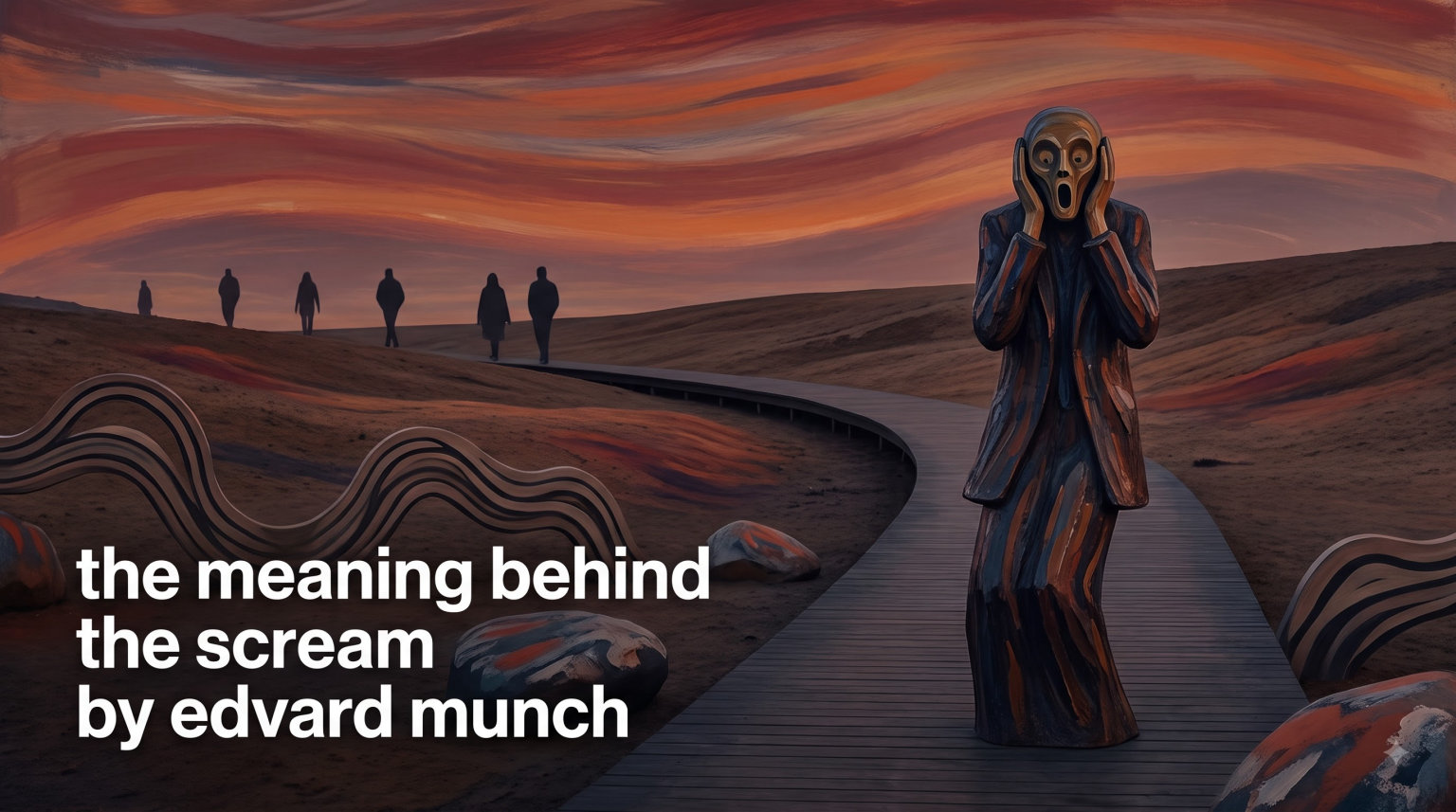
When Edvard Munch painted The Scream in 1893, he created far more than a portrait of a distressed figure. He captured something universal and timeless about human existence that still resonates today. The painting has become one of the most recognized images in art history, yet its meaning goes deeper than the surface expression of fear. If you have ever wondered what Munch was truly trying to communicate, you are about to discover the story and symbolism behind this iconic artwork.
Table of Contents
The Inspiration: A Walk That Changed Art History
Munch recorded the exact moment that inspired The Scream in his diary. He was walking with friends along a road when the sky suddenly turned blood-red. He felt an infinite scream passing through nature. The experience was not merely visual. It was a profound sense of anxiety that seemed to vibrate through the entire universe around him.
The setting was real. Munch was on a hill overlooking the Oslo Fjord in Norway, watching the sunset with companions. Yet what he experienced transcended the physical landscape. According to what Munch wrote, he sensed a scream that was louder than any sound could ever be. This was not his own voice. It was nature itself crying out.
Reddit users discussing the painting often highlight this crucial detail. The figure in the painting is not screaming. The world around him is screaming. Munch felt this overwhelming presence of anxiety in the atmosphere. The red sky represents more than a dramatic sunset. It symbolizes the emotional intensity that can overtake a person without warning.
Munch created multiple versions of this scene over the years. The first painted version dates to 1893. He also created pastels and lithographs. Each version captured slightly different aspects of that transformative moment. This repetition tells us something important. The experience was not something Munch could easily forget or move past.
The Painting: Analyzing the Visual Elements
The Scream measures approximately 91 centimeters by 73.5 centimeters in its painted form. Munch used tempera and casein on cardboard for the original version. The medium creates a distinctive texture that adds to the unsettling quality of the image. The brushwork is loose and expressive, predating the formal Expressionist movement that would emerge later.
The composition draws the eye immediately to the central figure. A skeletal figure stands on a bridge, hands pressed to the sides of the head. The face contains two hollow eyes and an open mouth shaped like an oval. Yet the posture suggests more exhaustion than aggression. The figure appears frozen in a moment of psychological crisis.
The background elements amplify the sense of dread. Behind the figure, two distant shapes suggest human silhouettes. They seem indifferent to the central figure’s anguish. The landscape features undulating lines that ripple across the composition like shock waves. These swirling contours create a vortex effect that pulls the viewer into the painting’s emotional center.
The color palette is striking. Patches of orange, red, and blue dominate the sky. These swirling hues create a sense of turbulence that mirrors the figure’s inner state. Art historians note that Munch may have drawn inspiration from the Peruvian Mummy he saw at an exhibition. That ancient artifact features a similar gaping mouth expression. The connection between death, anxiety, and human emotion runs through Munch’s work.
The Meaning: Understanding What Munch Was Trying to Say
The meaning behind The Scream by Edvard Munch connects to universal human experiences of anxiety and existential dread. Munch himself stated that he painted this picture to represent his soul. He was not creating fiction. He was expressing something true about what it feels like to be alive during times of uncertainty and change.
Munch lived during a period of rapid transformation in Europe. Industrialization was reshaping cities and changing how people lived. Traditional certainties about faith, family, and society were being challenged. Many artists and intellectuals of the era felt a growing sense that something fundamental had shifted in human consciousness. The Scream captures this feeling with startling accuracy.
The painting represents what psychologists now recognize as anxiety disorders. The exaggerated features and distorted landscape show how anxiety warps perception. When we experience intense fear, time seems to slow. Colors become more vivid. The world feels unstable. Munch translated these subjective experiences into visual form. He painted what anxiety looks and feels like from the inside.
Munch’s personal history shaped The Scream significantly. He suffered from poor mental health throughout his life. His sister Laura was diagnosed with schizophrenia. His mother died when he was young. These family tragedies left lasting scars. Munch once wrote that madness runs in his family. He considered himself more sensitive than most people to the underlying anxieties of existence.
Art historian Jill Lloyd has written extensively about Munch’s work. She describes The Scream as representing a profound experience of existential dread related to modern existence. The painting speaks to anyone who has felt overwhelmed by the uncertainty of life. Its power lies in its ability to externalize internal psychological states.
The title itself is somewhat misleading. We tend to think someone is screaming. But Munch meant something more abstract. He was depicting the scream of modern life itself. The tension between individual identity and the overwhelming forces of nature, society, and mortality. This interpretation helps explain why the painting remains so powerful today.
The Frieze of Life: Where The Scream Fits in Munch’s Work
The Scream belongs to a larger series called the Frieze of Life. Munch created this collection of paintings between 1893 and 1910. The series explores themes of love, anxiety, and mortality through symbolic imagery. Each painting in the cycle represents a different emotional state or life experience.
Works in the Frieze of Life include The Dance of Life, Madonna, and The Vampire. Together they form a narrative about human existence from birth to death. The Scream appears as a central piece in this visual poem about what it means to be alive. The series reveals that Munch was not simply painting a single anxious moment. He was developing a comprehensive artistic philosophy about human nature.
Expressionism as an art movement did not officially exist when Munch painted The Scream. However, the work is considered a precursor to this style. Expressionist artists sought to convey emotional experience rather than physical reality. They used distortion, bold colors, and exaggerated forms to communicate inner psychological states. The Scream embodies all of these characteristics.
Later Expressionists like Ernst Ludwig Kirchner and Wassily Kandinsky acknowledged Munch’s influence. The artist’s willingness to prioritize emotional truth over realistic representation opened doors for twentieth-century art. Munch showed that subjective experience could be the subject matter of serious art. This was a revolutionary step in the history of Western art.
Cultural Impact: From Norway to Pop Culture
The Scream has achieved status as a genuine cultural icon. The image appears on merchandise ranging from t-shirts to coffee mugs. It has been parodied, referenced, and reinterpreted countless times. Yet despite this commercial overexposure, the original painting retains its power. When we stand before it in a museum, we understand why it remains significant.
Andy Warhol created a pop art version of The Scream in 1984. This appropriation raised interesting questions about originality and meaning in contemporary culture. Francis Bacon, the British painter, also cited Munch as an influence. Both artists saw in The Scream a model for expressing psychological intensity through paint. The painting’s influence on modern art extends far beyond simple imitation.
The thefts of The Scream have added to its notoriety. In 1994, thieves took the painting from the National Gallery in Oslo. It was recovered months later. A similar theft occurred in 2004 from the Munch Museum. These incidents reveal how valuable the artwork has become both culturally and financially. The painting now hangs primarily at the National Gallery and the Munch Museum in Oslo.
The image continues to appear in discussions about mental health awareness. Therapists and educators sometimes use The Scream to illustrate anxiety symptoms. The figure’s expression captures something recognizable about panic attacks and existential crisis. This psychological relevance ensures the painting stays relevant to new generations who may never visit an art museum.
Social media has further spread the image’s reach. The distorted face has become a meme representing various forms of distress. Yet this casual usage does not diminish the original artwork. It proves that Munch succeeded in creating an enduring symbol. The Scream works precisely because it taps into something universal about human experience.
The Hidden Message: A Controversial Inscription
One lesser-known detail about The Scream involves its frame. Munch inscribed text on the original painted version. The inscription reads: Could only have been painted by a madman. This statement has sparked debate among scholars ever since. Some believe Munch wrote it as a comment on his own mental state. Others think it was an ironic statement about how critics might receive the work.
The inscription adds another layer to the painting’s meaning. Munch clearly understood that his work challenged conventional ideas about art and sanity. The painting exposes raw psychological vulnerability. It shows emotion without the polish or idealization common in traditional portraiture. Such honesty can seem threatening to establishment views about what art should be.
Munch’s statement anticipates modern discussions about the connection between creativity and mental illness. Research has examined whether artists experience higher rates of certain conditions. Munch’s own life suggests he struggled with psychological challenges. Yet he channeled these experiences into powerful artistic expression rather than being defined by them.
The inscription also serves as a warning about taking the image at surface level. The Scream is not merely a picture of fear. It represents something deeper about the human condition. The fact that Munch questioned his own sanity while creating it reminds us how far he was willing to go for his art.
FAQs
What is the meaning of The Scream by Edvard Munch?
The Scream represents existential dread and universal human anxiety. Munch painted his personal experience of feeling an infinite scream pass through nature during a walk in 1893. The painting captures the psychological tension between individual consciousness and overwhelming external forces.
What is the story behind The Scream?
Munch was walking with friends near the Oslo Fjord when the sky turned blood-red. He experienced a profound sense of anxiety that he described as feeling an infinite scream passing through nature. He captured this moment in his diary and later transformed it into the famous painting.
What is the message of The Scream?
The Scream conveys that anxiety and existential fear are fundamental aspects of human existence. Munch was expressing the psychological impact of modernization and the loss of traditional certainties. The painting remains powerful because it captures feelings that continue to resonate with modern viewers.
What is the meaning behind the scream in the painting?
The scream comes not from the figure but from nature itself. Munch felt that the atmosphere was screaming with anxiety. The figure is responding to this overwhelming emotional presence rather than expressing his own voice. This distinction is central to understanding the painting’s deeper meaning.
Conclusion
The meaning behind The Scream by Edvard Munch extends far beyond a simple depiction of fear. This painting represents a pivotal moment in art history when artists began prioritizing emotional truth over physical representation. Munch transformed a personal experience of anxiety into a universal symbol that continues to resonate with viewers over a century later.
Whether you encounter The Scream in a museum or online, take a moment to look beyond the iconic surface. Notice how the swirling lines pull you into the scene. Consider what Munch must have felt that day on the Oslo Fjord. The painting succeeds because it captures something true about human consciousness. We have all felt overwhelmed by forces beyond our control at some point. Munch gave this feeling a face that the world will never forget.