
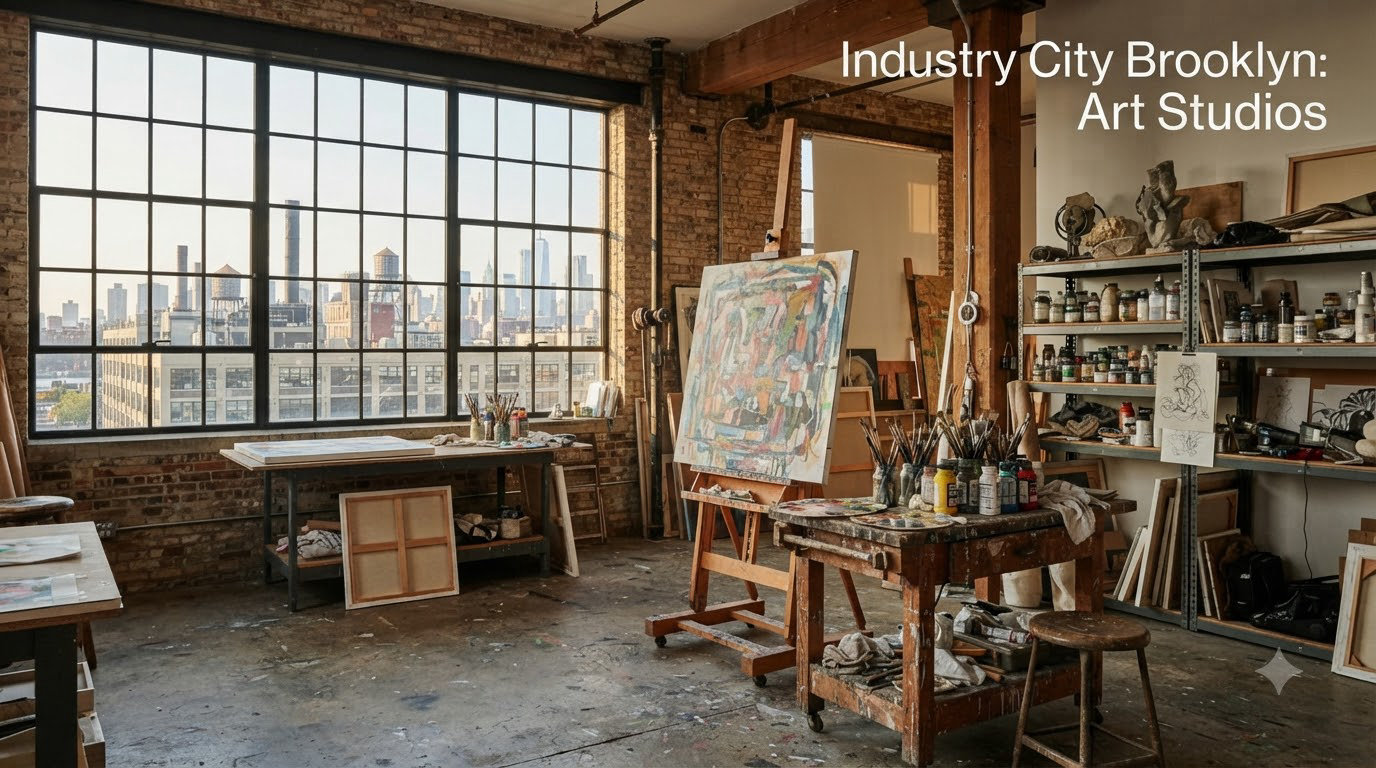
Industry City Brooklyn art studios represent one of the most dynamic creative ecosystems in New York City. This 35-acre waterfront campus in Sunset Park has transformed historic manufacturing buildings into a thriving hub where over 150 artists, makers, and creative professionals work, exhibit, and collaborate. Whether you are an artist seeking studio space, a collector hunting for emerging talent, or a visitor curious about Brooklyn’s creative scene, Industry City offers an experience unlike any other.
I have spent considerable time exploring this creative campus, speaking with resident artists and attending Open Studios events. What strikes me most is the genuine sense of community here. Unlike isolated studio buildings, Industry City functions as a self-contained creative village where ceramicists share kilns with sculptors, photographers consult with textile designers, and gallery owners regularly visit studios to discover new work.
The sheer scale of Industry City demands attention. Six million square feet of historic industrial space now houses everything from intimate artist studios to large-scale fabrication workshops. This article covers everything you need to know about the art studios, galleries, and creative spaces that make Industry City a cornerstone of Brooklyn’s cultural landscape in 2026.
Table of Contents
What Is Industry City Brooklyn
Industry City is a 6-million-square-foot creative campus located at 220 36th Street in Sunset Park, Brooklyn. The complex spans sixteen historic industrial buildings situated directly on the Brooklyn waterfront, offering stunning views of the Manhattan skyline and New York Harbor. Originally constructed in the early 1900s as a manufacturing and distribution hub, these warehouses have been thoughtfully repurposed into a mixed-use destination for creative businesses, artisans, and the public.
The property is owned and operated by a partnership that includes Belvedere Capital, Jamestown Properties, and Angelo Gordon. Since acquiring the complex in 2013, these developers have invested significantly in transforming the former industrial site into what they call a “creative campus.” Their vision extends beyond simple real estate development to fostering a genuine ecosystem where creative professionals can thrive.
The location puts Industry City at the intersection of several Brooklyn neighborhoods. Sunset Park sits to the south, while the campus borders the Brooklyn Army Terminal to the north. This positioning makes it accessible from multiple subway lines and major highways, yet distinct enough to feel like its own creative destination. The waterfront setting provides natural beauty that contrasts with the industrial architecture, creating an inspiring environment for artistic work.
Art Studios and Creative Workspaces
Industry City Brooklyn art studios come in several configurations designed to meet diverse creative needs. The campus primarily offers two categories of workspace: Creative Workshops and Creative Offices. Creative Workshops range from 500 to 2,000 square feet and feature the industrial characteristics artists crave—high ceilings, large windows for natural light, concrete floors, and freight elevators capable of moving large sculptures and equipment.
Creative Offices cater to designers, architects, and creative businesses needing professional environments while maintaining access to the campus artistic community. These spaces offer more refined finishes while preserving the building’s historic character. Many artists actually combine both workspace types, maintaining a raw Creative Workshop for fabrication while operating a Creative Office for client meetings and administrative work.
The variety of creative disciplines represented at Industry City is genuinely impressive. Visual artists work across painting, drawing, and mixed media. Sculptors utilize the high ceilings and freight access for large-scale installations. Ceramicists take advantage of shared kiln facilities and the community of fellow clay workers. Photographers set up professional studios with controlled lighting environments. Textile designers maintain production spaces with room for looms and material storage. Fabricators and makers use the workshops for everything from woodworking to metal fabrication.
Studio Features and Amenities
The physical spaces at Industry City retain their industrial heritage while incorporating modern necessities. Ceilings soar to fourteen feet or higher in many units, allowing artists to create ambitious vertical work. Windows flood studios with natural light during daytime hours while offering views of the harbor or interior courtyards. Concrete floors withstand heavy use and can be customized by tenants.
Freight elevators serve every building, making it possible to move large artworks, equipment, and materials without the constraints typical of residential or commercial buildings. Many studios offer 24/7 access, essential for artists who work unconventional hours or need to meet exhibition deadlines. Loading docks and dedicated receiving areas simplify the logistics of shipping artwork to galleries and collectors.
Beyond individual studio features, the campus provides shared amenities that enhance the creative experience. Common areas throughout the buildings offer spaces for informal gatherings and networking. Meeting rooms can be reserved for critiques, workshops, or client presentations. Some buildings feature shared workshop equipment and tools, reducing the individual investment required for specialized fabrication processes.
Leasing and Availability
Industry City offers flexible leasing terms designed to accommodate working artists and growing creative businesses. Unlike traditional commercial real estate that demands multi-year commitments, the campus provides options ranging from short-term licenses to longer leases. This flexibility proves crucial for artists whose space needs may evolve as their practices develop.
Rental rates at Industry City generally run below comparable Manhattan studio space and competitive with other Brooklyn art neighborhoods. The trade-off comes in location—Sunset Park sits farther from Manhattan’s gallery district than neighborhoods like DUMBO or Williamsburg. However, many artists find the cost savings and superior physical spaces more than compensate for the additional travel time.
Studio availability changes regularly as artists relocate, expand, or transition to different spaces. The management team maintains a waitlist for prospective tenants and hosts periodic open houses for interested creatives. Attending Industry City Open Studios events offers an excellent opportunity to see spaces firsthand and connect with current residents who might share leads on upcoming availability.
Galleries at Industry City
The gallery scene at Industry City contributes significantly to Brooklyn’s exhibition landscape. Unlike the white-cube galleries of Chelsea or the boutique spaces of Williamsburg, Industry City galleries occupy repurposed industrial spaces that retain raw character. These venues range from formal exhibition spaces to experimental project rooms, offering diverse contexts for viewing contemporary art.
Several notable galleries maintain permanent spaces within the complex. These venues host rotating exhibitions featuring both resident artists and external curators. The programming tends toward emerging and mid-career artists working across contemporary practices including painting, sculpture, installation, new media, and interdisciplinary work. Opening receptions typically draw substantial crowds mixing art collectors, fellow artists, and local community members.
Beyond formal galleries, Industry City contains numerous alternative exhibition spaces. Studio buildings feature lobby galleries and corridor installations. Common areas host temporary art projects and site-specific interventions. The campus courtyards accommodate outdoor sculpture and seasonal installations. This distributed approach to exhibition means visitors encounter art throughout their exploration rather than only within designated gallery zones.
Gallery Directory
While the specific gallery roster evolves as tenants change, Industry City consistently maintains several exhibition venues worth visiting. The main gallery spaces anchor the cultural programming, hosting professionally curated shows with regular hours and established reputations. These spaces often represent the most visible face of Industry City’s art scene to outside visitors.
Project spaces supplement the main galleries with more experimental programming. These smaller venues might focus on emerging artists, thematic group shows, or time-based media. They often operate with limited hours or by appointment, creating an intimate viewing experience that rewards dedicated exploration.
Many resident artists effectively operate private galleries within their studios. During Open Studios events, these spaces open to the public, transforming working studios into temporary exhibition venues. Collectors and art lovers should view these studio visits as legitimate gallery experiences—the work shown often matches or exceeds what appears in formal galleries, and purchasing directly from studios supports artists more substantially than gallery sales.
Art Installations and Public Art
Industry City incorporates art into its public spaces throughout the campus. Murals and large-scale wall paintings activate building exteriors and interior corridors. Sculpture installations occupy courtyards and plazas, creating opportunities for encountering three-dimensional work in outdoor settings. These permanent and semi-permanent installations contribute to the visual identity of the campus while exposing visitors to contemporary art practices.
The industrial architecture itself becomes part of the artistic experience. Massive windows, steel beams, exposed brick, and weathered concrete provide backdrops that complement contemporary artwork in unexpected ways. Photographers particularly appreciate the textural richness of these spaces, and many artists cite the buildings themselves as inspiration for their practice.
Featured Artists and Creative Residents
The artists working at Industry City represent diverse practices, backgrounds, and career stages. Studio Vuono maintains a presence within the complex, contributing to the textile and design community. Naomi Cohen Thompson works from Industry City, adding to the community of multidisciplinary artists exploring material and conceptual boundaries. These established practitioners create anchor points within the broader artist community.
Industry City Studios, an artist-run organization within the complex, represents multiple resident artists including Jean Wolff, NLM Studios, and Fred Bendheim. This collective approach to studio management and promotion demonstrates the cooperative spirit that defines much of the Industry City creative community. By sharing resources and organizing joint programming, these artists amplify their individual practices while contributing to collective cultural output.
Beyond individual names, the real character of Industry City emerges from the collective community. Over 150 artists and makers currently maintain studios here, creating a density of creative production that few other Brooklyn locations match. Walking through the buildings during Open Studios reveals painters working beside ceramicists, photographers sharing walls with sculptors, and designers collaborating with fabricators. This interdisciplinary proximity generates cross-pollination that benefits all practices.
Open Studios and Events
Industry City Open Studios stands as the highlight of the campus cultural calendar. These periodic events invite the public into private artist studios, transforming the working complex into an accessible cultural destination. Visitors can meet artists in their creative environments, view works in progress, purchase artwork directly from studios, and gain insight into contemporary art practices.
The format typically involves dozens of artists opening their studios simultaneously across multiple buildings. Maps guide visitors through the sprawling complex, suggesting routes that maximize exposure to diverse practices. Many artists offer special presentations, demonstrations, or informal talks during these events. Food vendors and live music often accompany the main programming, creating a festival atmosphere that draws thousands of visitors.
Beyond Open Studios, Industry City hosts ongoing programming throughout the year. Gallery openings occur monthly across the various exhibition spaces. Workshops and classes taught by resident artists offer learning opportunities for the broader community. Special events tied to art fairs, seasonal celebrations, or collaborative projects with external organizations bring additional energy to the campus.
For artists considering leasing space, attending Open Studios provides invaluable research opportunities. You can assess the physical spaces, observe how current residents organize their studios, gauge the community atmosphere, and potentially make connections that lead to studio opportunities. For art collectors, these events offer direct access to artists and often the best prices for purchasing work before it reaches gallery representation.
Industry City vs Other Brooklyn Art Hubs
Understanding Industry City’s position requires comparing it to Brooklyn’s other major creative neighborhoods. Bushwick stands as the borough’s most established alternative art district, with a higher concentration of galleries and a more developed nightlife scene. However, Bushwick studio spaces often occupy less desirable buildings, and the neighborhood’s rapid gentrification has pushed many artists further east. Industry City offers superior physical infrastructure at generally comparable costs.
DUMBO presents a different comparison point. This neighborhood transformed earlier than Industry City and now commands premium rents that exclude most working artists. What remains in DUMBO leans toward established galleries, design showrooms, and tech offices rather than raw studio spaces for emerging artists. Industry City fills the gap that DUMBO’s upscale transformation created, offering serious studio space for working artists.
The Brooklyn Navy Yard shares similarities with Industry City as a historic industrial complex repurposed for creative use. Both locations offer substantial square footage, industrial character, and waterfront settings. However, the Navy Yard maintains stricter access controls and a more corporate atmosphere, while Industry City embraces public engagement through galleries, events, and retail. Artists seeking community and visibility often prefer Industry City’s more open environment.
Sunset Park itself, where Industry City anchors the waterfront, remains less gentrified than neighborhoods to the north. This brings advantages in affordability and authenticity, though it means fewer immediate neighborhood amenities compared to Williamsburg or Park Slope. For artists prioritizing studio space and creative community over trendy cafes, Industry City’s location offers compelling advantages.
Visiting Guide
Industry City operates as both an indoor and outdoor destination. The campus spans multiple interconnected buildings with interior corridors connecting spaces, while exterior courtyards and walkways provide outdoor circulation between structures. Visitors should prepare for both environments—comfortable walking shoes, layered clothing for temperature variation between indoor and outdoor spaces, and weather-appropriate gear for the waterfront location.
The complex sits at 220 36th Street in Sunset Park, Brooklyn. Public transit provides the most reliable access. The D, N, and R trains stop at 36th Street, located approximately four blocks from the main Industry City entrance. The N and W trains serve 45th Street, offering another nearby option. From Manhattan, expect roughly thirty to forty minutes of travel time depending on your starting point and train connections.
For drivers, Industry City offers parking options including metered street parking on surrounding blocks and paid lots within the campus. However, weekend visitors should anticipate competition for spaces, particularly during popular events like Open Studios. The proximity to the Gowanus Expressway and the Brooklyn-Queens Expressway makes driving feasible from other boroughs and suburbs.
Campus Amenities
Industry City distinguishes itself from pure studio complexes through its extensive amenities. The food hall features multiple vendors offering cuisines ranging from tacos to ramen to barbecue. This concentration of dining options makes it easy to spend full days at the campus without leaving for meals. Japan Village, a Japanese food hall and market, adds unique culinary programming to the mix.
Retail shops scattered throughout the buildings offer opportunities for browsing between studio visits. Many of these stores focus on design, home goods, and artisan products that complement the creative atmosphere. The Brooklyn Made marketplace specifically features locally produced goods from Brooklyn-based makers and designers.
For those making extended visits, the campus includes additional conveniences. Coffee shops provide caffeine for gallery-hopping stamina. Seating areas throughout the buildings offer places to rest between studio visits. Restrooms are available in public areas. Information desks can provide maps and directions to specific galleries or studios.
Best Times to Visit
Regular visitors should check gallery hours before making special trips, as individual exhibition spaces maintain varying schedules. Most galleries operate Thursday through Sunday with afternoon hours, though exceptions exist. The general campus retail and food areas maintain more consistent daily hours, making the destination viable even when specific galleries close.
Open Studios events represent the optimal visiting opportunity for art enthusiasts. These periodic gatherings concentrate cultural programming, maximize open studios, and create festive atmosphere. Check Industry City’s official website or social media channels for upcoming Open Studios dates. Events typically occur on weekends and draw substantial crowds, so arriving early improves the experience.
Weekday visits offer different advantages. Smaller crowds mean more meaningful conversations with gallery staff and artists who happen to be working. The calmer atmosphere suits serious art viewing and studio visits by appointment. However, some galleries and many studios operate limited weekday hours or require advance scheduling.
Frequently Asked Questions
What is Brooklyn Industry City?
Industry City is a 6-million-square-foot creative campus located in Sunset Park, Brooklyn. It consists of sixteen historic industrial buildings situated on the Brooklyn waterfront that have been repurposed into a mixed-use destination featuring art studios, galleries, maker spaces, creative offices, retail shops, and dining options. The complex serves as home to over 150 artists and creative businesses.
Who runs Industry City?
Industry City is owned and operated by a partnership including Belvedere Capital, Jamestown Properties, and Angelo Gordon. These development firms acquired the property in 2013 and have since transformed the historic industrial complex into the creative campus it is today while maintaining the buildings’ industrial character.
Is Industry City indoors or outdoors?
Industry City is both indoors and outdoors. The campus spans multiple interconnected buildings with interior corridors and studio spaces, while also featuring exterior courtyards, walkways, and outdoor public areas that connect the structures. Visitors should prepare for both environments when planning their visit.
What is the most artistic neighborhood in Brooklyn?
Brooklyn contains several highly artistic neighborhoods, each with distinct character. Bushwick currently holds the highest concentration of galleries and emerging artists. Industry City in Sunset Park offers the largest dedicated creative campus with over 150 artist studios. DUMBO features established galleries and waterfront views. Williamsburg blends art with nightlife and design. The best neighborhood depends on whether you seek gallery density, studio community, or specific art world sectors.
Can you visit artist studios at Industry City?
Yes, you can visit artist studios at Industry City during Open Studios events, which occur periodically throughout the year. During these events, resident artists open their private studios to the public. Some artists also welcome visitors by appointment outside of scheduled events. Check the Industry City website for upcoming Open Studios dates or contact specific artists directly to arrange studio visits.
Conclusion
Industry City Brooklyn art studios represent a remarkable achievement in creative placemaking and industrial adaptive reuse. The transformation of six million square feet of historic warehouses into a thriving creative community demonstrates what becomes possible when developers prioritize artistic ecosystem over pure commercial returns. The result benefits everyone: artists gain affordable studio space with superior infrastructure, visitors access world-class cultural programming, and Brooklyn strengthens its position as a global art destination.
For artists considering studio options, Industry City deserves serious consideration alongside Bushwick, DUMBO, and the Navy Yard. The combination of physical space quality, community density, and campus amenities creates working conditions difficult to match elsewhere in the borough. For art lovers and collectors, the galleries and Open Studios events offer accessible entry points into contemporary art practices without the intimidation factor of more established art districts.
As Brooklyn’s creative landscape continues evolving in 2026, Industry City stands as a model for how industrial heritage and artistic futures can coexist productively. Whether you visit for an afternoon of gallery exploration or commit to a years-long studio practice, this Sunset Park creative campus rewards engagement with authentic creative energy.