
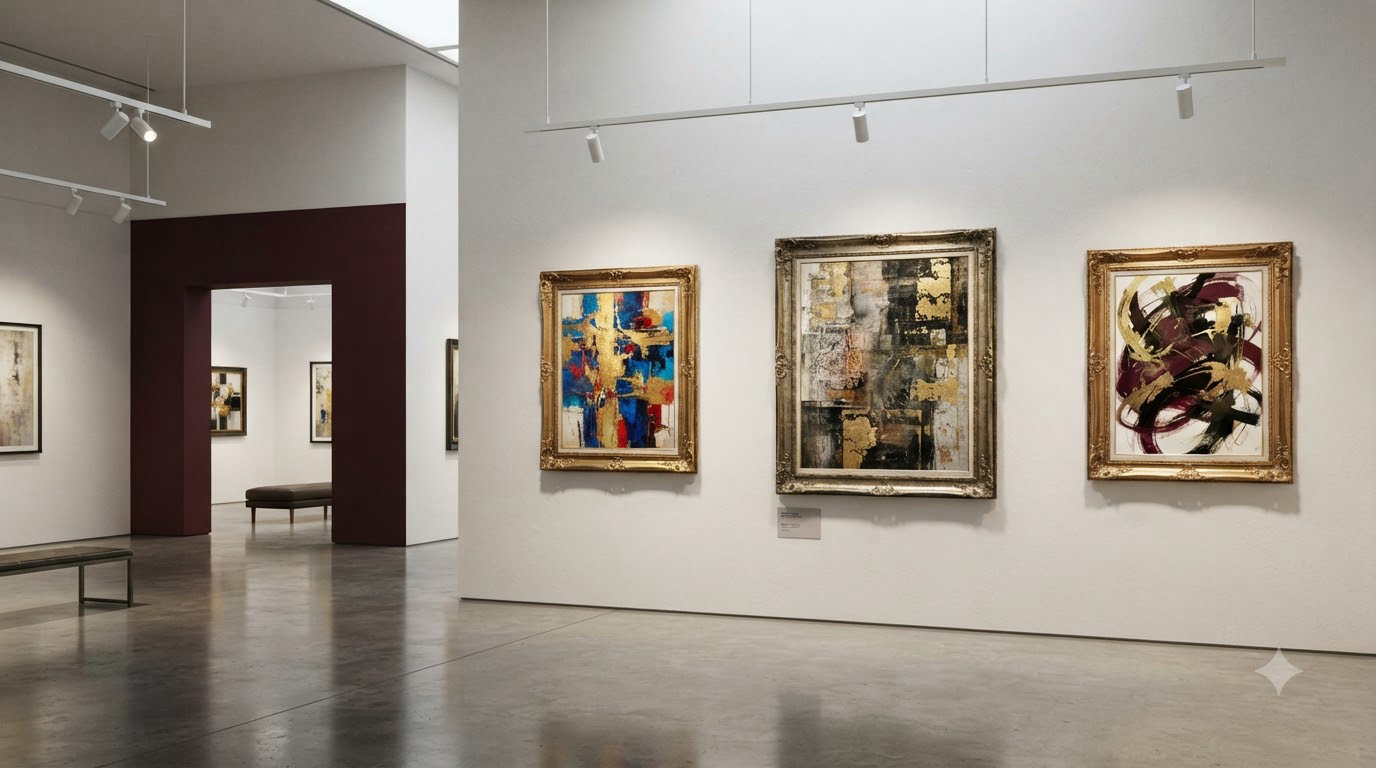
Walking through the galleries of the Brooklyn Museum, you encounter something rare in today’s art world. A space that genuinely honors artists who have shaped culture over decades. The Brooklyn Museum retrospective tradition represents one of the most significant forms of recognition an artist can receive. When an artist gets this honor, it signals that their work has transcended the commercial art market and entered the realm of cultural legacy.
The Brooklyn Museum retrospective tradition artists include groundbreaking figures like Lorraine O’Grady, KAWS, and Elizabeth Catlett. Each retrospective tells a story not just about individual artistic achievement, but about the museum’s commitment to documenting diverse voices in American art. In 2026, this tradition continues to evolve, reflecting both the institution’s 200-year history and its forward-looking mission.
In this article, we will explore what makes these retrospectives special. We will look at how artists are selected, examine the careers of honored artists, and understand why this tradition matters for art lovers and cultural historians alike.
Table of Contents
What Is the Brooklyn Museum Retrospective Tradition?
A retrospective exhibition at the Brooklyn Museum represents a comprehensive survey of an artist’s career. Unlike temporary shows or group exhibitions, a retrospective spans decades of work. It brings together pieces from different periods, showing evolution, themes, and artistic growth. The Brooklyn Museum retrospective tradition has become a benchmark for institutional recognition in the contemporary art world.
The tradition dates back decades, though it gained renewed prominence in recent years. The museum has used retrospectives to highlight artists who might not fit the conventional mold of what major institutions typically celebrate. This includes artists who work across disciplines, those with community-focused practices, and creators who challenge traditional boundaries between high art and popular culture.
Receiving a retrospective at the Brooklyn Museum signals something important. It means the institution believes this artist’s work deserves preservation, study, and celebration. For many artists, especially those from underrepresented communities, this recognition arrives after years of working outside mainstream art world validation. The honor validates not just their individual careers but the communities and movements they represent.
The Elizabeth A. Sackler Center for Feminist Art has played a crucial role in this tradition. Since its founding, the center has hosted retrospectives that center women’s contributions to art history. This institutional commitment distinguishes Brooklyn Museum retrospectives from those at other major museums. The focus extends beyond individual genius to encompass social impact, community engagement, and cultural transformation.
How Artists Are Selected for Brooklyn Museum Retrospectives
The selection process for Brooklyn Museum retrospectives involves careful deliberation by committees of respected artists and curators. These committees evaluate candidates based on career significance, cultural impact, and relevance to the museum’s mission. Unlike some institutions that prioritize market value or celebrity status, Brooklyn Museum selection committees focus on artistic merit and historical importance.
For the 2024 Brooklyn Artists Exhibition celebrating the museum’s 200th anniversary, the selection committee included renowned artists like Jeffrey Gibson and Mickalene Thomas. Their involvement demonstrates how the museum brings practicing artists into the decision-making process. This peer-review approach ensures that selections reflect the values and concerns of working artists, not just institutional administrators.
Criteria for retrospective selection typically include several factors. The artist must have a substantial body of work spanning at least a decade, preferably longer. Their work should demonstrate clear artistic development and innovation. They should have made significant contributions to their field or community. And their practice should align with the museum’s commitment to diversity, inclusion, and social engagement.
Geographic connection matters too. Many honored artists have strong ties to Brooklyn or New York City. The museum serves as both a local institution and a global destination. This dual identity shapes selection decisions. Artists who have contributed to Brooklyn’s cultural fabric often receive priority, though the museum also honors figures from farther afield whose work resonates with local communities.
Timing plays a strategic role as well. The museum schedules retrospectives to coincide with career milestones, anniversaries, or cultural moments that amplify an artist’s relevance. This curatorial approach ensures that each retrospective generates meaningful public dialogue, not just critical acclaim within art world circles.
Lorraine O’Grady: A 40-Year Journey to Recognition
In 2021, the Brooklyn Museum presented Lorraine O’Grady’s first-ever retrospective, titled “Lorraine O’Grady: Both/And.” This exhibition marked a watershed moment for an artist who had spent four decades challenging art world hierarchies. O’Grady came to art relatively late in life, making her first work at age 45 after careers as an intelligence analyst, translator, and rock critic.
The retrospective showcased O’Grady’s most significant projects. Her groundbreaking performance persona Mlle Bourgeoise Noire appeared in documentation from 1980. In this work, O’Grady wore a costume made of 180 white gloves and assaulted the audience with a whip made of white chrysanthemums. The piece critiqued the racial and class assumptions underlying the art world while demanding space for Black women artists.
Her “Art Is…” series from 1983 documented a performance in Harlem’s African American Day Parade. O’Grady rode on a float with young Black artists holding empty gold picture frames. They invited parade spectators to pose within the frames, declaring that art could be found in the community itself. This work challenged who gets to define art and where art can happen.
The “Miscegenated Family Album” series represented another highlight of the retrospective. Using photo manipulation, O’Grady created imagined encounters between her own family members and figures from ancient Egyptian history. These works explored diaspora, memory, and the politics of representation. They demonstrated how personal narrative can illuminate broader historical patterns.
O’Grady’s retrospective at the Brooklyn Museum arrived at a crucial moment. After decades of working outside mainstream recognition, she received validation from one of America’s oldest and most respected art institutions. The exhibition traveled to additional venues, extending its impact beyond Brooklyn. For younger artists working at the intersection of identity, performance, and conceptual art, O’Grady’s retrospective provided both inspiration and a model for career longevity.
The Significance of Late-Career Recognition
O’Grady’s retrospective illustrates an important pattern in the Brooklyn Museum tradition. The institution frequently honors artists who achieved mastery later in life or outside conventional art world pathways. This approach challenges the youth-obsessed culture of contemporary art, where artists often peak commercially in their thirties.
The retrospective gave O’Grady’s work the archival treatment it deserved. Major institutions acquired pieces for their permanent collections. Art historians began writing dissertations about her practice. And a new generation discovered work that had been overlooked during its initial creation. This delayed recognition demonstrates how retrospective exhibitions can rewrite art history.
KAWS: Pop Culture Meets Fine Art
Later in 2021, the Brooklyn Museum opened “KAWS: WHAT PARTY,” a major retrospective of Brian Donnelly’s career. Known professionally as KAWS, Donnelly built his reputation bridging street culture, commercial design, and fine art. This retrospective demonstrated how Brooklyn Museum traditions extend beyond conventional art world boundaries to encompass contemporary visual culture in all its forms.
The exhibition traced KAWS’s evolution from graffiti writer to global art phenomenon. Born and raised in Jersey City, Donnelly began his career tagging buildings and freight trains in the 1990s. He developed his signature style modifying advertising imagery, adding his distinctive X-eyed characters to bus shelter posters. This early work established his interest in remixing commercial iconography.
The retrospective featured his iconic Companion character, a Mickey Mouse-inspired figure with X’s for eyes. This character appeared in sculptures, paintings, and large-scale inflatables. The exhibition included a massive 18-foot Companion sculpture that dominated the museum’s grand lobby. Other works showcased his collaborations with major brands including Dior, Nike, and Uniqlo.
What made this retrospective significant was its unapologetic embrace of commercial success. Unlike institutions that view popularity with suspicion, the Brooklyn Museum celebrated KAWS’s ability to reach mass audiences. The exhibition acknowledged that contemporary art exists within a landscape of brands, celebrities, and viral images. KAWS’s work comments on this landscape while participating in it.
The timing proved prescient. The retrospective opened during the COVID-19 pandemic, when many people sought comfort in familiar pop culture imagery. KAWS’s work, with its blend of nostalgia and subversion, resonated with visitors experiencing isolation and uncertainty. The museum adapted with virtual programming that extended the exhibition’s reach globally.
From Skate Culture to Museum Walls
KAWS’s retrospective highlighted another aspect of Brooklyn Museum tradition: honoring artists who emerged from subcultural movements. His background in skateboarding, graffiti, and street wear represented authentic connections to youth culture. The museum validated these experiences as legitimate artistic foundations.
The exhibition also addressed criticism that KAWS’s work lacks depth. Curators included early drawings and paintings showing his technical skill and art historical knowledge. Wall text explained the conceptual framework behind his appropriation of cartoon characters. This contextualization helped visitors understand KAWS as more than a product designer or brand collaborator.
Elizabeth Catlett and Other Honored Artists
The Brooklyn Museum retrospective tradition extends back decades and encompasses diverse artistic approaches. Elizabeth Catlett received recognition through the museum’s programming, with her work featured in significant exhibitions that treated her career with retrospective depth. Catlett, who lived from 1915 to 2012, created powerful sculptures and prints exploring Black identity, labor, and motherhood.
Her work combined modernist formal training with social consciousness. Trained at Howard University and the University of Iowa, Catlett developed a style that blended African sculptural traditions with European techniques. She spent much of her career in Mexico, where she worked with the Taller de Gráfica Popular collective. Her prints and sculptures documented the dignity of working people while advocating for social justice.
The Brooklyn Museum has presented works by Catlett in exhibitions that effectively functioned as retrospective surveys. These presentations connected her practice to contemporary artists working with similar themes. Visitors can see Catlett’s work alongside pieces by current creators, demonstrating the ongoing relevance of her artistic vision.
Other artists who have received retrospective-level recognition at the museum include Mickalene Thomas, whose mixed-media portraits explore Black female identity and beauty standards. Her work combines painting, photography, and installation to create immersive environments. The museum’s presentation of her practice emphasized both formal innovation and cultural commentary.
The 2024 Brooklyn Artists Exhibition, while technically a group show, incorporated retrospective elements for many participants. By presenting 200 artists in the museum’s 200th anniversary year, the exhibition created a collective retrospective of Brooklyn’s creative community. This approach expanded the traditional retrospective format to encompass an entire borough’s artistic output.
The Diversity of Honored Practices
Reviewing the artists who have received retrospectives reveals the Brooklyn Museum’s commitment to diverse media and approaches. The honored artists work in sculpture, performance, photography, painting, and installation. They come from different generations, backgrounds, and geographic locations. This variety reflects the museum’s belief that artistic excellence cannot be reduced to a single style or demographic.
The selection process explicitly values artists who might be overlooked by other institutions. Women artists, artists of color, and those working in non-traditional media find welcoming space at the Brooklyn Museum. This inclusive approach has become a hallmark of the institution’s identity, distinguishing it from more conservative museums.
The Cultural Impact of Brooklyn Museum Retrospectives
The Brooklyn Museum retrospective tradition shapes art history in ways that extend far beyond individual exhibitions. When the museum honors an artist with a retrospective, it influences how other institutions, collectors, and scholars value that artist’s work. This ripple effect can transform careers and cement legacies.
For Brooklyn residents, these retrospectives provide opportunities to see world-class art without traveling to Manhattan. The museum’s location in Prospect Heights makes it accessible to diverse communities. Free admission programs ensure that economic barriers do not prevent engagement with major exhibitions. This accessibility aligns with the museum’s founding mission to serve the public.
The retrospectives also generate significant economic impact for the borough. Visitors from across the region and beyond come specifically to see these exhibitions. They spend money at local restaurants, shops, and hotels. The museum estimates that major exhibitions generate millions of dollars in local economic activity. This financial impact helps justify public and philanthropic support for the institution.
Culturally, the retrospectives contribute to ongoing conversations about representation and inclusion. By honoring artists like Lorraine O’Grady and Mickalene Thomas, the museum makes statements about whose stories matter. These statements influence how other institutions think about their own programming and collection strategies. The Brooklyn Museum has become a leader in demonstrating that diversity and artistic excellence are complementary rather than contradictory values.
Educationally, the retrospectives serve as teaching tools for students at all levels. School groups visit to learn about contemporary art practices. College classes analyze the curatorial decisions shaping each exhibition. Art students study the honored artists as models for their own careers. This educational function ensures that the retrospective tradition influences future generations of creators.
Frequently Asked Questions
What is a retrospective art exhibit?
A retrospective art exhibit is a comprehensive exhibition that surveys an artist’s entire career or a significant period of their work. Unlike temporary shows that might focus on recent pieces, retrospectives bring together works from different decades to show artistic development, recurring themes, and evolution of style. The Brooklyn Museum retrospective tradition specifically honors artists who have made substantial contributions to contemporary art and culture.
Who decides which artists get retrospectives at Brooklyn Museum?
Selection committees comprising respected artists, curators, and museum staff decide which artists receive retrospectives. For major exhibitions like the 2024 Brooklyn Artists Exhibition, committees have included renowned artists such as Jeffrey Gibson and Mickalene Thomas. The selection process considers career significance, cultural impact, artistic innovation, and alignment with the museum’s mission of diversity and community engagement.
How many artists have received retrospectives at Brooklyn Museum?
The Brooklyn Museum has hosted dozens of retrospective exhibitions throughout its 200-year history. Recent notable retrospectives include Lorraine O’Grady in 2021, KAWS in 2021, and numerous presentations through the Elizabeth A. Sackler Center for Feminist Art. The 2024 Brooklyn Artists Exhibition expanded this tradition by featuring over 200 artists in a group retrospective format celebrating the museum’s bicentennial.
Why are Brooklyn Museum retrospectives important?
Brooklyn Museum retrospectives are important because they provide institutional validation for artists, particularly those from underrepresented communities who may have worked outside mainstream art world recognition. These exhibitions document artistic legacies, influence collecting and scholarship, and make major art accessible to diverse Brooklyn communities. The tradition demonstrates the museum’s commitment to inclusive art history and community engagement.
Conclusion
The Brooklyn Museum retrospective tradition artists represent some of the most significant voices in contemporary art. From Lorraine O’Grady’s 40-year fight for inclusion to KAWS’s pop culture revolution, these honored artists have shaped how we understand creativity, identity, and cultural expression. The tradition itself has evolved over the museum’s 200-year history, adapting to changing artistic practices while maintaining core commitments to accessibility and diversity.
For art lovers planning visits to New York, the Brooklyn Museum offers experiences that rival anything in Manhattan. The retrospective tradition provides opportunities to see comprehensive surveys of major artists in an intimate, community-focused setting. As the museum looks ahead to its next century, this tradition will undoubtedly continue honoring artists who challenge, inspire, and transform our understanding of what art can be.
Whether you are a longtime Brooklyn resident or a first-time visitor, understanding this retrospective tradition enriches your museum experience. You recognize that each exhibition represents years of artistic labor, careful curatorial consideration, and institutional commitment to preserving culture. The Brooklyn Museum retrospective tradition stands as a testament to art’s power to document history, celebrate community, and envision new possibilities for creative expression.