
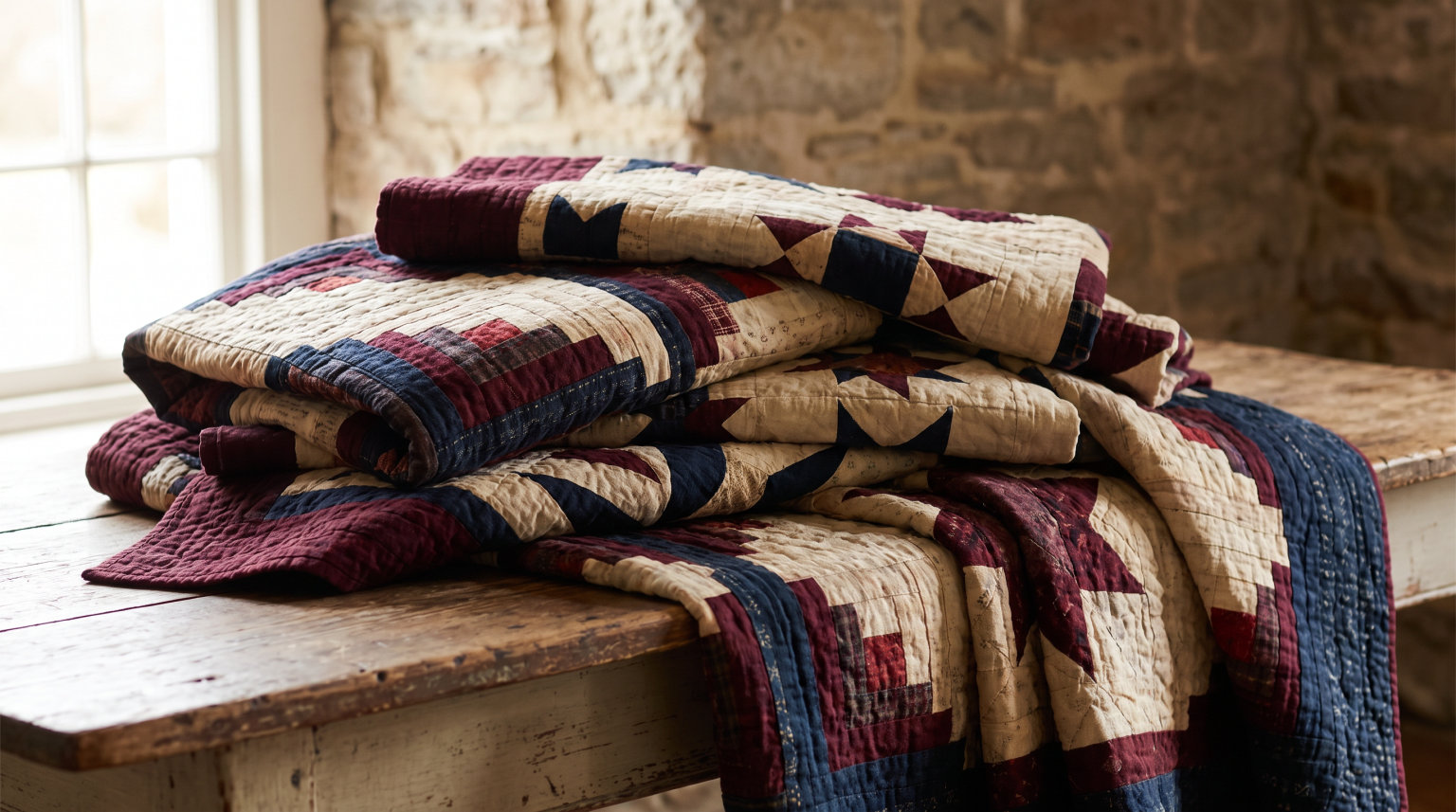
The story of quilt making is one of transformation, creativity, and cultural significance. What began as a practical method for creating warm bedding has evolved into a respected form of artistic expression recognized by museums, galleries, and collectors worldwide. The history of quilt making as art spans thousands of years, crossing civilizations and continents before culminating in a revolutionary movement that challenged how we define craft versus fine art.
In this comprehensive guide, we will trace the remarkable journey of quilting through ancient civilizations, colonial America, Victorian parlors, and the groundbreaking art quilt movement of the 1970s and 1980s. We will explore how women built communities through quilting circles, how fiber artists gained recognition in the contemporary art world, and why quilts now hang in prestigious museum collections alongside paintings and sculptures. Whether you are an art enthusiast, a craft historian, or simply curious about this timeless art form, this guide will provide you with a deeper understanding of how quilting transformed from functional craft to artistic masterpiece.
Table of Contents
Ancient Origins: Quilting Across Early Civilizations
The earliest evidence of quilting dates back to approximately 35th century BC, when ancient Egyptians created quilted garments for warmth and protection. A carving of a pharaoh wearing a quilted garment provides some of the oldest documented evidence of this textile tradition. This archaeological finding suggests that quilting was not merely a domestic craft but an established technique with cultural significance even in ancient times.
Quilting also flourished in ancient Asia, particularly in China and India, where layered textiles provided warmth in colder regions. In ancient Rome, quilted materials served both military and civilian purposes, with soldiers wearing quilted tunics beneath their armor for additional protection. The technique spread along trade routes, adapting to local materials and cultural preferences wherever it traveled. Each civilization that adopted quilting added its own unique patterns, colors, and purposes to the tradition.
During medieval Europe, quilting remained practical but increasingly decorative. Crusaders returning from the Middle East brought back quilted items, influencing European textile traditions. The construction method, known as creating a “quilt sandwich” with a top fabric layer, batting for warmth, and a backing layer, remained consistent across cultures. This three-layer structure became the foundation for all quilting techniques that followed, demonstrating the remarkable durability of the basic method developed thousands of years ago.
Colonial and Early American Quilting
Quilting arrived in colonial America with European immigrants who brought their textile traditions across the Atlantic. In the 17th and 18th centuries, quilting became essential for creating warm bed coverings in a time before modern heating. Colonial women pieced together scraps from worn clothing and household fabrics, transforming leftover materials into functional art. This practice of using what was available, rather than purchasing new fabric, shaped the distinctive aesthetic of early American quilts.
The concept of quilting bees emerged during this period, transforming a practical activity into an important social institution. Women gathered regularly to work on quilts together, combining their skills and creating opportunities for community connection. These gatherings served multiple purposes beyond completing the physical quilt. They provided a space for sharing news, teaching younger women techniques, and building the kind of social bonds that sustained communities across the vast American frontier.
Economic factors heavily influenced colonial quilting practices. Wealthy families could afford to purchase new fabrics specifically for quilt making, allowing their womenfolk to focus on decorative rather than purely functional pieces. Less affluent families made quilts from whatever fabric was available, often creating bold geometric patterns from scraps of different origins. This economic division created distinct traditions that would later evolve into recognized artistic styles, demonstrating that necessity often births creativity.
The 19th Century: Victorian Elegance and Album Quilts
The Victorian era brought significant changes to American quilting, with the rise of ornamental and decorative approaches that elevated quilting beyond mere functionality. Wealthy families had leisure time for creating elaborate quilts, while the growing middle class sought to demonstrate their refined tastes through home crafting. Baltimore album quilts became particularly prestigious during this period, featuring intricate appliqued designs that showcased the maker’s skill and the family’s social standing.
Applique technique gained popularity during the 19th century, allowing quilters to create detailed pictorial designs by cutting shapes from one fabric and sewing them onto a background. This method required significant time and skill, making applique quilts status symbols within communities. The pattern vocabulary expanded dramatically, with designs inspired by popular culture, religious symbols, and geometric abstractions. Each quilt became a unique expression of the maker’s creativity within accepted cultural frameworks.
Quilting circles continued to serve as important social institutions throughout the 19th century. Women organized themselves into groups that met regularly, working collectively on quilts that often commemorated special occasions like weddings or the birth of children. These circles provided rare opportunities for women to gather outside their domestic duties, creating spaces where they could assert creative agency even within constrained social roles. The collaborative nature of these groups produced some of the most technically accomplished quilts in American history.
During the middle decades of the 19th century, quilts had become an acknowledged art form within many communities. The tradition of presenting quilts to mark significant life events, such as marriages or funerals, demonstrated the cultural weight assigned to these textile creations. Families displayed their finest quilts as decorative elements in parlors, treating them as status objects worthy of showing to guests. This growing regard for quilts as aesthetic items planted seeds that would later blossom into full artistic recognition.
The Art Quilt Movement: 1970s and 1980s
The transformation of quilting from craft to fine art gained momentum in the 1970s and 1980s, a period that fundamentally reshaped how the art world understood textile traditions. Landmark exhibitions like the 1971 Whitney Museum show “Abstract Design in American Quilts” challenged viewers to see quilts as pure aesthetic objects rather than functional items. This exhibition, along with subsequent shows at major galleries, created space for serious consideration of quilts within contemporary art discourse. Fiber artists began organizing communities, creating exhibitions, and demanding recognition for their work.
Key figures emerged during this period who would shape the direction of art quilting for decades to follow. Artists like Harriet Cheng, Nancy Crow, and Faith Ringgold pushed boundaries by treating quilts as canvases for personal expression and social commentary. Faith Ringgold’s narrative quilts, for example, told stories of African American experience while challenging racial hierarchies in the art world. Nancy Crow’s work explored geometric abstraction with a complexity that rivaled contemporary painting. These artists demonstrated that the quilt format could accommodate the most ambitious artistic visions.
The establishment of organizations dedicated to art quilting provided infrastructure for the growing movement. Groups like the Surface Design Association and the Studio Art Quilt Association created venues for exhibition and professional development. Museum exhibitions specifically focused on quilts as art gained prominence, with institutions like the Museum of Fine Arts Boston and the Smithsonian American Art Museum presenting major quilt exhibitions. This institutional support legitimized art quilting within broader art world conversations.
By the late 20th century, the image of the American quilt had shifted from one of practicality and handicraft to a celebration of modernist abstraction. Fiber artists began exploring the same formal concerns that occupied painters and sculptors, using the unique properties of textile to create works that could not be replicated in any other medium. The shift from functional to artistic represented a fundamental reconceptualization of what quilts could be and what they could mean within contemporary culture.
Contemporary Fiber Artists and Global Perspectives
Today’s fiber artists continue the work begun in the 1970s, expanding the boundaries of what quilts can express and how they can be created. Modernist abstraction remains influential, with artists exploring geometric patterns, color relationships, and texture through fabric manipulation. Narrative quilts have evolved to address contemporary themes, from environmental concerns to political commentary. Artists like Alyson B. Shapiro and Jane D. Wines apply conceptual frameworks to their textile work, creating pieces that challenge viewers to think deeply about the medium’s capabilities.
Memory quilts represent a particularly poignant strand of contemporary work, with artists using fabric to preserve and honor personal and collective histories. These pieces often incorporate materials with specific meaning, such as clothing from deceased family members or fabrics from significant events. The tactile nature of cloth creates emotional connections that painting or sculpture cannot replicate, making quilts uniquely suited for exploring themes of memory, loss, and continuity.
Global perspectives have enriched contemporary art quilting, with artists drawing on traditions from Japan, Africa, Latin America, and other regions to create culturally hybrid works. This international dialogue has expanded the visual vocabulary of art quilting while challenging Western-centric assumptions about what quilts can be. Japaneseboro, an arrangement technique emphasizing asymmetry and empty space, has influenced Western quilters, while African American quilt traditions have gained recognition for their distinctive aesthetic approaches.
Digital quilting communities have emerged as important spaces for contemporary artists to share work, exchange techniques, and build professional networks. Online platforms have democratized access to quilt education, allowing artists from anywhere to learn from masters regardless of geographic location. This digital transformation has accelerated the pace of innovation while creating new questions about tradition, authenticity, and the relationship between handmade and machine-created work.
Cultural Significance and Community Traditions
African American quilting traditions represent a rich and often underdocumented strand of textile history. Enslaved women created quilts using whatever materials were available, developing distinctive styles that reflected both African textile influences and American experience. Quilts made in the American South often feature bold geometric patterns, with some researchers arguing that certain designs encoded information for escape routes along the Underground Railroad. However, historians caution that many claims about secret codes lack solid documentation, representing more myth than historical fact.
The feminist history of quilting provides crucial context for understanding the art form’s evolution. For much of American history, quilting was considered “women’s work,” relegated to the domestic sphere while male artistic endeavors received institutional support and recognition. The 1970s art quilt movement was closely tied to feminist activism, with women artists claiming quilting as a legitimate form of artistic expression. This reclamation challenged hierarchical distinctions between domestic craft and fine art, opening space for previously marginalized voices in the art world.
Quilting has served as a form of social activism and resistance throughout American history. During the Civil Rights era, women created quilts that addressed political themes and built community through collective projects. Contemporary artists continue this tradition, using quilts to comment on issues from immigration to environmental degradation. The accessibility of the medium, which requires minimal equipment compared to painting or sculpture, has made it particularly suited for grassroots activism and community-based art projects.
The connection between quilting and community building remains powerful today. Modern quilting bees, while less common than in previous centuries, still provide opportunities for connection and creativity. Guilds and associations at local, regional, and national levels support quilters through education, exhibition, and advocacy. These organizations preserve traditional techniques while encouraging innovation, ensuring that quilting continues to evolve as an art form.
The Enduring Legacy of Quilting as Art
The transformation of quilt making from functional craft to recognized art form represents one of the most significant developments in American textile history. This journey, spanning from ancient Egyptian garments to contemporary gallery exhibitions, demonstrates how practical objects can acquire artistic significance when creators claim them as sites of creative expression. The recognition of quilts by major museums and collectors validates what quilters have always understood: that these textile works deserve to be seen, studied, and celebrated as art.
The art quilt movement of the 1970s and 1980s created space for generations of fiber artists to explore ambitious creative visions. Today, contemporary artists continue to push boundaries, using quilts to address themes from personal memory to global politics. The medium’s unique combination of visual and tactile qualities creates experiences that painting and sculpture cannot replicate, securing quilts’ place in contemporary art discourse. As more artists explore the possibilities of textile art, the future of quilting as art looks increasingly vibrant.
Understanding the history of quilting as art requires recognizing the contributions of countless women and men who transformed a practical technique into a respected art form. From ancient Egyptian quilters to contemporary fiber artists, this lineage demonstrates the enduring human need to create beautiful objects that also serve functional purposes. The legacy of quilting reminds us that art and craft, far from being opposites, can coexist in objects that enrich our daily lives while challenging our assumptions about what art can be.
FAQs
How did quilting evolve from folk craft to art form?
The transformation from craft to art accelerated in the 1970s when fiber artists began organizing exhibitions and demanding gallery recognition. These artists treated quilts as canvases for personal expression rather than functional objects, creating abstract compositions that rivaled contemporary painting. Museum exhibitions at major institutions like the Whitney helped establish quilts as legitimate fine art. Today, art quilts hang in museums worldwide, demonstrating the successful elevation of the craft tradition.
What is the history of art quilts in America?
American art quilting has roots in the practical quilting traditions of colonial women, but gained artistic recognition in the 19th century when Baltimore album quilts demonstrated the aesthetic potential of the form. The critical transformation came in the 1970s with landmark exhibitions and the work of artists like Nancy Crow, Faith Ringgold, and Harriet Cheng. Since then, American art quilts have evolved through movements including modernist abstraction, narrative quilting, and contemporary fiber art.
When did quilts become recognized as art?
Quilts began gaining recognition as art in the 19th century, particularly through Baltimore album quilts that were explicitly designed as aesthetic objects rather than mere bedding. However, the critical recognition as fine art came in the 1970s, particularly after the 1971 Whitney Museum exhibition Abstract Design in American Quilts. This exhibition challenged viewers to see quilts as pure aesthetic objects and opened doors for gallery representation and museum acquisitions of contemporary art quilts.
What is the significance of quilting in different cultures?
Quilting holds significant meaning across many cultures. In African American traditions, quilts encoded history and served as tools for community building. In Asian cultures, quilting techniques developed independently with distinctive aesthetic approaches. The feminist movement reclaimed quilting as womens artistic expression, challenging hierarchies that marginalized domestic crafts. Today, global quilting traditions continue to influence contemporary fiber artists, creating a rich dialogue across cultural boundaries.
For more on how artistic movements gain recognition and transform craft traditions into fine art, explore our guide to art collectives and movements that have shaped contemporary creative expression.