
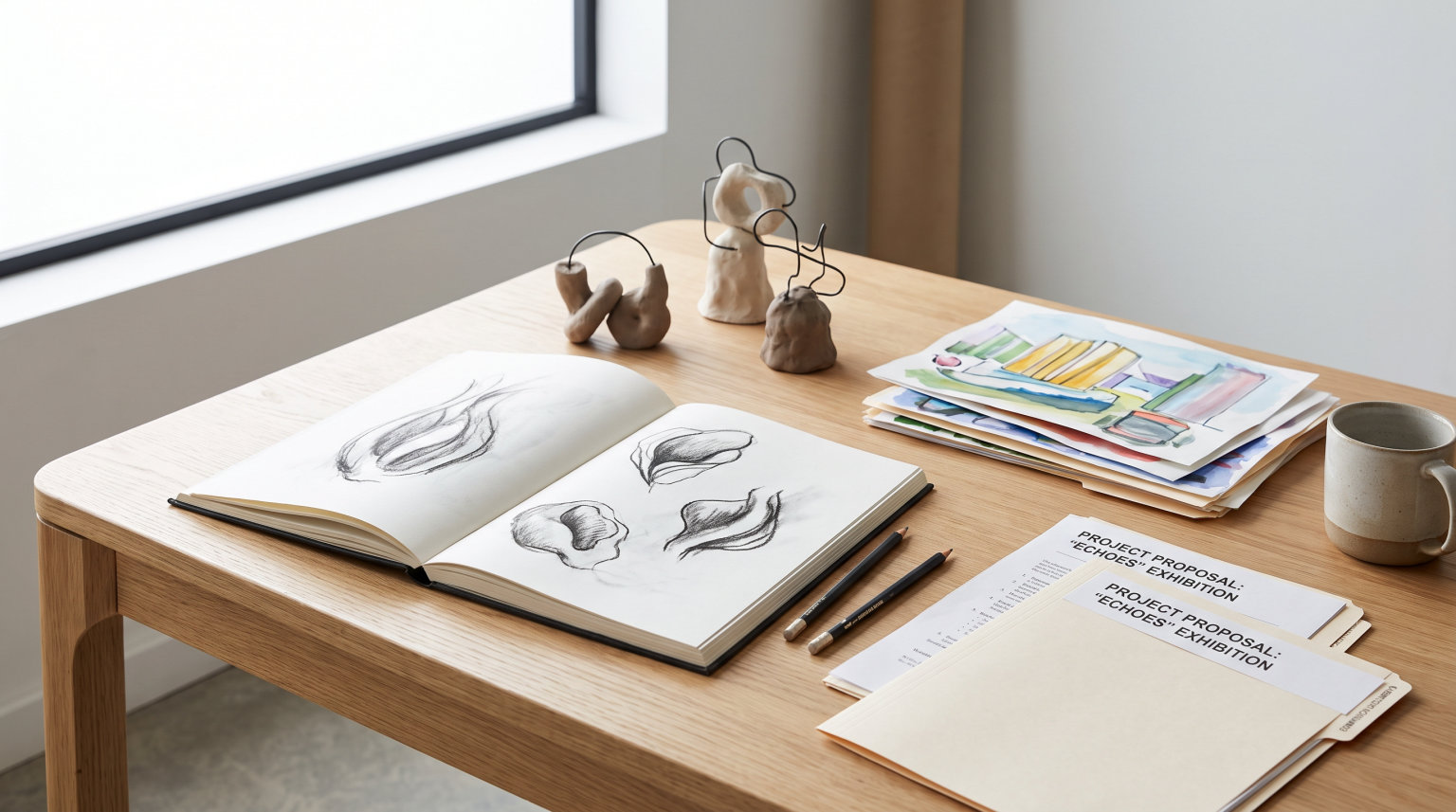
Public art commissions represent one of the most rewarding opportunities available to visual artists today. These contracted projects allow you to create large-scale artwork for publicly accessible spaces, from municipal buildings and parks to transit stations and plazas. The work stays visible for years, serves the community, and often comes with competitive compensation.
Yet the application process can feel opaque and intimidating, especially for artists new to public art. Forums are full of artists wondering how to even begin, what materials to prepare, and what selection panels actually want. Our team has spent months researching this process, talking to program administrators, and hearing firsthand from artists who have completed commissions. This guide walks you through everything you need to know about how to apply for a public art commission, from finding opportunities to navigating the selection process.
Whether you are a sculptor, muralist, or installation artist, this guide covers the steps that transform a promising artist into a commissioned public artist. If you are also interested in the broader art business, our piece on art collecting basics offers useful context for understanding how your work fits into the larger art ecosystem.
Table of Contents
What is a Public Art Commission?
A public art commission is a contracted opportunity for an artist to create artwork for publicly accessible spaces. Unlike gallery sales where your work hangs in private settings, commissioned public art lives in places where community members encounter it daily: parks, municipal buildings, libraries, transit stations, airports, and public plazas.
Most public art programs operate through what is known as a percent-for-art program. These policies mandate that a small percentage of budgets for new construction or renovation projects be set aside for public art. If a city builds a new library costing 10 million dollars, somewhere around 100k to 500k typically goes into the public art fund. This creates a steady stream of commissioned opportunities that do not rely on charitable donations alone.
Public art differs from private commissions in several meaningful ways. The selection process involves review panels that may include arts professionals, civic leaders, and community representatives. Your work must meet accessibility and safety standards for public spaces. You often need to consider maintenance, durability, and how the piece interacts with diverse audiences. The process also tends to be more bureaucratic, involving contracts, insurance requirements, and approval at multiple stages.
Where to Find Public Art Opportunities
Finding legitimate public art opportunities requires knowing where to look. The good news is that many resources exist specifically to connect artists with commissions. The challenge is that deadlines are often posted months in advance, and competition can be intense.
National and Regional Databases
Several platforms aggregate public art opportunities across regions. Artwork Archive maintains an Opportunity Guide that lists national and regional public commissions. Caferi is another popular platform where municipalities post calls for artists. The Public Art Archive allows you to explore completed projects, which can help you understand what different programs tend to commission.
For federal opportunities, check the National Endowment for the Arts and General Services Administration Art-in-Buildings program. These tend to be larger budgets but also attract more experienced applicants.
State Public Art Programs
Most states have dedicated public art programs. These state-level initiatives often maintain artist rosters and post regular calls for new projects. Washington State has the ArtsWA Public Art program, which manages the state art collection and posts opportunities regularly. California has the California Arts Council and county-level programs in Los Angeles and San Francisco. Texas, Colorado, and New York all have active state public art programs as well.
Artist Rosters
Many municipalities maintain pre-approved artist rosters. Rather than posting specific opportunities, they invite artists on the roster to propose for upcoming projects. Getting on these rosters requires an application process, often an RFQ submission. Artists on rosters tend to get first consideration for smaller commissions and special projects. We recommend checking with your state and regional arts councils to find roster opportunities near you.
Understanding RFQs vs RFPs
The two primary application formats you will encounter are RFQs and RFPs. Understanding the difference helps you apply strategically and build the right materials for each format.
RFQ: Request for Qualifications
An RFQ asks artists to demonstrate their qualifications rather than propose a specific project. When a program issues an RFQ, they want to see who you are as an artist, your track record, and your capability to handle a public art project. You typically submit a portfolio, artist statement, CV, and references. Selection committees review qualifications to create a shortlist or select artists for the next phase, which often involves a site-specific proposal.
RFQs are commonly used for artist roster applications, smaller projects, and situations where the program wants flexibility in defining the final artwork. They give you less control over the exact project but also require less upfront investment in developing a full proposal.
RFP: Request for Proposal
An RFP asks artists to submit a specific proposal for a defined project. The program has typically identified a site, set a budget range, and outlined community needs or themes. Your RFP submission should include your qualifications plus a detailed project concept, site analysis, budget breakdown, and timeline. Some programs also ask for preliminary designs or sketches.
RFPs require more work to prepare but give you more control over the creative direction. They are common for larger commissions where the program wants to evaluate specific creative visions rather than just artist qualifications.
When Each Format is Used
Programs choose between RFQ and RFP based on project scale, risk tolerance, and administrative capacity. Smaller projects and pilot programs often use RFQs. Larger, more defined projects typically use RFPs. Sometimes a program will combine both: an RFQ to select finalists, then an RFP-style second phase where those finalists develop full proposals.
Required Application Materials
Most public art applications require similar core materials, though specific requirements vary by program. Preparing these materials thoroughly before you start applying dramatically improves your chances of success.
Artist Portfolio
Your portfolio showcases your completed work, preferably including images of installed pieces or projects similar in scale to the commissions you seek. Curate your portfolio for the specific opportunity. If you are applying for a mural project, highlight your painting and large-scale work. For sculpture commissions, show your three-dimensional installations. Quality matters more than quantity, so select your strongest twelve to twenty images that demonstrate range and technical skill.
Artist Statement
Your artist statement explains your creative practice, influences, and artistic vision. Keep it between 250 and 500 words. Write in first person, be specific about your approach, and avoid generic language. Rather than saying you create “meaningful work,” explain what drives your practice and what themes you explore consistently. This document helps selection committees understand your perspective and how your work might fit their community context.
Curriculum Vitae (CV)
Your CV lists your professional experience, exhibitions, awards, residencies, collections, and public art experience if you have it. Format it cleanly and keep it to two pages maximum for public art applications. Include any relevant training, certifications, or specialized skills that relate to public commissions such as welding certification, project management experience, or community collaboration work.
Site-Specific Proposal
For RFP submissions, you need to develop a site-specific proposal. This document analyzes the physical location, considers how pedestrians will experience your work, addresses how the piece responds to the surrounding architecture or landscape, and explains your intended materials and installation approach. Strong proposals demonstrate that you have researched the site, understand the community context, and have a compelling creative vision that fits the space.
Budget Breakdown
Your budget document details how you will allocate the project funds. Include line items for materials, fabrication, installation, permits, insurance, travel, and your artist fee. Public art programs typically expect you to cover your entire project within the allocated budget, so be realistic and thorough. Programs appreciate transparency about how you value your own time and creative contribution.
If you are building your portfolio documentation skills, our guide to digitizing your portfolio can help you create professional-quality images of your work for these applications.
Step-by-Step Application Process
Applying for a public art commission follows a predictable structure. Understanding this workflow helps you plan your time and avoid missing critical deadlines.
Step 1: Research Opportunities
Start by identifying programs in your region and areas where you would like to work. Sign up for alerts from platforms like Caferi, Artwork Archive, and your state arts council. Set calendar reminders for application deadlines, as missing these windows means waiting for the next cycle. Most programs have annual or semi-annual application windows, though some smaller programs operate on an as-needed basis.
Step 2: Review Requirements Carefully
Once you find an opportunity that interests you, read the call for artists or RFP document thoroughly. Note the eligibility requirements, evaluation criteria, and required materials. Some programs restrict eligibility to artists from certain geographic areas or require specific experience levels. Understanding these details before you invest time helps you focus on opportunities where you are competitive.
Step 3: Prepare Your Materials
Give yourself plenty of time to prepare materials. Create a master portfolio that you can customize for each application. Develop your artist statement and CV as standalone documents that you refine over time. When you identify a specific opportunity, tailor these materials to align with the program’s stated priorities and evaluation criteria.
Step 4: Draft Your Proposal
For RFP applications, allocate significant time to developing your site-specific proposal. Visit the location in person if possible. Research the community, speak with local stakeholders if appropriate, and develop a concept that genuinely responds to the space and context. Do not simply transplant an existing project idea onto a new site.
Step 5: Submit Before the Deadline
Submit your application well before the deadline. Technical issues can arise, and some programs do not accept late submissions under any circumstances. Early submission also gives you peace of mind and allows you to move on to identifying the next opportunity.
Step 6: Follow Up Appropriately
After the deadline, most programs acknowledge receipt of applications. If you have not heard back within the stated timeline, it is acceptable to send a brief inquiry about your application status. Avoid excessive follow-up that might be perceived as pushy. Once the selection process concludes, programs typically notify all applicants, though the timeline varies from weeks to months.
Tips for First-Time Applicants
Forum discussions reveal that first-time applicants often feel overwhelmed by the complexity and bureaucracy of public art applications. These concerns are valid, but they should not discourage you from pursuing opportunities.
Start Smaller
If you are new to public art, begin with smaller opportunities like traffic box art, utility box wraps, or community murals. These projects let you build experience with the process without the high stakes of major commissions. Once you complete a few smaller projects, you have concrete examples to show selection committees, and your confidence grows naturally.
Build Relationships
Successful public artists often emphasize the importance of building relationships with arts administrators over time. Attend public meetings where commissions are discussed. Introduce yourself to program staff. Participate in community events organized by your local arts council. These relationships do not guarantee selection, but they help you understand program priorities, learn about upcoming opportunities early, and navigate the process more smoothly.
Address the Community
Selection panels increasingly value community engagement in public art projects. Demonstrate in your application that you understand the community where your work will live. Explain how you would gather community input, involve local stakeholders in the creative process, or create work that resonates with neighborhood identity. This does not mean abandoning your artistic vision, but rather showing how your vision connects with the community context.
Do Not Take Rejection Personally
Rejection is common in public art applications, even for experienced artists. Selection committees often have limited slots and must turn away qualified candidates. If you are not selected, ask for feedback if the program offers it. Use the experience to strengthen your next application. Many artists report applying multiple times before their first acceptance, and persistence is genuinely part of the path.
What Happens After You’re Selected
Getting selected for a public art commission is just the beginning of the process. Understanding what comes next helps you plan realistically and deliver successfully.
Contract Negotiation
Once selected, you will negotiate a contract with the commissioning entity. This document covers project scope, timeline, payment schedule, insurance requirements, intellectual property rights, and maintenance obligations. Read the contract carefully and negotiate terms where needed. Do not accept liability for conditions beyond your control. Most programs expect negotiation and have standard terms that can be adjusted for reasonable requests.
Design Development
After contract signing, you develop your design in more detail. This phase typically involves schematics, material samples, and preliminary designs that must be approved by the program. Expect several rounds of revisions based on feedback from selection committees, city engineers, accessibility reviewers, and community stakeholders. This process can take months and requires patience and flexibility.
Fabrication and Installation
Once your design is approved, you move into fabrication. For large projects, you often hire fabricators, installers, and technical assistants. You oversee the manufacturing process, conduct quality checks, and manage the installation timeline. Programs typically require documentation of your process, and you may need to coordinate with multiple city departments for site access, permits, and utility location.
Project Completion and Dedication
After installation, your work undergoes inspection to ensure it meets specifications and safety standards. Once approved, programs often hold a dedication ceremony or public unveiling. This event generates publicity for your work and allows community members to celebrate the new addition to their neighborhood. Plan to attend these events whenever possible, as they are valuable opportunities for professional visibility and community connection.
Common Mistakes to Avoid
Artists who apply unsuccessfully often make similar mistakes. Avoiding these issues improves your competitiveness significantly.
One common problem is submitting generic proposals that could apply to any site. Selection committees can immediately identify artists who have not researched their location. Always tailor your application to the specific opportunity, demonstrating genuine understanding of the site and community.
Another mistake is underpricing your budget. While you want to be competitive, publicly funded projects typically have realistic budgets. Do not undercut your artist fee to win a project, as this sets unsustainable precedent and can result in financial stress throughout the project. Programs expect professional budgeting that includes fair compensation for your creative work.
Missing deadlines is another frequent failure point. Keep meticulous calendars of all application deadlines and submission requirements. Give yourself buffer time for technical issues and last-minute questions. Programs rarely extend deadlines, and late submissions are typically rejected automatically.
Neglecting maintenance planning also hurts applications. Reviewers want to see that you have considered how your work will age and be maintained over time. Public art sits outdoors exposed to weather and human interaction, so durability matters. Address material selection, cleaning requirements, and any structural considerations in your proposal.
Frequently Asked Questions
What is the 70 30 rule in art?
The 70 30 rule in art typically refers to the common guideline that artists should spend roughly 70% of their time creating and 30% on business development, marketing, and administrative tasks. This balance helps maintain creative output while building a sustainable career. For public art commissions specifically, this ratio emphasizes that your artistic skills must be complemented by solid project management and proposal writing abilities.
Do I need a license to sell art commissions?
You generally do not need a special license to sell art commissions in the United States. However, depending on your business structure and location, you may need a general business license, sales tax permit, orEIN for tax purposes. Some municipalities require contractors to register for public art projects, particularly for installations that involve structural work or electrical components. Check with your local business licensing authority and the commissioning program for specific requirements.
What is the 80 20 rule in art?
The 80 20 rule, also known as the Pareto Principle, suggests that roughly 80% of your results come from 20% of your efforts. In art practice, this can mean that a small portion of your work generates the majority of your recognition and income. For public art artists, understanding this principle helps prioritize high-impact opportunities and focus energy on the projects most likely to advance your career.
What type of art sells fast?
In the public art context, smaller-scale works and community-oriented projects tend to move through approval processes more quickly than major permanent installations. Traffic box wraps, utility box art, temporary installations, and community murals often get commissioned and installed within months rather than years. Digital projections and light-based installations also tend to have faster timelines because they require less structural engineering and permanent site modification.
Do I need a license to sell art commissions?
You generally do not need a special license to sell art commissions in the United States. However, depending on your business structure and location, you may need a general business license, sales tax permit, or EIN for tax purposes. Some municipalities require contractors to register for public art projects, particularly for installations that involve structural work or electrical components. Check with your local business licensing authority and the commissioning program for specific requirements.
What is the 80 20 rule in art?
The 80 20 rule, also known as the Pareto Principle, suggests that roughly 80% of your results come from 20% of your efforts. In art practice, this can mean that a small portion of your work generates the majority of your recognition and income. For public art artists, understanding this principle helps prioritize high-impact opportunities and focus energy on the projects most likely to advance your career.
What type of art sells fast?
In the public art context, smaller-scale works and community-oriented projects tend to move through approval processes more quickly than major permanent installations. Traffic box wraps, utility box art, temporary installations, and community murals often get commissioned and installed within months rather than years. Digital projections and light-based installations also tend to have faster timelines because they require less structural engineering and permanent site modification.
Conclusion
Applying for a public art commission requires patience, persistence, and strategic preparation. The process rewards artists who approach it methodically, develop strong application materials, and build genuine connections with program administrators and communities over time.
Start by researching opportunities in your area and understanding the requirements of different programs. Build a professional portfolio that showcases your relevant work. Prepare compelling materials that demonstrate both your artistic vision and your understanding of the specific site and community. Submit applications for opportunities where you are genuinely competitive, and do not be discouraged by initial rejections.
Remember that every application, whether successful or not, teaches you something valuable about the process and helps refine your approach. The artists who succeed in public art are those who persist through the bureaucratic complexity, learn from feedback, and remain committed to their creative practice while developing the business skills necessary to navigate public commissions.
Public art offers a unique opportunity to create work that serves communities, shapes civic spaces, and reaches audiences who might never visit a gallery. If you are serious about pursuing these opportunities, start today by identifying three programs where you would like to apply. The path from aspiration to commissioned public artist begins with a single application, and the process gets easier with each submission you complete. For more insights into art industry trends that may affect your practice, explore our other resources on artist business development.