
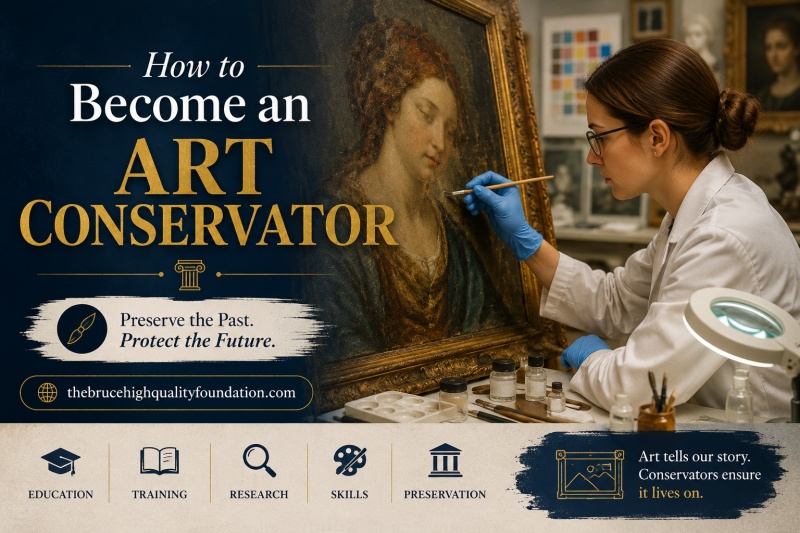
Art conservation is one of those careers that combines scientific rigor with hands-on artistry in ways few other professions do. If you have ever looked at a centuries-old painting and wondered how it survived intact, or felt a spark of curiosity about the chemistry behind cleaning a fragile artifact, this path might call to you. I have spent time researching how people actually break into this field, and I want to share what I found in a way that gives you a realistic picture of what lies ahead.
Becoming an art conservator takes dedication, patience, and a willingness to commit years to education and training. The field is competitive, the programs are demanding, and the salaries do not always match the investment. But for the right person, it offers something rare: the chance to spend your working life protecting humanity’s cultural heritage. This guide walks you through every stage of the journey, from undergraduate preparation to landing your first professional position.
Table of Contents
What Is an Art Conservator?
An art conservator is a trained professional who examines, preserves, restores, and maintains artworks and cultural artifacts. Unlike simple restoration, which focuses on making an object look its best, conservation prioritizes longevity and reversibility. Every treatment a conservator performs aims to stabilize the piece while respecting its original materials and history.
On a typical day, you might find yourself documenting an artwork’s condition under magnification, performing chemical analyses to identify pigments, or carefully cleaning decades of grime from a textile. The work requires meticulous attention to detail, solid grounding in art history, and enough chemistry to understand how materials age and interact. You also need strong problem-solving skills because no two objects present exactly the same challenges.
The distinction between conservation and restoration matters here. Restoration often involves retouching missing areas or returning an object to an idealized appearance. Conservation, by contrast, emphasizes minimal intervention. You record everything you do so future conservators can understand your decisions. This philosophical framework shapes the entire profession and influences how conservators approach every project.
Career Pathways for Art Conservators
The American Institute for Conservation (AIC) outlines a clear stage-based pathway for entering this profession. Understanding these stages helps you plan your journey and set realistic expectations at each step.
Stage 1: Pre-Program Preparation
Before you can even apply to graduate school, you need to build a foundation. Most aspiring conservators spend their undergraduate years developing relevant skills and knowledge. Common majors include art history, chemistry, studio art, archaeology, or materials science. The specific major matters less than developing a combination of analytical thinking and manual dexterity.
During this stage, you also need to accumulate hands-on experience. Graduate programs typically require applicants to complete 400 or more hours of pre-program internship work in a conservation lab. This experience gives you a realistic preview of the daily work and demonstrates your commitment to the field.
Stage 2: Graduate Education
Graduate programs in art conservation are rigorous two to three year commitments. In the United States, the most respected programs include those at New York University, the University of Delaware, and the University of Texas at Austin. Each program has its own specialty focus, so researching their specific strengths matters.
Graduate coursework combines scientific training with intensive studio practice. You learn to identify materials using various analytical techniques, develop treatment plans, and perform conservation procedures on diverse objects. Programs also emphasize documentation standards and ethical principles that guide professional practice.
Stage 3: Post-Graduate Development
After completing your graduate degree, most conservators pursue postdoctoral fellowships to build additional expertise. These paid positions provide mentored experience in specialized areas like paintings conservation, objects conservation, or preventive care. Fellowships typically last one to two years and represent a critical bridge between student and independent professional.
Many conservators also choose to join AIC and participate in the Emerging Conservation Professionals Network (ECPN). This organization offers networking events, mentorship connections, and professional development resources tailored specifically to new entrants in the field.
Educational Requirements
The educational pathway to becoming an art conservator requires both undergraduate and graduate-level training. While the path might seem straightforward, the details matter significantly when it comes time to apply to competitive programs.
Undergraduate Preparation
No single “correct” undergraduate major exists for aspiring conservators. However, certain courses and experiences prove particularly valuable. Strong performance in chemistry, art history, and studio art courses demonstrates the interdisciplinary thinking the profession requires.
If you are still in undergraduate studies and know you want to pursue conservation, consider a double major or significant coursework across these areas. Physics, biology, and anthropology also contribute useful perspectives. What matters is building both analytical scientific skills and comfort with hands-on manipulation of delicate materials.
Studio art experience deserves particular emphasis. Programs look for applicants who can work confidently with their hands, understand artistic techniques, and appreciate the decision-making processes artists make. Taking drawing, painting, sculpture, or photography courses helps develop this sensibility.
Graduate Program Prerequisites
Most graduate programs require specific coursework before admission. Chemistry through organic chemistry is typically mandatory because conservators need to understand how binding media, varnishes, and coatings age. Some programs also require physics or calculus as part of their science requirements.
Beyond formal coursework, programs want to see evidence of your manual skills. A portfolio demonstrating artistic ability or documentation of hands-on projects carries significant weight in applications. Many successful applicants have undergraduate majors in studio art or art history with strong science grades.
Portfolio Requirements
Your application portfolio serves multiple purposes. It demonstrates technical competence, shows you understand materials and processes, and reveals your analytical thinking about objects. Include documentation of any conservation-related experiences you have had.
Beyond conservation work, programs value evidence of artistic practice. Understanding how artworks are constructed, how materials behave, and how artists make decisions comes partly from creating art yourself. A portfolio with both conservation documentation and original creative work presents a compelling picture of your potential.
Gaining Experience Before and During School
Graduate programs do not just want to see your academic credentials. They want evidence that you understand what conservation work actually involves. This means accumulating meaningful experience in conservation labs before and during your graduate studies.
Pre-Program Internships
The 400-hour benchmark that most programs cite represents the bare minimum of meaningful conservation experience. In reality, successful applicants often log significantly more hours. These internships expose you to real conservation work under the supervision of working professionals.
Finding these opportunities requires initiative. Start by contacting local museums, historical societies, or university conservation departments. Many institutions welcome volunteer help in their labs, even if the work initially seems unglamorous. Filing papers, preparing solutions, and observing treatments all contribute to your understanding of the profession.
Reddit communities like r/ArtConservation offer practical advice from people currently in the field or recently graduated. Reading their experiences helps you understand what programs look for and how to position yourself competitively. Several contributors note that working in retail or other jobs while completing prerequisites builds patience and manual dexterity that proves valuable later.
The Importance of Bench Experience
“Bench experience” refers to the hands-on time you spend actively working on objects. This distinguishes conservation from purely academic study. Graduate programs track your bench hours carefully because they indicate your readiness for professional practice.
Beyond formal internships, seek additional opportunities whenever possible. Summer positions at museums, volunteer work with local historical societies, or research assistant positions in conservation labs all contribute valuable experience. Each hour you log builds proficiency and demonstrates your commitment to the profession.
Finding Volunteer Opportunities
Breaking into conservation requires persistence because opportunities are limited and competition is fierce. Start locally by approaching museums and art institutions in your area, even if they do not have formal internship programs. Many conservators remember their own early struggles and appreciate demonstrated initiative.
University conservation departments often need undergraduate volunteers for research projects. These positions offer exposure to advanced techniques and provide networking opportunities with faculty and graduate students. Such connections can prove invaluable when you apply to graduate school.
Art Conservation Specializations
Art conservation encompasses several distinct specialty areas, each requiring specific knowledge and techniques. Understanding these specializations helps you identify where your interests lie and guides your graduate program selection.
Paintings Conservation
Paintings conservators focus specifically on works created with paint, whether on canvas, wood panels, or other supports. This specialization involves understanding artists’ materials, paint chemistry, canvas degradation, and varnish behavior. Treatments may include cleaning, consolidating paint layers, filling losses, and retouching.
The work requires sophisticated visual assessment skills and comfort working under magnification. Paintings conservators often collaborate with art historians and scientists to understand an artwork’s history and inform treatment decisions.
Objects Conservation
Objects conservators handle three-dimensional artifacts made from diverse materials including metal, wood, ceramic, glass, and plastic. This broad specialization demands wide-ranging material science knowledge because artifacts present wildly different challenges depending on their composition.
An objects conservator might examine a bronze sculpture one week and a plastic toy the next, requiring mental flexibility and continuous learning. This specialization suits people who enjoy variety and problem-solving across different material types.
Textiles Conservation
Textile conservators work with fabrics, costumes, tapestries, and other fiber-based objects. This specialization requires understanding of dye chemistry, fiber identification, and appropriate cleaning methods for delicate materials. Many textile conservators develop expertise in historical clothing and domestic textiles.
The work often involves storage and preventive care for large textile collections. Museums with significant costume holdings employ specialists who advise on display, storage, and handling protocols.
Paper Conservation
Paper conservators focus on works on paper including prints, drawings, photographs, manuscripts, and books. This specialization involves understanding papermaking processes, printing techniques, photographic processes, and appropriate stabilization methods.
Treatment options range from humidification to reduce cockling, to surface cleaning, to tear repair. Paper conservators often work with library and archive collections, contributing to institutional preservation efforts.
Choosing Your Specialty
Most conservators eventually choose a primary specialization, though some maintain breadth across multiple areas. When researching programs, consider their primary focus and whether it aligns with your interests. Programs at NYU emphasize paintings and sculpture conservation, while Delaware focuses on objects and scientific research.
The specialization decision does not need to be final before applying to graduate school. Programs typically provide broad exposure before requiring specialization commitment. However, having general preferences helps narrow your program research and tailor your application narrative.
Professional Organizations and Development
Professional organization membership plays an important role in art conservation careers. These organizations set standards, provide continuing education, and create networking opportunities that prove essential for career development.
The American Institute for Conservation (AIC)
AIC serves as the primary professional organization for conservators in the United States. Membership provides access to professional development resources, annual conferences, and the AIC wiki containing detailed guidance on conservation procedures. Many positions list AIC membership as a preferred qualification.
AIC also administers the Professional Accreditation for Conservators, which provides formal recognition of professional competence. While not always mandatory, accreditation demonstrates commitment to professional standards and can provide a competitive advantage in the job market.
Emerging Conservation Professionals Network (ECPN)
ECPN specifically supports conservators in the early stages of their careers. The network organizes mentorship programs connecting emerging professionals with experienced conservators, publishes resources addressing common career challenges, and hosts networking events at AIC conferences.
If you are reading this guide while still in undergraduate or early graduate studies, ECPN offers an valuable community for building connections before you enter the job market. Their resources also help set realistic expectations about career progression and workplace culture.
Regional and International Organizations
Beyond AIC, several regional and international organizations serve conservation professionals. The International Institute for Conservation (IIC) organizes congresses and publishes research through its journal. European conservators often participate in icons or national conservation organizations specific to their countries.
Depending on your specialization and career goals, these broader communities offer additional networking and professional development opportunities. Attending international conferences exposes you to global practices and cutting-edge research.
Certification and Membership Benefits
While certification remains optional in the United States, it increasingly serves as a standard for professional credibility. The AIC accreditation process requires documentation of education, experience, and demonstrated competence in conservation practice.
Beyond formal certification, active membership in professional organizations signals engagement with the conservation community. Many employers value demonstrated commitment to professional development and networking when evaluating candidates.
Career Outlook and Salary Expectations
Honesty about career prospects matters when considering any profession, and art conservation deserves candid discussion. The field offers meaningful work protecting cultural heritage, but it also presents real challenges that aspiring conservators should understand before committing.
The Competitive Reality
Art conservation is a small profession with limited positions relative to the number of qualified graduates. Several forum contributors described spending months or years applying before landing their first position. Some conservators work in related fields like museum registration, collections management, or art handling while pursuing conservation positions.
The competition for graduate program seats is equally intense. Programs accept only a handful of students each year, and admission often requires multiple application cycles. Understanding this reality helps you plan backup options and manage expectations throughout your educational journey.
Salary Ranges
Compensation in conservation varies significantly based on employer type, geographic location, and experience level. Entry-level positions at museums or in private practice typically start between $45,000 and $55,000 annually. With experience, salaries can reach $70,000 to $85,000 in some settings.
Salaries at major art institutions in cities like New York or Washington DC may reach higher figures, but cost of living considerations offset these advantages. Some conservators supplement their income through private practice or consulting work, though this requires established professional reputation.
Several contributors in conservation forums noted that salaries often do not reflect the educational investment required. If financial compensation is a primary motivation, alternative careers in museum administration, art handling, or related fields might deserve consideration.
Career Advancement Opportunities
Experienced conservators can advance to senior positions managing conservation departments or leading institutional preservation programs. Some become independent consultants serving multiple institutions. Others transition into research, teaching at conservation programs, or developing new conservation techniques and products.
The profession offers intellectual satisfaction and meaningful work, even if financial rewards remain modest compared to other fields requiring equivalent education. For many conservators, the opportunity to handle irreplaceable cultural artifacts and contribute to their preservation provides sufficient compensation.
Conclusion
Becoming an art conservator requires navigating a challenging pathway: competitive graduate programs, expensive education, limited positions, and salaries that do not always match the investment. But for people passionate about preserving cultural heritage and willing to commit years to developing specialized expertise, the profession offers unique rewards.
The key steps remain consistent: build a strong undergraduate foundation combining science and art, accumulate meaningful conservation experience before applying to programs, complete an accredited graduate degree, and pursue postdoctoral fellowships to establish your specialization. Professional organization involvement and networking prove essential throughout this journey.
If you are considering this path, I encourage you to seek out conservation labs for shadowing or volunteer opportunities before committing fully. Understanding the daily realities of the work helps ensure the career matches your expectations. The forum discussions from working conservators offer valuable realistic perspectives that complement official program descriptions.
The journey is long, but conservators who have completed it often describe deep satisfaction with their career choice. Protecting humanity’s artistic heritage for future generations provides purpose that transcends financial considerations. If that purpose resonates with you, the investment may prove worthwhile.
FAQs
Is it hard to become an Art Conservator?
Yes, becoming an art conservator is challenging. The field is highly competitive with limited positions, graduate programs are expensive, and job opportunities are fewer than the number of qualified graduates. Success requires years of education, 400+ hours of pre-program experience, and significant dedication to the profession.
What degree do I need to be an Art Conservator?
You need a master’s degree in art conservation or a related field from an accredited graduate program. Common programs include those at NYU, University of Delaware, and University of Texas at Austin. Undergraduate preparation should include chemistry, art history, and studio art coursework.
How much do art conservationists get paid?
Art conservator salaries range from approximately $45,000 to $85,000 annually depending on experience level, employer type, and location. Entry-level positions typically start between $45,000-$55,000, while experienced conservators at major institutions can earn $70,000-$85,000. Salaries often do not fully reflect the educational investment required.