
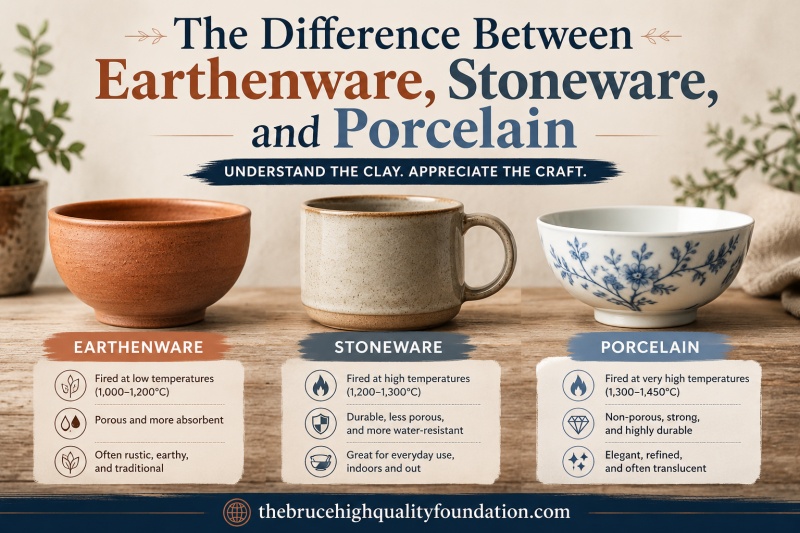
Understanding the difference between earthenware, stoneware, and porcelain comes down to two things: what clay they are made from and how hot that clay gets fired in a kiln. These three ceramic types form the foundation of pottery and tableware worldwide, and each has distinct properties that make it suited for different purposes.
I have spent years working with all three of these materials in my own kitchen and studio, and the practical differences between them are more significant than most people realize. From how they feel in your hand to whether they will survive a trip through the dishwasher, the type of ceramic matters more than you might think.
In this guide, I will walk you through the key differences between earthenware, stoneware, and porcelain so you can make informed choices about your dinnerware, cookware, and decorative pieces.
Table of Contents
What Are the Three Main Types of Ceramics?
Before we get into specifics, it helps to understand what “ceramics” actually means. Ceramics are objects made from clay that have been shaped and then hardened through heat. The firing process transforms soft, workable clay into a rigid, permanent material. The temperature of that firing, along with the specific mix of minerals in the clay body, determines which type of ceramic you end up with.
There are three primary types of ceramic pottery: earthenware, stoneware, and porcelain. Some references include a fourth category, either ball clay pottery or bone china, but the three main types cover the vast majority of pottery you will encounter. The distinction between them is not arbitrary. It is based on measurable properties like porosity, density, and the degree of vitrification, which is the process where clay particles fuse together into a glass-like state during firing.
The firing temperature is the single biggest factor separating these three. Earthenware is a low-fire clay, typically fired between 1,300 and 2,120 degrees Fahrenheit. Stoneware is a high-fire clay, fired between 2,100 and 2,372 degrees Fahrenheit. Porcelain sits at the top, fired at 2,300 degrees Fahrenheit and above, sometimes reaching 2,500 degrees. That temperature difference drives every other property we will discuss.
Earthenware: The Oldest and Most Porous Ceramic
Earthenware is the oldest form of ceramic pottery, dating back thousands of years. It is made from relatively impure clay that contains iron and other minerals, which gives earthenware its characteristic warm, earthy tones. Terra cotta, the material used for classic garden pots and rustic Italian dishware, is probably the most familiar form of earthenware.
The defining characteristic of earthenware is its porosity. Because it is fired at lower temperatures, the clay body never fully vitrifies. That means it remains absorbent. If you were to pour water into an unglazed earthenware vessel, the liquid would slowly seep through the walls. This is not a defect. It is simply how the material behaves at lower firing temperatures.
To make earthenware functional for holding liquids, potters apply a glaze, which is essentially a glass coating that seals the surface. Traditional faience, the beautifully decorated glazed earthenware from France and the Mediterranean, relies entirely on this glaze for waterproofing. The glaze also provides the surface for those vibrant, rich colors that earthenware is known for.
In terms of durability, earthenware is the most fragile of the three types. It chips relatively easily and can crack under thermal shock, which means sudden temperature changes like going from a hot oven to a cool counter. I learned this the hard way with a beautiful earthenware baking dish that split in half after I set it on a cold granite surface straight from a 375-degree oven.
Despite its fragility, earthenware has real charm. It is lightweight, colorful, and often more affordable than stoneware or porcelain. It works well for decorative items, serving pieces, and casual tableware where visual appeal matters more than rugged durability.
Stoneware: The Durable Everyday Workhorse
Stoneware sits in the middle of the ceramic spectrum, and it earns its name from its stone-like density after firing. Fired between 2,100 and 2,372 degrees Fahrenheit, stoneware reaches a point of partial to full vitrification. The clay particles fuse together tightly, making the material significantly denser and less porous than earthenware.
One of the things I appreciate most about stoneware is its practicality. Unlike earthenware, stoneware does not need a glaze to be waterproof, though it almost always has one for aesthetic reasons and to create a food-safe surface. Even without glaze, a piece of stoneware will not absorb water the way earthenware does.
This density translates directly into durability. Stoneware is chip-resistant, handles thermal shock better than earthenware, and holds up well to daily use. Most restaurant-grade dinnerware is stoneware for exactly this reason. It can survive the rigors of a busy kitchen, repeated dishwasher cycles, and the occasional drop onto a tiled floor.
There are a few things to watch out for, though. Stoneware typically has rough, unglazed bottoms that can scratch countertops if you drag pieces across the surface. I always recommend lifting stoneware rather than sliding it. Some users also report glaze chipping over time, particularly with lower-quality pieces. This happens when the glaze and the clay body expand and contract at different rates during temperature changes.
Stoneware comes in a range of earthy, muted colors, from warm browns and tans to cool grays and deep blues. The color palette is more subdued than what you find with earthenware glazes, but many people prefer this natural, organic look for everyday dinnerware.
Porcelain: Refined, Translucent, and Fully Vitrified
Porcelain represents the highest tier of ceramic pottery, and its properties reflect that. It is made from a specific blend of kaolin clay, feldspar, and quartz. Kaolin is a pure white clay mineral that gives porcelain its signature clean, white appearance. This specific clay body, combined with firing temperatures above 2,300 degrees Fahrenheit, produces a ceramic that is fully vitrified, meaning it has zero porosity.
The most distinctive visual characteristic of porcelain is its translucency. Hold a thin piece of porcelain up to a light source, and you can actually see light passing through it. This does not happen with earthenware or stoneware, no matter how thin you make them. That translucency is a direct result of the high firing temperature and the pure kaolin clay body.
Porcelain is also noticeably smoother than the other two types. The bottoms of porcelain dishes are typically smooth and polished, which means they will not scratch your countertops the way stoneware can. This is one of those small details that becomes surprisingly relevant in daily use.
In terms of durability, porcelain occupies an interesting space. It is harder and more chip-resistant than earthenware, and its non-porous surface resists staining and absorbing odors. However, it can be more brittle than stoneware in certain situations. A direct impact on a hard floor can shatter porcelain, whereas stoneware might just bounce or chip. The trade-off is that porcelain maintains its appearance longer because its surface does not degrade or craze over time the way earthenware and some stoneware can.
Porcelain is widely considered the premium choice for formal dinnerware, and it has been prized for centuries. It is also common in commercial kitchens because it handles repeated use, resists bacteria absorption, and cleans easily. If you have ever used restaurant-grade white plates at a nice dinner out, there is a good chance they were porcelain.
Earthenware vs Stoneware vs Porcelain: Side-by-Side Comparison
The table below breaks down the key differences between all three ceramic types at a glance. I have organized it by the properties that matter most when you are choosing dinnerware or cookware.
| Property | Earthenware | Stoneware | Porcelain |
|---|---|---|---|
| Firing Temperature | 1,300 – 2,120 F | 2,100 – 2,372 F | 2,300 – 2,500+ F |
| Porosity | High (absorbs water) | Low to none | None (fully vitrified) |
| Durability | Low (chips easily) | High (chip-resistant) | High (scratch-resistant) |
| Translucency | Opaque | Opaque | Translucent when thin |
| Bottom Texture | Smooth to slightly rough | Rough (unglazed) | Smooth and polished |
| Color Range | Wide, vibrant | Earthy, muted tones | Typically white |
| Dishwasher Safe | Usually no | Yes | Yes |
| Best For | Decorative, casual | Everyday dinnerware | Formal, long-lasting |
One important distinction that often gets overlooked: the difference between earthenware and stoneware is not just about firing temperature. Stoneware is harder, denser, and more durable than earthenware because it undergoes vitrification. Earthenware remains porous and relatively fragile regardless of how carefully it is made.
How to Tell Earthenware, Stoneware, and Porcelain Apart at Home
If you have a piece of pottery and you are not sure what type it is, there are a few simple tests you can do right at home. I use these regularly when I come across unlabeled pieces at thrift stores or estate sales.
Step 1: The Water Test
Apply a few drops of water to an unglazed area of the piece. Earthenware will absorb the water within seconds or minutes because of its high porosity. Stoneware and porcelain will not absorb water because they are vitrified. This is the single most reliable test for identifying earthenware.
Step 2: The Bottom Texture Test
Flip the piece over and run your finger across the bottom. Stoneware typically has a rough, sandy texture on the unglazed foot rim. Porcelain will feel smooth, almost glassy, even on the unglazed areas. Earthenware bottoms can vary but tend to feel chalky or slightly gritty.
Step 3: The Light Test
Hold the piece up to a bright light source. If it is porcelain and thin enough, you will see light glowing through the walls. Neither earthenware nor stoneware allows light to pass through, regardless of how thin they are. This test works best on cups, bowls, or plates with relatively thin walls.
Step 4: The Tap Test
Gently tap the rim of the piece with your fingernail or a wooden spoon. Porcelain produces a clear, bell-like ring. Stoneware has a duller, shorter sound. Earthenware sounds the most muted and flat. This is a subtle test, but with practice you can start to distinguish the tones.
Care and Maintenance Tips for Each Ceramic Type
Each type of ceramic requires slightly different care, and understanding these differences can extend the life of your pieces significantly. This is something most guides skip, but it makes a real difference in practice.
Earthenware Care: Always hand wash earthenware. The thermal shock from a dishwasher can cause cracking, and the porous clay body can absorb detergent residue over time. Avoid sudden temperature changes. Never take earthenware directly from the refrigerator to a hot oven, and never place a hot piece on a cold surface. If your earthenware has a chip in the glaze, be aware that the exposed clay underneath will absorb water and stains.
Stoneware Care: Most stoneware is dishwasher and microwave safe, which is one of its big advantages. To prevent the glaze chipping that many users report, avoid extreme temperature swings and do not stack pieces roughly. The rough bottoms of stoneware can scratch glass or stone countertops, so place pieces down gently rather than sliding them. Some potters recommend lightly sanding rough bottom edges with fine-grit sandpaper if scratching becomes an issue.
Porcelain Care: Porcelain is the easiest to care for. It is generally dishwasher safe, microwave safe, and resistant to staining. The main risk with porcelain is impact damage. A dropped porcelain plate is more likely to shatter than a stoneware one, even though porcelain is technically harder. The smooth, non-porous surface means bacteria and odors do not penetrate, making it one of the most hygienic dinnerware options available.
FAQs
Which is better, porcelain or earthenware?
What are the four types of pottery?
How to tell earthenware vs stoneware?
Is earthenware stronger than stoneware?
Which is better: porcelain, ceramic, or stoneware?
Can you use earthenware in the oven?
Which Ceramic Type Is Right for You?
The difference between earthenware, stoneware, and porcelain ultimately comes down to how you plan to use the piece. If you want colorful, character-rich dishware for casual settings or decorative display, earthenware offers the widest range of glaze colors and a warm, handmade aesthetic. If you need reliable, durable dinnerware that can handle daily use, dishwasher cycles, and the occasional clumsy moment, stoneware is your best bet. If you want the most refined, longest-lasting option for formal occasions or a restaurant-grade setup, porcelain delivers unmatched elegance and hygiene.
Each material has its strengths, and there is no single winner. My own kitchen has a mix of all three: earthenware serving bowls for their beautiful glazes, stoneware plates for everyday meals, and a set of porcelain cups for coffee that I have used daily for over five years without a single chip. The best ceramic is the one that fits how you actually live.