
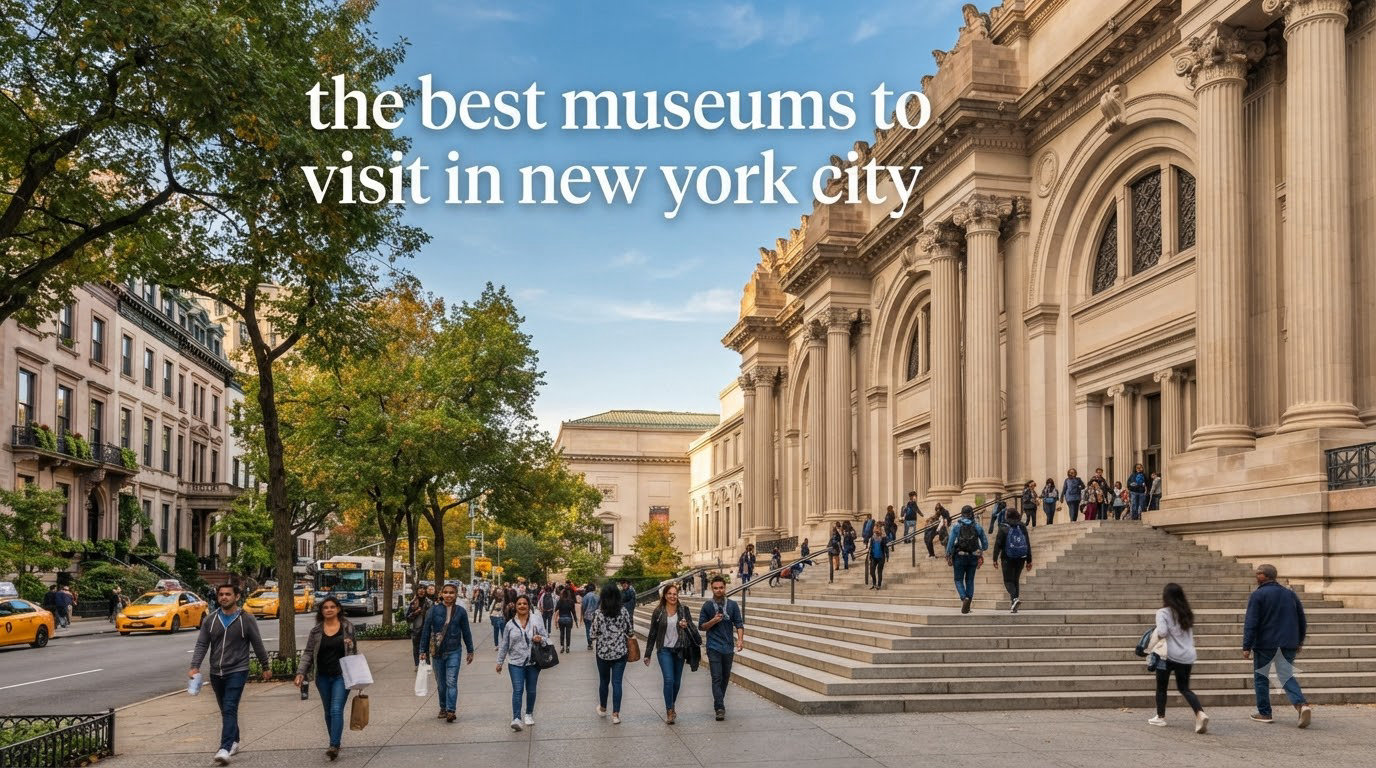
New York City holds over 80 museums across its five boroughs, and narrowing down which ones deserve your limited vacation time is genuinely tough. I have spent years exploring these institutions — from the iconic Metropolitan Museum of Art to hidden gems tucked into Brooklyn neighborhoods — and I know how overwhelming the choices can feel. This guide covers the best museums to visit in New York City with specific exhibit recommendations, practical visitor info, and honest takes on what is worth your time (and what you can skip).
Whether you are a first-time visitor trying to pick two or three must-sees, or a seasoned traveler hunting for something off the beaten path, this breakdown has you covered. For those who want to dive deeper into the gallery scene beyond museums, our guide to the best galleries in NYC is worth bookmarking for your trip.
Table of Contents
Our Top Picks: Best Museums to Visit in New York City
Here is a quick rundown of the 12 museums we cover in this guide, organized so you can scan and prioritize based on your interests.
Art Museums
1. The Metropolitan Museum of Art — The flagship. Over 5,000 years of art spanning every continent. A must for first-timers.
2. Museum of Modern Art (MoMA) — Van Gogh, Warhol, Picasso. The modern art gold standard.
3. Solomon R. Guggenheim Museum — Frank Lloyd Wright’s spiral building alone is worth the visit.
4. Whitney Museum of American Art — Contemporary American art with stunning Meatpacking District views.
5. Brooklyn Museum — Second-largest art museum in NYC with an incredible Egyptian collection.
History Museums
6. 9/11 Memorial and Museum — Deeply moving tribute and historical record of September 11.
7. Ellis Island National Museum of Immigration — Walk the halls where 12 million immigrants entered America.
8. Tenement Museum — Intimate look at immigrant life through preserved Lower East Side apartments.
Science and Interactive Museums
9. American Museum of Natural History — Dinosaurs, blue whales, and a planetarium. A family favorite.
10. Intrepid Sea, Air and Space Museum — A real aircraft carrier turned museum on the Hudson River.
Hidden Gems
11. New York Transit Museum — Vintage subway cars in an actual decommissioned station. Underrated and delightful.
12. Museum of the Moving Image — Film, television, and digital media history in Queens.
The Metropolitan Museum of Art (The Met)
The Met is not just the best museum in New York — for my money, it is one of the best museums anywhere in the world. With a permanent collection spanning over 5,000 years and more than 1.5 million objects, you could visit every weekend for a year and still discover new galleries. It is the second most visited art museum globally, drawing over 6 million visitors annually.
What to See at The Met
The Temple of Dendur in the Sackler Wing is the single most photographed spot in the museum, and for good reason — an entire ancient Egyptian temple reconstructed inside a sunlit gallery with floor-to-ceiling windows overlooking Central Park. Get there early (before 11am) if you want a photo without a crowd.
The European Paintings galleries (floors 2 and 3) hold masterpieces by Rembrandt, Vermeer, and Caravaggio. The Arms and Armor collection (Gallery 370-378) is unexpectedly thrilling — full suits of medieval armor, samurai gear, and ornate weaponry that even non-art people find fascinating.
Do not miss the Rooftop Garden (open May through October), which offers some of the best views of the Manhattan skyline and Central Park. It features rotating contemporary art installations and a bar.
Visitor Information
Location: 1000 Fifth Avenue, Upper East Side (at 82nd Street and Central Park)
Hours: Sunday through Tuesday and Thursday: 10am-5pm. Friday and Saturday: 10am-9pm. Closed Wednesdays.
Admission: $30 for adults. NY, NJ, and CT residents can pay what they wish with valid ID.
How long to spend: Plan at least 3-4 hours. Serious art lovers could spend an entire day.
Subway: 4, 5, or 6 train to 86th Street, then a short walk west.
Museum of Modern Art (MoMA)
MoMA is where you go to stand face-to-face with the paintings you have seen in textbooks your entire life. Van Gogh’s The Starry Night, Picasso’s Les Demoiselles d’Avignon, Warhol’s Campbell’s Soup Cans — they are all here, and seeing them in person hits differently than you expect.
The museum reopened in 2019 after a major expansion that added 40,000 square feet of gallery space. The rehang was designed to present a more diverse and inclusive narrative of modern and contemporary art, mixing familiar icons with lesser-known works.
What to See at MoMA
Start on the fifth floor, which covers art from the 1880s through the 1940s. That is where you will find The Starry Night and the early modernist masterpieces. Work your way down through contemporary galleries on floors below.
The Architecture and Design galleries are a pleasant surprise for many visitors — everything from furniture and electronics to video games and software, all treated as design objects worth studying.
Visitor Information
Location: 11 West 53rd Street, Midtown Manhattan
Hours: Daily 10:30am-5pm. Open until 8pm on the first Friday of each month.
Admission: $30 for adults. Free admission for NYC residents on the first Friday of each month (4-8pm).
How long to spend: 2-3 hours is typical.
Subway: E or M train to 5th Avenue/53rd Street.
If modern and contemporary art is your thing, our complete MoMA PS1 guide covers the sister location in Long Island City, Queens — one of the oldest and largest nonprofit contemporary art institutions in the United States.
American Museum of Natural History
This is the museum that makes kids lose their minds in the best possible way. The American Museum of Natural History has been a New York institution since 1869, and it remains one of the most visited museums in the world. Even if you do not have children with you, the scale of the exhibits is genuinely awe-inspiring.
What to See
The Tyrannosaurus rex fossil in the Hall of Saurischian Dinosaurs (fourth floor) is the star attraction. The fourth floor dinosaur galleries alone justify a visit. The blue whale model suspended from the ceiling in the Milstein Hall of Ocean Life is 94 feet long and absolutely staggering in person.
The Hayden Planetarium, housed within a massive sphere inside the Rose Center for Earth and Space, offers immersive space shows narrated by Neil deGrasse Tyson. The Cosmic Pathway outside the planetarium walks you through 13 billion years of cosmic evolution in a single spiral ramp.
Visitor Information
Location: Central Park West at 79th Street, Upper West Side
Hours: Daily 10am-5:30pm
Admission: $28 for adults. Pay-what-you-wish for NY, NJ, and CT residents with valid ID. Special exhibitions and the planetarium cost extra.
How long to spend: 2-4 hours, depending on whether you add special exhibitions.
Subway: B or C train to 81st Street-Museum of Natural History.
One heads-up from personal experience: the special exhibition add-ons can add up quickly. If you are traveling with kids, the planetarium is worth the extra cost. If not, the permanent collection alone is plenty.
9/11 Memorial and Museum
The 9/11 Memorial and Museum is not a fun visit, but it is an important one. This is the most emotionally impactful museum in New York City, and possibly the country. It sits at the site of the original World Trade Center towers, and the memorial pools — reflecting pools set into the exact footprints of the Twin Towers — are visible from the street at all times.
What to See
The Memorial Exhibition on the museum’s main level tells the story of each victim with photographs, personal artifacts, and audio recordings. It is deeply personal and unflinching. The historical exhibition in the foundation area walks you through the events of September 11, 2001, and the 1993 bombing, using recovered structural elements, damaged emergency vehicles, and first-person accounts.
The Survivor Tree, a Callery pear tree that survived the attacks and was nursed back to health, stands outside as a living symbol of resilience.
Visitor Information
Location: 180 Greenwich Street, Lower Manhattan (World Trade Center site)
Hours: Wednesday through Monday 9am-7pm (last entry at 5:15pm). Closed Tuesdays.
Admission: $33 for adults.
How long to spend: 2-3 hours minimum.
Subway: E train to World Trade Center, or R/W to Cortlandt Street.
Be prepared: this museum is emotionally heavy. Many visitors describe needing time to decompress afterward. It is not recommended for children under 10, though the outdoor memorial pools are accessible and appropriate for all ages.
Solomon R. Guggenheim Museum
The Guggenheim is one of those rare museums where the building itself is as much the attraction as what hangs inside it. Frank Lloyd Wright designed the spiral structure in 1959, and it still looks futuristic walking down Fifth Avenue today. The design was controversial when it opened — critics called it everything from a giant toilet bowl to a washing machine — but it has become one of the most recognizable buildings in the world.
What to See
The best approach is to take the elevator to the top and walk the spiral ramp down. The continuous curving gallery space means you experience art in a natural flow rather than moving from room to room. The Thannhauser Collection includes works by Manet, Picasso, van Gogh, and Gauguin.
Rotating exhibitions fill the side galleries and the central atrium space, often featuring contemporary installations that interact with the architecture itself.
Visitor Information
Location: 1071 Fifth Avenue, Upper East Side (at 89th Street, part of Museum Mile)
Hours: Friday through Wednesday 11am-6pm. Closed Thursdays.
Admission: $30 for adults. Pay-what-you-wish on Saturdays 4-5:30pm.
How long to spend: 1-2 hours is plenty for most visitors.
Subway: 4, 5, or 6 train to 86th Street.
Ellis Island National Museum of Immigration
Ellis Island is one of those places that sounds like a hassle to get to (you need to take a ferry) but ends up being one of the most memorable stops on your entire NYC trip. Between 1892 and 1954, over 12 million immigrants passed through this island, and the museum does an extraordinary job of telling their stories.
What to See
The Great Hall is the centerpiece — the vast room where immigrants waited for medical and legal inspections, sometimes for hours, sometimes for days. Standing in that space and imagining what it felt like to arrive in a new country with everything you own in a single bag is a powerful experience.
The Peopling of America Center covers immigration stories from before Ellis Island opened through the present day. The passenger record search lets you look up actual ship manifests — if your family came through Ellis Island, you might find a relative’s name in the database.
Visitor Information
Location: Ellis Island (ferry departs from Battery Park, Lower Manhattan, or Liberty State Park, NJ)
Hours: First ferry typically 9am, last return around 5pm. Check seasonal schedules.
Admission: Ferry ticket required (around $25 for adults), which includes access to both Ellis Island and Liberty Island.
How long to spend: Half a day (including ferry time and optional Liberty Island stop).
Subway: 1 train to South Ferry, or 4/5 to Bowling Green for Battery Park departure.
Book ferry tickets in advance, especially from May through September. The ferries sell out, and you do not want to show up at noon only to find the next available boat is at 3pm.
Intrepid Sea, Air and Space Museum
The Intrepid Museum is built on and around the USS Intrepid, a decommissioned aircraft carrier that served in World War II, the Cold War, and the Vietnam War. It is moored on the Hudson River at Pier 86, and even from the street you can see fighter jets parked on the flight deck. That visual alone draws people in.
What to See
The Space Shuttle Enterprise is housed in a dedicated pavilion on the flight deck. You can walk right up to the prototype orbiter that NASA used for atmospheric test flights. The submarine USS Growler is the only American guided missile submarine open to the public, and clambering through its narrow passageways gives you a real sense of what submarine life was like.
The flight deck holds over two dozen restored aircraft, from F-14 Tomcats to a British Airways Concorde (the supersonic passenger jet you can walk through).
Visitor Information
Location: Pier 86, West 46th Street and 12th Avenue, Midtown West
Hours: Daily 10am-5pm (until 6pm on weekends and holidays)
Admission: $36 for adults.
How long to spend: 2-3 hours.
Subway: A, C, E, or 1 train to 42nd Street, then walk west.
This museum surprises people. I have recommended it to visitors who were skeptical about military history and watched them come back raving about how engaging it was. It is especially good if you are traveling with kids who need something interactive after a few days of looking at paintings.
Whitney Museum of American Art
The Whitney moved to its current Renzo Piano-designed building in the Meatpacking District in 2015, and the location alone — with floor-to-ceiling windows overlooking the Hudson River and the High Line — makes it worth a visit. But the art inside is what keeps you there.
What to See
The Whitney Biennial, held every two years, is the museum’s signature event and one of the most important surveys of contemporary American art. Even if your visit does not coincide with the Biennial, the permanent collection includes the world’s largest holding of works by Edward Hopper, plus major pieces by Alexander Calder, Jasper Johns, and Georgia O’Keeffe.
The outdoor galleries on the fifth, sixth, and seventh floors offer rotating sculptures and installations with panoramic views of the city. Even the stairwells have art.
Visitor Information
Location: 99 Gansevoort Street, Meatpacking District
Hours: Wednesday through Monday 10:30am-6pm. Friday until 10pm.
Admission: $30 for adults. Pay-what-you-wish on Fridays from 5-10pm.
How long to spend: 2 hours is typical.
Subway: A, C, E, or L train to 14th Street/8th Avenue.
Tenement Museum
The Tenement Museum is unlike any other museum on this list because you cannot just walk through it on your own. All visits are guided tours through two preserved tenement buildings at 97 and 103 Orchard Street on the Lower East Side. That constraint is actually the museum’s greatest strength — the stories are told by expert educators who bring the walls to life.
What to See
Each tour focuses on a different time period and group of residents. The most popular tour covers a German-Jewish family in the 1870s, while others explore Italian Catholic immigrants in the early 1900s and a Puerto Rican family in the mid-20th century. The apartments are preserved or restored to show actual living conditions — tiny rooms, shared toilets, limited light.
Walking through these cramped spaces and hearing the specific stories of real families who lived there makes the immigrant experience tangible in a way that textbooks simply cannot.
Visitor Information
Location: 103 Orchard Street, Lower East Side
Hours: Tour times vary — check the website for current schedule. Typically Thursday through Monday.
Admission: Around $30 per tour.
How long to spend: Each tour runs about 1-1.5 hours.
Subway: F train to Delancey Street, or B/D to Grand Street.
Book your tour well in advance. This museum has limited capacity (small rooms, guided only) and popular time slots sell out days ahead.
New York Transit Museum
This is the museum I send people to when they say they have “already done all the NYC museums.” The Transit Museum lives in a decommissioned subway station in Downtown Brooklyn, and it is one of the most charming and underrated museums in the entire city. The fact that many tourists do not even know it exists makes it feel like a local secret.
What to See
The vintage subway cars on the station’s lower level are the highlight. You can walk through decades of subway history — from wooden cars with ceiling fans and woven seats to the iconic R-32 “Brightliners” with their corrugated stainless steel sides. Each car is preserved with original advertisements and signage from its era.
The upper level covers the engineering and political history of building New York’s transit system, including vintage buses, turnstile evolution, and interactive exhibits about how the subway was constructed.
Visitor Information
Location: 99 Schermerhorn Street, Downtown Brooklyn (inside a former subway station)
Hours: Thursday through Sunday 10am-4pm
Admission: $10 for adults, $5 for children. One of the best values in NYC.
How long to spend: 1-2 hours.
Subway: 2, 3, 4, or 5 train to Borough Hall; A, C, or G to Hoyt-Schermerhorn.
This museum is genuinely great for families with young kids. The interactive elements, the space to move around, and the novelty of being underground in a real station make it a hit with children ages 4 and up.
Brooklyn Museum
The Brooklyn Museum is the second-largest art museum in New York City, and it does not get the attention it deserves because most tourists never make it across the East River. That is their loss. The building itself — a 560,000-square-foot Beaux-Arts structure designed by McKim, Mead and White — is gorgeous, and the collection holds over 140,000 objects.
What to See
The Egyptian collection is one of the finest in the world outside of Cairo, with the reconstructed Tomb of Per-neb being a standout. Judy Chicago’s The Dinner Party, a massive triangular installation celebrating women’s history with 39 place settings, is permanently installed and is one of the most significant feminist artworks ever created.
The museum also has strong holdings in African art, Japanese art, and contemporary American painting. The first-floor contemporary art galleries regularly feature rotating exhibitions that draw younger crowds.
Visitor Information
Location: 200 Eastern Parkway, Prospect Heights, Brooklyn
Hours: Wednesday through Sunday 11am-6pm. Closed Monday and Tuesday.
Admission: $18 for adults. Free admission on the first Saturday of each month (February through August) from 5-11pm.
How long to spend: 2-3 hours.
Subway: 2 or 3 train to Eastern Parkway-Brooklyn Museum.
Pair your visit with a walk through Prospect Park, which is right behind the museum. The Brooklyn Botanic Garden is also adjacent, making this whole area a full-day cultural and nature stop.
Museum of the Moving Image
Tucked away in Astoria, Queens, the Museum of the Moving Image covers the history, art, and technology of film, television, and digital media. It occupies a building that was once part of the historic Astoria Studios complex, where silent films were made in the 1920s.
What to See
The Behind the Screen exhibition is the museum’s permanent centerpiece, featuring over 1,400 artifacts from movie and TV history — original props, costumes, cameras, and makeup displays. You can try your hand at recording a voiceover, creating stop-motion animation, or dubbing dialogue over a famous movie scene.
The museum also hosts regular screenings, often showing restored classic films in its 264-seat theater. Rotating exhibitions cover everything from video game design to the work of specific directors and production designers.
Visitor Information
Location: 36-01 35th Avenue, Astoria, Queens
Hours: Wednesday through Sunday 10:30am-5pm. Closed Monday and Tuesday.
Admission: $20 for adults. Free admission on the first Friday of each month from 2-6pm.
How long to spend: 1.5-2.5 hours.
Subway: M or R train to Steinway Street, or N/W to 36th Avenue.
Planning Your NYC Museum Visit: Practical Tips
Now that you know which museums to target, here is how to plan your visits efficiently so you spend less time in lines and more time actually looking at art and artifacts.
When to Visit for Fewer Crowds
Weekday mornings are your best bet for any major museum. The Met and MoMA open at 10am, and arriving in the first hour gives you 45-60 minutes of relatively calm before tour groups and day-trippers flood in. Late fall and winter (November through February, excluding holiday weeks) see noticeably smaller crowds across all museums.
Summer is peak museum season. July and August bring massive tour groups, especially to the Met, Natural History Museum, and 9/11 Museum. If you are visiting in summer, book tickets online in advance and aim for the first or last hour of operation.
Combining Museums by Neighborhood
New York museums cluster in specific neighborhoods, which means you can knock out two or three in a single day without spending half your time on the subway.
Upper East Side (Museum Mile): The Met, Guggenheim, and Jewish Museum are all within a 15-minute walk of each other along Fifth Avenue. You could do the Guggenheim in the morning (it opens at 11am) and The Met in the afternoon.
Midtown: MoMA is walkable from Times Square. The Intrepid is a 15-minute walk west. You could pair MoMA with a High Line walk south to the Whitney.
Lower Manhattan: The 9/11 Museum, Tenement Museum, and Museum at Eldridge Street are all in the same general area. The Transit Museum is one subway stop away in Brooklyn.
Free and Pay-What-You-Wish Options
NYC museums are not cheap — most charge $25-$36 for adult admission. But there are ways to cut costs significantly.
Pay-what-you-wish admission for NY/NJ/CT residents applies to the Met, Natural History Museum, and several other institutions. You just need a valid ID showing your address.
Free hours and days: MoMA offers free admission on the first Friday evening of each month for NYC residents. The Whitney has pay-what-you-wish Fridays from 5-10pm. Brooklyn Museum is free on the first Saturday of each month. The Museum of the Moving Image is free on first Friday afternoons.
Always free: The National Museum of the American Indian (Battery Park area) and the Socrates Sculpture Park in Queens charge no admission at all. The 9/11 Memorial pools outdoors are also free to visit at any time.
Attraction Passes: Are They Worth It?
If you plan to visit three or more museums in a few days, a pass can save you money. The New York Pass and Go City Explorer Pass both include major museums (the Met, MoMA, Natural History, Intrepid, 9/11 Museum) along with observation decks and boat tours. The break-even point is typically three or four attractions.
The catch: passes lock you into a set list of included venues, and you lose the flexibility of pay-what-you-wish hours. Do the math on what you actually want to see before buying a pass.
Museum Fatigue Is Real
Here is something most guides will not tell you: most people hit a wall after about three hours in a single museum, and after two museums in one day, your ability to absorb anything new drops sharply. I have watched visitors sprint through the Met trying to see everything in two hours and walk out remembering almost nothing.
Pick one major museum per day, or one major plus one small one. Spend quality time with fewer collections. You will get far more out of the experience than trying to check every museum off a list.
For those who appreciate art beyond the museum walls, understanding the differences between street art and gallery art adds another layer to how you experience the city.
FAQs
What are the top 10 museums in NYC?
The top 10 museums in NYC are the Metropolitan Museum of Art, Museum of Modern Art (MoMA), American Museum of Natural History, 9/11 Memorial and Museum, Solomon R. Guggenheim Museum, Whitney Museum of American Art, Ellis Island National Museum of Immigration, Intrepid Sea Air and Space Museum, Brooklyn Museum, and the Tenement Museum.
Which NYC museums are free?
The National Museum of the American Indian (Lower Manhattan) is always free. Several museums offer free or pay-what-you-wish hours: MoMA on the first Friday evening for NYC residents, the Whitney on Friday evenings (5-10pm), the Brooklyn Museum on the first Saturday of each month, and the Guggenheim on Saturday late afternoons (4-5:30pm). The outdoor 9/11 Memorial pools are free to visit at any time.
What is the best museum in New York for first-time visitors?
The Metropolitan Museum of Art is the best single museum for first-time visitors to NYC. It offers the widest range of art and artifacts (over 5,000 years of history), an iconic location on Central Park, and enough variety that anyone can find something they love. Plan at least 3-4 hours, and focus on 3-4 sections rather than trying to see the entire building.
How many museums are in New York City?
New York City has over 80 museums across its five boroughs, ranging from world-famous institutions like the Met and MoMA to small specialized museums covering everything from transit history to Chinese-American heritage. Manhattan alone has roughly 50 museums, with additional notable museums in Brooklyn, Queens, the Bronx, and Staten Island.
What museums are on Museum Mile in NYC?
Museum Mile is a one-mile stretch of Fifth Avenue (from 82nd to 104th Streets) on the Upper East Side that includes the Metropolitan Museum of Art, Solomon R. Guggenheim Museum, Jewish Museum, Cooper Hewitt Smithsonian Design Museum, National Academy of Design, Museum of the City of New York, El Museo del Barrio, and the Neue Galerie. The annual Museum Mile Festival in June offers free admission to all participating museums.
Wrapping Up: Your NYC Museum Adventure
Finding the best museums to visit in New York City comes down to knowing what you actually want from the experience. For first-timers, the Met and MoMA are essential. History buffs should prioritize the 9/11 Museum, Tenement Museum, and Ellis Island. Families with kids will get the most out of the Natural History Museum, Intrepid, and Transit Museum. And anyone willing to venture beyond Manhattan will discover treasures at the Brooklyn Museum and Museum of the Moving Image.
The biggest mistake visitors make is trying to cram too many museums into too few days. Pick two or three that genuinely interest you, give each one the time it deserves, and let yourself actually absorb what you are seeing. New York’s museums are not going anywhere — you can always come back for the ones you missed.