
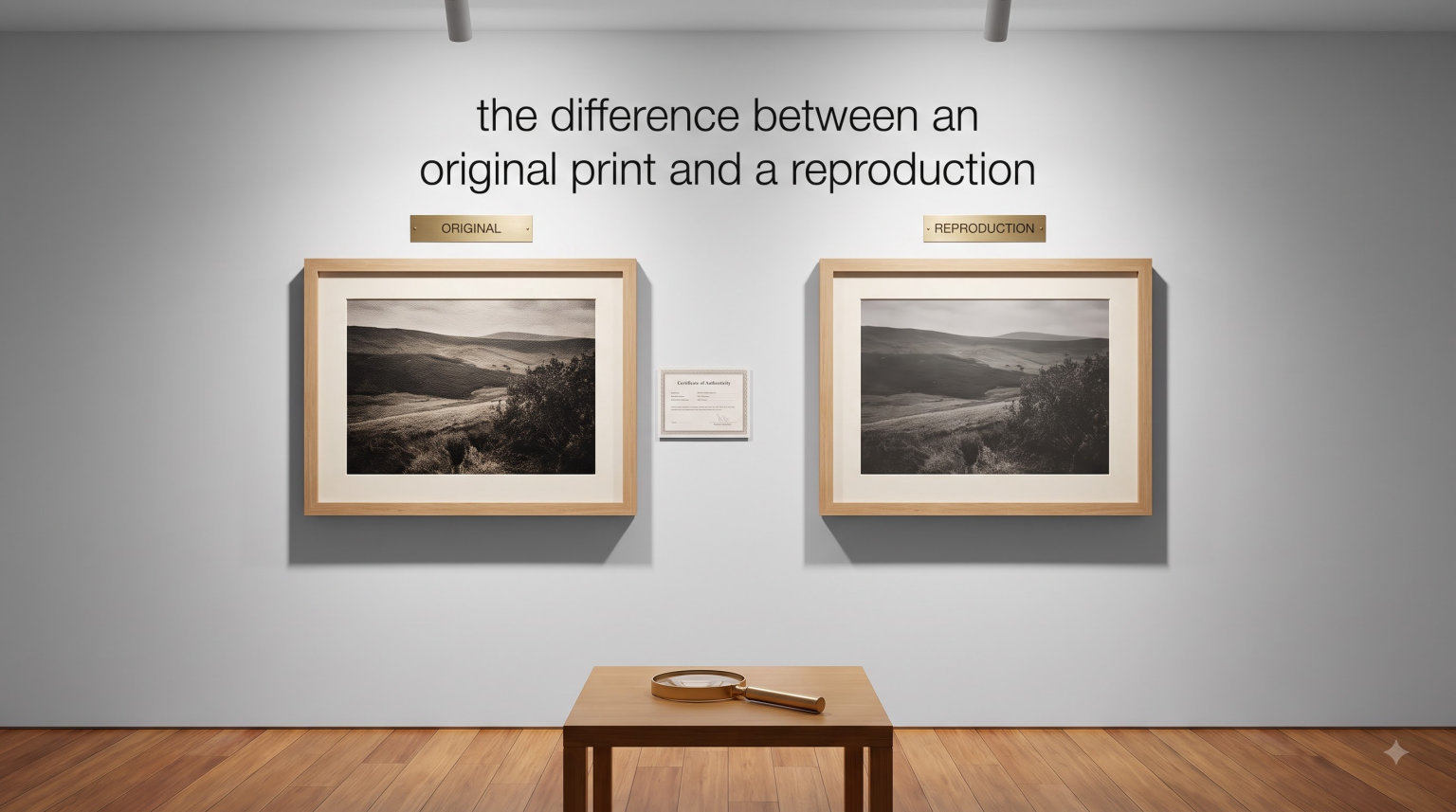
An original print is a work of art created when an artist intentionally produces multiples using traditional printmaking techniques like etching, lithography, or screen printing. Each impression is considered an original because the artist directly participated in designing and producing the matrix, inking the surface, and pulling each print. A reproduction is simply a photographic copy of an existing artwork, made without the artist’s creative involvement and typically mass-produced without any limits on quantity.
Understanding this distinction matters whether you are starting an art collection, buying a gift, or decorating your home. The difference affects not only what you pay today but whether your purchase holds any future value. I have spent years working with artists and collectors, and the confusion between these terms remains one of the most common misunderstandings in the art market.
Table of Contents
What Is an Original Work of Art
When people hear “original art,” they typically picture a one-of-a-kind painting, drawing, or sculpture that exists nowhere else in the world. This is accurate. An original artwork is a unique piece created entirely by the artist’s hand, from the initial concept to the final execution.
Original works carry the highest value in the art market because of their singularity. Once a painting sells, the artist cannot make another identical version without compromising the authenticity of the first. This scarcity drives demand and establishes the foundation of the fine art market.
However, the term “original” also applies to prints in a specific and important way. This surprises many new collectors who assume that multiples must be copies. Understanding how an original print differs from both unique artworks and reproductions clears up this confusion.
What Is an Original Print
An original print is a work of fine art created through a printmaking process where the artist designs and prepares a matrix, then inks that matrix and transfers the image to paper. The artist personally creates or supervises each impression. Every print pulled from the matrix is considered an original work of art.
The matrix might be a metal plate for etchings and engravings, a limestone block for lithographs, a mesh screen for screenprints, or a carved wooden block for woodcuts. The artist works directly on this matrix, applying their creative vision and technical skill. No two impressions are exactly identical because ink application, pressure, and subtle variations in the process create slight differences between prints.
Traditional printmaking techniques include:
- Etching: The artist coats a metal plate with an acid-resistant ground, draws through it with a needle, then submerges the plate in acid to bite the exposed lines. Ink settles into these recessed grooves.
- Lithography: The artist draws with greasy materials on a limestone block or metal plate. Chemical treatment makes the image areas receptive to ink while repelling water from non-image areas.
- Screen printing (Serigraphy): The artist blocks out areas of a mesh screen, then forces ink through the open mesh onto paper below.
- Woodcut: The artist carves away non-image areas from a wood block, leaving raised surfaces that receive ink.
Original prints are typically produced in limited editions. The artist decides in advance how many impressions to pull, numbers each print, and destroys or cancels the matrix when the edition is complete. This intentional scarcity preserves value and ensures collectibility.
What Is a Reproduction
A reproduction is a photographic or digital copy of an existing artwork, made without the artist’s creative involvement in the reproduction process. The artist may have painted the original canvas, but the reproduction is simply a mechanical facsimile produced by a printer or publisher.
Reproductions are created by photographing or scanning an artwork, then printing that image onto paper or canvas using inkjet, offset lithographic, or other commercial printing methods. The artist does not touch the paper, adjust the ink, or participate in any way. The machine does all the work.
Giclee prints represent the most common form of reproduction today. The term “giclee” sounds sophisticated, but it simply refers to high-quality inkjet printing using archival pigments on acid-free paper. While giclee reproductions can look beautiful and last for decades, they remain copies, not original works.
Reproductions are typically produced in unlimited quantities or very large editions. Without scarcity, they carry no investment value. Their purpose is decorative, allowing people to enjoy famous images at affordable prices.
Original Print vs Reproduction: Key Differences at a Glance
Seeing these categories side by side clarifies why the distinction matters for collectors and casual buyers alike.
| Characteristic | Original Print | Reproduction |
|---|---|---|
| Artist Involvement | Artist creates the matrix and directly participates in production | Artist creates the original artwork being copied only |
| Production Method | Traditional printmaking techniques (etching, lithography, screenprint, etc.) | Photographic or digital copying (inkjet, offset, giclee) |
| Edition Size | Limited and numbered, often under 100 impressions | Unlimited or very large editions |
| Signature | Hand-signed by the artist, usually with edition number | May be signed or plate-signed, no edition numbers |
| Market Value | Collectible, appreciates over time | Decorative value only, no appreciation |
| Physical Qualities | Plate marks, ink texture, unique impressions | Flat uniform surface, mechanical precision |
How to Tell If a Print Is Original or a Reproduction
Identifying what you are looking at requires careful observation and a few simple questions. Over the years, I have learned that most dealers and galleries will provide honest answers if you ask the right questions.
Look for these physical characteristics:
- Edition numbers: Original prints display a fraction like 15/50 or 3/100 in pencil near the signature. The first number is the individual impression, the second is the total edition size. Reproductions rarely show edition numbers.
- Plate marks: Etchings and engravings often show a slight indentation around the image where the plate pressed into the paper. This is a strong indicator of an original printmaking process.
- Ink texture: Original prints frequently show subtle variations in ink density. Lithographs may have a grainy quality, while screenprints show crisp layered colors. Reproductions look uniformly smooth.
- Paper quality: Original prints use archival papers specifically chosen by the artist. Reproductions may use cheaper paper, though high-end giclee prints often use excellent materials.
When buying, always ask these questions:
- What printmaking technique was used to create this?
- Is this a limited edition? How many impressions were made?
- Did the artist personally sign and number these?
- Can you provide documentation of the print’s origin?
Reputable sellers welcome these questions. Be wary of vague answers like “It’s a fine art print” without specification of technique. This often signals a reproduction being sold at inflated prices.
Value and Investment Potential
Original prints hold value because of scarcity, artist involvement, and historical significance in art. When an artist destroys the matrix after pulling a limited edition, no more impressions can ever exist. This finite supply creates demand among collectors.
Many famous artists worked extensively in printmaking. Rembrandt created nearly 300 etchings. Picasso produced over 2,000 prints across various techniques. These works command serious prices at auction and in galleries because collectors recognize them as genuine artistic achievements.
Reproductions serve a different purpose entirely. They allow people to enjoy famous images without paying original prices. A reproduction of a Monet painting costs hundreds, not millions. This accessibility is valuable, but buyers should never pay original print prices for reproductions.
Forum discussions among collectors consistently emphasize buying art you love rather than viewing it purely as investment. This rings true. An original print connects you to the artist’s creative process. A reproduction simply decorates your wall. Both have their place, but understanding what you are buying prevents disappointment and protects your wallet.
Frequently Asked Questions
What is the difference between an original print and a reproduction?
An original print is created when an artist designs and produces multiples using traditional printmaking techniques like etching or lithography. Each impression is an original work because the artist directly participates. A reproduction is a photographic or digital copy of an existing artwork made without the artist’s creative involvement in the copying process.
How can I tell if a print is an original or a reproduction?
Check for edition numbers written as fractions like 12/50 near the signature. Look for plate marks around the image edge, texture variations in the ink, and ask the seller about the printmaking technique used. Original prints have specific production methods while reproductions are simply inkjet or offset copies.
Are reproductions less valuable than original prints?
Yes, reproductions have minimal monetary value because they can be produced in unlimited quantities. Original prints are intentionally limited, often to 100 or fewer impressions, which creates scarcity and collectible value. Reproductions serve a decorative purpose while original prints can appreciate over time.
What makes an original print valuable?
Original prints gain value from limited edition sizes, direct artist involvement, historical significance, and the destruction of the matrix after printing. The scarcity of impressions combined with the artist’s creative contribution establishes worth in the art market.
What are the main types of prints in art?
The main traditional printmaking techniques include etching (incised metal plates), lithography (greasy materials on stone or metal), screen printing (ink forced through mesh screens), and woodcut (carved wooden blocks). Each technique produces distinct visual qualities that experienced collectors learn to recognize.
Final Thoughts
The difference between an original print and a reproduction comes down to artist involvement and scarcity. Original prints represent genuine artistic achievement with the potential for appreciation. Reproductions offer affordable access to beautiful images without investment value.
Buy what you love, but buy with knowledge. Ask questions, examine the physical evidence, and understand what you are paying for. The art market rewards informed collectors who appreciate both the aesthetic and practical dimensions of their purchases.
Whether you choose an original etching pulled by a contemporary artist or a giclee reproduction of a museum masterpiece, understanding the distinction ensures you never overpay and always know exactly what hangs on your wall.