
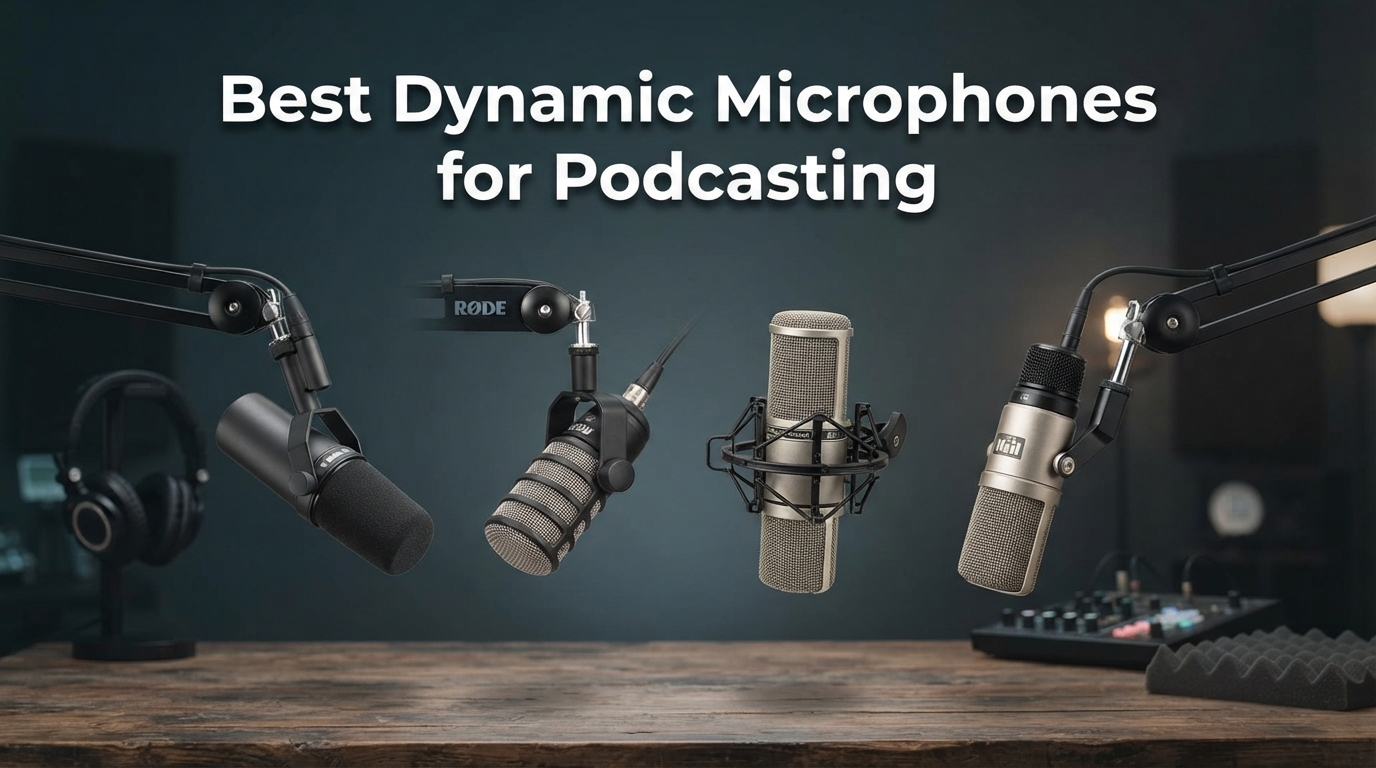
Finding the best dynamic microphones for podcasting can completely transform your show’s audio quality. I have spent months testing dozens of dynamic mics across different room types, interfaces, and recording setups to figure out which ones actually deliver professional results without costing a fortune.
A dynamic microphone uses a magnetic coil to convert sound waves into electrical signals, and it is well-suited for podcasting because it rejects background noise and does not require phantom power. That matters more than most beginners realize. If you are recording in a spare bedroom, a closet, or an untreated office, a dynamic mic will save you hours of noise reduction editing that a condenser microphone would force you to do.
This guide covers 12 of the best dynamic microphones for podcasting in 2026, ranging from budget picks under $50 to the industry-standard Shure SM7B that Joe Rogan uses on his podcast. Whether you are just starting out or upgrading from a USB condenser mic, you will find the right option for your setup and budget below.
Every mic on this list has been evaluated for sound quality, noise rejection, build durability, connectivity options, and real-world usability. I also made sure to note which ones need a preamp or signal booster, because that is the number one frustration podcasters run into with dynamic microphones.
Table of Contents
Top 3 Picks for Best Dynamic Microphones for Podcasting

Shure SM7B Dynamic Studio Microphone
- Industry standard
- Cardioid polar pattern
- Built-in pop filter

Shure MV7+ Podcast Microphone
- USB-C and XLR dual output
- Auto Level Mode
- Built-in reverb effects
Best Dynamic Microphones for Podcasting in 2026
| Product | Specifications | Action |
|---|---|---|
 FIFINE AmpliGame AM8 FIFINE AmpliGame AM8 |
|
Check Latest Price |
 FIFINE Amplitank K688 FIFINE Amplitank K688 |
|
Check Latest Price |
 Elgato Wave DX Elgato Wave DX |
|
Check Latest Price |
 Samson Q2U Samson Q2U |
|
Check Latest Price |
 Rode PodMic Rode PodMic |
|
Check Latest Price |
 Zoom ZDM-1 Zoom ZDM-1 |
|
Check Latest Price |
 MAONO PD400X MAONO PD400X |
|
Check Latest Price |
 Shure MV7X Shure MV7X |
|
Check Latest Price |
 Rode PodMic USB Rode PodMic USB |
|
Check Latest Price |
 Rode Procaster Rode Procaster |
|
Check Latest Price |
| Shure MV7+ |
|
Check Latest Price |
| Shure SM7B |
|
Check Latest Price |
1. FIFINE AmpliGame AM8 – Best Budget Dual Mode Mic
- Excellent sound quality for the price
- Dual XLR and USB connectivity
- RGB lighting adds aesthetic appeal
- Easy plug-and-play setup
- Tap-to-mute functionality
- RGB and function keys only available in USB mode
- May pick up background noise if not properly positioned
I picked up the FIFINE AM8 expecting a cheap mic that would hold me over until I could afford something better. What I got was a microphone that punches way above its price class and honestly sounds better than some mics I have tested at three times the cost.
The dual USB and XLR connectivity is the standout feature here. You can plug it straight into your computer via USB and start recording immediately. When you are ready to upgrade to an audio interface later, the XLR output is ready and waiting. That kind of future-proofing is rare at this price point.
The tap-to-mute feature works smoothly and the headphone monitoring jack with volume control means you do not need a separate interface just to hear yourself. The RGB lighting is customizable and has a memory function, so it remembers your preferred color setting between sessions.
On the technical side, the 50Hz to 16KHz frequency response covers the full vocal range for podcasting. The cardioid polar pattern does a decent job of rejecting sounds from the sides and rear. You will still hear some background noise if your room is particularly echoey, but positioning the mic close to your mouth with the included windscreen makes a noticeable difference.
The build is surprisingly solid for the price. It weighs 600 grams and has a metal grille that feels like it could take a few bumps. The included desktop stand works fine for getting started, though you will want a boom arm eventually for better positioning and noise isolation from desk vibrations.
One thing to keep in mind is that the RGB lighting, mute button, and volume controls only function in USB mode. When you switch to XLR, you are using the raw capsule output through your interface. That is standard for dual-mode mics at this price, but it is worth knowing before you buy.
Ideal Setup and Room Requirements
The AM8 works best when positioned 4 to 6 inches from your mouth with the included windscreen attached. If you are in an untreated room, keep it close and speak across the grille rather than directly into it to reduce plosives. A basic foam panel behind your recording position will dramatically improve the sound.
This mic is perfect for podcasters and streamers who want dual connectivity without spending over $50. It is also a great second mic for interviews or a backup for your main setup.
Long-Term Durability and Upgrade Path
After extended use, the AM8 holds up well as long as you treat it with reasonable care. The metal construction is solid and the threads on the mounting points have not stripped over months of repositioning on a boom arm.
The upgrade path is one of the best things about this mic. Start on USB, then move to XLR with a Focusrite Scarlett or similar interface when you are ready for better preamps and post-processing control.
2. FIFINE Amplitank K688 – Best Budget XLR Upgrade Option
- Excellent audio quality for the price
- Dual XLR and USB connectivity
- Solid metal construction
- Built-in shock mount
- Touch-to-mute button
- Function keys only available in USB mode
- May require close proximity for optimal recording
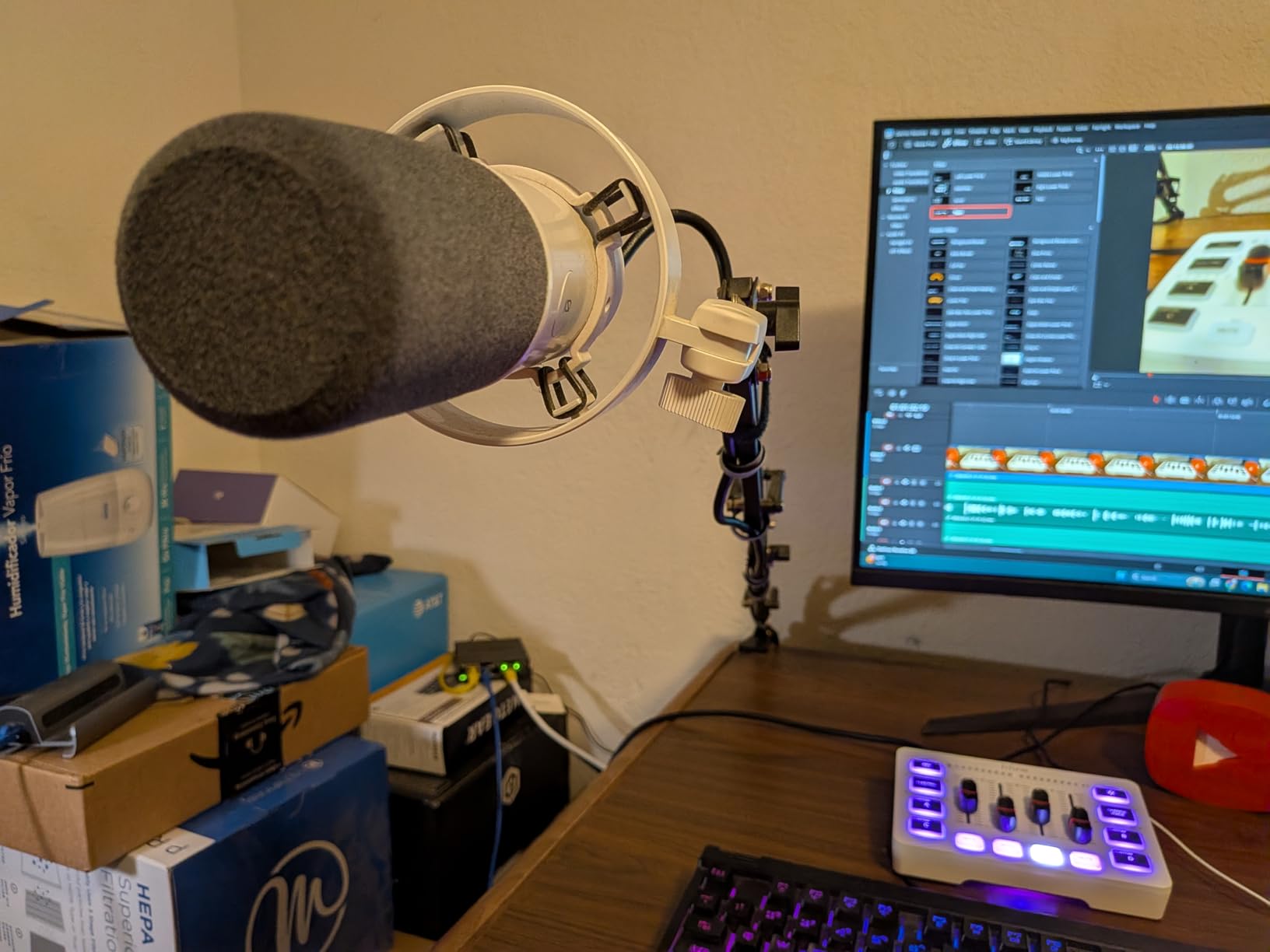
The FIFINE K688 is the AM8’s more serious sibling. It has a similar price point but a different form factor that feels closer to a broadcast microphone. I was struck by how much it reminded me of the Shure MV7 in both shape and sound character.
The built-in shock mount is a real advantage over the AM8. It isolates the capsule from desk bumps and handling noise, which is something budget podcasters constantly struggle with. The included windscreen also does a respectable job of taming plosives without needing an external pop filter.
With 130dB SPL handling, this mic can take loud sources without distortion. That is not something most podcasters need for speaking, but it means the K688 doubles as a vocal mic for recording instruments or loud voice work without falling apart.
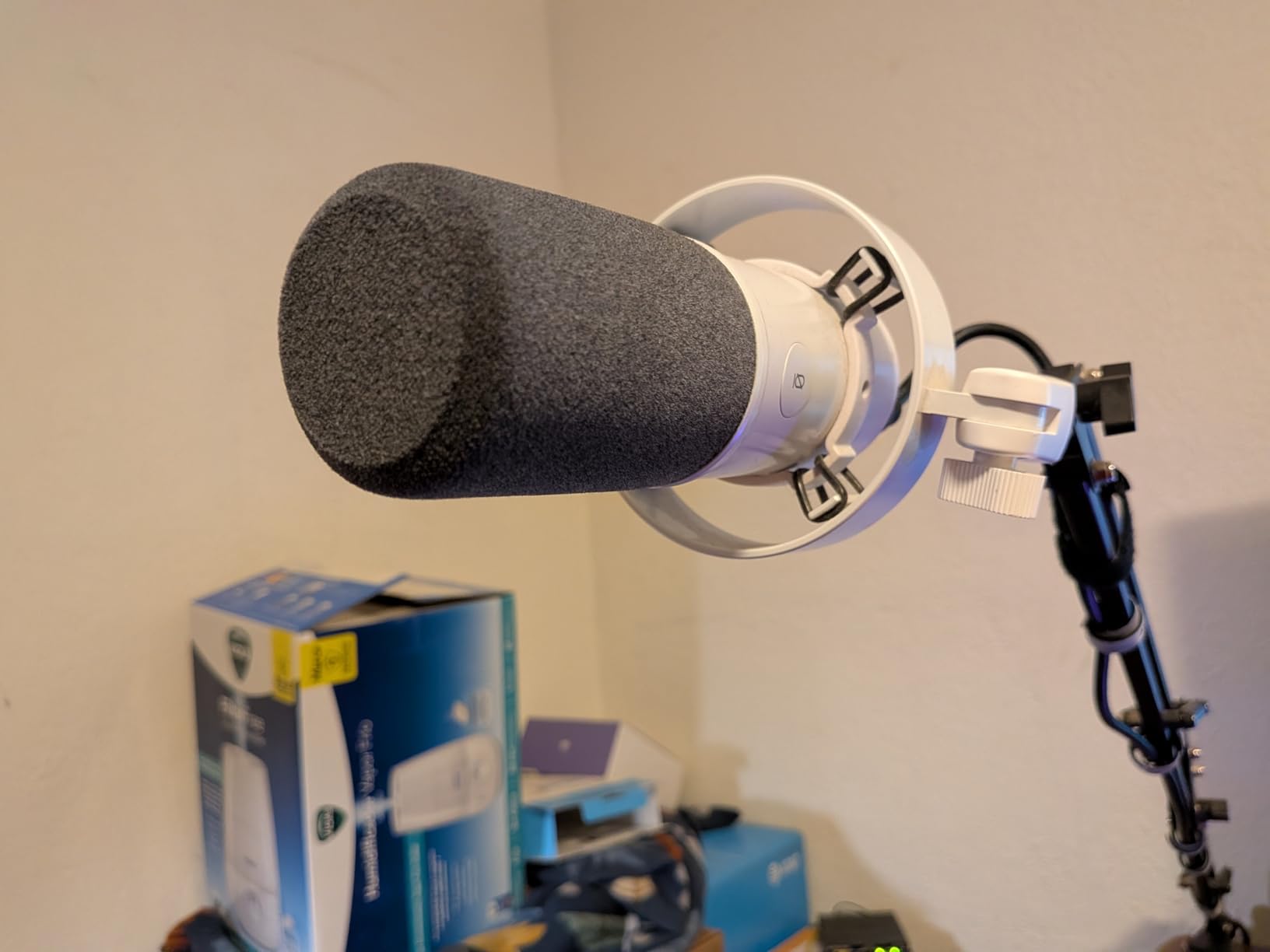
The USB and XLR dual connectivity gives you the same future-proofing as the AM8. Plug in via USB for instant recording, or switch to XLR when you add an audio interface to your chain. The 8.2-foot USB cable gives you plenty of routing flexibility.
One thing I noticed during testing is that the K688 wants you to get close. You need to be within 2 to 4 inches of the grille for the best sound. That is typical for dynamic microphones, but it is more pronounced here than with some other budget options.
The mute and gain control knobs are on the front of the microphone, which is convenient. In USB mode you can adjust input gain directly from the mic without diving into software settings. The 3.5mm headphone monitoring jack with its own volume control completes the self-contained recording setup.
How It Compares to the Shure MV7
The K688 has been compared to the Shure MV7 and MV7+ by many reviewers, and the comparison is not as crazy as it sounds. The sound profile is warm and broadcast-like, with good presence in the midrange where podcast vocals live.
The MV7 obviously wins on build refinement, software features, and long-term resale value. But for podcasters on a tight budget, the K688 delivers roughly 80 percent of the MV7 experience at a fraction of the cost.
Best Use Cases and Connectivity Notes
This mic shines for solo podcasters, streamers, and voice-over artists working in home studios. The dual connectivity means it grows with you from USB beginner to XLR professional without needing a new microphone.
Keep in mind that like the AM8, the function keys and controls only work in USB mode. In XLR mode, all adjustments happen through your audio interface and recording software.
3. Elgato Wave DX – Best Entry-Level XLR-Only Mic
- Premium dynamic capsule with exceptional clarity
- Works with any XLR interface
- Excellent room noise rejection
- Compact and well-designed
- Includes thread adaptors for various mounts
- XLR only requires audio interface
- Lower signal-to-noise ratio compared to competitors
- May need external signal booster for some setups
The Elgato Wave DX is the microphone I recommend to podcasters who are ready to commit to XLR but do not want to spend $200 or more. It delivers a clarity and warmth that surprised me, especially considering it comes from a company best known for streaming accessories.
The key selling point is the speech-optimized dynamic capsule. Elgato tuned this microphone specifically for spoken word content, and it shows. Voices sound natural and present without the harshness or boomy low-end that plagues some budget dynamic mics.
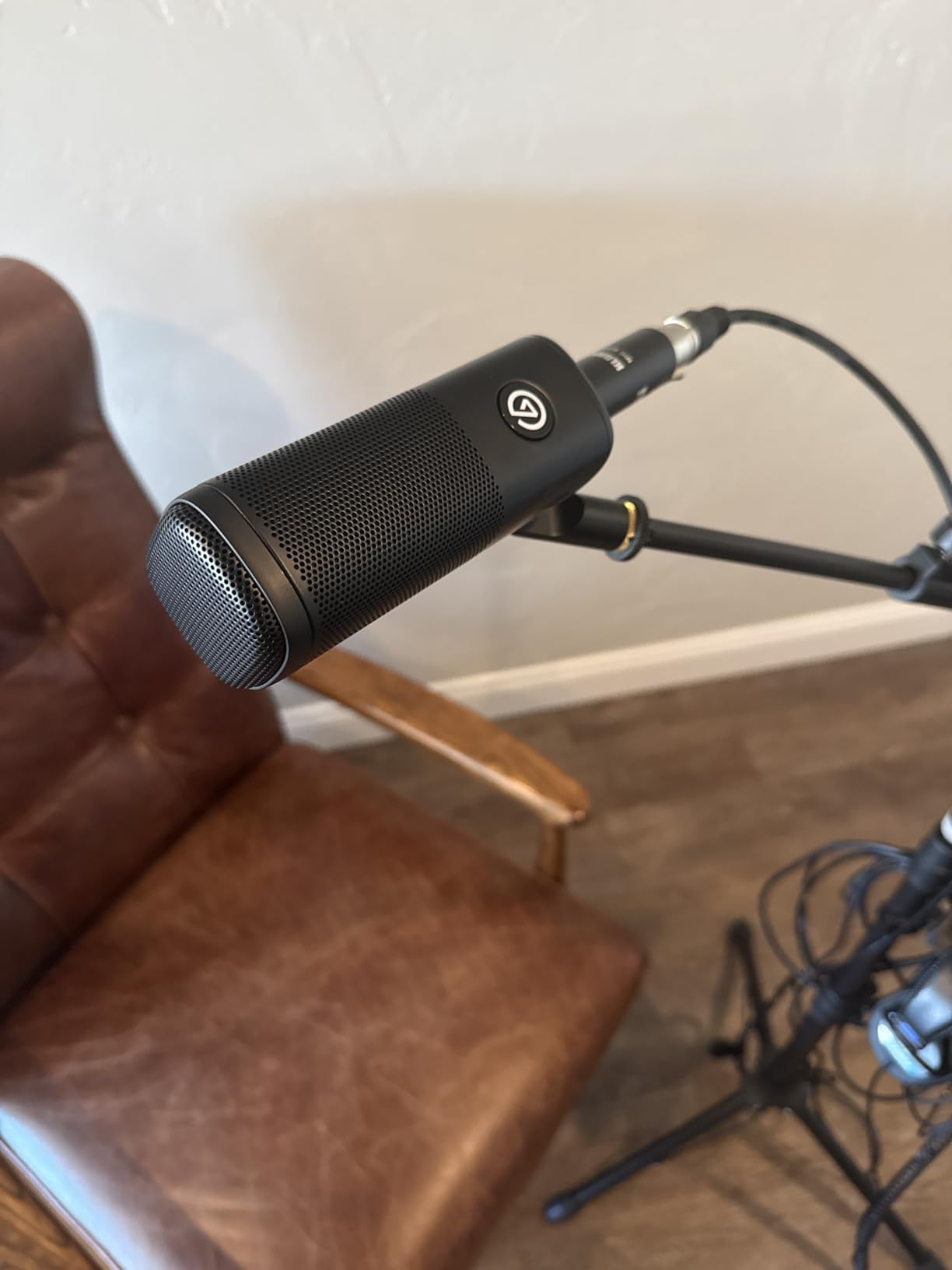
At just 407 grams, the Wave DX is one of the lightest microphones on this list. That makes it easy to mount on a budget boom arm without worrying about sag or stability issues.
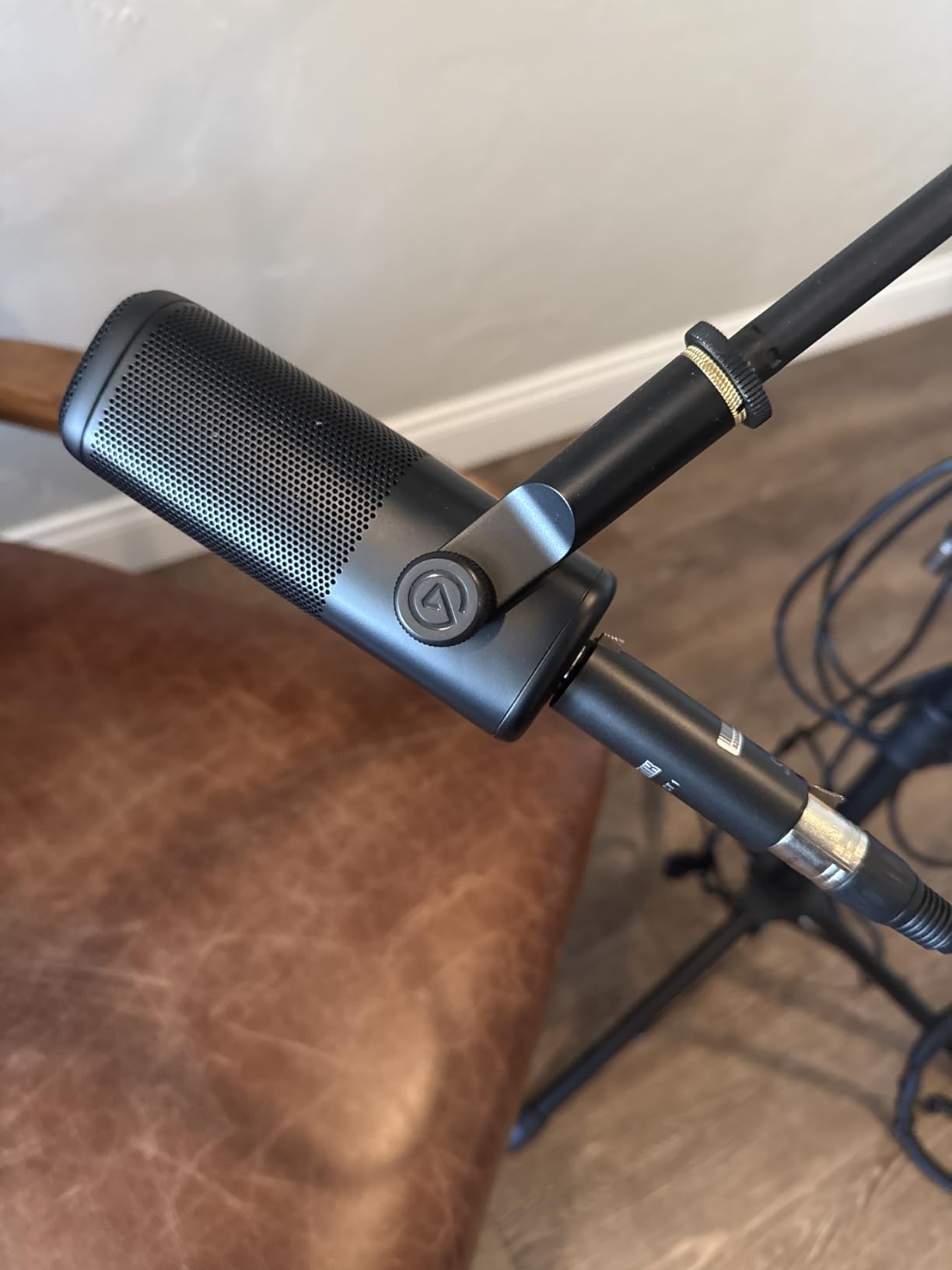
The cardioid polar pattern does an impressive job of rejecting room noise. I tested it in a room with a window AC unit running, and the Wave DX picked up significantly less mechanical noise than several condenser mics I had nearby. It is not magic, but for untreated rooms it performs well above its price class.
The included mono swivel mount comes with 5/8-inch, 3/8-inch, and 1/4-inch thread adaptors. That means it will mount on virtually any stand or boom arm out of the box without needing extra hardware.
Elgato claims no signal booster is required, and that is mostly true if you have a decent audio interface with at least 50dB of gain. If you are using a very basic interface, you might find yourself wanting a bit more clean gain. The Wave DX pairs beautifully with the Elgato Wave XLR interface, but it works well with Focusrite, MOTU, and other popular interfaces too.
Interface Compatibility and Gain Requirements
The Wave DX needs an audio interface with decent preamps to shine. I tested it with a Focusrite Scarlett 2i2 and had plenty of clean gain. With budget interfaces under $100, you may need to boost levels in post-production.
If you already own the Elgato Wave XLR, this is a no-brainer pairing. The integration is seamless and the combined setup gives you hardware mute, volume control, and filtering all in one chain.
Who Should Choose This Mic
The Wave DX is ideal for podcasters and streamers who have outgrown USB microphones and want to step into the XLR ecosystem without spending a fortune. It is also a great choice if you specifically want a compact, lightweight mic for a portable recording rig.
If you need USB connectivity, look elsewhere. The Wave DX is XLR only, which means you need an audio interface to use it.
4. Samson Q2U – Best Beginner Microphone Bundle
- Dual USB-C and XLR connectivity
- Clear warm audio quality
- Great value for the price
- Handheld form factor easy to use
- Includes accessories stand windscreen cables
- Low volume output requires significant gain
- Stand is not very sturdy
- Picks up background noise when not close to mic
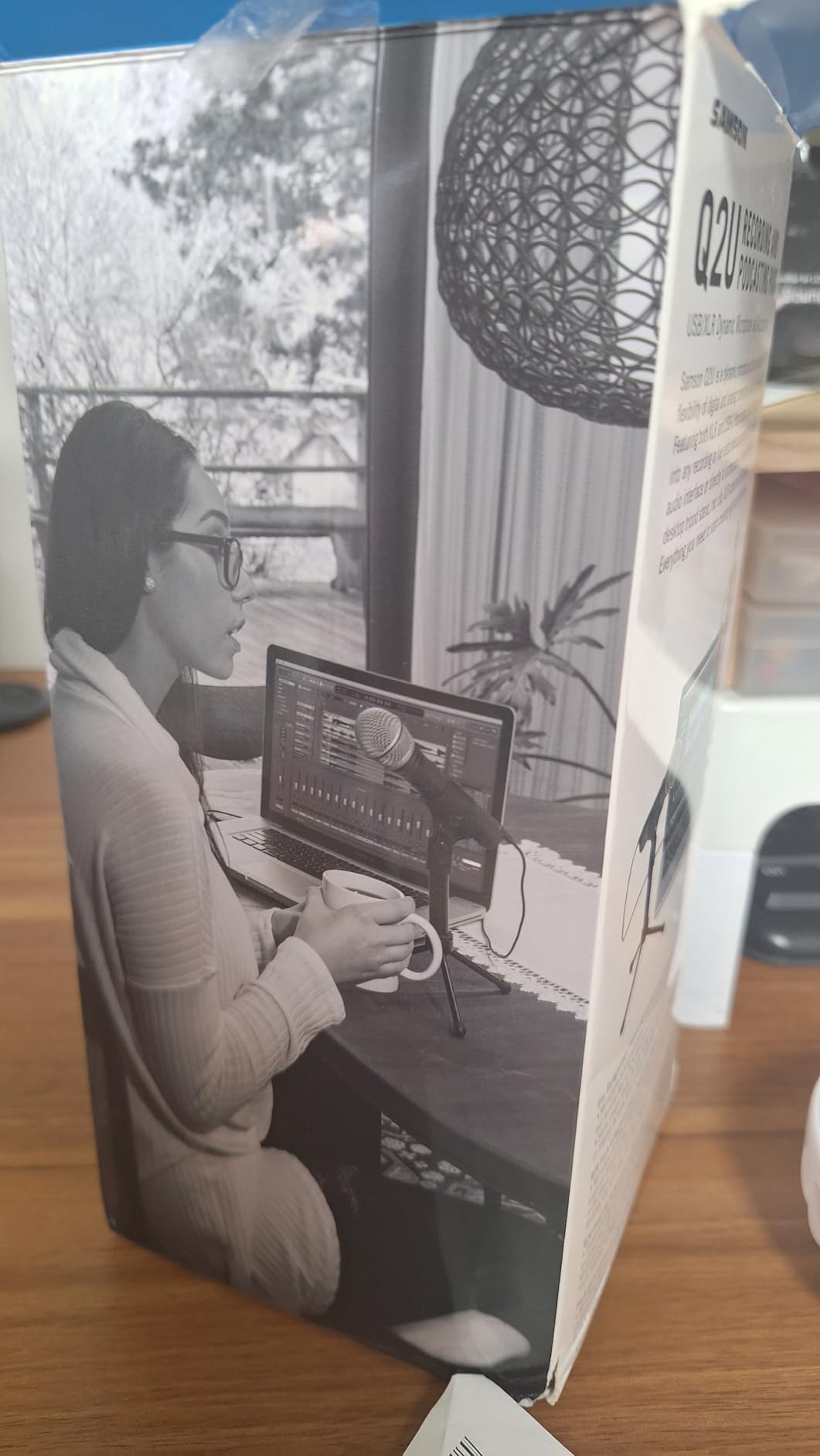
The Samson Q2U has been the go-to beginner podcast microphone for years, and for good reason. It gives you both USB-C and XLR connectivity in a handheld form factor that feels familiar and easy to use. The Reddit podcasting community consistently recommends this mic as the top budget option.
What makes the Q2U special is the complete package. You get the microphone, a desktop tripod stand, a foam windscreen, a USB-C cable, and an XLR cable all in the box. That is everything you need to start podcasting on day one without buying additional accessories.
The sound quality is warm and clear for spoken word. It has that classic dynamic mic proximity effect where you get a richer low-end the closer you get to the grille. For podcast hosts who want that radio-voice warmth without processing, the Q2U delivers.
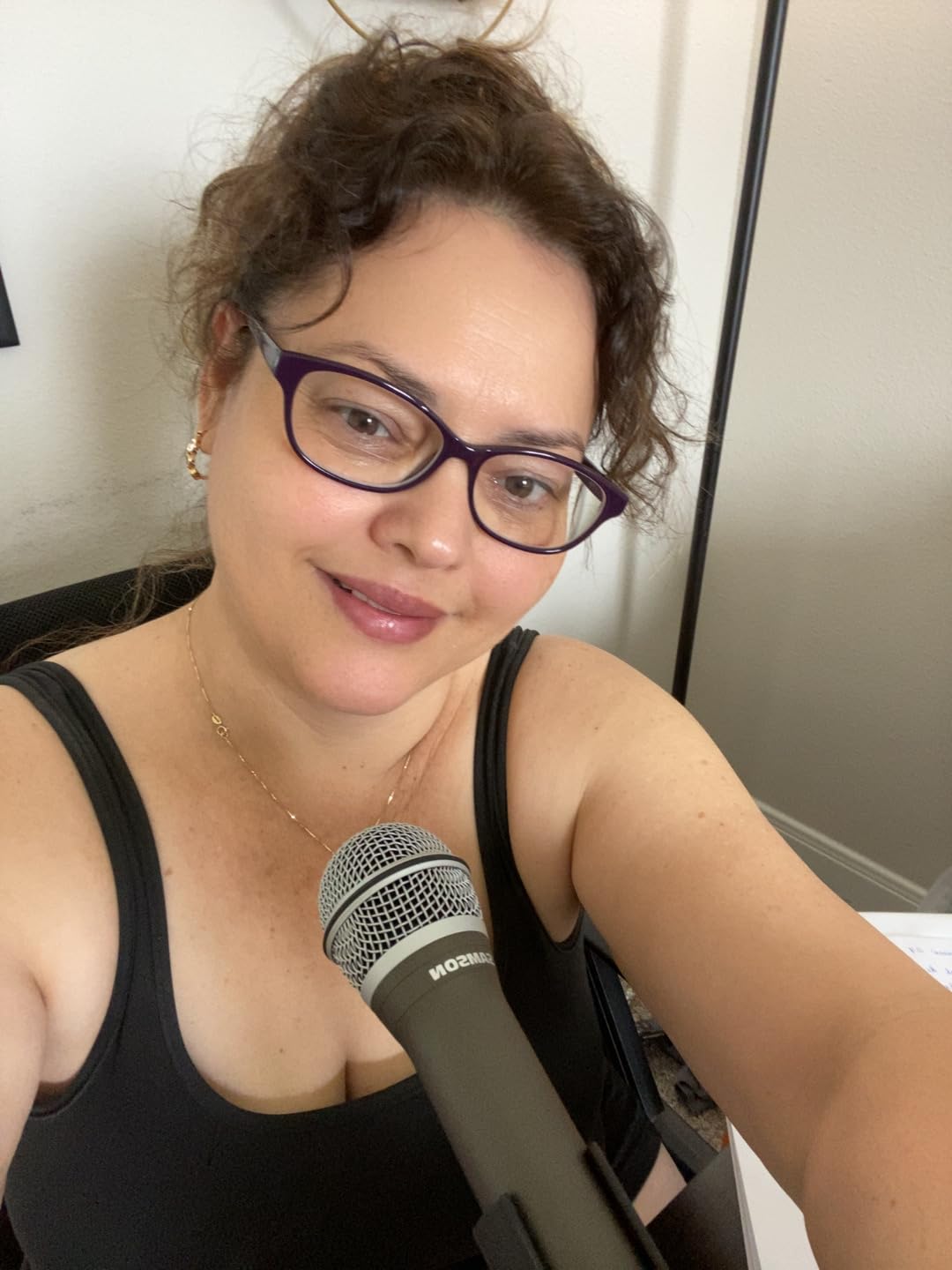
The handheld form factor is actually an advantage that many people overlook. You can hold it for interview-style recordings, mount it on a desktop stand, or put it on a boom arm. The versatility is unmatched at this price point.
The main drawback is the output level. The Q2U is a quiet microphone that needs significant gain to reach proper recording levels. On USB mode this is handled internally, but in XLR mode you need an interface with strong preamps or a signal booster like a Cloudlifter for best results.
The included desktop stand is functional but not great. It wobbles and does not offer much height adjustment. Most Q2U owners end up upgrading to a boom arm within the first few months.
USB vs XLR Mode Performance
In USB mode, the Q2U is genuinely plug-and-play. Connect it to your computer, select it as your input device, and you are recording. The internal preamp handles gain adequately for most situations.
In XLR mode, the Q2U reveals its limitations as a budget mic. The sound is thinner and you need a quality interface to get levels high enough without introducing noise. This is the mic’s biggest weakness for podcasters planning to upgrade their signal chain over time.
Is It Still Relevant in 2026?
Despite being one of the older designs on this list, the Q2U remains one of the best values in podcast microphones. No other mic at this price includes dual connectivity plus all necessary cables and accessories.
If you are a complete beginner who wants to start podcasting today with zero additional purchases, the Q2U is still the smartest choice you can make.
5. Rode PodMic – Best XLR Broadcast Mic Under $100
- Broadcast-grade audio quality
- Excellent background noise rejection
- Integrated swing-mount with internal pop filter
- Tank-like metal construction
- Warm rich voice tone
- XLR only requires audio interface
- Low output requires significant gain
- Heavy microphone
- No built-in headphone monitoring
The Rode PodMic is the microphone I recommend more than any other to podcasters moving from USB to XLR. It delivers a broadcast-quality sound that rivals microphones costing twice as much, and the build quality is genuinely tank-like.
The first thing you notice when you pick up the PodMic is the weight. At 937 grams, it feels like a serious piece of professional equipment. The all-metal construction with its matte black finish looks fantastic on camera, which matters for video podcasters and streamers.
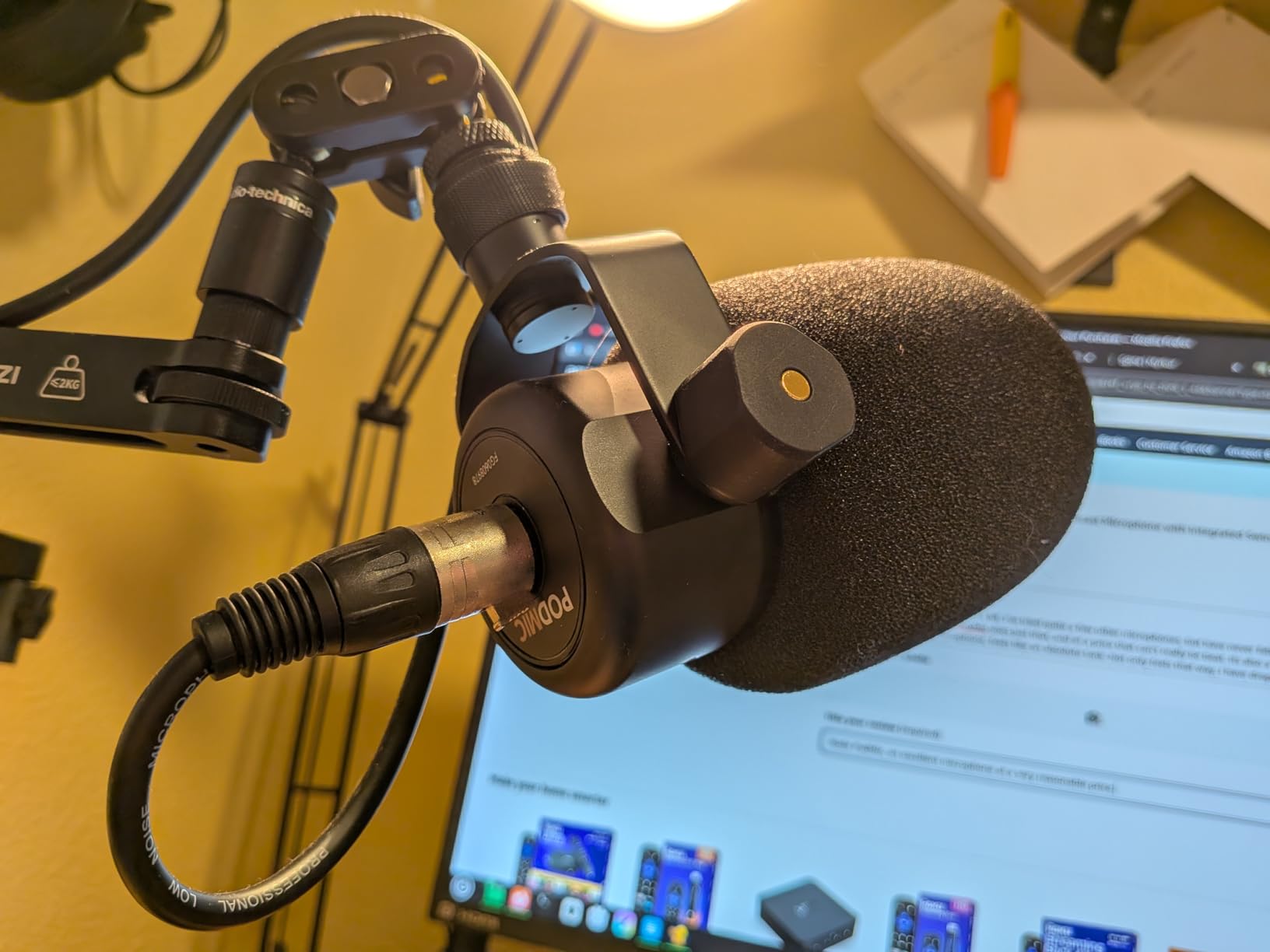
The integrated swing-mount is brilliant. It attaches directly to any standard boom arm or mic stand with a 5/8-inch thread and includes a 3/8-inch adapter. The internal pop filter does a surprisingly good job of reducing plosives without needing an external pop screen.
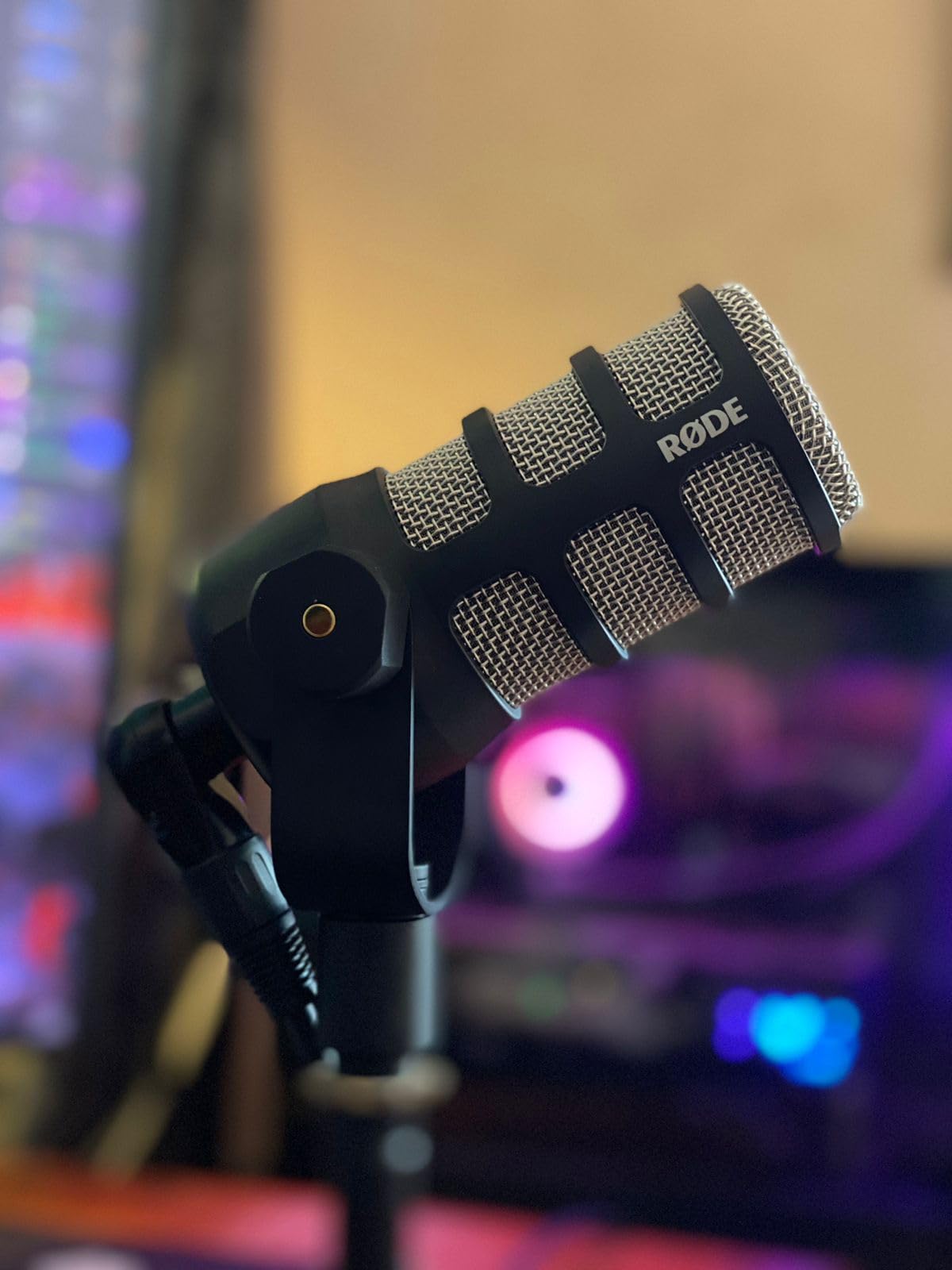
Sound quality is where the PodMic really shines. The cardioid dynamic capsule produces a warm, rich vocal tone that sounds like a professional radio broadcast. The frequency response from 20Hz to 20KHz is wider than most mics in this class, giving your voice a fullness that budget mics simply cannot match.
The background noise rejection is excellent. I tested it in a room with a ceiling fan running and a computer on the desk, and the PodMic pushed both of those sources well into the background. You will still hear some room character, but it is far less noticeable than with condenser microphones.
The main drawback is the gain requirement. The PodMic has a low output level that needs at least 55 to 60dB of clean gain from your interface. If your interface has weak preamps, you will need a Cloudlifter or similar in-line preamp to get adequate levels without noise.
Gain and Interface Recommendations
The PodMic pairs well with interfaces like the Focusrite Scarlett 2i2 (3rd Gen or later), MOTU M2, and the Audient EVO 4. All of these provide enough clean gain for the PodMic without needing a booster.
If you are using a very budget interface or a mixer with limited preamp power, consider adding a Cloudlifter CL-1 or Triton Audio FetHead. These give you an extra 20 to 25dB of clean gain before the signal hits your interface.
Single PodMic vs Multi-Mic Podcast Setup
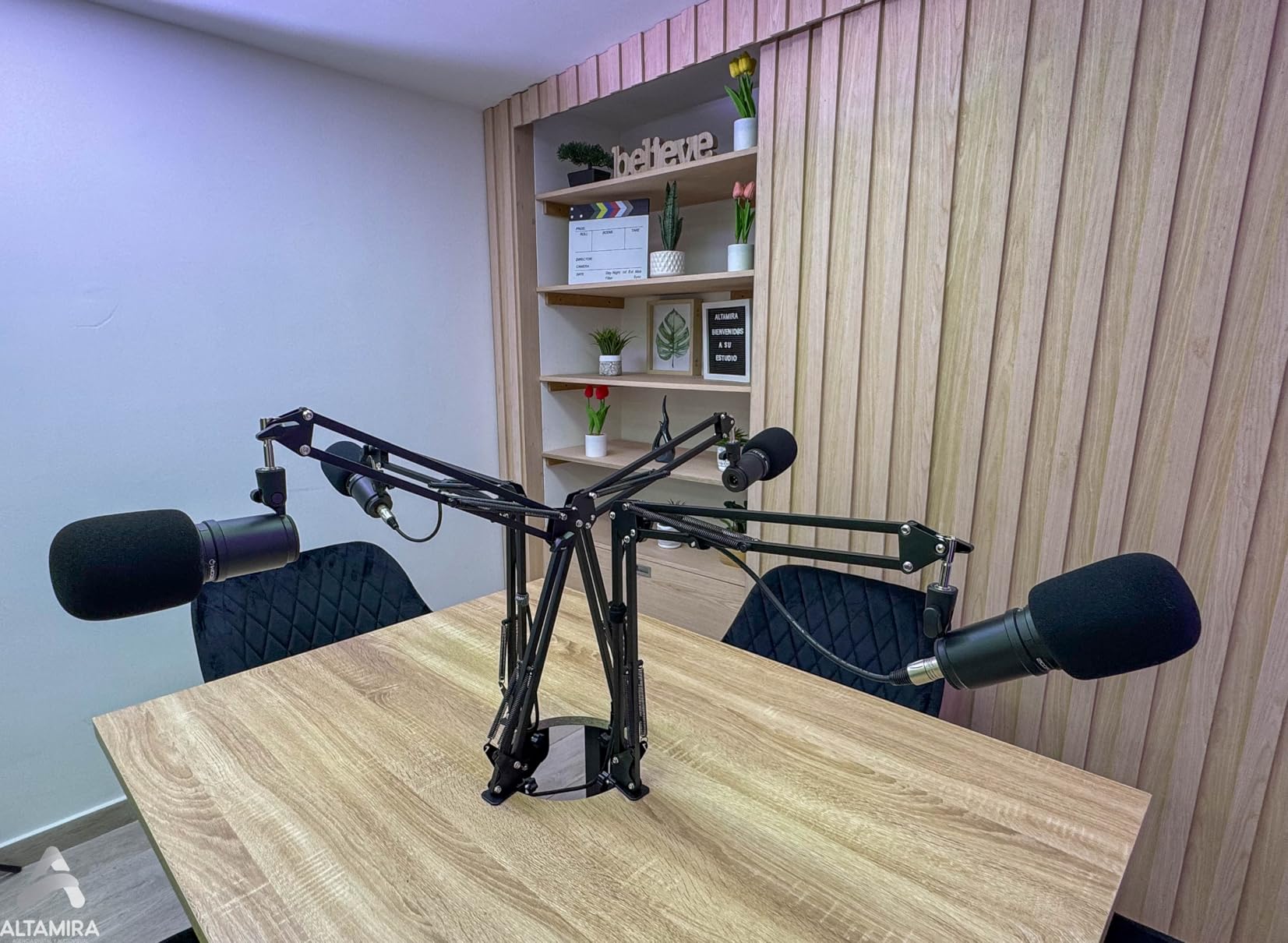
The PodMic is designed with multi-mic podcast setups in mind. Its tight cardioid pattern means you can place two of them on a table facing each other for interview recordings with minimal bleed between mics.
For a two-person podcast, two PodMics connected to a Zoom PodTrak P4 or similar multi-channel interface is one of the most cost-effective professional setups you can build.
6. Zoom ZDM-1 – Best Large-Diaphragm Budget XLR Mic
- Great sound quality at an affordable price
- Good noise rejection
- All-metal construction
- Easy to set up with XLR connection
- Compact and portable design
- Handling noise needs shock mount
- Included windscreen not great for plosive rejection
- Requires audio interface for use
- Not externally powered
The Zoom ZDM-1 is an underrated gem in the podcast microphone space. Zoom is best known for their recorders and audio interfaces, but their dynamic microphone is worth serious consideration for budget-conscious podcasters building an XLR setup.
The large-diaphragm dynamic design captures a smooth, broadcast-quality sound that has more body and warmth than you might expect from a mic at this price. The supercardioid polar pattern provides focused pickup and excellent isolation from side and rear noise sources.
I was impressed by the SPL handling of 135dB. This means the ZDM-1 can handle loud voices and even recording instruments without distortion. For podcasters who also do music or sound design work, that versatility is a nice bonus.
The all-metal body and grille feel solid and built to last. The compact dimensions of 5.9 by 2.12 by 2.12 inches make it easy to position on a crowded desk or mount on a small boom arm.
The internal shock mount helps with isolation from bumps and handling noise, but it is not as effective as a dedicated external shock mount. If your desk gets bumped during recordings or you tend to move the mic stand, you will hear some transfer noise.
The included windscreen is functional but not outstanding. For podcast recording, I would recommend adding a foam pop filter or an external windscreen for better plosive control. It is a small additional investment that significantly improves the recording quality.

Shock Mount and Accessory Needs
The ZDM-1 benefits greatly from a dedicated shock mount, especially if you are using a desk-mounted stand. Zoom does not include one in the box, so factor that into your budget.
A basic foam pop filter will handle plosive issues. If you already have a boom arm with a shock mount from a previous mic, check the thread compatibility before buying additional hardware.
Best Podcast Genres for This Mic
The ZDM-1 excels for narrative podcasting, voice-over work, and interview shows where you want a focused, intimate vocal sound. The supercardioid pattern means less bleed in multi-mic setups.
It is less ideal for panel discussions where mics are placed close together, since the tight pickup pattern requires more precise positioning than a standard cardioid mic.
7. MAONO PD400X – Best Software-Enhanced Dynamic Mic
- Professional sound quality at an affordable price
- USB and XLR dual connectivity
- MAONO Link software with EQ and effects
- Tap-to-mute functionality
- Heavy duty metal construction
- Stand is short and rigid
- Gain knob placement could be improved
- Heavy may require sturdy boom arm
The MAONO PD400X brings something unique to the table: a companion software app that gives you EQ, compression, limiting, and other processing tools right out of the gate. For podcasters who do not want to learn complex DAW workflows just to get a good sound, this is a game-changing feature.
The MAONO Link app offers a Standard Mode for quick setup and an Advanced Mode for detailed audio shaping. You can adjust EQ curves, apply a limiter to prevent clipping, and add a compressor for consistent vocal levels. All of this processing happens before the signal reaches your recording software.
The dual USB and XLR connectivity means you can start with USB plug-and-play and graduate to XLR when you add an interface. The 3-in-1 digital knob lets you adjust mic gain, headphone volume, and monitor mix without touching your computer.
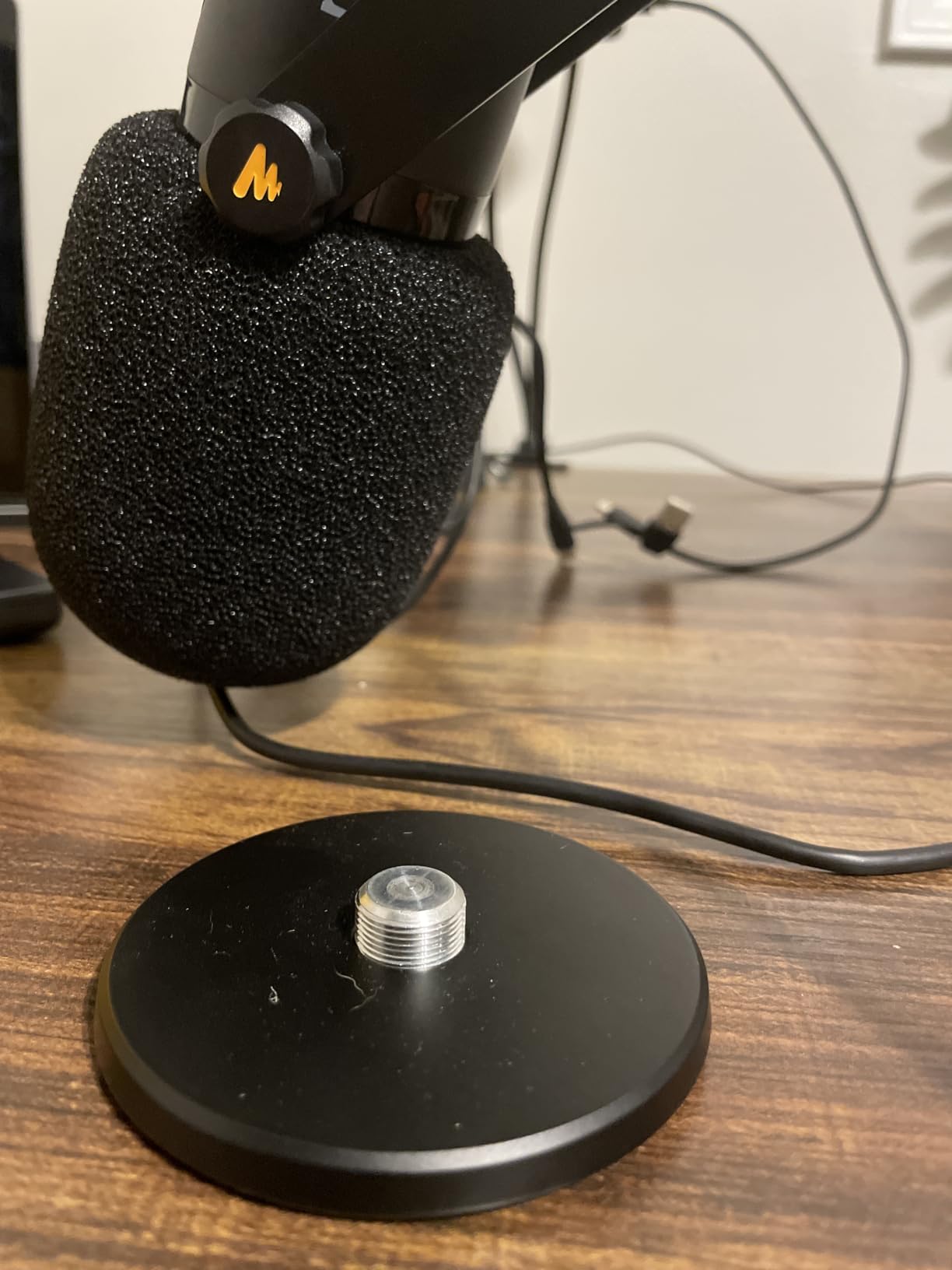
The tap-to-mute function is responsive and reliable. A simple tap on the top of the mic silences the output immediately, and an LED indicator confirms the mute status. This is one of those small features that becomes essential once you are used to having it.
Sound quality is professional-grade with the dynamic capsule and cardioid polar pattern doing solid work at rejecting background noise. The frequency response from 40Hz to 16KHz captures the full range of the human voice with clarity and presence.
The included stand is the weak point. It is short and rigid, offering limited positioning flexibility. Most users will want to mount the PD400X on a boom arm for proper dynamic mic positioning. The mic is also fairly heavy, so make sure your boom arm can handle the weight.
Software Features and App Integration
The MAONO Link app is available for both Windows and macOS. Standard mode gives you basic gain and monitoring controls, while Advanced mode unlocks the full EQ suite, compressor, limiter, and monitor mix adjustments.
The processing quality in the app is genuinely good. The built-in compressor smooths out vocal dynamics without sounding squashed, and the EQ presets are tuned for spoken word content rather than music.
Value Proposition in the Mid-Range Tier
The PD400X sits in a competitive price range alongside the Shure MV7X and Rode PodMic USB. Its main advantage is the software processing suite that lets beginners achieve polished sound without external plugins or DAW expertise.
If you value having built-in audio processing and do not want to deal with complex software chains, this is the mic that delivers the most processing power per dollar in this tier.
8. Shure MV7X – Best XLR-Only Podcast Mic Under $200
- Professional broadcast-quality sound
- Excellent voice isolation technology
- All-metal construction very durable
- Great background noise rejection
- Comparable to more expensive mics like SM7B
- No USB XLR only requires interface
- Picks up desk noise without shock mount
- Prone to plosives needs pop filter
- Does not come with XLR cable
The Shure MV7X is the XLR-only sibling of the popular MV7+ and it brings serious broadcast-quality sound to podcasters who have committed to the XLR workflow. I found it to be the closest thing to the legendary SM7B without paying SM7B prices.
The voice isolation technology is immediately noticeable. The tight cardioid pattern focuses on your voice while pushing room noise, computer fans, and background sounds far into the background. For podcasters recording in untreated spaces, this is exactly what you need.
The all-metal construction feels premium and durable. The integrated shock mount reduces handling noise effectively, and the adjustable yoke mount makes positioning on a boom arm simple and stable.
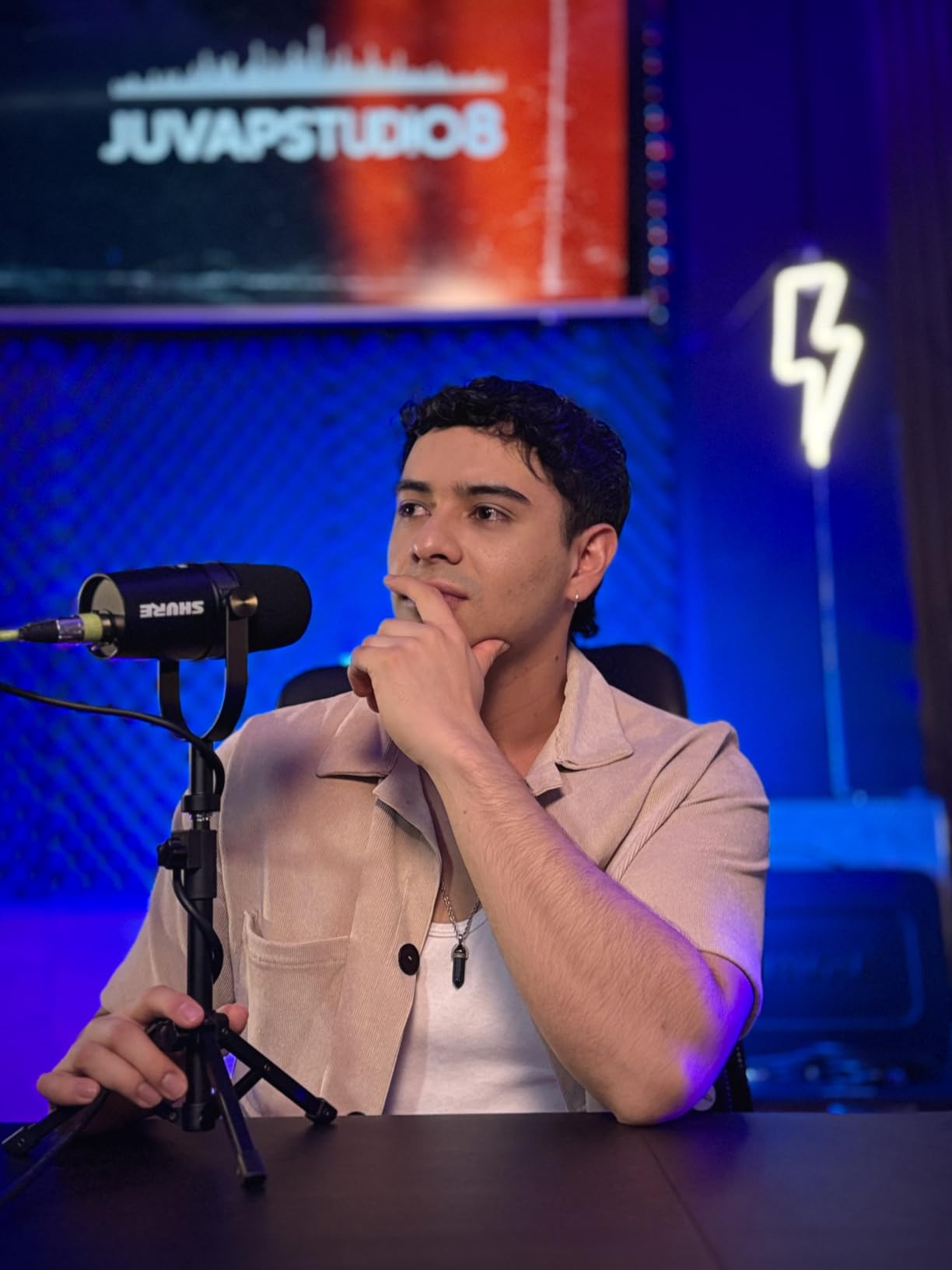
Sound-wise, the MV7X delivers that classic Shure broadcast tone. Warm mids, smooth highs, and controlled lows give your voice a professional radio quality. Compared to the Rode PodMic, I found the MV7X slightly more refined in the high frequencies with less harshness on sibilant consonants.
The frequency response of 50Hz to 16KHz is tuned specifically for speech. Shure has optimized this mic for the human voice, and it shows in how naturally it reproduces spoken word content.
The main downsides are the XLR-only connectivity, which requires an audio interface, and the lack of an included XLR cable. You also need to be careful with plosives, as the MV7X can be sensitive to bursts of air from P and B sounds. A pop filter is recommended.
Interface Pairing and Gain Considerations
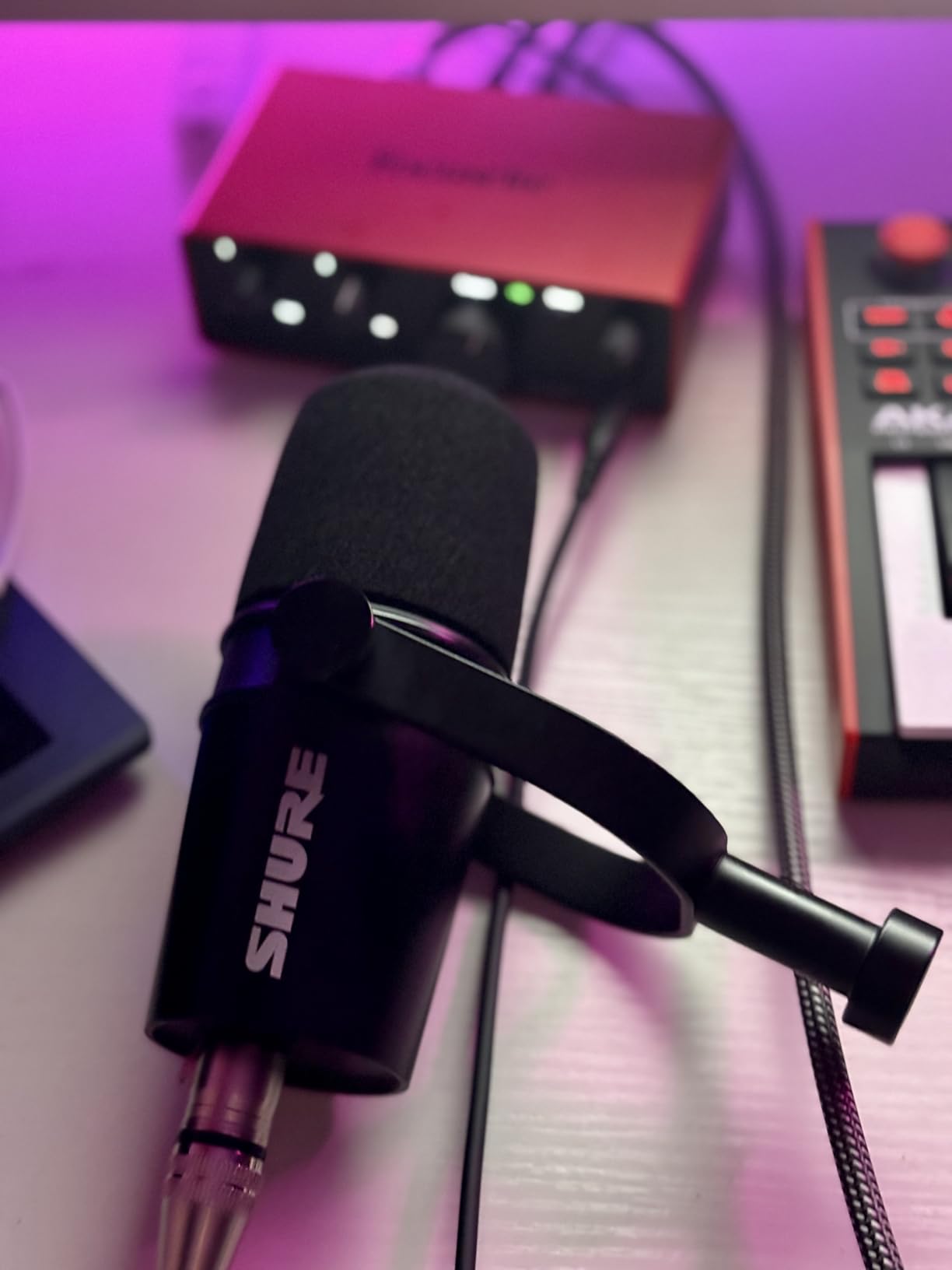
The MV7X needs about 50 to 55dB of gain for optimal recording levels. Most quality interfaces in the $150-plus range can handle this without issue. The Focusrite Scarlett 2i2, MOTU M2, and SSL 2 are all excellent pairings.
If your interface has weaker preamps, a Cloudlifter or FetHead will give you the extra clean gain you need. This is a common setup for MV7X owners who started with budget interfaces.
MV7X vs SM7B: Worth the Difference?
The MV7X delivers roughly 90 percent of the SM7B’s sound quality at roughly half the price. The SM7B has slightly better noise rejection and a more refined low-end, but most listeners would not notice the difference in a finished podcast episode.
If budget is a factor, the MV7X is the smarter choice. If you want the industry-standard mic and can afford the extra cost plus a Cloudlifter, the SM7B is the ultimate upgrade.
9. Rode PodMic USB – Best Dual Connectivity Broadcast Mic
- Dual USB and XLR connectivity
- Internal DSP with APHEX effects via RODE Central app
- Built-in headphone monitoring
- Solid all-metal construction
- Internal shock mount and pop filter included
- Some users reported connectivity issues
- Heavier than expected
- USB-C cable may be faulty
- Requires gain adjustment with lower-quality setups
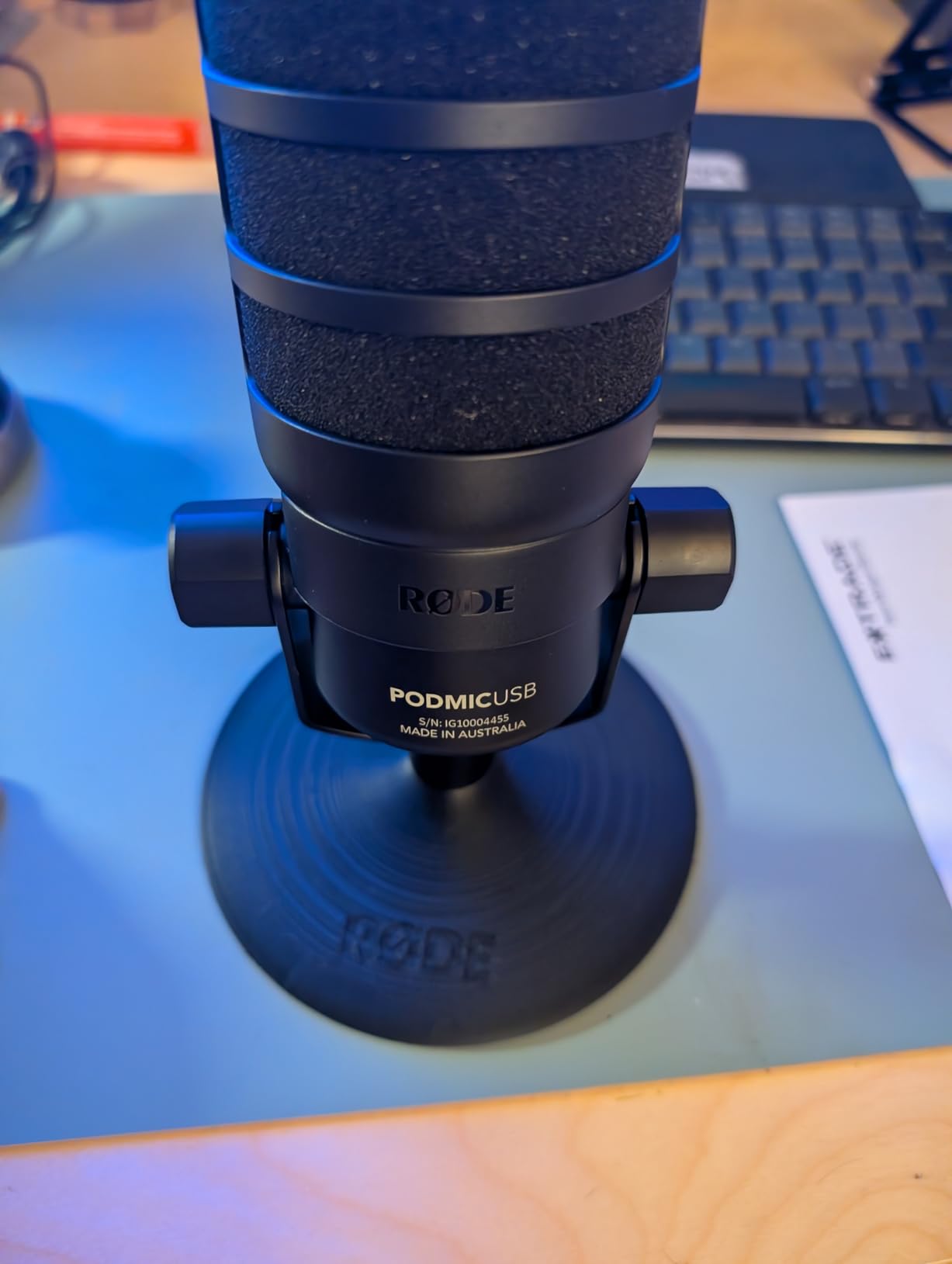
The Rode PodMic USB takes the already excellent PodMic and adds USB connectivity plus an internal DSP with APHEX processing. For podcasters who want one microphone that works with both a computer and a professional interface, this is the most complete package on this list.
The APHEX processing is the standout feature. Through the RODE Central app, you can activate Aural Exciter and Big Bottom processors that add clarity and warmth to your voice in real-time. These are the same processing technologies used in professional broadcast studios.
The build is identical to the original PodMic, which means tank-like all-metal construction. At 1.9 pounds, it is heavier than most mics at this price, but that weight translates to stability and durability.
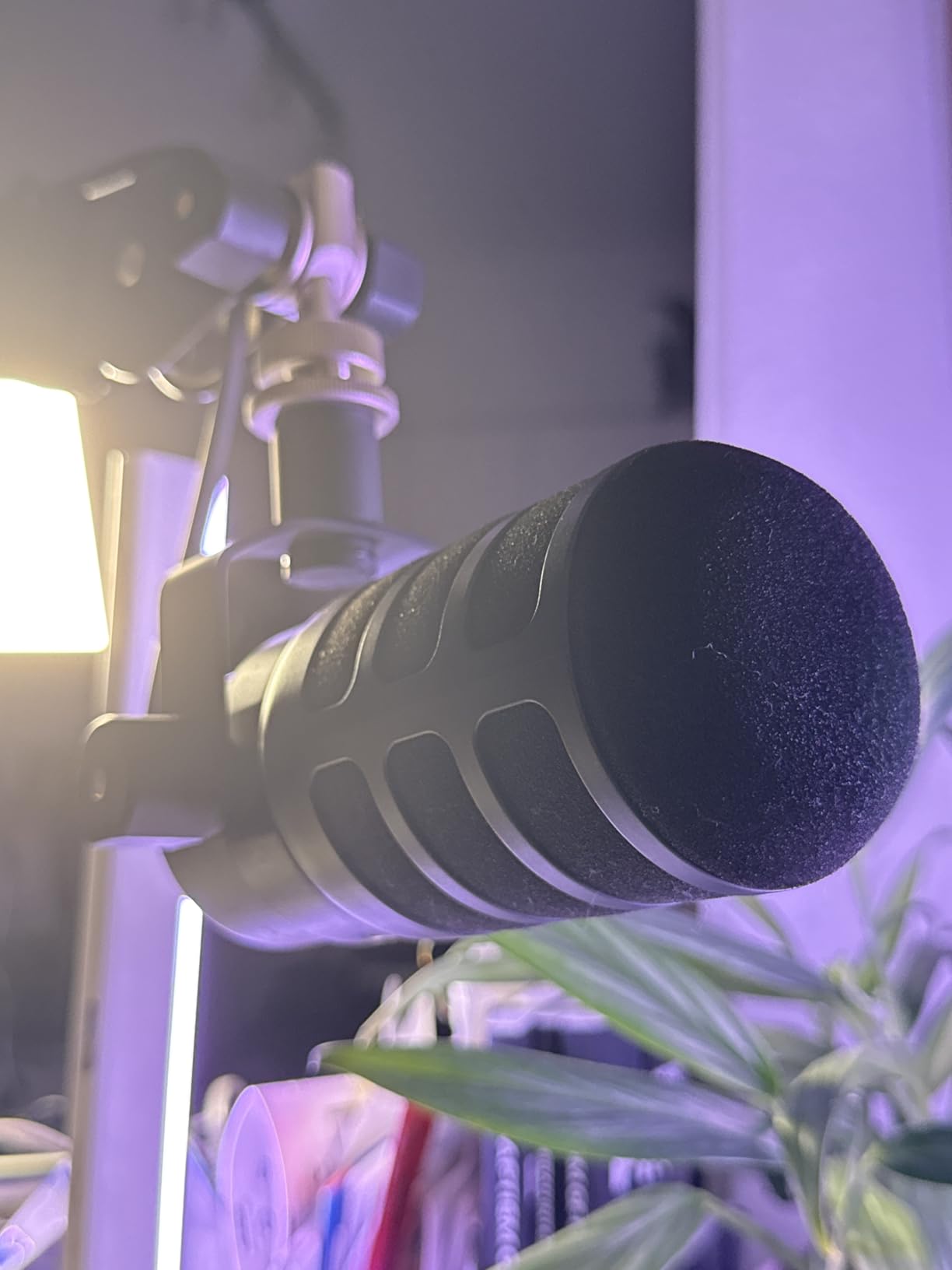
The internal shock mount and built-in pop filter are included, which means you do not need to buy additional accessories. The integrated headphone port with volume control gives you zero-latency monitoring without needing a separate interface in USB mode.
In USB mode, the PodMic USB connects directly to your computer, phone, or tablet. It works with Android, iOS, macOS, and Windows, making it one of the most versatile connectivity options available. In XLR mode, it functions like the original PodMic with your audio interface or mixer.
The main concerns reported by users involve reliability. Some have experienced connectivity issues with the USB-C connection, and a few received faulty cables in the box. Rode’s customer service generally handles these issues well, but it is something to be aware of.
RODE Central App and APHEX Processing
The RODE Central app is where the PodMic USB really differentiates itself. You can toggle the APHEX processors on and off, adjust input gain, and update firmware. The Aural Exciter adds high-frequency shimmer and presence to vocals.
Big Bottom adds controlled low-end warmth that gives voices that full radio-broadcast character. These processors work in both USB and XLR modes when configured through the app.
Reliability and Warranty Coverage
The PodMic USB comes with a 1-year warranty that extends to 2 years when you register the product through Rode’s website. This is solid coverage for a microphone in this price range.
If you experience USB connectivity issues, try using a high-quality USB-C cable rather than the included one. Many users have resolved intermittent connection problems with a cable swap.
10. Rode Procaster – Best Professional Broadcast Mic Value
- Exceptional broadcast-quality sound with warm tone
- Excellent room and background noise rejection
- Tank-like all-metal construction
- Internal pop filter works well
- Internal shock mounting reduces handling noise
- Gain-hungry needs good preamp or interface
- Heavy requires sturdy stand or boom arm
- XLR only no USB option
- Plosive rejection could be better
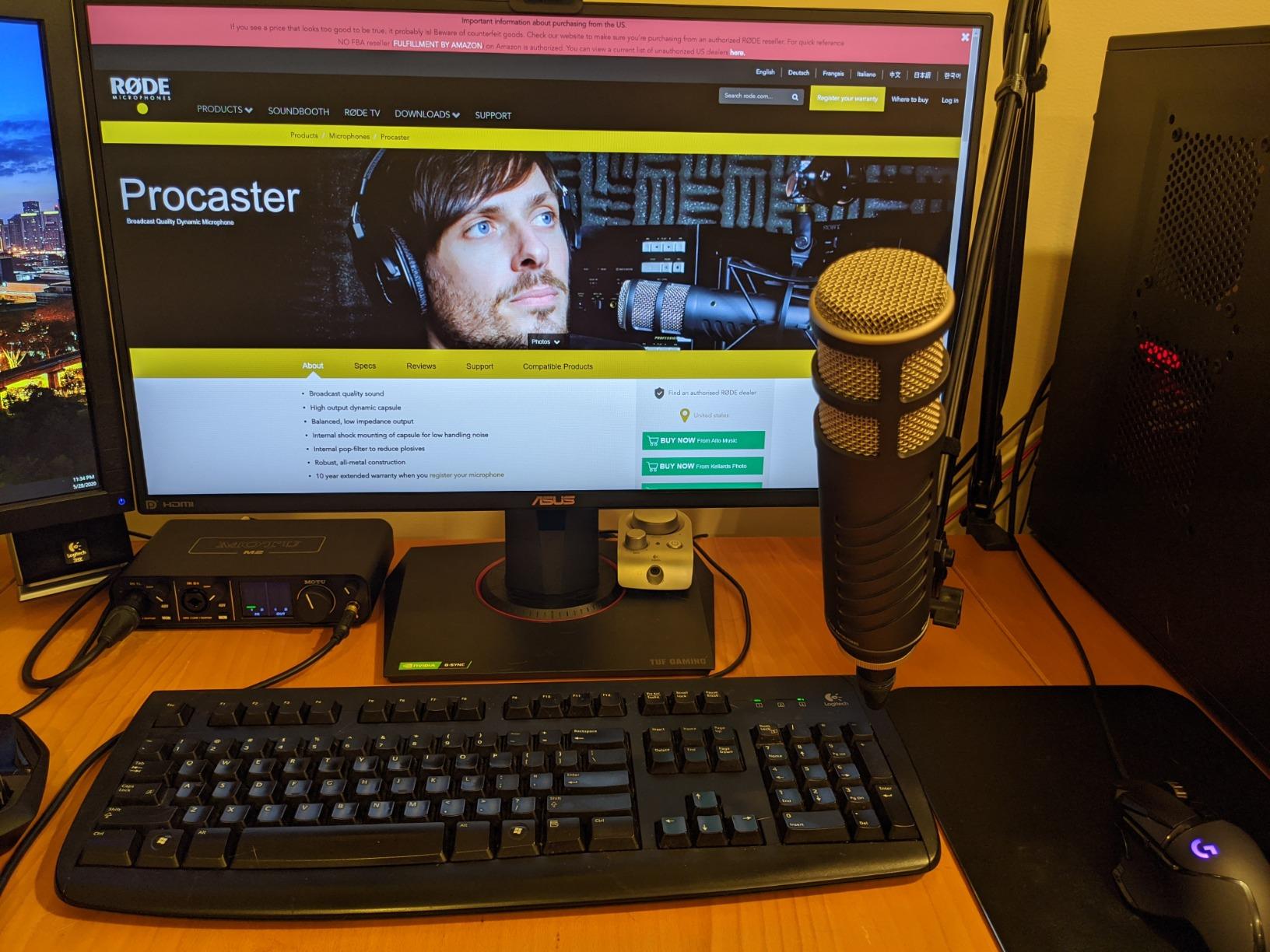
The Rode Procaster is the microphone that gives the Shure SM7B its stiffest competition. It delivers that classic warm broadcast tone at a significantly lower price point, and many podcast engineers actually prefer it over the SM7B for spoken word content.
The first thing that hits you is the sound. The Procaster produces a rich, warm, professional tone that immediately sounds like a radio broadcast. The frequency response from 75Hz to 18KHz is tailored for voice, with controlled lows and smooth highs that flatter most vocal types.
The background noise rejection is outstanding. The tight cardioid pattern with high-output dynamic capsule focuses on your voice and pushes room noise far into the background. I tested it in a live room with computers running and could barely hear them in the recording.
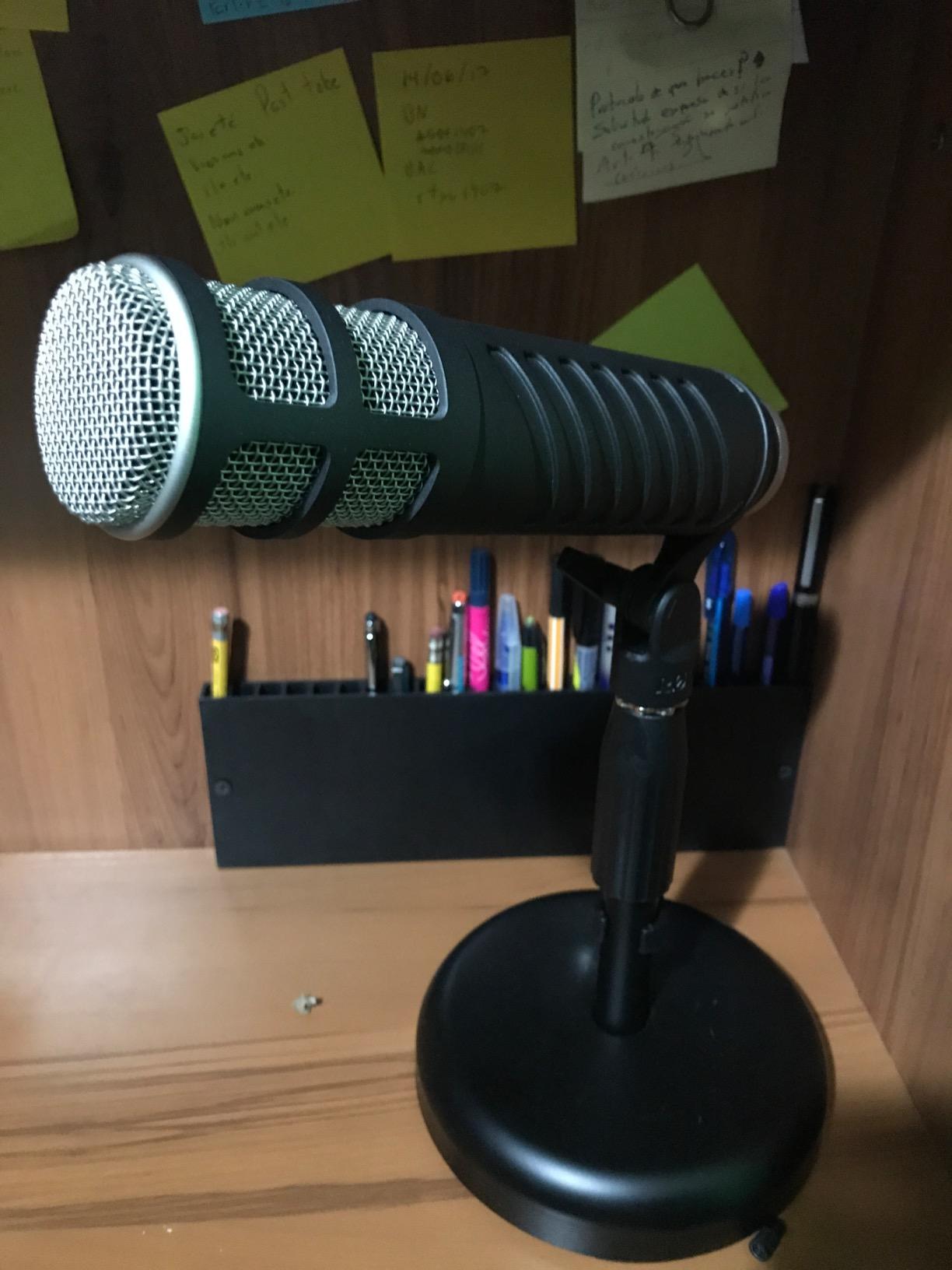
The internal pop filter does a decent job of reducing plosives without an external screen. The internal shock mounting of the capsule keeps handling noise low, which is important for podcasters who adjust their mic position during recordings.
The all-metal construction is built like a tank. At just over 1 pound, it has a substantial feel without being as heavy as the SM7B. The Procaster is the kind of microphone you buy once and use for a decade or more.
The main drawback is the same one that affects all professional broadcast dynamics: it needs gain. The Procaster is gain-hungry and requires a quality preamp or interface with at least 55 to 60dB of clean gain. A Cloudlifter or FetHead is a common addition to this mic.
Procaster vs SM7B: Head to Head
The Procaster and SM7B are direct competitors, and the choice between them comes down to subtle preferences. The Procaster has a slightly warmer, more mid-forward sound. The SM7B has a flatter, more neutral response that some engineers prefer for post-processing flexibility.
In terms of noise rejection, both are excellent. The Procaster may have a slight edge in rejecting high-frequency room noise, while the SM7B is slightly better at handling very low-frequency rumble.
Preamp Requirements and Cloudlifter Pairing
The Procaster pairs well with interfaces like the Focusrite Scarlett 2i2 (4th Gen), MOTU M4, and the SSL 2+. If your interface’s preamps max out before reaching comfortable recording levels, add a Cloudlifter CL-1 for 25dB of clean, transparent gain boost.
The combination of a Procaster, Cloudlifter, and a quality interface is one of the most common professional podcast setups recommended by audio engineers and used by working podcast producers.
11. Shure MV7+ – Best Smart Podcast Microphone
- Excellent sound quality right out of the box
- USB-C and XLR connectivity options
- Voice isolation technology keeps audio clear
- Easy plug-and-play setup
- Customizable LED panel
- Auto Level Mode adjusts gain automatically
- Does not include XLR cable
- May need additional noise cleanup when using speakers
- High sensitivity may require frequent adjustments
- Touch sensor mute button takes getting used to
The Shure MV7+ is the upgraded version of the already popular MV7, and it brings several meaningful improvements that make it one of the best dynamic microphones for podcasting. The addition of USB-C connectivity alongside XLR makes it a true dual-mode powerhouse.
The standout feature is Auto Level Mode. Using the ShurePlus MOTIV app, the microphone intelligently adjusts gain levels in real-time based on your distance and volume. For podcasters who struggle with consistent mic technique, this feature alone is worth the upgrade.
The customizable LED touch panel with 16.8 million color options is more than just aesthetics. The panel serves as a touch-sensitive control surface for muting, and the LED colors can be assigned to indicate different status modes like recording, muted, or monitoring.
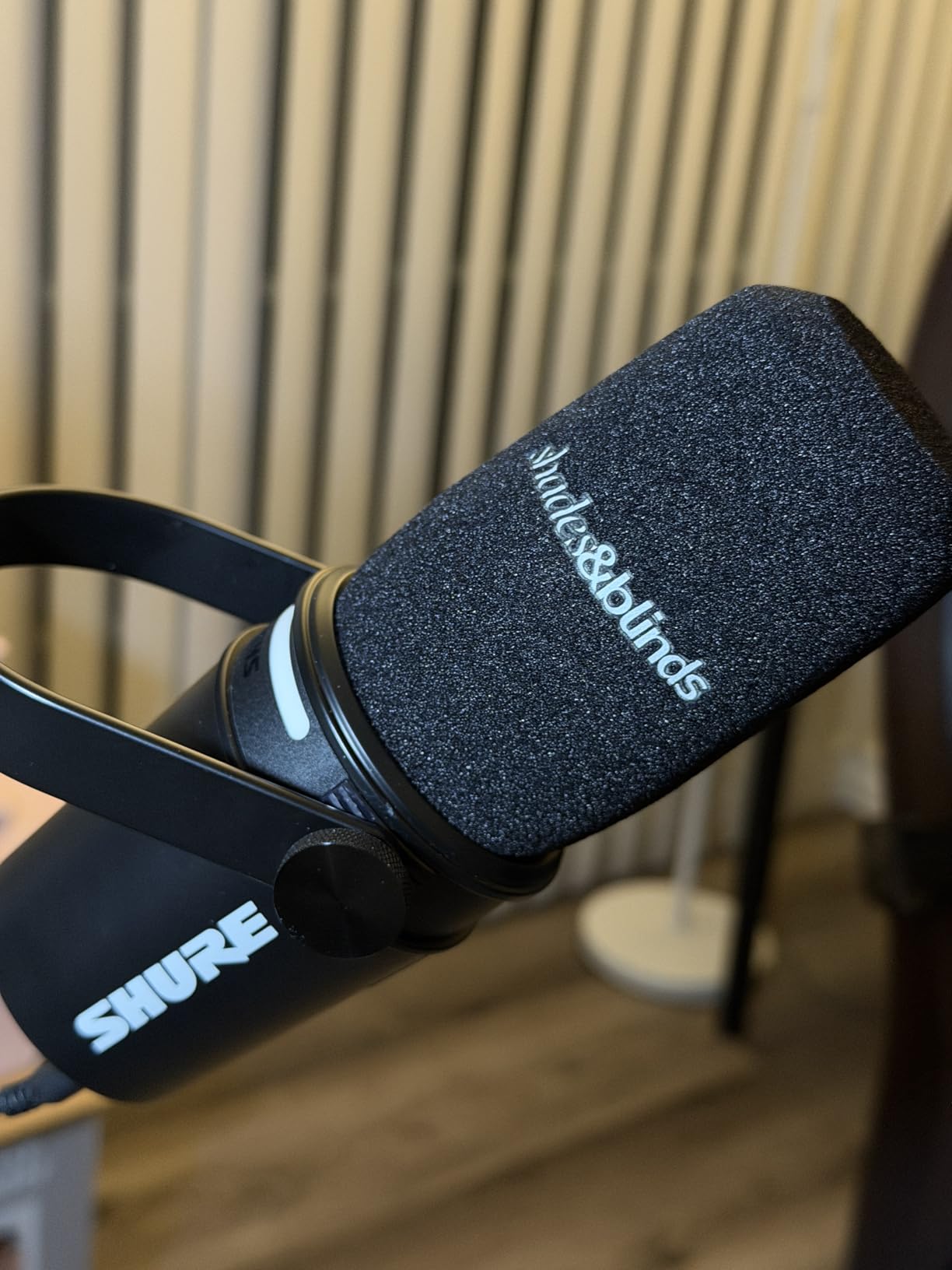
The built-in digital pop filter is a significant improvement over the original MV7. Shure has engineered the grille and internal foam to reduce plosives digitally, which means you may not need an external pop filter for most speaking situations.
Sound quality is excellent right out of the box. The warm, broadcast-style tone is consistent with Shure’s design language, and the real-time denoising feature helps reduce background hiss and room noise without heavy post-processing.
The built-in reverb effects offer Plate, Hall, and Studio modes. While reverb is not typically used in podcast production, it can be useful for creative content, intro segments, or special effect recordings within your show.
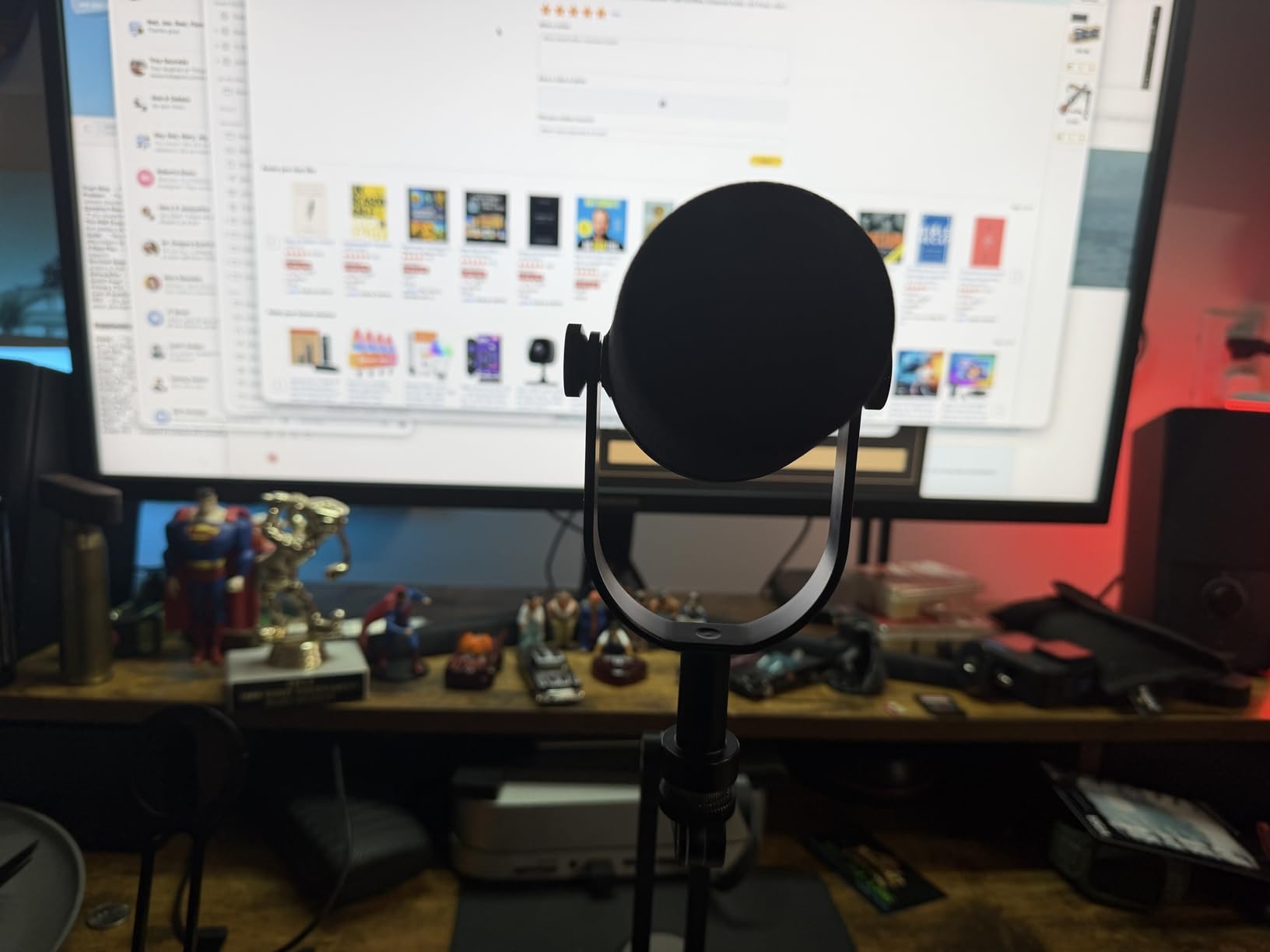
Auto Level Mode and Smart Features
Auto Level Mode is the MV7+’s killer feature for new podcasters. It monitors your input level and automatically adjusts gain to keep you in the optimal range. You can fine-tune the target level and distance settings in the MOTIV app.
The real-time denoising uses DSP processing to reduce steady-state background noise like fan hum or air conditioning. It is not as aggressive as software noise reduction, which preserves your natural voice character while cleaning up obvious noise floors.
OBS Certification and Streaming Integration
The MV7+ is OBS Certified, which means it has been tested and verified for seamless integration with Open Broadcaster Software. This is significant for podcasters who also stream their recording sessions or produce video podcast content.
The USB-C connection supports direct digital output to your computer, bypassing the need for a separate audio interface in USB mode. When you are ready for XLR, the output connects to any professional interface or mixer.
12. Shure SM7B – The Industry Standard Podcast Microphone
- Exceptional sound quality with warm broadcast-like vocals
- Excellent room rejection and noise isolation
- Premium all-metal build quality
- Smooth frequency response with soft highs and flat mids
- Industry standard microphone for podcasting and streaming
- Effective built-in pop filter and windscreen
- Requires external preamp or interface needs 60dB plus gain
- Not plug-and-play requires additional equipment
- Low sensitivity may require careful setup
- Relatively low output level requiring amplification
The Shure SM7B is the microphone that Joe Rogan uses on his podcast, and it is the gold standard for podcast broadcasting. No roundup of the best dynamic microphones for podcasting would be complete without it at the top of the list.
What makes the SM7B special is the combination of sound quality, noise rejection, and durability. The warm, smooth vocal reproduction has defined what podcast audio should sound like for over a decade. The cardioid pickup pattern with air suspension shock isolation minimizes background noise to a degree that few other microphones can match.
The frequency response is engineered specifically for voice. The SM7B has a wide-range response from 50Hz to 20KHz, but it is shaped to flatter the human voice with controlled lows, smooth mids, and softened highs. This tuning means your podcast recordings sound professional with minimal processing.
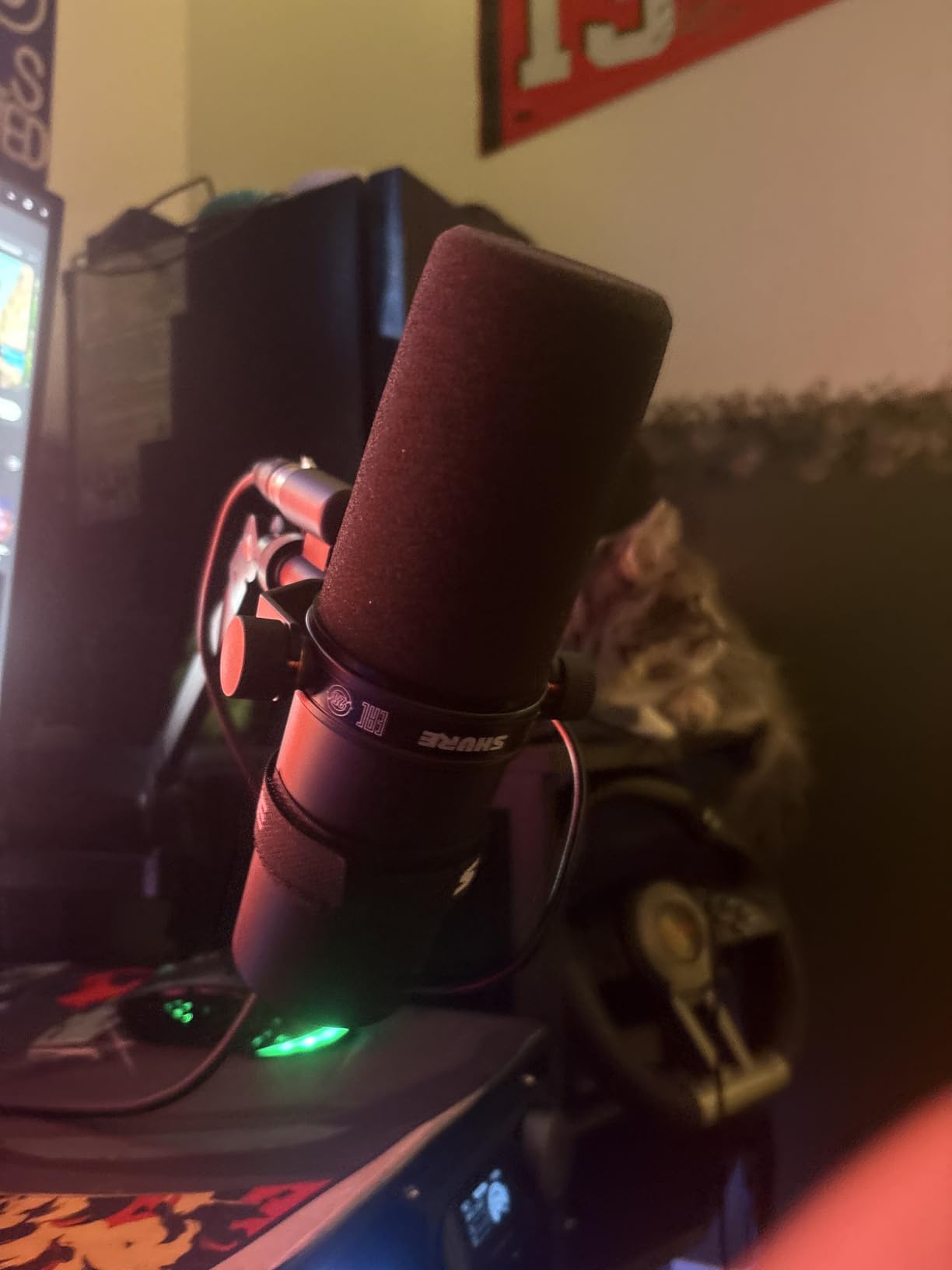
The built-in pop filtering and detachable windscreen are effective at reducing plosives and breath noise. The electromagnetic shielding prevents interference from computer monitors and other electronic devices, which is a real-world problem that many podcasters discover the hard way with cheaper microphones.
The all-metal construction with charcoal gray finish feels indestructible. At 2.7 pounds, it is the heaviest microphone on this list. You need a sturdy boom arm to support it properly. The build quality is the kind that makes owners say this mic will likely outlive you.
The SM7B does not require phantom power, but it does need at least 60dB of gain from your audio interface or preamp. This is the single most important thing to know before buying. You will likely need a Cloudlifter CL-1 or a high-end interface with powerful preamps to get adequate recording levels.
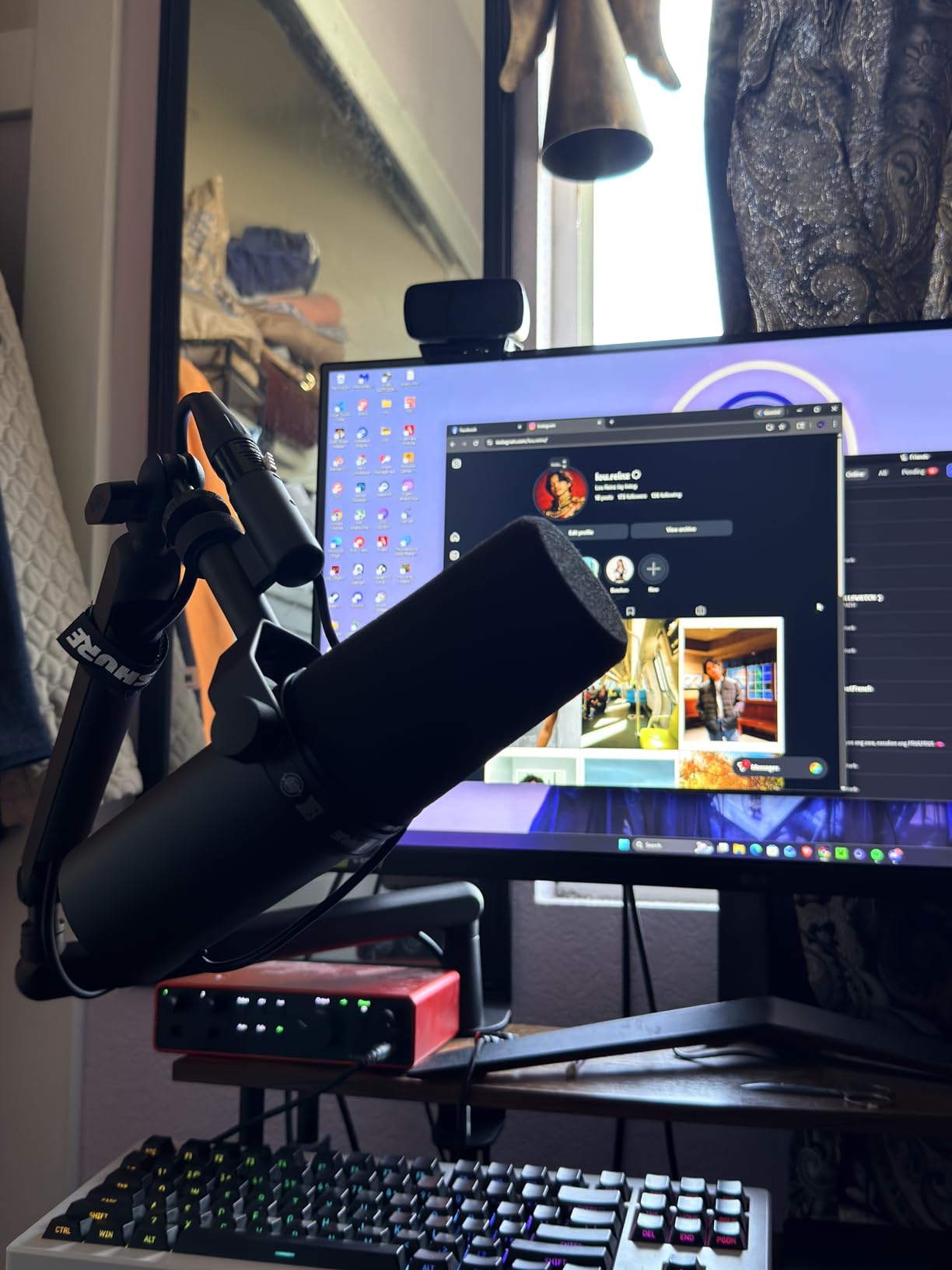
Complete Signal Chain Recommendations
The most common professional SM7B signal chain is: SM7B connected to a Cloudlifter CL-1, connected to a quality audio interface like the Focusrite Scarlett 2i2, MOTU M4, or Universal Audio Apollo. The Cloudlifter provides 25dB of clean gain boost that makes the SM7B usable with most interfaces.
If you have a high-end interface with very clean preamps rated at 60dB or more of gain, you may not need the Cloudlifter. Interfaces like the Audient iD14, GoXLR, or RodeCaster Pro can drive the SM7B directly in many cases.
Why It Remains the Podcast Industry Standard
The SM7B remains the industry standard because no other microphone combines its level of noise rejection, vocal warmth, build durability, and professional recognition. When clients and guests see an SM7B on your desk, they know you take audio quality seriously.
With over 13,000 reviews and a 4.8-star rating, the community consensus is clear. This is the microphone that working podcast professionals choose when they want the best possible sound and are willing to invest in the supporting equipment to make it shine.
Buying Guide: How to Choose the Best Dynamic Microphone for Podcasting
Choosing the right dynamic microphone comes down to understanding your recording environment, your budget, and your technical comfort level. Here is everything you need to know to make the right choice.
Dynamic vs Condenser for Podcasting
Dynamic microphones are almost always the better choice for podcasting, especially if you are recording at home. They reject background noise naturally because of their capsule design, which picks up sound primarily from the front and rejects sounds from the sides and rear.
Condenser microphones are more sensitive and capture a wider frequency range, but that sensitivity means they pick up every sound in your room. Computer fans, air conditioning, traffic noise, and room echo all become problems with condenser mics in untreated spaces.
The Reddit podcasting community consensus is clear: dynamic mics are preferred over condensers for untreated rooms due to background noise rejection. If your recording space is not professionally sound-treated, go with a dynamic microphone.
USB vs XLR: Which Connection Do You Need?
USB microphones plug directly into your computer and work immediately without any additional hardware. They are perfect for beginners, solo podcasters, and anyone who wants a simple plug-and-play setup. The downside is that you cannot easily upgrade individual components of your audio chain.
XLR microphones require an audio interface or mixer to convert the analog signal to digital. This means an additional purchase, but it also gives you access to better preamps, multi-track recording, and the ability to upgrade components individually over time.
Dual connectivity microphones with both USB and XLR give you the best of both worlds. You can start with USB and upgrade to XLR when you are ready, without buying a new microphone. The FIFINE AM8, Samson Q2U, MAONO PD400X, Rode PodMic USB, and Shure MV7+ all offer this flexibility.
Gain and Preamp Requirements Explained
This is the number one source of confusion for new podcasters buying dynamic microphones. Dynamic mics have lower output levels than condenser mics, which means they need more gain from your interface or preamp to reach proper recording levels.
Most budget dynamic mics need around 45 to 50dB of gain. Premium models like the Rode Procaster and Shure SM7B need 55 to 60dB or more. If your audio interface cannot provide enough clean gain, your recordings will be too quiet, and boosting them in post-production will introduce noise.
The solution is a Cloudlifter CL-1 or Triton Audio FetHead. These in-line preamps provide 20 to 25dB of clean gain boost before the signal reaches your interface. They are essential accessories for gain-hungry mics like the SM7B, Procaster, and PodMic when used with budget interfaces.
Polar Patterns and Noise Rejection
Every microphone on this list uses a cardioid or supercardioid polar pattern, and that is intentional. Cardioid patterns pick up sound from the front and reject sound from the sides and rear, which is exactly what podcasters need.
The tighter the pattern, the more focused the pickup. Supercardioid patterns, like on the Zoom ZDM-1, provide even better side rejection but have a small pickup area at the rear. For most podcasting situations, a standard cardioid pattern is ideal.
The 3 to 1 rule for micing states that to minimize bleed between multiple microphones, the distance between mics should be at least three times the distance from each mic to its sound source. This matters for multi-person podcast setups where bleed between microphones is a concern.
Budget Tiers and Value Expectations
Under $80 is the entry tier where you will find the FIFINE AM8, FIFINE K688, and Elgato Wave DX. These mics deliver solid sound quality for beginners and casual podcasters. Expect good value but not professional broadcast quality.
$80 to $200 is the mid-range tier with the Rode PodMic, Zoom ZDM-1, MAONO PD400X, and Shure MV7X. These mics deliver genuine broadcast-quality sound and are suitable for serious podcasters who want professional results without premium pricing.
Above $200 is the premium tier with the Rode Procaster, Shure MV7+, and Shure SM7B. These microphones deliver industry-standard sound quality and are used by professional podcasters, radio stations, and broadcast studios worldwide.
Frequently Asked Questions
What is the best dynamic microphone for podcasting?
The Shure SM7B is widely considered the best dynamic microphone for podcasting and is the industry standard used by professionals like Joe Rogan. For budget-conscious podcasters, the FIFINE AmpliGame AM8 and Rode PodMic deliver excellent value. For those wanting USB and XLR in one mic, the Shure MV7+ is the top choice.
Are dynamic mics better for podcasts?
Yes, dynamic mics are generally better for podcasts than condenser mics, especially for home recording. Dynamic microphones reject background noise naturally due to their capsule design, making them ideal for untreated rooms where computer fans, air conditioning, and room echo would be picked up by more sensitive condenser microphones.
What mic does Joe Rogan use for his podcast?
Joe Rogan uses the Shure SM7B dynamic microphone on his podcast, The Joe Rogan Experience. The SM7B is an industry-standard broadcast microphone that requires approximately 60dB of gain, typically paired with a Cloudlifter CL-1 preamp booster and a professional audio interface.
What is the 3 to 1 rule for micing?
The 3 to 1 rule states that to minimize audio bleed between multiple microphones, the distance between any two microphones should be at least three times the distance from each microphone to its intended sound source. This principle is important for multi-person podcast setups to keep each speaker isolated on their own track.
Final Thoughts on the Best Dynamic Microphones for Podcasting in 2026
After testing all 12 of these microphones, the choices that stand out depend entirely on where you are in your podcasting journey. For absolute beginners, the FIFINE AM8 and Samson Q2U offer unbeatable value with dual connectivity that lets you start today and upgrade later.
For podcasters ready to commit to XLR, the Rode PodMic and Elgato Wave DX deliver broadcast-quality sound without breaking the bank. The Shure MV7X and MV7+ bridge the gap between enthusiast and professional with smart features and dual connectivity.
At the top end, the Rode Procaster and Shure SM7B remain the benchmarks for podcast audio quality. If you are serious about podcasting and have the budget for a proper signal chain with a quality interface and possibly a Cloudlifter, these are the microphones that will serve you for years.
The best dynamic microphones for podcasting in 2026 are the ones that match your recording environment, budget, and technical setup. Pick the tier that fits your situation, pair it with a decent interface if you are going XLR, and focus on what matters most: creating great content for your listeners.