
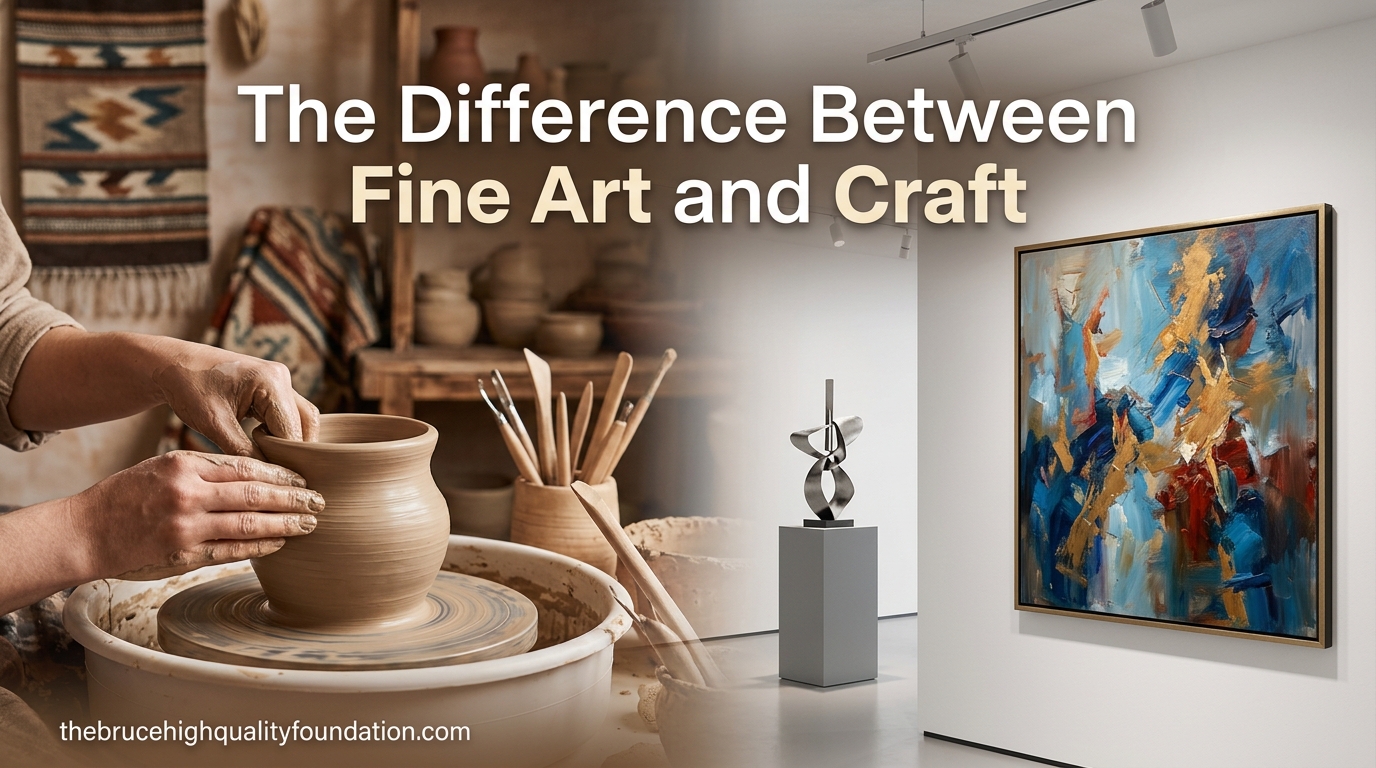
Whether you are an emerging artist figuring out where your work fits, a collector deciding what to buy, or simply curious about how the art world categorizes creative work, understanding the difference between fine art and craft gives you a foundation for navigating both. These two categories share creative roots but diverge in purpose, function, and how they are presented to the world.
In this guide, I will break down what fine art means, what craft means, how they differ in meaningful ways, and where the lines blur in contemporary practice. By the end, you will have a clear framework for understanding where any creative work falls on the spectrum.
Table of Contents
What Is Fine Art?
Fine art is creative expression driven primarily by aesthetic value and intellectual or emotional impact. The primary purpose of fine art is to be experienced, contemplated, and appreciated for its own sake. It does not need to serve any practical function beyond provoking thought or evoking feeling.
The characteristics that define fine art include self-expression as the central goal, a focus on concept and meaning over utility, and work that is typically exhibited in galleries, museums, or collector settings. Fine art forms include painting, sculpture, printmaking, photography, and conceptual installations. The materials and techniques serve the artistic vision rather than being constrained by functional requirements.
Historically, fine art has been associated with mastery and originality. The term implies a level of creative accomplishment that elevates the work beyond skilled reproduction. When someone calls themselves a “fine artist,” they are claiming a practice centered on artistic expression rather than functional production.
What Is Craft?
Craft is skilled creation where technique, functionality, and utility play a central role. Rather than focusing purely on self-expression, craft emphasizes the mastery of materials and methods to produce objects that serve practical purposes.
The characteristics that define craft include skilled manual labor as a core component, adherence to established techniques and patterns where appropriate, and work designed for everyday use or display in functional contexts. Craft forms include pottery, weaving, woodworking, metalwork, and bookbinding. The distinction is not about lower skill but about different priorities.
Many craftspeople spend decades refining their techniques to achieve mastery of specific materials. A ceramicist perfecting their glazes or a woodworker developing their joinery skills are engaged in deeply skilled practices. The functional nature of craft does not diminish the expertise required. If you are interested in developing these skills, exploring different pottery techniques can give you a sense of how craft skills develop over time.
Key Differences Between Fine Art and Craft
Understanding the distinction requires looking at several parallel factors. Here is how fine art and craft compare across the dimensions that matter most.
Purpose and Intent
Fine art prioritizes self-expression and conceptual content. The artist creates to communicate an idea, emotion, or vision. The message or experience comes first, and materials serve that goal.
Craft prioritizes function and skilled execution. The maker creates to produce something useful or beautiful in a functional sense. The object must work well and often must meet specific practical requirements.
Function and Utility
Fine art is typically non-functional. A painting hangs on a wall for appreciation. A sculpture occupies space for contemplation. The work exists to be experienced, not used.
Craft produces objects with practical utility. A ceramic bowl holds food. A woven textile provides warmth. A piece of furniture serves as intended. Functionality is a feature, not an afterthought.
Production Methods
Fine artists often work alone, creating unique pieces or limited editions. Production may involve any method that serves the concept, including unconventional or non-traditional techniques.
Craft production frequently involves patterns, repeatable processes, or series production. The maker develops expertise in specific methods and often creates multiple functional objects using refined techniques.
Exhibition Context
Fine art appears in galleries, museum exhibitions, art fairs, and collector contexts. The presentation reinforces the work’s status as art to be experienced and contemplated.
Craft appears in craft fairs, markets, galleries focused on craft, and functional settings. The context may be a home, a boutique, or a design store where practical function is valued.
These differences in art market dynamics affect how works are priced, exhibited, and valued. Fine art follows an art market with collector speculation and gallery representation. Craft follows more of a design and functional goods market with different pricing structures.
Where Fine Art and Craft Overlap
The distinction between fine art and craft is not absolute. In practice, significant overlap exists, and the boundaries have always been contested.
Some of the most celebrated fine artists have backgrounds in craft. Contemporary potters like Ken Price created work that blurred the line between functional vessel and sculptural art. Artists who train in weaving, metalwork, or woodcarving bring craft skills into fine art contexts, and their work often displays both technical mastery and conceptual depth.
The question of whether craft can become fine art depends heavily on context. The same ceramic bowl might be craft when sold at a market and fine art when exhibited in a gallery with an artist statement and a collector price. Presentation, intention at creation, and exhibition context all influence how a work is categorized.
Some artists intentionally work in both categories, creating functional objects that also function as fine art, or creating fine art that incorporates craft techniques. This hybrid practice has become more common and accepted in contemporary art education.
The debate about whether fine art and craft should be separated reflects broader questions about hierarchy in the art world. Critics argue that dismissing craft as lesser is elitist, while others maintain that the functional dimension fundamentally changes how we should understand and value the work.
Understanding the Distinction in Practice
For artists trying to understand where their work fits, the question often comes down to primary intent. Are you creating primarily to express yourself and communicate meaning? You are likely working in fine art. Are you creating primarily to develop skilled technique and produce functional objects? You are likely working in craft.
Neither category is inherently superior. The artist or maker decides what they are trying to accomplish, and the work reflects those priorities. Collectors and audiences bring their own interpretations as well.
If you are considering art career paths, understanding this distinction can help you think about where your work fits in the market and what kind of training or development might serve your goals.
FAQs
What is fine art vs craft?
Fine art is creative expression focused on aesthetic value and intellectual or emotional response, typically non-functional and displayed in galleries. Craft is skilled creation focused on functionality and utility, often using established techniques and producing objects with practical purposes.
What is the difference between a fine artist and a craft artist?
A fine artist prioritizes self-expression and conceptual content, creating work primarily for aesthetic appreciation. A craft artist prioritizes skilled technique and functional purpose, creating objects that serve practical uses while also carrying aesthetic value.
What are the 4 types of craft?
The four main categories of craft are: decorative craft (objects created primarily for decoration), functional craft (objects created for practical everyday use), sculptural craft (three-dimensional work that emphasizes form and technique), and traditional folk craft (handmade objects rooted in cultural traditions and techniques).
Should fine art and crafts be separated?
Many contemporary artists and educators argue that separating fine art and craft is elitist and arbitrary, given the skill and creativity required in both. Others maintain that the functional dimension creates a meaningful distinction. In practice, significant overlap exists, and many artists intentionally blur the line between categories.
Conclusion
The difference between fine art and craft comes down to intent, function, and context. Fine art prioritizes self-expression, aesthetic appreciation, and conceptual content. Craft prioritizes skilled technique, functionality, and practical purpose. Both require significant expertise, creativity, and dedication to master.
Understanding this distinction helps artists position their work, helps collectors make purchasing decisions, and helps audiences appreciate the different forms creative practice can take. Whether you identify as an artist or a crafter, what matters most is the intentionality behind your work and the skill you bring to realizing your vision.