
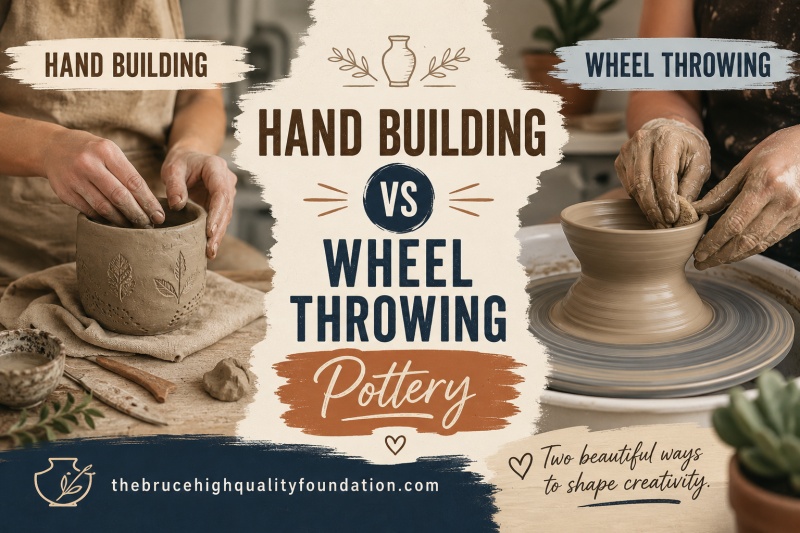
If you are curious about pottery, you have probably wondered about the difference between hand building vs wheel throwing pottery. Both methods create beautiful ceramic pieces, but they offer very different experiences and results. This guide breaks down everything you need to know to choose the right technique for your creative journey.
Table of Contents
What Is Hand Building Pottery?
Hand building pottery is a technique that shapes clay using only your hands and simple tools, without any machinery. This method has been used for thousands of years and remains popular today because it puts you in complete control of every curve and texture.
The three main hand building techniques include pinching, coiling, and slab building. Each produces distinct results and suits different types of projects.
Pinching
Pinching involves pressing your thumb into a ball of clay and gradually shaping the walls by pinching outward with your fingers. This technique works well for creating small bowls, cups, and sculptural forms. It gives you direct feedback about the clay thickness and allows for organic, imperfect shapes that feel personal and handmade.
Coiling
Coiling builds vessels by stacking rolled snakes of clay on top of each other. You smooth the coils together to create strong walls that can reach impressive heights. This method lets you make large pieces like storage jars and decorative vases without requiring expensive equipment.
Slab Building
Slab building rolls clay flat and cuts it into pieces that join together to form geometric shapes. Think of it like cardboard construction but with clay. This technique excels at creating boxes, architectural elements, and modern sculptural work with sharp angles and clean lines.
Hand building produces organic, asymmetrical forms that carry the maker’s touch. It is generally a slower process compared to wheel throwing, as each piece requires more hands-on shaping time.
What Is Wheel Throwing Pottery?
Wheel throwing pottery uses a spinning disc called a potter’s wheel to shape symmetrical forms from clay. The centrifugal force of the spinning wheel helps pull the clay upward into cylinders, bowls, and vases with consistent curves that are difficult to achieve by hand.
The wheel throwing process involves several steps that work together to create functional pieces like mugs, bowls, and plates.
Centering the Clay
The first step involves planting a ball of clay firmly in the center of the wheel while it spins at about 150 RPM. This requires strength and technique to create a stable foundation. If the clay wobbles, everything that follows becomes difficult.
Opening and Pulling
Once centered, you create an opening in the clay by pressing both thumbs inward toward the center. Then you pull the walls upward by gradually increasing the space between your hands while the wheel spins. This pulling action forms the walls of your vessel.
Shaping and Trimming
After the basic shape forms, you refine the silhouette and compress the rim. Once the piece reaches leather-hard stage, you can trim excess clay from the base using special tools to create a refined foot ring.
Wheel throwing produces clean, symmetrical forms that feel precision-made. The speed of production is higher once you learn the technique, allowing you to create matching sets of dinnerware more efficiently than hand building.
Hand Building vs Wheel Throwing: Key Differences
Understanding these core differences helps you decide which method aligns with your goals and lifestyle.
Learning Curve
Hand building offers an accessible entry point. You can create recognizable pieces in your very first session. Wheel throwing requires more practice. Many students spend months feeling frustrated before producing pieces they are proud of.
Time to Results
Hand building gives you tangible projects you can take home at the end of a class, close to how you visualized them. Wheel throwing typically demands weeks or months of practice before results match your expectations. The learning curve is simply steeper.
Creative Freedom
Hand building has virtually no limits on the shapes and sizes you can create. You can build outward in any direction, create non-standard forms, and combine multiple techniques freely. Wheel throwing always produces forms with rotational symmetry, though you can alter thrown pieces after removing them from the wheel.
Equipment Needs
Hand building requires only your hands, basic tools, and clay. You can practice at a kitchen table. Wheel throwing requires a wheel, which ranges from $300 for a beginner kickwheel to thousands for an electric studio wheel, plus significant space in your home.
Production Speed
Once skilled, wheel throwing allows faster production of matching pieces. A trained potter can throw twenty bowls in an afternoon. Hand building produces unique pieces more slowly but each one carries individual character.
Which Technique Should You Choose?
Your choice depends on what matters most to you in your pottery practice.
Choose hand building if you want quick results, creative freedom, and flexibility. It suits those who enjoy sculptural work, have limited space, or want to work without machinery. Hand building also appeals to people who value the meditative quality of slow, deliberate hand movements.
Choose wheel throwing if you prefer symmetrical functional pieces and enjoy the rhythmic challenge of the spinning wheel. It works well if you want to produce sets of matching dinnerware or explore traditional functional forms like vases, pitchers, and teapots.
Many serious potters eventually learn both techniques and combine them. You might throw a basic form on the wheel and then hand-build additions like handles, spouts, or textured surfaces. This combination opens the widest range of possibilities.
Tips for Getting Started
If you are ready to begin, here is practical guidance for your first steps.
For hand building, start with a beginner class or online tutorial. You need only basic supplies to start: clay, a rolling pin, a needle tool, and a wooden board. Look for community education classes or studio workshops in your area.
For wheel throwing, schedule a taster session at a local studio before investing in equipment. Many studios offer introductory workshops that let you try the wheel without commitment. When you decide to continue, consider renting studio time first rather than buying equipment.
Regardless of method, give yourself permission to make imperfect pieces. Every professional potter produced misshapen bowls and lopsided mugs before developing their skills. The tactile feedback from clay rewards patience and repeated practice.
Frequently Asked Questions
Is hand building good for beginners?
Yes, hand building is excellent for beginners. You can create recognizable pieces in your first session, which provides immediate satisfaction and motivation to continue learning.
Why might someone choose to use a potter’s wheel instead of hand building techniques?
People choose wheel throwing for its ability to produce symmetrical functional pieces quickly once skilled. The wheel excels at creating matching sets of dinnerware, traditional vase forms, and precision-shaped objects that are difficult to achieve by hand.
What are the four types of pottery?
The four main pottery techniques are pinch pottery, coil pottery, slab pottery, and wheel throwing. Each produces distinct characteristics and suits different types of projects.
Does pottery help with arthritis?
Many potters report that working with clay provides therapeutic benefits for hand joints and fine motor skills. The gentle pressure and rhythmic movements of hand building in particular can help maintain flexibility and strength.
Conclusion
Hand building vs wheel throwing pottery each offers unique rewards and challenges. Hand building welcomes beginners with quick results and creative freedom. Wheel throwing challenges you with a steeper learning curve but rewards skilled practitioners with speed and precision.
The best approach is to try both methods if possible. Visit a studio that offers instruction in each technique. Notice which process feels more natural and enjoyable to you. Many potters find that learning both expands their capabilities and deepens their appreciation for the craft.
Your pottery journey will evolve as your skills develop. What feels difficult today may become meditative tomorrow. Start where your interests lead, practice regularly, and enjoy the satisfying crunch of clay under your hands.