
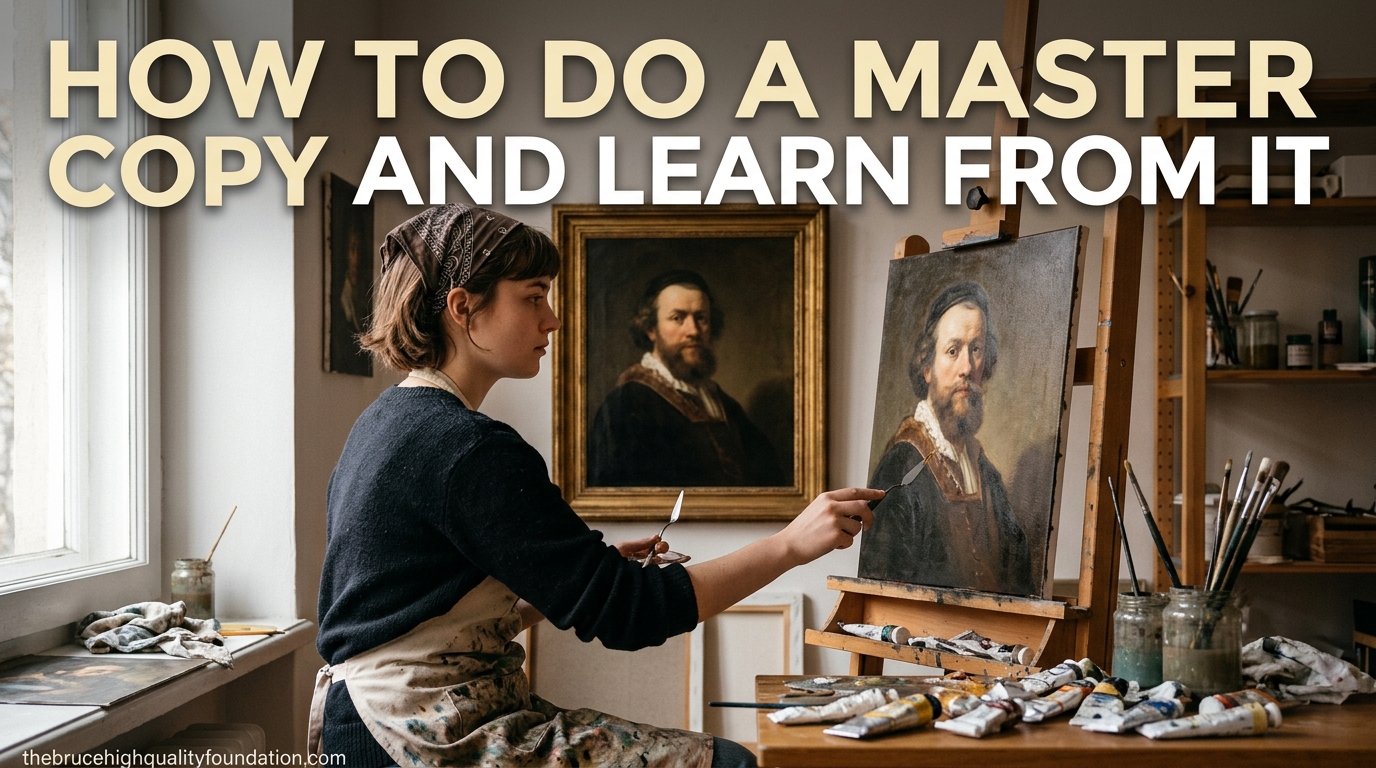
For centuries, master copies have been the secret weapon of artists learning their craft. When I first started painting, I struggled with edges, color mixing, and understanding how the old masters created that luminous depth in their work. Then I discovered the master copy method, and everything changed. If you want to accelerate your painting growth, understanding how to do a master copy properly is one of the most effective study techniques available to artists at any level.
Table of Contents
What is a Master Copy in Art
A master copy is a painting you create that studies and replicates the work of an accomplished artist you admire. The goal is not to forge or fake the original work. Instead, you are dissecting how the master solved visual problems like composition, value structure, color relationships, and brushwork technique. You are learning their language so you can speak it too.
This practice dates back centuries in the art world. Renaissance apprentices learned by copying their teachers’ works before ever picking up a brush for original compositions. Artists like Picasso, Rembrandt, and countless others studied the old masters extensively through direct copying. The practice remains valuable today because it gives you a living tutorial by some of history’s most skilled painters who already figured out problems you are still struggling with.
You might hear the terms “master copy” and “master study” used interchangeably, but they have subtle differences worth understanding. A master copy typically aims to replicate the original as closely as possible while maintaining the educational focus. A master study focuses more on understanding specific aspects like brushwork or color mixing without concern for exact replication. Both approaches have value, and many artists use whichever method suits their current learning goals.
Why Creating Master Copies Matters for Your Art Development
The point of a master copy is to shortcut your learning curve dramatically. Instead of fumbling through years of trial and error, you get inside the head of a master who already solved the problems you are facing every time you pick up your brush. When you copy a Vermeer, you are essentially getting a private lesson in how he handled light, built form, and composed his scenes with such clarity.
There is a principle in art education sometimes called the 70 30 rule that speaks directly to this practice. The idea suggests you should spend about 70 percent of your practice time studying others and 30 percent on your own original creative work. Master copies form the backbone of that 70 percent because they give you concrete examples of excellence to learn from rather than leaving you to discover everything through painful experimentation.
Similarly, the 80 20 rule sometimes surfaces in art discussions among experienced teachers and working professionals. Some artists interpret it as spending 80 percent of your time studying fundamentals through copies and reference work, with only 20 percent devoted to expressive or personal projects. The exact percentages matter less than the underlying principle: structured study accelerates your development far more than painting from imagination alone without any framework for understanding what makes great paintings work.
Beyond technique, master copies teach you how masters approached their subject matter with confidence and intention. You learn to see the underlying abstract elements that separate professional work from amateur attempts: the geometry of composition, the pattern of abstract shapes that create visual harmony, and the logical reason behind every brushstroke placed on the canvas. These lessons become the foundation for your own creative decisions going forward.
How to Choose the Right Painting to Copy
Choosing the right painting makes or breaks your learning experience, so give this decision the attention it deserves. Pick a work that genuinely moves you emotionally, something you want to stare at for hours without getting bored. When you are emotionally invested in the subject and style, you will naturally pay closer attention to every detail during the copying process instead of rushing through mechanically.
Consider what specific skill you want to learn before selecting your reference. If you struggle with edges, find a master who handled them masterfully like Sargent or Merle. If color harmony is your challenge, pick a painter known for sophisticated palettes such as Sorolla or Anders Zorn. Setting a clear learning objective transforms a master copy from passive copying into active study focused on measurable improvement.
Match the difficulty to your current skill level honestly. Starting artists should choose paintings with simple compositions, limited color palettes, and clear value structures. More experienced painters can tackle complex multi-figure compositions or works with challenging lighting scenarios that push their abilities in new directions.
Look for paintings with high-resolution reference images available through museums or authorized collections. You need clear visibility of brushwork, color transitions, and texture details to actually learn from the copying process. Museum websites, quality art books, and sanctioned online archives provide excellent reference material. Avoid low-quality images that will teach you incorrect observations about color and technique.
Step-by-Step Process for Creating a Master Copy
The first step is thorough preparation before you touch your canvas with any paint. Gather your reference images at the highest resolution possible. Print them in black and white to study the value structure separately from color information. This separation helps you understand how the master organized values before adding any chroma to their palette.
Begin your actual painting with an imprimatura, a thin tone applied to your canvas before starting any real work. This mid-tone ground unifies your surface and gives you a structured starting point to build upon. Some artists use a warm ochre, others prefer a cool gray, and some use raw umber depending on the effect they want. The specific color matters less than having an organized foundation to work from.
Next, establish your drawing and underlying structure with thinned paint. Map in the major shapes, focusing on proportions and accurate placement within your canvas format. Do not worry about color or fine detail yet at this stage. Your goal is getting the skeleton correct before addressing the flesh of the painting, and correcting drawing errors later is far more difficult than getting them right initially.
The first color pass should focus on establishing the major color masses in simplified terms. Identify the dominant hues in large areas and block them in broadly without attempting any refinement or detail work. Resist the strong urge to refine or add complexity too early. Instead, focus all your energy on getting the big color relationships correct at this foundational stage.
From there, work into the middle values and begin establishing form with more deliberate brushwork. This is where you start studying the master’s brushwork technique with real attention. Notice the direction of strokes, the consistency of paint applied, and how edges are handled in different areas of the composition. Your goal is understanding why each mark exists rather than just copying what you see on the surface.
Glazing techniques can add luminous depth in later stages of completion when used appropriately. Transparent layers applied over opaque underpaintings create that characteristic depth the masters were famous for in their finishing work. However, many painters complete excellent master copies using alla prima techniques exclusively, building form through direct confident brushwork without any glazing. Both approaches produce beautiful results; choose based on your personal goals and time available.
Throughout the entire process, take regular breaks and view your work in a mirror from across the room. Mirrors reveal drawing errors and awkward passages that your eyes miss when you are staring at the canvas directly from too close a distance. Stepping back also helps you evaluate the developing copy against your reference image with fresh eyes that see problems your close-up view cannot detect.
Common Mistakes to Avoid When Making Master Copies
The biggest mistake artists make is copying blindly without any real understanding of what they are doing. If you paint stroke for stroke without comprehending why each mark exists on the canvas, you learn nothing that transfers to your original work later. Every brushstroke should have a purpose you can articulate when someone asks why you placed it there exactly where it sits.
Another common error is using the wrong sized canvas relative to your reference image dimensions. If your reference is a large mural and you are working on a small panel, you will waste hours fighting scale issues instead of studying technique with your brush. Match your canvas size to the reference dimensions as closely as practical to avoid this frustrating problem that derails many copying attempts.
Rushing the drawing stage ruins many master copies before they really begin. Artists eager to get to the exciting color work skip proper preparation entirely, and the drawing errors become impossible to fix without starting over completely. Take the time needed to get your underlying structure correct. This investment saves hours of frustration later when you discover elements are misplaced.
Poor reference material leads to poor learning outcomes that waste your time and effort. If your reference image distorts colors or loses critical detail in shadows and highlights, you will learn incorrect lessons that are hard to unlearn later. Invest the time needed in finding the best available reference, even if it means waiting an extra week before starting your copy when you find better material.
Forgetting to actually look at what is really there is surprisingly common even among experienced artists. We all develop habits of painting what we expect to see rather than what is actually present in our reference. Fight this tendency by regularly squinting at your reference, which simplifies values and removes detail, forcing you to see the underlying structure more accurately and correct your painting accordingly.
Capturing Essence vs Making a Replica
There is a crucial distinction between actively studying a master and merely attempting exact replication of their work. Making a replica focuses on matching every detail for its own sake without deeper inquiry into why those details exist. Capturing the essence means understanding the underlying principles and translating them into your own practice with intention and purpose.
When you aim for essence instead of replication, you ask productive questions like: Why did the master place that element exactly there in the composition? What visual problem was being solved with that specific decision? How does this particular brushstroke describe form and texture? These questions transform passive copying into active learning that sticks with you long after the painting session ends.
Some of the most valuable master copies deliberately deviate from the original in thoughtful ways. An artist might copy a Rembrandt using their own modern color palette, or reinterpret a classical composition in their personal contemporary style. These interpretative approaches often teach more than photorealistic attempts because they force deep analysis of why creative decisions were made in the original work.
The painterly effect that characterizes the old masters comes from visible brushwork and intentional texture in the surface. When you study how they created that quality with their brush handling, you develop a vocabulary for creating similar effects in your own paintings regardless of what subject matter you are working with at any given time.
How to Apply Lessons from Master Copies to Your Own Work
Bridge the gap between copying and creating original work by deliberately focusing on transferable principles you can use later. When you encounter something valuable in a master copy, ask yourself immediately: How can I use this approach in my own paintings when I am working from life or imagination? The answer might be found in composition strategies, value patterns, color temperature relationships, or brushwork direction and consistency.
After completing a master copy, paint something original immediately while the lessons are fresh in your mind and muscle memory. Do not wait days or weeks to apply these observations. Use what you just studied within the same creative session when possible to create a strong mental connection between the study and your practice going forward.
Keep detailed notes on what you learned from each master copy experience. Write down specific observations about technique, color choices, or compositional decisions that impressed you or that you found challenging during the copying process. These notes become a personal reference library you can consult when facing similar challenges in your original work.
Do not expect immediate revolutionary results from a single master copy. The first attempts may feel like you are just moving paint around without deep understanding, and that is completely normal for beginning practitioners. Each copy builds upon the last, and eventually you will notice these master principles appearing naturally in your original paintings without conscious effort on your part.
Consider incorporating art supplies and painting materials from quality sources as this affects your ability to execute what you learn effectively. Better materials do not make you a better artist, but they remove barriers between your intentions and your results.
Signing and Credit Etiquette for Master Copies
Always sign your master copy clearly as a copy after the original artist’s name in your documentation and any display context. Common accepted formats include “after [Artist Name]” or “Study after [Artist Name]” placed near your signature. This proper credit prevents any confusion about the work’s true authorship and shows professional respect for the original creator of the work you studied.
Never sell a master copy as if it were an original work produced by your own creative vision. These studies are valuable educational exercises that develop your skills, but the copy itself should remain personal to your development as an artist. The skills you build through the practice have enormous value, but the physical copy is a learning tool, not a product intended for sale.
When sharing master copies on social media platforms or in portfolio presentations, clearly label them as studies in all contexts. Include the original artist name and the specific work you studied in your description. This transparency builds trust with viewers and fellow artists while honoring the long tradition of artistic study that master copies represent throughout art history.
If you display master copies publicly in shows or galleries, consider writing a brief artist statement about what you learned from the exercise. Sharing your process and discoveries demonstrates genuine artistic growth and inspires others who might be considering their own master copy practice for the first time.
Frequently Asked Questions
What is the point of a master copy?
The point of a master copy is to accelerate your learning by studying how master artists solved visual problems. You learn technique, composition, color relationships, and brushwork by actively analyzing and replicating their work rather than fumbling through years of trial and error alone.
What is the 70 30 rule in art?
The 70 30 rule suggests artists should spend roughly 70 percent of their practice time studying the work of others, including creating master copies, and only 30 percent on original creative work. This structured study provides the foundation that makes original work stronger.
What is the 80 20 rule in art?
In art contexts, the 80 20 rule typically means spending about 80 percent of practice time on fundamentals and structured learning like master copies, with 20 percent devoted to expressive or personal projects. The exact percentages vary, but the principle emphasizes deliberate study over random practice.
How do I choose the right painting for a master copy?
Choose a painting that genuinely moves you, where the subject matter or style resonates with your artistic interests. Also consider what specific skill you want to learn: edges, color harmony, composition, brushwork, etc. Match the painting difficulty to your current skill level and ensure you can access a high-resolution reference image.
How long does it take to complete a master copy?
The time required varies based on painting complexity, your skill level, and whether you are working alla prima or using slower techniques like glazing. A simple study might take 4-6 hours spread across multiple sessions. Complex master copies can require 20-40 hours or more of concentrated work.
Final Thoughts on Mastering the Master Copy Process
Learning how to do a master copy properly transforms it from simple copying into a powerful study method that accelerates your artistic growth significantly. The masters spent decades developing their techniques through similar study and practice, and a master copy gives you direct access to their problem-solving strategies without spending years discovering them yourself through painful trial and error.
Start with one painting you genuinely love from an artist whose work speaks to you on an emotional level. Set a clear learning objective for what you want to improve, follow a structured process for your copying work, and focus on understanding why each creative decision was made by the master you are studying. After completing your copy, immediately apply those lessons to your own original work to create lasting connections in your developing skill set.
With consistent practice over time, you will find the principles of composition, color harmony, and confident brushwork appearing naturally in your paintings without conscious effort on your part. The investment in master copy study pays dividends for the rest of your artistic career in ways that simply painting from imagination without this foundation never could.
Master copies have been teaching artists for centuries and they can do the same for you today. All you need is a high-quality reference image, some art supplies and painting materials, and the willingness to learn humbly from the masters who came before you in the long tradition of artistic study. Your future self will thank you for the investment you make today in this timeless learning practice.