
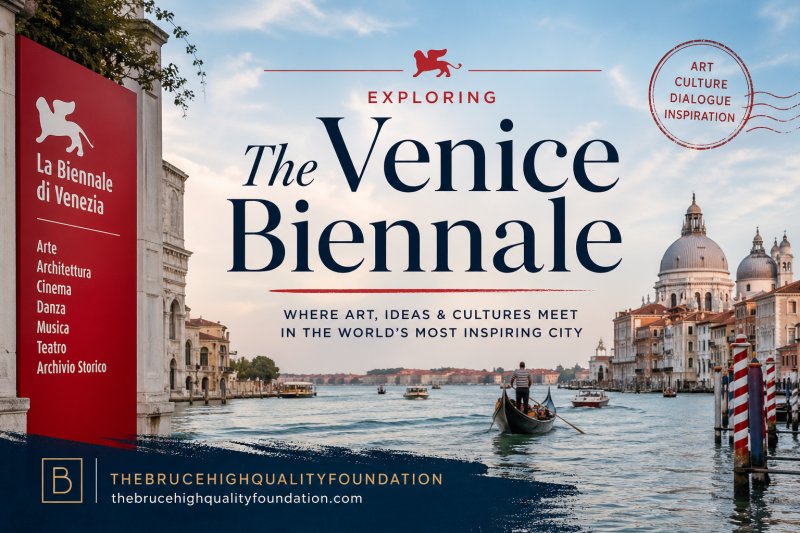
Dubbed the “Olympics of the art world,” the Venice Biennale stands as the most prestigious international contemporary art exhibition on the planet. Every two years, the floating city of Venice transforms into a global stage where artists, curators, collectors, and art enthusiasts converge to experience the cutting edge of creative expression. Whether you are planning your first visit or simply want to understand what makes this event so significant, this guide covers everything you need to know about the Venice Biennale in 2026.
The Venice Biennale is more than just an art show. It is a cultural institution that has shaped the trajectory of contemporary art for over a century, launching careers, sparking debates, and defining artistic movements. Understanding how it works, what to expect, and how to navigate its sprawling venues will transform your experience from overwhelming to extraordinary.
From the historic gardens of the Giardini to the cavernous shipyards of the Arsenale, the Biennale spreads across Venice in a maze of national pavilions, curated exhibitions, and collateral events. This guide breaks down the complex structure into simple, actionable information you can use to plan an unforgettable visit.
Table of Contents
Venice Biennale: Key Facts at a Glance
Before diving into the details, here are the essential facts every visitor needs to know about the Venice Biennale in 2026.
The 2026 Venice Biennale runs from May 9 through November 23, with summer opening hours from 11 am to 7 pm. The main venues are the Giardini della Biennale and the Arsenale, with additional exhibitions scattered throughout the city. Standard adult tickets cost approximately 30 euros for a single venue or 40 euros for a combined pass, with reduced rates available for students and seniors.
The Biennale operates on a biennial cycle, meaning the Art exhibition occurs in odd-numbered years while the Architecture Biennale takes place in even-numbered years. Each edition features around 90 national pavilions plus a central curated exhibition organized by an internationally selected artistic director.
What Is the Venice Biennale?
The Venice Biennale is an international contemporary art exhibition held every two years in Venice, Italy. Often called La Biennale di Venezia, it represents the oldest and most prestigious art biennial in the world, dating back to 1895. The exhibition serves as a platform for countries to showcase their most compelling contemporary artists alongside a central curated exhibition that explores a unifying thematic concept.
Three main components comprise the Venice Biennale experience. First, the International Exhibition presents a curated selection of artists chosen by the artistic director to explore the edition’s central theme. Second, National Pavilions see participating countries mount their own exhibitions in dedicated spaces, either permanent pavilions in the Giardini or scattered venues throughout Venice. Third, Collateral Events include officially approved independent exhibitions and projects that extend the Biennale’s reach across the city.
This structure creates a unique dialogue between individual artistic visions and collective national presentations. Visitors can wander from the politically charged installation in one country’s pavilion to the abstract contemplations of the central exhibition, experiencing the full spectrum of contemporary artistic practice in a single day.
The Venice Biennale matters because it sets the agenda for the global art world. Galleries, museums, and collectors worldwide watch the exhibition closely, determining which artists merit attention, acquisition, and further exhibition. For artists, inclusion in the Biennale can define careers. For visitors, it offers an unparalleled opportunity to see the best contemporary art from nearly every country on Earth.
A Brief History of the Venice Biennale
The Venice Biennale traces its origins to 1895, when the city council established the exhibition to celebrate the silver anniversary of King Umberto and Margherita of Savoy. That first edition attracted over 200,000 visitors, an astounding figure that demonstrated Venice’s potential as a cultural destination beyond its historic architecture and canals.
The early years focused primarily on traditional art forms like painting and sculpture, with national pavilions emerging gradually. Belgium built the first permanent foreign pavilion in the Giardini in 1907, establishing a precedent that would transform the gardens into an international showcase. Other nations followed quickly, creating the architectural landscape visitors experience today.
World War I interrupted the Biennale’s development, but the post-war years brought significant evolution. The 1920s and 1930s saw fascist Italy exert increasing control over the exhibition, with propaganda considerations influencing artistic selections. Despite political pressures, the Biennale continued to grow in scope and international participation.
World War II halted the Biennale entirely from 1942 to 1947, creating the only extended interruption in its history. When the exhibition resumed in 1948, it emerged with renewed purpose and a clearer focus on contemporary art rather than historical surveys. This post-war edition featured Peggy Guggenheim’s groundbreaking collection of modern art, signaling a new direction.
The 1960s and 1970s brought radical changes to the Venice Biennale. The 1968 protests against the Vietnam War spilled into the exhibition, with students occupying the Giardini and forcing a temporary closure. The 1970s saw the introduction of the current structure, with separate artistic directors curating each edition and the establishment of the Venice Film Festival as a distinct entity.
Harald Szeemann revolutionized the Biennale in 1972 with his concept of “individual mythologies,” shifting focus from national representation to individual artistic visions. This approach influenced decades of curatorial practice and established the Biennale as a platform for experimental and conceptual art.
The 21st century has seen the Venice Biennale expand dramatically in scope and global reach. New nations have joined constantly, with countries like Ghana, Madagascar, and Malaysia making recent debuts. The exhibition has embraced performance art, digital media, and installation art alongside traditional forms, reflecting the evolving nature of contemporary practice.
The Biennale has weathered numerous controversies throughout its history. Political disputes have led to boycotts, withdrawn pavilions, and heated debates about representation. The 2019 edition saw calls to boycott the Israeli pavilion, while the Russian pavilion has faced scrutiny following the 2022 invasion of Ukraine. These moments demonstrate how the Biennale serves as a barometer for global political tensions.
The Venues: Giardini and Arsenale
Understanding the Venice Biennale requires knowing its two primary venues: the Giardini della Biennale and the Arsenale. Each offers a distinct experience, and together they form the core of the Biennale experience.
Giardini della Biennale
The Giardini sits on the eastern edge of Venice’s main island, occupying parkland that has hosted the Biennale since its inception. Thirty permanent national pavilions dot the gardens, each designed by architects from the representing countries, creating an open-air museum of 20th-century architecture alongside the art within.
The Central Pavilion anchors the Giardini, housing the main curated exhibition organized by the artistic director. This space transforms dramatically each edition, with installations filling the grand halls and smaller chambers. The scale is manageable, and most visitors spend 3-4 hours exploring the Giardini thoroughly.
The national pavilions here include some of the most architecturally significant structures in the Biennale. The French Pavilion designed by Faure and the American Pavilion by Swan and Kendall both date to 1930, while the Russian Pavilion and British Pavilion showcase early modernist influences. Walking through the Giardini offers a lesson in national self-presentation through architecture.
The Giardini’s manageable size makes it ideal for first-time visitors or those with limited time. Trees provide shade during hot summer months, and benches offer resting spots between exhibitions. The concentration of pavilions means visitors can see significant portions of the Biennale without extensive walking between venues.
Arsenale
The Arsenale presents a dramatically different experience. This vast former shipyard, where Venice built its naval fleet for centuries, now houses the largest portion of the Biennale exhibition. The cavernous spaces include the Corderie, a 300-meter-long rope-making hall that showcases monumental installations impossible in conventional galleries.
The Arsenale venue dwarfs the Giardini in scale. Visitors should plan to spend at least half a day here, with many art professionals dedicating multiple visits to absorb everything fully. The industrial architecture creates a dramatic backdrop for contemporary art, with soaring brick vaults and ancient stone walls contrasting sharply with cutting-edge installations.
Recent editions have expanded the Arsenale exhibition beyond the historic shipyards into the Gaggiandre, outdoor docks where massive sculptures and performance pieces find their natural home. This expansion has nearly doubled the Arsenale’s exhibition space, creating one of the largest temporary art exhibitions in the world.
Navigation within the Arsenale can prove challenging. The linear layout means backtracking is difficult once you have passed certain points. Planning your route in advance, available on the official Biennale website, helps ensure you do not miss significant works hidden in distant corners of the complex.
City Pavilions and Collateral Events
Beyond the two main venues, the Venice Biennale extends throughout the city. Countries without permanent pavilions rent palazzos, churches, and warehouses across Venice’s six districts. These city pavilions often provide some of the most memorable experiences, with historic Venetian architecture framing contemporary interventions.
The Dorsoduro district hosts numerous collateral events and national pavilions, including the prestigious Guggenheim Collection nearby. Cannaregio, Santa Croce, and Castello each contain scattered exhibitions that reward exploration. Some visitors find these dispersed venues more intimate and engaging than the main sites.
Finding these city venues requires planning and comfortable walking shoes. The Biennale provides maps and apps marking every official location, but getting lost in Venice is inevitable. Many visitors embrace this as part of the experience, discovering unexpected exhibitions while navigating the maze-like streets.
National Pavilions Explained
National pavilions form the backbone of the Venice Biennale, with approximately 90 countries participating in a typical edition. Each nation organizes its own exhibition, selecting artists, commissioning new work, and designing installations that represent their contemporary art scene.
Thirty countries maintain permanent pavilions in the Giardini, a legacy of early 20th-century participation. These structures range from modest neo-classical temples to bold modernist statements. Countries select architects for new pavilions through competitions, resulting in buildings that make their own artistic statements.
The remaining participants rent temporary spaces throughout Venice. These city pavilions often occupy historic palazzos, offering dramatic contrasts between Baroque architecture and contemporary art. Australia, New Zealand, and numerous Middle Eastern and African nations typically exhibit in these dispersed venues.
Each country appoints a commissioner to oversee their pavilion. This individual, usually a curator or museum professional, selects the exhibiting artist or artists and determines the conceptual approach. The commissioner works with the chosen artist to develop new work specifically for the Venice context, often spending 18-24 months on preparation.
The national pavilions operate independently from the central curated exhibition. Countries choose their own themes, artists, and presentation styles. This autonomy leads to wildly different experiences pavilion to pavilion, from immersive installations to traditional gallery displays, from political manifestos to abstract contemplations.
Notable pavilions have established reputations for consistent quality. The British Pavilion, German Pavilion, and American Pavilion often feature high-profile artists with substantial budgets. However, smaller nations frequently steal the show with innovative approaches, as when Lithuania won the Golden Lion in 2019 with an operatic performance piece.
The national pavilion system has faced criticism for reinforcing nation-state frameworks in an increasingly globalized art world. Some artists reject the model entirely, while others use their platform to critique the very idea of national representation. These tensions add intellectual depth to the visual experience.
Golden Lion Awards and Recognition
The Golden Lion stands as the highest honor at the Venice Biennale, equivalent to the Palme d’Or at Cannes or the Golden Lion at the Venice Film Festival. These awards, presented during the opening days, recognize outstanding achievements across multiple categories.
The Best National Participation Golden Lion goes to the most outstanding national pavilion. Jurors evaluate each country’s contribution based on curatorial coherence, artistic quality, and presentation. Winning this award brings significant prestige and often boosts tourism and cultural attention to the honored nation.
Best Artist in the International Exhibition recognizes an individual artist whose work in the central curated exhibition stands out above others. This award typically goes to established mid-career or senior artists who have already developed significant bodies of work. Previous winners include heavyweights like Ellsworth Kelly, Bruce Nauman, and Cindy Sherman.
The Best Young Artist award highlights emerging talent within the International Exhibition. This distinction helps launch careers, bringing international attention to artists early in their professional lives. Many recipients have gone on to major museum retrospectives and commercial success.
Lifetime Achievement Golden Lions honor artists who have made sustained contributions to contemporary art over decades. These awards acknowledge entire careers rather than single works. Recent recipients include major figures like Jannis Kounellis, El Anatsui, and Ann Veronica Janssens.
Special Mentions allow the jury to recognize additional artists or pavilions that merit attention without winning the top category prizes. These acknowledgments often highlight unexpected discoveries or particularly challenging works that might otherwise go unnoticed in the vast exhibition.
How the Venice Biennale Works
Understanding the Venice Biennale’s organizational structure helps visitors appreciate what they are seeing and why certain artists appear while others do not. The process involves multiple stakeholders and extends over several years.
The Biennale organization appoints an artistic director approximately 18 months before each edition opens. This individual, typically a respected curator with international experience, proposes a curatorial theme that will unify the central International Exhibition. Recent directors have included Cecilia Alemani, Ralph Rugoff, and Christine Macel, each bringing distinct perspectives.
The artistic director then selects artists for the International Exhibition, usually 80-100 participants from around the world. These artists receive commissions to create new work addressing the edition’s theme. The director also determines the layout and flow of the central exhibition within the Arsenale and Central Pavilion.
Each participating nation appoints a commissioner to organize their pavilion. Commissioners work independently from the artistic director, though they often respond to the central theme in their own way. These individuals select artists, secure funding, and manage the complex logistics of creating an exhibition in Venice.
An international jury of art professionals convenes during the opening week to evaluate exhibitions and award the Golden Lions. This jury operates independently from the Biennale organization, ensuring that awards reflect critical assessment rather than institutional preference.
The Biennale also approves Collateral Events, independent exhibitions that extend the official program. Organizations apply for this designation months in advance, submitting proposals that demonstrate artistic merit and relevance to the Biennale’s mission. Approved collateral events receive promotional support and inclusion in official publications.
Tickets and Practical Information
Planning your visit to the Venice Biennale requires understanding the ticketing structure and practical logistics. Getting this right ensures a smooth experience without unnecessary stress or expense.
Standard admission in 2026 costs approximately 30 euros for a single venue (either Giardini or Arsenale) or 40 euros for a combined pass granting access to both main venues. Reduced-price tickets at 25 euros for single venues or 35 euros for combined access apply to students under 26, seniors over 65, and residents of the Veneto region.
The 3-day pass, priced around 50 euros, offers the best value for serious visitors. This ticket allows multiple entries to both venues over three consecutive days, essential for seeing everything without exhaustion. The multi-entry flexibility also accommodates the need for breaks, meals, and rest between intense art viewing sessions.
Children under 6 enter free, and family discounts apply for groups including children. Venice residents, ICOM members, and disabled visitors with companions also receive free admission. School groups can arrange special educational rates through advance booking.
Tickets are available online through the official La Biennale website or at the venue entrances. Online purchase is strongly recommended, especially during peak summer months when queues at ticket offices can stretch to an hour or more. Print your tickets or download them to your phone for scanning at entry.
Opening hours run from 11 am to 7 pm during summer months (May through September), with last admission at 6:45 pm. Winter hours (October and November) typically close at 6 pm. The Biennale closes on Mondays except during the opening weeks and special holidays.
Accessibility has improved significantly in recent years. Both Giardini and Arsenale offer wheelchair-accessible routes, though some historic sections remain challenging. Audio guides, large-print materials, and sign-language tours can be arranged with advance notice through the Biennale’s accessibility office.
Planning Your Visit: Tips for First-Timers
First-time visitors to the Venice Biennale often feel overwhelmed by the sheer scale and complexity of the exhibition. These practical tips, compiled from experienced visitors and art professionals, will help you navigate the experience successfully.
Allow at least three days to see the Biennale properly. Attempting to visit both main venues in a single day leads to art fatigue and diminished appreciation. Spread your visit across multiple days, mixing Biennale time with exploring Venice itself to maintain energy and enthusiasm.
Buy the 3-day multiple entry ticket for maximum flexibility. This pass lets you enter and exit venues as needed, escaping midday heat for lunch or rest before returning. Single-entry tickets force you to see everything in one exhausting push or forfeit the remaining exhibitions.
Start with the Giardini on your first day. Its smaller scale and concentrated layout help you understand the Biennale’s structure without overwhelming you. The Central Pavilion provides an excellent introduction to the curatorial theme, while the national pavilions demonstrate the range of artistic approaches.
Plan your Arsenale visit for a full day when you are well-rested. The sheer size requires significant walking, and the linear layout means you cannot easily exit and return. Bring water, snacks, and comfortable shoes for this marathon art experience.
Wear comfortable shoes with good support. You will walk 5-10 kilometers daily navigating Venice’s cobblestones and the Biennale’s expansive venues. Blisters and sore feet ruin the experience faster than you can say “Golden Lion.”
Bring a portable phone charger or power bank. You will use your phone constantly for navigation, photography, and accessing the Biennale app. Venice’s confusing layout makes GPS essential, and dead batteries leave you lost and disconnected.
Visit in September or October rather than peak summer if possible. The crowds thin significantly after August, while the weather remains pleasant. Lines for popular pavilions shrink, and you can actually see the art without fighting through tour groups.
Research pavilions in advance but remain flexible. Online previews and art publications highlight notable installations, but part of the Biennale magic comes from unexpected discoveries. Leave time to wander without a strict itinerary.
Do not try to see everything. Even with three days, you cannot absorb every exhibition fully. Prioritize based on your interests, and accept that missing some pavilions is part of the experience. Quality engagement beats quantity every time.
Stay in Venice proper rather than Mestre if your budget allows. The early morning and evening hours in Venice, free from day-trippers, provide magical moments that justify the higher accommodation costs. Being able to walk to the Giardini or Arsenale saves time and transportation hassles.
Combine your Biennale visit with other Venice attractions. The Peggy Guggenheim Collection, Gallerie dell’Accademia, and countless churches house masterpieces that complement the contemporary art experience. Plan a balanced itinerary mixing old and new.
Frequently Asked Questions
What is the Venice Biennale?
When is the Venice Biennale held?
Where is the Venice Biennale held?
How long does the Venice Biennale last?
How much are Venice Biennale tickets?
Is the Venice Biennale free?
How many days do I need at the Venice Biennale?
What should I see at the Venice Biennale?
What is the Golden Lion?
How does the Venice Biennale work?
Conclusion
The Venice Biennale represents the pinnacle of international contemporary art presentation, offering an unmatched opportunity to experience the full spectrum of global artistic production in one of the world’s most beautiful settings. From the historic gardens of the Giardini to the cavernous shipyards of the Arsenale, the Biennale transforms Venice into a living museum that rewards careful exploration and repeated visits.
Understanding how the Venice Biennale works, from its three-part structure to its prestigious Golden Lion awards, helps visitors navigate this complex exhibition with confidence. Planning ahead, purchasing the right tickets, and allowing sufficient time ensures you can engage deeply with the art rather than rushing through on a superficial art-tourism circuit.
Whether you are a seasoned art professional or a curious first-time visitor, the Venice Biennale in 2026 promises experiences that will expand your understanding of what contemporary art can be. Start planning your visit today, and prepare to discover why this 130-year-old institution remains the defining event on the global art calendar.